An Afternoon in St. Augustine, America’s Oldest City

Most cities earn their stripes slowly, growing into their identities over decades like a tree adding rings. St. Augustine, Florida skipped that process entirely. When Pedro Menéndez de Avilés planted the Spanish flag here on September 8, 1565—56 years before the Pilgrims stumbled ashore at Plymouth Rock—the city arrived fully formed with a sense of purpose. The oldest continuously occupied European settlement in what is now the United States, it has been quietly outrunning the rest of America’s history ever since.
I drove to St. Augustine for an afternoon en route to Jacksonville, a day after visiting Daytona International Speedway and staying the night in a charming hotel called Bliss by the Sea south of St. Augustine. I wasn’t planning much more than a quick look. Two hours later, I kind of wished I had allocated more time.
The first thing you notice is that this is a compact, walkable city with a population hovering around 15,000—less than Fort Collins’ student population at Colorado State University. What St. Augustine lacks in square footage it makes up for in density of meaning. Within half a mile you can walk from one of the oldest forts in North America to a church that predates the United States by two centuries to a college campus that looks like it was transplanted directly from Seville.
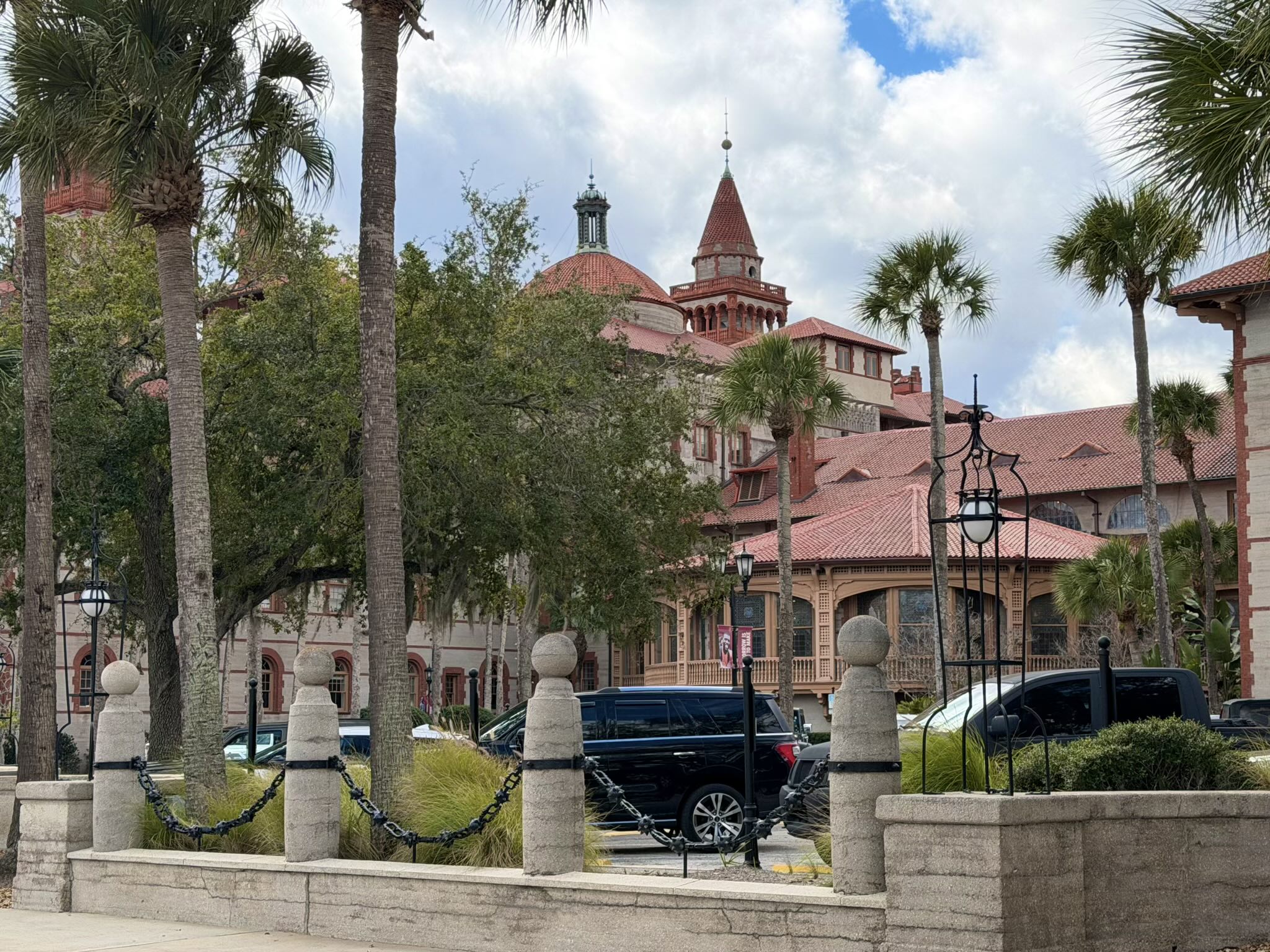
That college is Flagler College, housed in what was originally the Ponce de León Hotel, opened by railroad magnate Henry Flagler in 1888. The building is a feast of Spanish Renaissance architecture—towers, arched loggias, terracotta tile—the kind of campus where you half-expect students to be attending dueling seminars on Don Quixote or the proper folding of a mantilla. I passed it during my walk and had to slow down. It’s the sort of building that makes you feel vaguely underdressed just for standing near it.
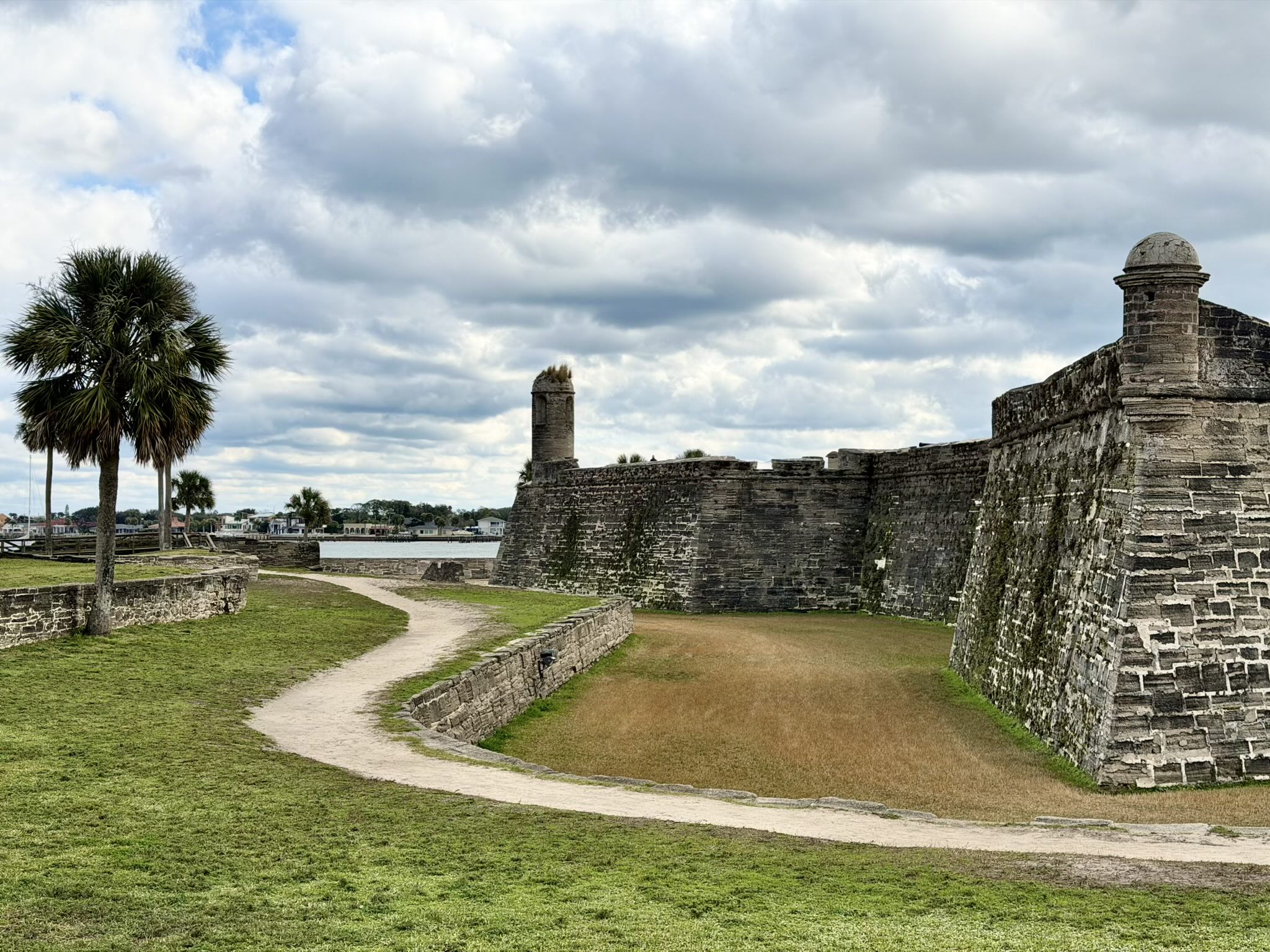
My first stop, though, was the Castillo de San Marcos, the star-shaped coquina fort sitting at the edge of Matanzas Bay like a patient chaperone watching over the city. Coquina is a type of porous limestone formed from compressed shells and coral—a building material so local it practically grew up here. The Castillo was constructed between 1672 and 1695, replacing a succession of wooden forts that had guarded St. Augustine for over a century. The upgrade proved its worth: coquina doesn’t shatter under cannon fire the way stone does. Cannonballs tend to just embed themselves in it, absorbed like punches into a thick mattress. The British fired away at this fort for 27 days in 1702 and couldn’t breach it. I found this deeply satisfying.
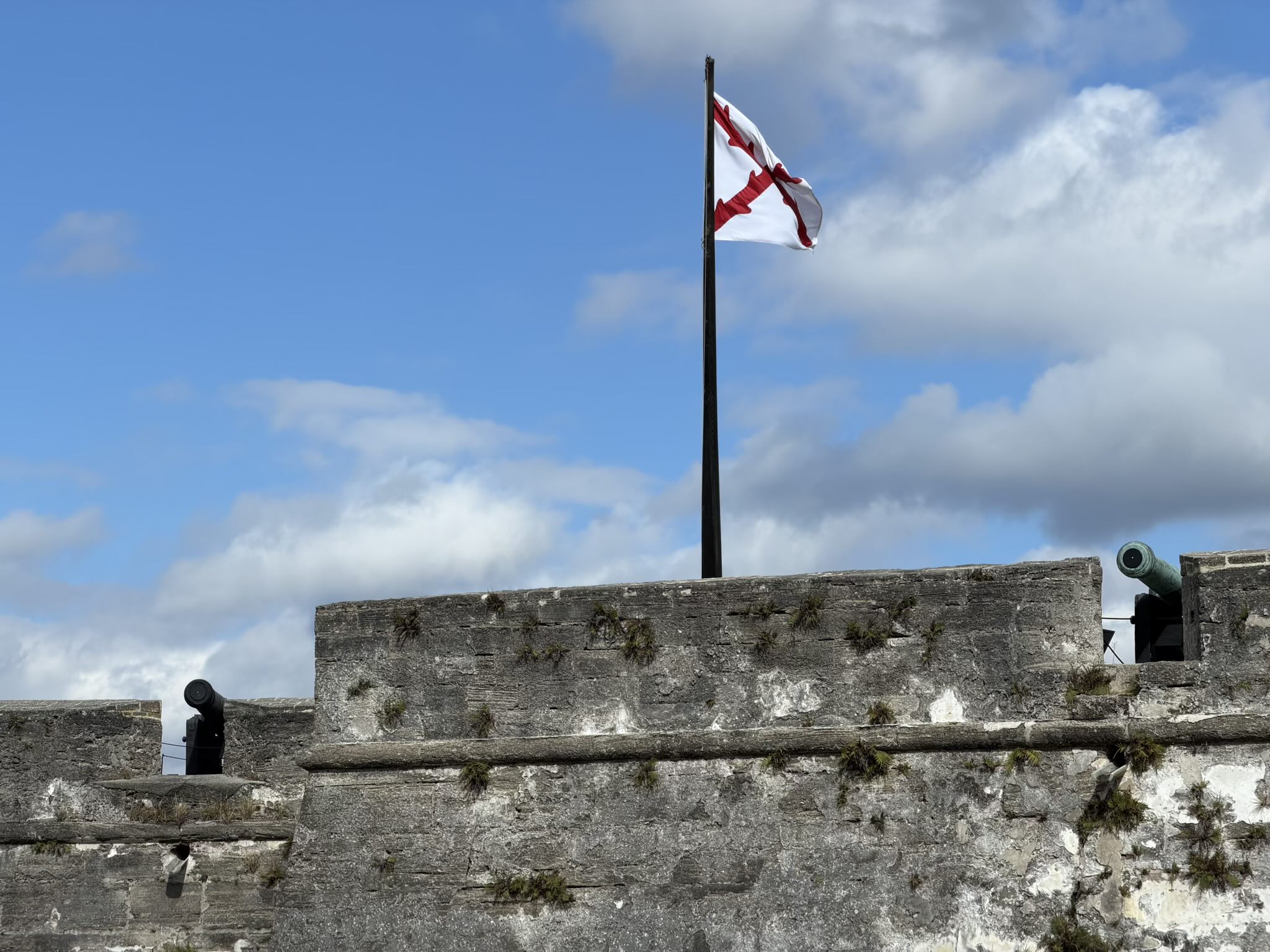
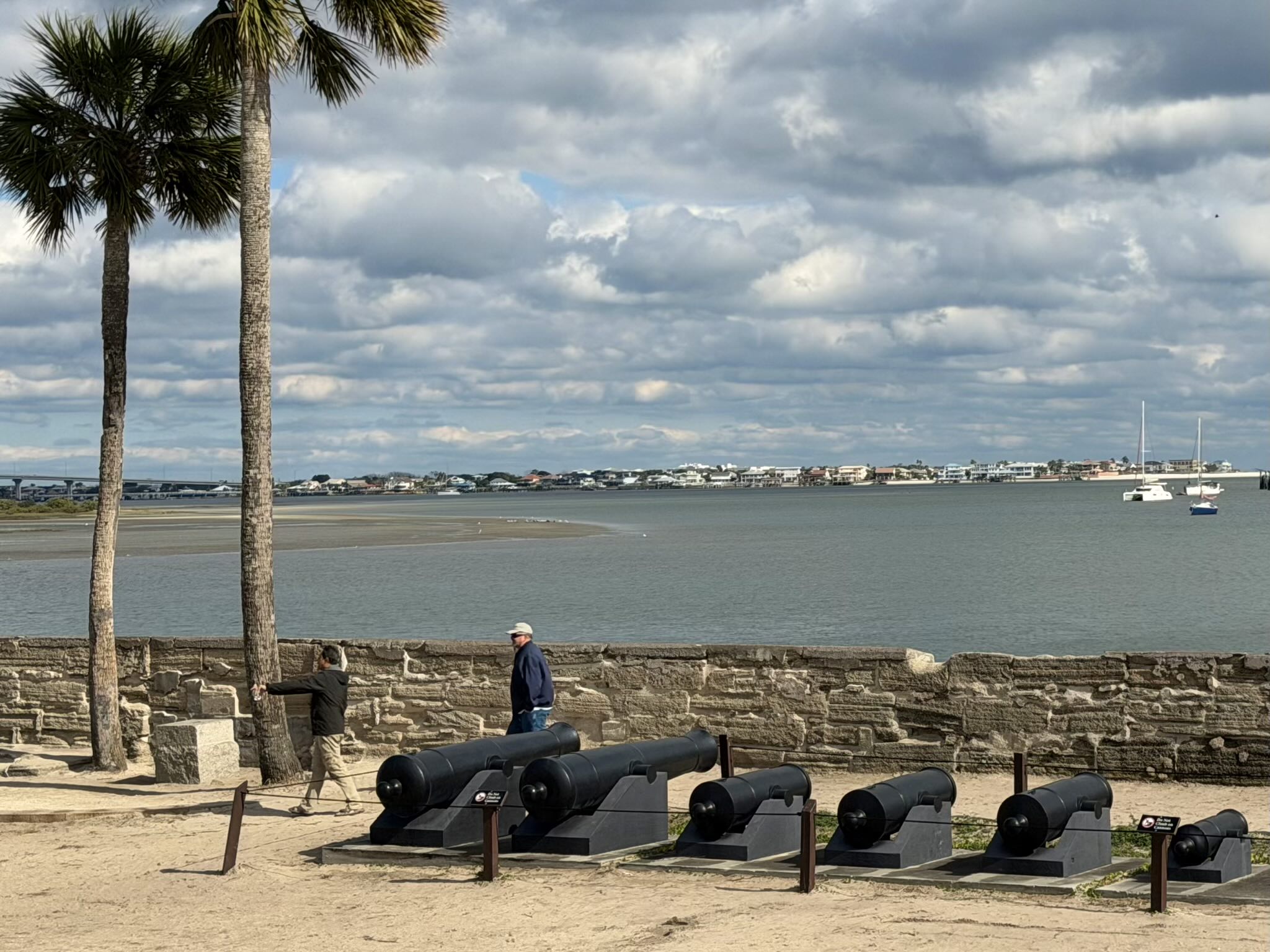
I didn’t go inside—time was short—but I walked the perimeter, peering up at the old cannons along the walls, the Spanish ensign catching the Florida breeze above them. Between the fort’s ancient proportions and the view across the bay, it was easy to spend twenty minutes doing nothing but walking slowly and gazing thoughtfully, like a man with a very important inner monologue.
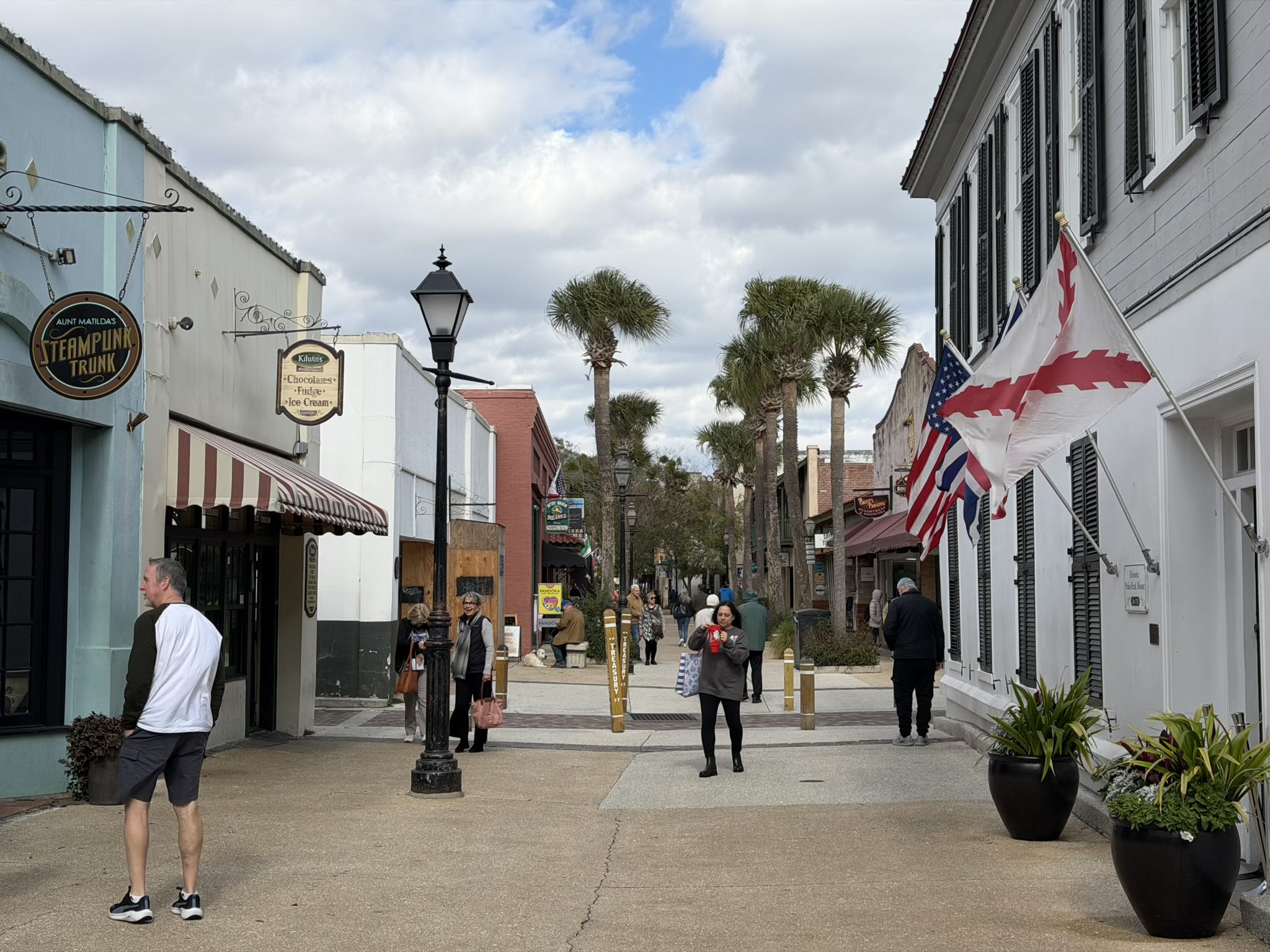
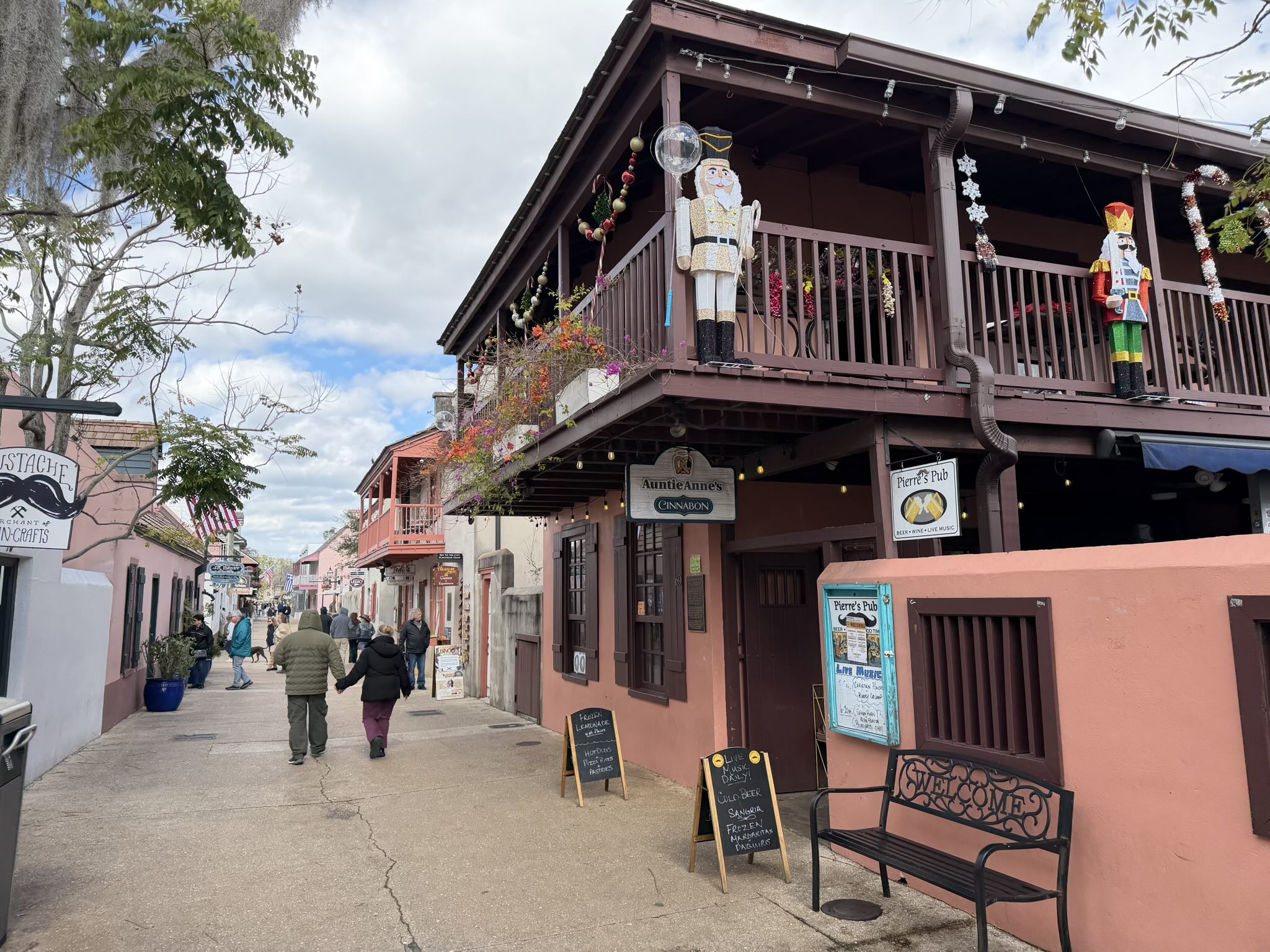
From there I wandered into the city center, which carries the unhurried confidence of a place that knows exactly what it is. There are pubs, art galleries, and restaurants in colonial-era buildings, and the streets retain the pleasantly uneven texture of places where parking lots have never entirely won. Near the fort I passed several reconstructed colonial Spanish homes, all built from coquina.
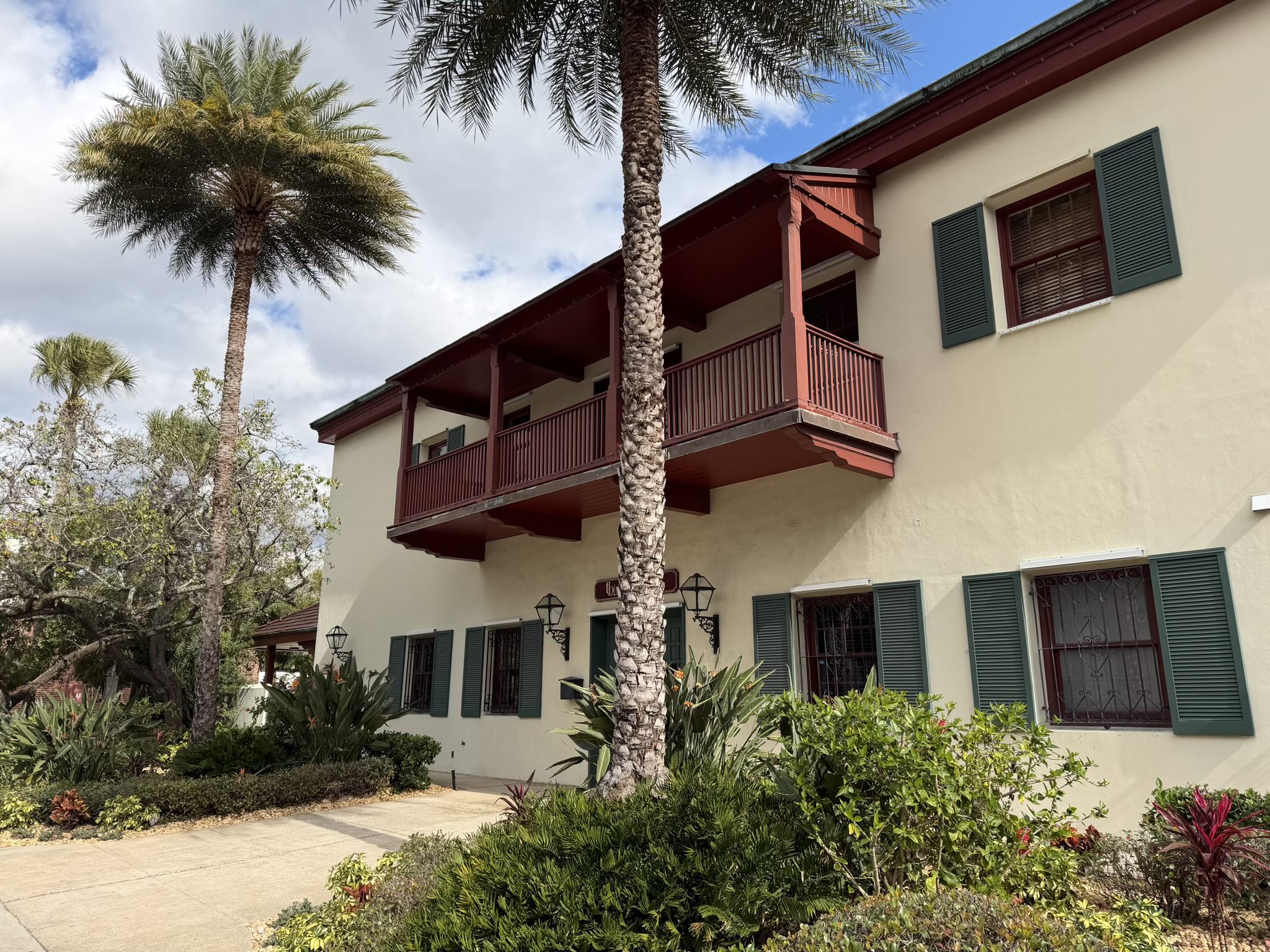
One, called the Gallegos House, was the home of an artilleryman named Martín Martínez Gallegos—though it was his wife Victoria who brought the property into the marriage, which leaves certain questions about Martín’s career ambitions unanswered. The house was reconstructed in the 1960s using colonial-era techniques: tabby made from local oyster shells, one large divided room for sleeping and other indoor uses, with a loggia on the south side.
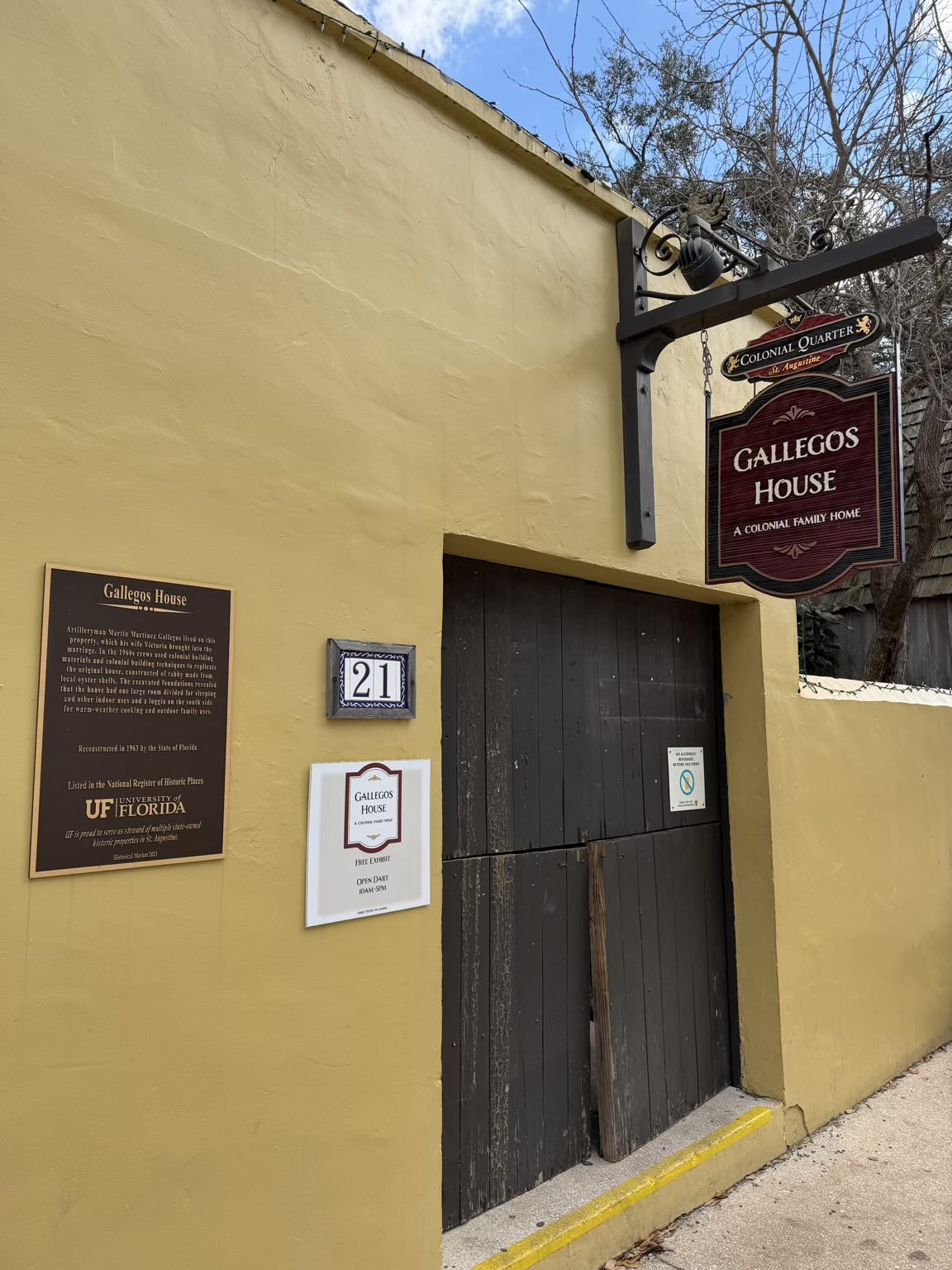
Standing in front of it, you feel like you are visiting someone’s home rather than a museum, which is the best kind of historical site.
A few steps away stands the House of Juan de Rivera, rebuilt to replace a structure that was deliberately burned in 1702 to prevent English troops from using it as cover while shooting at the Castillo—which stood just 750 feet away. The sacrifice worked. The English still couldn’t take the fort.
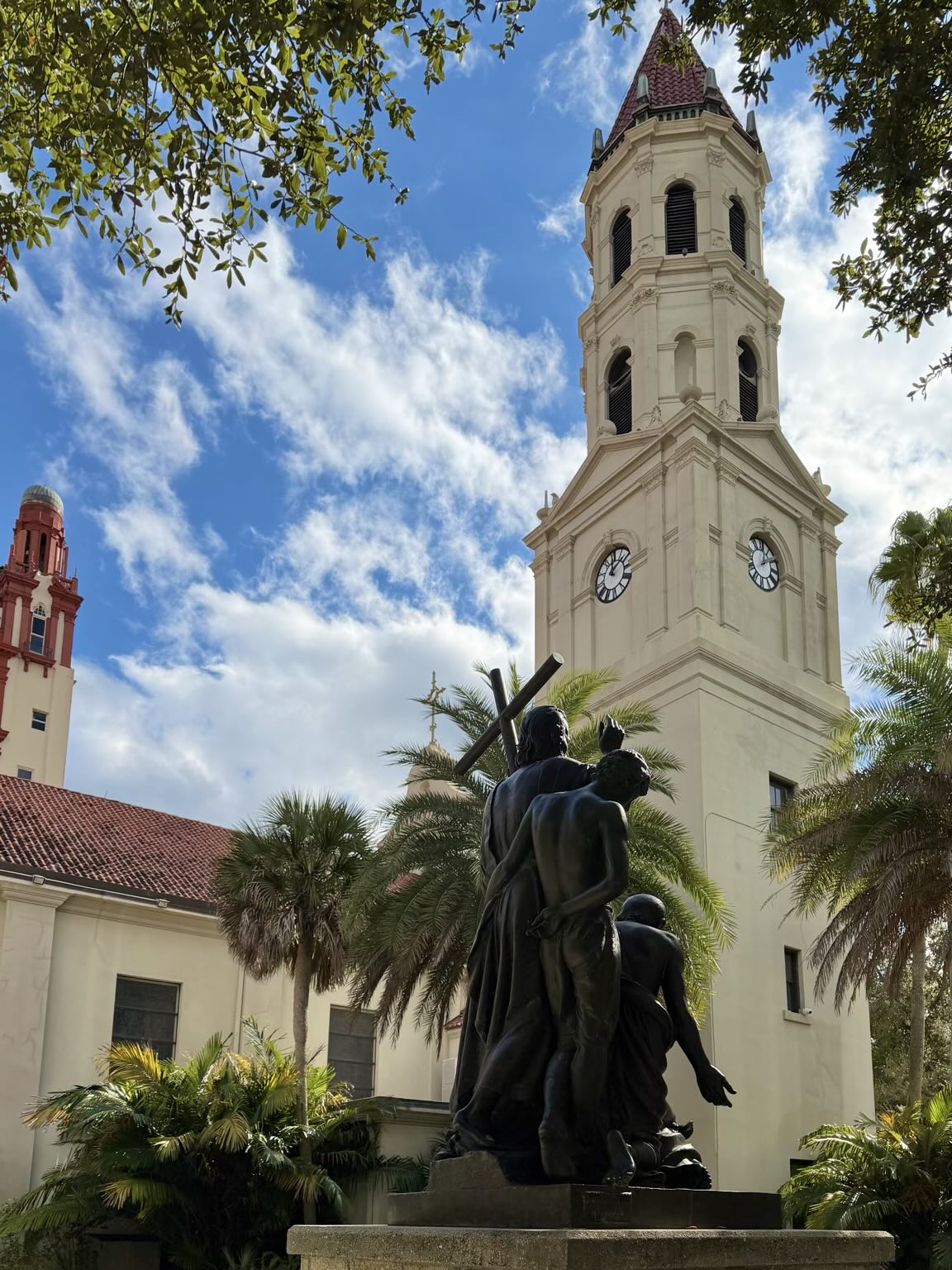
Nearby is a bronze sculpture of Father Pedro Camps, created by Barcelona sculptor Josef Viladomat.
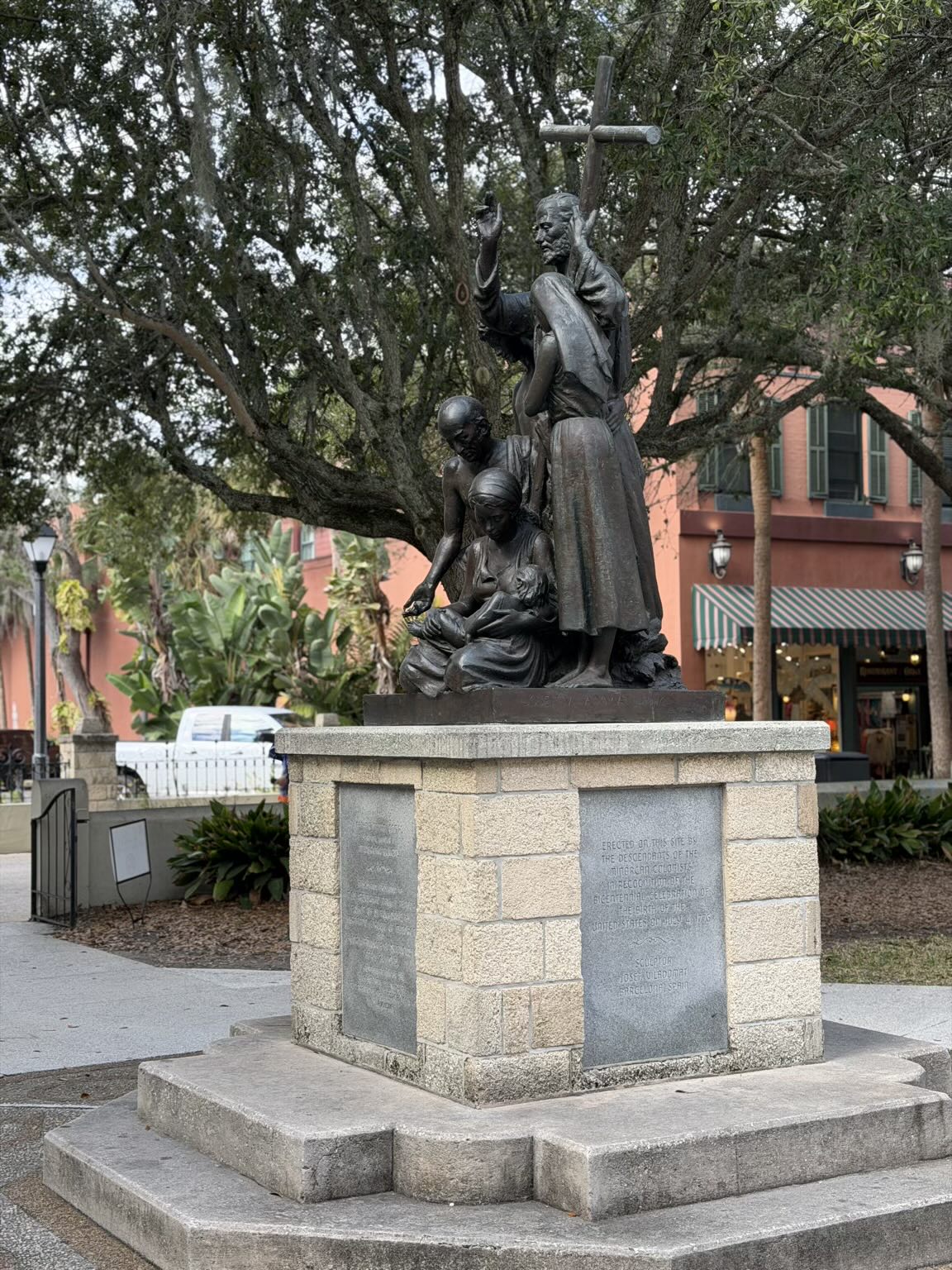
Father Camps arrived from the island of Minorca in 1768 and spent his life keeping the Catholic faith alive during the British occupation of the city—a tenure that lasted until 1784, six years after the Declaration of Independence. He was eventually interred under the main altar of the Cathedral Basilica of Saint Augustine, which stands nearby and holds the distinction of being America’s first parish, founded the same day the city itself was born. St. Augustine, it seems, had its priorities in order from day one.
For anyone considering the city as more than a day trip, the numbers are worth noting. Per city-data.com, the cost of living index is 9% below the national average—amazing for a city with this much character and this close to the ocean. The crime index, however, is a little above the national average. But a good chunk of the property crime statistics are inflated by the tourist traffic in the historic core, the same effect that makes any heavily visited downtown look worse on paper than it feels on foot. The residential areas consistently rank among the safest in Florida.
I left St. Augustine in the late afternoon with that particular sensation you get from a city that was still mid-sentence when you had to leave. A couple of hours is enough to understand why people move here. It is nowhere near enough to understand why anyone would ever leave.