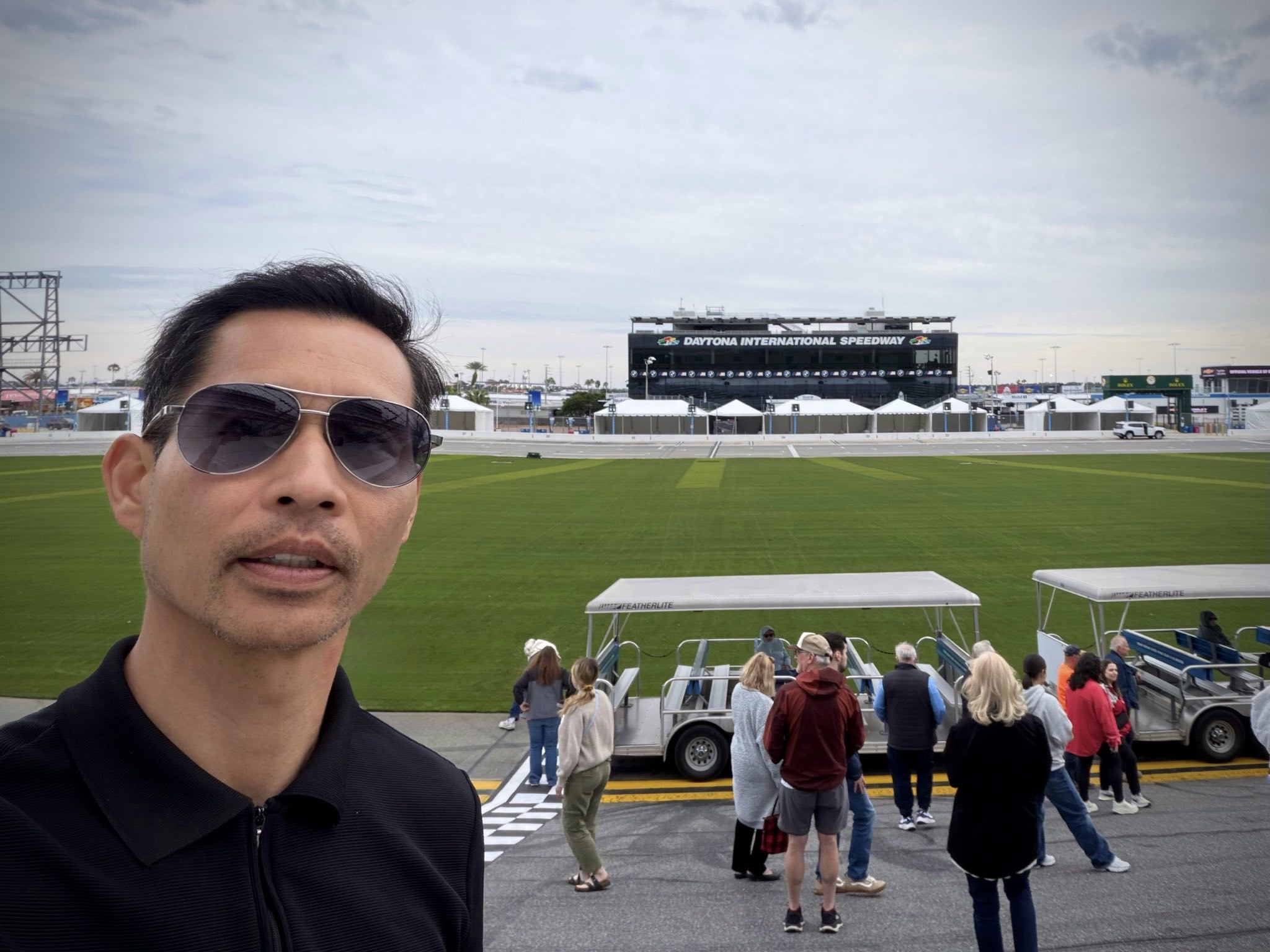
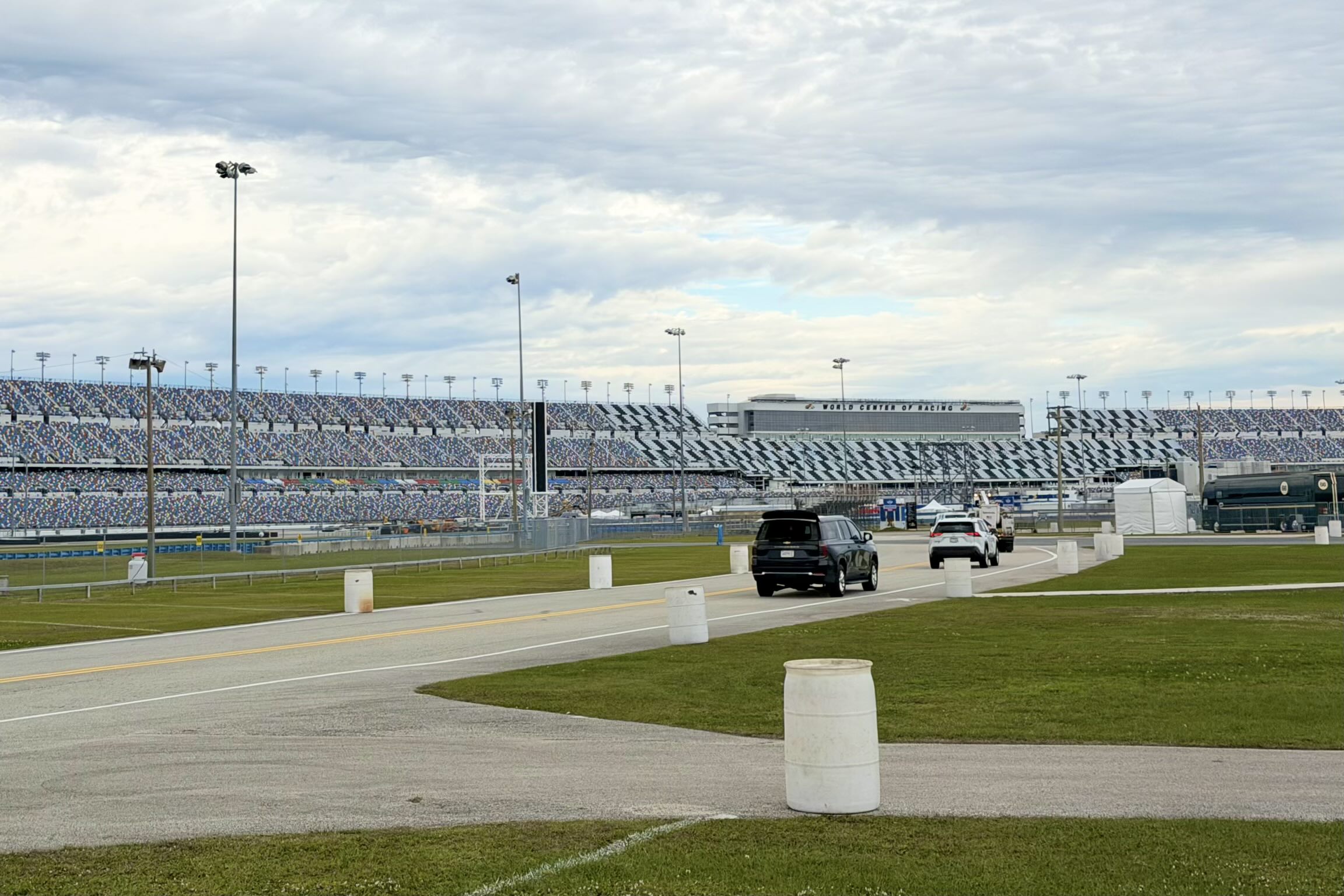
Daytona International Speedway on Foot

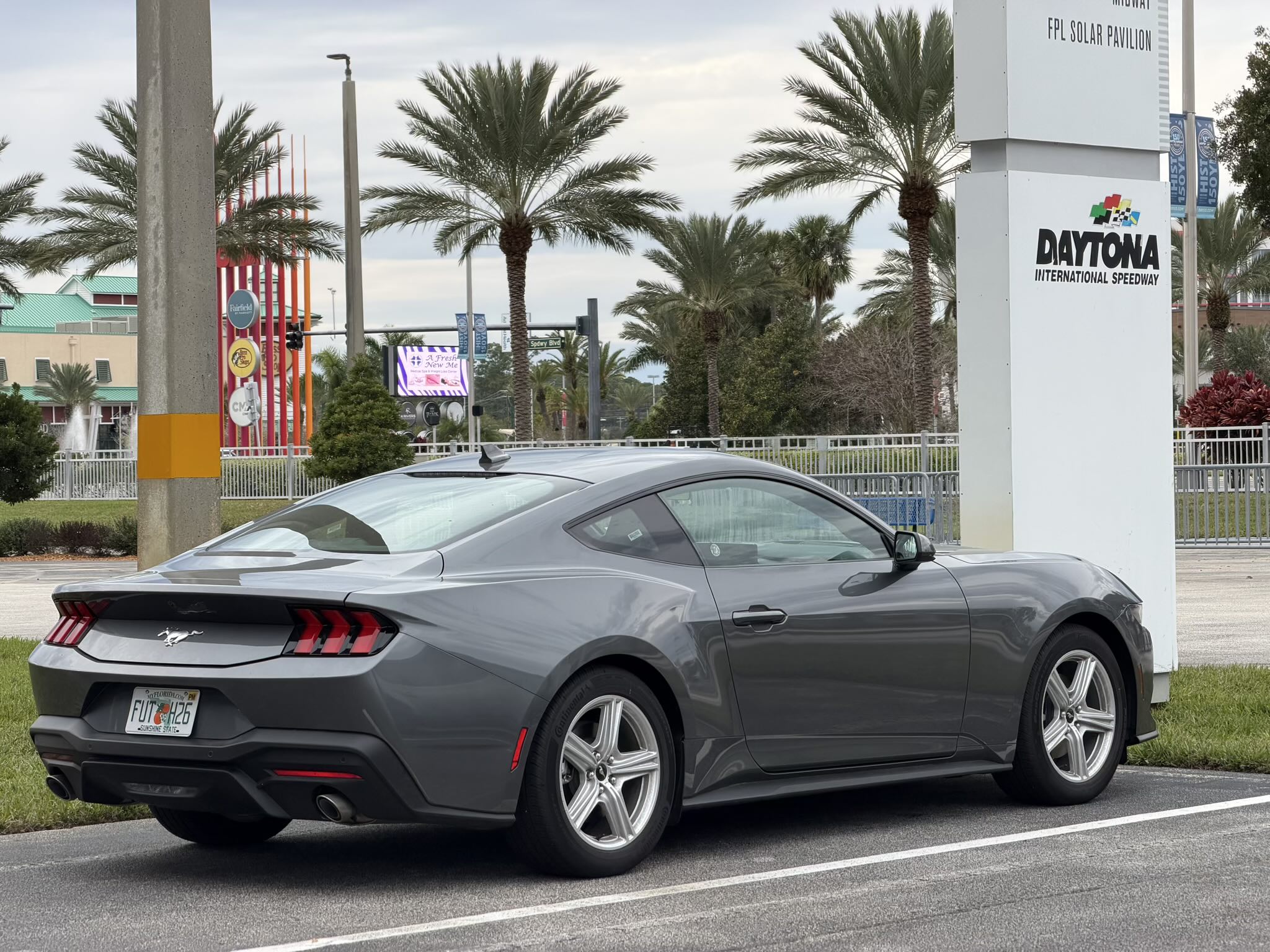
As someone who has never watched the Daytona 500 in its entirety—the cars go fast, I grant them that, but they also go in circles for three hours—I surprised myself by pulling off I-95 to spend an afternoon at the track. I was driving north from Orlando toward Jacksonville for a Florida marathon, one installment in my ongoing quest to break four hours in all 50 states, and Daytona Beach sat squarely on the route. The rental car, as if assigned by a casting director, was a 2025 Ford Mustang.
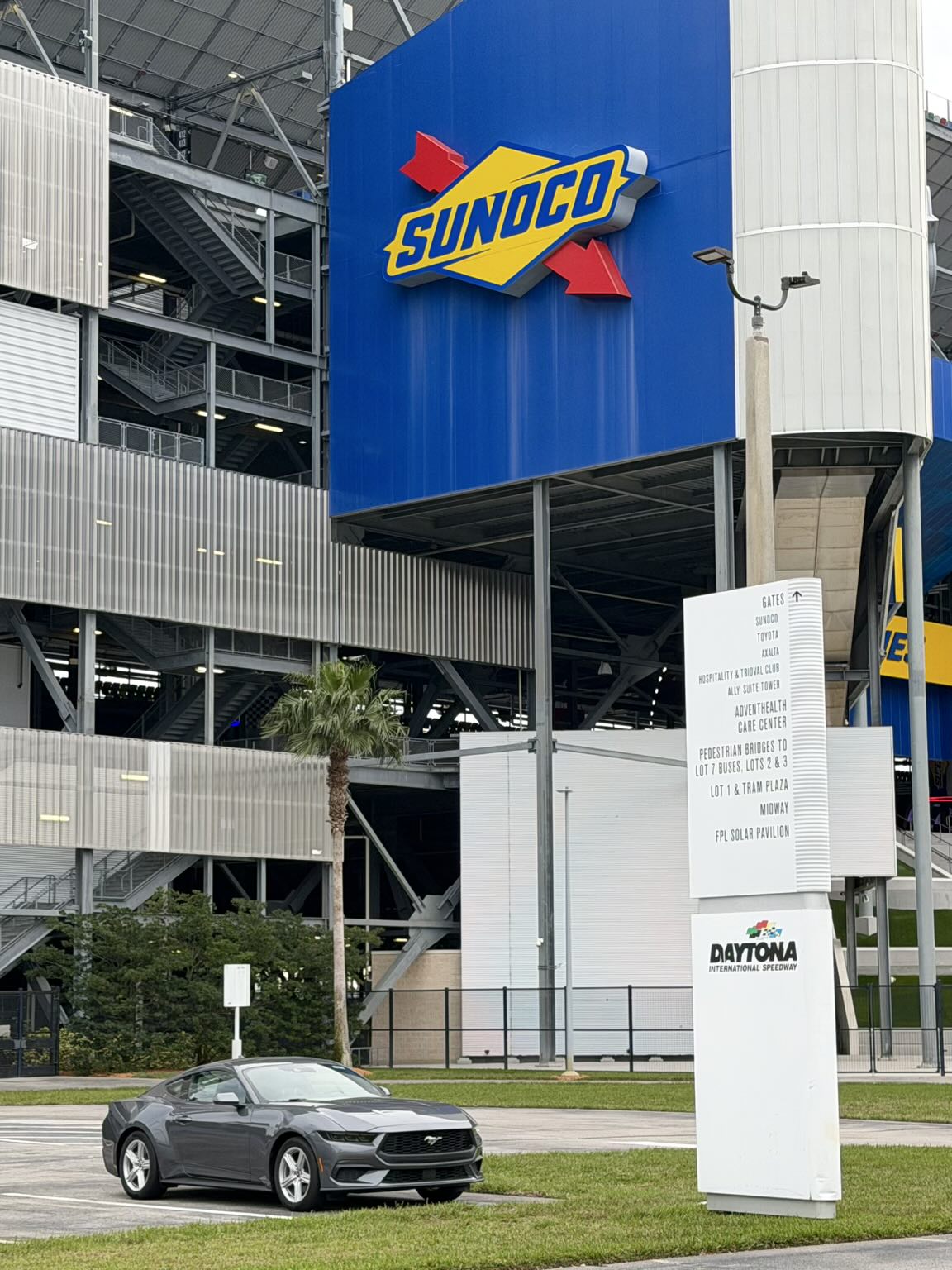
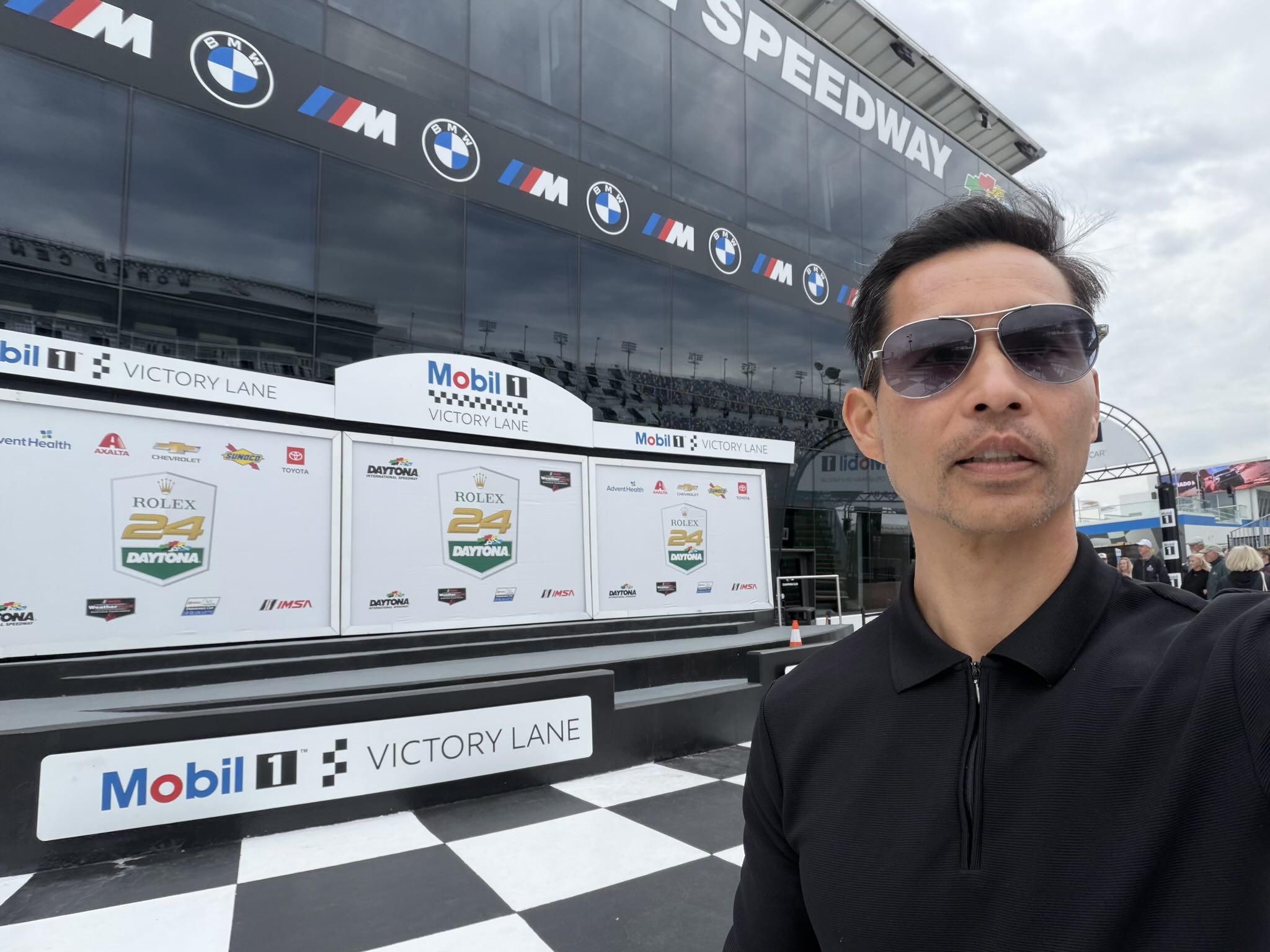
The day was cold and blustery—a meteorological detail that Florida had apparently not cleared with its own tourism board, and that my jacket, still folded in the back seat, would have appreciated knowing sooner. At the ticket window I signed up for the 1.5-hour tram tour of the facility. The next departure was an hour away, which worked out perfectly: there was a museum to explore.
The Museum
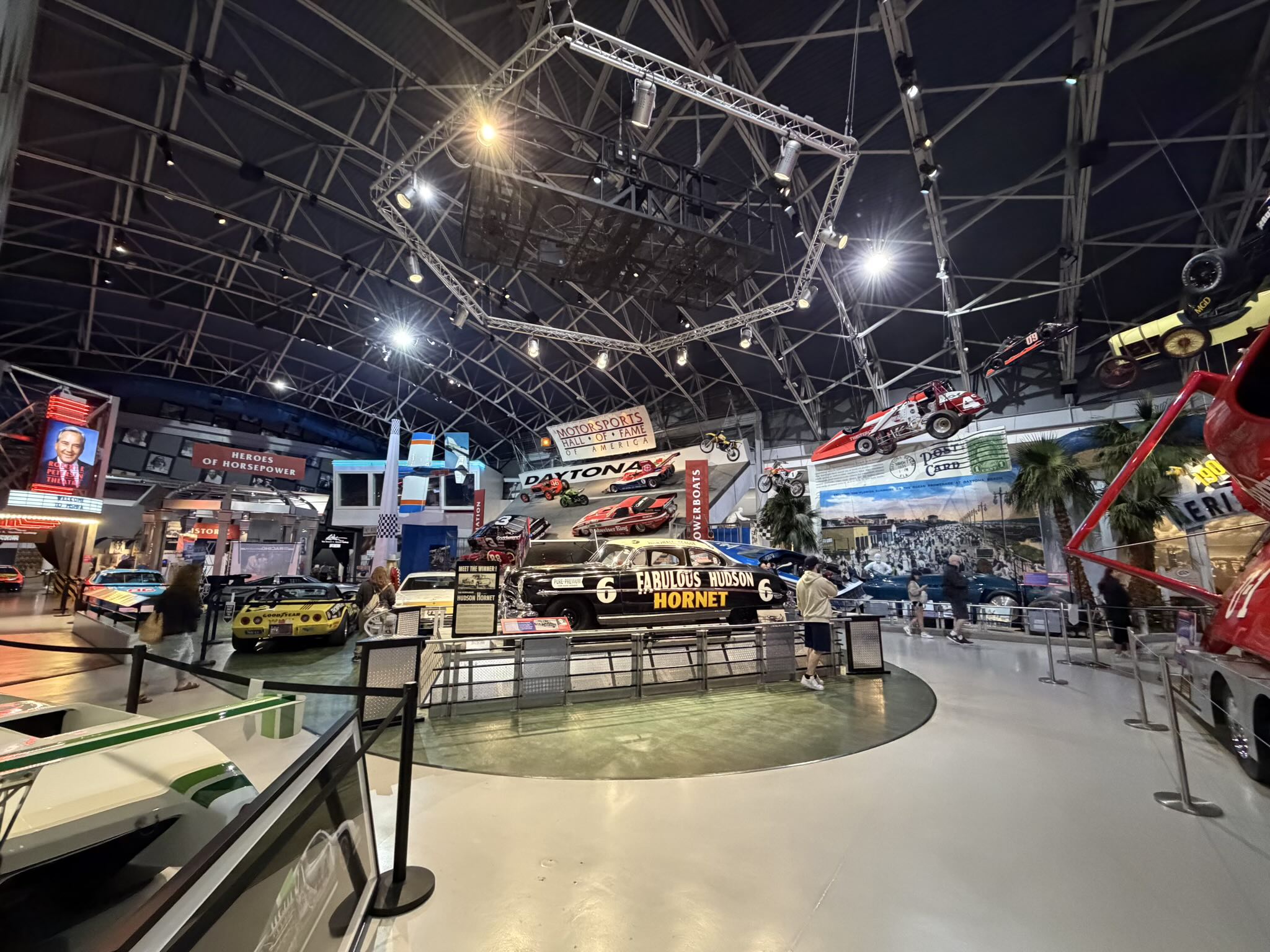
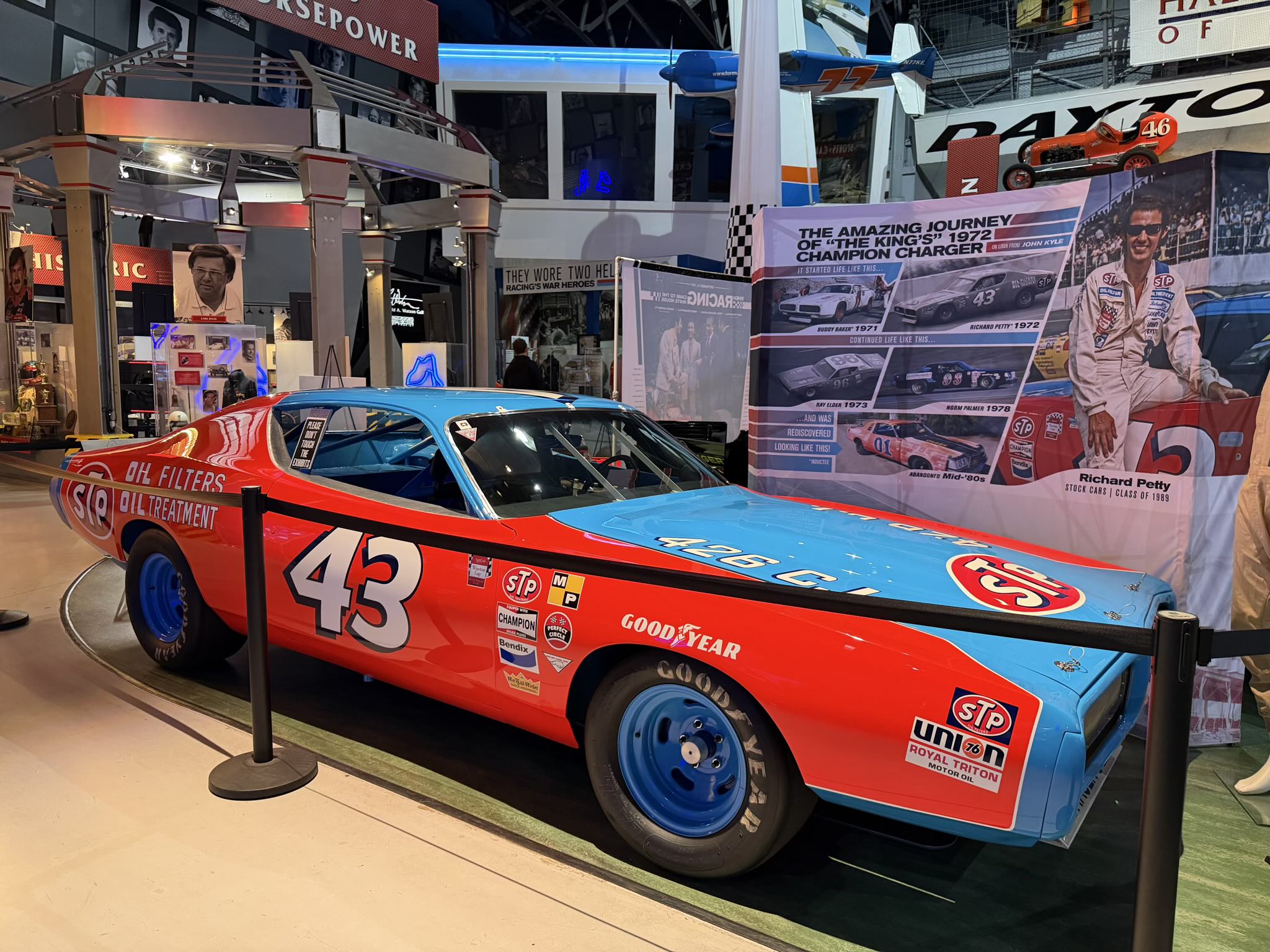
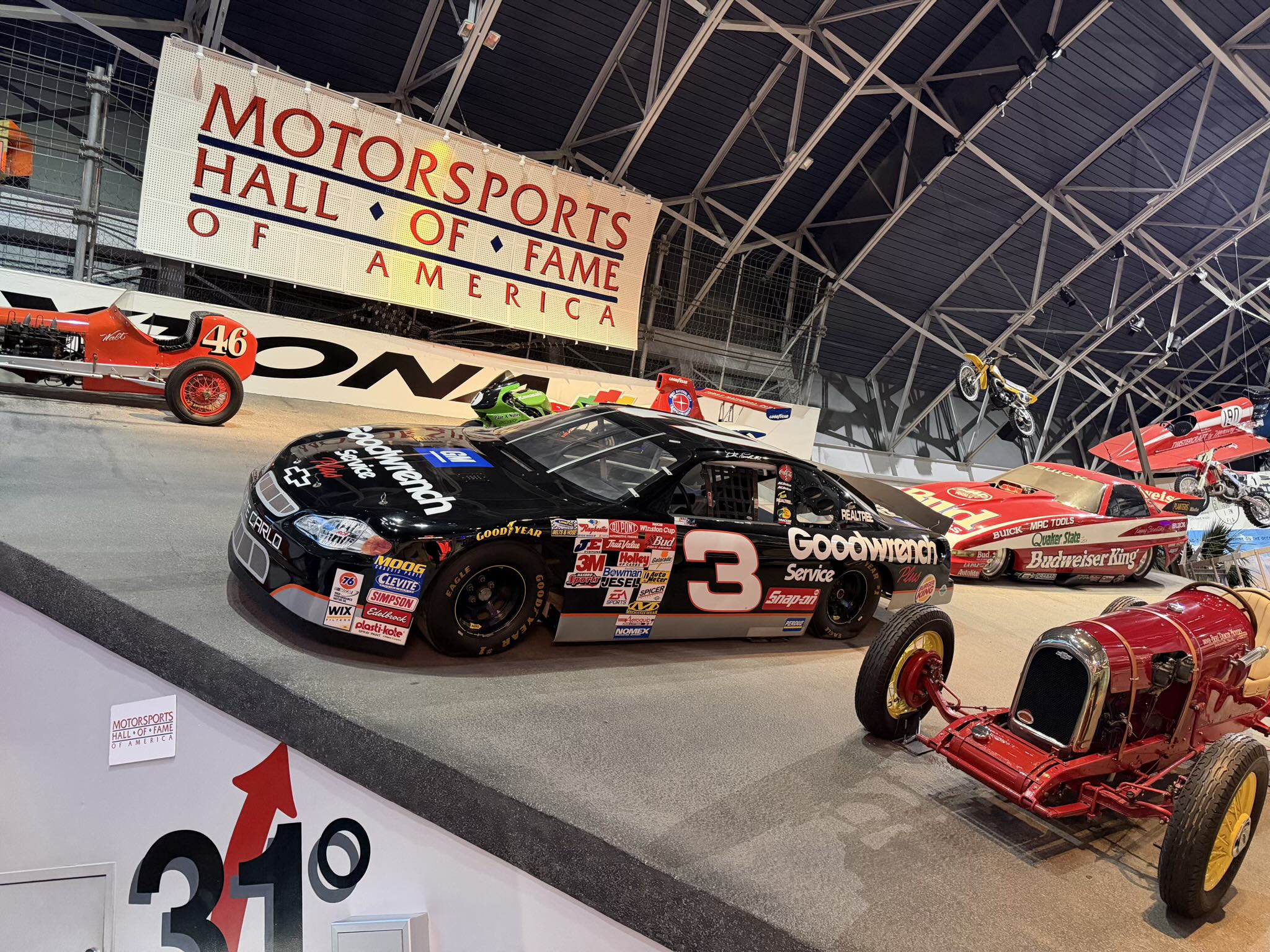
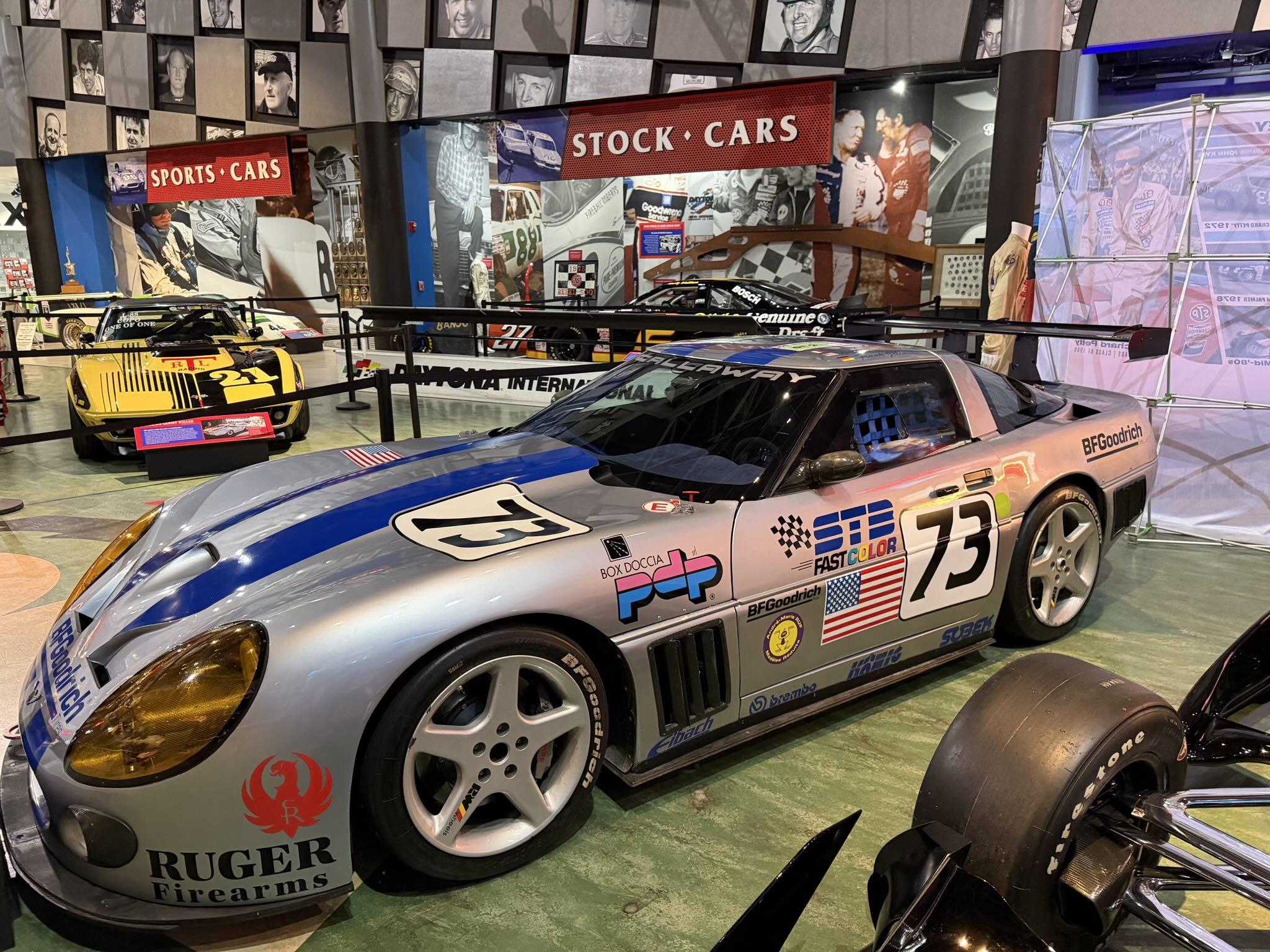
The Daytona International Speedway museum is the kind of place where car enthusiasts develop a slow, glassy-eyed walk—the way people move in art galleries when a painting refuses to let them go.
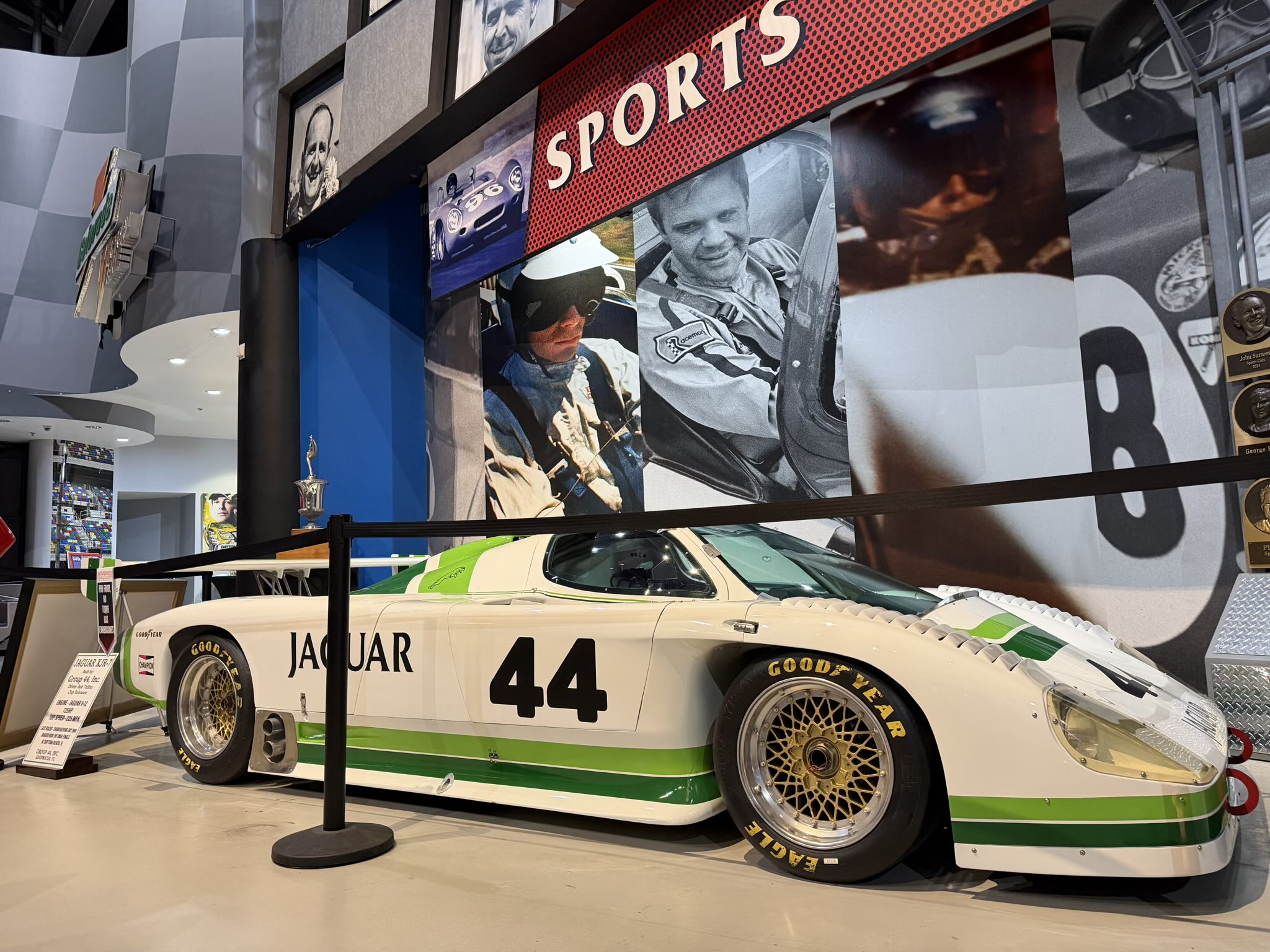
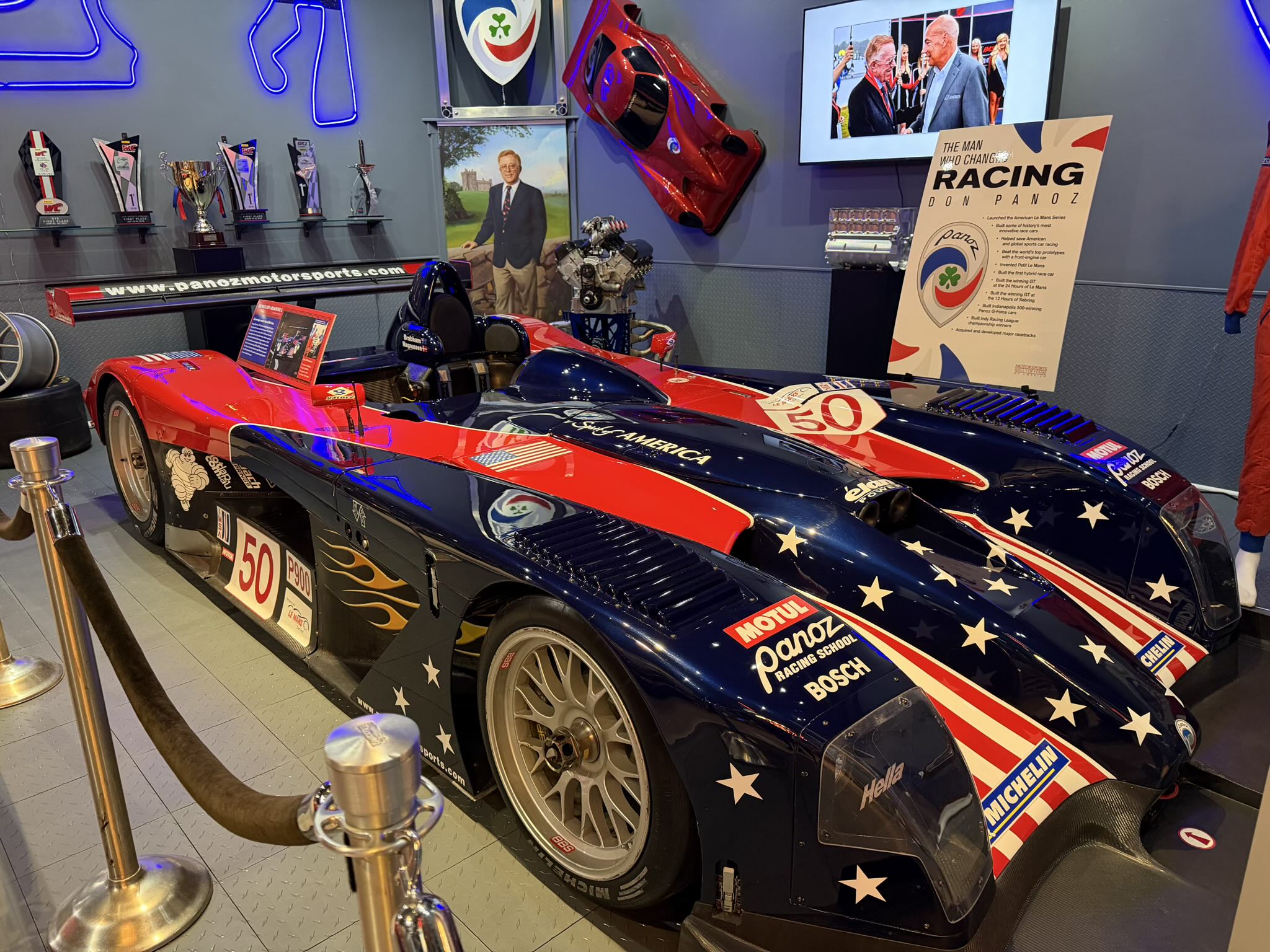
The Hudson Hornet—a car so dominant in early NASCAR that it eventually forced the competition to redesign around it—stood as one of the anchors of the collection. Nearby sat the Group 44, Inc. Jaguar XJR-7, Bob Tullius’ multi-race V12 IMSA GTP winner: 738 horsepower and a top speed of 225 miles per hour wrapped in a silhouette that looks more like a fever dream than a road car. Rusty Wallace’s 1994 Ford Thunderbird—his most successful stock car racer—wore its livery like a badge of hard miles. And the 2002 Panoz LMP-1 Roadster S earned a second look simply because, unlike virtually every other prototype of its era, it was front-engined—an architectural choice that gave it the profile of a contrarian at a committee meeting.
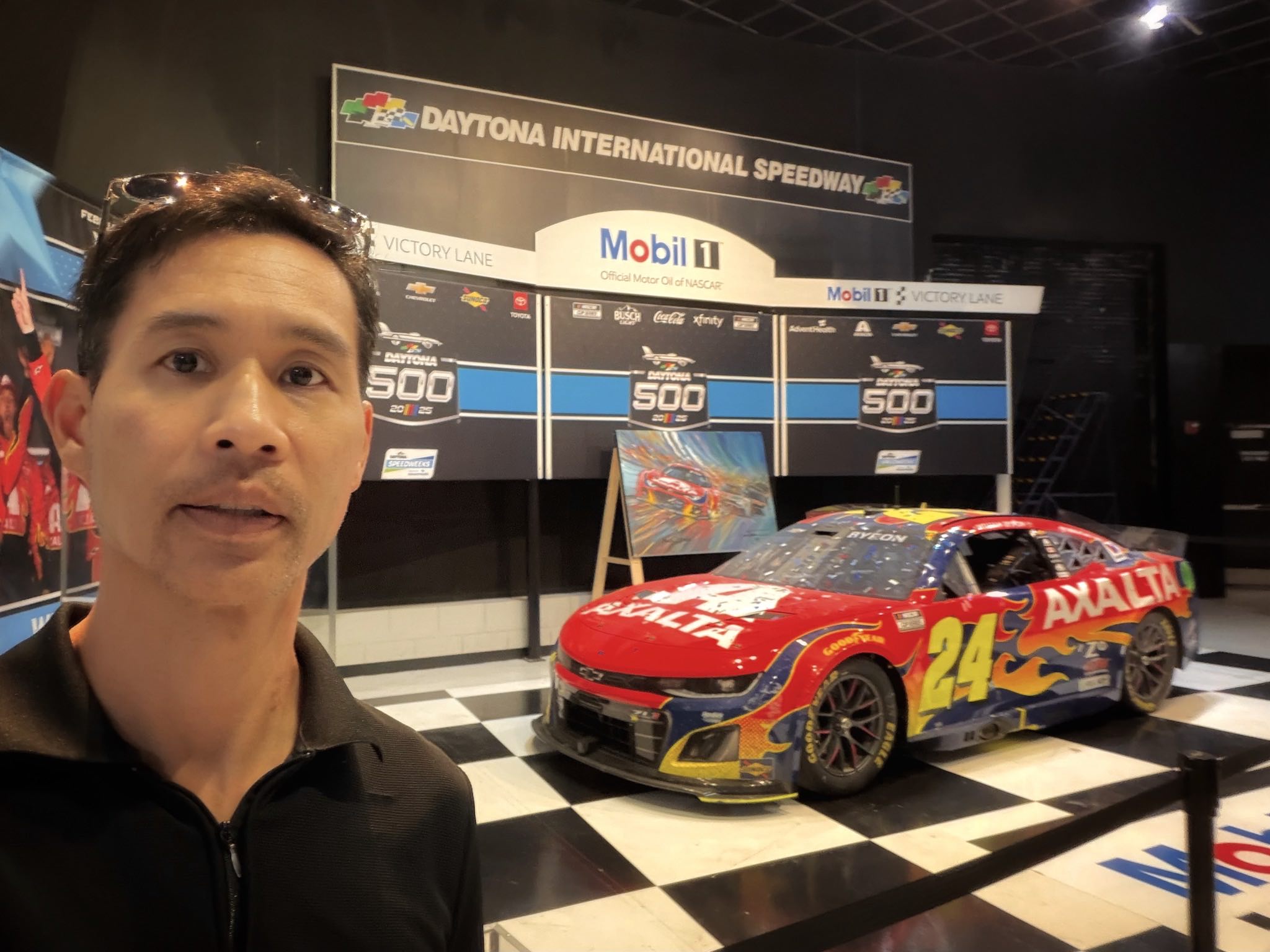
The newest addition was William Byron’s Chevrolet, fresh off winning the 2025 Daytona 500 eleven months ago. Standing next to it, I could see the scuff marks. History practically still warm to the touch.
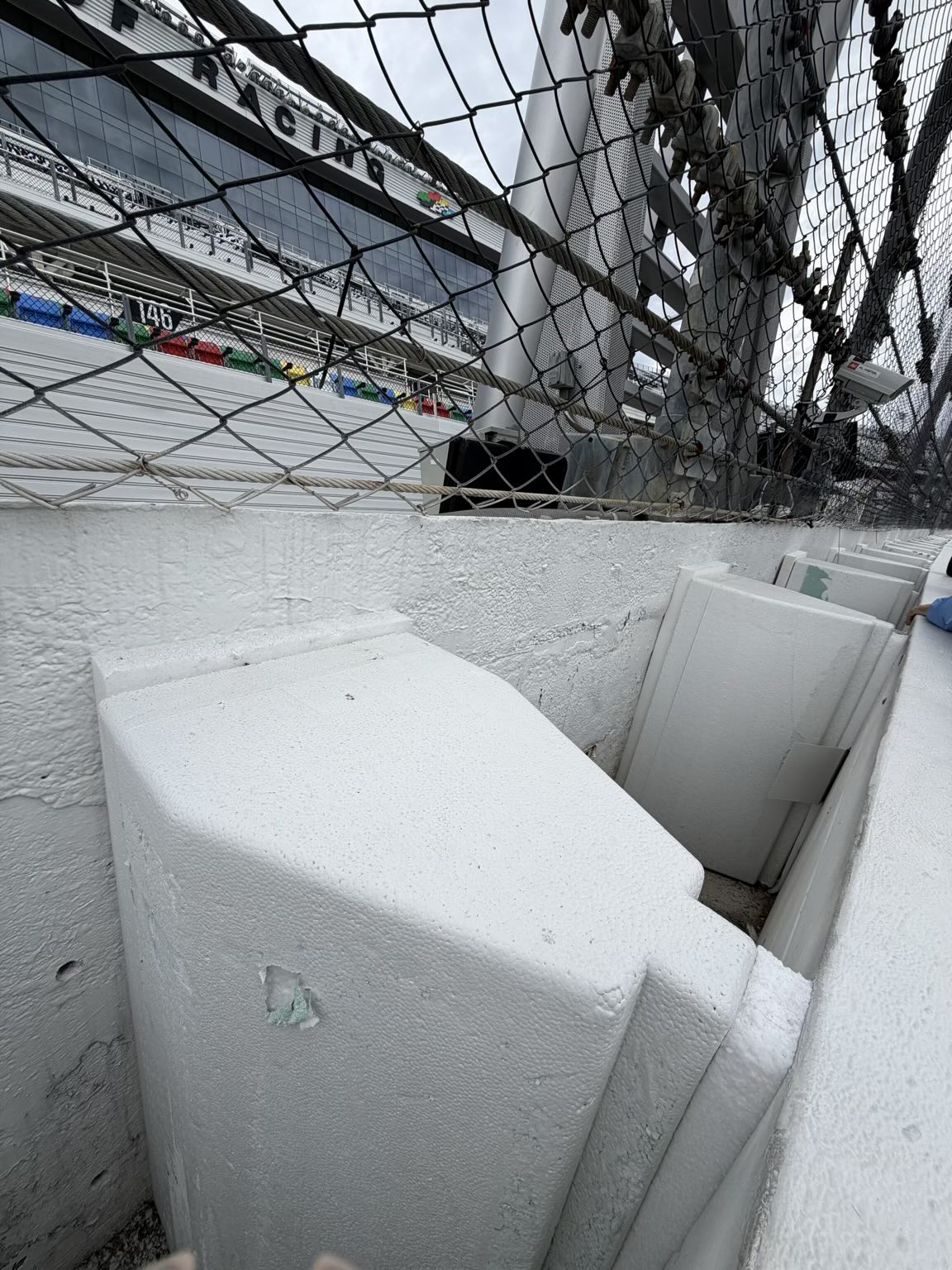
One exhibit stopped me entirely: the story of the SAFER barrier—the Steel And Foam Energy Reduction “soft wall” system developed in the late 1990s by Dr. Dean Sicking and his team at the University of Nebraska-Lincoln. Speedway racing had for over a century built its walls thick and rigid, which kept the spectators safe and the physics merciless. The SAFER system changed that by absorbing and redirecting the energy of an impact rather than throwing it straight back.
Its widespread adoption followed the death of Dale Earnhardt at the 2001 Daytona 500, one of the sport’s most sobering moments. I still remember vividly the day when I read about the shocking passing of the Intimidator while I was living and working in Fremont, California. Since the barriers’ full deployment in 2004, there have been no deaths or serious injuries from wall impacts. A modest-looking row of foam and steel; an enormous ledger it never had to fill.
The Tram Tour
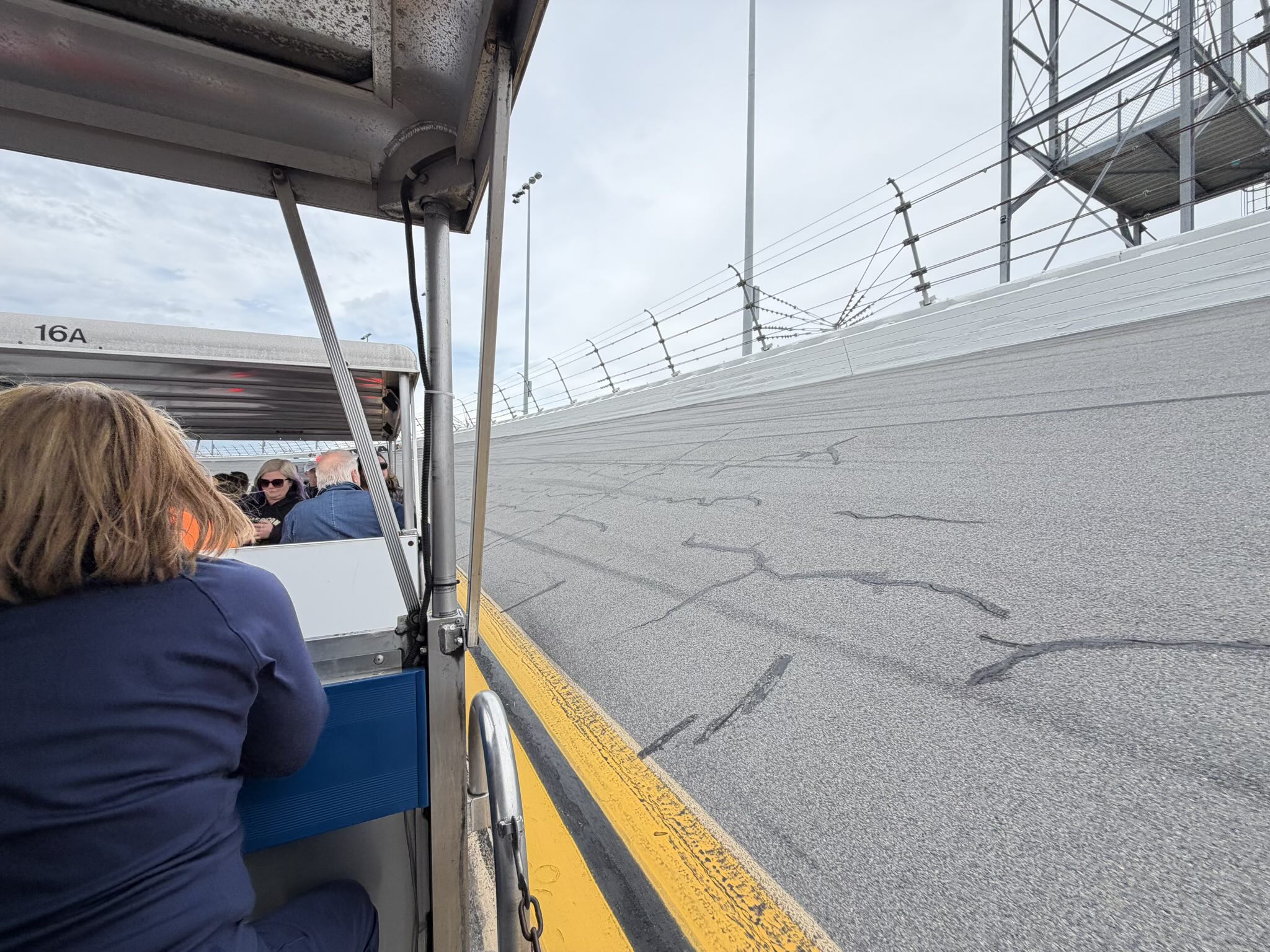
The tram—open-air benches pulled by a pickup truck, the speedway equivalent of a wine-country shuttle—departed on schedule, and the tour guide spent 90 minutes recalibrating my sense of scale with a steady supply of facts.
The banking was the first revelation. Arial television coverage of the Daytona track does not prepare you for looking up at it from track level: the corners bank at up to 31 degrees, steep enough that you could not stand on the asphalt without sliding (or rolling). The sensation at the base of the banking was something between a skateboard halfpipe and a building facade.
Inside the infield, a shorter flat track nests within the main oval—Daytona is essentially two racetracks sharing a postal code—used for motorcycle racing and other events. Even triathlon!
From the tram, the contrast between the nearly flat infield circuit and the steeply canted outer oval gave the whole complex the geometry of an optical illusion.
In the Stands
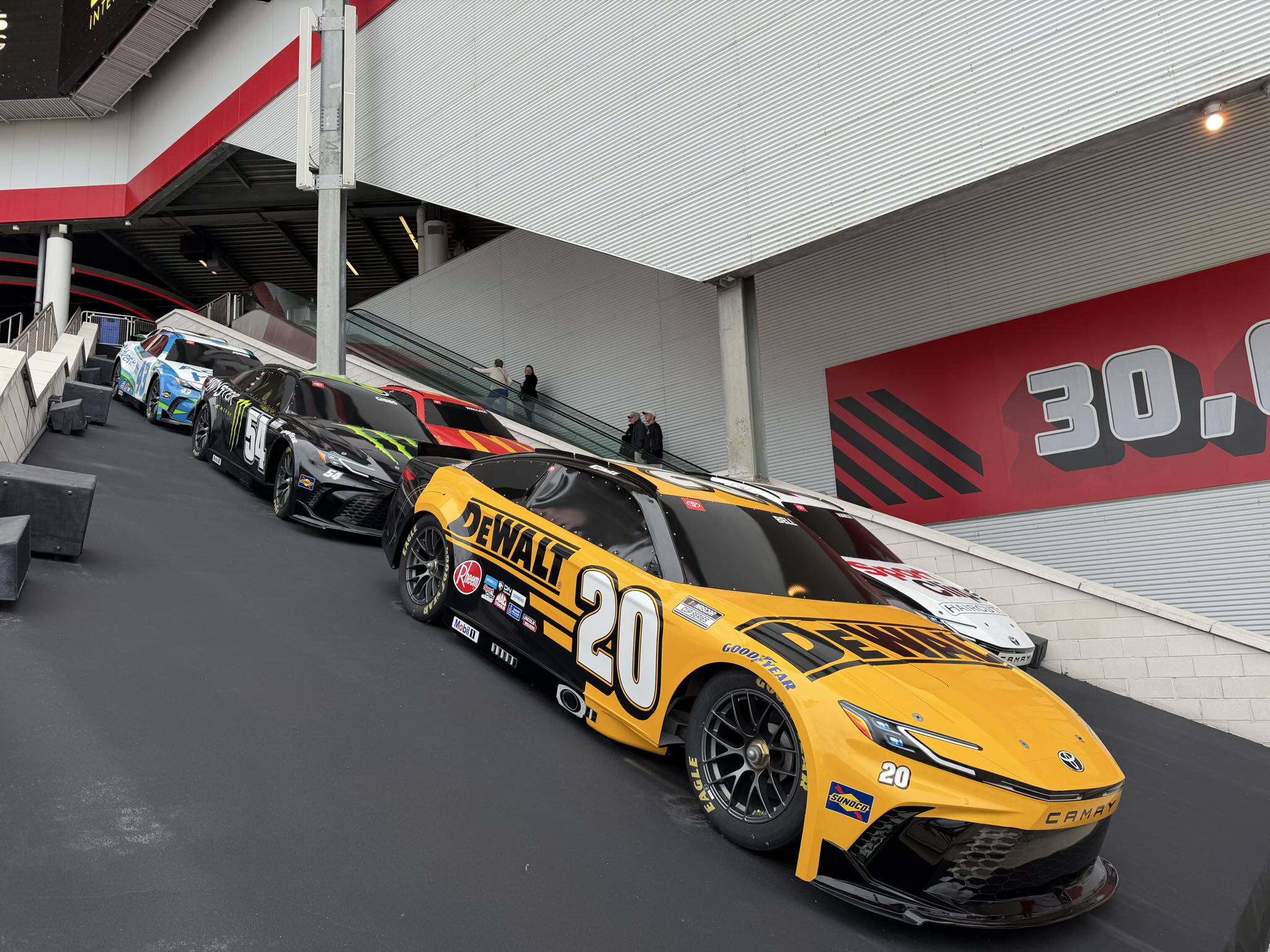
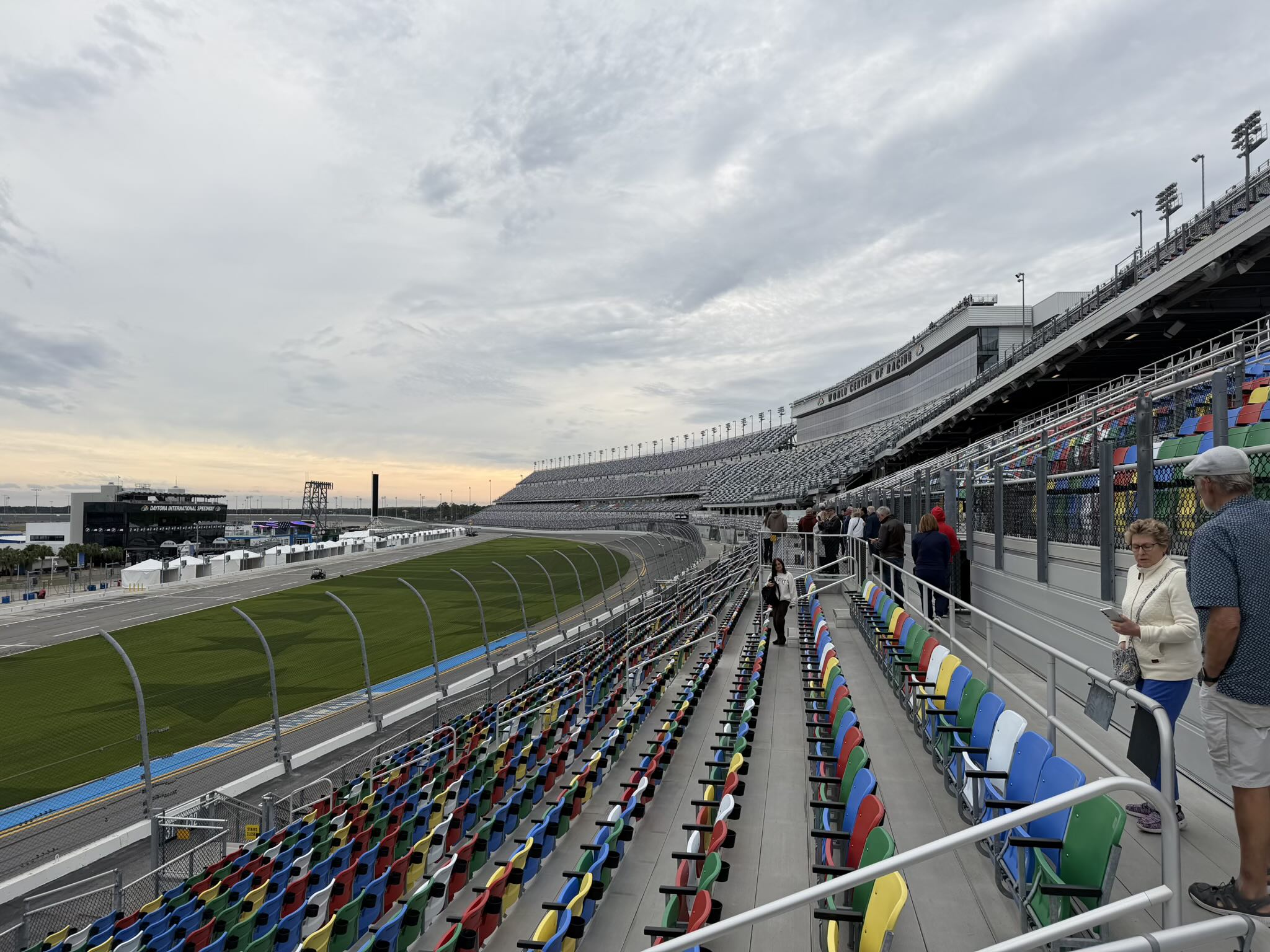
Inside the speedway building, one statistic came early and stuck: Daytona International Speedway has more escalators than any outdoor venue in the United States. When the facility was originally built, its construction consumed one percent of the entire U.S. steel production capacity. A stadium that required its own line item in the national metals budget.
The seats told a quieter story. They are installed in an assortment of colors—not for aesthetic variety, but so that when the cameras are rolling and the grandstands are less than capacity, the patchwork of hues creates the visual impression of a packed house on television. A crowd rendered entirely in vividly colored paint.
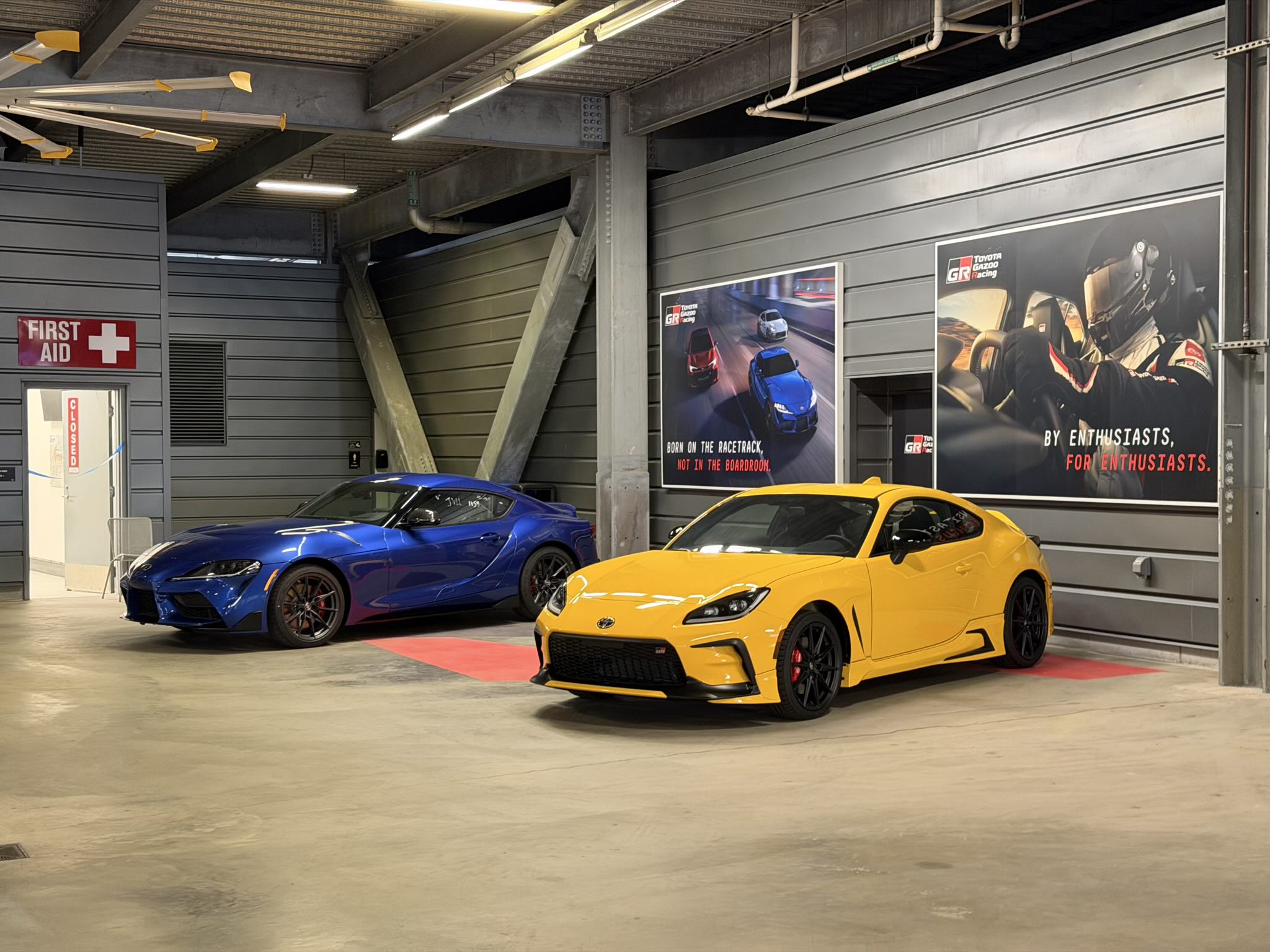
Near one of the lower concourses, a Toyota Supra and GR86 sat beneath a sign reading “born on the racetrack, not in the boardroom—for enthusiasts by enthusiasts.” As a Cannondale-riding, manual-transmission-preferring person who reads press releases with a healthy skepticism, I found this particular corner of the speedway speaking my language with unusual fluency.
I arrived as someone who has never sat through a complete Daytona 500. I left as someone who would.