Finding Magic at the U.S. Space & Rocket Center

I have always been more of a land person.
As a kid, I was fascinated by almost everything mechanical—bikes, cars, engines, gears, the satisfying click of something fitting perfectly into something else. But machines that flew through the air? They never quite grabbed me. I think I took flight for granted in the same way I took breathing for granted. Birds had been doing it for tens of millions of years. Bats even longer. Insects longer still. Flying seemed less like a human triumph and more like nature catching up to itself.
This manifested in my television choices. While other kids argued over Airwolf, I was firmly in the Knight Rider camp. A sleek black car that talked back and jumped over things? Now that was engineering worth celebrating. I could sympathize deeply with B.A. Baracus from the A-Team, whose terror of flying was the most relatable character trait on 1980s television.
As for Star Wars—I have still never seen it, which I mention at dinner parties approximately never, since it tends to produce the same expression people make when you tell them you’ve never tried pizza. I’ve seen one or two episodes of Star Trek. I watched the Jetsons, but those flying bubbles expelling a plume of exhaust did not exactly awaken a sense of wonder in me. The (admittedly hilarious) sitcom I Dream of Jeannie introduced me to astronauts, but in a way that raised more questions about gender dynamics in the 1960s than about orbital mechanics.
There’s also one more childhood memory I have relating to space. On a January morning in 1986, my school’s principal appeared at the classroom door and asked my teacher, Mrs. Shreve, for a quiet word outside. A few minutes later, they rolled in a television—one of those squat, impossibly heavy CRT sets that weighed roughly as much as two huge 50-pound sacks of rice, all glass and vacuum tubes and right angles—and turned on the news. The Space Shuttle Challenger had broken apart 73 seconds after launch, killing all seven people on board, including Christa McAuliffe, a schoolteacher from New Hampshire who had been chosen from among more than 11,000 applicants to be the first civilian in space. It wasn’t technically an explosion, though the whole world called it one; a failed O-ring seal caused the external fuel tank to collapse, and the resulting torrent of liquid oxygen and hydrogen did the rest. The distinction didn’t matter much to a room full of fifth graders watching in silence or (at least one girl) in tears. That was one awful tragedy.
Anyhow—now that you can see how my perceptions toward space vehicles were shaped—when I arrived in Huntsville, Alabama to run the Race to Space Marathon, my expectations for a visit to the U.S. Space & Rocket Center were modest. The marathon offered $10 off the $30 entrance fee, which was a nice gesture, but not the reason I went. I just knew, with the certainty of someone who has walked past enough museums in enough cities to develop a sense for these things, that this was a place I wanted to see. I would have paid full price without hesitation.
What I found inside turned out to be one of the coolest museums I have ever visited.
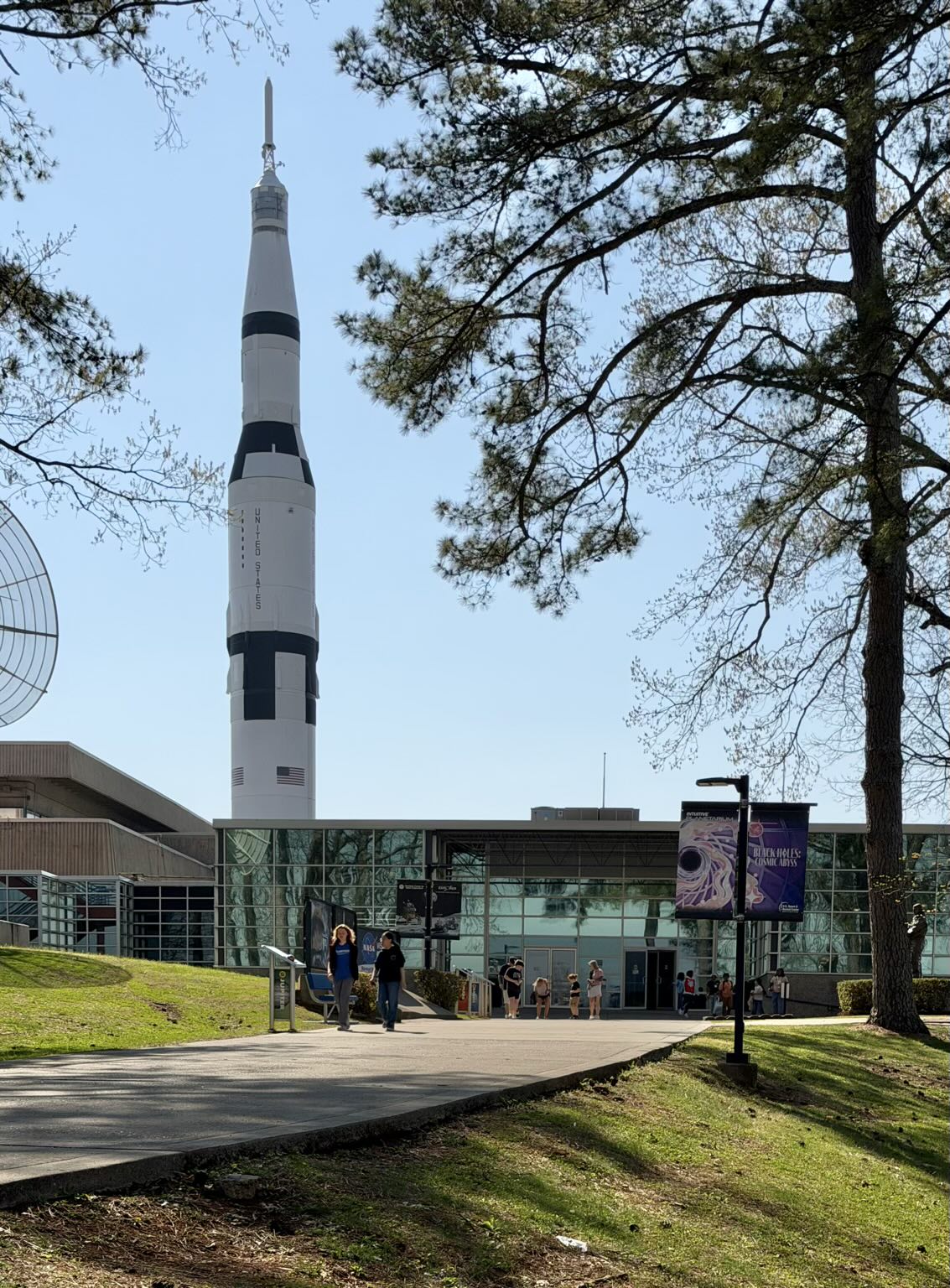
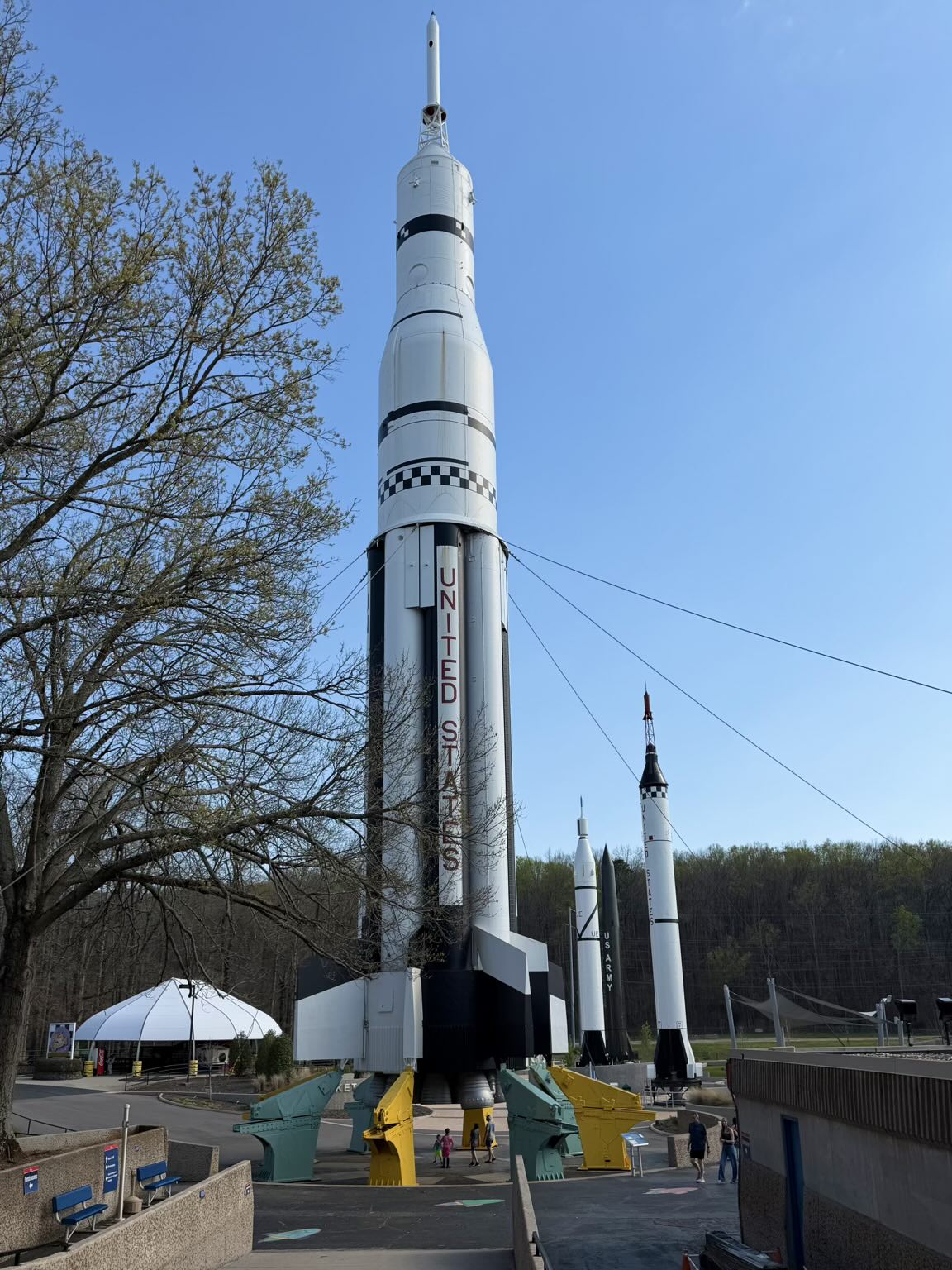
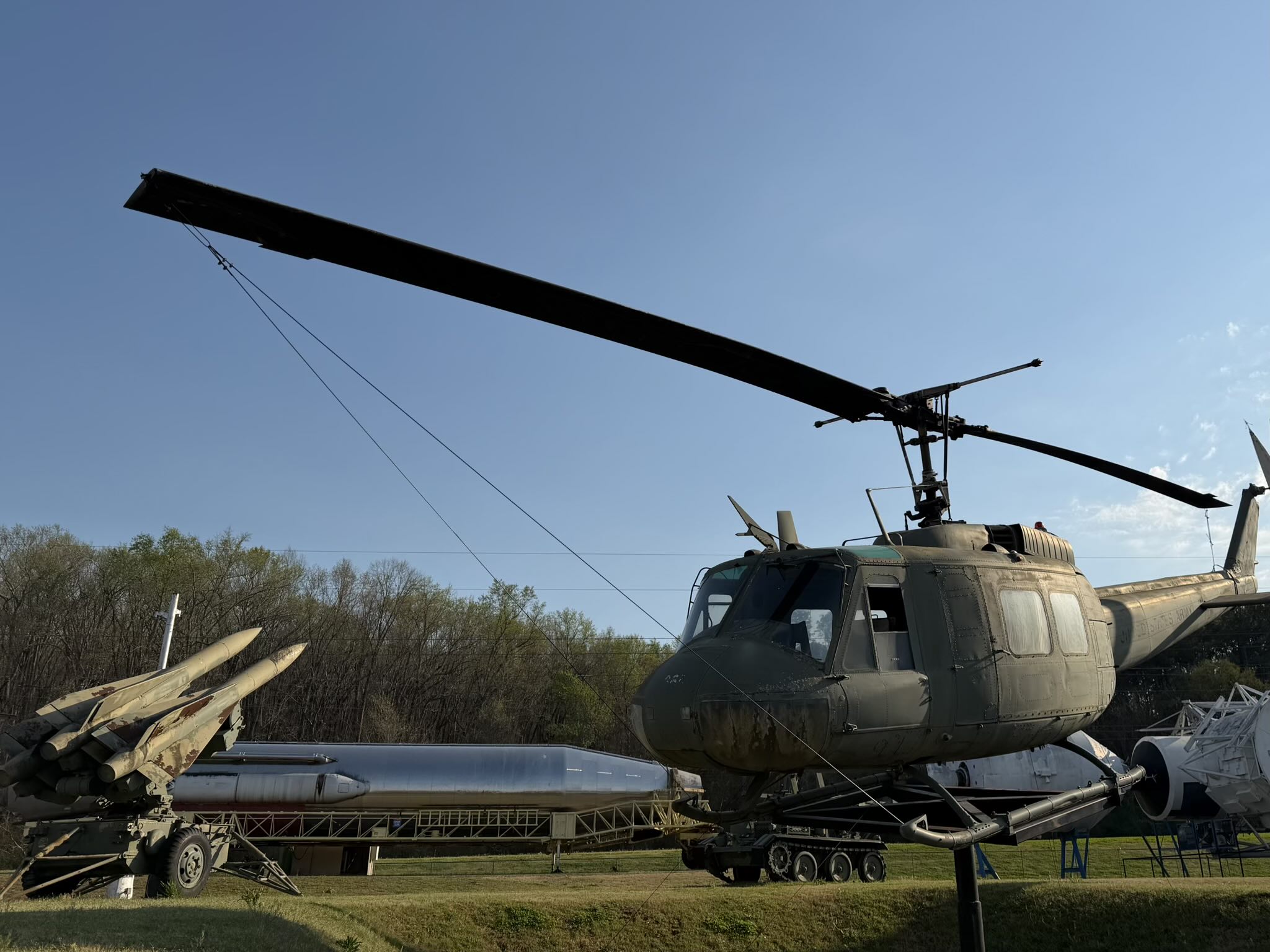
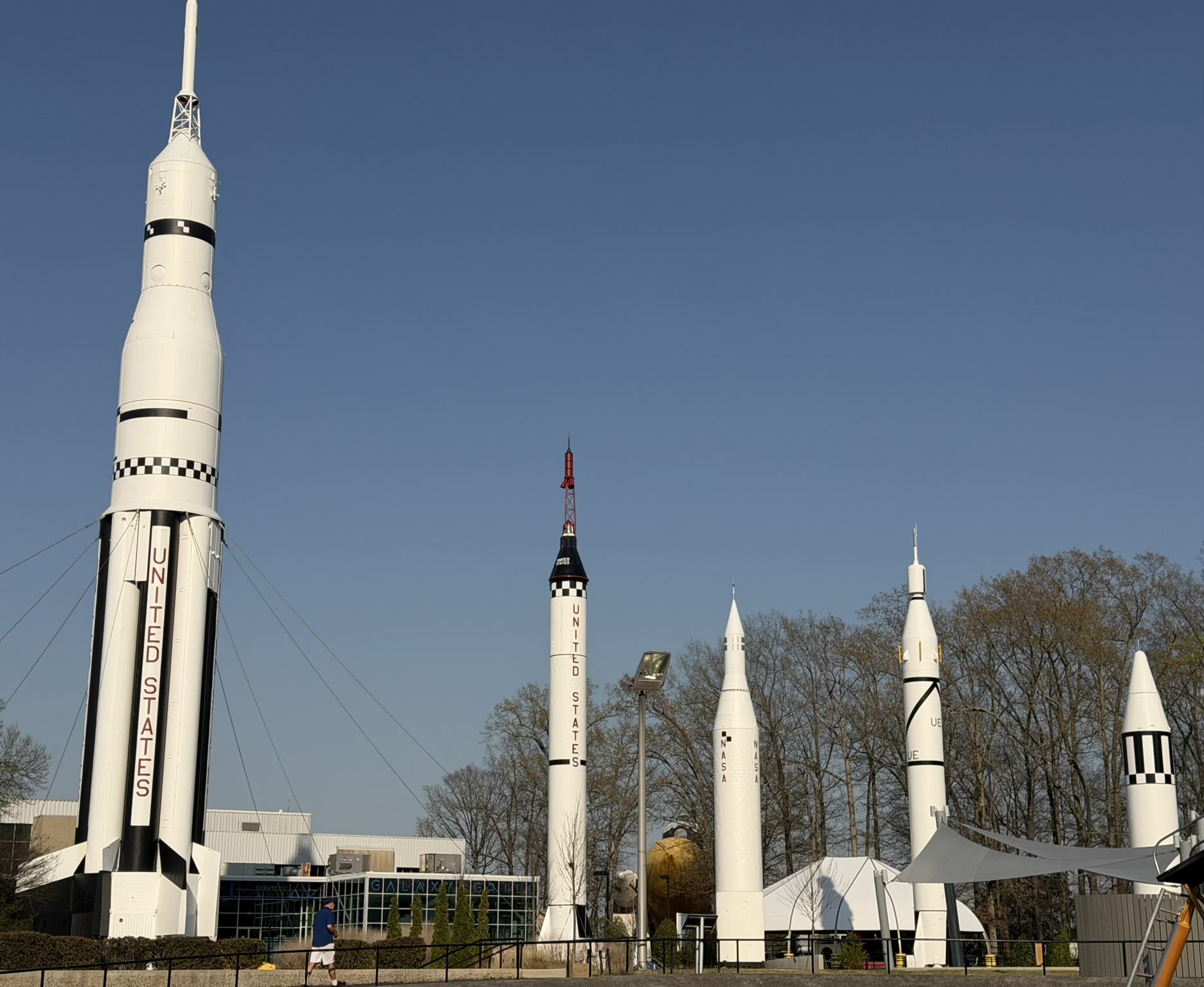
The outdoor grounds announce themselves immediately. Rockets of various sizes stand between the two main museum buildings like sentinels at a very ambitious garden party—Saturn I, the first American launch vehicle developed solely for space exploration, among them. Saturn I had a 100% mission success rate and was first static-tested right here in Huntsville, which seems like the kind of hometown detail worth putting on a bumper sticker. Nearby, a missile launcher and military helicopter sit alongside other hardware, reminders that the line between defense technology and space exploration has always been blurry.
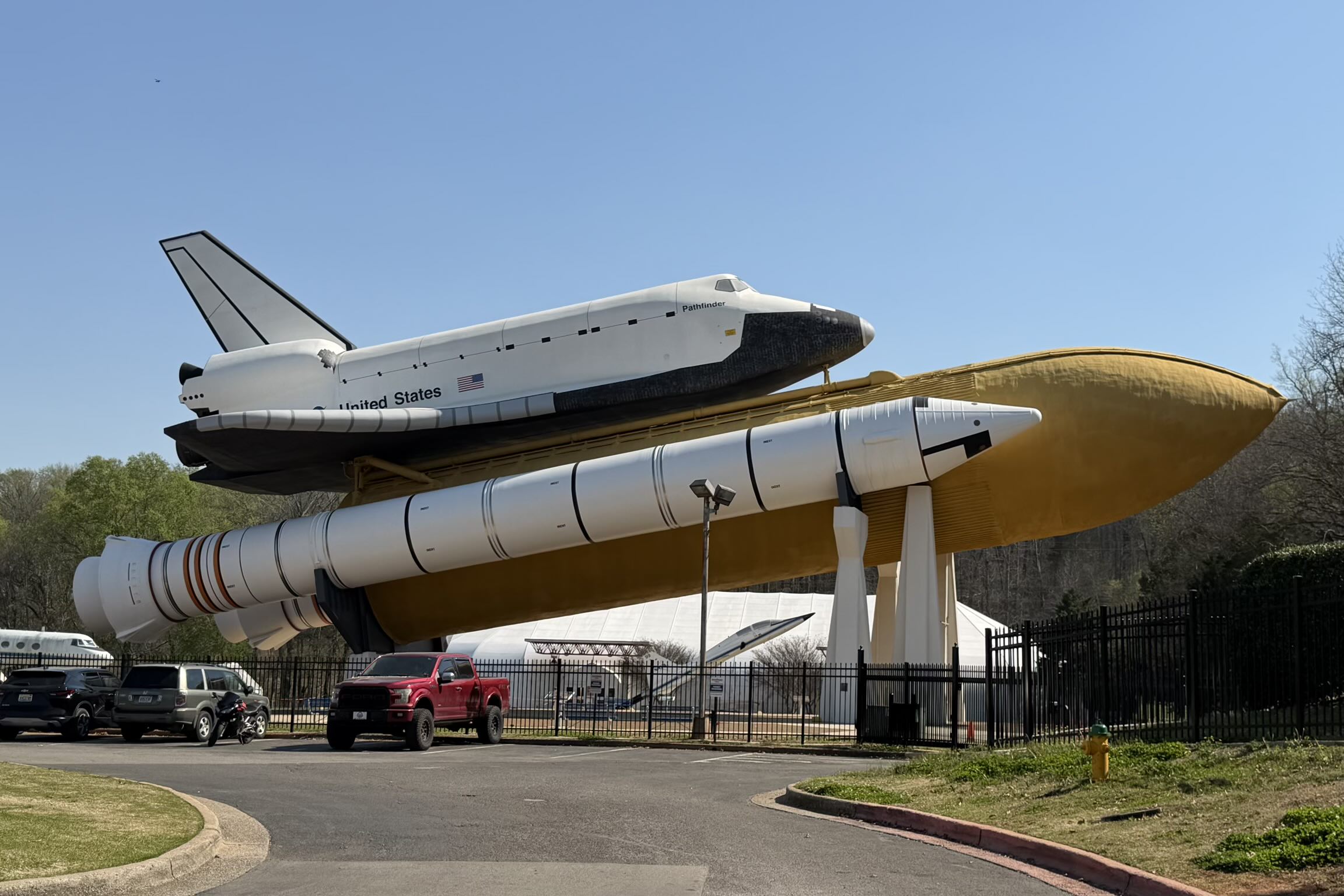
The Space Shuttle Pathfinder dominates the east side of the center. It is a full-scale mock-up built from wood and steel, constructed for fit-and-function testing before the real orbiters flew. When I first saw it, I was struck by how modest it looked in person—smaller than I had always imagined. I pulled out my phone and asked Gemini how much larger the actual shuttle was. It confirmed that this was indeed full-scale, which meant my mental model of the shuttle had simply been wrong for decades. In fact, a Boeing 747 dwarfs the Space Shuttle which—surprise!—is just a glider with a huge gas tank that’s (at least upon launch) attached to its belly. All those years of watching launches on television and I had apparently extrapolated the wrong dimensions from the footage.
Inside the larger of the two museum buildings, the crown jewel is the Saturn V. An actual prototype—the Dynamic Test Vehicle, a real unit built to simulate the stresses of launch and verify the rocket’s structural integrity on the ground before committing human beings to the real thing—lies on its side in a vast hall. The Stage 1 booster alone stretches to a length that makes you feel the building was designed around it. Standing next to it, you stop thinking about rockets as machines and start thinking about them as cathedrals—the same overwhelming scale, the same sense of being in the presence of something that required thousands of human beings working toward a single impossible idea.
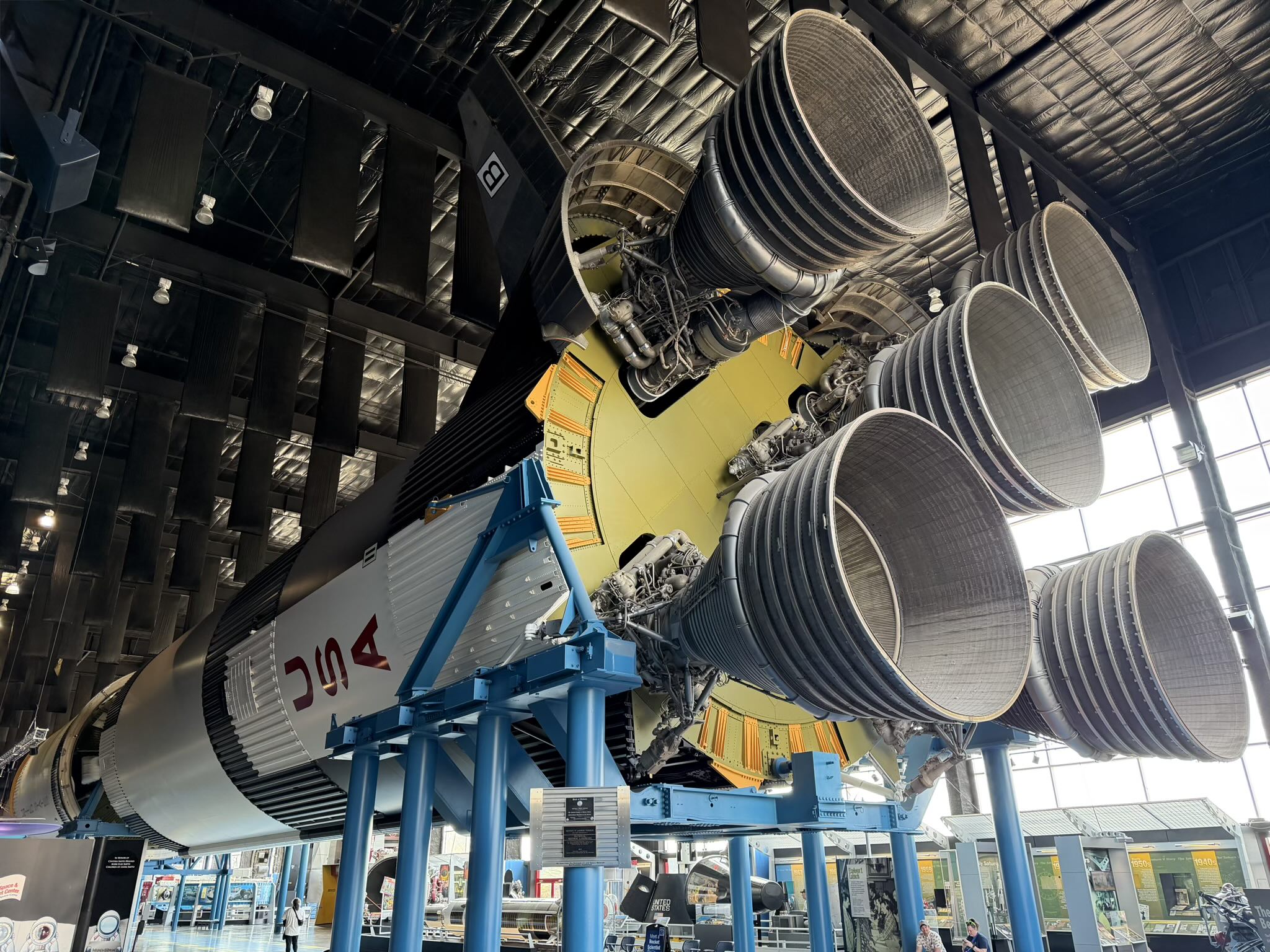
The Saturn V Dynamic Test Vehicle is a National Historic Landmark, designed and engineered right here in Huntsville at the Marshall Space Flight Center. The second stage on display is no mere replica—it is genuine aerospace hardware used to prove the rocket’s structural integrity. Staring up at those massive engines, it is awe-inspiring to realize this very machine endured the violent vibrations of simulated flight to ensure the Apollo crews could safely reach the moon.
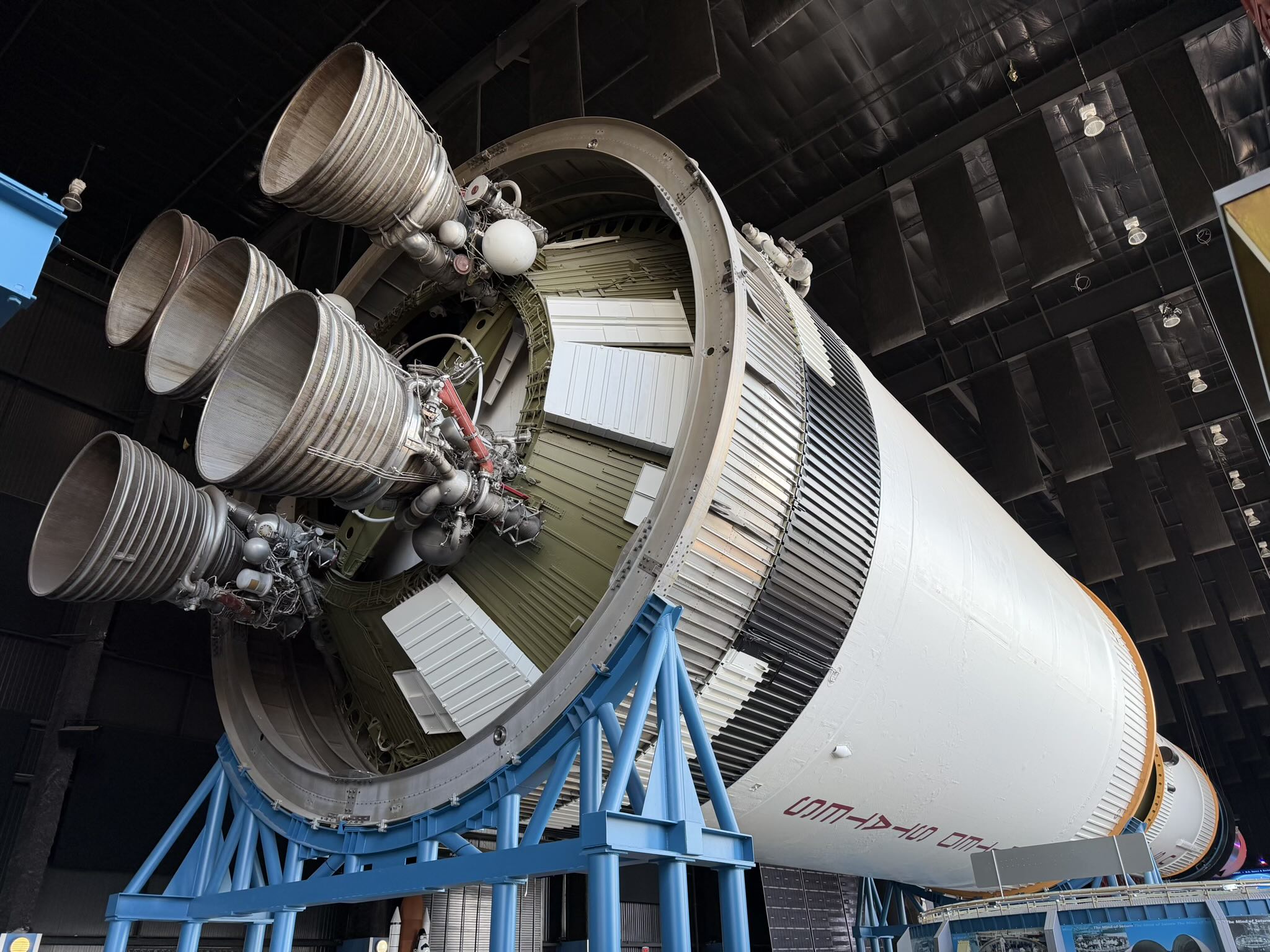
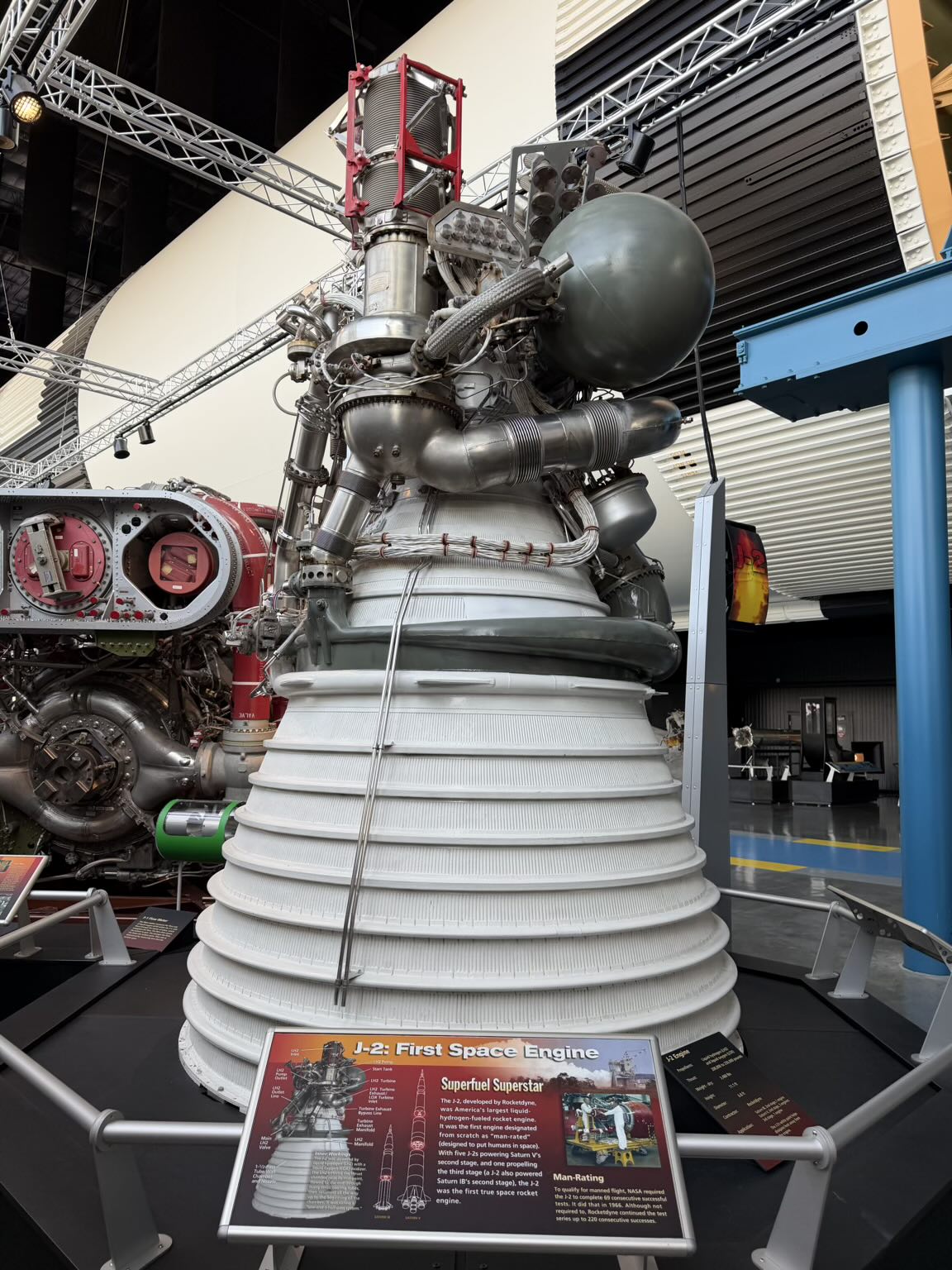
Speaking of engines: the J-2, which powered the upper stages of both the Saturn IB and Saturn V, was the first large liquid-hydrogen-fueled rocket engine designed specifically for spaceflight, and the first designed to be restarted in space. That restartability was no minor feature—it was what allowed the third stage to first place Apollo into a parking orbit, then fire again to send the crew toward the Moon. The engine produced a specific impulse of 421 seconds in vacuum. Despite being a mechanical engineer, I don’t want to pretend I fully understand what that means, but the people in the room who did understand it apparently considered it extraordinary.
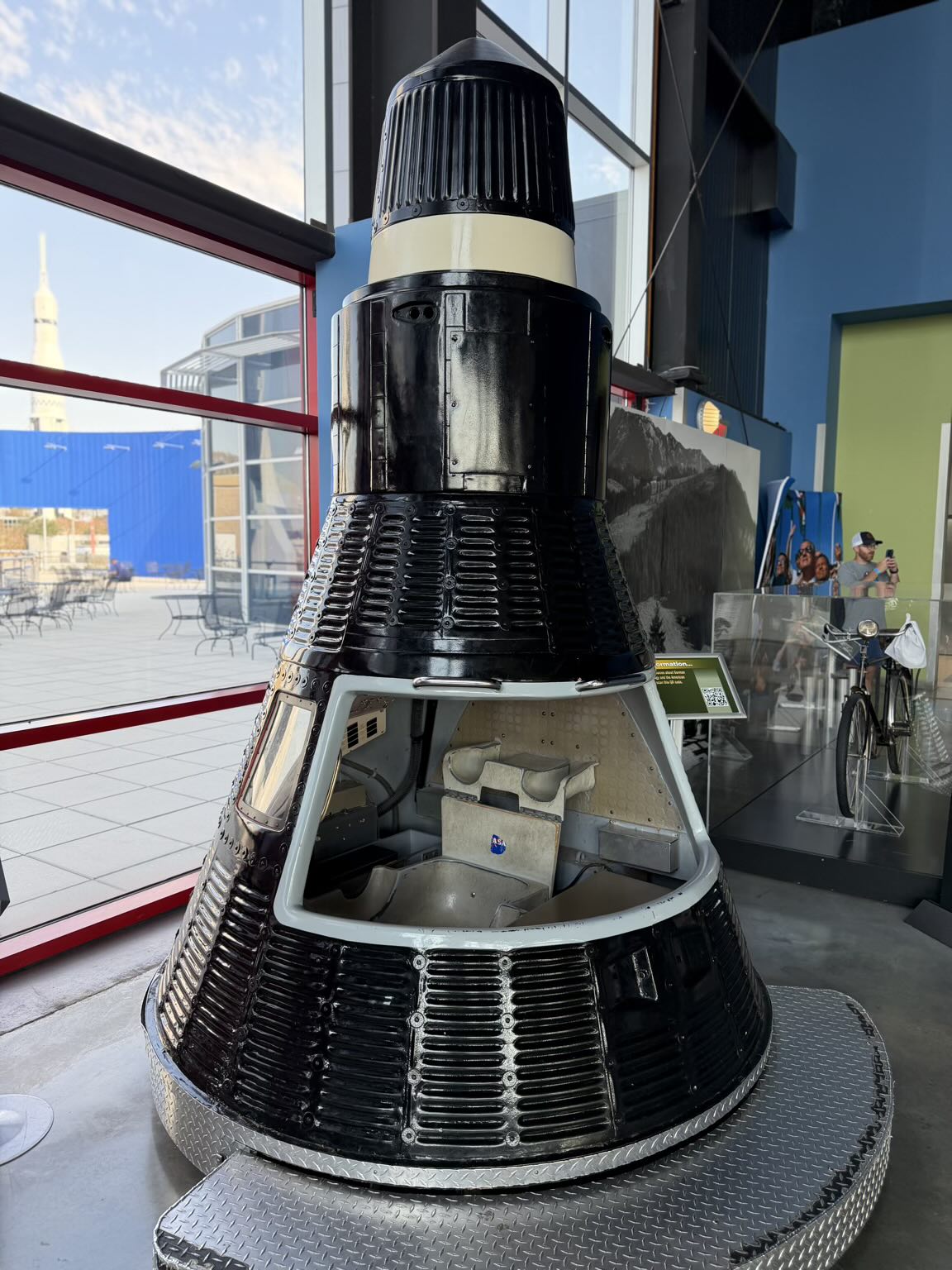
Not far from the rocket hardware, a display about the Mercury space capsule included a quote attributed to legendary test pilot Chuck Yeager, who described its astronauts as “Spam in the Can.” Having seen the capsule in person, the description is not wrong. The thing is barely large enough to contain a medium-sized human being with their knees drawn up. The astronauts who climbed into those things and agreed to be launched into orbit were operating on a different risk tolerance than most of us.
One of the more philosophically interesting corners of the museum involved a bicycle.
Dr. Wernher von Braun’s rocket team—the German engineers who had developed the V-2 during World War II—had to decide at the end of the war which country to surrender to. They chose the Americans deliberately. What makes this exhibit so striking is the instrument of that choice: in May 1945, von Braun’s younger brother Magnus pedaled a bicycle down from their mountain refuge in Bavaria with a white handkerchief tied to the handlebars—his only protection against being shot—until he found an American private.

“My name is Magnus von Braun,” he announced in broken English. “My brother invented the V-2. We want to surrender.” It worked. That bicycle, displayed at the museum, is arguably one of the most consequential vehicles in the history of spaceflight.
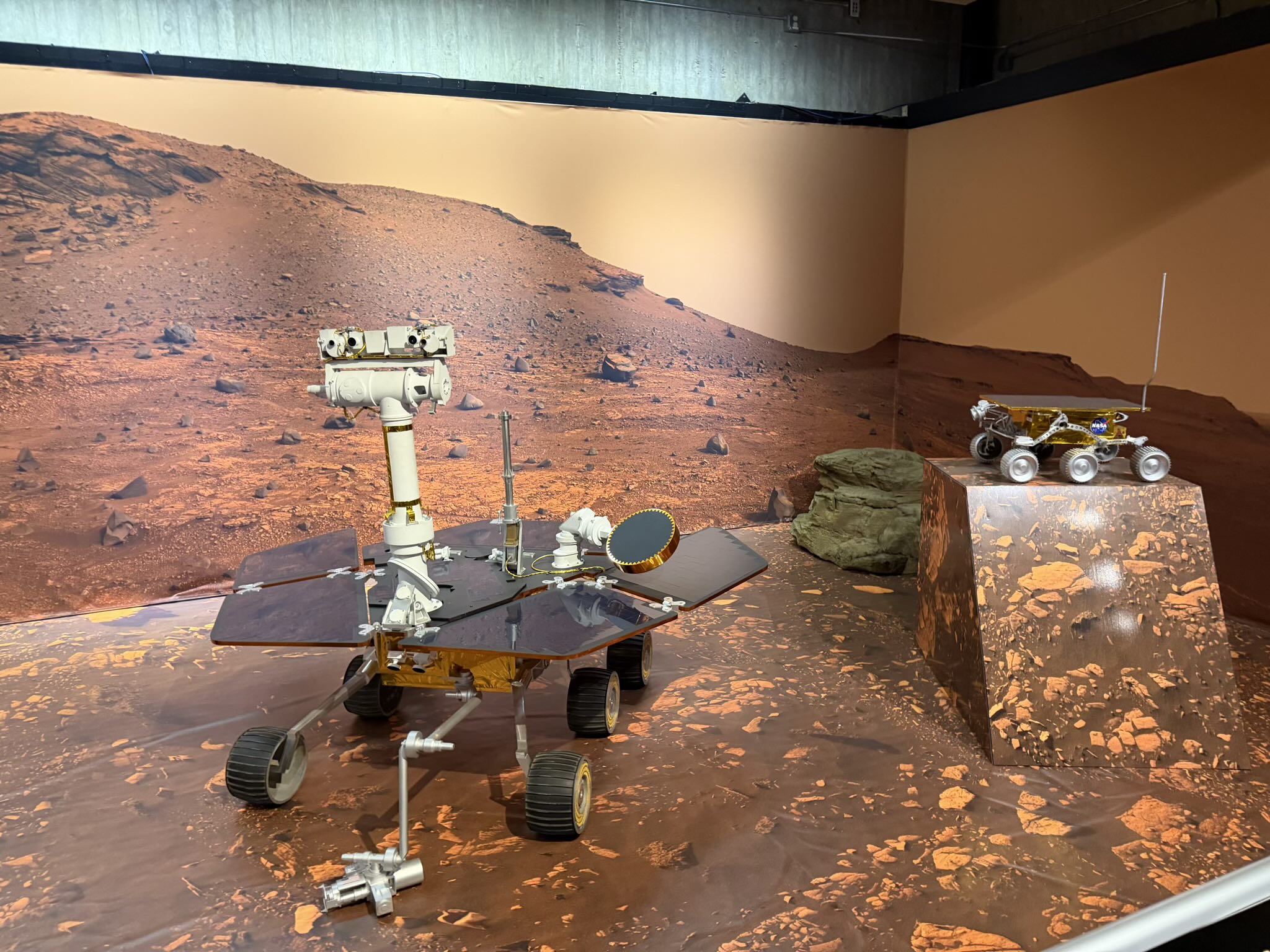
The museum also covers the robotic exploration of Mars with admirable depth. A full-scale model of the Spirit and Opportunity twins alongside their predecessor Sojourner gives a visceral sense of the size differences across generations of Mars rovers.
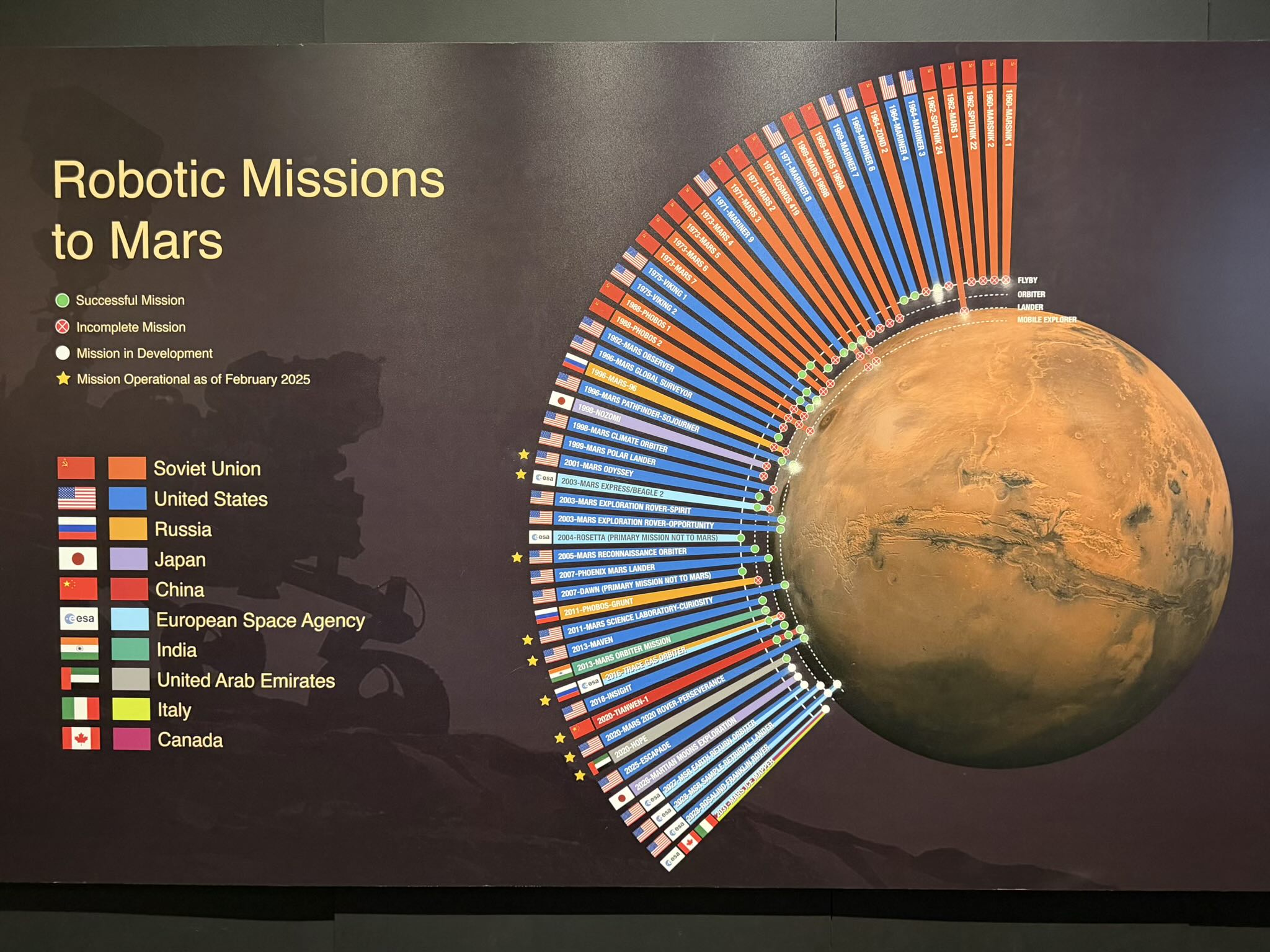
A display showing which countries have attempted—and which have succeeded—in sending robots to Mars turned out to be more sobering than I expected. The success rate, even for spacefaring nations, is not reassuring. Mars has a way of humbling everyone.
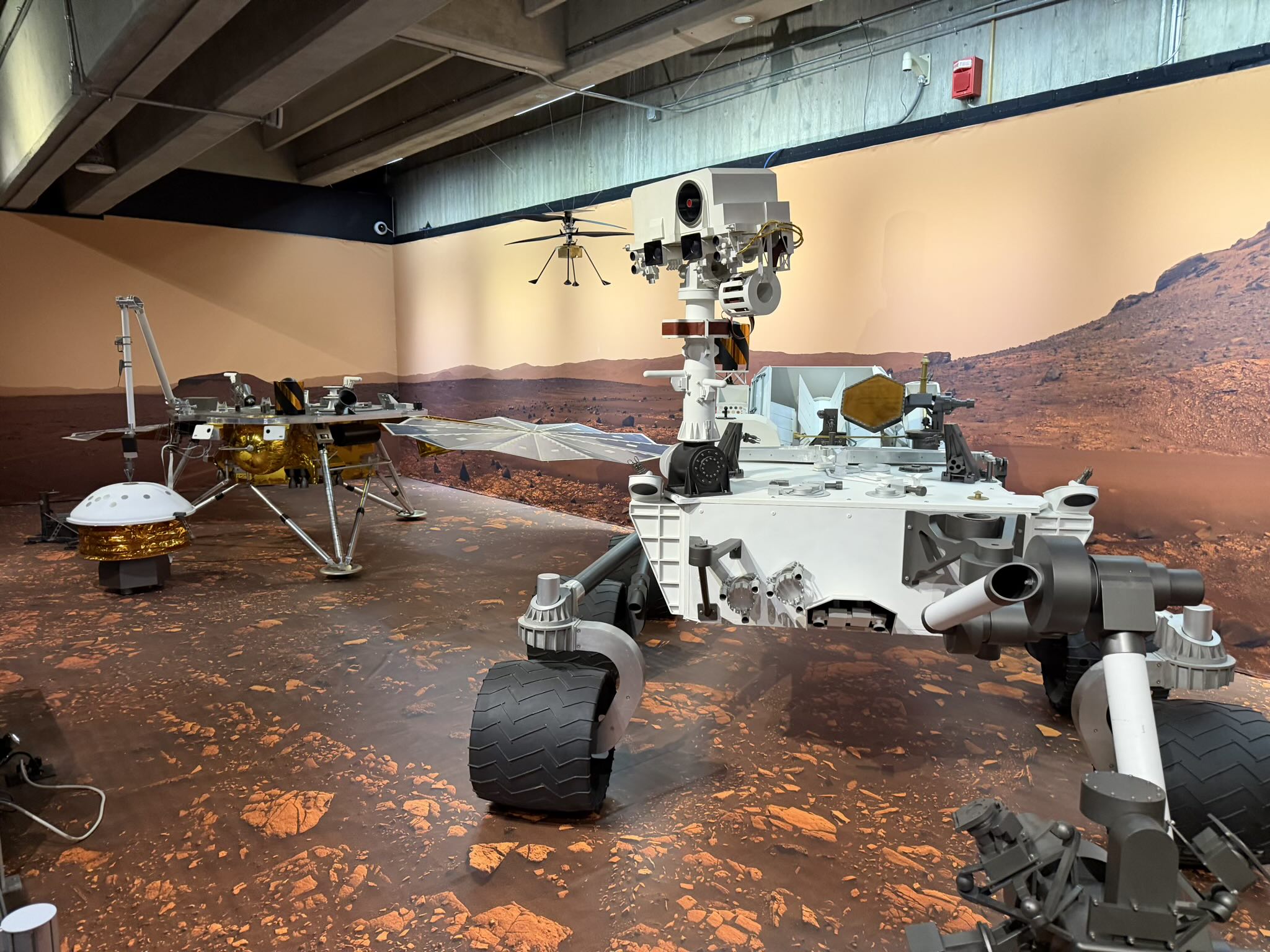
The Curiosity rover, which launched in 2011 and touched down in 2012, continues to study the Martian climate, geology, and the presence of water. Curiosity’s companion on the 2020 mission was the Ingenuity helicopter—a technology demonstrator that proved powered flight was possible in the thin Martian atmosphere, something that felt a little less impressive to me personally, given my relationship with aviation, but which the aerospace community treated as a genuinely historic moment.
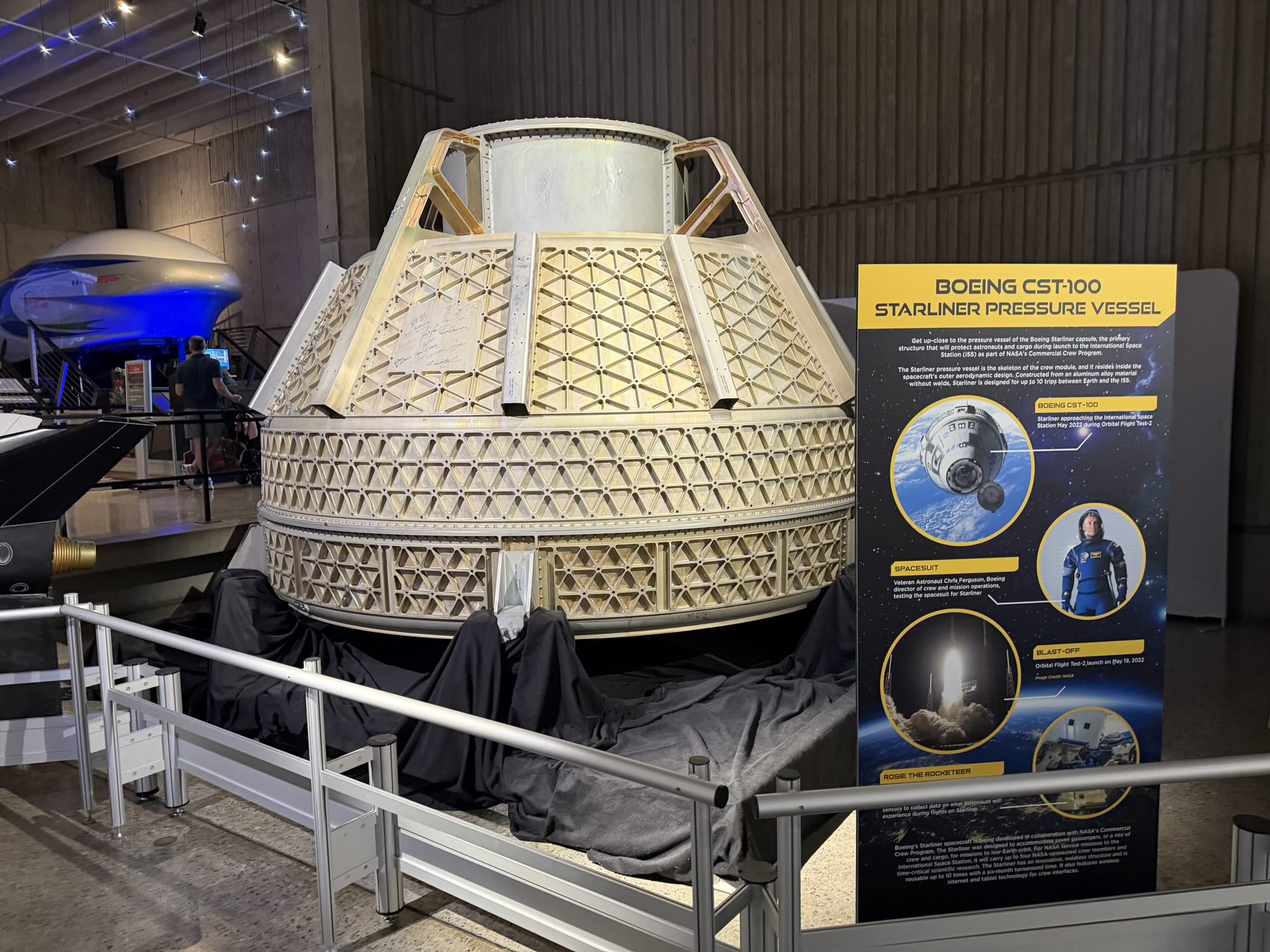
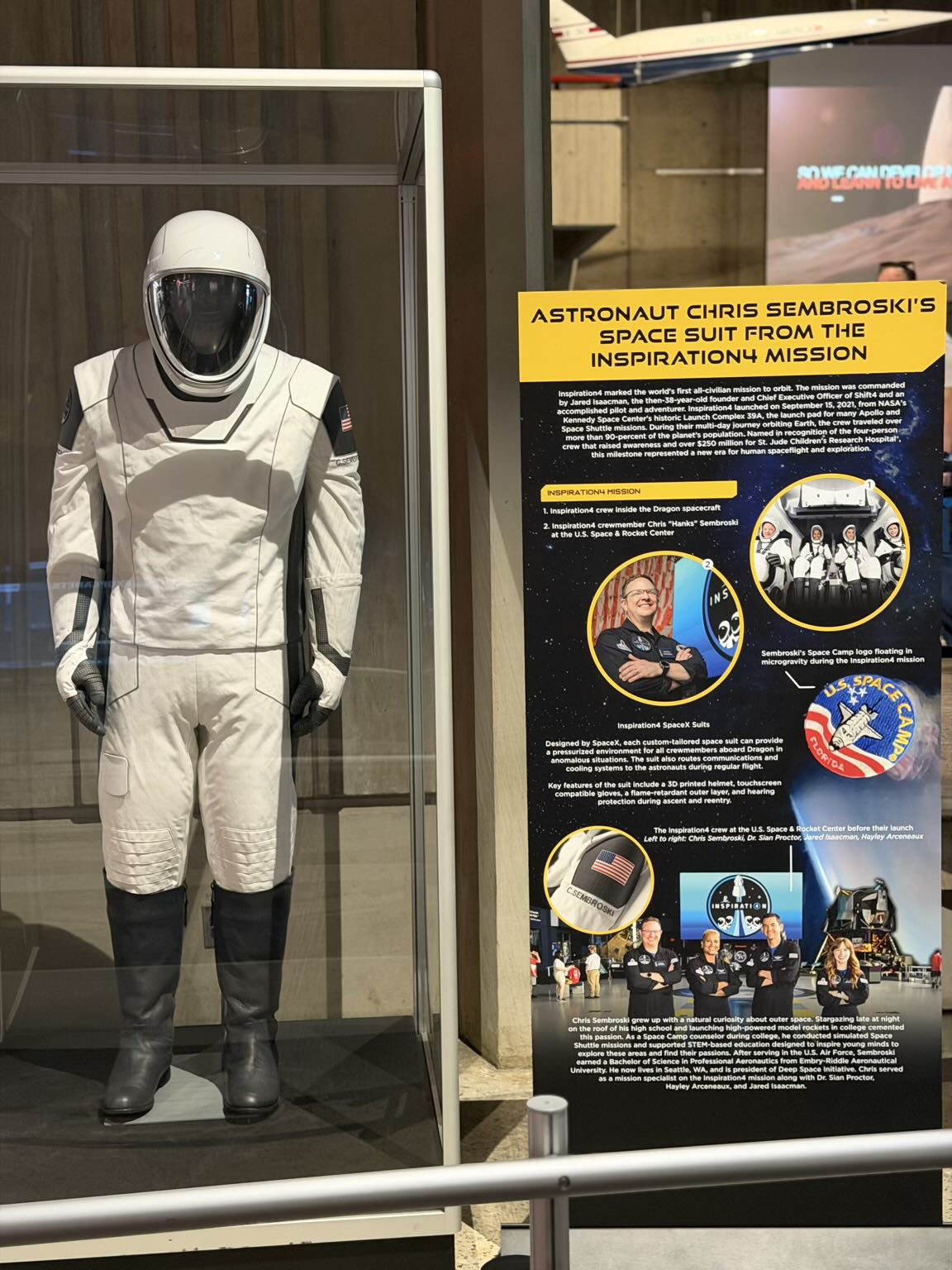
The modern hardware section was just as engaging. The Boeing CST-100 Starliner pressure vessel—its interior ribbed like the hull of a boat—was on display, as was the SpaceX IVA spacesuit worn by Chris Sembroski during the Inspiration4 mission in 2021, the first all-civilian orbital spaceflight. The suit was co-designed by a Hollywood costume designer, which seems like an unlikely collaboration until you realize that Elon Musk’s primary qualification for a spacesuit in a crew capsule is that it has to look good while also keeping you alive.
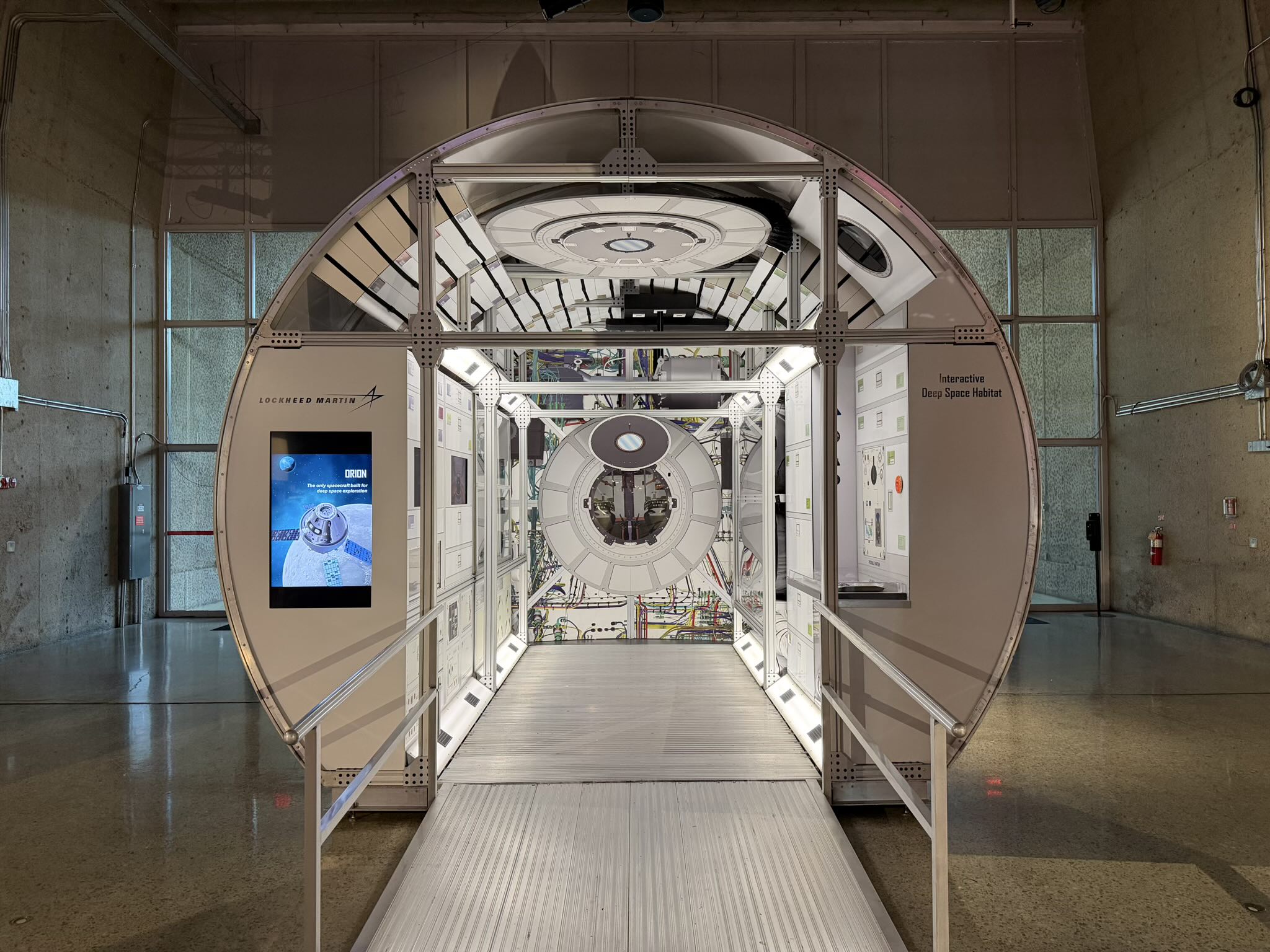
A Lockheed Martin Interactive Deep Space Habitat showed the kinds of equipment astronauts would have access to on long-duration missions—including a 3D printer, which seems like exactly the right tool for a place where you cannot simply order a replacement part from the internet.
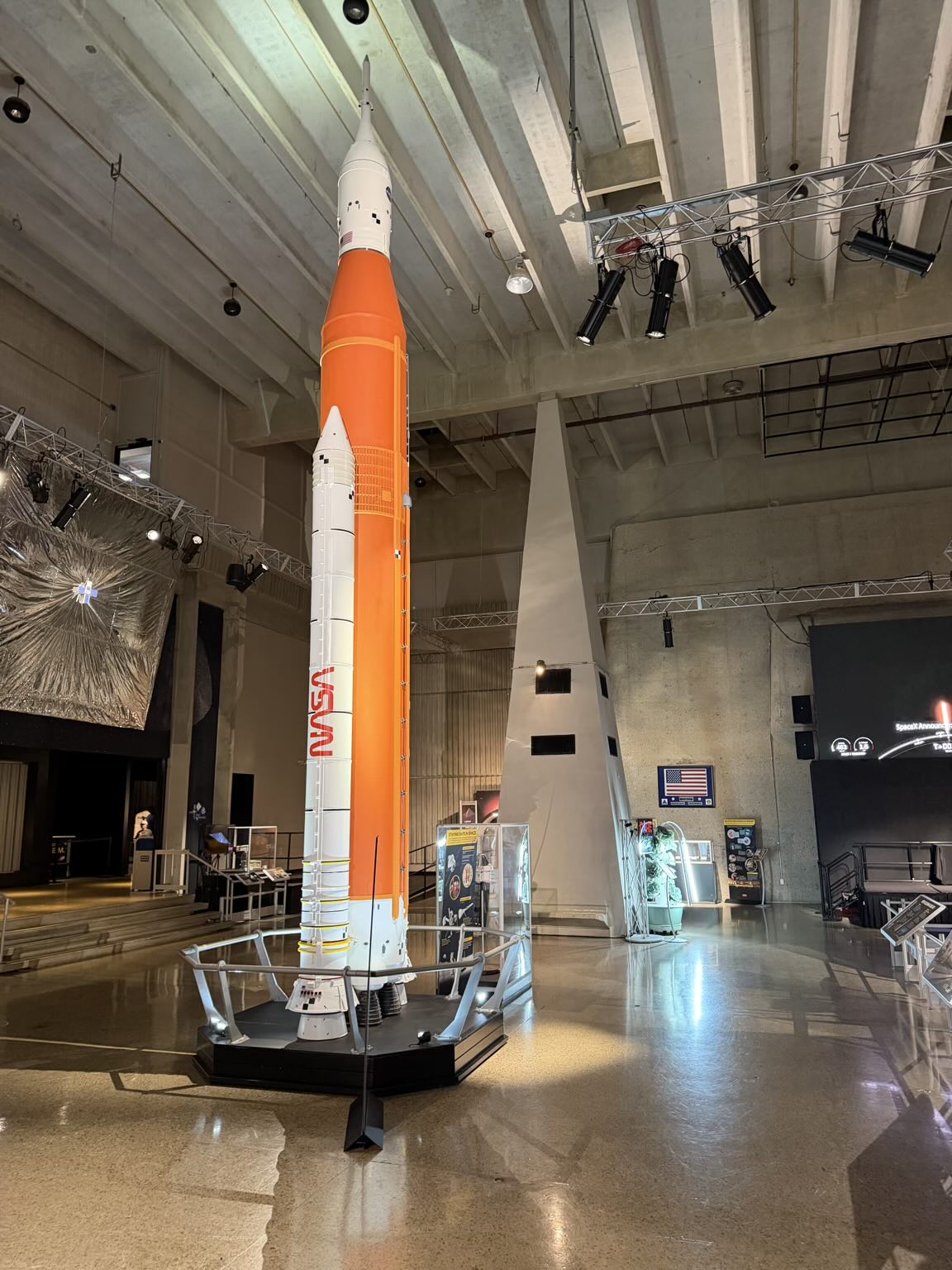
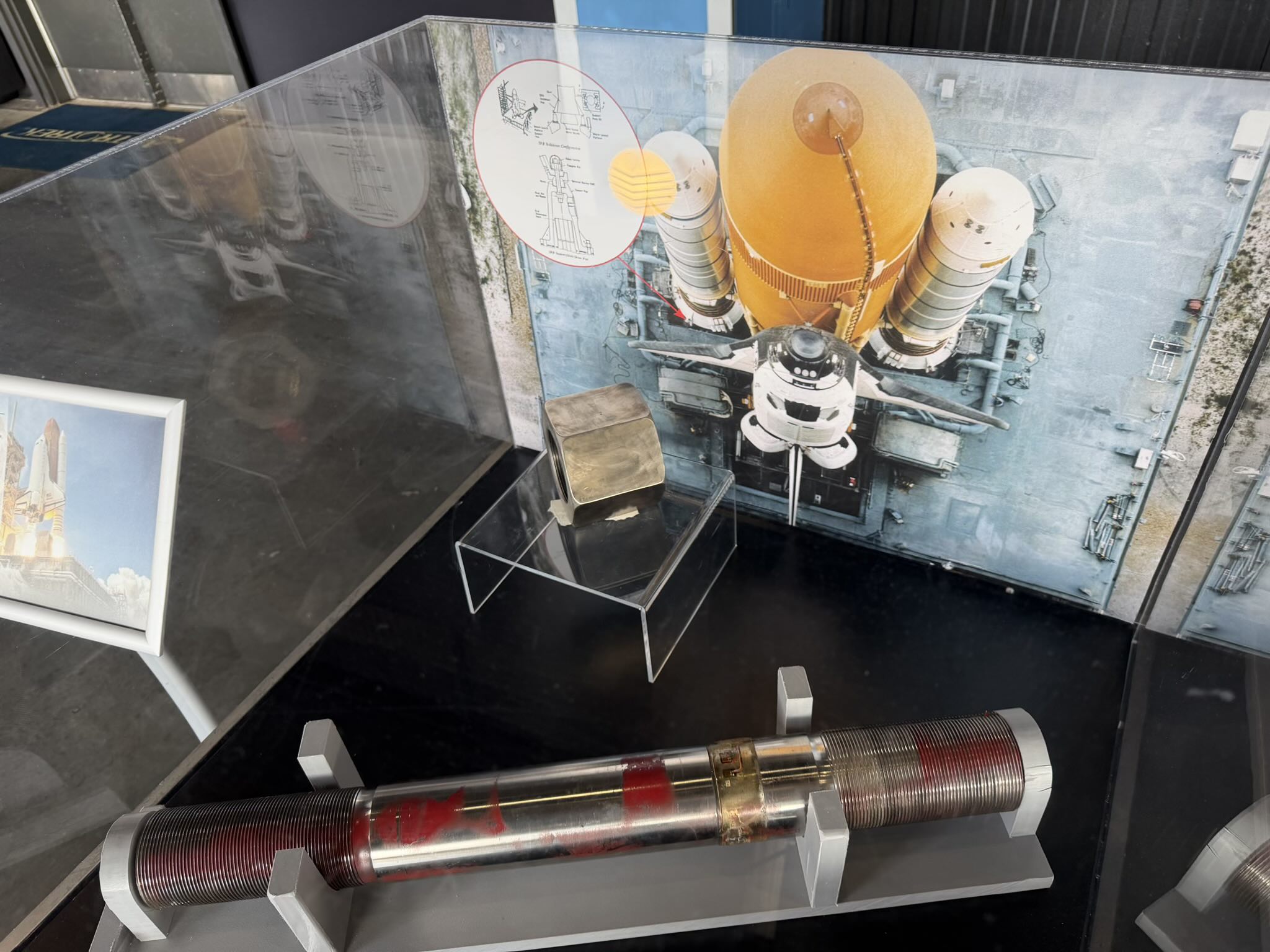
A model of NASA’s Space Launch System—designed and developed in Huntsville—stands nearby. It is currently the only rocket capable of sending the Orion capsule, astronauts, and cargo directly to the Moon on a single mission. The hold-down bolts that fastened the Space Shuttle assembly to the launch pad were also on display: eight of them, each fitted with an explosive charge that was detonated at launch to release the vehicle. Eight bolts. The engineering of liftoff comes down to eight very large, very carefully destroyed bolts.
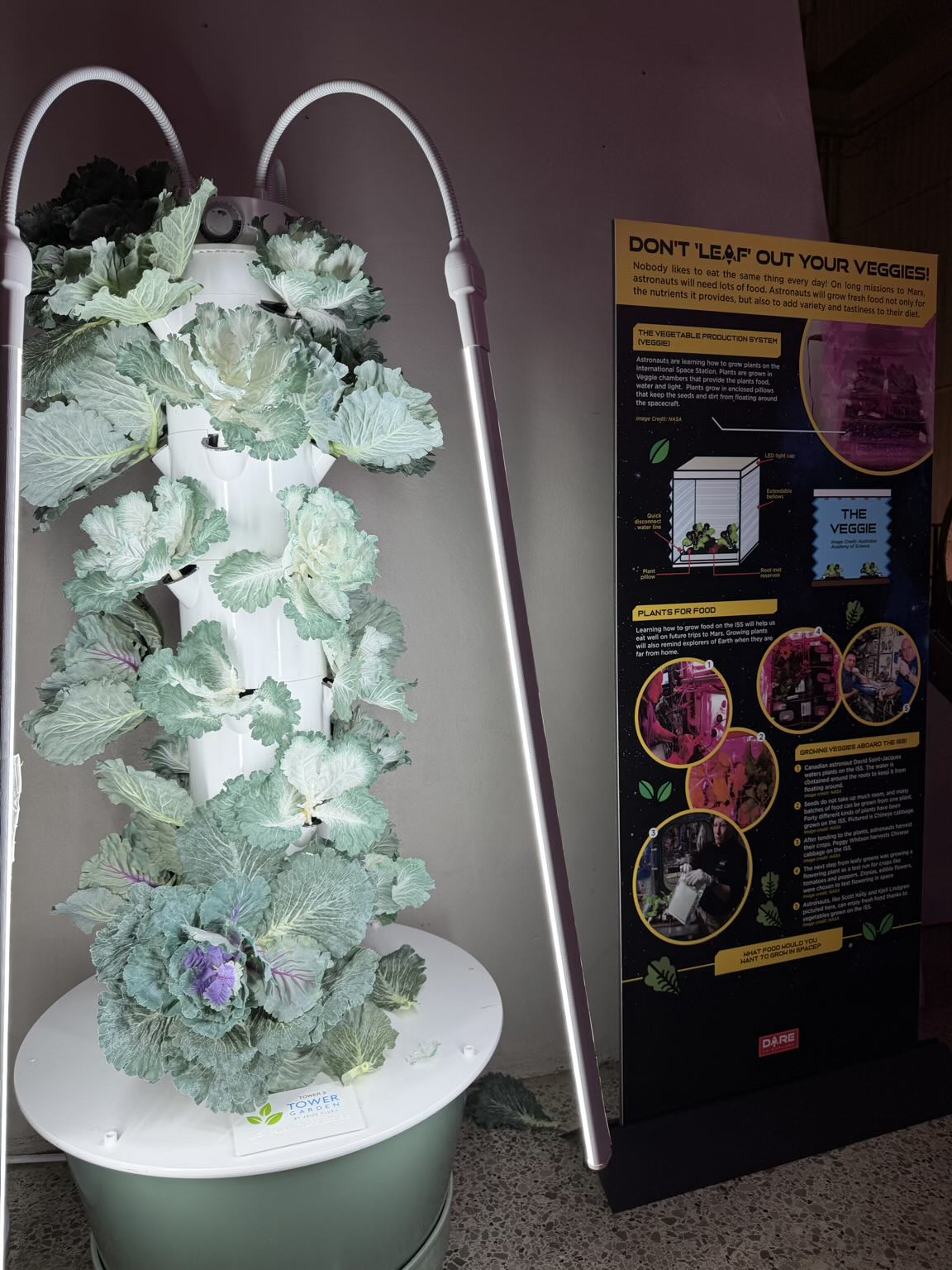
I also learned that astronauts grow food on the International Space Station, which strikes me as both practical and quietly poignant—the idea that even 250 miles above the Earth, humans still find it grounding to tend to something growing.
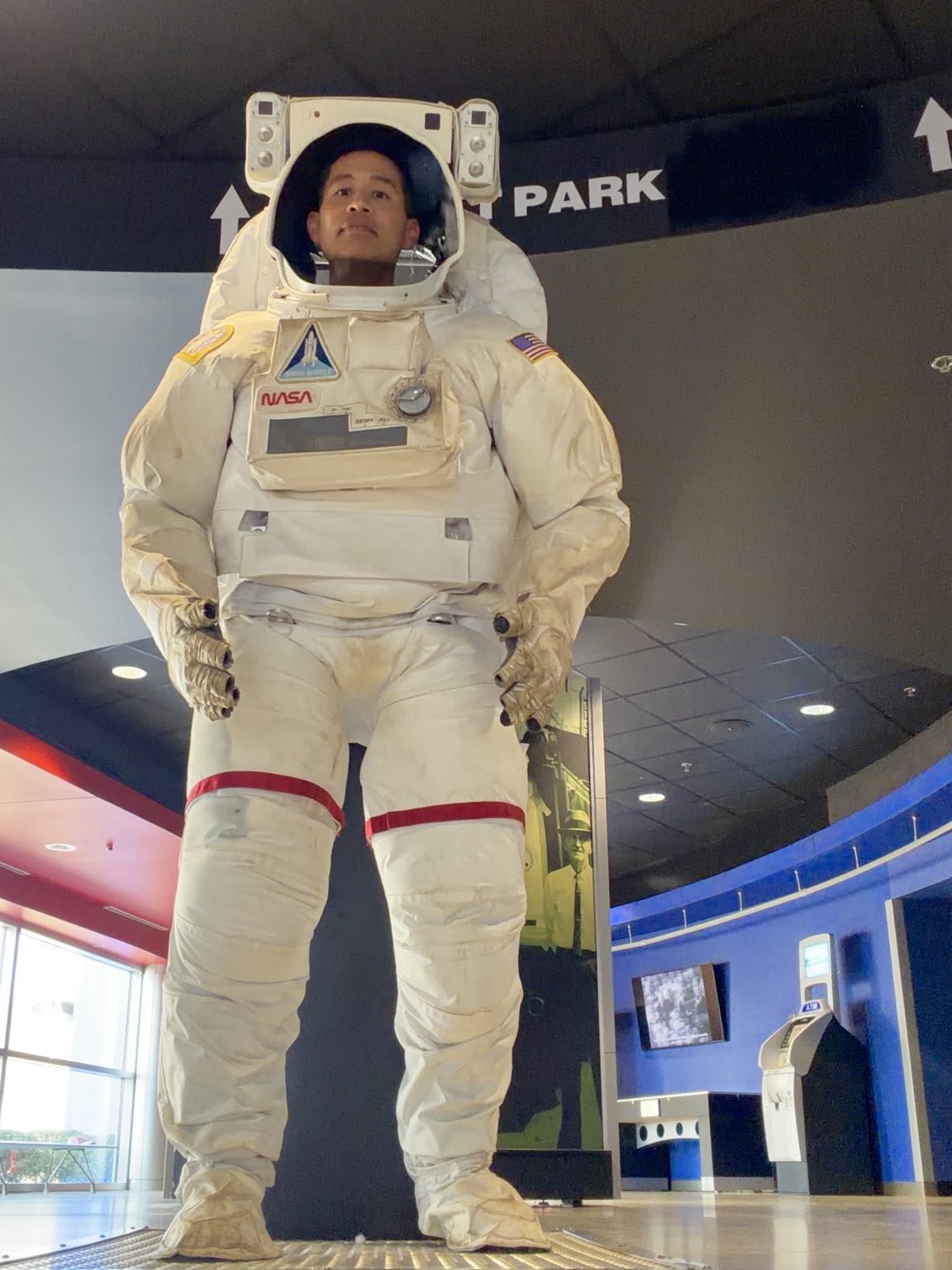
I finished the visit by posing for a photo in a NASA astronaut suit. Aside from being a fun pic, it felt like a fitting close to an afternoon spent reconsidering everything I thought I knew about the appeal of leaving the ground.
I am still very much a land person. But I left Huntsville with a much better understanding of why some people are not.