From Runner to Waddling Duck at the Race to Space Marathon

I had only been in Alabama once in my life, and the visit was brief. Thirteen years ago, I ran the Mercedes Marathon in Birmingham after a leisurely trip to Florida and Jamaica. I did virtually no training for it, and the result was a performance where my second half was a spectacular implosion. I needed four hours and nine minutes to cross the finish line, despite breezing through the first half in one hour and 43 minutes.
To settle that score and to check Alabama off my 50<4 list—running a marathon in all 50 states in less than four hours—I signed up for the Race to Space Marathon in Huntsville. Huntsville happens to be home to the U.S. Space & Rocket Center, and the race bib was good for a ten-dollar discount off the normal entry fee. I am unsure if the discount was strictly necessary to lure runners into the museum—I certainly would have gone there in any case—but it was a delightful perk.
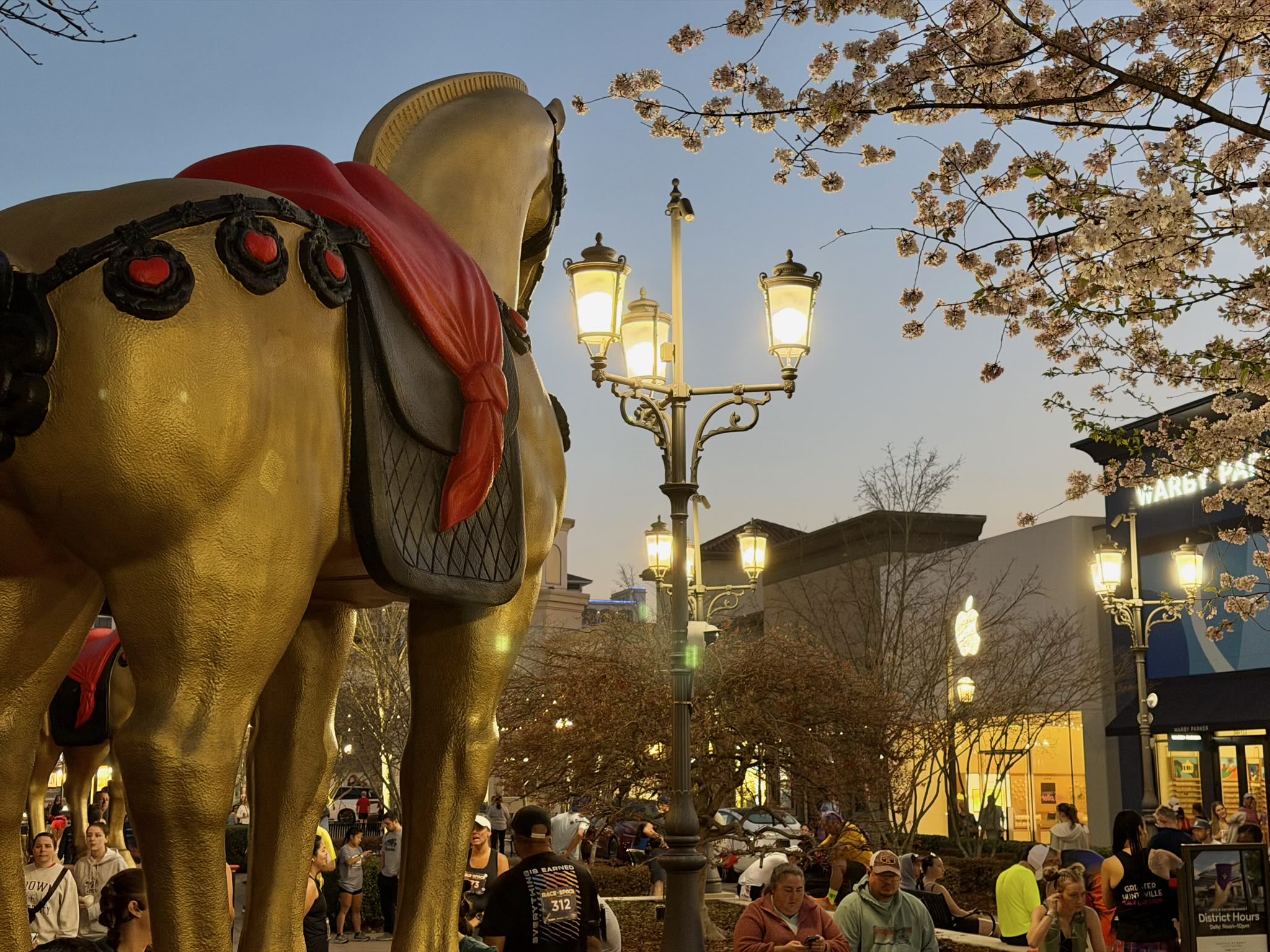
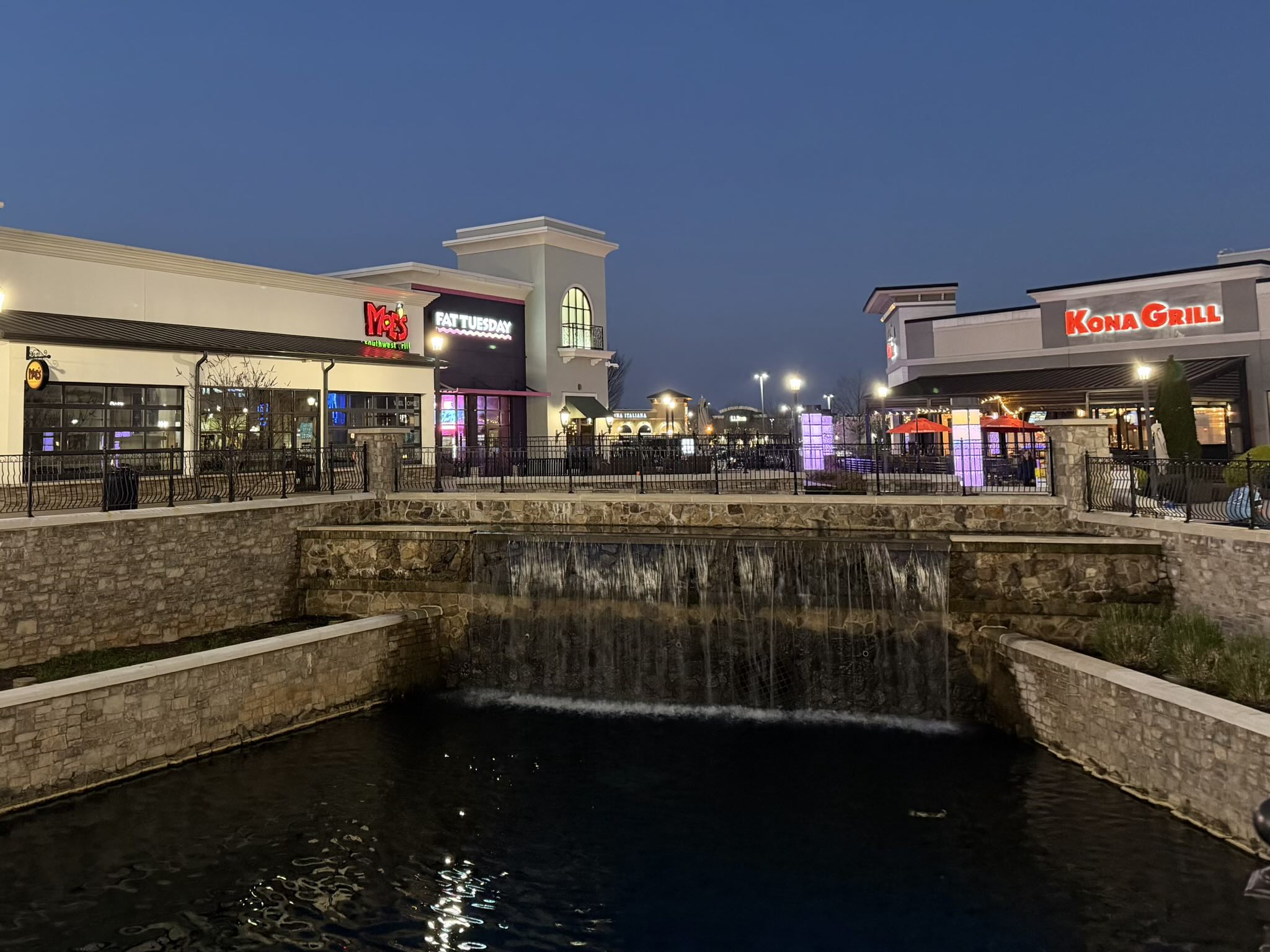
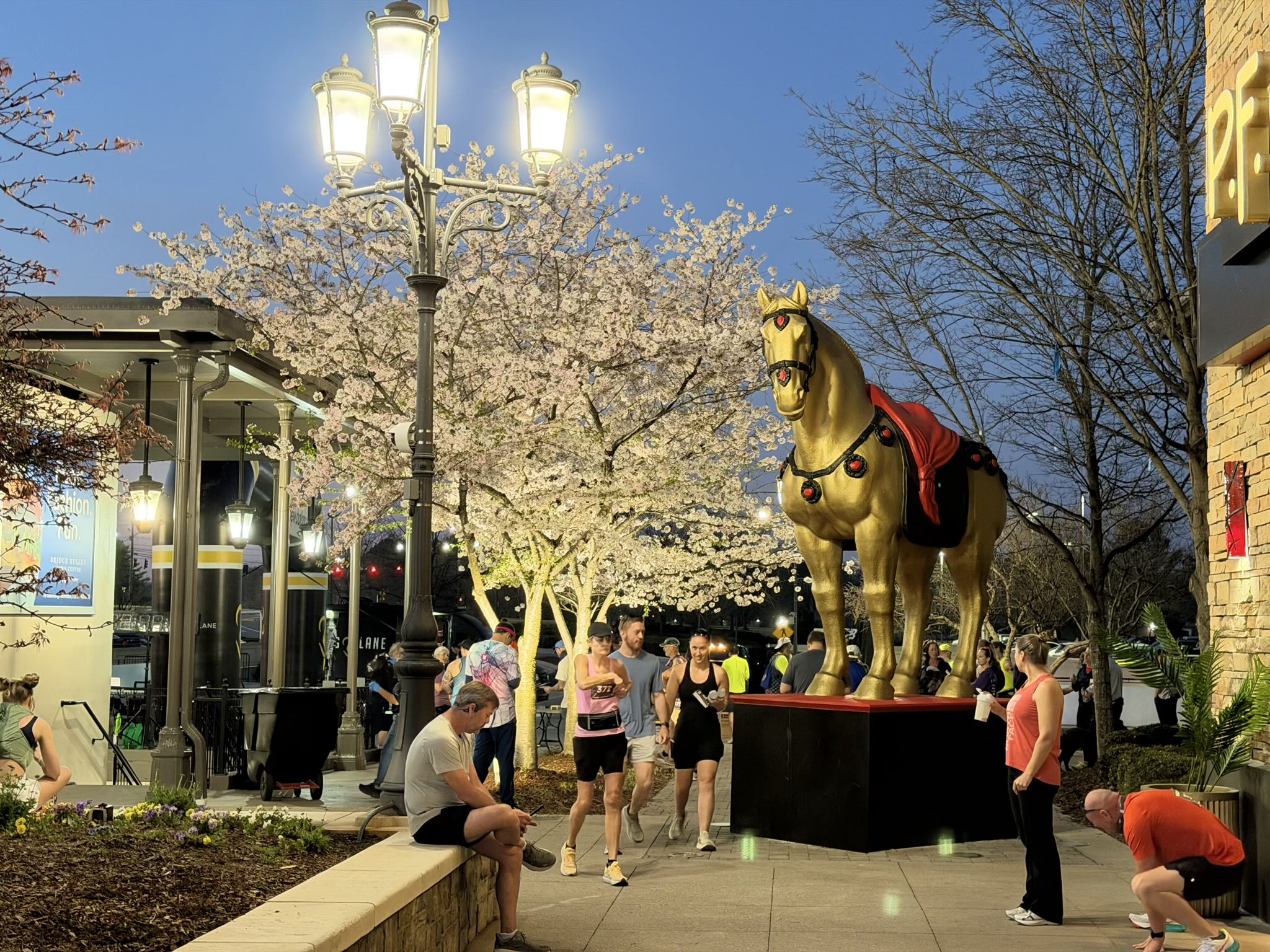
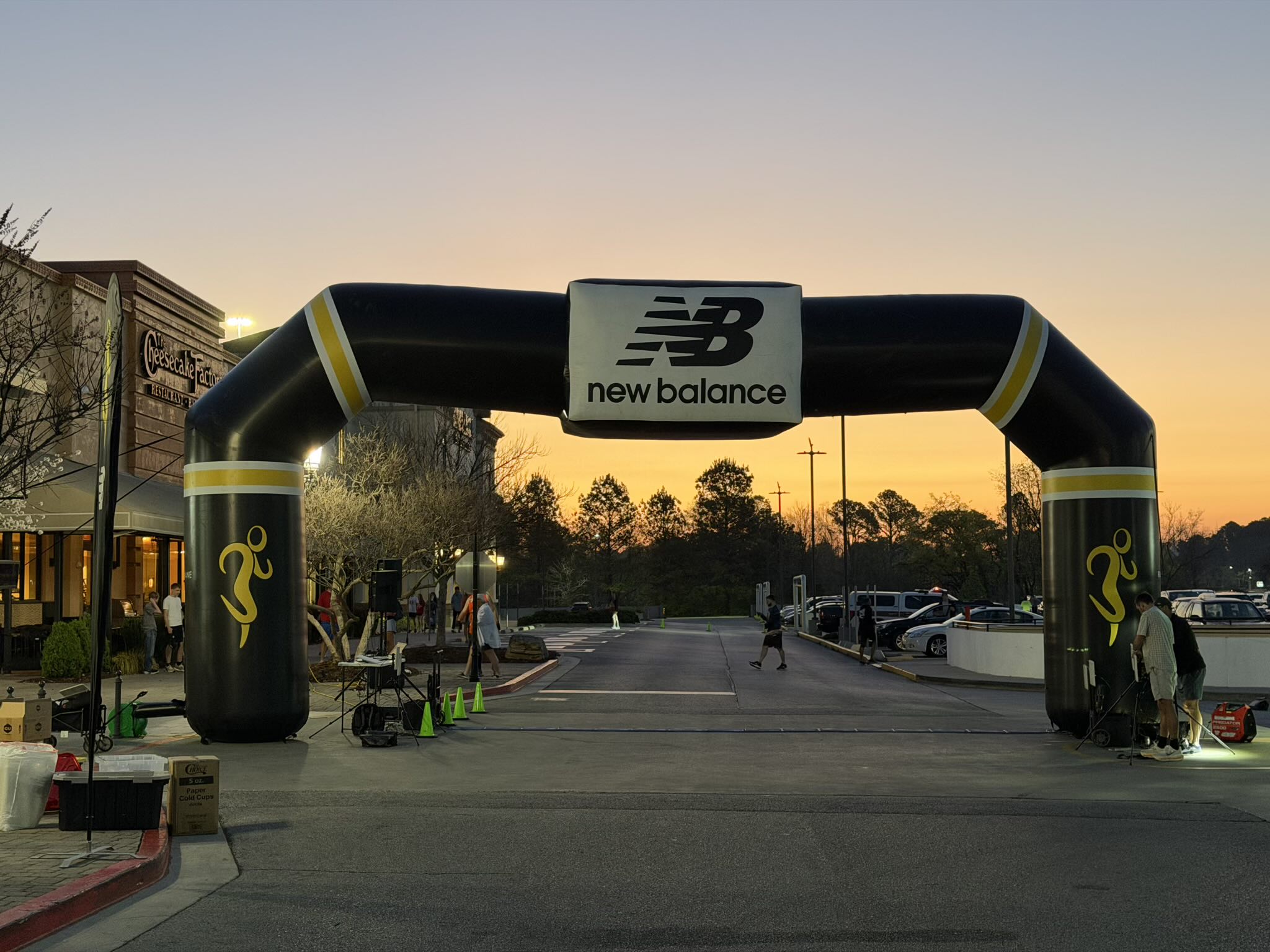
The marathon actually started a few miles away from the rocket center at the Bridge Street Town Centre, a chic outdoor lifestyle mall dotted with trendy shops like the Apple Store, Lululemon, and Sephora. It is an aesthetically pleasing place, complete with a man-made waterfall and blooming cherry blossoms.
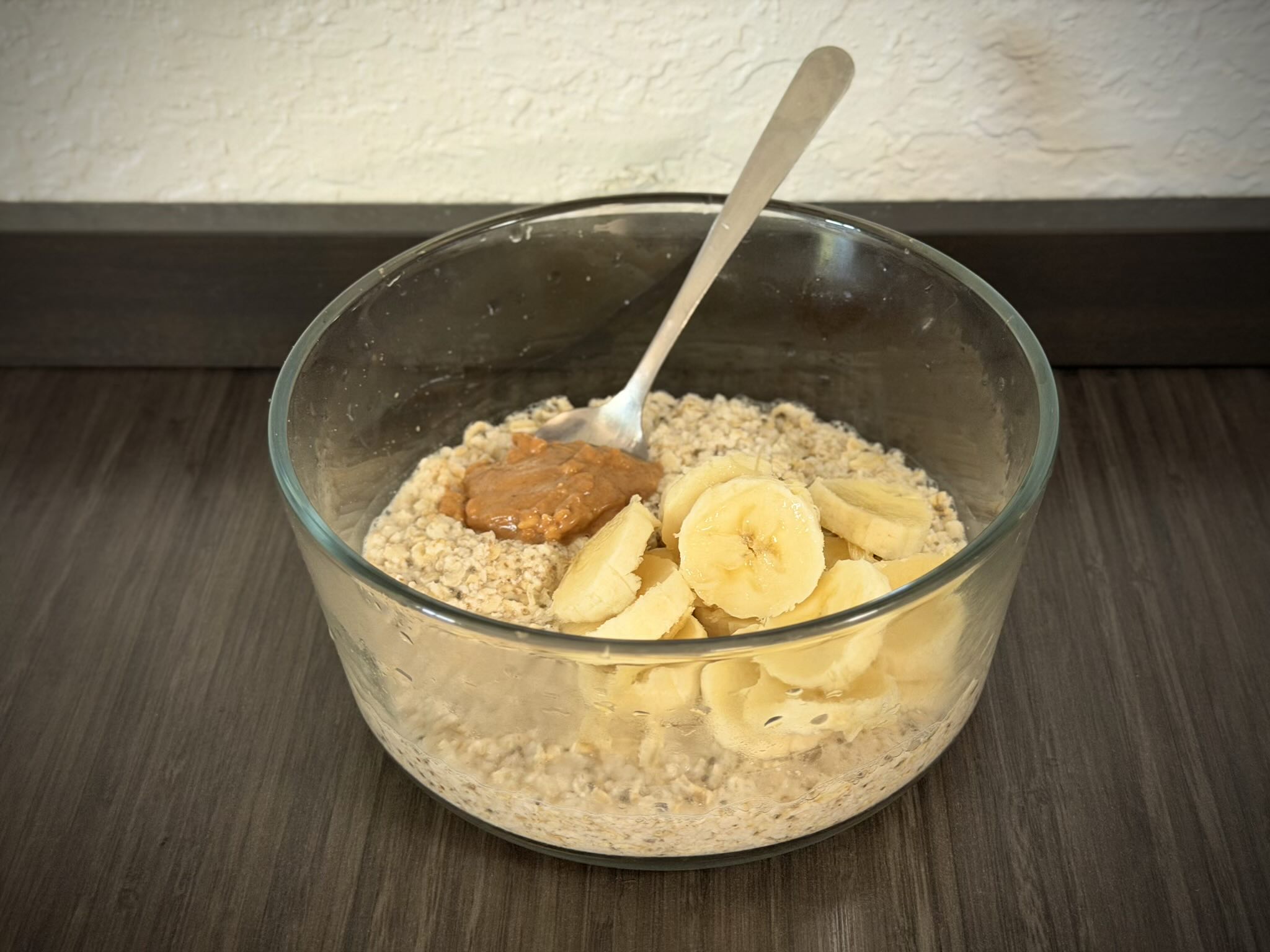
The race featured both a half and a full marathon, starting simultaneously at 7:00 a.m. That hour feels akin to the middle of the night for me nowadays, requiring a 5:20 a.m. alarm to handle my pre-race preparation: getting dressed, applying sunscreen, brewing coffee, and eating. My breakfast consisted of unsweetened Trader Joe’s oatmeal with flax, an apple, and a banana smothered in a heaping scoop of peanut butter.
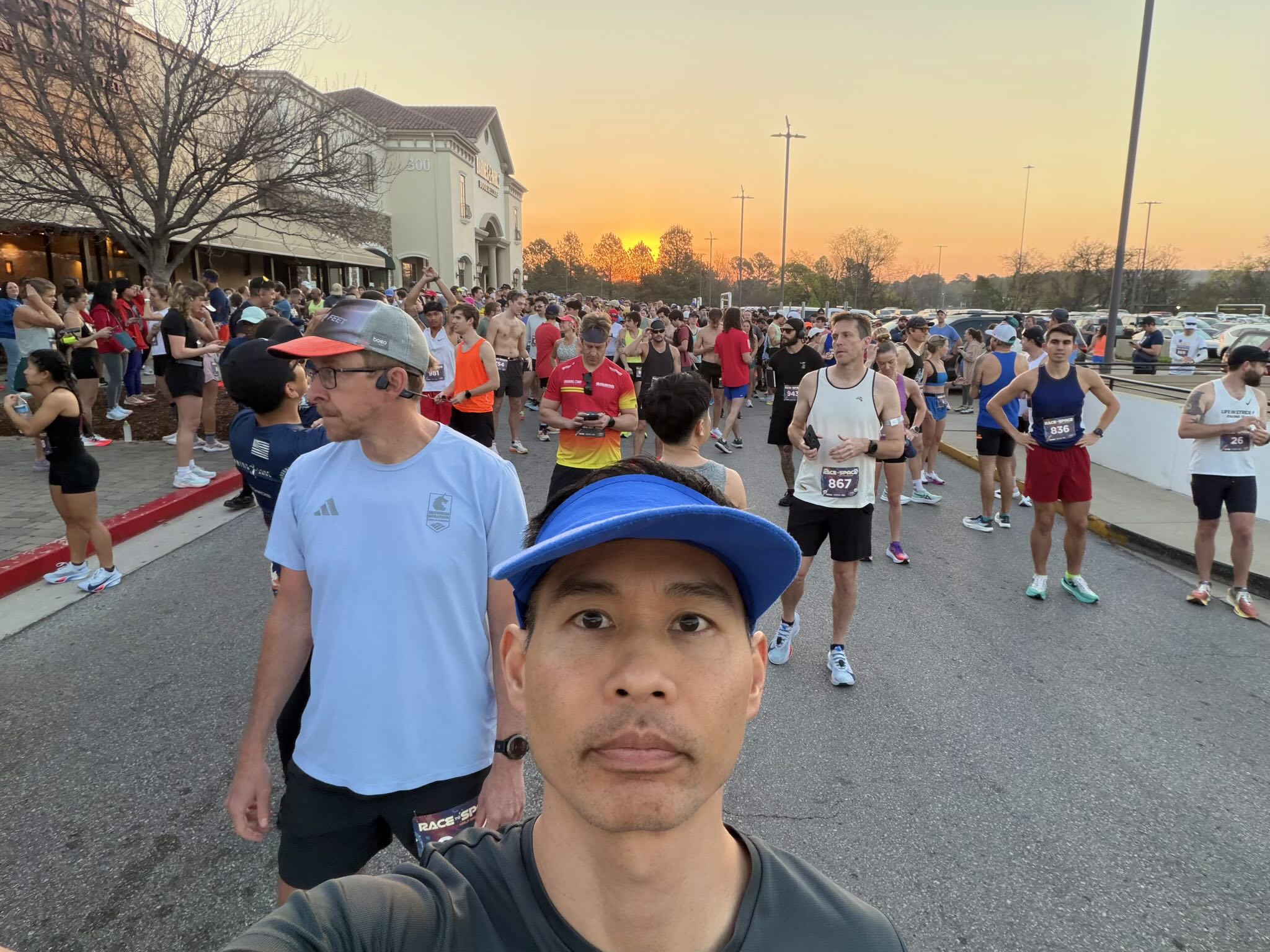
I wore my usual marathon running gear, including a visor instead of a cap. An open top allows body heat to escape, and crucially, it lets me dump cups of water directly onto my head without having to remove it.
I was immensely thankful for the early start because the weather forecast predicted an afternoon high of 84 degrees. I figured the temperature would sit in the still warm—but far more reasonable—low 70s by the time I finished. Considering the impending heat, I predicted my best-case scenario would be finishing just north of 3:30. Anything under 3:40 would be a triumph, though “avoiding complete disaster” was defined as simply breaking the four-hour mark, of course.
My hotel was a mere six-minute drive from the start line, and I arrived in the pre-dawn darkness about 40 minutes before the gun went off. The “gun,” by the way, was a literal cannon that despite its diminutive size, was surprisingly loud—even though the race announcer warned us of it in advance. I had positioned myself right in front of the start line, and even with a countdown, the boom! was startling.
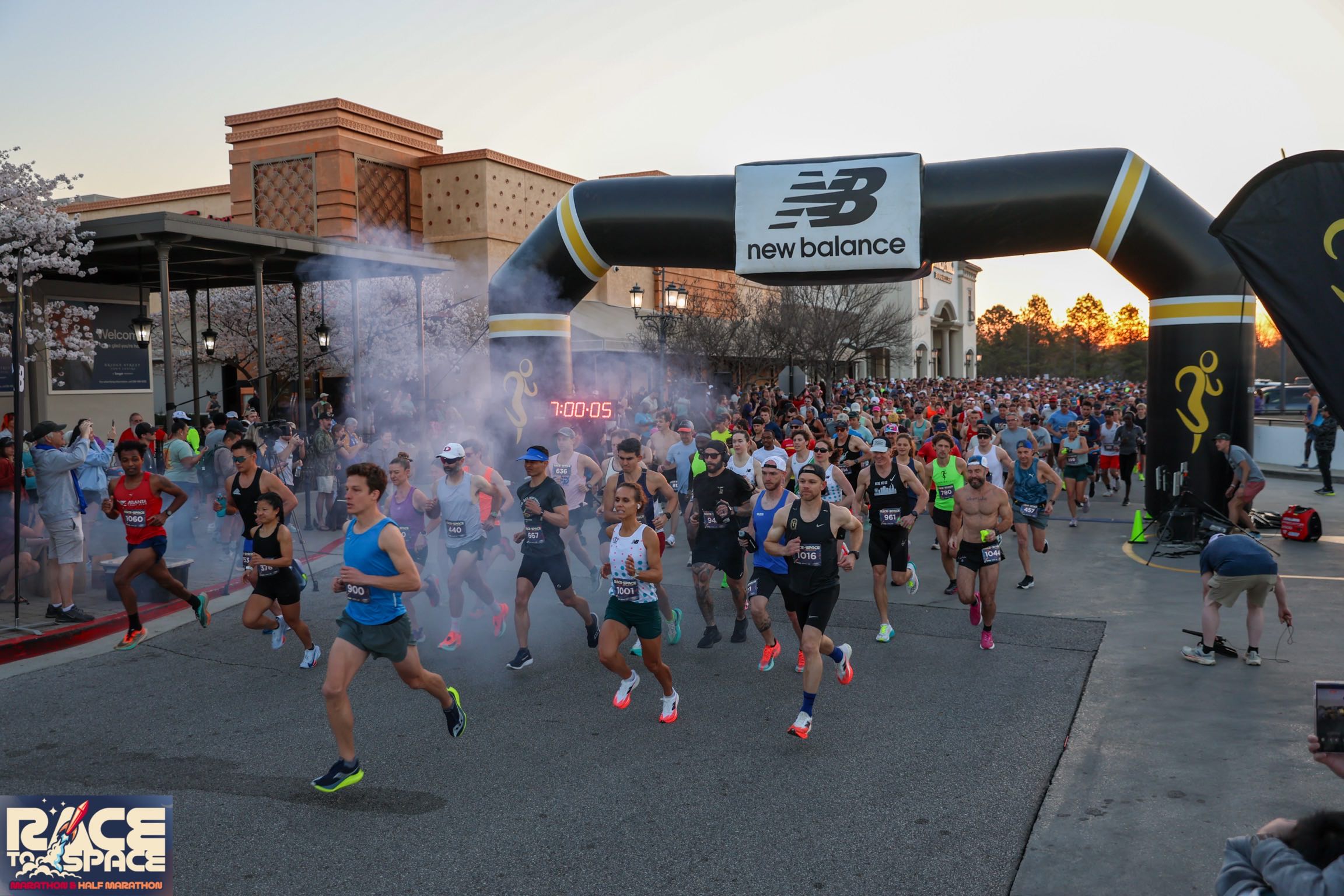
Shortly after it promptly went off at 7:00 a.m., I clocked a brisk 7:15 first mile—yet it seemed like a hundred people blew past me. I was completely content to let them go. I was running my own race, and with no official pacers on the course, discipline was entirely up to me.
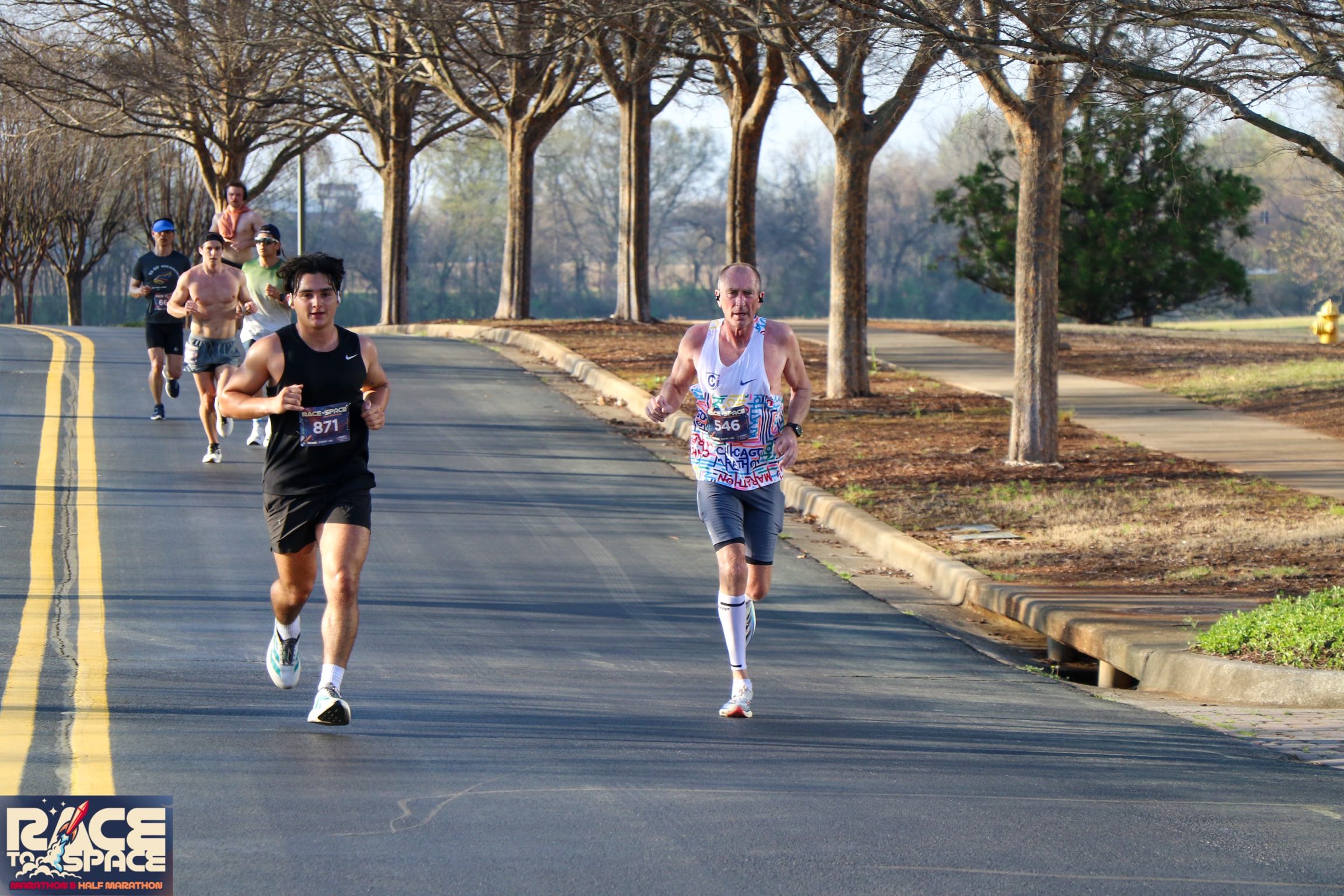
The course itself was essentially two laps for the full marathoners, winding through Cummings Research Park—the second largest research park in the U.S. (after the Research Triangle Park in North Carolina) and fourth largest in the world (after one in France and Japan). The scenery was surprisingly verdant, featuring manicured lawns, mature trees, and outposts for massive tech and defense companies like Booz Allen Hamilton and SAIC. I wondered if this SAIC was Shanghai Automotive Industry Corporation—the parent of MG—which would be odd since MG does not sell cars in the U.S. However, I later learned that it is Science Applications International Corporation, one of Huntsville’s one of the city’s largest and most prominent defense and technology contractors.
In a highly unusual twist for amateur marathons, the entire route was completely closed to cars. The course was also uniquely marked with tape arrows stuck directly to the good pavement. Between the taped arrows and police cruisers blocking off intersections, making an errant turn would have required a deliberate act of sabotage.
For some reason—likely a faulty memory—I had been under the impression the route would be tabletop flat, but it turned out to be undulating. No hill was exceptionally steep or long, matching the up-and-down profile of my typical training runs in Colorado perfectly.
Because of the rising mercury, I abandoned my usual strategy of waiting until mile six to hydrate, grabbing water or Gatorade at every single aid station. I paced myself using a strict blend of perceived effort and heart rate monitor data. My rule for the first half was to keep my heart rate under 142 beats per minute, backing off the throttle anytime the numbers crept higher. I crossed the halfway point feeling magnificent at 1:42 and change. A sub-four-hour finish felt like it was securely in the bag, and even breaking 3:40 seemed like a near certainty. I conveniently ignored the fact that during my last Alabama marathon, my first half was only one minute slower than today and yet I imploded enough to exceed four hours after covering the whole distance.
The second half proved to be more challenging—as completely expected—as the temperature climbed. On the bright side, the thick, humid Alabama air acted as a buffer, making the solar radiation feel far less piercing than it did under the cloudless skies of the Tucson Marathon a few months ago. Most of the roads were tree-lined, offering welcome pockets of shade. The course featured numerous turns, meaning I never had to battle a headwind for long. In fact, I found myself relishing the occasional slight headwind for its evaporative cooling effects.
While the first lap was crowded, I found myself running almost entirely alone during the second lap. There were exponentially fewer runners tackling the full 26.2 miles compared to the half marathon.
I raised my heart rate ceiling to 148 beats per minute for the second half and settled into a remarkably consistent groove in the eight-minute-something-per-mile range. I was fiercely determined not to let a single mile split slip past the nine-minute mark, a “failure” I had suffered during my last marathon (the FTC Mary Andrews Marathon in Florida). I succeeded, although barely. Even though my second half was 11 minutes slower than my first, my body felt surprisingly resilient. I supplemented my fluid intake with four SaltSticks and three gels, and regularly utilized my visor strategy to dump extra cups of water over my head.
To keep my legs moving when fatigue set in, I drew inspiration from the cycling monument Milan-San Remo, which I had watched the day prior. In that race, cycling heroes like Tadej Pogačar, Tom Pidcock, Wout van Aert, and Mathieu van der Poel delivered mind-blowing performances. Mads Pedersen even secured a top-four finish despite returning from a nasty crash that left him with broken bones just six weeks earlier—and totally wasn’t expected to race for at least a few more weeks. The rest (except for Pidcock) suffered a major crash during the race that left Tadej Pogačar looking like he was wearing rags over a bruised and bloodied bum. Nevertheless, he managed to get back at the front and ended up outsprinting a charging Pidcock by a foot. It was one of the most thrilling one-day races I had ever watched.
I channeled their refusal to surrender into my own effort, determined to accelerate during the final miles where I typically falter. Almost miraculously, my splits for miles 25 and 26 were faster than my 21st mile. I gradually ramped up my speed for the final 400 meters, crossing the line with a final time of 3:35:49. I will absolutely take it.
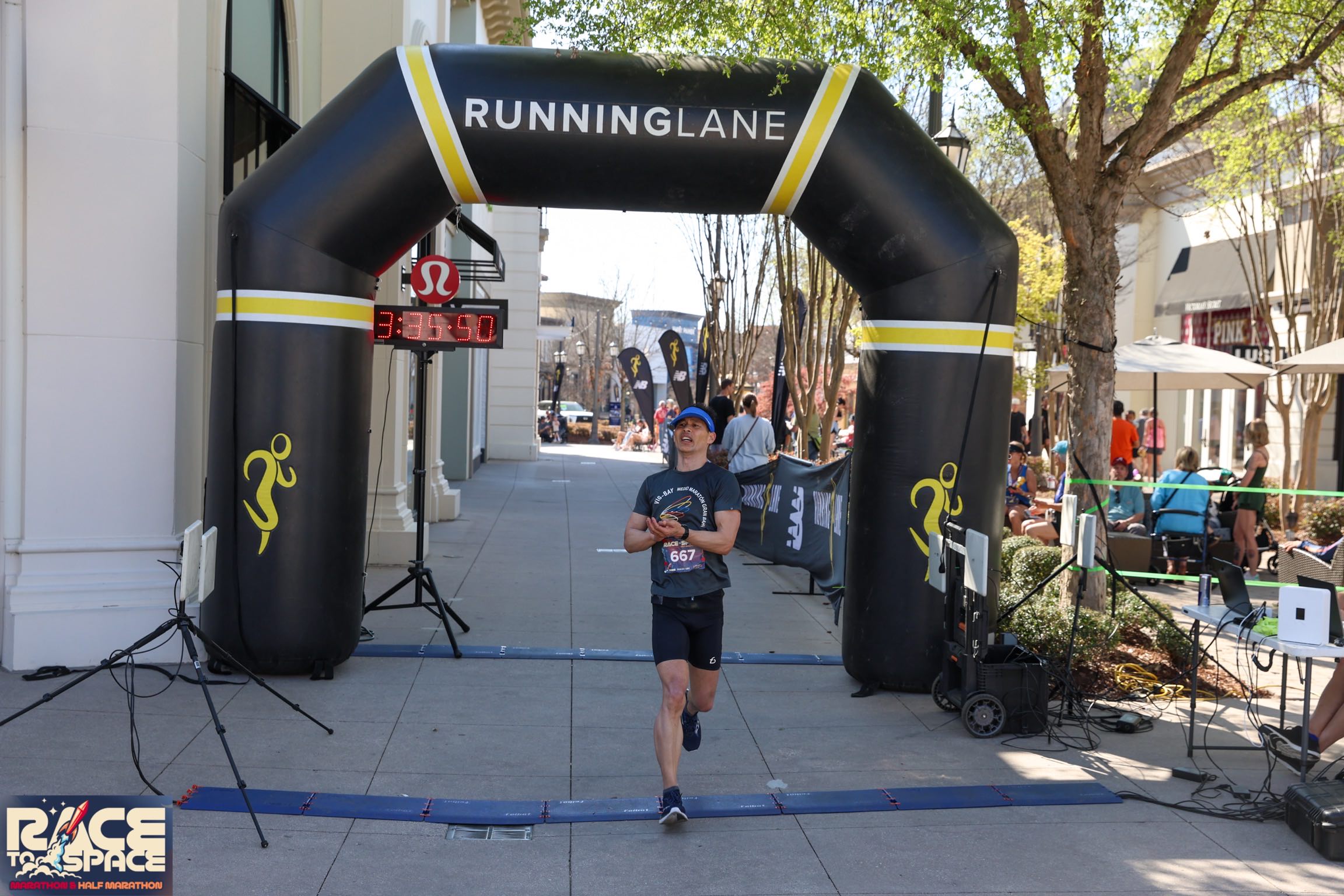
I walked another 50 meters beyond the finish line before plopping myself down next to a shaded brick wall. That is when some rather unfortunate drama commenced. Within minutes, my left calf seized with a cramp of such ferocity that it caused me to elicit a loud caterwaul.
Bystanders turned their heads. “Are you OK?” someone asked.
“Yeah, cramp,” I managed to explain, though my contorted facial expressions betrayed the sheer agony. Suddenly, my right calf clamped down, followed immediately by my abdominal muscles. All I could do was sit completely motionless, waiting for the muscle fibers to unseize. What felt like an eternity passed before a kind gentleman appeared carrying a makeshift lifesaver kit: a couple cups of water, a can of Sprite, and a bag of potato chips.
“Oh, you are so kind!” I exclaimed.
I spent the next half hour sitting on the concrete, consuming every drop of fluid, eating the salty chips, and swallowing my two remaining salt sticks. When I finally decided it was time to head to my rental car, the journey proved comical. It took me a full minute just to transition from a seated to a standing position, my quads threatening to lock up with every millimeter of movement.
My immediate goal was a hydration station a mere 50 feet away. Walking like a waddling duck—or perhaps a rusted robot—it took me nearly five minutes to cross that distance. I absolutely refused to bend my knees for fear of triggering another full-blown spasm. A few more cups of water and a Dr Pepper finally restored my humanity. It was the most severe post-race cramping—correction, anytime cramping—I have ever experienced, made entirely curious by the fact that I felt no hints of cramping while actually running. I would much rather suffer after crossing the finish line than before, therefore I have zero complaints.
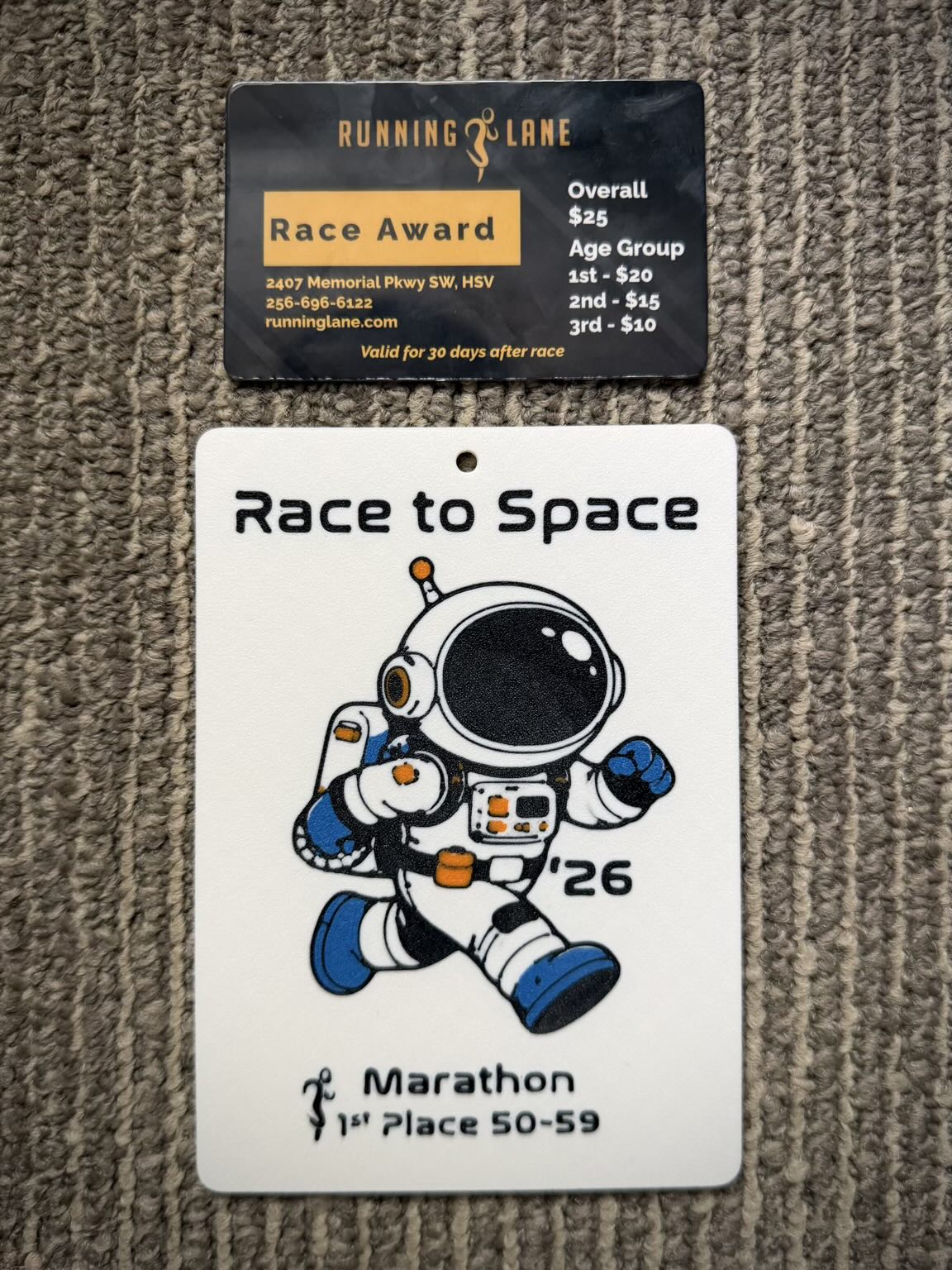
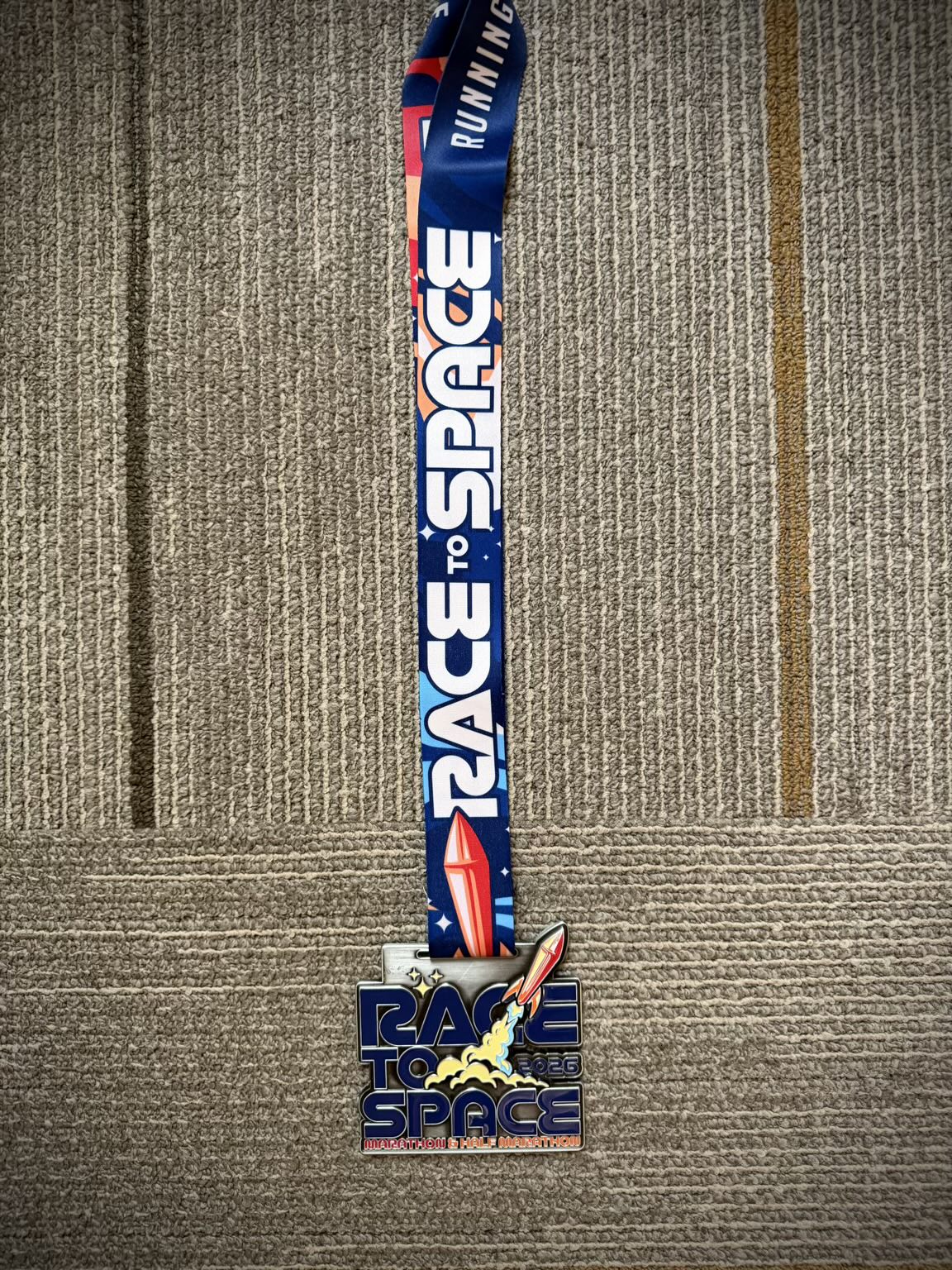
Before leaving the venue, I received a delightful surprise: I had won my age group. A volunteer handed me a commemorative plaque alongside a twenty-dollar gift card to a local running store.
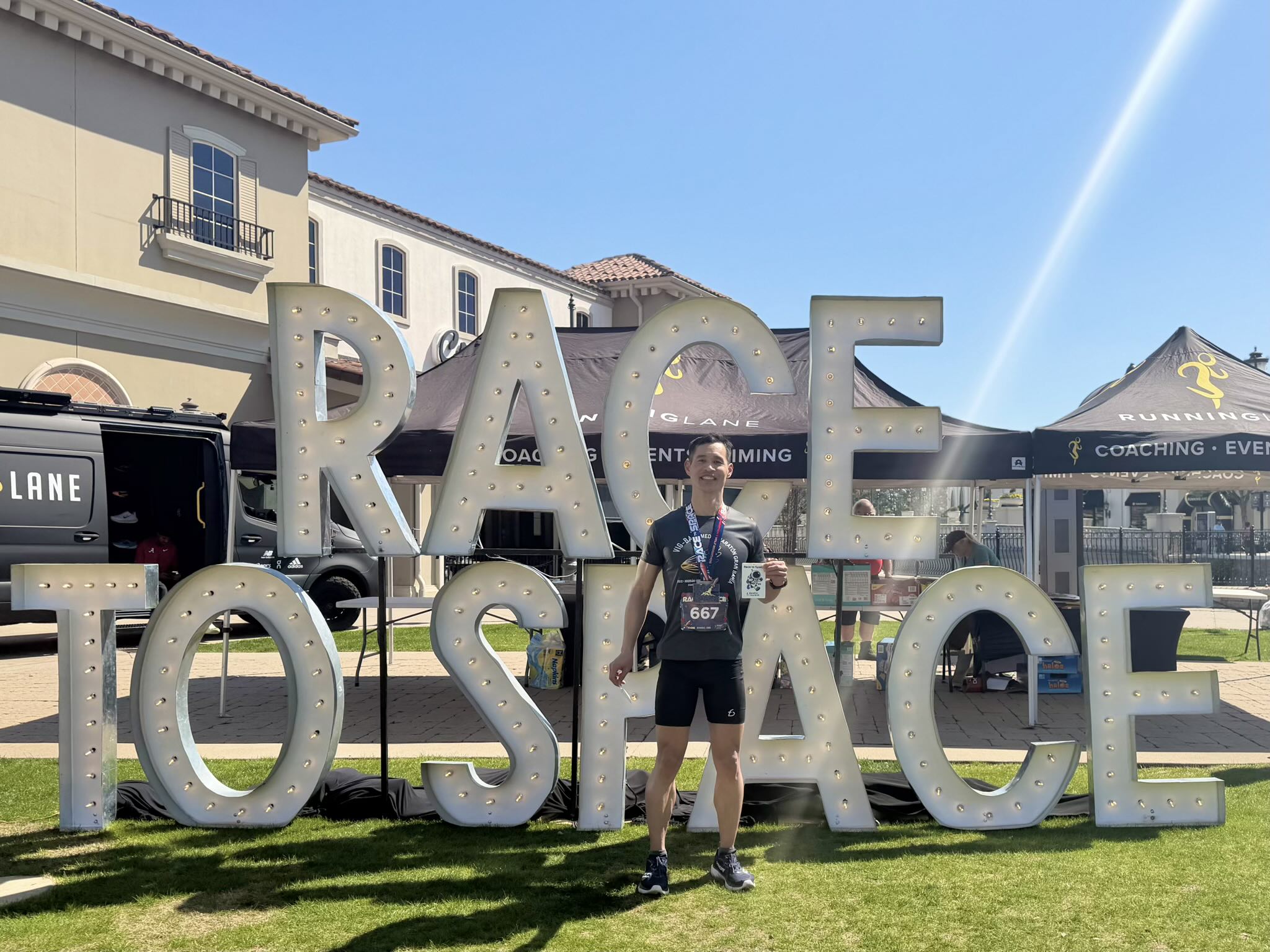
I spent a few minutes chatting with a local runner named Wiley. At 64 years old, he had just finished the marathon in 4:01, though his last marathon was a relatively blistering 3:33. What made his performance even more impressive was that he only started running marathons at age 60. He was quick to clarify that he had been a lifelong runner, but simply never dared to tackle 26.2 miles until four years ago.
I can only hope to have his engine at that age. And that I won’t be like a waddling duck or rusty robot, for that matter.
Race Data
Distance: 26.2 miles
Final time: 3:35:49 (8:14/mile)
Overall place: 14 / 129
Division place: 1 / 12
Official results
There are 6 comments.
Congrats on winning your age group! The cramps were doing a celebratory dance on your behalf.
Thanks Adam. My legs were really unwell this afternoon, but that gave me a chance to lie down and write this report!
Nice Job Felix! I searched your name after seeing you were from CO in the results. Great write up. I was also reduced to a waddling duck but was happy to finish my first marathon—somewhat experiencing the Birmignham implosion you described. Cheers.
Hi Tyler, thanks for stopping by my site and congratulations on the race! The first marathon is always the most exciting one—it is a real life milestone. I see in the results that you even comfortably finished under 4 hours. Well done!
I suppose adopting the gait of a water bird near the finish line is not too uncommon. We all pay the toll eventually.
Thanks Felix! Yes, I was very happy with my result, as well. All the best in your 50>4 pursuit, and congrats on the age group win. Well deserved!
Yes, a good result in your marathon debut, especially considering the warm temperatures. Too bad we didn’t get today’s weather yesterday, huh? Hope you were able to do something to celebrate the milestone!