The Saucony Kinvara 15: Tested to 653 Miles

The Saucony Kinvara was born into the minimalist running boom of the late 2000s—a moment when the conventional wisdom held that cushioned shoes were ruining feet everywhere and that the solution was to run as close to barefoot as decency allowed. The Kinvara threaded that needle well: low to the ground, flexible, light, just enough foam to be comfortable and no more. Then, as the industry pendulum swung back toward cushioning and stack height, the Kinvara occasionally followed, if only ever-so-slightly. The 14 was its most wayward iteration—three extra millimeters of foam, a bouncier ride, a shoe that had wandered noticeably from its origins. The 15 is the homecoming. I’ve worn all three, and I’m here to report that the prodigal shoe has returned in better shape than ever.
The Kinvara is what the running industry calls a “transitional minimalist” shoe—not a barefoot shoe, not a marshmallow on a platform, but something in between. It sits close to the ground, flexes easily in every direction, and puts just enough foam underfoot to keep your feet from filing a formal complaint. All three versions I’ve used—the 13, 14, and 15—share a 4mm heel-to-toe drop and the same PWRRUN midsole foam, and all three are featherweight trainers in a market increasingly obsessed with stacking as much foam as physically possible without tipping runners over.
The 13 and 15 have nearly identical stack heights (28.5mm and 29mm at the heel, respectively, per Saucony’s specs), which is why they feel so similar underfoot. The 14 is the outlier, with a 31mm heel stack—three extra millimeters that, per the Kinvara internet community, amounted to somewhat of a betrayal. Whether or not you share that outrage, the 14 does feel noticeably bouncier and more cushioned than the 13 and 15, purely by virtue of having more foam between foot and pavement. If you prefer the planted, ground-hugging feel that made the Kinvara famous, the 13 and 15 are your models. If you want a little more float on long runs without switching shoes entirely, the 14 delivers that.
I did like the 14. But the 15 won me over entirely—not because of the foam, but because of the upper.
The upper, for me, is the most meaningful upgrade in the 15. Saucony swapped the thin, breathable mesh of the 14 for a denser, more structured fabric—and the results show up not in the first 100 miles but in the next 400. The 14’s upper began tearing somewhere around 200 to 300 miles; a hairline crack here, a small rip there, the kind of structural failure you don’t notice mid-run but sticks out during visual inspection. The 13 was similarly fragile, though it held out a bit longer.
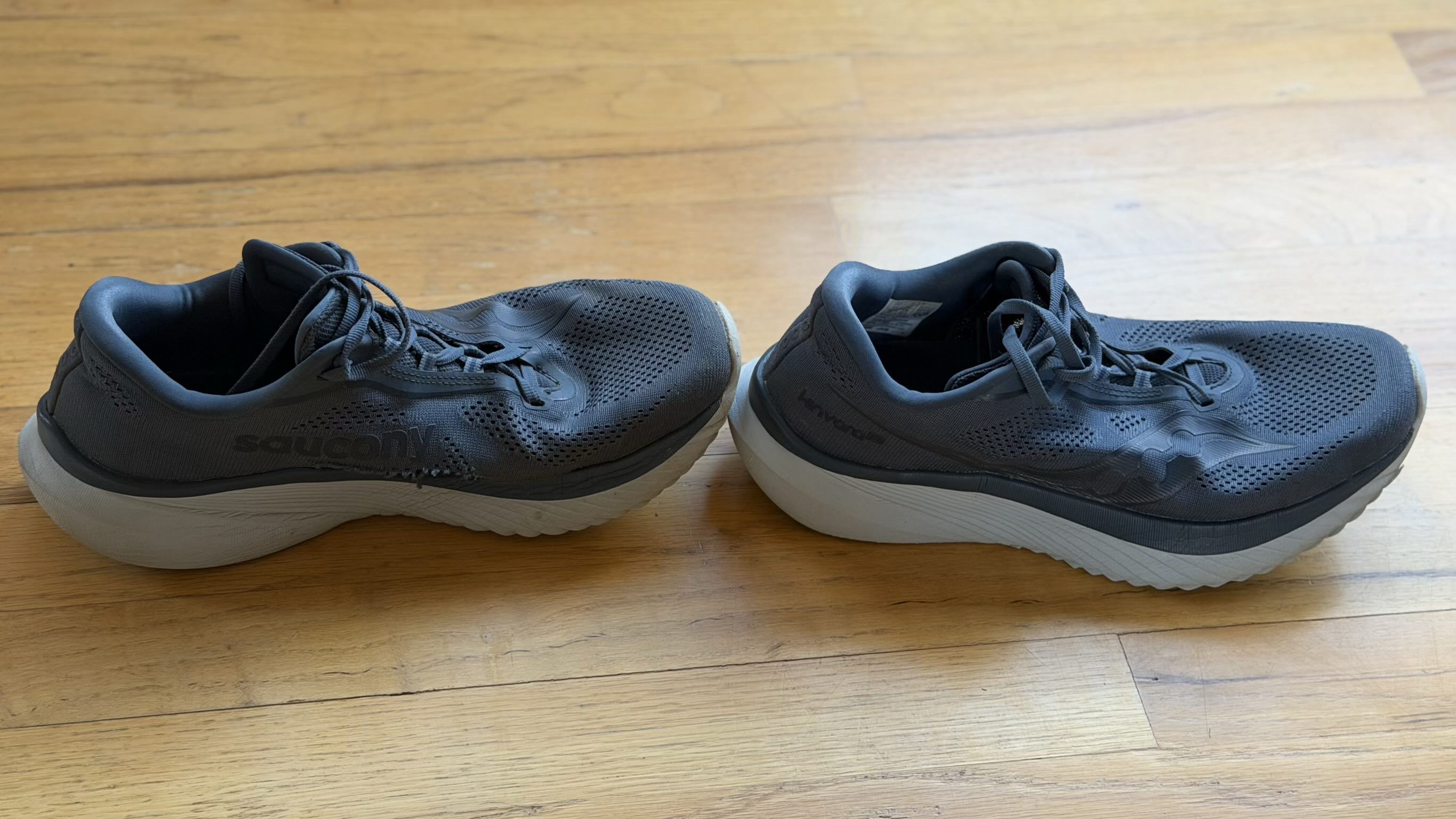
My pairs of 15s, by contrast, looked presentable until well past 500 miles:
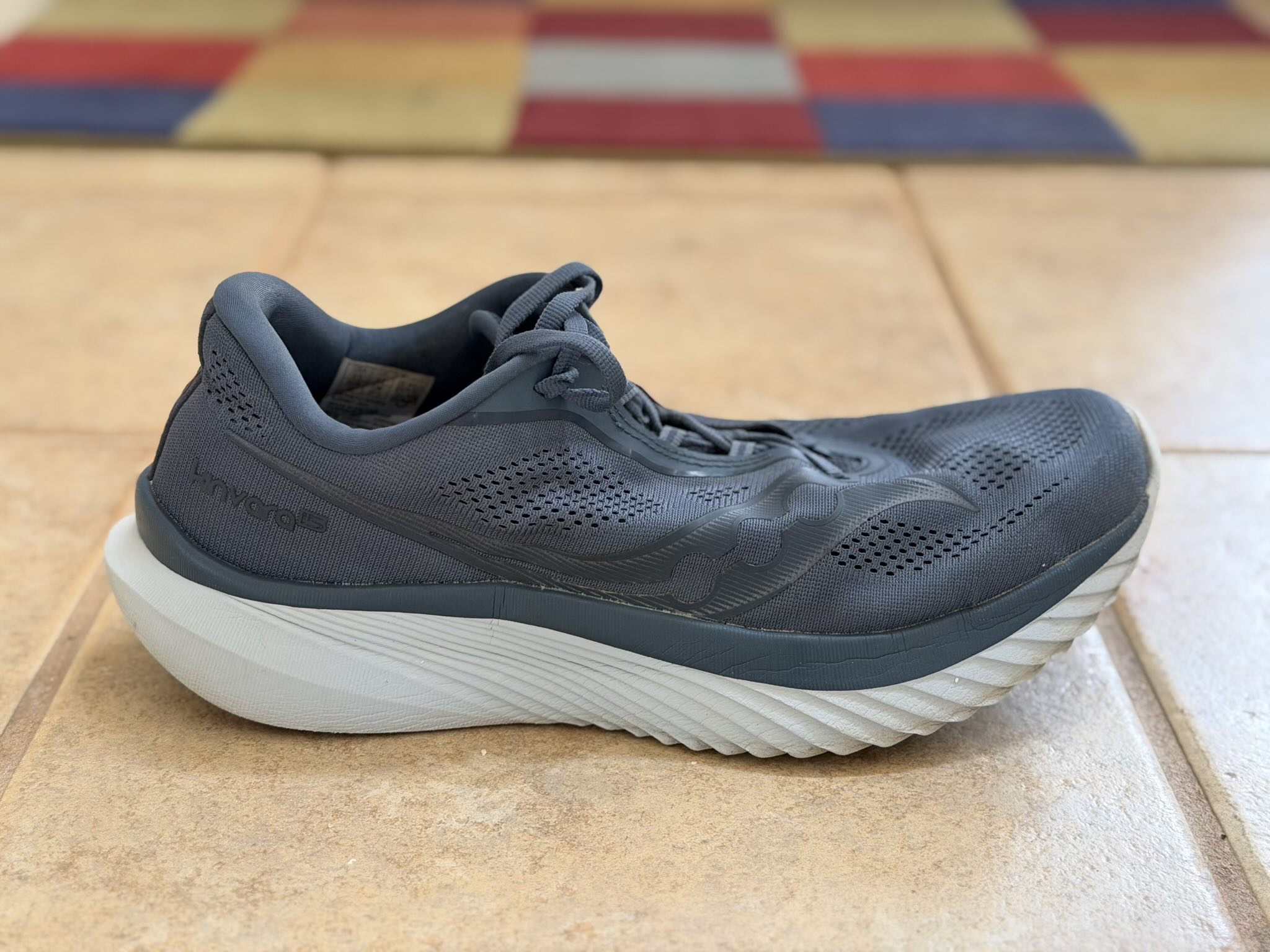
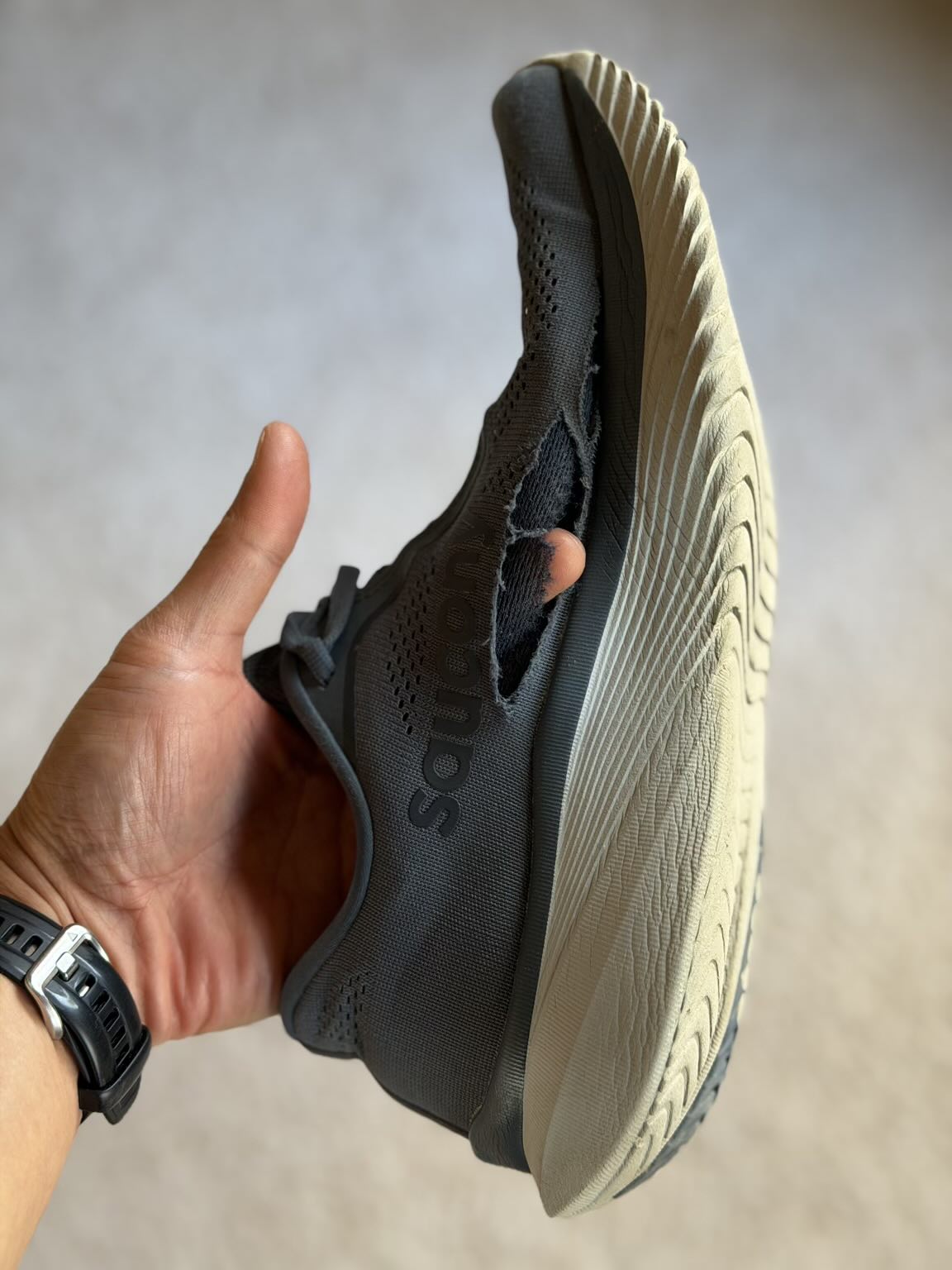
One pair made it to 653 miles before developing a hole in the upper—and that tear didn’t appear until around the 550-mile mark. For a shoe that costs $120, that kind of longevity is a meaningful part of the value proposition.
The 15 also inherited the 14’s improved sole pattern, which I’m really glad for. The 13’s tread had a knack for collecting pebbles—not in a dramatic way (definitely less than Andrea’s On Cloud 5 shoes), but enough to leave the sole resembling spinach caught in a teenager’s braces after a run on a graveled path. The 14 and 15 corrected this, and the sole has held up well in practice despite reviewers’ repeated warnings about premature wear.

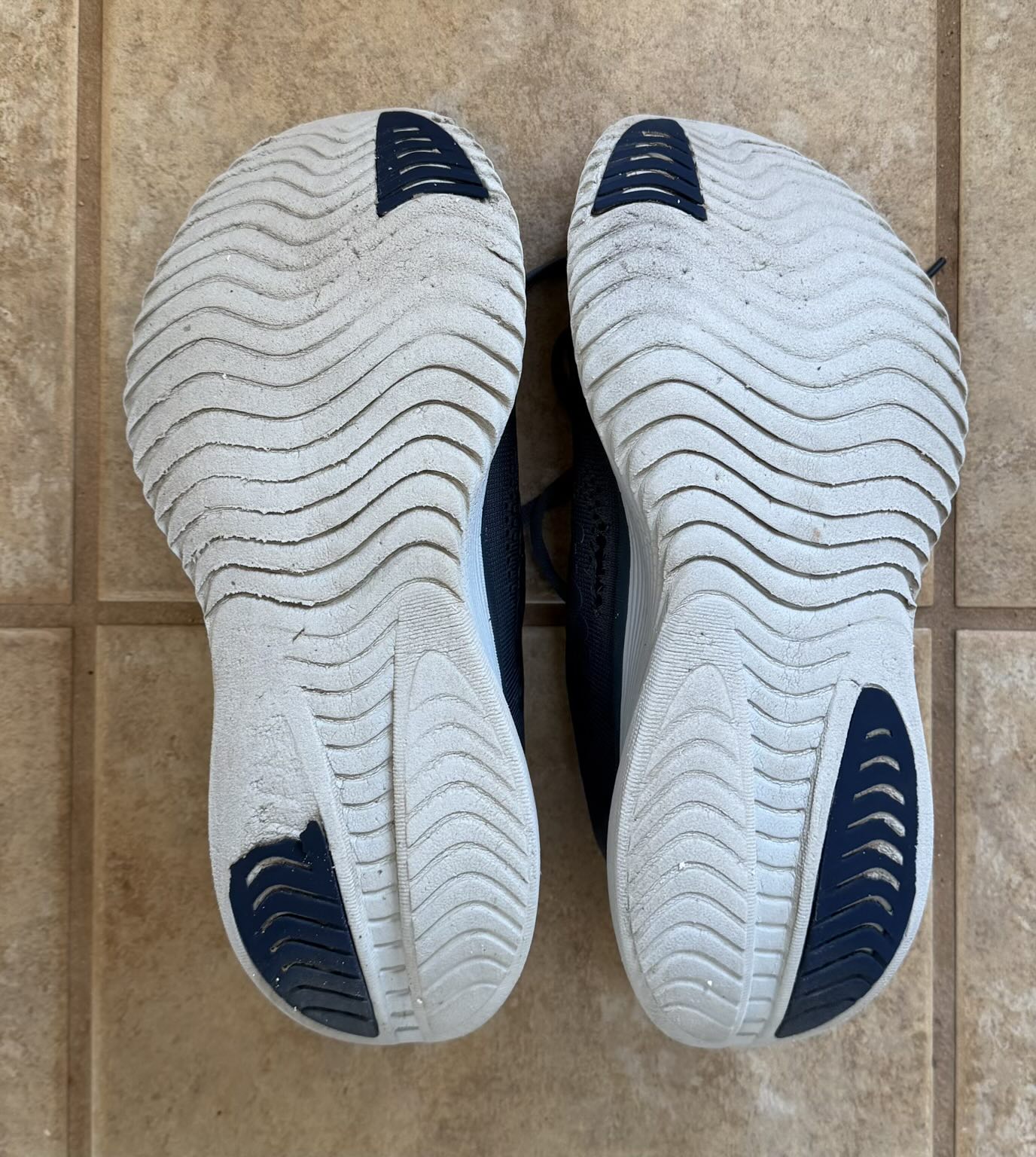
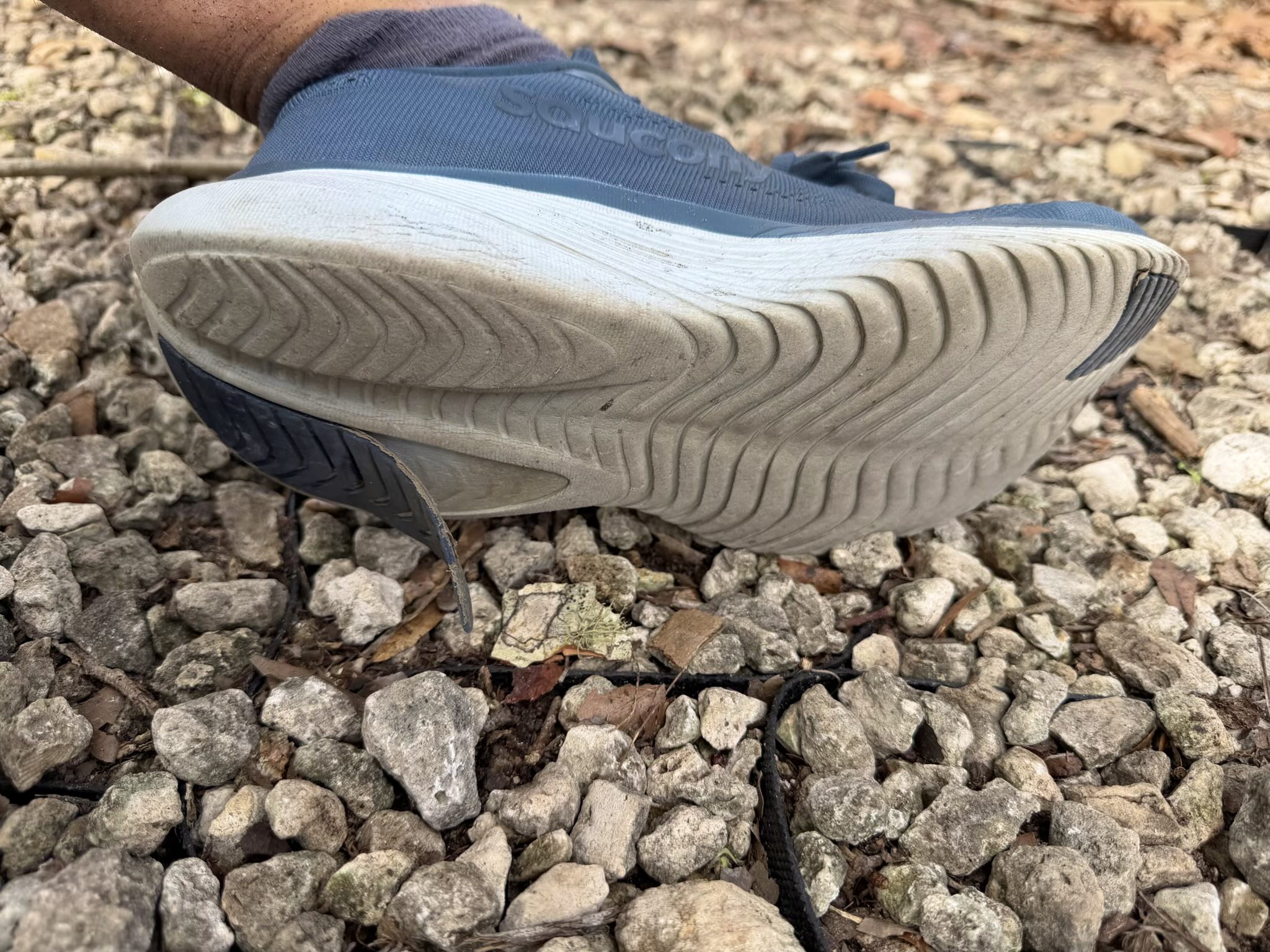
After 500 miles, I still had sufficient tread. It was only at 653 miles that I noticed from visual inspection that the tread was basically gone underneath the balls of the feet. Most runners are advised to retire shoes around 300 to 500 miles anyway, so in my experience the sole-durability concern is overstated.
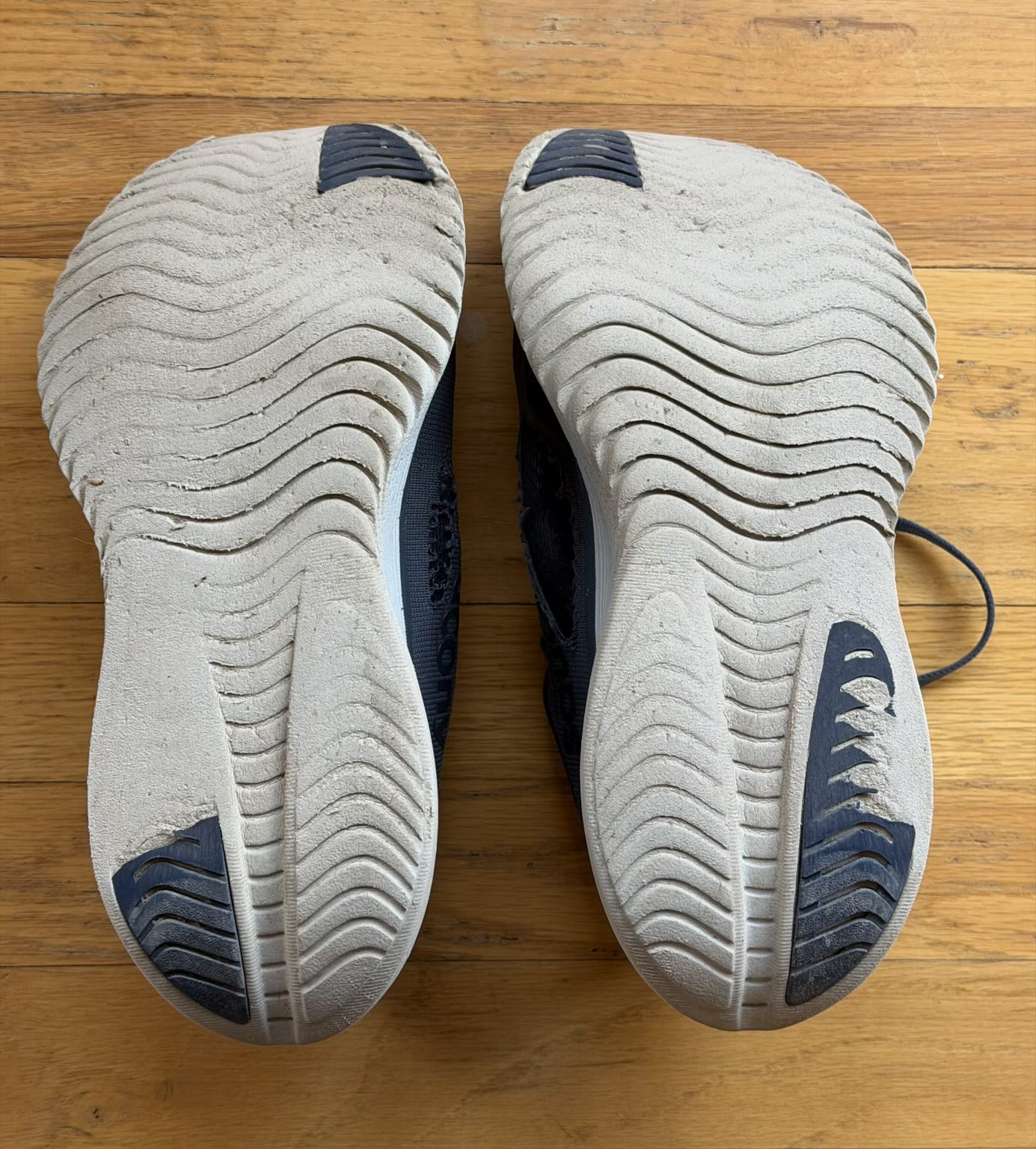
I did have one incident worth mentioning. During a marathon in a pair of 15s, the black rubber heel piece delaminated from the left shoe. I didn’t notice it during the race—a testament either to the shoe’s otherwise solid construction or to the fact that by mile 20 I wouldn’t have noticed if the shoe had dissolved entirely—and I was able to reattach it afterward with a $1.50 tube of Super Glue. My other pair of identical 15s—which are shown in all of the photos on this page other than the one directly below—had no such issue during the 653 miles they made it to before being retired. I’m filing this one under “anomaly” rather than “design flaw.”

There are two minor complaints I share with my friend Adam, who runs in the same shoes. First, Saucony removed the heel pull tab on the 15, shaving a few grams in the process. I would have happily carried those grams in exchange for the ability to slide the shoe on without loosening the laces and recruiting an index finger to serve as a makeshift shoehorn. I’ve been considering adding a proper plastic shoehorn to my shopping list.
Second, the large “Saucony” lettering printed across the arch of each shoe strikes both of us as visually loud for a shoe that otherwise projects quiet competence. This is largely a non-issue in the Dusk/Granite colorway I’ve been using—the lettering blends into the fabric and becomes unreadable at any distance beyond arm’s length—but in other colorways, the branding is conspicuous enough to give pause.
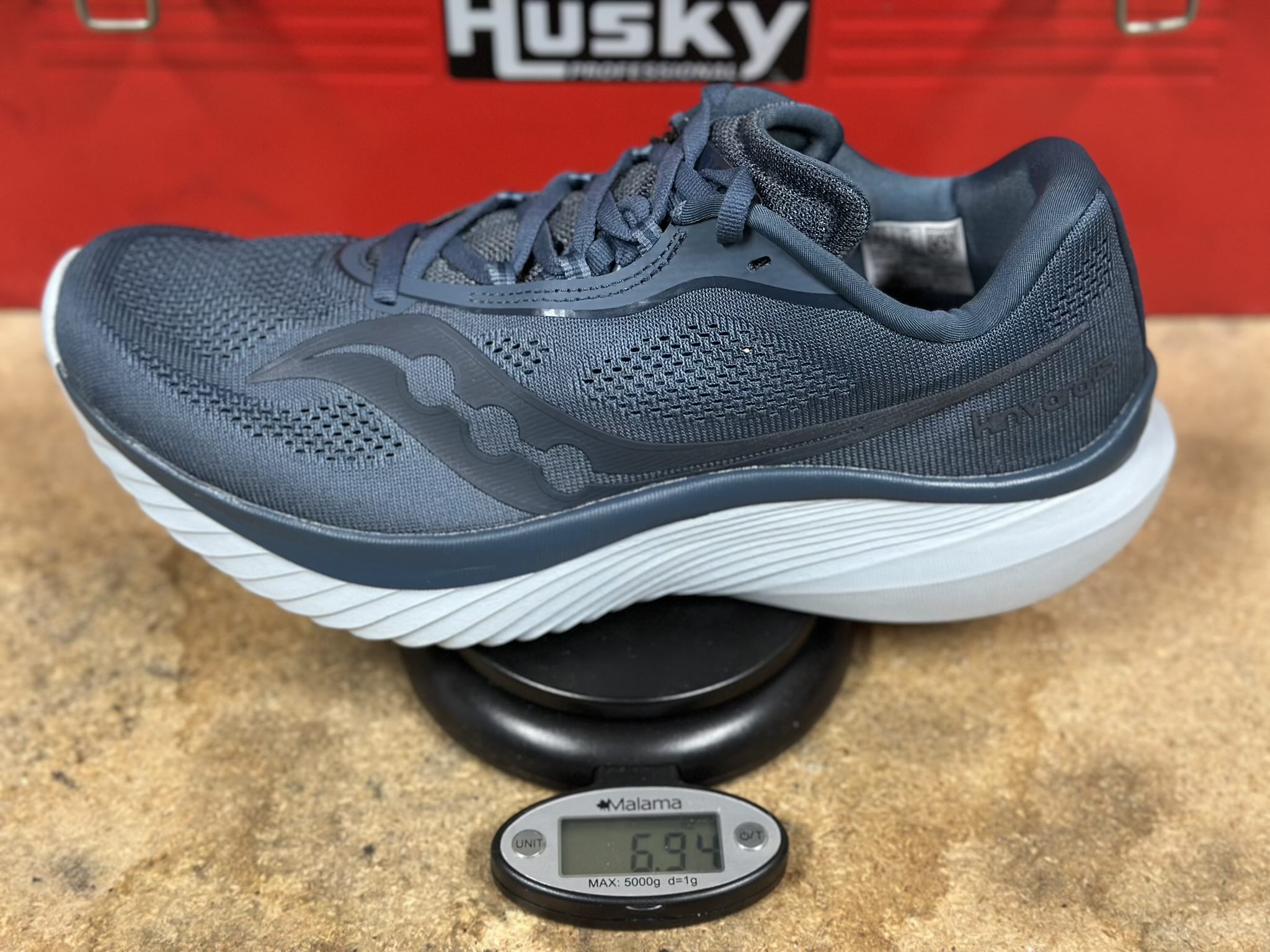
Despite those gripes, the 15 is the best Kinvara I’ve worn. It combines the low, natural-feeling platform of the 13 with the cleaner sole of the 14 and a significantly more durable upper than either predecessor. I’ve run two marathons in under 3:30 in the 15s, and I don’t consider them meaningfully slower than my carbon-plated Saucony Endorphin Pro 3s—which, for the record, the Kinvara nearly matches (actually, slightly undercuts it) on the scale, coming in at 6.94 ounces in a size 9.5. The Endorphin Pro feels different underfoot, with the propulsive snap of a carbon plate, but in terms of what ends up on the clock, the gap is much narrower than you’d expect from a $120 shoe with no plate and no pretensions.
The Kinvara 16 has been out for several months, and I’ll likely be wearing it before the year is out—I burn through a pair every three to four months at 30 to 40 miles per week, and I still have one pair of 15s in reserve. The Kinvara’s history suggests it will keep oscillating: drifting toward whatever is fashionable, then course-correcting back to its minimalist roots. If the 16 and future generations follow the 15’s lead and stays close to the ground, keeps the durable upper, and resists the temptation to become something it isn’t, I’ll be a loyal customer for a long time. The prodigal shoe, in its 15th iteration, is home—and it’s in the best shape of its life.
There are 2 comments.
Good post! I am traveling right now with my Kinvara 15 as my only shoe for both running and walking. Usually when I retire a running shoe it becomes my walking shoe. I might pick up some spare 15s now that the 16s are out. I can usually find them discounted to $70-80.
I will be doing the same in a few days—traveling with Kinvara 15s as the only shoe for running and walking. Like for my last two marathons, I will even be racing in them!
Good idea about picking up some spare 15s now. I may do the same when I return to Fort Collins. Looks like they are going for $85 on Amazon right now—a little less than the $92 I paid on Amazon for the first Dusk/Granite pair. I got my current (second) Dusk/Granite pair on eBay for $82. I also have a barely used Blue/White pair I got on eBay for $49 that I probably will start using in a few days.