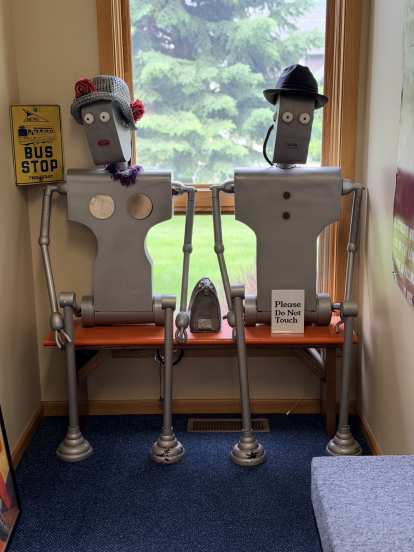
American Computer & Robot Museum

This museum was smaller than I expected. But then, what good museum isn’t?
The American Computer & Robotics Museum in Bozeman, Montana had been on my radar thanks to my AI assistant, and one morning after breakfast we finally walked through its doors. Admission was $10 per person—which, in the current era of $35 museum tickets, already felt like a relic from a more innocent time—and that price included a private tour led by a young gentleman who also happened to be the one who sold us the tickets. In a museum about the history of multitasking technology, it seemed only fitting.
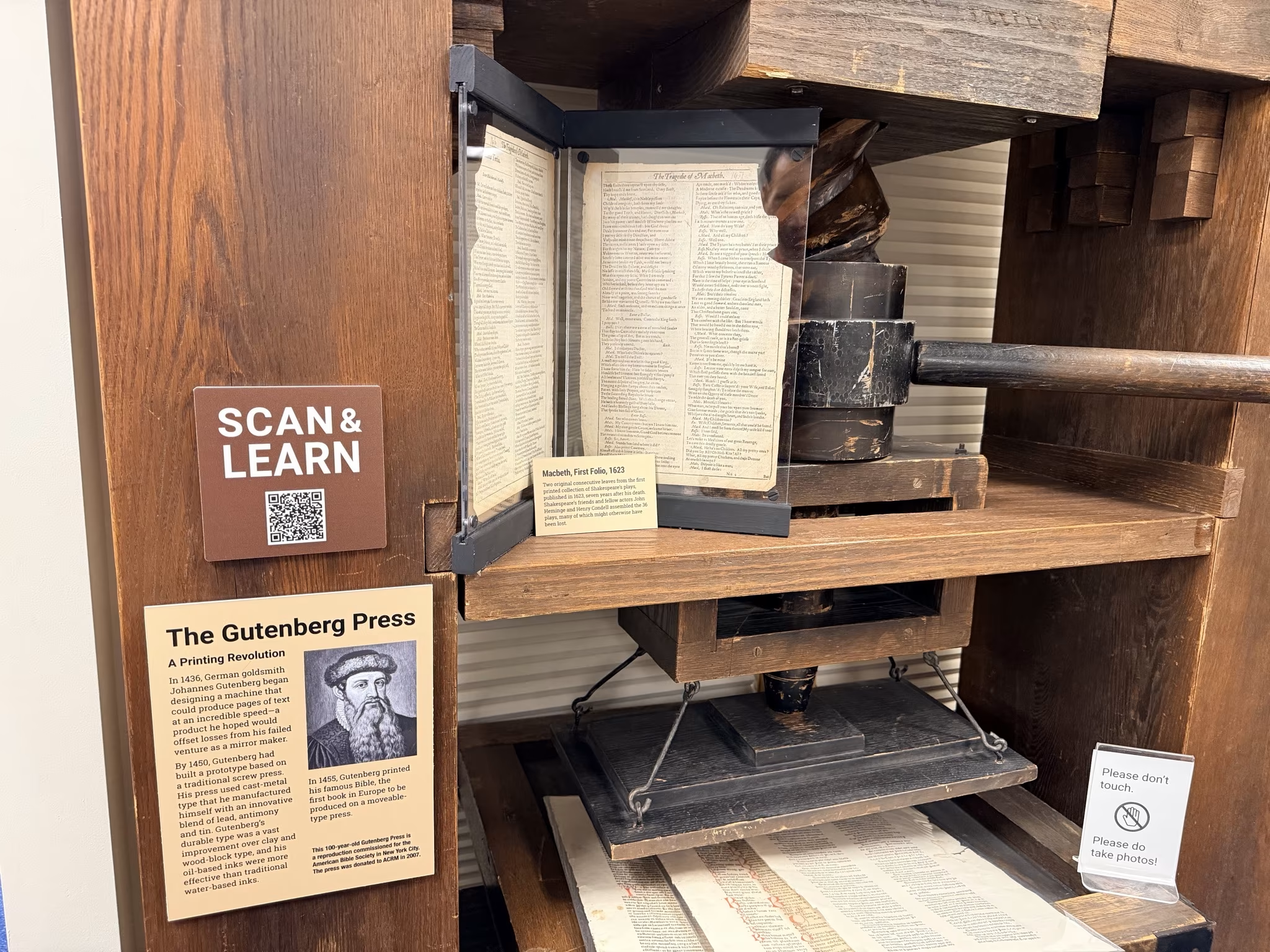
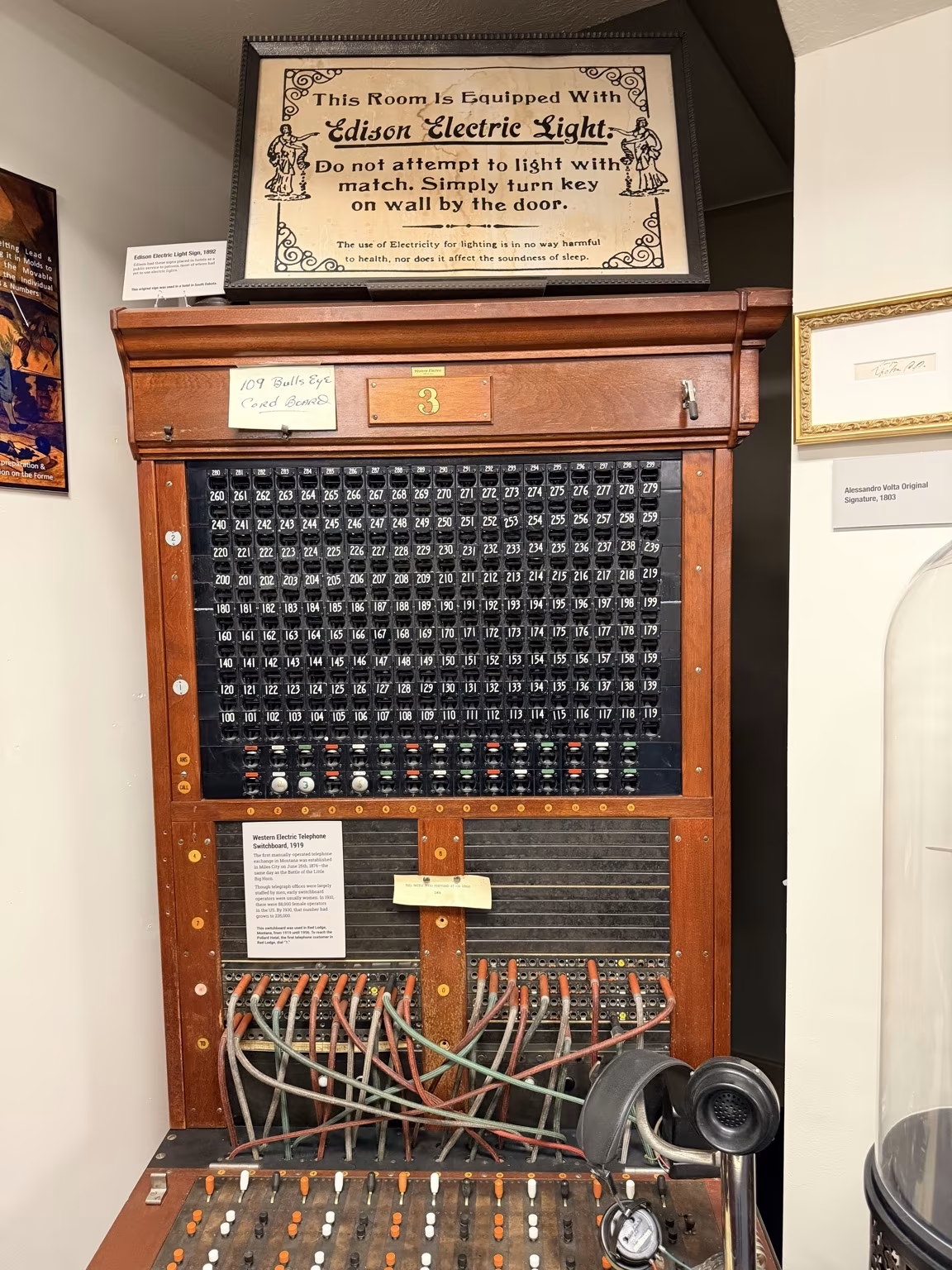
He walked us through the arc of human communication and computation: Sumerian clay tablets, cuneiform bricks, a medieval Bible leaf, the Gutenberg Press. Then the Voltaic Pile, Babbage’s Difference Engine (25,000 parts, four tons of machinery, and no USB port to show for it), Edison’s electric light, and onward through vacuum tubes and transistors to the silicon chip.
One exhibit stopped me in my tracks: a tribute to Ada Lovelace (1815–1852), daughter of the poet Lord Byron. She met Charles Babbage at a party in 1833, became fascinated with his Analytical Engine, and in 1843 published what is now recognized as the first algorithm—a set of instructions for generating Bernoulli numbers. More remarkably, she was the first to theorize that computers could work with things beyond numbers, including musical notes. In other words, she basically invented the concept of the MP3 playlist nearly 150 years before the MP3.
Another highlight was learning that the first commercially successful minicomputer—Digital Equipment Corporation’s PDP-8, introduced in 1965—sold for a mere $18,000, which made it revolutionary for its time. And in the mid-1970s, the Altair 8800 became the first commercially successful personal computer, a kit-based machine that famously caught the eye of a young Bill Gates and Paul Allen, who wrote its BASIC interpreter and thereby founded a small company called Microsoft.
The guide also reminded us that the theoretical underpinnings of modern computing owe a significant debt to World War II codebreaking. The Germans’ Enigma cipher machine seemed uncrackable—until Alan Turing helped crack it, a feat that also helped lay the conceptual groundwork for the computers that followed.
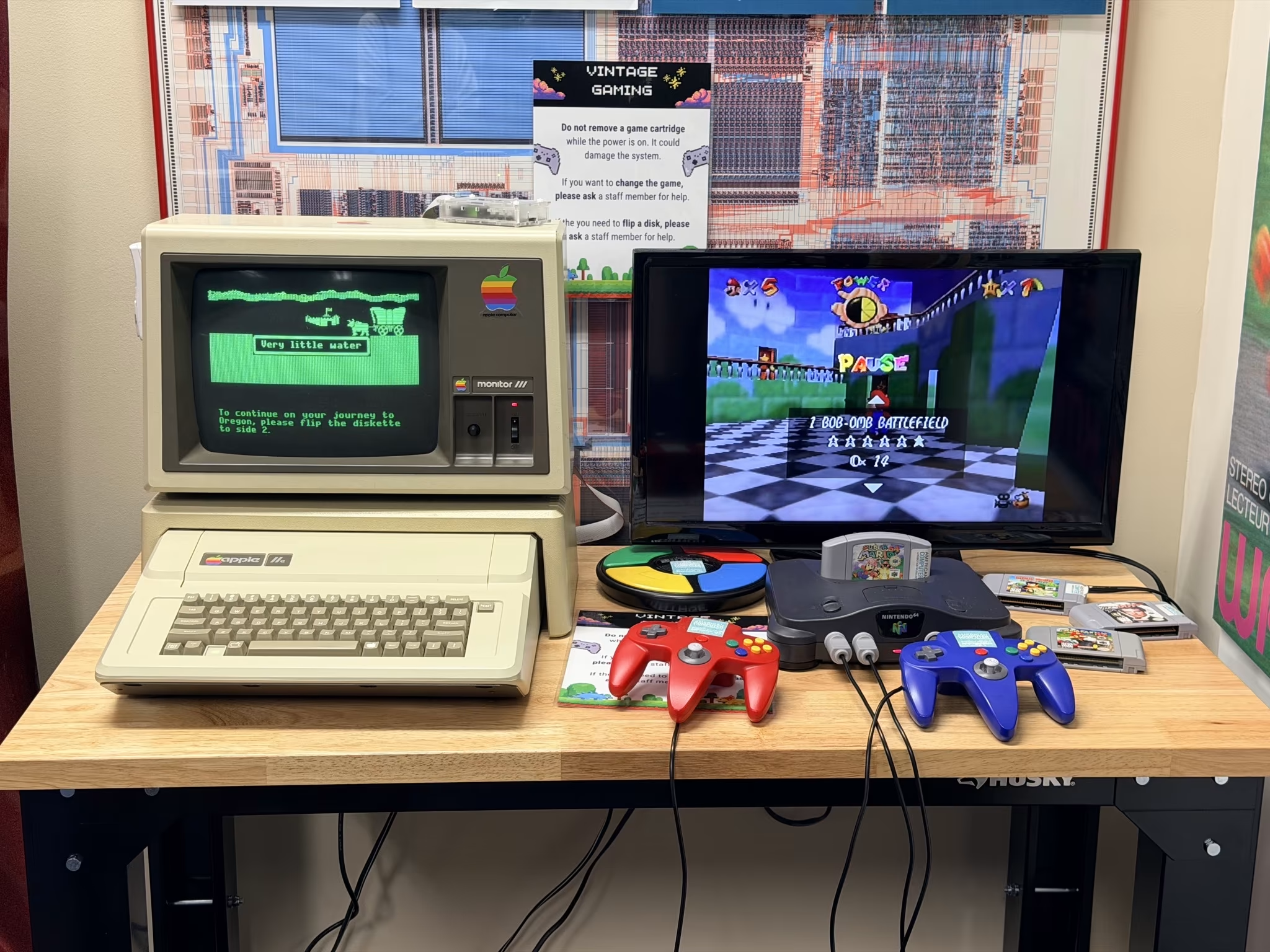
Then there was the Apple room. The museum devoted an entire gallery to Apple’s history, which I enjoyed, though I was mildly surprised by how little attention was paid to the iPhone—arguably the most consequential Apple product ever made. But there was plenty to keep me occupied: an Apple IIe, a Lisa, an original Macintosh. I used an Apple IIe back in first or second grade, hunting-and-pecking my way through BASIC programming, feeling like a junior wizard with access to forbidden knowledge.
A woman with a sprained knee was resting in a chair in the Apple room. She struck up a conversation, asking me questions about Apple devices, and I found myself doing something I rarely do: reminiscing out loud. There’s something about being surrounded by the machines you grew up with that unlocks that kind of nostalgia.
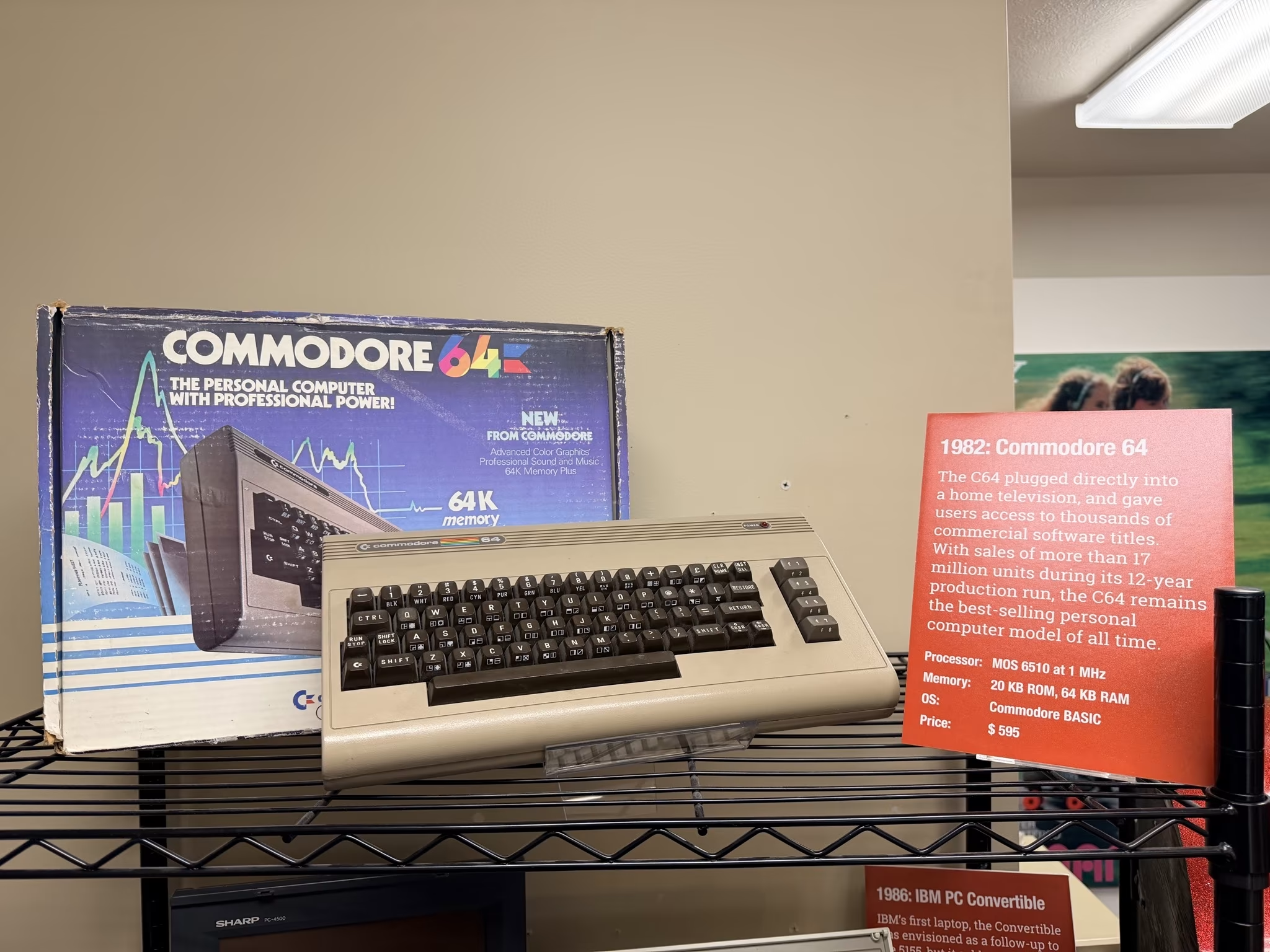
The Commodore 64 was there too, which prompted its own flood of memories. Growing up, my family played games on one—we also had its predecessor, the VIC-20, which used a tape drive and connected to the TV. Both required considerably more patience than a Nintendo, and neither required anything less than the patience of a saint when the tape drive was involved.
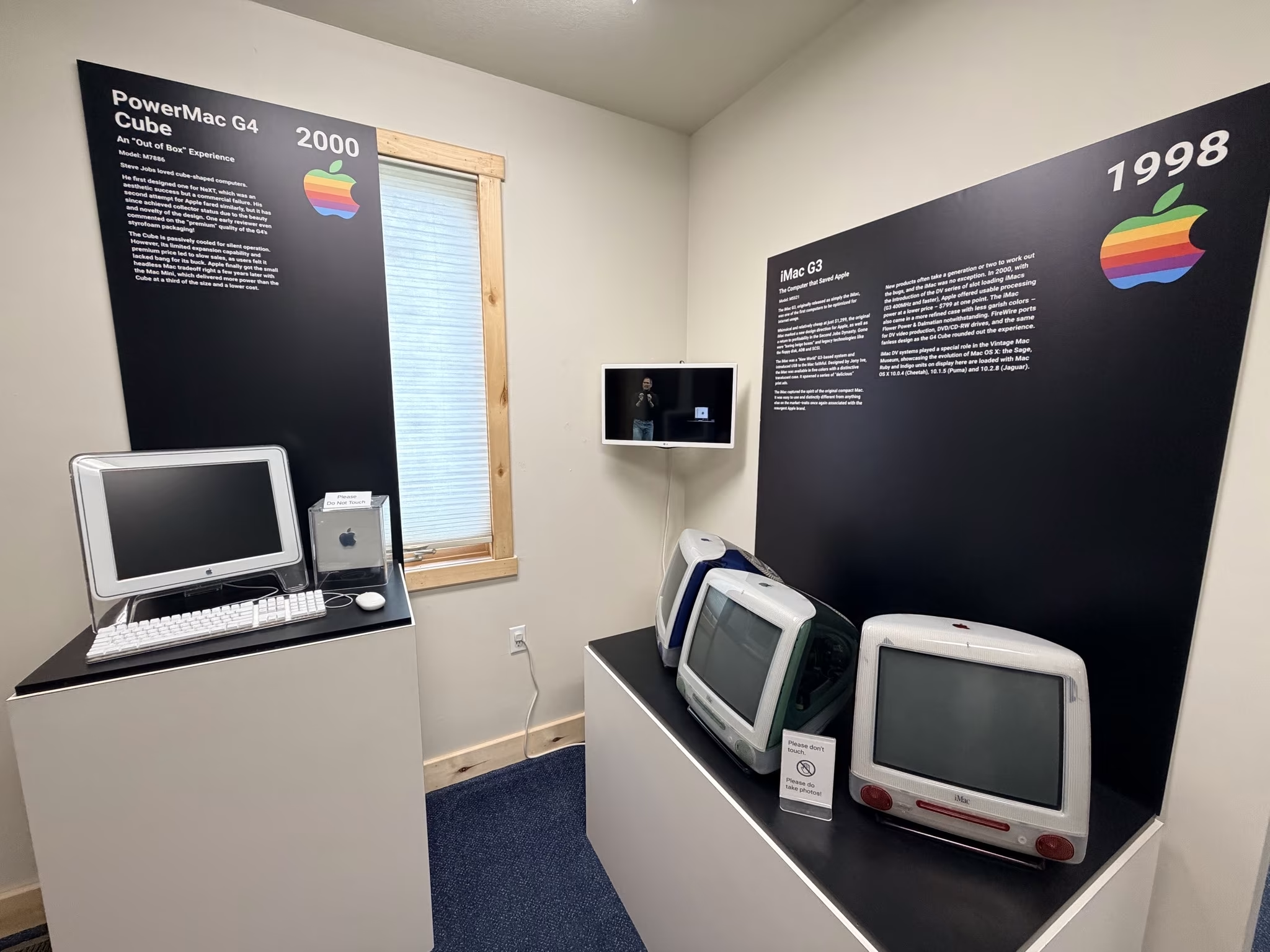
Seeing the translucent iMac G3—the jellybean-colored machine widely credited with saving Apple in 1998—was a different kind of nostalgia: the nostalgia for something you remember clearly but never actually owned. I’d always admired it from a distance.
There was also a poster listing 30 things replaced by smartphones. I’d written my own version of that list back in 2015—15 items, which means the museum either found things I missed, or has slightly different opinions on the alarm clock situation.
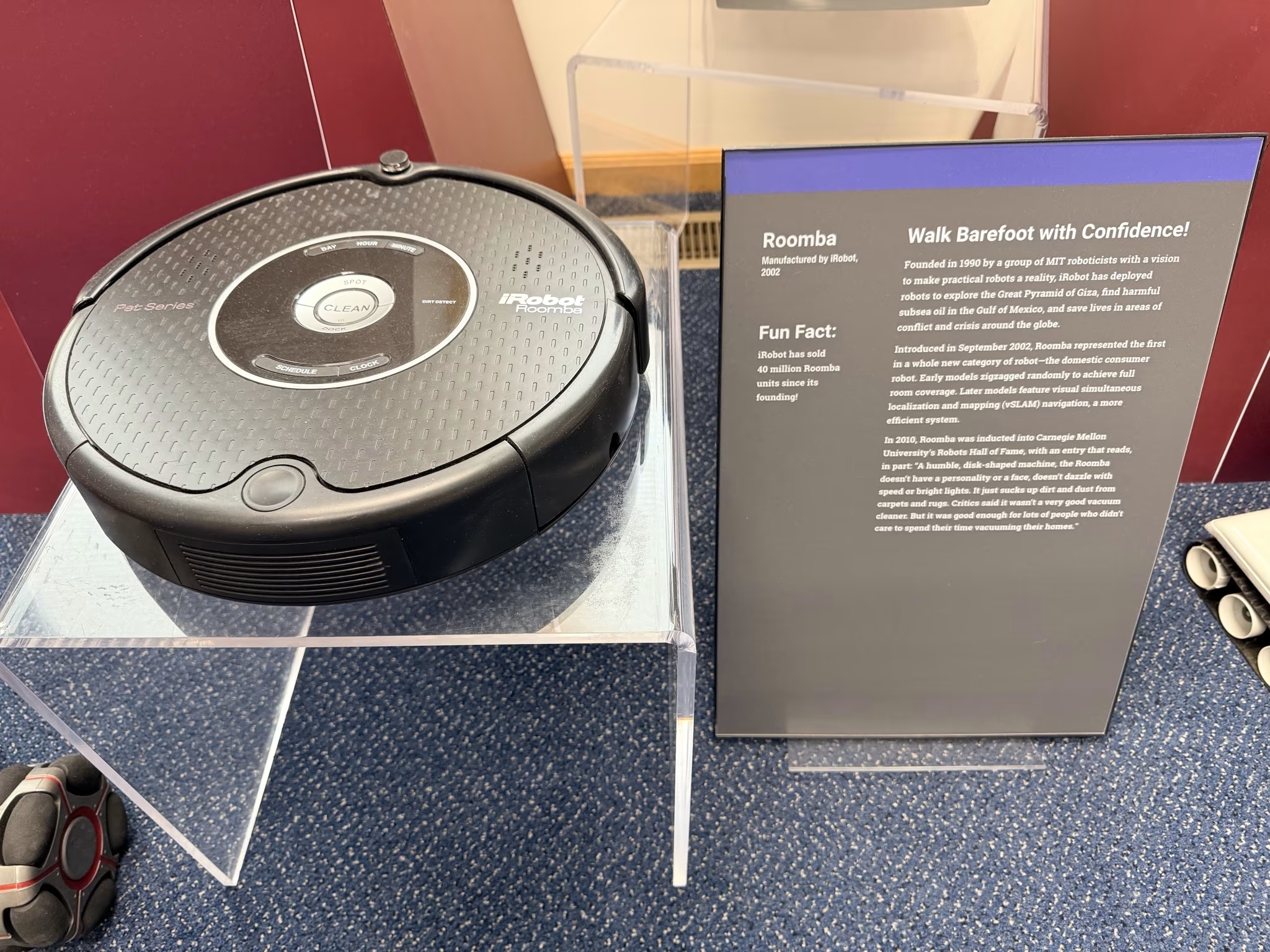
The museum also made me reflect on my own relationship with technology adoption. Visiting this place, I was forced to confront the fact that I am, by Silicon Valley standards, a slow adopter. I didn’t get a smartphone until 2012—five years after the iPhone launched. I never owned an iPod. And I only got a Roomba for my Colorado home this year, despite having used one in Spain for a while already. A couple of decades late to that particular party.
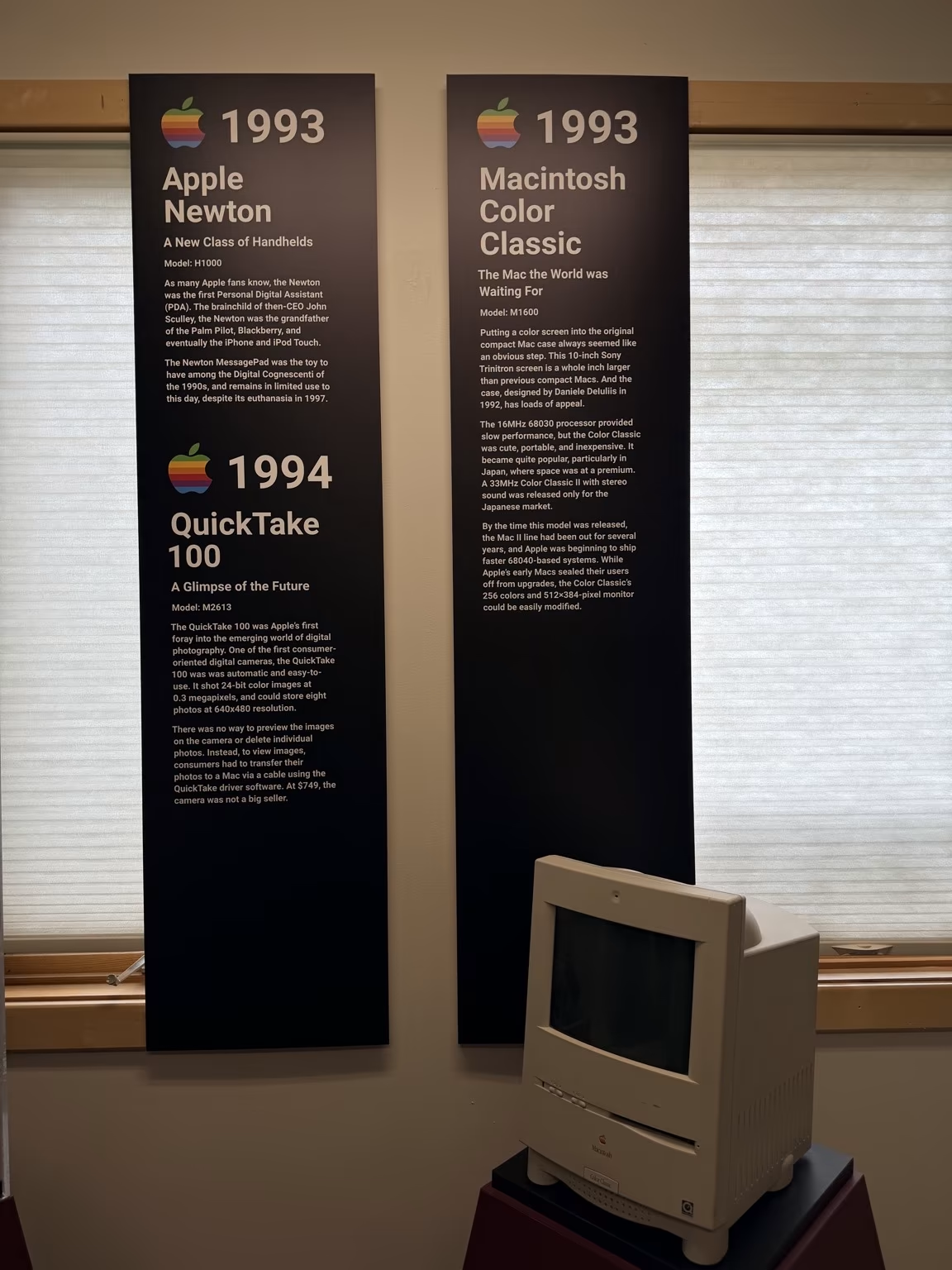
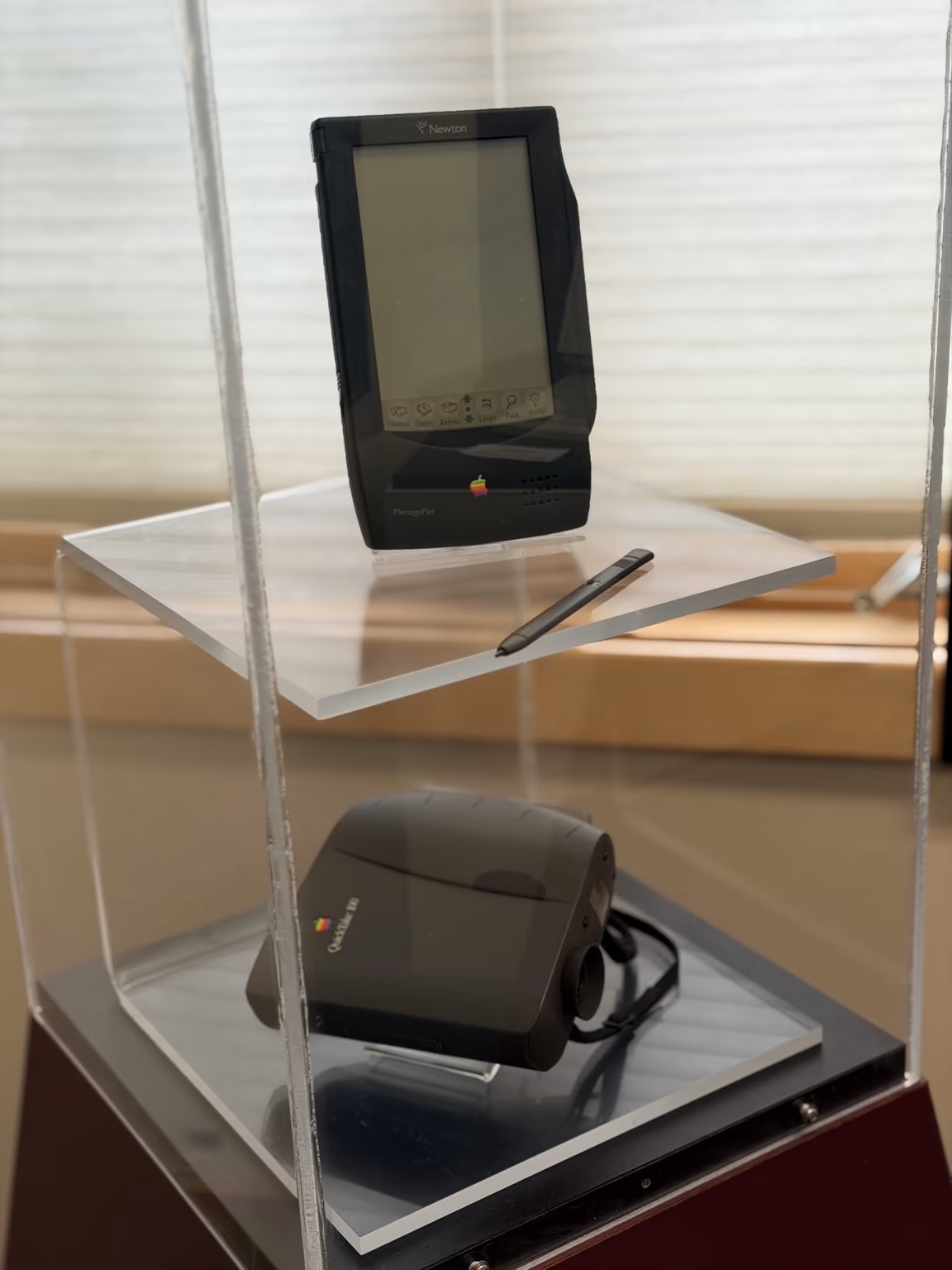
My friend Adam, by contrast, was so early to technology that he was once president of the Apple Newton User Group in Silicon Valley. The Newton—a device that tried to recognize handwriting before the processors existed to do it reliably—was less a product than a prophecy. Seeing one at the museum, I thought about how Adam would have felt right at home here.
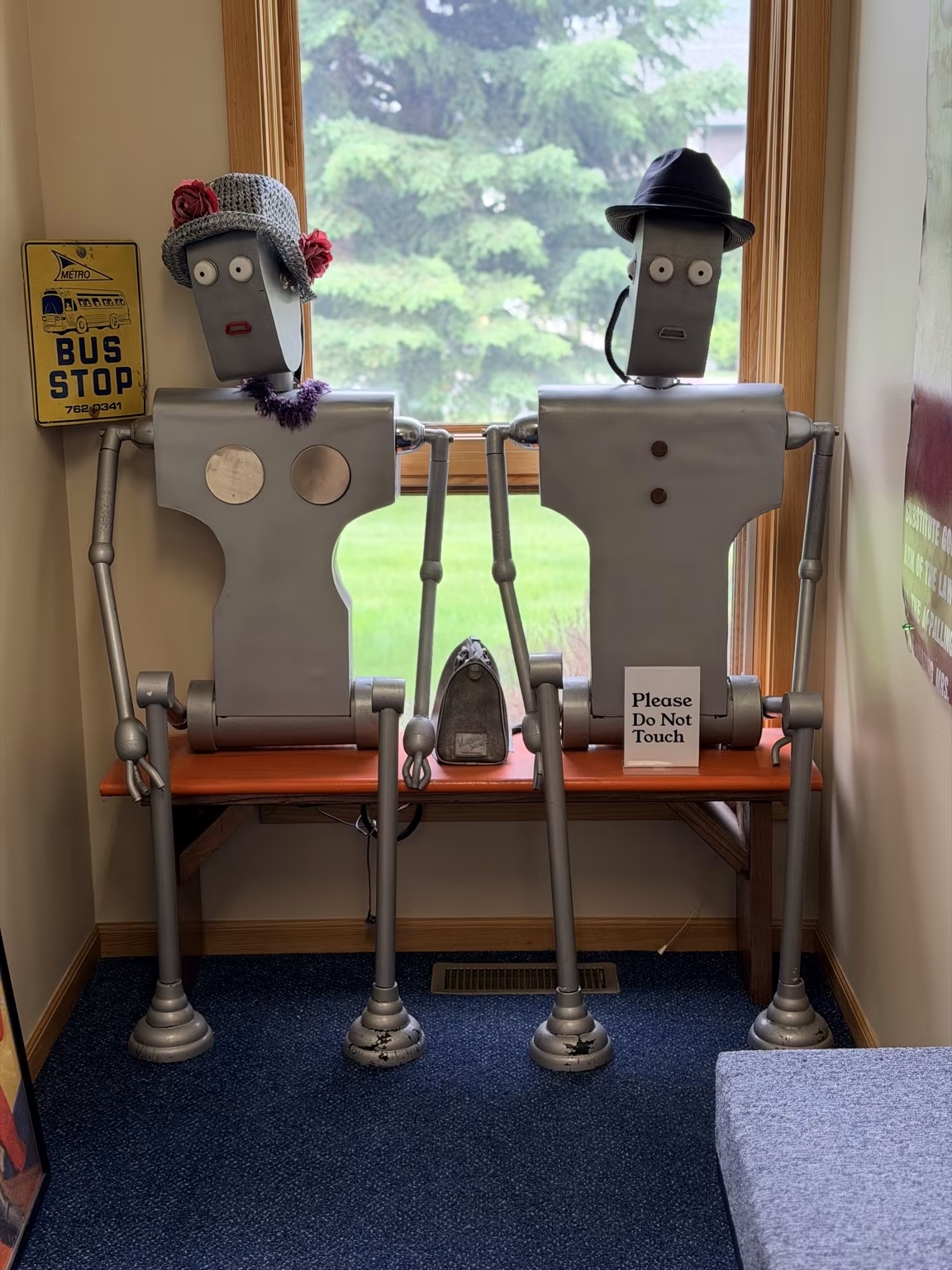
The robots room had a Roomba, a Sony AIBO robotic dog (introduced in 1999, the robotic pet that every kid in 2000 wanted and no parent wanted to pay for), and some robots from science fiction.
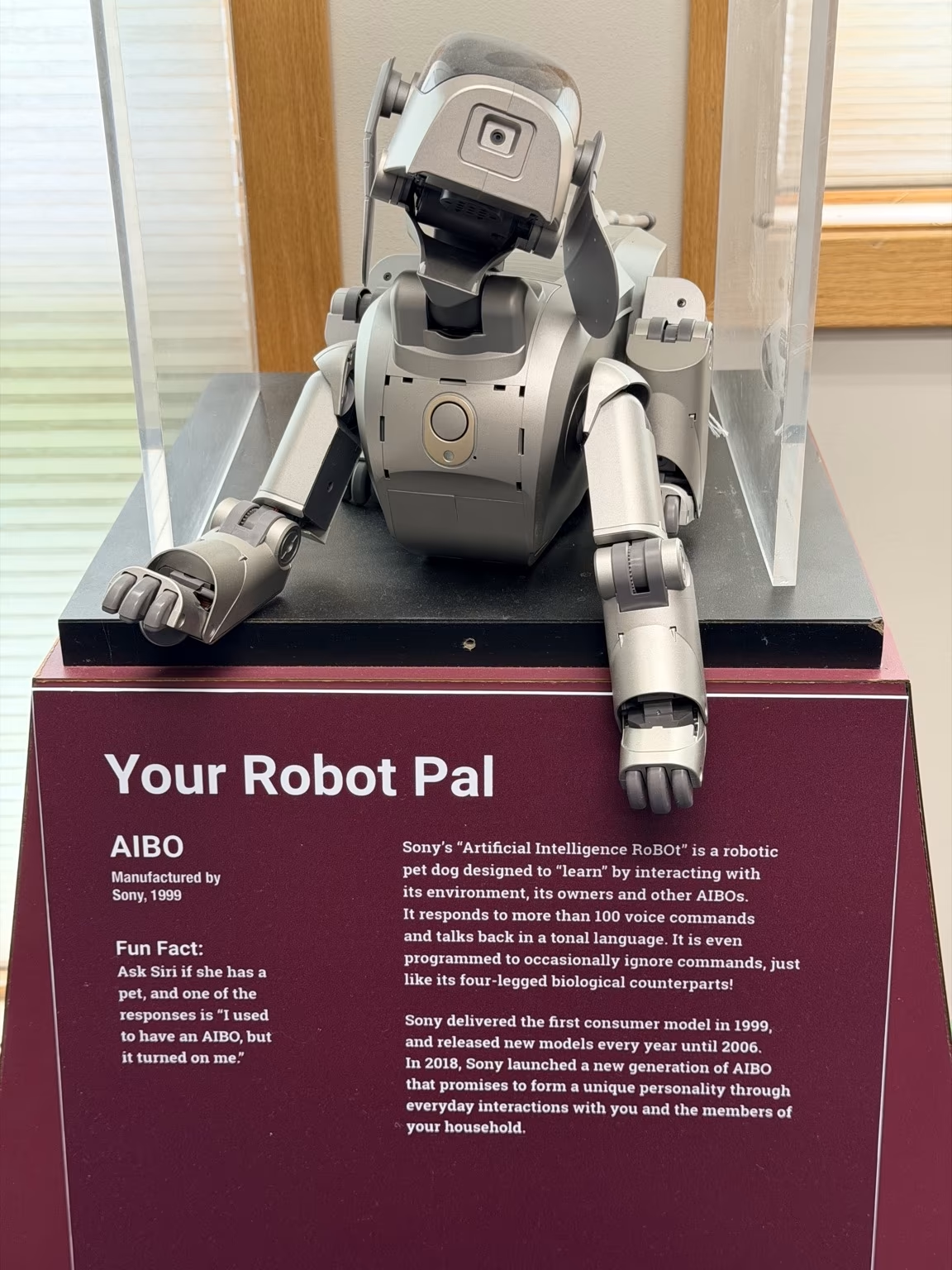
My one honest complaint about the museum: for a place with “Robots” in its name, the robots section was thin. Given how many humanoid robots have emerged from China in the last year or two alone, the field is exploding—and the museum, to its credit, seems aware it’s standing at the starting line of something much bigger. I suspect the robots section will look very different in five years.
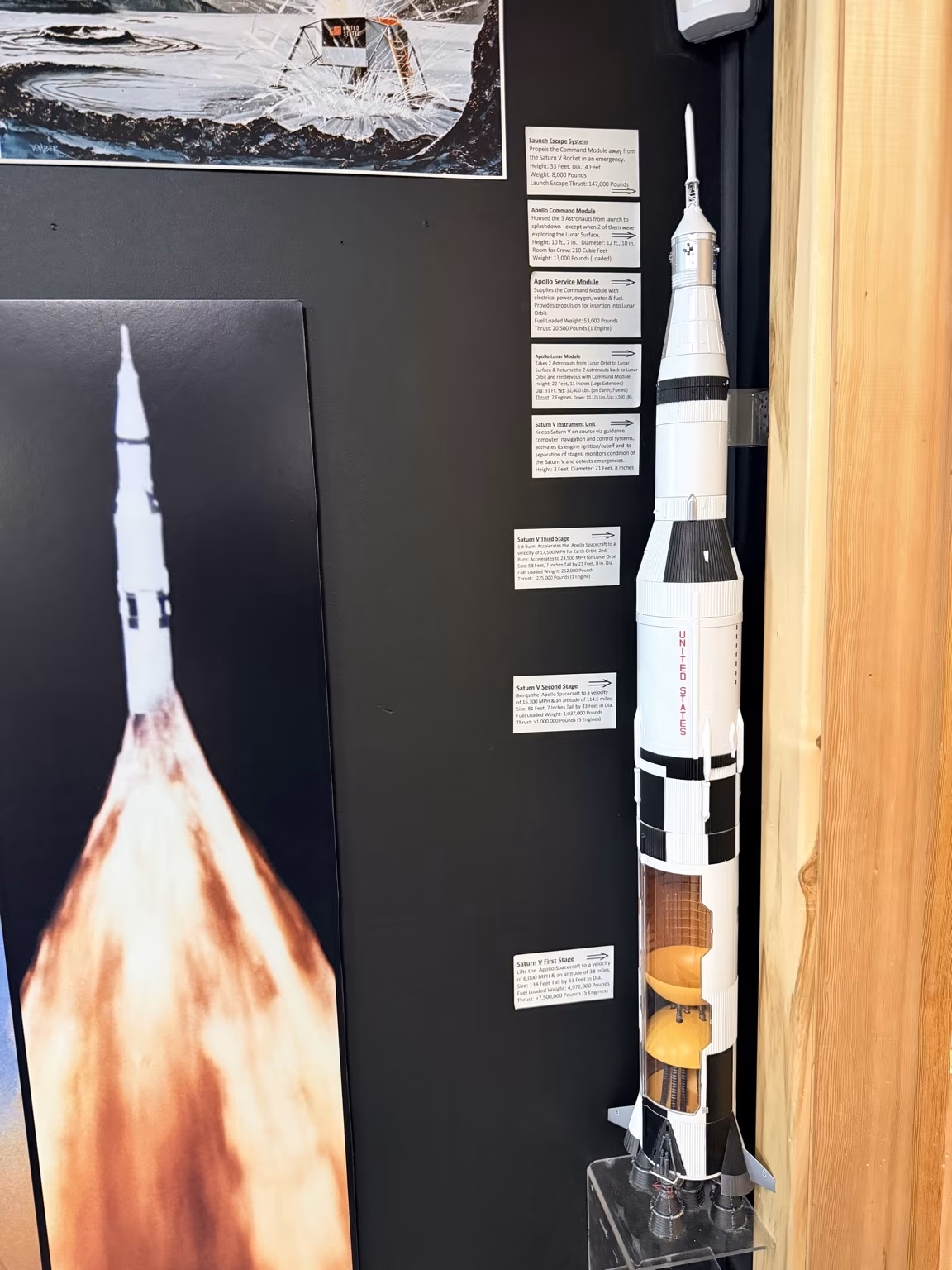
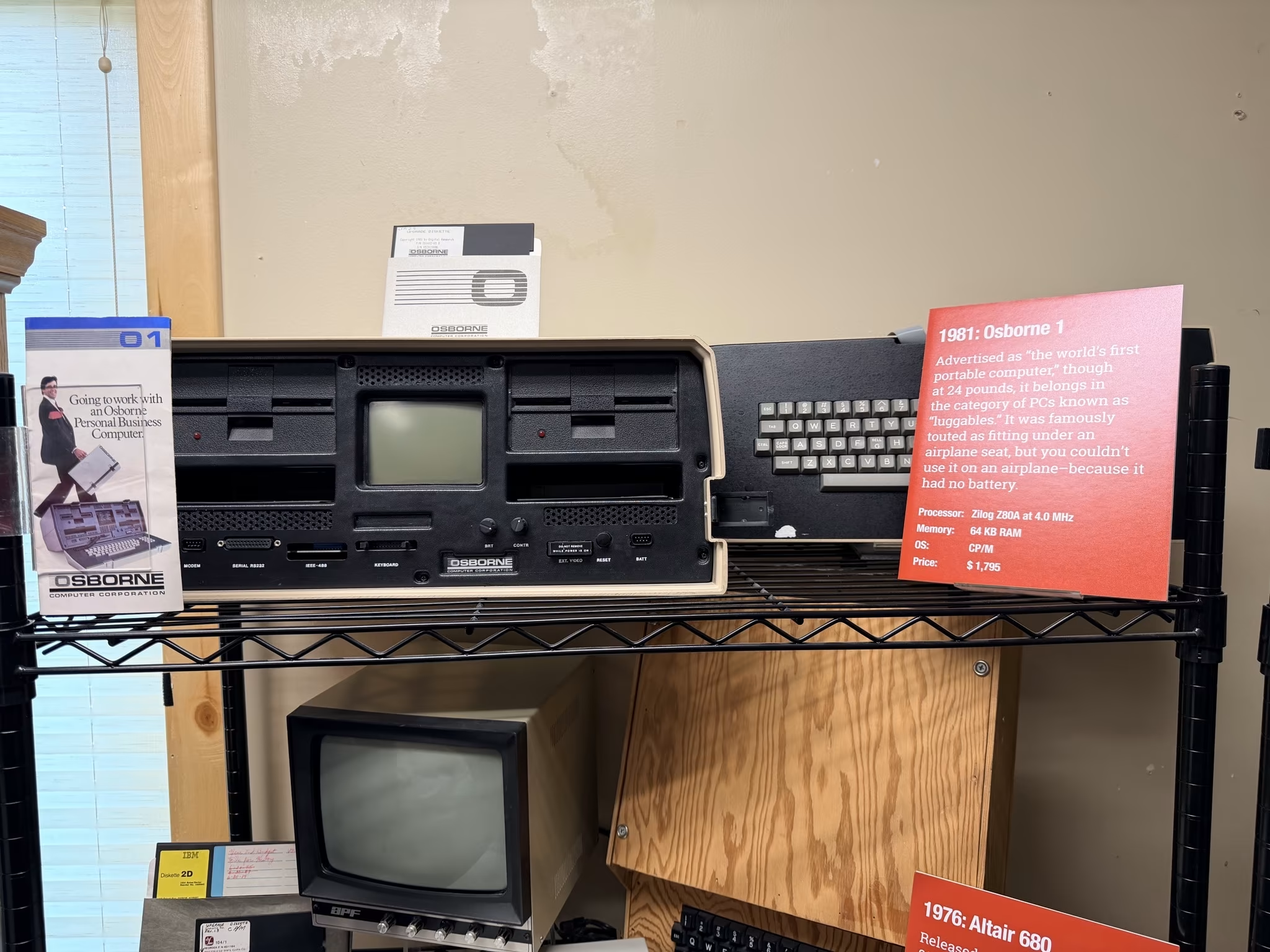
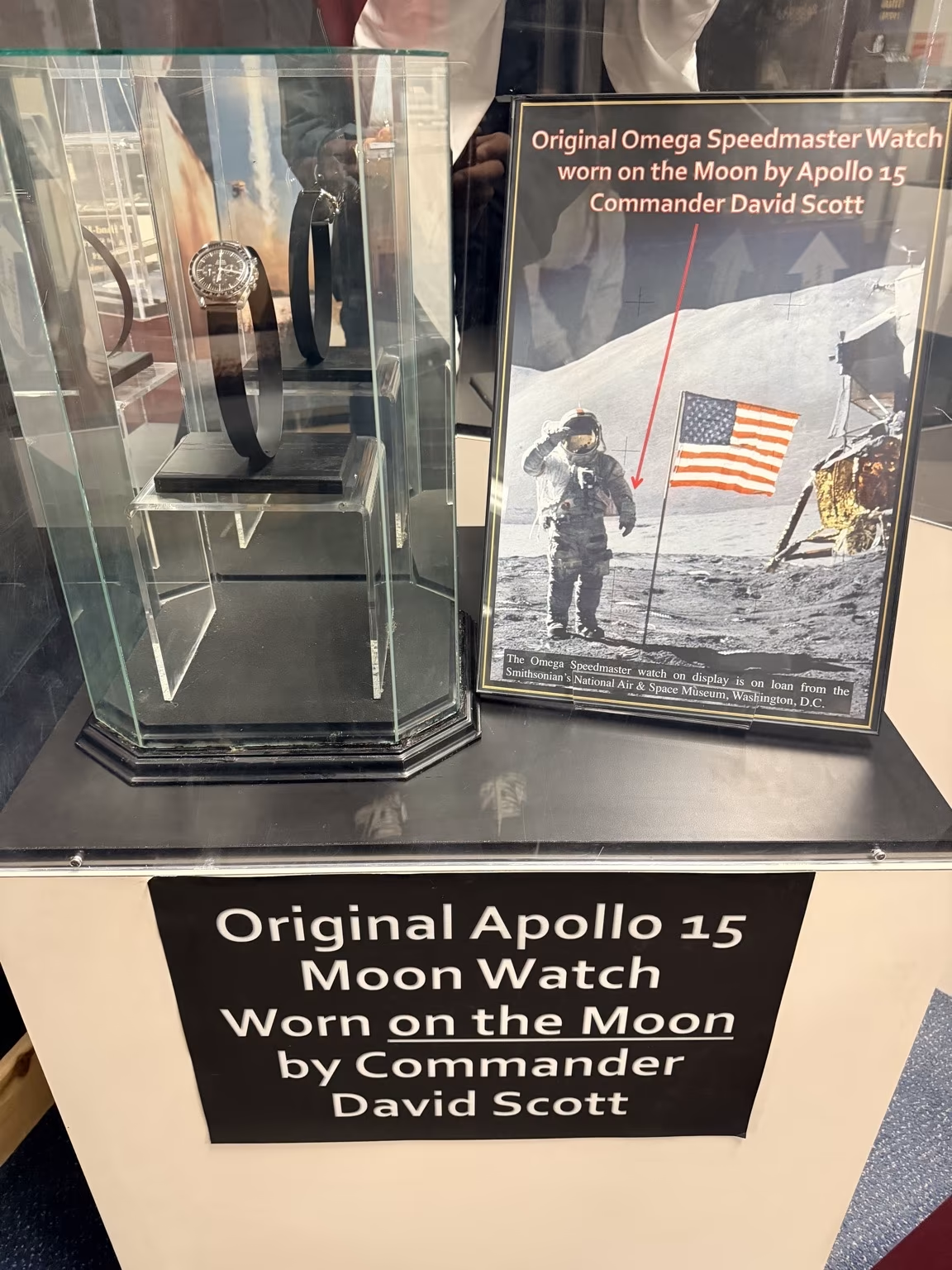
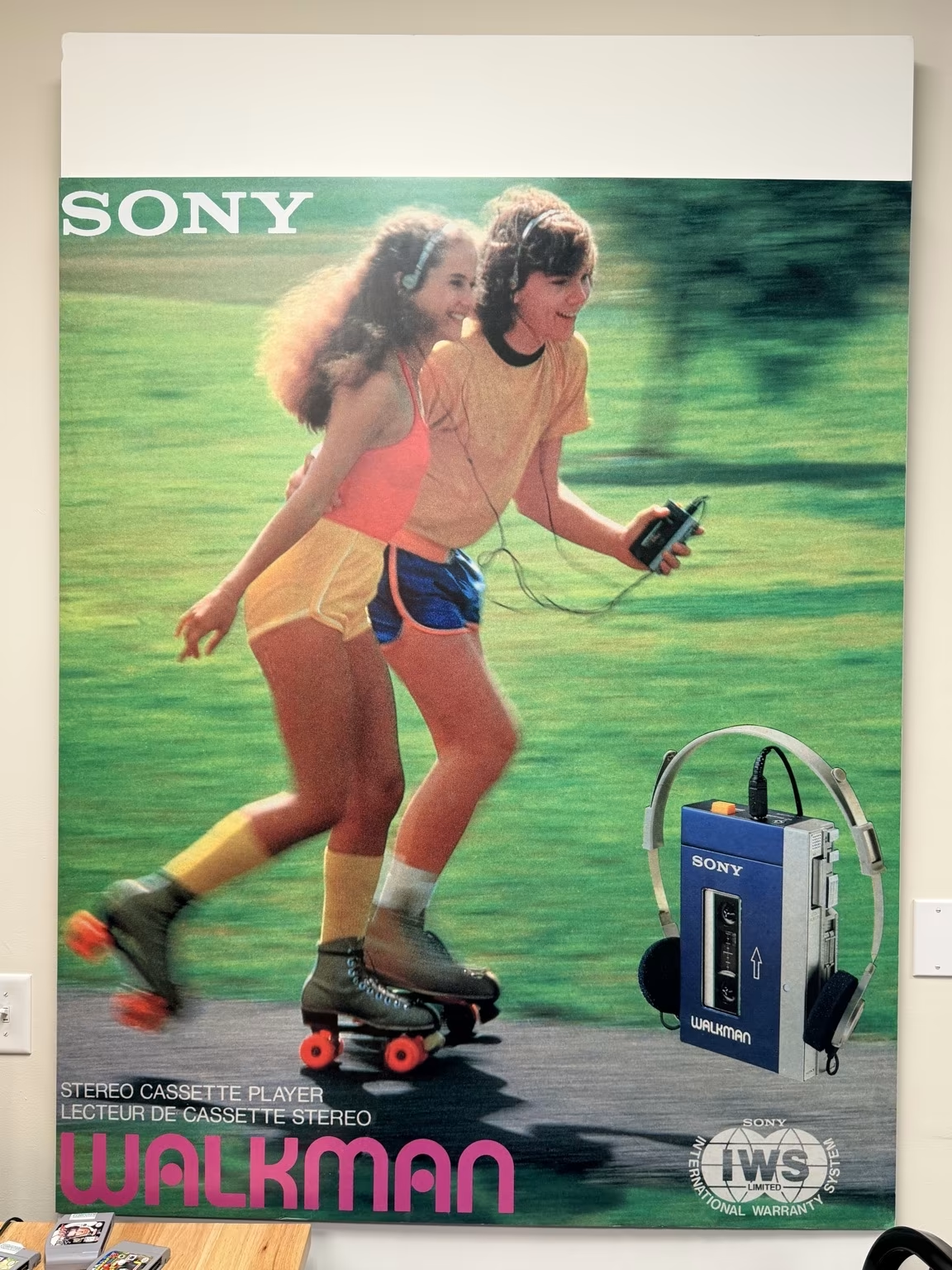
There was also a Sony Walkman, a Saturn V scale model, an Omega Speedmaster (the watch worn on the moon by Apollo 15 Commander David Scott), exhibits on DNA sequencing, and an Osborne 1—advertised as the world’s first portable computer when it launched in 1981, though “portable” in this context meant “can be carried by one adult in reasonable physical shape.”
Someone—apparently a Harvard scientist, according to my AI travel planner—once called this “inch for inch, the best museum in the world.” I can’t independently verify the quote, but I can say the museum delivered an enormous amount of history for $10 per person, came with a knowledgeable human guide included in the price, and sent me out the door thinking about how many things I’ve been late to adopt. For a museum about computing, that’s a perfectly recursive outcome.
There are 2 comments.
Great post! Reminds me of a mini-version of the Bay Area’s Computer History Museum in Mountain View. Their permanent exhibit stops right at the dawn of the Internet, and it needs updating just like the robot section of this museum to keep up with the times.
Also back in the day, I felt it was easier to be an early adopter. There’s so much stuff coming out now that it’s is hard to keep up with all the new products and technologies! I do my best though.
It's definitely harder to be an early adopter these days with all the new technology coming out, and I don't just mean the cost of all of them, but how long it takes to evaluate them and know what is really worth getting.
There are some things I was an early adopter on (3D printer, for example) that didn't pan out to be quite so useful. But there are many other things (Roomba, smartphone) that I feel silly for not getting earlier!
Ironically, a few things I had been most passionate about like cars and bikes, I've been a slow adopter with as well. It wasn't until I got an EV last year, and still don't have disc brakes or electronic shifting on any of my road bikes. But I suppose that can be partly explained by not driving or bicycling as much in recent years.