Yellowstone Day 2: The Geyser That Didn’t, and the Bears That Did

Day 1 ended with a plan on my phone and two things still unticked on it: Steamboat Geyser and Firehole Falls. On June 11 we got to both. One of them cooperated.
Norris, Where the Geysers Owe You Nothing
Norris Geyser Basin is the hottest and oldest thermal area in the park, sitting at the intersection of three fault zones, with water measured above 400°F not far beneath the boardwalk. It is also the most volatile. Features here open, close, change temperature, and occasionally destroy themselves, on a timetable that has nothing to do with the visitor season.
We started at Emerald Spring, which is green for a reason worth knowing. The pool is about thirty feet across and lined with yellow sulfur; the water itself scatters blue, the way deep water does. Blue light plus a yellow basin gives you green. The color is a collaboration. The smell is sulfur working alone, and it does not need help.
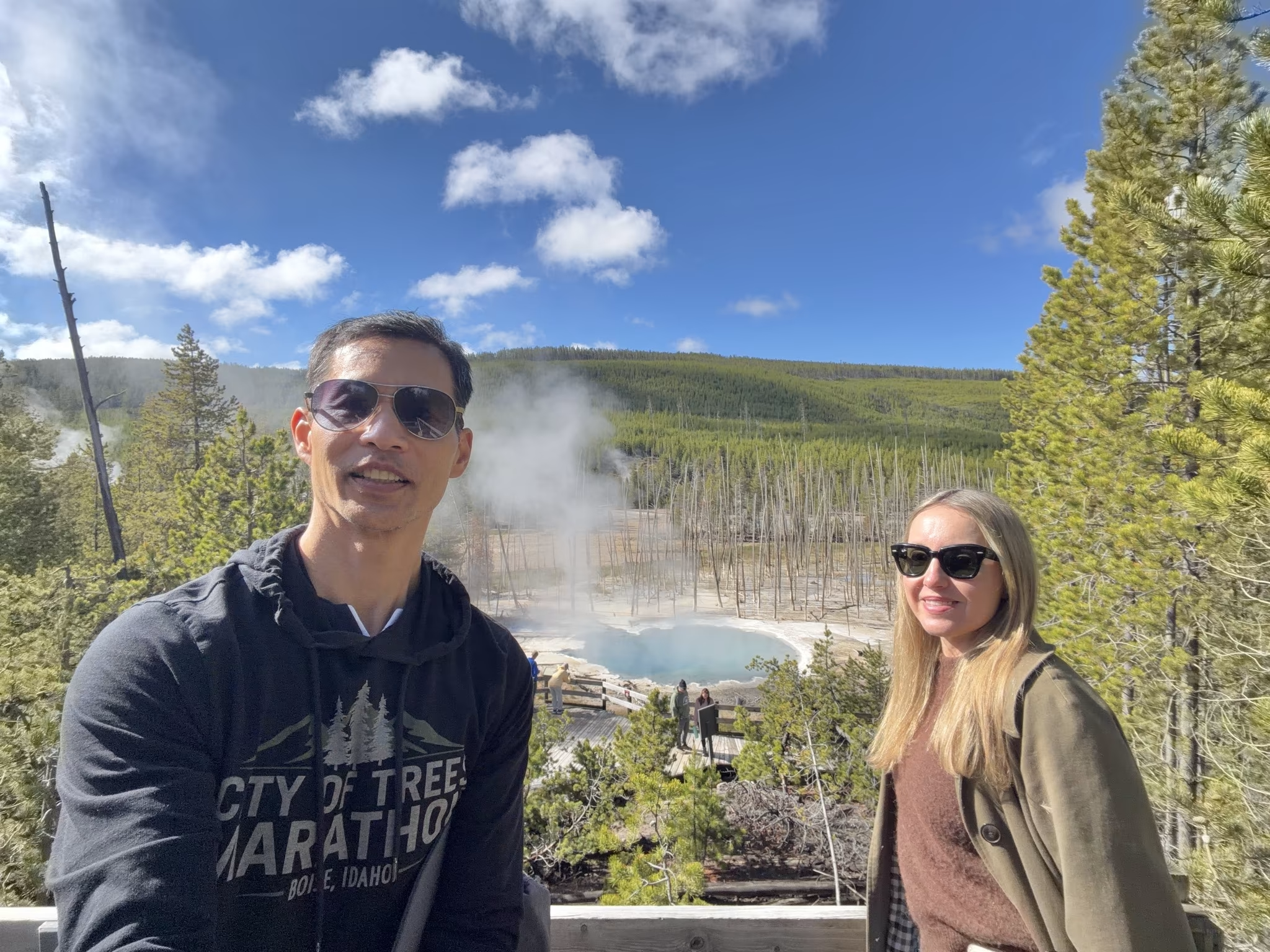
Then Steamboat, which is the reason most people walk the Back Basin loop at all.
It is the tallest active geyser in the world. A major eruption sends water more than 300 feet up, higher than any building in Fort Collins, and coats the surrounding hillside in silica and mud and rock. It is also entirely unwilling to tell you when this will happen. Recorded intervals between major eruptions run from about four days to fifty years. There was a stretch in the twentieth century when it went half a century without doing anything at all.
Its most recent eruption had been on February 27, 2026, at 7:01 p.m., which made our visit day 104 of the wait. I stood at the railing for a while anyway, on the theory that somebody has to be there on the day it goes, and it may as well be a man with an annual pass.
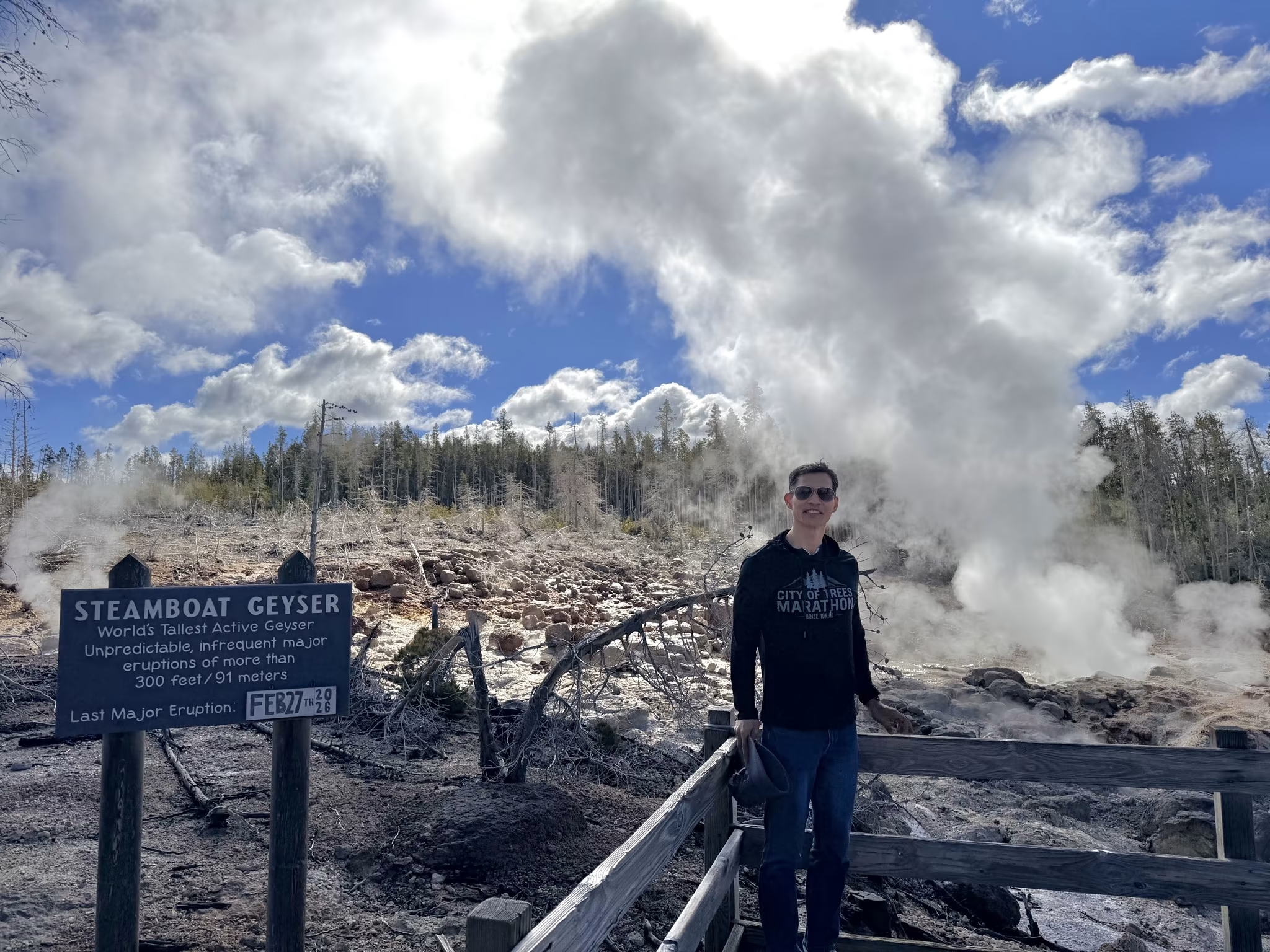
It did not go.
The tell was a short walk down the boardwalk. Cistern Spring is plumbed to Steamboat underground, and when Steamboat has a major eruption, Cistern drains completely and takes days to refill. Cistern was full and blue and going about its business. I had my answer before I asked the question, which is the most efficient disappointment I have ever been handed.
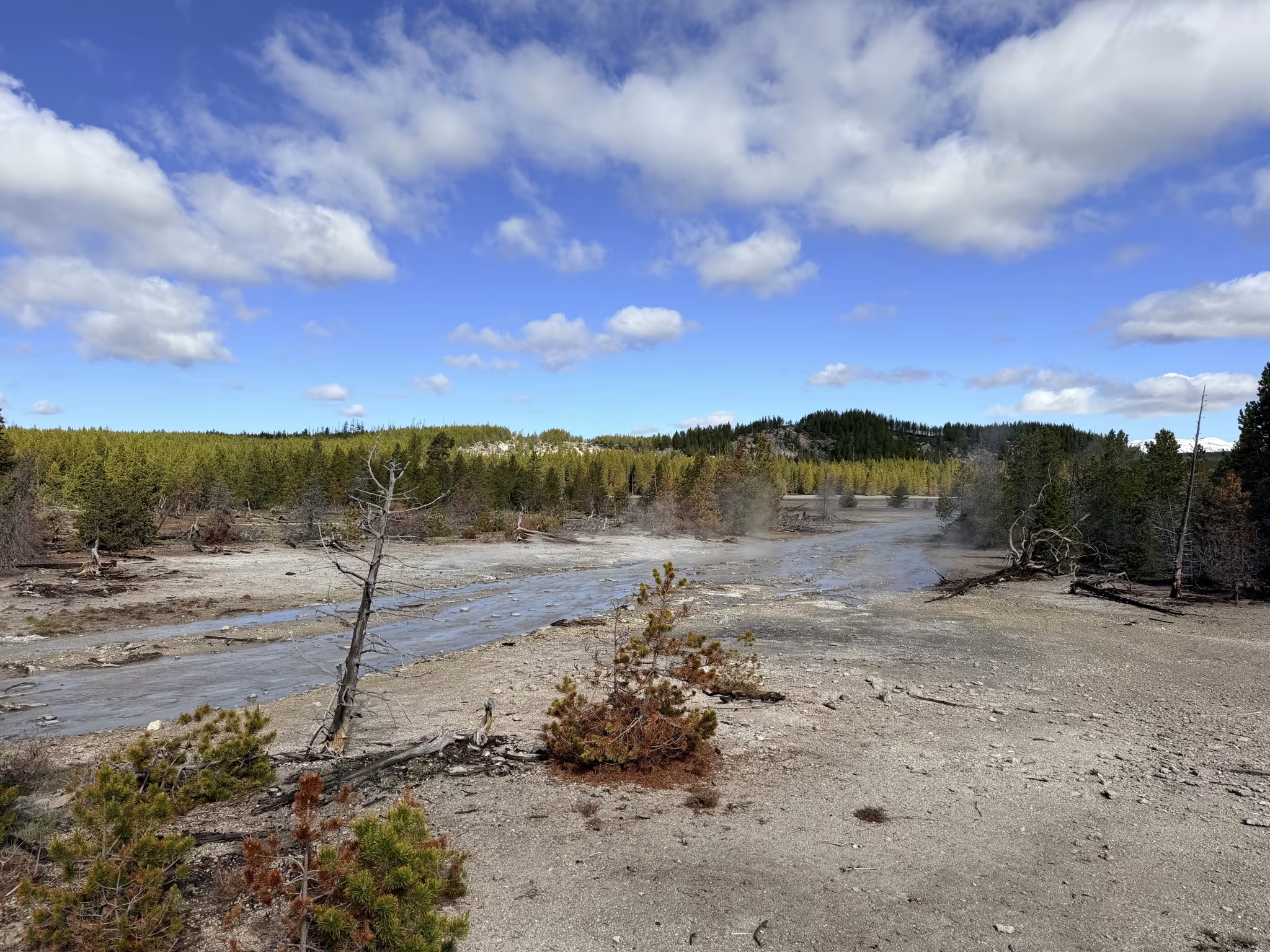
The rest of the Back Basin is a catalog of things that used to be more impressive, which I mean as a compliment. Monarch Geyser Crater last erupted with any seriousness around 1913 and is now a quiet pool in a hole it made itself. Palpitator Spring shivers rather than erupts. Porkchop Geyser spent the 1980s escalating until, in September 1989, it blew itself apart and threw slabs of rock more than two hundred feet, which is one way to retire.
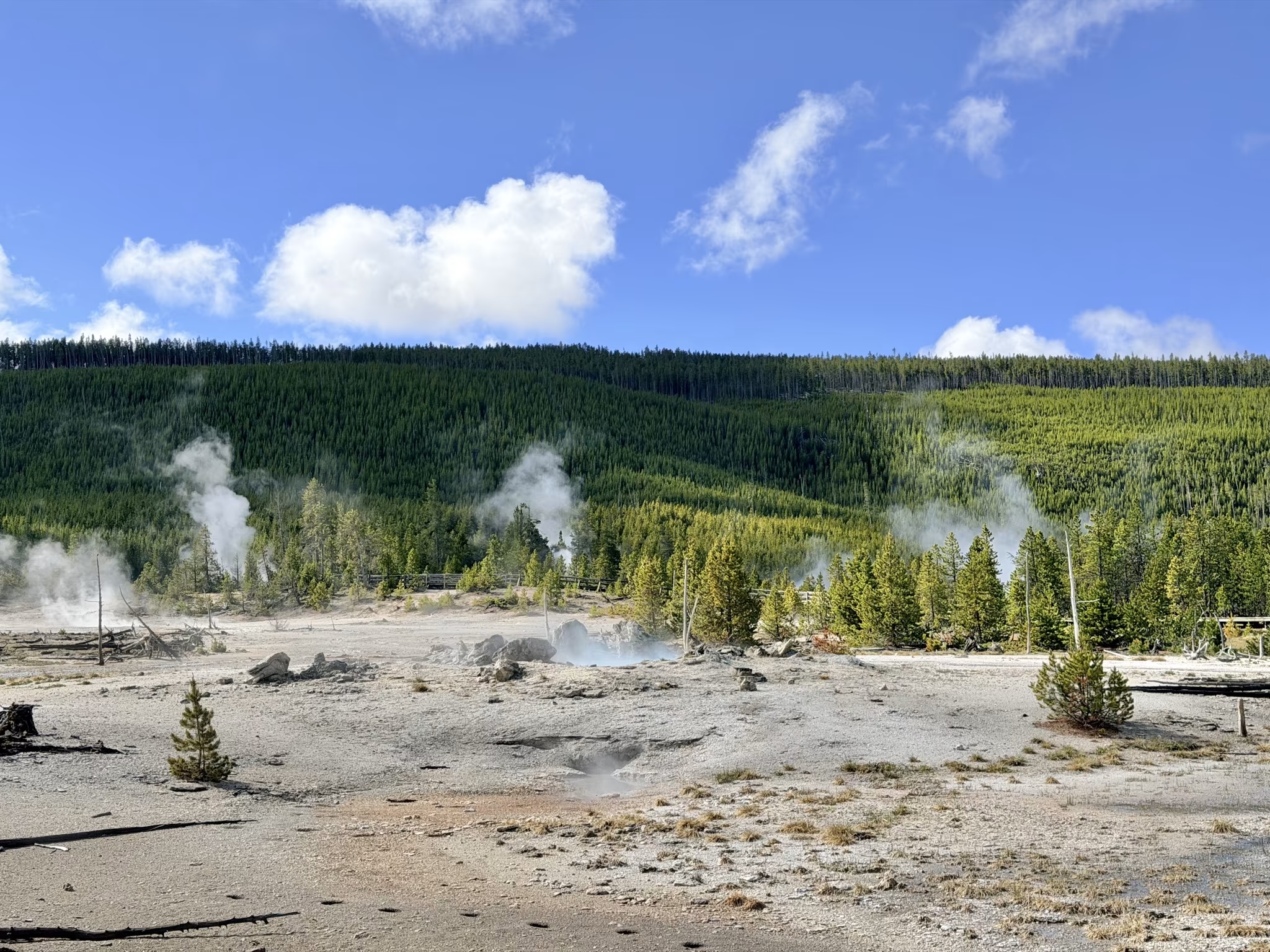
My favorite is Minute Geyser, which is named for what it used to do. In the stagecoach era it erupted roughly every sixty seconds beside what was then the main road through the basin, and visitors, being visitors, threw rocks into it. The rocks are still down there. The main vent has never fully recovered. Somewhere in the 1880s a tourist ended a performance that had been running continuously for longer than the United States has existed, and the geyser has been quietly holding a grudge ever since.
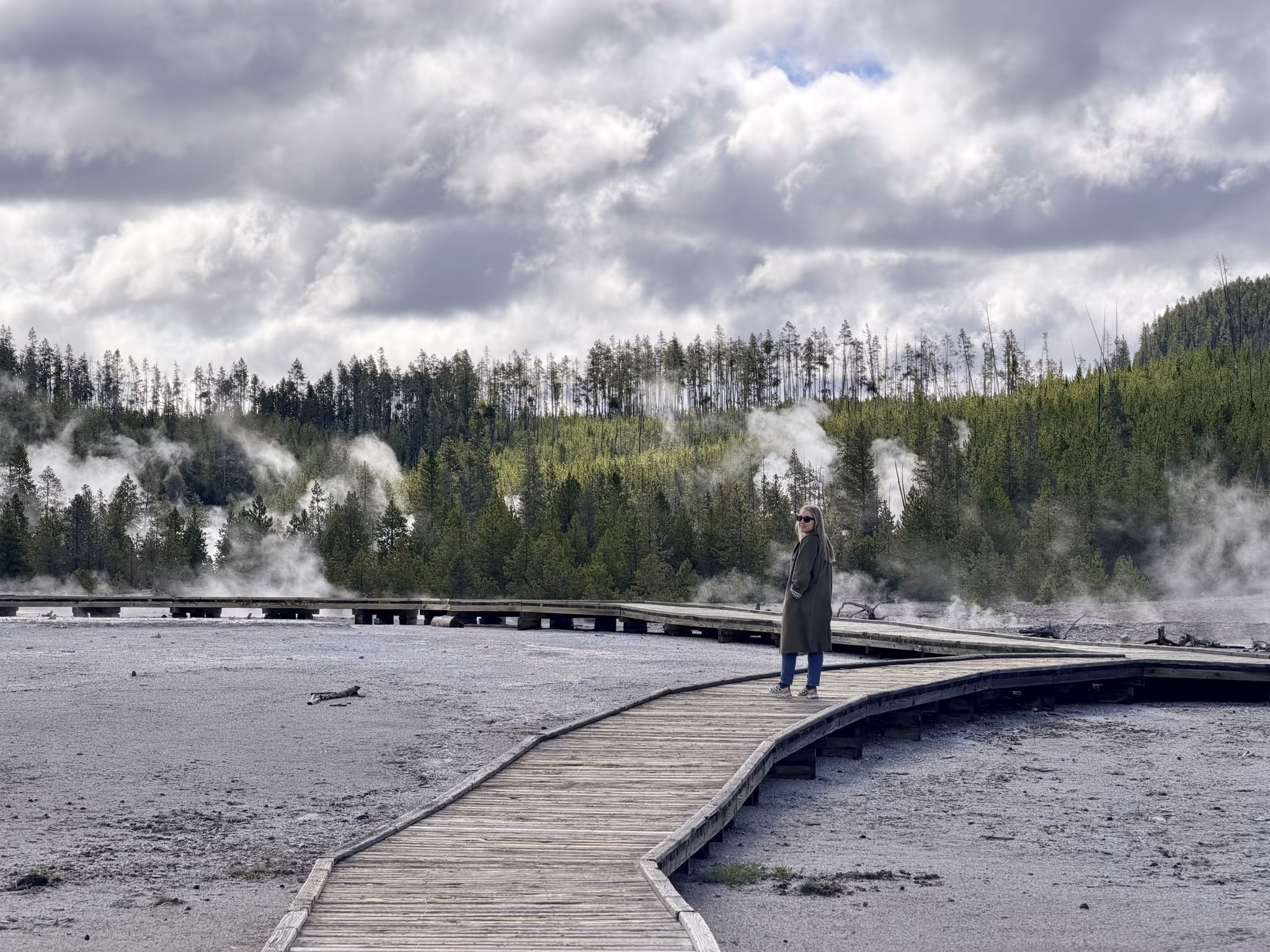
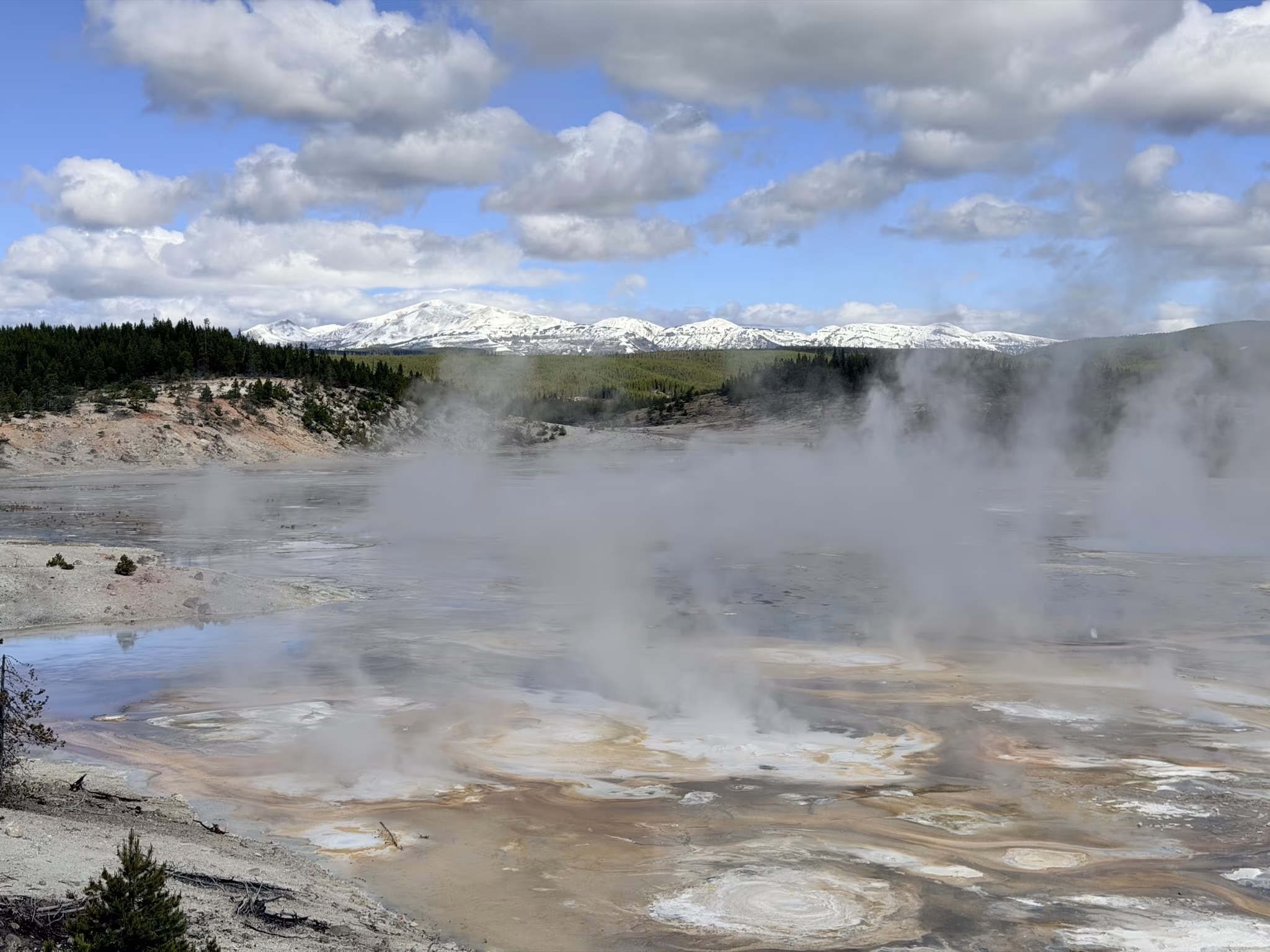
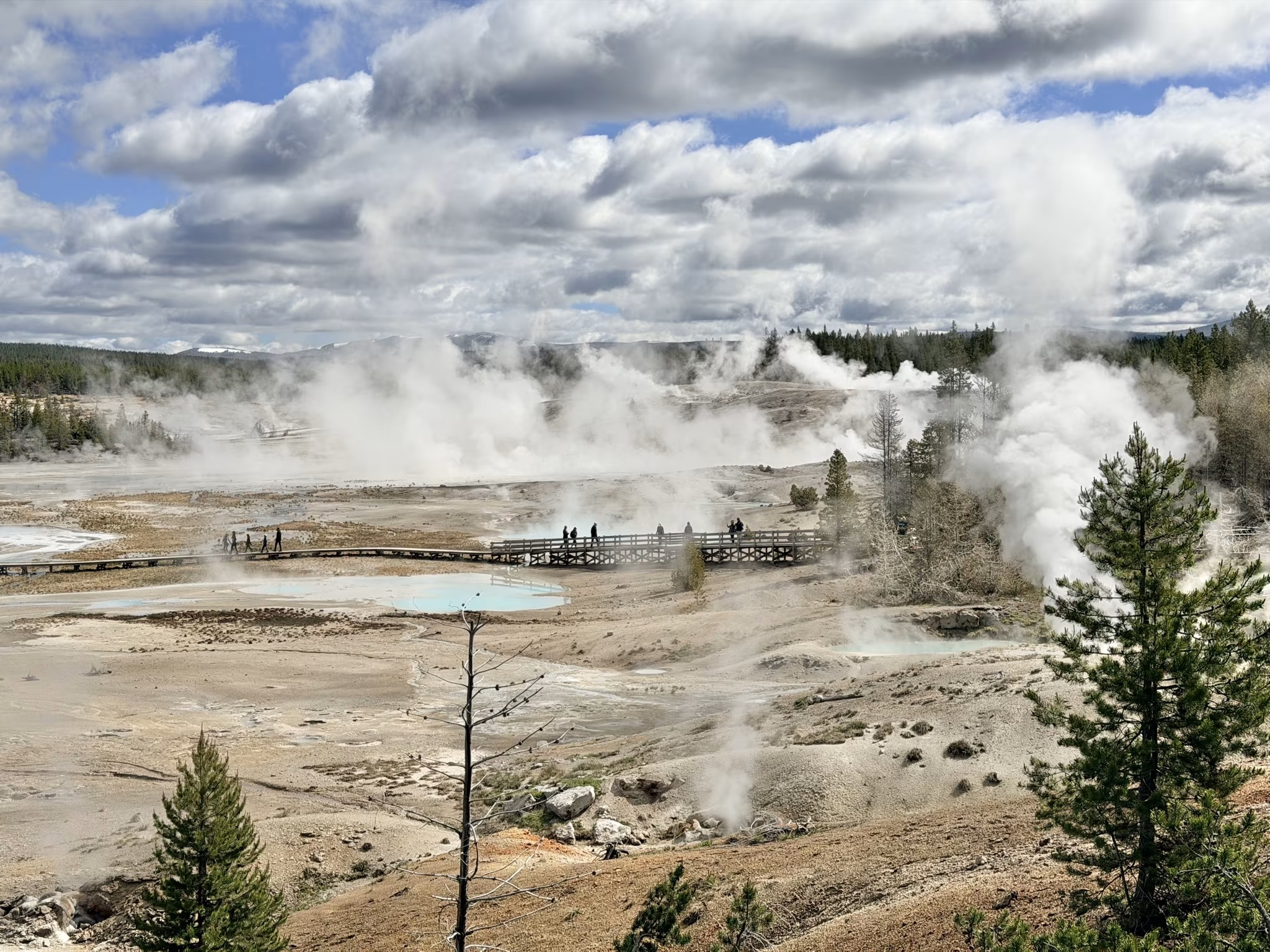
Porcelain Basin is the other half, and the better one. The Back Basin is wooded and hides its features from you until you’re on top of them; Porcelain is bare, bleached, treeless ground with a boardwalk running across it, and you see the whole thing at once.
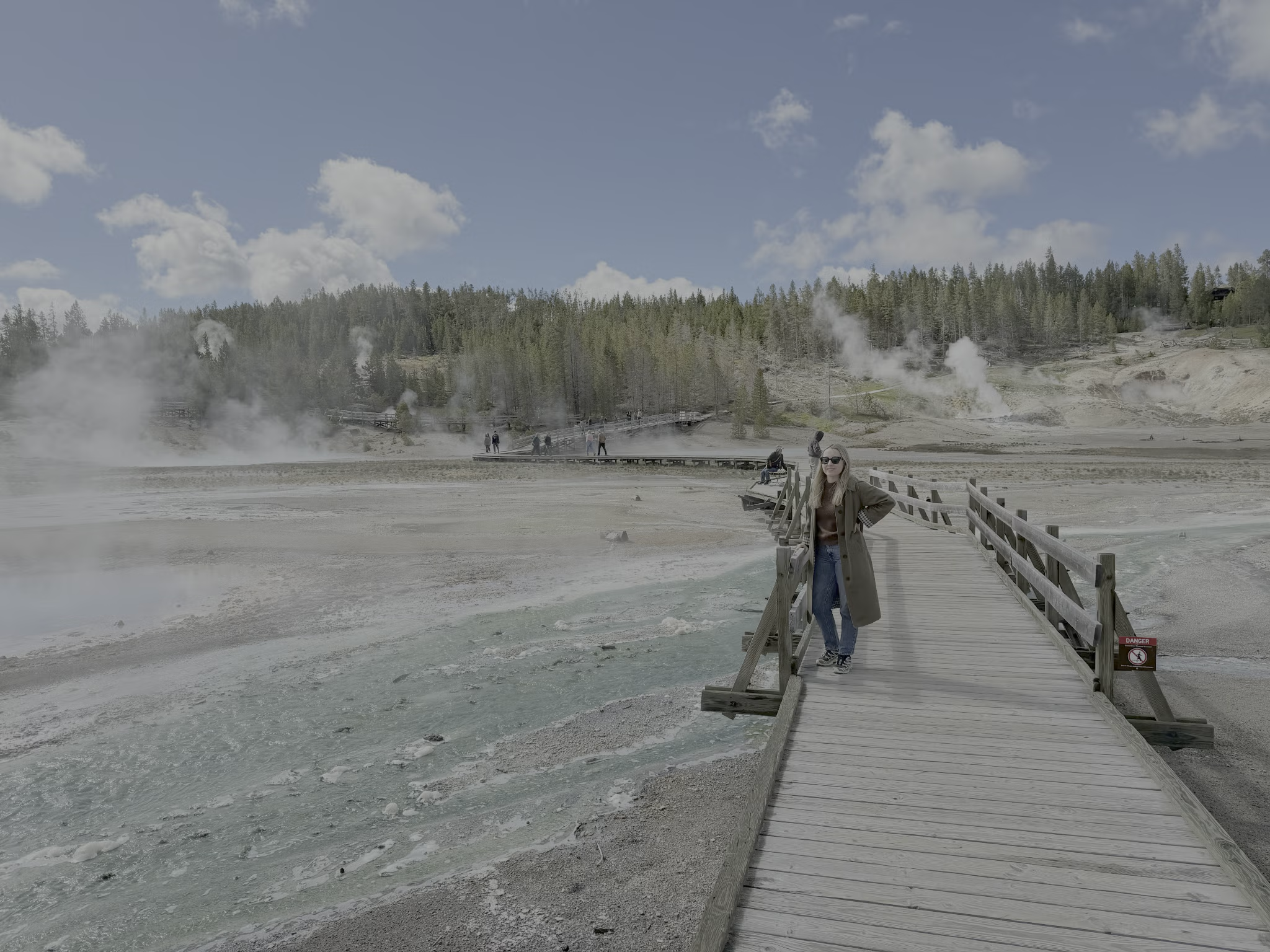
It is the largest concentration of thermal features in Yellowstone and it looks like a place where the paint has not been applied yet. Colloidal Pool and Porcelain Springs sit out in the middle of it, milky blue against gray-white sinter, steam going sideways.
Swan Lake Flat, and Birds I Declined to Identify
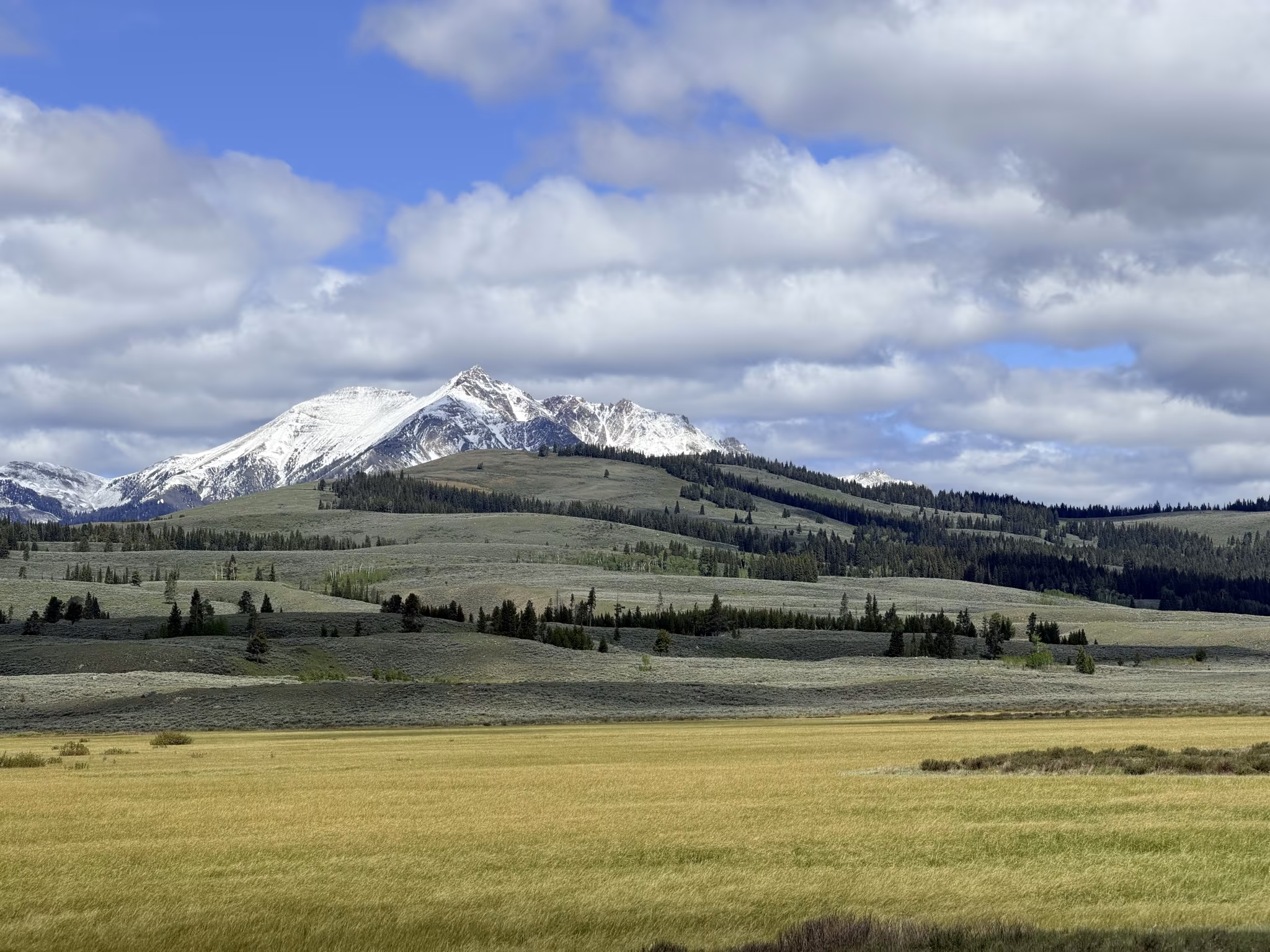
North of Norris the road climbs onto Swan Lake Flat, a wide meadow with the Gallatin Range standing behind it, still holding snow in the second week of June. There were white birds on the water. I wrote down “white ducks,” because that is what I could see and I am not going to pretend otherwise.
Swan Lake is named for the trumpeter swans that nest there. I will not claim I photographed trumpeter swans. I will say that the odds are not in favor of ducks.
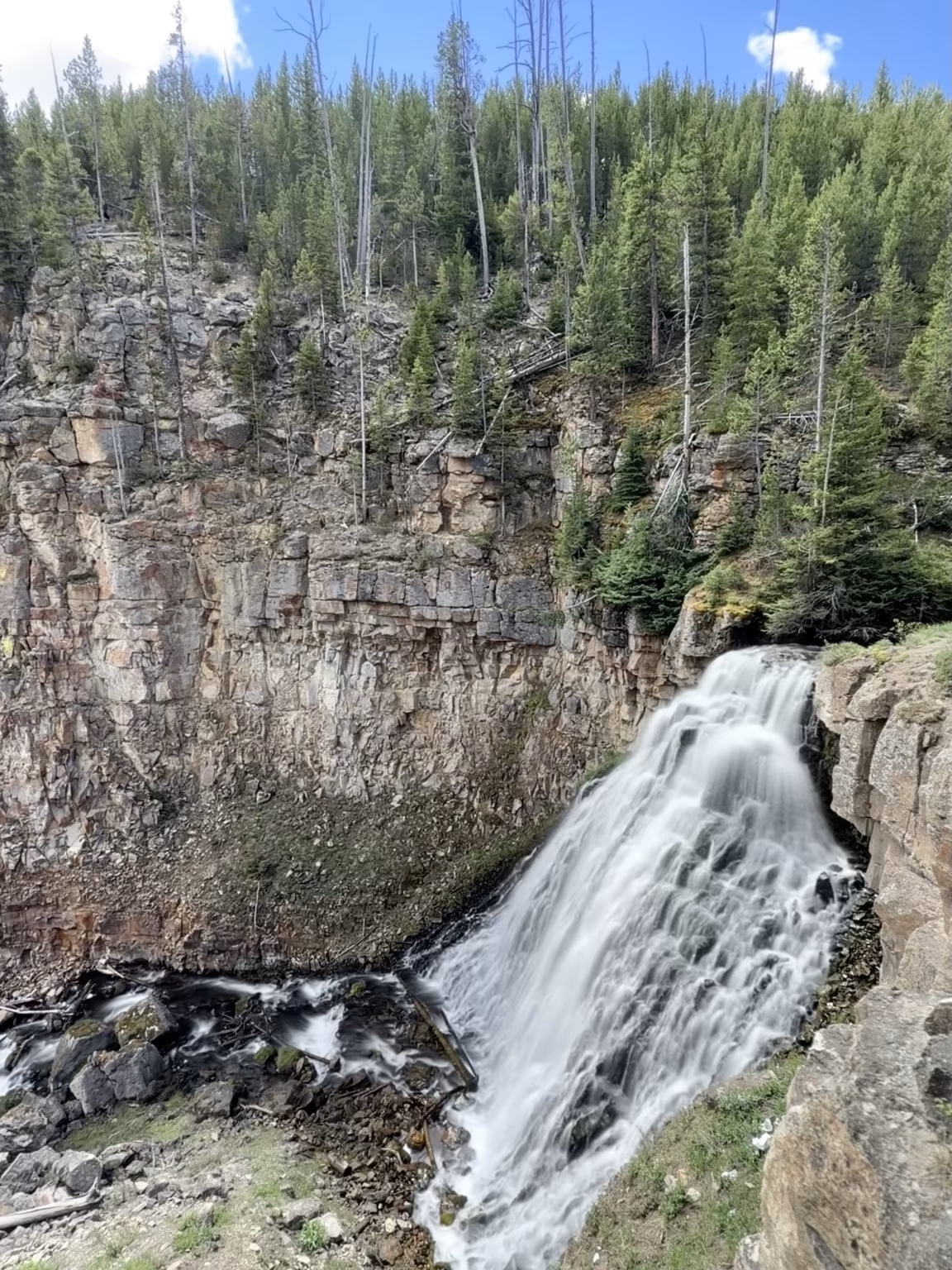
A few miles on, the road drops through Golden Gate Canyon on a concrete viaduct pinned to the cliff, and Rustic Falls comes down forty-seven feet into Glen Creek right beside it. The original crossing here, built in 1885, was a wooden trestle. I stopped for a long exposure, which is the correct response to a waterfall running at full snowmelt volume in June.
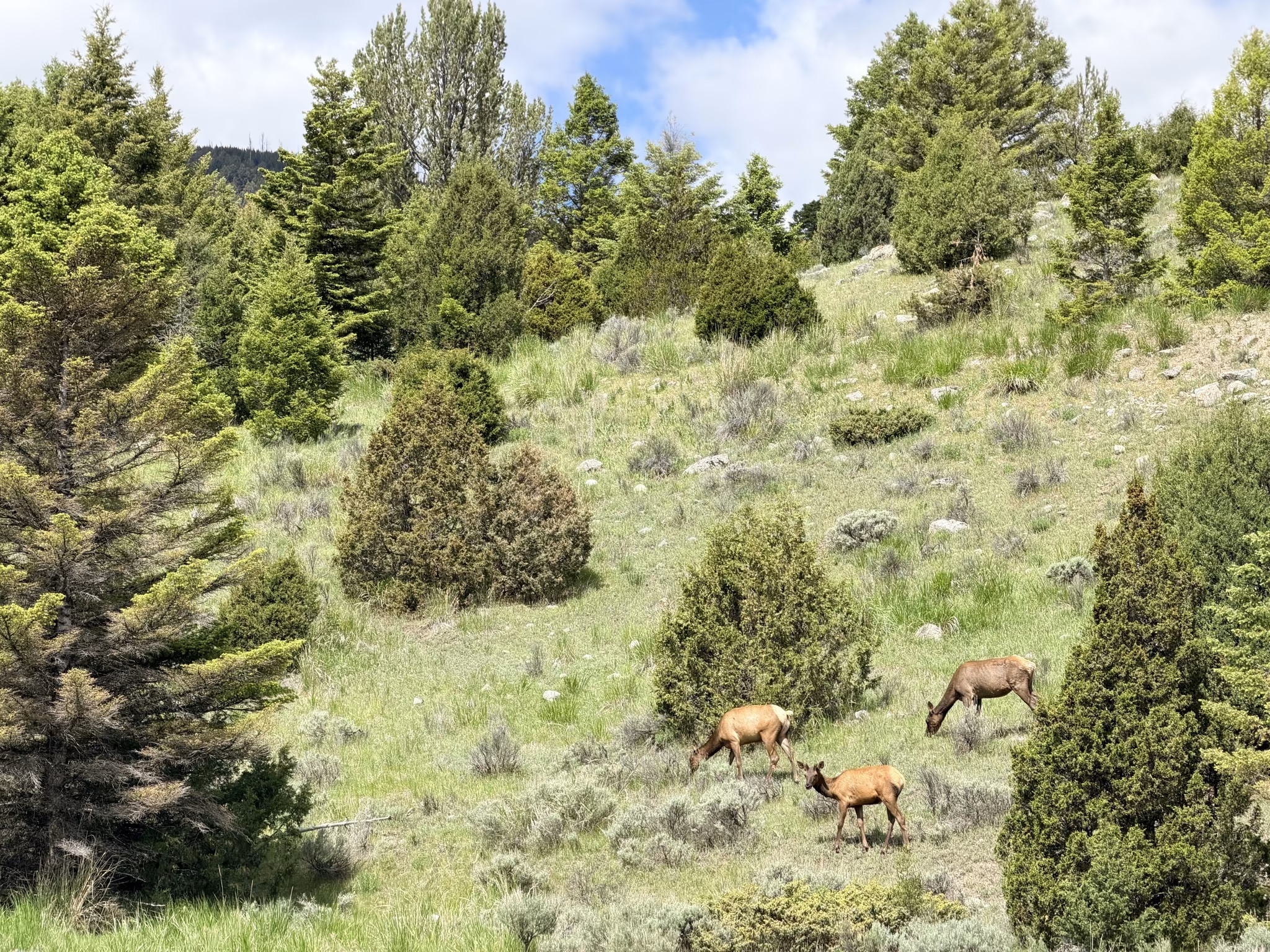
Nine minutes later, three animals on a juniper hillside. Light brown, white rumps. I recorded them as deer.
They were elk. This is the first of two occasions on Day 2 on which I looked at a large brown herbivore with a pale backside and confidently reached for the wrong noun. Regular readers will recall that I have a history here.
Mammoth Hot Springs, Which Is Never Finished
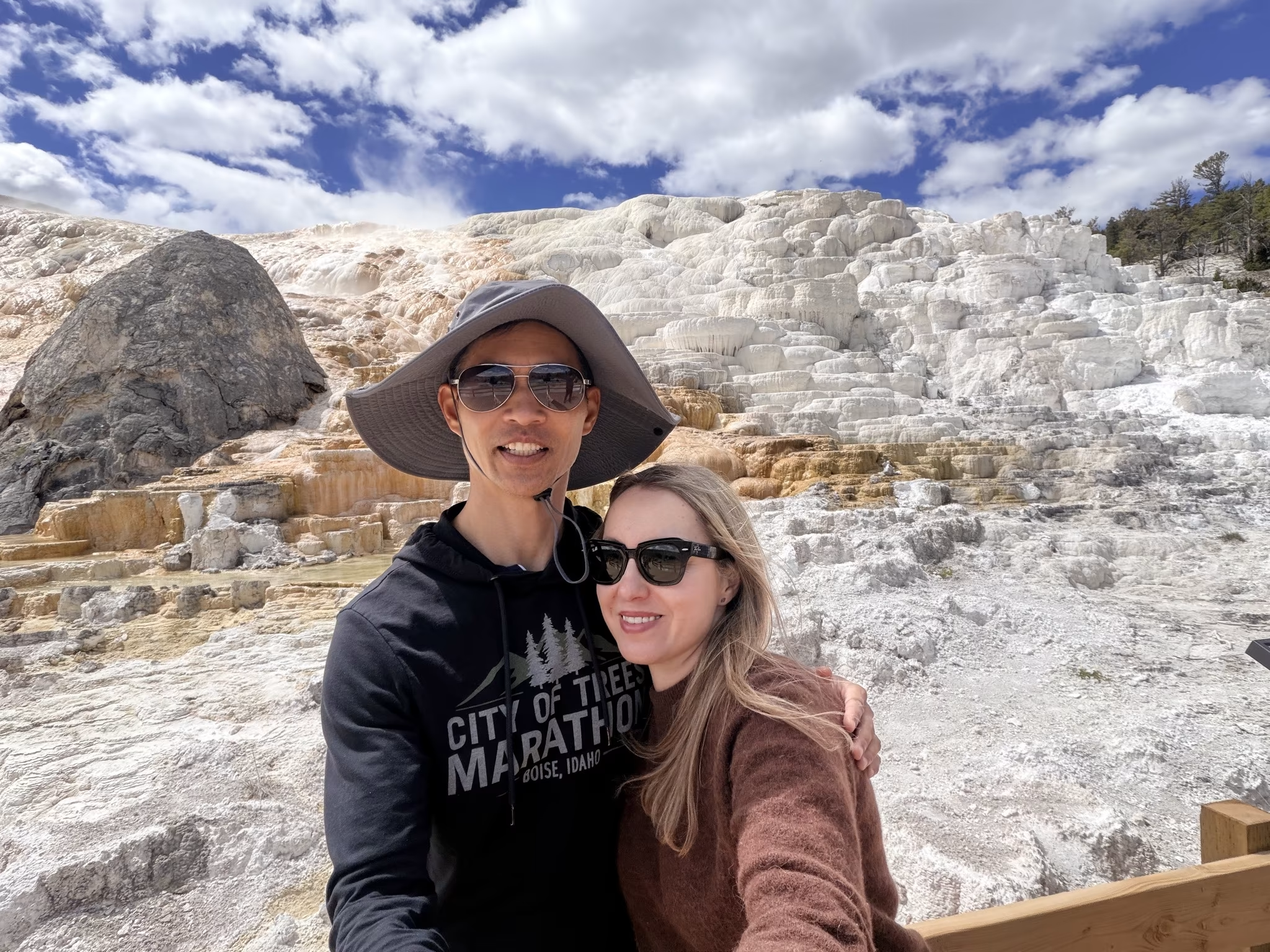
Everything else we saw over two days was built on silica. Mammoth is built on limestone, and that one difference is why it looks like nothing else in the park.
Hot water rises through buried sedimentary limestone, dissolves calcium carbonate on the way up, and drops it back out the moment it hits the air. The terraces gain something on the order of two tons of travertine a day. Silica takes centuries to build a formation. Travertine builds one in a summer, then strangles its own plumbing and abandons it, and the water surfaces somewhere else. Springs here go dry and come back within living memory. Jupiter Terrace has done exactly that more than once.
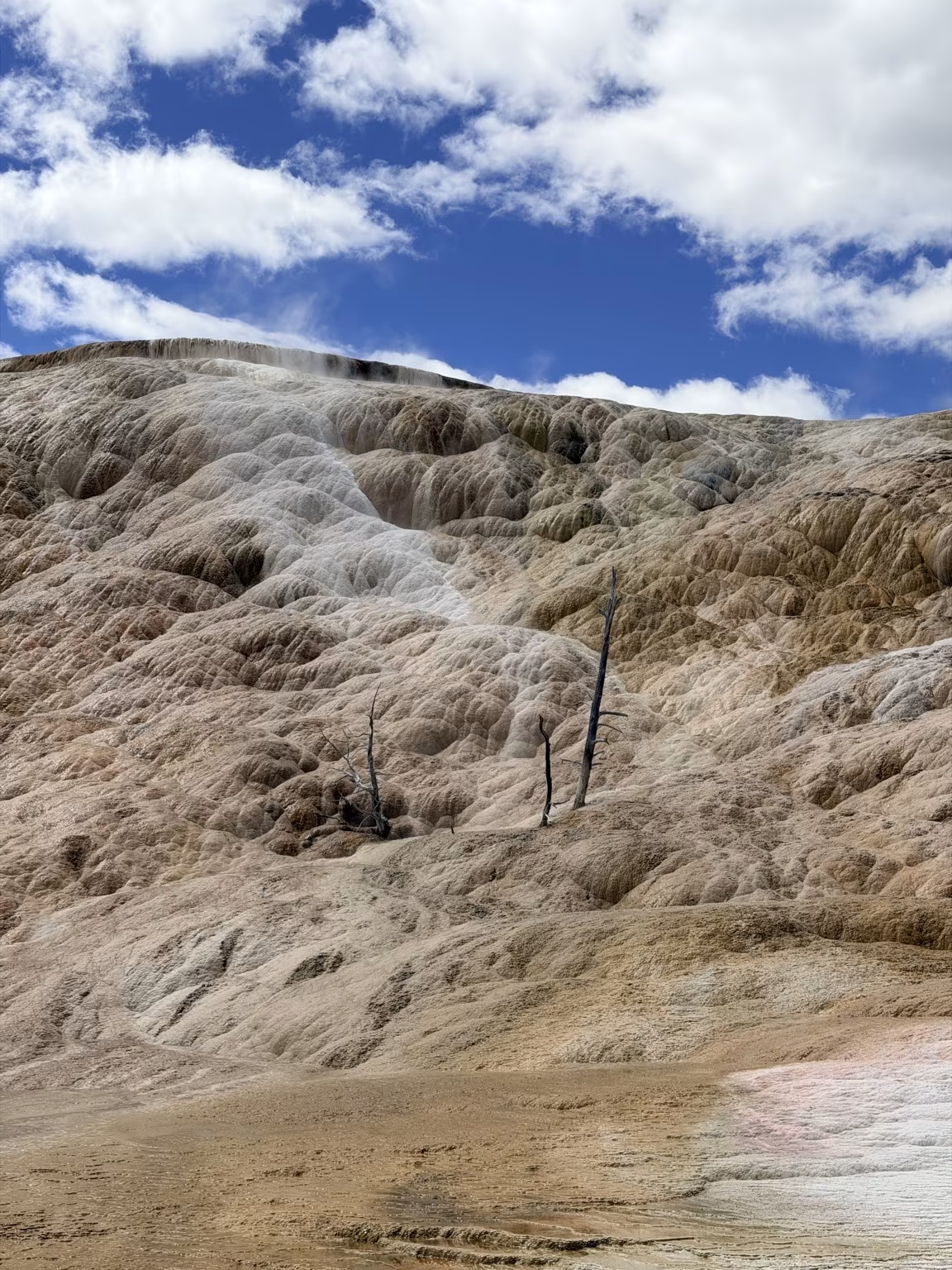
The result is a hillside where the live sections run orange and cream with bacterial mats and the dead sections stand bone-dry and gray, with the skeletons of trees that the terraces grew over and killed still upright in the middle of them.
We walked Minerva and Jupiter, then Palette Spring, then went looking for the two named lumps. Liberty Cap is a thirty-seven-foot cone of travertine that a single spring built straight up over what must have been centuries before it shut off. The Hayden Survey named it in 1871 for its resemblance to the caps worn during the French Revolution, which tells you more about the reading habits of nineteenth-century government geologists than it does about the rock. Devil’s Thumb sits nearby and got the other kind of name.
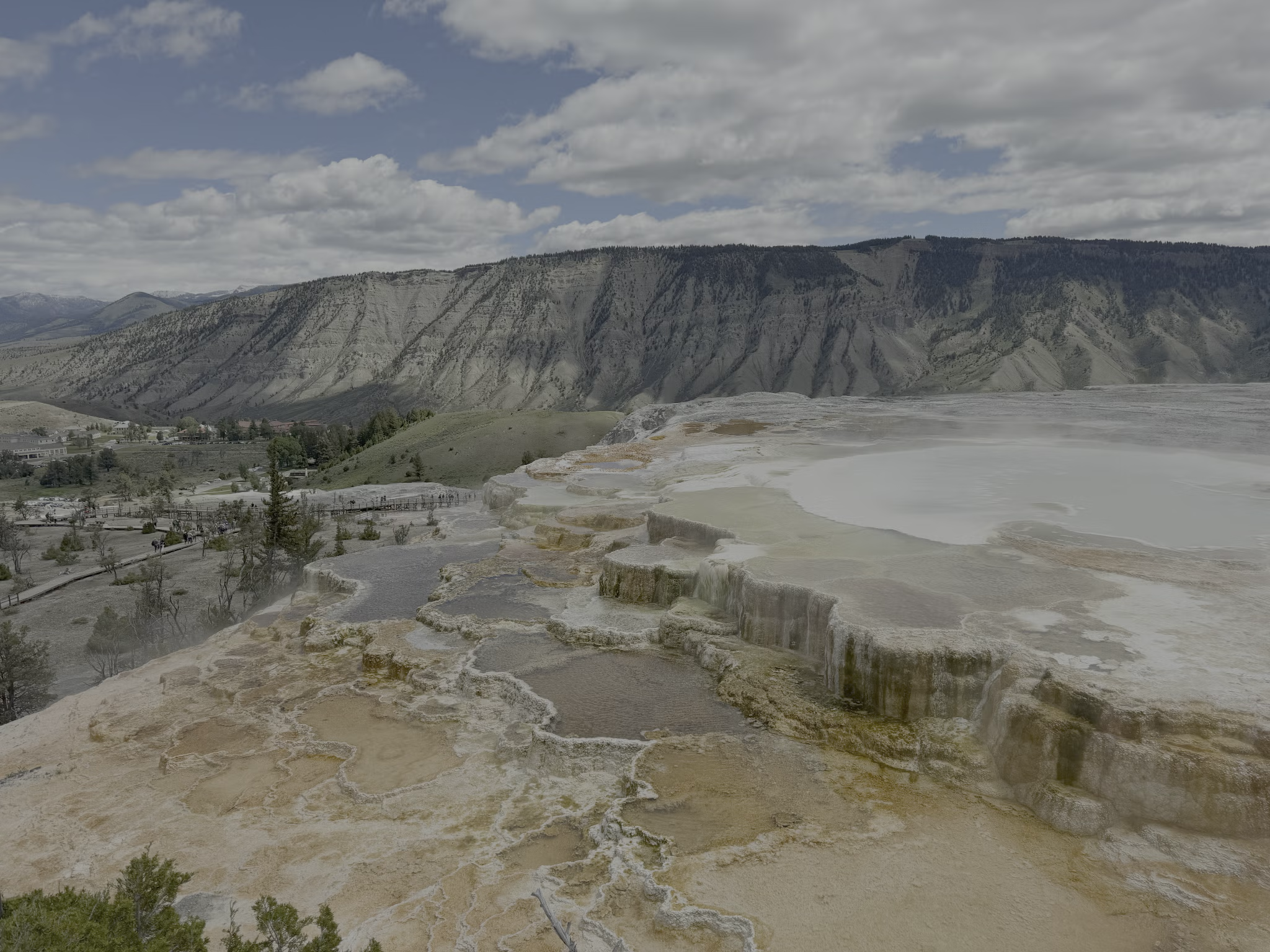
Below the terraces is the Mammoth Hot Springs Hotel and a row of severe stone buildings that look nothing like park architecture, because they aren’t. That is Fort Yellowstone.
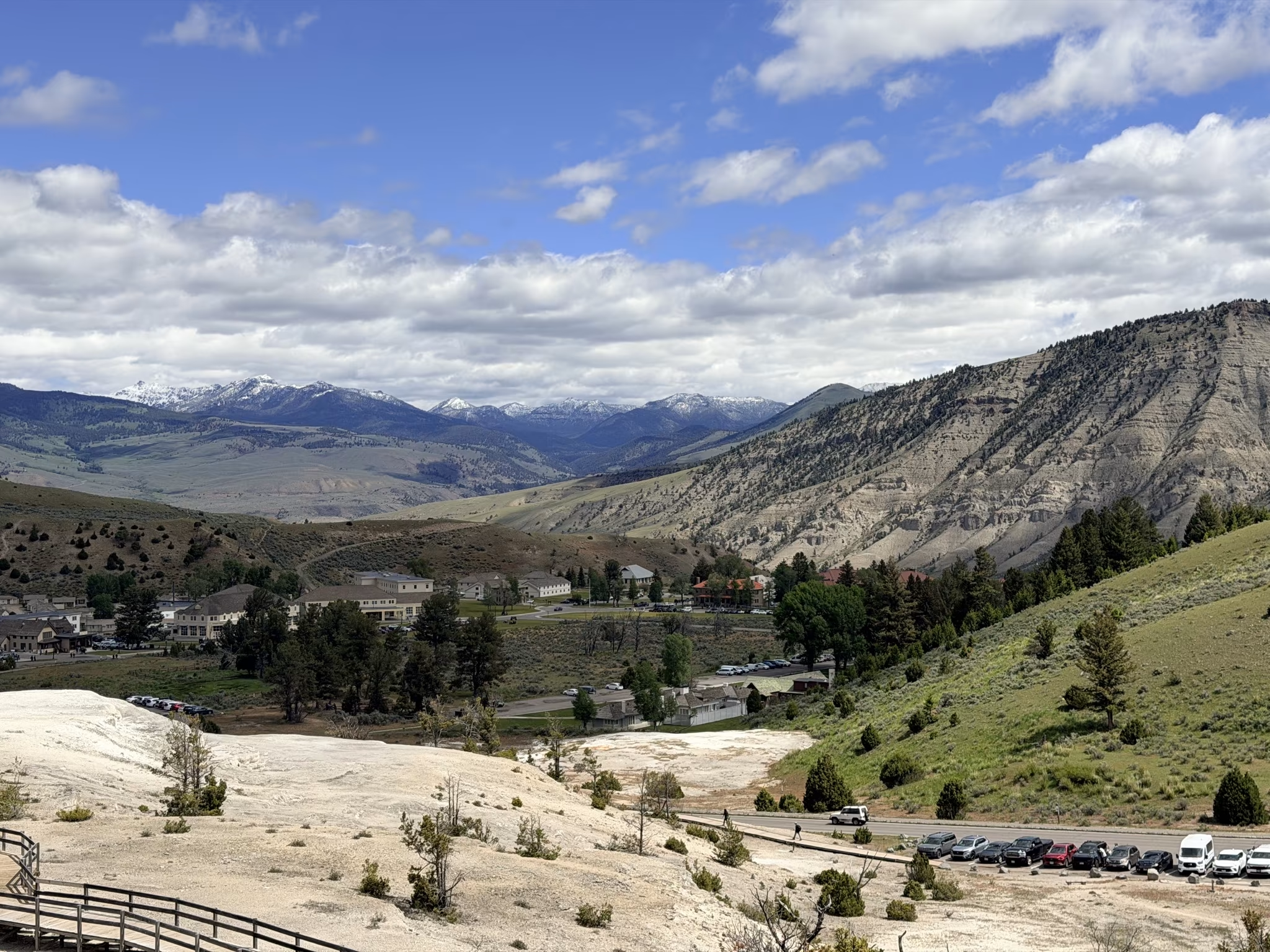
The U.S. Army ran this park from 1886 to 1918, having been sent in because the civilian administration could not stop the poaching, and they stayed for thirty-two years, which is longer than most temporary solutions manage. The National Park Service did not exist for the first thirty of them.
Lamar Valley, and Two Bears
The road east from Mammoth toward Tower Junction and Lamar is where Day 2 stopped being about geology.
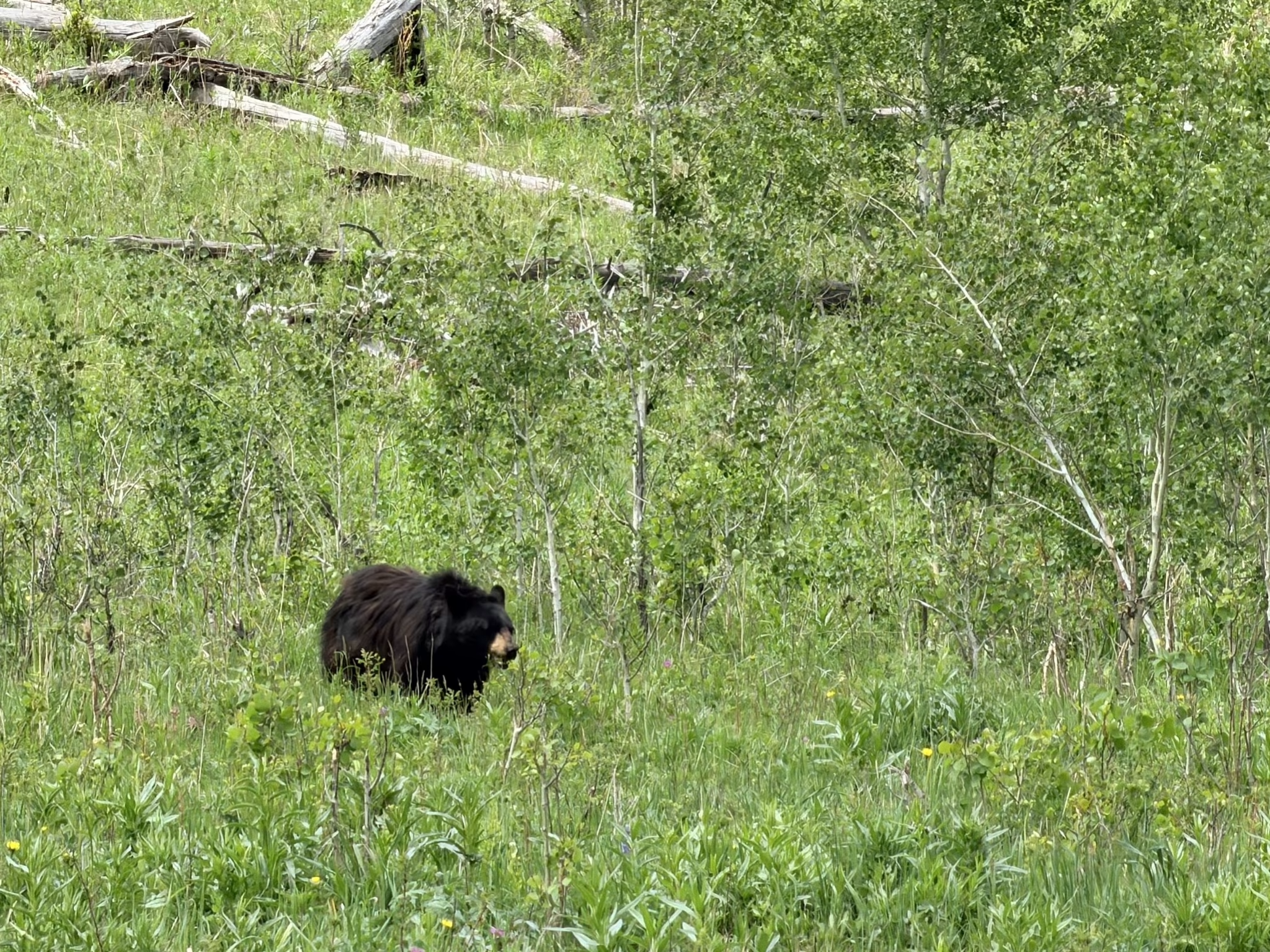
Bear number one appeared in tall grass and aspen saplings alongside the road, a black bear foraging and completely uninterested in the line of cars assembling on its behalf. On Day 1 we saw no bears at all, and Andrea had settled for posing with a carved wooden one outside a souvenir shop in West Yellowstone. The real one is smaller than the wooden one. Almost everything is.
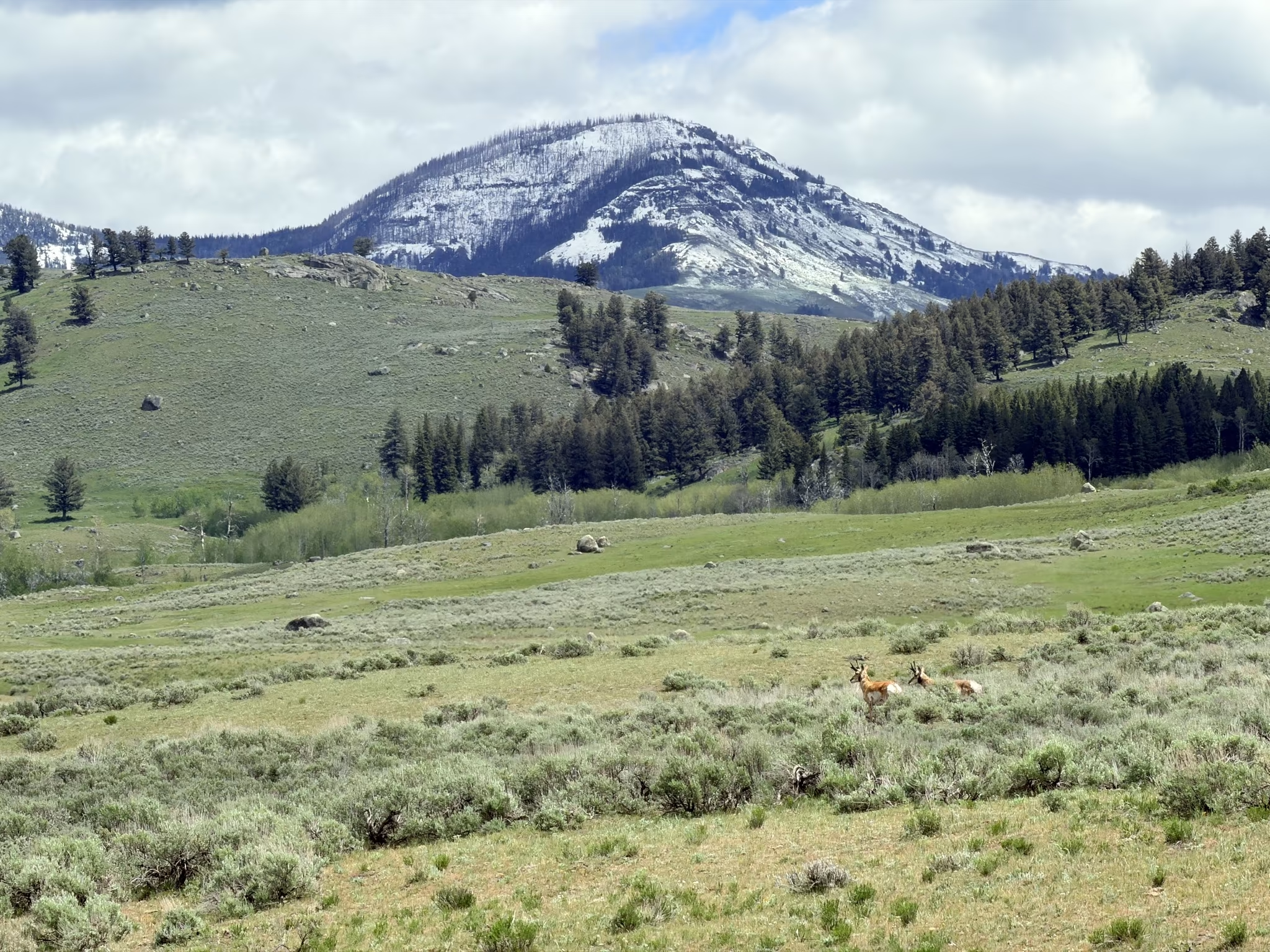
Then, on the sagebrush flats along the Northeast Entrance Road, the white rumps again. I wrote down “deer with white butts,” for the second time in one day.
These were pronghorn, and this time I was not merely wrong about the species. I was wrong about the family, the genus, and the general shape of the problem. Pronghorn are not deer. They are the only surviving members of their entire family, and their nearest living relatives are giraffes. They run at around 55 miles per hour, which is faster than anything currently alive in North America can chase them, because the thing that used to chase them—an American cheetah—went extinct roughly 12,000 years ago. Every pronghorn you see is running from a ghost.
The white rump is not decoration either. The hairs stand up and flare when the animal is alarmed, and the flash is visible to other pronghorn from a couple of miles off. I had been photographing a signal.
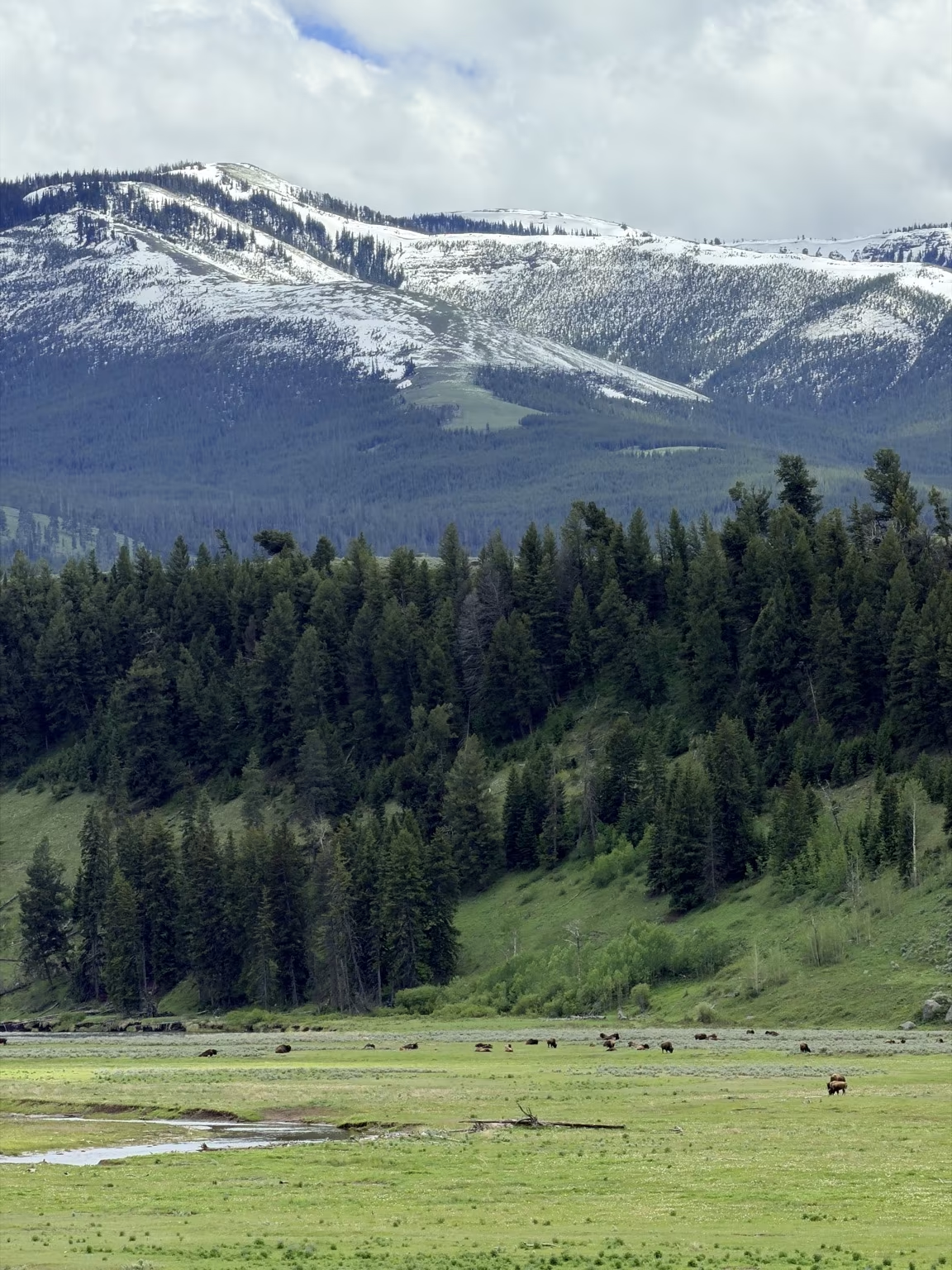
Bison were out on the river meadow with snow-covered peaks behind them, far enough away that the 4x telephoto on the iPhone 17 Pro was doing real work. Bison, I note, and not buffalo. Some corrections take twenty-one years and some take one day.
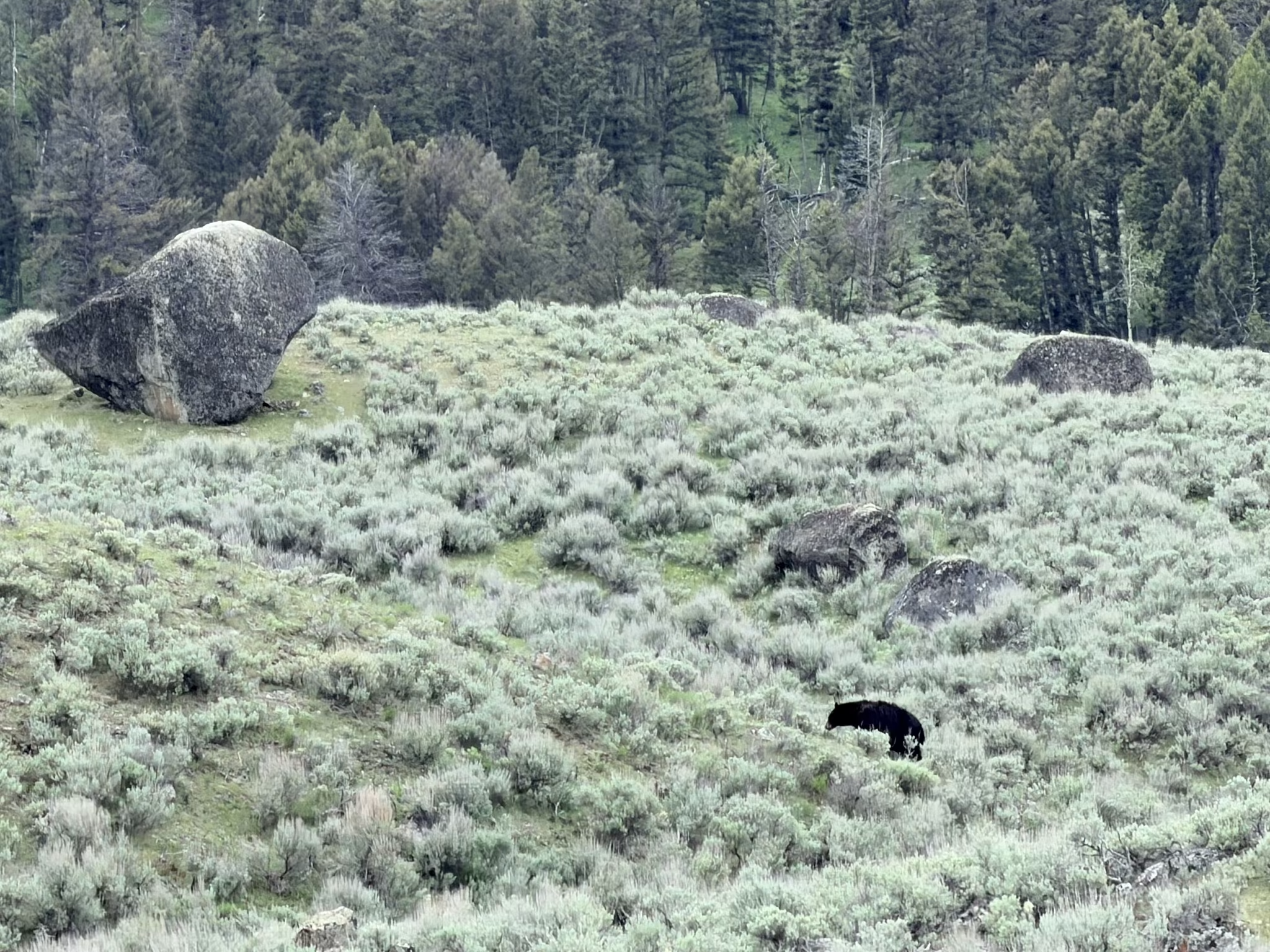
Bear number two came later, crossing a sagebrush slope scattered with glacial erratics—boulders the ice sheets dropped here and never came back for. Two bears in one afternoon after a day and a half of none.
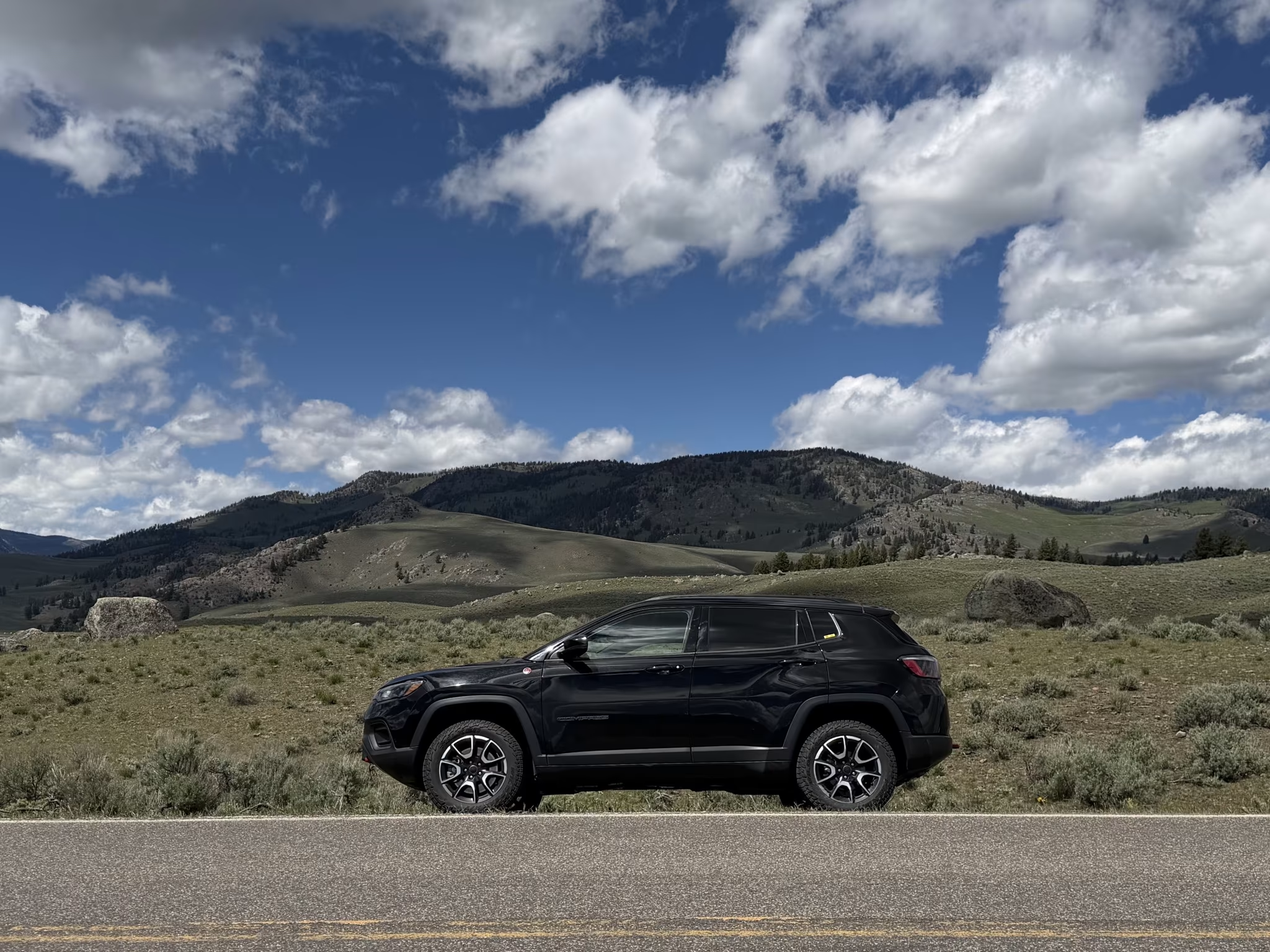
Roosevelt Lodge, Where the Wait Was the Point
We arrived at Roosevelt Lodge hungry and were told the wait was forty-five minutes.
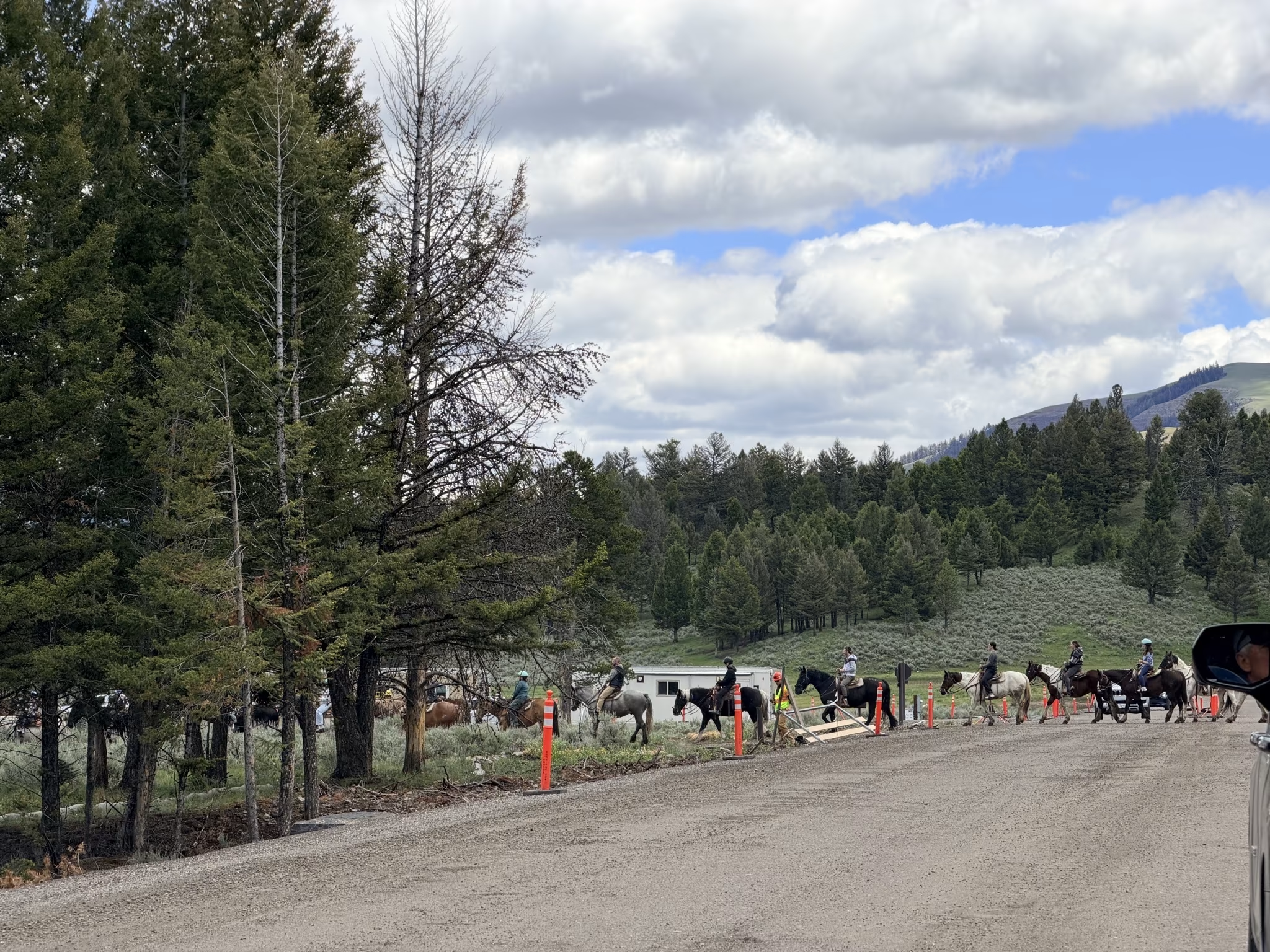
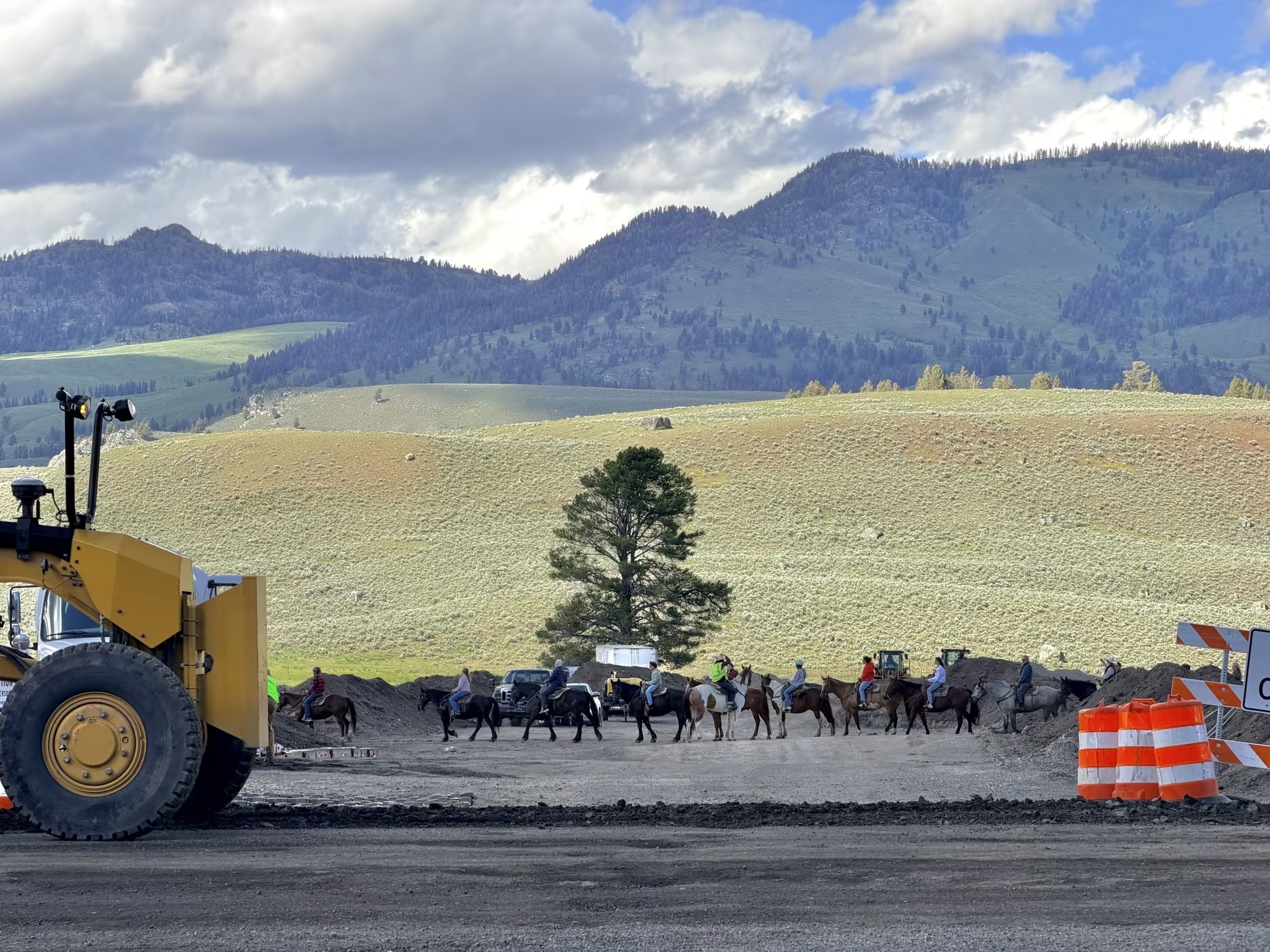
Tower Junction was already a mess. A stretch of the Grand Loop Road was coned off for roadwork, with a loader parked in the middle of it, and a string of trail riders was picking its way past the barricades while horse trailers waited alongside. It was not the setting in which you want to hear a number like forty-five.
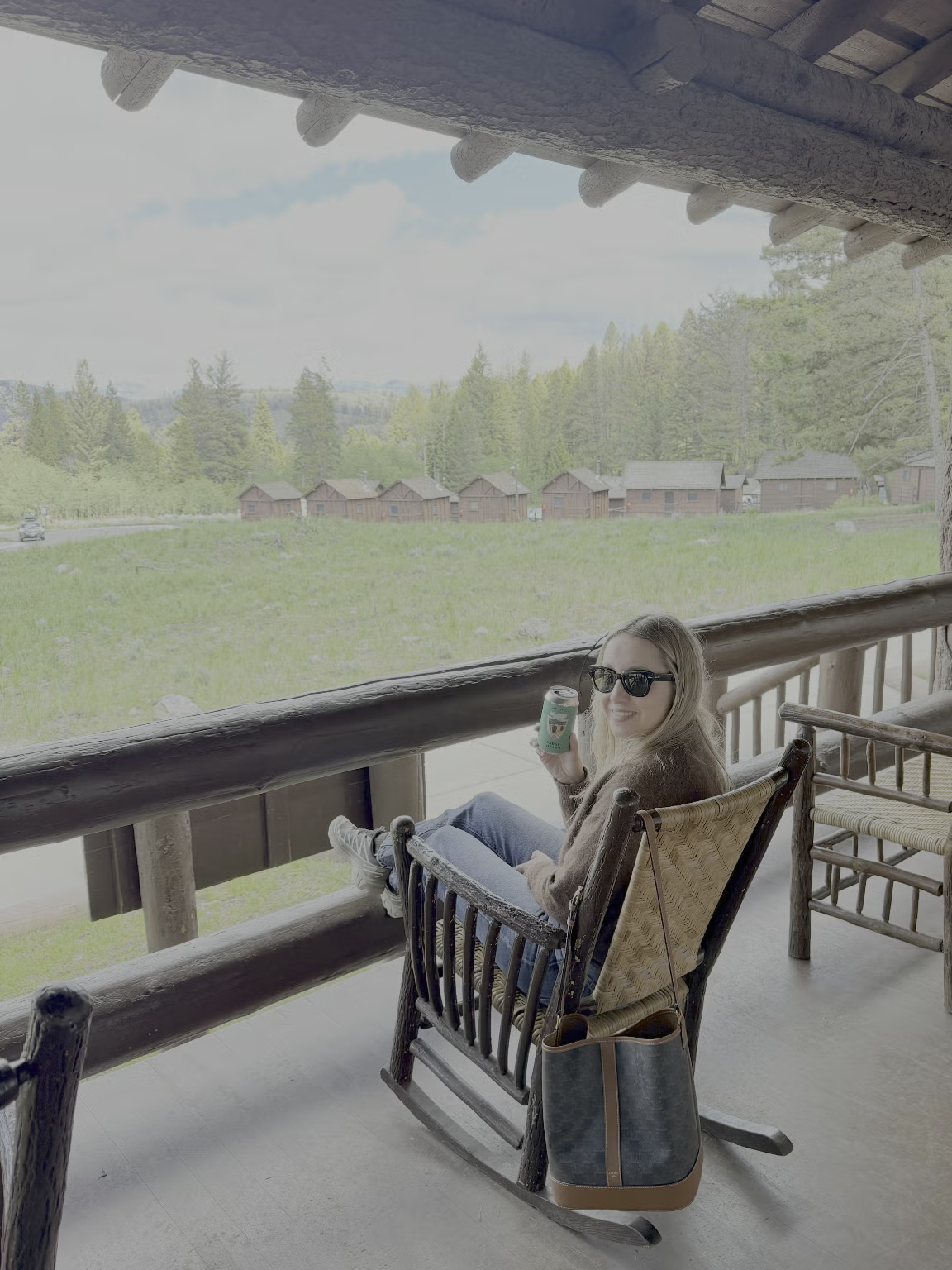
So we went through the gift shop, bought drinks—a Diet Coke for me, a Parks Citrus IPA for Andrea—and took them out to the rocking chairs on the lodge porch.
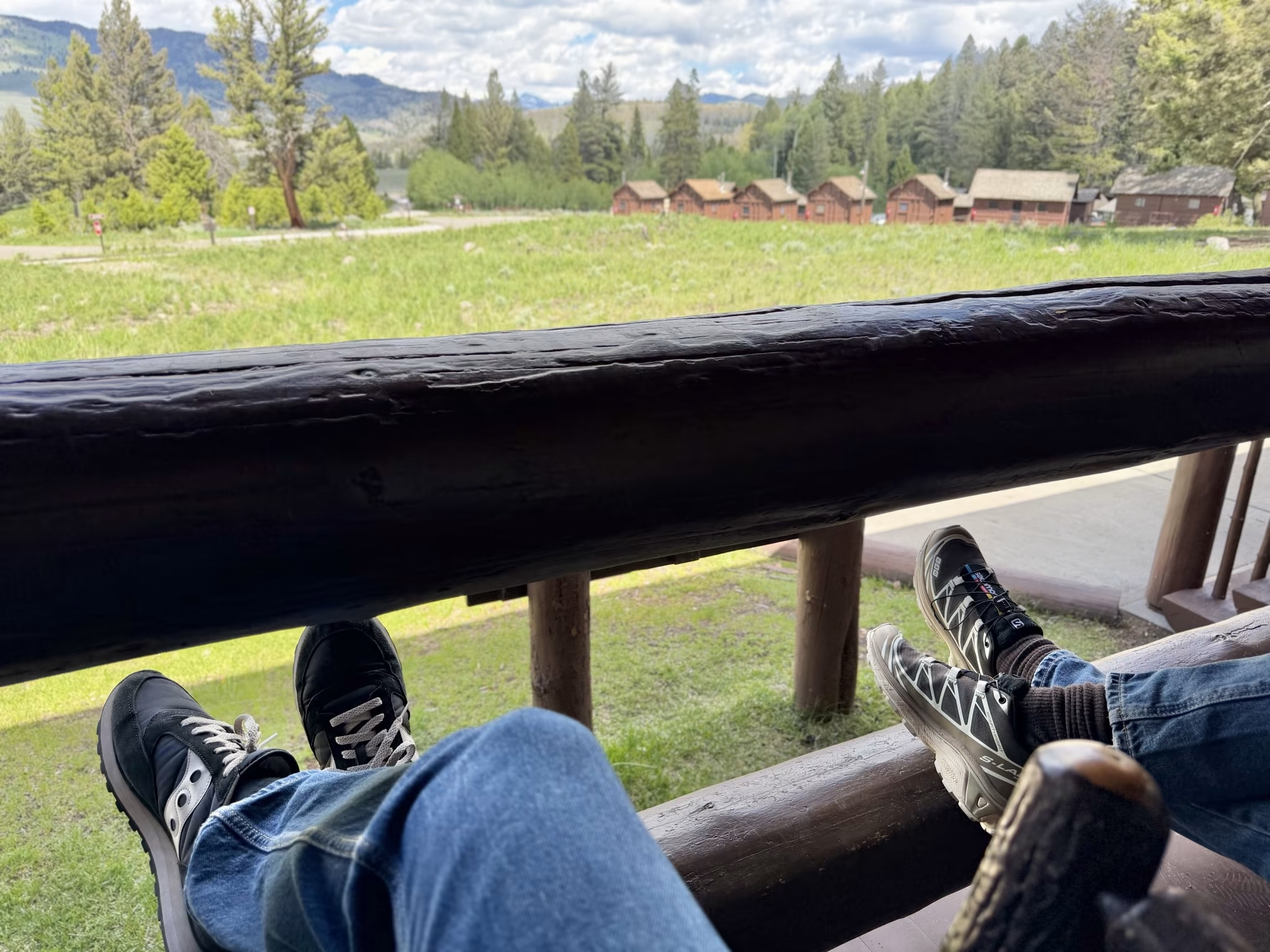
The lodge went up in 1920 and is named for Theodore Roosevelt, who camped in this area in 1903 while he was in the park to lay the cornerstone of the arch at the north entrance. The porch looks out over the cabins and the meadow. We put our feet on the rail and stayed there.
I want to be clear that the forty-five minutes was the best part of the stop. Nothing else that day would have persuaded either of us to sit still and look at a meadow for three quarters of an hour. A table available immediately would have cost us the whole thing. It is the only time I can remember being made better off by a restaurant’s inability to seat me.
Lunch, when it came, was a sandwich and fries for Andrea and a salad with a cup of brisket chili for me. It was good. It was not forty-five minutes of porch.
Tower Fall
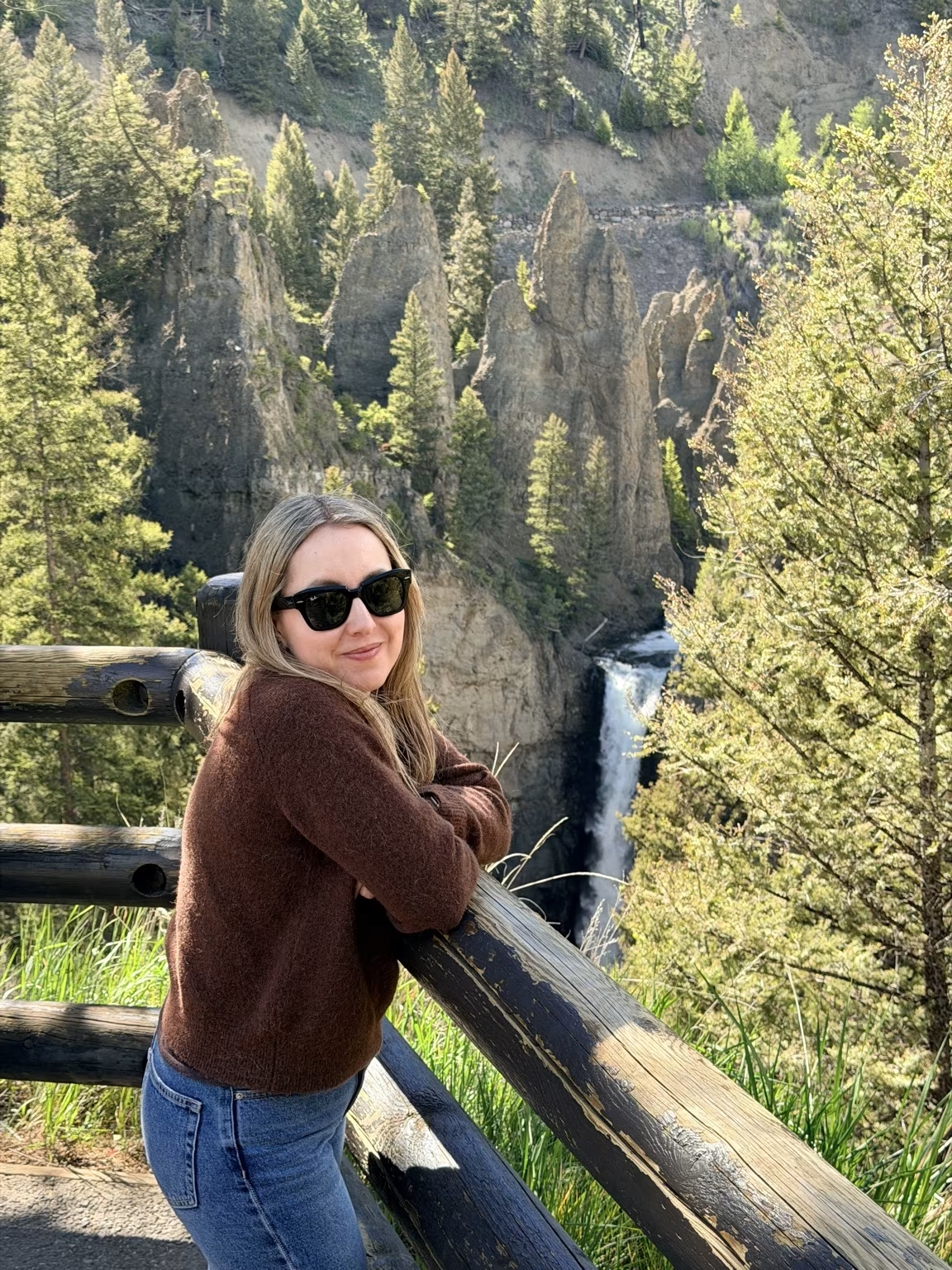
Three miles south, Tower Fall drops 132 feet between the volcanic breccia pinnacles that name it. Thomas Moran painted this in 1871, and his watercolors from that expedition were carried into the halls of Congress as part of the argument for creating the park, which happened in March 1872. It is one of the few landscapes I can think of that helped invent the legal category it now belongs to.
Artist Point
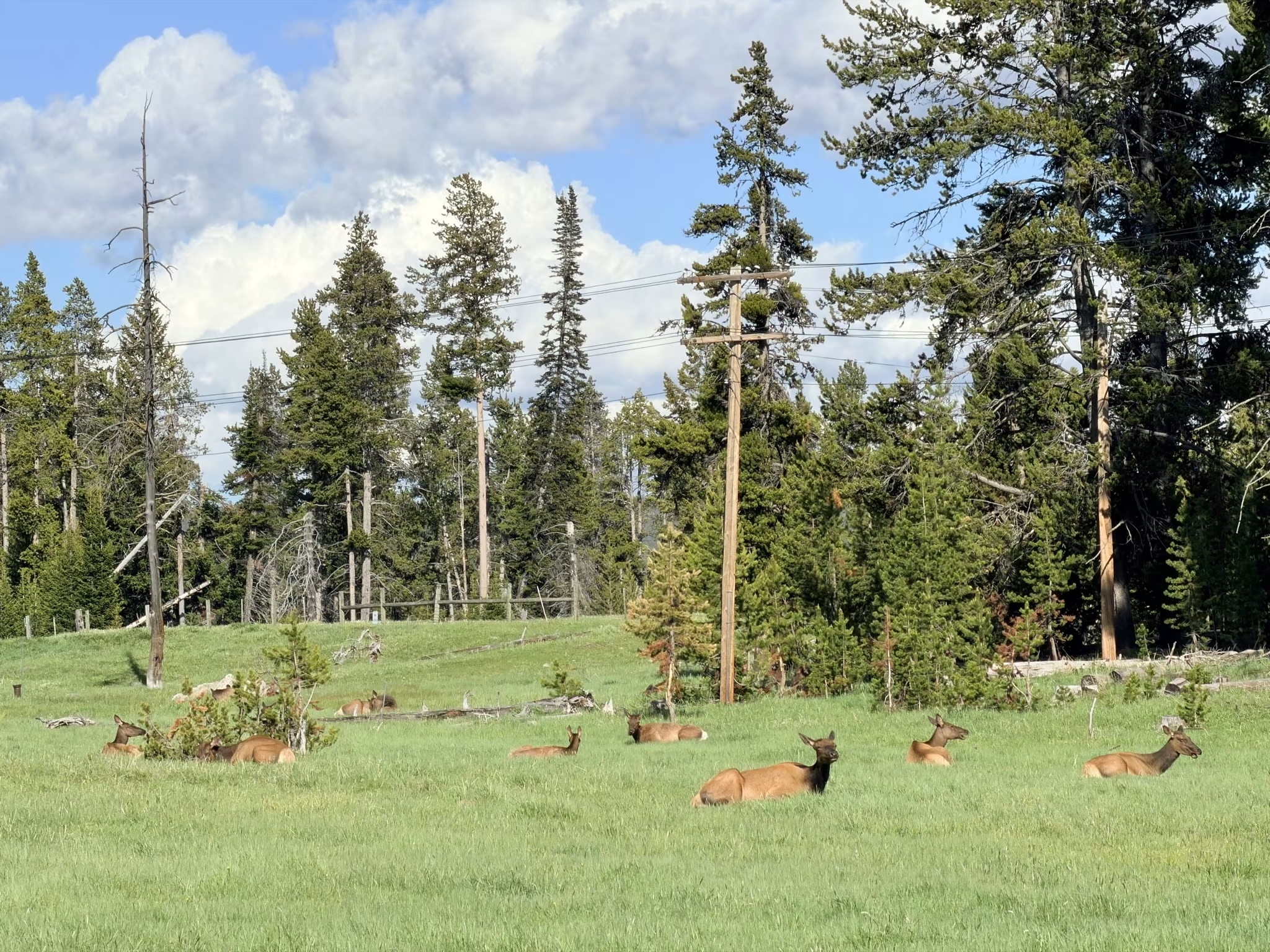
The drive south to Canyon took us past a meadow full of elk, bedded down in the grass with the lodgepoles behind them, doing nothing whatsoever with real commitment.
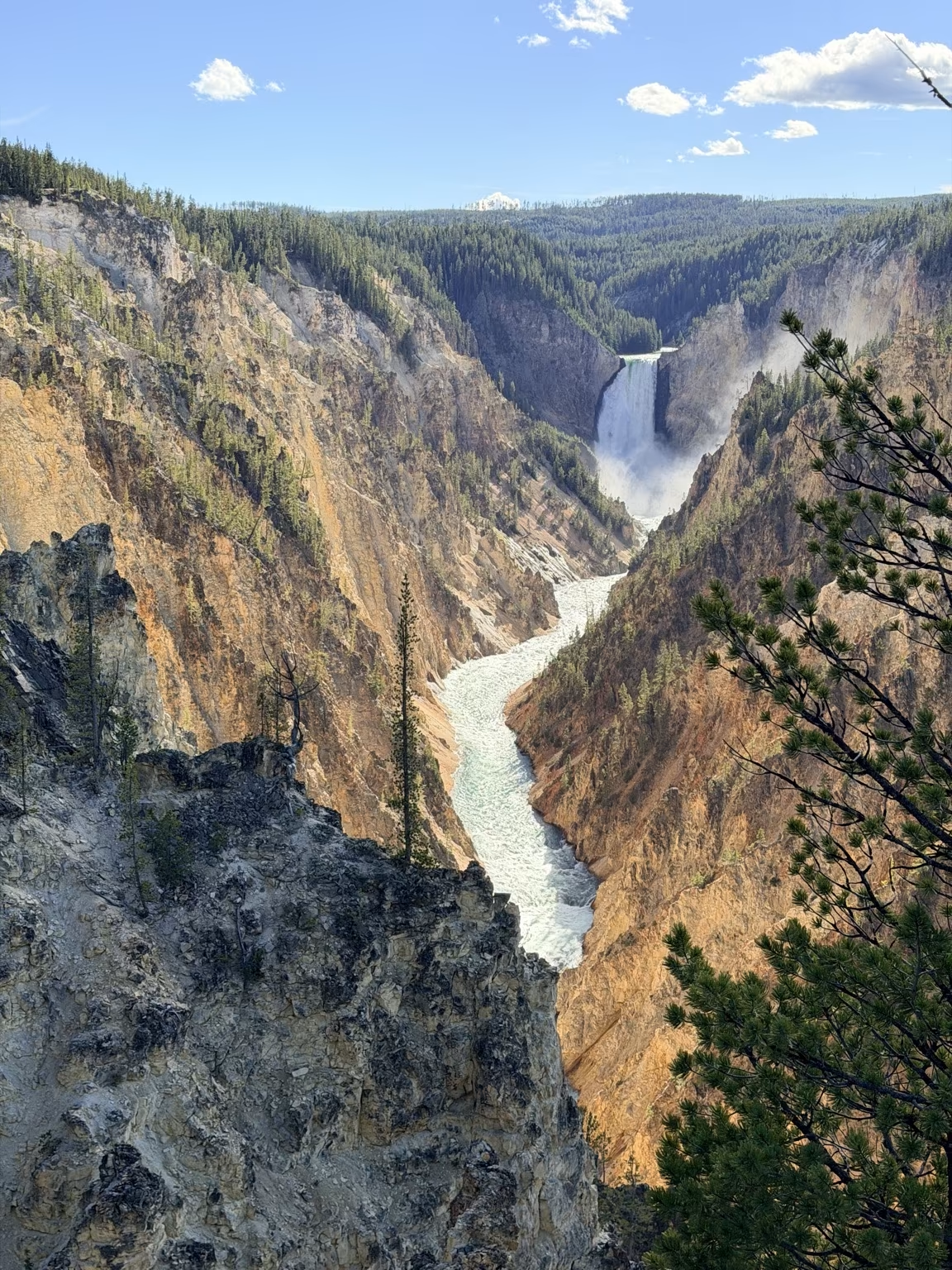
Then Artist Point, and the Grand Canyon of the Yellowstone.
The canyon runs about twenty miles and the Lower Falls drop 308 feet into it, which is nearly twice the height of Niagara. The walls are rhyolite that has been cooked and chemically altered by hydrothermal water until the iron in it oxidized, which is why the whole gorge runs yellow and ochre and rust.
Here is the part I did not know until I looked it up: the park is not named for this. The Yellowstone River got its name from yellow sandstone bluffs several hundred miles downstream, near where it meets the Missouri in what is now North Dakota, and the name traveled upriver from there. The most famously yellow canyon in North America is a coincidence. It was named after a riverbank nobody photographs.
Firehole Falls, and Out
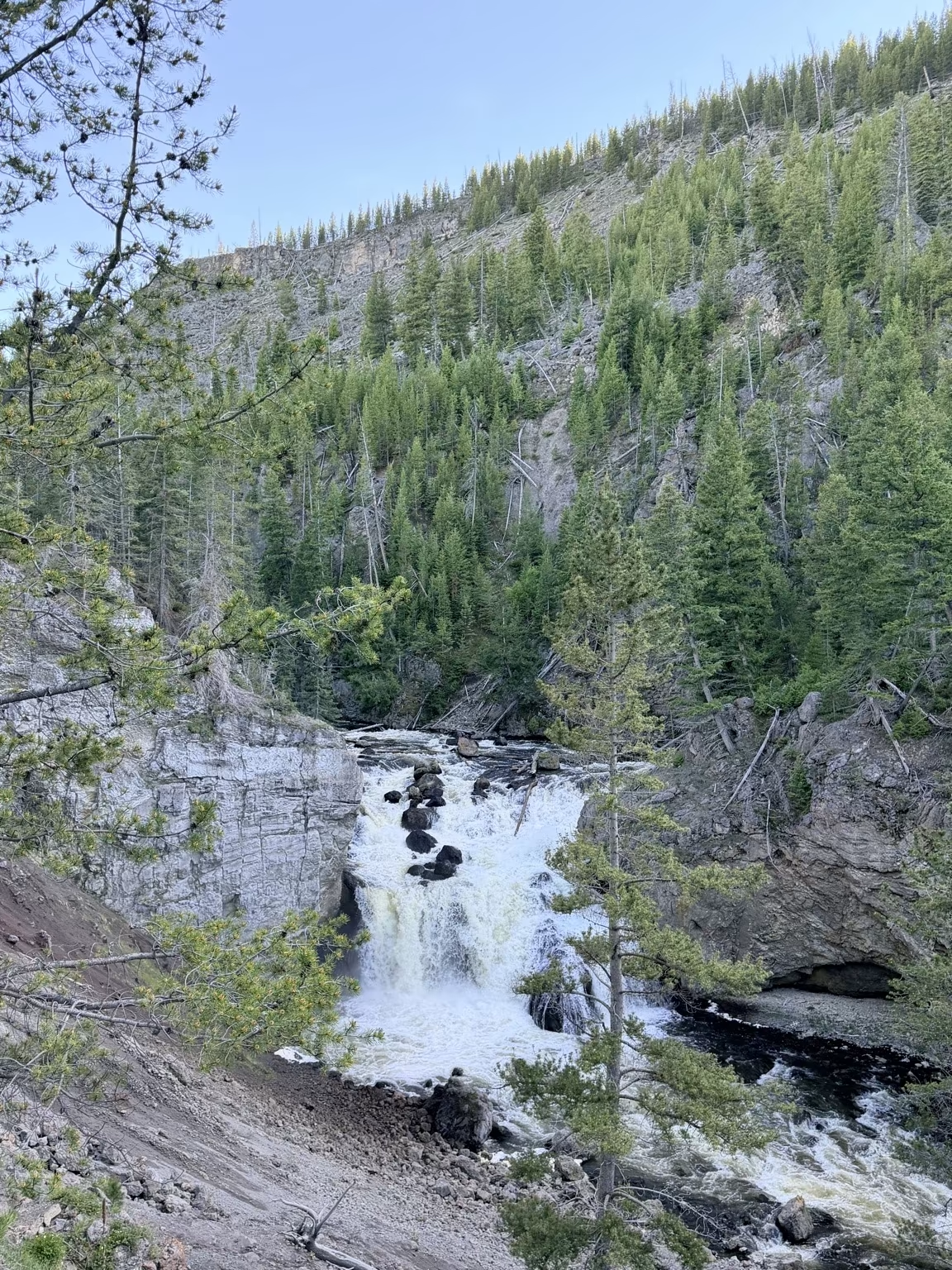
The last item on the phone. Firehole Canyon Drive is a one-way, two-mile detour off the road between Madison and West Yellowstone that most people miss because it starts about ninety seconds after they have mentally left the park. The falls are a forty-foot drop through dark canyon walls, and in June the river is loud enough that you hear it before the pullout.
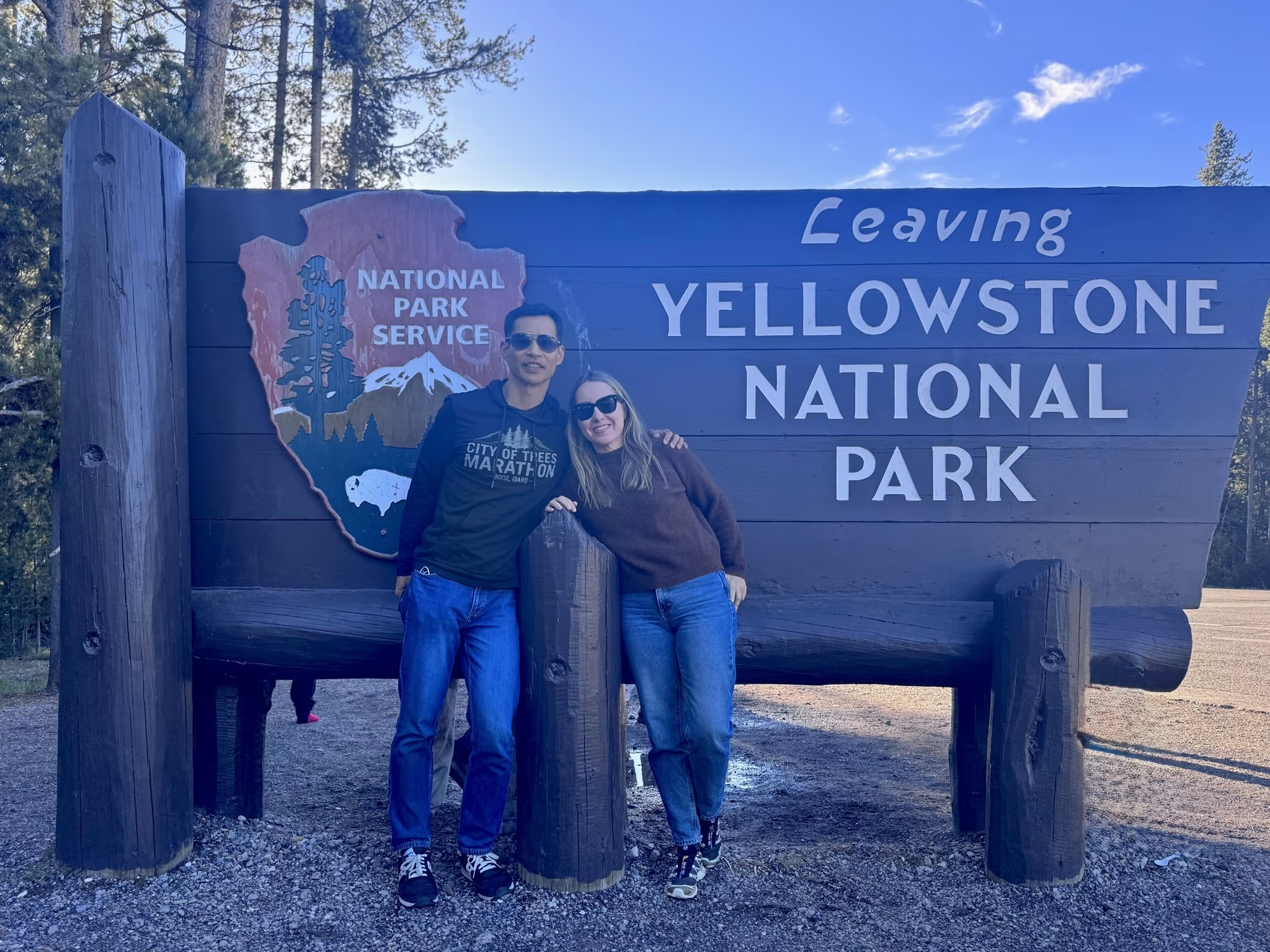
We stopped at the West Entrance for one more photo by the sign, which on the way out reads “Leaving Yellowstone National Park,” a phrasing I appreciated for its refusal to be sentimental about it.
Dinner was ice cream in West Yellowstone. Not ice cream after dinner. Ice cream instead of dinner, eaten standing up, after which we got in the Jeep and drove north to Bozeman.
Two days, one $80 pass, four seasons, two bears, and one geyser that owes us nothing and knows it.