Trans Am Bike Nonstop Starts Tomorrow. A Lot Has Changed Since I Raced It

Tomorrow morning at 6 a.m., about 50 ultra-cyclists will gather in front of the Columbia River Maritime Museum in Astoria, Oregon, and pedal off into the summer darkness. By the time most people in town have had their first cup of coffee, the next edition of the Trans Am Bike Nonstop will be underway—a self-supported, nonstop race spanning over 4,200 miles from the Pacific coast to the Atlantic. No crews. No resupply caches. Just rider, bike, and continent.
I was one of 24 riders who did this race in its second year, 2015. I finished in Yorktown, Virginia, in 8th place after 23 days, 23 hours, and 17 minutes—smiling through considerable pain. You can read all about my experience in my Trans Am Bike Race archives.
And now, more than a decade later, the race is back in the news—this time because Heather Douglas, an editor at The Astorian, wrote a wonderful feature piece recounting my 2015 experience in quite a bit of detail. The article, titled “Coast-to-coast bike race rolls out Sunday from Astoria,” covers the race’s history, how dot-watching works, and the brutal physical toll the race took on me—including the Shermer’s Neck that haunted my final thousand miles.
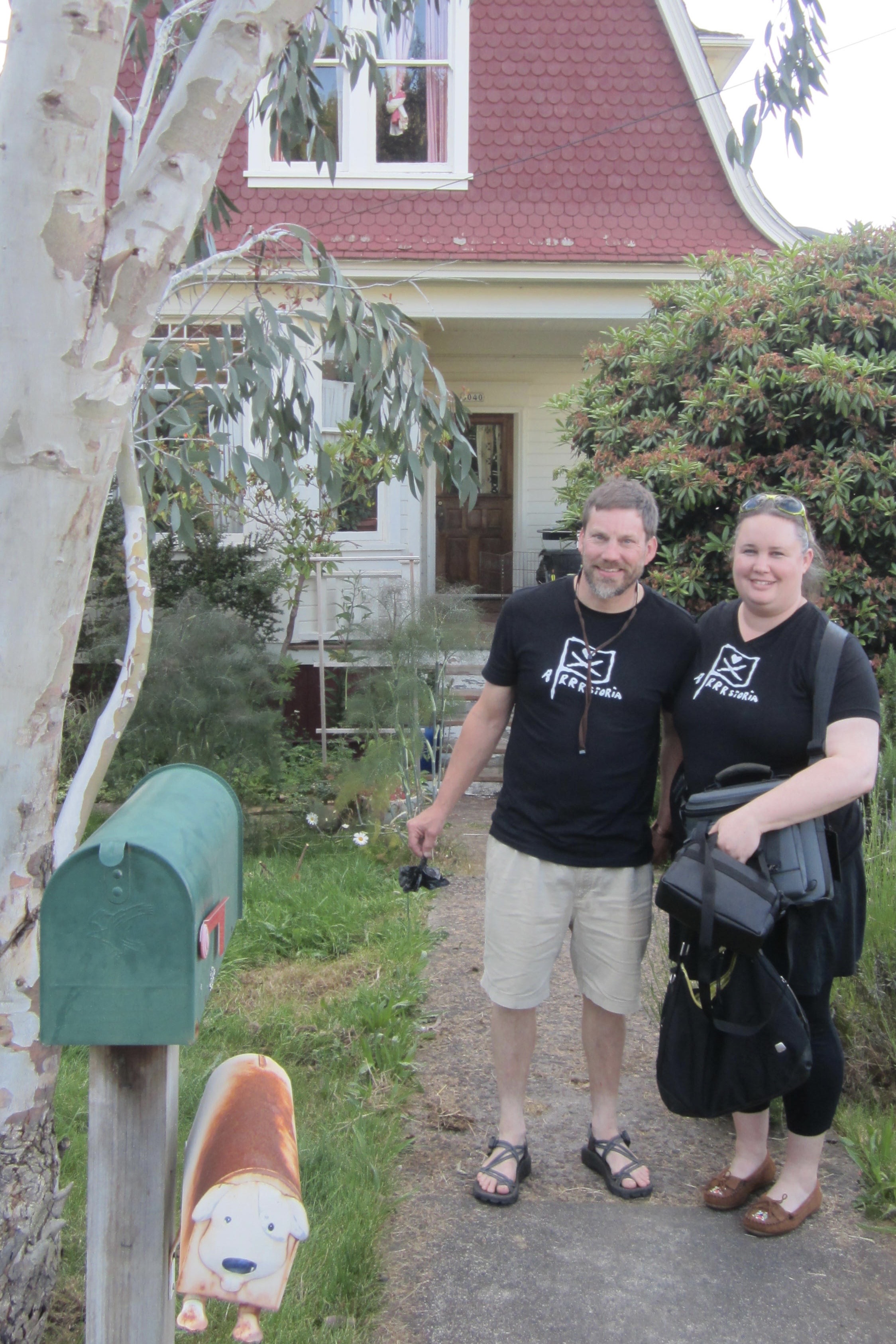
It was a trip down memory lane, and a genuinely moving one, reconnecting with Heather and her husband Corey, who hosted me at their house the two nights before the race started.
How the Race Has Evolved
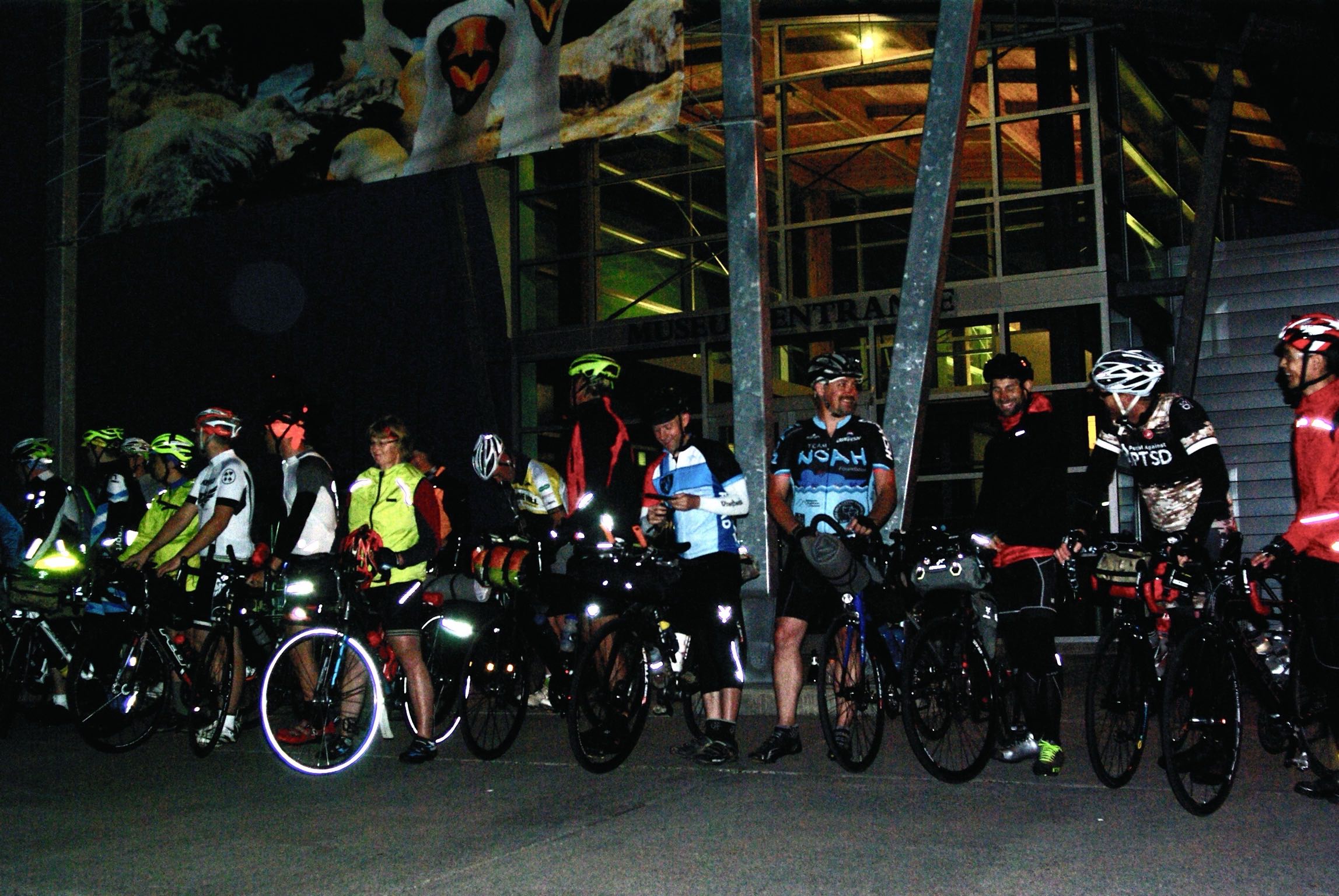
When I raced in 2015, the Trans Am Bike Race was straightforward in its structure if not its suffering: follow the Adventure Cycling Association’s historic TransAmerica Bicycle Trail from Astoria to Yorktown. The route—originally developed in 1976 to mark the U.S. Bicentennial—was fixed. Every rider rode the same roads, through the same towns, over the same mountain passes. It was a true comparison of speed and endurance on a level playing field of pavement.
Today, the race looks meaningfully different. Rebranded as the Trans Am Bike Nonstop in 2023, the event has moved to a checkpoint-based format—much more in the spirit of Europe’s famous Transcontinental Race than the original fixed-route model. Riders are no longer required to follow a single GPS track across the country. Instead, they must navigate through three mandatory virtual checkpoints: CP1 in Mitchell, Oregon; CP2 in Moran, Wyoming; and CP3 at one of five approved crossings of the Mississippi River. Beyond hitting those checkpoints, the route between them is largely open.
This gives riders strategic freedom that simply didn’t exist in my day—the ability to choose quieter backroads, seek out better resupply points, or even take gravel shortcuts to save time. The event now blends the classic paved Trans Am route with elements of the mixed-terrain Bike Nonstop US, which incorporates roughly 20% gravel or trail sections. Riders can also choose between two finish lines: the traditional end of the Trans Am Trail in Yorktown, Virginia, or Washington, D.C., via the C&O Canal—with the D.C. route reportedly being faster despite the varying surface.
Race founder Nathan Jones—who has organized the event since its 2014 inception and rode it himself in year one—has been candid that the format change is partly about safety. The original TransAmerica route runs through some heavily trafficked corridors, and the checkpoint model lets riders route around them. It’s a practical evolution, even if it means the race is no longer the pure head-to-head comparison it once was.
The core spirit, though, remains untouched. The clock starts in Astoria and doesn’t stop until you reach the finish. No outside assistance. No drafting. Everything you need—food, shelter, repairs—must be sourced commercially or found along the way. And the “dot watchers,” those dedicated fans who track riders’ GPS dots across the country map, are still as obsessive as ever.
About Shermer’s Neck
One of the more memorable parts of Heather’s article describes the Shermer’s Neck I developed during the 2015 race—and it really was as bad as it sounds. Named after Michael Shermer, one of the first four cyclists to complete the Race Across America in 1983, Shermer’s Neck is what happens when your neck muscles weaken so severely from sustained effort that you can no longer hold your head up. It’s essentially exclusive to ultra-distance cyclists—the kind of people riding ridiculous miles for weeks on end.
Mine hit at around mile 2,700, in Kansas, and progressively worsened over the final 1,500 miles. To cope, I eventually rotated my aerobars 90 degrees to vertical so I could sit upright and see the road. Making left turns required stopping, picking up my bike, and physically rotating it—because I couldn’t turn my head to check for traffic.
I wrote a detailed account of the whole ordeal, including what caused it, how I coped, and how long recovery took, in my article My Experience with Shermer’s Neck.
Despite all that, I finished. And despite everything, I’d do it again—well, up to a thousand miles of it, anyway. After completing the first thousand miles of the Trans Am, I made a resolution: no more races over 1,000 miles. Bicycle tours, where you can actually stop and recover like a normal human being, are a different matter entirely. So far, I’ve stuck to that.
How to Follow the 2026 Race
Tomorrow’s riders will have it somewhat easier in terms of route flexibility—but the continent hasn’t gotten any smaller, the dogs in Kentucky haven’t gotten any friendlier, and Shermer’s Neck remains an ever-present threat somewhere past mile 2,000. Godspeed to all of them.
Follow the race live via the Ride Yr Bike app—dot-watching is genuinely addictive.
The Astorian Article
- June 4, 2026: Coast-to-coast bike race rolls out Sunday from Astoria by Heather Douglas for The Astorian (dailyastorian.com web version)
- June 4, 2026: Coast-to-coast bike race rolls out Sunday from Astoria by Heather Douglas for The Astorian (newspaper version, PDF)