When Smoke Alarms Keep You Awake: A Sleeper’s Guide to Managing Chirps and Blinking LEDs

If you’ve ever been jolted awake by the soul-piercing chirp of a smoke alarm, you’re not alone. Like several of my friends, I’ve had too many nights disrupted by these wretched-but-supposedly-life-saving devices—most often in the wee hours of the morning, right when I was sound asleep. The culprit? Low batteries.
It usually happened around 3 or 4 a.m., when the cooler temperatures caused a voltage drop in the aging batteries. The chirping was loud and persistent, a maddening reminder of the device’s lifeline running out. Since smoke alarms are typically mounted on ceilings, addressing the issue required me to stumble out of bed, drag out a ladder, and hope I had a fresh 9-volt battery lying around. If not, my only option was to bury my head under the blanket and try my darndest to ignore the incessant noise.
But let’s face it: ignoring the chirp wasn’t a long-term solution. These devices, as obnoxious as they may be, are lifesavers. My house had six smoke alarms, so the chances of being awakened by a chirp at some point were frustratingly high.
Battling the Chirp
To minimize the disruption, I adopted a preventative strategy: replacing all the batteries at the same time. The idea was simple—if one battery was nearing the end of its life, the others likely weren’t far behind. By swapping them all out simultaneously, I could drastically reduce the frequency of surprise wake-ups.
Eventually, I upgraded to lithium 9V batteries. While they’re more expensive than alkaline batteries, they last twice as long. The higher upfront cost was offset by needing to replace them half as frequently. Less frequent replacements also meant fewer sleepless nights and fewer trips up the ladder. And let’s be honest, you can’t put a price on good sleep.
A Smarter Solution
When I moved to Spain a couple of years ago, I decided to take things a step further. That’s when I first learned that smoke alarms have a lifespan of about 10 years because their sensors degrade over time. It was the perfect excuse to replace all my alarms. And guess what? New models now feature sealed, 10-year batteries. These are a game-changer—no more battery replacements, no more chirping.
My plan is to replace them after nine years (so in 2031), just to be safe. Note: if you are replacing you smoke alarms, check local regulations regarding disposal of electronic waste. I ended up mailing my old smoke alarms to First Alert for recycling for a nominal fee.
The LED Light Dilemma
Problem solved? Not quite. While I no longer had to deal with chirping, my smoke alarms still managed to disrupt my sleep in another way whenever I was in Fort Collins: their blinking LED indicators. These lights signal that the alarms are powered and functioning, but they became a glaring problem when I installed blackout blinds to improve my sleep hygiene. The darker the room, the more pronounced the LEDs became, casting an eerie, Ghostbusters-green glow that was impossible to ignore.
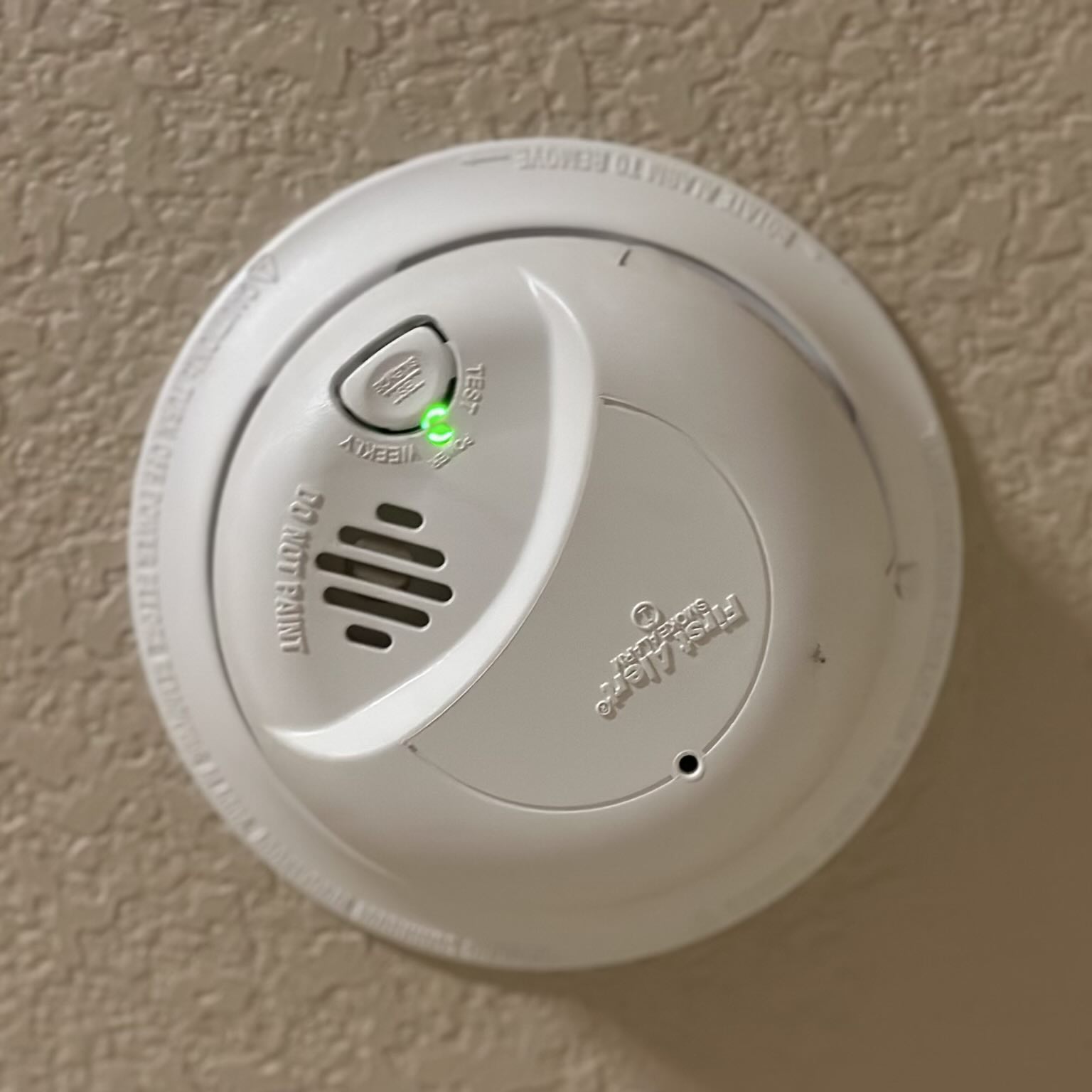
To fix this, I turned to black electrical tape. On my First Alert smoke alarms, the green LED is recessed, but there’s a small hole directly over it. I covered this hole with tape, which dramatically reduced the light. Some faint green light still leaks out around the test button, but only if you’re looking at it straight on from directly below. The light is now attenuated enough that it doesn’t bother me at all.
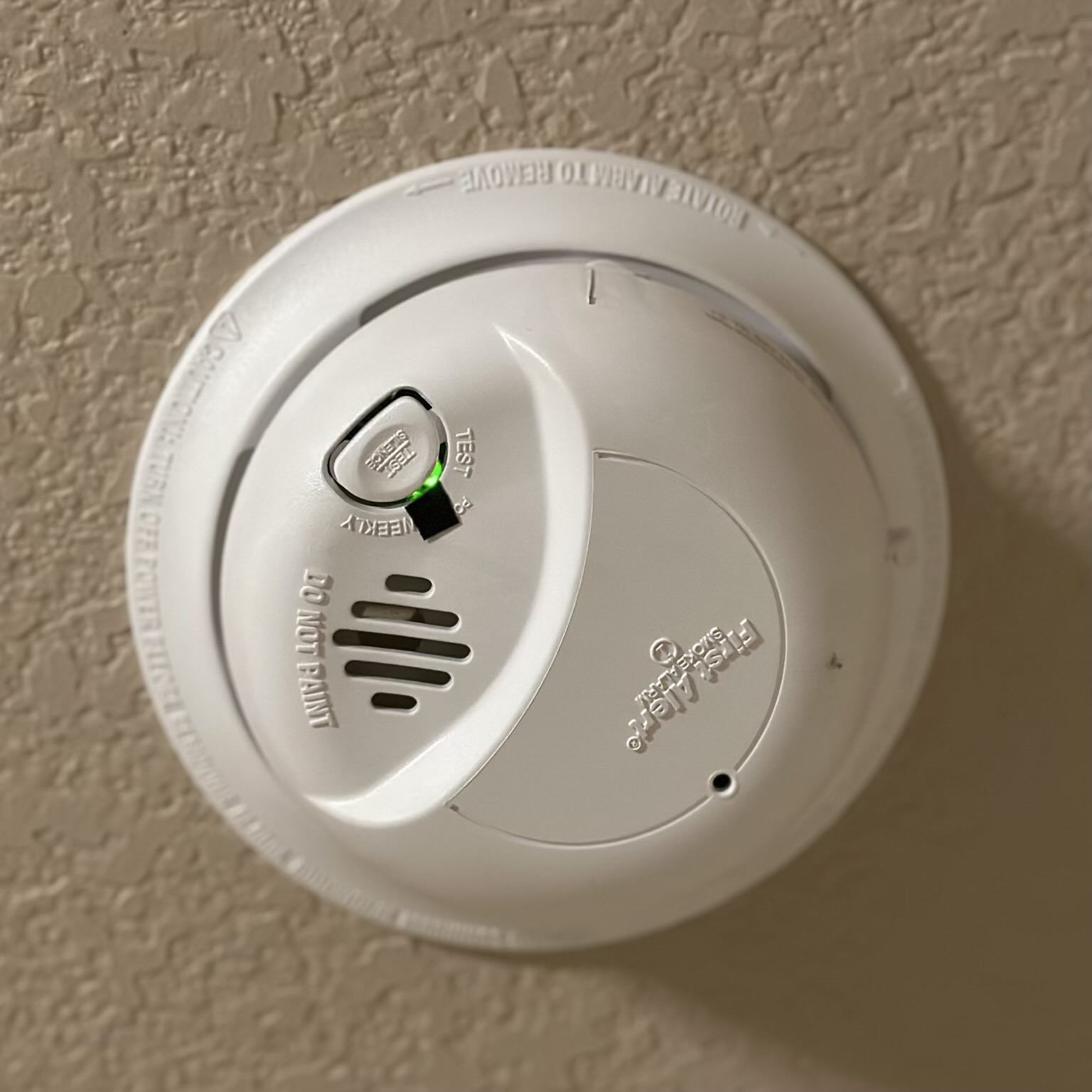
(As an aside: if you look closely at the photos of the smoke alarms above, you’ll notice a note advising you to test them weekly by pressing their Test buttons. Does anyone actually do that? I’d bet that 99.999% of homeowners don’t—and honestly, I’d argue that expecting such frequent testing is totally unreasonable.)
Peaceful Nights at Last
Thanks to these upgrades and hacks, my smoke alarms will no longer keep me awake—whether it’s chirping from low batteries or an overly bright LED. For anyone struggling with the same issues, I highly recommend investing in smoke alarms with sealed, 10-year batteries and busting out the electrical tape if blinking LEDs are ruining your sleep.
While these devices can be a nuisance, they’re essential for keeping us safe. And with a little effort, they don’t have to be sleep robbers, too.
There are 10 comments.
My landlord replaced a smoke detector that was a lemon. 2.5 years old and it was a night screamer. The new one he put in not only has the one green light but a halo. I thought it may have been made with cheaper plastic, etc., hence the brightest light I have ever seen. Is their a way for me to get one that does not have a halo or that I have to tape? I appreciate any input you may have.
Hi Peggy, thanks for sharing your experience—“night screamer” is such a perfect term for those rogue alarms!
The “halo” effect you’re seeing might be from a ring-style indicator light, common in some smart or combo detectors. If taping it feels like a last resort, you might consider models specifically designed for low-light environments. Brands like First Alert and Kidde offer units with dimmable or no visible LEDs, and some models skip the constant light altogether.
My First Alert fire/smoke detector just had it's battery replaced by apt. maintenance (went off at 3:30am) and now the light generated at night is insane level bright! Not only shines circle of light on the floor (showing path for egress) but also travels on the walls as well and lights the entire ceiling. Its absolutely insane, I have blackout curtains so the difference in lighting is so jarring it's impossible to fall asleep. We also have fire detector in kitchen so sensitive you can't open the oven without it going off. Was told "yes, they're very sensitive". What?!
Thanks for sharing your experience, Debra. That sounds incredibly frustrating and disruptive, especially in the middle of the night!
The brightness you’re describing from the First Alert unit sounds more like a tactical spotlight than a gentle indicator. Some newer models do include emergency egress lighting, but it’s surprising how intense it can be. I'd definitely try the electrical tape trick.
As for the kitchen detector, you’re not alone. Many ultra-sensitive models are notorious for reacting to everyday cooking. If it’s a photoelectric sensor, it might be worth asking your building management if they’d consider relocating it slightly or switching to a model better suited for kitchen environments.
Hello, I have the smoke detector model in the picture and it's definitely a "night screamer." Even with tape over LED light, there's a halo light (very bright) and bright green light coming through the slots. Sure hope the future brings needed smoke alarms with a subdued/discreet indicator lights esp. for the bedroom. Thanks.
Hi Joanie, I’m sorry to hear that even the tape over the LED light isn’t enough to fix your issue. I completely agree that manufacturers should design smoke alarms with less conspicuous indicator lights. However, I don’t hold out much hope for that in the meantime. I hope you’re able to get some good sleep!
I literally took mine apart and pulled the two LED bulbs out. It in no way affects its functionality. Problem solved.
Jake, this is a brilliant solution! Was it difficult to disassemble the smoke alarm and pull out the LEDs?
for bright LED. maybe a dab of white-out or some black nail polish on the LED may resolve the annoying light issue.
This sounds like a great idea. I may try it!