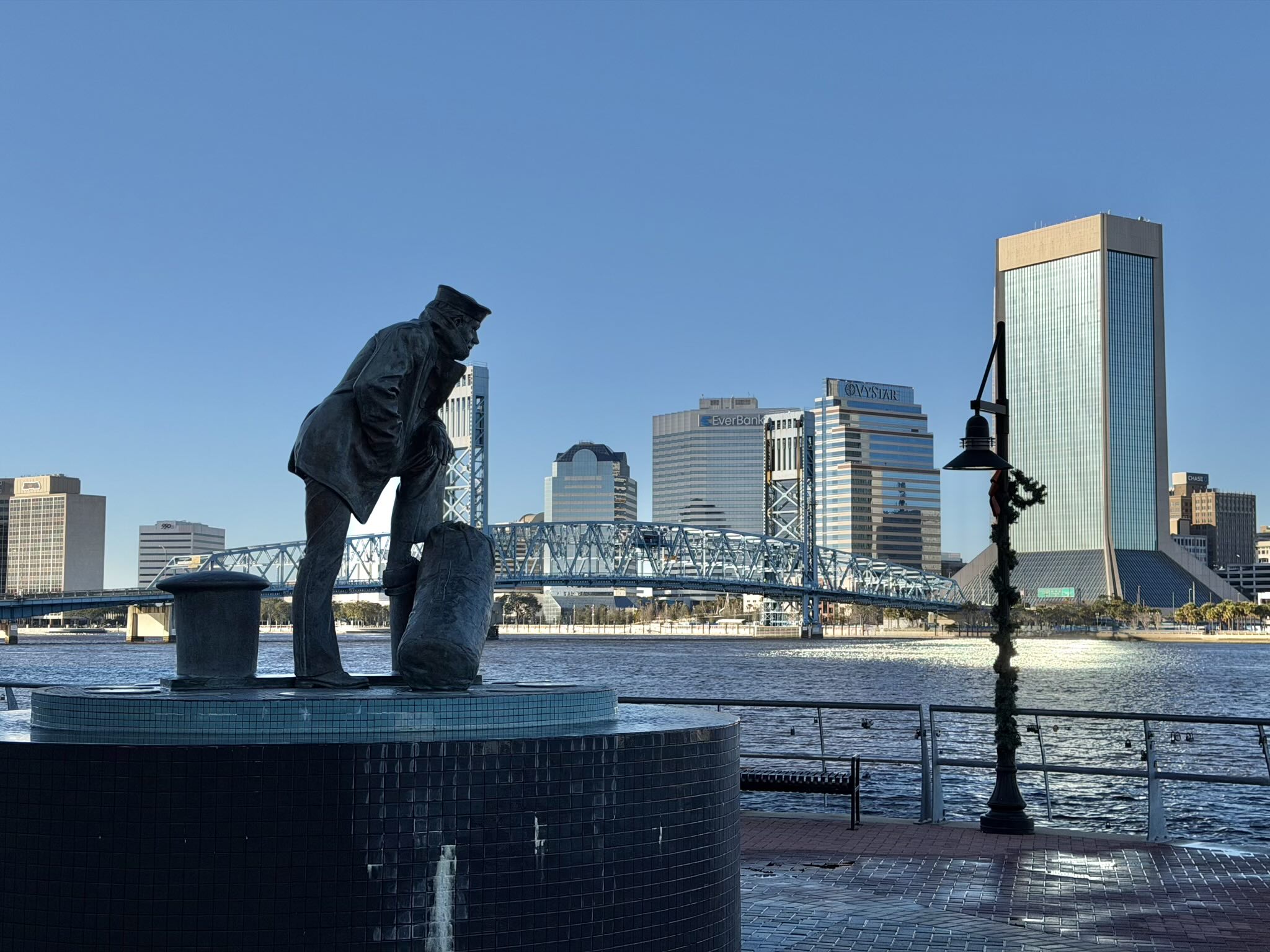
Florida’s Jacksonville Area: Better Than Reddit Said

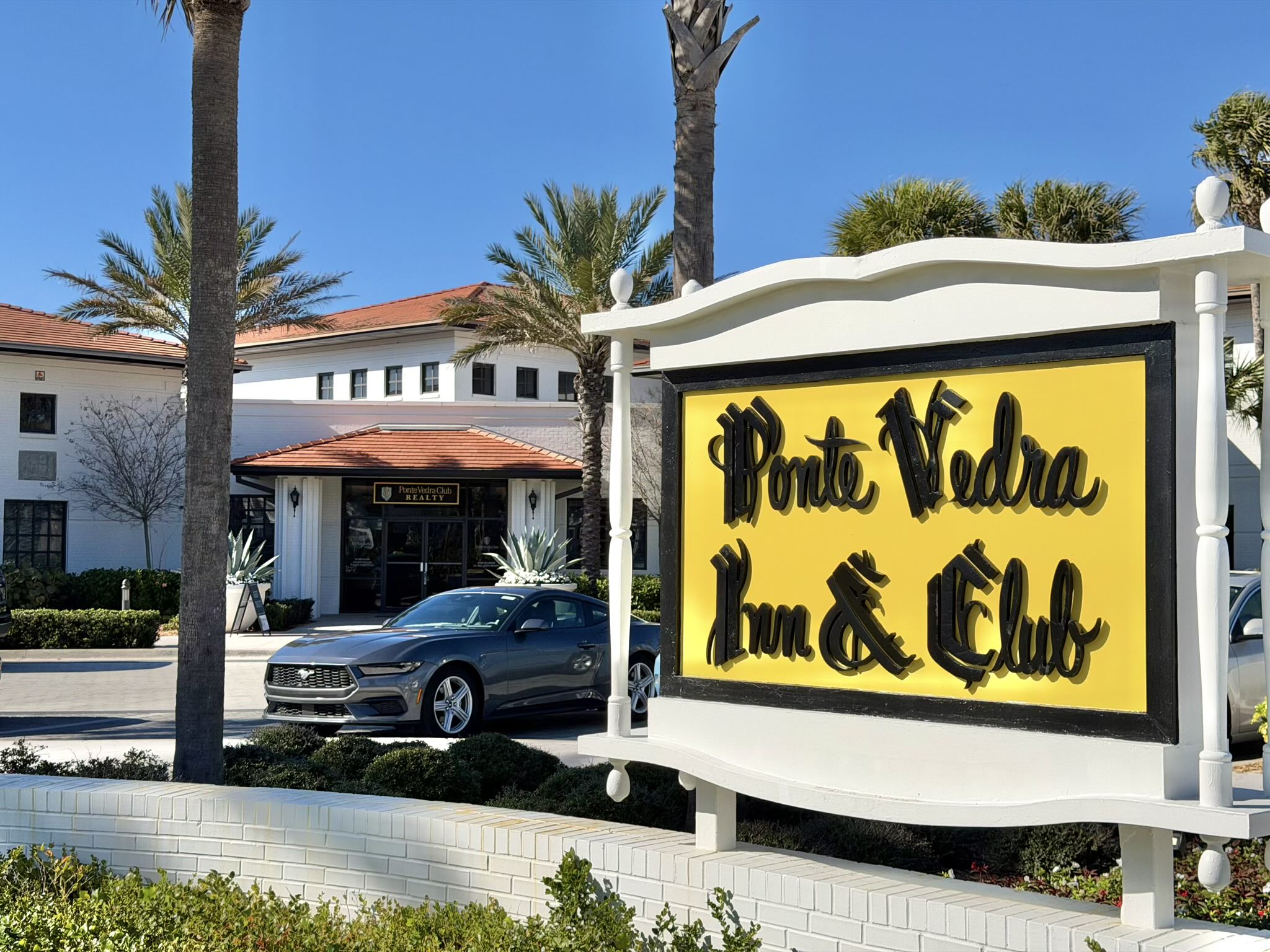
“I’m in Ponte Vedra!” I messaged some friends with a photo that is below.
Ponte Vedra, Florida, that is—not Pontevedra, Spain, where I have been living the last four years and was just visiting a week before Andrea and my Cabo Verde vacation. The two places share a name and an Atlantic coastline and approximately nothing else, though I’ll admit that Florida’s version—just south of Jacksonville—makes a strong case for itself. This is where the PGA Tour makes its home and The Players Championship—sometimes called “the fifth major”—is held each May.
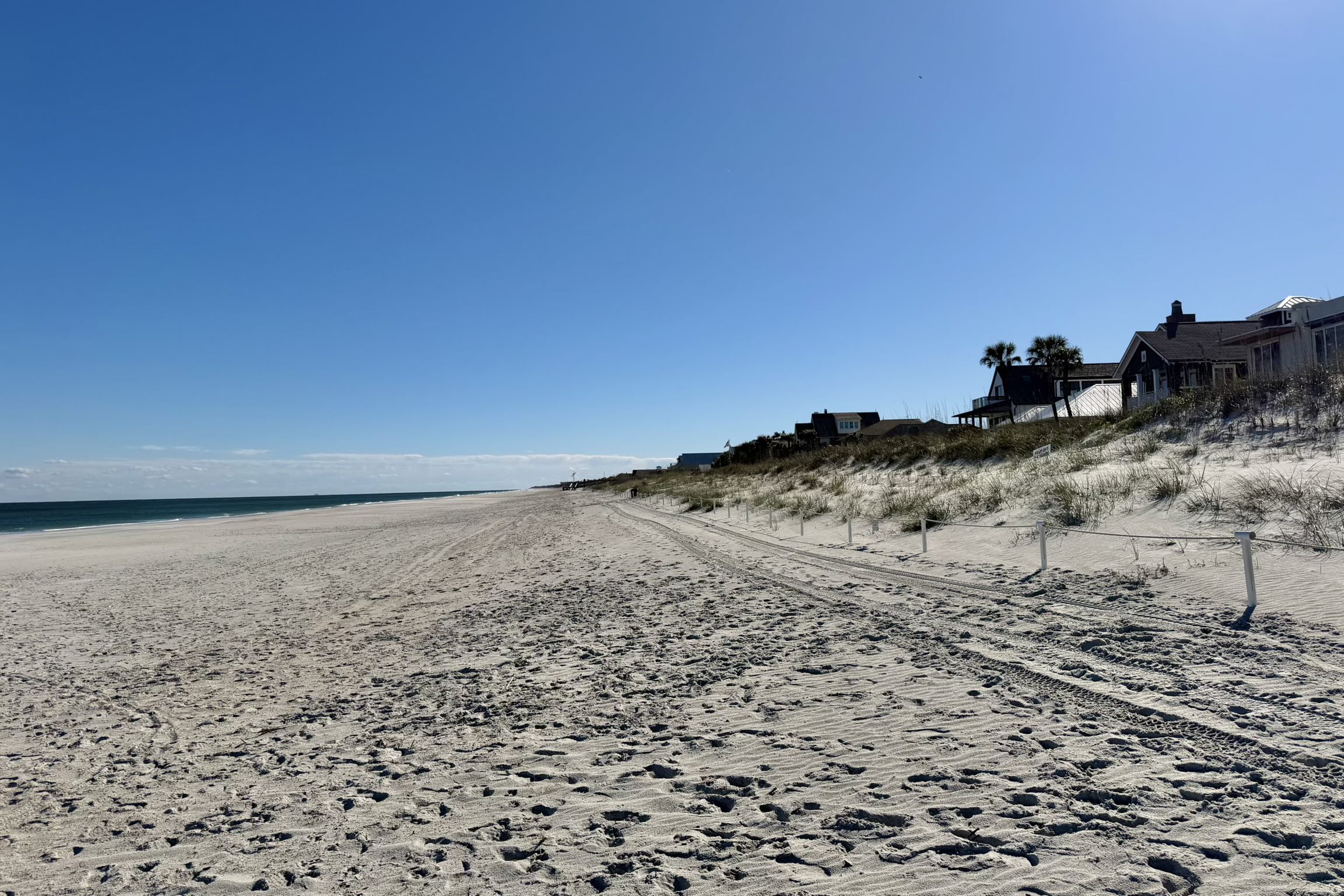
The oceanfront homes along A1A look like someone took the best parts of a coastal country club and forgot to put up a fence. Manicured, quiet, conspicuously comfortable.
I stopped at a Publix for groceries, Publix being the grocery chain that Floridians and former Floridians speak of with the reverence usually reserved for old friends. The cashier, a probably 60-something-year-old blonde, was the opposite of many cashiers in that she seemed positively sanguine and unbored. After she rung up my groceries for $34.52, she asked if I’d like to make a donation to the Special Olympics.
“Sure,” I replied, “let’s round up.”
Initially, she lit up. But then she groaned: “Aw man, you’re making me do math!” I gave her some time. But then I realized she was serious: her subtraction skills were worse than a smart second-grader’s.
I told her the answer was forty-eight cents. She thanked me warmly and explained that her husband was the numbers person in their household, decades as a car salesman having apparently rendered arithmetic a division of labor rather than a shared skill.
From Ponte Vedra I drove up to Jacksonville Beach, where the Atlantic was doing what the Atlantic does and the homes flanking the beachfront had the same confident, compact charm you find in Huntington Beach, California—modest in scale relative to their price tags, with architectures that know the view is doing most of the work. At least the traffic here was much less.
Then came the reason I had plotted this particular detour: a Papa John’s on 10750 Atlantic Boulevard in Jacksonville that, to most people, is just a pizza franchise. To anyone who follows cryptocurrency or to those—like me—who happen to read Wikipedia before visiting a city, it is a minor historical landmark.
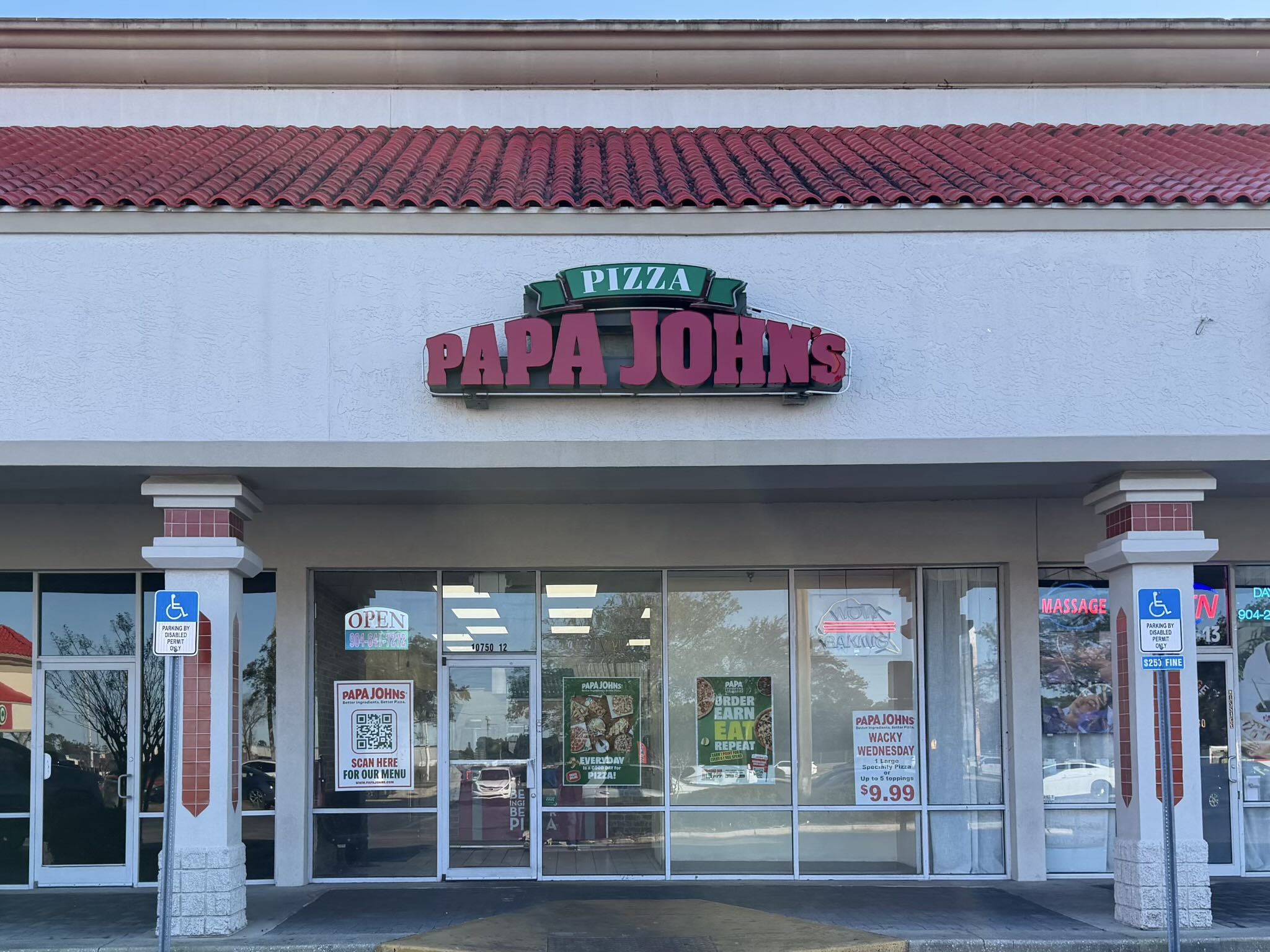
On May 22, 2010, a Jacksonville software developer named Laszlo Hanyecz made what is now celebrated as the first known real-world commercial Bitcoin transaction. He posted on a forum offering 10,000 BTC to anyone willing to order him two large pizzas. A nineteen-year-old named Jeremy Sturdivant, based in California, accepted—using his own credit card to order from this very Papa John’s and have the food delivered to Hanyecz’s door in Jacksonville, then receiving 10,000 BTC in exchange. Those two pizzas—and by extension, the coins—were worth of total of $41 at the time. Or so the story goes. Seeing how in there was a poster on the window of this Papa John’s on this day in 2026 that advertised a large pizza “with up to five toppings” for a mere $9.99 every Wednesday made me suspect that Hanyecz was majorly ripped off 16 years ago.
Anyway, on the day I visited the Papa John’s, those Bitcoins were worth nearly a billion dollars. Literally. You can do the math, assuming your multiplication skills are better than the Publix cashier’s, or you have a calculator handy.
A wooden plaque on the wall inside, donated by the Jacksonville Bitcoin meetup, commemorates the occasion. It was placed right next to a plastic hand sanitizer dispenser. The whole setup displayed appropriate solemnity.
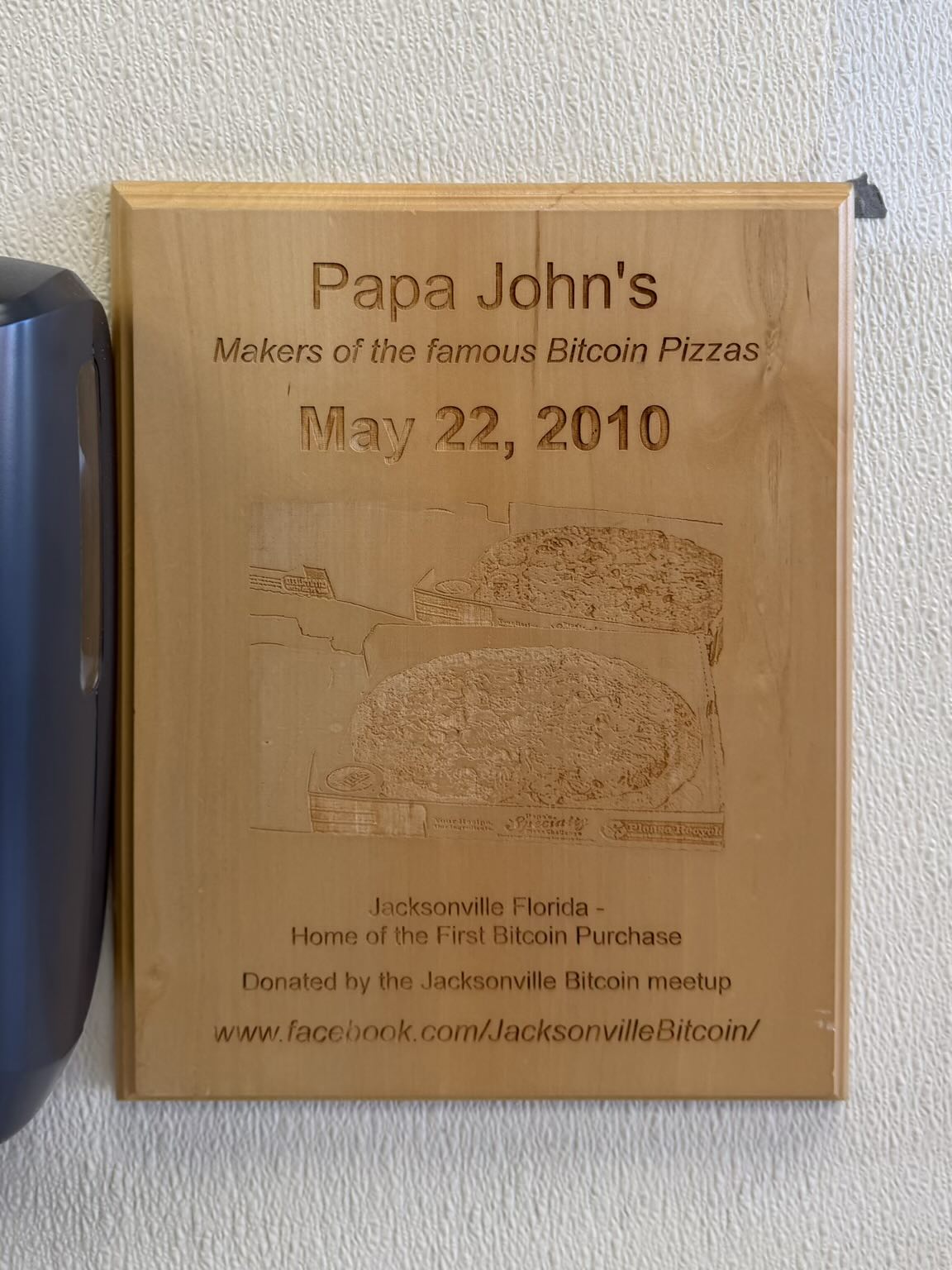
I stood there studying that plaque with the particular wince and empathy of someone who has their own Bitcoin story to tell. In March 2014, I bought three BTC at $670 apiece, convinced I was getting a bargain—Bitcoin had been trading well above $1,000 just months earlier, and the concept of a decentralized digital currency struck me as genuinely fascinating, even if I couldn’t fully explain how it worked (in many ways, I still can’t). I was intrigued enough that, months later, I even completed my own “first” (and only) Bitcoin transaction of $96.35 to become a founding member of a startup promising to revolutionize web design through artificial intelligence—a platform where users would never again need to worry about coding or layout, because the AI would handle everything. This sounds considerably less revolutionary now in 2026 than it did in 2014, but at the time it generated millions of dollars in crowdfunding and real excitement.
For the next fifteen months, Bitcoin did the opposite of what I expected—it actually depreciated. In January 2016, having long since consolidated my other investments, I sold my remaining BTC for $447.59 each. I.e., I sold for a loss.
When I walked into that Papa John’s, one Bitcoin was trading at $95,515. Three of them would have been worth $286,545. I have made better decisions in my life, and I have made worse ones, and I try to keep a balanced ledger. The AI web design startup, for what it’s worth, did not revolutionize anything, and unlike Bitcoin, is no longer around.
Still, whatever lingering regret I harbor dissolves quickly when I consider Laszlo Hanyecz, who watched 10,000 of them walk out the door in exchange for two pizzas.
I was not there for the pizza, exactly. Having recently internalized the argument—made persuasively by Dr. Anthony Youn whose anti-aging book I had recently finished reading—that baked white flour is essentially an inflammation, glycation, and aging accelerant, I decided my crust-eating days could wait. Fortunately, the app offered a “Papa Bowl”: toppings, sauce, and grilled chicken served in a plastic vessel, unencumbered by any wheat-based architecture. Whether the contents were microwaved or prepared by some other method, I cannot say with confidence, but it was good, and it was gratifying to discover that a pizza chain can feed you something that won’t immediately age you by a decade.
I carried the bowl down to the Friendship Fountain on the St. Johns River. A stiff, cold wind was testing the structural integrity of both the fountain and my lunch.
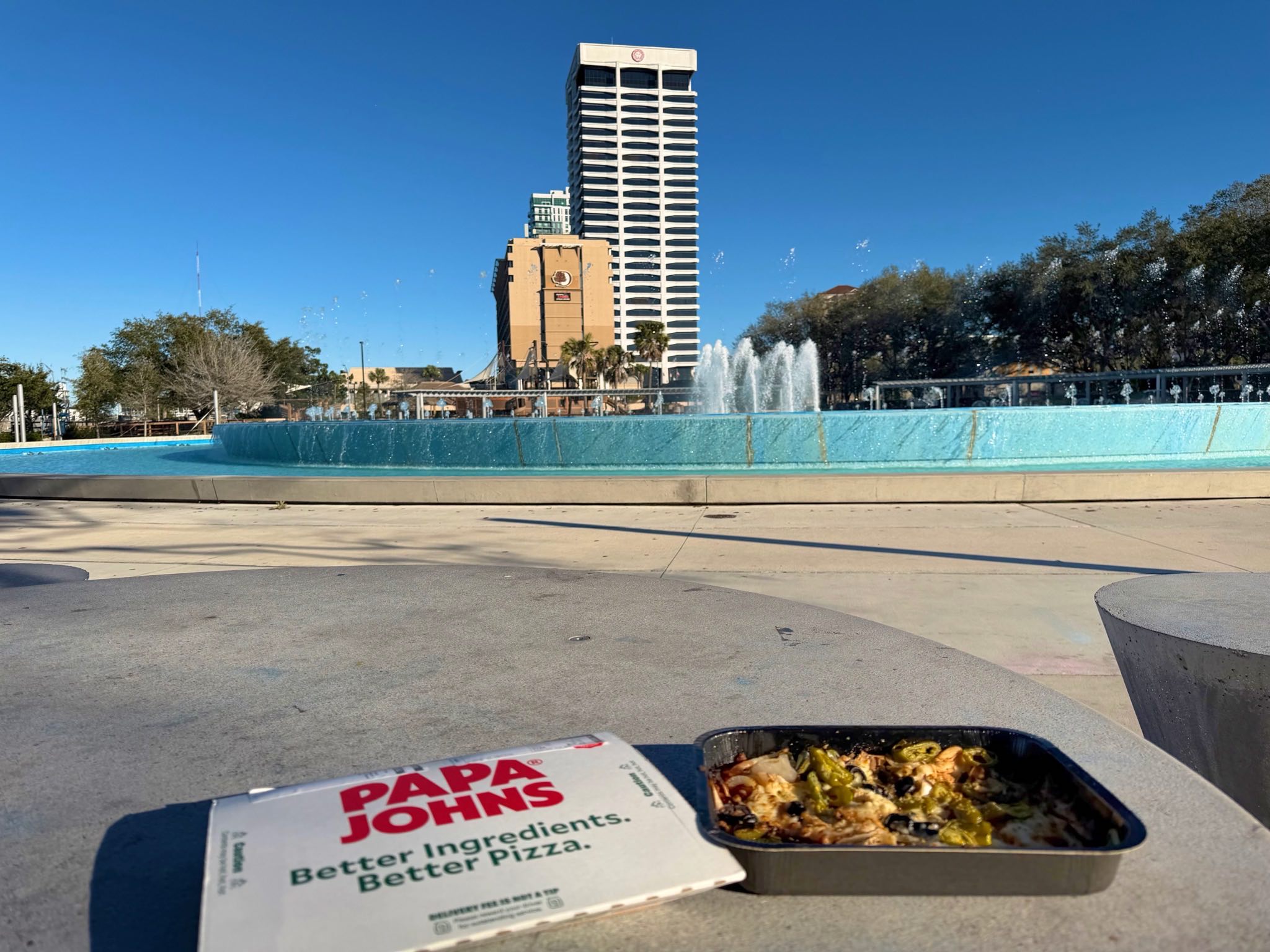
I ate anyway, watching the water, which is everywhere in Jacksonville—the St. Johns River, its tributaries, the nearby ocean—and which gives the city something most inland Sun Belt metros can only envy: a natural organizing principle.
From Reddit threads I had read before arriving, I was bracing for Jacksonville to be something like Stockton, California—a downtown of grand ambitions and mostly empty sidewalks, the kind of place where the gap between potential and reality has calcified into a civic personality. One former resident had described his hometown as “a small town in Georgia named Jacksonville, Florida.” I appreciated the joke even as I hoped it was wrong.
It was wrong, or at least only partially right. After lunch I walked part of the Riverwalk, then drove through San Marco and Riverside—the neighborhoods Reddit had flagged as walkable, livable, and pleasant. All three designations held up.
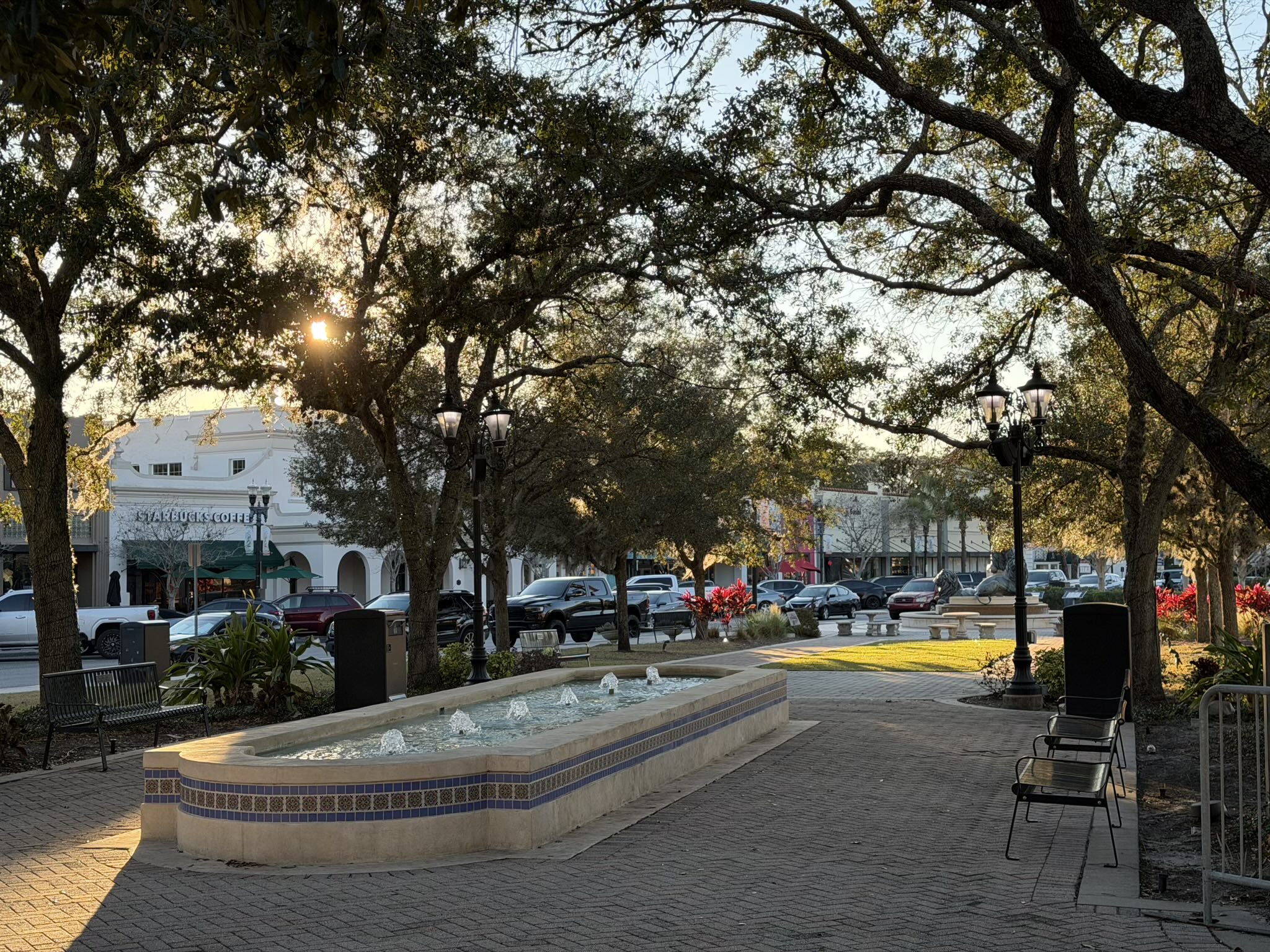
I’m typically not a big city lover for living in, but the urban core felt like my preferred type of big city: clean, modern, and threaded with water at every turn. Not all of Jacksonville is like this—the stretch of Atlantic Avenue near the Papa John’s is strip malls and choked traffic, recognizable to anyone who has driven through the outer ring of any American Sun Belt city, and graffiti creeps in north of downtown—but I never felt the low-grade unease that a place like Stockton transmits even on a pleasant afternoon. The bones of Jacksonville are good, and the St. Johns River gives the whole thing a reason to cohere.
By late afternoon I was back on I-95, two hours south to Gainesville, where I had a marathon to run.