Wind, Sharks, and Salt: Five Days in Cabo Verde

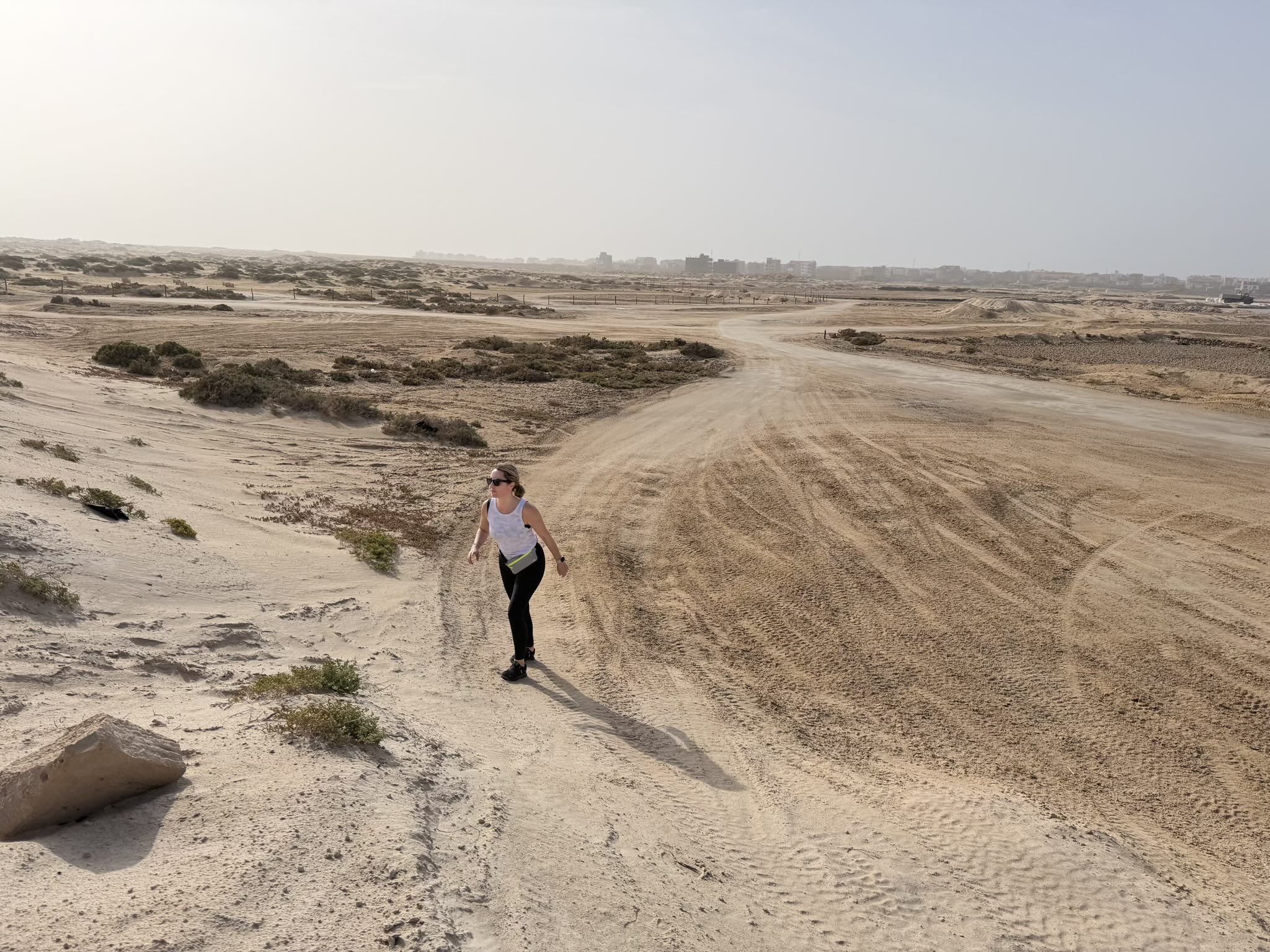
Andrea and I flew out of Porto on a Thursday afternoon, and four and a half hours later—most of which I spent horizontal and unconscious, which is my preferred way to travel—the wheels touched down on Sal, the easternmost inhabited island of Cabo Verde. From the air, Sal looks like someone ironed a piece of brown velvet and dropped it into the middle of the Atlantic Ocean. Flat. Dry. Windy. And, as it turns out, wonderful.
A quick word on the name: since roughly the last decade, the country has preferred to be called Cabo Verde rather than Cape Verde in its promotional material—a rebranding move similar in spirit to Türkiye’s (Turkey’s) own recent rename. It makes sense. Cabo Verde is what the Portuguese called it when they settled the archipelago in the 15th century, the language the inhabitants of these islands still speak today, and the name that best reflects the culture. We’ll go with Cabo Verde.
The country consists of ten volcanic islands (nine inhabited), situated some 600 kilometers off the west coast of Africa. Though firmly Atlantic, they gained independence from Portugal only in 1975, which explains why the official language is Portuguese and the culture carries a distinctly European flavor layered over its African roots—a blend that gave rise to the unique Crioulo language and a music scene that has produced globally celebrated artists. When you land here, you feel neither entirely in Africa nor entirely in Europe. It is somewhere beautifully, stubbornly its own.
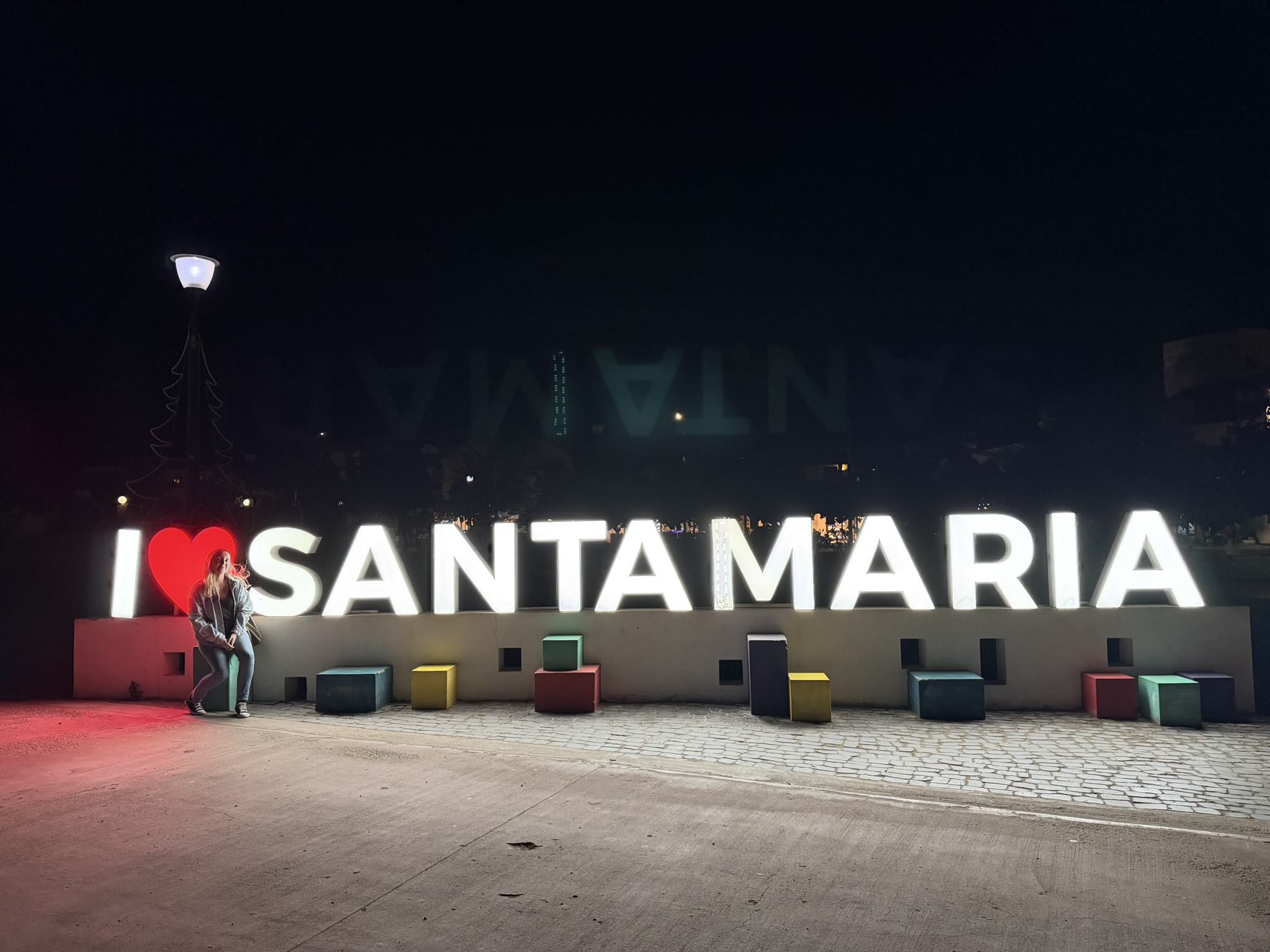
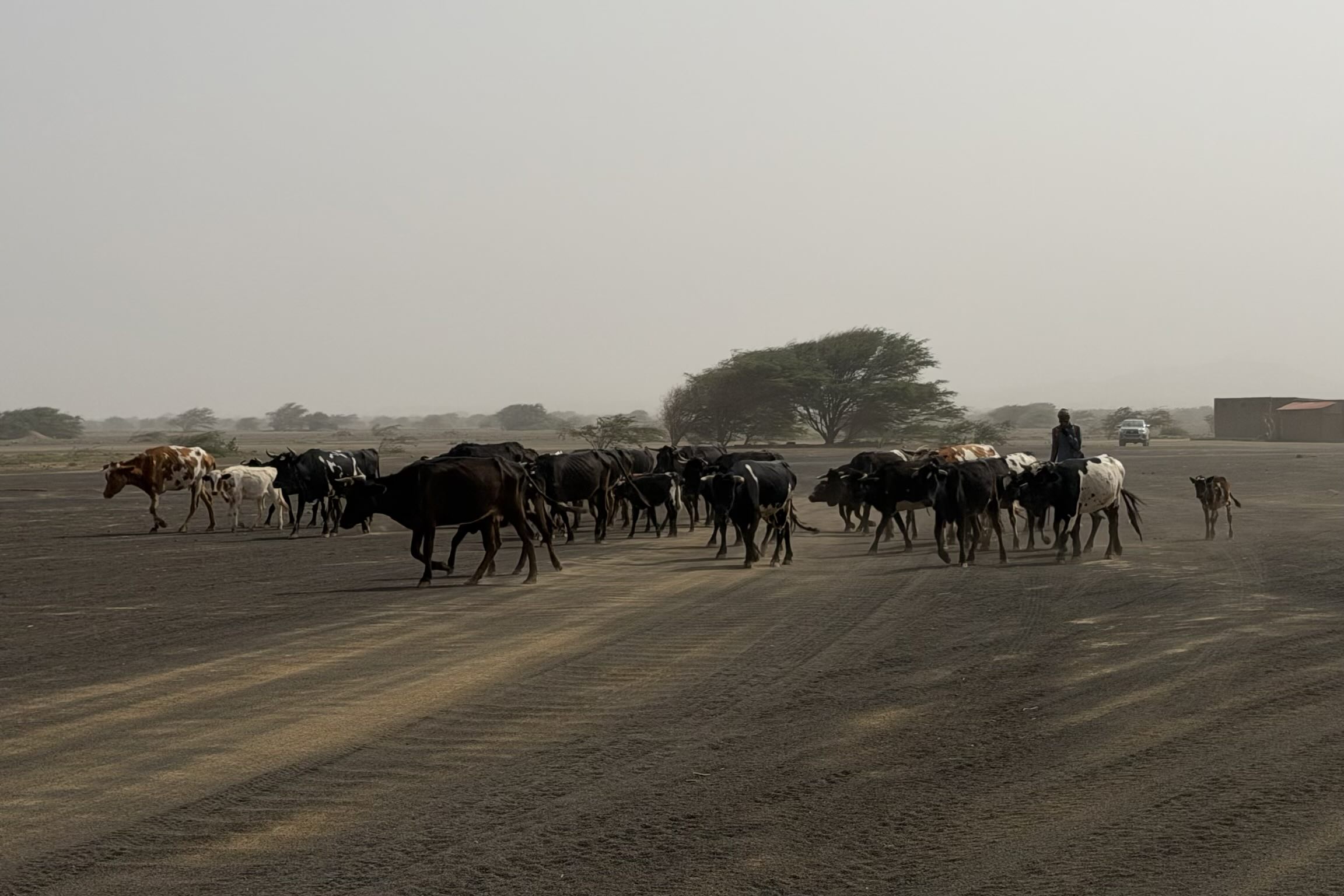
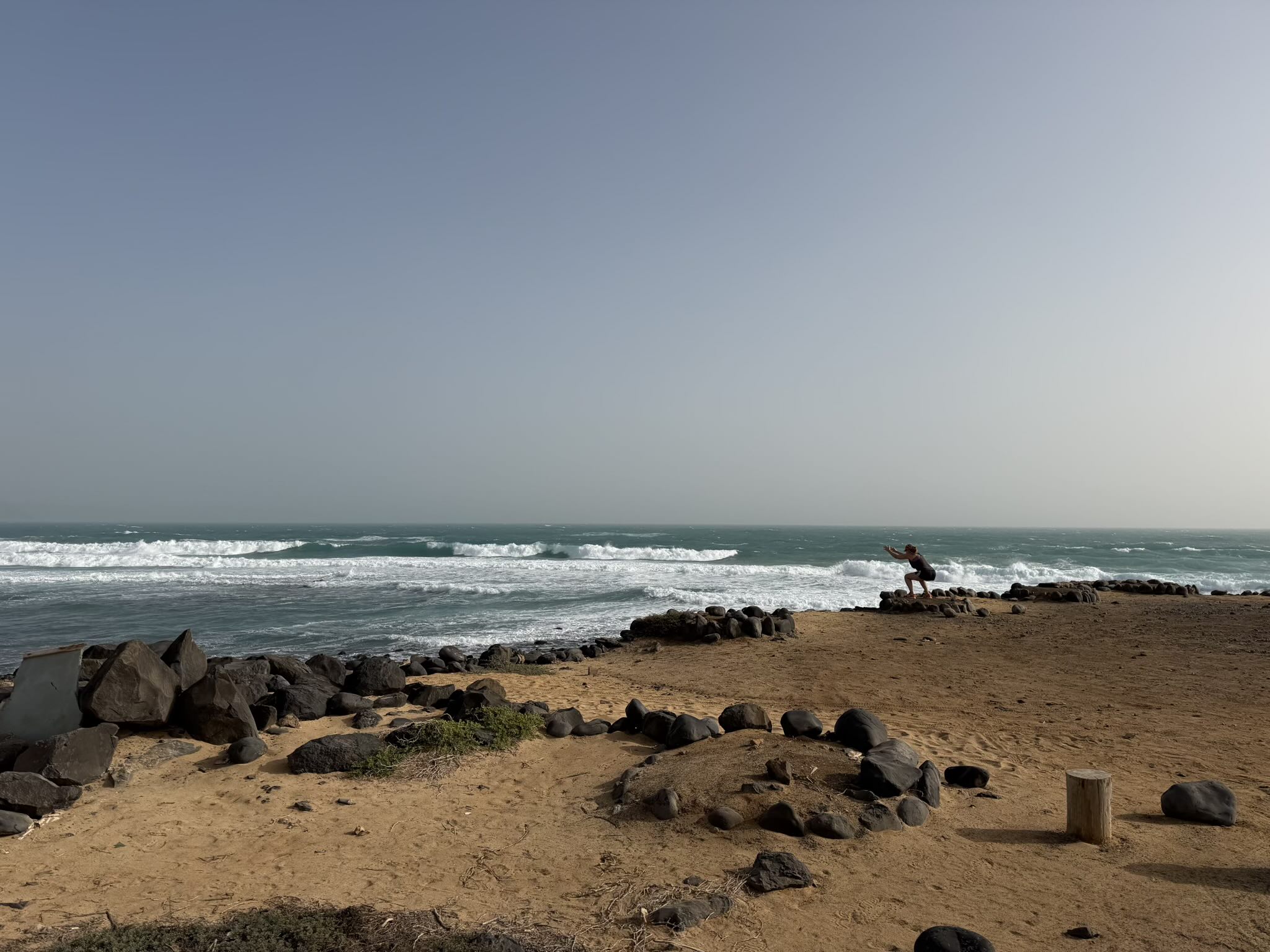
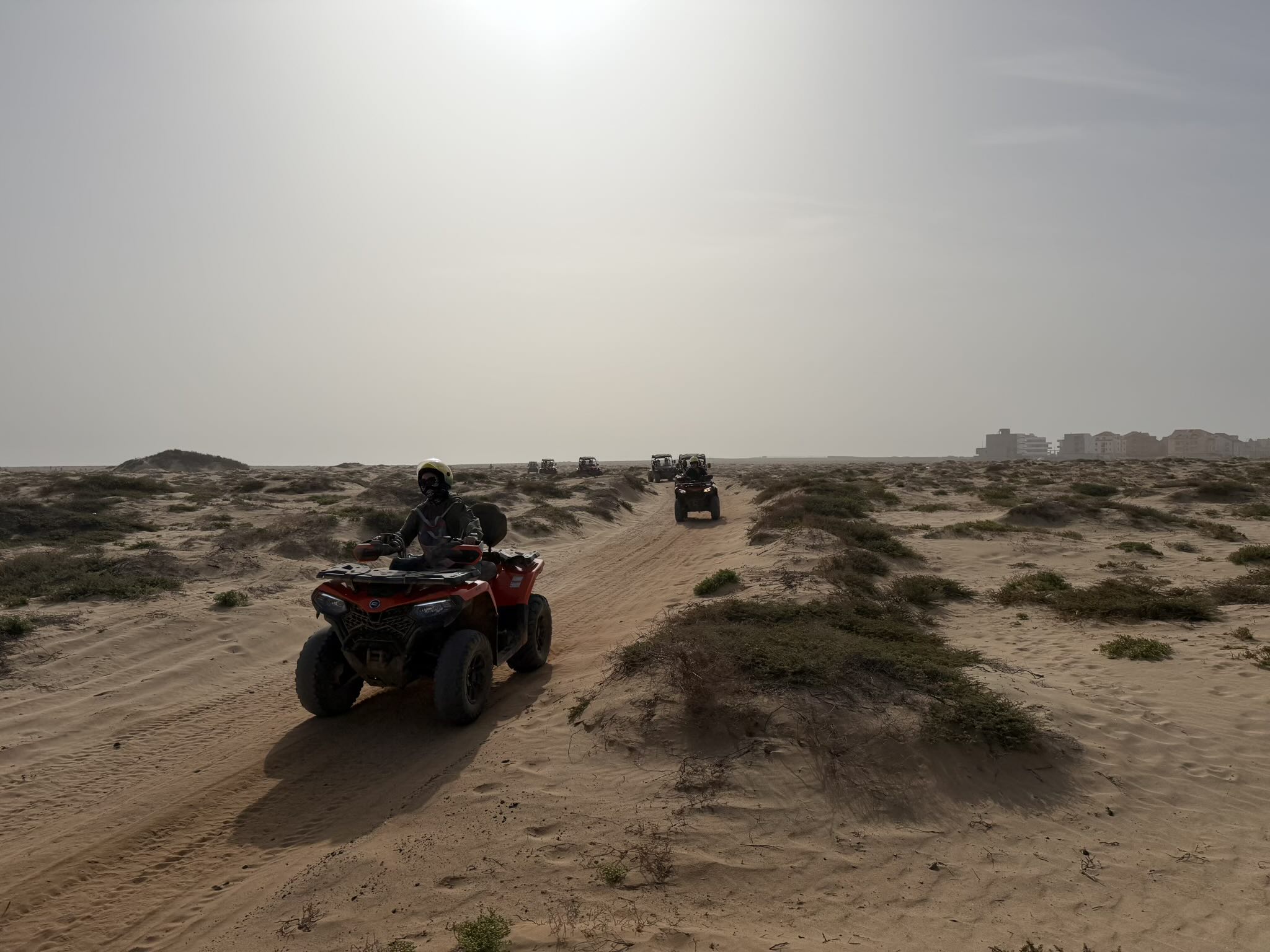
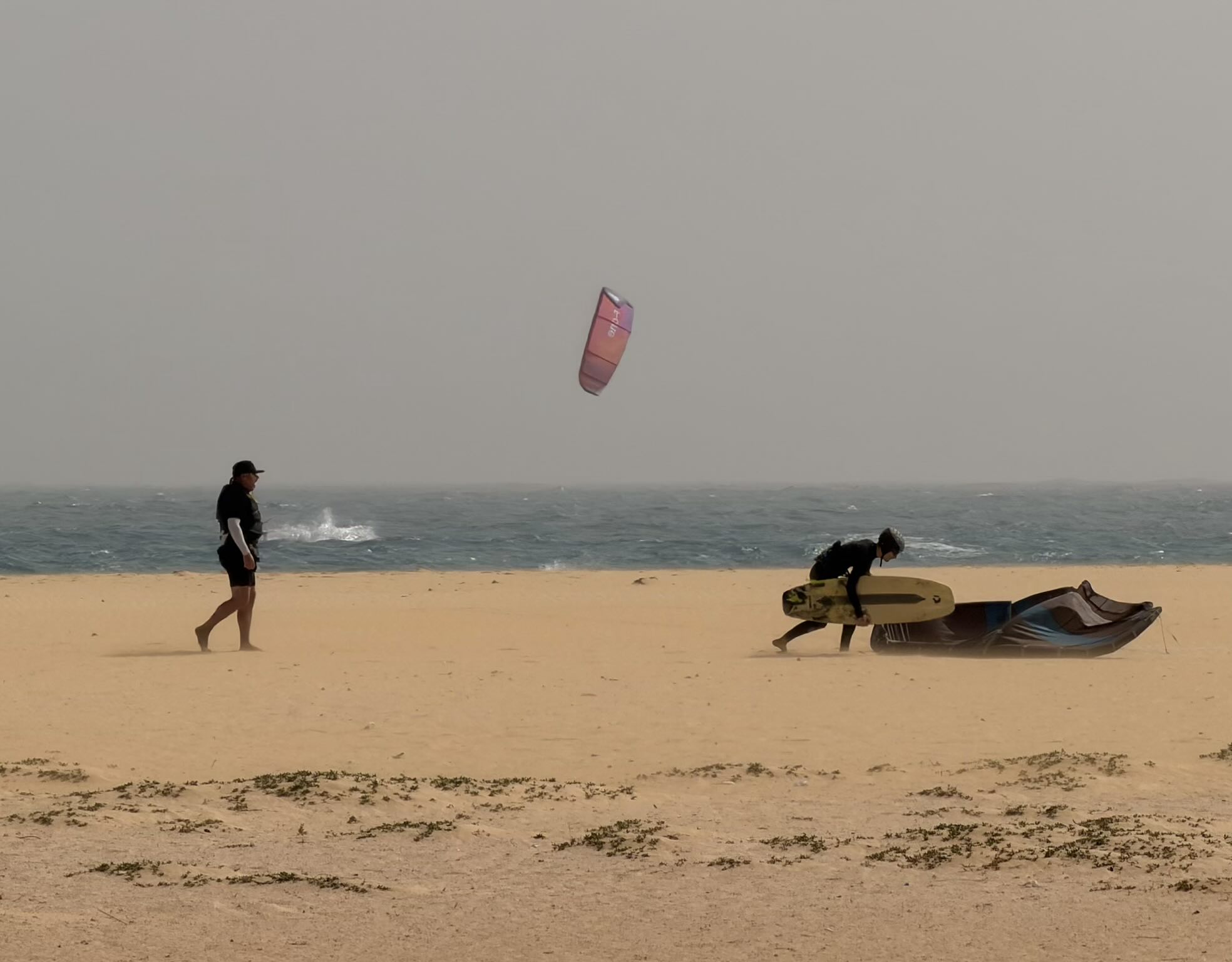
A 25-euro taxi ride from the small airport in Espargos deposited us at our hotel in Santa María, the main tourist hub in the south of the island. The drive, even in the dark, confirmed the island’s signature character: relentlessly flat, and windy enough that you half-expect the taxi driver to quote a fare for the crosswind correction. I would soon discover that the wind on Sal is not a weather event—it is a permanent resident. It blows 24 hours a day, seven days a week, 365 days a year. It is why Cabo Verde is one of the premier destinations on earth for wind- and kitesurfing. It is also why the island has essentially no trees. The ones that survive look like they’ve had a very bad decade.
Just landing in Cabo Verde and stepping onto terra firme was a first for me, as it was my first time walking in the African Continent. (Cabo Verde would also be the 28th country I have visited.) As it would turn out, there would be many more firsts in the upcoming days.
Ocean Suites
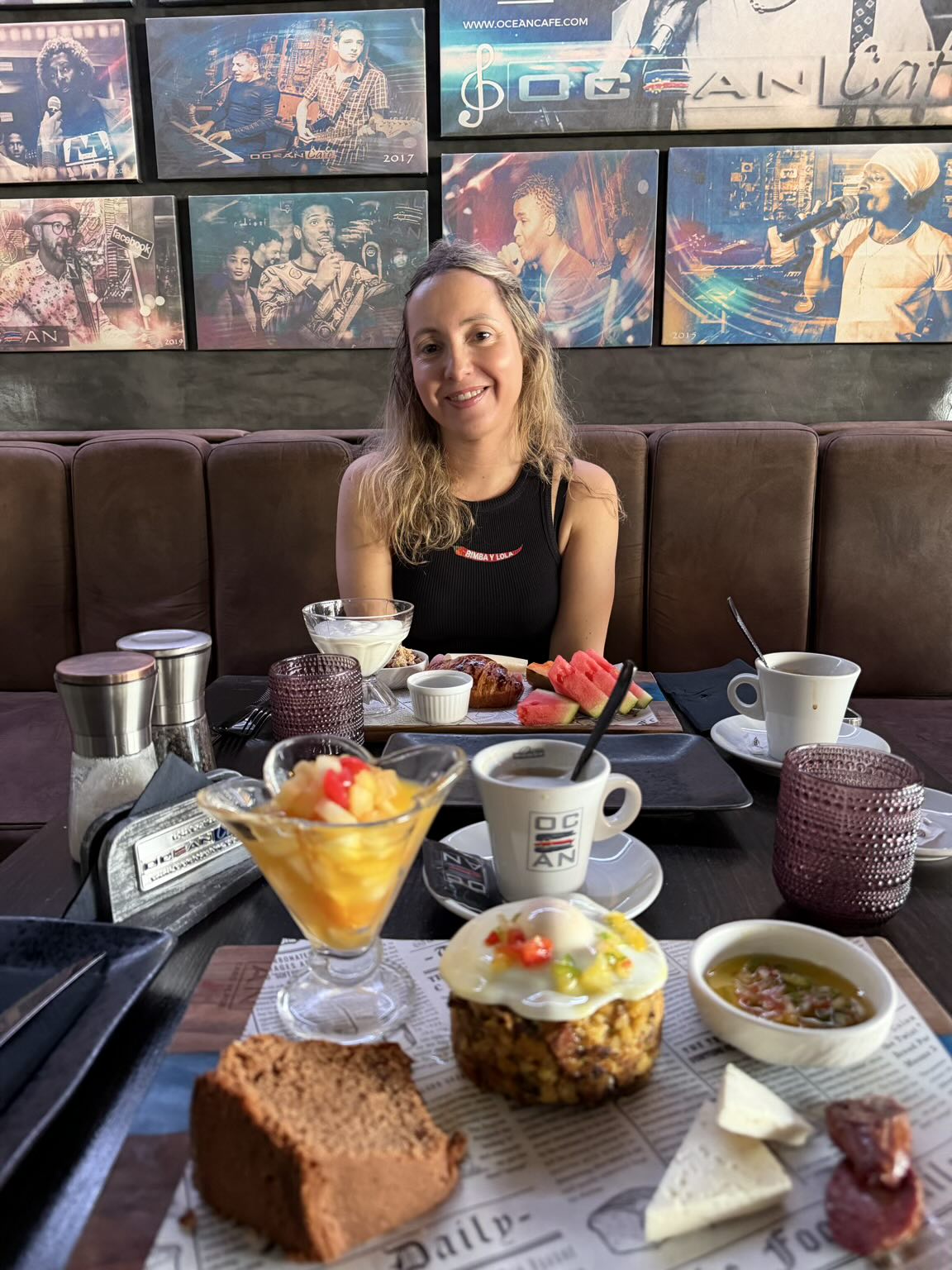
Our first two nights were spent at Ocean Suites, and it set the bar impossibly high for the rest of the trip. The room was the most inspired and uniquely decorated hotel space I have ever stayed in—each wall, surface, and corner appeared to be the work of an artist who had strong opinions and acted on all of them. It also had a cohesive jazz theme. I will not attempt to describe it beyond saying: if you end up at Ocean Suites and your room is anything like ours, stop whatever you are doing and simply look around for five minutes.
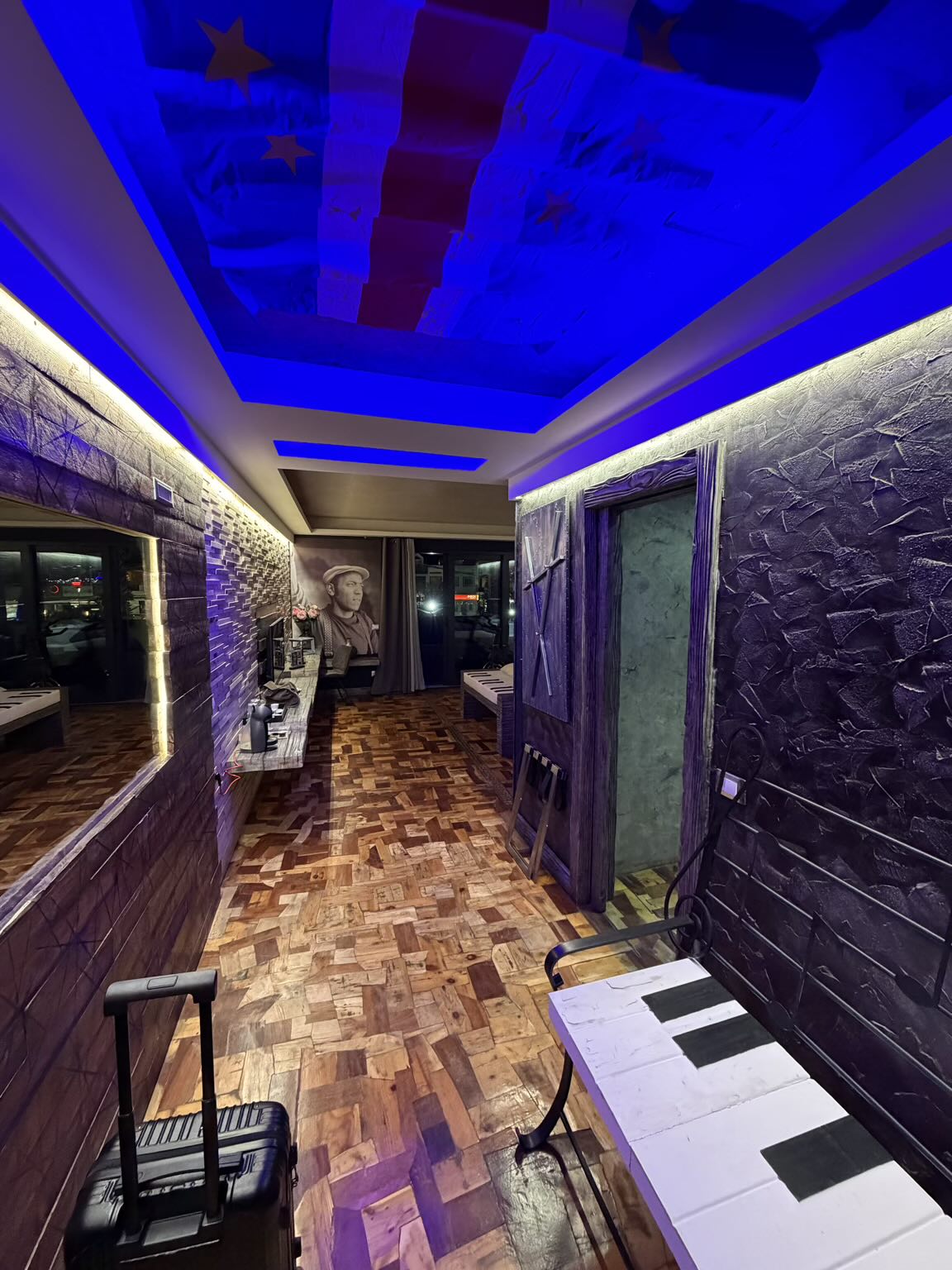
Or you could spin your legs instead. Because our room even had an exercise bike next to the bed!
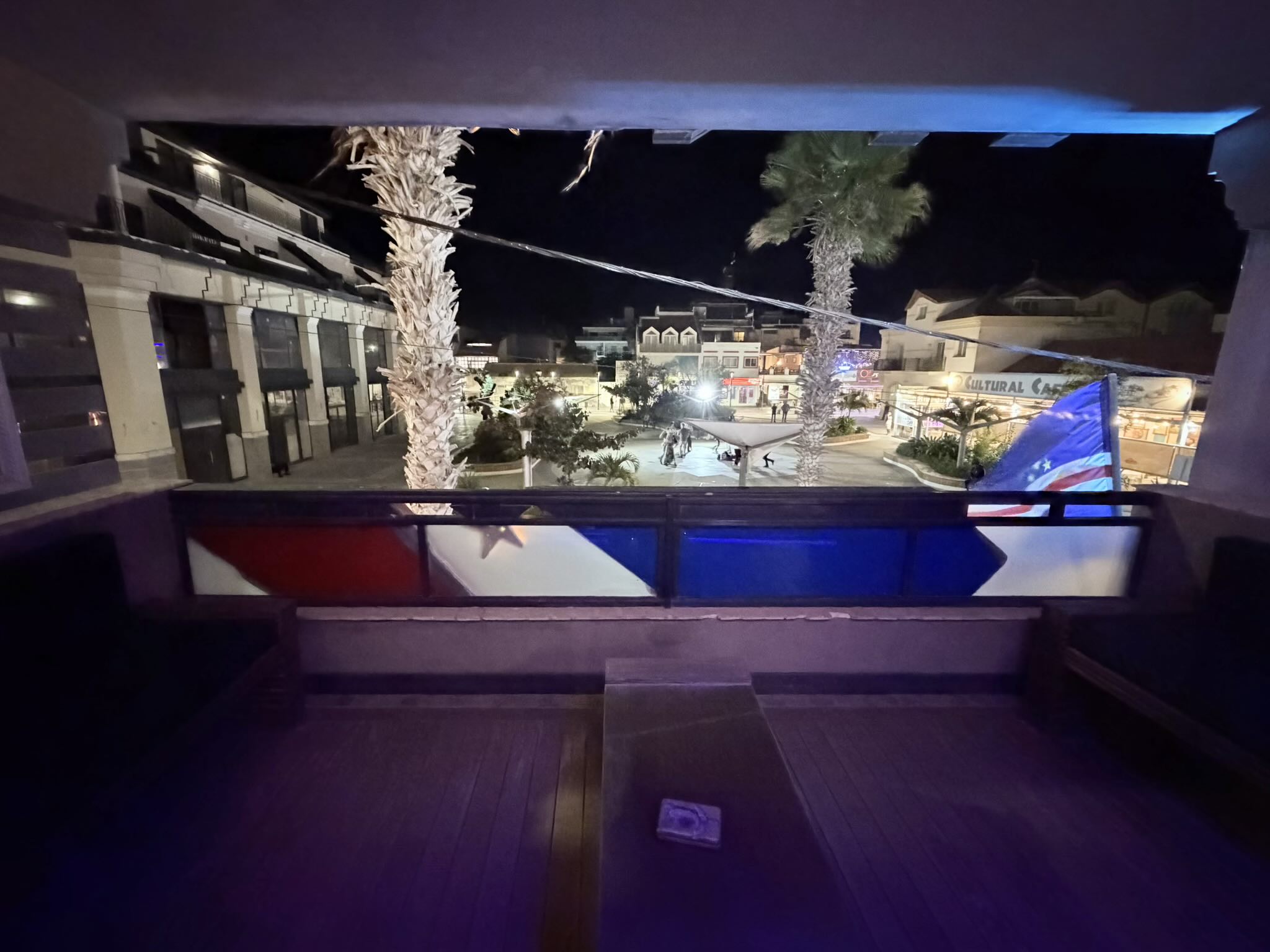
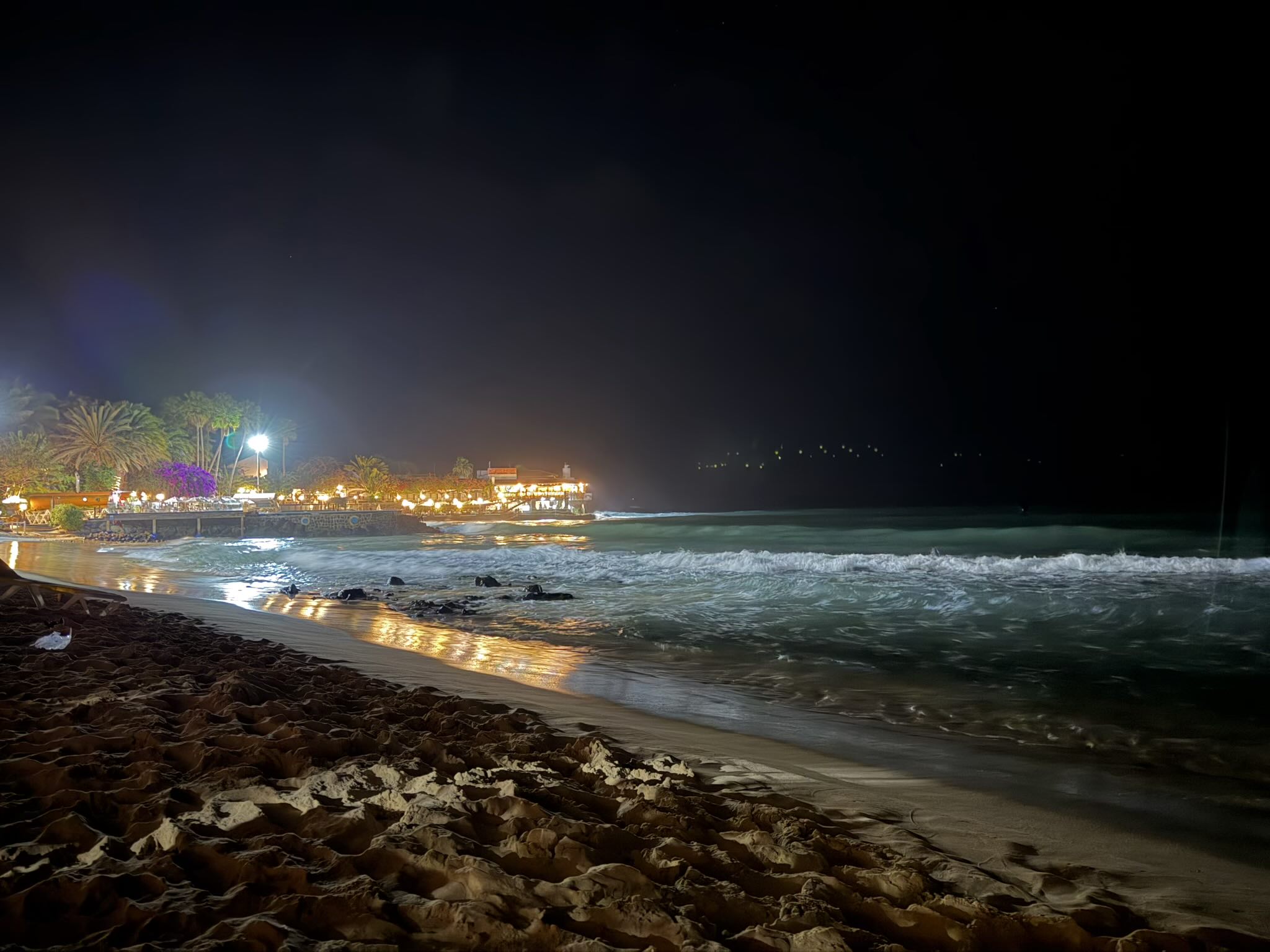
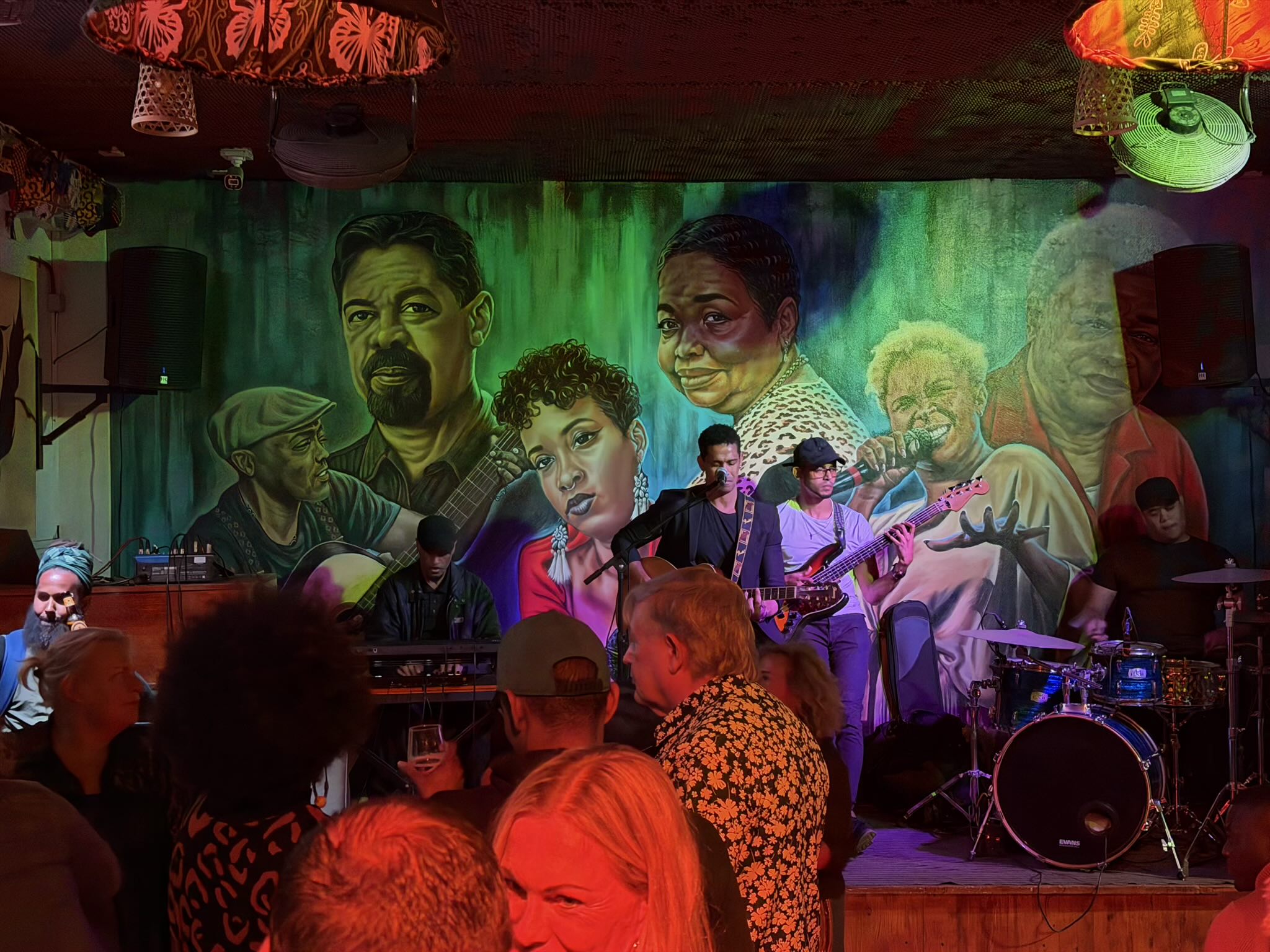
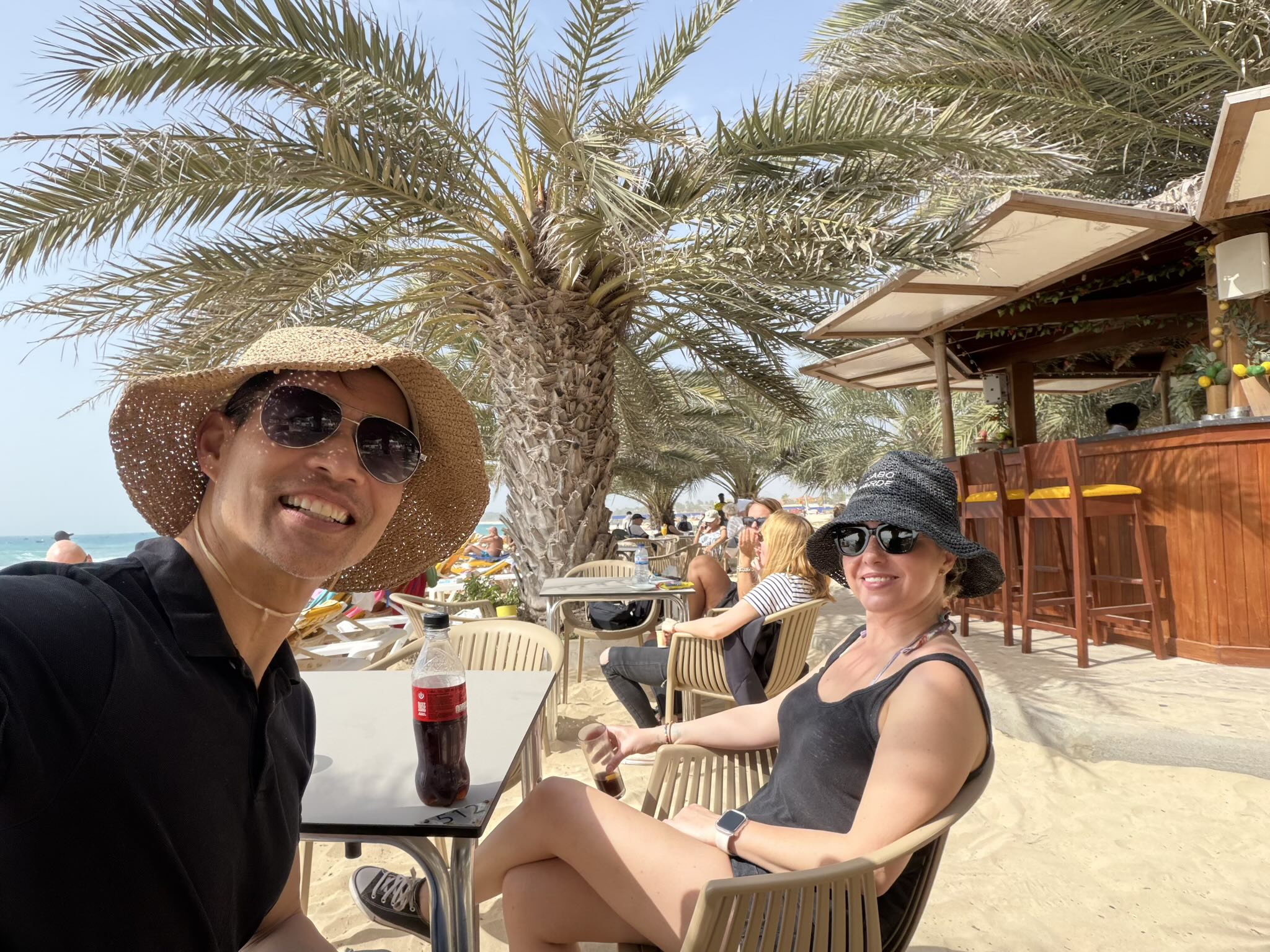
Directly below us was the Ocean Café bar, where live music started each evening. Shakira’s Waka Waka played every single night we were there or passed by, with restaurant staff leading guests in a spirited, unscripted dance party.
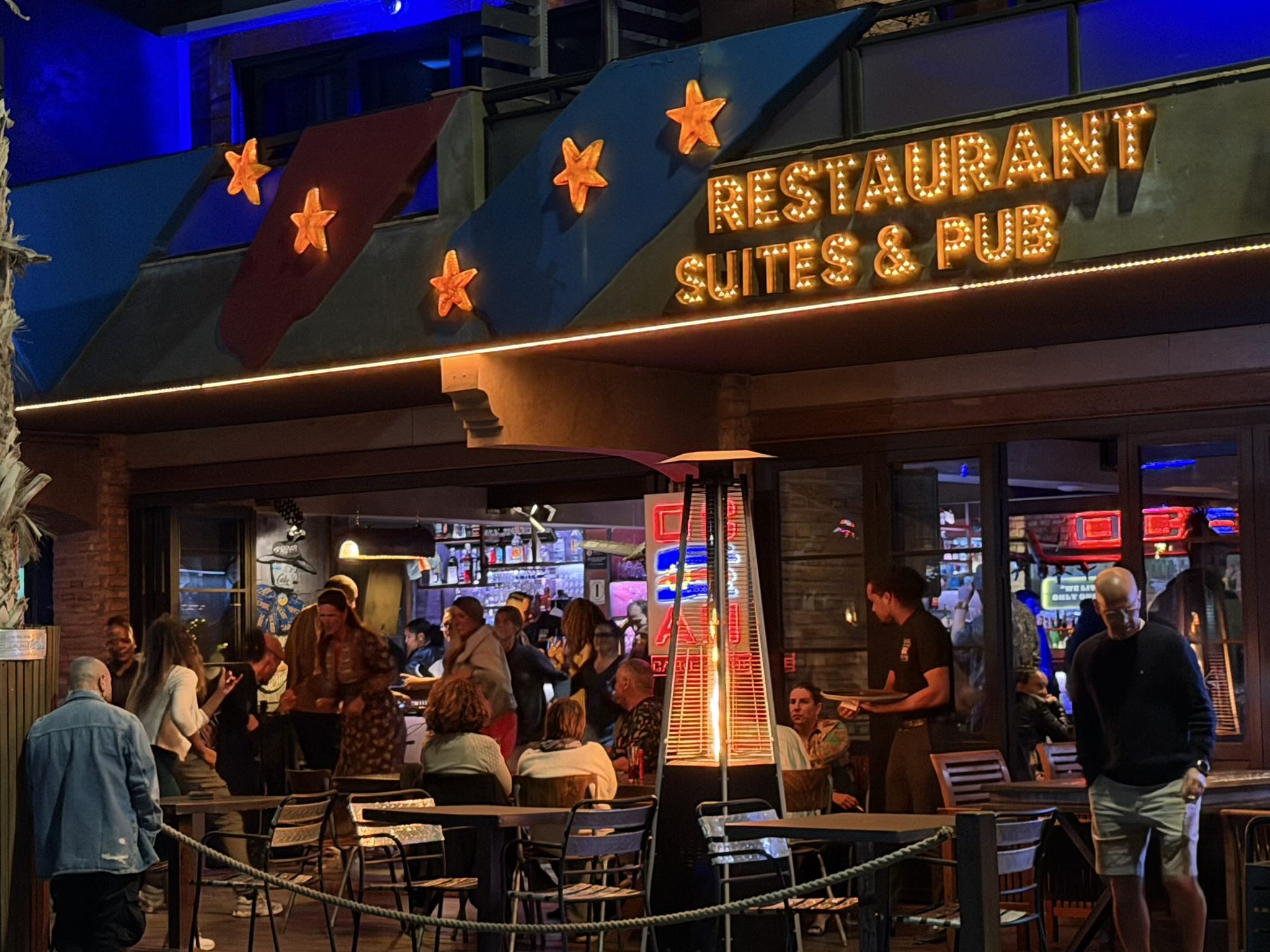
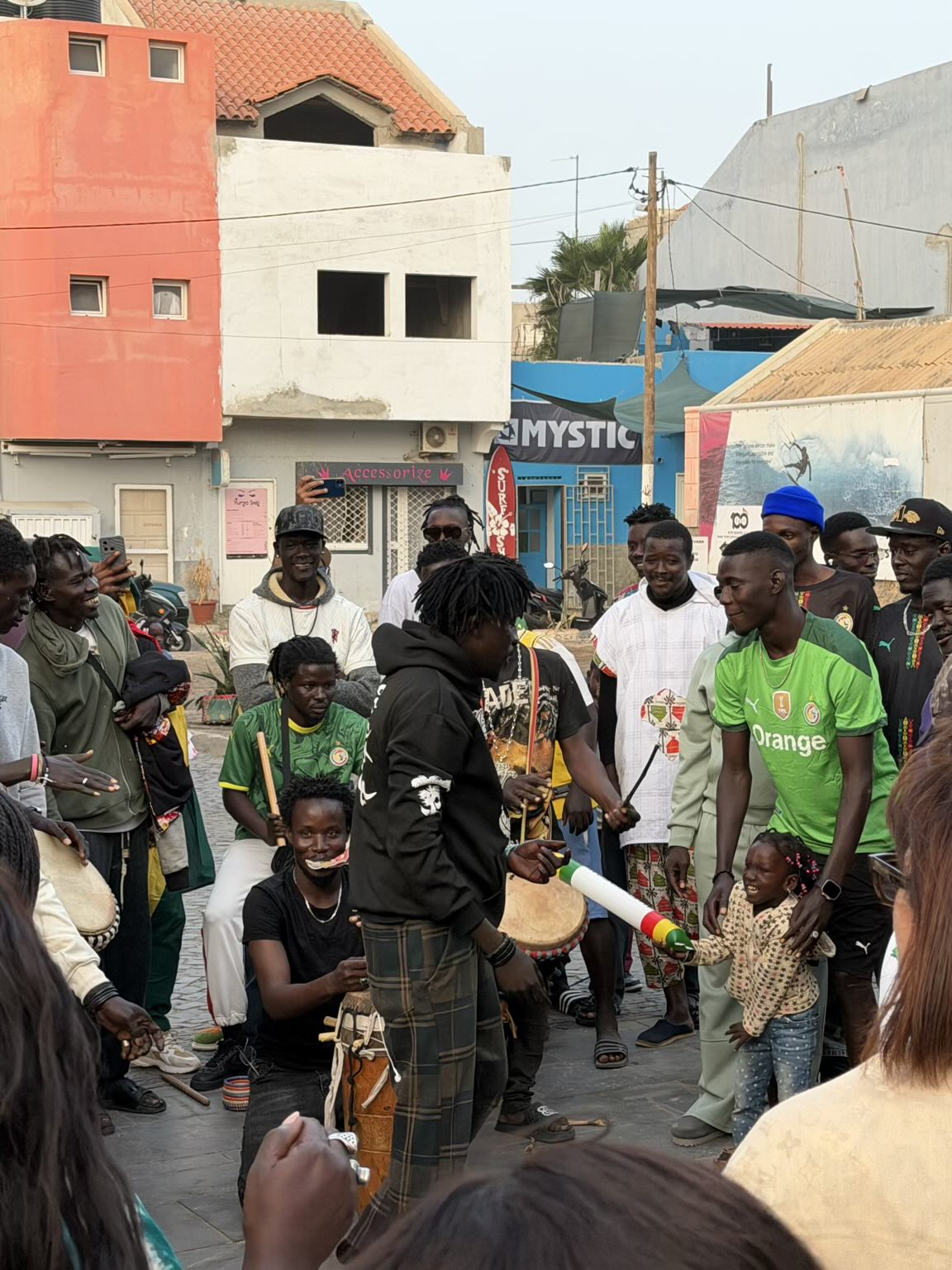
It was the kind of scene that could feel forced anywhere else, but here it felt completely natural. Cabo Verdeans, we would learn, do not need a stage or an audience to make music and dance. On multiple evenings, we watched locals playing instruments and singing in the street purely for the joy of it, with no hat on the ground, no tip jar, no social media to perform for. Just joy.
The one caveat about Ocean Suites: the music downstairs was very loud at night. I mean, almost ear-piercingly where earplugs wouldn’t have made much of a difference. Certainly, earplugs would not have dampened the boom-boom vibrations that resonated through the walls. I mentioned to Andrea that if you wanted an early bedtime, good luck.
In fact, we were lying in bed at 11:50 p.m. on a Friday, wondering if it would stop by midnight like it had the previous evening, or carry on into the small hours. She had guessed 1:00 a.m. at the earliest.
But at midnight… silence.
“Andrea,” I whispered. “I think the music stopped!”
But I got no response. Amazingly, she had fallen asleep within the first five minutes of plopping into bed, entirely undisturbed by the volume below.
A Private Tour with Enel
On our first full day in Sal, Andrea and I booked a private four-hour tour with a local guide named Enel, which cost 150 euros total and arranged by Ocean Suites. If there was any question about whether this was the better choice over a less expensive group tour, that was quickly answered on the the roads that afternoon. The alternative was a full-day group excursion—seven strangers, an old pickup truck, unrestrained seating in the open bed, the Saharan sun doing its best, and the road doing its worst. That it was even an option seemed like a liability waiver waiting to happen.
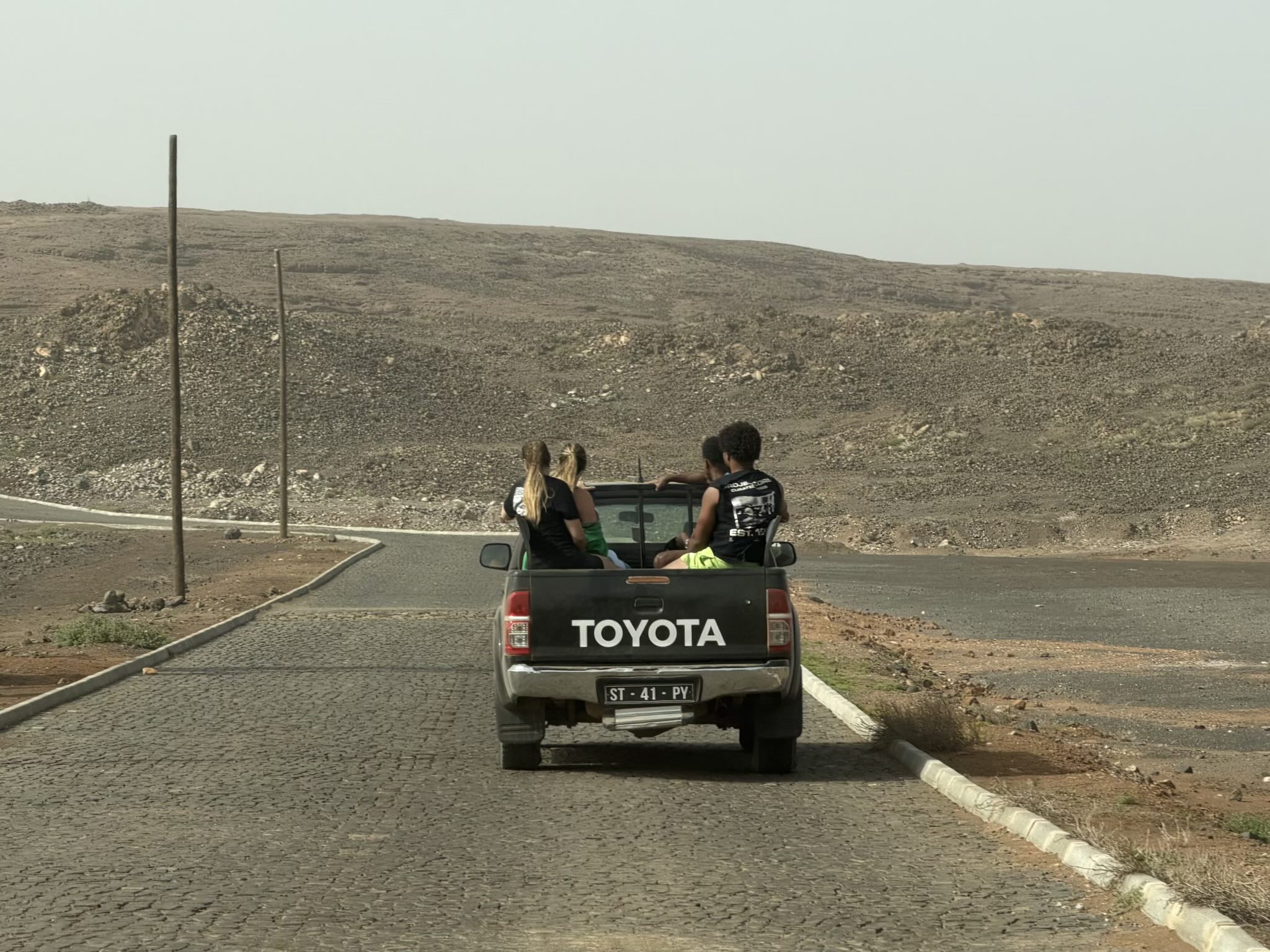
Inside Enel’s truck, with seat belts and the ability to ask questions and change plans on the fly, was the obvious choice.
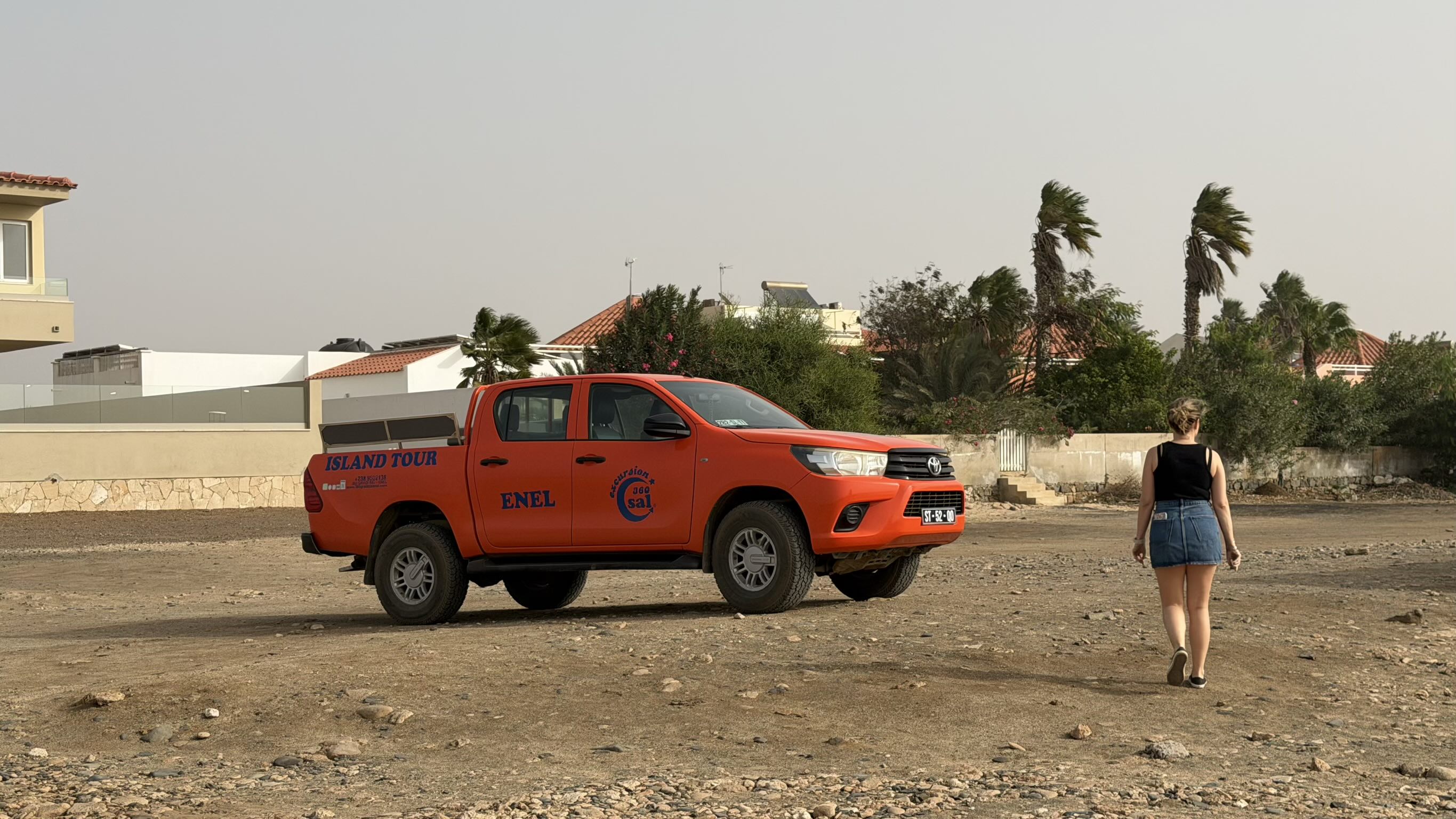
Enel turned out to be exactly the guide you want: 41 years old, born and raised on Sal, a practitioner of Capoeira for the better part of his life, and possessed of the kind of local knowledge that no guidebook bothers with. He mixed Portuguese and Spanish freely, which was fine by me—I did the same, speaking my own dialect of “Portuguish” that was somewhat passible given that we were in a Portuguese-speaking country. We understood each other perfectly.
He also, after a few hours, told me he thought I was 30. After that I was definitely decided that Enel was an excellent guide.
Buracona and the Blue Eye
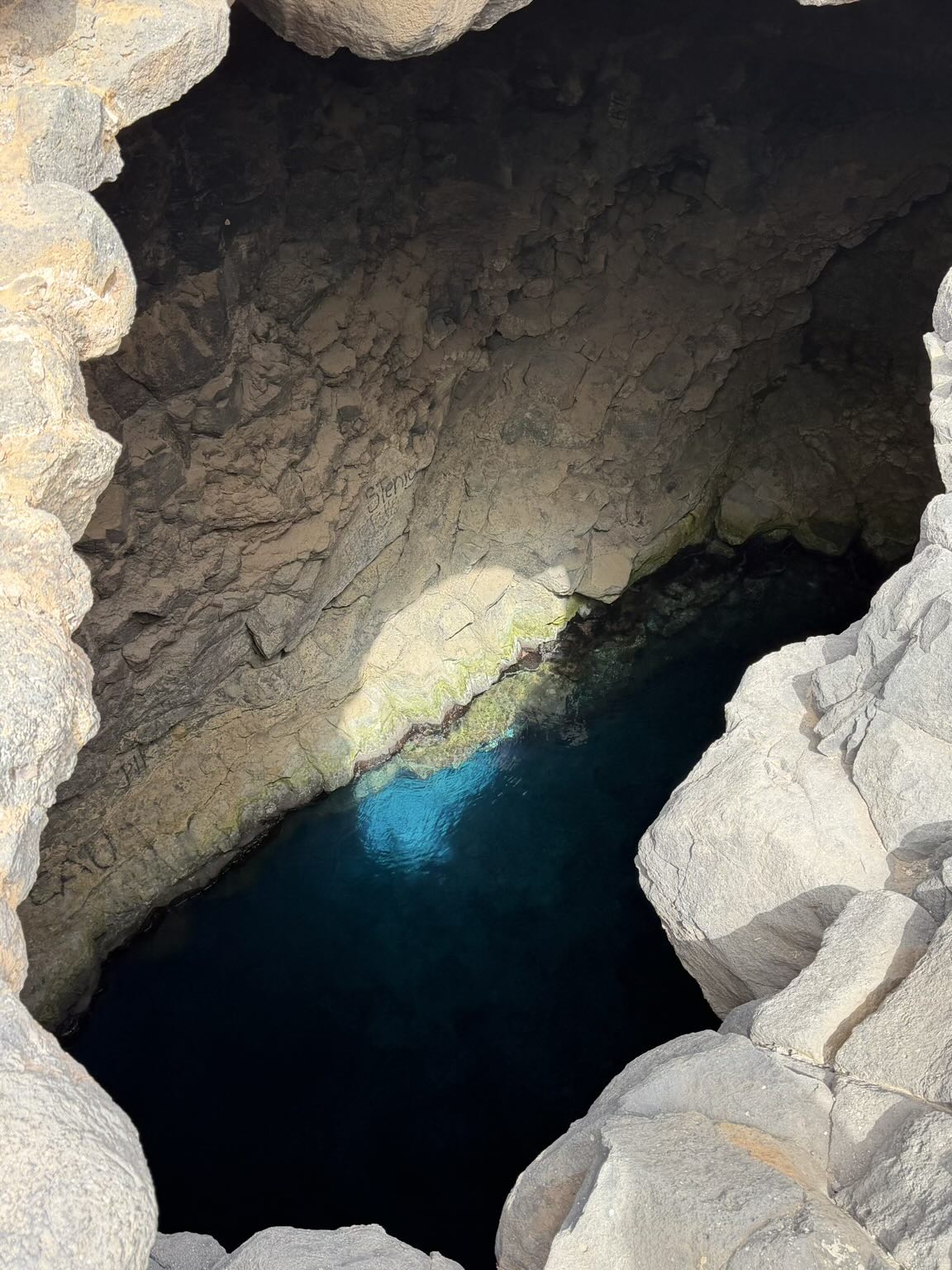
Our first stop was Buracona, also known as the Olho Azul—the “Blue Eye”—on the island’s northwest coast. It is a natural pool in a volcanic lava formation, famous for the brilliant turquoise glow that appears when sunlight hits an underwater cave at just the right angle, illuminating the water from below. The effect, in photographs from peak summer, is extraordinary: an eye-shaped pool burning electric blue against black rock.
In January, the sun sits low enough in the sky that it never quite hits that angle. We got maybe a quarter of the effect—a partial turquoise hint rather than the full spectacle. Partial or not, the setting was dramatic. The lava coastline around Buracona is raw and jagged, and the Atlantic crashes into it with the kind of force that reminds you the ocean is not decorative.
Only 50 meters away was a natural swimming pool that had just been occupied by about 30 youngsters. By the time we turned away from the Blue Eye, it was completely vacant.
Seizing the moment, I stripped down to my bathing suit (actually, running shorts) that I wore just for this. Then I jumped into the water. I swam a lap. It wasn’t exactly warm.
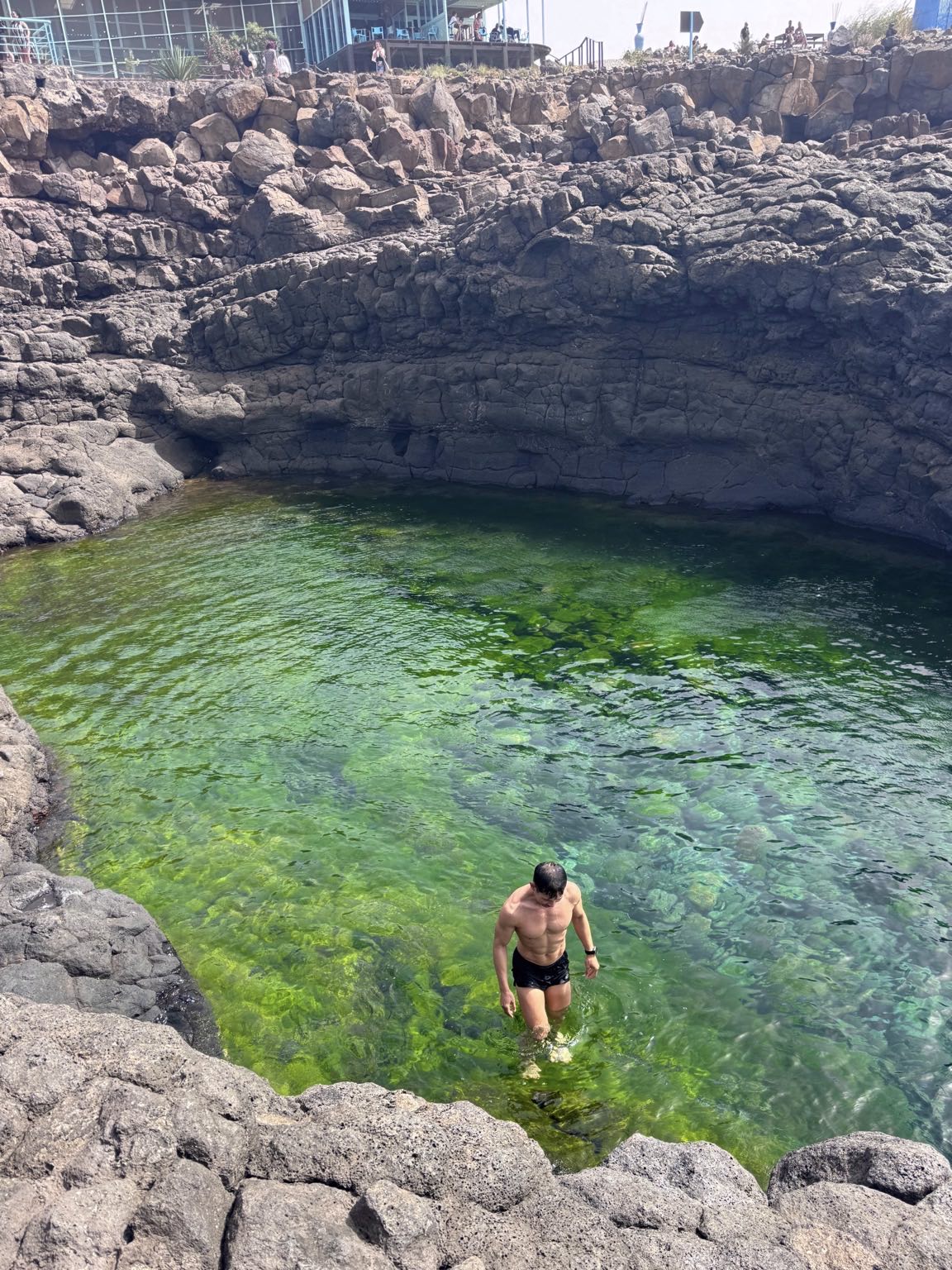
“Refreshing,” I told Andrea. She declined to come in, but she kindly took some photos.
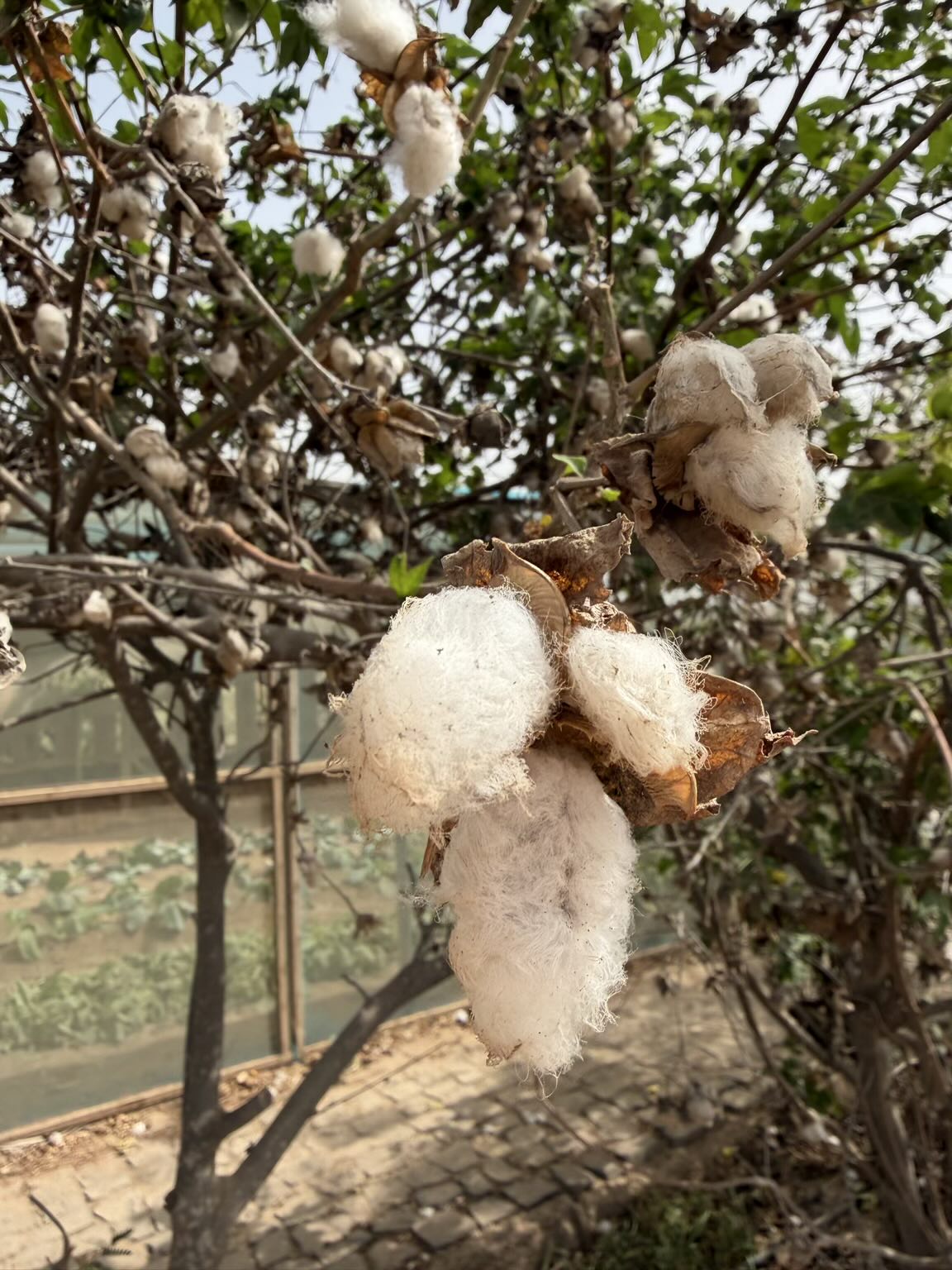
In the small gardens near the pools, Enel pointed out an exhibit I hadn’t expected: ten tables arranged in a gazebo, each shaped like one of Cabo Verde’s islands, rendered in stone and tile. It was a charming, low-key geography lesson. And nearby, for the first time in my life, I saw cotton growing on a tree—small white tufts clinging to dry branches, the kind of plant I had learned about in fifth grade in the context of American Civil War history but somehow never managed to encounter in five decades of living. A second first on this trip.
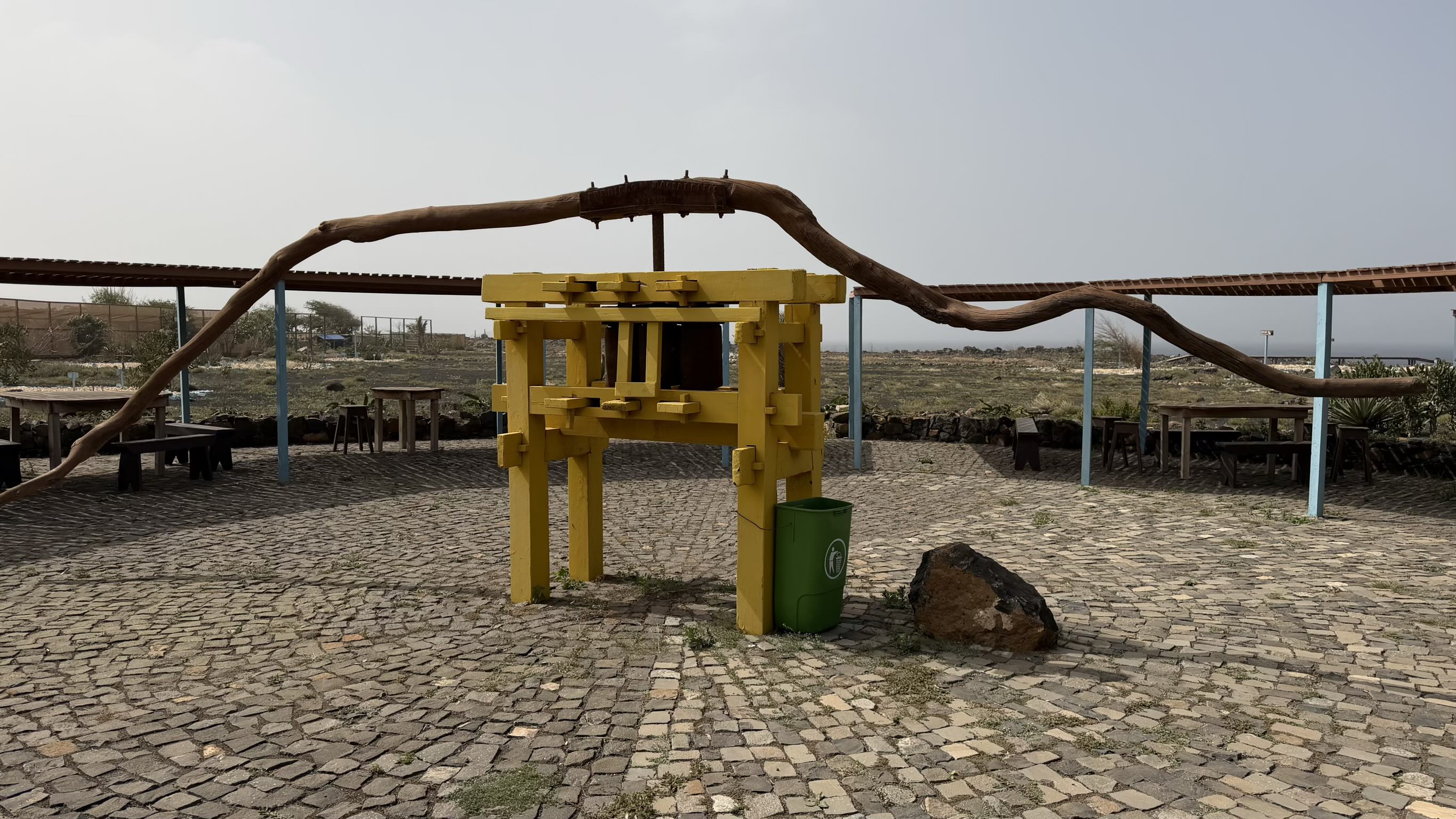
There was also, for historical context, a trapiche on the grounds—a device once used to press juice from sugar cane. Sal, like much of Cabo Verde, has an intricate, often sobering colonial past, and small details like this one scatter the island.
Terra Boa and the Mirage
Next, Enel drove us to Terra Boa, a stretch of flat, dusty terrain where, under the right conditions, the heat produces mirages of water on the ground. The physics: sunlight bends as it passes through layers of air at different temperatures—the baking ground heats the air just above it to a much higher temperature than the air higher up, causing light to refract and produce what looks unmistakably like a shimmering pool on the horizon.
“Aí,” (“there”) said Enel, pointing.
“Aí,” agreed Andrea.
I looked for a full thirty seconds before finally seeing it—a trembling silver line that could easily be water, or could just as easily be whatever the brain provides when two people have already told you water is there. I have thought about this possibility at length and remain genuinely uncertain. Either way: a third first.
Just as fun was this photo that Enel took of us. He told us where to stand and what to do. I had no idea what he was up to.
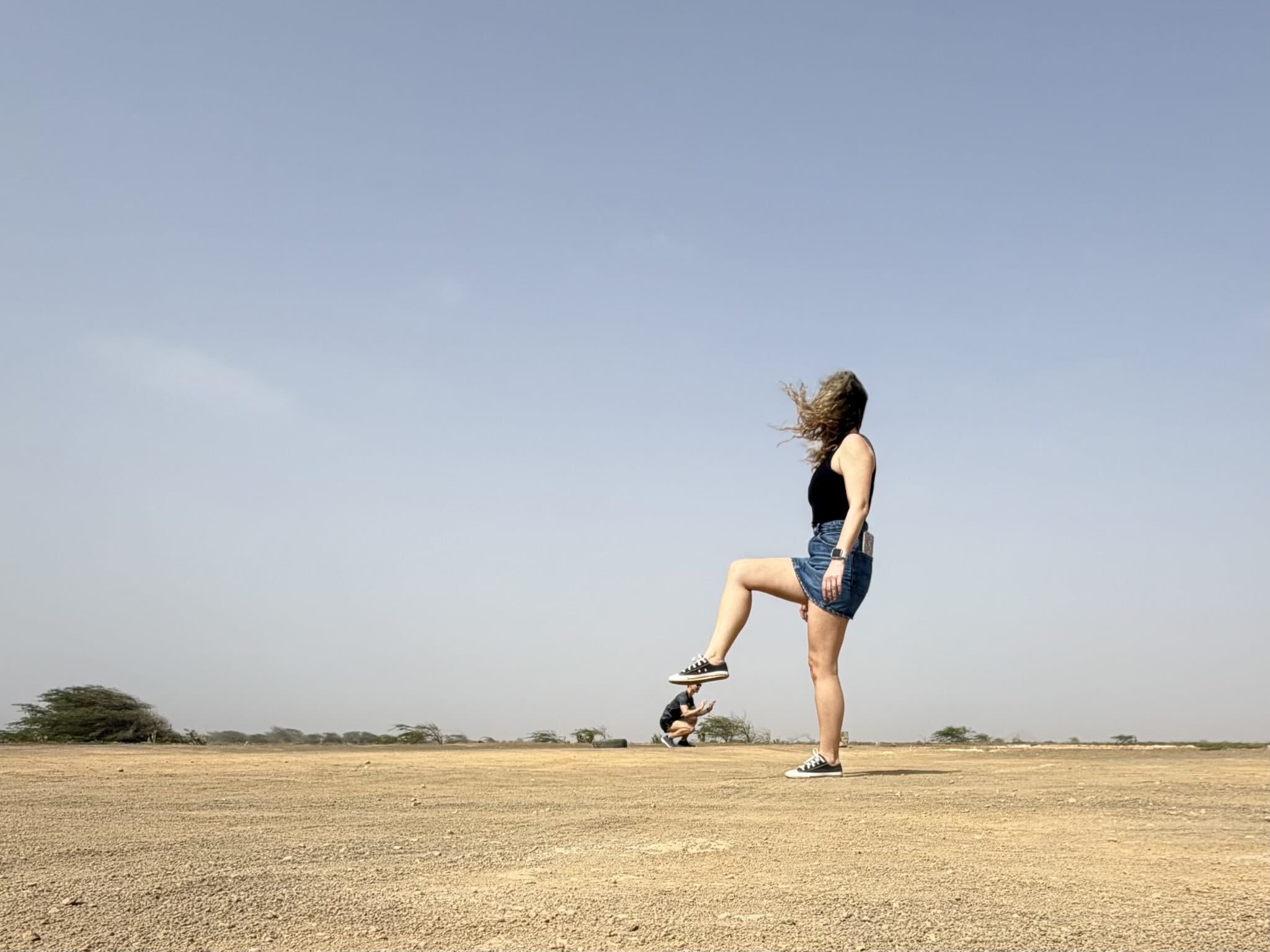
It was only after he handed back my iPhone that I saw that he was having Andrea “step” on me!
Shark Bay
Third on the itinerary, and the clear highlight of the tour: Shark Bay, on the island’s eastern coast. After arriving and paying a few euros to borrow some water sandals (think Crocs), Andrea and I followed a local guide and waded into the shallow, rocky water.
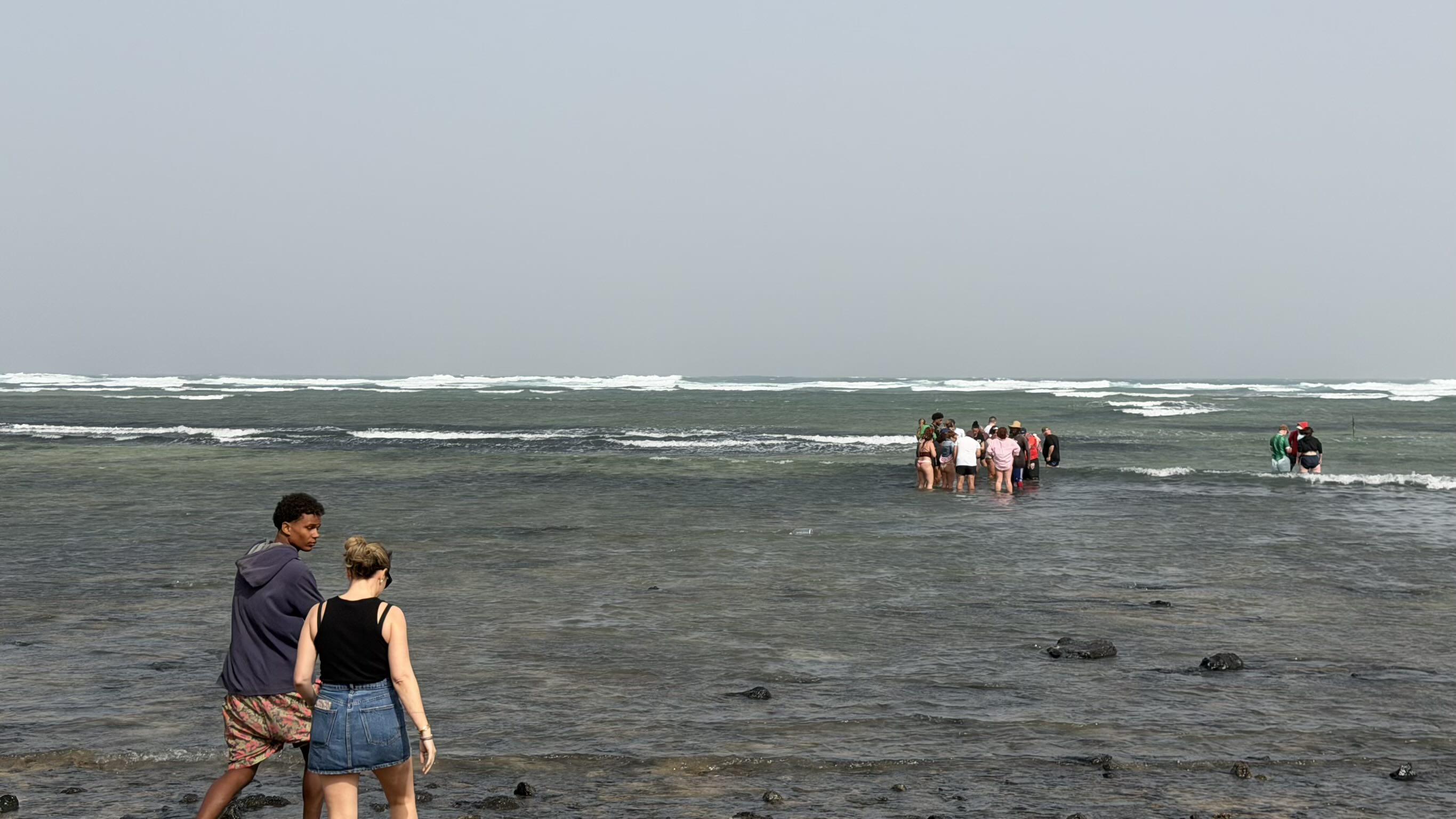
We found ourselves immediately surrounded by dozens of baby lemon sharks. They circled around our ankles and calves, entirely unconcerned by our presence, while the guide dropped small pieces of sardine into the water to keep them near the surface.
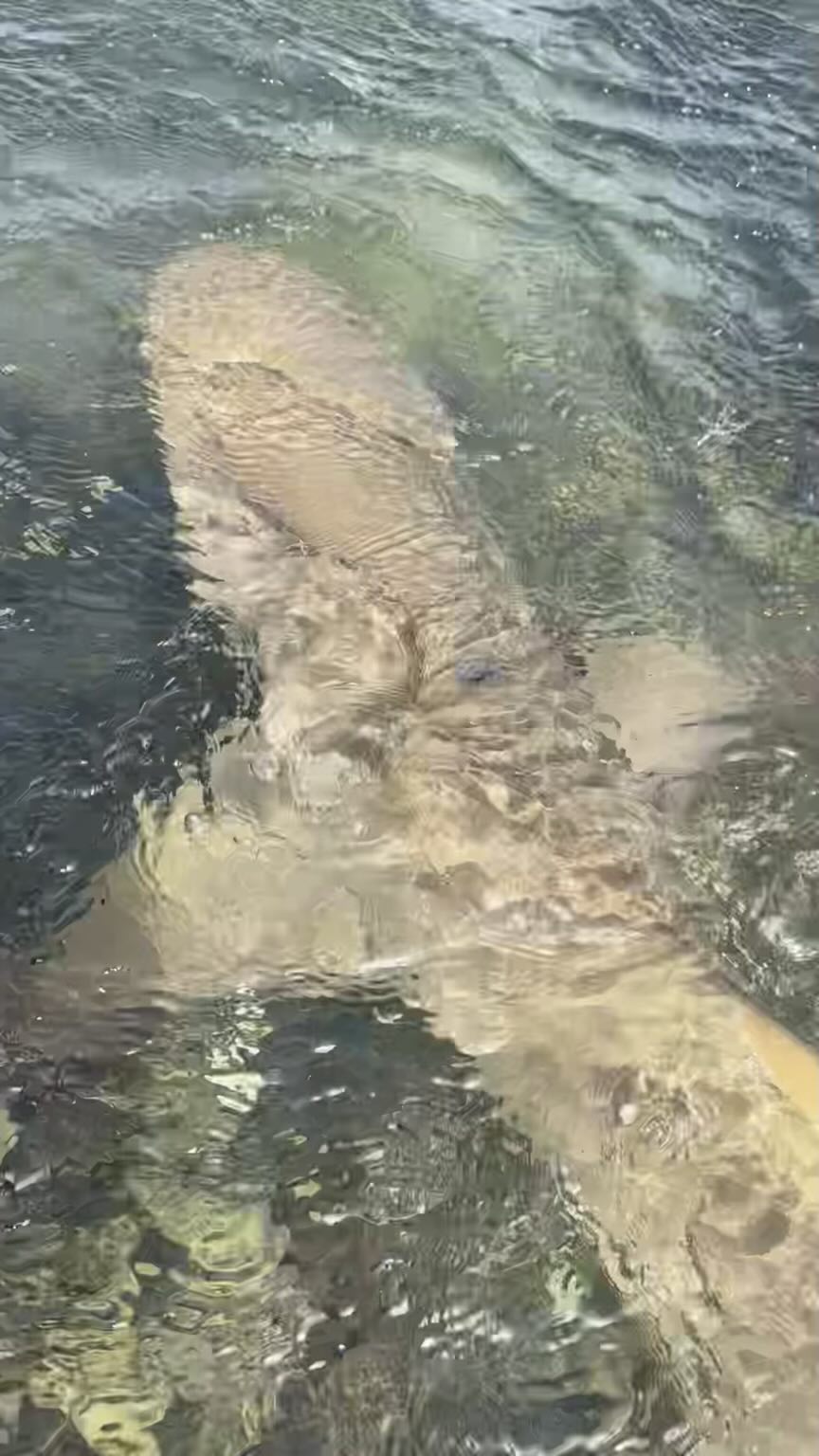
Baby lemon sharks are about as frightening as a retriever puppy in a swimming pool. They max out at roughly half a meter to a meter here, dark-gray and compact, and they swim through your legs with the aimless curiosity of fish that have clearly never had reason to be afraid of anything.
The reason only young sharks populate this bay is that it functions as a nursery habitat. The shallow, protected water offers juvenile lemon sharks safety from the larger predators they would encounter in the open ocean. They remain in these shallow coastal waters for up to twelve or fifteen years before finally venturing out to sea. In the meantime, they have this rocky, fish-filled bay entirely to themselves—and, periodically, a guy from Fort Collins standing in knee-deep water trying not to look as amazed as he is.
Seeing a shark up close for the first time in my life: a fourth first.
Pedra de Lume
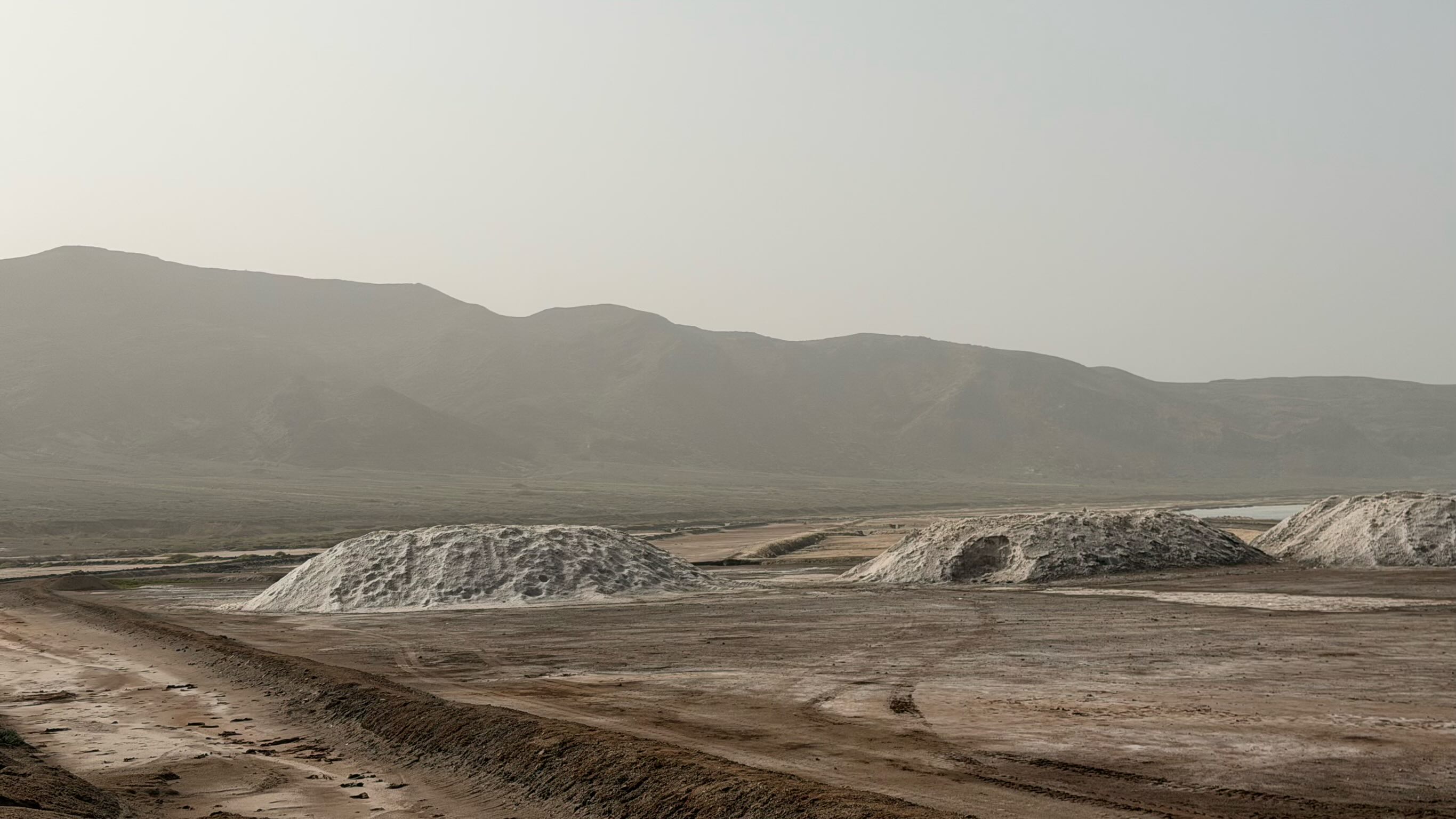
The final stop was Pedra de Lume, and it was unlike anything I have seen. Inside the crater of an extinct volcano in the island’s northeast, seawater seeps in through the porous rock from the ocean—despite the crater sitting visibly above sea level—and has been evaporating into salt for centuries. The salt pans that fill the crater floor are almost surreally beautiful: brilliant white and vivid pink against an impossibly blue sky, with snow-white salt mountains banked along the edges. The Portuguese once harvested this salt and shipped it all the way to Brazil.
Enel, knowing exactly how salty the water was, advised me before I got in to remove my watch and to avoid submerging my head—a precaution that, given what was about to happen to my skin, proved to be the wiser of his two pieces of advice.
I waded into a salt pond (the technical term, I believe, though “salty puddle of destiny” is equally accurate) and immediately discovered something wonderful: I can float. I am a low-body-fat, chronically-sinking-in-normal-water type of person, and I have accepted over the years that lakes are simply not my medium. But here, with the water so dense it has the approximate buoyancy of liquid concrete, I floated effortlessly—on my back, on my stomach, with arms out, with arms in. I half-expected to bounce.
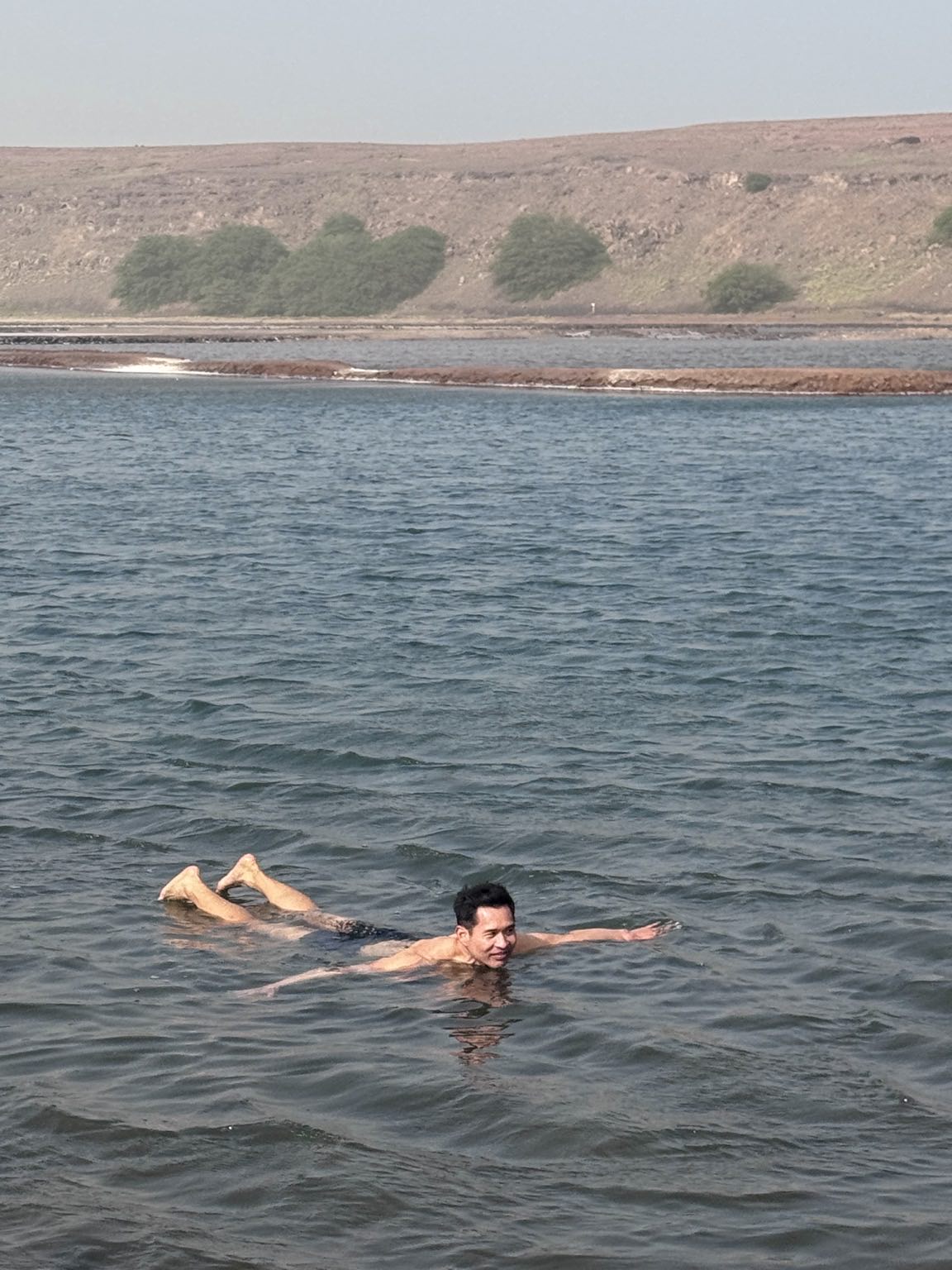
A fifth first. The salt pans of Pedra de Lume: remarkable.
A small warning for anyone who follows me into the water: the salt will utterly annihilate your skin. Within two days, what I can only describe as eczema appeared on my arms and neck—the direct result of the extreme drying effect of the brine. Bring moisturizer. Bring lots of it. Bring it in advance. And wash off the salt as soon as you can.
On the way back to Santa María, we passed through the area where Enel gestured toward a historic settlement, noting Cabo Verde’s significance as some of the earliest European colonial territory in the Atlantic. The actual distinction belongs to Ribeira Grande—now called Cidade Velha—on the island of Santiago: founded in 1462, it was the first permanent European settlement in the tropics, a UNESCO World Heritage Site, and a key node in the Atlantic slave trade. The history of this archipelago is complicated, rich, and worth reading before you arrive.
He also pointed out the house of Mitu Monteiro, the 2008 kite surfing world champion, who lives in Santa María. Two friends of mine—Chris and Roxana—are fanatical kiters. When I mentioned Cabo Verde to Roxana before the trip, she immediately said it was her next destination. As a cyclist who abhors the wind, I find it heartwarming that there are some people who actually appreciate it.
Evenings and Food
Dinners in Santa María were consistent in one way: the portions were small and the prices were not. It’s an island, after all, and once you accept it as the baseline, everything is fine. The food itself ranged from good to excellent.
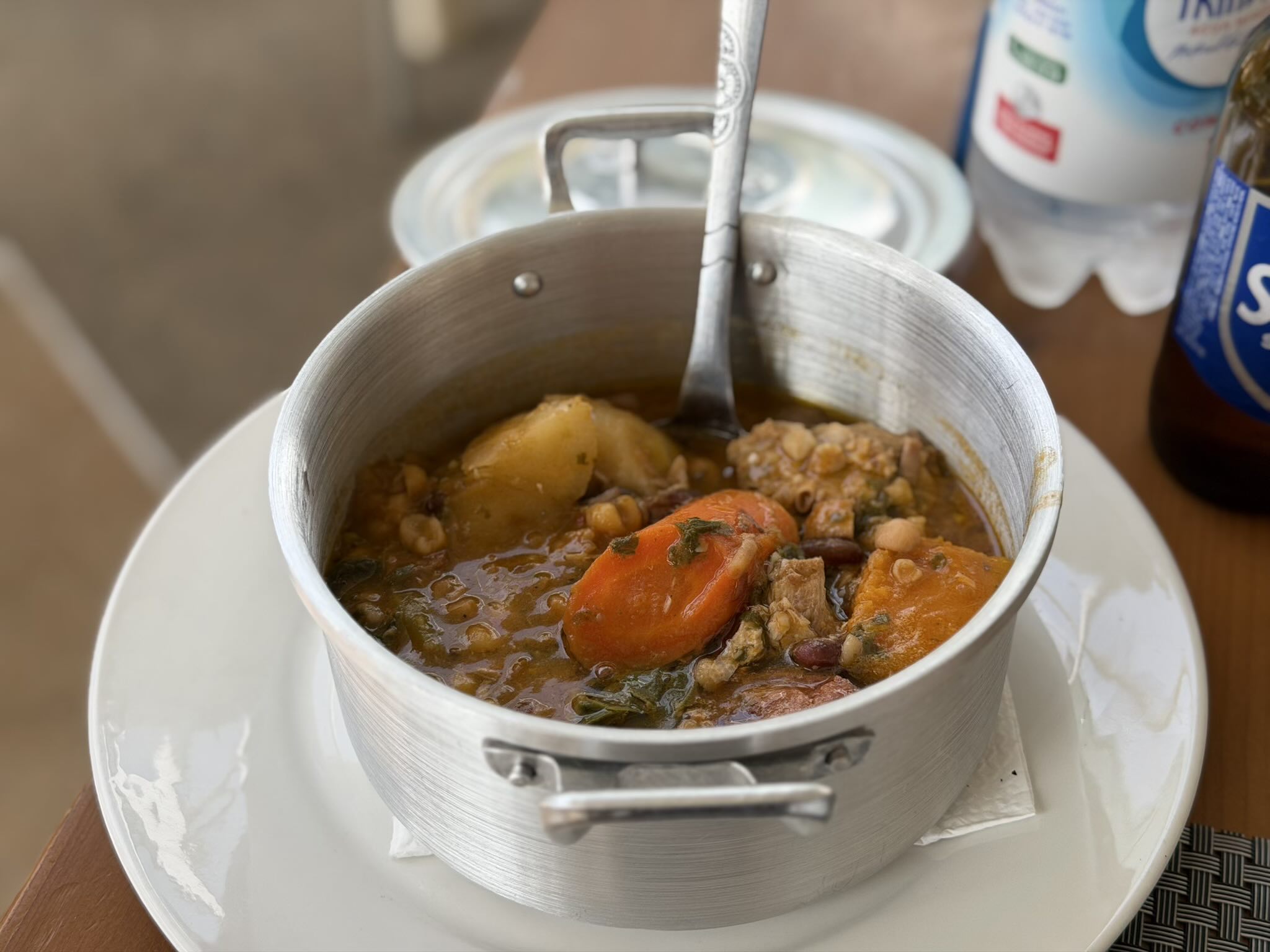
At Colonial restaurant, I ordered cuizo—a traditional Cape Verdean goat stew, cuizo being the Crioulo word for goat—slow-cooked with vegetables and spices into something deeply savory. At Cultural Café, Andrea and I shared cachupa, the national dish: a slow-cooked stew of corn, beans, and vegetables with African and Portuguese roots that put it somewhere in the family of a Portuguese feijoada, but heartier and more vegetal. It was excellent, and the service was, unusually for Santa María, fast.
An exception to the “small portion” rule came on our first night. We had just endured a day of travel, and the tuna tartare I had ordered at the Ocean Café was—while tasty—decidedly not enough food. I think Andrea’s board of crunchy fried seafood was not enough, either. So I casually suggested we order dessert.
We ultimately picked the 6€ chocolate pizza. When it came out, we were stunned. It was huge!
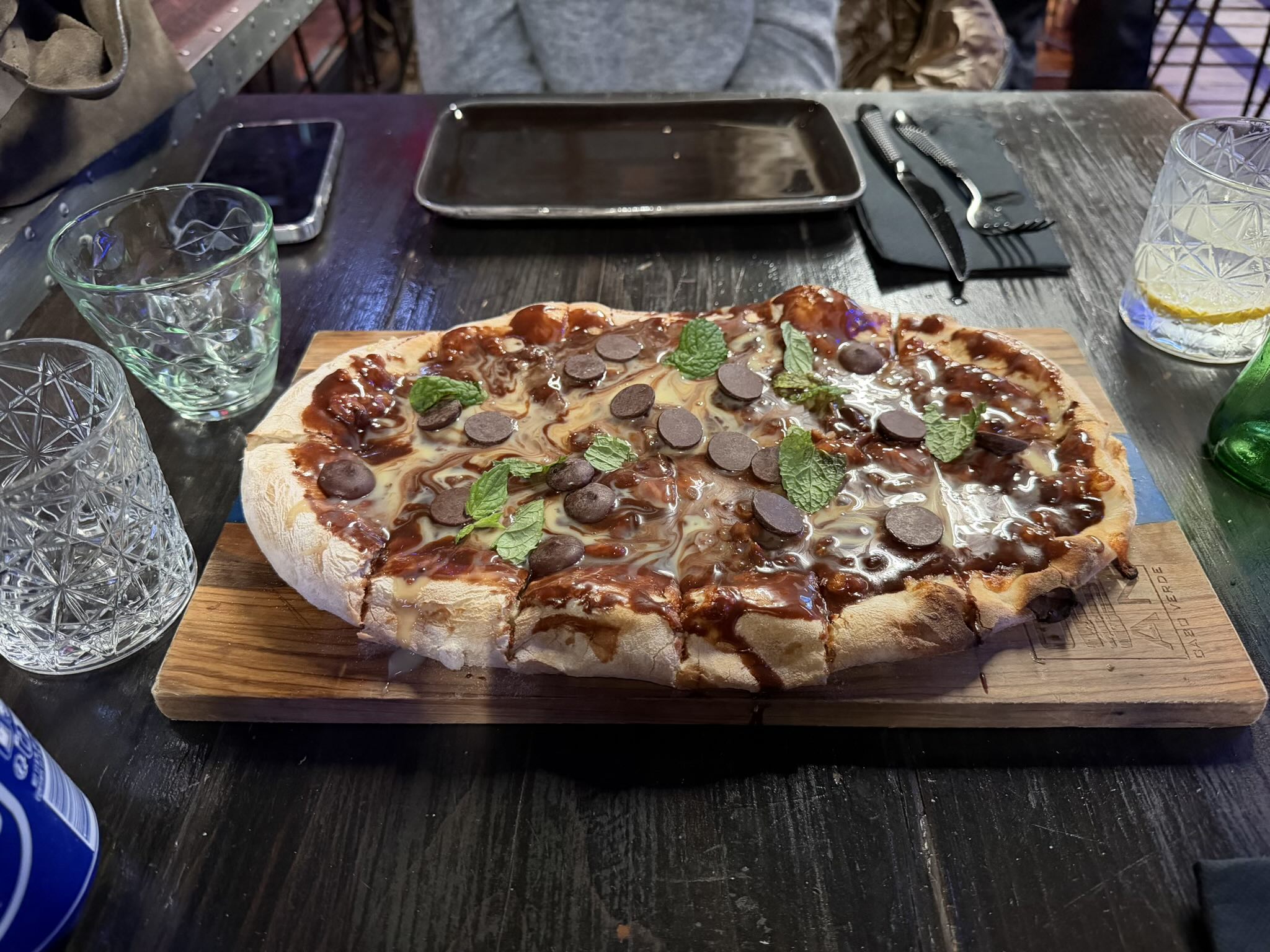
We didn’t end the night hungry. I also concluded that chocolate and pizza is not a bad combination. Having them together was a first for both of us. Actually, come to think of it, so was having cachupa.
Most evenings ended at or near the Ocean Café, watching the Waka Waka ritual unfold, or simply sitting with a drink and noticing the island’s other constant companions: the dogs. Lazy, sun-stunned, utterly unbothered dogs lay on sidewalks, doorsteps, and patches of dirt everywhere we went. They were not hungry or distressed—just extraordinarily committed to the horizontal. They were, in a way, the island’s mascot.
The Hilton and Monte Leão
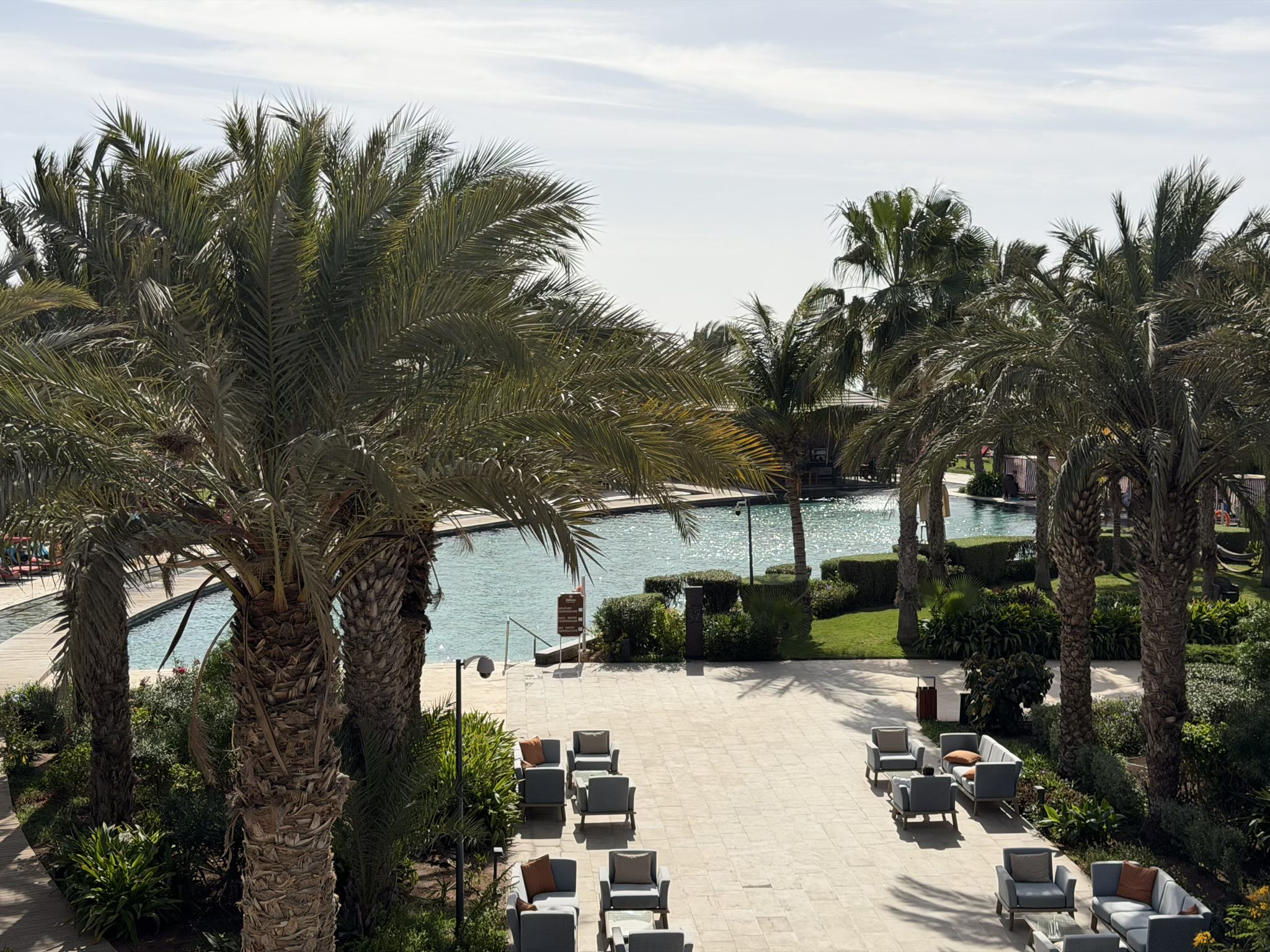
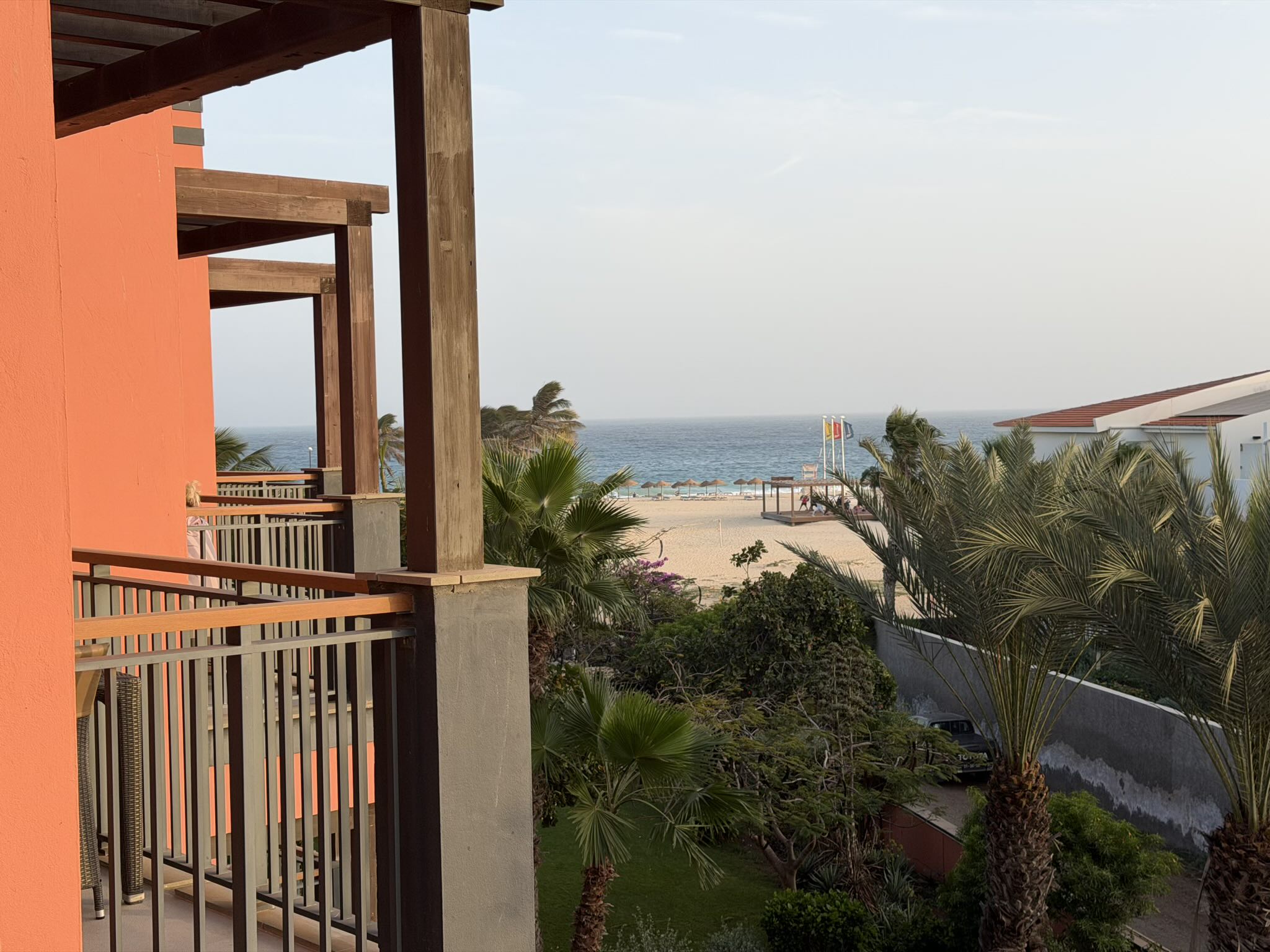
We checked into the Hilton Cabo Verde Sal Resort on January 10th, and while the room was quite comfortable, it lacked the idiosyncratic charm of Ocean Suites. What it did offer—as a perk of Hilton Honors Silver status—was a welcome chocolate cake and complimentary half-day bicycle rental. I did not complain about either.
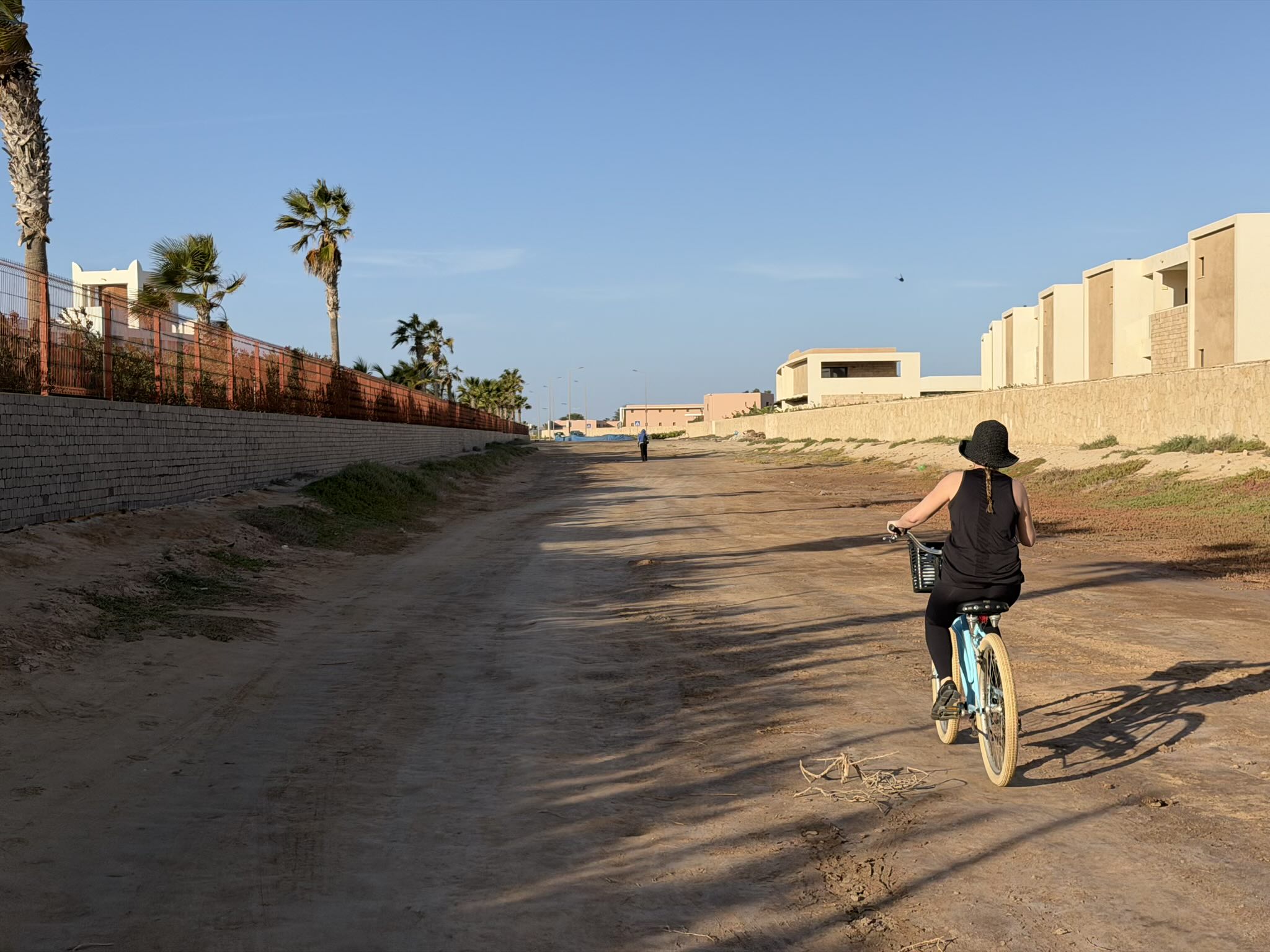
The bikes became an unexpected highlight of our stay. On our second afternoon at the Hilton, Andrea and I rode out for just over an hour along the coast, and for the first time on the trip, we got a clear view of Monte Leão—the “Sleeping Lion Mountain” we had tried and failed to see two days earlier through a thick haze of calima blown in from the Sahara.
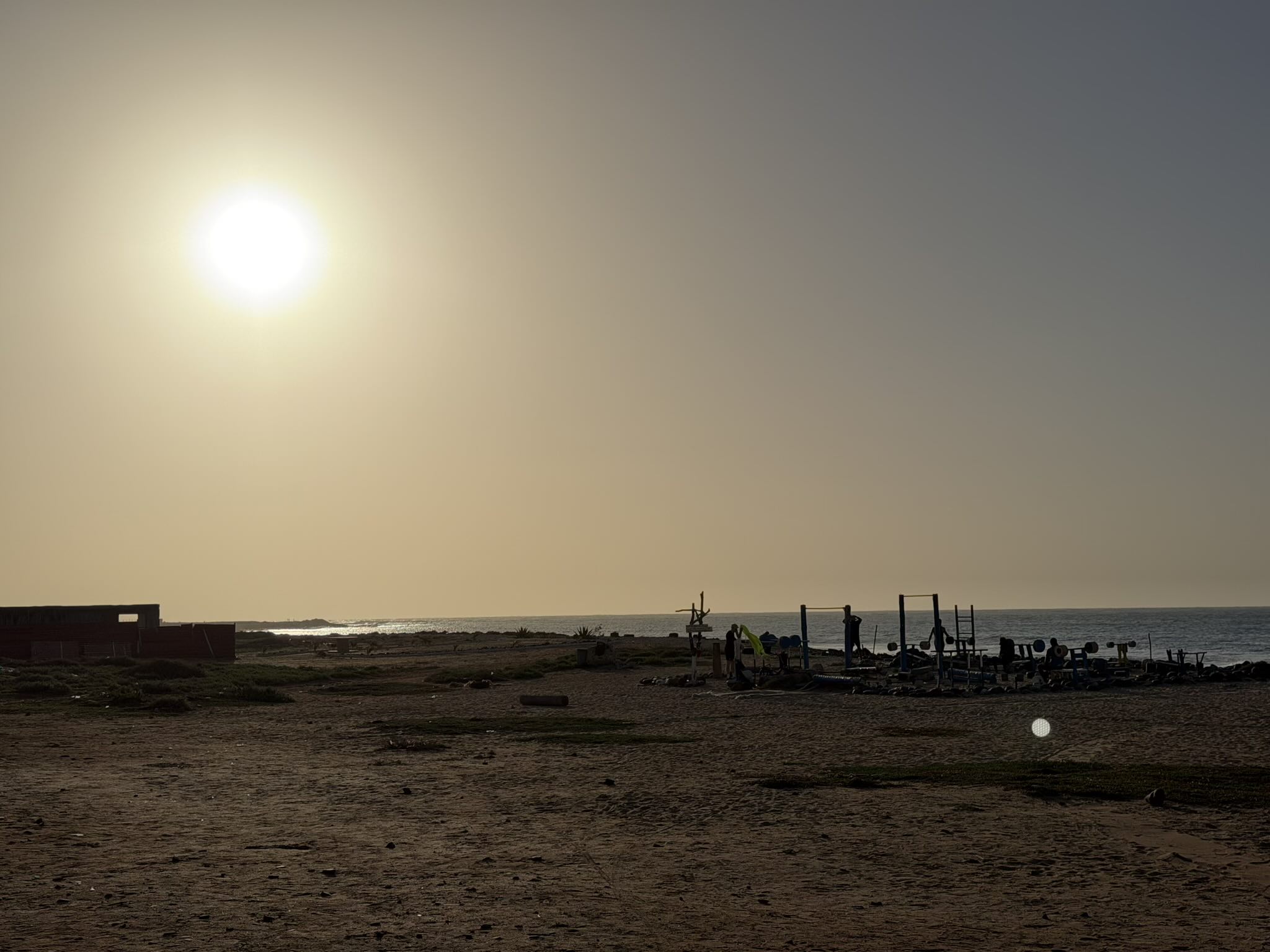
The calima is a real phenomenon on Sal: a fine sand dust that rolls in from the Saharan desert and reduces visibility to nearly nothing on bad days. Enel and I had peered toward Monte Leão through the haze and seen, generously speaking, a suggestion. Now, on a clear afternoon, there it was—a rocky hill of modest height rising from the otherwise flat western coast of the island.
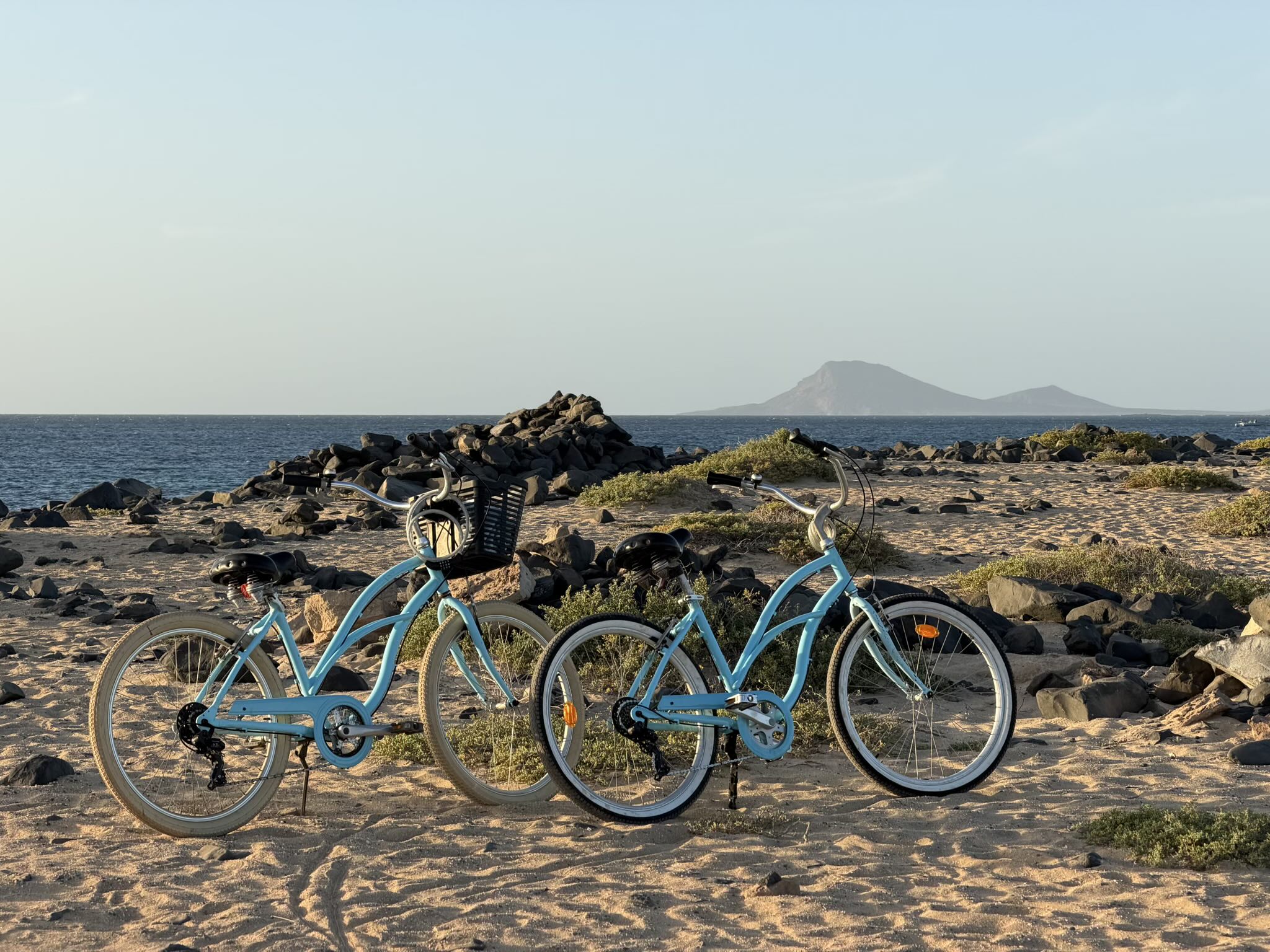
Does it look like a sleeping lion? With vigorous use of the imagination, yes. You need to commit to the exercise. Squint a little. Perhaps tilt your head. Think of the most lion-like hill you have ever seen and then apply that same generosity of spirit here. The slope on one side could be a resting flank. The summit could be a head. If the lion were very tired and approximately 165 meters tall, this would be it.
It was also during these days at the Hilton that we completed what I came to call our four-sport day: a 500-meter swim, followed by reading at the pool, followed by the bike ride and Monte Leão sighting, followed by a 5K run at sunset, followed by a gym session. Andrea had gotten slightly sunburned the day before, despite reapplying a “90 SPF” (I didn’t even know there was such a thing?) sunscreen she had bought locally from a shop that had sourced it from Hong Kong. It had the side effect of turning us both convincingly pale initially, yet she ended up a little red. It confirmed a theory I hold with increasing conviction: sunscreen is the last line of defense, not the first. A towel works better.
Back to Europe
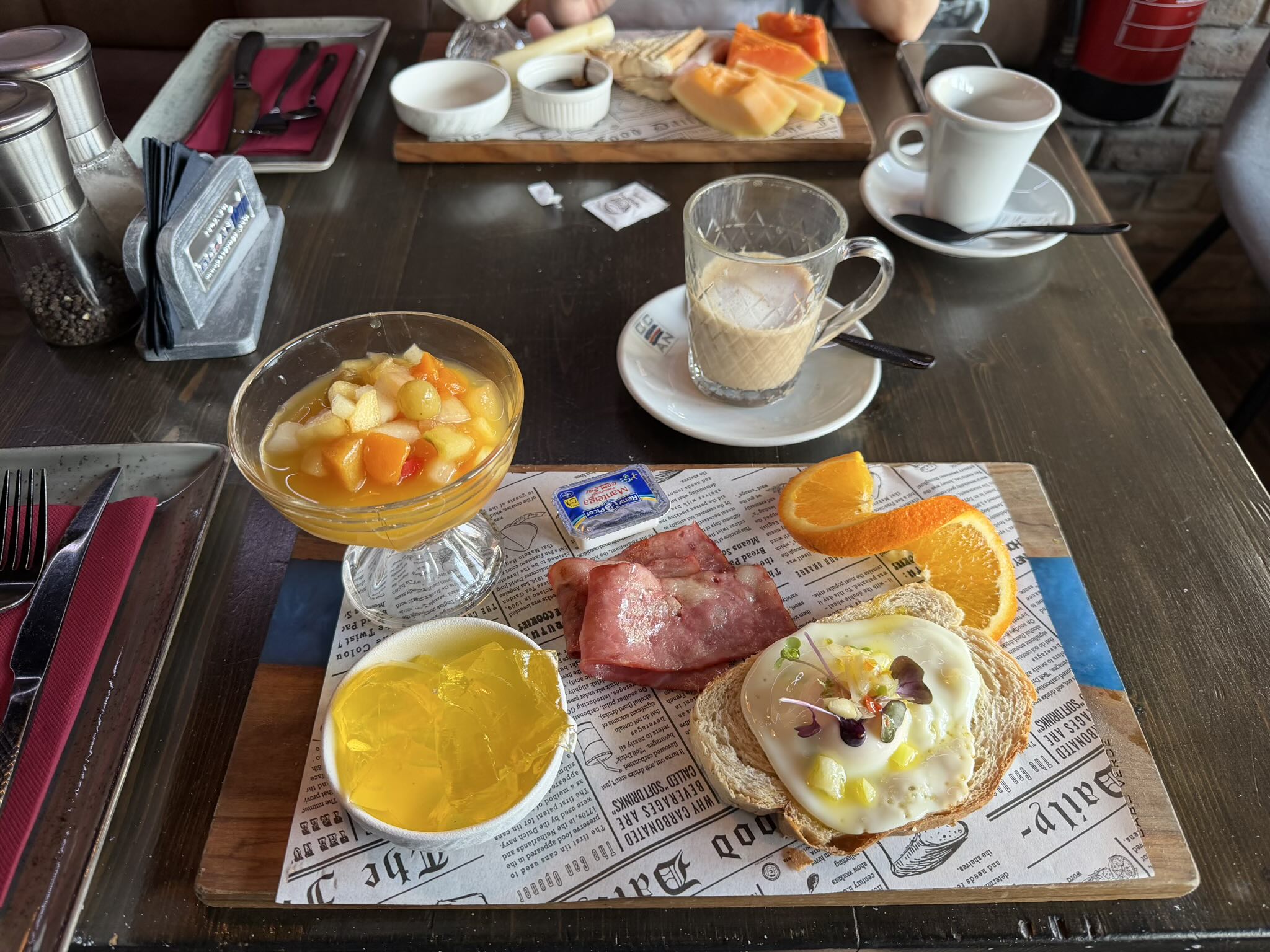
January 12th was our last day, and it was exactly what the island’s motto—printed on approximately every third T-shirt in every tourist shop in Santa María—promises: No stress, no work: Cabo Verde. We had breakfast, packed, checked out at 11, read for four hours in the hotel and its sports bar, and then found a taxi that charged us 20 euros to the airport—five euros less than the ride from the airport on arrival, a small but satisfying win.
On the flight back to Porto, I finished reading Slow Trains Around Spain by Robert Chesshyre—a book I had started with enthusiasm and finished with the grim determination of someone who has invested too much time to quit. I found myself nodding emphatically at a two-star review that described it as formulaic and unable to distinguish the interesting from the tedious. Twelve previous books is no guarantee of a thirteenth worth finishing. Noted.
We landed in Porto in light rain late at night, found Andrea’s car, and by a stroke of luck found a zero-cost curbside parking space directly outside the gated, not-free lot for the hotel we were staying at for the night. At check-in, I tried my Portuguese on the receptionist—told her my phone number in Portuguese, received the room number and door code by text, got everything right. She even told me “good job” twice. It was, perhaps, the most disproportionately satisfying moment of the entire trip. My fifth language and I do not always have the most dependable relationship, but on this night, we were in sync.
Would I Go Back?
Cabo Verde is not a place I would want to live. The wind is relentless, the vegetation is almost entirely absent, and the landscape, beautiful in its own austere way, does not change much in any direction.
But as a getaway? As a place to slow down, eat goat stew, float in ancient volcanic salt water, and watch baby sharks swarm around your ankles? Absolutely.
The people are warm. The island is safe. The motto, improbably, rings true.
If you go—book a private tour, and get in the water at Shark Bay. Just be sure to moisturize aggressively after Pedra de Lume.
Video
Below is a montage of video clips that Andrea and I took during the trip.
There are 2 comments.
Loved your description of Sal: "an archipelago I'd describe as what happens when Portugal and the Sahara have an island child and then teach it to kitesurf."
I'm glad you enjoyed the bit about Sal, Karen. Thanks for reading!