Car-Spotting in Cabo Verde

It was about 14 years ago, during a visit to see my dear family friend Frank—less than a year before he passed away—that he said something which struck me as either obvious or visionary, depending on who you were.
“In the future, China is going to be exporting cars all over the world,” he announced, with the quiet confidence of someone who had simply been paying attention. “Their cars will be just as good as everybody else’s, but cheaper.”
Frank was not exactly what you’d call a technologist. He did not have a smartphone or even a computer. He regarded the internet the way a golden retriever regards a ceiling fan: vaguely aware of it, not entirely sure what to make of it. And yet here he was, nailing a prediction that my own father couldn’t bring himself to believe.
I, on the other hand, agreed immediately. It was the same script we’d already seen play out twice. Japanese cars, once dismissed as tin-can novelties, had evolved into some of the most reliable and desirable vehicles on the planet. Then came the Koreans—Hyundai and Kia, once the punchlines of automotive jokes, had quietly become genuinely excellent, genuinely respected brands. The same arc was going to repeat itself. It was as inevitable as a sequel.
What made it hard for some people to take seriously at the time was that China’s automotive industry was, frankly, hilarious. Rather than develop original designs, Chinese manufacturers were producing copies so brazen they bordered on performance art. One company’s small hatchback was so faithfully reproduced from the Chevrolet Matiz that the doors were reportedly interchangeable between the two cars. Even the company names were lifted wholesale, as if from a college student’s first draft: Chery vs. Chevy. Land Wind vs. Land Rover. (Land Wind, for its part, built an SUV so similar to the Defender that Land Rover took them to court. The fact that both sides agreed the resemblance was not coincidental tells you everything you need to know.)
But shamelessly copying the homework is still doing the homework. The manufacturers learned. The quality improved. And crucially, China made a strategic decision to leapfrog the internal combustion engine entirely and bet everything on electric vehicles—reasoning, correctly, that it would be very difficult to catch up with a century of German, Japanese, and American expertise in gasoline engines, but that an entirely new technology was a race anyone could win.
Warren Buffett saw it coming. In 2008, his company Berkshire Hathaway invested roughly $230 million for a 10% stake in BYD—which stands, optimistically, for “Build Your Dreams.” BYD had started as a battery manufacturer and had only recently gotten into cars. At the time, the investment was widely regarded as eccentric, a departure from Buffett’s usual Modus operandi. By the time Berkshire exited its position in 2025, the stake had grown over 20-fold. Frank would have appreciated that. I can’t recall if he was an admirer of Warren Buffett, but he would have appreciated the idea.
If you live in the United States, Canada, or much of Western Europe, you may have missed China’s automotive ascendancy entirely. Tariffs and trade barriers have largely kept Chinese brands off those roads. But outside those well-insulated bubbles? They are everywhere. And nowhere brought this home more vividly for me than the island of Sal, in Cabo Verde.
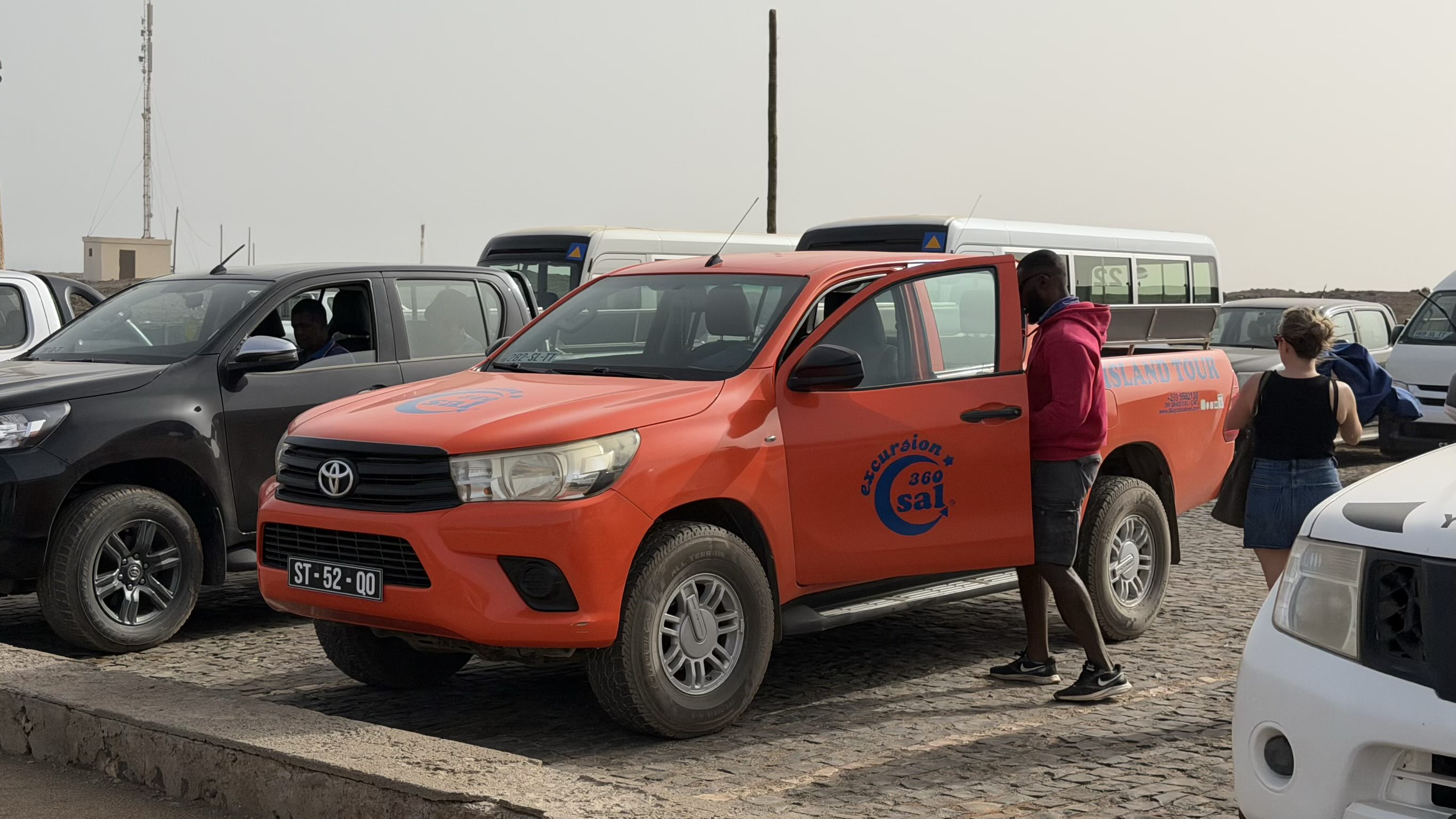
Sal is a small, sun-scorched, wind-blasted volcanic island in the Atlantic Ocean, about 570 kilometers off the coast of Senegal. It is not the kind of place where you expect to stumble into a lesson about global industrial geopolitics. But there I was, near the end of an island tour with our hired guide Enel, bumping along in his 1996 Toyota Hilux, when the conversation turned to vehicles.
The first thing I noticed was the stereo. It was a large tablet-style touchscreen, mounted flush into the dashboard with a neatness that looked almost factory. Enel confirmed he had installed it himself—a setup so clean that only the steering wheel’s volume buttons not being able to control it gave the game away. It was the kind of work that makes you reconsider your own abilities.
Enel had driven this Hilux for years, and for good reason: on Sal’s unforgiving roads—volcanic rock, sand, the occasional goat—a 30-year-old Toyota is not nostalgia, it’s pragmatism. Toyotas, he explained, last a very long time. But when they do finally give out, the economics of a remote Atlantic island kick in rather brutally: parts and repairs are expensive enough that people often replace the engine entirely, swapping in a Volvo or JAC motor rather than sourcing original Toyota components.
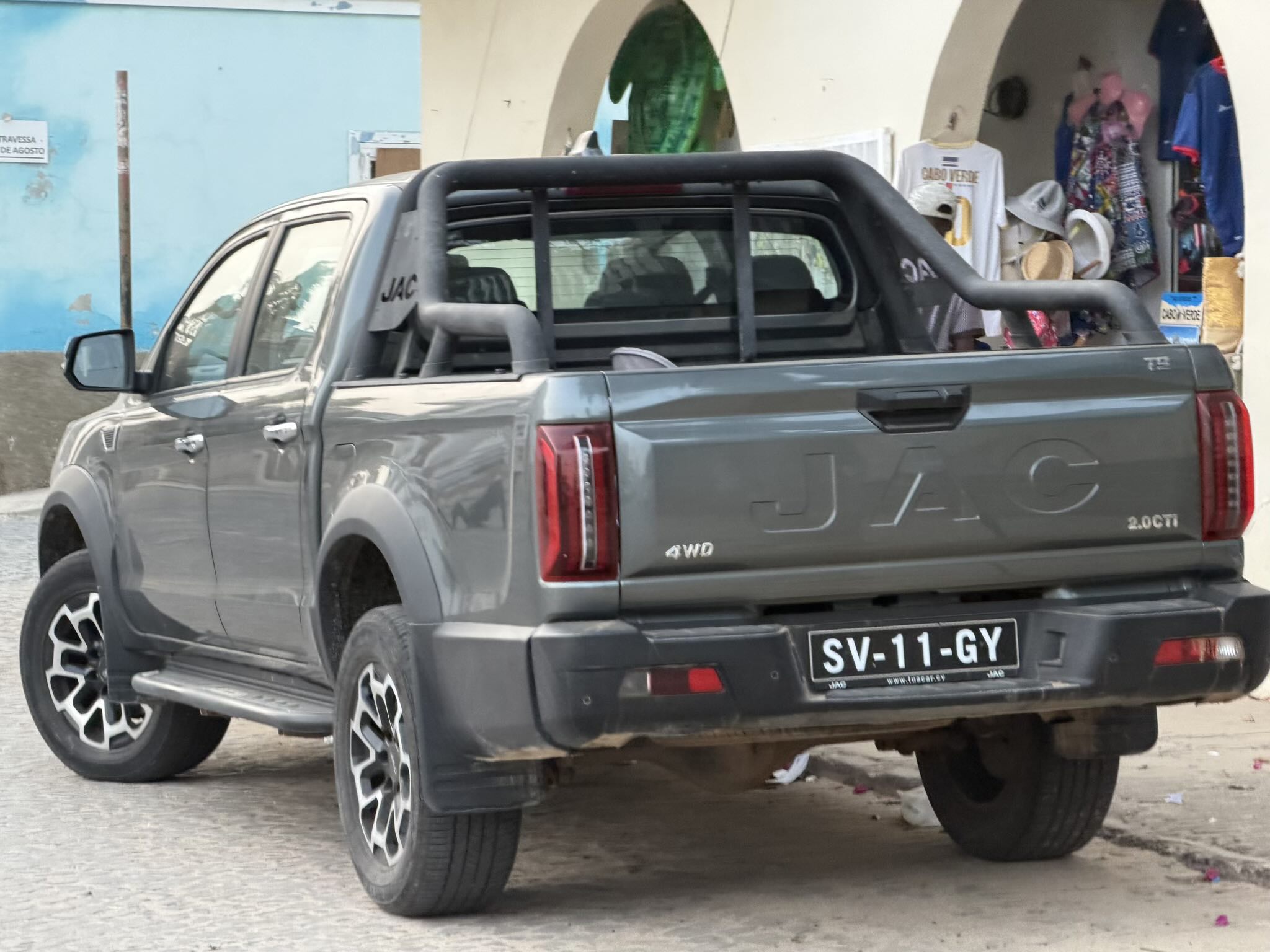
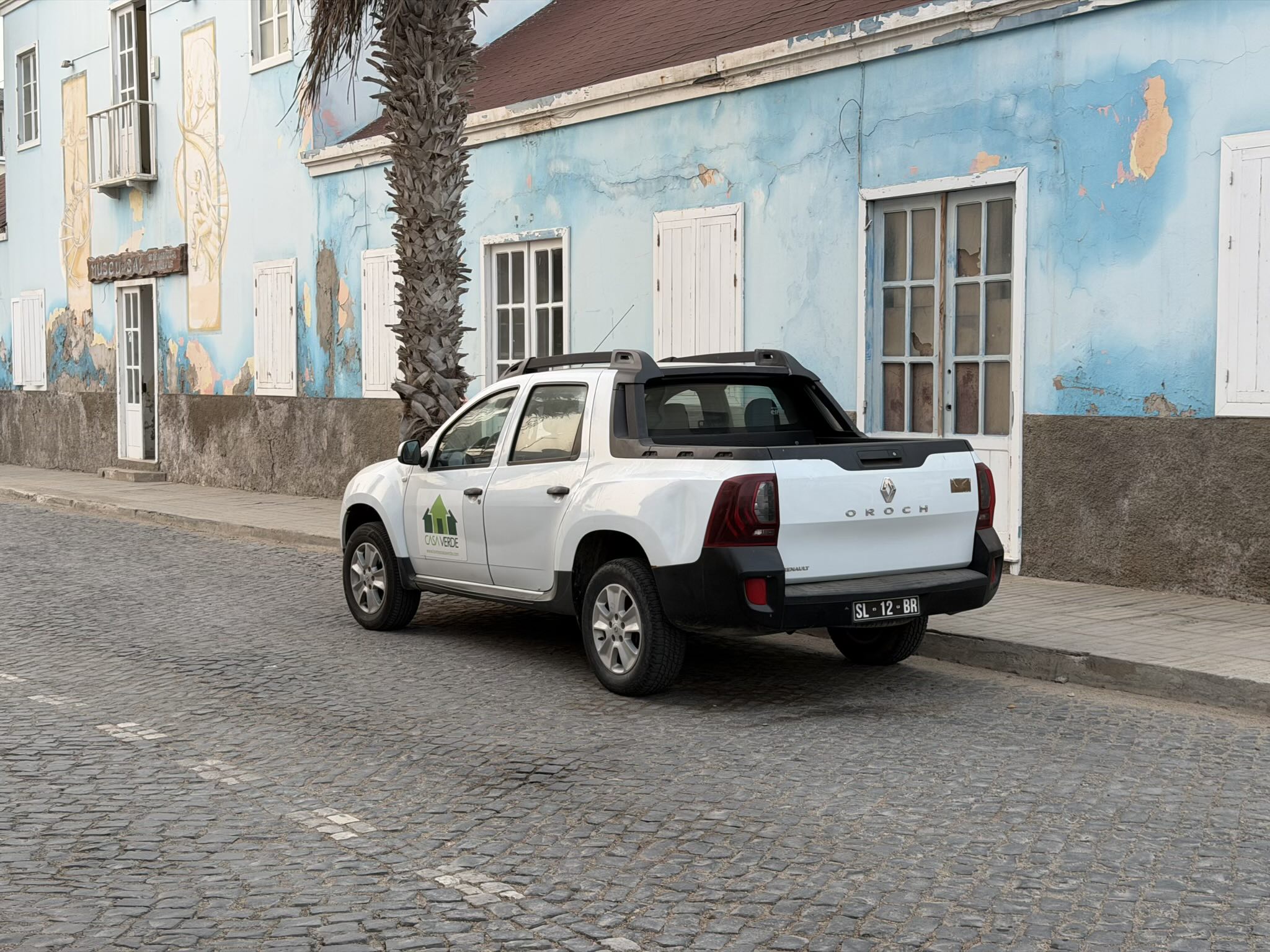
JAC, in case you haven’t encountered it, is a Chinese truck manufacturer. And here on Sal, they were making a serious run at Toyota’s dominance. A new JAC pickup, Enel told me, goes for about €30,000. A comparable Toyota? €50,000. When you factor in that virtually everything on this island has to be shipped across the Atlantic, the price difference is not trivial—it’s the difference between affording a new vehicle and not.
Walking and driving around the island, I found myself doing involuntary car-spotting. The plurality was exactly what you’d expect from a rugged island: Toyotas and Suzukis, the workhorses of the developing world, battered and capable and seemingly immortal. There were a scattering of Western visitors in the lineup—a Chevrolet Equinox, a Ford Focus, a Jeep Renegade, a few Volkswagens, a BMW or two.
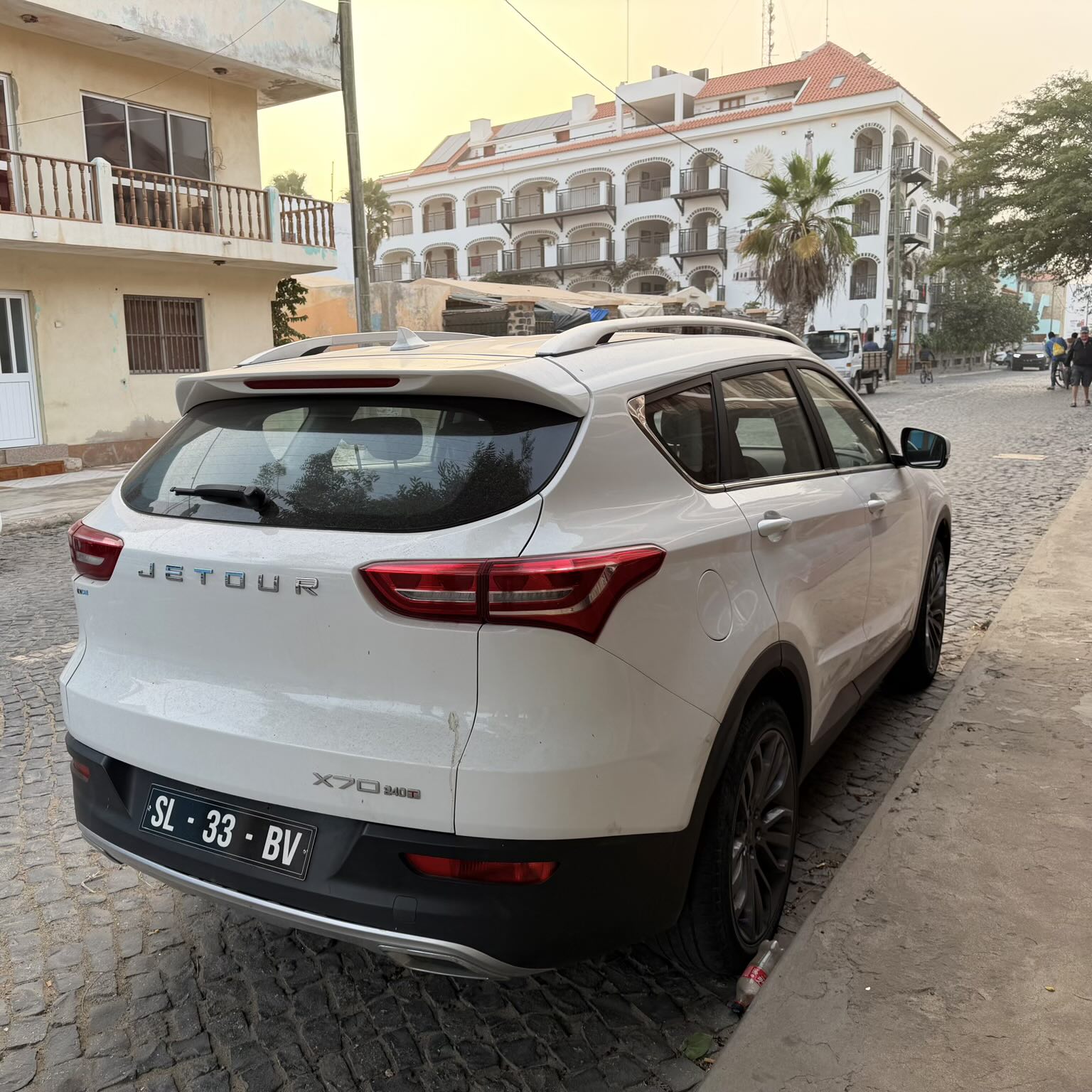
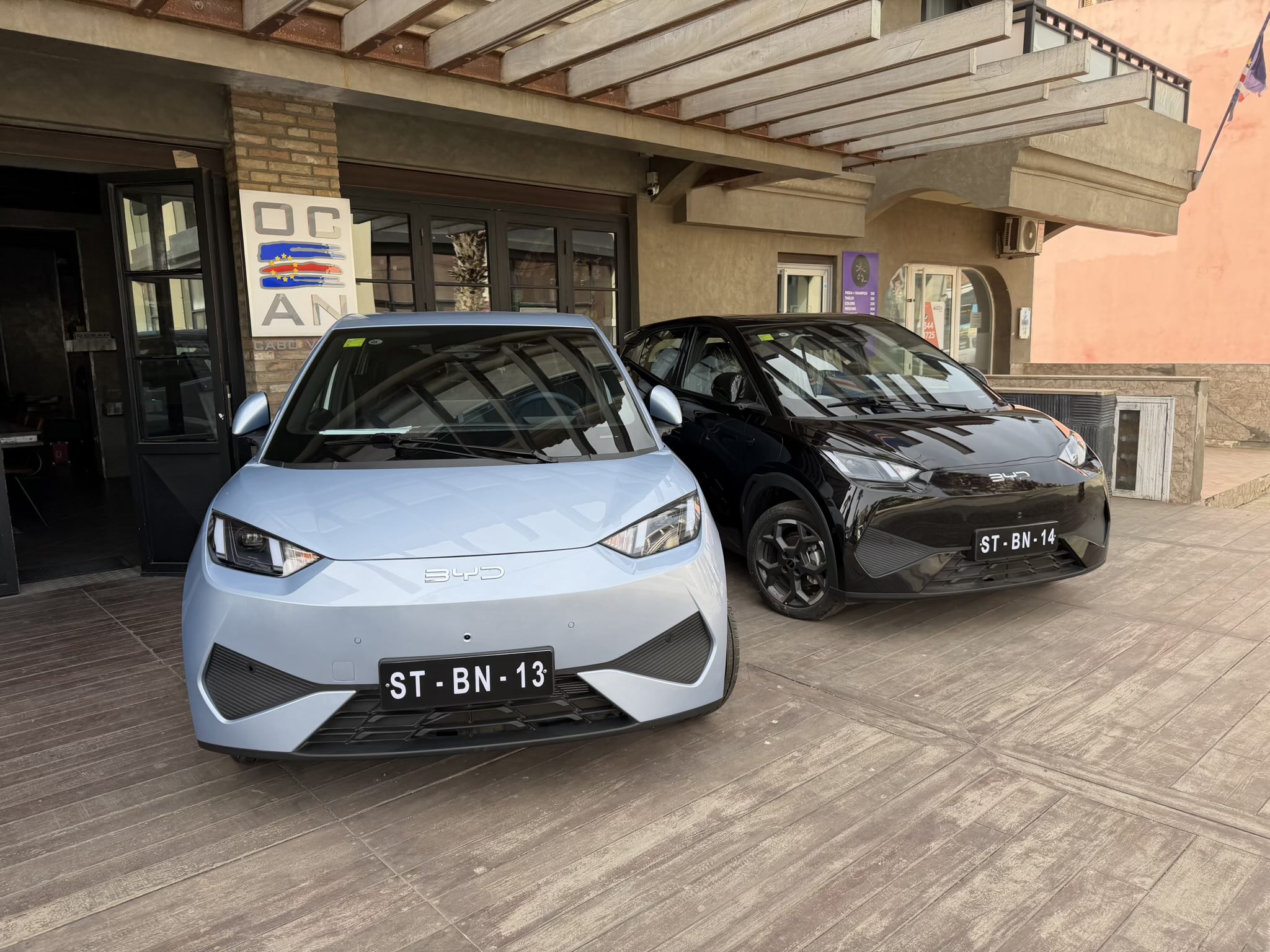
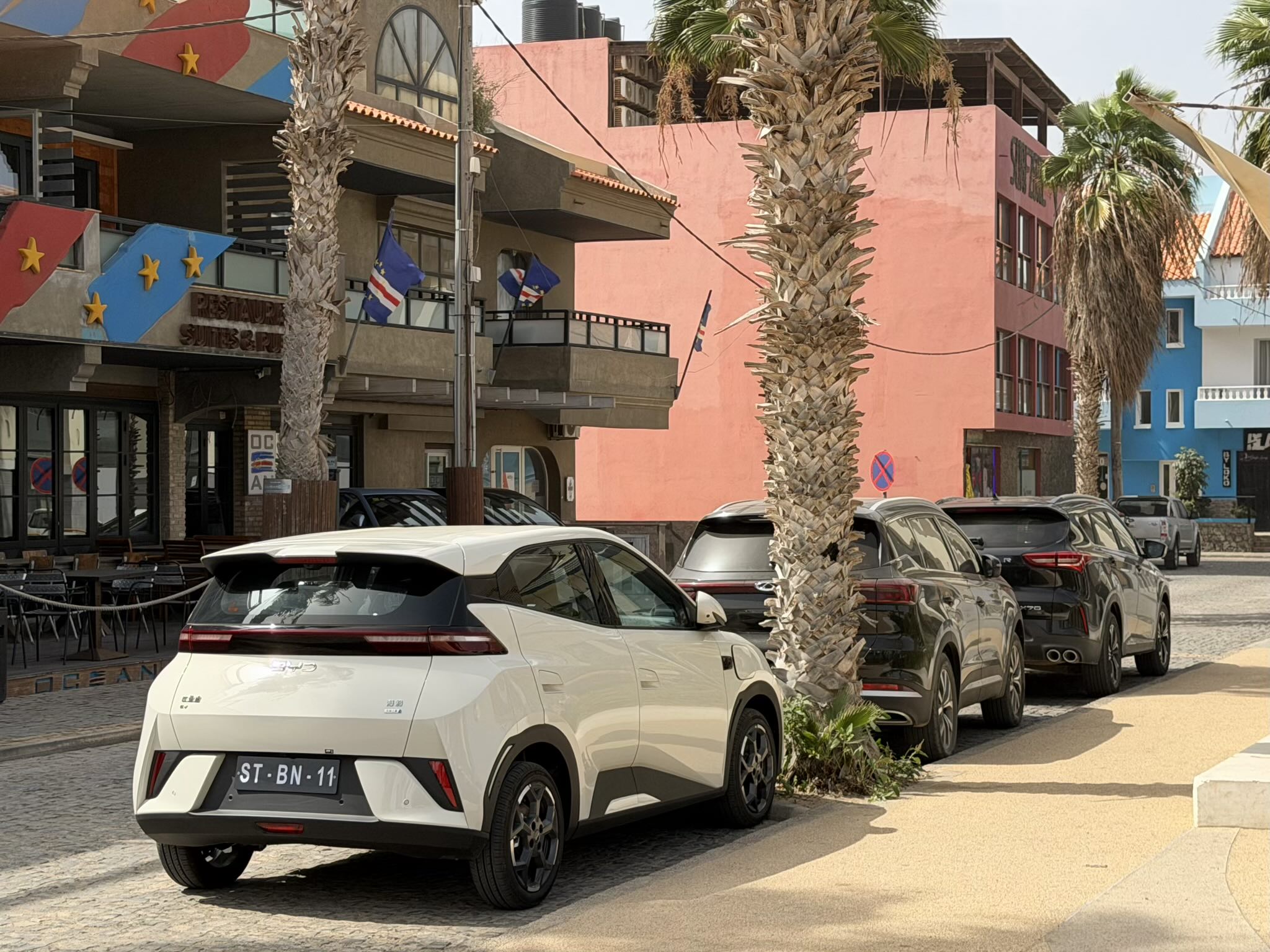
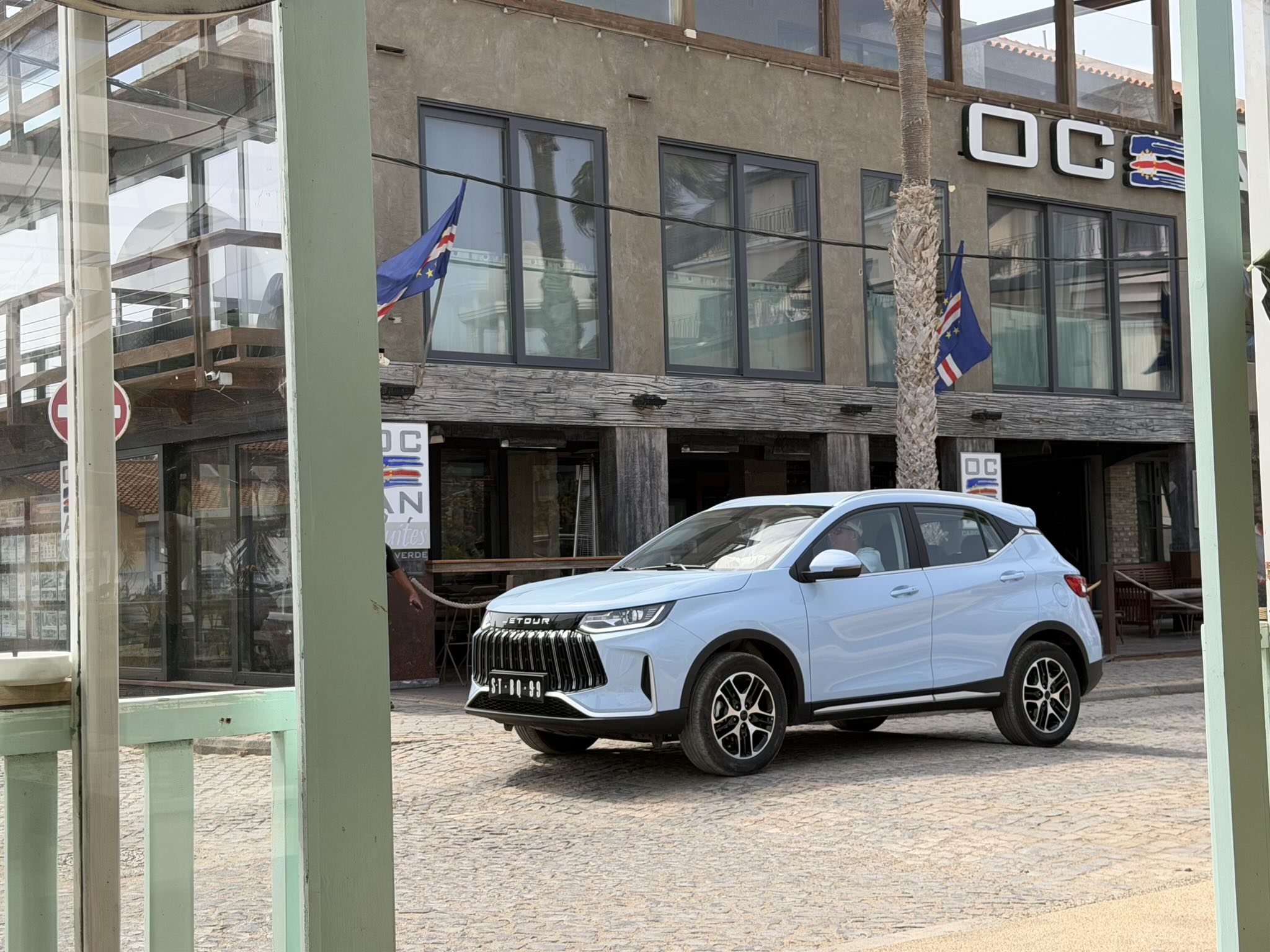
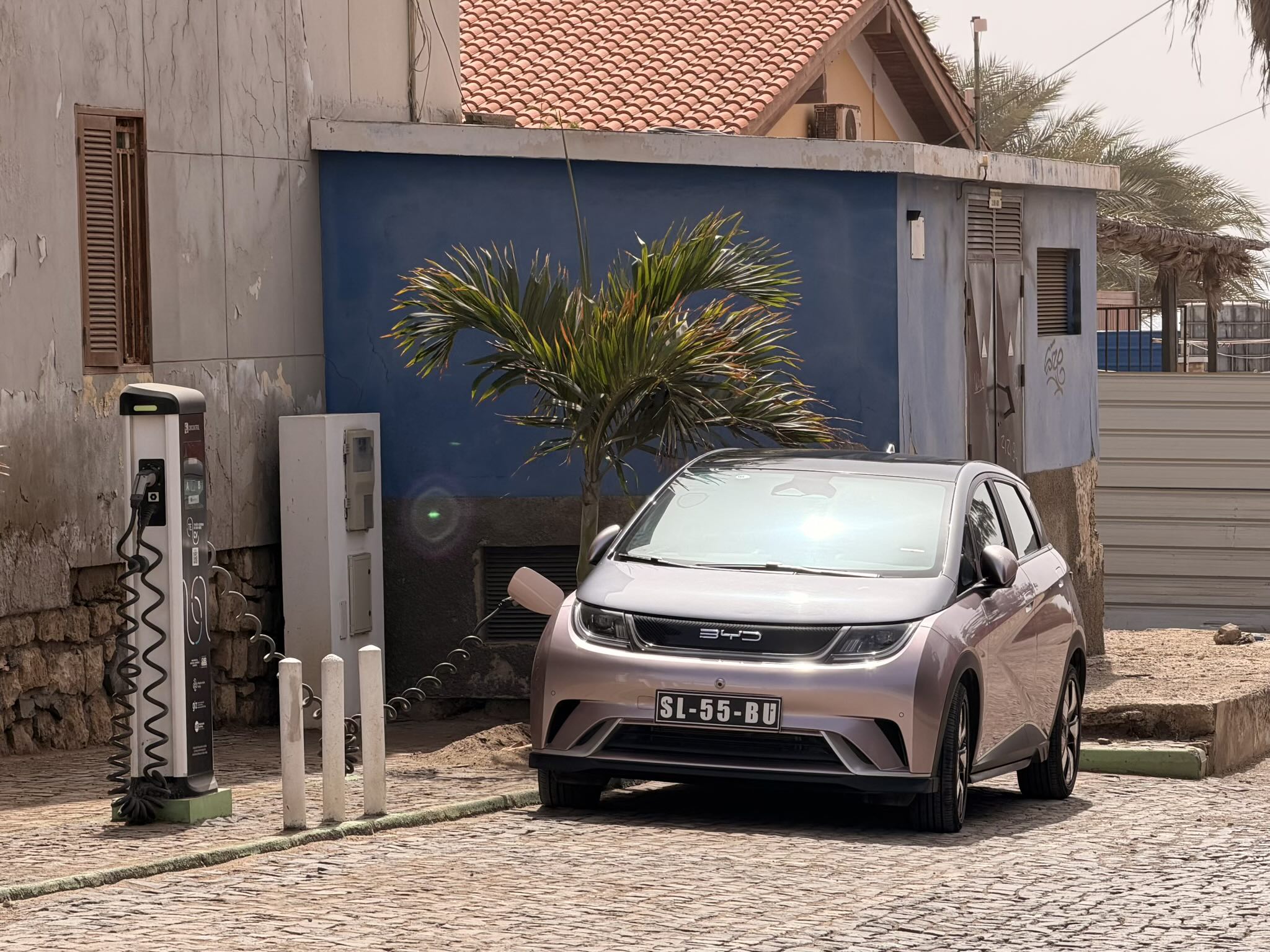
But the Chinese contingent was impossible to miss: JAC pickups, BYD sedans and SUVs, and Jetour crossovers. Several of the BYDs were fully electric—gliding silently past fishing boats and surf rental shacks, looking faintly incongruous and entirely at home at the same time. The other Chinese brands appeared to be running on gasoline or hybrid powertrains.
While Cabo Verde is not a wealthy nation, there were signs of some public charging infrastructure. For example, right next to the first hotel we stayed in, there was this BYD being charged on the street.
In a way, electric cars would be perfect here. Sal is less than 20 miles long and 8 miles wide. Range anxiety for even the EV’s with small batteries would not be an issue.
The abundance of pickup trucks also made perfect sense. Sal is not a place that rewards low ground clearance or delicate suspension. It is a place that rewards torque, durability, and a blasé attitude toward road surfaces.
And then, in the middle of all this utilitarian iron, I spotted a Mazda Miata.
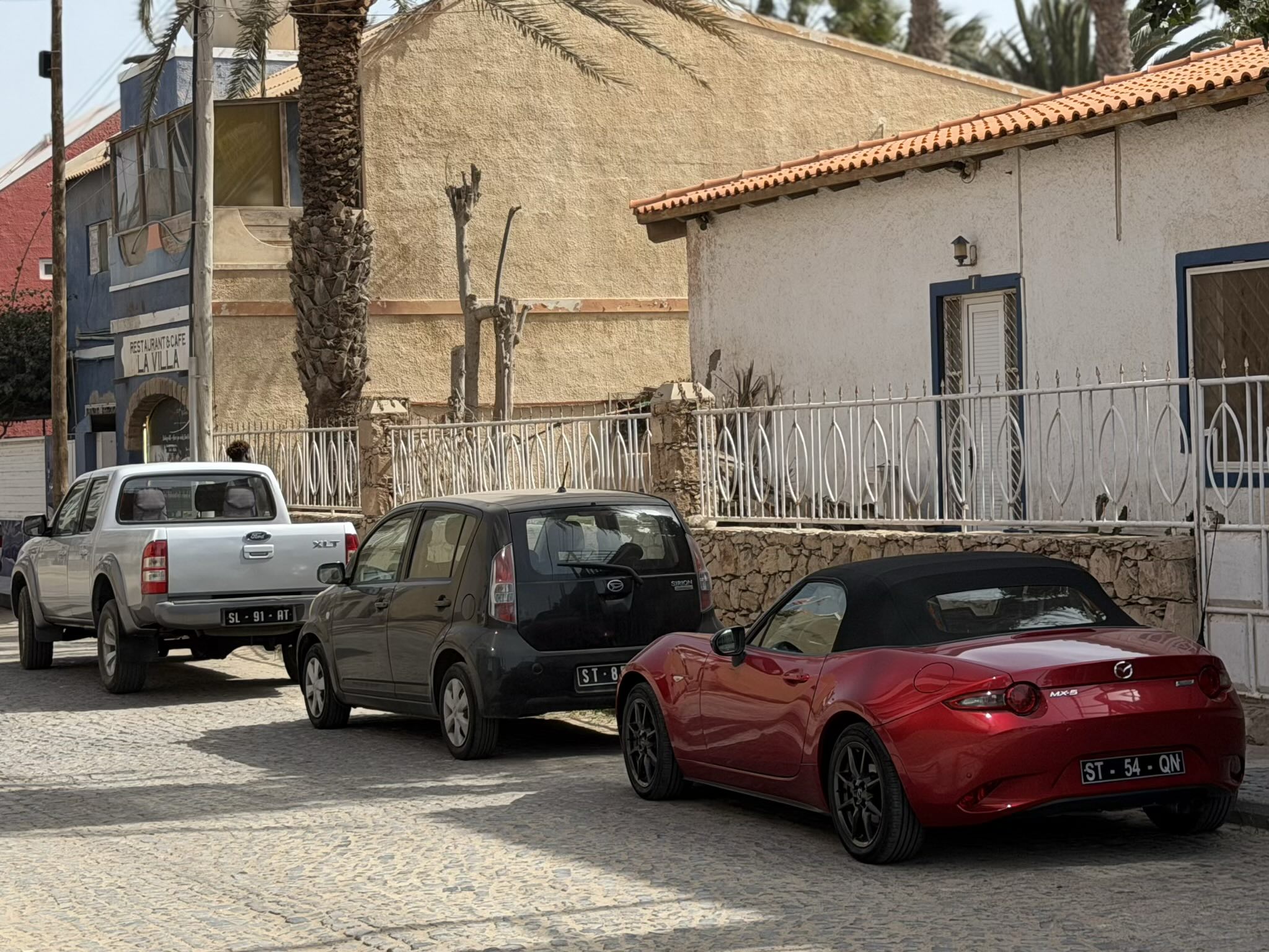
I don’t know why I’m still surprised by this. No matter where in the world I go—California, Spain, a volcanic island in the middle of the Atlantic—there is always, somewhere, a Miata. I am starting to believe that Mazdas are not manufactured so much as they are simply found, fully formed, in whatever corner of the earth needs one most.
I thought about Frank as I flew home. He made his prediction without charts, without market research, without even so much as a smartphone to look things up. He just looked at the world, saw the pattern, and called it. And now, on a tiny island that most people cannot find on a map, Chinese electric vehicles were charging up in side streets while a tour guide in a 30-year-old Hilux explained why a JAC might make more financial sense than a Toyota.
Frank was right. He often was, about the things that mattered.