Cars in Malaysia and Encounters with a Mystery “P” Car Brand

Before stepping off a bus from Singapore into Johor Bahru, I half-expected the cars to look like what I’d seen in Cabo Verde—a parade of Chinese brands that I had rarely seen in person before, filling every parking lot and roundabout. Given how aggressively Chinese automakers have been expanding globally, it seemed like a reasonable assumption.
I was wrong.
For one thing, everyone here drives on the left—same as neighboring Singapore, and same as Thailand, though you’d never guess it given that Thailand is sandwiched between Vietnam, Cambodia, Laos, and Myanmar, all of which drive on the right. Malaysia felt instantly familiar in that respect after crossing the causeway from Singapore.
The motorbikes are more numerous here than in Singapore, though nowhere near the two-wheeled free-for-all I remember from Vietnam two decades ago. The cars themselves are overwhelmingly small—compact in the European sense, though unlike Europe, where hatchbacks dominate, the majority of cars here are sedans. Think Toyota Corolla circa 1995—i.e., smaller than present-day Corollas. The overall impression is of a fleet that is tidy, practical, and not particularly showy.
The usual Japanese suspects are well represented: Toyota, Honda, Nissan, Mazda, Mitsubishi, Subaru, and Isuzu pickup trucks. Hyundai and, to a lesser extent, Kia from Korea. A scattering of European marques—a BMW here, a Volkswagen there, the occasional Mercedes and a Land Rover (owned, for the record, by India’s Tata). Not a single American-manufactured car aside from Tesla.
Chinese brands are present but less conspicuous than I expected. I noticed Jetour and Geely. Conspicuously absent, at least to my eyes: BYD and MG.
And then there is Proton.
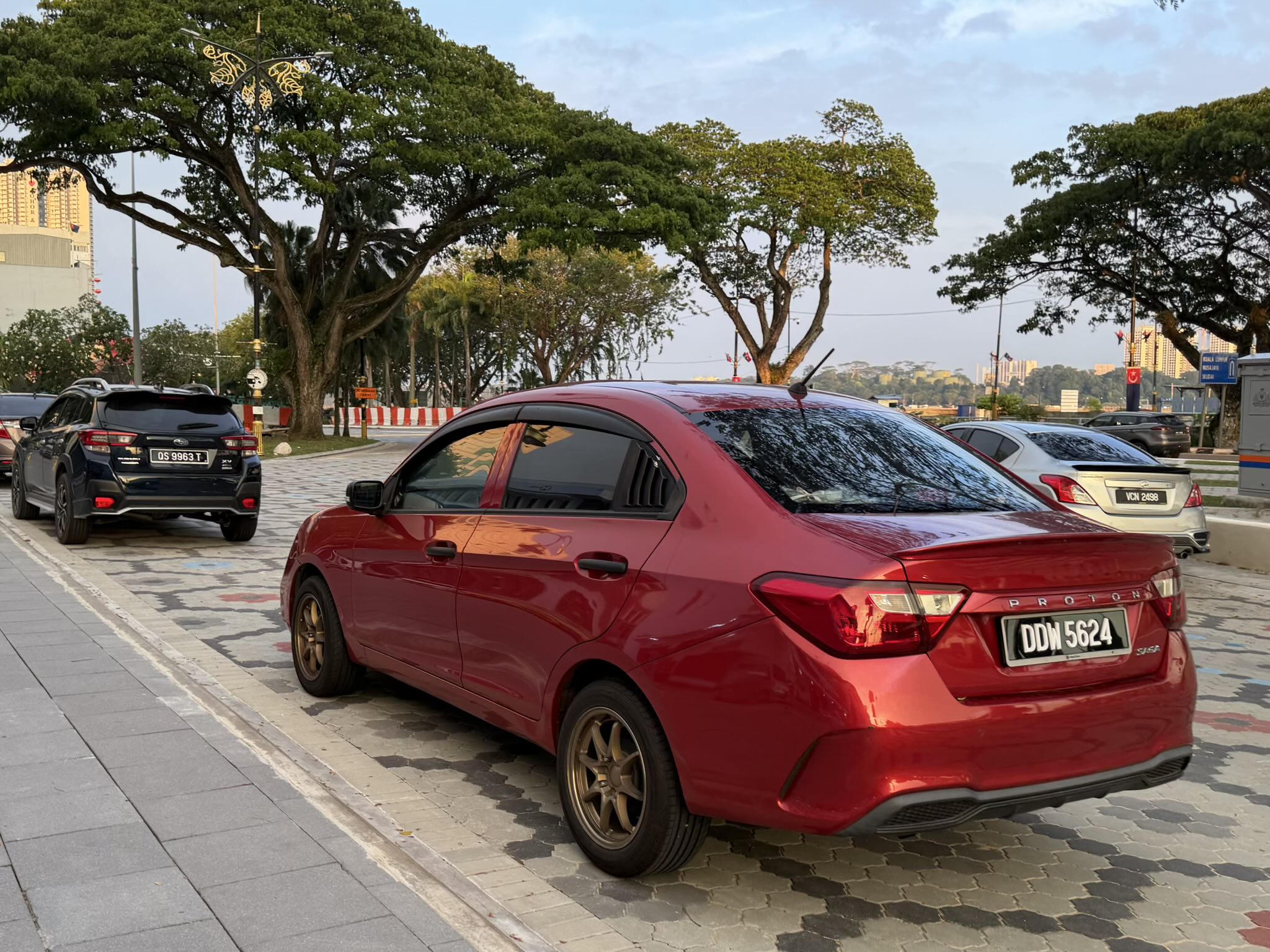
Founded in 1983, Malaysia’s original national car company spent much of the 1990s and 2000s selling rebadged Mitsubishis before developing its own models—compact sedans like the Saga being the most recognizable. Proton also had a brief and unlikely chapter as the owner of Lotus from 1996 to 2017. Its ownership of the legendary British sports car marque is why I had at least heard of Proton, even though up until now, I had not seen one in person.
Since 2017, Chinese automaker Geely has held a 49.9% stake in Proton. It also acquired Lotus when Proton sold it.
But Proton is not the car I kept seeing everywhere on the streets of Johor Bahru.
Most of the cars had an emblem I didn’t recognize: something that looked like a reverse S mounted at the front of the car. At the rear, no manufacturer name—just model names. Axia. Bezza. Myvi. I had no idea what I was looking at, so I pulled out my phone and searched.
Perodua.
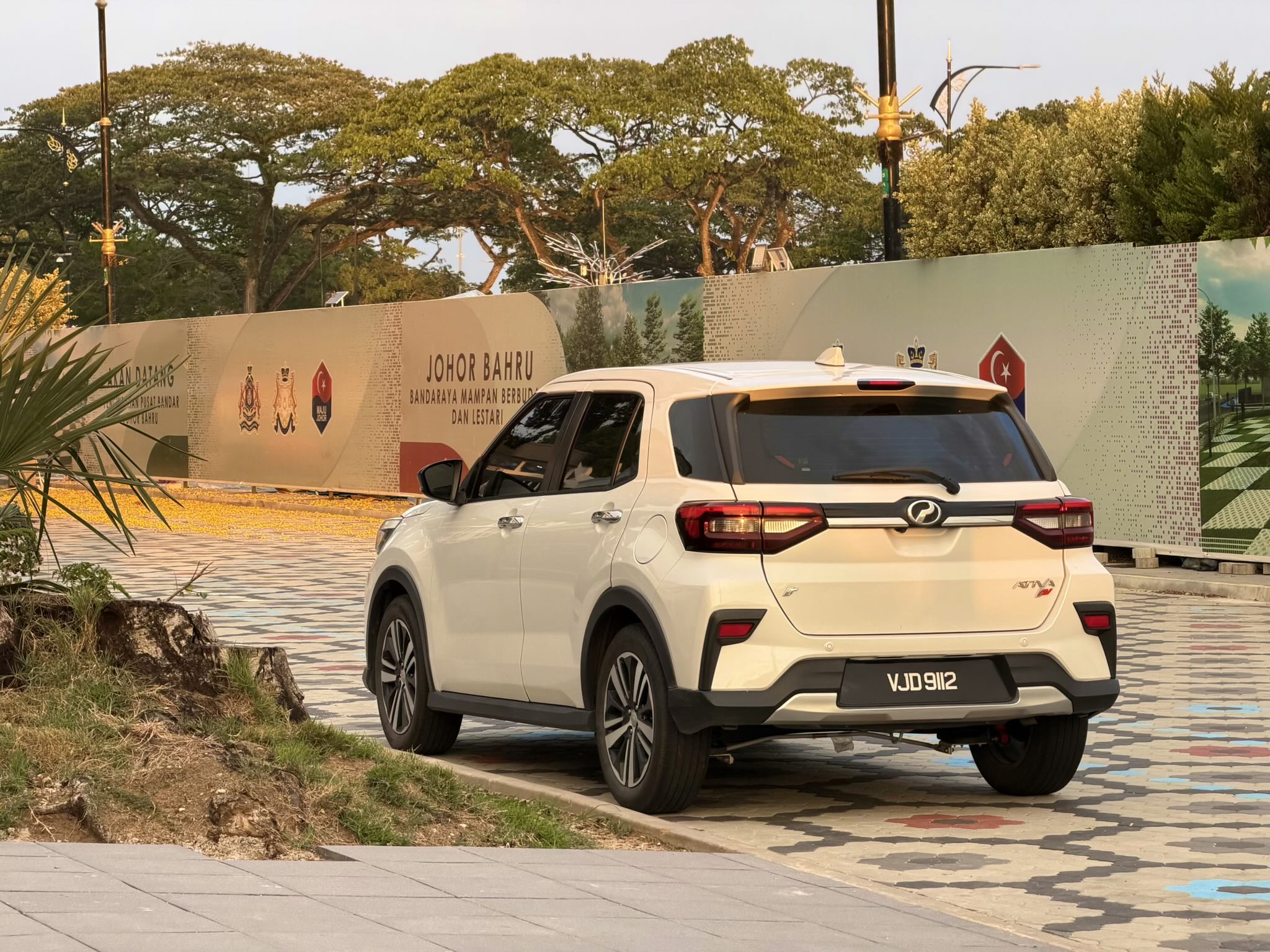
I had never heard of Perodua. Not once, not in print, not on YouTube, not in any conversation I can recall. This struck me as remarkable, because I consider myself a very well-informed car enthusiast, and Perodua—apparently—is not a small operation that, say, Lotus is.
Established in 1993, the company engineers its core components in partnership with Daihatsu of Japan. In 2025, Perodua sold over 370,000 vehicles in Malaysia—good for a 43.9% market share. Nearly half the cars on Malaysian roads.
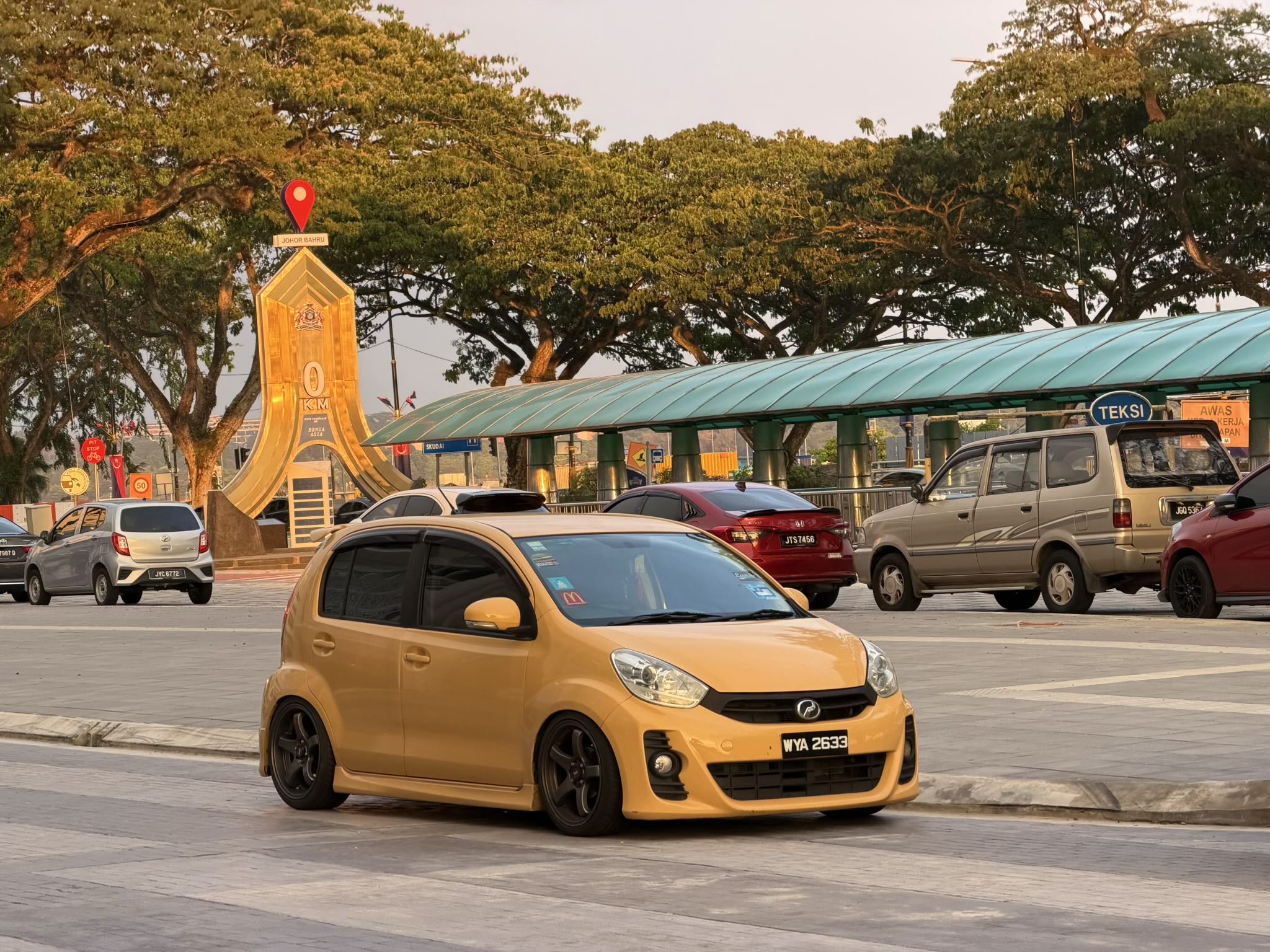
The reasons for Perodua’s dominance aren’t hard to understand once you start digging. The cars are inexpensive. They have earned a reputation for reliability. And roughly 90% of their components are locally sourced, which keeps prices down, are readily available, and presumably earns some goodwill in the process.
The Perodua Axia, Bezza, and Myvi are as ordinary-looking as any car you’d find in a budget city car lineup, which is precisely the point. They are not trying to make a statement. They are trying to get you to work and back without incident, for a price that doesn’t sting.
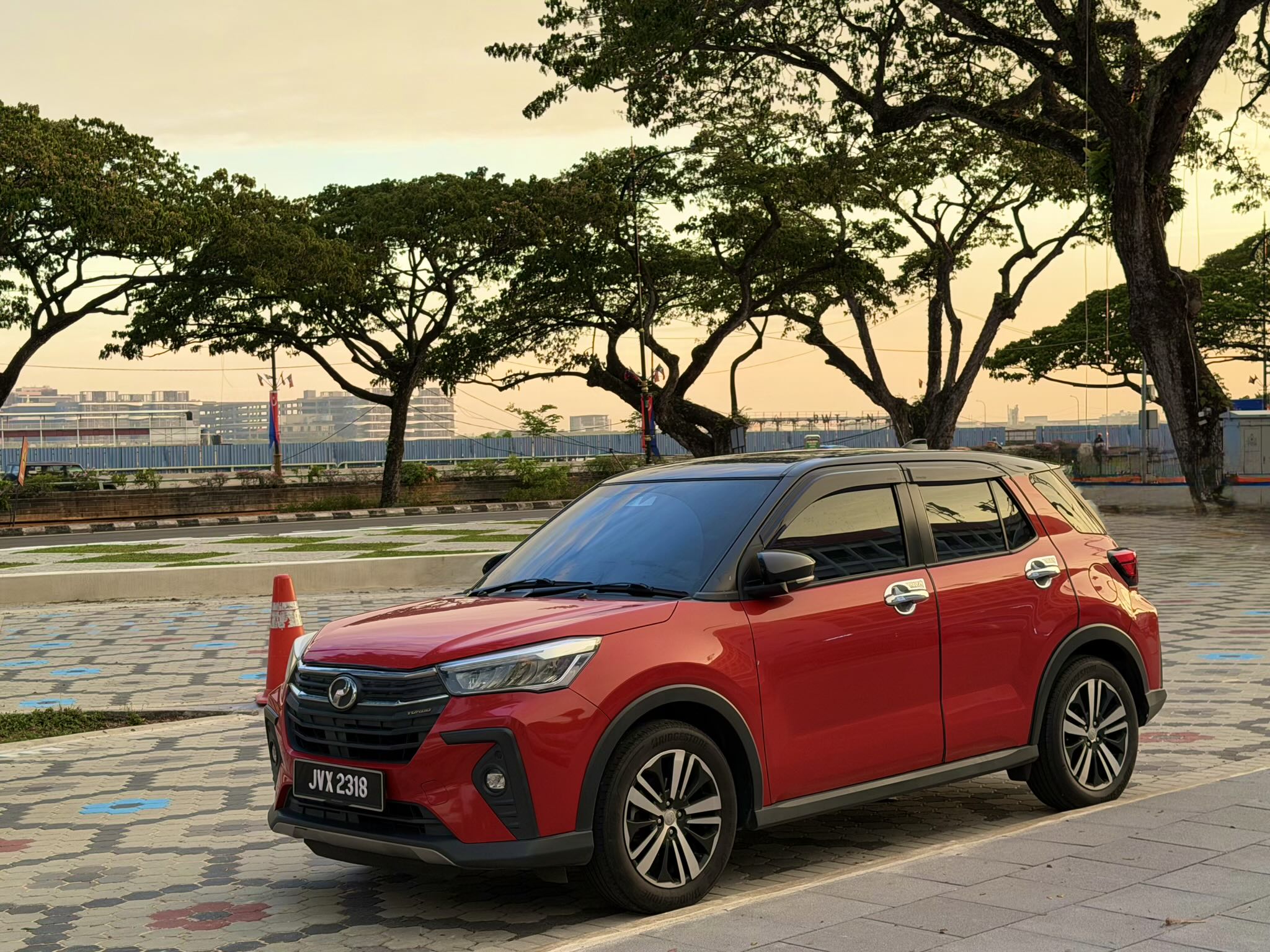
What stays with me is the anonymity of it all—that a brand selling nearly half the cars in an entire country can be completely invisible to an enthusiast on the other side of the world. Perodua puts its name nowhere on the outside of the car. Just the model name. Just the stylized P that doesn’t look like a P.
It’s remarkable that it’s essentially the national car, hiding in plain sight from the rest of the world.
There are 2 comments.
I hadn’t heard of that car brand before either. How is EV adoption in these countries?
I saw very few EVs in Malaysia. Just a few Tesla Model 3s. No BYDs.
Supposedly, Perodua just launched their first EV a few months ago that costs less than US$20K. It's so new that I haven't seen one.
Singapore—which I will write a blog post about within the next week—has a much different automobile landscape despite being right across the border. Lots of BYDs and Teslas over there, along with the German luxury marques and McLarens and Lamborghinis. But car ownership in Singapore is mostly for the rich. Just purchasing the right to drive in Singapore (which I understand is by auction) can often cost more than a car itself!