Macau: Not Actually the Las Vegas of Asia

The idea came from my dad. He suggested a day trip to Macau—somewhere I had never been to—and added the kicker: we would drive there via the world’s longest sea-crossing bridge. My dad is into that sort of thing. I guess I inherited that quality from him.
My aunt Diana had only been once herself. My cousin Carlina and her husband Samuel was graciously up for driving us. Fortunately, when they came to pick me up, my dad and Carlina reminded me about needing my passport—an easy thing to forget when you’ve been bouncing between Hong Kong and Southeast Asia for a few weeks and your brain has started treating border crossings as minor inconveniences rather than actual international events.
We left at 10:15 a.m. That meant I had enough time to do an easy recovery run and eat a breakfast that would raise eyebrows at a Hong Kong cha chaan teng: a salad of spring greens, tomatoes, garbanzo beans, and sardines, all from the Market Place store just a five-minute walk away. Also: a banana, blueberries, and Auntie Diana’s pu-er tea.
The Bridge
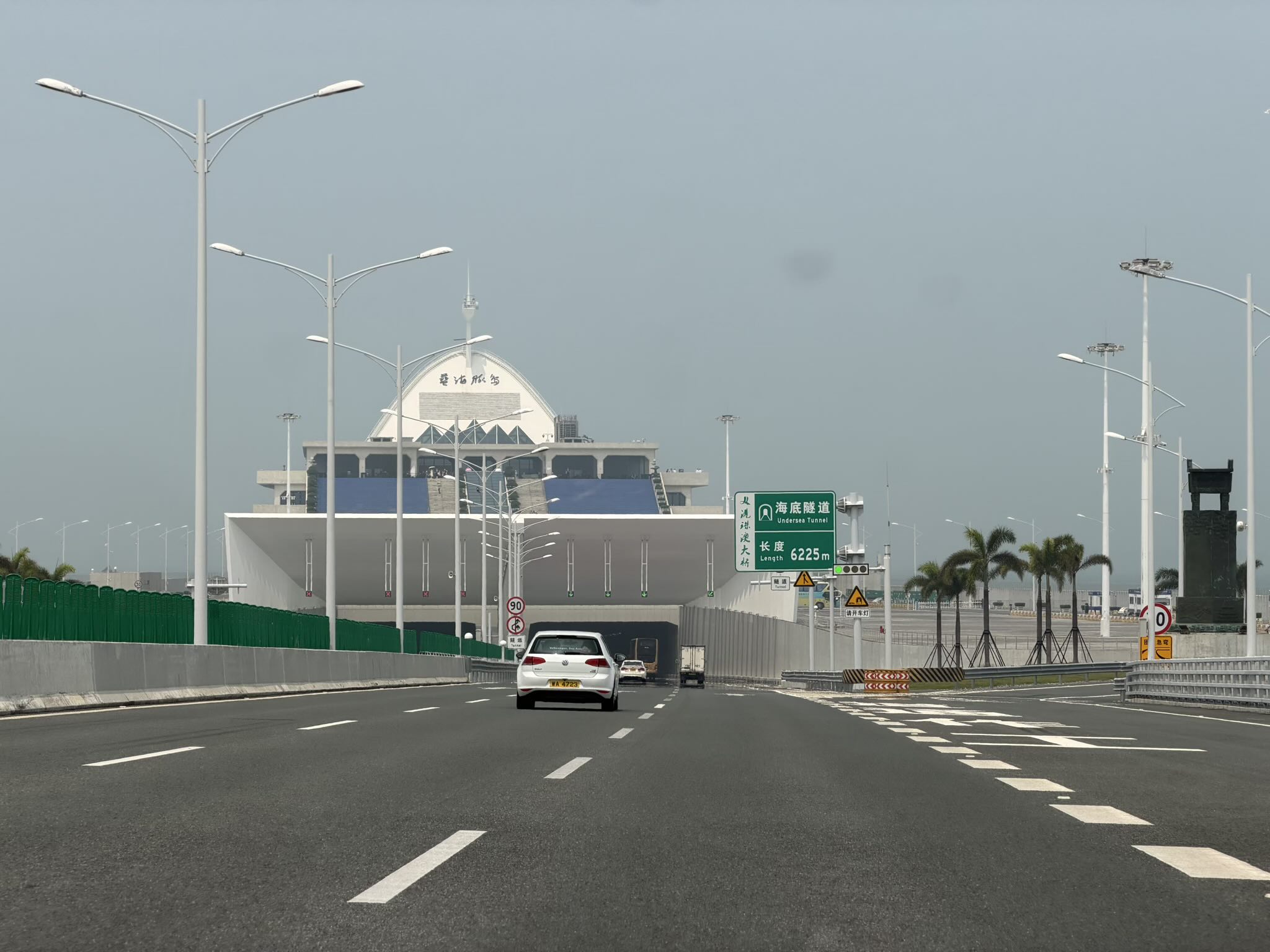
The Hong Kong–Zhuhai–Macau Bridge is, depending on how you count, 42 to 55 kilometers long—42 km from port to port, or 55 km including the approach roads on both ends. Either way, it holds the record for the longest sea-crossing bridge-and-tunnel system in the world. The undersea tunnel portion alone runs 6.7 kilometers, making it the longest immersed road tunnel on the planet. The entire structure cost the equivalent of roughly $15 billion USD and took nearly a decade to build. My dad was visibly pleased.
On the drive over from the Hong Kong side, we caught a glimpse of the Ngong Ping 360 cable cars gliding across Lantau Island—a 5.7-kilometer span that carries passengers from Tung Chung up toward the peaks, with the South China Sea visible below.
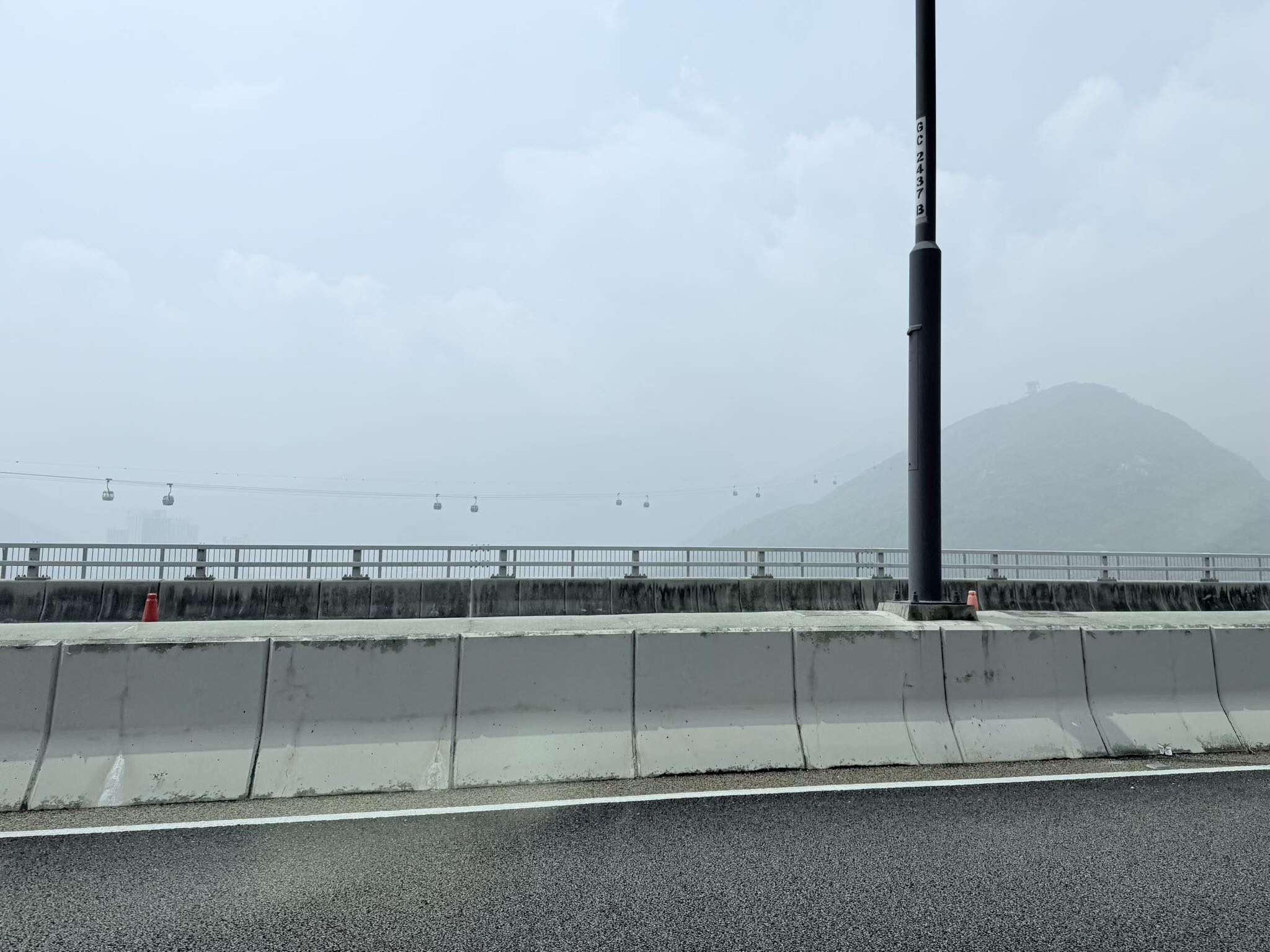
I had expected the kind of traffic that turns a 42-kilometer drive into a three-hour ordeal, but the bridge was surprisingly clear. Speed is strictly enforced by cameras at point A and then again at point B, calculating your average—a system that highways in the U.S. are just starting to adopt. Samuel had paid a toll in advance (a QR code scanned at the booth) for the right to drive the route. Leaving Hong Kong required passport checks at a gated checkpoint, a process that was quick and did not require getting out of the car.
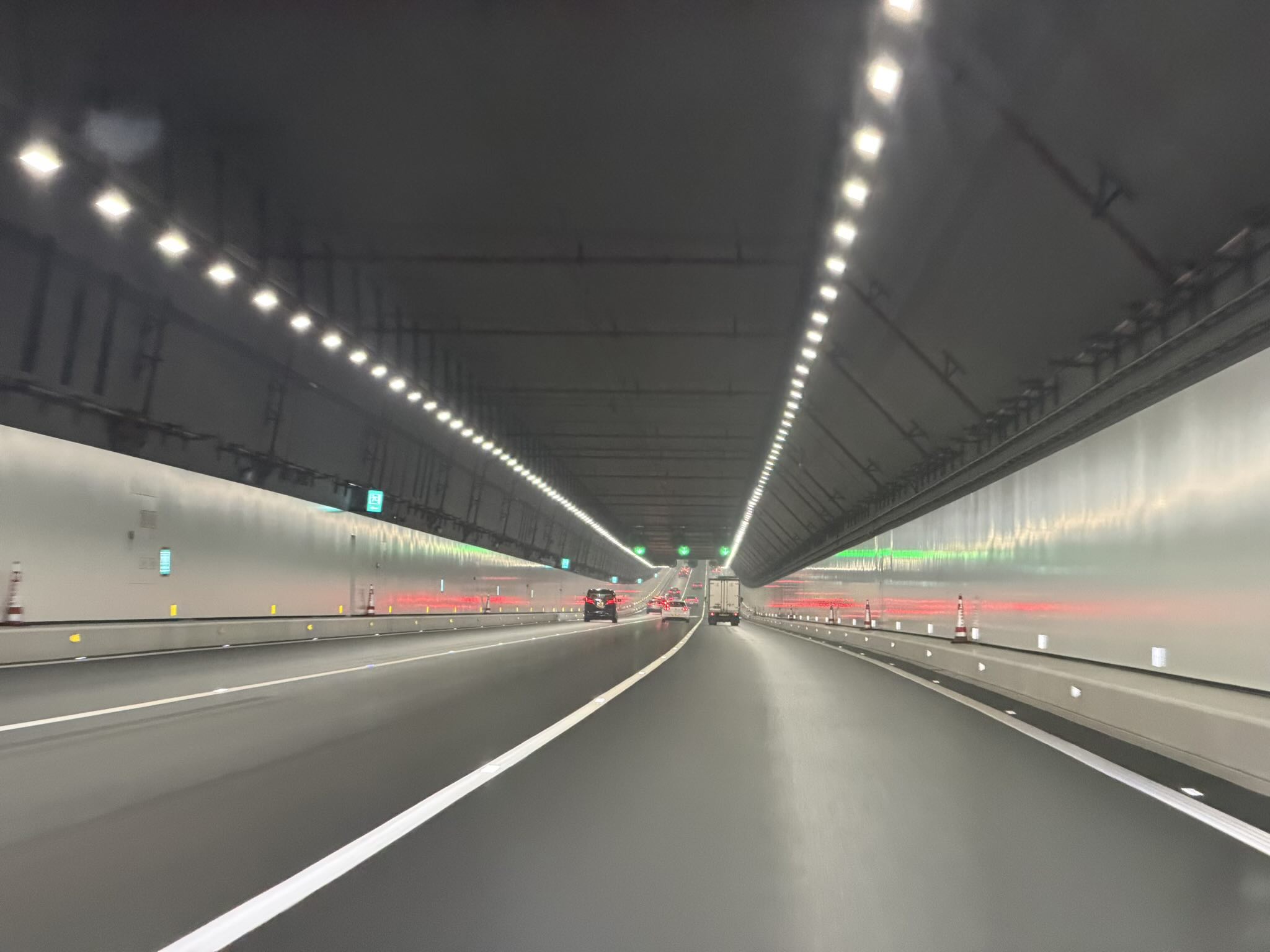
The bridge itself had a short underground stretch—the 6.7-kilometer tunnel that dips beneath the Pearl River Estuary to allow large cargo ships to pass overhead. Emerging from it felt a bit like surfacing from a very long, well-lit dive.
Then: Macau.
Passport Control and a Vocabulary Lesson
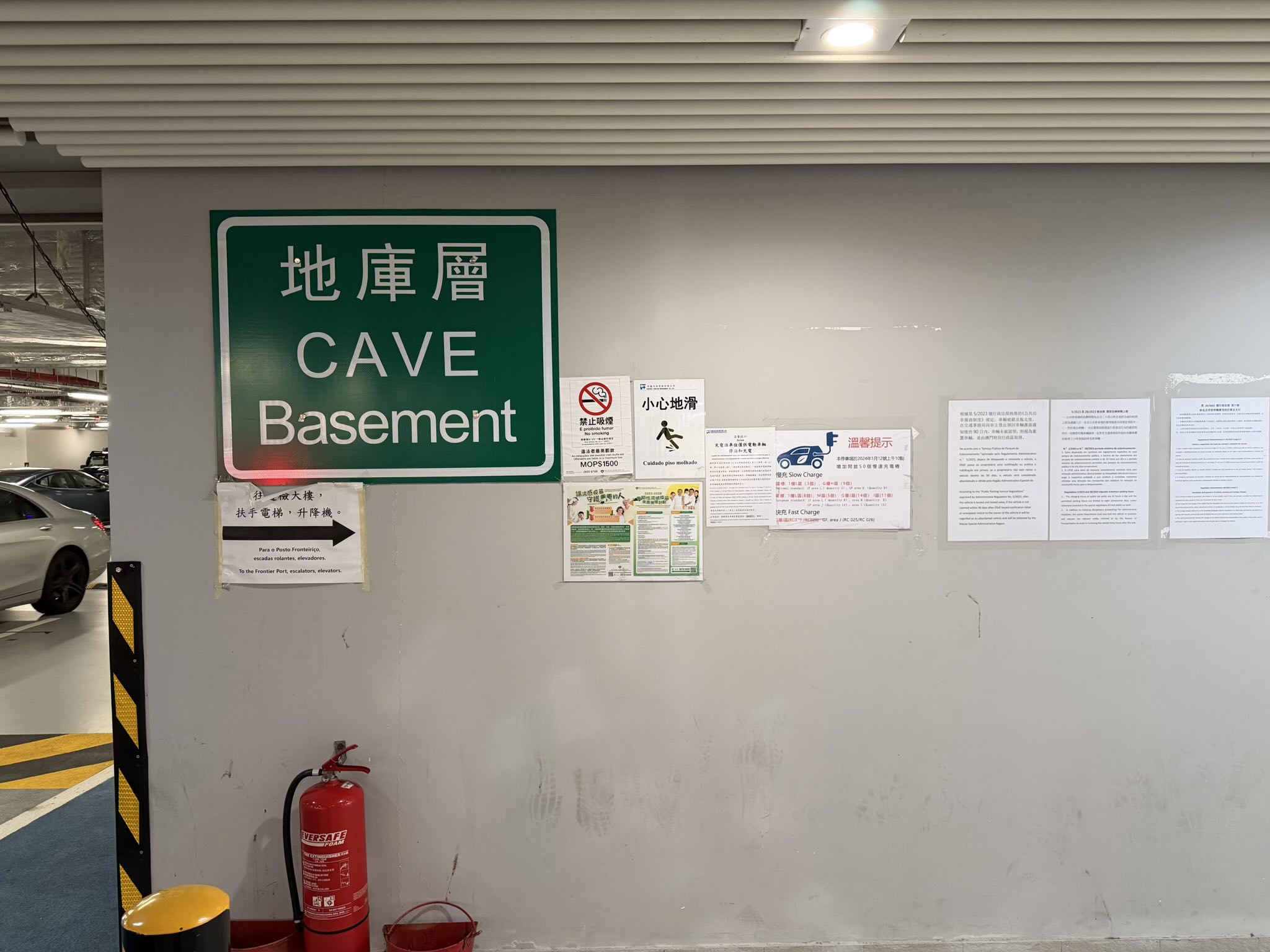
When we parked, my dad spotted a sign. “They have a funny English name for this parking garage: ‘Cave basement'” he observed, laughing and pointing it out to Carlina. It took me a second before I realized the first word was actually Portuguese—cave means “basement,” left over from when Macau was a colony until 1999. I explained this to them, though I admit the sign is much more humorous if you don’t know Portuguese.
We then cleared passport control through eGates—the second check of the day, the price of visiting a territory that is simultaneously part of China and unlike anywhere else in China.
Lunch at Hei Lin Cafe
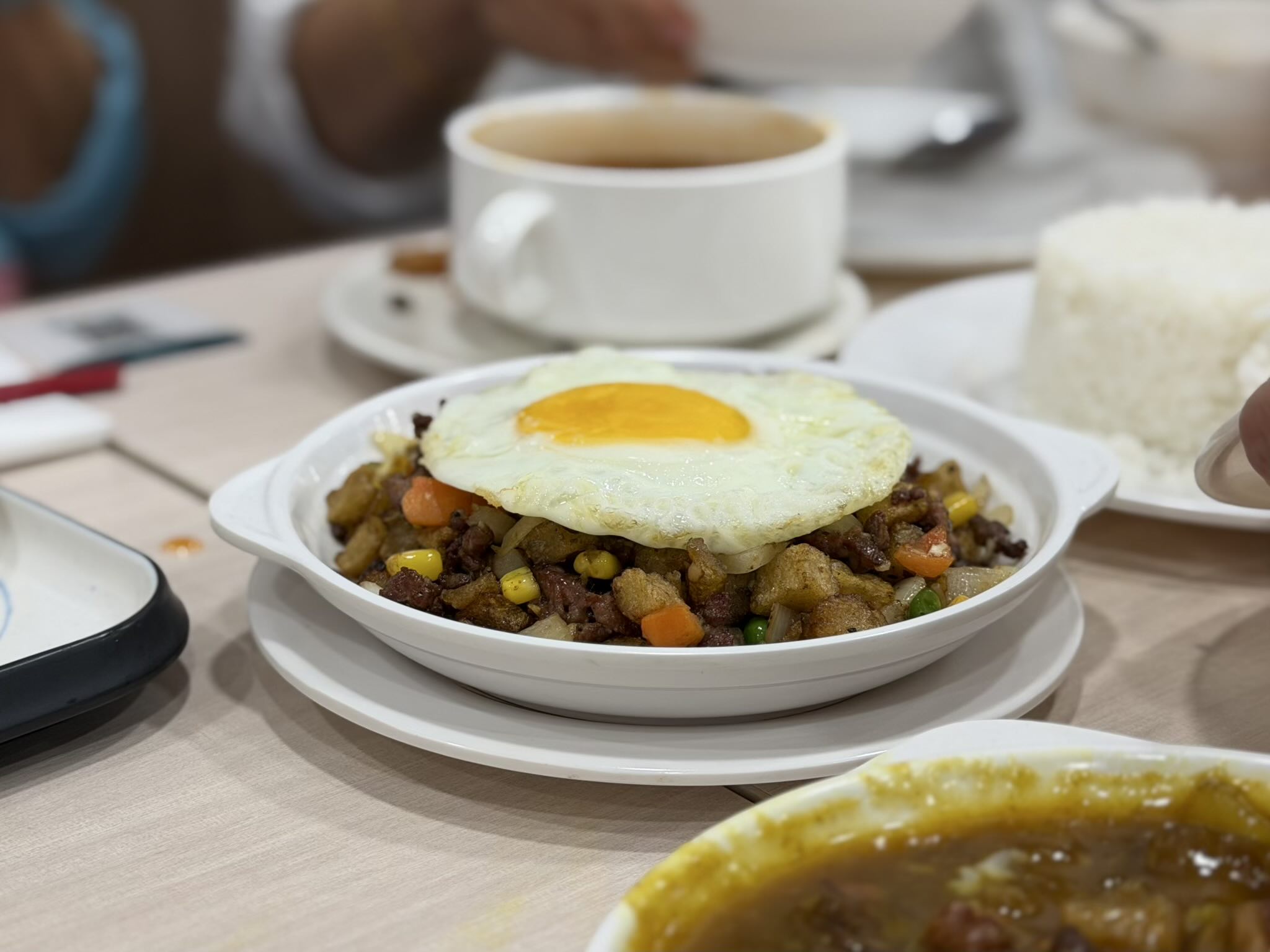
Our first stop was Hei Lin Cafe, an authentic Macanese restaurant that Carlina had scouted in advance. We ordered several of the city’s signature dishes. The centerpiece was minchi—Macau’s answer to comfort food—a stir-fry of minced beef and diced potatoes seasoned with soy sauce and finished with a fried egg on top. It is the kind of dish that tastes like someone’s grandmother perfected it over forty years, which is probably exactly what happened.
We also had what appeared to be pastéis de atum—small, square, flaky pastries filled with curried tuna, a Portuguese-Macanese staple that falls somewhere between an empanada and a savory hand pie—along with fried wontons, rolls stuffed with barbecued beef, and a Portuguese curry with white rice. Macanese cuisine is one of the world’s oldest fusion traditions, blending Portuguese, Chinese, and Southeast Asian influences since the 16th century, which means any given table at a Macanese restaurant can simultaneously remind you of Lisbon, Guangdong, and Goa.
I learned when I tried to pay using Alipay, that my QR code was rejected immediately—apparently, many restaurants will accept Alipay HK but not Alipay Global, the latter being what I had. The restaurant also didn’t accept Apple Pay or Visa. This was a reminder that a foreign bank account can be many things in Asia, but “convenient” is often not one of them—particularly when you are not going to a smaller establishment that is not catered to tourists.
Old Macau
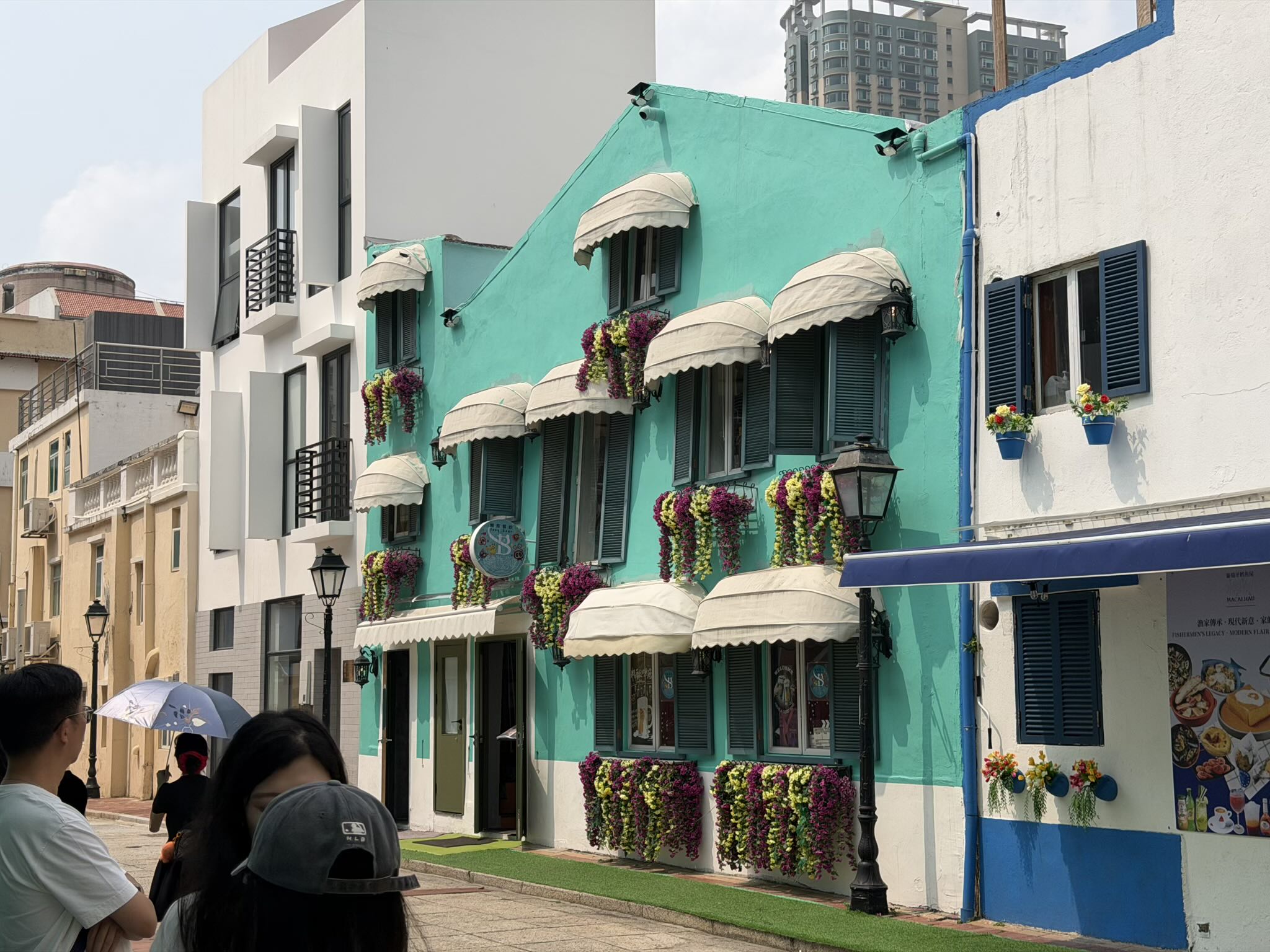
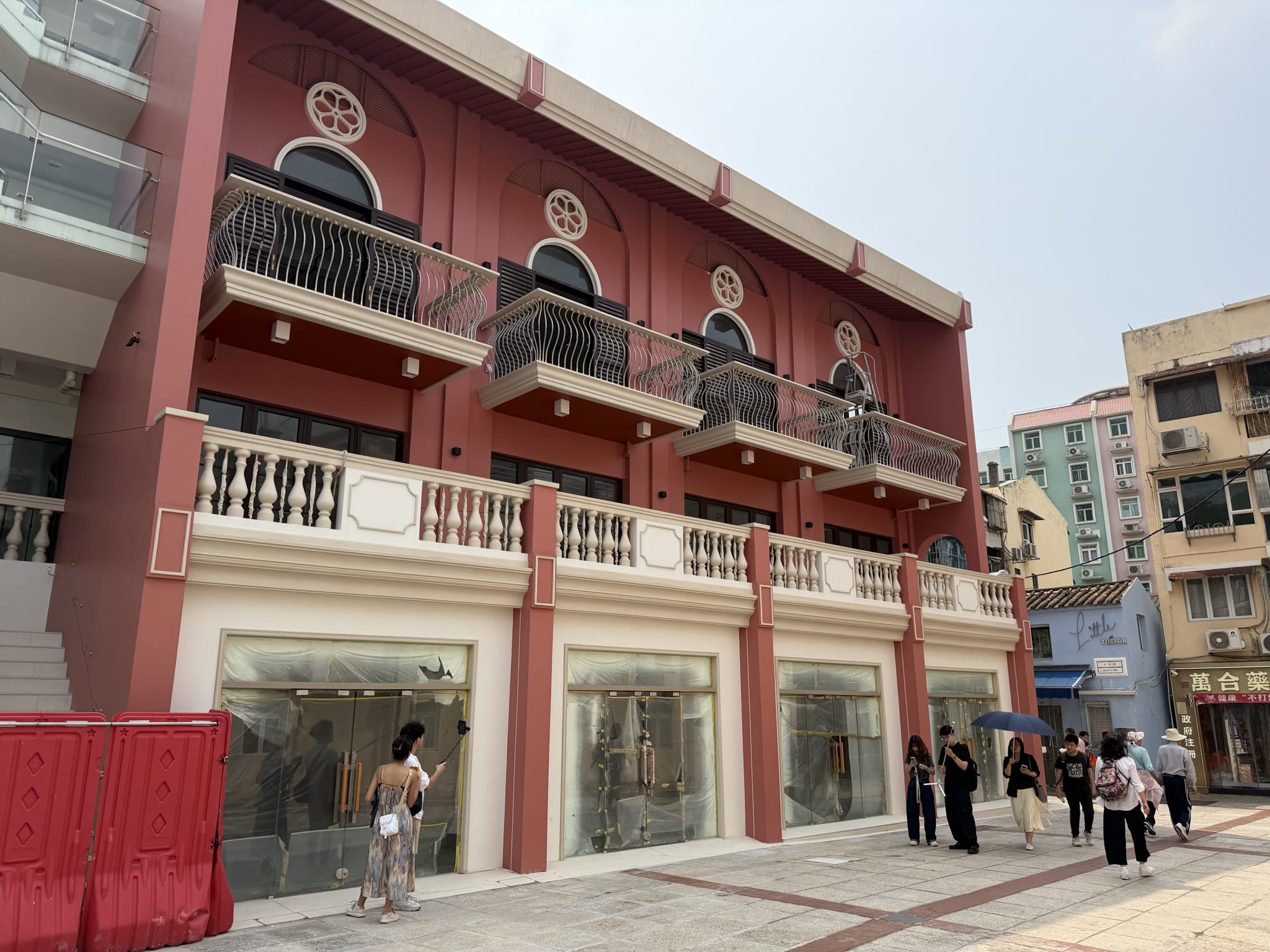
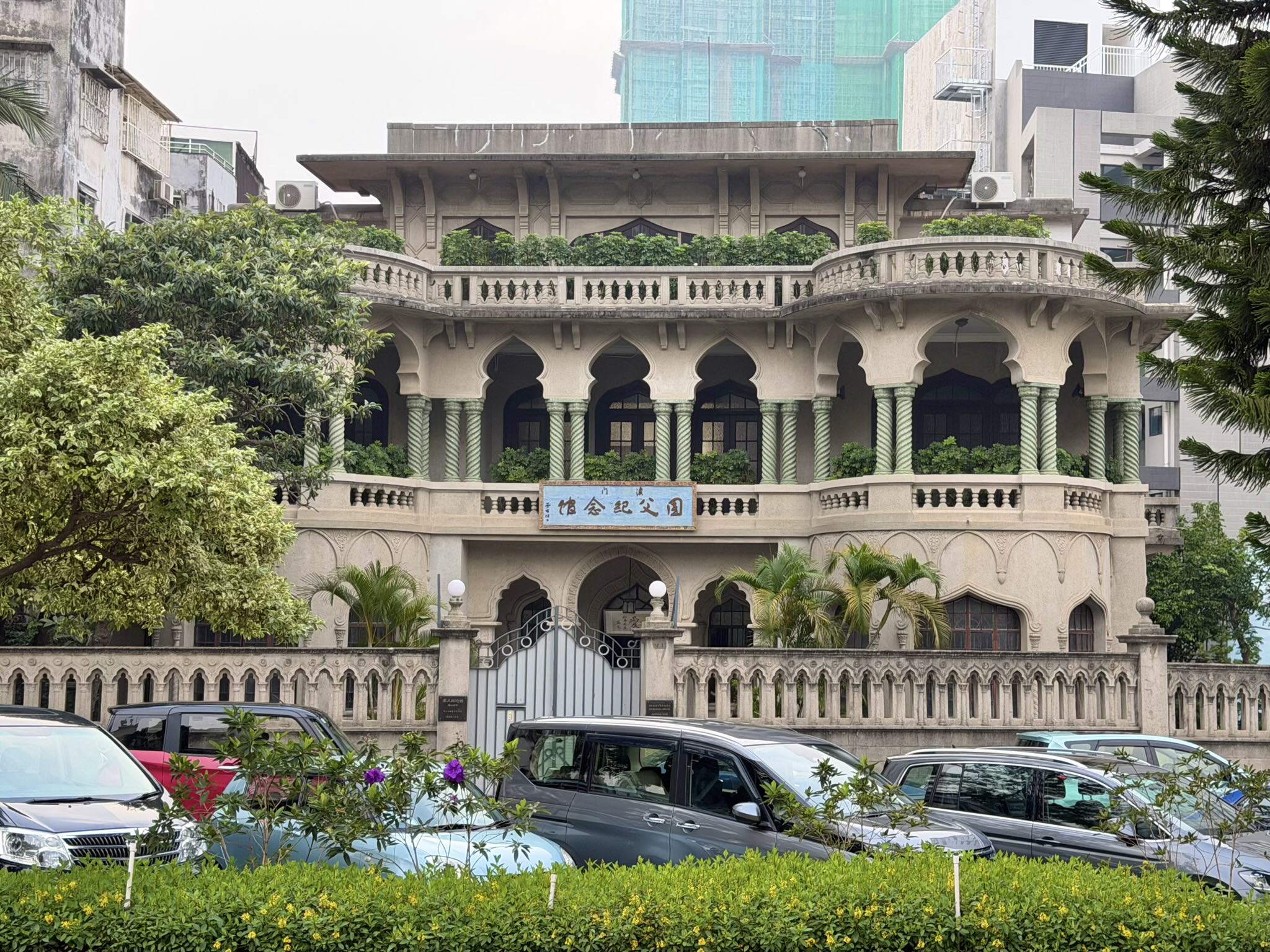
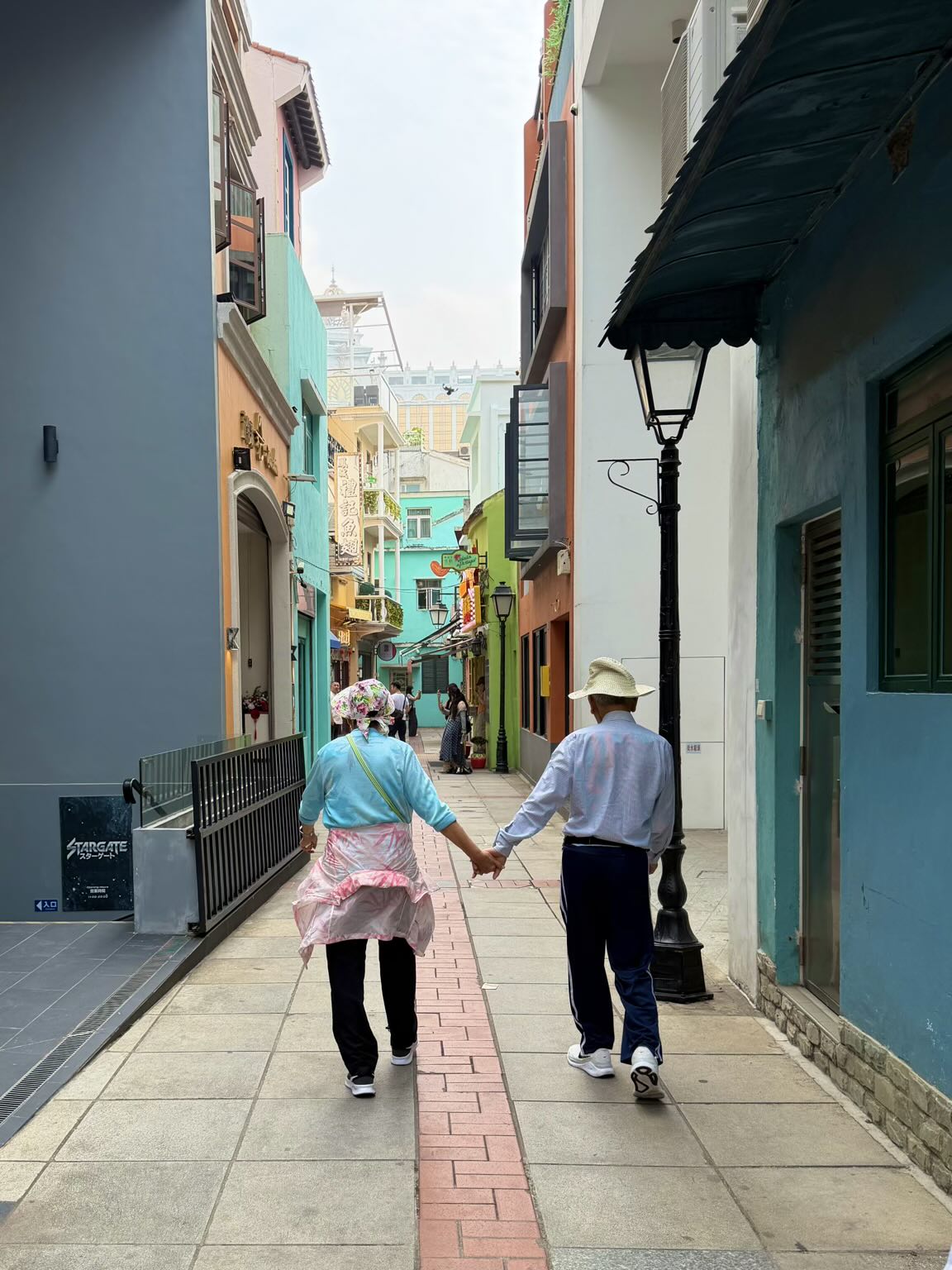
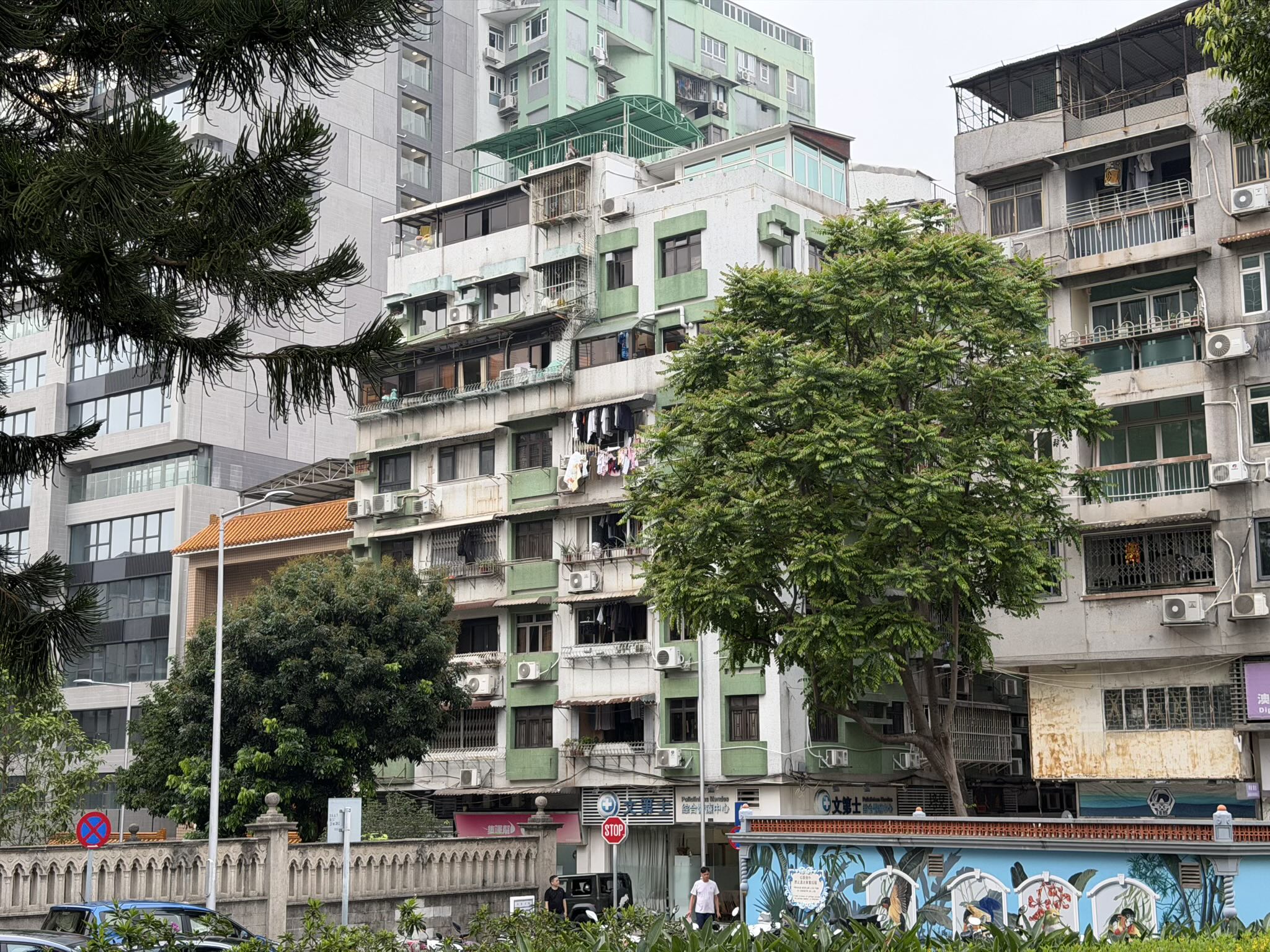
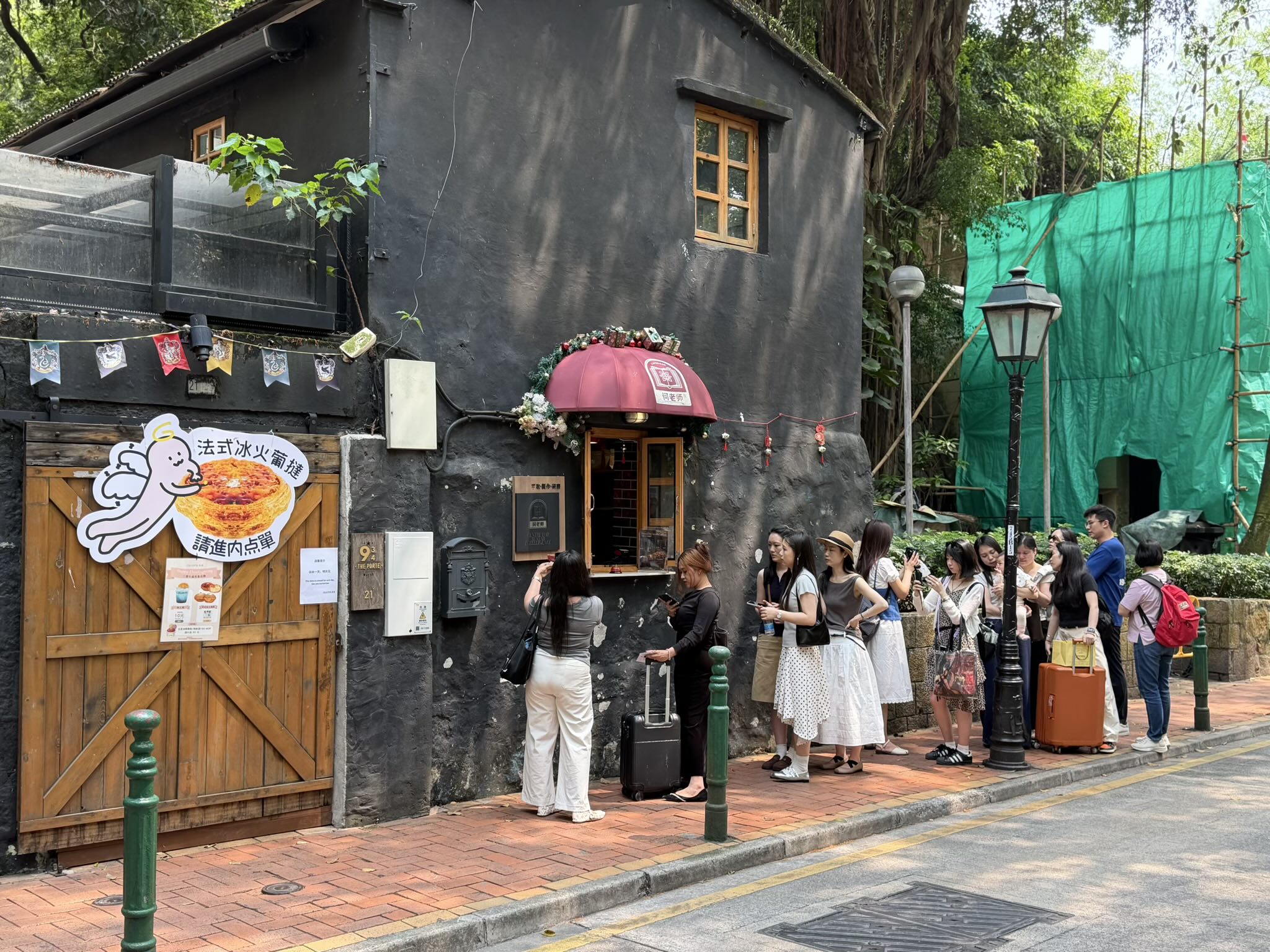
After lunch we walked through part of the historic center, where the street signs are in both Portuguese and Cantonese—Rua do Cunha alongside its Chinese equivalent, a reminder that colonial architecture here is not a theme park reproduction but the actual city. The Portuguese paving stones underfoot, the pastel-colored building facades, the wrought-iron balconies: all of it has the slightly dreamlike quality of a European city that somehow ended up on the South China Sea.
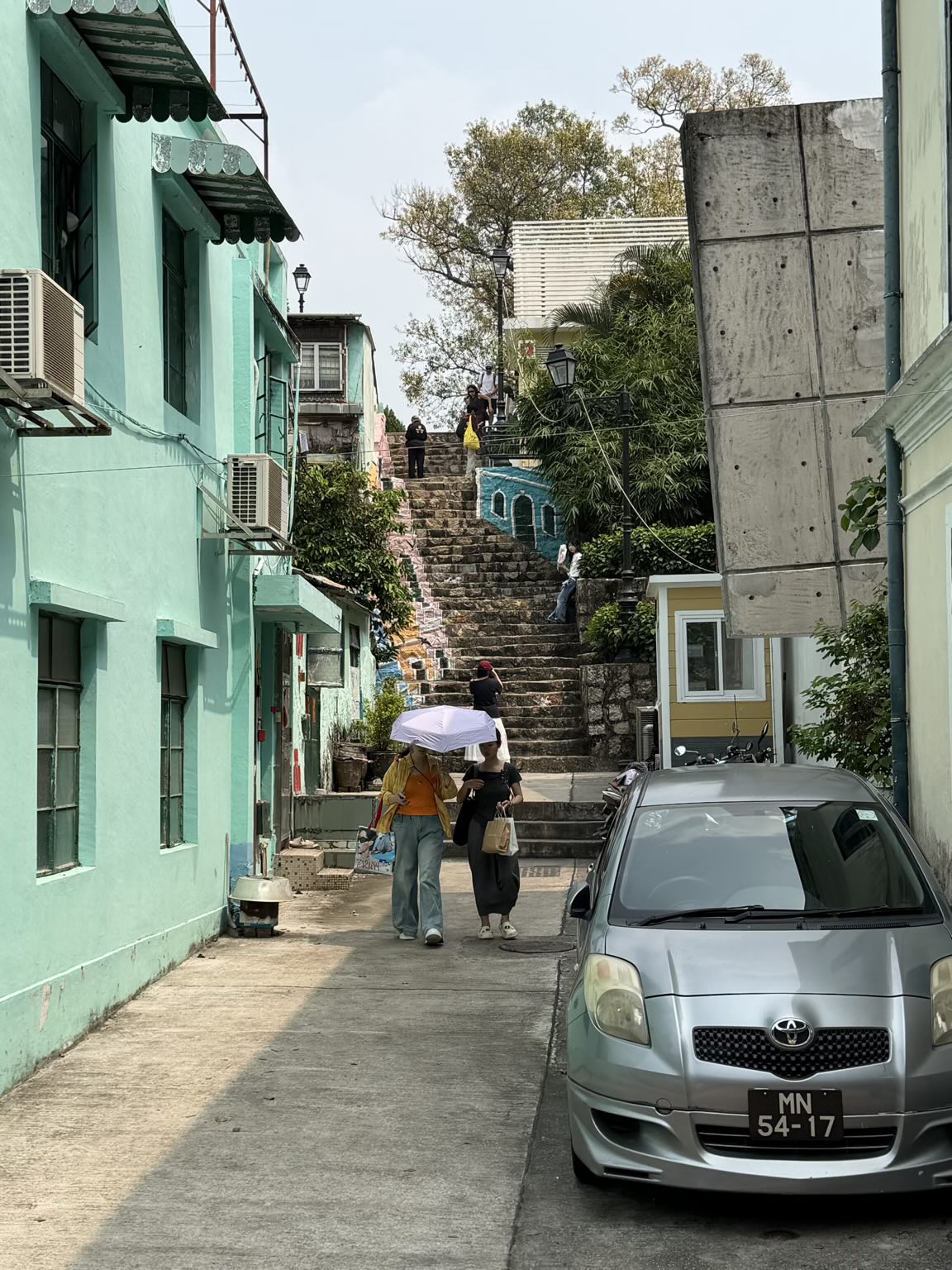
The first and only graffiti I spotted in the old quarter was a spray-painted black outline of a Brazilian flag with the word “Brazil” beneath it. No explanation. No context. Macau has had more colonial masters than most, but I’m fairly sure Brazil wasn’t one of them.
We stopped at the Carmo Fair at the Ruins of the Old Taipa Market, which was lively with vendors and visitors, then hailed a taxi—a Toyota Noah, one of those Japanese minivans that are ubiquitous across Asia and invisible in the U.S.—to the Ruins of St. Paul’s.
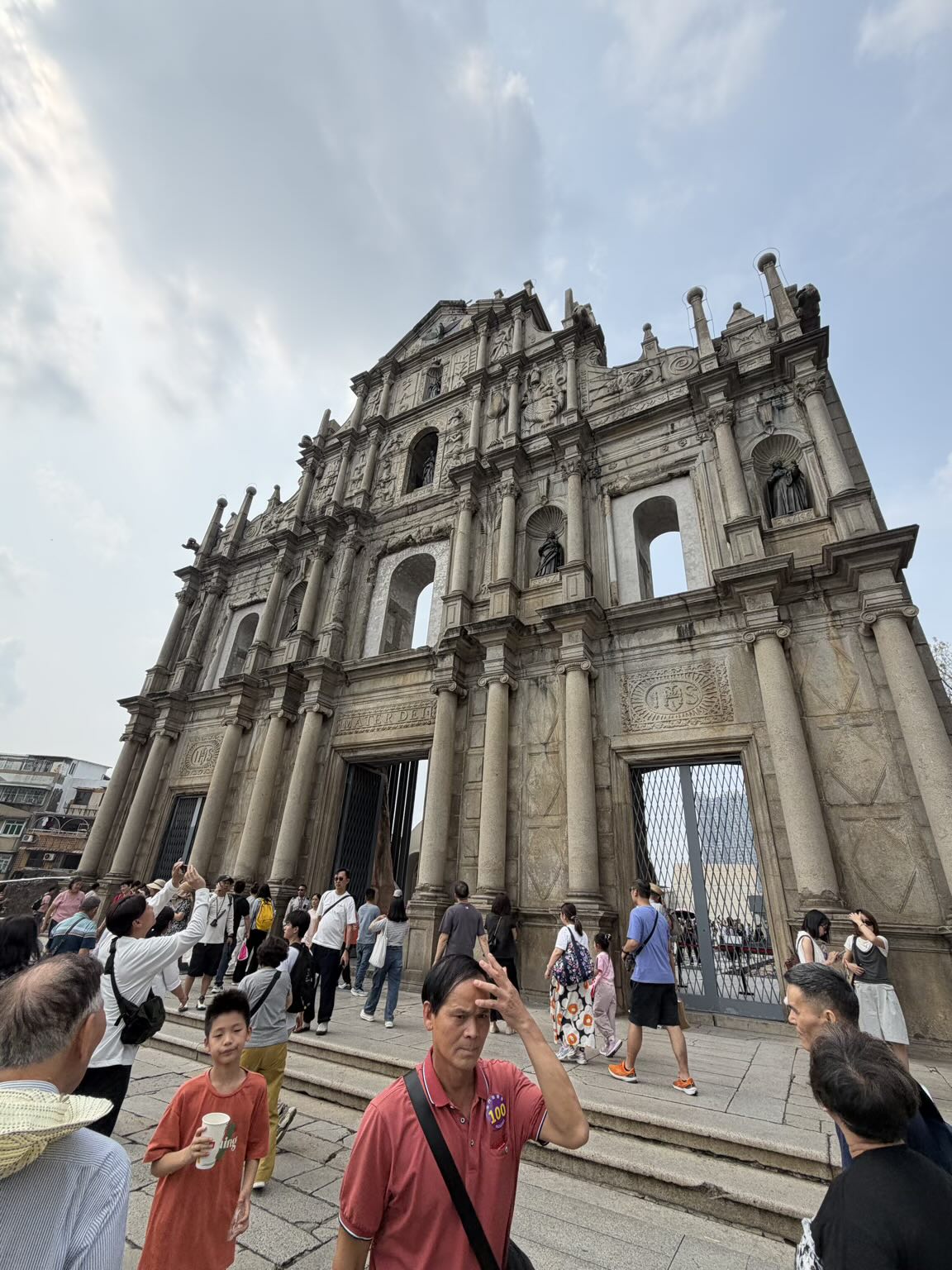
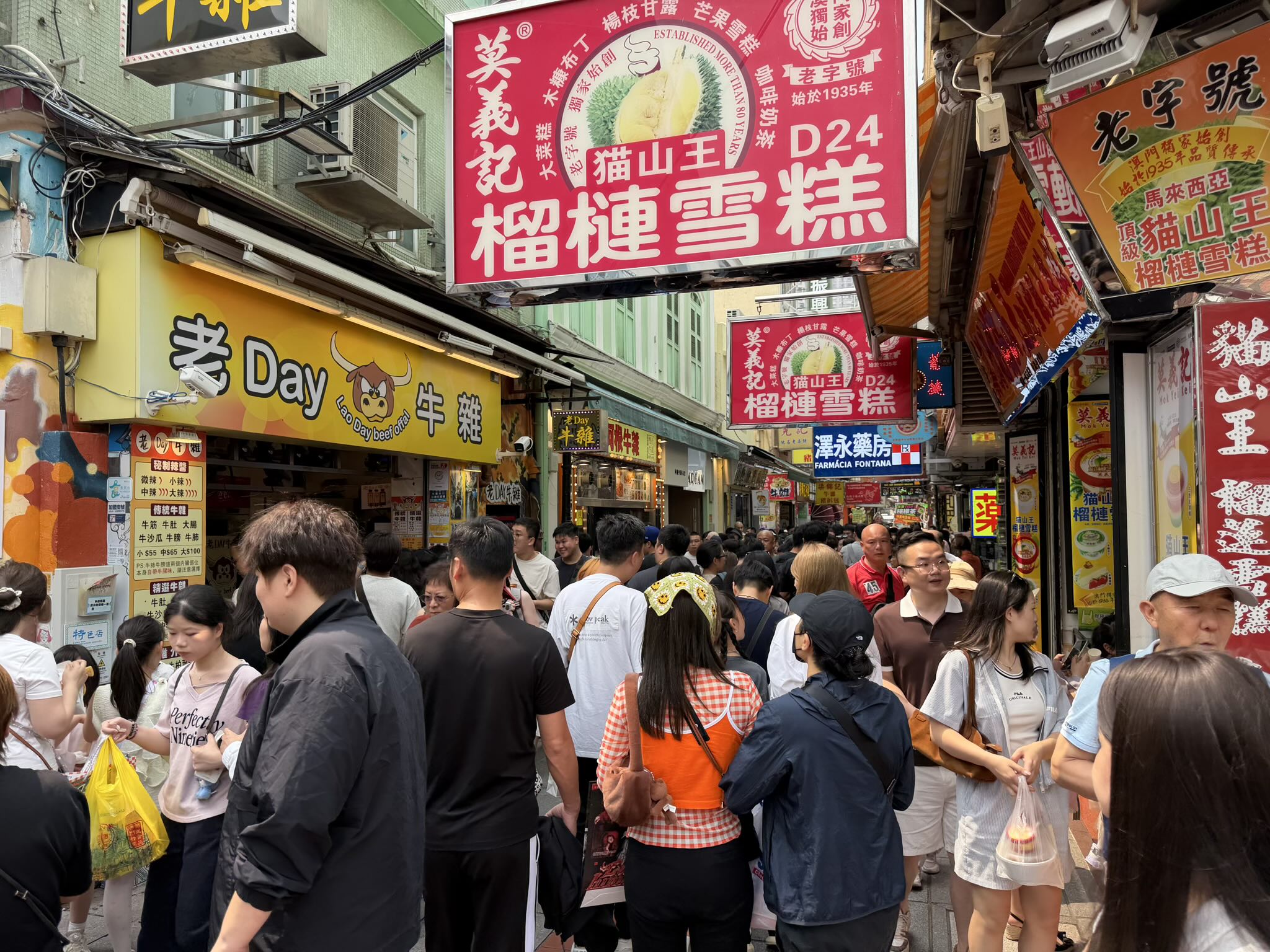
The Ruins of St. Paul’s are the facade of a 17th-century Portuguese cathedral that burned down in 1835, leaving only its ornate stone front standing. It is now Macau’s most photographed landmark, which on this particular afternoon meant it was surrounded by an extraordinary number of people all photographing it simultaneously. We took our own photos and moved on.
The Cotai Strip
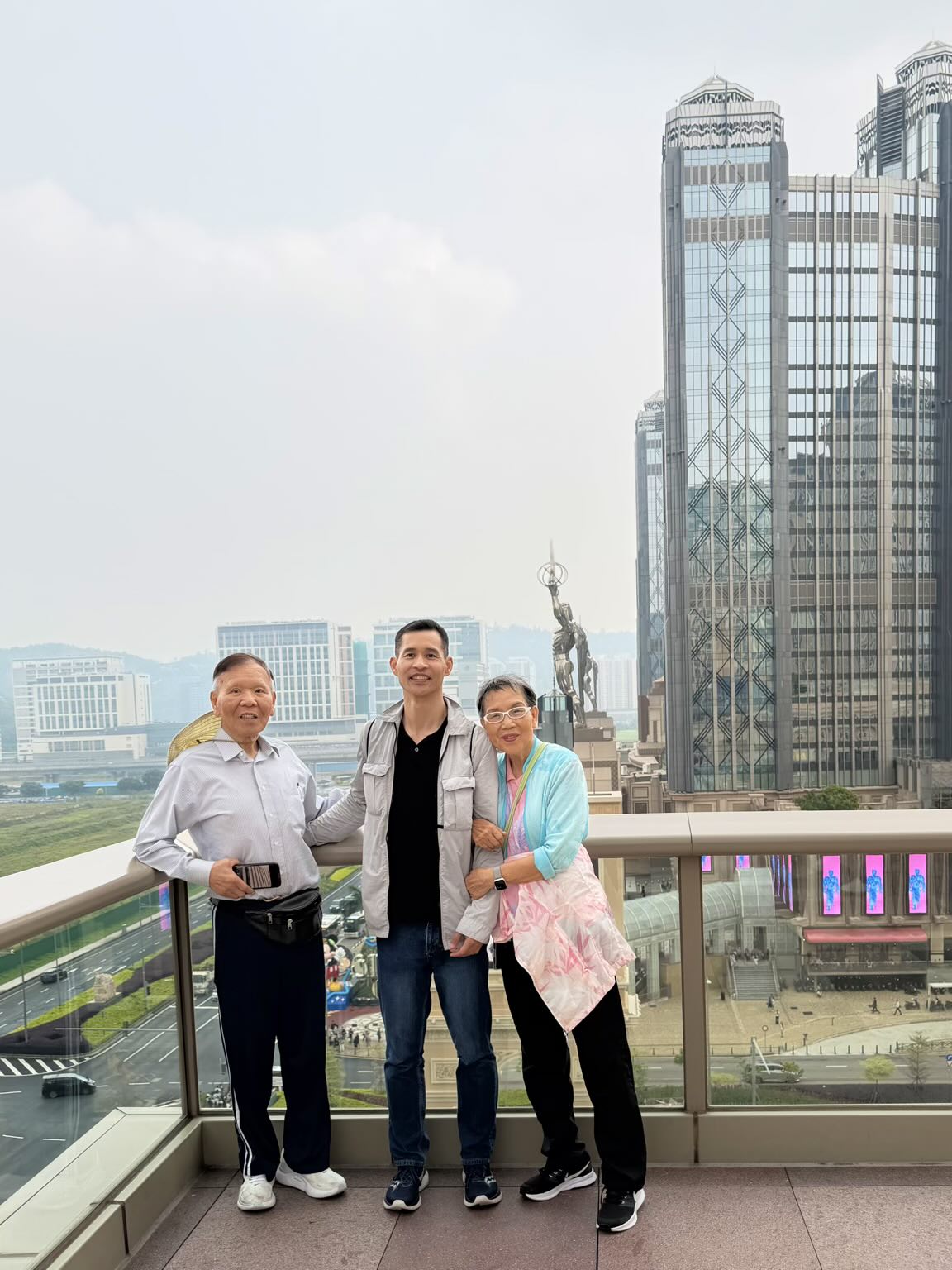
From the historic center we took another taxi—this one a Honda Stepwgn, another van model sold throughout Asia but not in the U.S.—to the Cotai Strip, the newer, reclaimed-land half of Macau where the casino resorts have been built on a scale that makes Las Vegas look like it was designed by people with a limited sense of ambition. My dad, who had dismissed the idea that Macau is “the Las Vegas of Asia” as an understatement, was vindicated.
I should note for the record: I don’t gamble and neither do my relatives. We didn’t set foot inside a single casino. We were there for the architecture and the novelty. (Or, more precisely, imitation.)
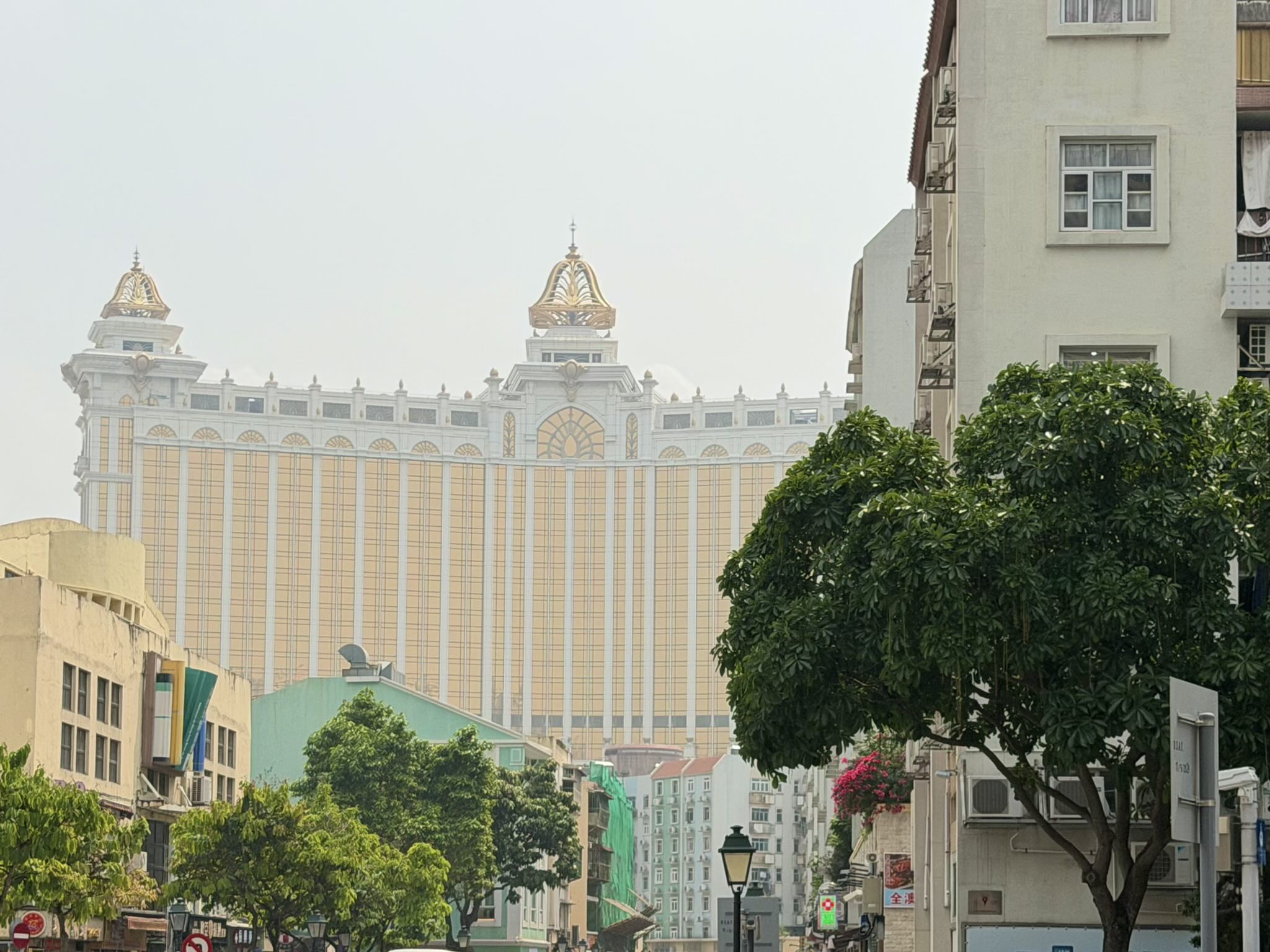
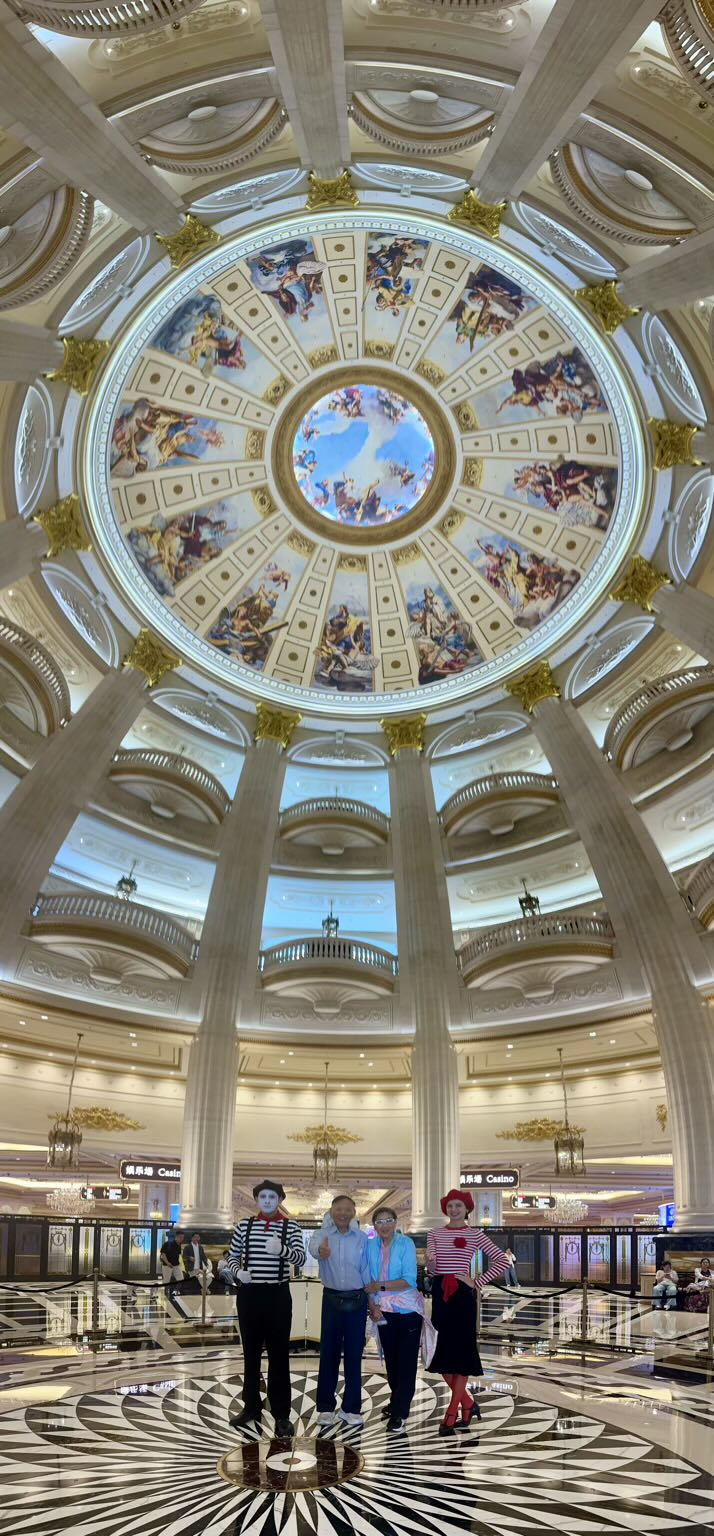
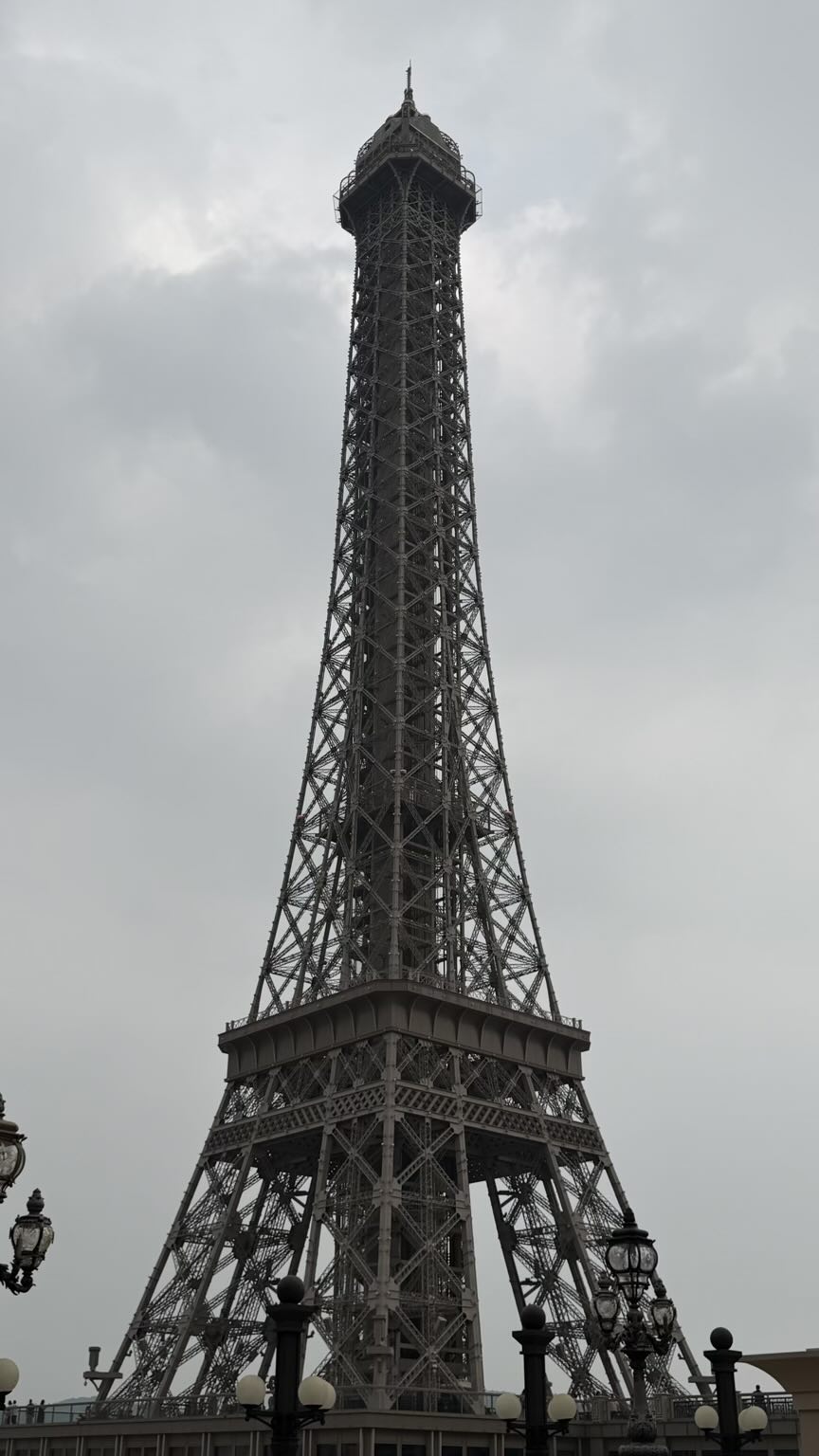
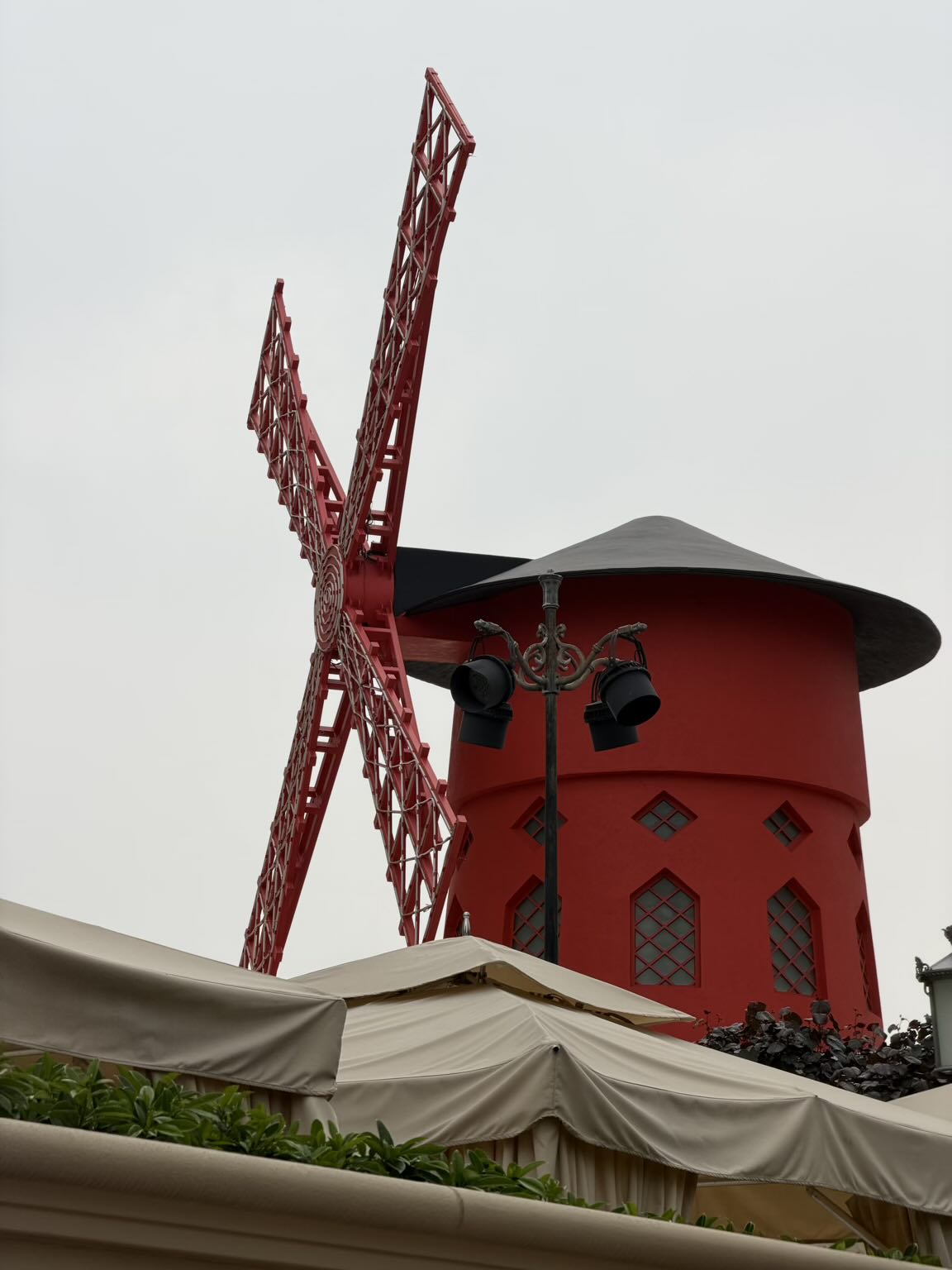
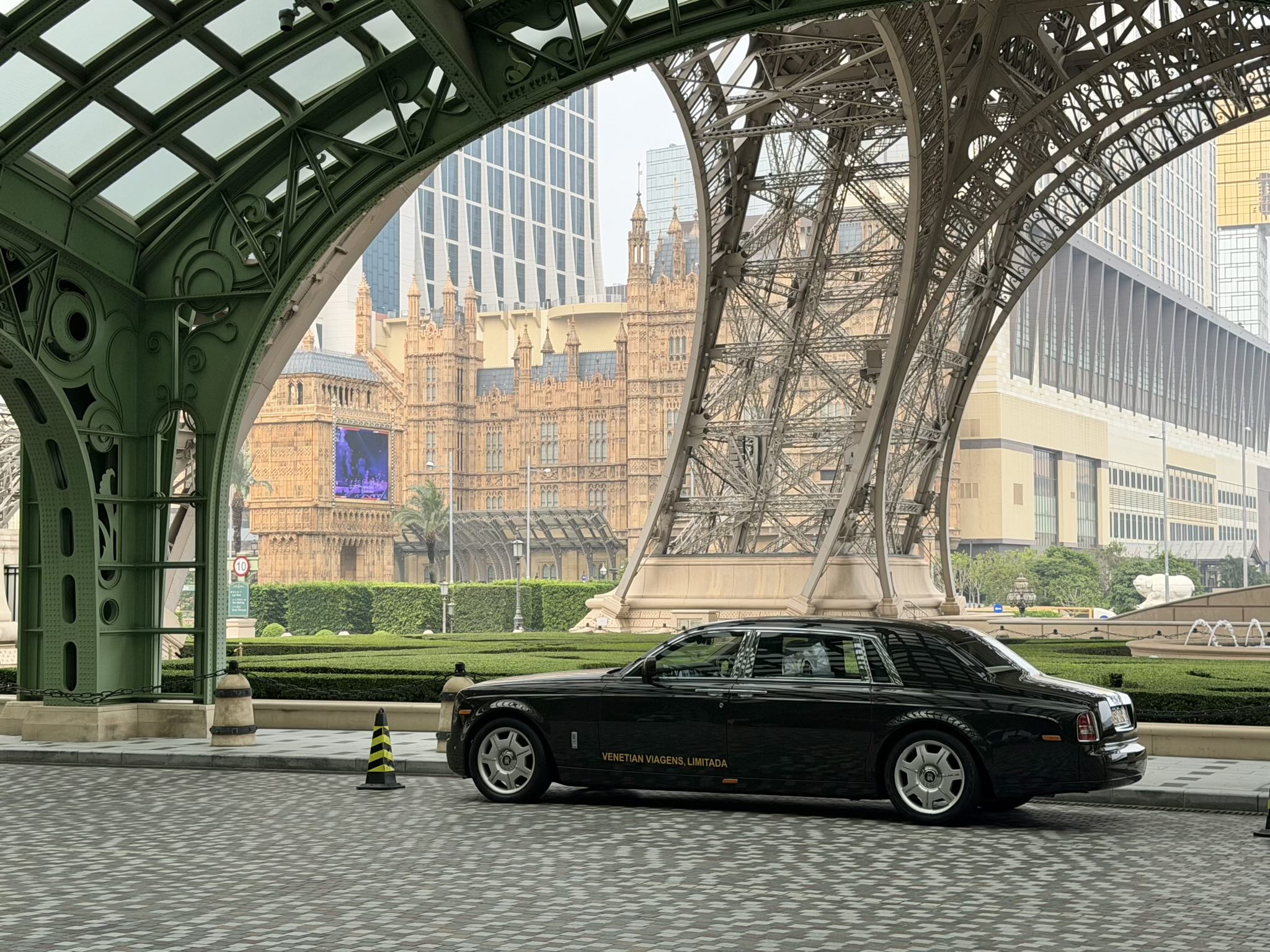
First was the Parisian, which features a half-scale replica of the Eiffel Tower outside and a multi-story luxury mall inside, its ceilings painted with artwork in the manner of a French château. A Rolls-Royce was parked beneath the tower with the quiet confidence of a car that has never once worried about parking fees.
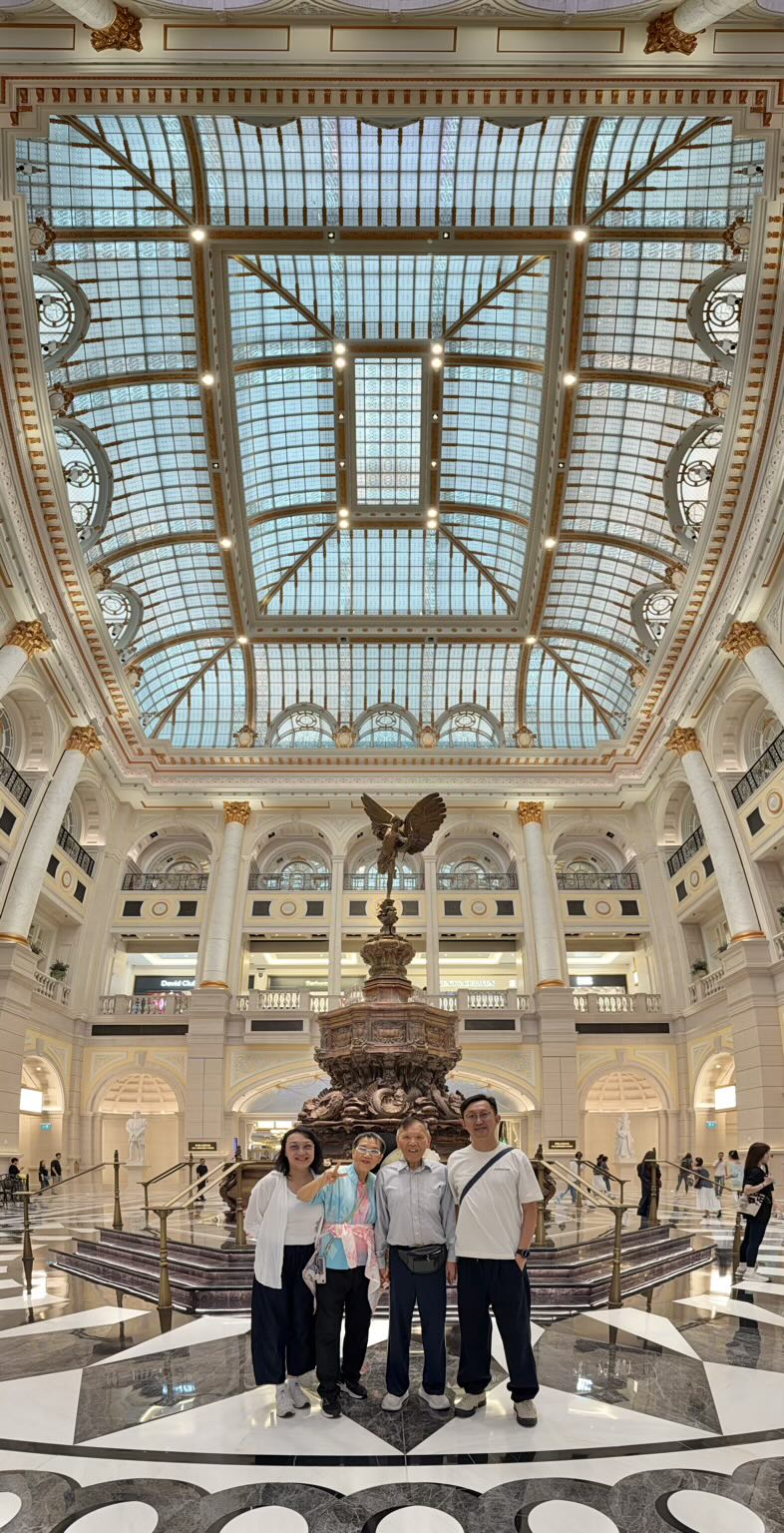
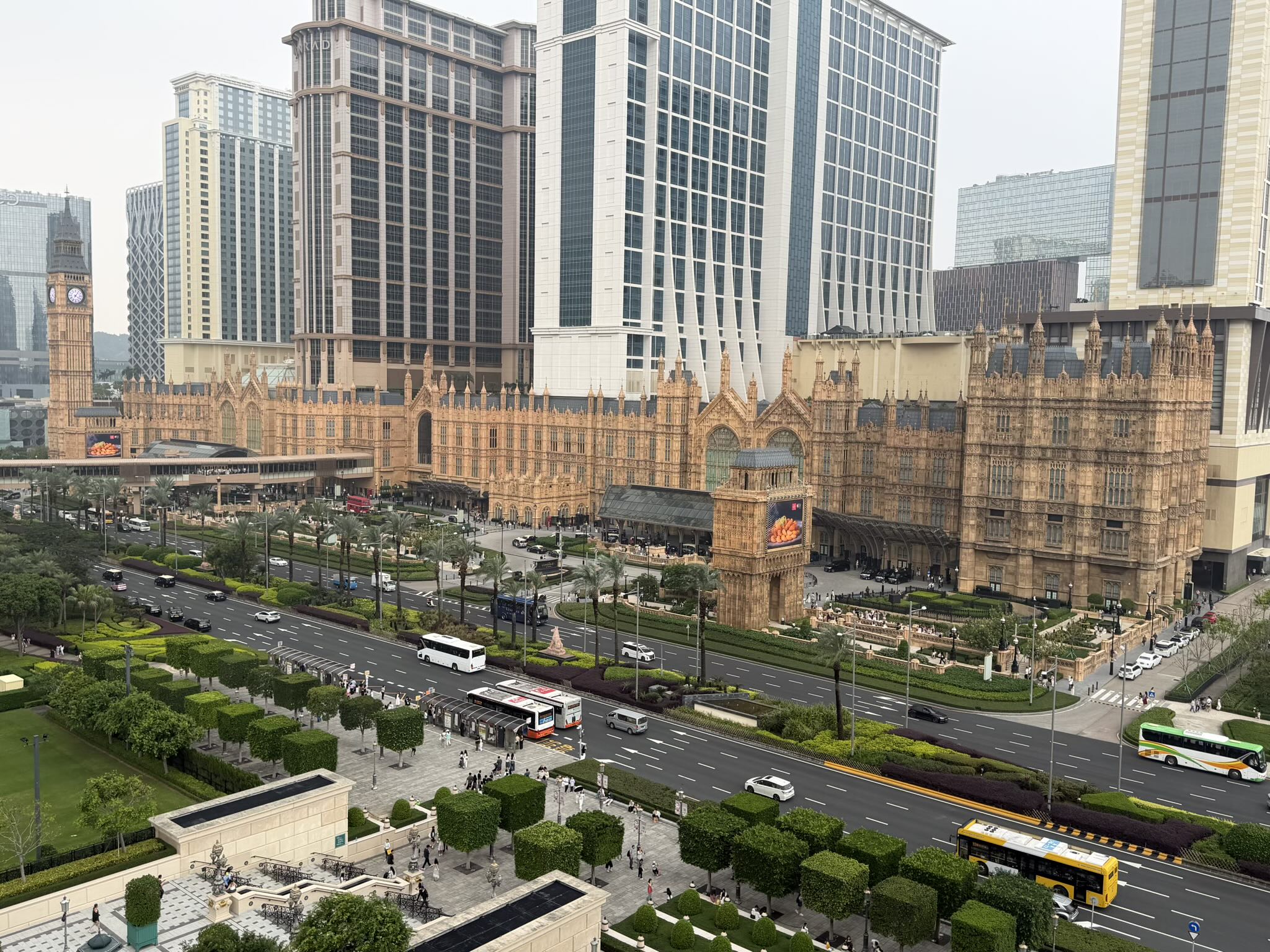
Then the Londoner, which announced itself with red telephone booths and upscale shops, including a Golden Goose—a brand Andrea loves—alongside the kind of marble floors that require a significant number of people to keep them polished.
The Attempt at Dinner
We had targeted a restaurant downtown for dinner, but arrived at 5:00 p.m. to find it didn’t open until 6:00. After some deliberation, we decided to head back to the car and drive back to Hong Kong for dinner instead. This required hailing taxis, which took longer than expected.
The drive back across the bridge, as the evening light settled over the Pearl River Estuary, was quieter than the trip over. My dad had gotten his longest sea-crossing bridge. Auntie Diana had revisited a place she’d seen once before and not thought much about since. And I’d gotten my first Macau—which, it turns out, is not quite like anywhere else, being simultaneously a Chinese city, a Portuguese city, and a monument to the peculiar, maximalist ambitions of the casino industry. Any one of those things would make a worthwhile day trip. Getting all three at once felt like a bargain.
Avoid labeling Macau as the Las Vegas of Asia. Such a comparison would be a disservice to the city’s other distinctive features.