Cars in Singapore: COE, Exotics, and One Very Expensive Fill-Up

I have a confession to make about Singapore: I spent more time looking at its cars than I had any right to, given that I had no intention of buying one.
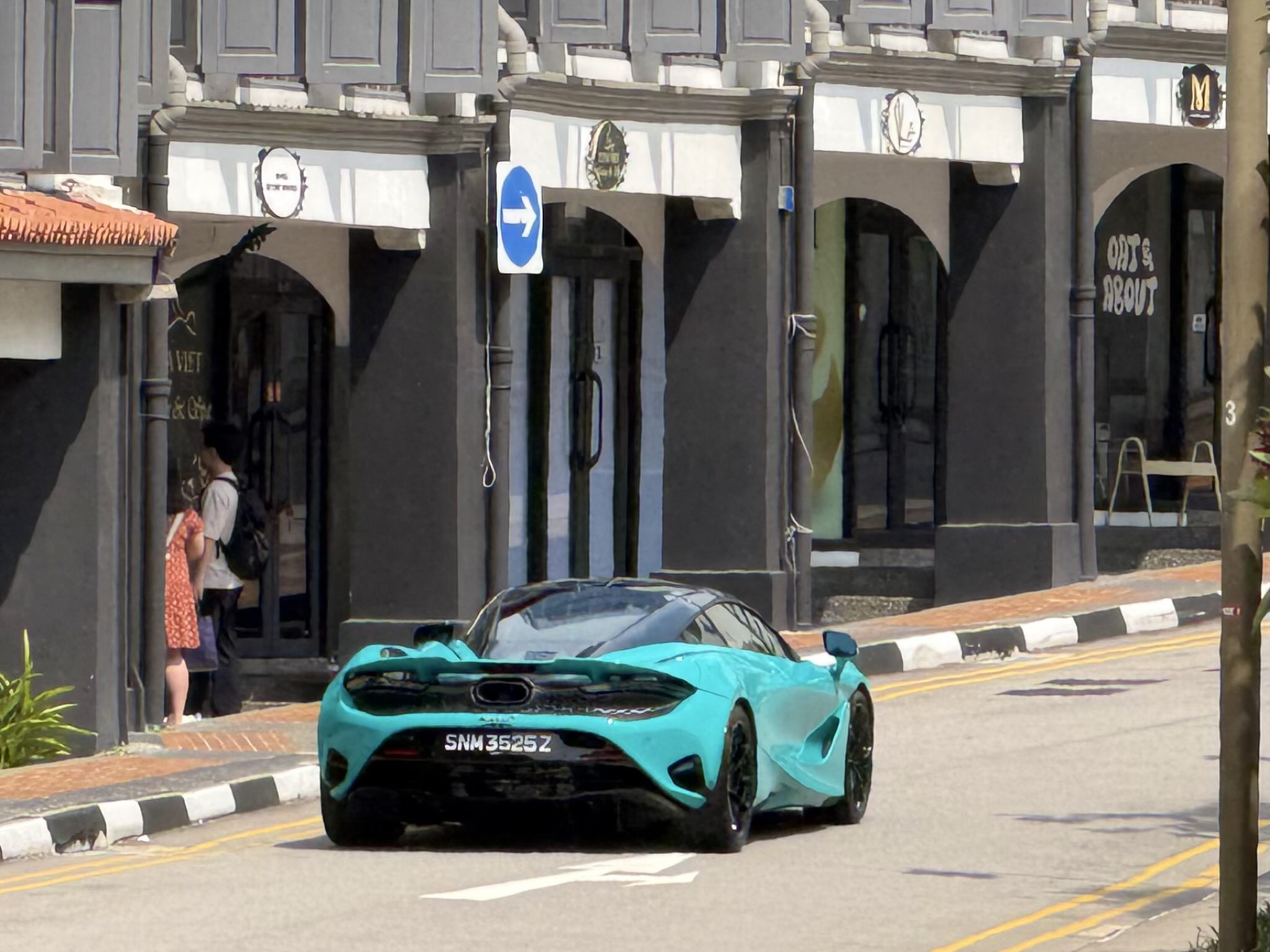
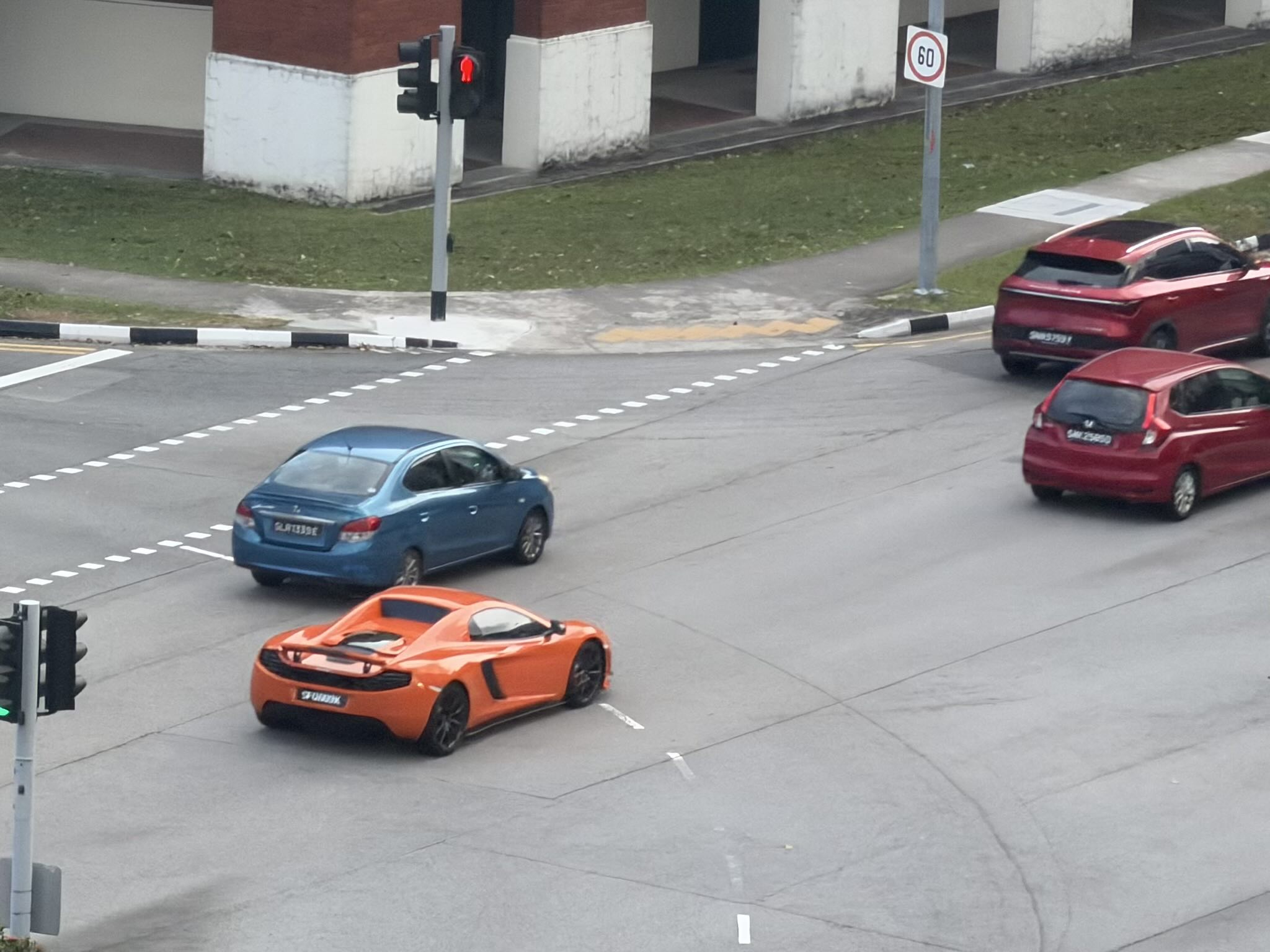
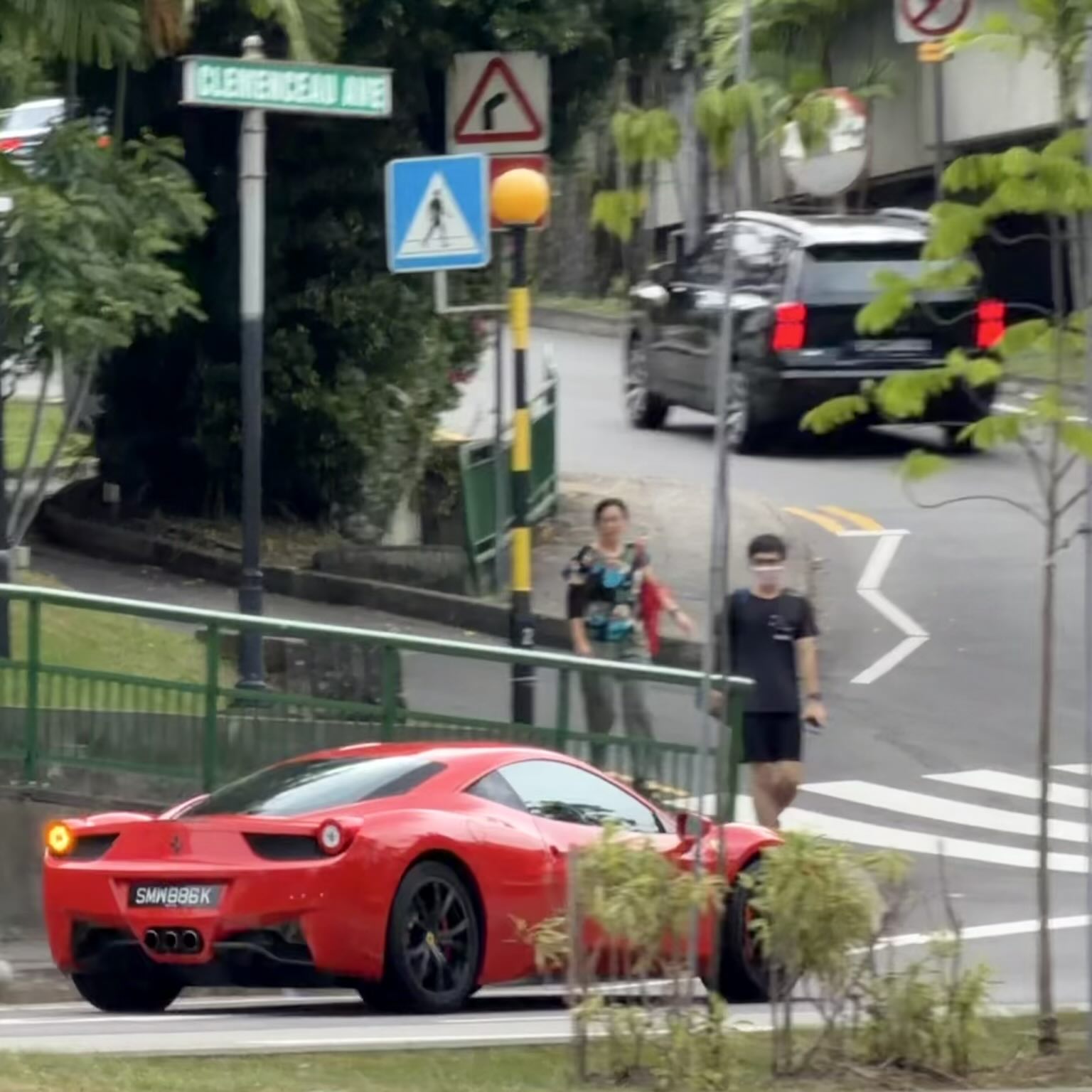
To be fair, what else would you do when a teal McLaren 720S materializes at a red light beside you? Or when a Ferrari 458 Italia, painted a shade of red that seems to have been mixed specifically to make every other color in existence seem utterly bland, glides past the Robertson Quay waterfront? Singapore’s roads are immaculate, wide, and well-marked—the sort of infrastructure that makes every car look better than it deserves to. But the cars themselves need no help.
What makes this remarkable is the context. Owning a car in Singapore is among the most expensive propositions in the developed world, a feat of financial commitment that makes buying a home in San Francisco look impulsive. Prospective buyers face not just the price of the vehicle itself, but a Certificate of Entitlement—a government-issued permit, known as the COE, granting the right to own and use a vehicle for a certain number of years. Twice a month, aspiring car owners and dealers bid for a fixed number of these permits, their price set entirely by demand. For premium vehicles, a COE alone can run into six figures in Singapore dollars.
The system has worked as intended. Singapore has roughly 11 passenger vehicles per 100 people, compared to more than 80 per 100 in the United States. Most residents have little reason to own a car: even the longest MRT train journeys cost under SG$2.50, and the ride-hailing app Grab is woven into the daily fabric of the city as seamlessly as taxis in New York. Singapore is not the first city to use price as a lever against traffic and pollution—Mexico City, London, Stockholm, and New York have all tried variations of congestion pricing—but none charge as much to own the vehicle in the first place.
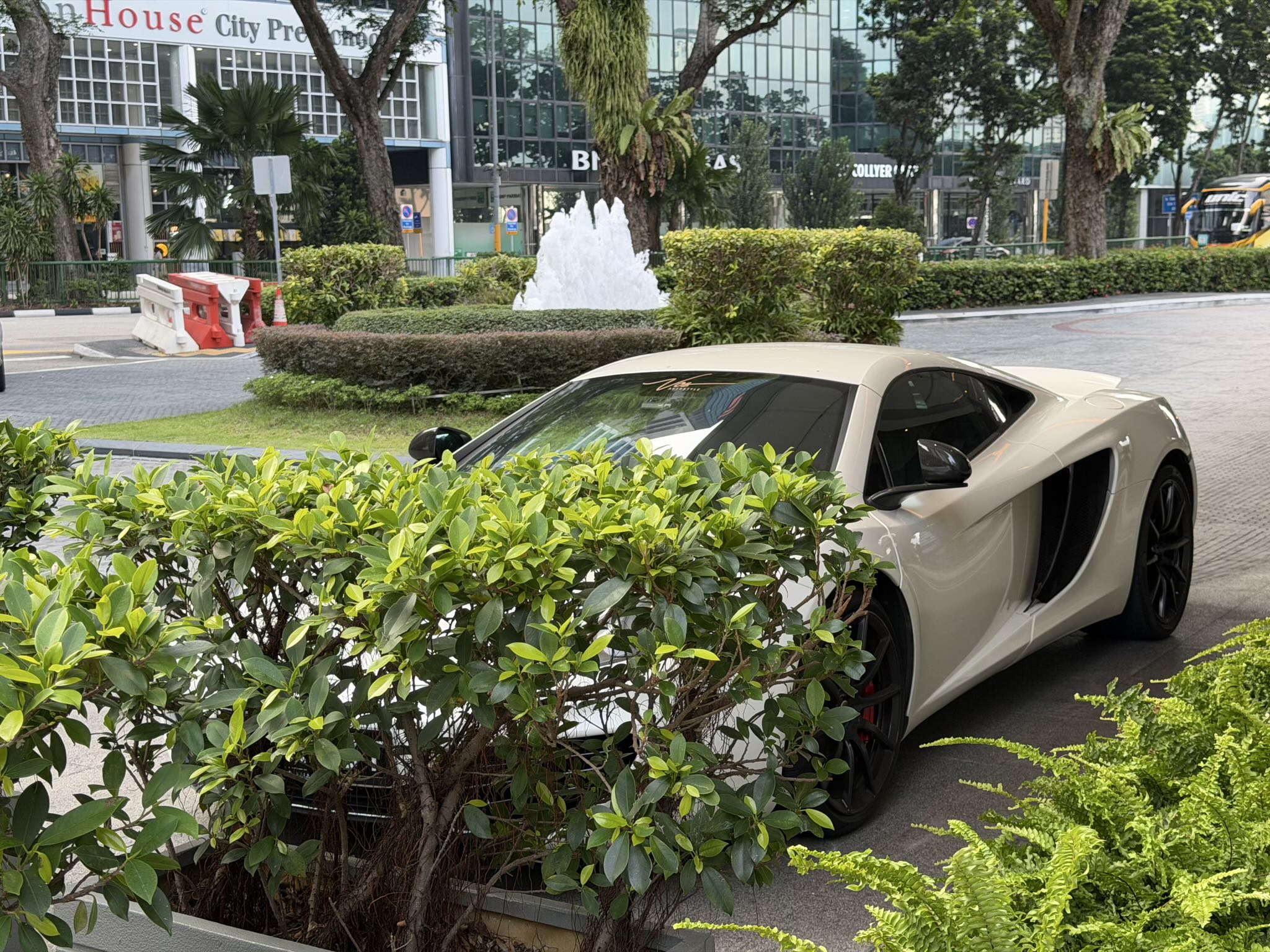
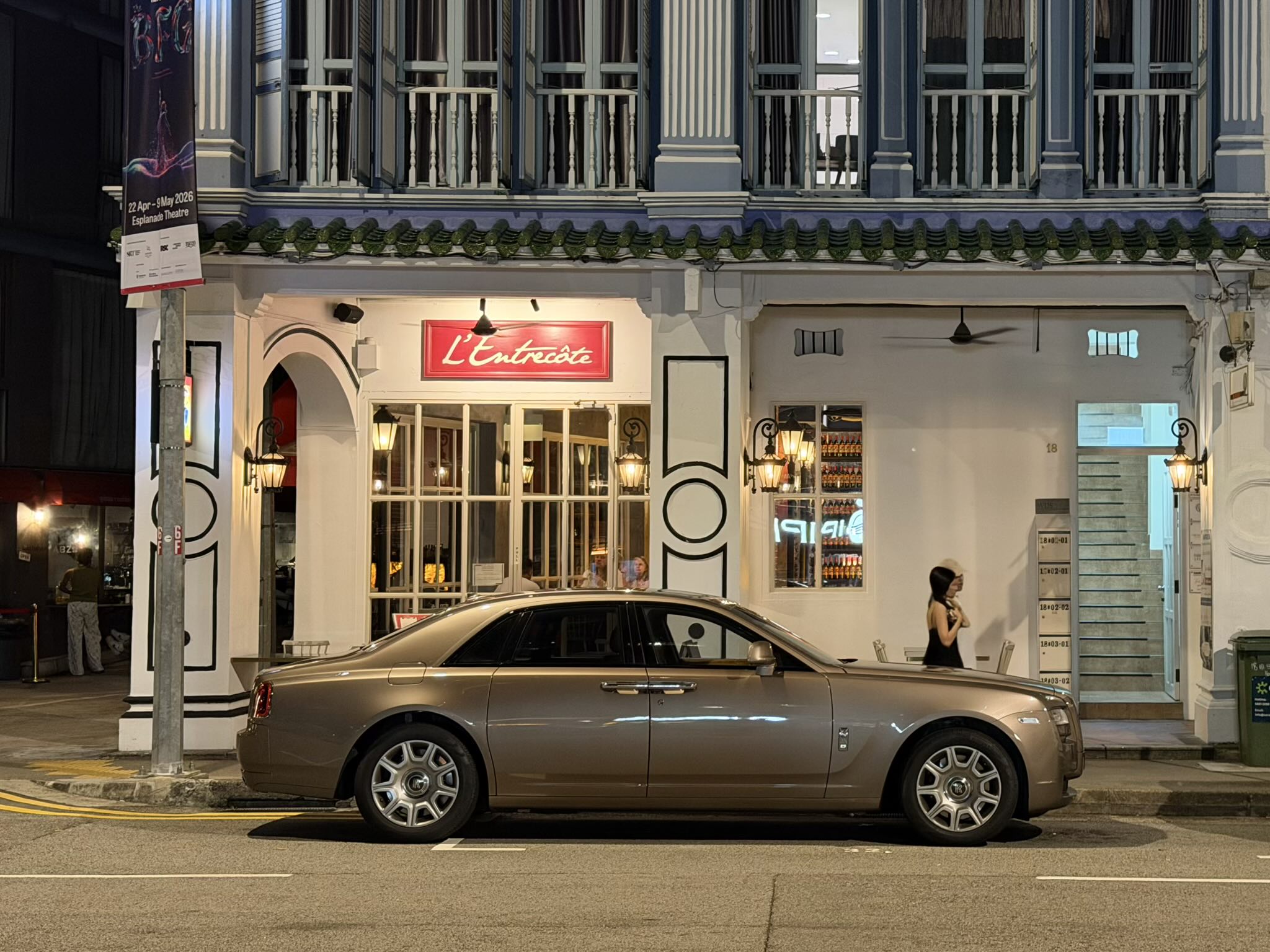
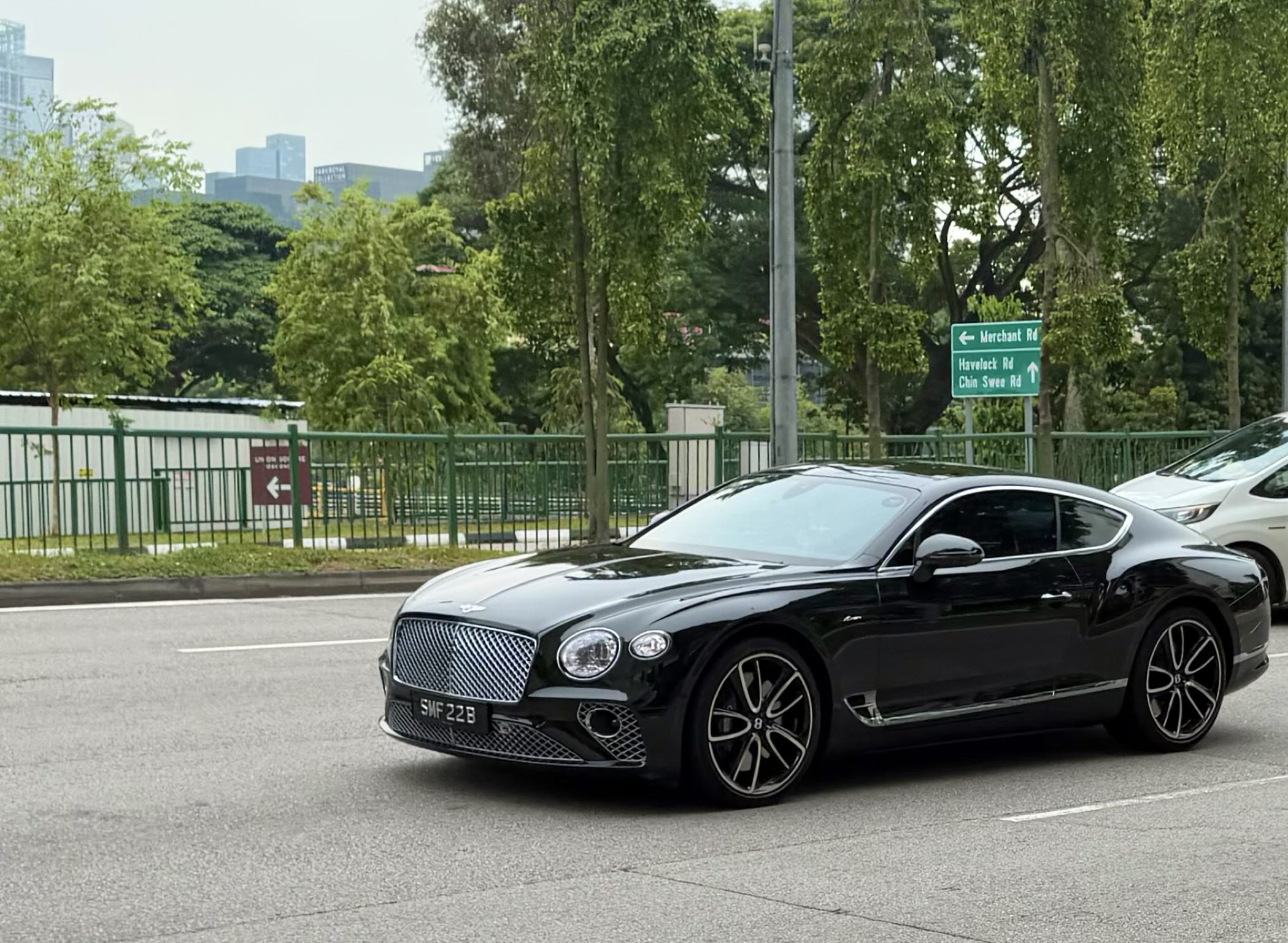
And yet: McLarens. Ferraris. A Rolls-Royce Ghost parked outside a French bistro, waiting for its owner with the patience of a ship at anchor.
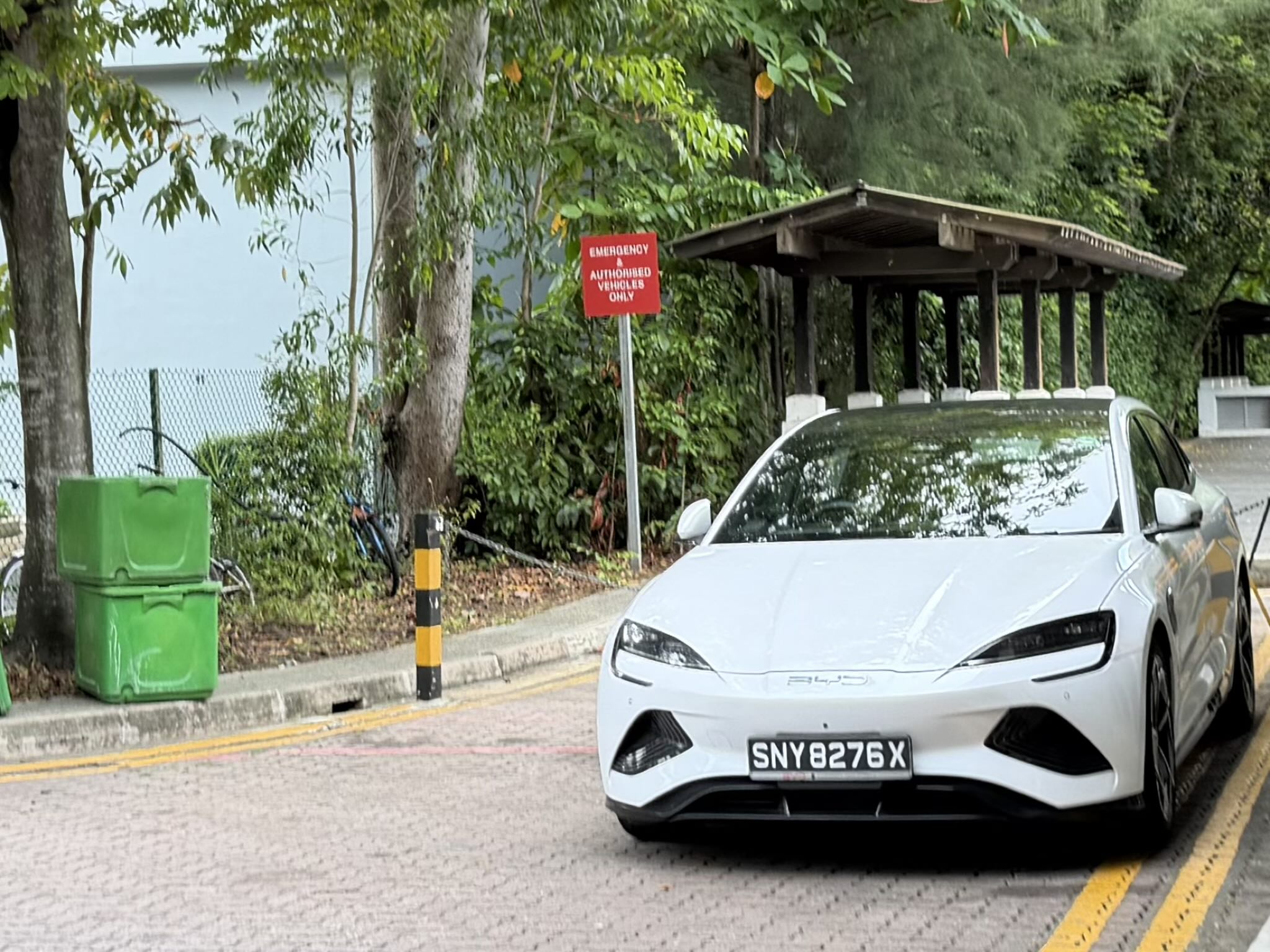
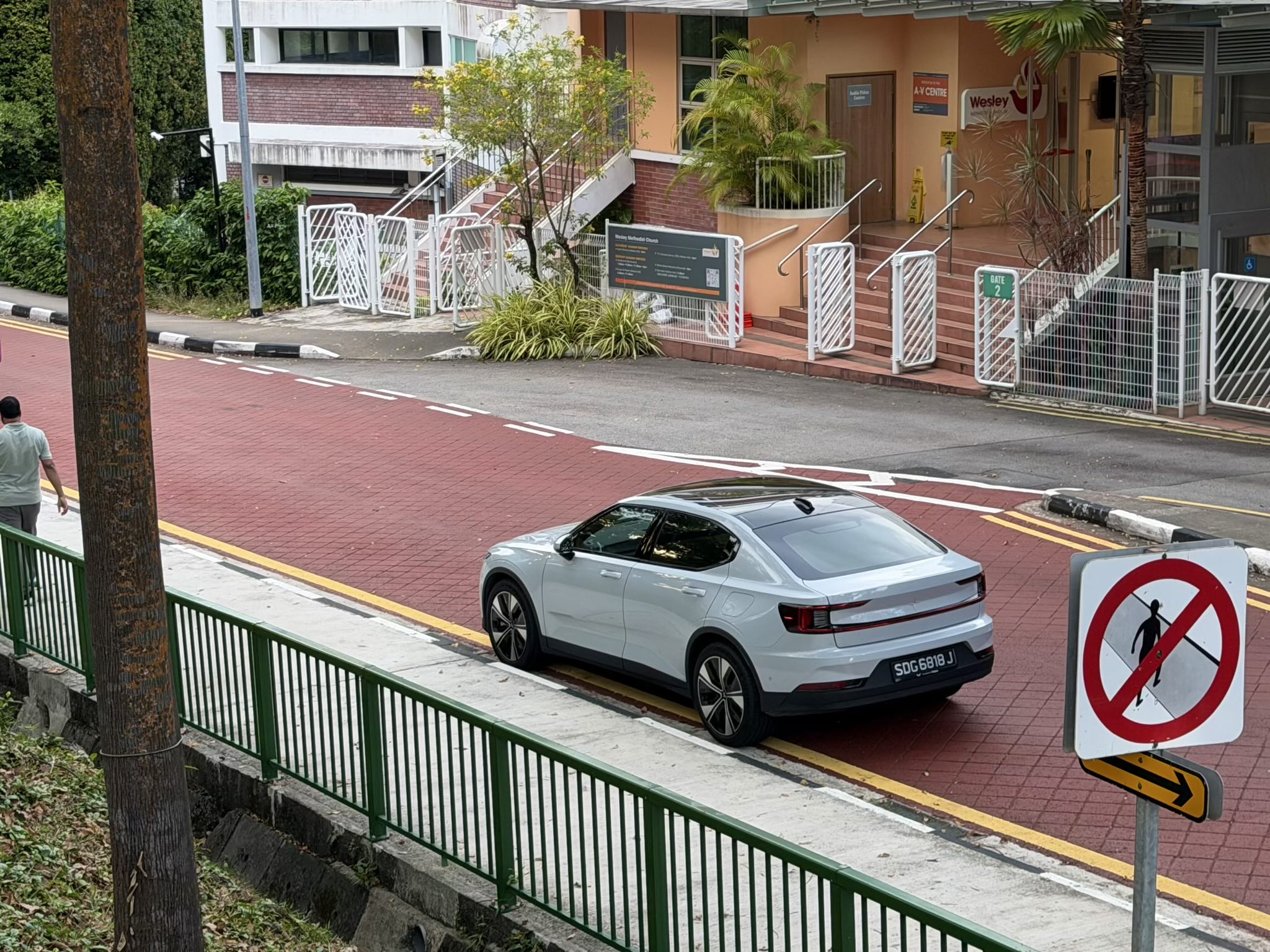
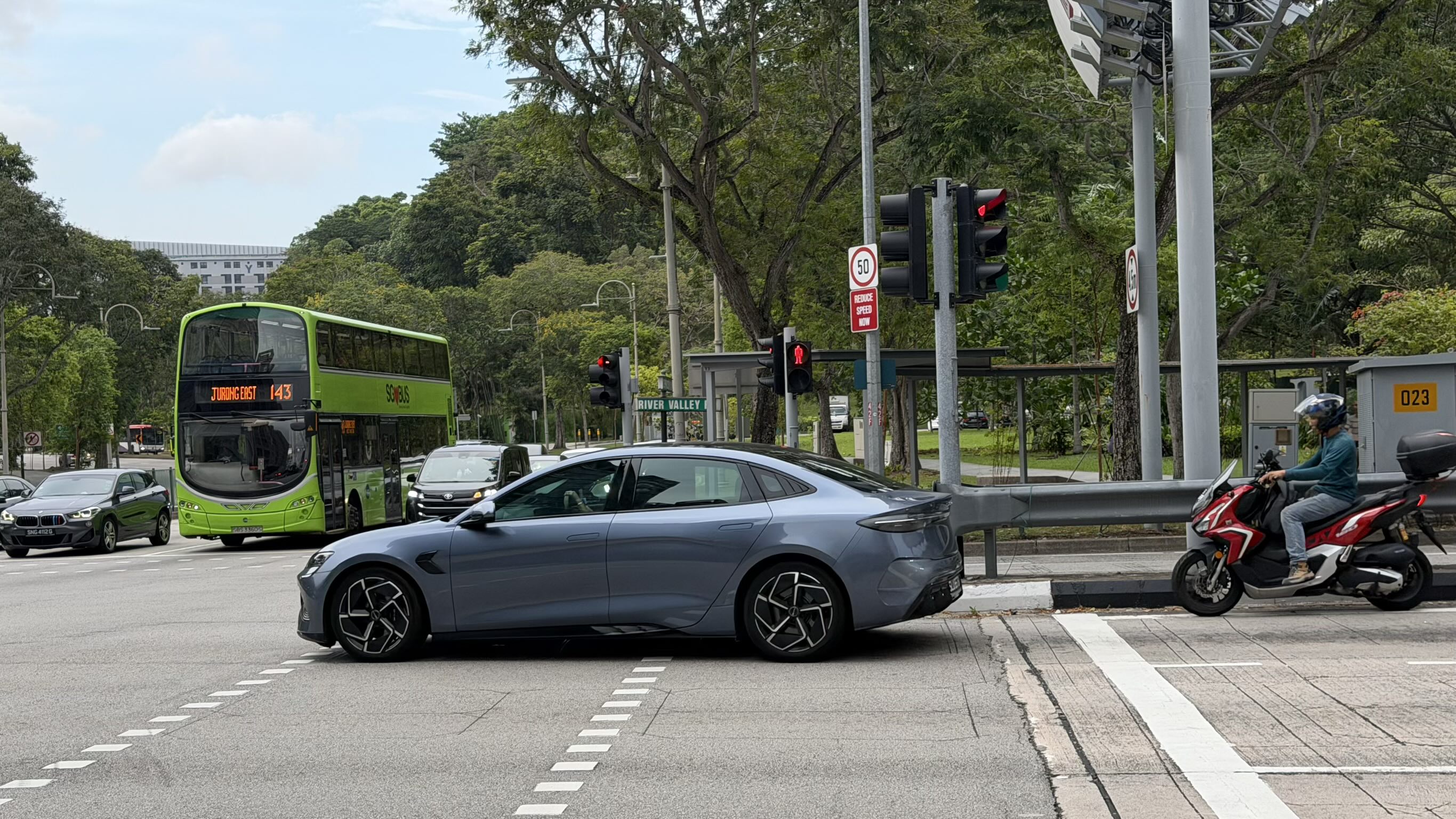
The exotics share the road with a surprisingly diverse supporting cast. There were Polestar 2s and BYD Seals—the latter a pure-electric sedan built around what BYD calls a “Blade Battery,” a lithium iron phosphate pack so structurally integrated into the car’s platform that it functions as part of the chassis. Singapore, it turns out, is a reasonable place to encounter Chinese EVs that have not yet reached American shores: competitive on engineering, priced sensibly, and less range anxiety due to the shorter distances Singaporeans typically have to drive compared to Americans.
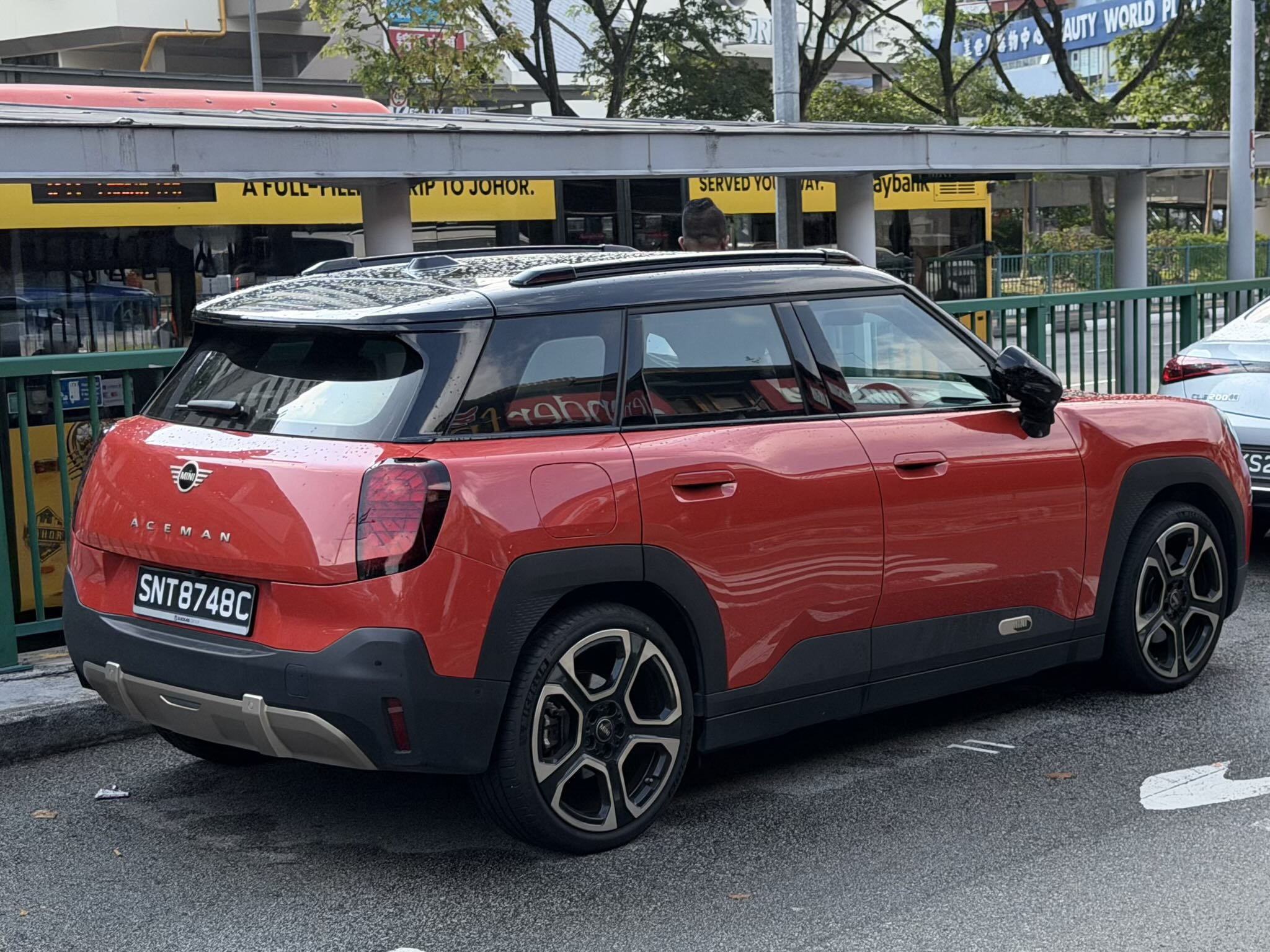
Then there was an orange electric MINI Aceman—a model not sold in the US. It was compact and cheerful, looking like it had been designed by someone who thought the original MINI’s wheel arches were insufficiently square.
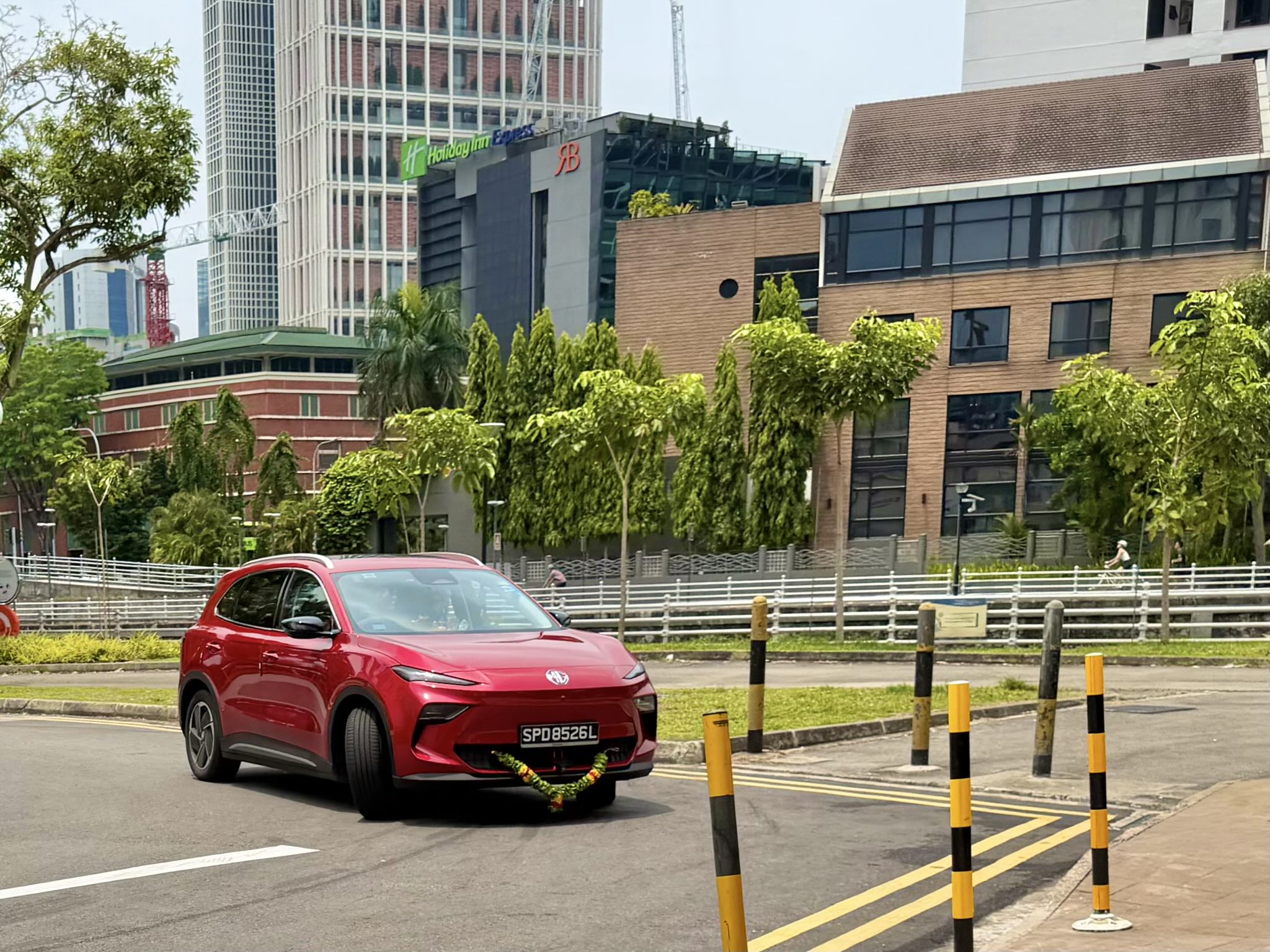
A red 2026 MGS5 EV swung by my hotel wearing a traditional flower garland draped below its front license plate, a not uncommon sight in Singapore when a new vehicle is delivered and blessed. The MGS5 is an SUV with nearly 50/50 weight distribution—a nod to the legendary MG sports cars of yore like my former beloved 1969 MGB.
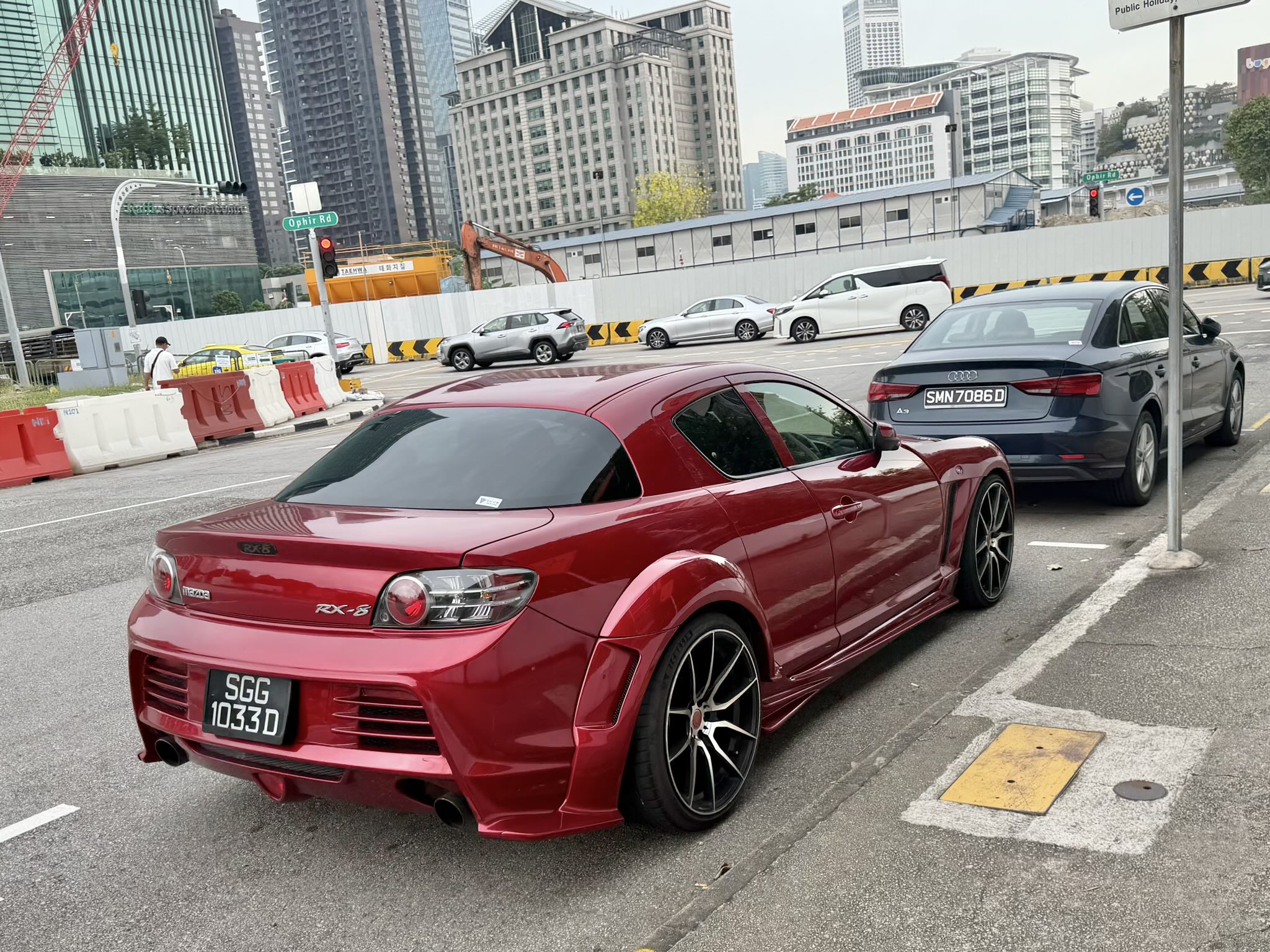
The oddity that stopped me cold was a deep red Mazda with a rotary engine manufactured within the decade the followed Y2K, with flared wheel arches and a ground effect kit, maintained with the kind of quiet devotion that says something about its owner without requiring them to say anything at all. In a country where the clock on car ownership starts the moment you sign for your COE and runs for exactly ten years, keeping an older car going is its own statement.
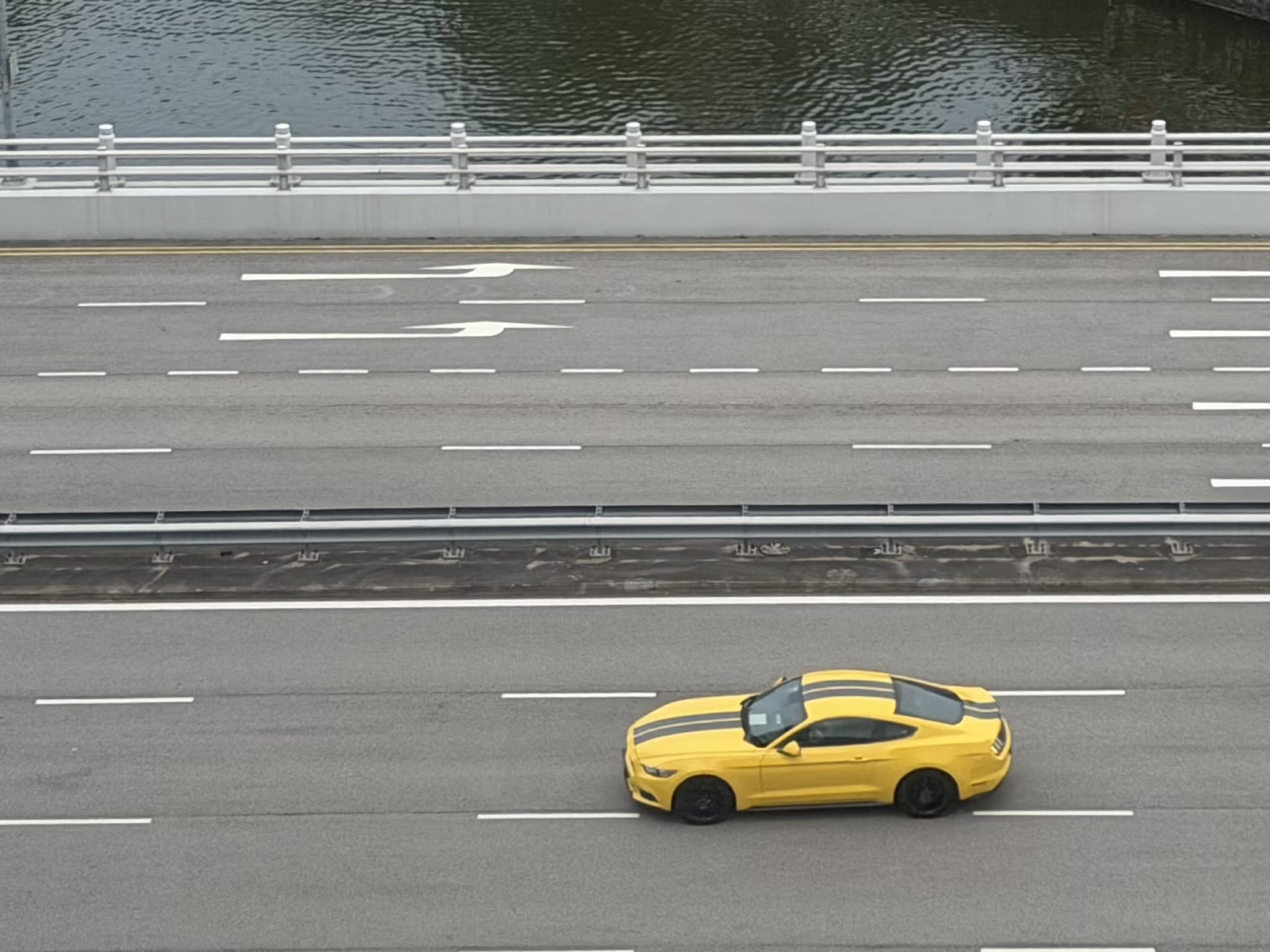
The yellow sixth-generation Ford Mustang with black racing stripes was another surprise—not because Mustangs are unusual, but because seeing one here, in this context, had the same slightly disorienting quality as spotting a cowboy hat in Tokyo. It fit, and it didn’t, and somehow that made it more interesting.
I got the clearest window into what it actually costs to own a car in Singapore through Ran, the owner of the barber shop where I got a haircut one afternoon. As I recounted in my post about Singapore, he’d been running his shop in the same building for 29 years.
Upon learning I was from the States, he asked me what I thought about the war in Iran. Then, without much of a pause, he connected it directly to the thing bothering him most: the price of petrol.
“It now costs me 320 [Singapore] dollars every time I fill up my gas tank,” he said, running the clippers with the efficiency of a man who had heard a great many things in this chair and had learned to keep his hands moving regardless.
Ran had bought a new Mercedes E-Class two months earlier—SG$280,000 for the car itself, plus a SG$120,000 10-year COE, bringing the total to SG$400,000, or roughly US$300,000. His wife thought he had lost his mind. He disagrees. He’s worked the same spot for 29 years, his children are grown, he has grandchildren. The car brings him genuine joy. At SG$320 per fill-up—adding up to over SG$1,000 a month just in petrol—you’d want it to. At least insurance (SG$2,200 per year) and maintenance (covered under Mercedes’ five-year warranty) were comparatively painless.
His philosophy was simple, and he offered it without any apparent need for my agreement: God has given him more than enough, and it would be a shame not to use some of the excess while he still could. As a car guy, I told him I understood completely and congratulated him on the purchase. He smiled.
“But if gas keeps going up,” he added, “and a fill-up costs $400, then I’ll start taking the bus!”
It was a punchline with real numbers behind it. The COE system has made car ownership in Singapore an act of genuine commitment—financial, logistical, philosophical. The people who own cars here have thought about it in a way that most American car owners never have to. And perhaps because of that, the cars themselves tend to be maintained with a corresponding seriousness. The roads were full of vehicles that looked cared for, from the Rolls-Royce to the vintage Mazda to Ran’s gleaming new E-Class. (Although very oddly, he kept calling the Mercedes a Mazda even as he showed me a photo of the car with its prominent three-pointed star on its massive grille and giant dealer-adorned gift bow on its red hood.)
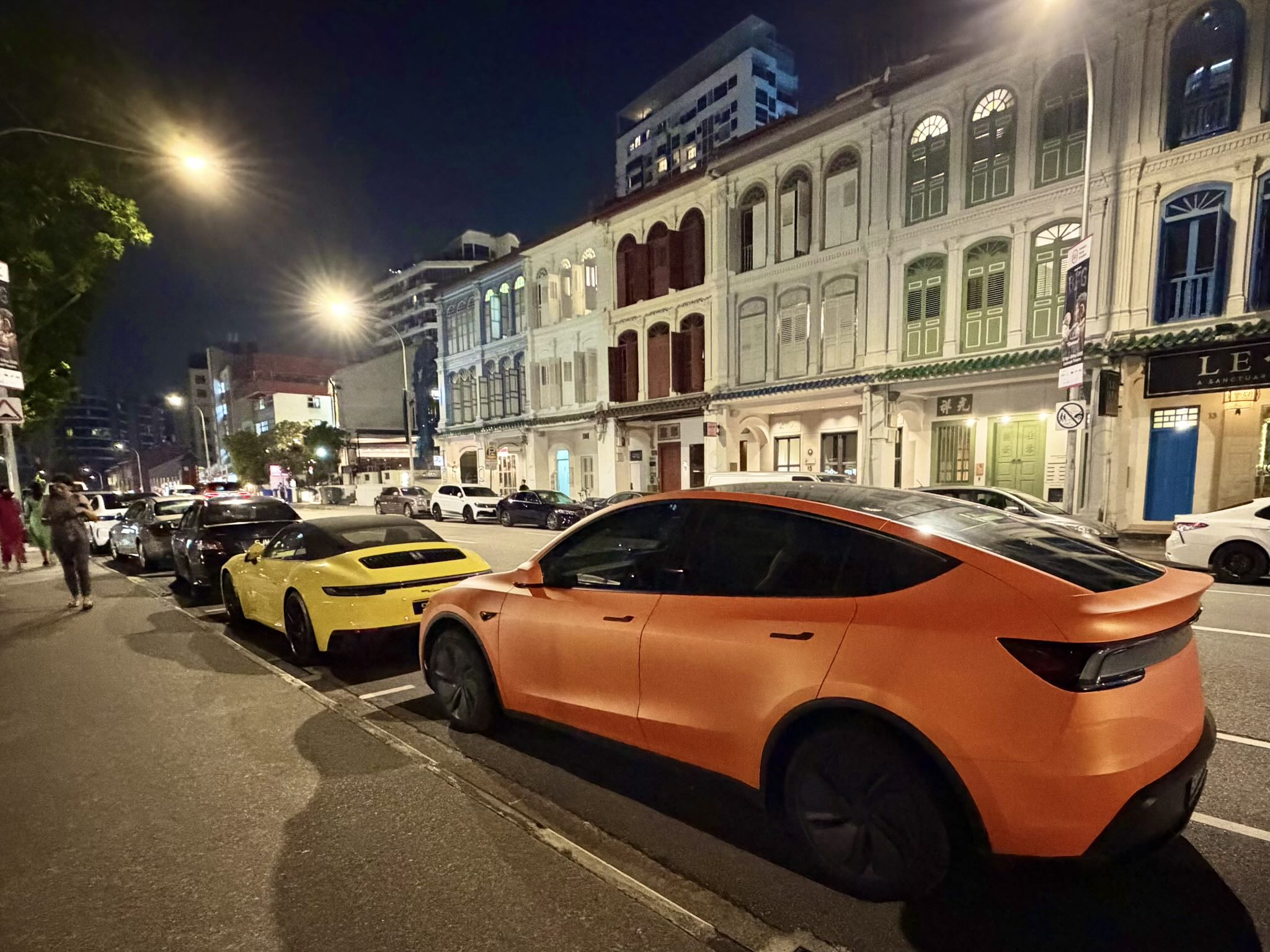
Outside the Robertson Quay district, a yellow Porsche 911 was parked beside an orange vinyl-wrapped Tesla Model Y. Two very different—and very vibrant—expressions of the same basic impulse: in a city designed to discourage you from owning a car at all, owning one is already a choice. You might as well make it count.