Six Million People, Zero Litter: Singapore, the City that Works

Singapore is famously strict—no gum, no graffiti, no littering, stiff fines for each—and most people outside of Asia know the country for exactly that, and not much else. What they tend to miss is the rest of the story: that a resource-poor city-state expelled from its own federation in 1965, with no army and rampant unemployment, transformed itself into one of the wealthiest, safest, and most meticulously planned cities on the planet within a single generation. That story is a bit more interesting than the gum thing.
I’d been to Singapore once before, briefly, in 2017. This time I was back for nearly two weeks, split between a visit with my friends James and Leanne—who relocated here from Texas—and a side trip to Johor Bahru, Malaysia just across the causeway. What follows is less a comprehensive visitor’s guide than a set of dispatches from someone who got lost on the bus, nearly posed for a photo with a potentially lethal snake, and learned more about the cost of owning a Mercedes than he ever expected.
Getting There (and Getting Lost)
I touched down at Changi Airport at 8:50 p.m. on a Saturday, on time and without incident. The complications started immediately after.
Both Apple Maps and Google Maps recommended taking the bus into the city—multiple transfers included—because there’s no direct train from the airport to the city center at that hour. I set off gamely on the first bus, missed a transfer stop, then missed several more buses I was meant to catch, all while knowing that James and Leanne were waiting for me at Robertson Quay. Eventually I abandoned all pretense of figuring out the bus network and walked to a taxi stand.
Taxis in Singapore are scarcer than you’d expect for a city of six million. One cab pulled up and declined to take me to Robertson Quay. Twenty minutes later another arrived that did. When I finally reached the hotel, I was damp from the humidity and humbled by the transit system—which, to be fair, is extraordinary once you know how it works. By 2030, the government plans to have 80% of households within a 10-minute walk of an MRT train station, a target that would put Singapore’s rail network on par with London and New York in total length. The night buses were just not my strong suit.
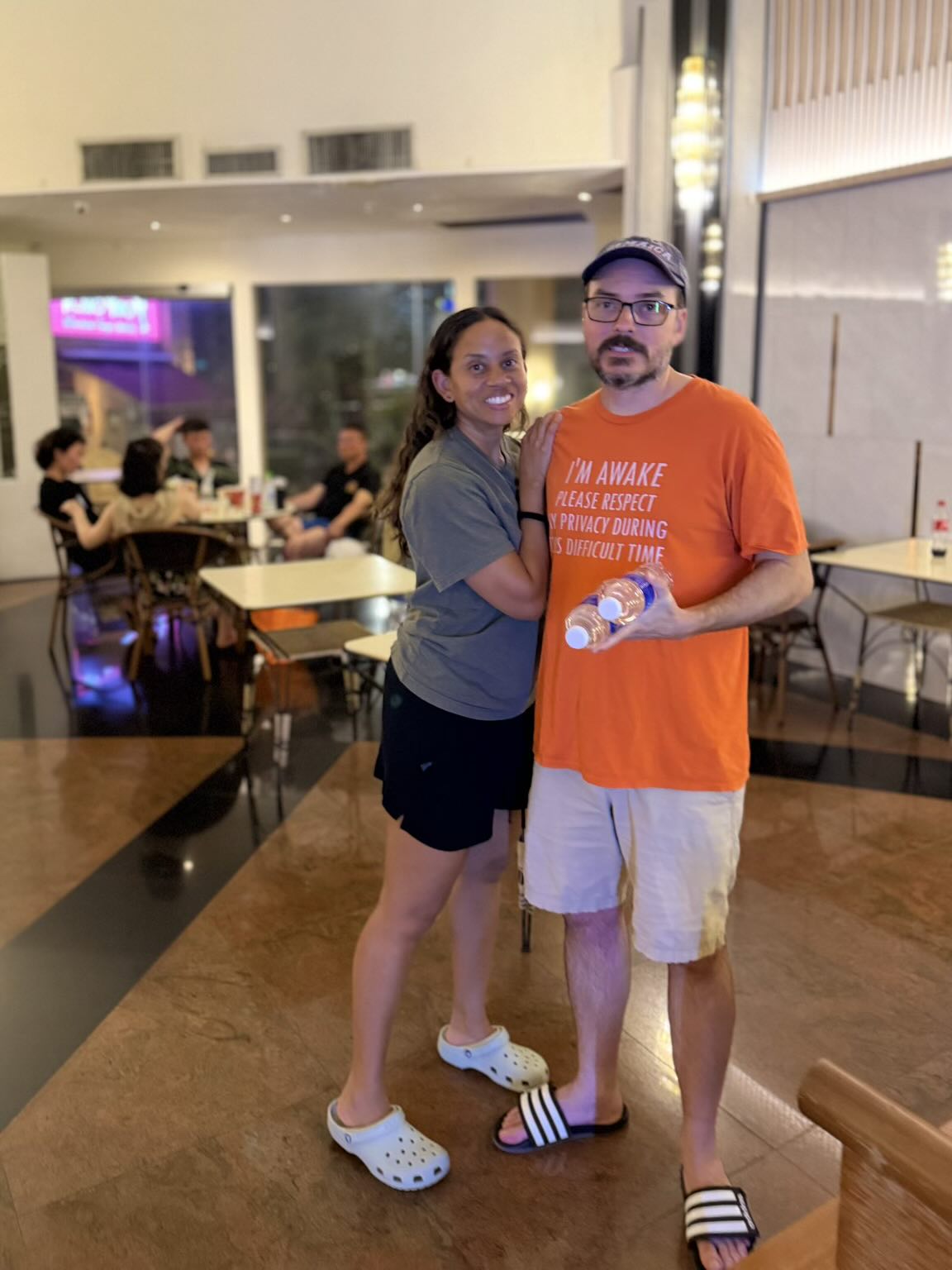
James and Leanne appeared at the hotel shortly after I checked in to say hello. They mercifully bore good humor about my extended journey.
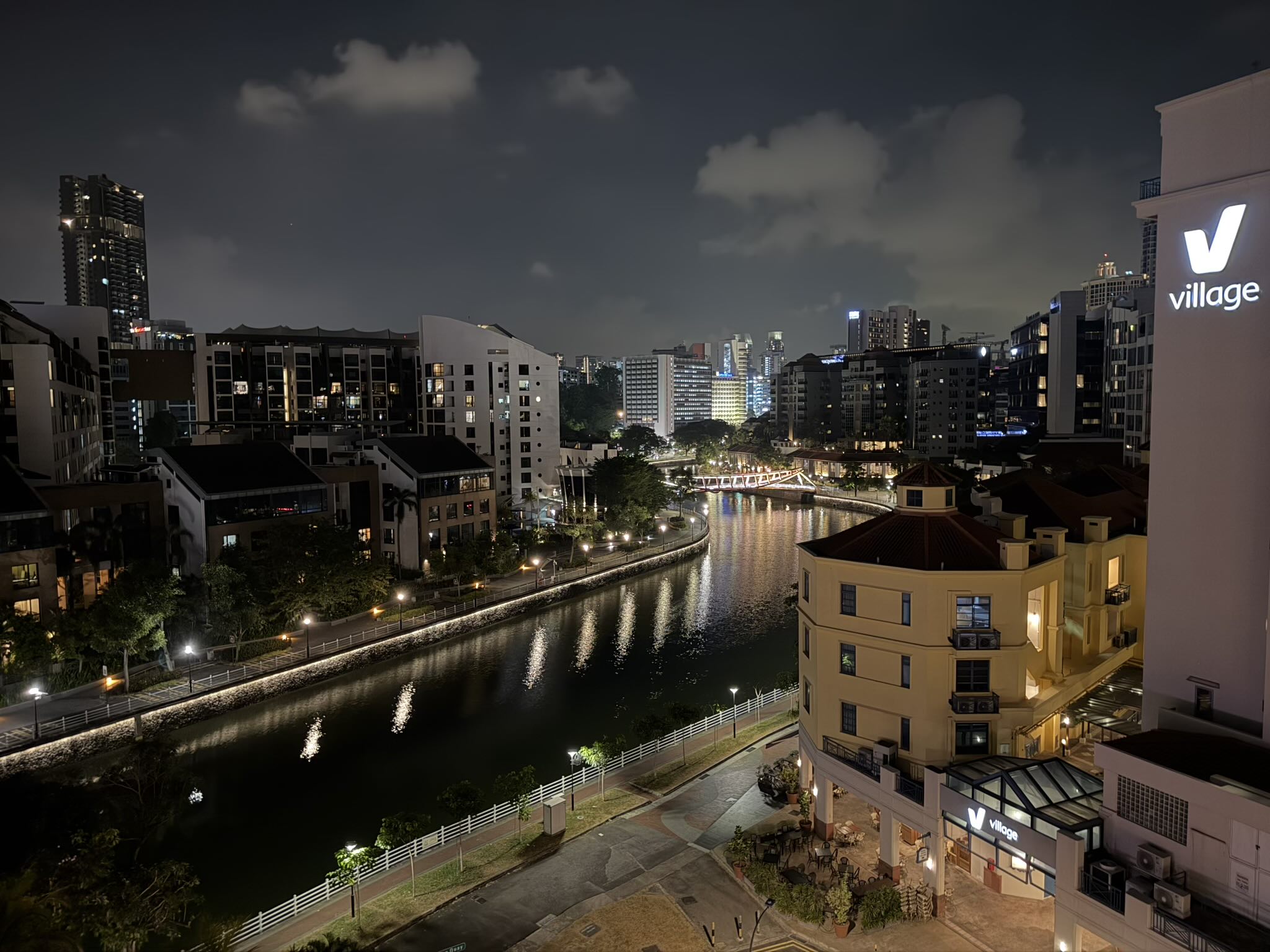
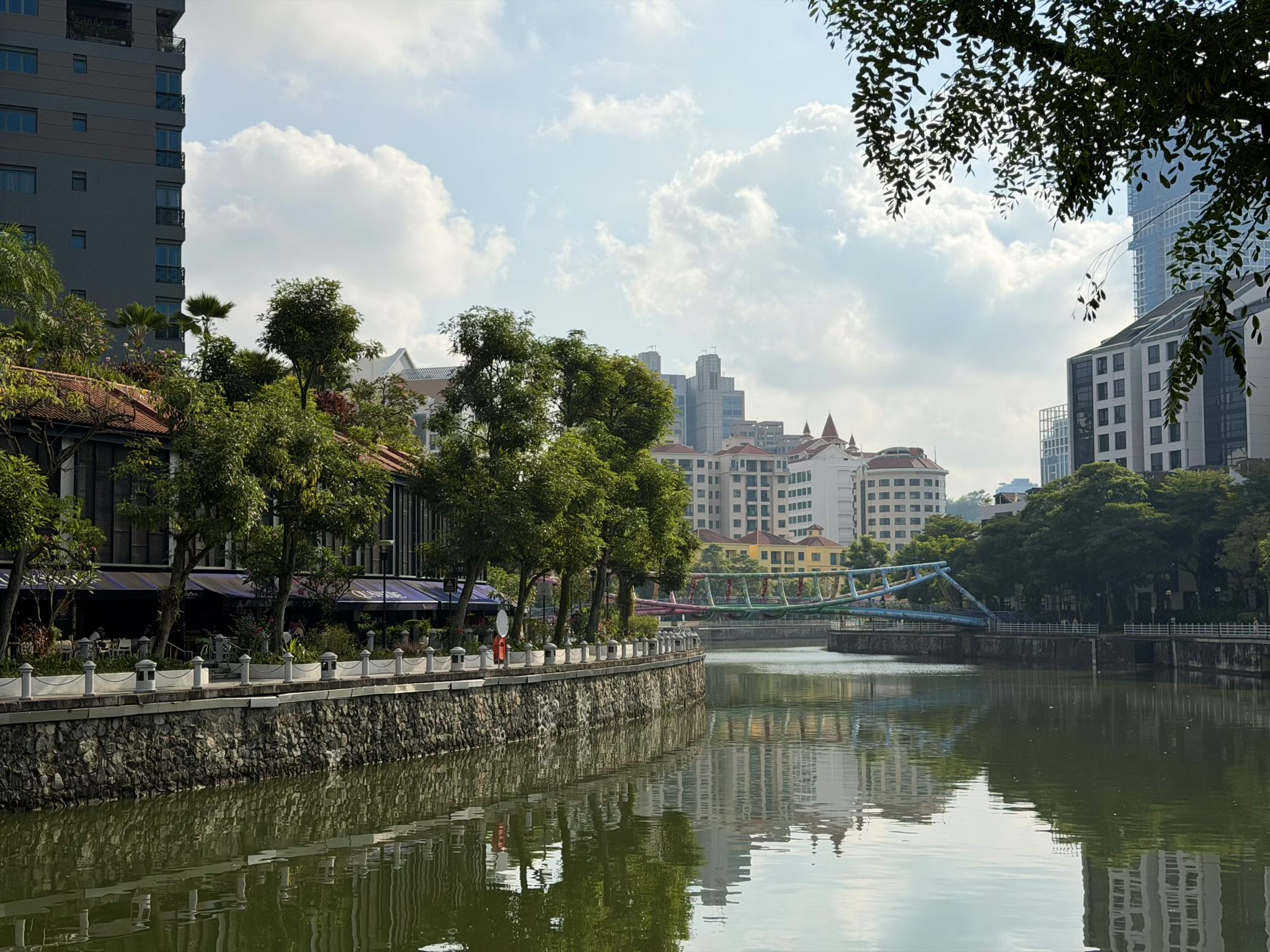
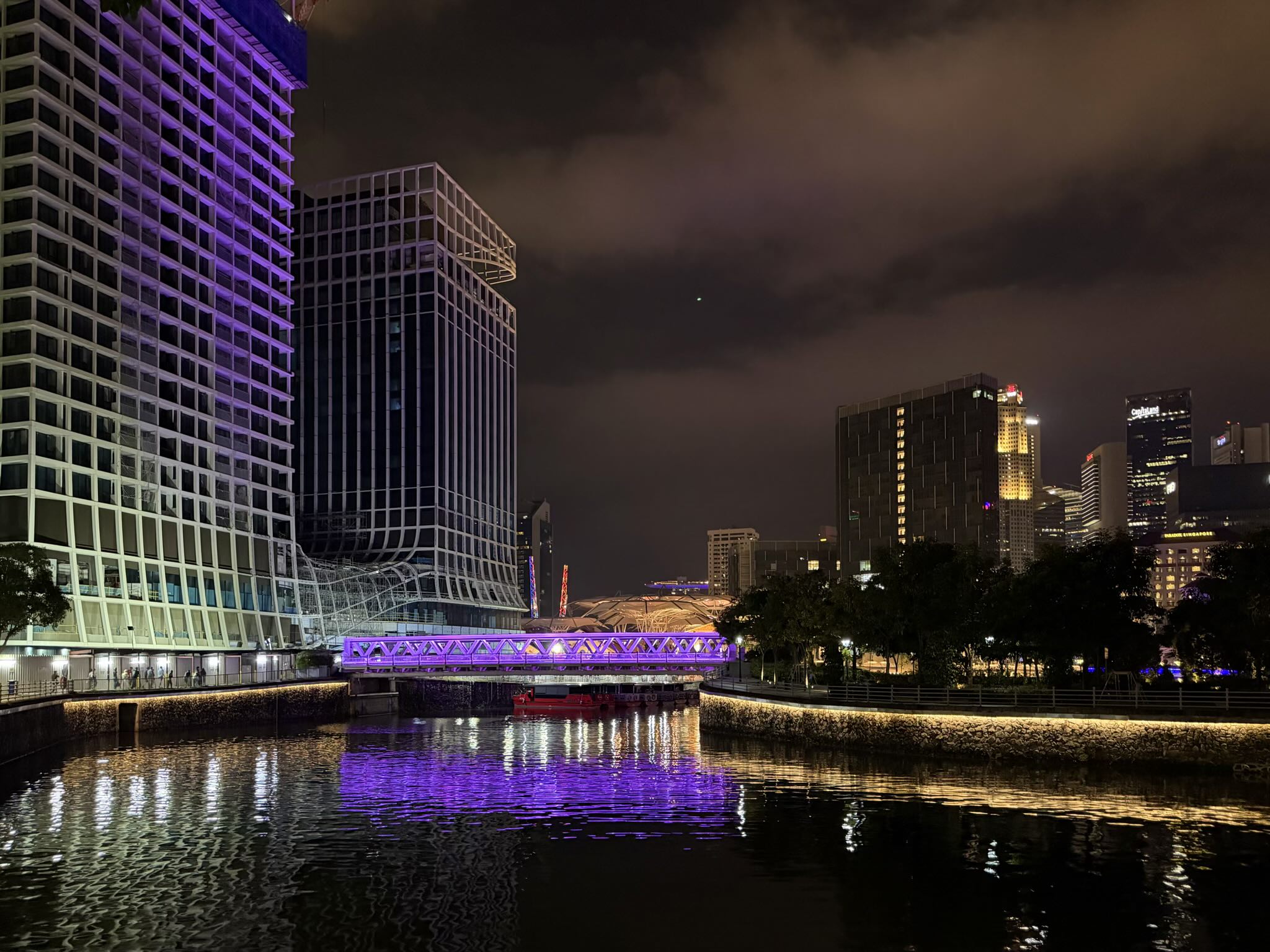
My room on the 8th floor looked out over the Singapore River—dark and glittering, with an artfully painted, Oriental bridge arching over the water about 200 meters away.
Kopi and the Hawker Centre
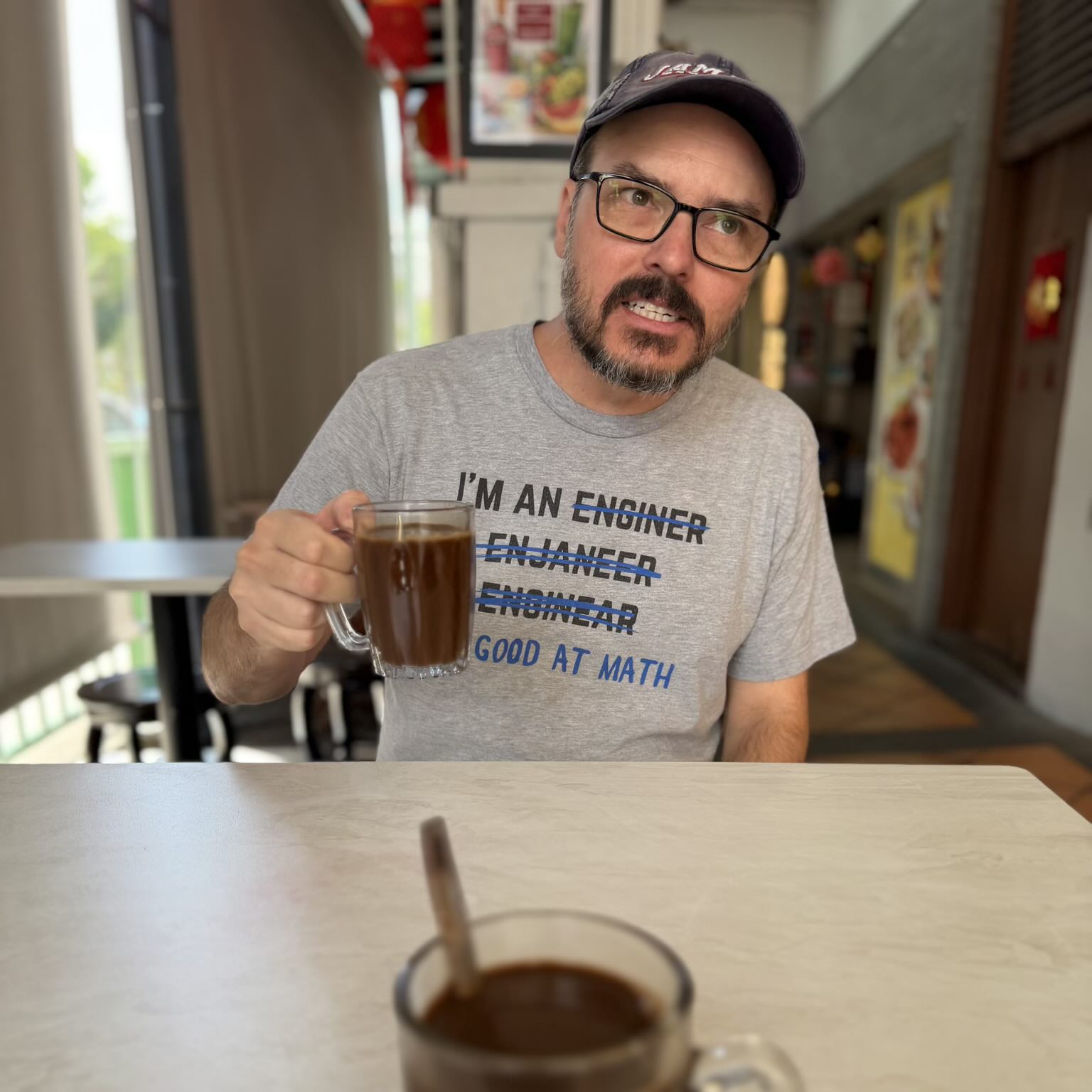
The first full morning, James and I walked to a nearby hawker centre for kopi siu dai. Hawker centres are Singapore’s answer to the question of where everyone should eat: open-air food courts, built decades ago to bring street vendors under one hygienic, affordable roof. They are bustling and loud and entirely unpretentious, the kind of place where a CEO in a suit and a retiree in shorts share a table without anyone thinking twice about it. Singapore’s hawker culture is so central to local life that UNESCO added it to its list of Intangible Cultural Heritage of Humanity.
Kopi is the local coffee—dark, full-bodied, less bitter than Vietnamese versions, with a subtle caramel sweetness from condensed or evaporated milk. Siu dai means “less sweet.” Two cups cost SG$2.80 total, or roughly a US dollar each, paid in cash because hawker stalls generally don’t accept cards. More on Singapore’s payment ecosystem later.
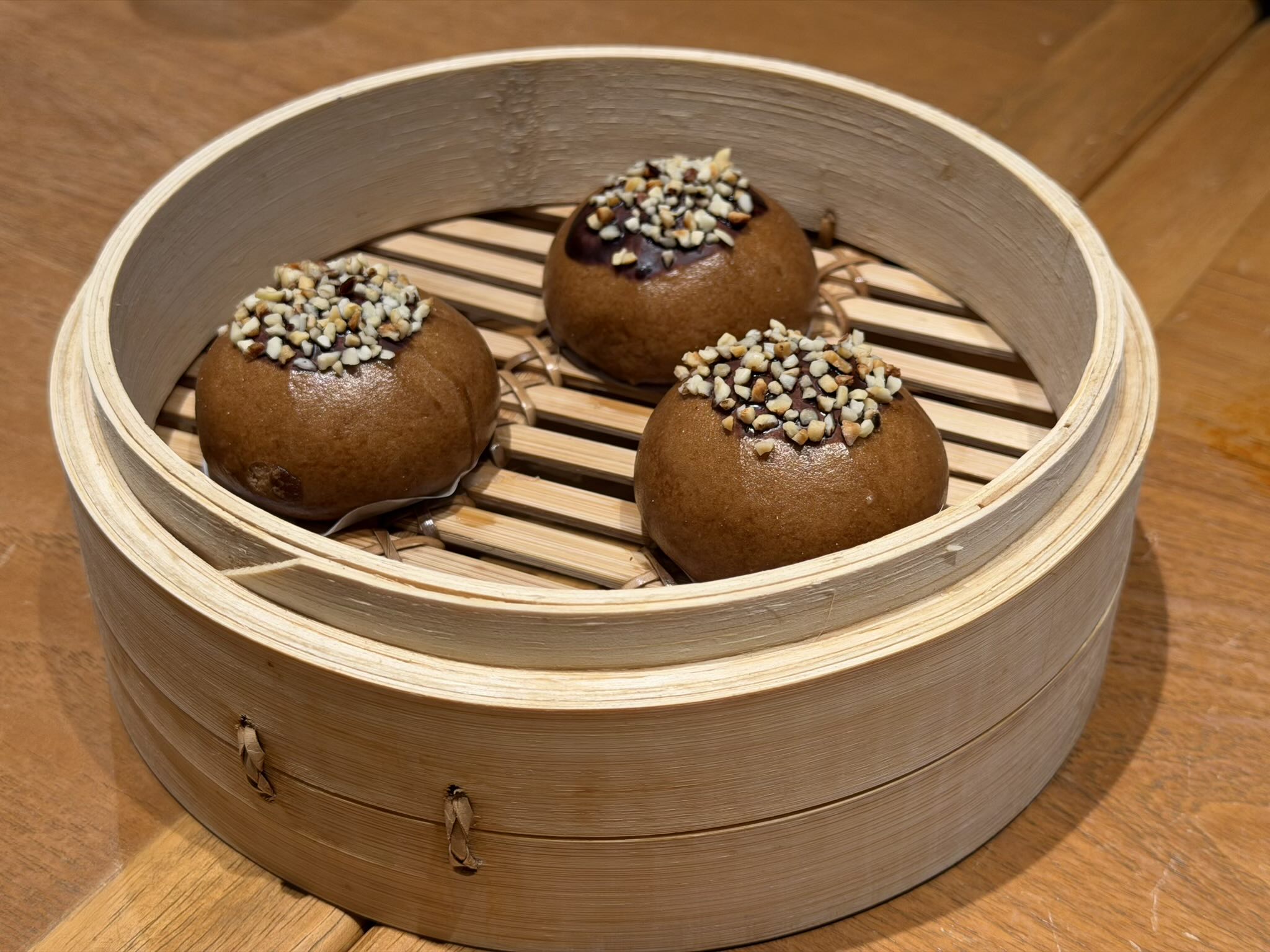
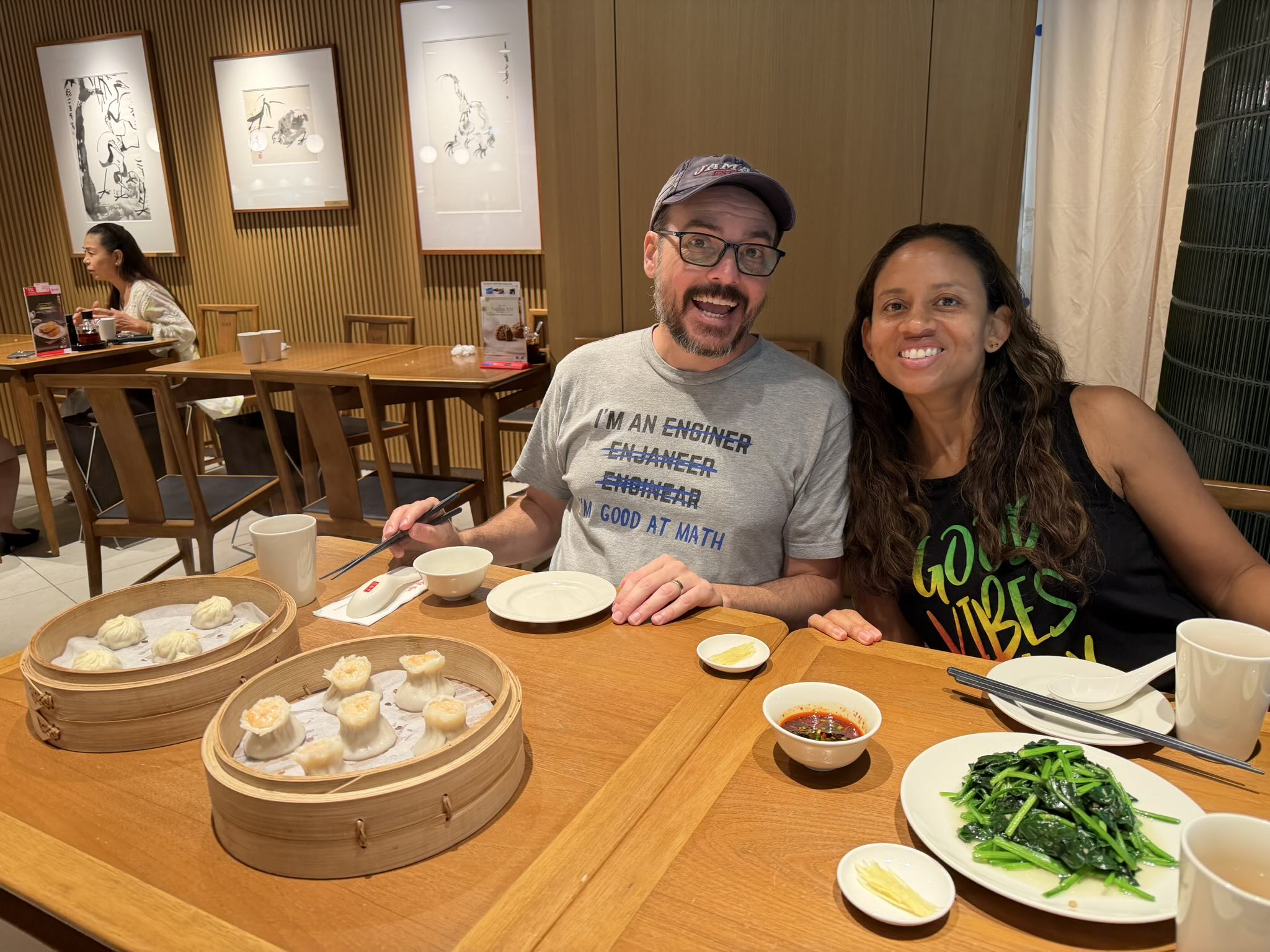
When Leanne joined us afterward, the three of us went to Din Tai Fung for lunch. I had been talking up their world-famous xiao long bao (soup-filled dumplings), and James and Leanne were good enough to indulge me. We ordered chicken xiao long bao, shrimp dumplings, spinach with garlic, pork buns, sweet and sour pork, and hot jasmine tea, plus Easter cocoa wafer buns at a promotional SG$1 per person.
LeVeL33, the Merlion, and a Very Famous Tote Bag
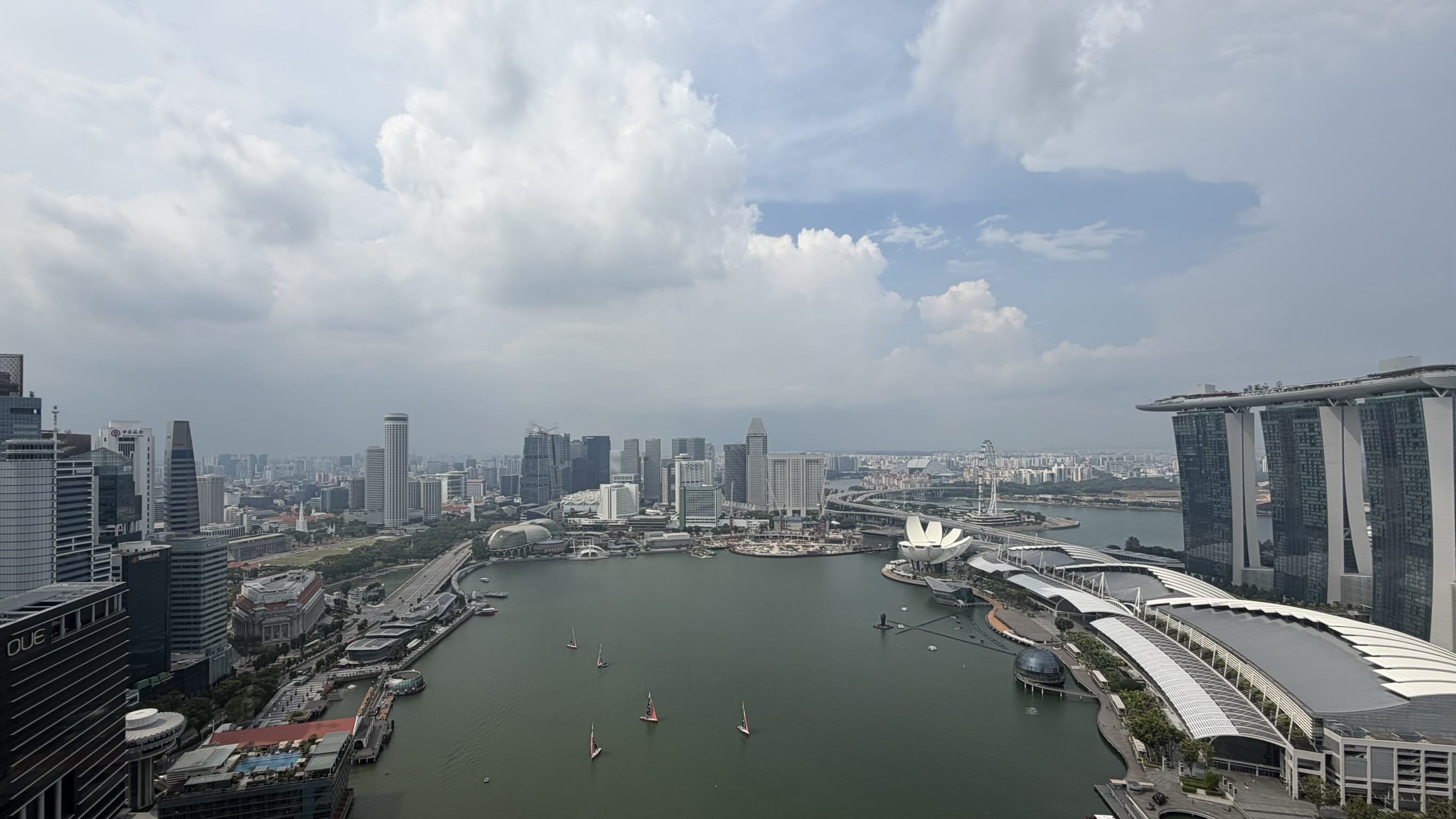
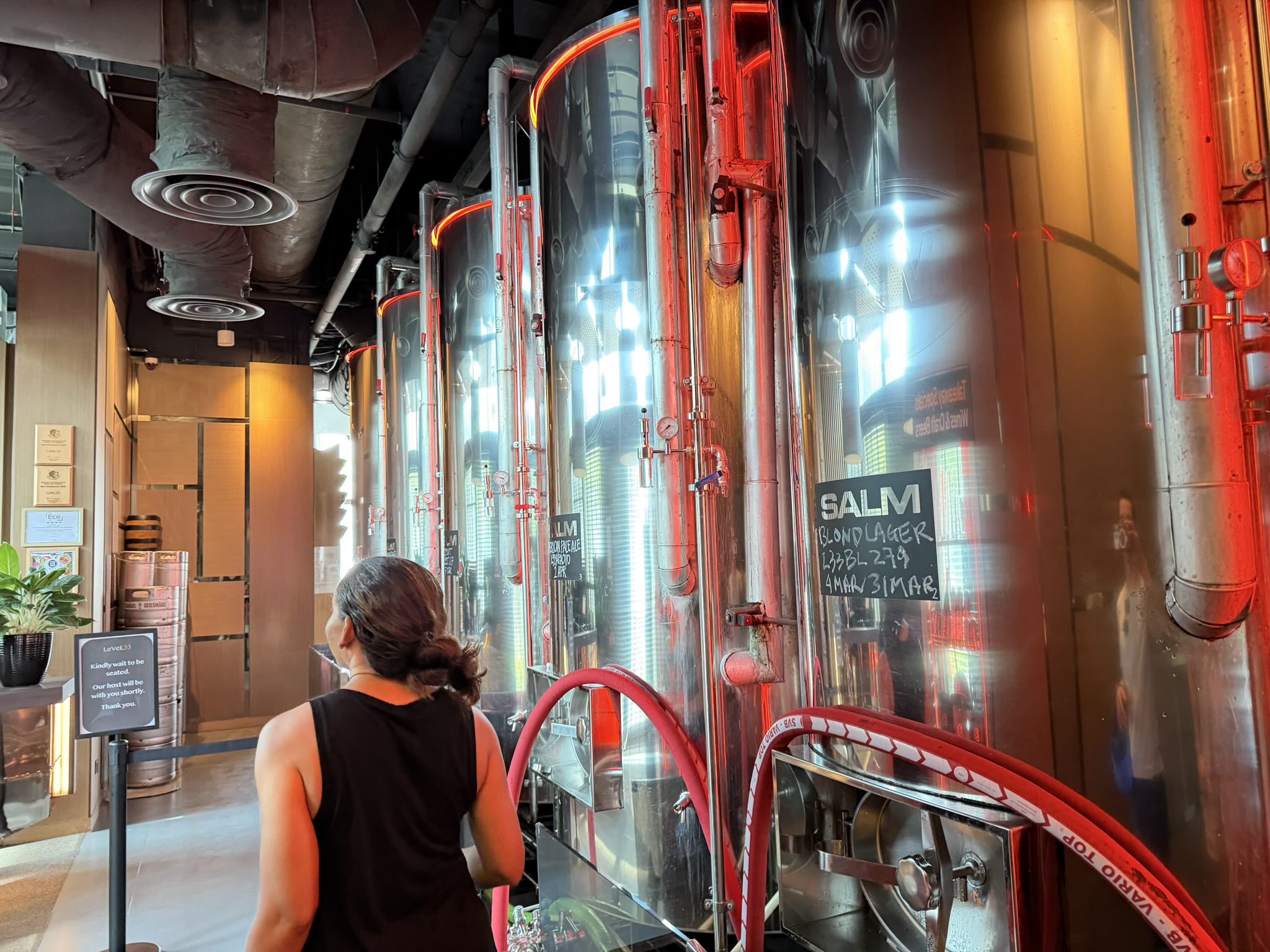
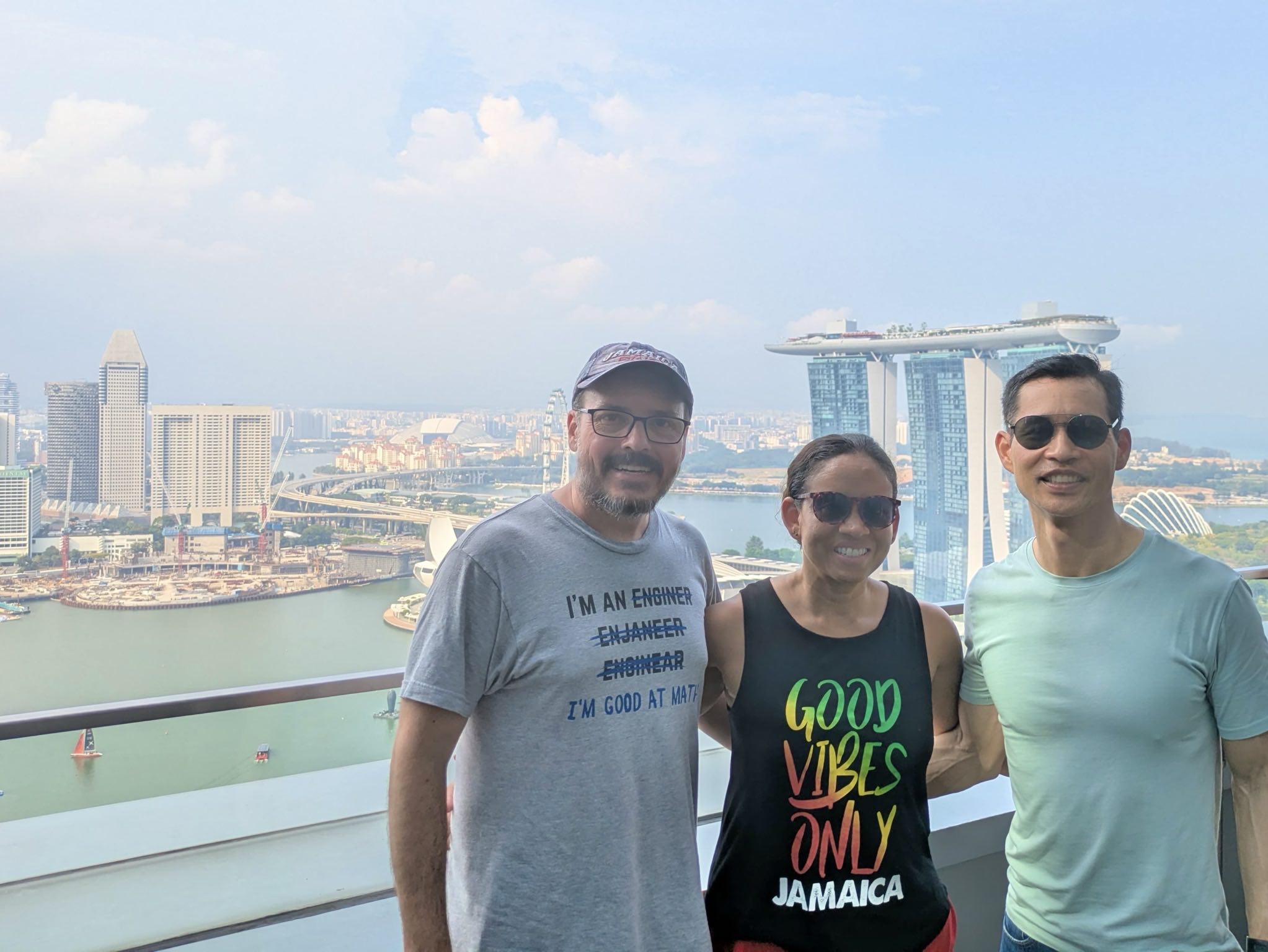
That evening we went to LeVeL33 for drinks—supposedly the world’s highest urban microbrewery located inside a building. The qualifier “inside a building” is doing real work in that claim. Plenty of microbreweries in Colorado operate at higher elevations, but they have the unfair advantage of being built on a mountain rather than the 33rd floor of a skyscraper. The view of Marina Bay and its famous triple-towered hotel was worth whatever fine print was attached to the superlative.
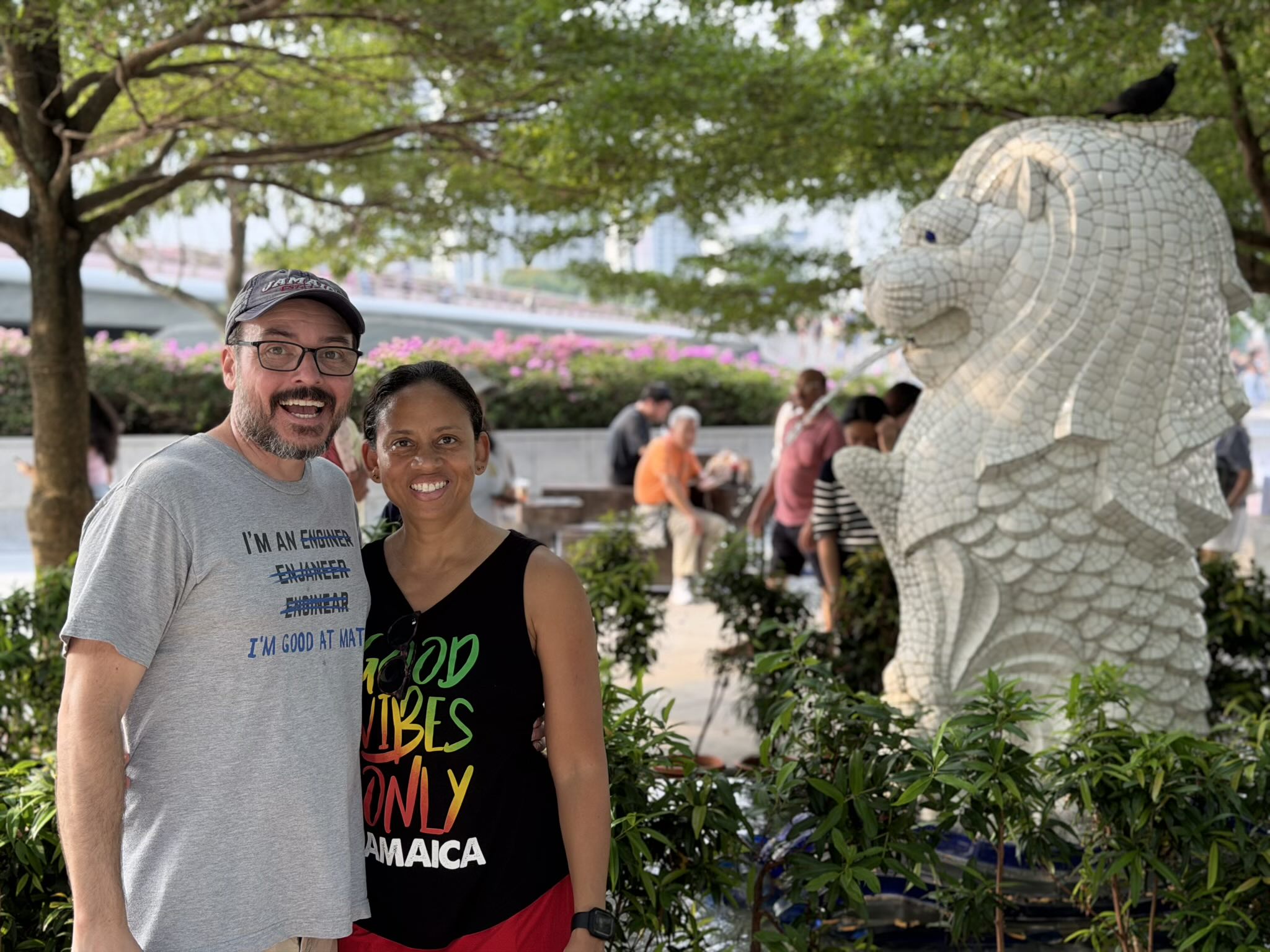
An hour later, we walked to the Merlion. It’s the half-lion, half-fish national symbol that stands at the mouth of the Singapore River, looking out toward Marina Bay with the expression of a creature that has accepted its hybrid identity and moved on.
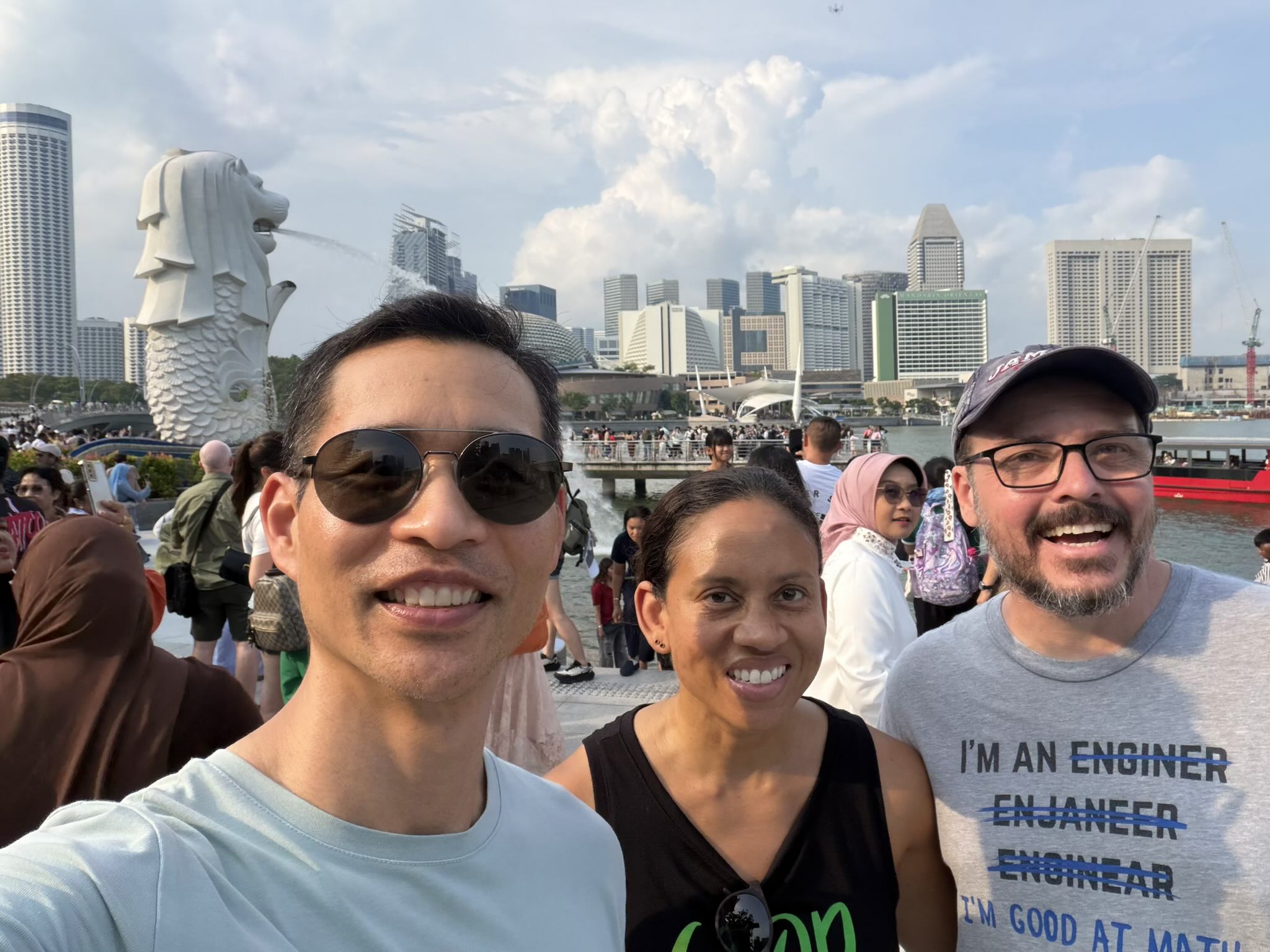
While the three of us were standing nearby, a young woman walked past carrying a Trader Joe’s tote bag.
This prompted a brief but animated conversation among ourselves. A few months earlier I’d read about how the $2.99 canvas tote—available only in the US—had become an unlikely international status symbol, spotted in London, Tokyo, Seoul, and now apparently Singapore, with resale prices on some platforms reaching into the thousands of dollars. Owning one outside America signals that you’ve either traveled to the US or know someone who has, which apparently carries more social cachet in certain circles than a designer handbag. It is, as someone put it, a luxury item for people who find luxury items ridiculous—which may be exactly what makes it work.
Dinner at the Hawker Stalls
Almost every evening, James, Leanne and I went to their regular hawker stall a few blocks from their apartment: Feng Ji Chicken Rice. Each dish—sliced fish soup, sliced fish congee, seafood congee, fried rice—cost less than SG$7, or about five US dollars. The food was the kind of thing you stop talking during, because talking would mean missing a spoonful.
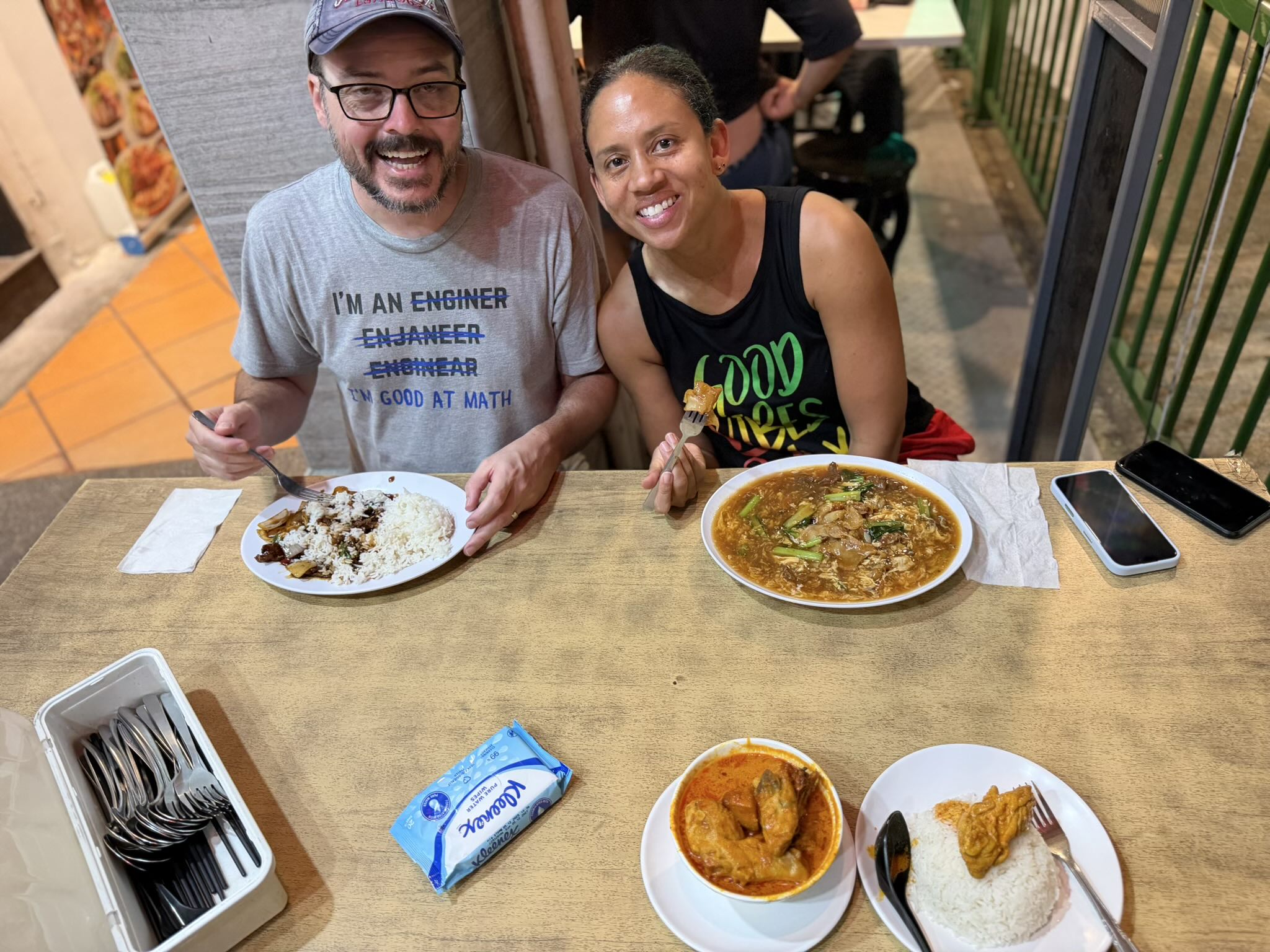
Another evening, we went to the nearby Pink Panther restaurant at Robertson Quay—a casual spot serving Chinese, Indian, and Thai food. James worked through a substantial beer and I had an excellent chicken curry outside the restaurant, just meters from the Singapore River. It is the sort of place that doesn’t ask you to choose between cuisines and is better for it.
Another night, we indulged in a delectable Jamaican feast with James and Leanne’s friends, Melissa (Mel) and Amanda at Carnaby restaurant. A few of us couldn’t resist the jerk chicken. It was a revelation to discover that the fiery and spicy flavors of Jamaican cuisine almost perfectly complemented the hot, tropical weather of Singapore.
A Snake, a Summit, and a Lesson in Herpetology
On Saturday, James and I took a Grab cab to Dairy Farm Nature Park to meet up with some locals that are in one of Leanne’s WhatsApp groups: Mandy, MJ, Olby, and Sophia. A few minutes into the hike, we encountered a snake on the trail. It was roughly a meter long, glossy black on top, and a vivid electric blue along its flanks, with a red head and tail that seemed almost to glow against the leaf litter. We stopped and admired it from what we thought was a reasonable distance.
It was a blue Malayan coral snake (Calliophis bivirgatus). With its radiant blue stripe adorning the length of its long—but diametrically small—body, it was one of the more visually striking animals I’ve seen in the wild. Yet, as we’d learn afterward, it was also one of the more dangerous ones. Its venom glands run a quarter of the length of its body and produce a unique toxin that causes near-instantaneous paralysis in prey. Human fatalities are rare but documented. Had I known that at the time, I would have admired it from a much greater distance.
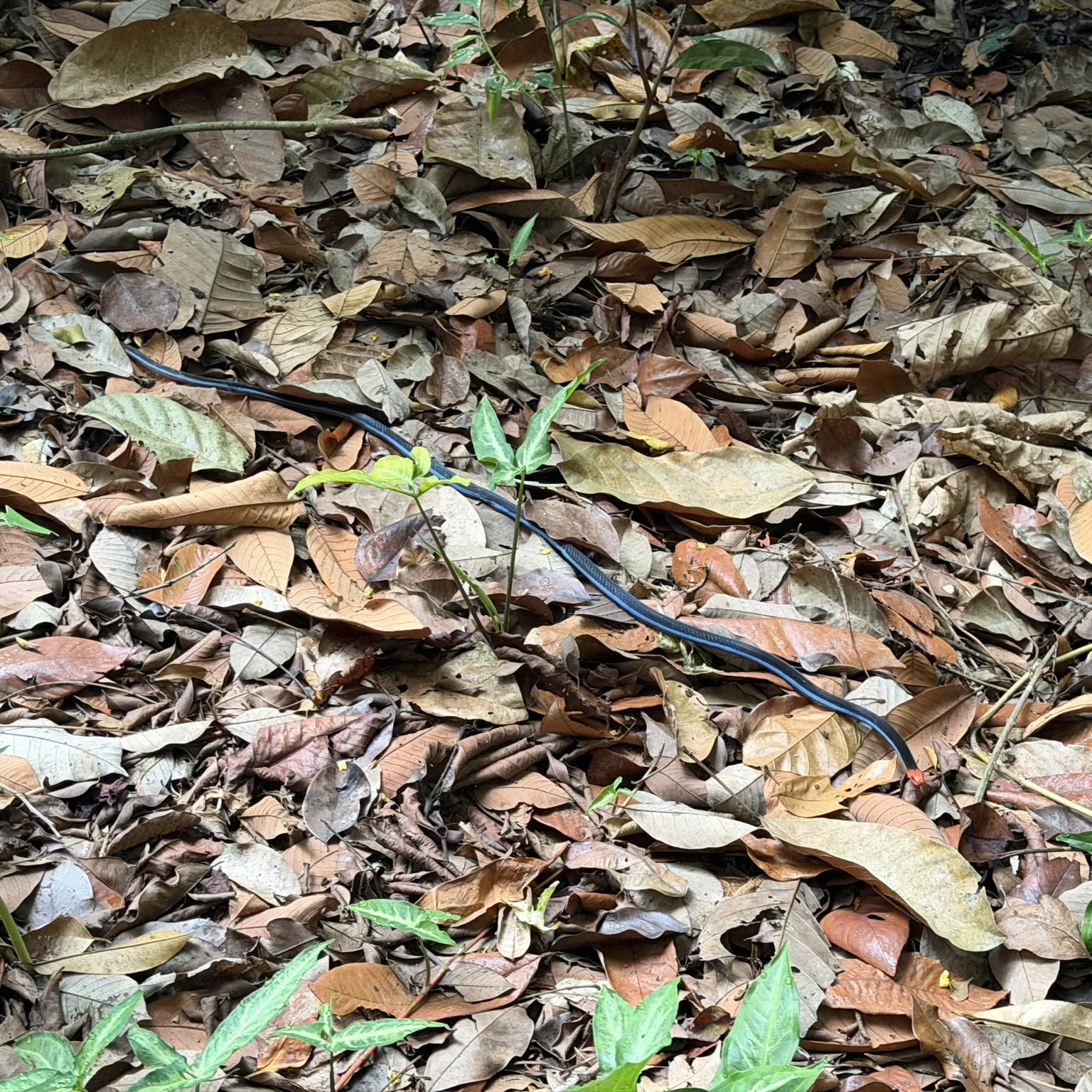
James offered a piece of field herpetology afterward: the most colorful snakes tend to be the most venomous, using their appearance as a warning. Garden snakes blend in precisely because they have no such warning to advertise. Rattlesnakes, as Colorado residents know, are the exception that tests every rule.
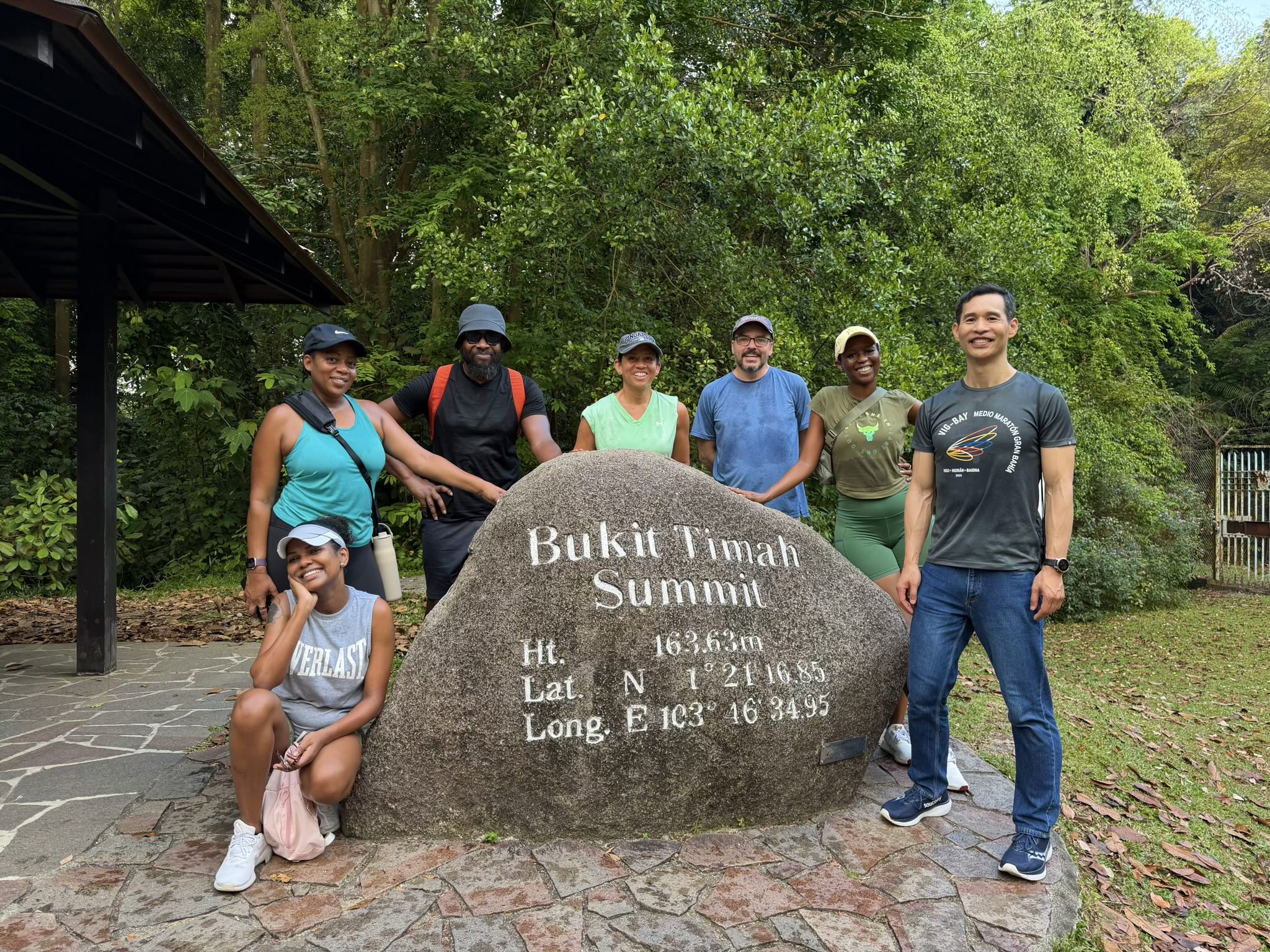
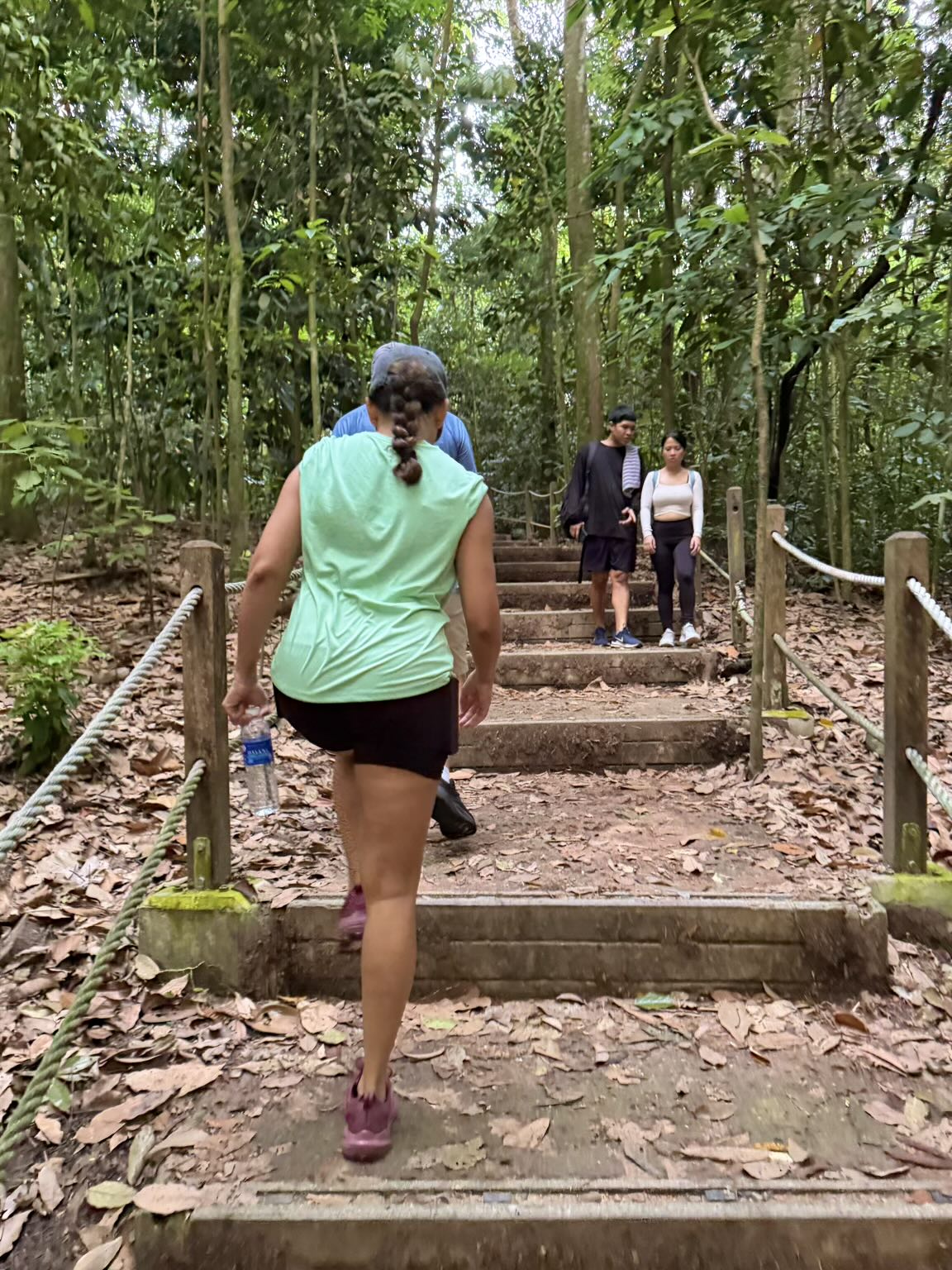
From Dairy Farm, the group hiked up to the Bukit Timah summit—Singapore’s highest natural point at 163.63 meters (537 feet), marked by a large boulder engraved with the name and elevation. The steps leading up were steep enough that they gave the group pause; for me, hiking regularly at a mile above sea level in Fort Collins, the altitude itself wasn’t the challenge. The humidity, on the other hand, was its own category of experience. I was sweating at a pace that suggested my body had simply given up on the concept of staying dry and decided to commit fully to the alternative.
Pulau Ubin
On Monday, James and I took two MRT trains and a bus out to the Changi area to catch a ferry to Pulau Ubin, a small island off Singapore’s northeastern coast that feels, improbably, like a different country. The ferry only departs once 12 passengers have assembled—a rule that the ferryman seemed eager to interpret as leverage when only James and I showed up at the dock. He offered to take us immediately for SG$48, the cost of a full boat.
“How long do you think we’d have to wait?” I asked.
“I don’t know,” said the man who was missing all of his front teeth, shrugging his shoulders. Without elaborating, he tried to make it seem like we might have to wait hours.
Nevertheless, we politely declined and waited. Within two minutes, a group of young people arrived carrying fishing rods. A few more followed. We were on the water inside fifteen minutes.
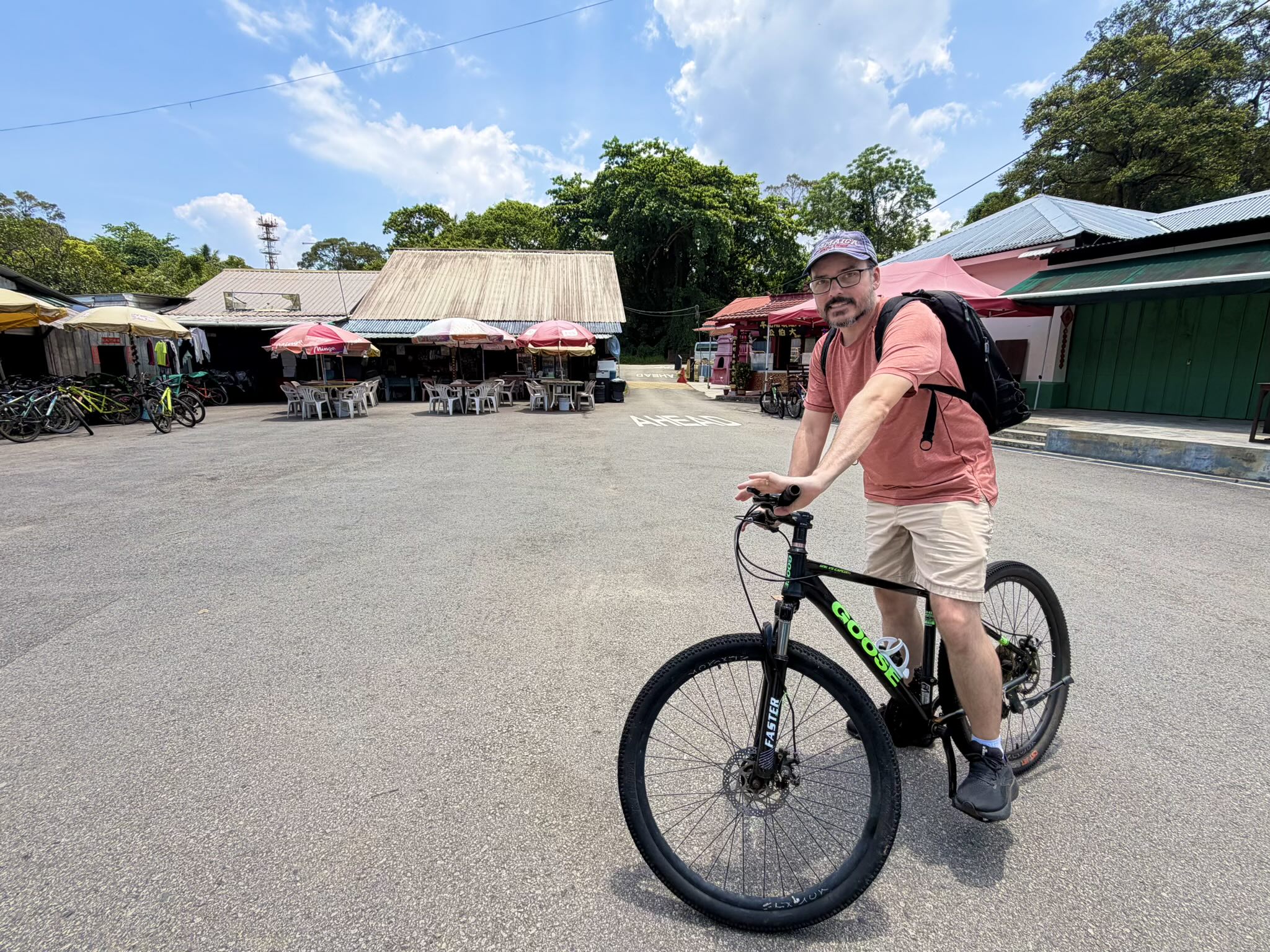
On the island, we rented mountain bikes—one of the operators accepted Visa, with a SG$1 surcharge per person, bringing our total to a very reasonable SG$22 (US$16) total for both bikes. Pulau Ubin is largely free of the relentless development that defines the main island: dirt paths, old kampong houses, mangroves, and no one in any particular hurry.
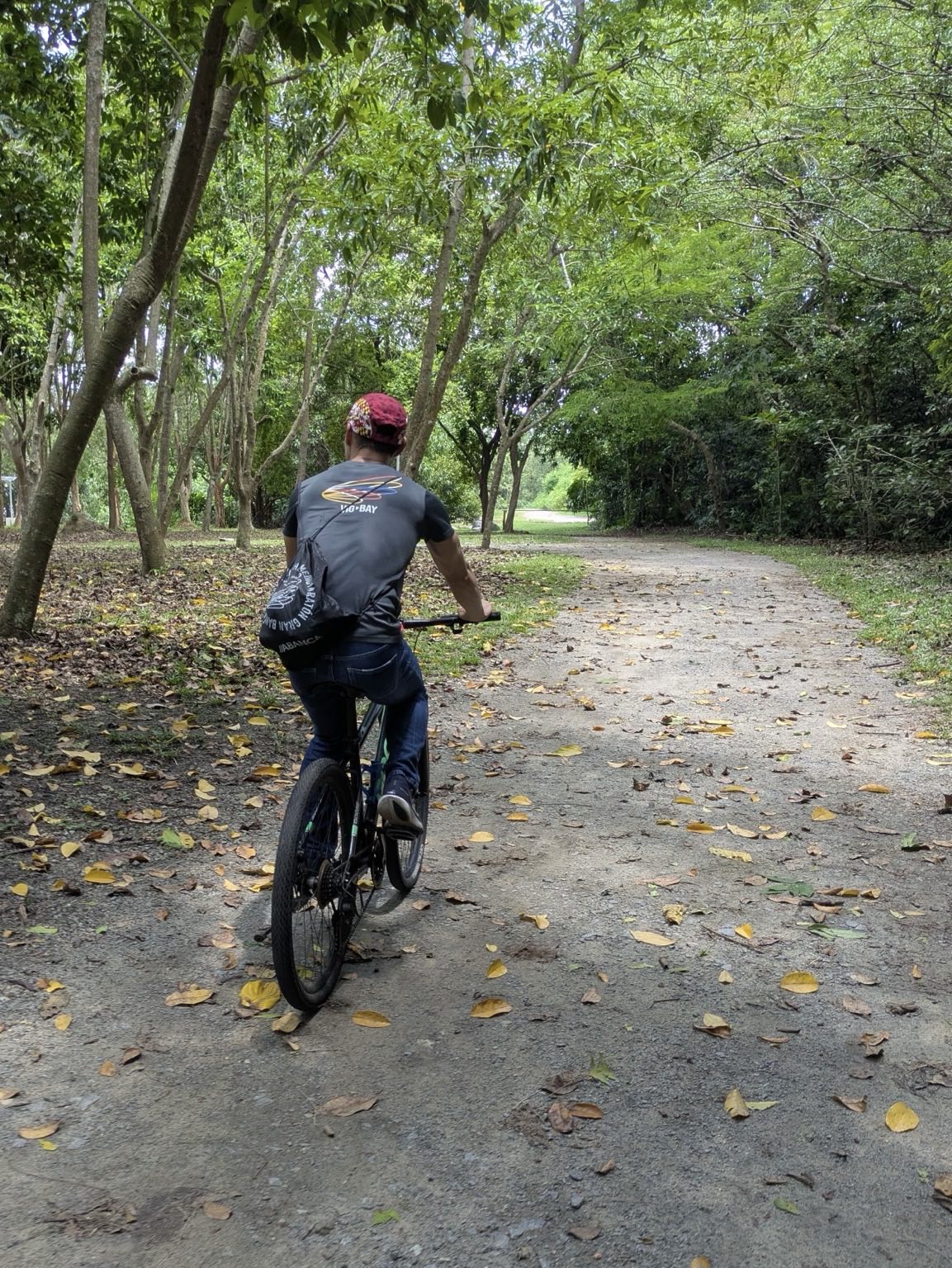
We stuck to primarily paved roads except for a kilometer of singletrack that was designated by with a blue square, just like how intermediate ski runs are rated. Not long before that, we encountered a shrine to a German girl who, legend has it, ran from British forces during World War I and fell off a cliff. Locals would leave offerings like Barbie dolls for good luck.
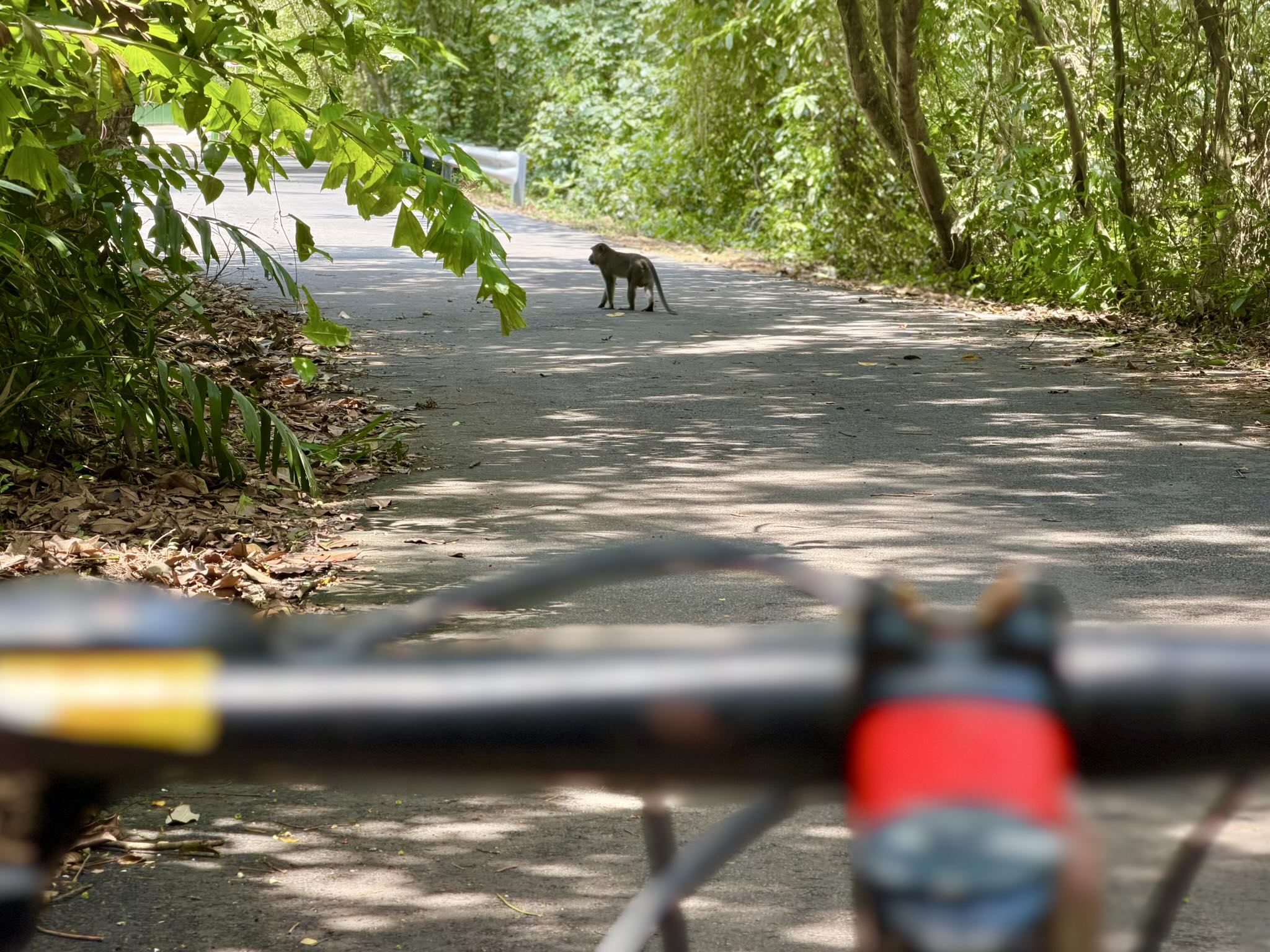
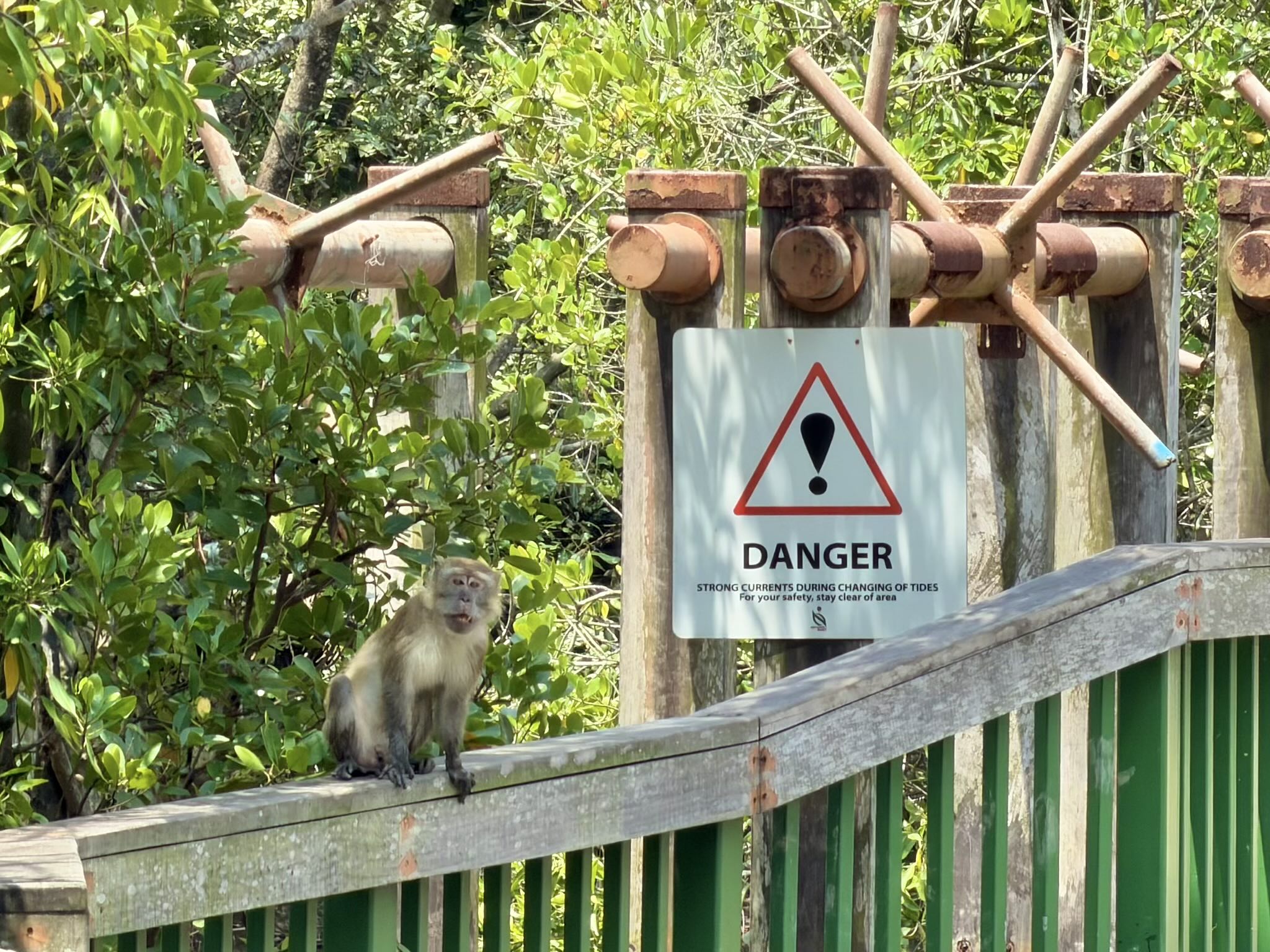
The wildlife was less shy than in the nature parks. Midway through a trail, we came around a corner to find a monkey sitting in the road with the self-possession of a toll booth operator. We stopped. It looked at us. It did not move.
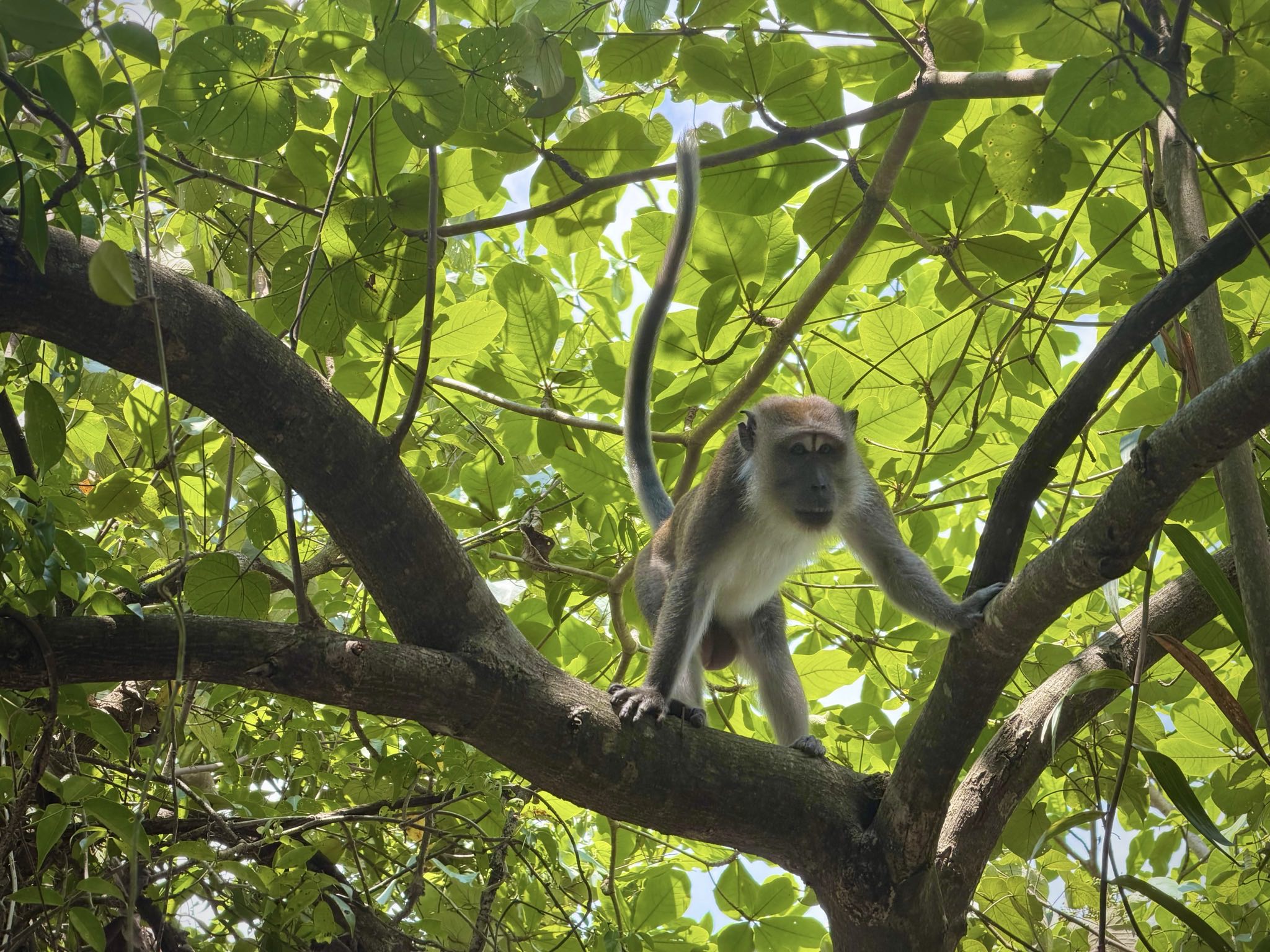
We looked up and realized there were more monkeys in the trees above us—watching, as monkeys do, with an air of mild contempt for whatever we were planning next.
The ArtScience Museum (One Exhibit Better Than the Other)
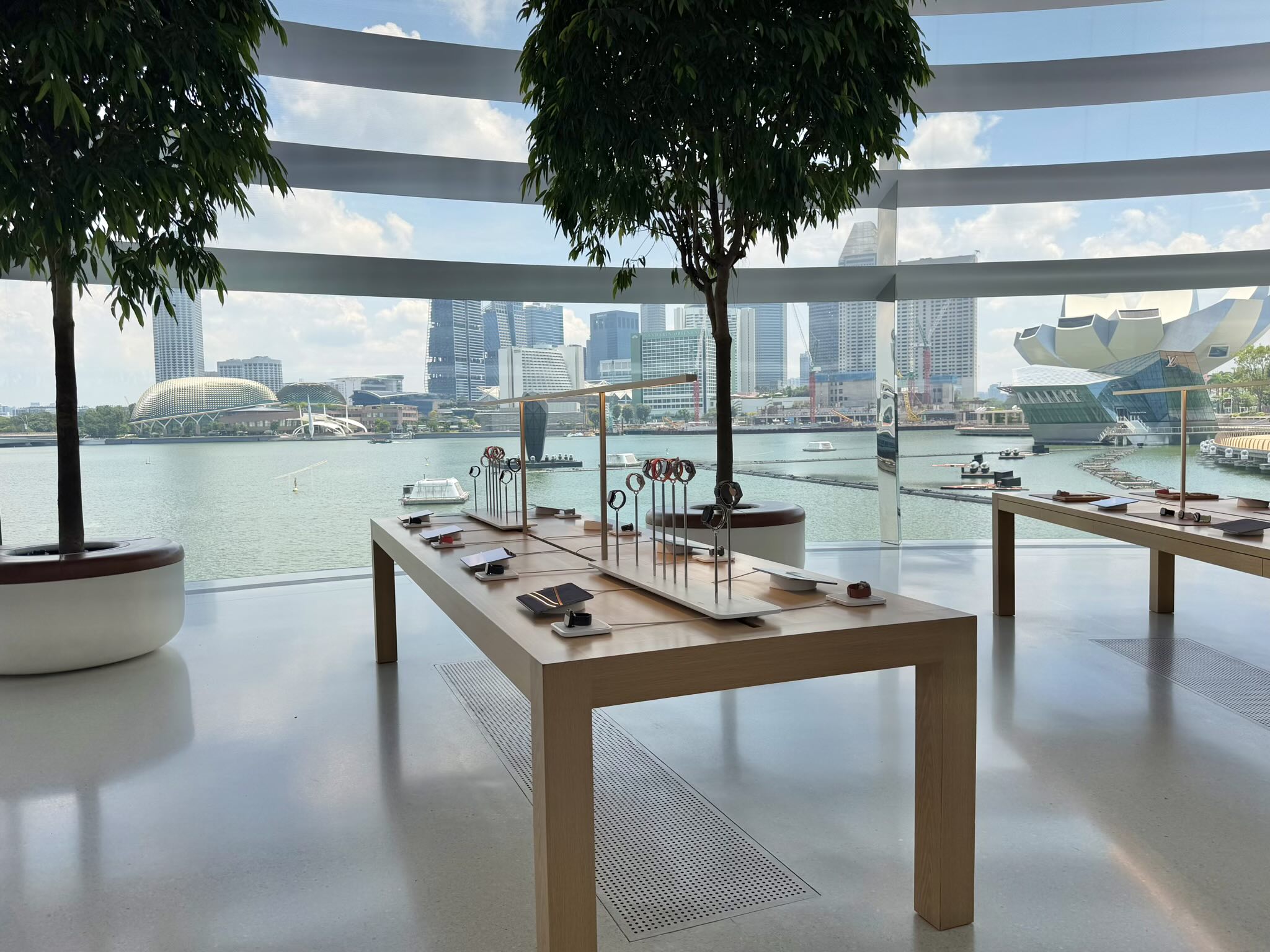
James and I spent Tuesday at Marina Bay Sands. Before the museum, we stopped at what is genuinely one of the most impressive Apple Stores I’ve encountered—housed in a globe-shaped glass structure on the waterfront, with views of the bay on all sides. I saw the new budget category-busting MacBook Neo for the first time and thought it looked beautiful. A whole lot less people are going to be buying midrange PCs when they could be getting this instead.
For the ArtScience Museum, we bought a bundle ticket covering two exhibits: Insects: Microsculptures Magnified and NOX: Confessions of a Machine.
We started with Lawrence Lek’s Confessions of a Machine, which turned out to be the more challenging of the two experiences—challenging in the sense of asking the viewer to justify the price of admission. The exhibit consisted of a large hall containing a handful of tablets on stands, a video, and a touchscreen game in which you repaired an autonomous vehicle set in 2065. The autonomous vehicle in question was depicted as a 2013 Tesla Model S—a car that, as of about a month before the exhibit opened, Tesla had stopped manufacturing. For an artist imagining autonomous transportation more than four decades from now, it seemed like absolute laziness a curious failure of imagination to reach for a sedan that was already discontinued.
James and I searched afterward for reviews or critical responses to the exhibit. We found only a few articles, all enthusiastically hyping its arrival.
“I guess the worst thing an artist can have,” James observed, “is to have no one talk about their art.” Consider this blog post a small corrective.
The insect photography exhibit was a different matter. Macro images of insects in extraordinary detail and color—enlarged to the point where creatures you’d evict from your kitchen without a second thought revealed themselves to be elaborate, almost architectural. Worth seeing, even though were the insects still alive, you’d be running and screaming, aghast in absolute horror.
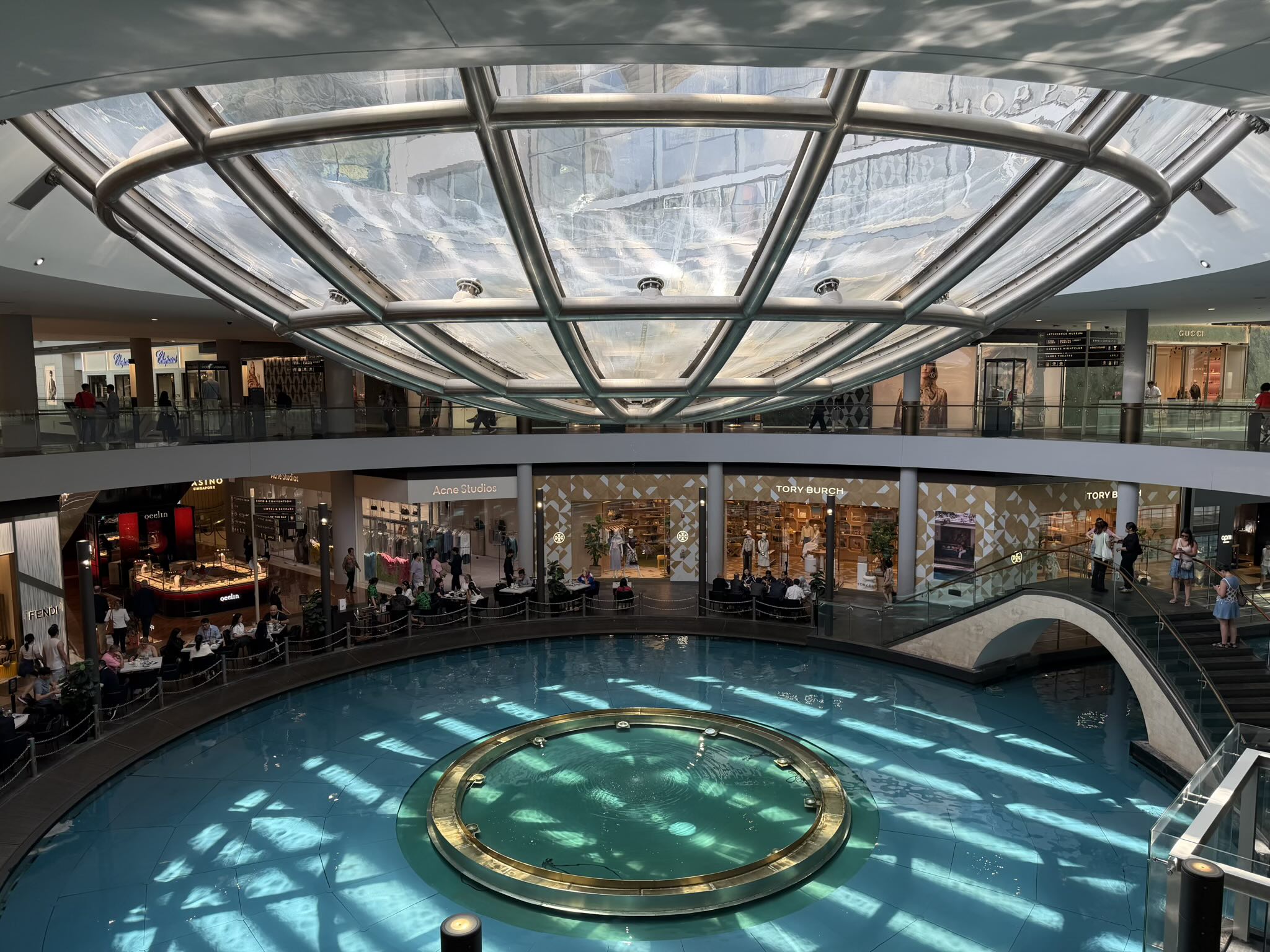
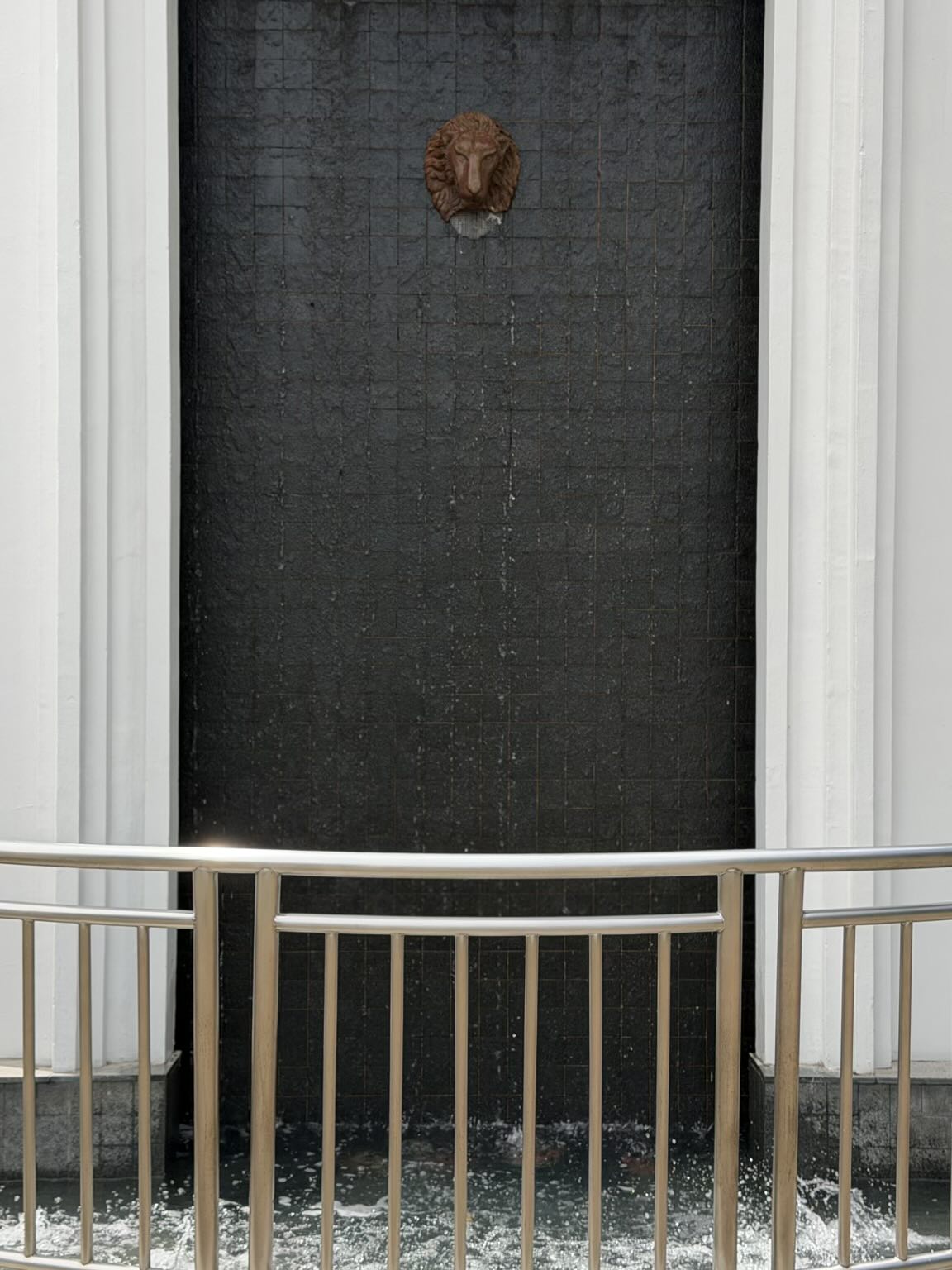
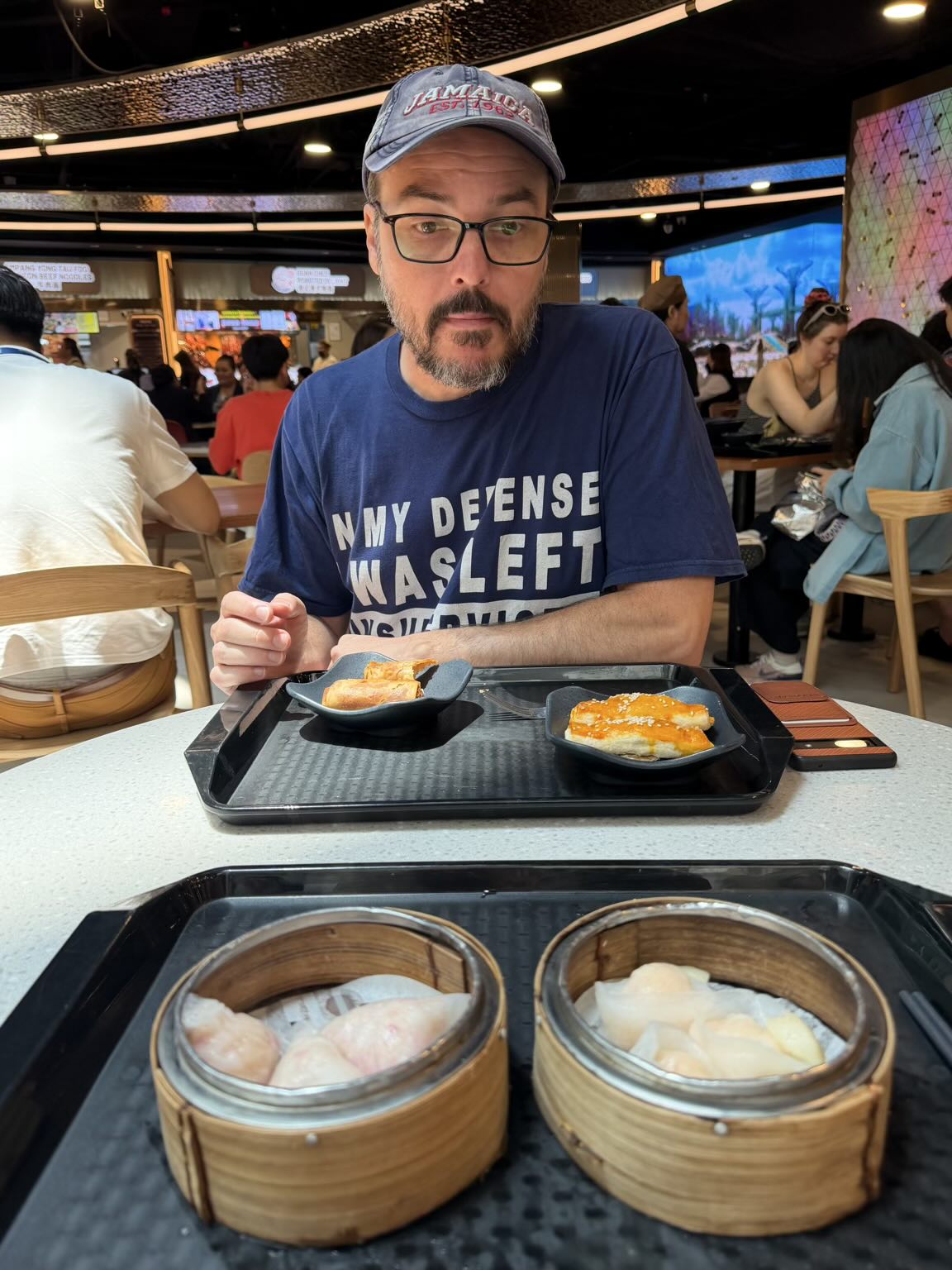
After the museum, James and I had dim sum inside the mall—steamed scallop and shrimp dumplings, seafood dumplings—surrounded by the kind of architecture that makes you stop mid-bite. A massive bowl above the atrium captured rainwater from outside and channeled it into a fountain below, a piece of engineering that doubles as spectacle.
Ran, and the Price of Driving
That afternoon I went for a haircut, on a recommendation from Gemini AI based on my criteria: accepts credit cards, no appointment necessary, good reviews, reasonably priced, closeby. I was attended to immediately by the hair salon’s owner, Ran, who has run the shop in the same building for 29 years.
Upon learning that I was from the States, Ran asked me if I supported the war in Iran. Doing my best to stay apolitical, I replied that I hoped it would be resolved soon.
“So do I,” he lamented while running an electric clipper through my hair. “It now costs me 320 [Singapore] dollars every time I fill up my gas tank!”
Ran had bought a new Mercedes E-Class just two months ago. The car cost SG$400,000—approximately US$300,000—of which SG$120,000 was a Certificate of Entitlement, the government-issued permit required to own and operate a vehicle in Singapore for ten years. The COE price fluctuates based on how many people are bidding for the fixed supply issued each round.
At least insurance (SG$2200/year) and maintenance (almost free due to Mercedes’ warranty and service for five years) were reasonable.
His wife thought he lost his mind, he told me. He disagrees. He’s worked in the same spot for 29 years, his children are grown, and he has grandchildren. The car brings him genuine joy. He’s earned the right to it. I told him I completely understood—I’m a car person too—and congratulated him on the purchase. He smiled and said his philosophy was simple: God has given him more than enough, and it would be a shame not to use some of the excess while he still could.
The contrast with the US is striking. Singapore has roughly 11 passenger vehicles per 100 people, compared to more than 80 per 100 in the United States. The COE system has worked as intended. Most residents have little reason to own a car: even the longest MRT journeys cost less than SG$2.50, and Grab is everywhere. There are six million people in this city-state and yet traffic is surprisingly mild.
Ran lives in northern Singapore and drives every day by choice. Within this context, it’s almost extravagant act of automotive commitment.
General Impressions
A city of six million with no visible graffiti, no litter, essentially no homelessness, and a violent crime rate low enough that Ran described it as virtually nonexistent—”just opportunist petty theft, if you leave your SG$2000 phone out.” Can you think of another large city like that? Not in the Western hemisphere.
Americans who have heard of Singapore tend to know about the strict laws—fines for gum, caning for vandalism—and frame them as authoritarian excess. But arguably, it’s a bit like complaining about being expelled from school for blatantly cheating on an exam. Just don’t do the things you shouldn’t do. The result, from the street level, is that everyone benefits. The sidewalks are clean. The trains run on time. The air is breathable.
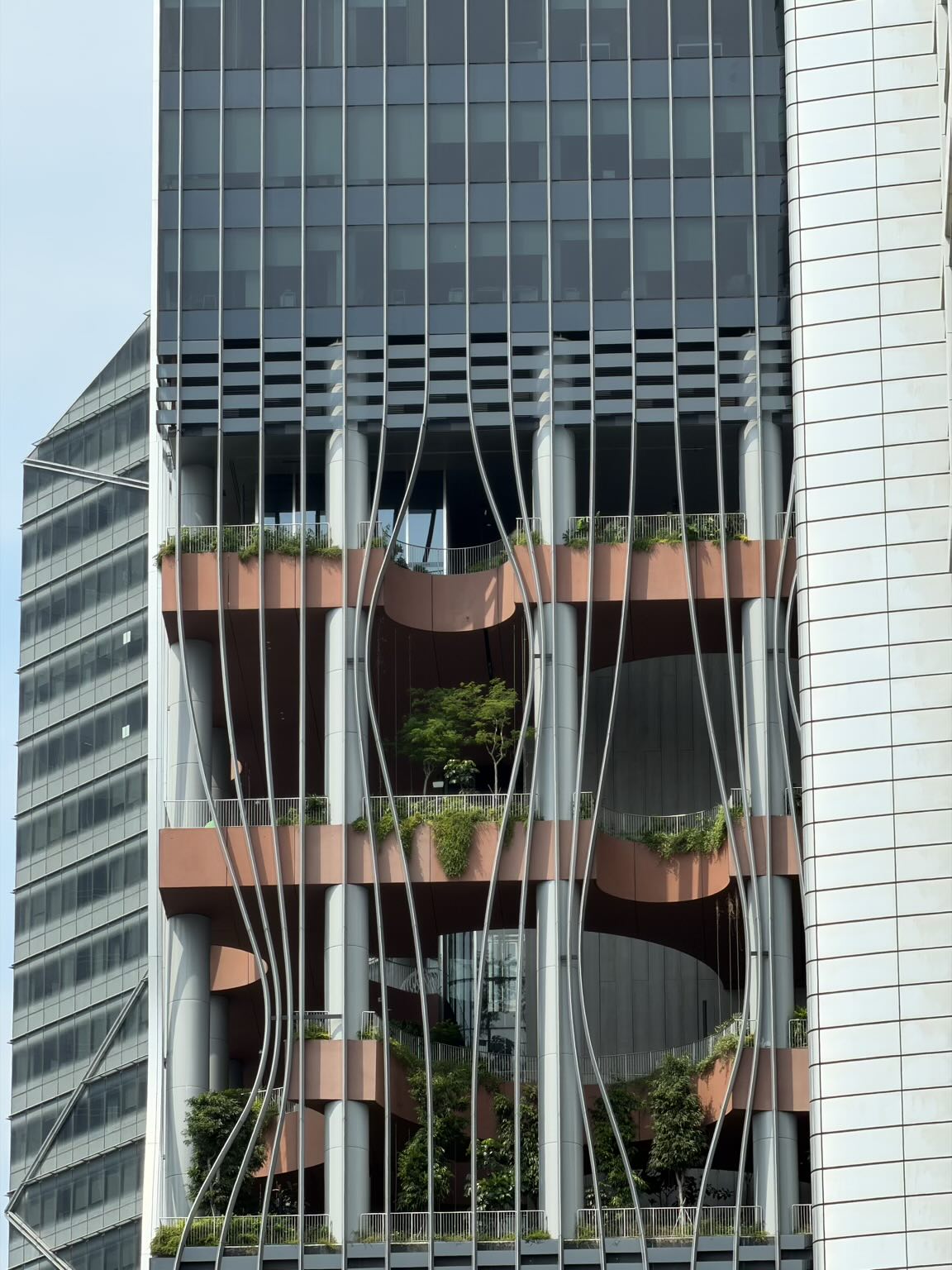
There are more trees than people in Singapore. It’s a statistic that sounds almost impossible in a modern city of concrete, glass and steel until you see how thoroughly greenery has been woven into the fabric of the built environment, perched on balconies and sprouting from the rooftops of 80-story high-rises.
Dining out can run as expensive as it would in the US or UK, but hawker stalls keep the city fed affordably. The masses are not forgotten: in the early years after independence, the government built extensive public housing and required citizens to set aside a portion of their income to own their homes. The 2030 MRT expansion goal—80% of households within a 10-minute walk of a station—is the infrastructure expression of the same instinct.
The main thing I disliked—as someone who runs outside daily—was the weather, i.e., the heat and humidity that promised to oppress this equatorial city year-round. I adjusted my runs to late evenings when the air was slightly less humid and therefore more comfortable, yet came back soaked every time, even at Zone 1 or 2 effort. While I am well aware of the detoxing benefits of sweating—free sauna!—I never quite got used to constantly feeling sticky. I also had the strange experience of blazing by everyone on the river path at a pace I’d consider absolutely turtle-like. This was because the local runners, admirably committed to their exercise routines, were moving at a speed that the heat and humidity had negotiated on their behalf.
I’d also change the payment system. Singapore is a world-class city in almost every respect and a finance hub in Asia, but the fragmentation of payment methods is remarkable. Large establishments—and the transit system that requires no apps!—accept Visa and Apple Pay without complaint. But hawker stalls prefer just about anything except those ways to pay that are super common and reliable in the western world.
One stall we visited wanted PayNow exclusively. The ferry to Pulau Ubin could only take cash—and that was the policy of many services on that island too. By comparison, traveling in Spain or Germany feels frictionless—tap anything, anywhere with your chip-containing credit/debit card or NFC-enabled smart phone. Singapore requires keeping cash on hand, signing up for various payment apps and maintaining a good cellular signal when settling the bill, or accepting the penalty of a 2% surcharge for card use at a coffee shop.
But those are the gripes of a guest. For James and Leanne, who have recently begun a new era of their lives here, Singapore offers something increasingly rare: a city that functions as designed, where the deal offered to residents—trade some freedom for a whole lot of safety and order—has been honored. It’s an interesting trade.
Standing on the Bukit Timah summit, looking out over the skyline through the trees, with heart rate slightly elevated from the steps, the terms of that deal felt like they’d been settled in everyone’s favor.
There are 4 comments.
Thanks for visiting Felix, we enjoyed it! I'm glad you like Singapore too. The more I learn about it, the more I like it here. I'm even starting to get over the heat and humidity (apparently it takes 3 months).
The pamphlet for Confessions of a Machine is here on my desk, happy to send you pictures of it when you are longing for the exhibit.
While it's a decent rule of thumb on the colorful snakes being the more dangerous, there are many exceptions. The best rule is stay away from them, especially if you cannot identify it. And don't kill them!
Now that I have seen both sides of your photography skills (there when you took them and here to see the result), I realize I will never be ready for a picture, lol.
Come back anytime!
James! So glad you're warming up to Singapore—literally, it sounds like, given the three-month heat acclimatization your body is apparently running. I'll have to take your word for it that it gets better; I start sweating just thinking about it.
Please do send the Confessions of a Machine pamphlet—I need something to stare at and remind myself that yes, we did pay actual money for that. On the snakes, "don't touch the snake" is probably more foolproof advice than the color-coding system. And as for the photography, honestly the iPhone does about 90% of the work; I just point it at things and hope.
Come visit anytime, especially if you need a reprieve from the air moisture!
Another awesome post Felix. I've heard SIN is one of the top airports in the world. How do you rate it?
Thanks, Ron! I feel the Changi airport is deserving of its accolades. I recently saw that it was rated the best for food options, which I won't argue about!
It seems particularly great when the next airport you go to is, say, a five-hour layover in Manila and it takes two hours just to get to your gate, they confiscate everything from the nail files on your nail clippers and scissors with 5mm-long blades, and the airline employees at the gate are working solely off paper printouts and fluorescent highlighters. Ask me how I know. 😂