Seawalls, Pho, and a Moon Launch in Vancouver, British Columbia

The last time I passed through Vancouver was in August 2007—nearly 19 years ago—and I use the word “passed” deliberately. A friend and I drove through it without stopping, which technically makes this my first time actually spending time in the city. A city this close to the mountains, this far north, and with this many things going for it probably deserved a proper visit before now. But 42 hours was what I had, so 42 hours it would be.
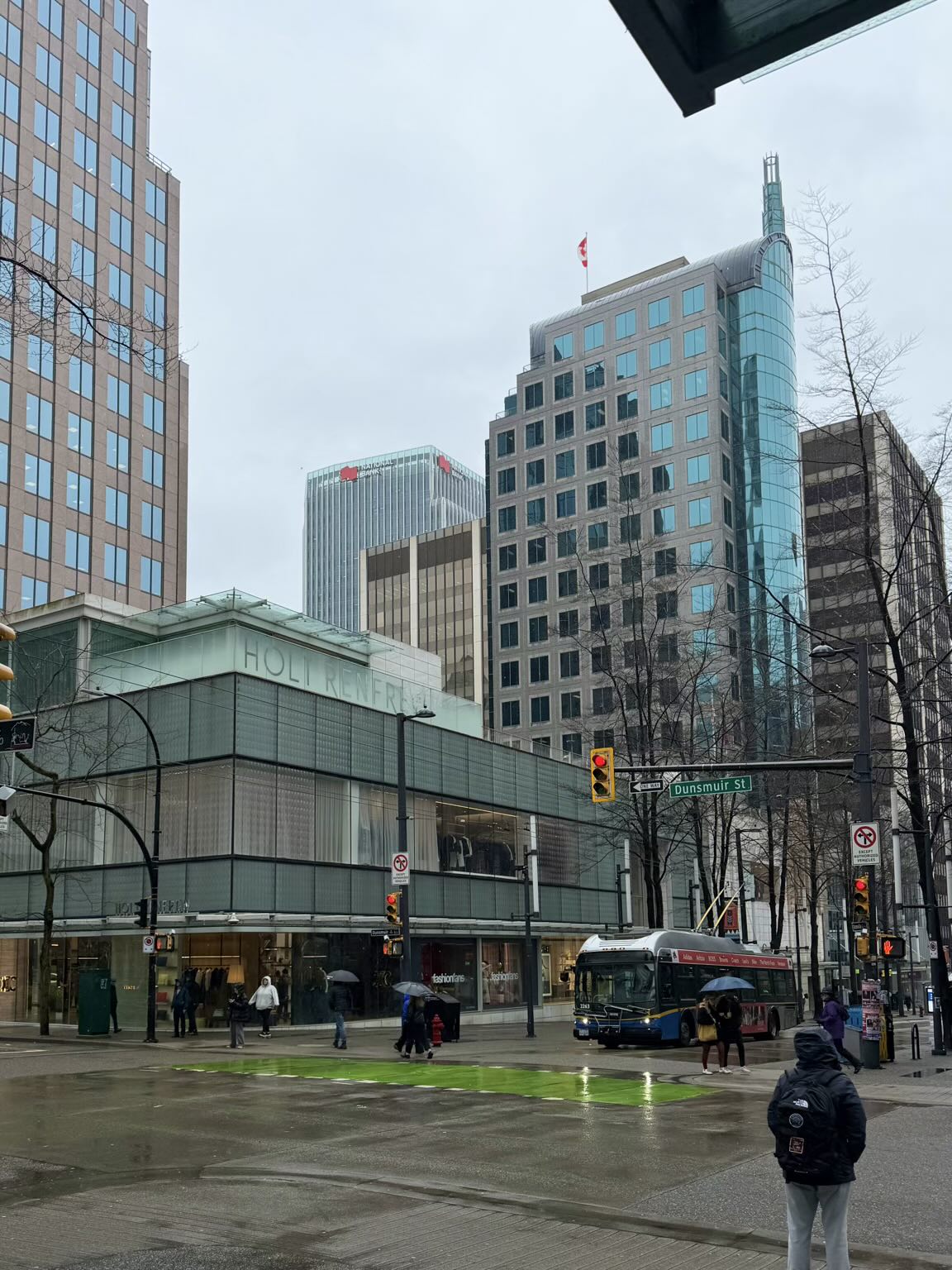
What I knew about Vancouver before arriving: beautiful setting, rain, moderate temperatures by Canadian standards, and the dubious distinction of being arguably the most expensive city in Canada. I had also heard from more than a few friends about car break-ins—a West Coast affliction that apparently respects no international border, stretching from Southern California through the Central Valley (arguably the epicenter) all the way up here. At least I wasn’t driving a car this time.
To figure out where to stay, I had Perplexity Computer—an AI agent I’ve been testing this month—read through my travel preferences file and evaluate hotel options across the city. One advantage Perplexity Computer has over other AI tools on iPhone is that it keeps working after you switch away from the app, so I fired off the request just before takeoff from Charlotte en route to Vancouver via Dallas, and by the time I landed at DFW, it had an answer waiting. Its pick was a hotel in an area accessible by transit, walkable to restaurants and grocery stores, and close to the Vancouver Seawall—the world’s longest uninterrupted waterfront path—where I could get in a long run.
Forty-two hours, though. I wondered if there was a less expensive nearby option. I opened Booking.com, zoomed into the area, spotted two alternatives with solid reviews at noticeably lower prices, and asked Perplexity to weigh in on them. It affirmed that Hotel Opportune would be a strong choice. Thirty seconds later, I had it booked—all while disembarking from the plane.
The Canada Line SkyTrain from YVR to Vancouver City Centre took about 25 minutes and cost roughly US$8—trains running every six or seven minutes, no waiting, no taxi negotiation, no drama. After two flights and a full travel day, this is exactly the kind of arrival experience that puts a city on your good side immediately.
First order of business once in the city: food. Google Maps showed the usual constellation of fast food options, which I ignored in favor of a nearby food court stocked almost entirely with Asian restaurants. This was not surprising. Vancouver has one of the largest Asian populations of any city in North America, and the culinary evidence is everywhere. I settled on Little Japan and ordered teriyaki chicken with no rice and extra vegetables. The man taking my order was cheerful in the way that makes you think a place might actually be good, and it was.
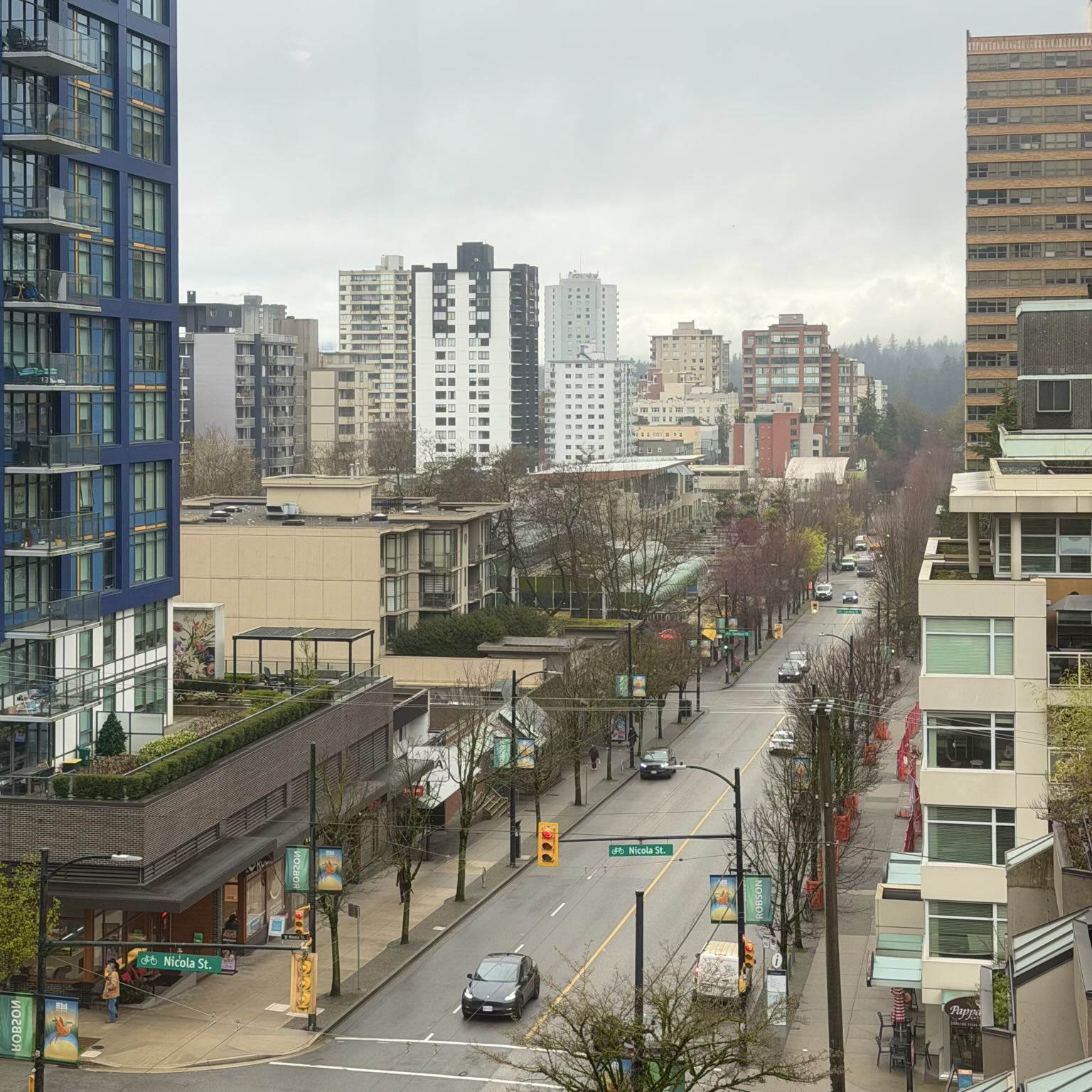
From there, I walked three-quarters of a mile to the hotel. It was raining, but—just as in Galicia—most of the buildings along the route had small awnings or overhanging eaves above the sidewalk, so the walk was damp rather than soaked. When I arrived at Hotel Opportune and was shown to a sixth-floor room, I found something that bore more resemblance to a studio apartment than a hotel room: full kitchen, wraparound corner windows, a balcony, and city views that made the modest price—US$78 per night, taxes included—feel like a misprint. This was a place I could live in.
Equally useful: three markets within four short blocks. A Whole Foods, a Safeway, and an Aisle24—the last of which I detoured into out of pure curiosity. Aisle24 is a 24-hour, fully unattended store. You download the app, create an account, scan your phone at the door to unlock it, then browse and check yourself out. Think of the now-defunct Amazon Go stores, but compact and without the ceiling full of cameras tracking your every move. I picked up a Lindt 85% dark chocolate bar (antioxidants) and a box of mixed red and white quinoa, buckwheat, and oats, then stood there for a moment appreciating the weirdness of it all. Whether shopping in an unstaffed room at midnight feels like the future or a cautionary tale probably depends on your relationship with technology. I landed somewhere in the middle.
I walked to the Whole Foods for salad ingredients, then settled in for what turned out to be an unexpectedly historic afternoon. On April 1—April Fools’ Day, of all days—NASA launched Artemis II: the first crewed mission beyond low Earth orbit since Apollo 17 in December 1972. Four astronauts aboard the Orion spacecraft, including Canadian Space Agency astronaut Jeremy Hansen, lifted off from Kennedy Space Center at 6:35 p.m. EDT and began a 10-day journey around the Moon. Watching from a hotel balcony in Vancouver—Hansen’s home country—while eating a large salad felt like exactly the right place and the right way to witness it. I watched, ate, rested, worked, and generally did not feel guilty about any of it.
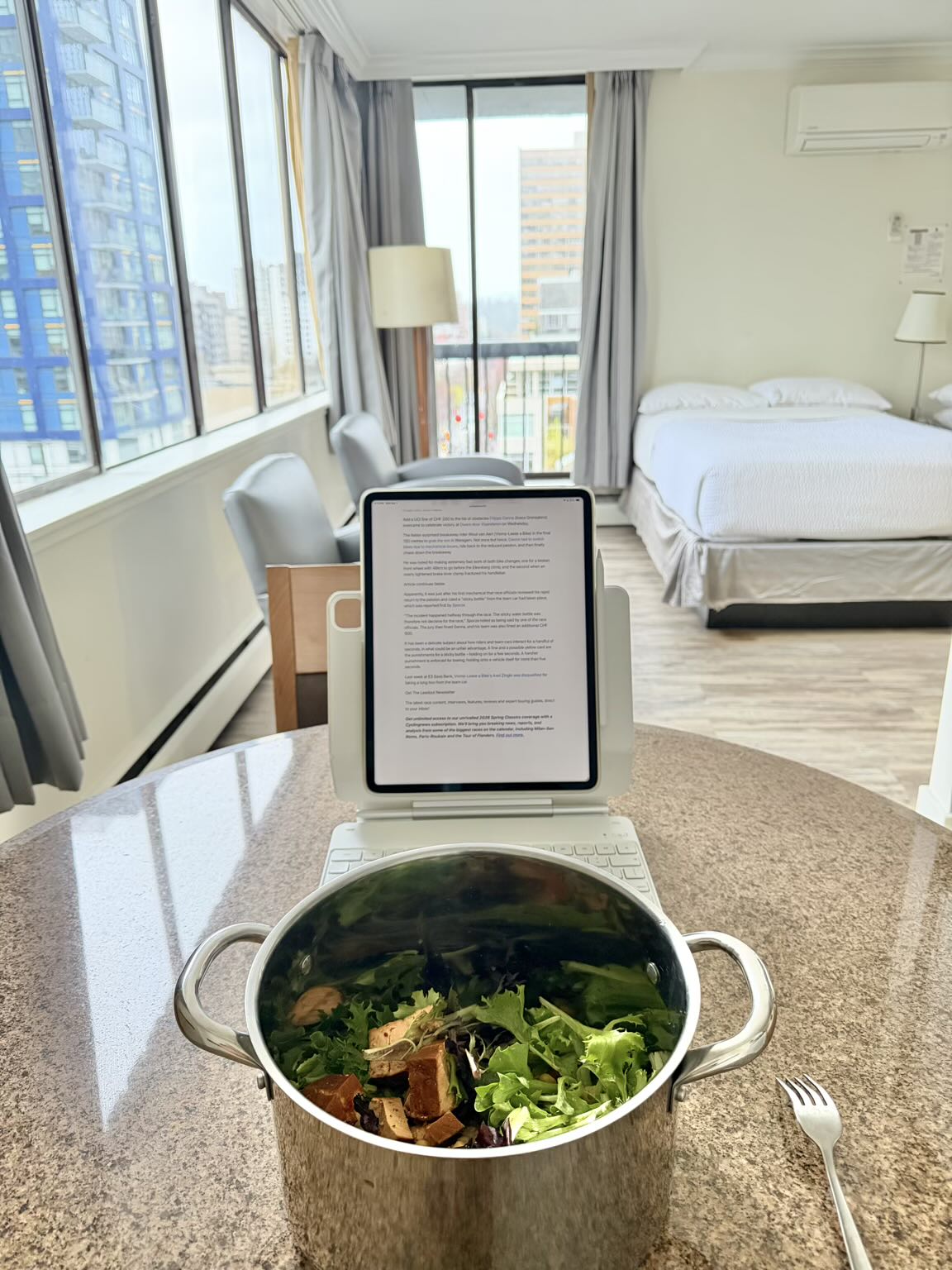
I spent a good part of the next day doing a bunch of computer-related things. But by late afternoon, it was time to move.
I hadn’t run for three days—the longest stretch in recent memory, and the longest since well before my two marathons in eight days. Garmin had been telling me to rest, and I’d been listening, supplementing with walking and some weightlifting. My legs felt suspiciously fresh. Fresh enough that I’d told a college friend during my Charlotte layover two days earlier that I thought I could run a sub-4-hour marathon that same day, just 48 hours after the B&A Trail Marathon. I didn’t test that theory, but I had a half marathon’s worth of Vancouver Seawall waiting for me.
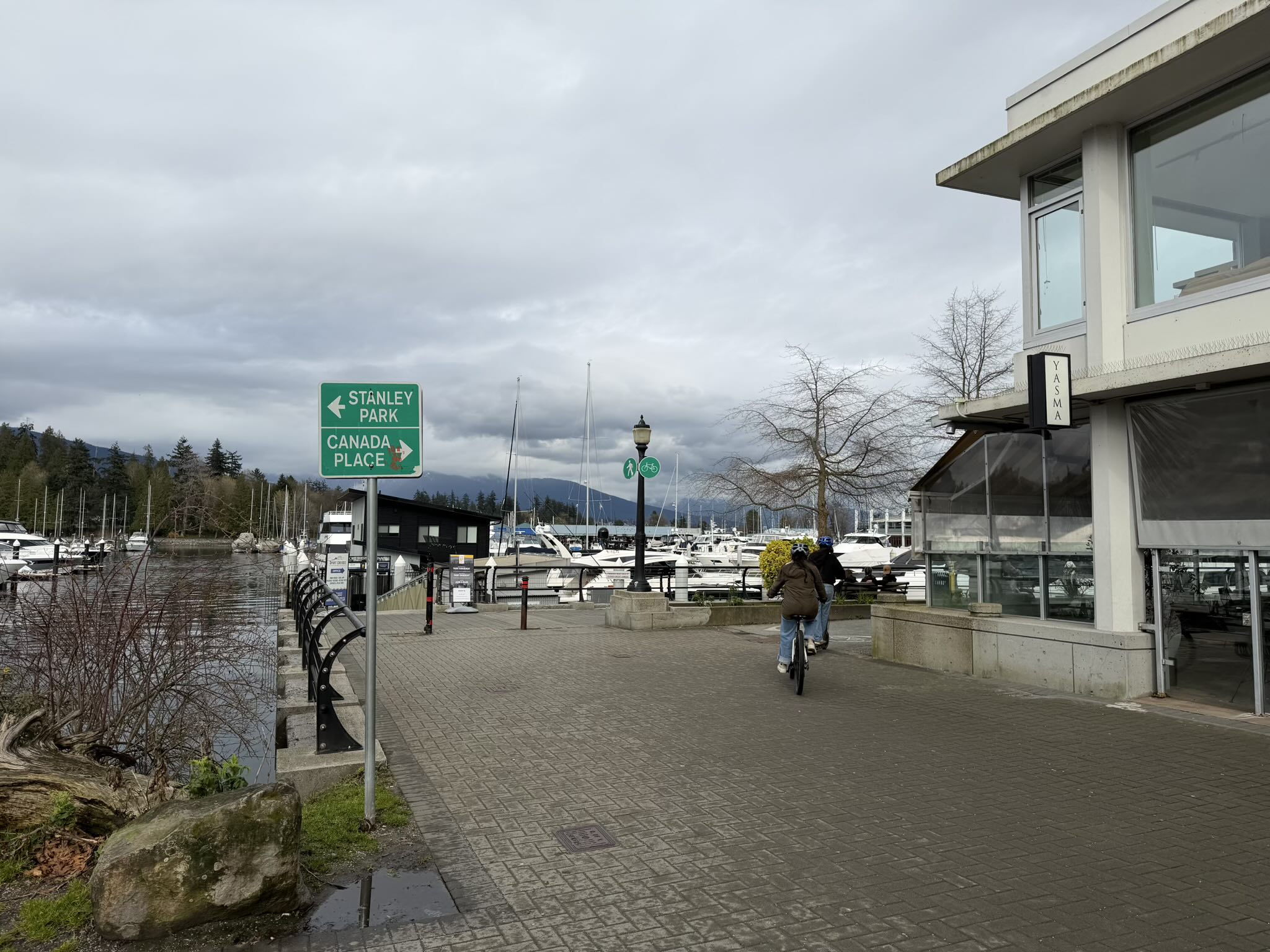
It wasn’t raining—just a faint drizzle at the start, the kind that’s more atmosphere than precipitation. I began at Bayshore West Marina and ran west along the Seawall, the 28-kilometer path that wraps around Stanley Park and continues along the waterfront in both directions. The Stanley Park section alone is nine kilometers; by the time I turned around at 10.6 kilometers, I had essentially circumnavigated the park.
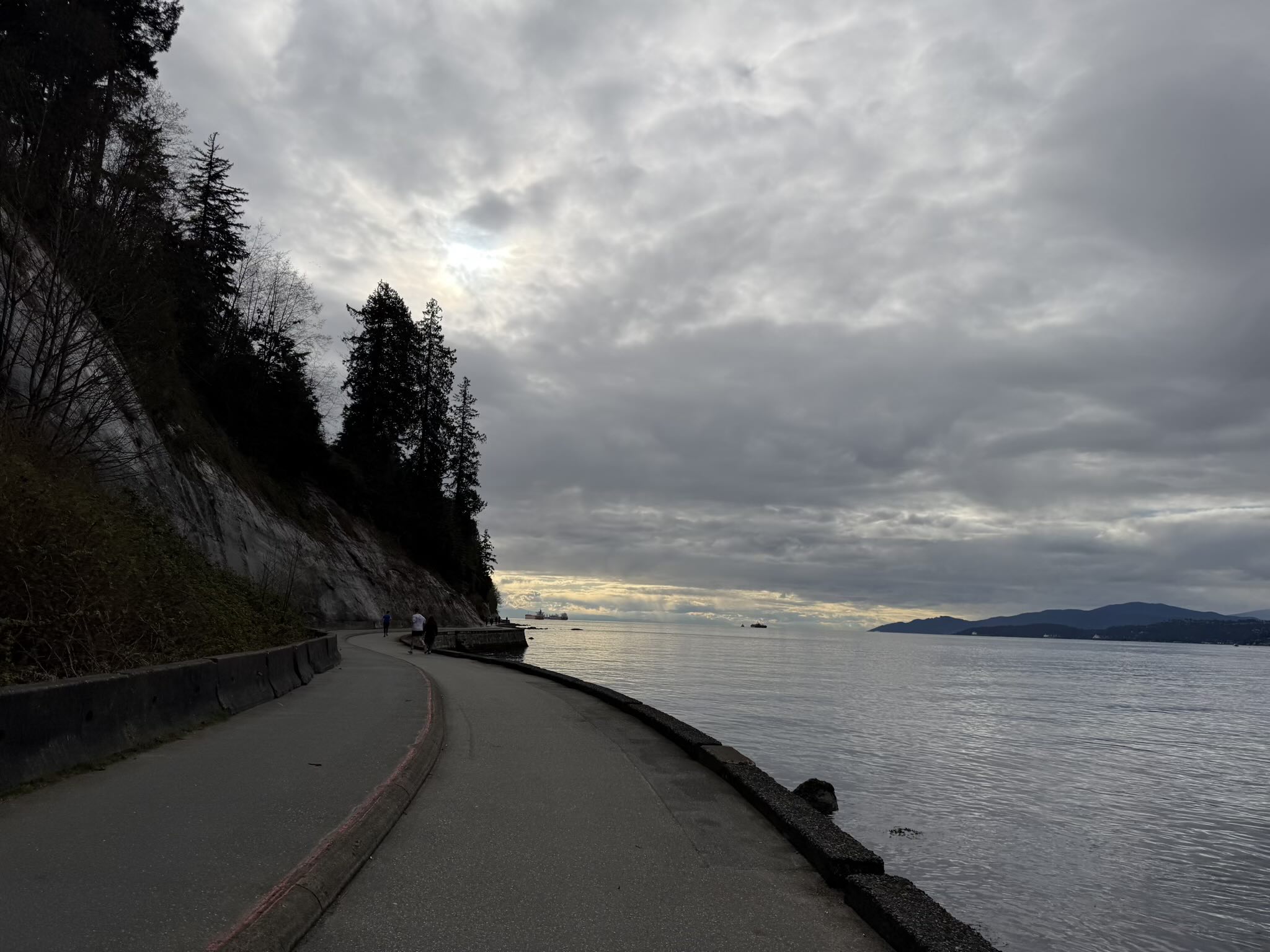
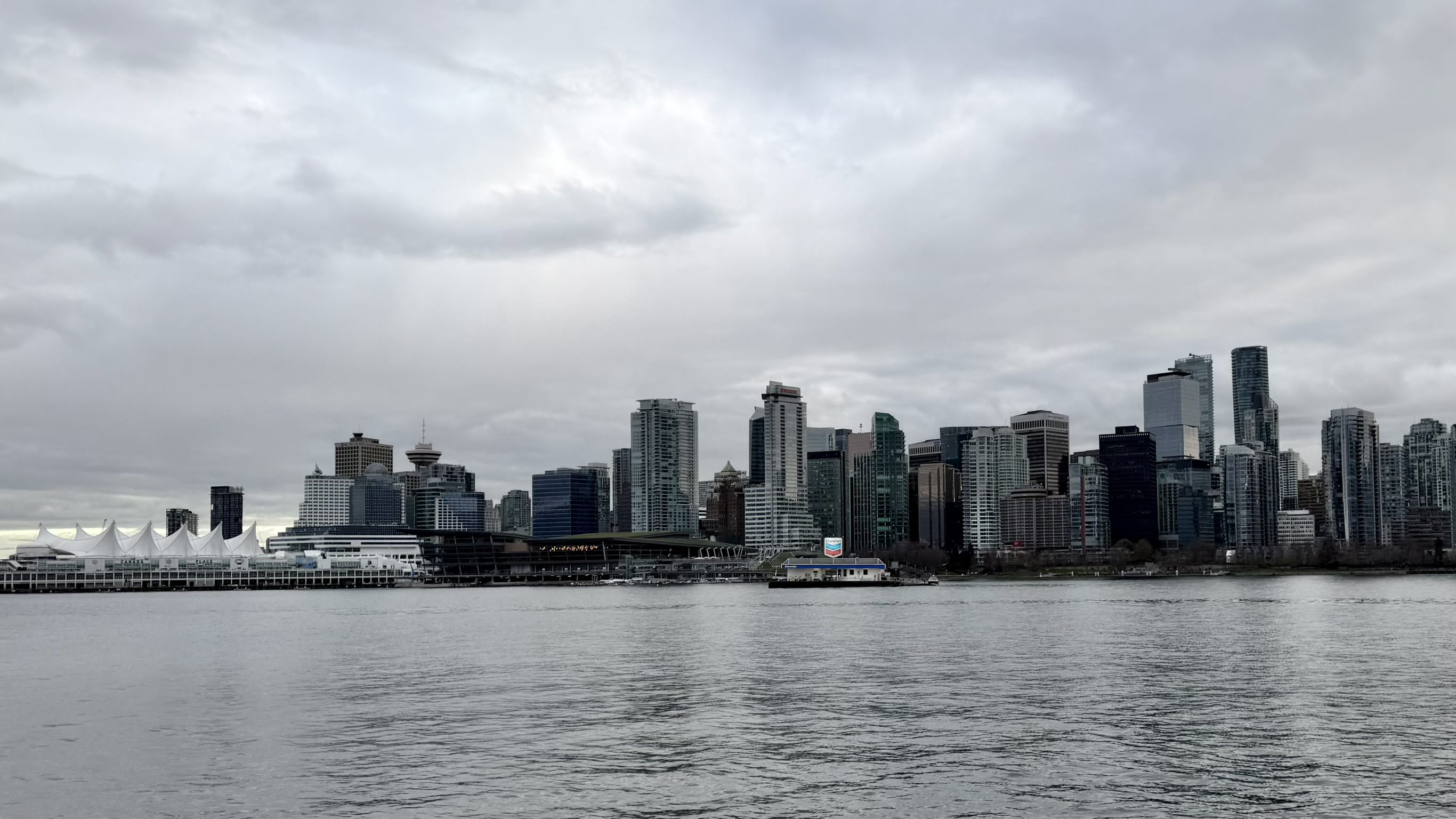
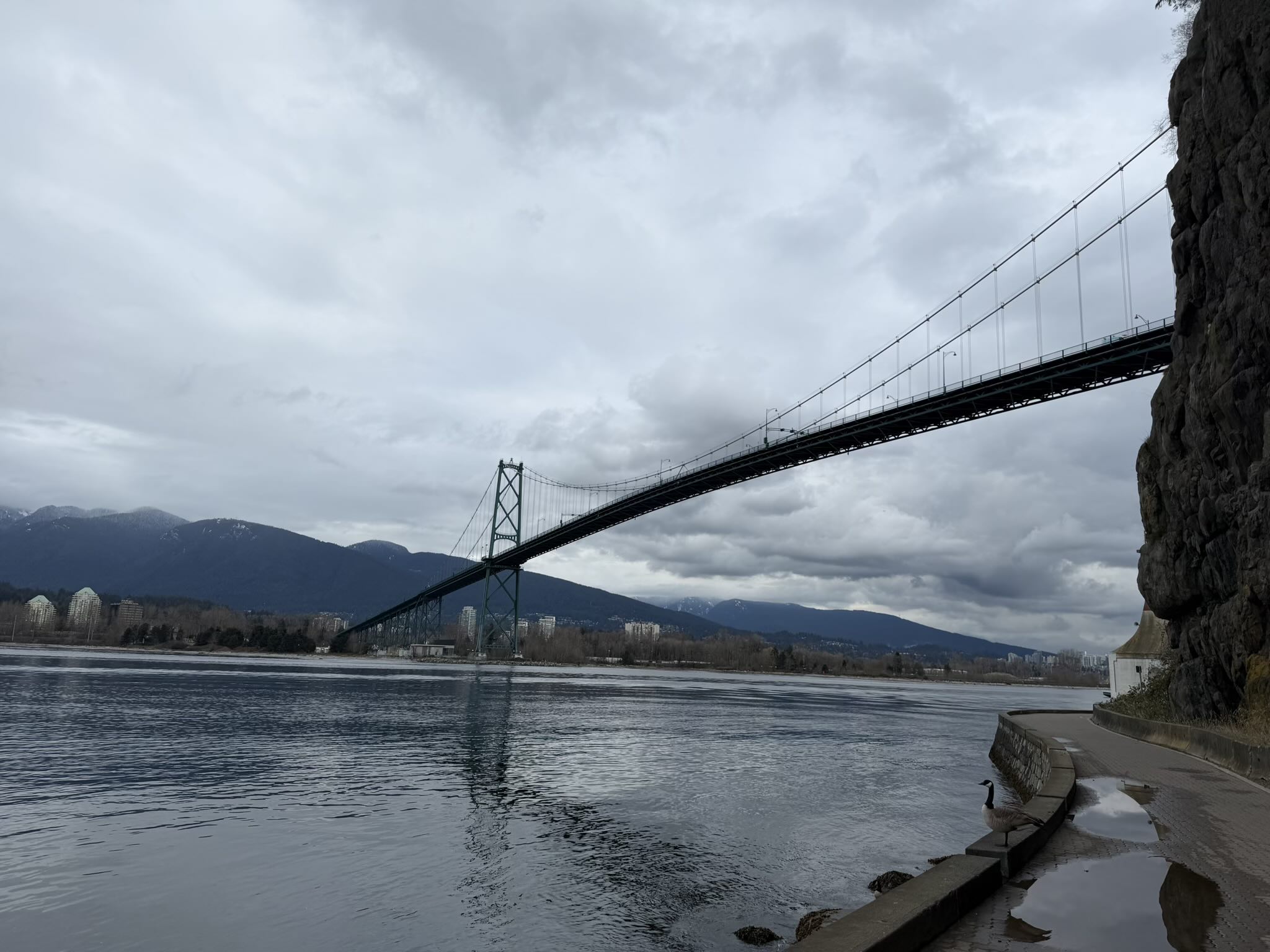
The views changed with every bend. The Vancouver skyline behind me, Burrard Inlet ahead, the Lions Gate Bridge materializing around one curve and the North Shore mountains floating above everything. Plenty of other people were out—runners, cyclists, e-bikers, people on electric standup scooters who had clearly found their preferred mode of transport and were not apologizing for it.
I ran the first 17 kilometers keeping my heart rate in Zone 2, then let myself open up. Finished the half marathon in 1:48 and change. My friend Mel—who is working toward running a half marathon in every province of her native Canada—would have approved of the venue, if not necessarily the modest time.
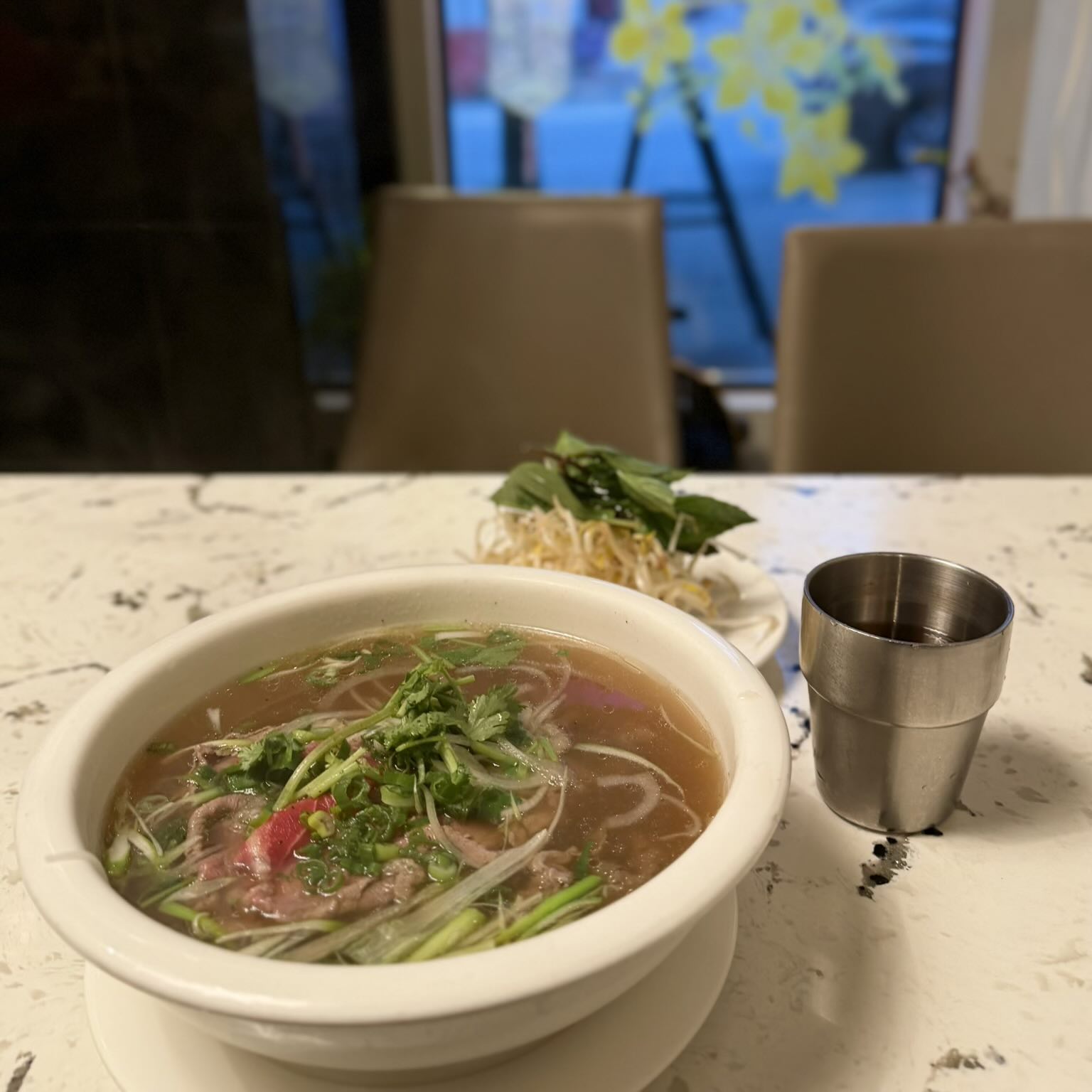
Less than 20 minutes after finishing, I was sitting in front of a bowl of phở tái at Pho37, having jogged back to the hotel and let Microsoft Copilot pick the restaurant while I was still in the shower. When I’d asked it for a post-run meal compatible with my anti-aging goals, it immediately pointed to Vietnamese—specifically phở tái, medium-rare beef with extra vegetables. It was correct. The broth was exactly what my legs wanted.
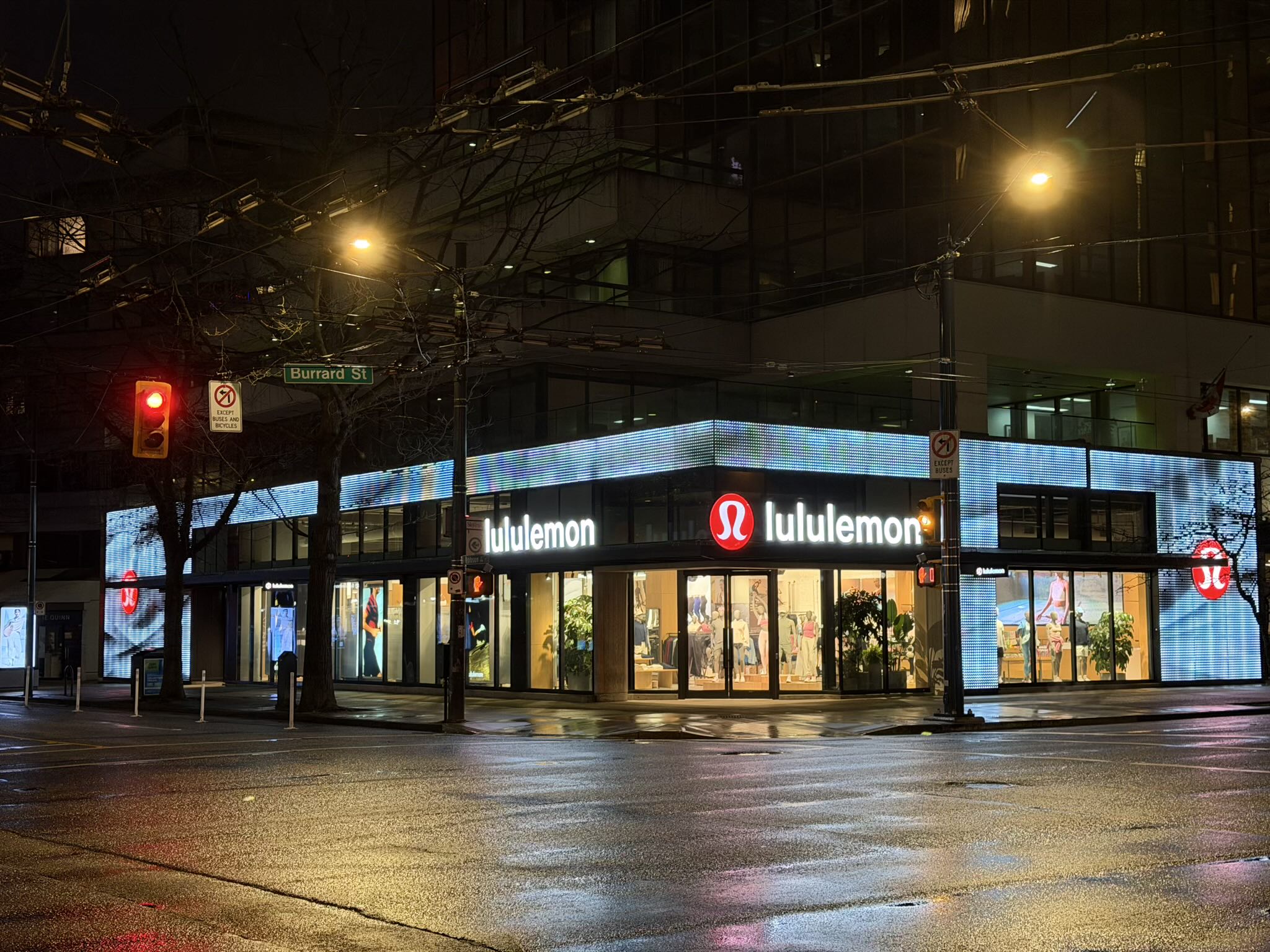
The next morning I was up at 5:00 a.m. for the walk back to the SkyTrain. On the way, I passed a large Lululemon storefront, which prompted a moment of brand-geography connection: the yoga and athletic apparel company was founded right here in Vancouver in 1998 by Chip Wilson, who opened his first standalone store in the Kitsilano neighborhood two years later. The brand is best known for technical fabrics and premium pricing, though it briefly became more famous for a 2013 recall of yoga pants that turned out to be inadvertently sheer—a wardrobe malfunction that reportedly cost the company’s CEO her job and gave the word “transparent” a new and unfortunate context in athletic wear. Vancouver has moved on.
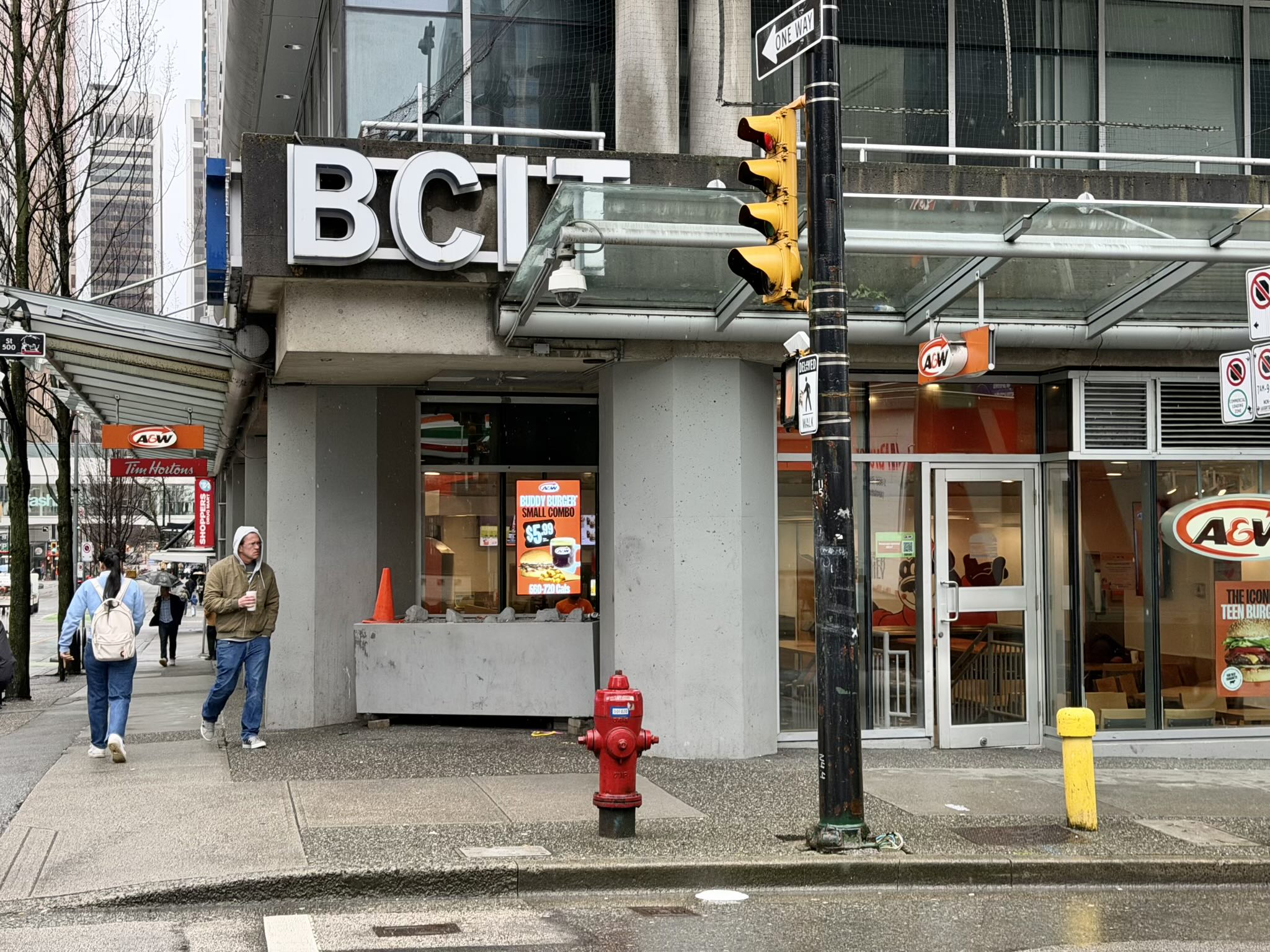
A few steps further, an A&W Root Beer—the same chain as the A&W in Lodi, California, the small city where I attended both elementary and middle school. A small and completely unnecessary observation, but the kind your brain makes when it’s still deciding whether it’s awake.
The train came within a minute of my arriving at the platform. Forty-two hours. Not enough for Vancouver, but enough to know I should come back.