Nickel City: A Weekend in Greater Sudbury, Ontario

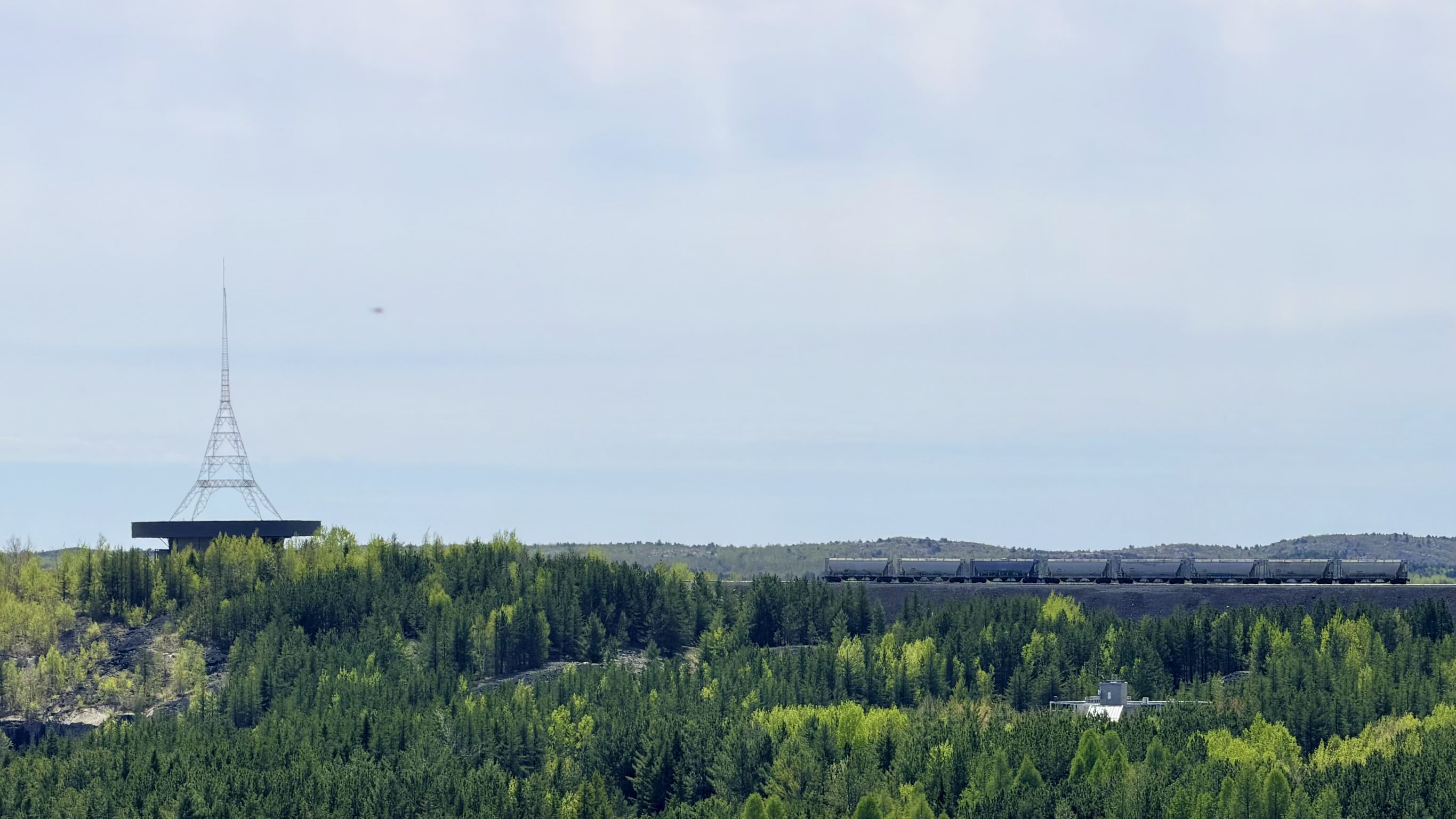
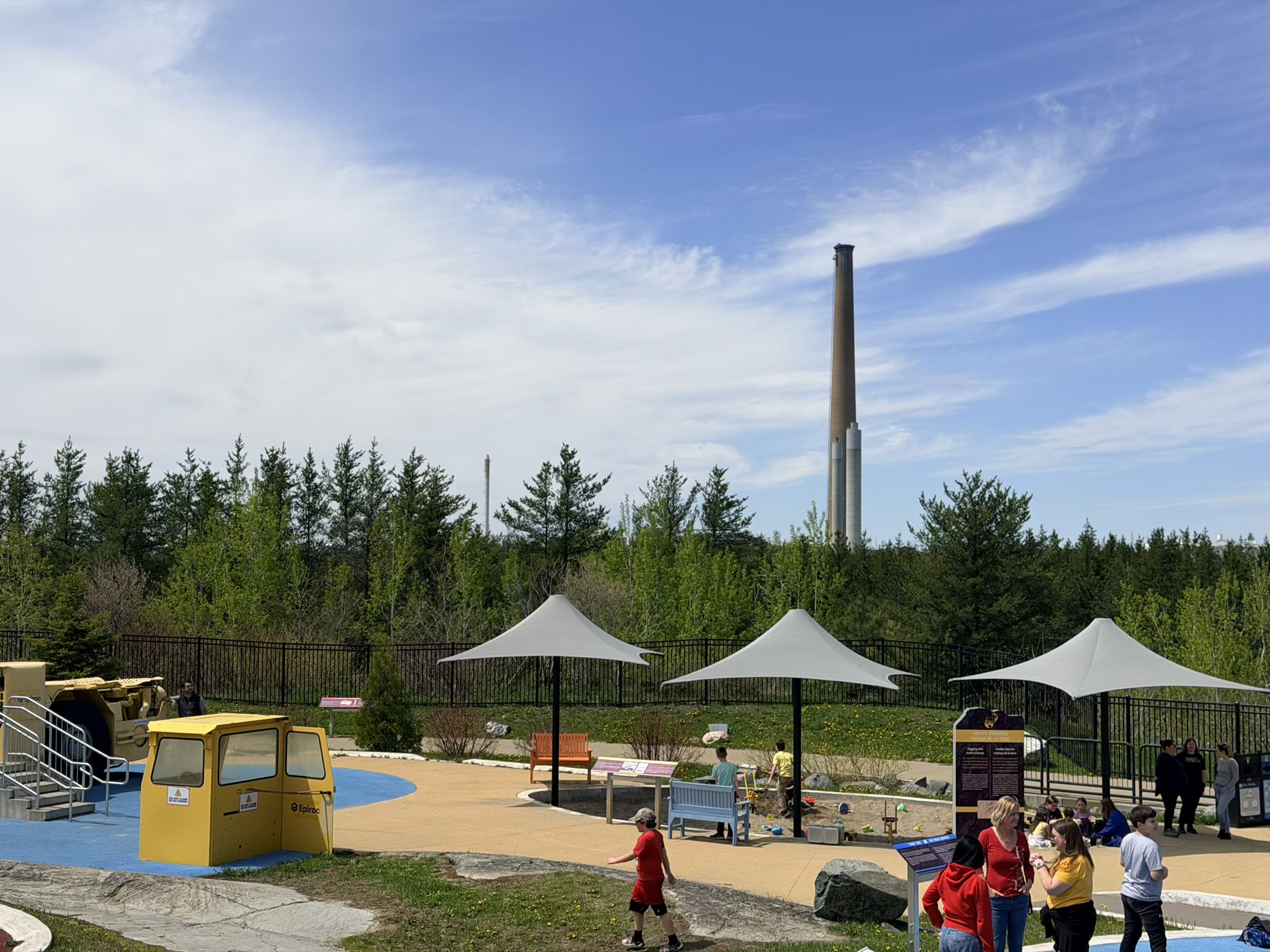
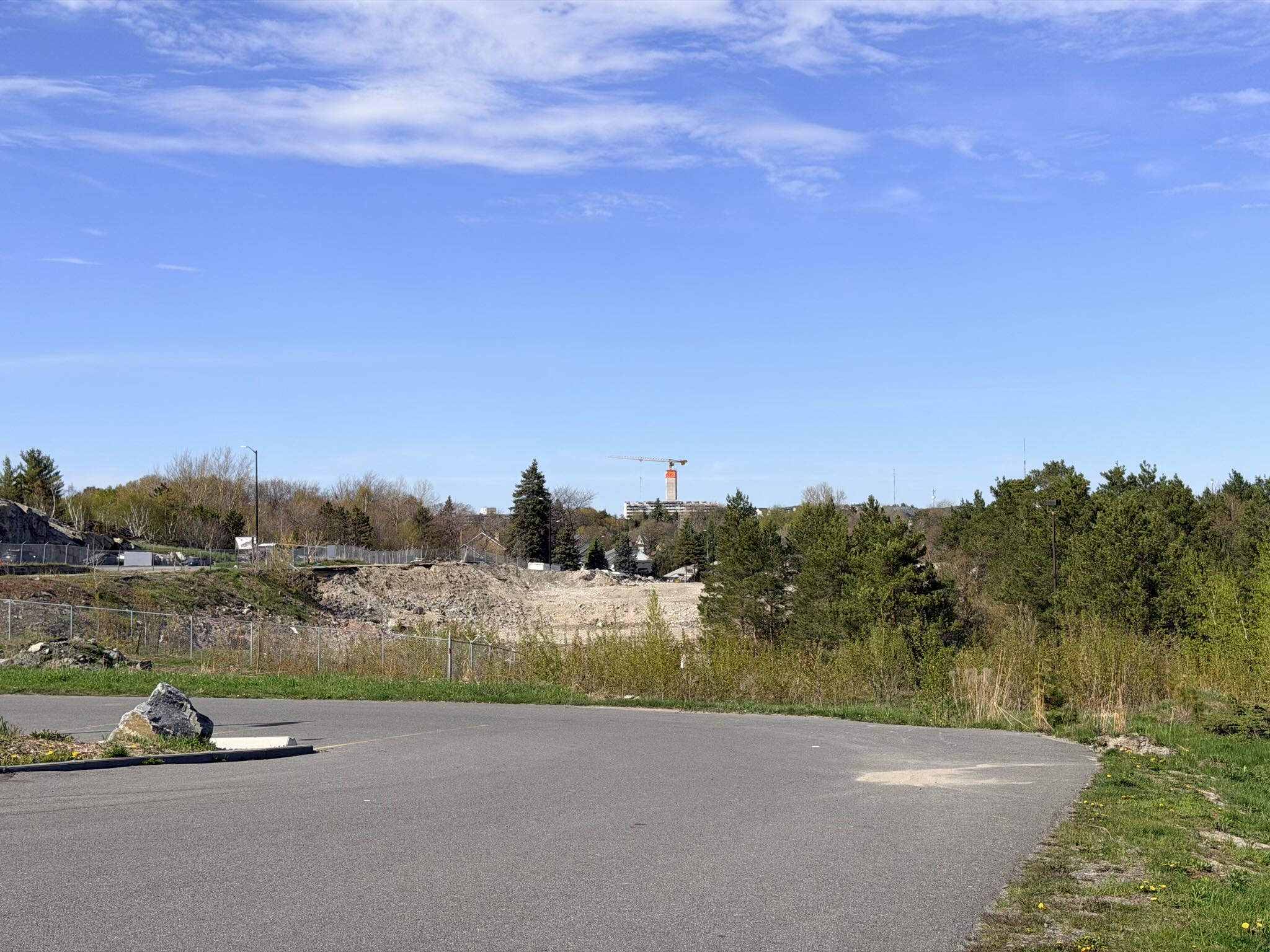
The first thing I saw when approaching Greater Sudbury, Ontario wasn’t a welcome sign or a Tim Hortons. It was a chimney—a 381-meter chimney, to be precise, rising out of the landscape with the quiet authority of something that had spent decades being the tallest smokestack in the world and still hadn’t entirely come to terms with no longer being so. The Inco Superstack, decommissioned in 2020 after Vale completed a billion-dollar emissions reduction project, is now in the process of being dismantled from the top down. Workers removed the first 32 meters in 2025; another 87 are slated for 2026. The full demolition is expected to take until 2029, weather permitting—and in Sudbury, weather permitting is doing a lot of heavy lifting as a phrase.
I had come to Sudbury at the invitation of my running friend Mel, who lives in Fort Collins but grew up here and wanted to show me the city ahead of the Sudbury Rocks Half Marathon—one of the reasons for the trip, which I’ve written up separately. We stayed with Jim and Judy, old friends of Mel’s family who put us up for three nights and whose hospitality made it easy to forget we were 2,000 miles from home. Jim had worked with Mel’s father and was a car enthusiast with stories to match; Judy was the kind of host who would bring by snacks every hour to make sure your belly never became too empty.
The Big Nickel
Greater Sudbury has quietly accumulated an impressive collection of “world’s largest” superlatives for a city its size—roughly 180,000 people, comparable to Fort Collins, though Fort Collins does not have a 13,000-kilogram coin in its front yard.
The Big Nickel, installed in 1964, is a nine-meter replica of a commemorative 1951 five-cent piece designed to mark the bicentennial of nickel’s isolation by Swedish chemist Baron Axel Fredrik Cronstedt. It weighs in at nearly 13,000 kilograms—roughly 64 million times the mass of an actual nickel, if you enjoy that kind of math—and holds the Guinness World Record as the largest coin replica on earth. The obverse features King George VI. The reverse shows a stylized nickel refinery with a smokestack that, curiously, is not the Superstack. Even fictional smokestacks in Sudbury have historically tried to get in on the action.
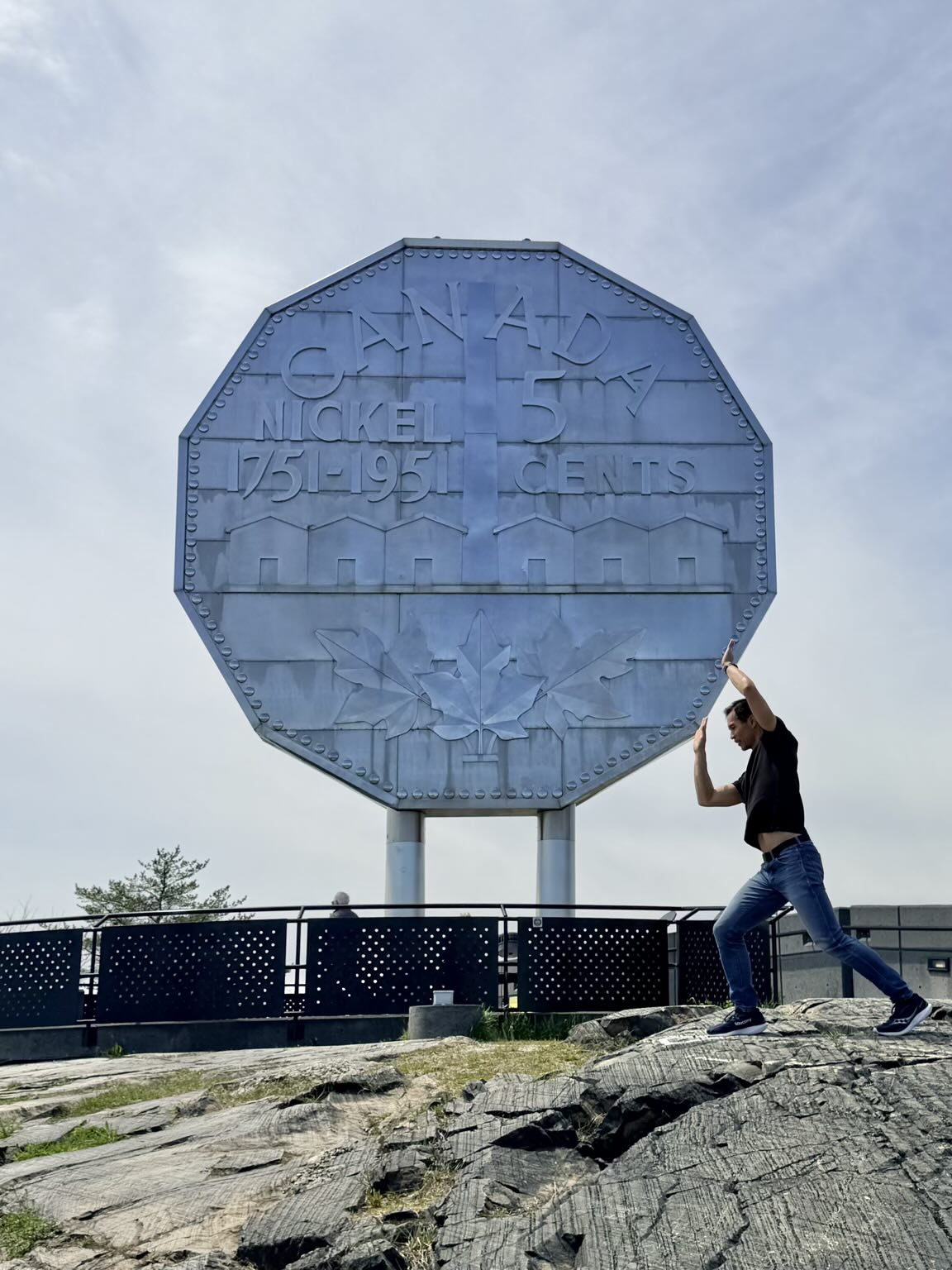
There was also a Big Penny and other oversized coins near the Big Nickel, but those were removed to make way for Dynamic Earth, an interactive earth and mining museum. Which is to say, Sudbury voluntarily dismantled part of its “world’s largest” portfolio in order to build something arguably more interesting. A bold move.
The city was similarly unsentimental about what was once Canada’s largest mural, painted on the side of the Old Hospital with 165,000 of paint but whose colors would run whenever it rained. That building was demolished in October 2025. When I mentioned it to Jim, he noted it wasn’t a great loss—”especially if you have to drive by it every day”—implying the mural had been more of a civic eyesore than a civic treasure.
Hockey, Ringette, and the Wolves
No trip to a Northern Ontario city is complete without at least a passing education in local hockey culture. Sudbury’s OHL team, the Sudbury Wolves, has called the Sudbury Community Arena home since 1972, and the passion around them is the kind that makes you understand why the arena is still spelled “Arena” and not “TD Whatever-They’re-Calling-It-Now Place.”
Mel also told me to ringette, a sport invented in North Bay, Ontario in 1963 that is played like hockey but uses a straight stick and a rubber ring instead of a puck. It is faster than it sounds, and the fact that it hasn’t conquered the world sporting calendar the way hockey has remains one of Canada’s better-kept secrets.
And then there is Shoresy. I hadn’t even heard of this Canadian comedy series that airs in the U.S. on Hulu nor its predecessor show, Letterkenny. But if you had watched Letterkenny during its 12 seasons before wrapping in 2023—you’d probably remember Shoresy as the chirpy, foul-mouthed player whose face was never shown.
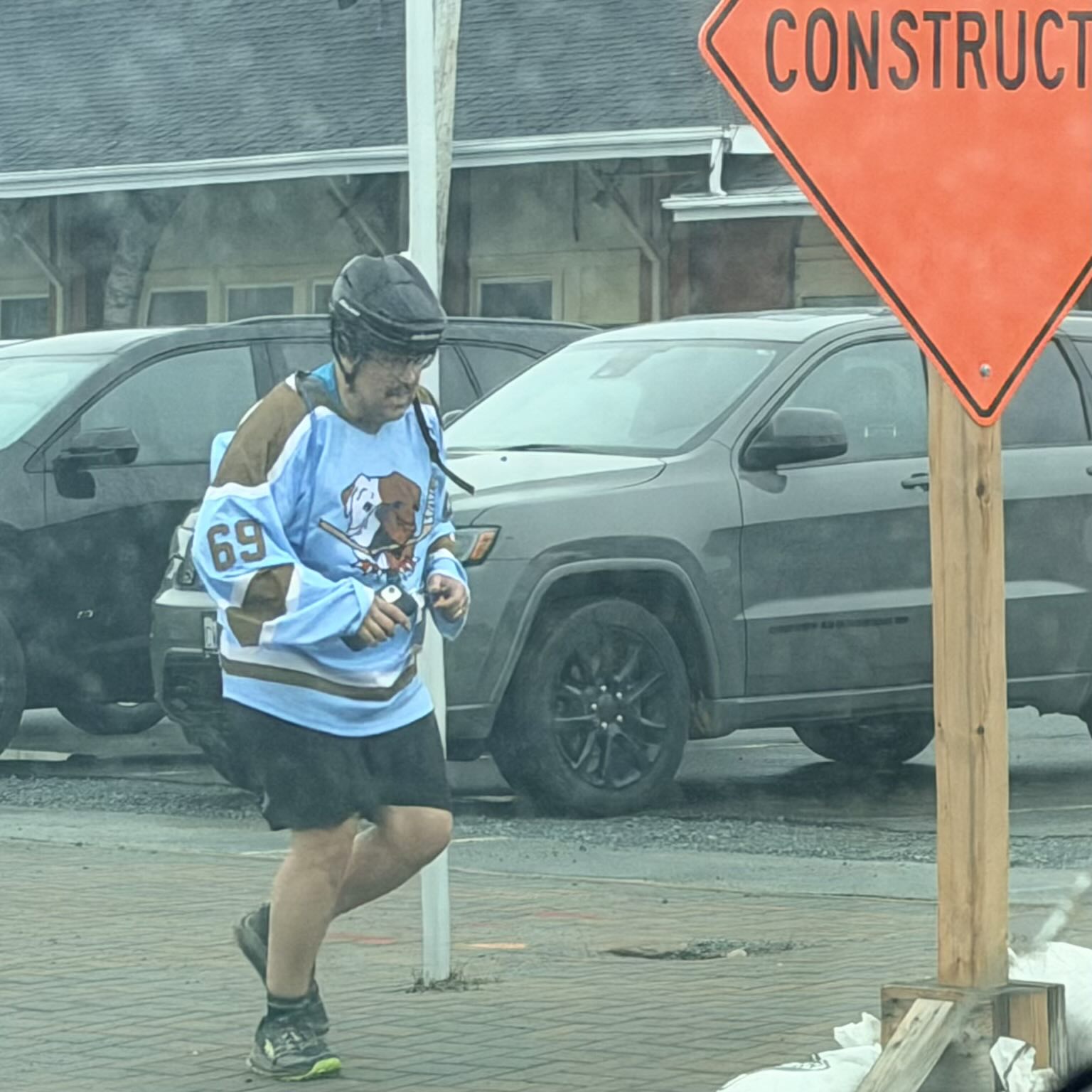
Shoresy is the spinoff, in which the titular character joins the struggling Sudbury Blueberry Bulldogs on a quest to “never lose again.” The show is filmed largely in the real Sudbury Community Arena and around the city, and locals are rightly proud of it. Walking past the Sudbury Community Arena at the start of our downtown tour felt like a quiet acknowledgment of the fact that Sudbury is, by Canadian comedy standards, basically Hollywood.
Downtown Murals and the Laughing Buddha
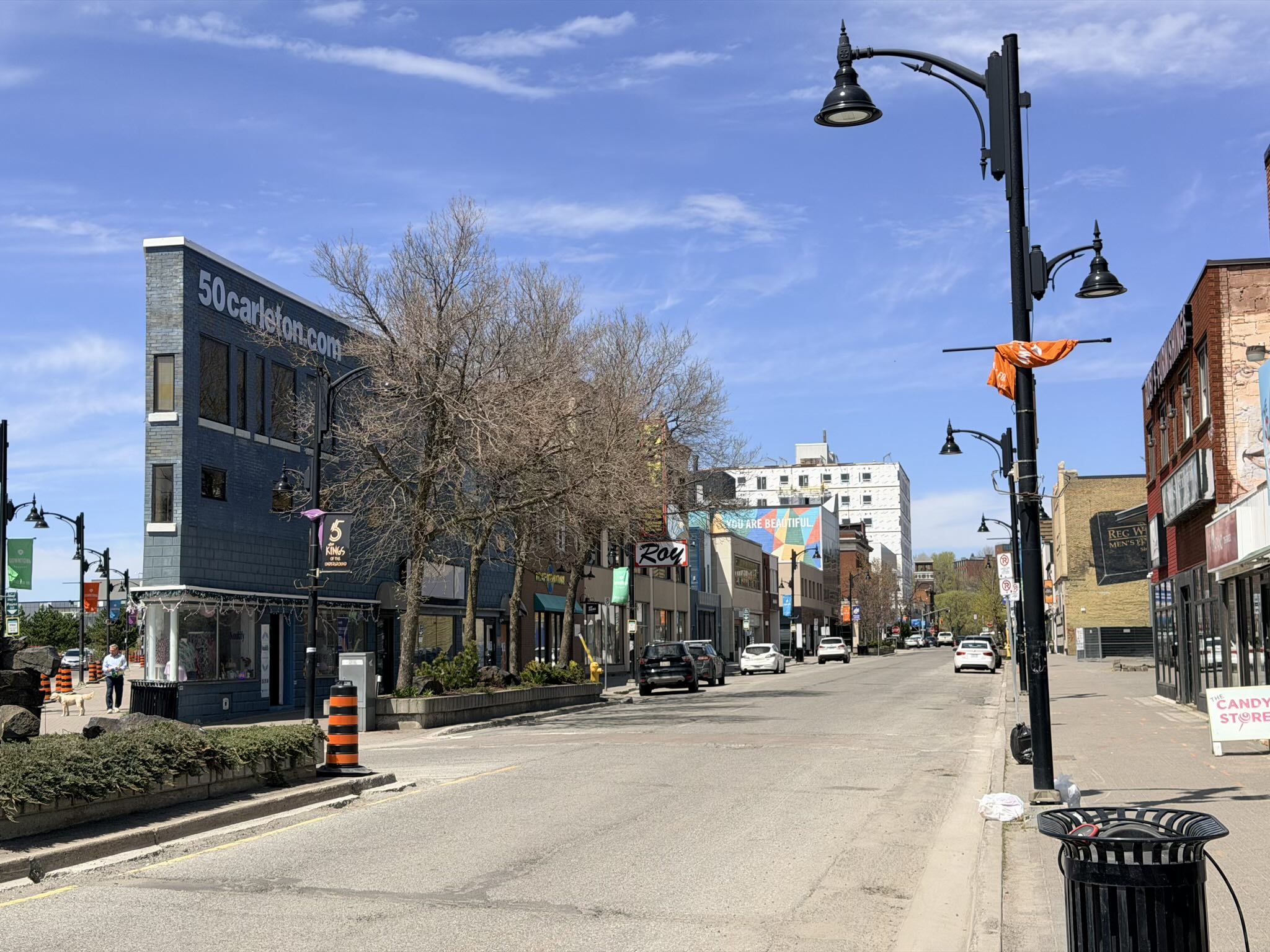
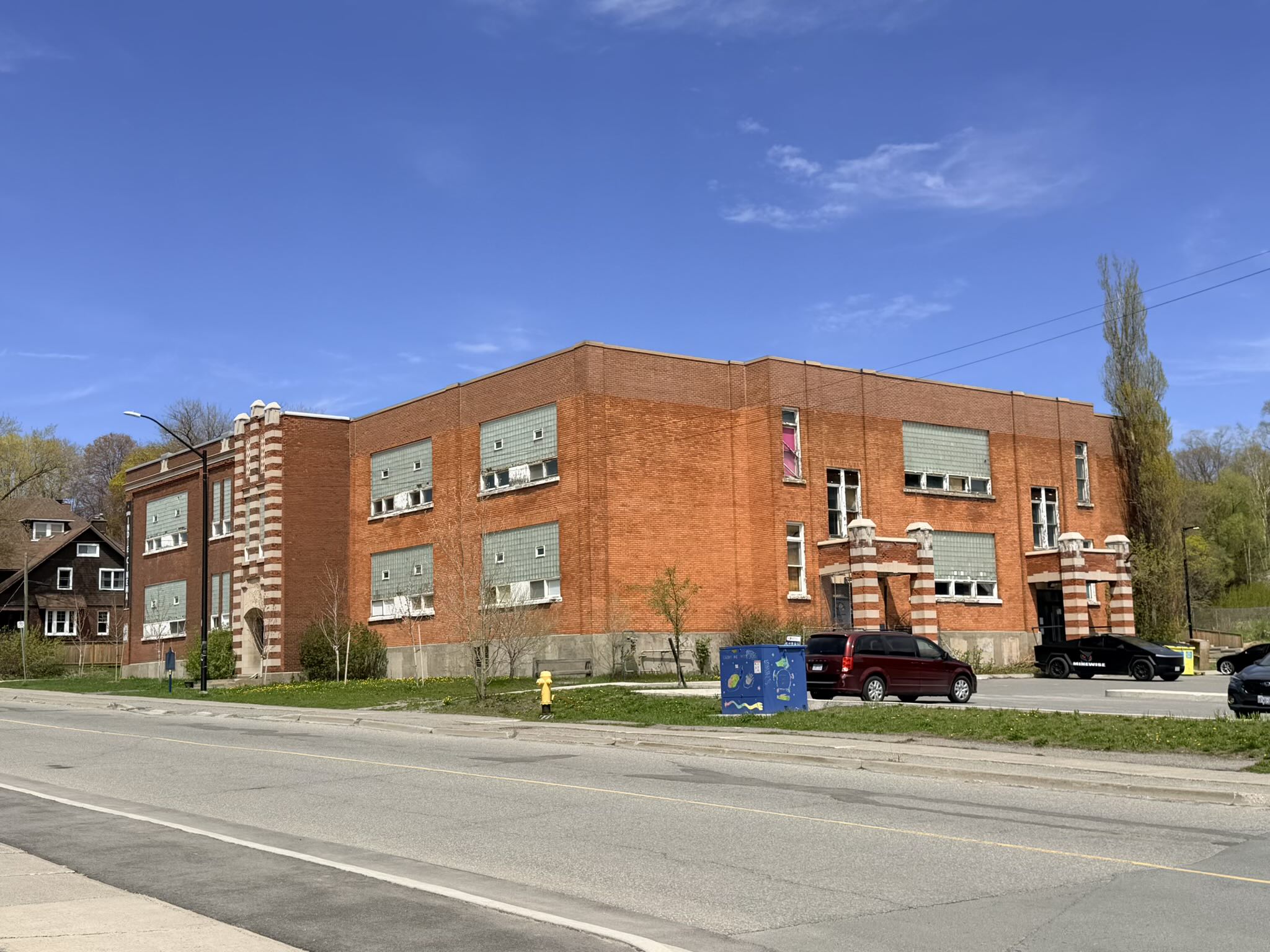
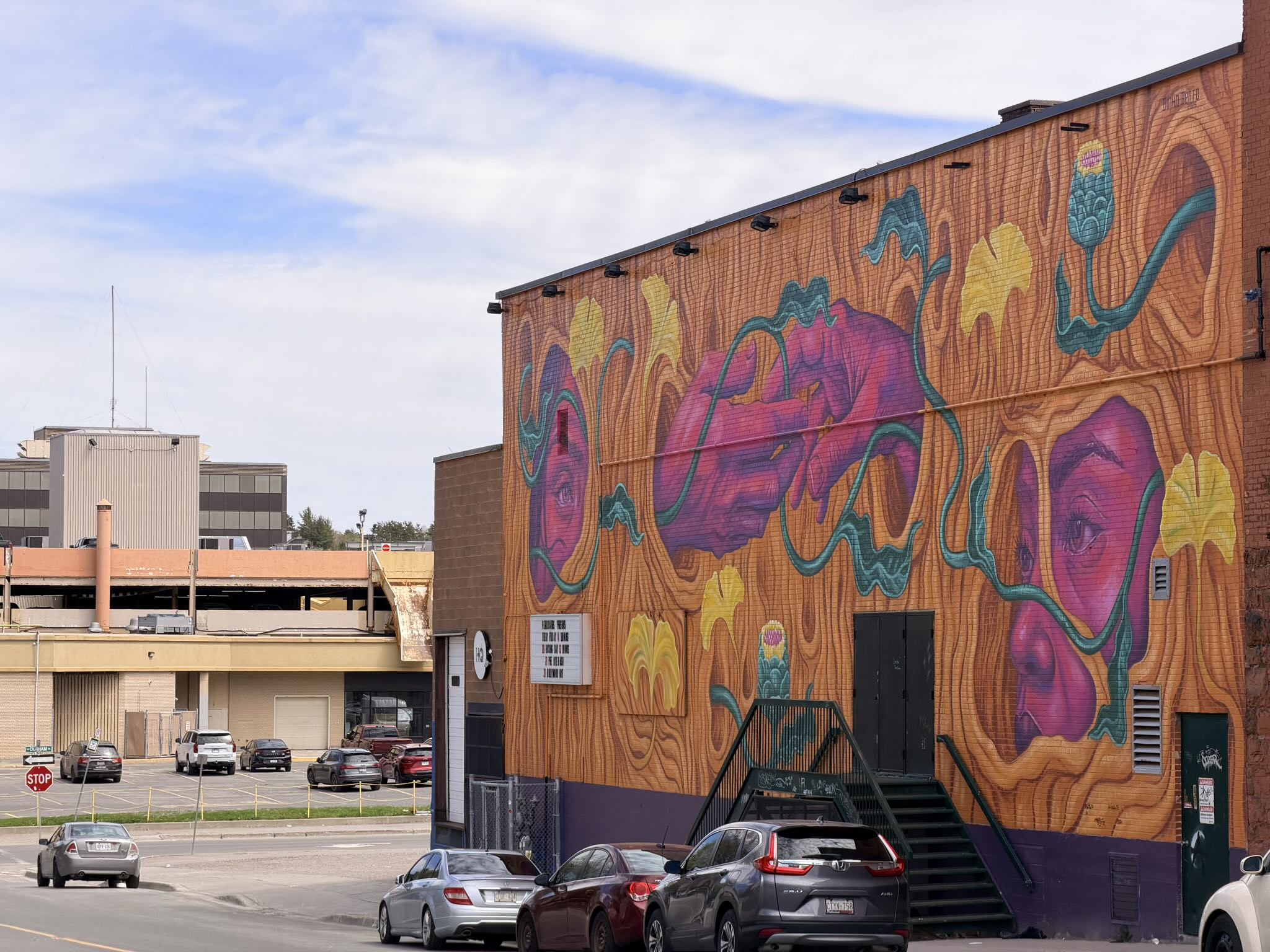
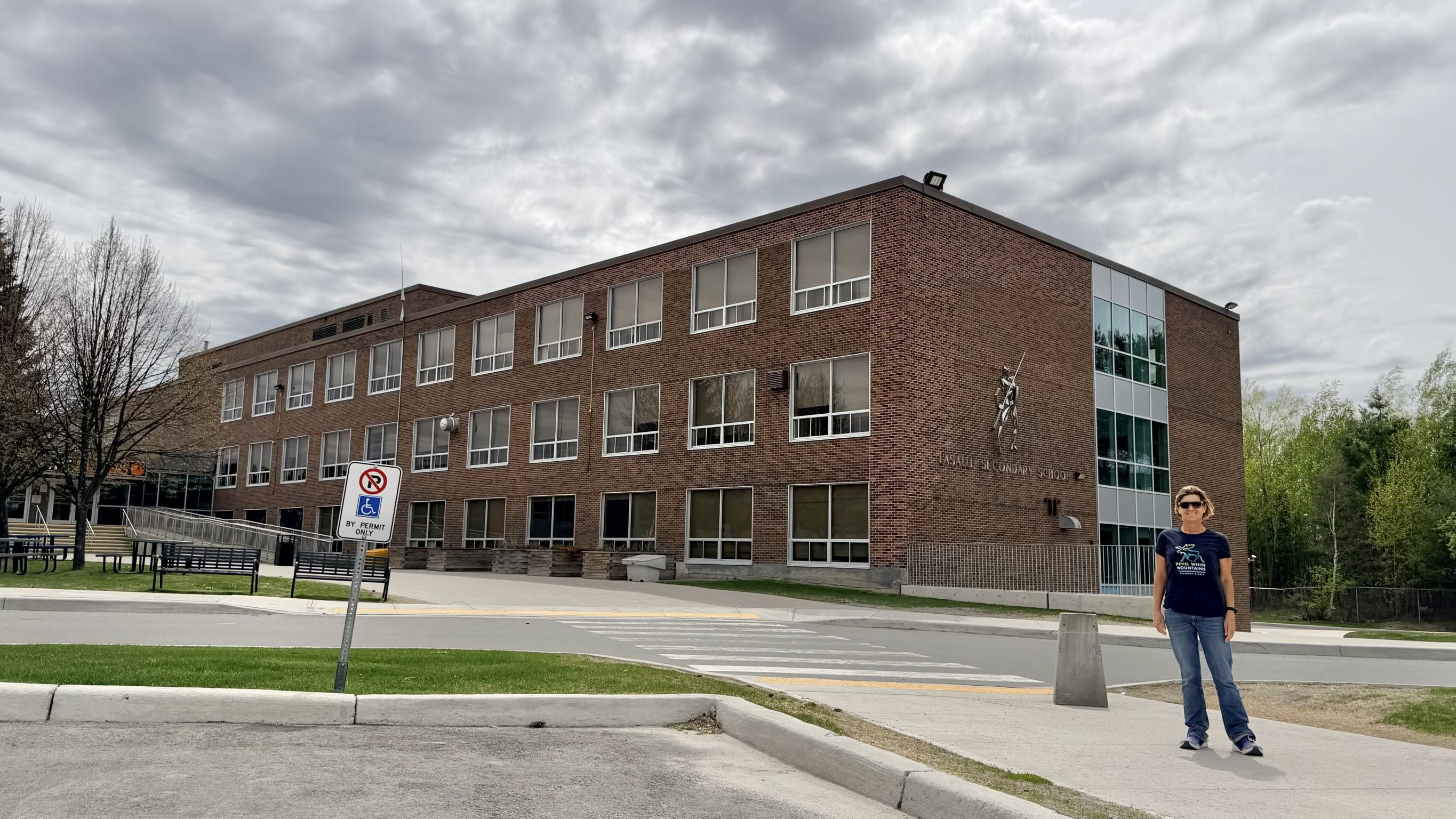
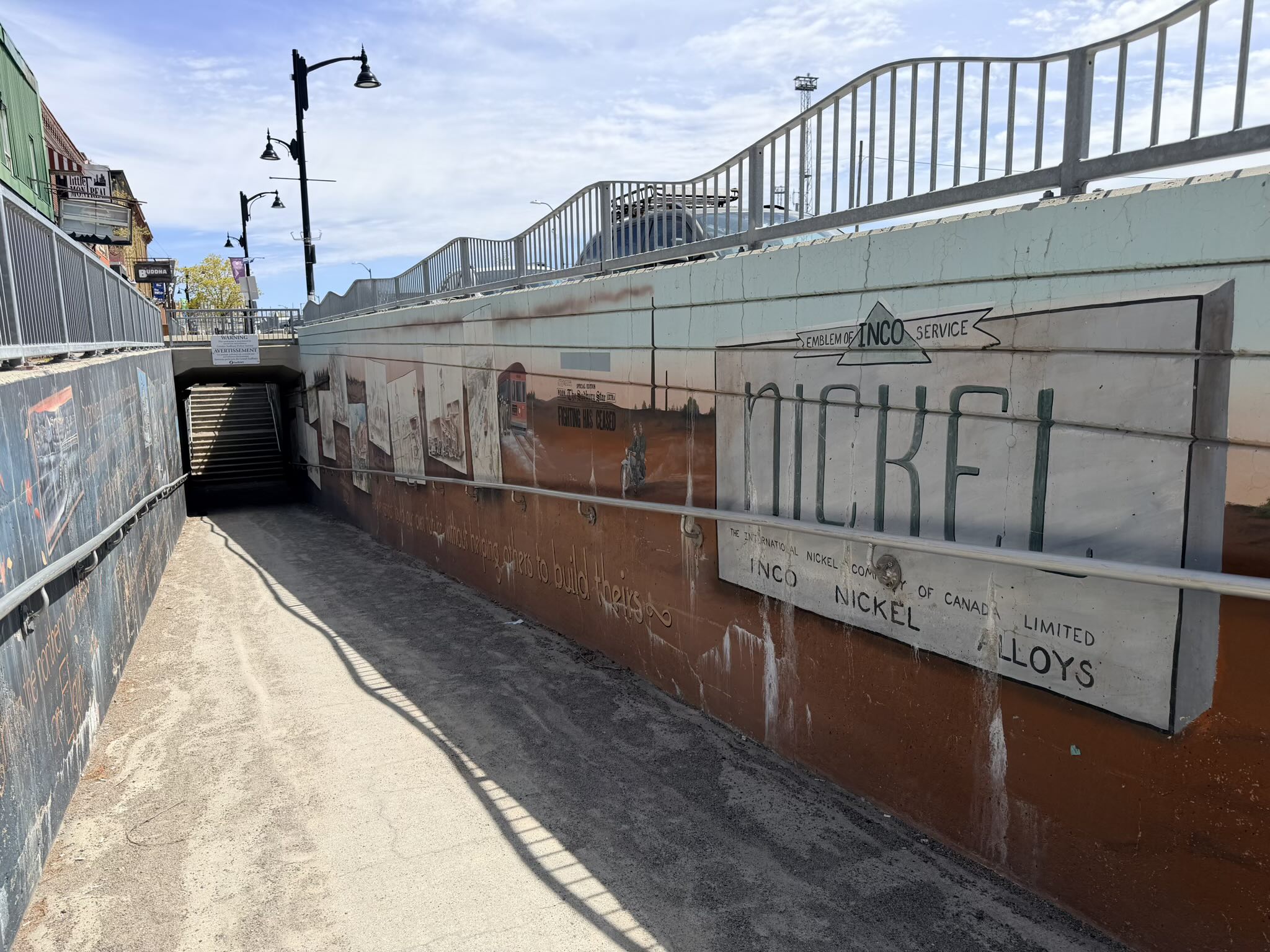
We began our downtown walk at the Sudbury Community Arena and set off in search of murals, of which there are more than 50 produced by Canadian and international artists as part of the Up Here Music & Art Festival. The first stop was the Alex Trebek mural on Sudbury Secondary School—painted in the style of old camera film—where the legendary Jeopardy! host attended school in the 1950s before going on to ask contestants questions in the form of answers for the better part of four decades. Trebek also attended the old École Saint-Louis-de-Gonzague across the street, which has since been converted into an indie cinema and is currently vacant.
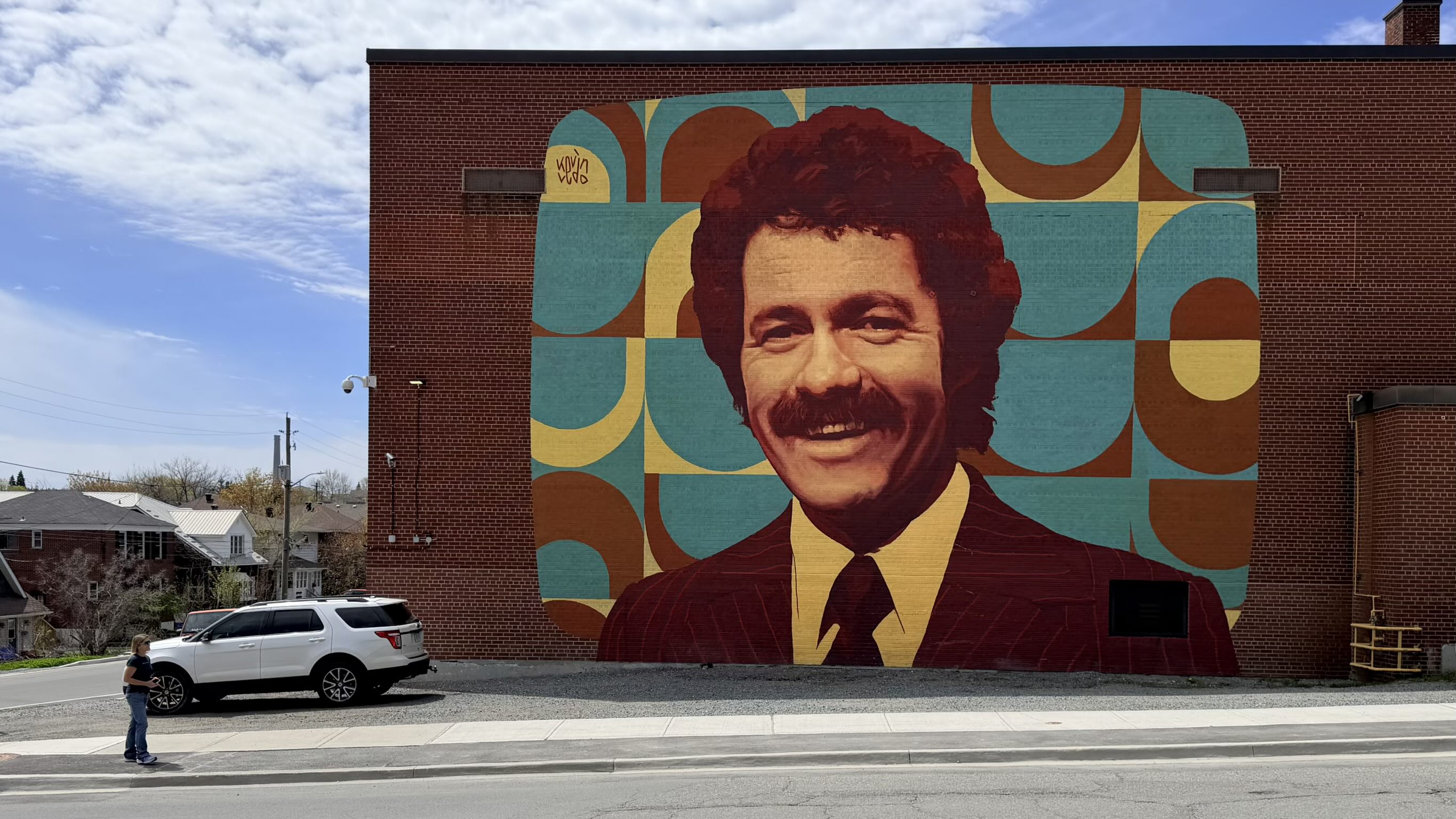
As an aside, I have a small personal connection to Trebek: in 2004, I drove by his ranch estate in Creston, California with some friends. I would not call this a close relationship.

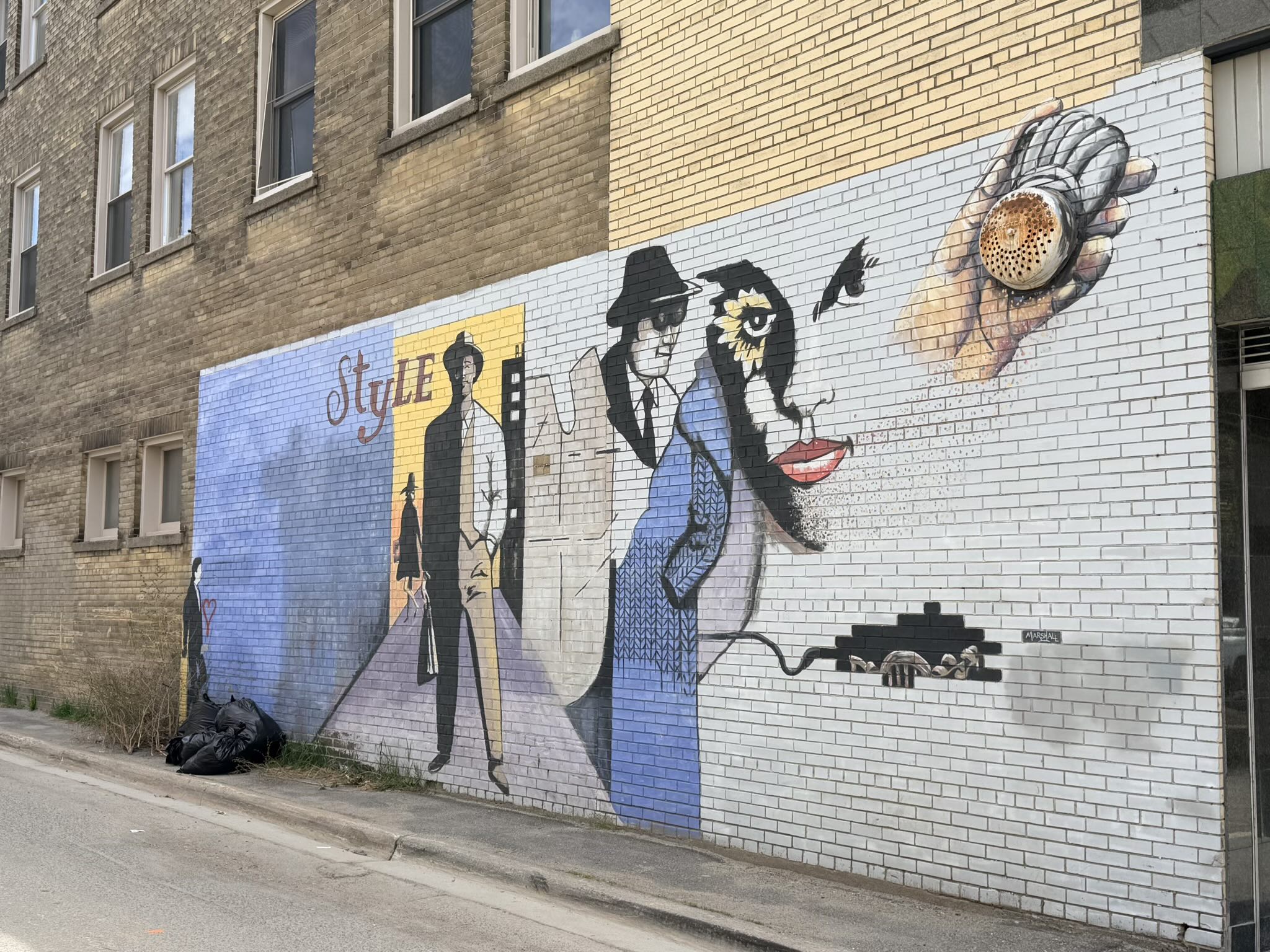
The murals downtown ranged from straightforward to quietly subversive—one featured surveillance cameras incorporated as cigarettes; another turned a wall-mounted bell into a salt shaker. Artists working with what’s in front of them.
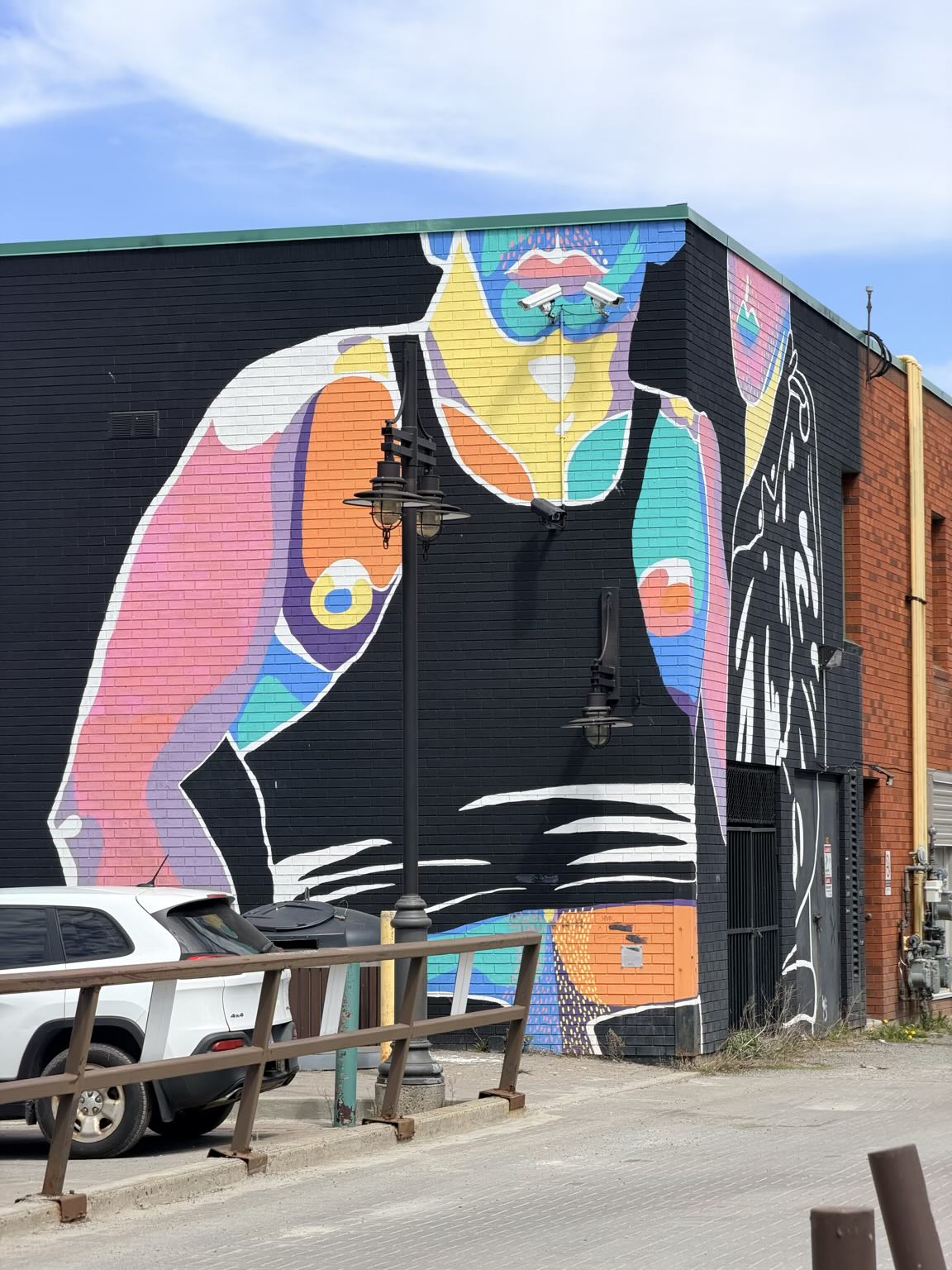
We finished the mural tour with drinks at the Laughing Buddha, a bar that also doubles as a Sudbury landmark: it appears in Shoresy, and to my delight, its beer menu runs to no fewer than seven non-alcoholic options. For context, most American bars offer zero to one. The Laughing Buddha’s non-alcoholic selection is, by American standards, aspirational.
Mel’s Sudbury
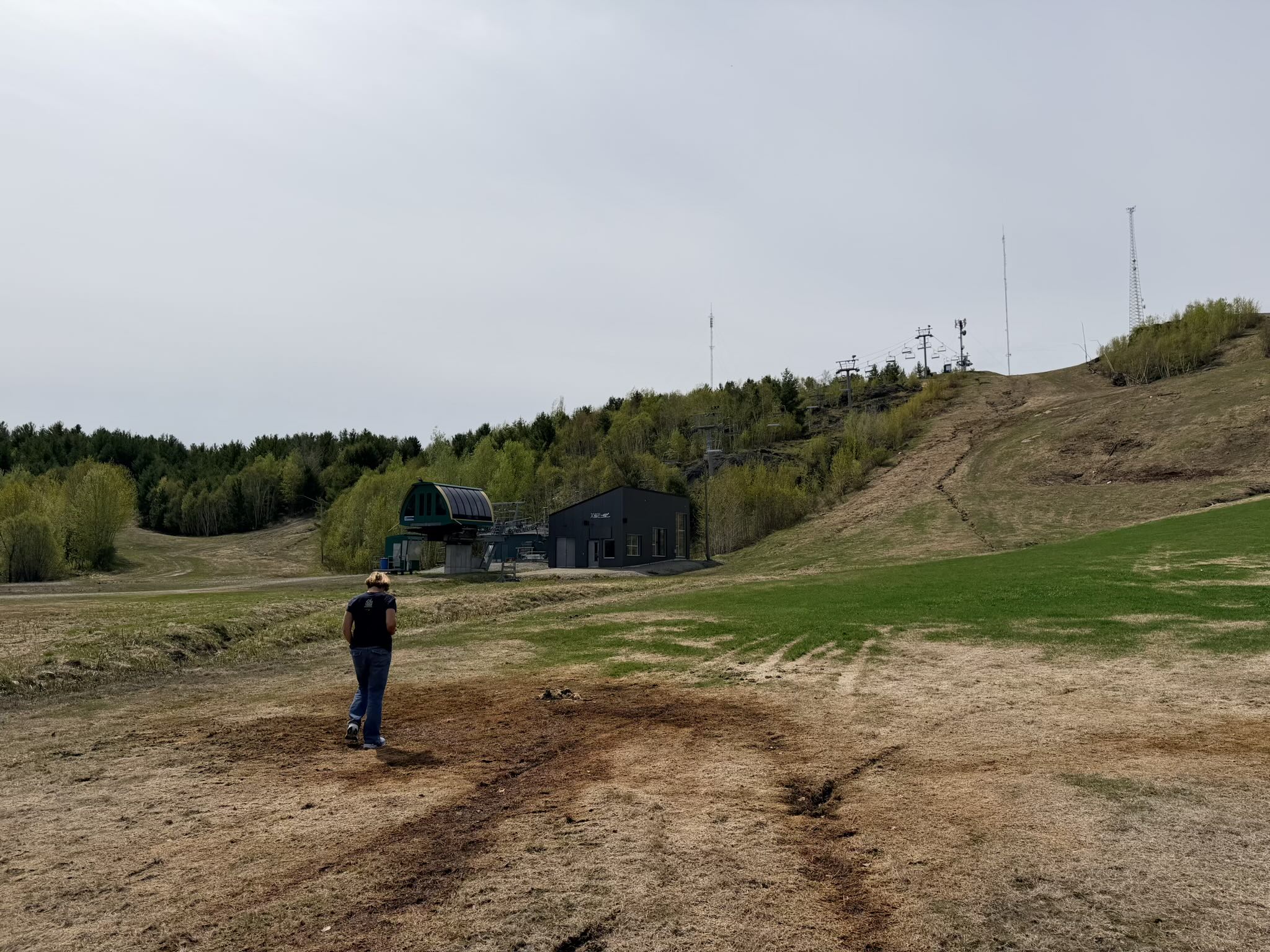
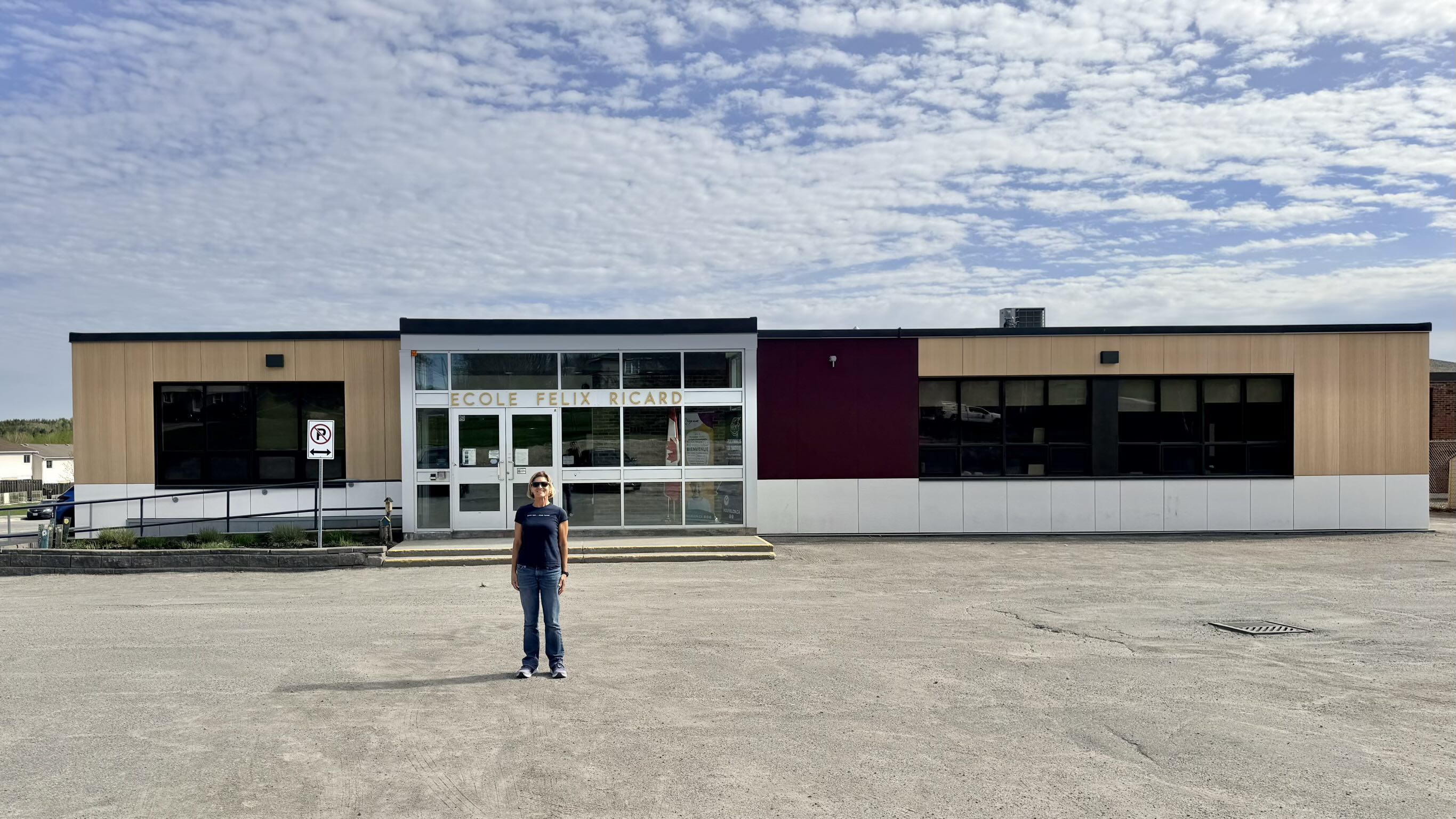
A portion of the trip was something closer to a personal archaeology project for Mel. We drove past her childhood home—a brown, two-story house with a front lawn that she had already mentally redecorated via real estate listing photos—though she declined to knock on the door so as to not freak out the new owners. We visited her elementary school, École Félix Ricard, and the Anadac Ski Hill where she learned to ski.
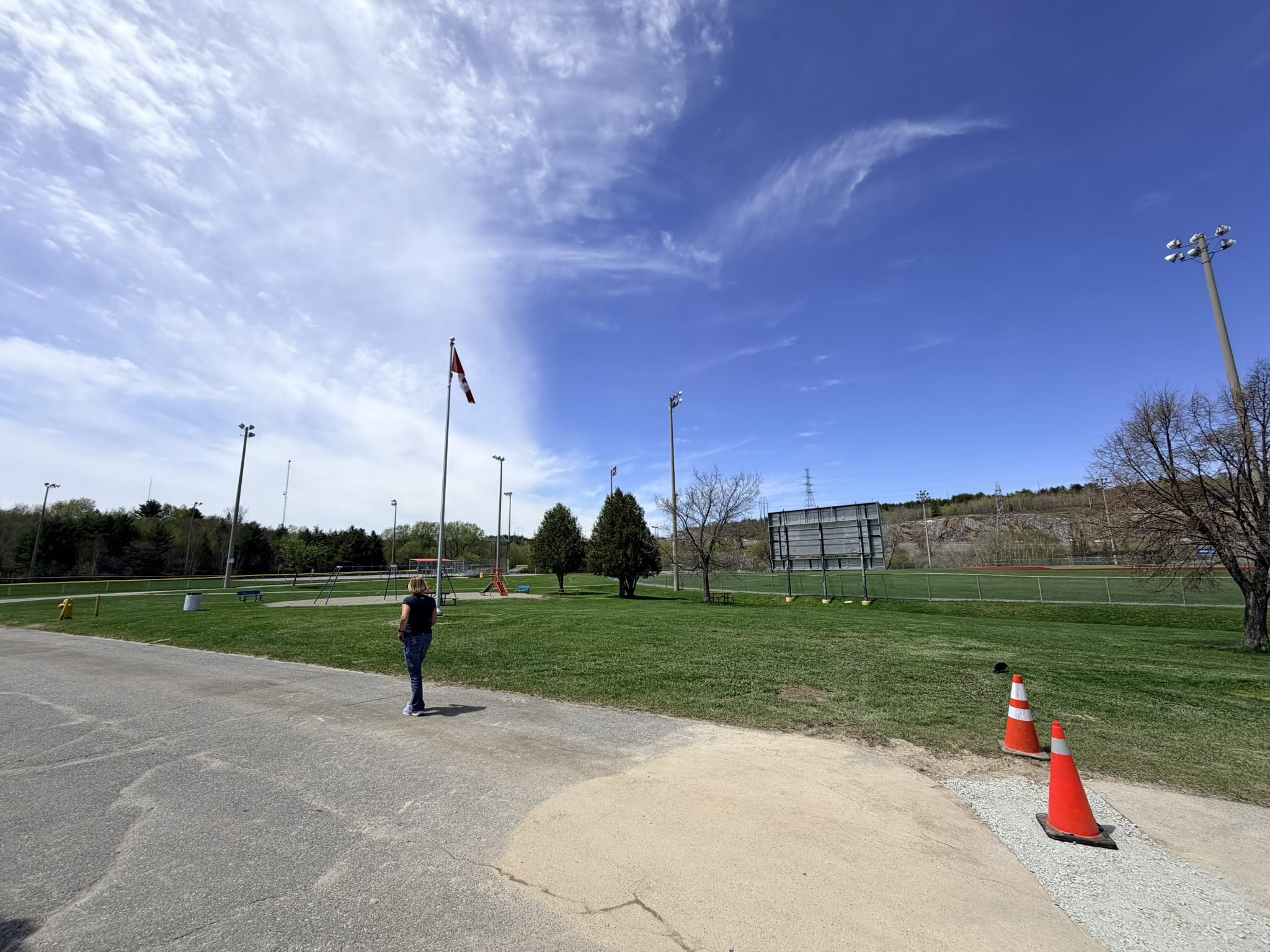
We also stopped at the Terry Fox Sports Complex, where Mel and her brother used to play ball, and at the Tamarack Lodge—an offsite retreat facility that Mel’s late father once managed for employee bonding. Employees would apparently playfully argue amongst themselves about who could room with whom, which is a form of workplace politics I had not previously encountered.
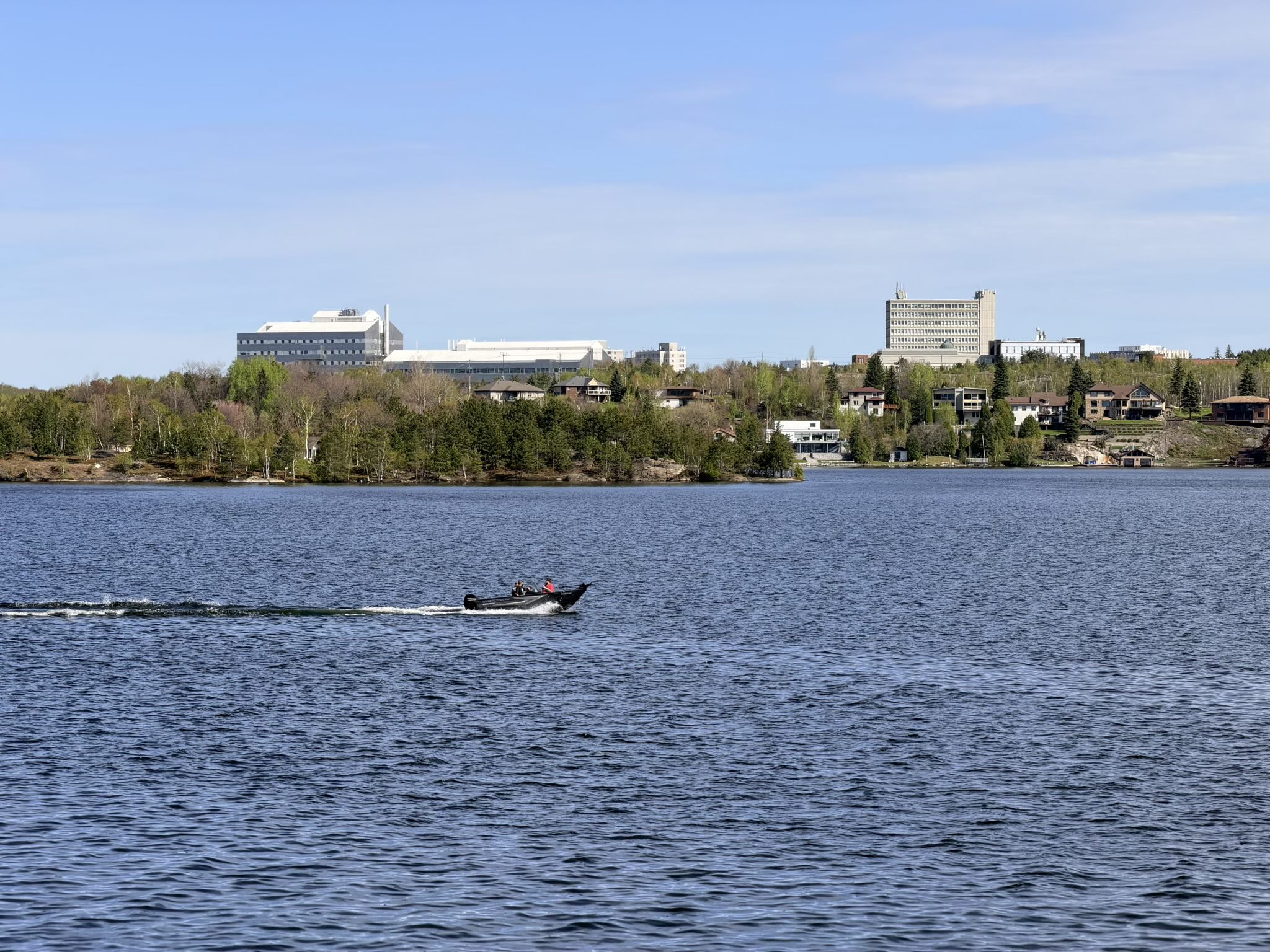
Ramsey Lake, which cuts through the city, was a pleasant surprise—a boat gliding past the Laurentian University waterfront on a calm afternoon, looking considerably more relaxed than anyone who had to drive on Sudbury’s roads, which bear the marks of winters that last from late October through the end of April. The snowmobile warning signs on the roads—actual icons of snowmobiles, cautioning drivers that snowmobiles may be present—are the kind of signage you don’t see a lot of in Colorado.
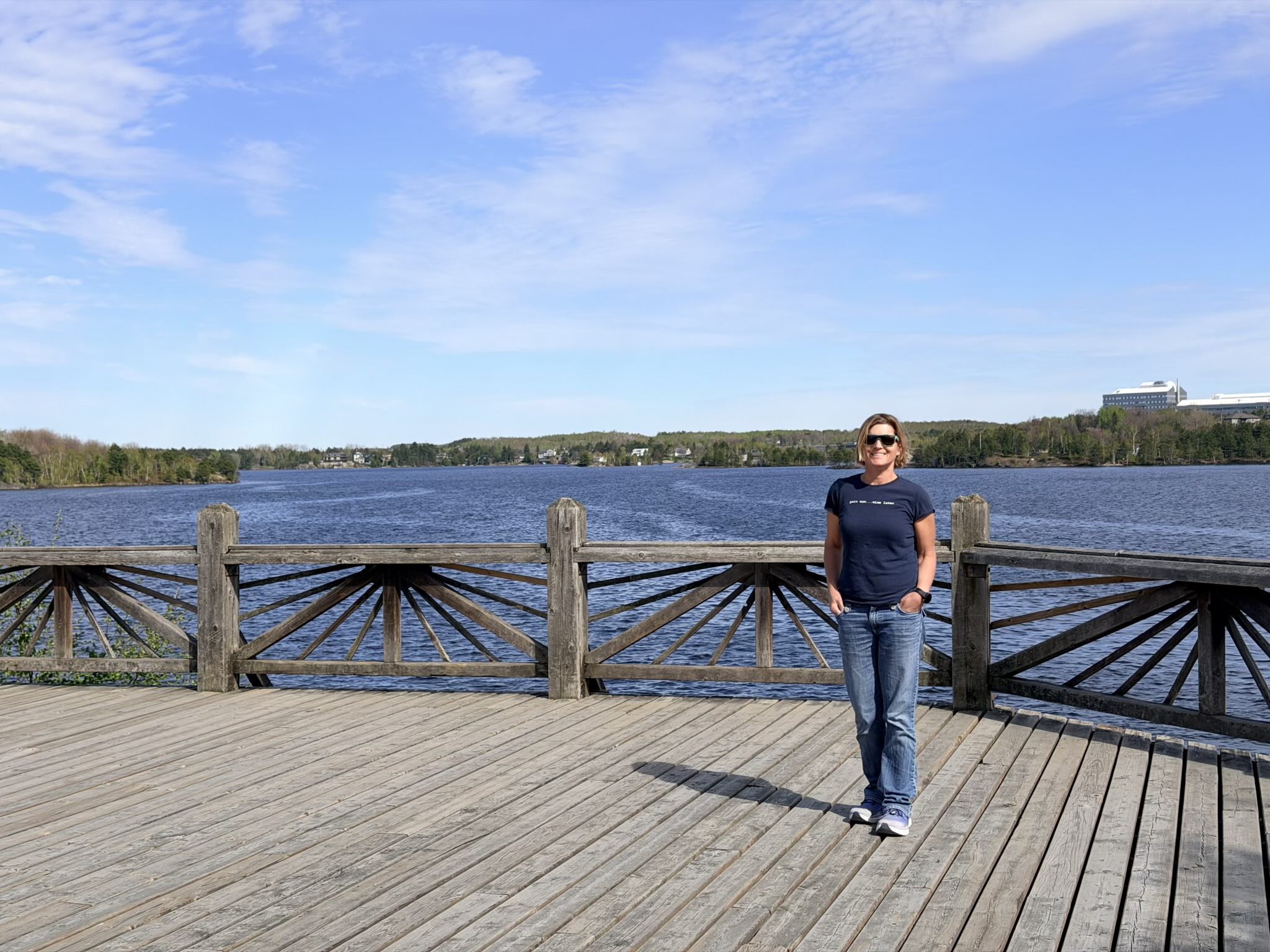
Ramsey Lake, incidentally, was once the world’s largest lake located entirely within a city’s limits—a title it held until 2001, when a municipal amalgamation expanded Greater Sudbury’s boundaries enough to fully absorb the considerably larger Lake Wanapitei. So Sudbury didn’t just lose the record; it took it from itself. Why should any of this be a surprise for a city that was also home to the world’s tallest smokestack and largest coin replica?
Speaking of winter: Judy mentioned that her neighbor came home one year to four feet of snow that had accumulated while she was away, and spent an hour digging out the bed of her pickup truck. When I relayed this to Bob—husband of Mel’s friend Barbie—his response was essentially that four feet was not particularly notable. I believed him.
Small Observations
A few things that stood out from a week of being a confused but entertained American tourist:
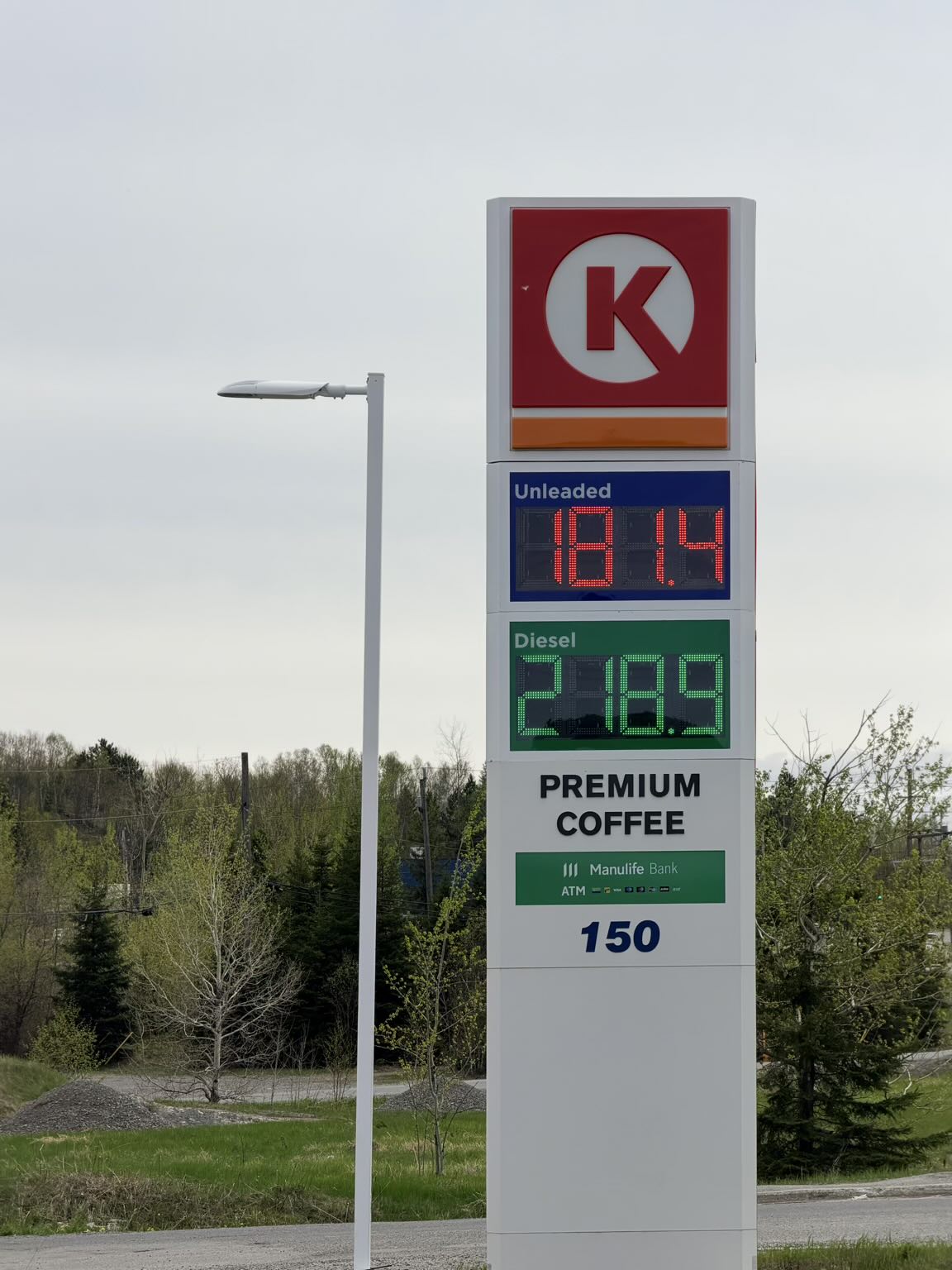
Gas prices on the signs read something like 209.9. That’s cents per liter, which takes a moment to process when you’re used to dollars per gallon, euros per liter or even pounds per liter.
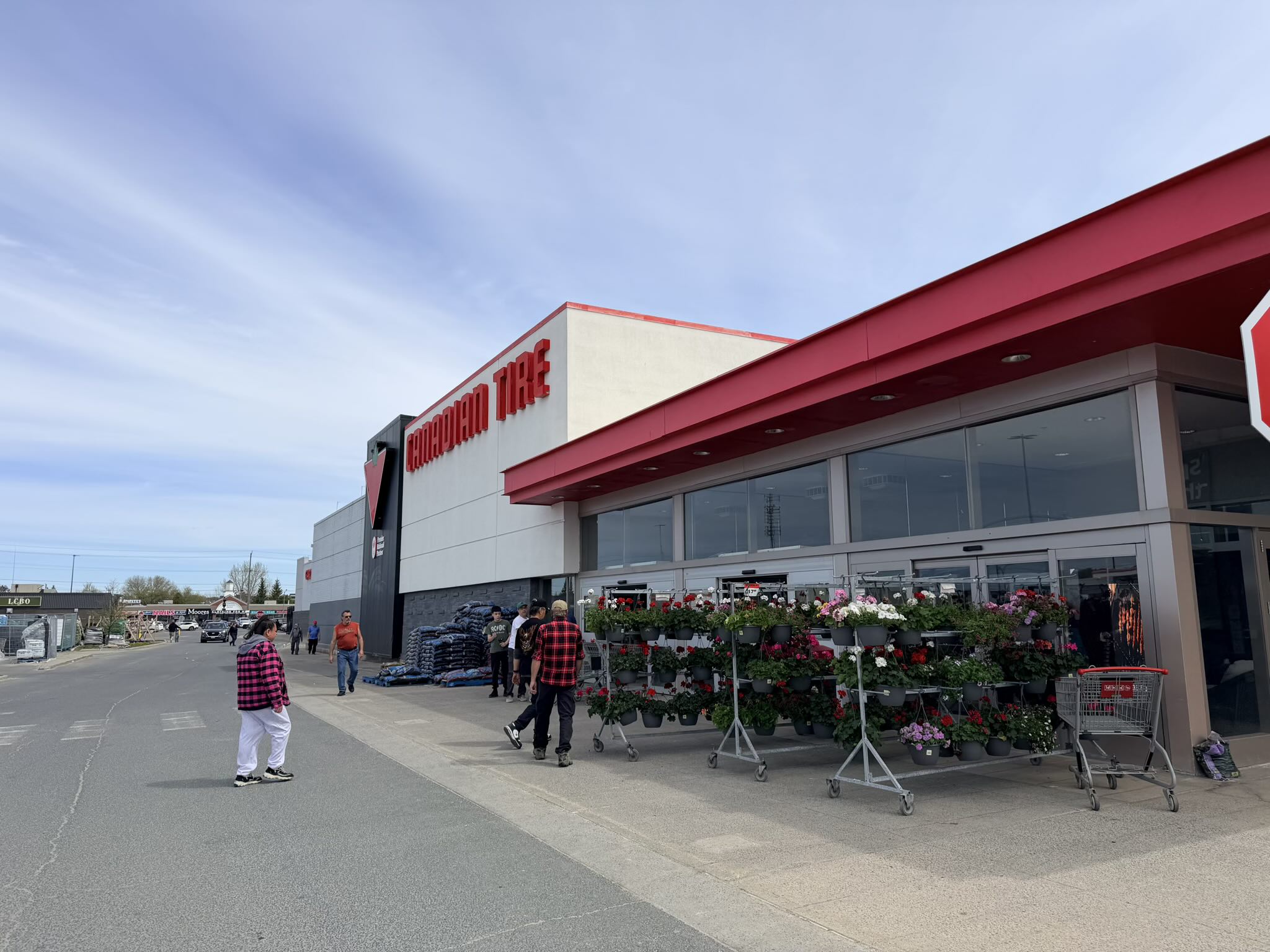
Canadian Tire, which I had been told about without fully understanding until I walked in, is essentially a Walmart that made a deliberate decision to opt out of clothing and groceries in order to focus on hardware, automotive supplies, sporting goods, and a kind of cheerful domestic maximalism. It is enormous. I bought nothing, but we were in there for twenty minutes.
We did buy some bananas at Your Independent Grocer downtown, however, in anticipation of the next morning’s half marathon.
“There are some homeless people here,” Mel observed, as we were turning out of the parking lot.
“Hmm, I really haven’t noticed many,” I said. “I think it’s because they aren’t in your face and aren’t numerous.”
Then, almost on cue, we turned onto a side street behind the grocery store and came upon an encampment of around 50 tents. The universe, apparently, has a sense of comic timing. The scale was modest compared to what I’ve witnessed in parts of Los Angeles—a reminder that the challenges Northern Ontario cities face aren’t wholly different from those of cities elsewhere, even if the winters here make them considerably harder.
Final Thoughts
Greater Sudbury has a population roughly equal to Fort Collins, but it carries a denser cultural footprint: a world-record coin, some really big lakes, a smokestack in the process of a very slow exit, a hockey franchise with five decades of history, the filming location of a beloved Canadian comedy, and more murals than most cities three times its size. It also has Mel’s childhood home, the Laughing Buddha, and seven non-alcoholic beers on tap. Also, a ton more snow during the winter, although that is something I didn’t get to see firsthand.
Thanks to Mel for the tour. I came for the half marathon and left knowing considerably more about ringette.