My Warsaw Visit: A DIY Half Marathon, a Podcast, and Dozens of Porsches

I slept through almost the entire Ryanair flight to Warsaw, which says something about either my talent for napping in a 28-inch seat pitch or the quality of Ryanair’s in-flight entertainment. There is none.
At Modlin, I pulled up my instructions for catching the shuttle to the train and discovered a gap in them. A follow-up question revealed that the shuttle and the train ride into the city are sold as one combined ticket, and that you buy it inside the terminal before you go anywhere. I found the Koleje Mazowieckie counter immediately, bought the ticket, and walked out to the bus feeling like a man who had solved the day’s only puzzle.
The day had more puzzles.
The train did not deposit me where I expected. I think I missed my stop at Warszawa Centralna, and the next thing I knew I was standing at Warszawa Zachodnia, roughly three miles west of where I wanted to be. This meant catching another train back, and that is where things got interesting. Google Maps gave me station names in English. The stations themselves were labeled only in Polish. Apple Maps had the Polish names and the line designations—S1, R1, and so on—except those numbers were not prominently displayed on any platform sign I could find.
I will confess my own limitation here: Polish arranges its consonants in combinations my brain refuses to file away. Szczęśliwice, Śródmieście, Wschodnia. I would read a station name, look up at the board, and find eight words that all looked like the same word.
I was also hungry, so I stopped at an ALDI inside the station for almonds and a bottle of drinkable yogurt. Half the shelves were stocked with products bearing the Trader Joe’s name, which felt like running into a neighbor 5,000 miles from home. There is a tidy explanation: Aldi Nord operates the Polish stores and also owns Trader Joe’s, so it uses the name as a house brand across Europe. The products are not the ones sold in Fort Collins. The font is identical.
I eventually reached the apartment I’d stay in for four days, where getting inside required two lock boxes—one for the building, one for the unit itself. European keys and locks continue to defeat me on the first attempt. There is always a moment of jiggling, reversing, and reconsidering before the Superman-strong mechanism decides you have earned entry. Then I walked to a Carrefour Express and bought groceries, which is my usual first act in a new city.
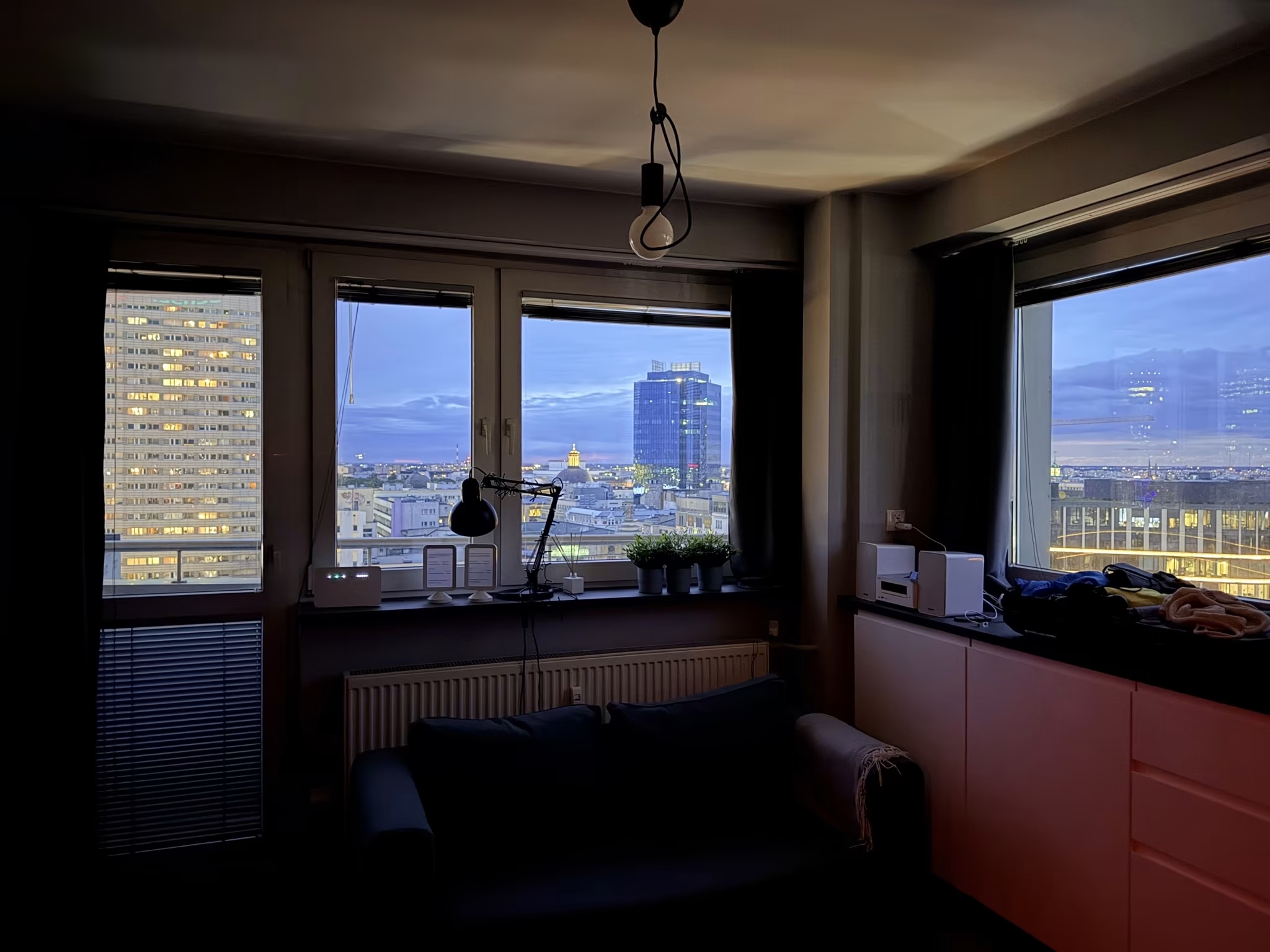
The apartment turned out to be the best one I stayed in all summer: corner windows, an open kitchen, and a view of the skyline that glowed at the end of the day.
Coding, a Podcast, and a Half Marathon
Then I got sucked into code, which is the travel hazard nobody warns you about. And one I won’t bore you here except my first coding task cost me a full half-day.
Author Bradley Chermside, who wrote The Only Way Is West and hosts the Camino de Santiago Pilgrims’ Podcast, confirmed our podcast chat for the next day and sent over the questions along with the link. I did no preparation whatsoever that evening, having spent all my usable brain cells on image formats, and instead did a pile of blog posting. The prep happened the following morning.
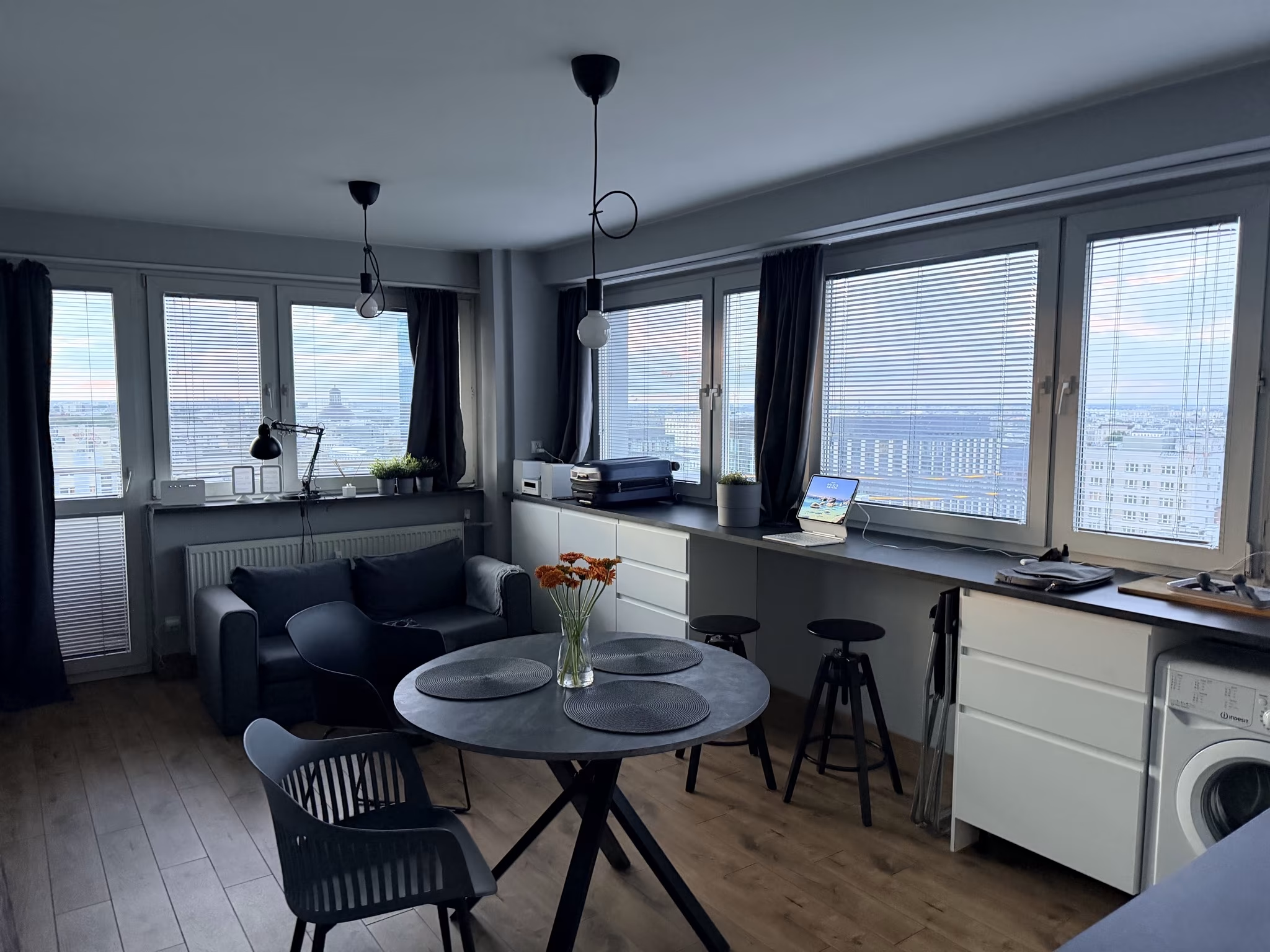
The chat itself ran a full hour and a half. We talked about the Camino, and it was one of those conversations where you look at the clock afterward and are surprised by what it says. Recording it from that living room, with Warsaw out the window, did not hurt.
I also ran a half marathon—a solo, do-it-yourself one, which is how most of these go. It made Poland the seventh E.U. country in my half marathon in every E.U. country project.
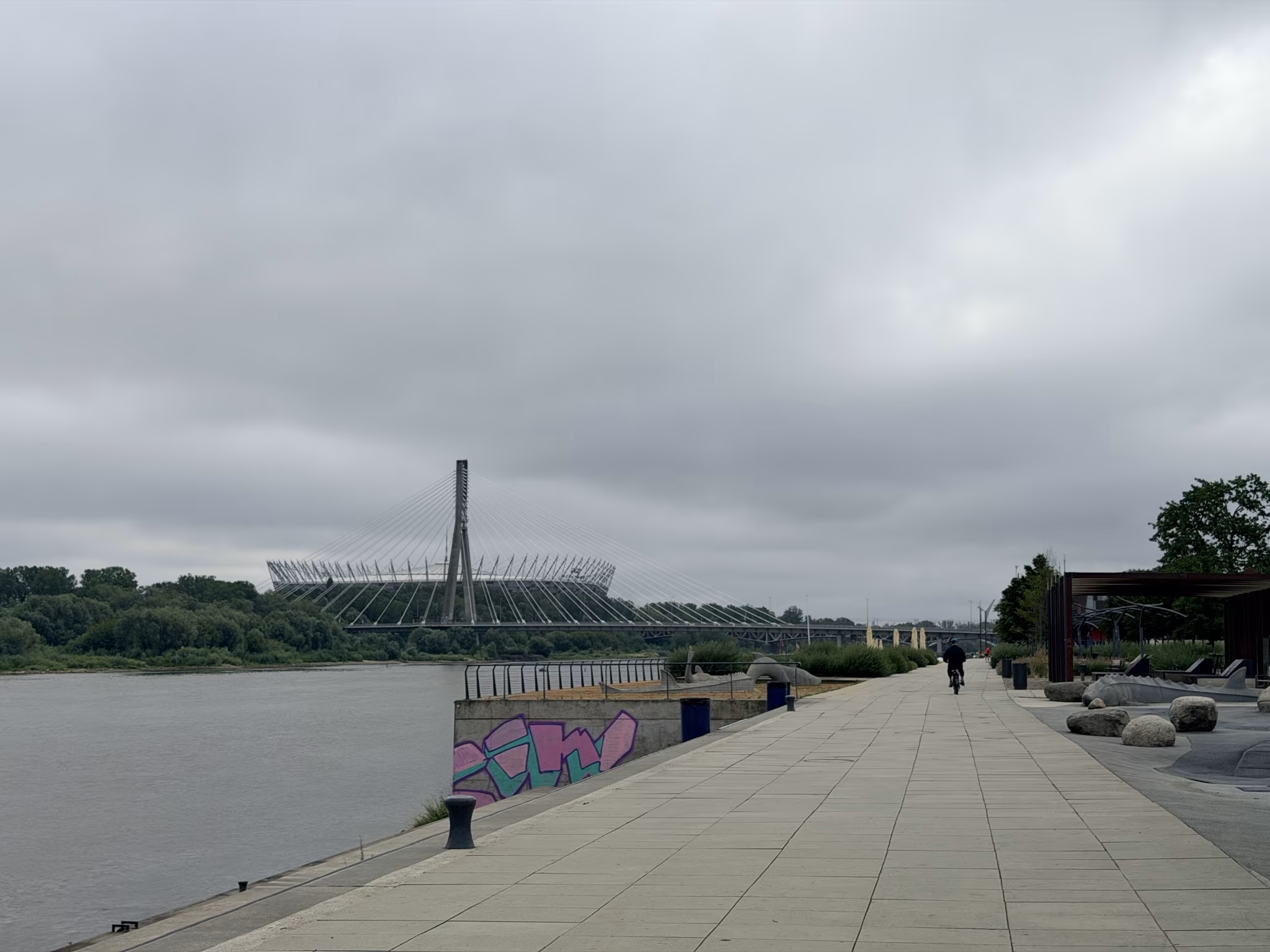
Most of it ran along the paved riverside path on the Praga bank of the Vistula under grey skies, with the cable-stayed Świętokrzyski Bridge sitting in the distance for a good stretch of it. Warsaw makes this easy. The riverfront paths run for miles, they are flat, and on a cloudy weekday morning you share them with almost nobody.
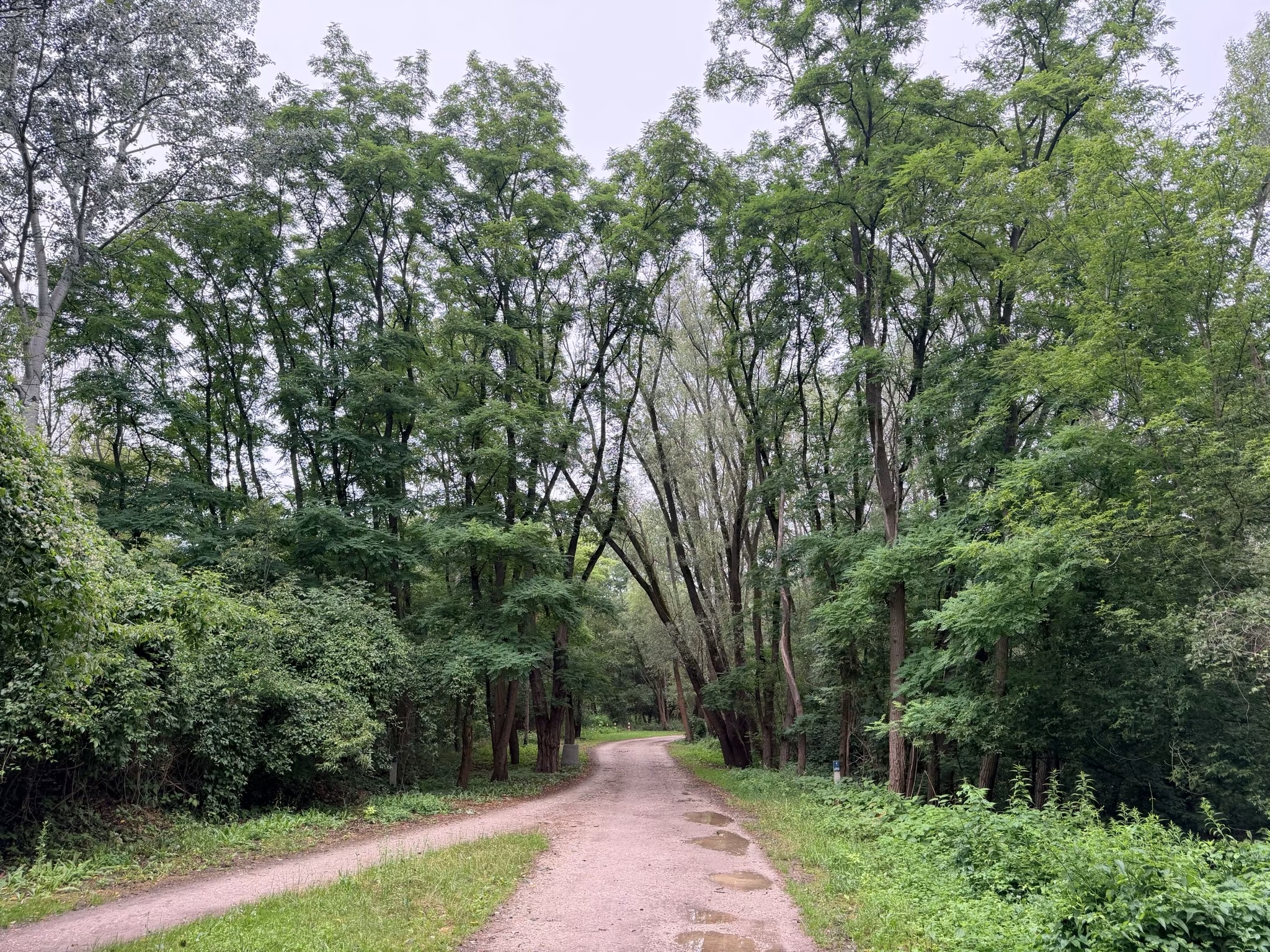
North of downtown, in Żoliborz, the route ducked into woodland dense enough that I briefly forgot I was inside a capital city of 1.8 million people.
The other errand of that first stretch was less voluntary. The extendable handle on my carry-on snapped off, which is the suitcase equivalent of a blown head gasket. This actually happened a few years ago—a block from home in Pontevedra, of all places—but I was able to jerry-rig a fix back then. Here, while traveling in Poland, with no tools, no dice.
So I went to Złote Tarasy, the mall wrapped in that undulating glass roof next to the central station, and shopped for a replacement. I came away with a beige ribbed hard-shell from Wittchen, a Polish company I had never heard of and now own luggage from. I really like it, and it has survived everything since.
Warsaw Is a Porsche Town
I did not expect to spend a week in Poland doing car spotting. Warsaw insisted.
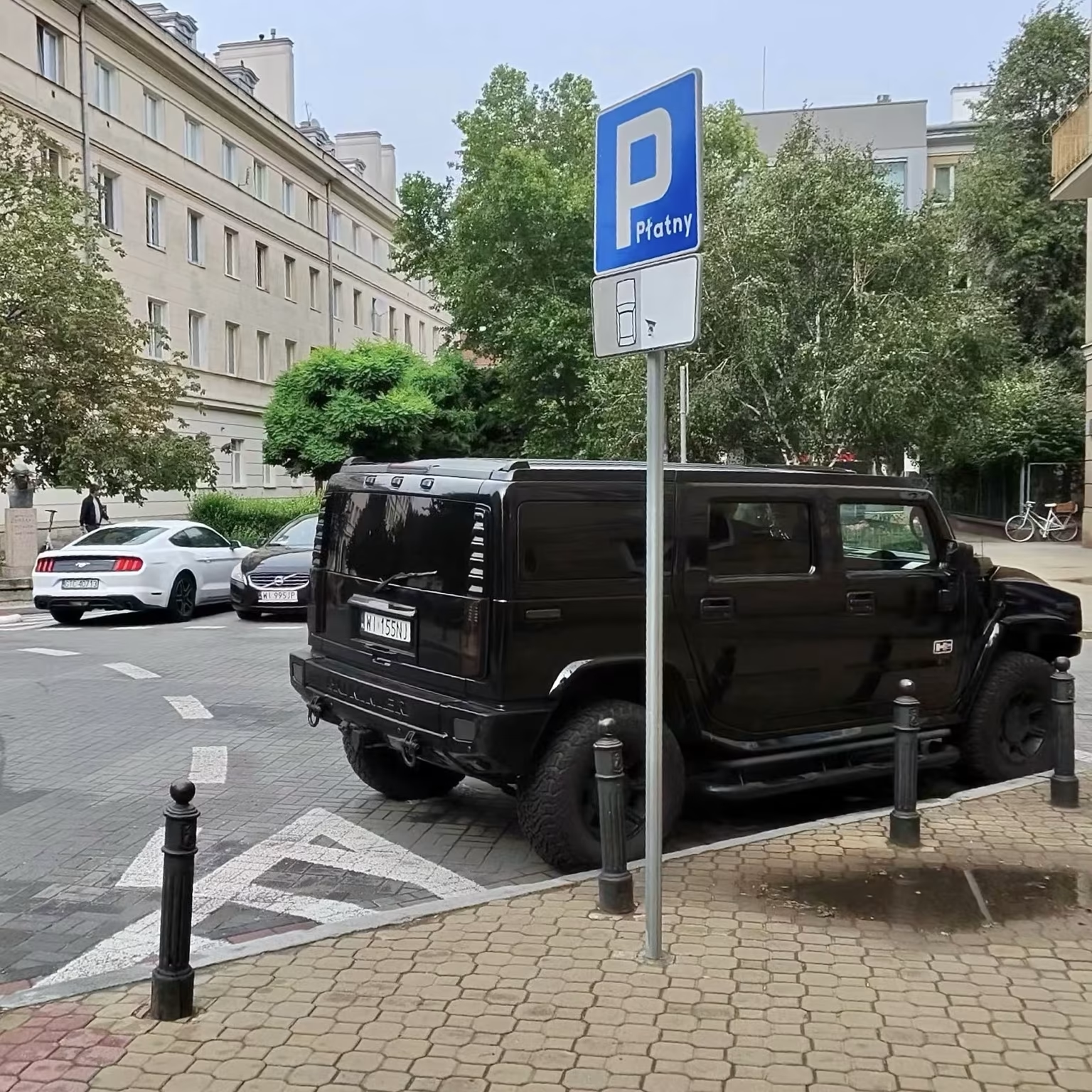
The first surprise was how much American iron was parked on ordinary residential streets. A black Hummer H2 and a white Mustang, sitting side by side under a Płatny sign—Polish for “paid parking,” and a phrase I came to recognize faster than any station name.
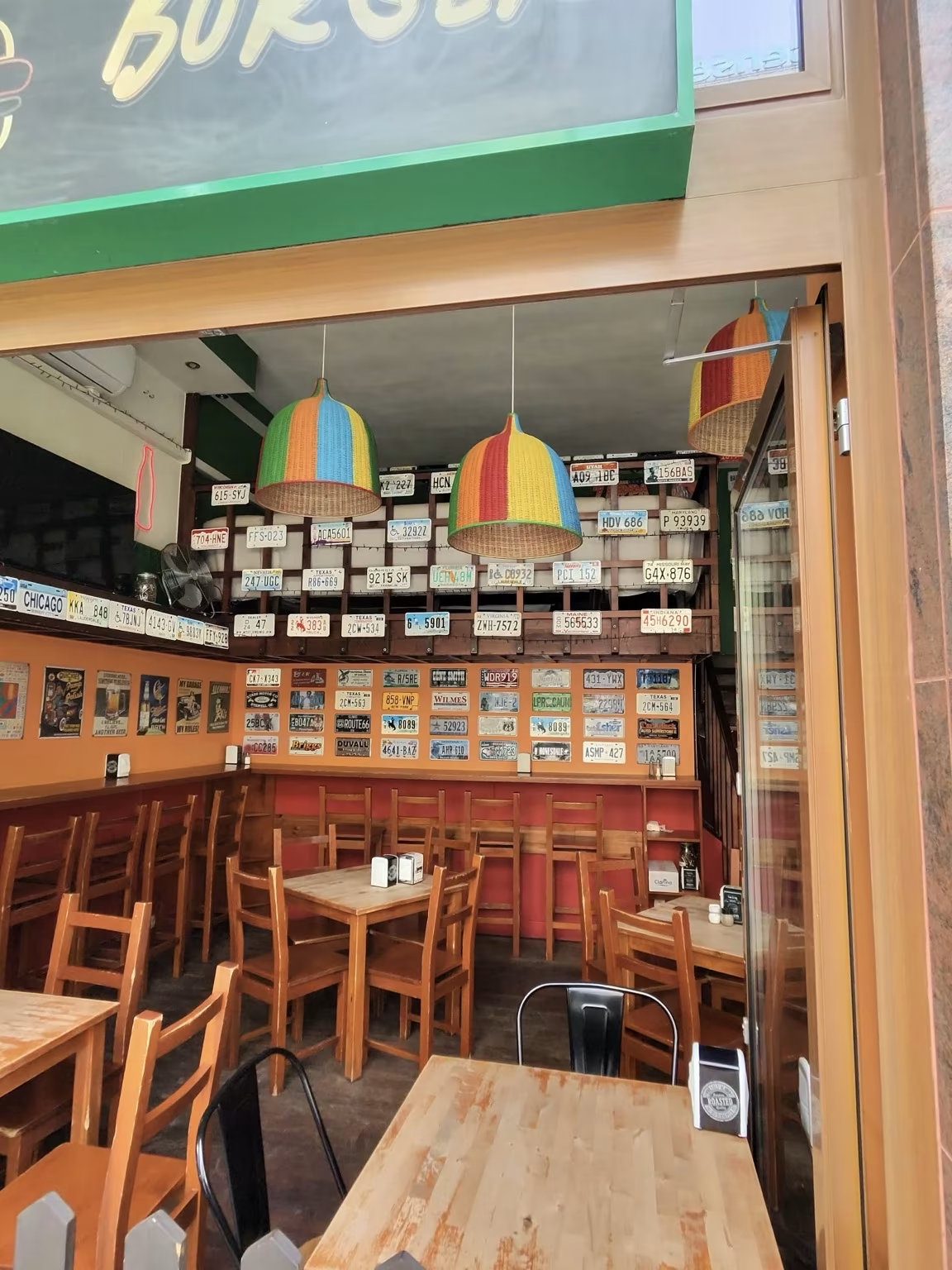
The theme kept going. Barn Burger had a wall of U.S. license plates under its green awning, rainbow-striped pendant lamps, and wooden stools, which is roughly what an American diner looks like after being explained secondhand to someone with better taste.
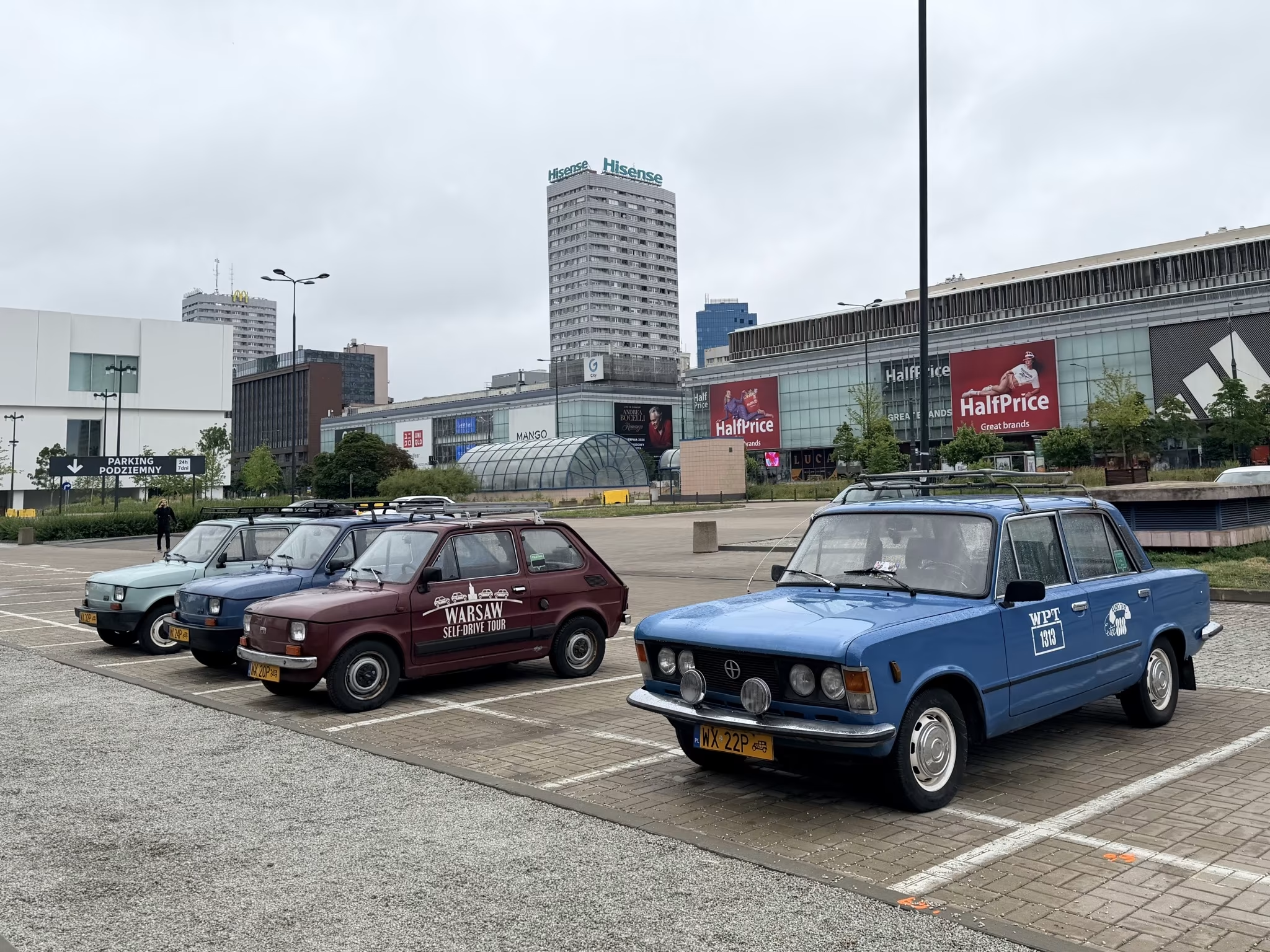
Outside one shopping center sat a line of classic Polski Fiats, including a 125p in period police livery. I assume they were available for hire from a self-drive tour outfit, since nothing about the arrangement suggested an ordinary parking lot.
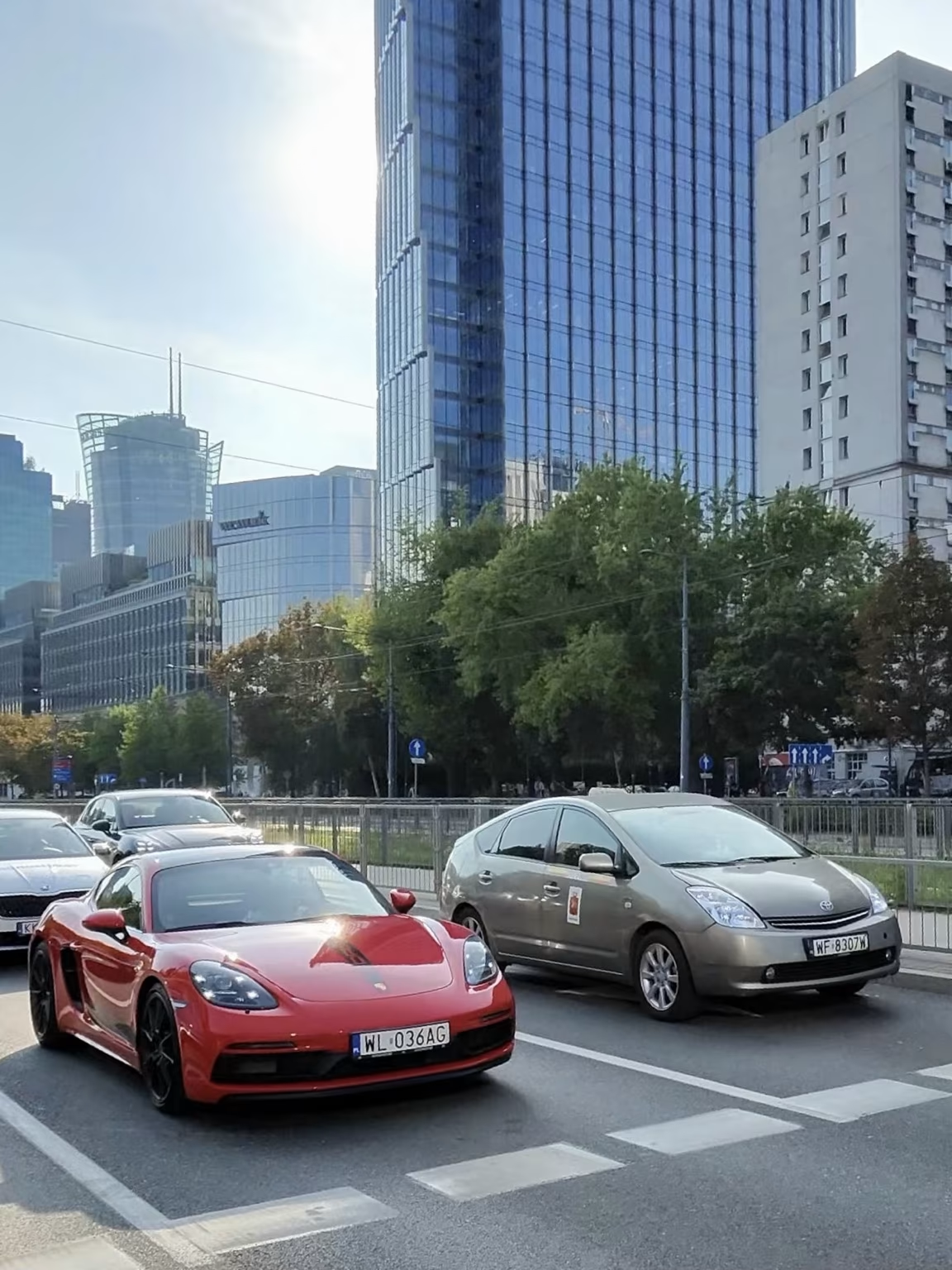
The bigger surprise was the Porsches. They were everywhere, in numbers I would not expect in a city this far from Stuttgart. I photographed a fraction of what I saw.
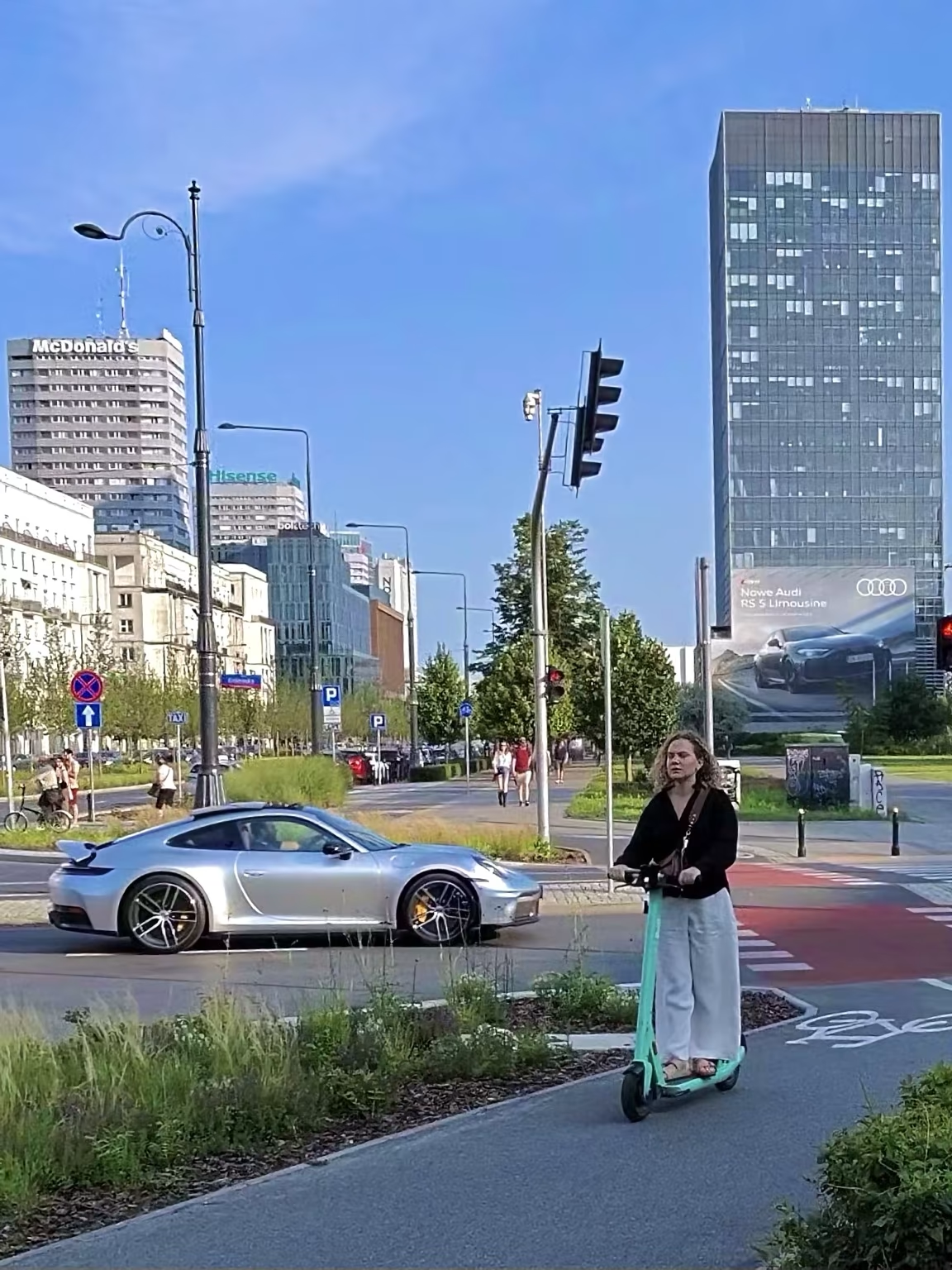
A silver 911 waiting at an intersection downtown while a woman rode past on an e-scooter, glass office towers stacked up behind both of them.
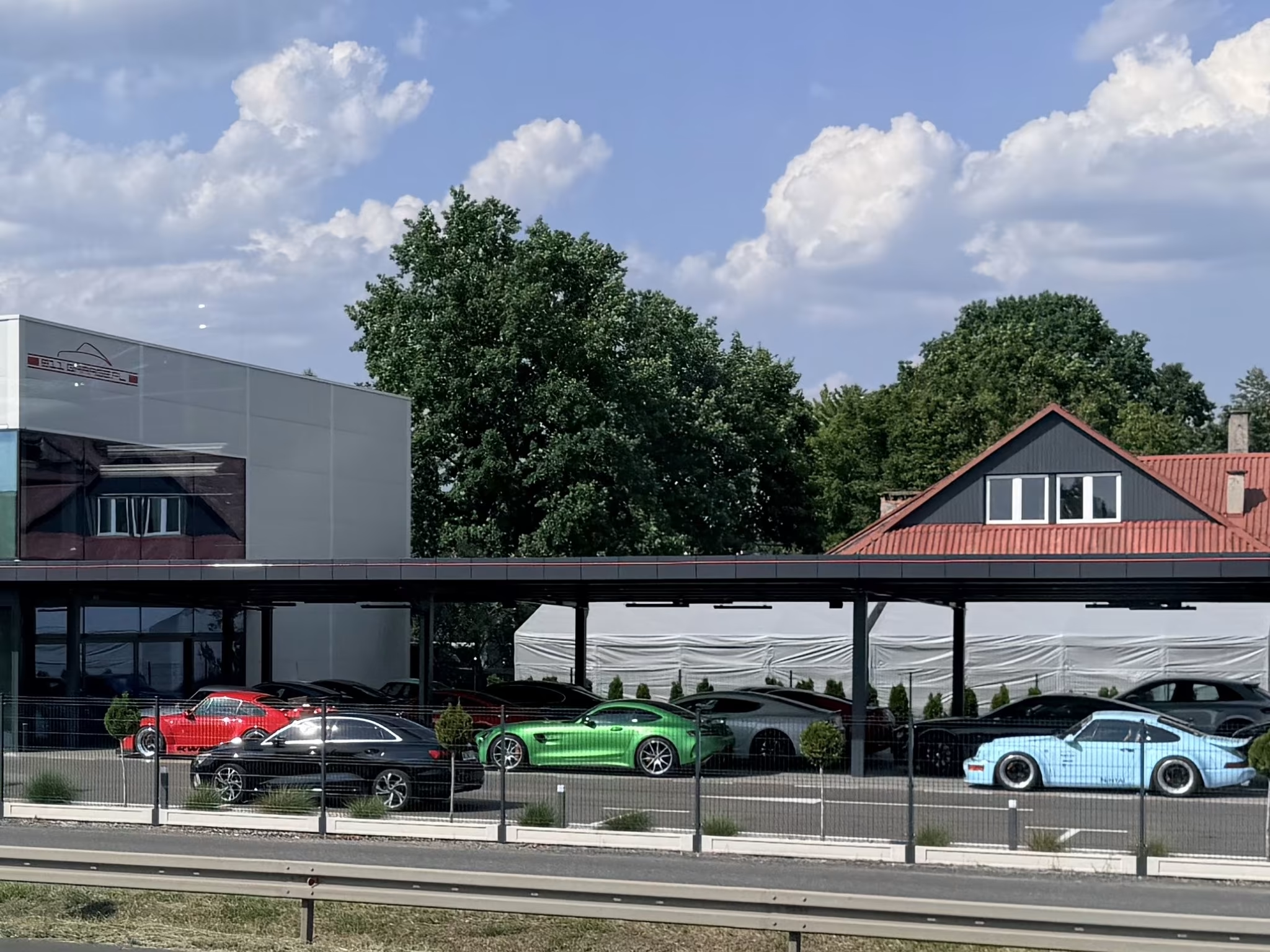
And in Łomianki, just outside the city, an entire canopy of them lined up at a shop called 911 Garage. At that point I stopped treating each sighting as noteworthy and started treating it as the local weather.
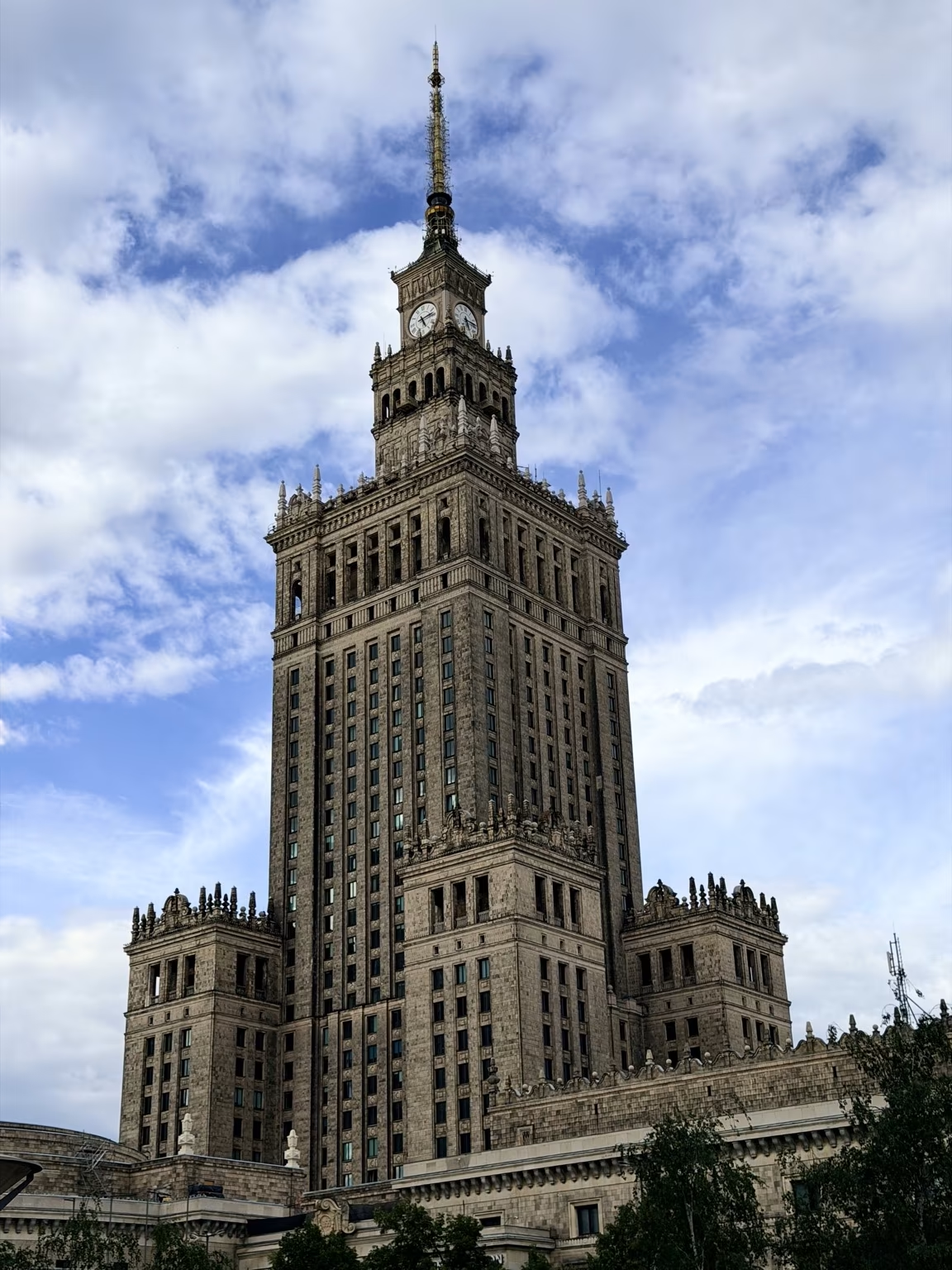
Warsaw’s other constant is the Palace of Culture and Science, which is visible from an alarming number of places and looks different depending on how you feel about it that day. Under a bright blue summer sky it looks less like a Stalinist gift and more like a very determined wedding cake.
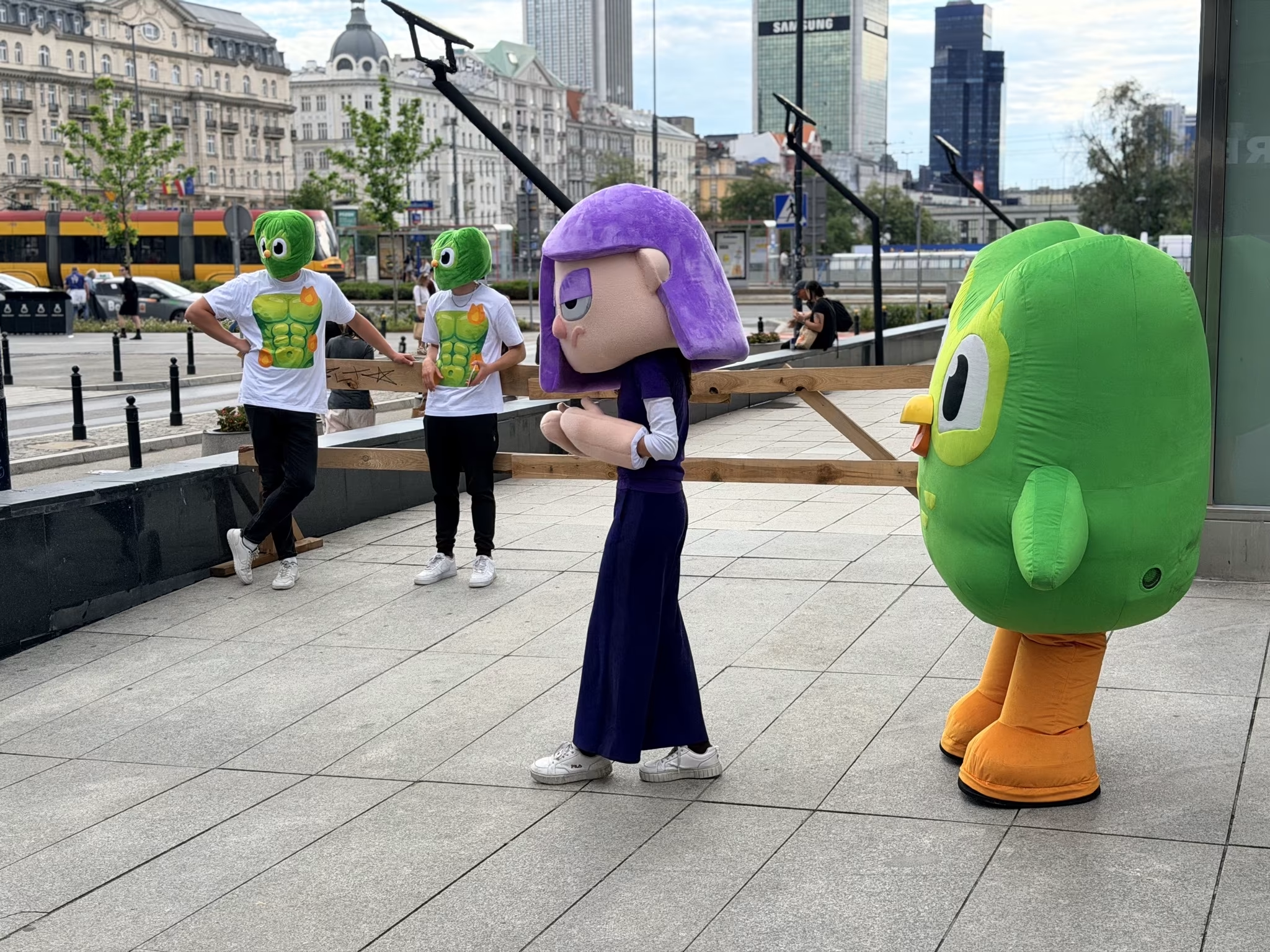
The most amusing thing I saw all week was a film crew on a terrace above the river, running costumed Duolingo mascots—Duo and Lily among them—through takes with the downtown skyline behind them. I have been maintaining a Duolingo streak for years, and recently even made a passing mention about how it is one of five companies that I am a true fanboy of. But I did not expect to meet the green owl in person.
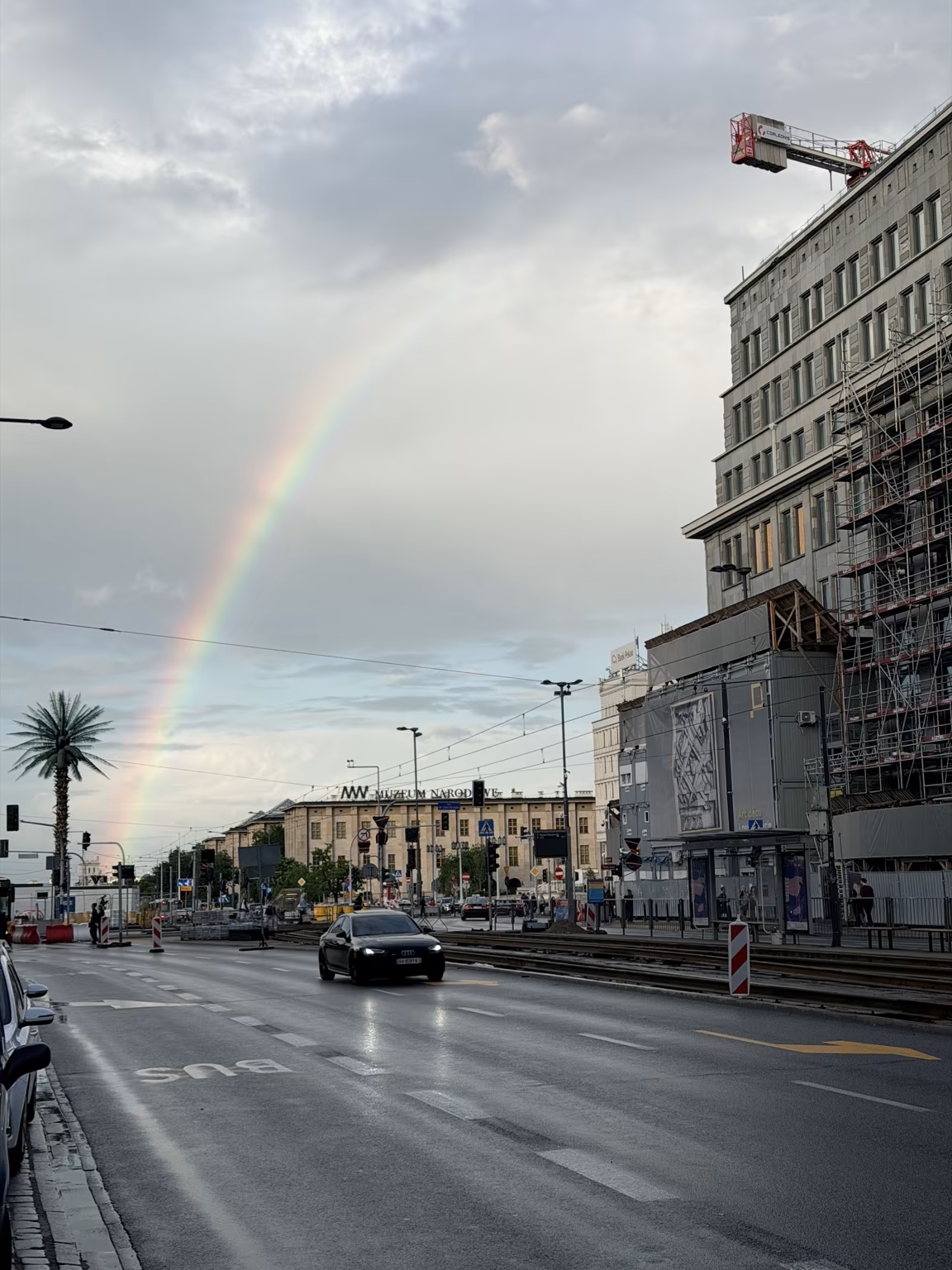
And the weather, at least before I left for Angloville, was exactly what I had pictured Poland to be: green, cool, and intermittently wet, with a rainbow arcing over a rain-slicked avenue beside a scaffolded apartment block.
One More Night in Warsaw
Then I went to Angloville, volunteering for a week in Osada Danków up in Ostróda County, which gets its own post.
When the program ended and the goodbyes were said, I still had one night in Warsaw. I checked into an apartment a couple of blocks behind Złote Tarasy—farther behind it than the map had led me to believe. It was warm, smaller and plainer than the place I had four days in before Angloville, and entirely adequate for one night. The wi-fi worked, which mattered, because I caught the end of Stage 13 of the Tour de France.
It was a good one to catch. Dole to Belfort, the longest stage of this year’s race, and Tom Pidcock spent it in a breakaway that got so far up the road that he was virtually on the podium—ahead of Remco Evenepoel on the road, with only Pogačar and Vingegaard in front. He outsprinted his companions for third on the day, jumped from tenth to fourth overall, and finished the evening nine seconds off the actual podium. Watching a GC shakeup unfold while sitting on a sofa in Warsaw with wet hair is not how I usually consume bike racing, and I recommend it.
After a quick shower I set off to meet Christine, Melanie, and Nadine at Sigismund’s Column. Apple Maps estimated 38 minutes for the nearly two-mile walk. I jogged part of it, got there in 28, and arrived a minute early, which is the only time all week my transit estimates worked in my favor.
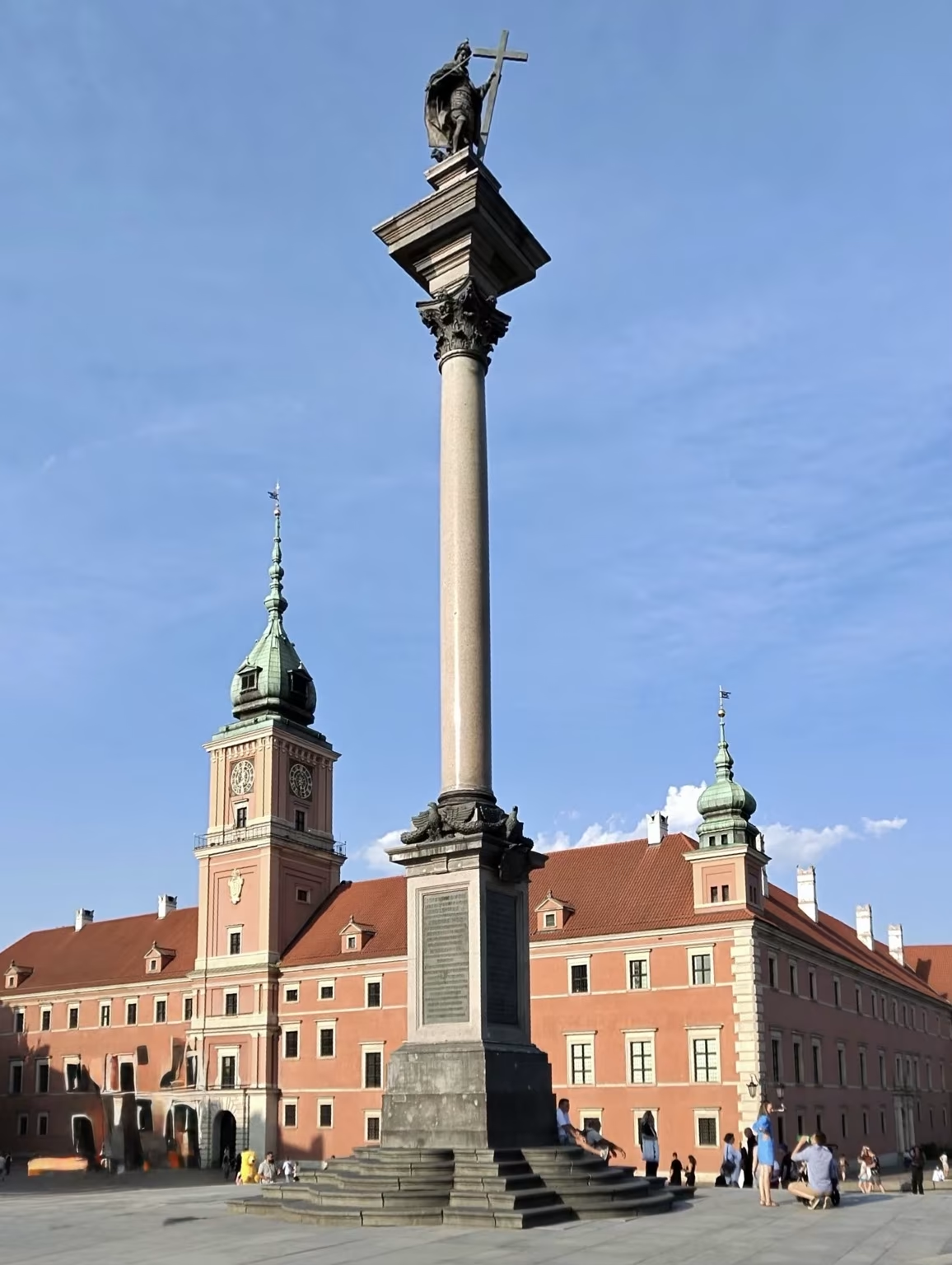
Nadine was first to arrive. It emerged that she and my friend Eric in Fort Collins are mutual friends, having done Angloville together in Prague years ago. I sent them both a photo of the two of us standing in Castle Square. Small world, smaller volunteer-English-immersion world.
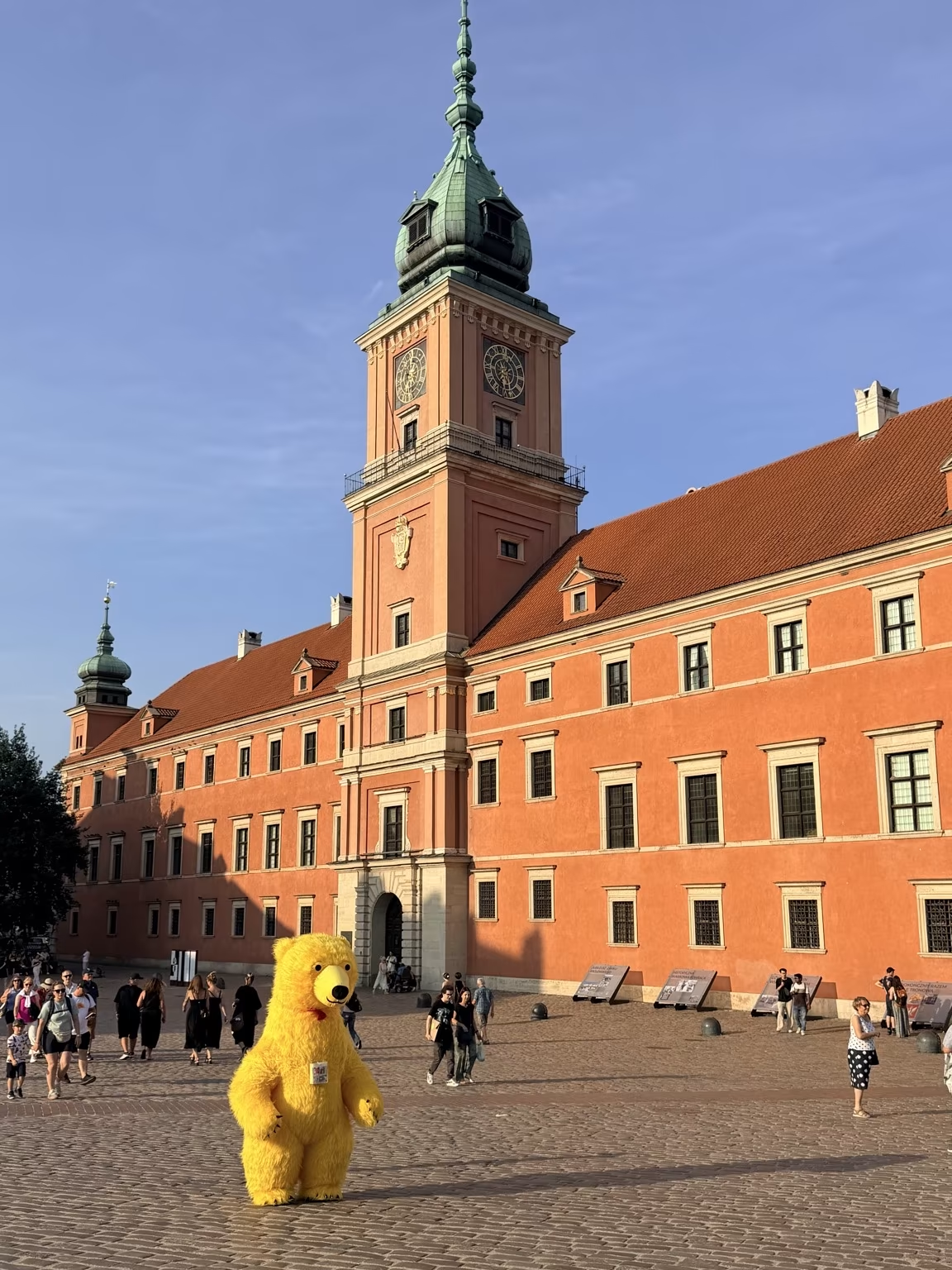
Across the square, the Royal Castle’s terracotta façade and clock tower had a costumed yellow bear posing for tourists in front of it, because no European capital is complete without one.
The four of us then went looking for any restaurant in Old Town that could seat us for pierogi. This proved harder than expected, because it was the Old Town’s birthday. The Starówka turns 73 in July—not the age of its buildings but the anniversary of the reopening of the reconstructed Market Square in 1953—and the city was celebrating with two days of free concerts, walks, and a silent disco. The medieval quarter is younger than my dad. It was also packed.
The first place we tried, a chain, had no room. We found a second, Pod Jarzębiną, with outdoor tables available.
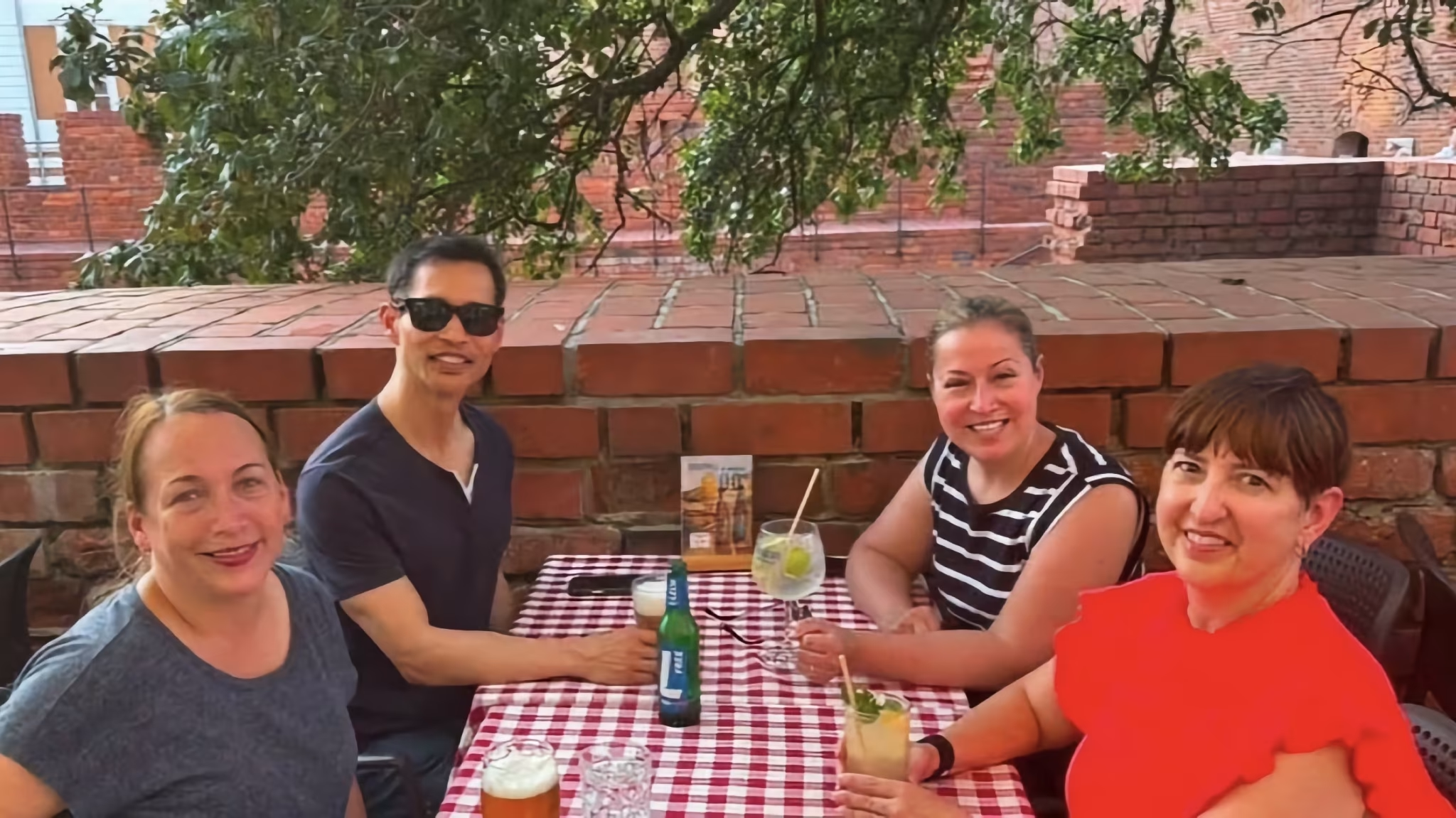
We ordered two plates to share—mushroom and cabbage, plus a fried variety—which worked out to four pierogi each, along with cucumbers and cream. The service was extraordinarily slow. It took nearly an hour for the pierogi to appear. In that hour I drank two Lech Free beers, which are zero percent alcohol, so I emerged from a Polish Old Town birthday celebration completely sober and not at all satiated by the dumplings. Madhuri and Diana joined us partway through.
Afterward, the original four of us walked a kilometer to the Multimedia Fountain Park, where music was playing and the jets were lit in shifting colors.
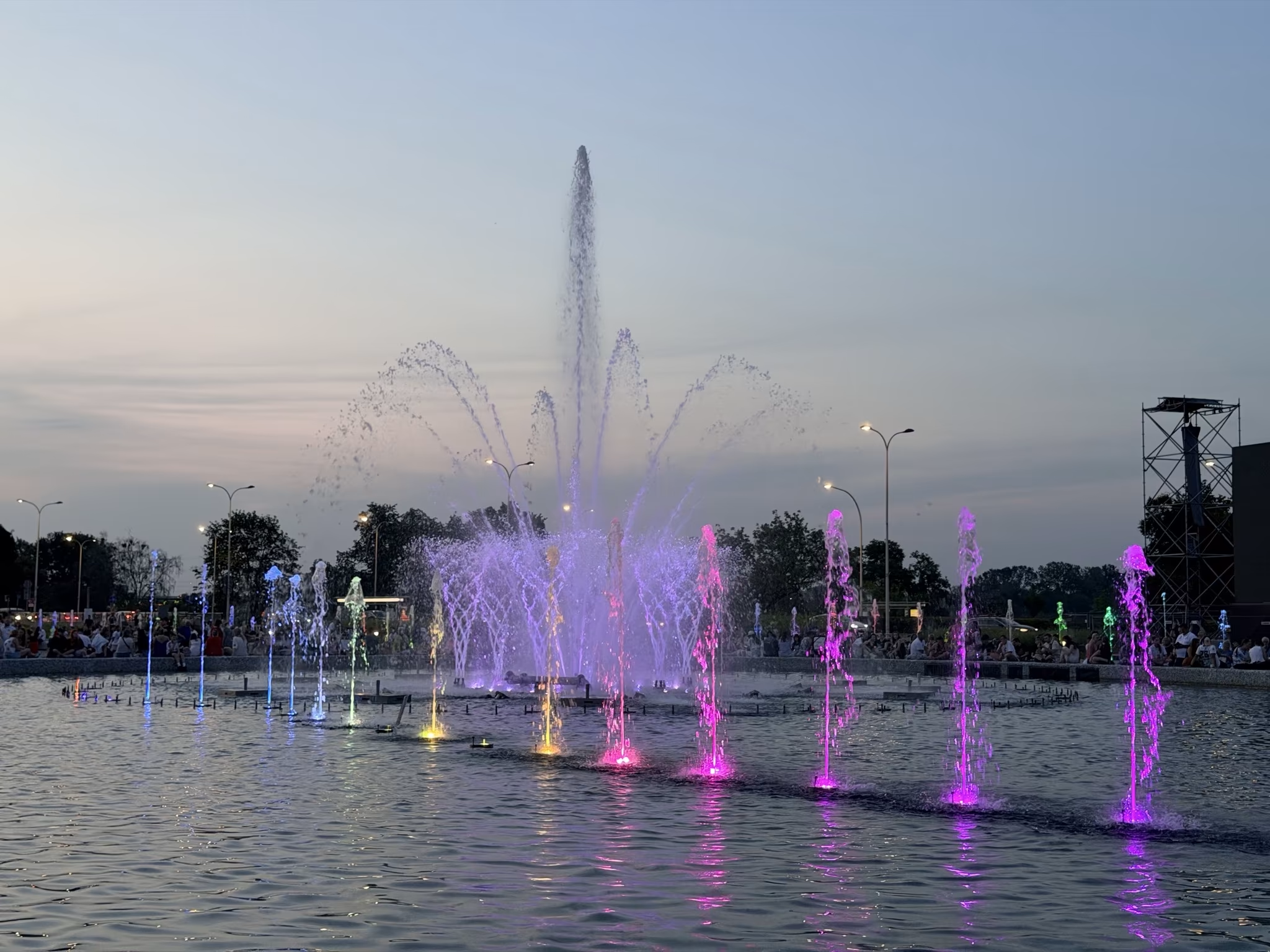
Diana got lost somewhere in the crowd, Madhuri having not kept track of her, and we caught only a brief glimpse of Madhuri afterward. Chris peeled off first, then Nadine. Eventually I had to part with Melanie, which I was sorry about—she reminded me strongly of my best friend Melanie from 8th grade, not just because of the name but because of her face and her open, easy friendliness.
On the walk back I stopped at three separate Żabkas, Poland’s answer to 7-Eleven, and treated each one as a separate course. Żabka number one: seaweed rice triangles, cashews, sparkling water. Żabka number two: two bananas. Żabka number three: a bowl of tabouli, which I carried back and ate at the apartment.
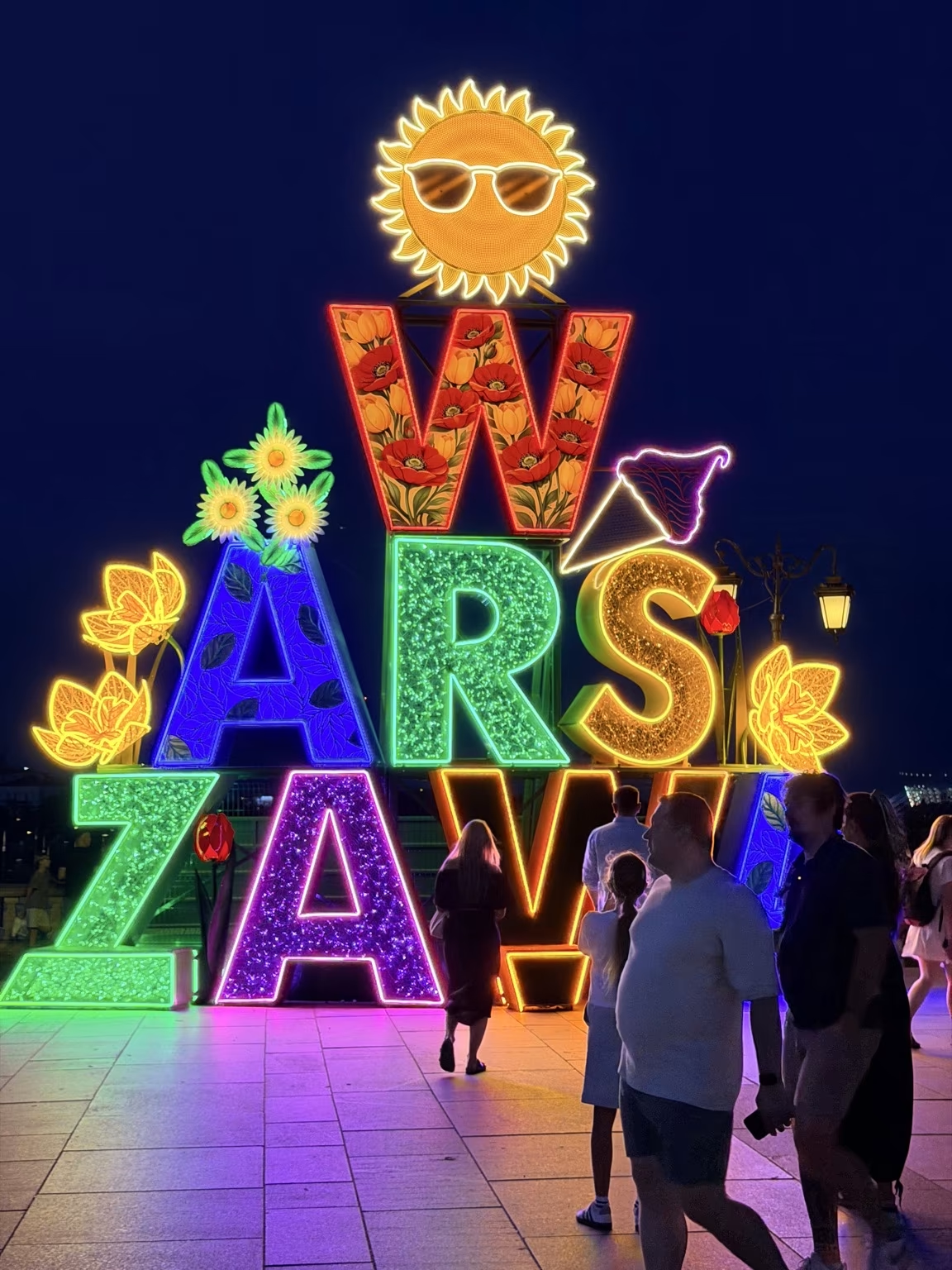
Somewhere along the way I passed the illuminated WARSZAWA sign, topped by a grinning sun wearing sunglasses—a fitting mascot, as it turned out.
I was asleep on the sofa by 11:15 p.m. I had gone to bed later than I wanted almost every night that week, and managed the damage about as well as could be expected.
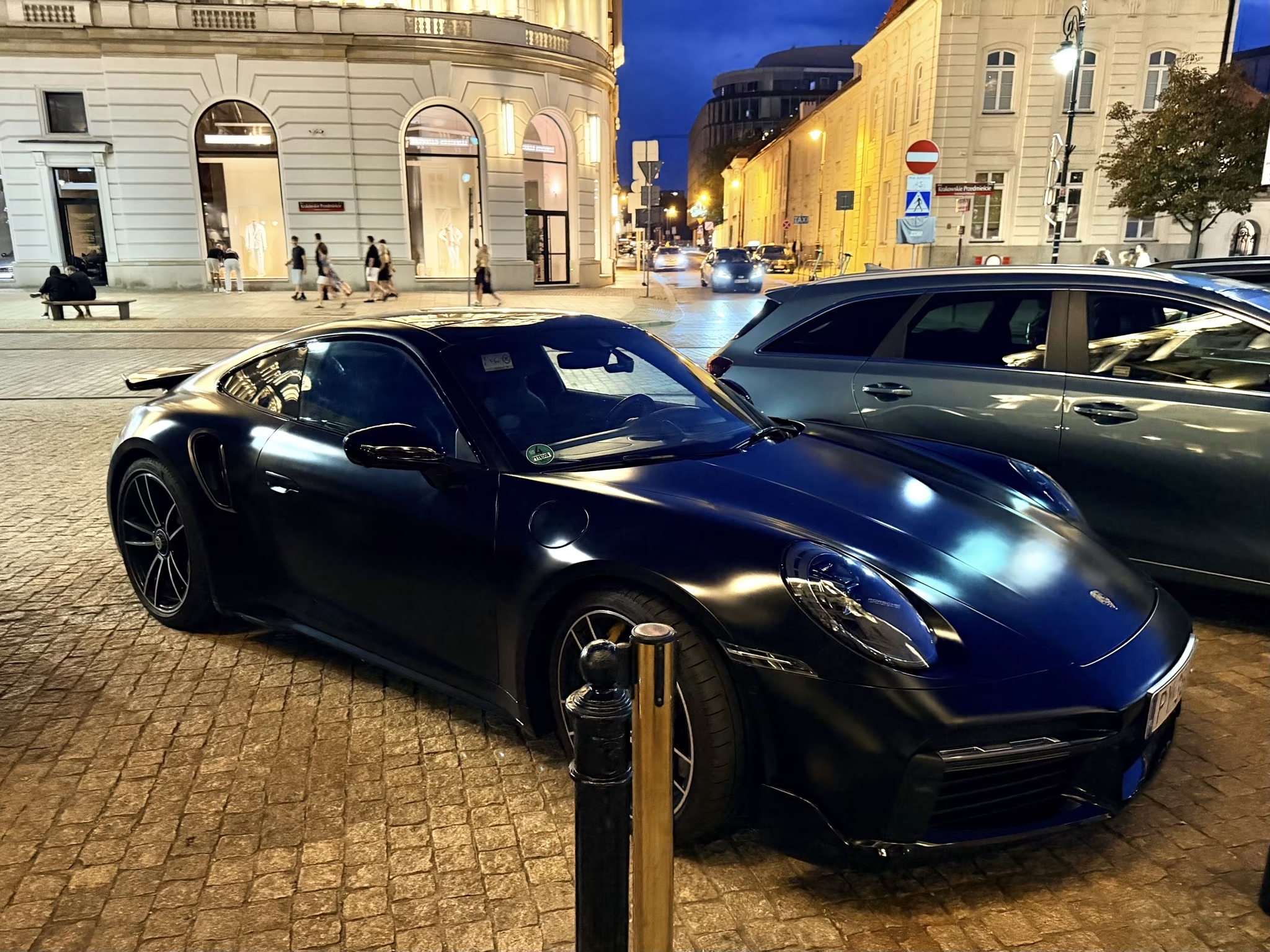
One last matte black 911, parked in front of a floodlit neoclassical building. Warsaw was still doing it at night.
The thing that surprised me most about Warsaw came secondhand. People at Angloville told me that during the record-breaking European heat wave in June, the city hit 39°C. I had trouble believing it. My mental image of Warsaw was cold, damp, and green, and the four days I spent here before Angloville confirmed that image exactly—rainbows, grey skies, woods so thick they swallowed the sound of traffic. But they also told me that Polish homes usually have air conditioning somewhere, if only in a bedroom or an attic. Plenty of places in Spain and France have none at all, and those places are hotter to begin with.
I expect to do Angloville again, which means I expect to be back. Next time I will give the city more than the fragments around the edges of a coding binge, a podcast, and a run.