My Week Volunteering at Angloville Osada Danków, Poland

There is a particular kind of silence that falls over a room when eighteen adults from nine countries are all staring at the same iPad, willing a buffering wheel to resolve into a World Cup semifinal. We were in a hotel in a Masurian forest, roughly 130 miles north of Warsaw, watching Spain play France through a VPN routed to Australia, on Wi-Fi that had clearly been provisioned for a quieter era. The wheel spun. Somebody sighed. Then the picture snapped back and Spain had scored, and the room erupted as though we’d all personally set up the goal.
That was Tuesday. By Friday I would have a certificate, a phone full of new contacts, and a working knowledge of the Polish word for a mountain peak exactly 999,000 meters tall.
What Angloville actually is
Angloville pairs Polish adults who want to improve their English with native and fluent English speakers who volunteer their conversation. The Poles pay for the program. The international participants—that was me—get a room, three meals a day, and transport from Warsaw and back, in exchange for talking. That’s the whole trade. You talk for six days and they feed you.
The catch, such as it is, comes before you arrive: a 45-minute onboarding interview, an online orientation course capped with a quiz, and a refundable deposit. None of it is difficult, but it does signal that they’d prefer volunteers who have thought about it for more than an afternoon. The arithmetic still works out in the volunteer’s favor by a sizeable margin.
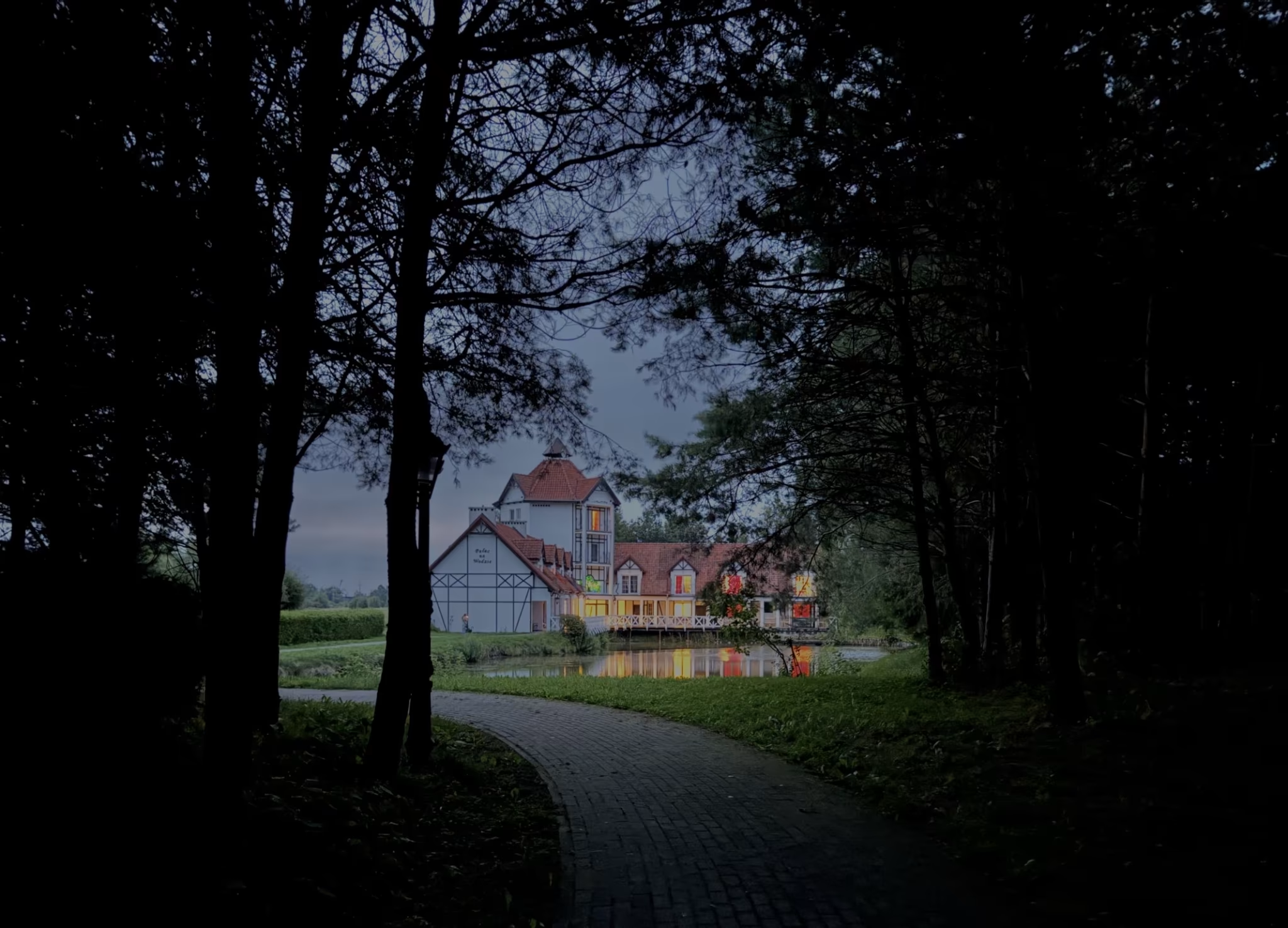
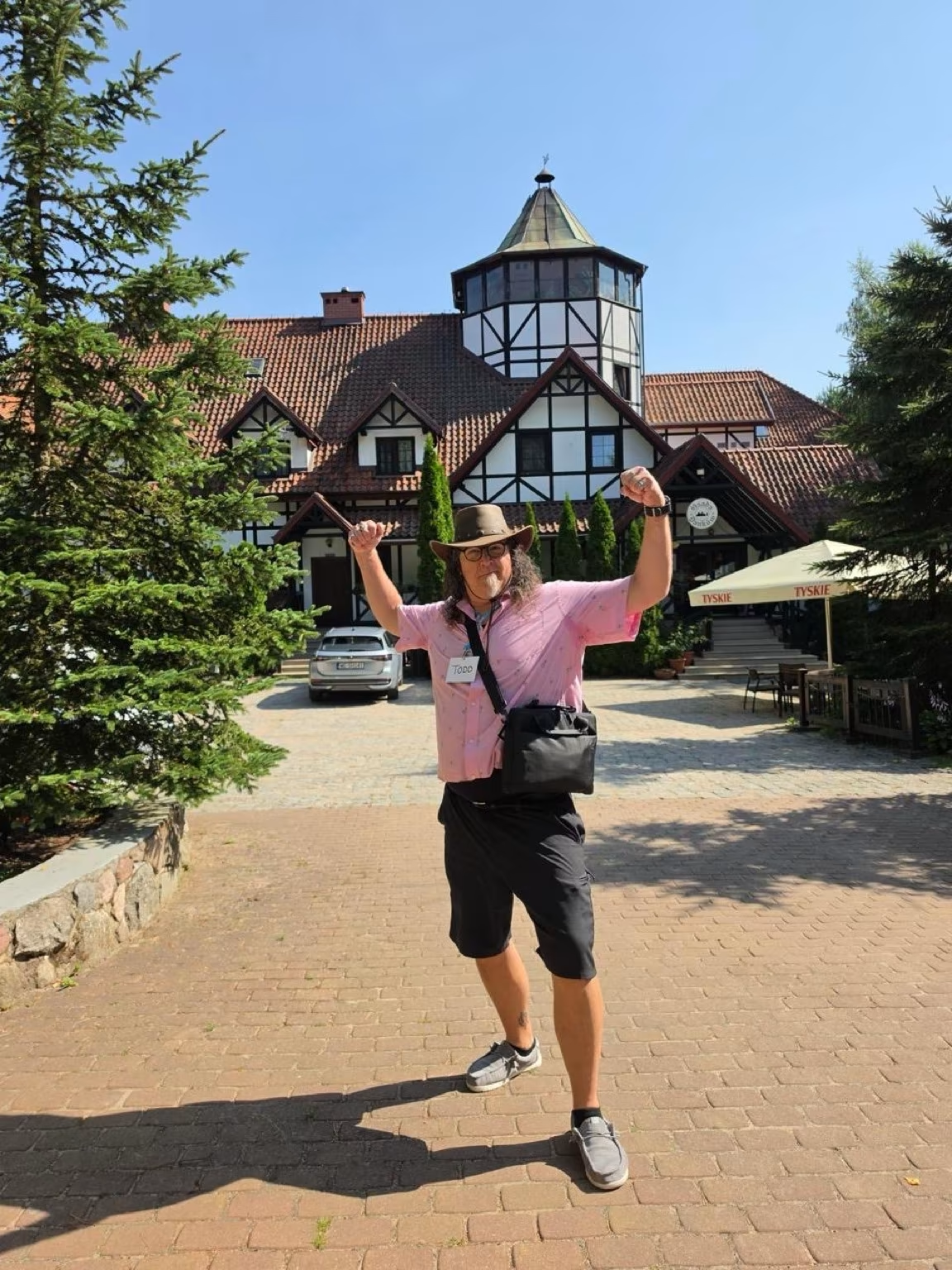
Our week ran Sunday to Friday with eighteen international participants, eighteen Polish participants, and two coordinators. The venue was Osada Danków, a hotel in Ostróda County about eight miles from Ostróda and less than two miles from Miłomłyn, with Lake Wilimowski a two-minute walk away and Jeziorak, the longest lake in Poland, close enough to matter.
The bus to Masuria
I woke at 7:30 a.m. in Warsaw, which was later than I had ambitiously planned, and which cost me my morning run. Shower, eat, pack, out the door. I arrived at the meeting point at 8:50 a.m. to find several coach buses and no obvious way to tell which was mine. So I did what any well-adjusted adult does and started asking strangers whether they were, by chance, going to a language immersion program in the woods. Two of them were.
The ride was billed as two hours and took two and a half. I spent the first of them next to Anna Ku., discussing everything except the one topic occupying the back of my mind, which was that I had not used a bathroom since Warsaw and the bus had no plans to stop. I mention this only because it established, on day one, the central skill of the week: sustained pleasant conversation under mild duress.
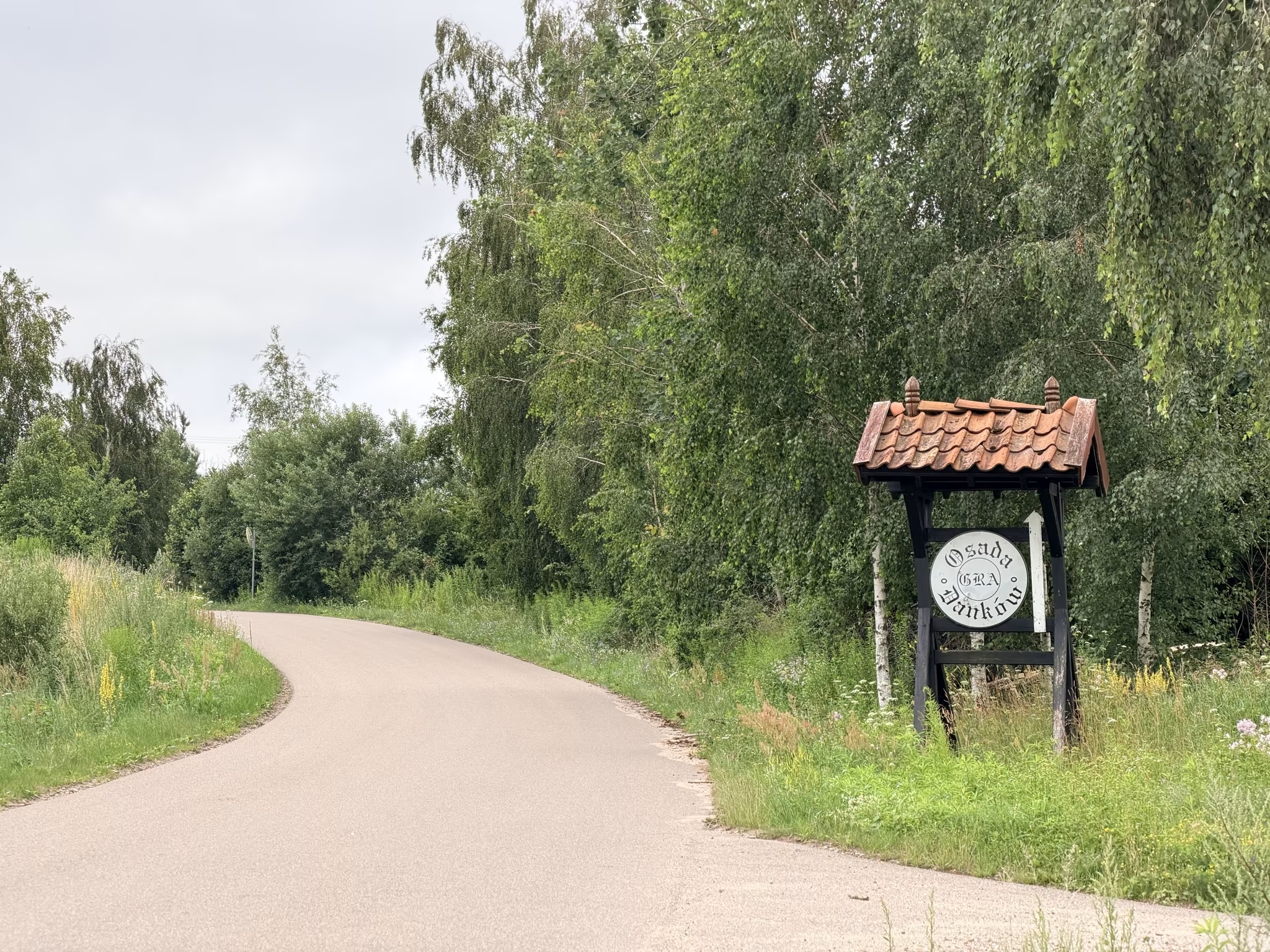
Then we turned off the main road onto a narrow strip of pavement running into the trees, and the trees kept going, and the pavement kept narrowing, and eventually a hotel appeared. Our bladders were also relieved.
The shape of a day
The schedule ran on the hour. A one-on-one at 10:30 a.m., another at 11:30, another at 12:30, lunch at 1:30 p.m., free time until 4:30, then three more sessions, dinner at 7:30, and a group activity at 8:30. Each slot pairs you with a different Polish participant and a loose prompt—a roleplay, a negotiation, a debate—which you are free to abandon within a few minutes in favor of whatever you’d both rather talk about.
Monday started with Human Bingo, which may sound like filler but was, in fact, the best icebreaker I’ve encountered. The card was a grid of questions and the only way to fill it was to interrogate strangers about whether they’d ever, say, broken a bone or driven a manual transmission.
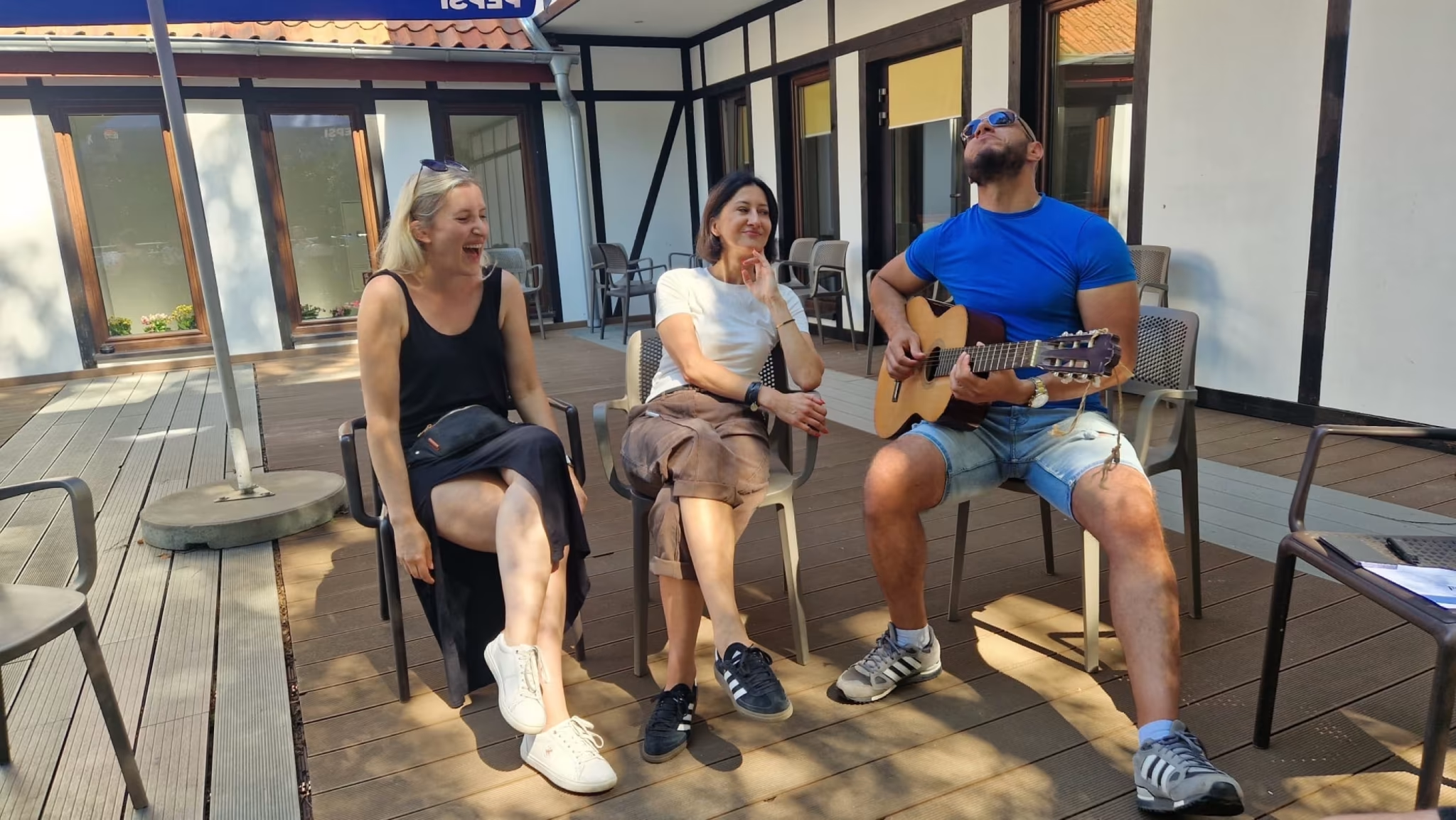
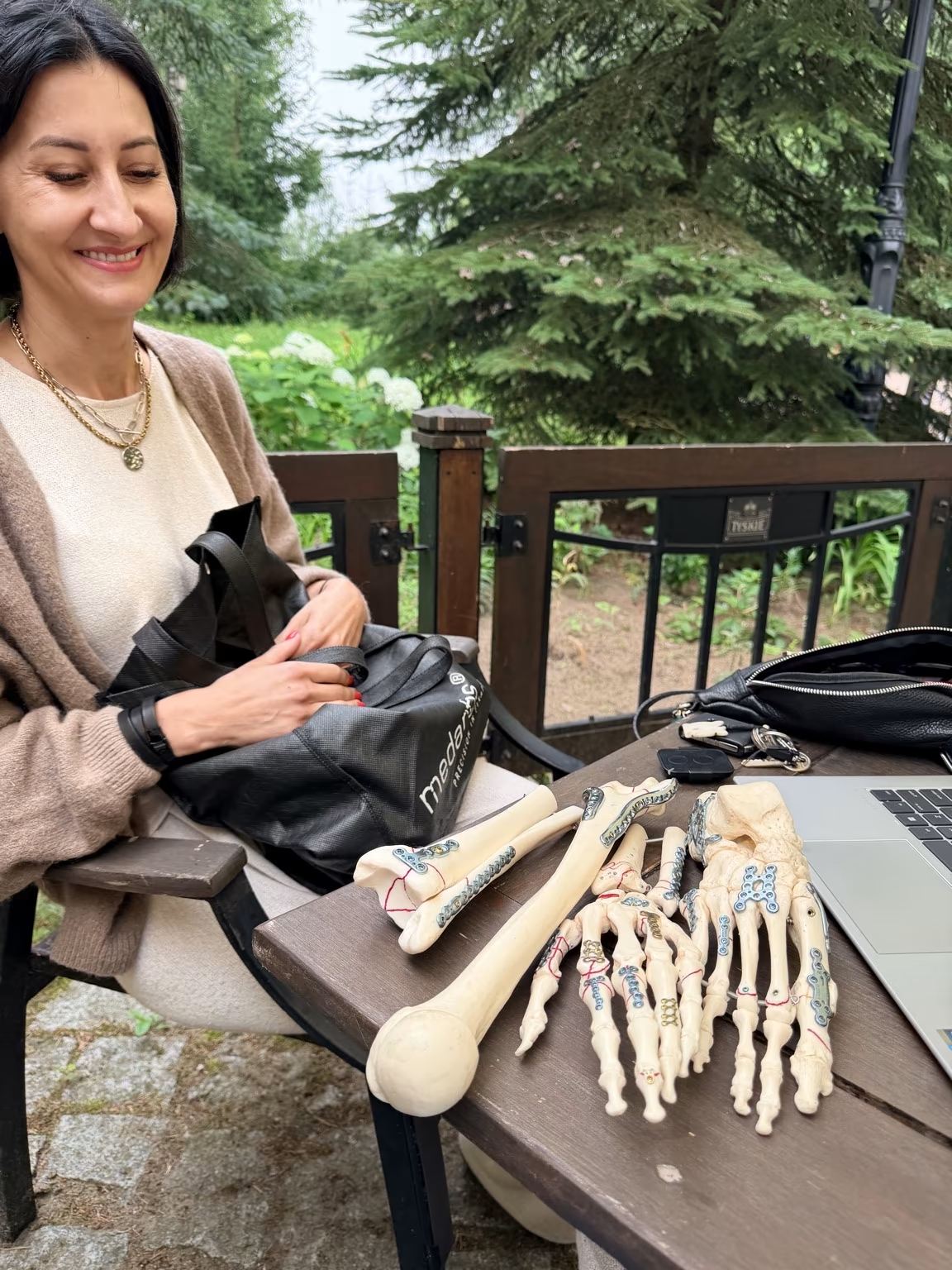
After that the sessions blurred pleasantly. Justyna walked me through the bone implant surgeries she assists with; I countered with my history of dog bites, which is longer than most people’s, and we agreed that the human body is a poorly defended machine. Mario spent our hour doing a mock-rehearsal for a job interview with a medical device company, despite already holding another offer from his current employer. He wanted to make a good impression anyway.
Agata and I did a roleplay in which I played a hotel receptionist giving directions, a role I inhabited with more commitment than the material required. Anna Kon. and I did a mock tourist-travel company interaction. Agnieszka wanted help with “th,” so we isolated the mouth position and built syllables onto it until she could say “thirty-three” without flinching. Anna Kol. had started learning English two months earlier and arrived with an audio translation device; within twenty minutes I’d learned she does pole dancing, yoga, hiking, cycling, and running, which is as wide of an athletic portfolio as mine.
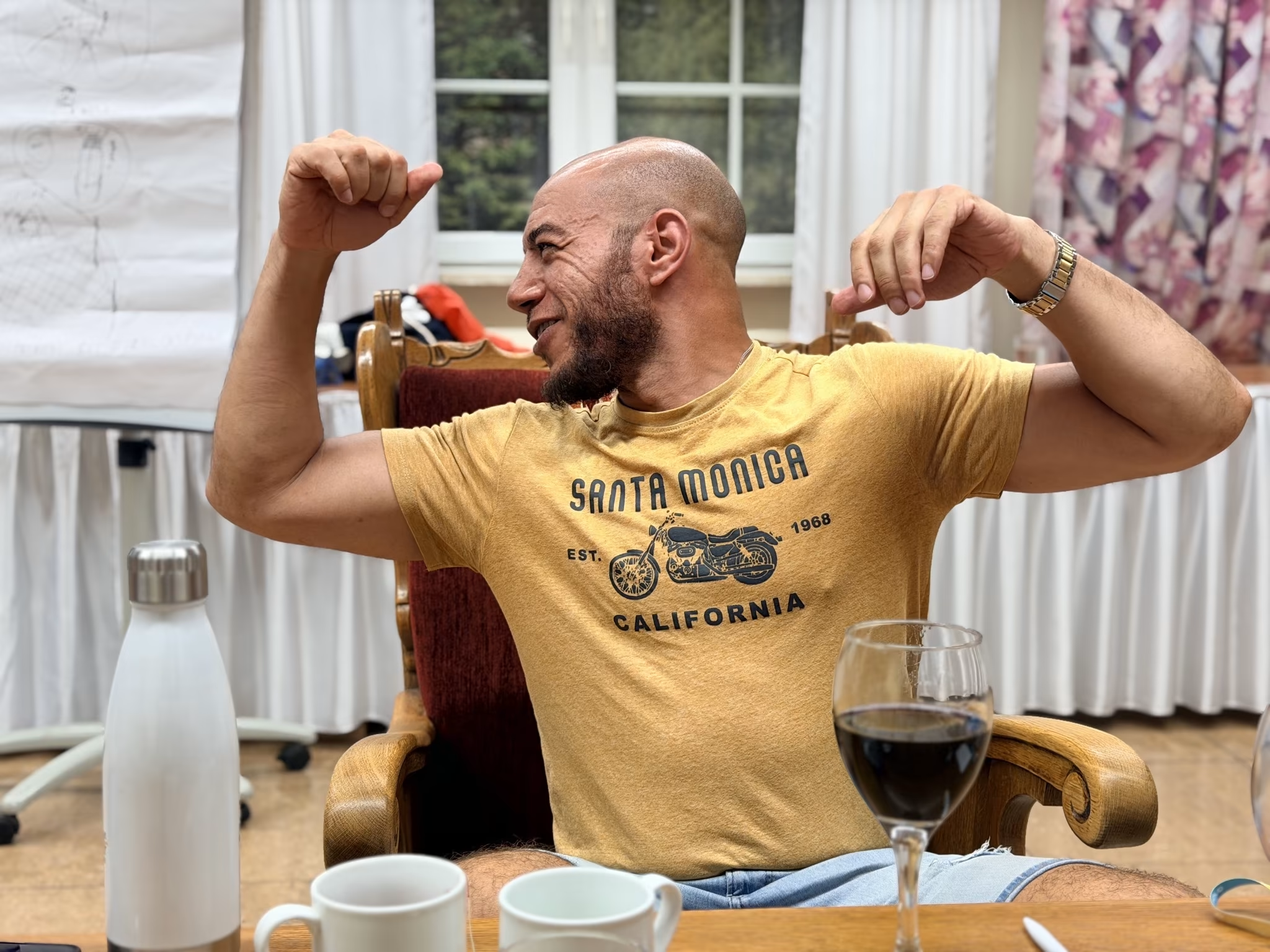
Evenings brought group games. One night we split into four teams and raced to produce words starting with a given letter for categories including country, sport, animal, things that can get you fired, and things Andy can do. Andy, one of our coordinators, is an Oxford alumnus, has done Angloville many times as a participant, and did gymnastics. The category was generous to him.
Another night was “Poloville,” in which each Polish participant had two minutes to teach us a sentence in Polish. Mine contained a word of such length that the group, watching me struggle, waved me off and told me to use the version they teach children.
Mornings in the forest
The gym and pool never opened before breakfast, which I’d file under mild grievances along with the single coffee machine that produced a line of eighteen hopeful people every morning at 8:25 a.m. But the forest was open all the time, and it was one of the best amenities on the property.
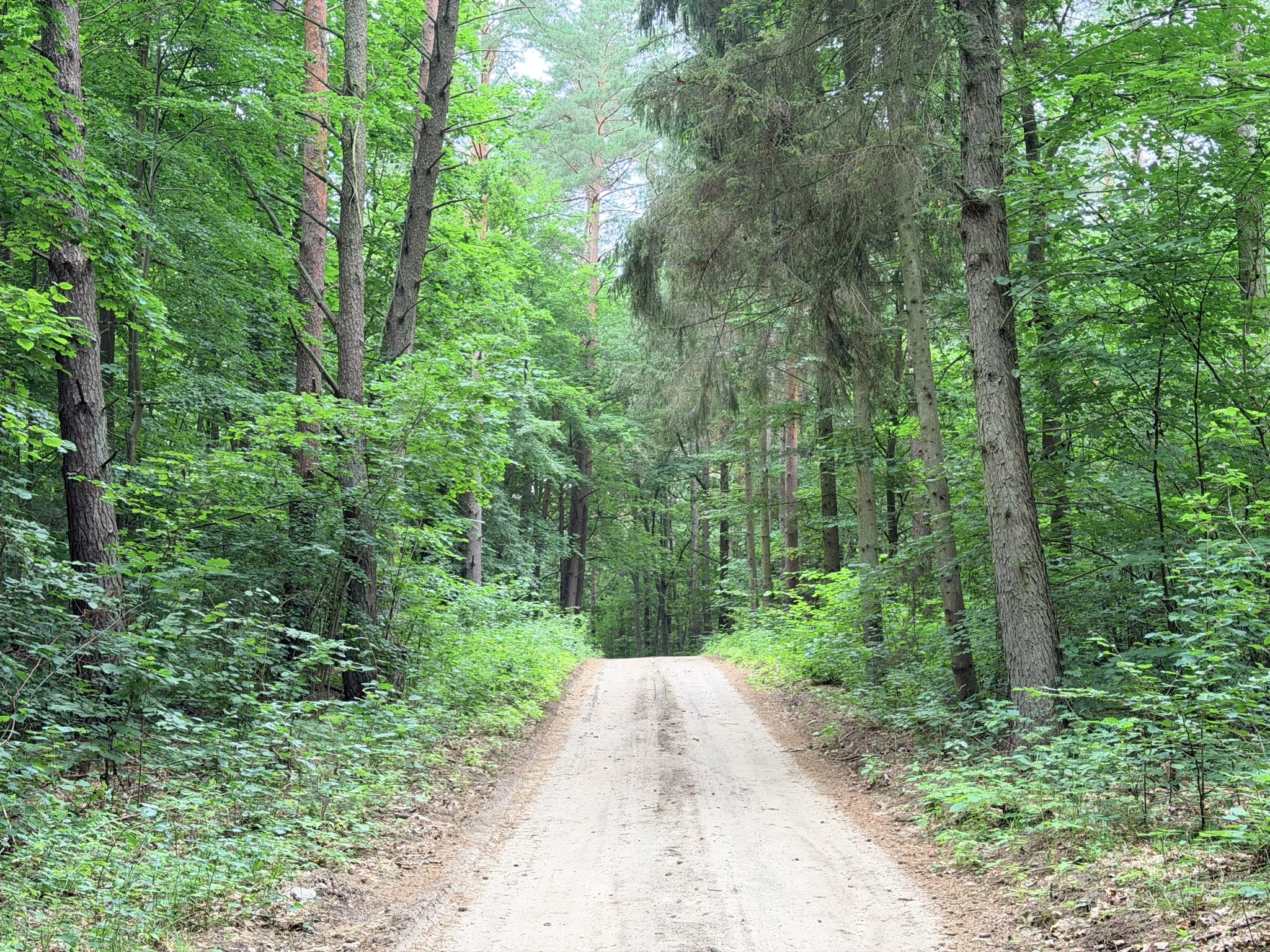
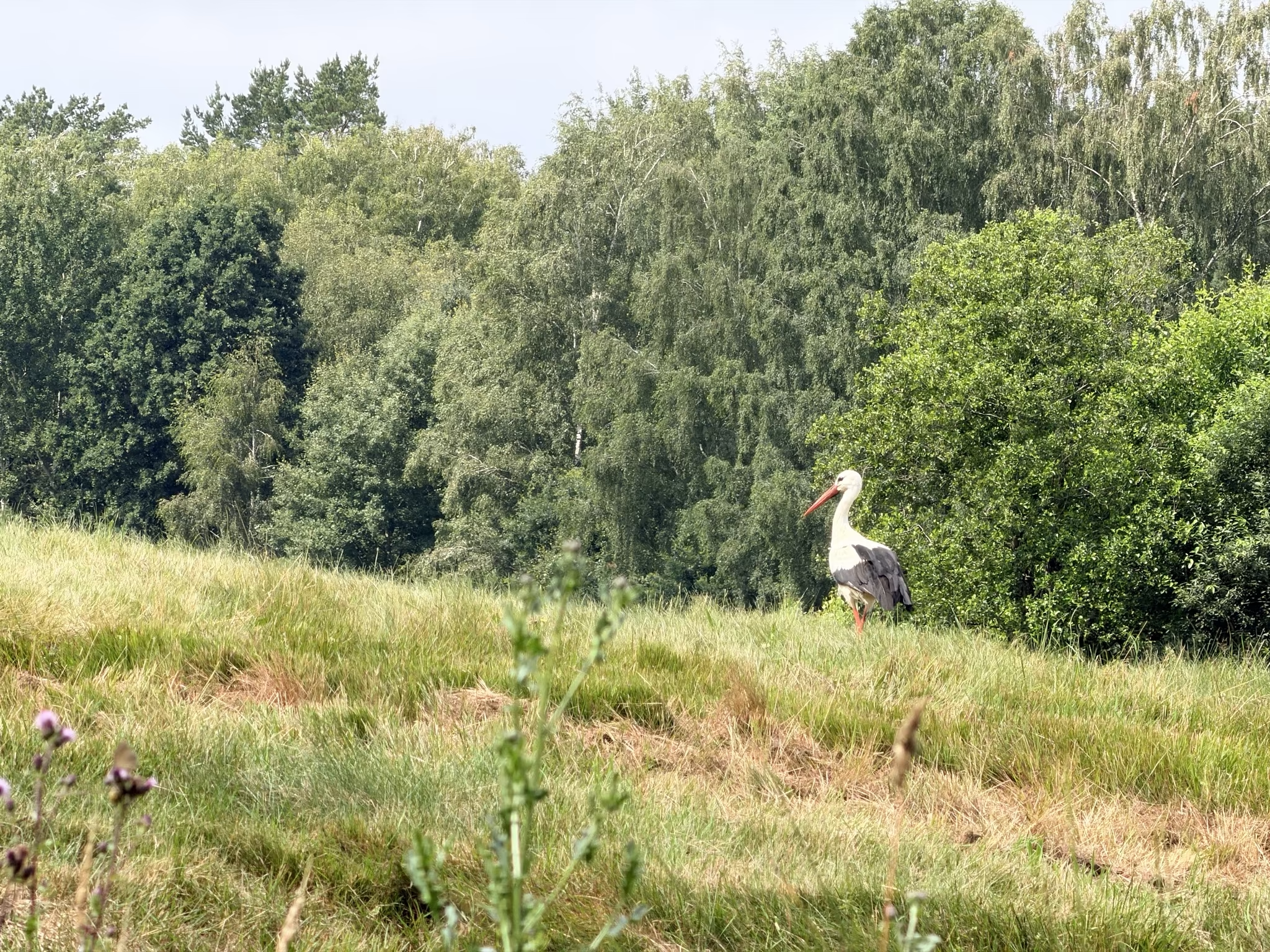
I ran the trails and the main road out front, including an easy four kilometers on the last morning after a 12:15 a.m. bedtime. On one run I stopped because there was a stork standing in a meadow, regarding me the way a headwaiter regards someone who has arrived without a reservation. Roughly one in four white storks in the world nests in Poland, and Masuria is one of their strongholds, so this was less a wildlife encounter than a jurisdictional matter.
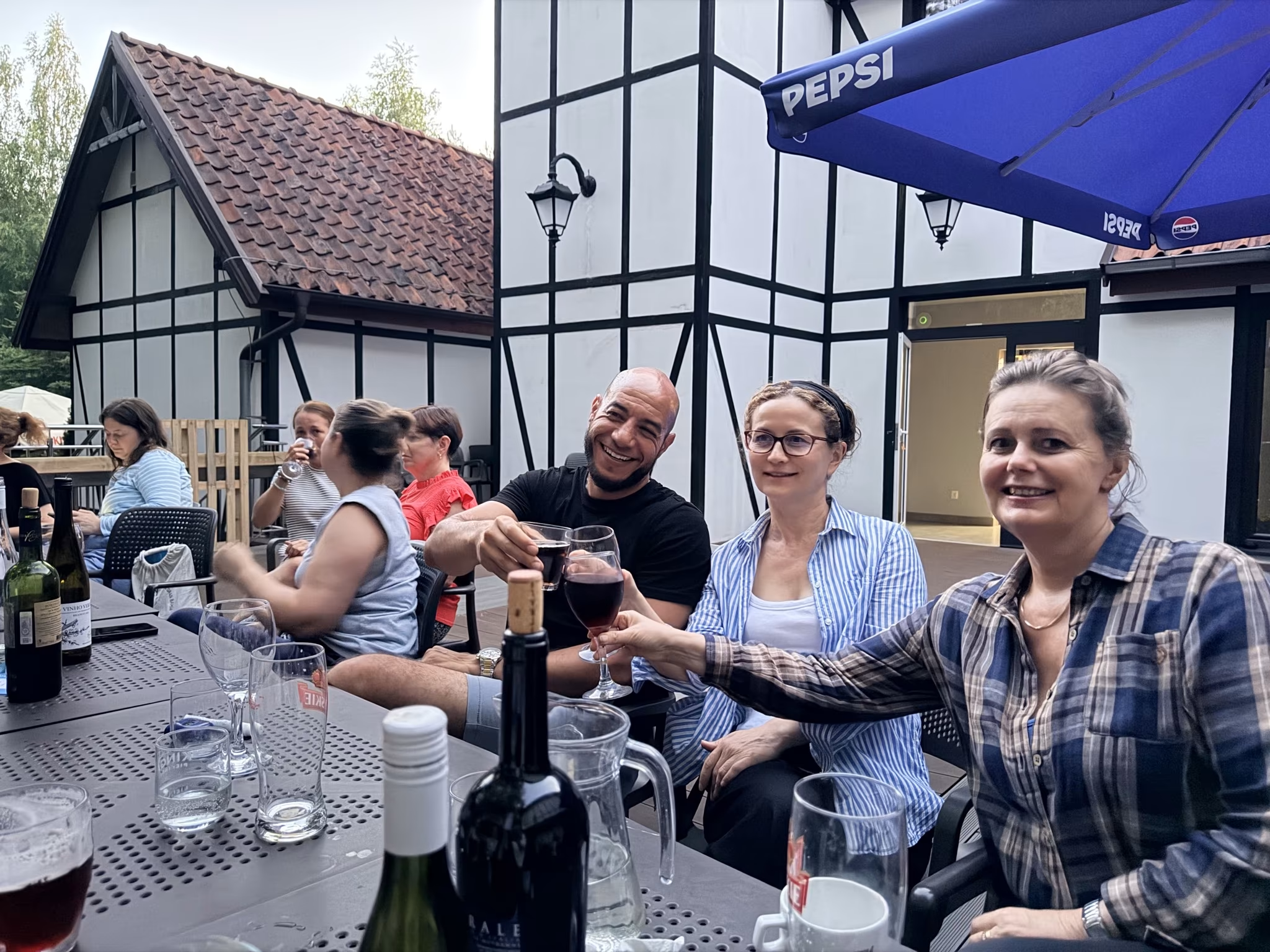
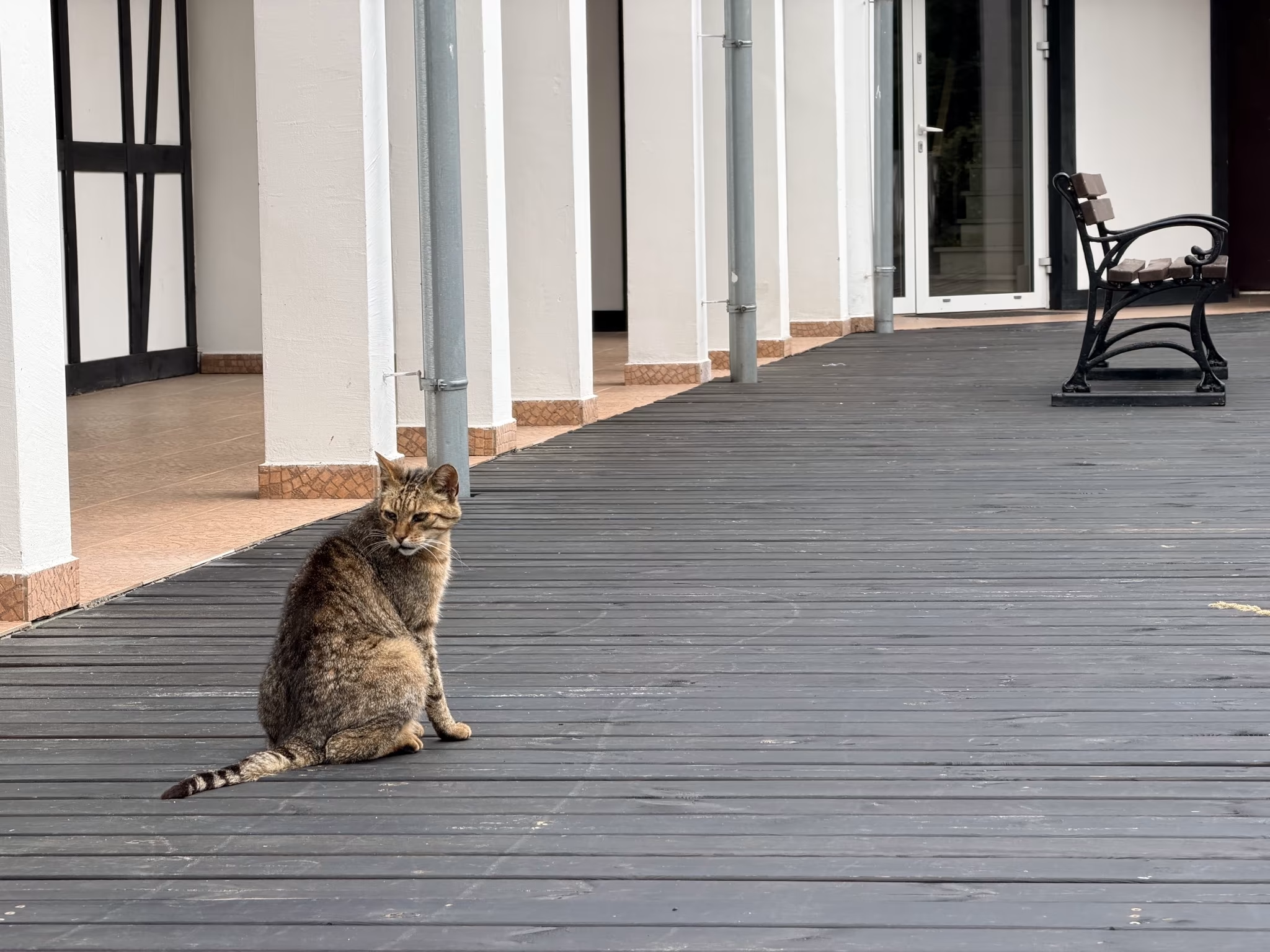
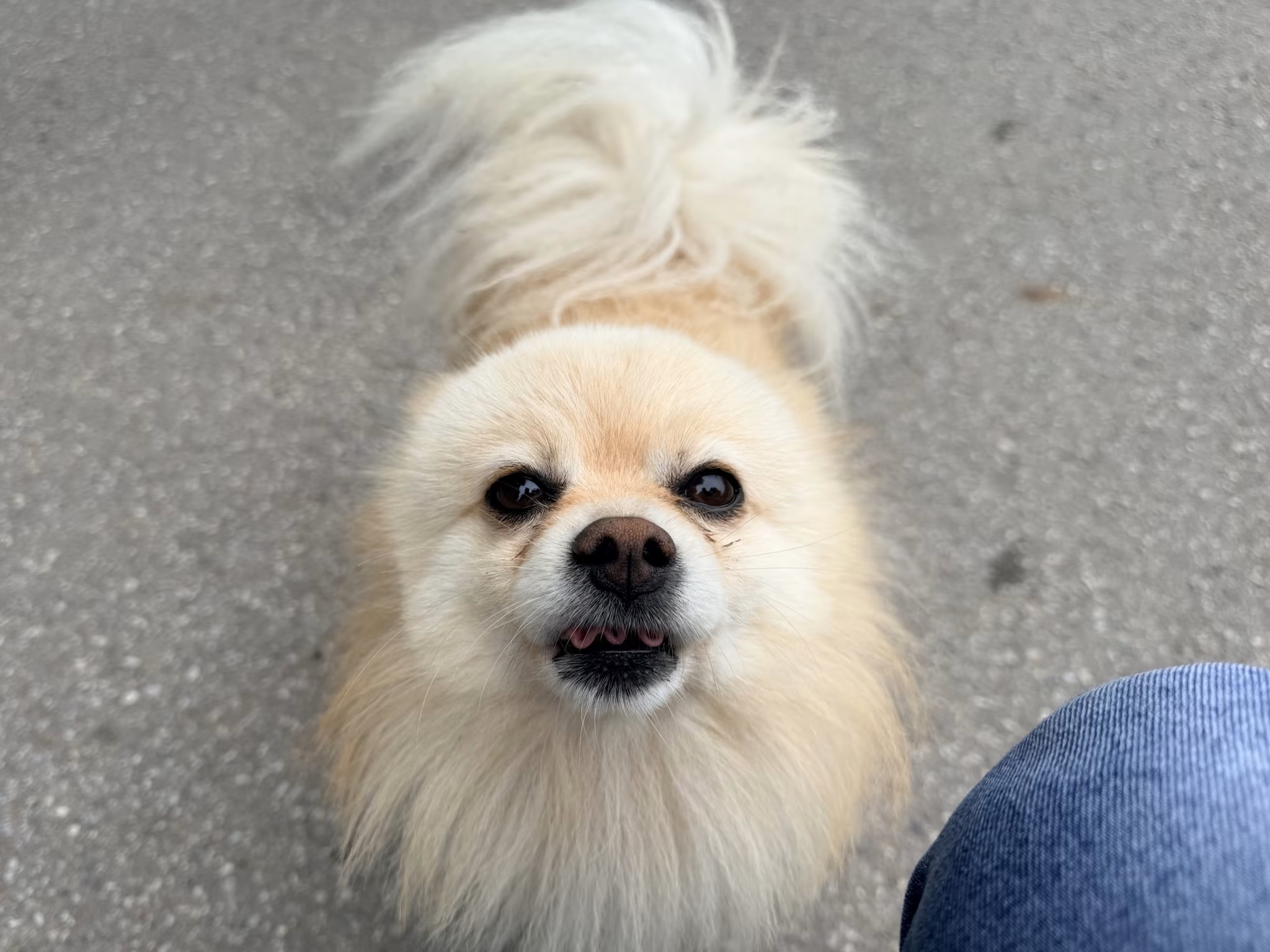
The grounds also came with a permanent welcoming committee: a cat who occupied the porch with the confidence of a shareholder, and a Pomeranian who circulated among the outdoor tables collecting attention.
I also got in a 23-minute gym session one afternoon—two sets each of lat pulldowns, bench press, squats, deadlifts, and curls. The rest of the days I did 50 push-ups, crunches, and air squats in the hotel room, which was enough to keep the machinery from seizing up during a week of sitting in chairs talking.
Kapuśniak, kasza, and a salad bar
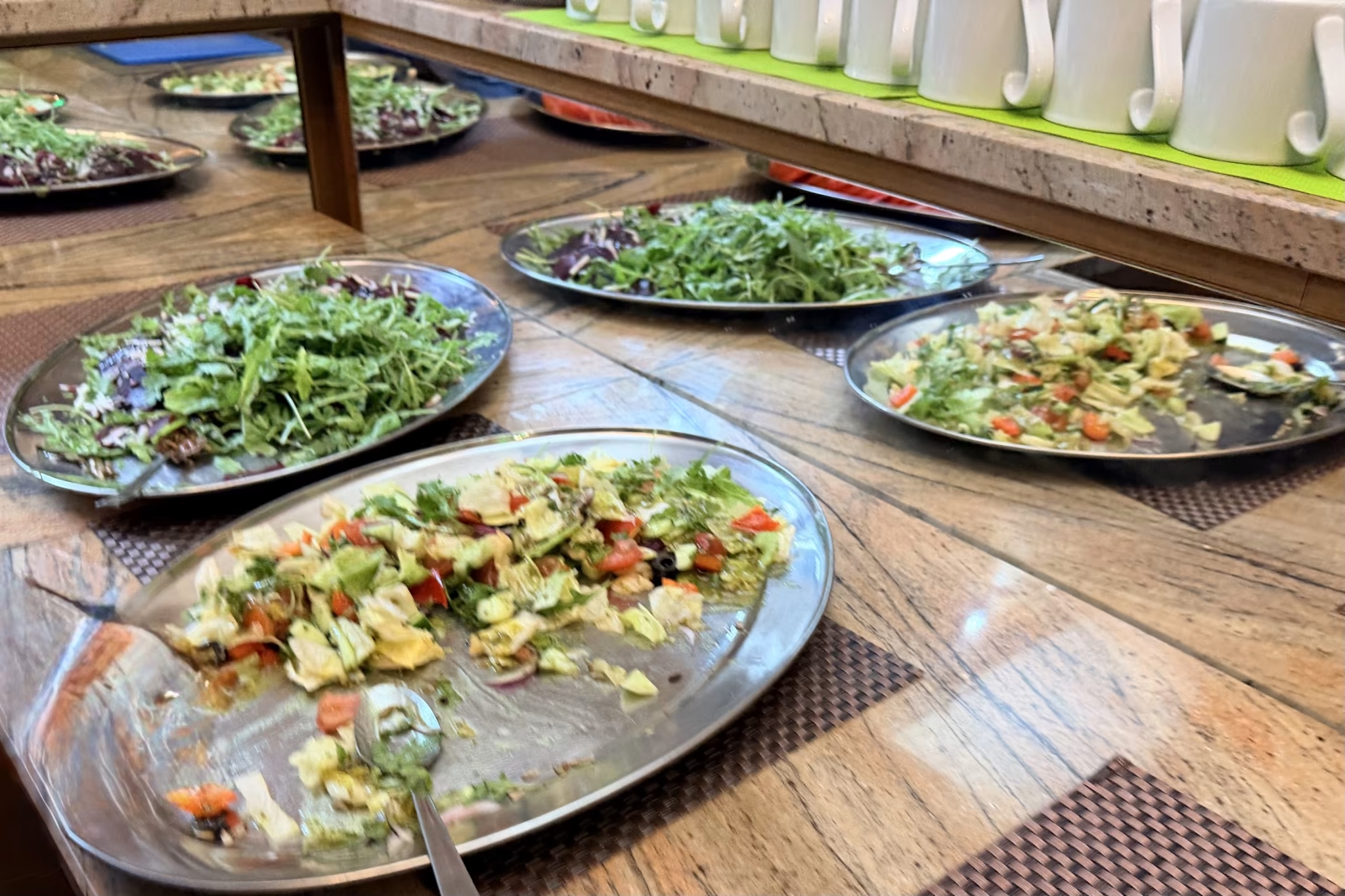
Food was the most litigated subject of the week. The consensus among participants was that it repeated itself. My position was that it was excellent, and I held this position alone, or nearly so, for one reason: the breakfast buffet had salad every single day.
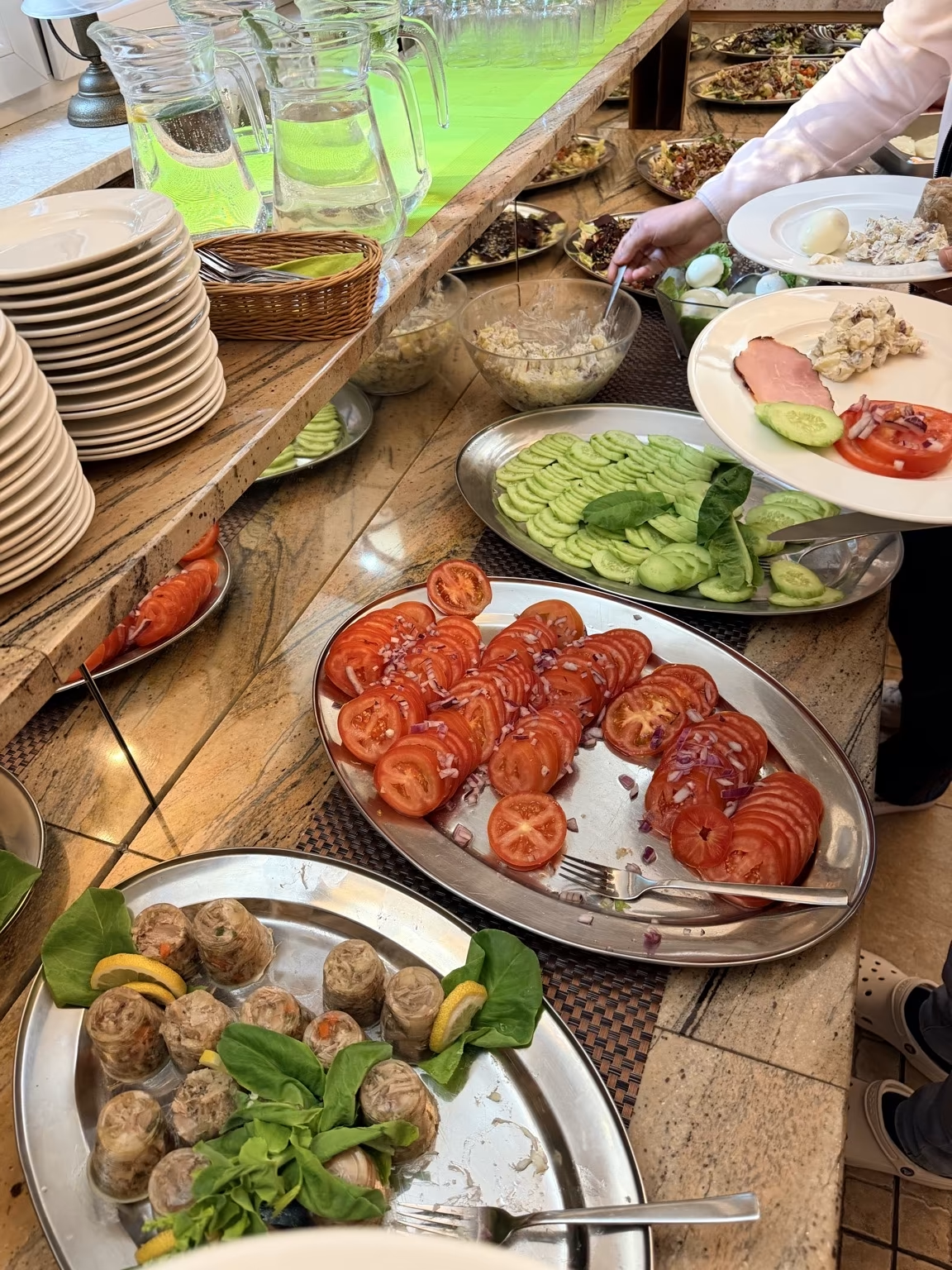
I almost invariably eat an enormous salad for breakfast at home. To find one waiting for me at 8:30 a.m. in rural Poland, unbidden, was the kind of coincidence that makes a person believe in a benevolent universe. Others were tapping out by Wednesday.
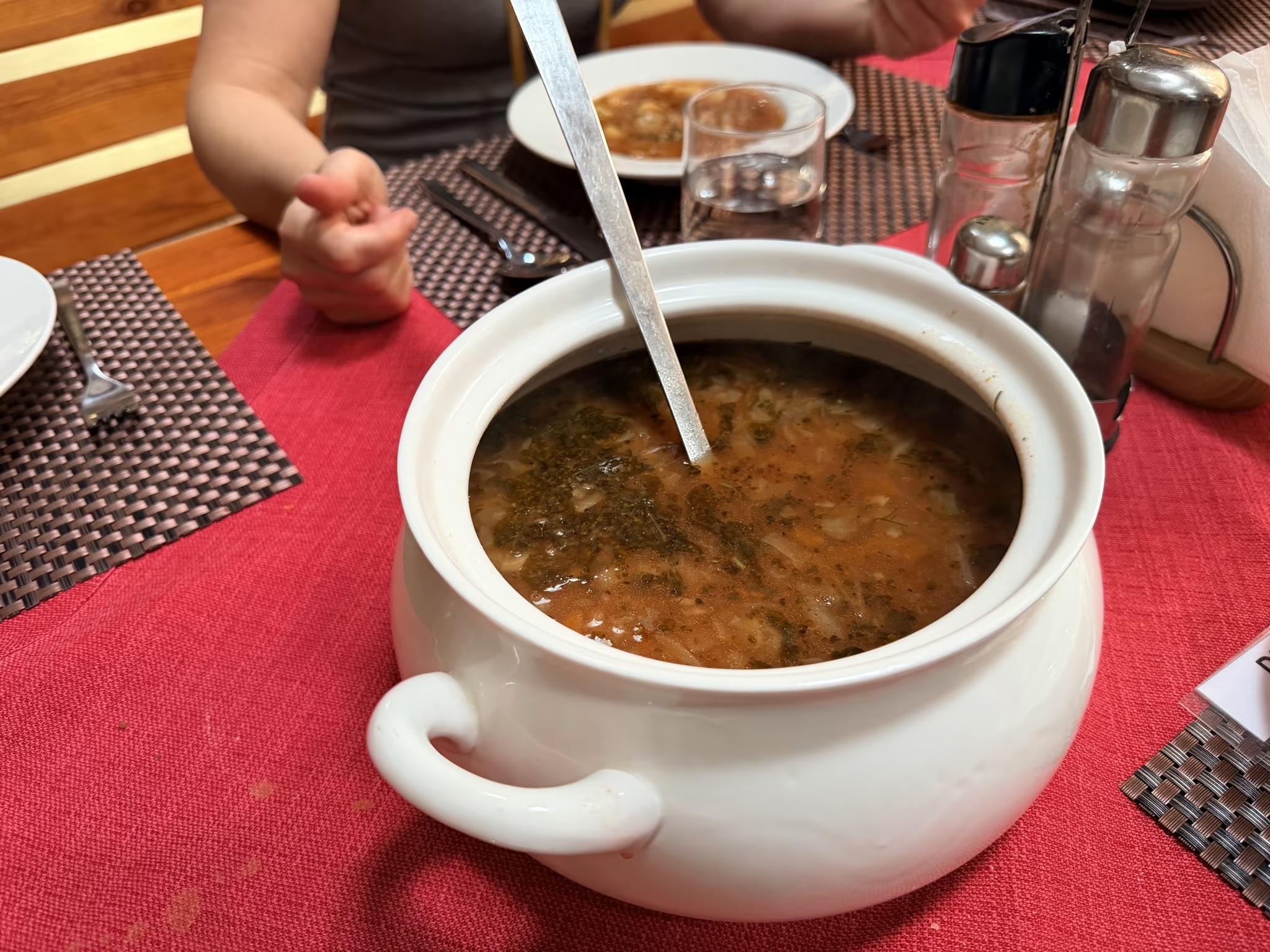
Lunch always led with soup: kapuśniak, the cabbage soup, or ogórkowa, the pickled cucumber one, or pomidorowa, tomato. This is a civilized way to run a country.
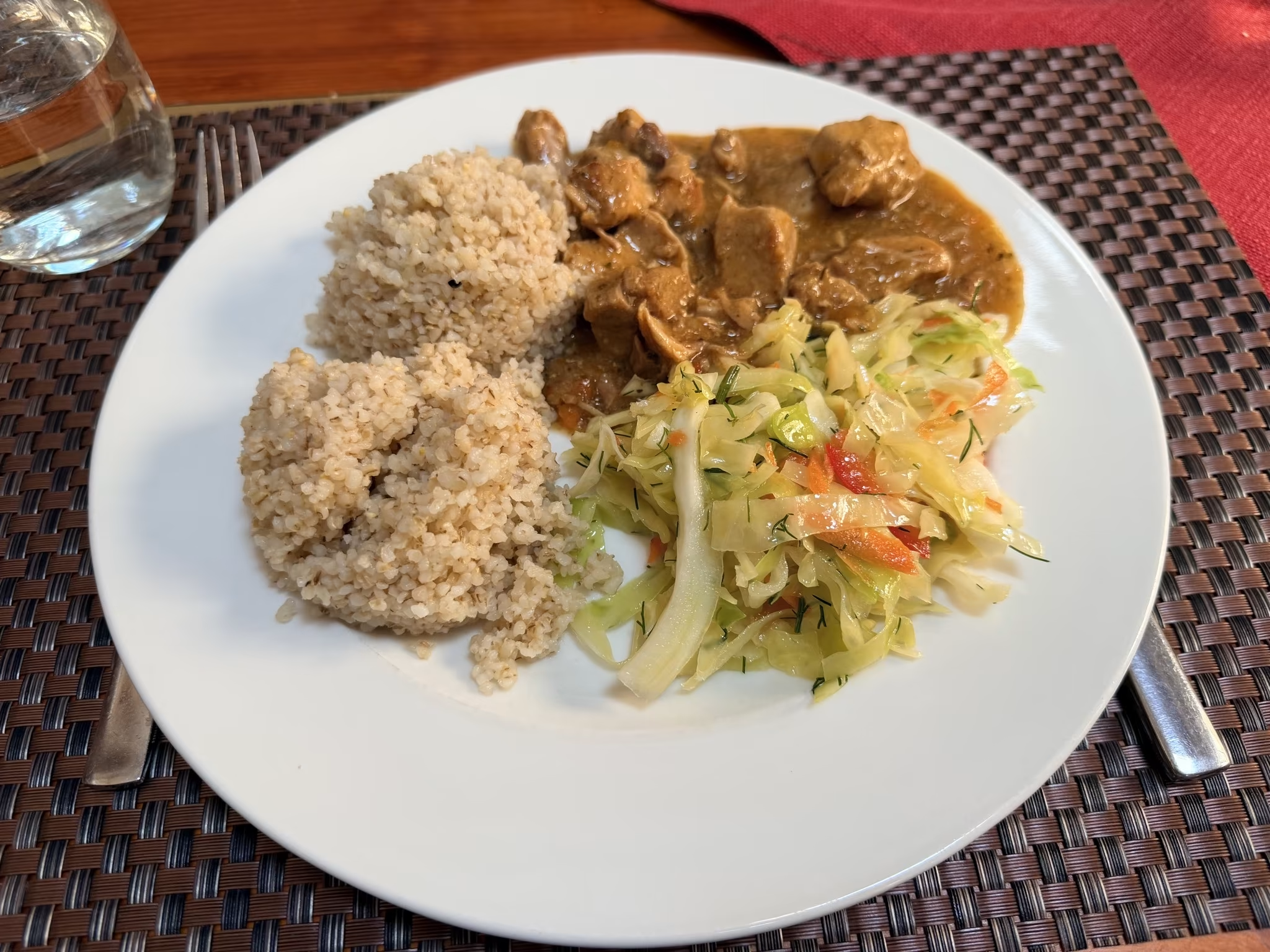
Then a main course, plated rather than buffet, in portions I’d generously call efficient. Kasza with goulash. Schabowy, the breaded pork chop. Karkówka. Pierogi. Kotlet mielony, a ground pork cutlet, with potatoes and beetroot. Naleśniki at breakfast, galareta if you were feeling brave, and a Jell-O-adjacent dessert in colors not found in nature.
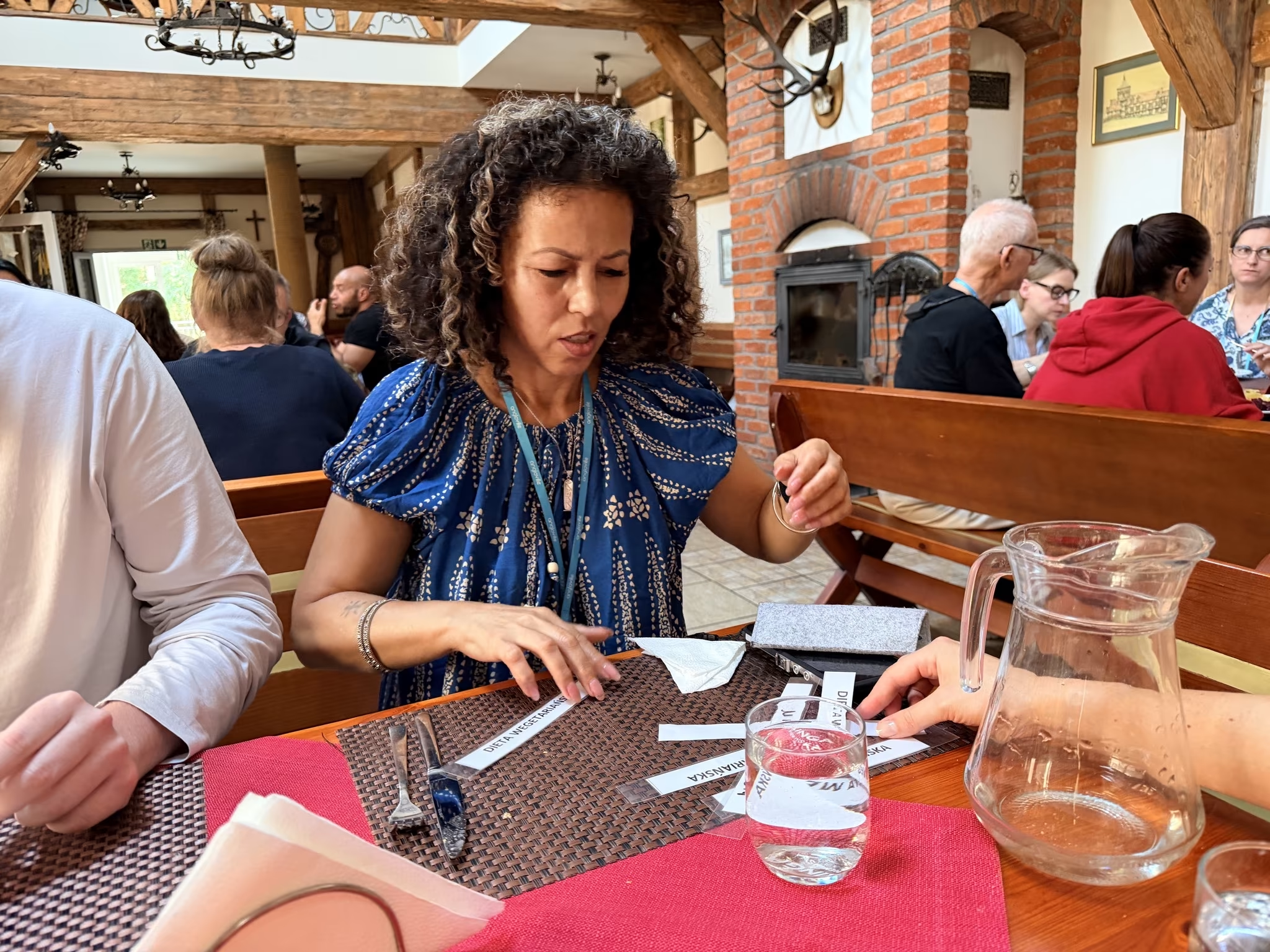
Four of our group were vegetarian or vegan, and the kitchen had a rocky first two days before all was sorted out. By midweek there were parallel plates coming out and the crisis had passed.
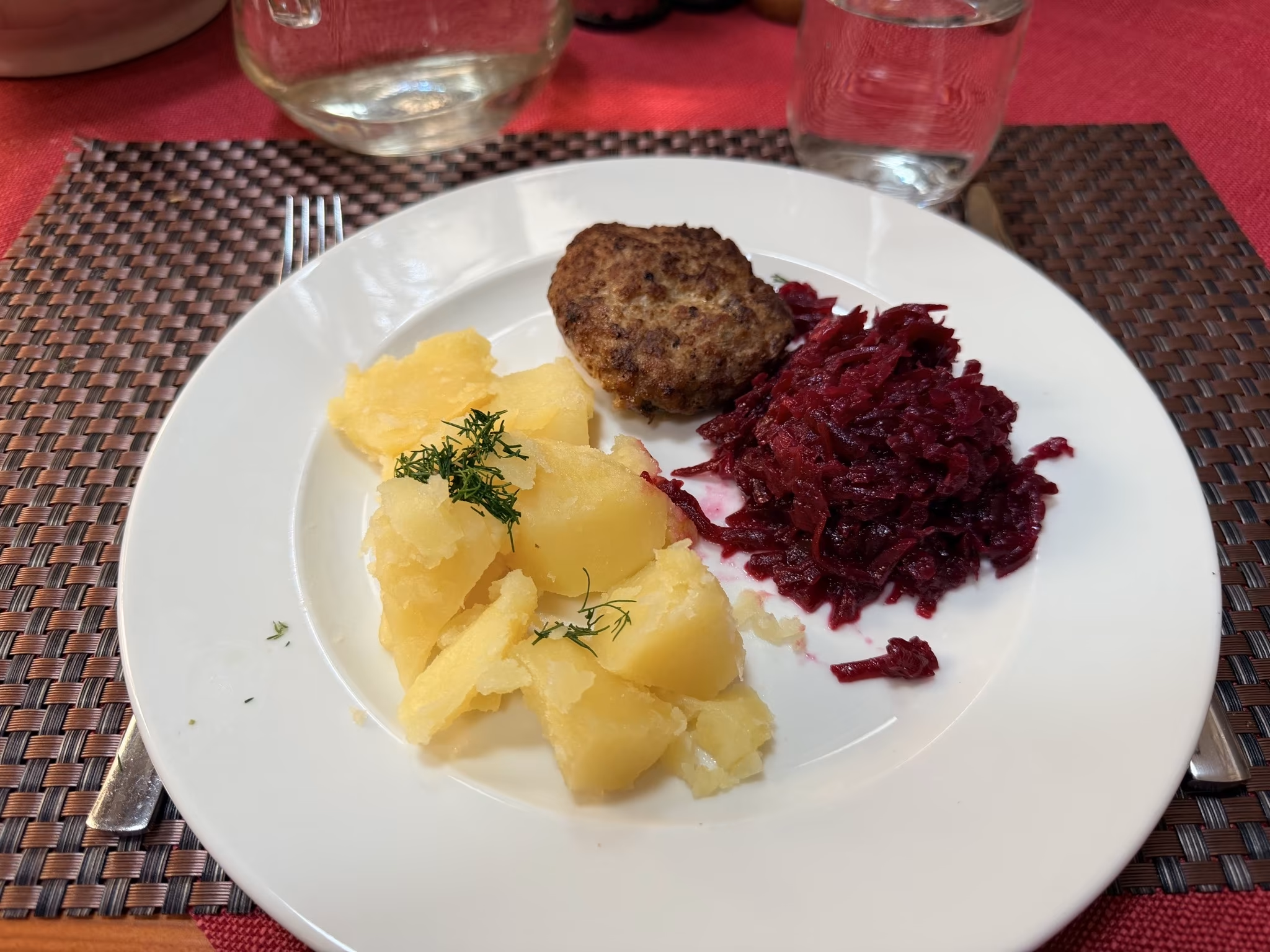
The final lunch was vegetable and meatball soup and nothing else. I had two and a half bowls and considered a third as it was quite delicious.
Four Annas and one impossible word
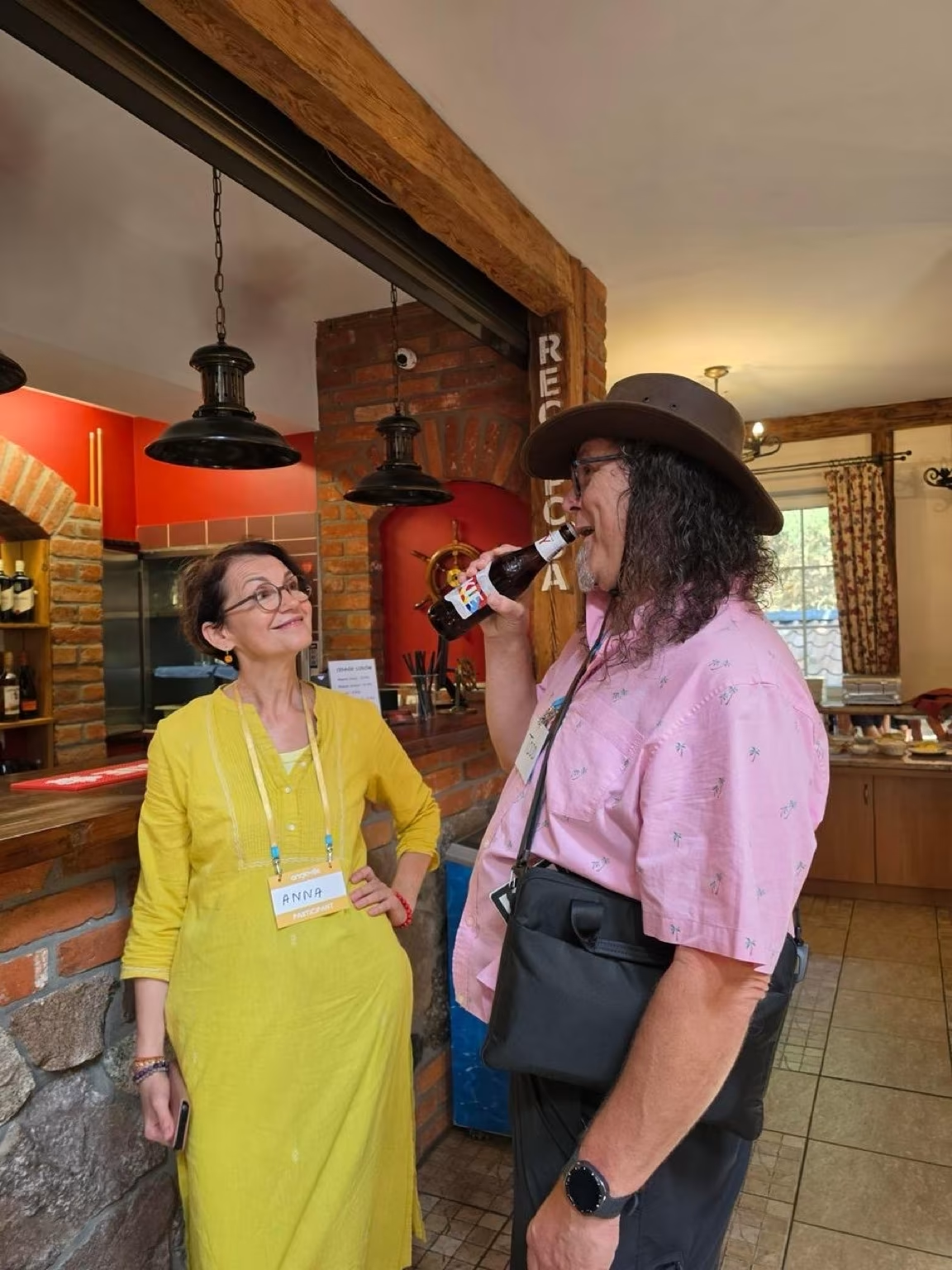
Here is a fact about our Polish contingent: four of them went by Ania, the diminutive of Anna, and all four wore nametags reading “Anna.”
I want to be clear that I understand how names work, that Anna is a common name, and that the odds of this were not astronomical. I want to be equally clear that by Wednesday I had developed a system of internal surnames—Anna B., Anna Kol., Anna Kon., Anna Ku.—and that I deployed it silently and constantly, like a man doing currency conversion in his head. There were also two Agnieszkas. I coped.
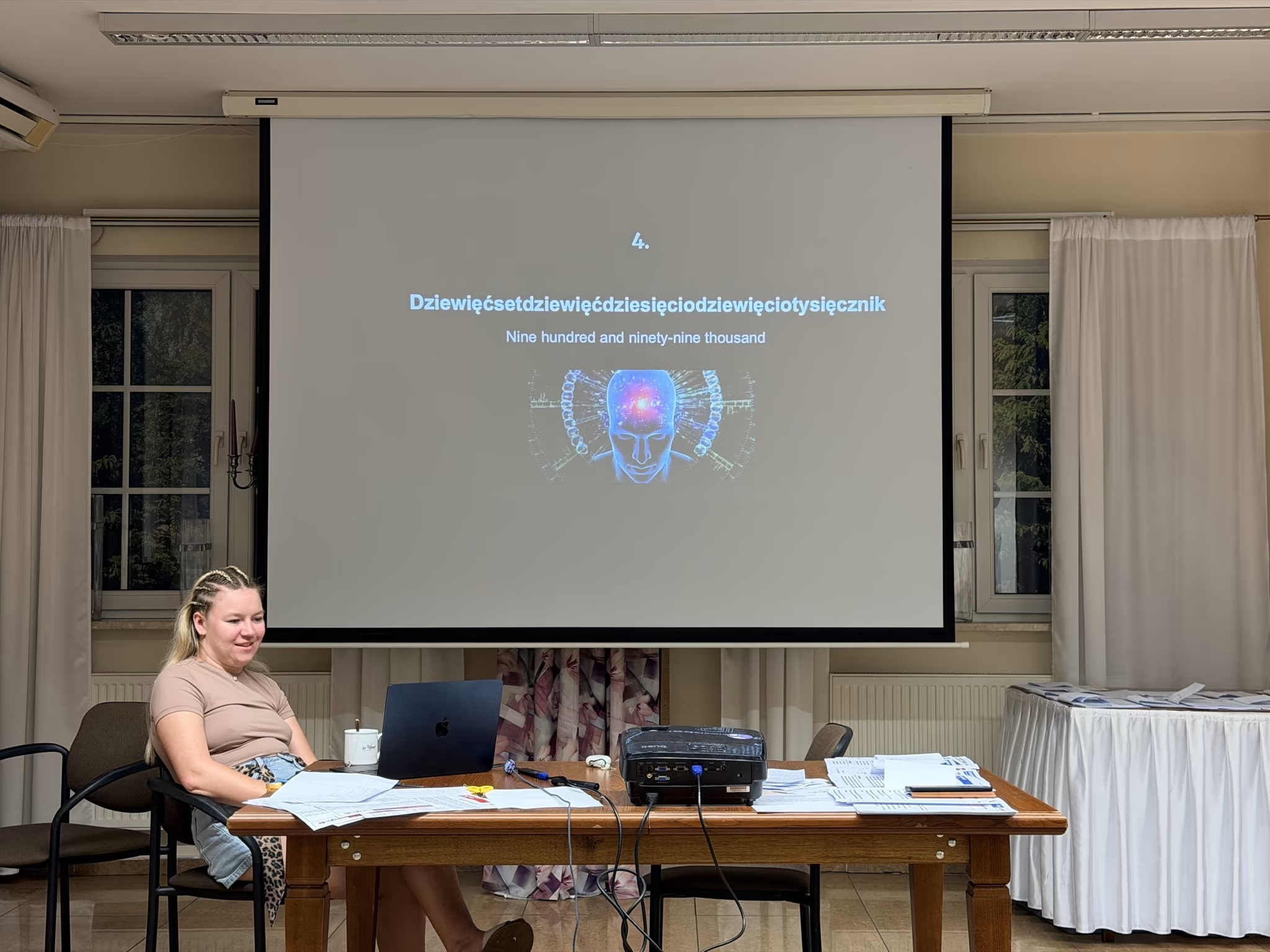
The language ran the other direction too. Ada, one of our Polish coordinators, wanted to prove a point about Polish, so she displayed out dziewięćsetdziewięćdziesięciodziewięciotysięcznik on a screen. Forty-nine letters. It means a mountain peak of 999,000 meters, which does not exist, and it is a standard Polish tongue twister, which is the part I found most telling. Other countries have tongue twisters about seashells. Poland has one that requires a running start.
Garlic mincers and Ice Scream
Wednesday afternoon brought the marketing exercise. Each team received a photograph of a product, and the task was to determine what the product was and then sell it to the room. The photographs were only semi-helpful by design.
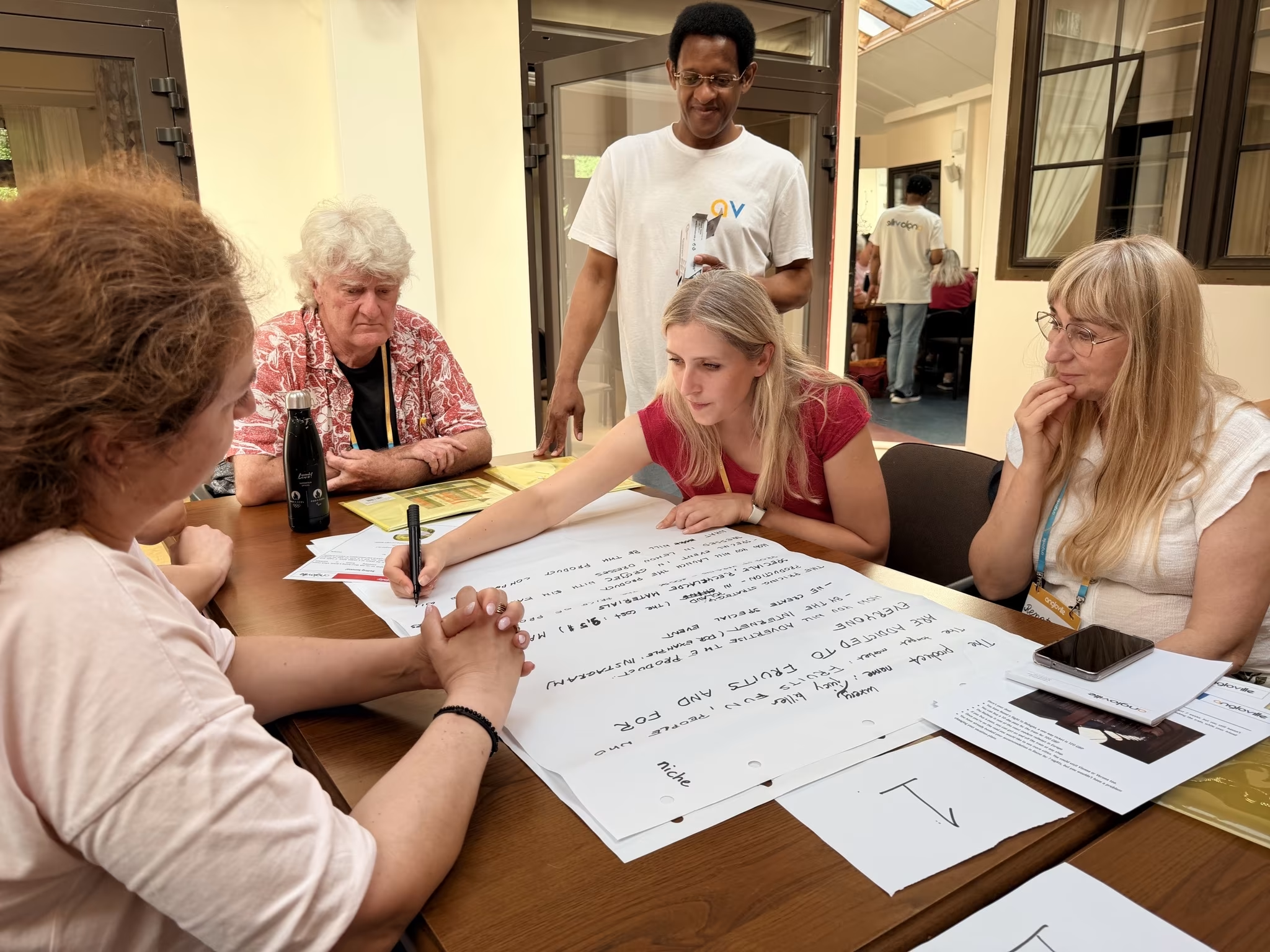
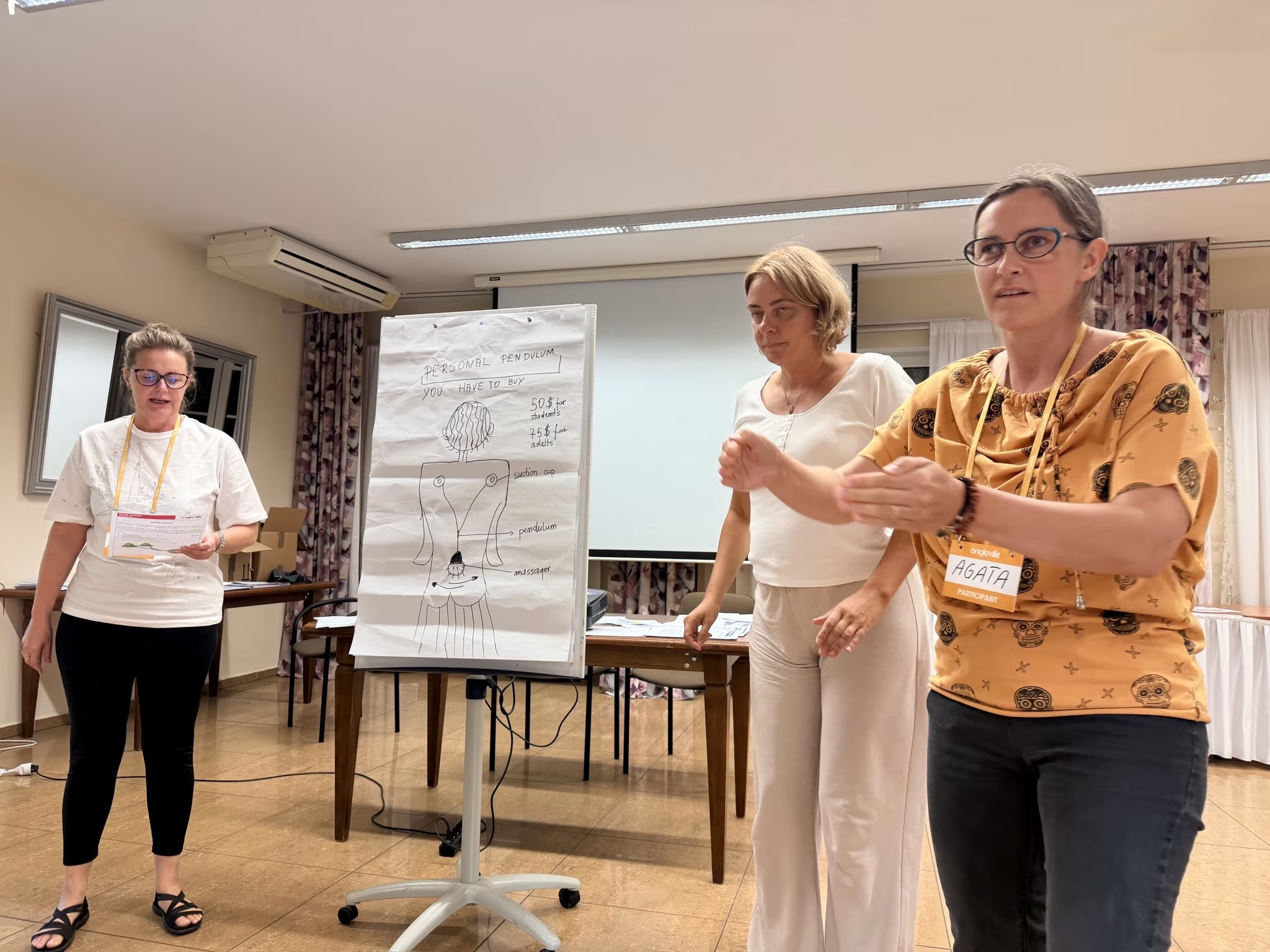
My team’s object was ambiguous enough that I proposed the strategy I consider foundational to modern commerce: source it from China for $2.99, sell it for considerably more. Madhuri objected that Polish consumers prefer domestic goods, which is a stronger argument than mine, so we pivoted to a premium Polish-made positioning at 49.99€. The reveal came, and the object was a garlic mincer. Our guess had been in the neighborhood, and our business plan, I maintain, remains sound.
Other teams fared better on branding. One produced “Ice Scream,” which I would buy. Another gave us The Personal Pendulum, a product whose function was explained very clearly. Maybe there would be two or three people in the world who would actually buy it.
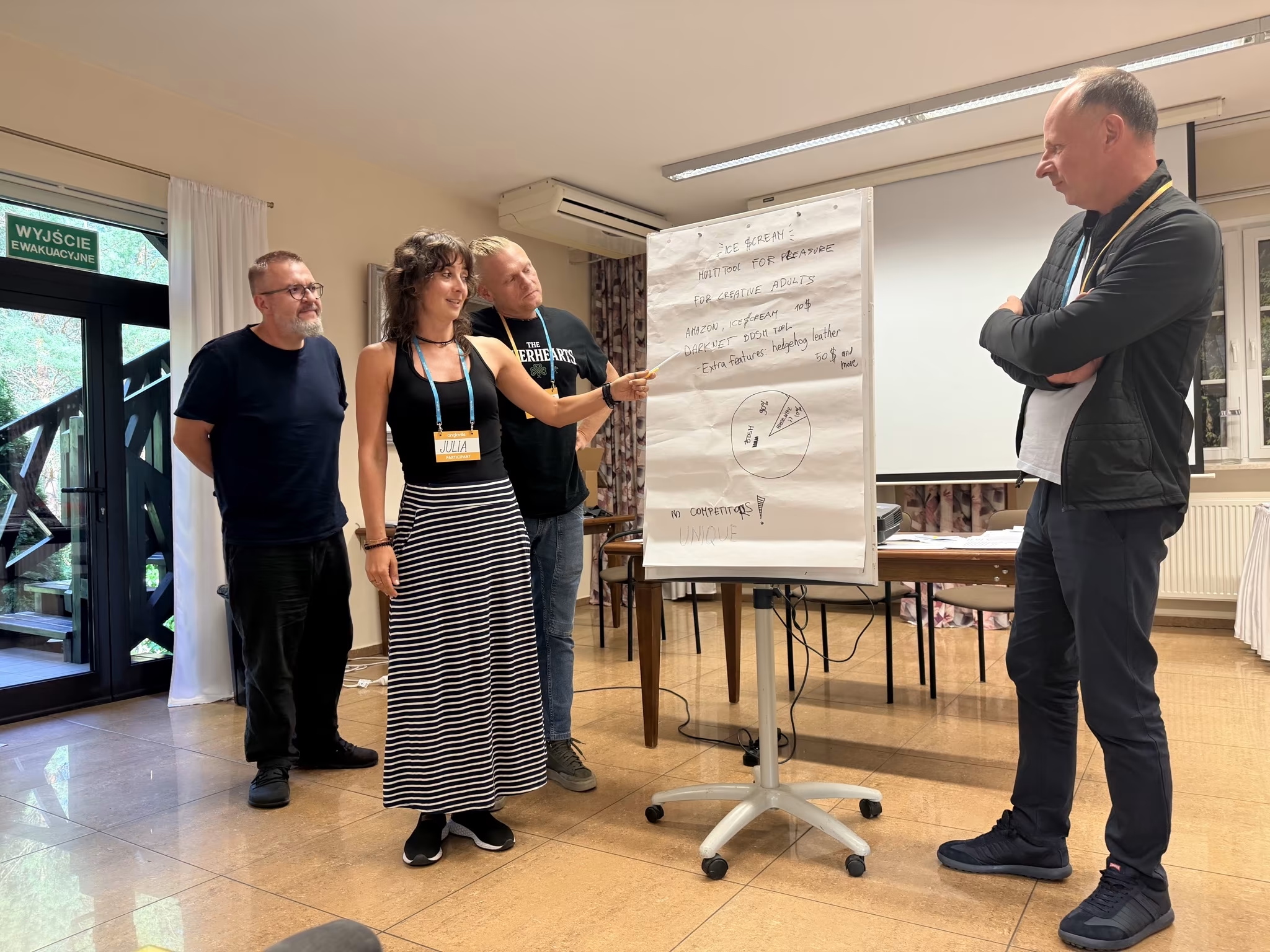
Theses presentations were delivered in a second language, on 10 minutes of preparation, to a room of strangers, with jokes. Amazing. I’ve watched worse pitches from people doing it in their native tongue for money.
The World Cup, buffered
The hotel televisions carried three channels, none of which had any intention of showing the World Cup semifinals. This was a problem, because the World Cup semifinals were happening. Fortunately, I had an iPad Pro and a stubborn streak.
Tuesday’s solution was a VPN pointed at Australia, SBS On Demand, and my iPad connected to the projector. The picture arrived in stutters. We caught Spain scoring, missed some of the middle, and pieced the rest together by consensus. Spain beat France 2-0.
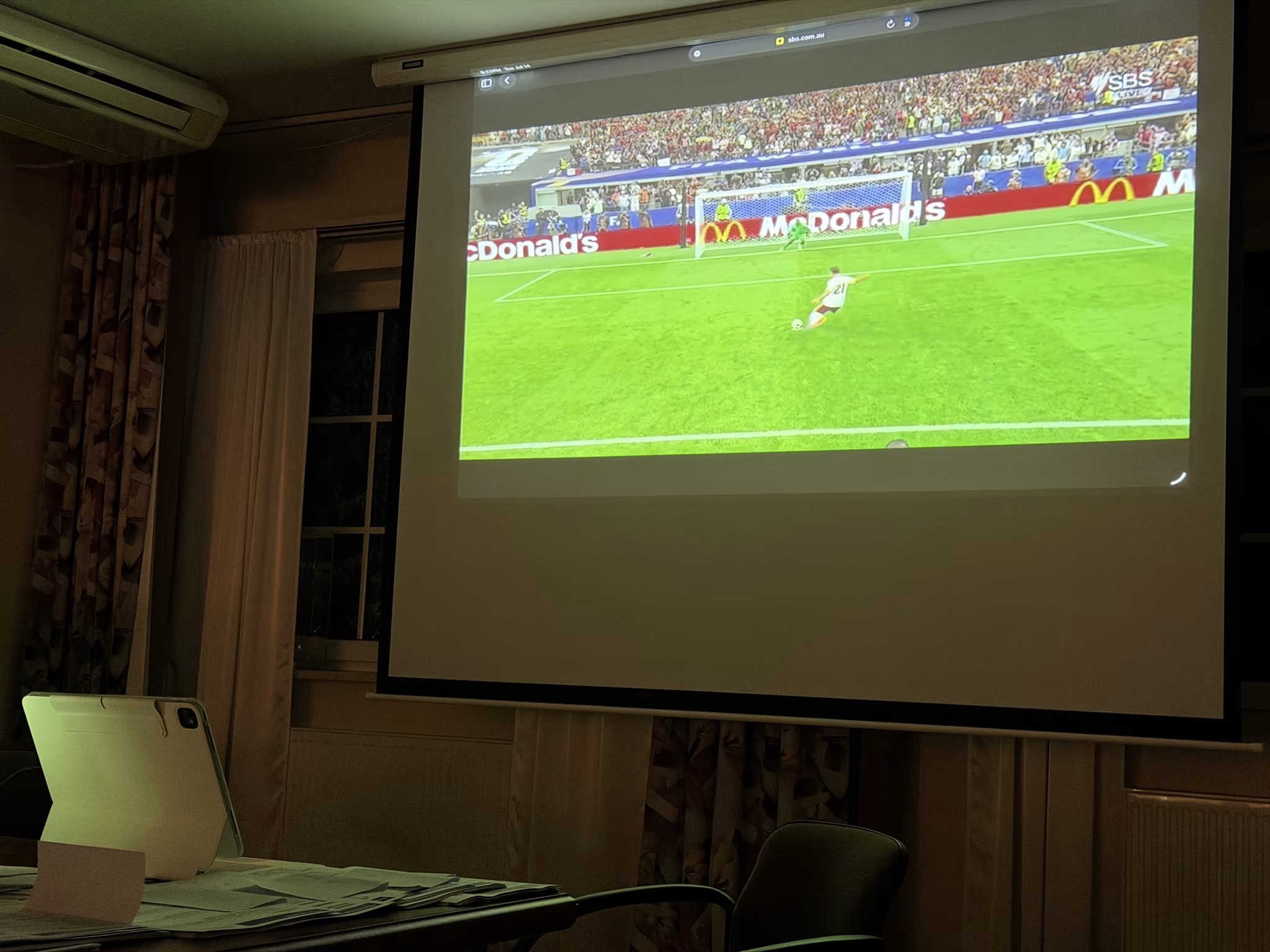
Wednesday I tried TVP directly, no VPN, on the theory that a Polish stream on Polish internet would behave. It buffered just as badly. Worse, one of the Polish participants was watching on a Samsung phone on the same Wi-Fi with barely any lag at all, roughly thirty seconds ahead of my projection, which turned him into an involuntary spoiler machine. His phone couldn’t drive the projector, so we were stuck with my feed and his facial expressions.
England went ahead ten minutes into the second half and held it until the 85th, when Argentina equalized. Two minutes into stoppage time they scored again. I learned all of this thirty seconds after everyone sitting near the Samsung.
The Sunday after Angloville, Spain went on to beat Argentina 1-0 in the final on July 19, in extra time, on a goal in the 106th minute. I watched that one on a proper screen with proper internet in Spain, and it was not nearly as fun.
Presentation day
Thursday was the point of the whole week. Each Polish participant gave a formal presentation in English, eighteen of them across three sessions from 3:30 to 6:30 p.m. Most worked from scripts. Justyna barely touched hers.
The range was extraordinary. Grzegorz, born in 1974, described growing up in communist Poland: one telephone in the whole town, and a Fiat 126 that qualified as a household milestone. Aneta talked about her work supporting blind and visually impaired people, and the room spontaneously started naming musicians. Anna Kol. presented on ice swimming and the Wim Hof method, then came back in a later session to talk about crystal singing bowls and led us through a breathing exercise. Julia explained what it takes to do makeup for touring musicians—fifteen-hour days, constant travel, and far more fake blood and fake bruises than glamour.
Anna B.’s laptop refused to talk to the projector and she got bumped to the second session, where she told us about her garden and the two trees that disappeared from it. The culprit was a beaver. Beavers were wiped out in Poland entirely, reintroduced starting in the 1940s, and are now estimated in the six figures—well over 100,000, with sources disagreeing on how far over. The government compensates for the damage. Anna seemed to have made peace with the arrangement.
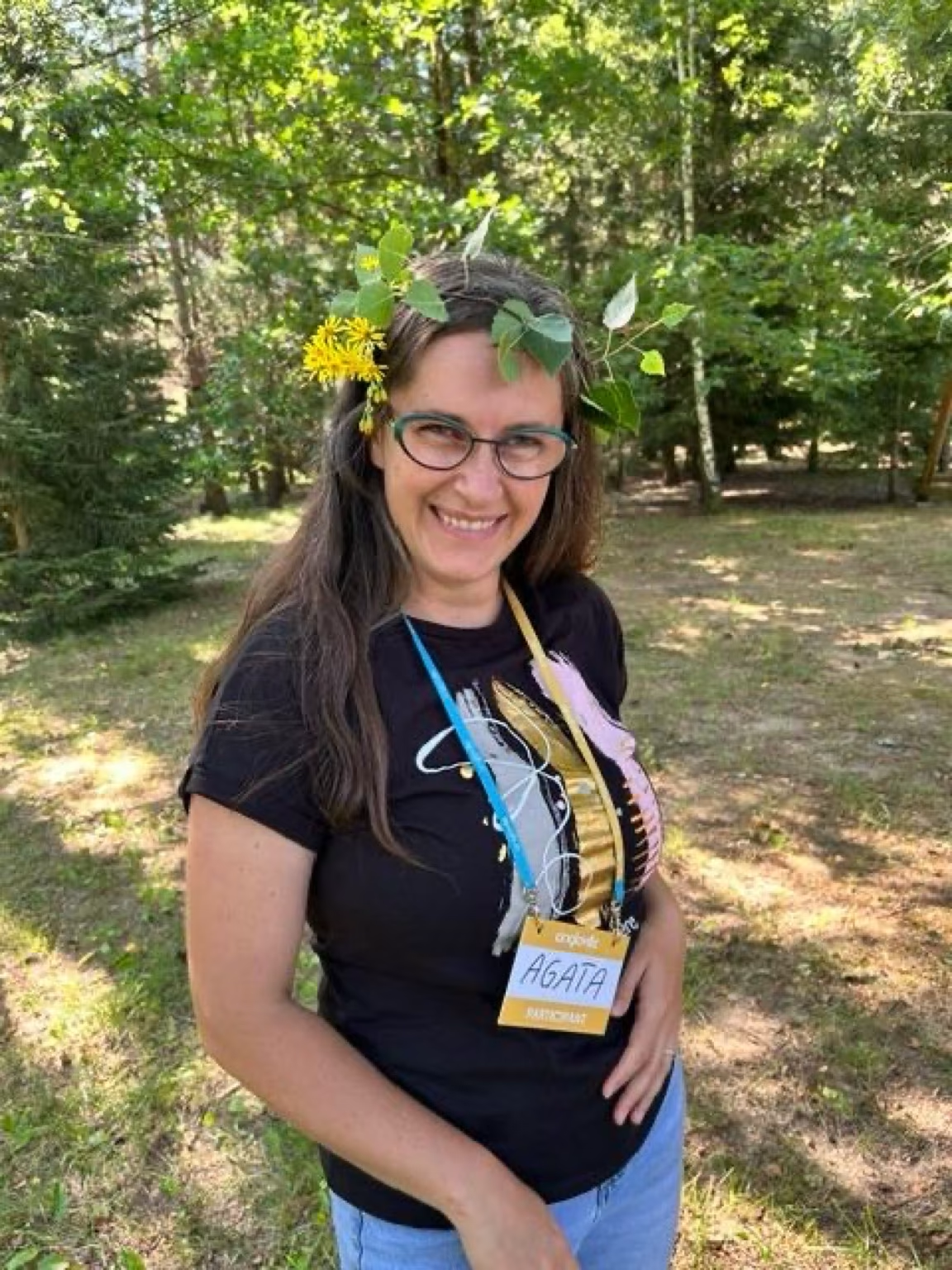
Tomasz, who works in senior management at a Polish confectionery company, gave a presentation titled “Sweets for the Sweet” and walked us through Toffifee, Merci, Knoppers, and Mamba, plus the relationship between oil prices and cocoa prices. Agata described the family business she’s run since 1998 importing artificial plants from China, and mentioned—almost in passing—that she’d written a book called Unskilled Sales. Sebastian introduced us to Ozzy the dog and Fibi the cat. Renata did flamenco. Konrad made the case for basketball. Magda’s thesis was that it’s never too late to learn anything, which she was in the act of demonstrating.
That evening Eric, one of the international participants, gave a lecture on the historical shifts in English vowels. Then another IP—Eric’s son Michael—recited Tim Minchin’s “Storm”—a nine-and-a-half-minute beat poem—entirely from memory. He’d learned it fifteen years earlier doing theater and never let it go. Andy observed afterward that he had never heard that much profanity at an Angloville.
Certificates, a group photo, and a bus back
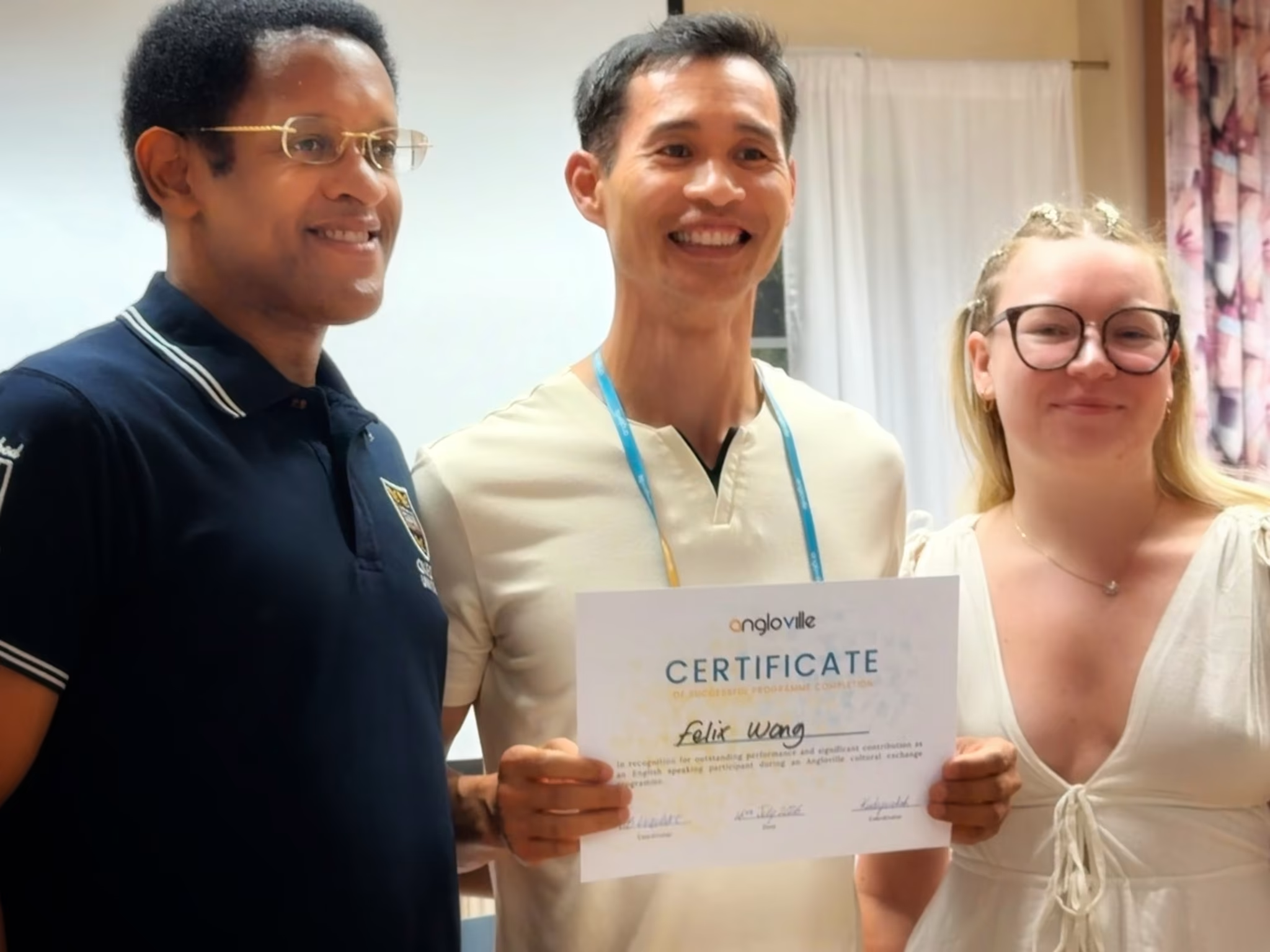
We got our certificates Thursday evening, along with feedback forms to fill out for the participants we’d mentored. Mine was Justyna.
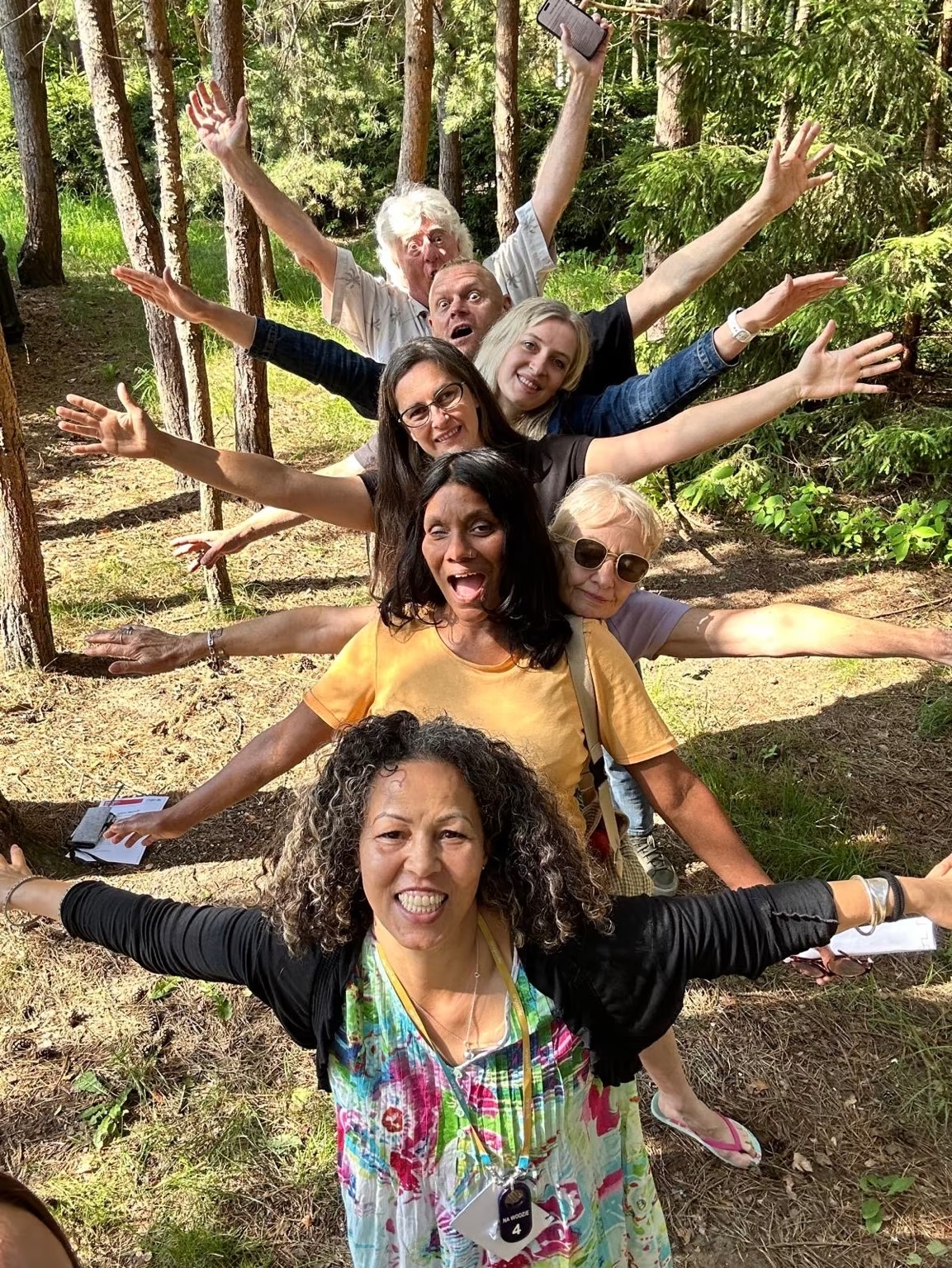
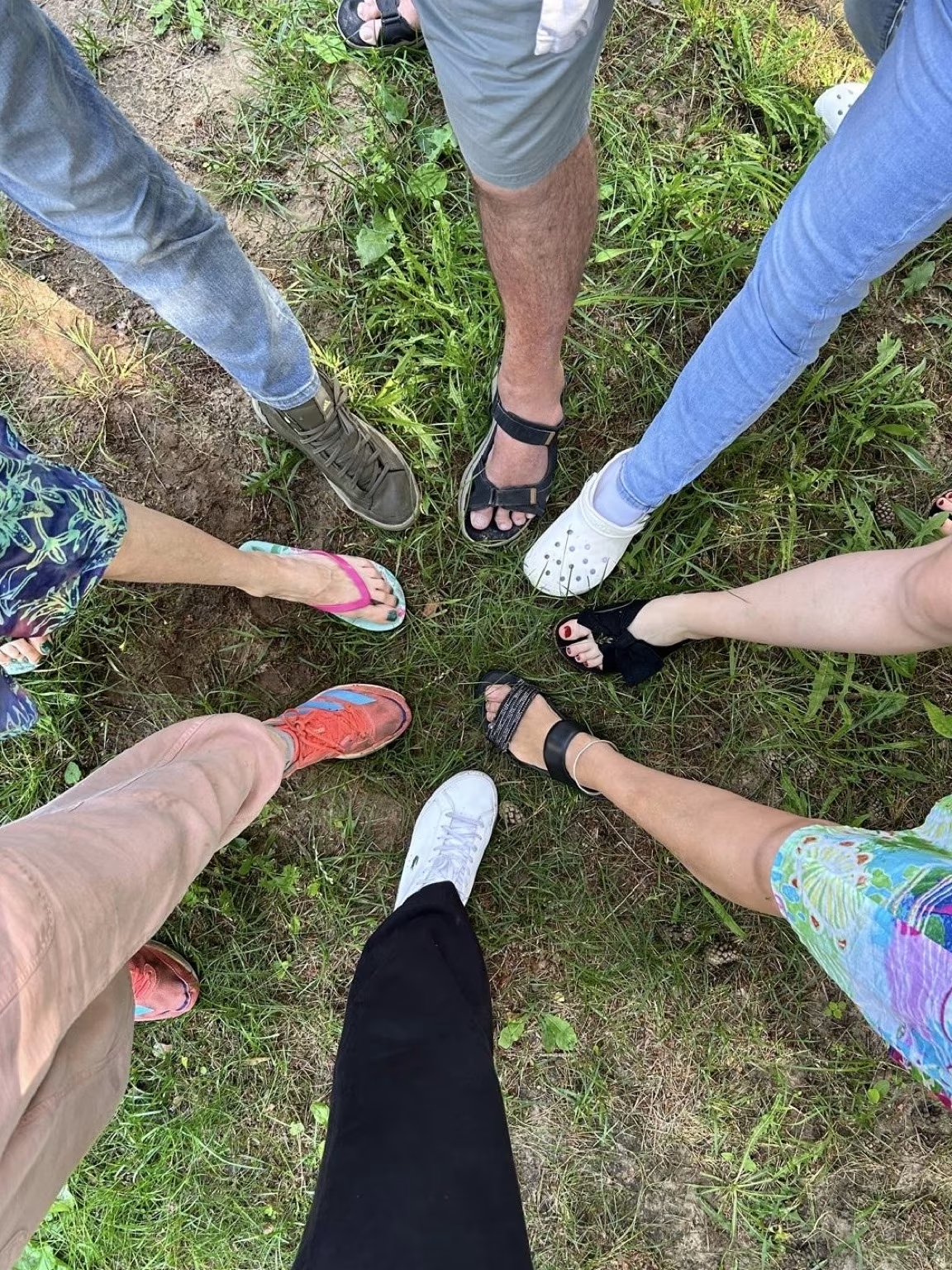
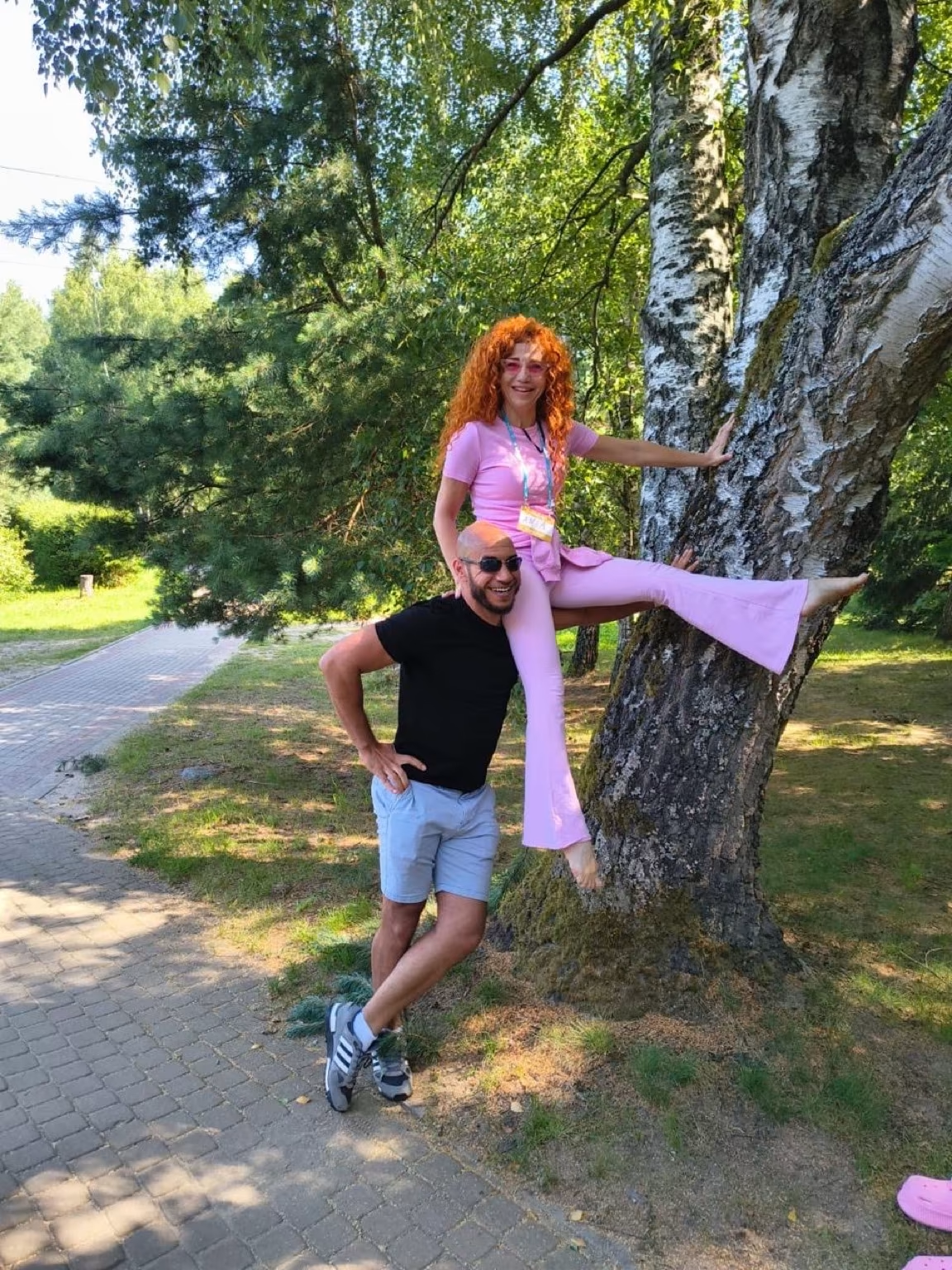
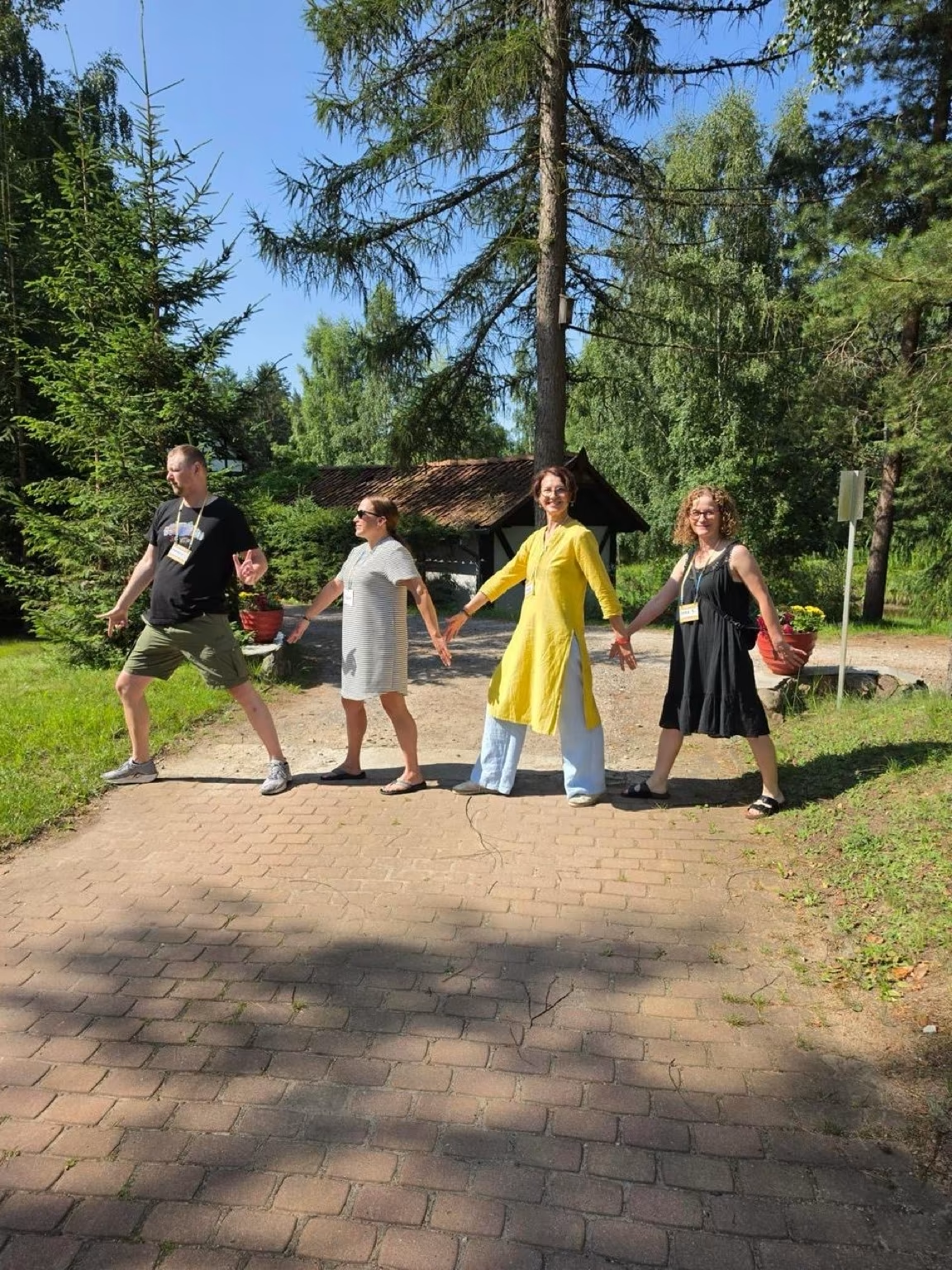
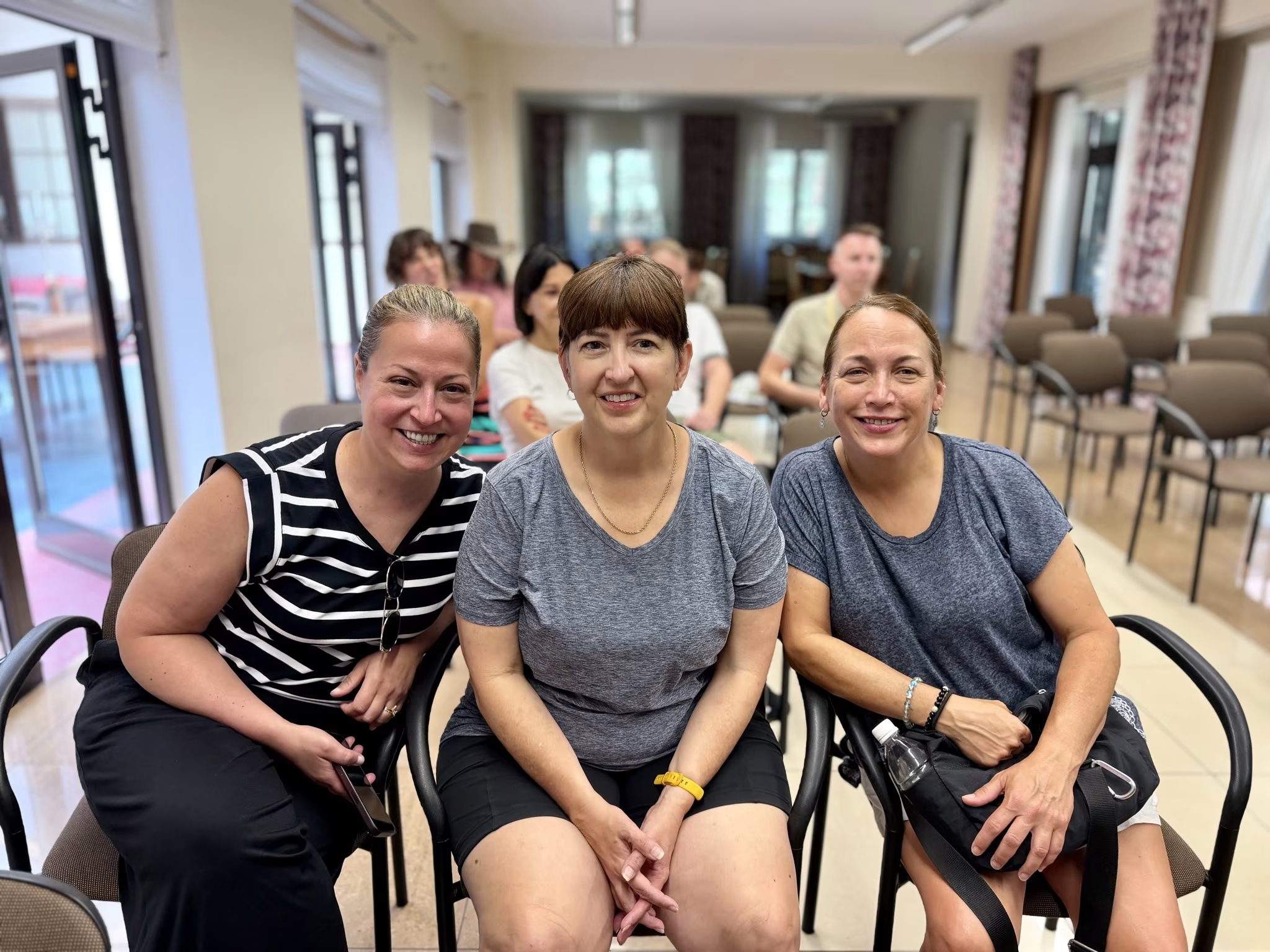
Friday morning’s activity was fifty minutes of unstructured conversation with anyone you liked. I went for a walk with Żaneta, whose English was strong under a formidable accent, and whose company was easy. At 10:30 a.m. we assembled outside for the group photo, and Andy had it distributed before we’d finished walking back inside. He followed it with a slideshow of Thursday morning’s photo session, which I’d missed due to scheduled free time, and which appears to have involved a great deal of posing on forest paths.
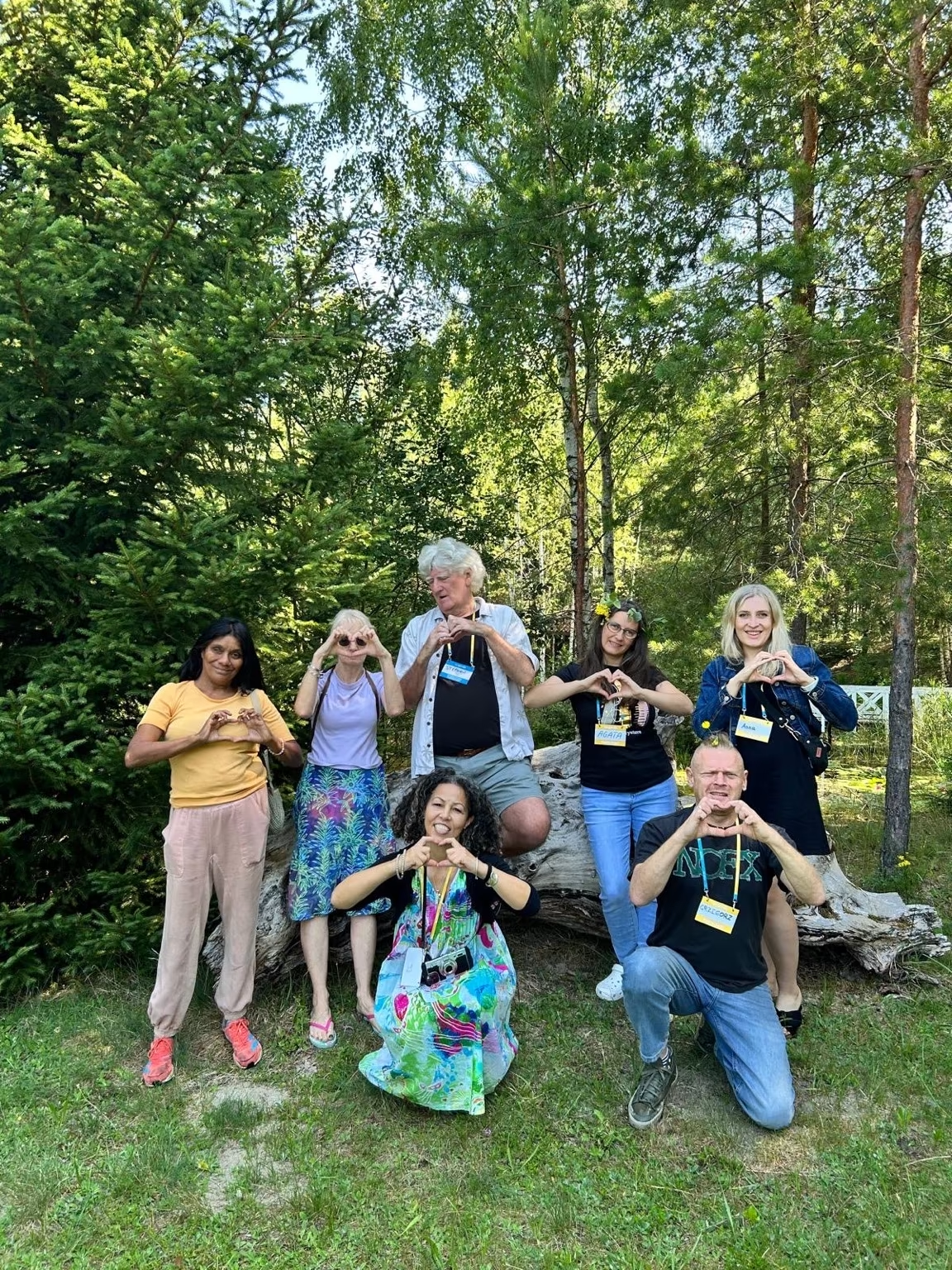
After lunch, it was time to load the bus. An accident on the road turned the return trip into a longer one. Anna Ku. moved up to chat with me, which improved it considerably. She has her first half marathon on September 5 and I’ve promised to check in on her training.
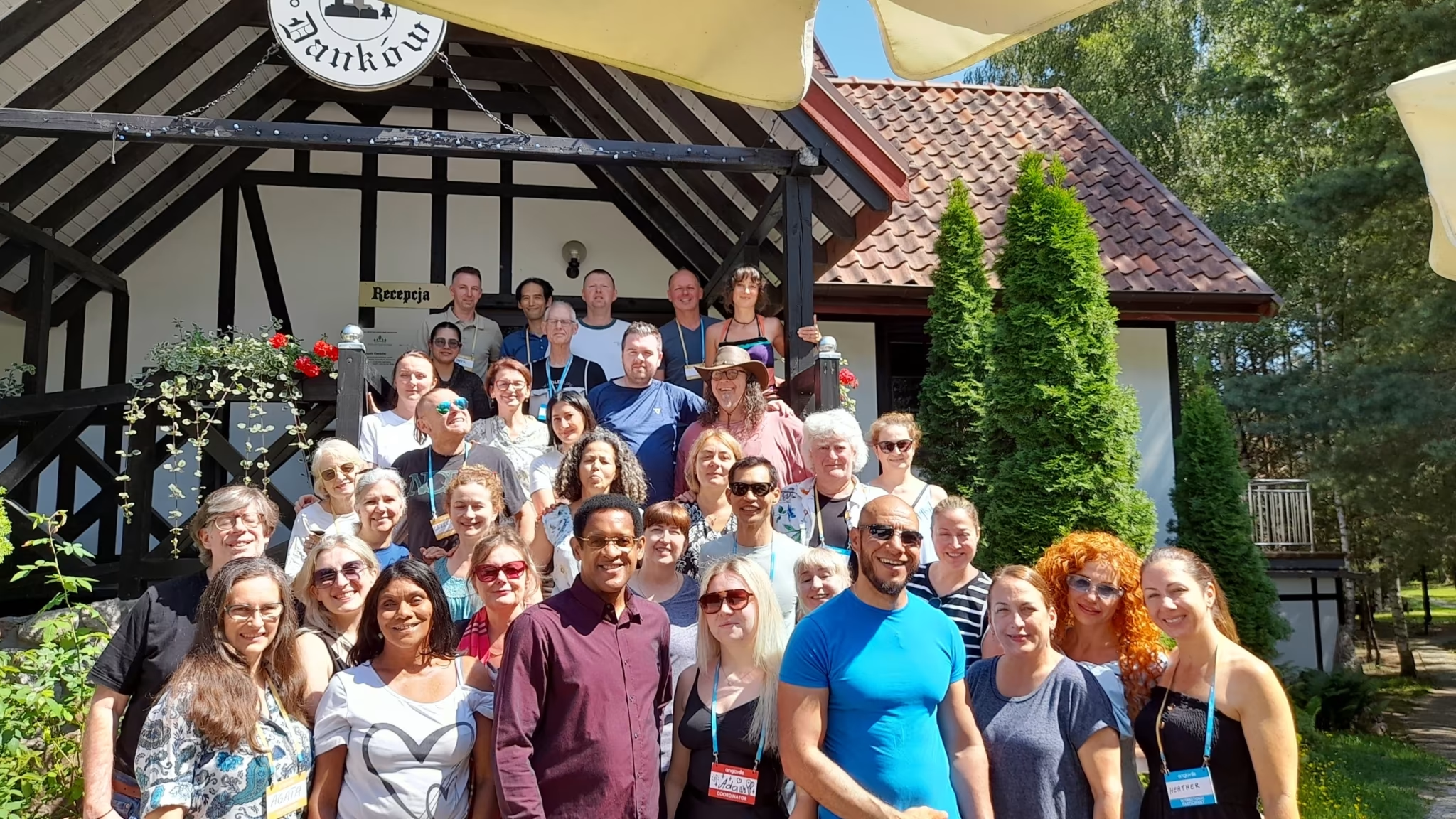
We got into Warsaw around 4:00 p.m. That evening I met a few of the group in Old Town for pierogi and a very slow waiter, and walked out to the multimedia fountains afterward, but that’s a separate post.
What I keep returning to is the ratio. Six days, room and board, a forest, four Annas, one garlic mincer, two badly buffered World Cup semifinals, and eighteen people who stood up in front of a room and gave a presentation in a language they were still building. My contribution was showing up and talking, which is the thing I’d have been doing anyway.
It was one of the most enjoyable weeks I’ve had all year, and I say that as someone who spends a lot of weeks doing things specifically designed to be enjoyable. If you speak English and you have a week, Angloville is an absurd bargain, a very worthwhile volunteer “vacation.” Just bring your own coffee.