
What I Learned Biking in Girona with Electronic Shifting and Ray-Ban Meta Glasses

The plan had been to ride 75 kilometers from Girona to Manlleu to catch the Tour de France passing through on Stage 3, then ride the 75 kilometers back. Then I checked the forecast: a high of 37°C, a UV index of 9, and enough climbing between here and there to make the whole exercise feel less like fandom and more like self-punishment. Race organizers were also asking fans to stay away from the final 40 kilometers of the course because of nearby wildfires.
Spending a few hours in the saddle during the cooler morning, then riding back to an air-conditioned hotel room to watch the Tour de France stage on Spanish TV, suddenly sounded like the smarter plan. So that’s what I did.
Electronic Shifting and the Bianchi from Bike Rent Girona
I’d done all the paperwork before I ever left Colorado. Bike Rent Girona let me specify everything online in advance—a 50€ road bike, SPD pedals, a Garmin mount, my seat height, a 5€ helmet—so that all I had to do on the ground was ring a doorbell, walk in, and wheel out a bike. No shop browsing, no fitting session, no small talk. I appreciated the efficiency of a business that does exactly one thing.
That one thing turned out to be a celeste-colored Bianchi Sprint, and I ended up on a 55 cm frame, which surprised me since I normally ride a 53 or 54. It fit fine anyway—a little stretched out from the longer top tube, but the stack was tall enough, thanks to a small tower of spacers under the stem, that I never felt like I was overreaching for the bars.
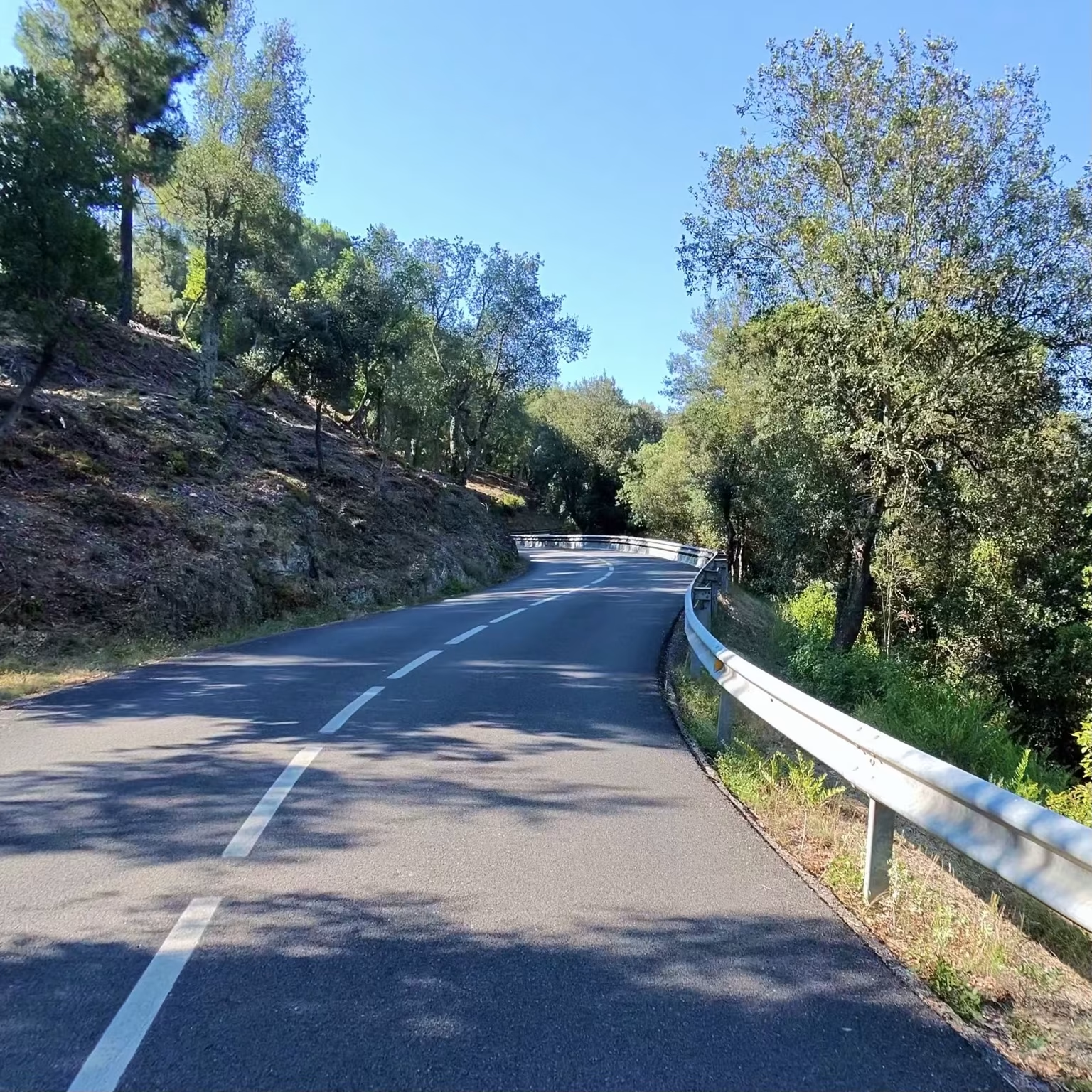
Instead of the full Hincapie Loop, I rode a 51-kilometer chunk of it: out of Girona, up the Els Àngels climb, down into Madremanya and Monells, then back up over Els Àngels again rather than finding a different way home. The full loop—named for George Hincapie, one of the many pros who, like Lance Armstrong, once called Girona home—runs 53.7 kilometers past the monastery at the summit of Els Àngels, through the medieval streets of Monells, and up a second climb at Santa Pellaia before dropping back into town. I skipped the Santa Pellaia half and doubled back on Els Àngels instead, mostly to keep the navigation simple, and covered roughly the same distance anyway.
The roads out of Girona were the smoothest I have ever ridden on—first a gravel recreation trail, then a bike path, then pavement so well maintained it felt like cheating.
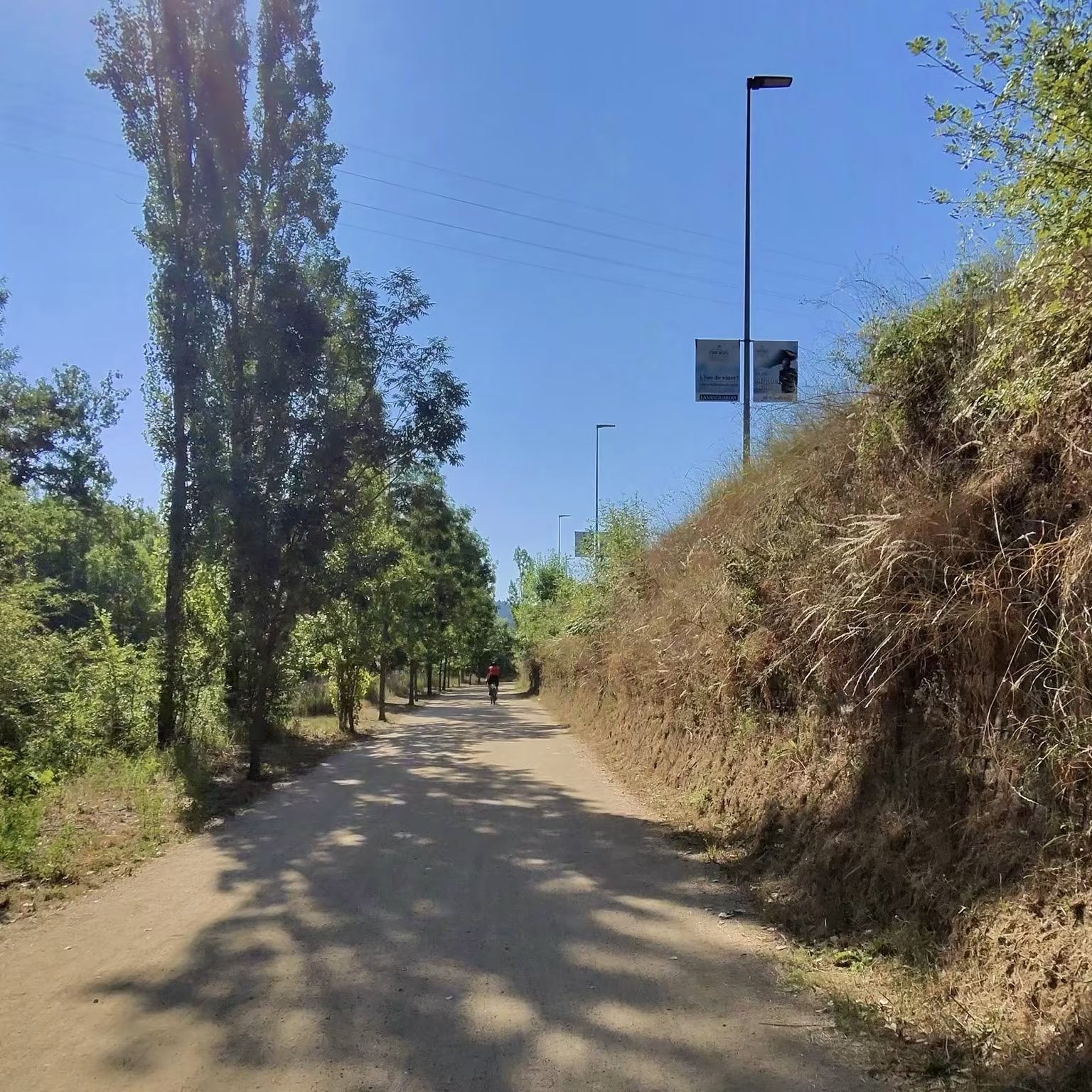
This was my first time on a bike with electronic shifting, in this case Shimano 105 Di2, and I am completely sold. Shifting is the effort of clicking a mouse button—quick, precise, and occasionally so quiet under light pedaling that I wasn’t sure the shift had registered. But it did!
Under load, even while standing and grinding up Els Àngels, it never missed. The upshift to the big ring was the most startling part: so effortless and clean that running two chainrings, something I’d mostly abandoned in favor of a 1X setup, suddenly seems worth reconsidering.
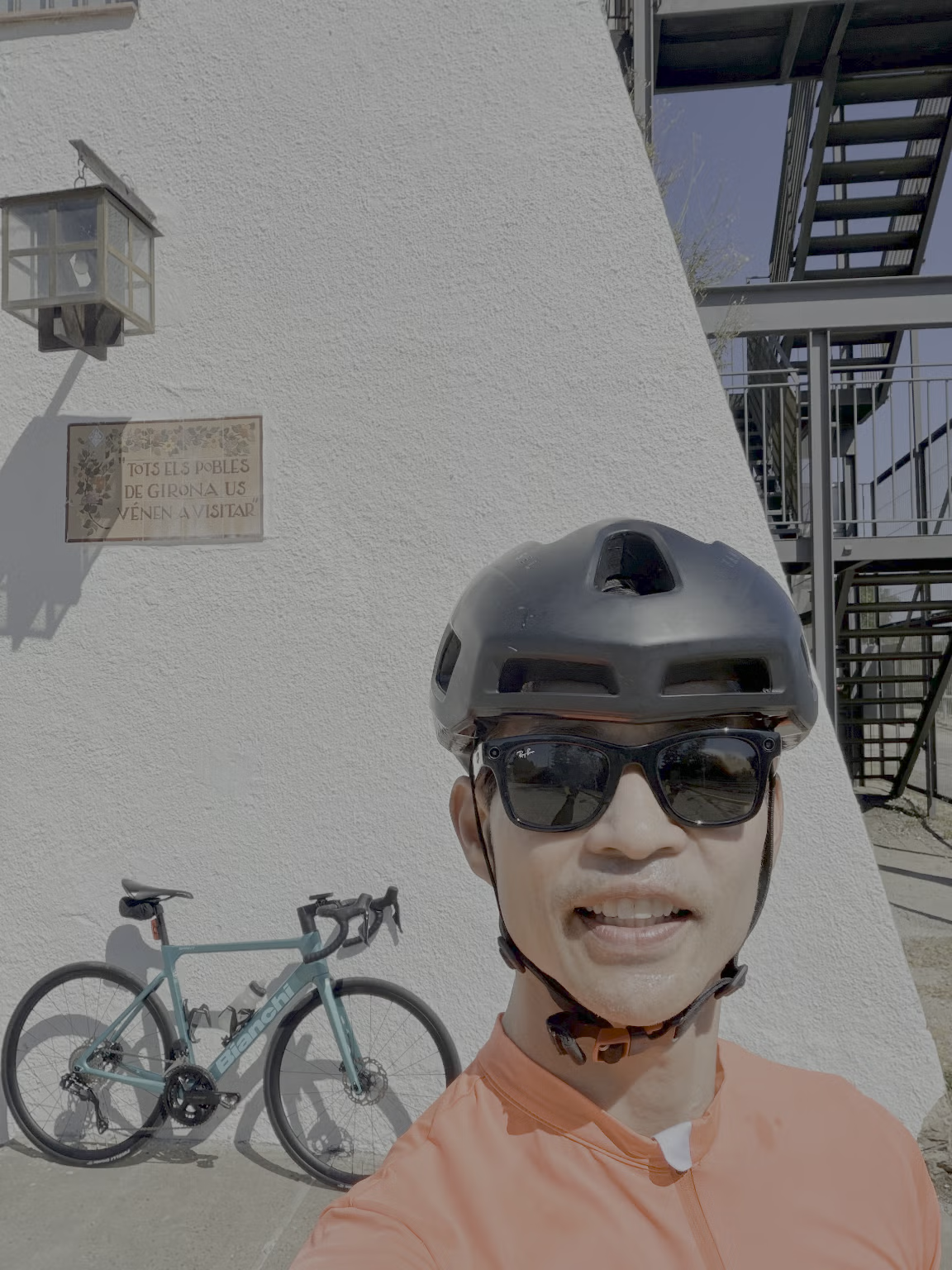
For my next bike build, electronic shifting is non-negotiable. I’d even consider adding a pair of remote shift buttons on the bar tops so I could shift without moving my hands off the tops on a climb.
The disc brakes didn’t announce themselves as anything special until a car appeared unexpectedly around a curve and I grabbed a fistful of brake lever, nearly locking the front wheel. That’s when it clicked: the real advantage of discs isn’t stopping power so much as the freedom they give wheel designers—full-carbon rims, deep-dish profiles, mountain bike hubs, all without worrying about braking performance in any weather condition.
Not everything about the rental bike impressed me. The 32mm Pirelli Cinturato tires were pumped hard enough that the ride surprisingly felt no plusher than my Litespeed or Cannondale that are shod with 28mm and 25mm tubeless tires, respectively. The saddle’s design was reminiscent of 30 years ago, before Specialized introduced saddles with relief cutouts—a feature that is now common in most modern saddles.
Temperatures climbed from 27C at the start to 36C by the time I rolled back into Girona, which was more than enough heat to make me grateful I hadn’t attempted the round trip to Manlleu after all. I was very content to watch the Tour de France stage from the comfort of my air-conditioned hotel room in the city center before returning the rental bike.
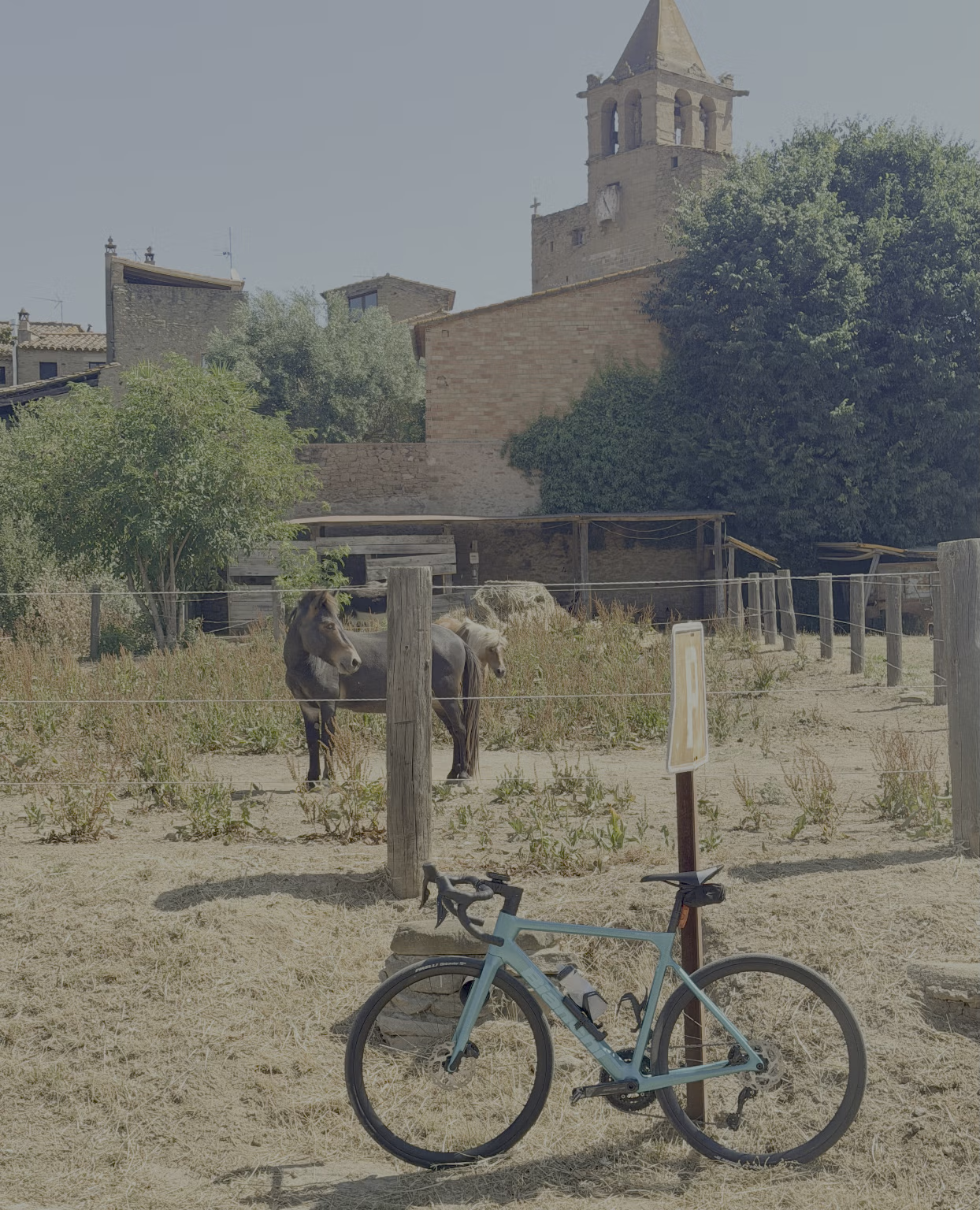
Regarding the bike rental process, it was even quicker (five seconds to hand the bike over after I had walked into the shop) to drop off the bicycle than to pick it up. I’d totally recommend Bike Rent Girona, which was more cost-effective and far more convenient than traveling with my own bicycle considering that this was going to be the only time I would be cycling during this trip to Catalonia.
One other aside: it was very cool to be pedaling a contemporary Bianchi 33 years after doing my very first century ride, the 1993 Delta Century. In that life-changing event, I had ridden a borrowed bicycle made by that storied Italian brand, one that featured a lugged steel frame from the 1980s, 32-spoked box-section wheels, and non-indexed downtube Campagnolo shifters. Back then, I never had imagined that bicycles would be using electric servomotors to shift gears and that they would not be using any cables at all (the brakes on this bike were hydraulic).
The Ray-Ban Meta Wayfarer (Gen 2)
I first tried on a pair of Ray-Ban Meta Wayfarer (Gen 2) glasses in a sunglass store in downtown San Francisco when Andrea suggested we go in. After all, she had been insisting for years that I finally own a pair of sunglasses that didn’t come from a dollar store. Normally I’m not one to pay real money for sunglasses; the cheap ones block the same UV as the expensive ones, and that’s the entire job description.
But these aren’t just sunglasses. They’re a camera and a video camera built into a frame that looks, at a glance, identical to a normal pair of Wayfarers. I’d tried something like this before, back in 2011: a cheap ($24) off-brand pair of recording sunglasses I used only a handful of times, most notably while ziplining in Costa Rica. The video was grainy, there was no Bluetooth, and the battery would give up in about the time it took you to eat a decent-sized lunch. The form factor—while semi-impressive for 2011—was certainly not going to win any awards, and the material quality would make the plastic in Hasbro toys seem premium.
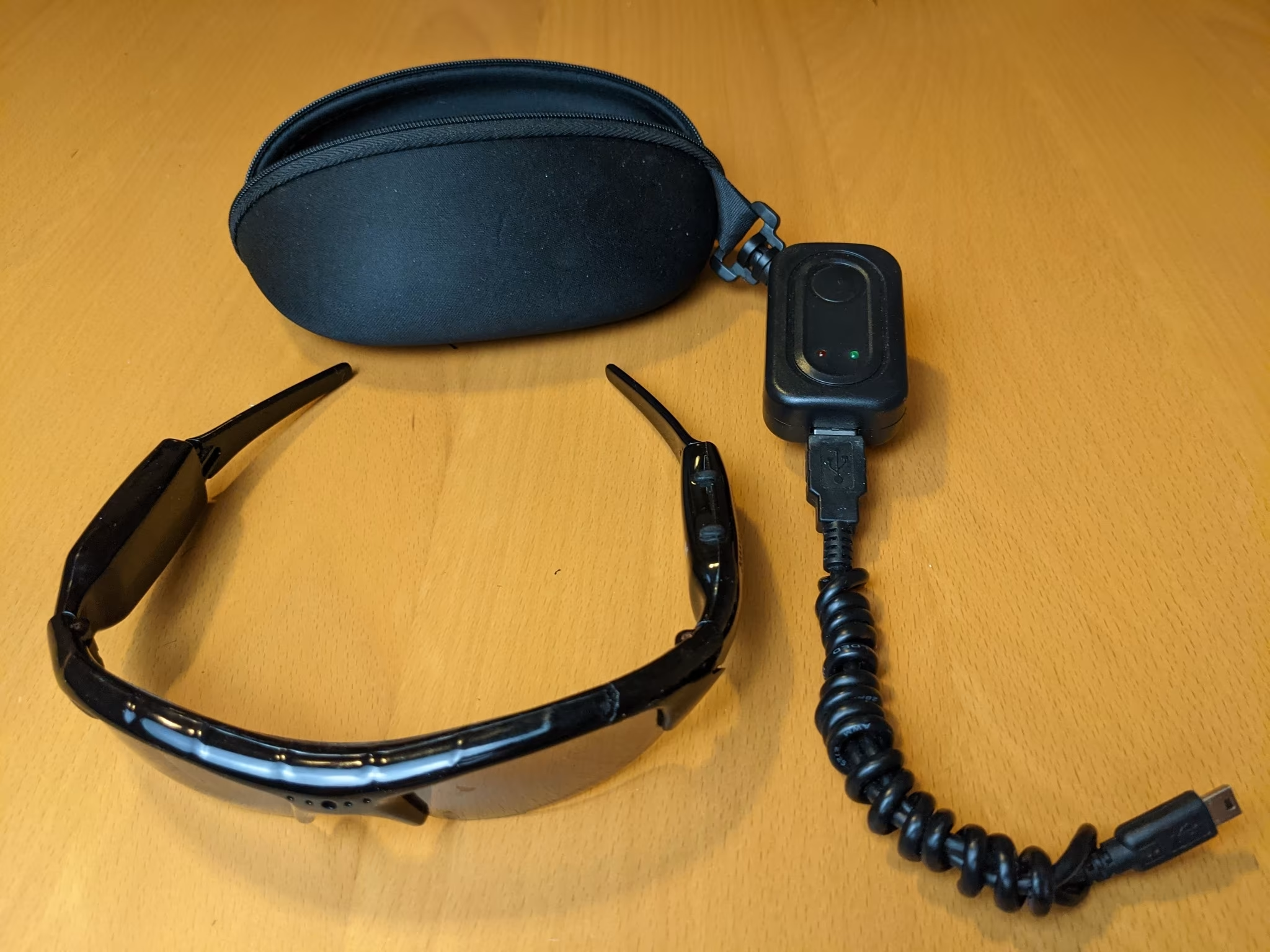
Fifteen years is an ice age in electronics, and Meta and Ray-Ban have the kind of resources that off-brand company never did. The Gen 2 glasses are prices at more than double what I used to mock “dumbglasses” for costing, but at $379 to start, they land close to a high-end GoPro. And unlike a GoPro, they double as speakers, a voice assistant, and an actual pair of sunglasses I already had a habit of wearing every day outside. I bought a pair for my 51st birthday, the first birthday gift I’ve bought myself in a very long time.
The party trick is the voice control. “Hey Meta, take a photo,” followed by “send the last picture to Andrea on WhatsApp,” is something I did during my first afternoon with them, hands never leaving the steering wheel.
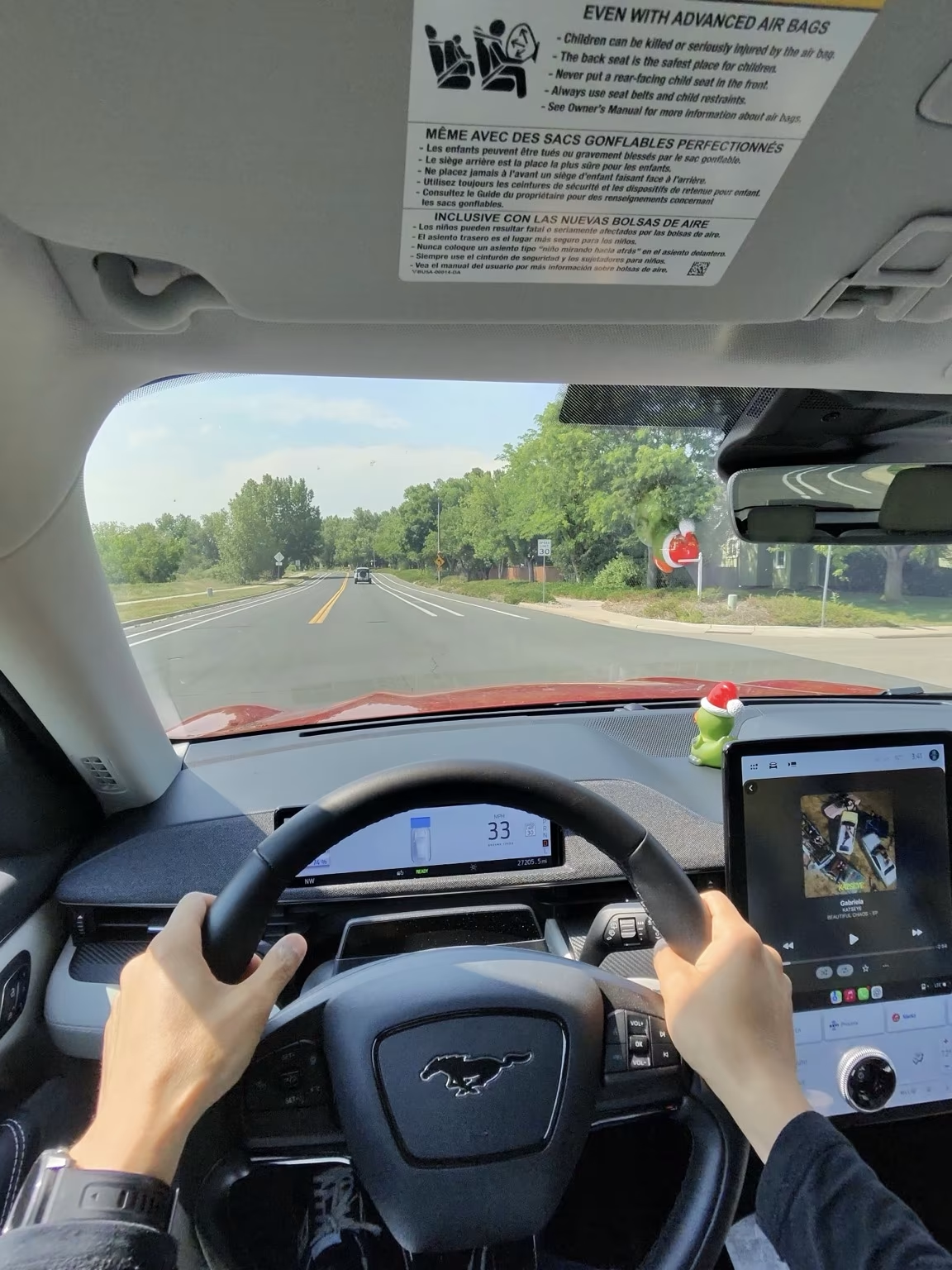
The glasses can also fire off messages through Meta’s other properties or through Apple Messages with a “Hey Meta, send a message to so-and-so” command, and Meta AI is sharp enough that when I pointed my face at a car in a parking lot and asked what I was looking at, it correctly identified my own Mustang Mach-E.
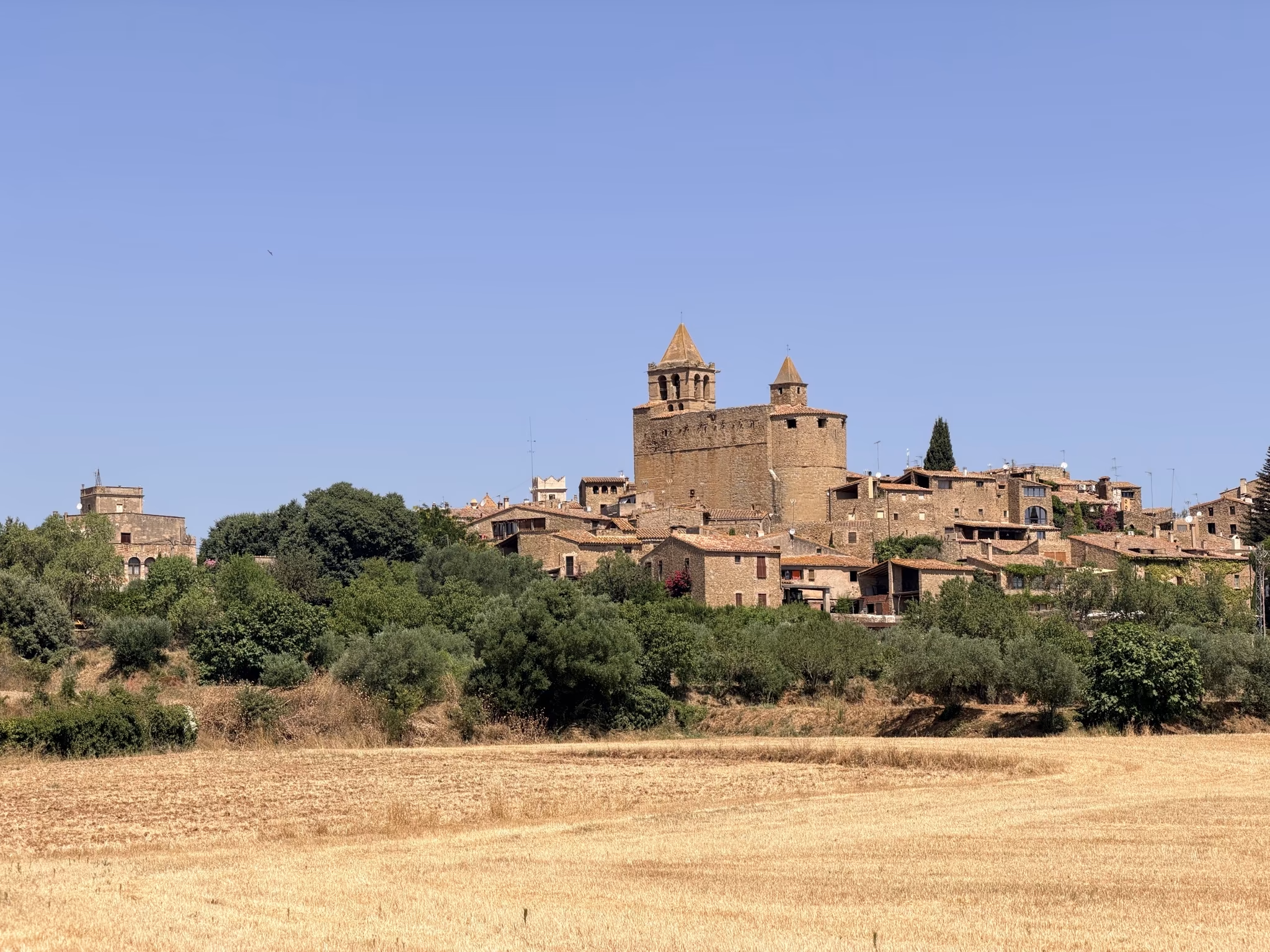
The moment that sold me happened during Stage 2 of this year’s Tour de France in Barcelona. Pogačar, Del Toro, and Vingegaard came flying past me on the descent of Montjuïc, and I was caught completely flat-footed—phone in my pocket, no time to dig it out, probably not even enough time to say “Hey Meta, record video.” What I could do was reach up to the right temple and hold down the button, and that was enough to catch the moment and, later, freeze the frames and pick out exactly who had blown by me.
That’s the case for these glasses in one sentence: they let me keep my phone in my pocket and my eyes on what’s actually happening around me, whether that’s a peloton or a bustling foreign city.
There are also shots I can see myself missing with a GoPro due to its relatively slow start-up time. For instance, this one:
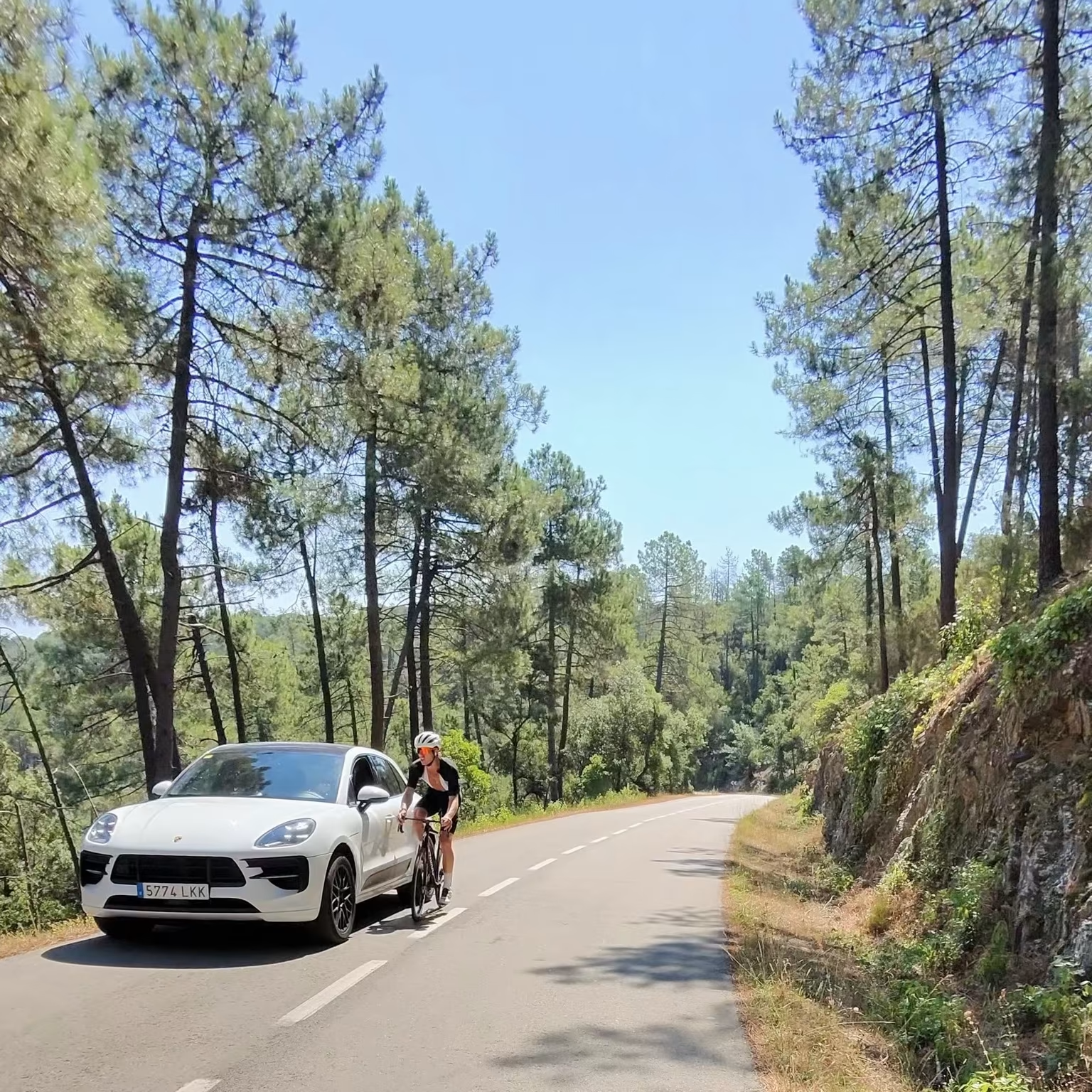
The camera and video quality won’t fool anyone into thinking it’s an iPhone or even an older DSLR—closer to a decent phone camera from a decade ago—but I use these more than I ever used my seven-year-old GoPro, purely because they’re always already on my face. You can see the video for yourself here (something that’s captured only in portrait mode, which because of TikTok and its imitators, has become something of the de facto standard for sharing—at least for short form videos):
Apple is reportedly developing a smartglasses competitor later this next year. If it’s compelling enough—Apple often comes up with useful integrations or features I didn’t even know I needed—I might consider trading in these. Until then, I’ll continue wearing them everywhere I would normally don sunglasses, which is most of the time I’m outdoors. This is especially true since I’ve already had many instances where I’ve thought, “Wow, these are awesome” when I wear them.
There are 2 comments.
I find it odd that I am such an early adopter of tech, but when it comes to bikes, I am so far behind the times. I too would like to upgrade to electronic shifting, disc brakes, and storage compartments with a modern gravel bike, but I keep coming back to the bikes I have and say, these are fine for me.
I've been like that too with bikes. I've been noticing that a plurality of road cyclists out in Europe are now riding road bikes with internal cable routing—indicating their bikes are likely from the last 4-5 years—and yet I still don't have a single bike with disc brakes.
But rationally, even the older bikes still work perfectly well and from a functional standpoint, are only marginally less fast, comfortable, or fun to ride. I haven't been riding enough to make replacing a bike a higher priority.
On the other hand, we use our iPhones and computers literally every day, so it makes sense to replace those much more often!