Watching the First Stages of the 2026 Tour de France in Spain

On July 4, 2026, the United States turned 250 years old. I marked the occasion by standing in a parking lot in Barcelona, taking pictures of buses, bicycles, and bodies in spandex.
I regret nothing. The Tour de France was starting in Spain—the third time the Grand Départ has been held there—and the choice between fireworks and Tadej Pogačar was not, for me, a close call.
Stage 1
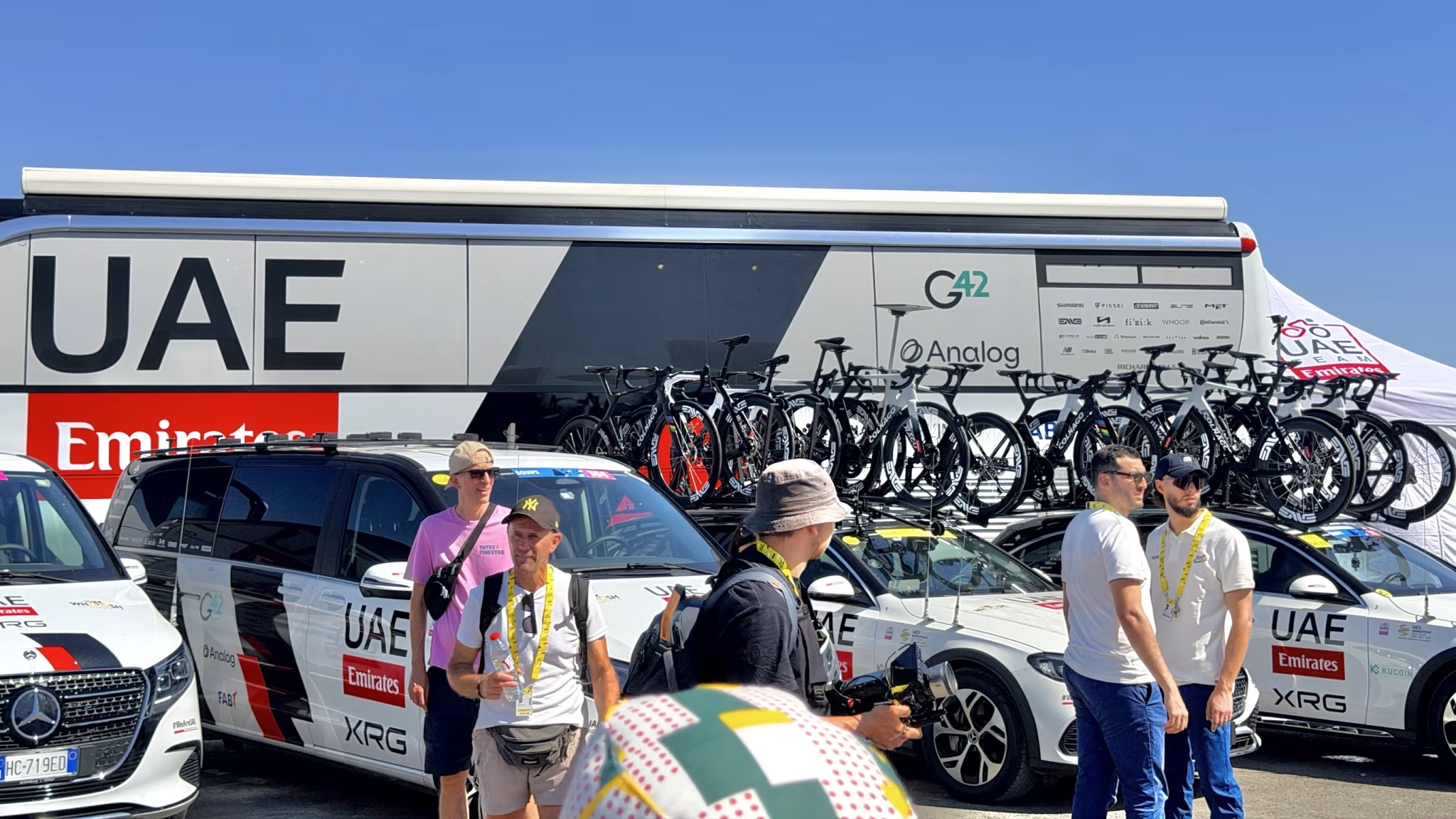
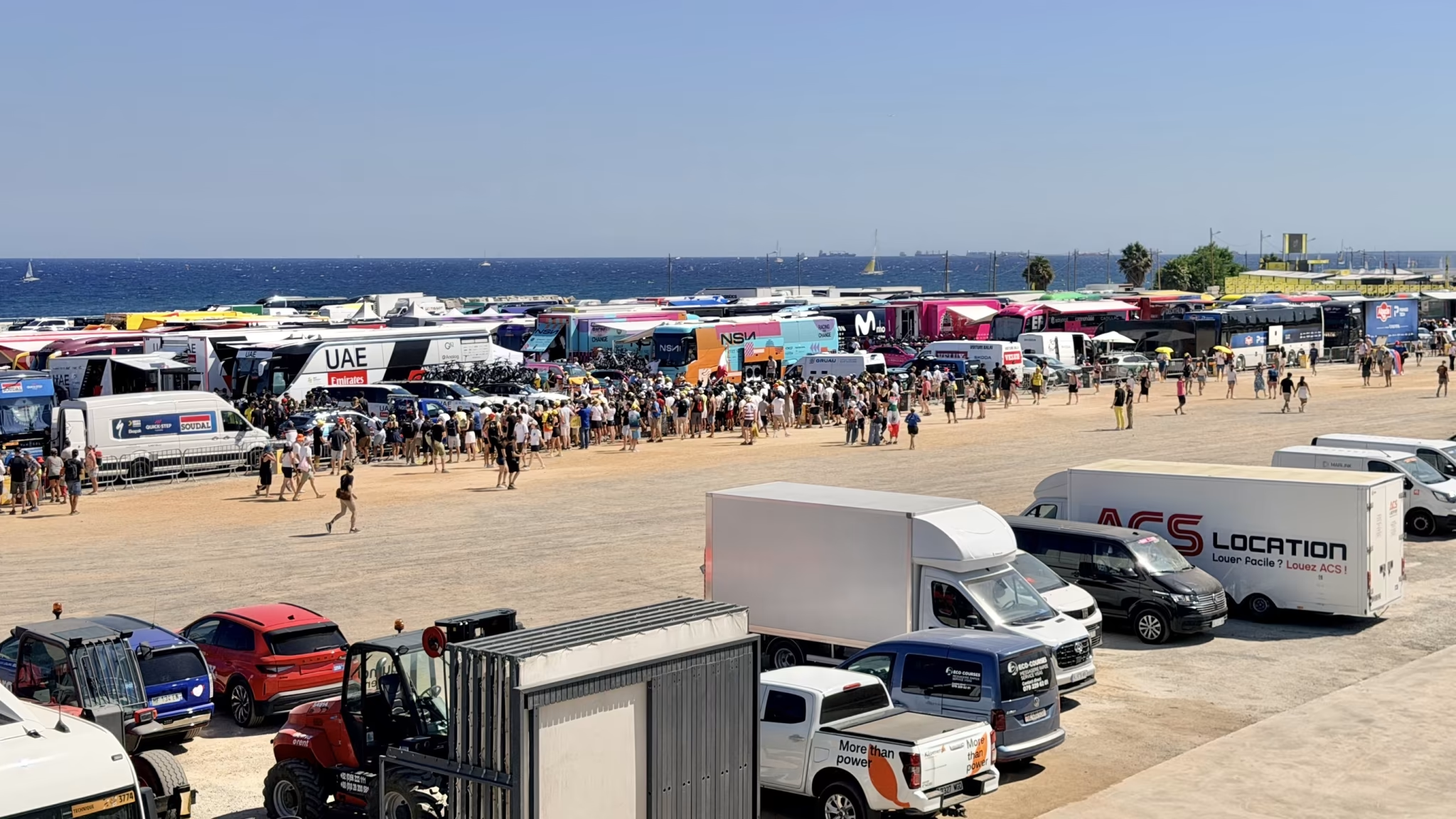
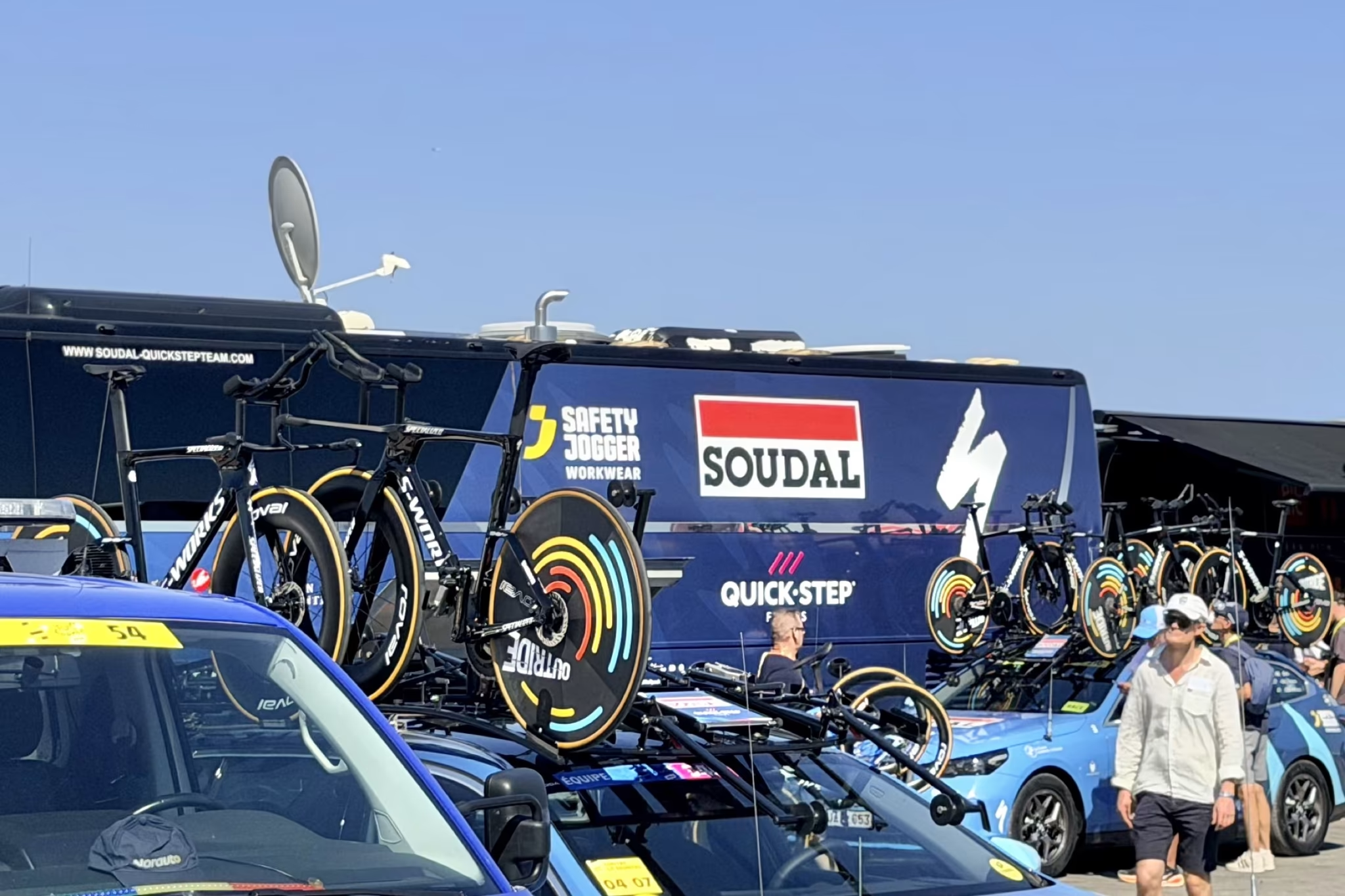
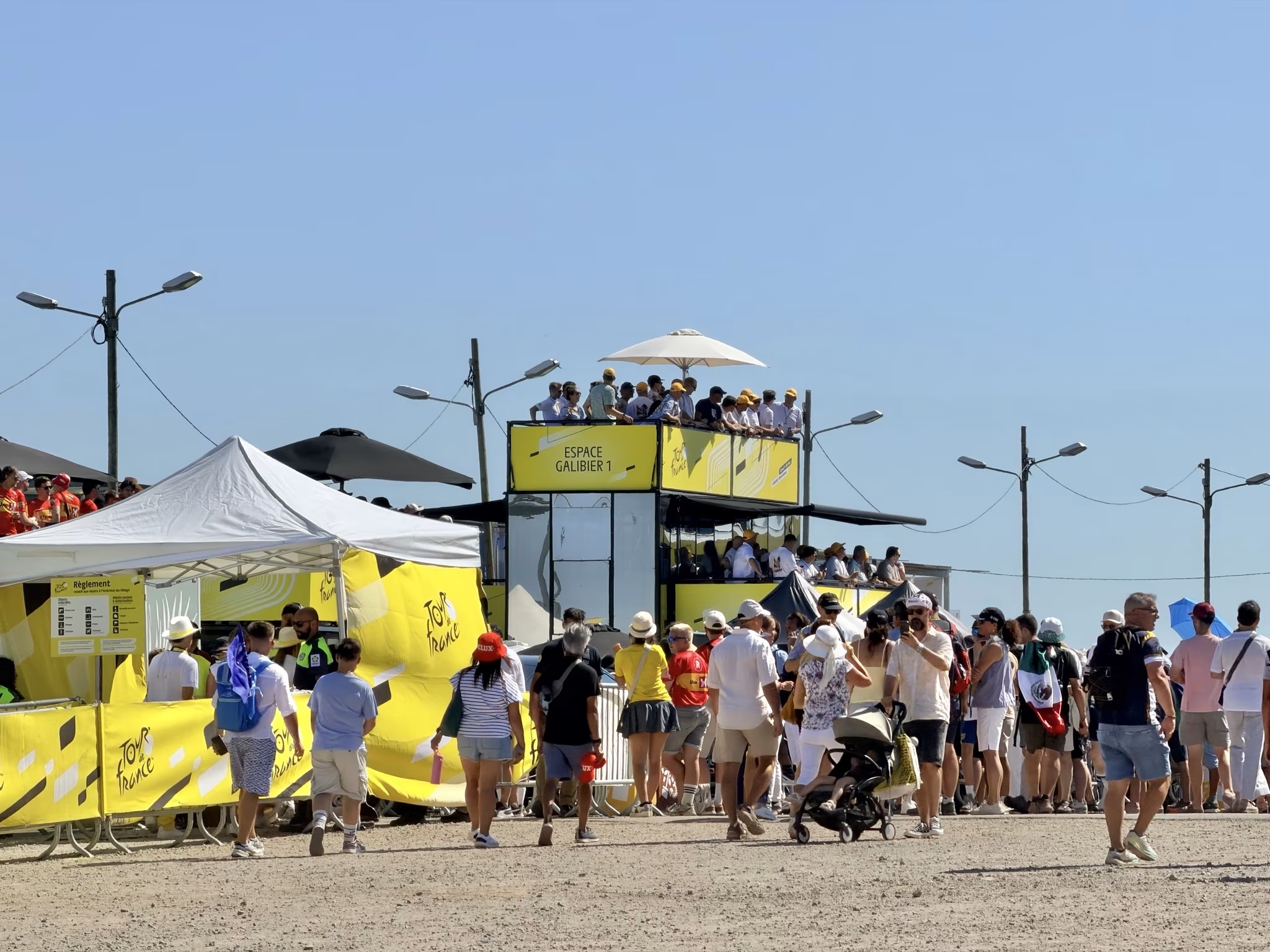
The Stage 1 team time trial started at the Fòrum, the modernist slab of concrete and solar panels at the northeast end of the city, where the team buses were parked and idling with their air conditioning running full blast. This is the part of professional cycling nobody puts on a poster: a row of luxury coaches in a seaside lot, mechanics fussing over wheels, and a few hundred fans wandering around trying to look casual while photographing bicycles that cost more than their cars.
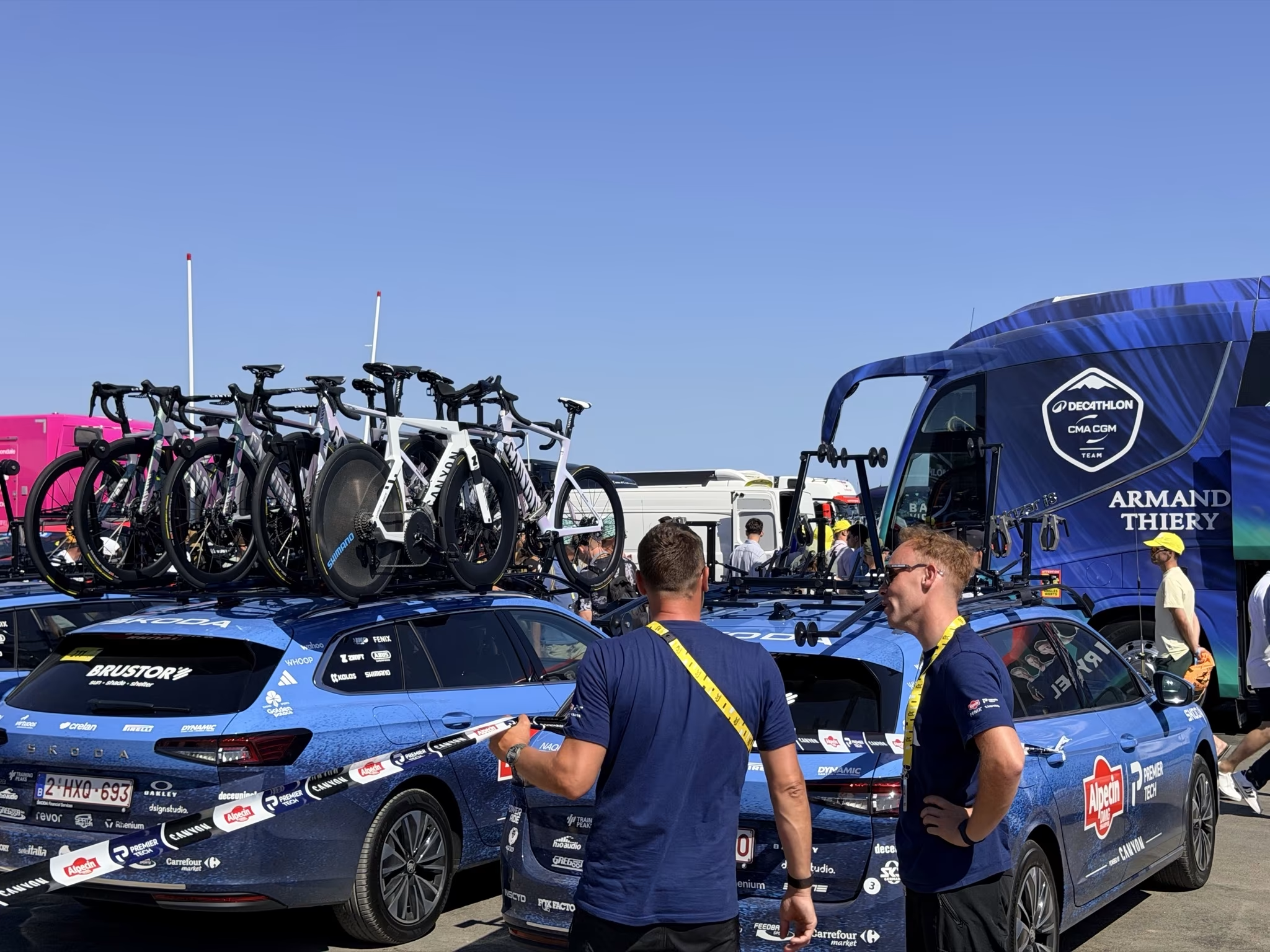
The bikes were displayed on racks like knives in a butcher shop. Alpecin-Premier Tech had their Canyons out, though Mathieu van der Poel and Jasper Philipsen were nowhere to be seen—presumably in the bus, away from the heat, being sensible.
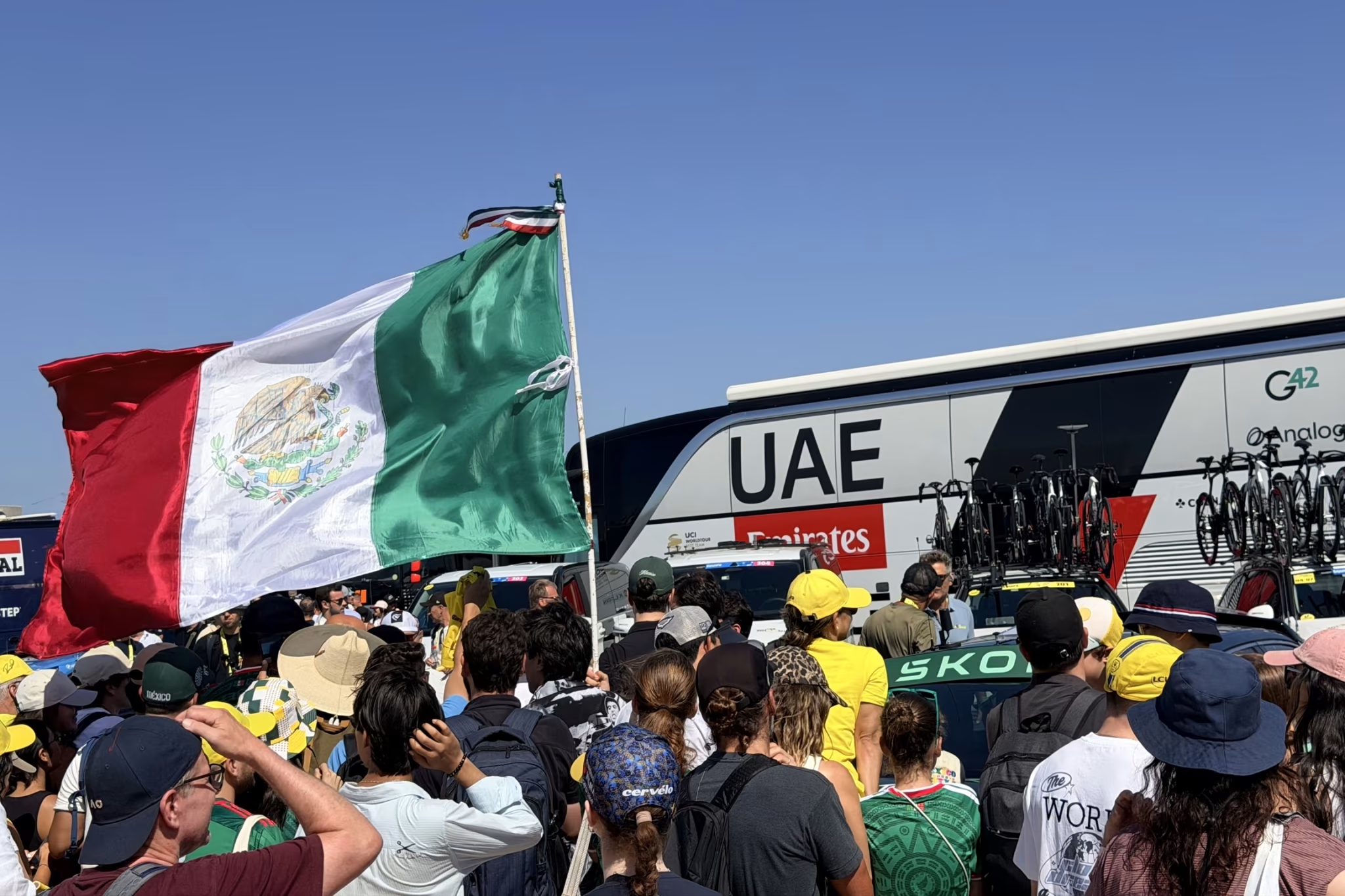
In front of the UAE Team Emirates-XRG bus, someone was flying a Mexican flag for Isaac del Toro. Hold that thought.
Soudal Quick-Step’s Specialized time trial bikes sat in a row looking like they had been designed in a wind tunnel by someone with a grudge against air.
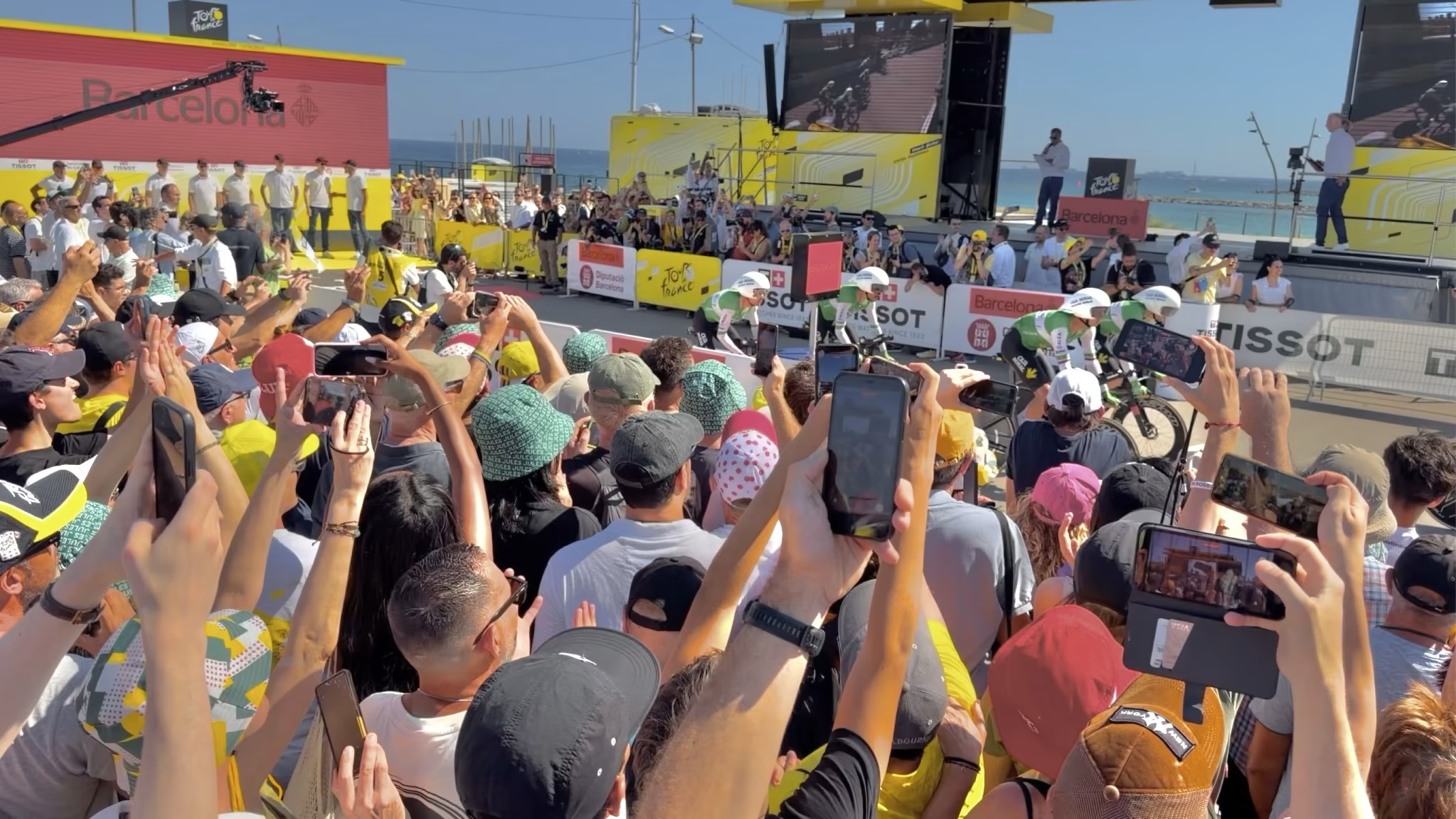
Caja Rural-Seguros RGA, the Spanish wildcard team, was first down the start ramp—the honor traditionally granted to whoever the algorithm likes least.
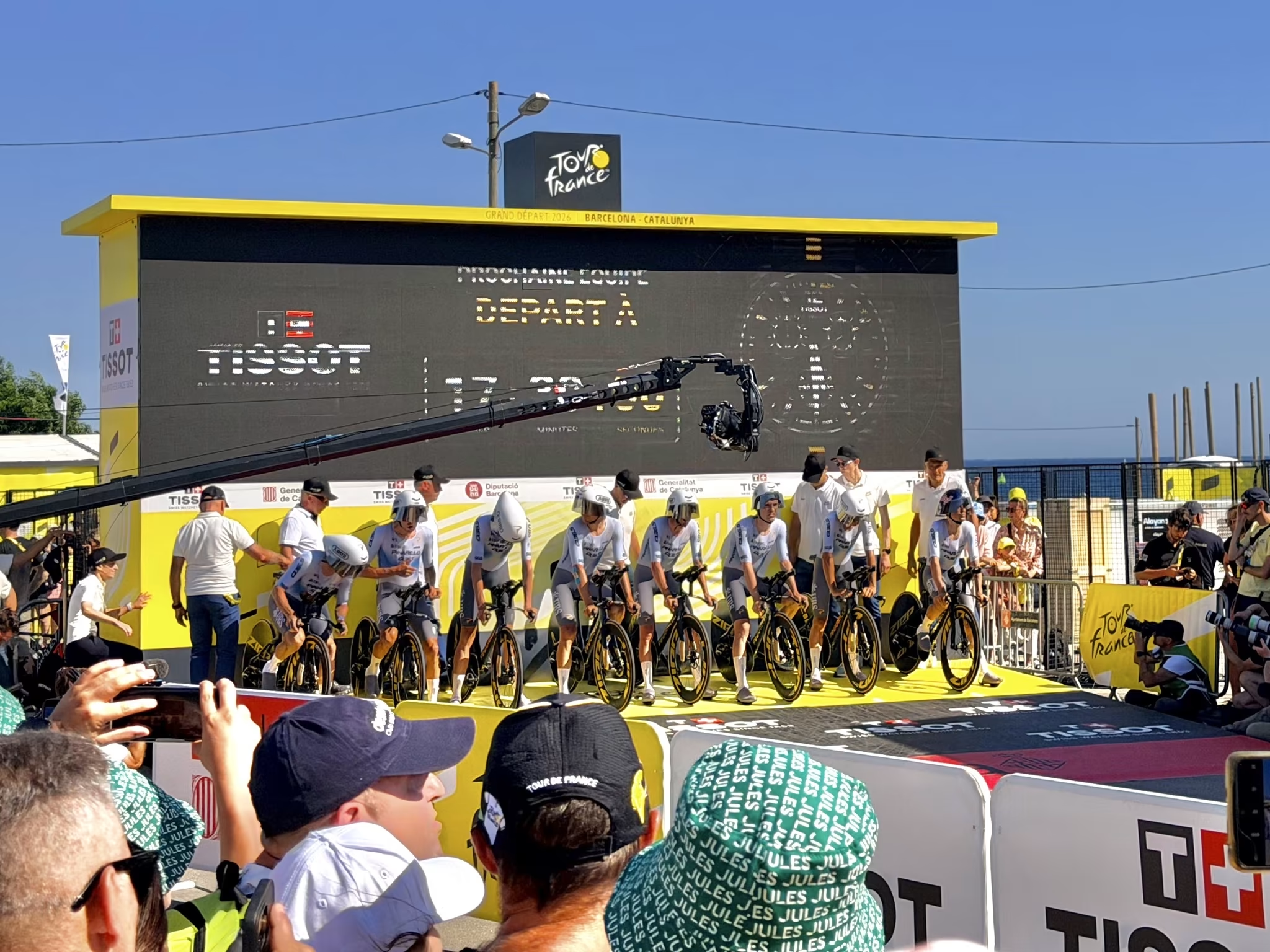
I stayed through the sixth team, Pinarello Q36.5, with Tom Pidcock on the far left of the line, and then made my exit.
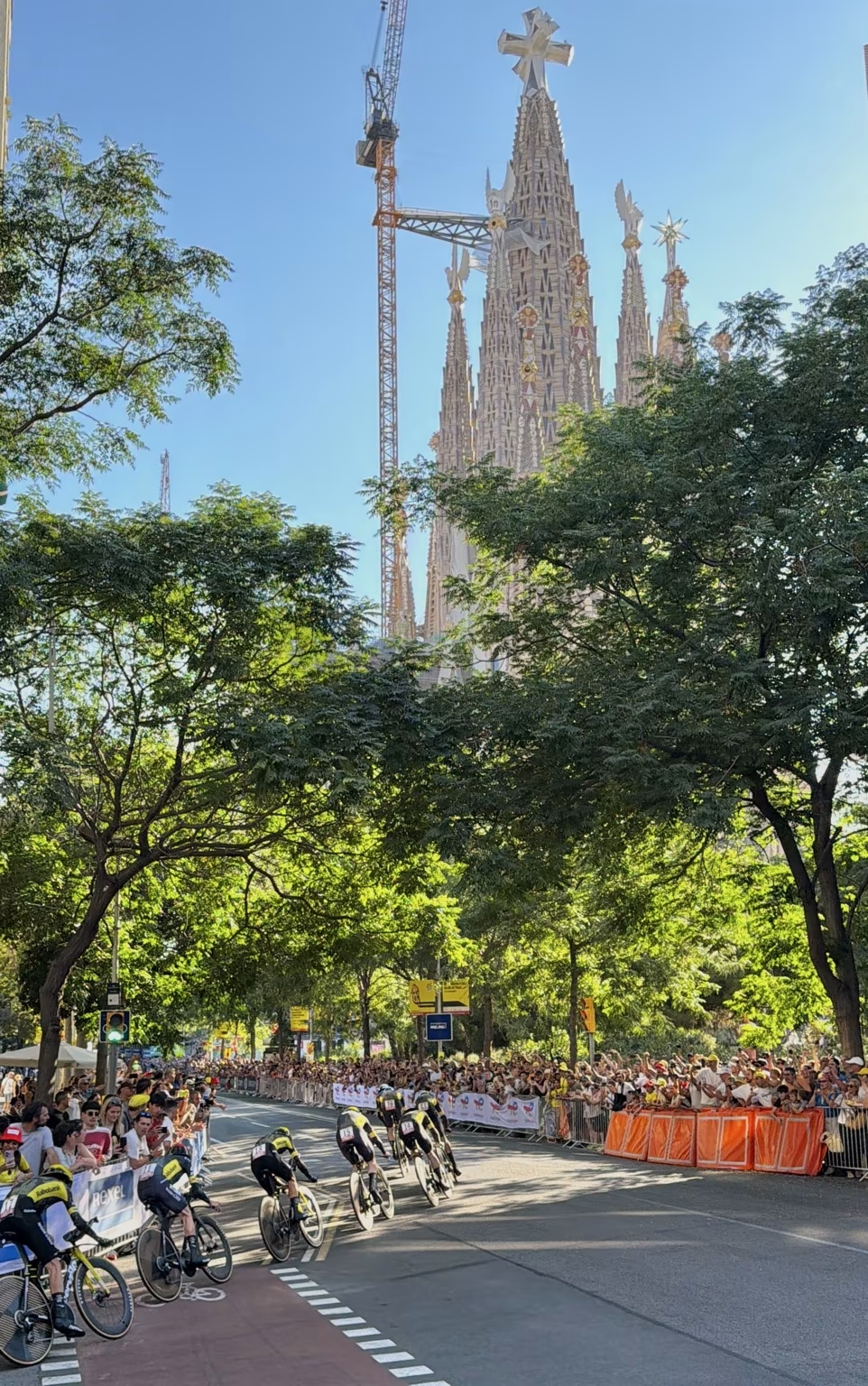
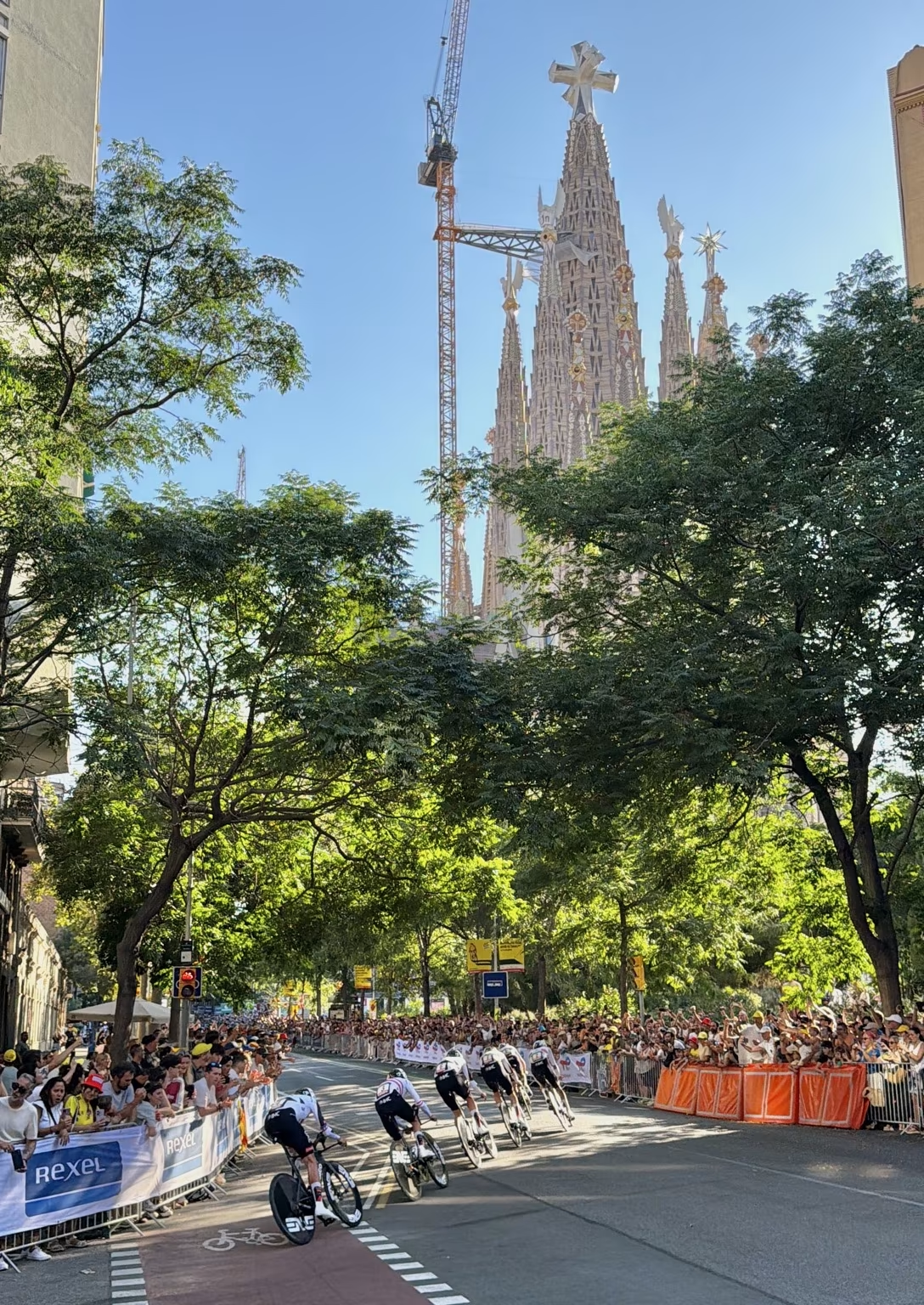
The reason for the exit: the course ran right past the Sagrada Família, and it seemed like a waste of a once-in-a-lifetime alignment not to photograph the world’s fastest bicycles against the world’s slowest building. I got there with time to spare and staked out a corner.
Soudal Quick-Step came through first of the teams I was waiting on.
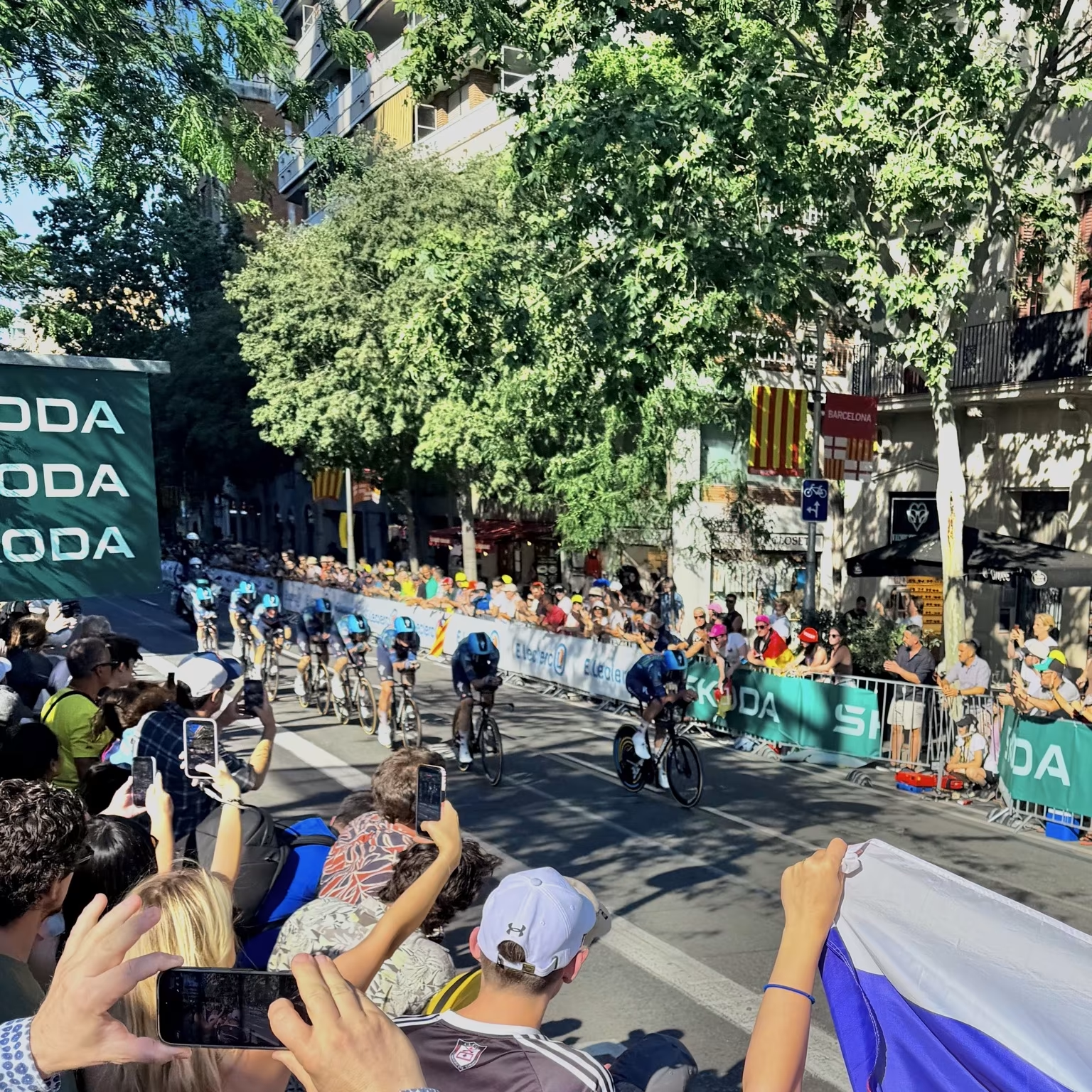
Then Lidl-Trek, with Juan Ayuso hanging at the very back and Mathias Vacek, Derek Gee-West, and Mads Pedersen strung out ahead of him.
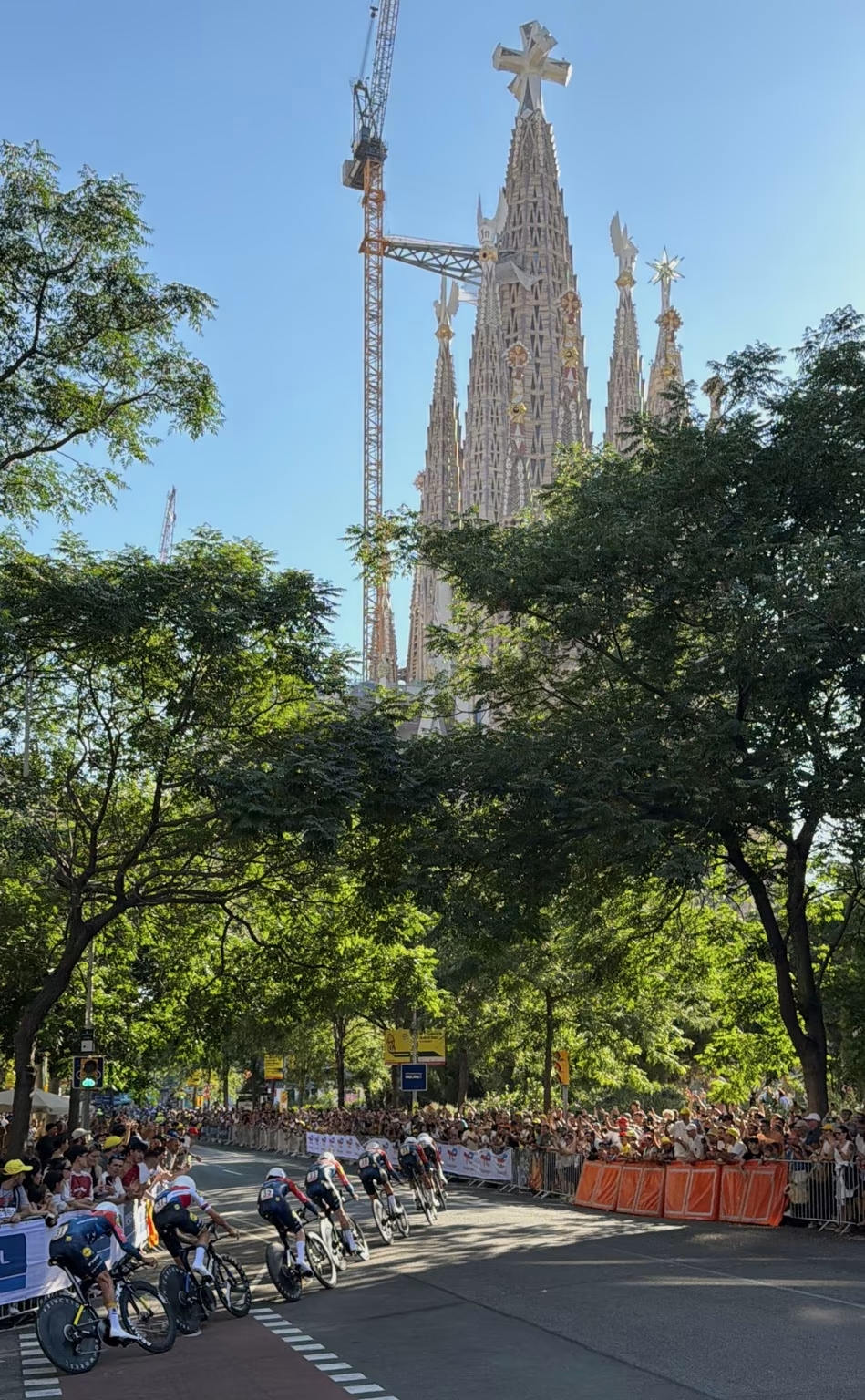
This was where the format got interesting. It was a team time trial, but every rider received an individual time for the general classification, and the stage result was taken from the first rider of each team across the line. Which meant the sensible strategy was for seven riders to detonate themselves for their leader and then peel off like spent rocket stages, leaving the GC man to fly the last kilometers alone. Team Visma-Lease a Bike executed this to perfection.
UAE came around the corner last of all, Pogačar third in line, looking like a man who had somewhere else to be.
What I missed, because I ran out of time and legs, was Montjuïc—the climb where the stage was actually decided. My friend Eli was up there with her partner, his brother, and his niece, and we traded video afterward. Hers was arguably more interesting than mine. She had the teams coming through the hard part, plus the stragglers: the domestiques who had buried themselves for their leaders and were now weaving across the hill alone, entirely finished, having handed the day over to somebody else. There is no more honest image in cycling than a man riding uphill at four in the afternoon with no reason left to be there.
Visma won. Vingegaard took the first yellow jersey. Netcompany Ineos was second at eight seconds after Filippo Ganna had to salvage the ride when Kévin Vauquelin punctured, and Pogačar was third at twelve.
Stage 2
The next morning I did a few hours of coding, because the Tour is a three-week race and one cannot spend all of it standing on a curb. Then I walked to Montjuïc.
At the top there were free shuttle buses I hadn’t known about, a great many people, and a promotional booth handing out Tour de France paper fans, which I accepted with the enthusiasm of a man who has just walked uphill in Catalonia in July. I posted up near the France TV tent and studied the road, which appeared to me to slope downward at that point. Ah, I thought. They will be descending here. Descending riders are fast and blurry. Better to find somewhere they’re climbing.
So I walked on. And a few minutes later, from behind me, came a wall of cheering.
They were, confusingly (to me), descending. Right where I had been standing. The leaders came past where I now was at a speed that made a mockery of my camera reflexes—by the time I got my phone out of my pocket, the front of the race was gone. Brandon McNulty, Isaac del Toro, Pogačar, one of Vingegaard’s teammates, and then Vingegaard himself in yellow, all of them moving like something had been dropped from a great height.
I was saved by my new Ray-Ban Meta Wayfarer (Gen 2) glasses, which in contrast to my phone, I was able to start recording in time. Just that moment alone had validated their purchase alone, and to be honest, I like the glasses even more than I thought I would. I pulled stills out of the video afterward, and there they were.
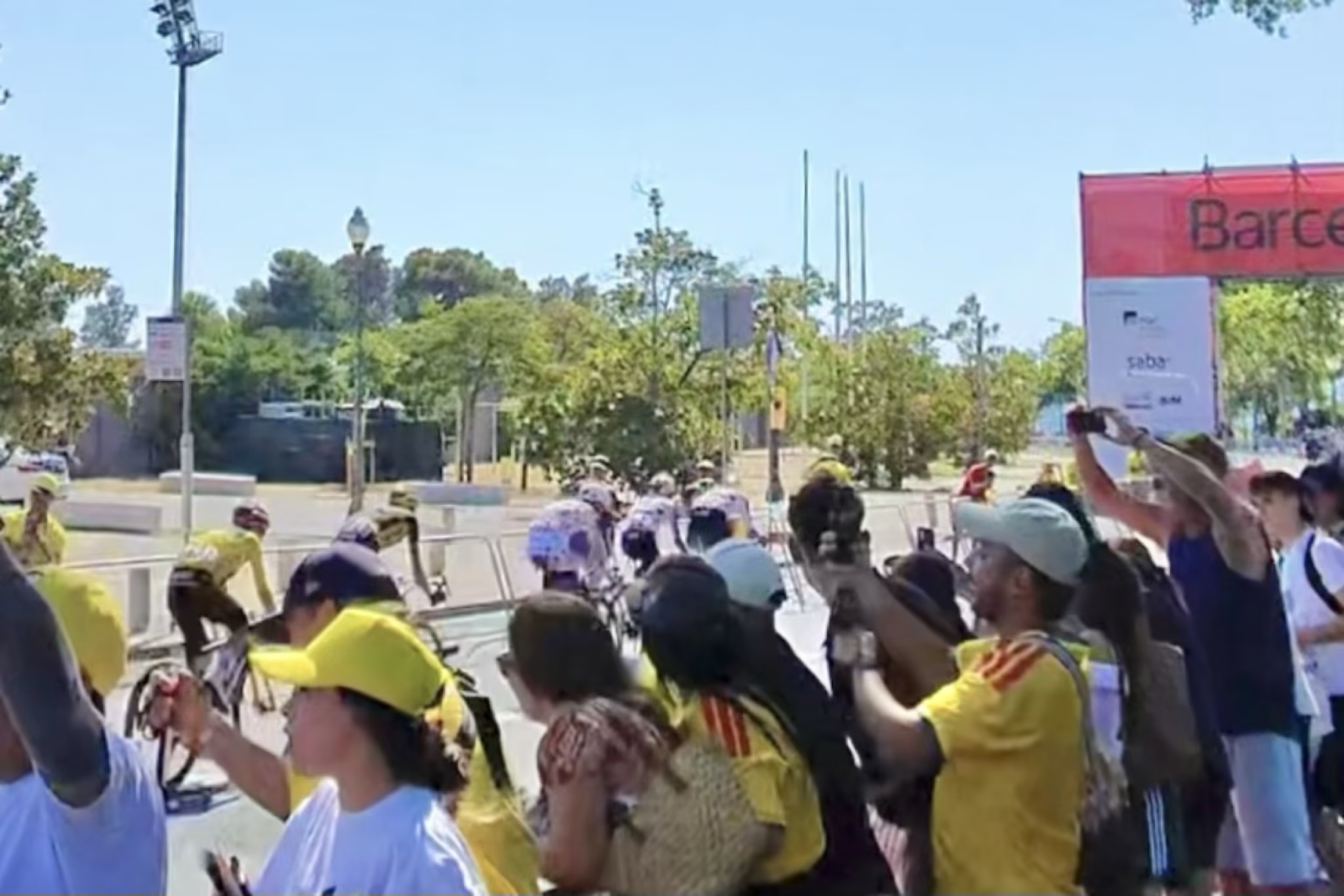
Vingegaard was following his teammate Davide Piganzoli. Pogačar was sitting behind Del Toro and McNulty, doing what he always does, which is making it look he’s barely breaking a sweat until the moment he decides to take off and then it’s adios, todos.
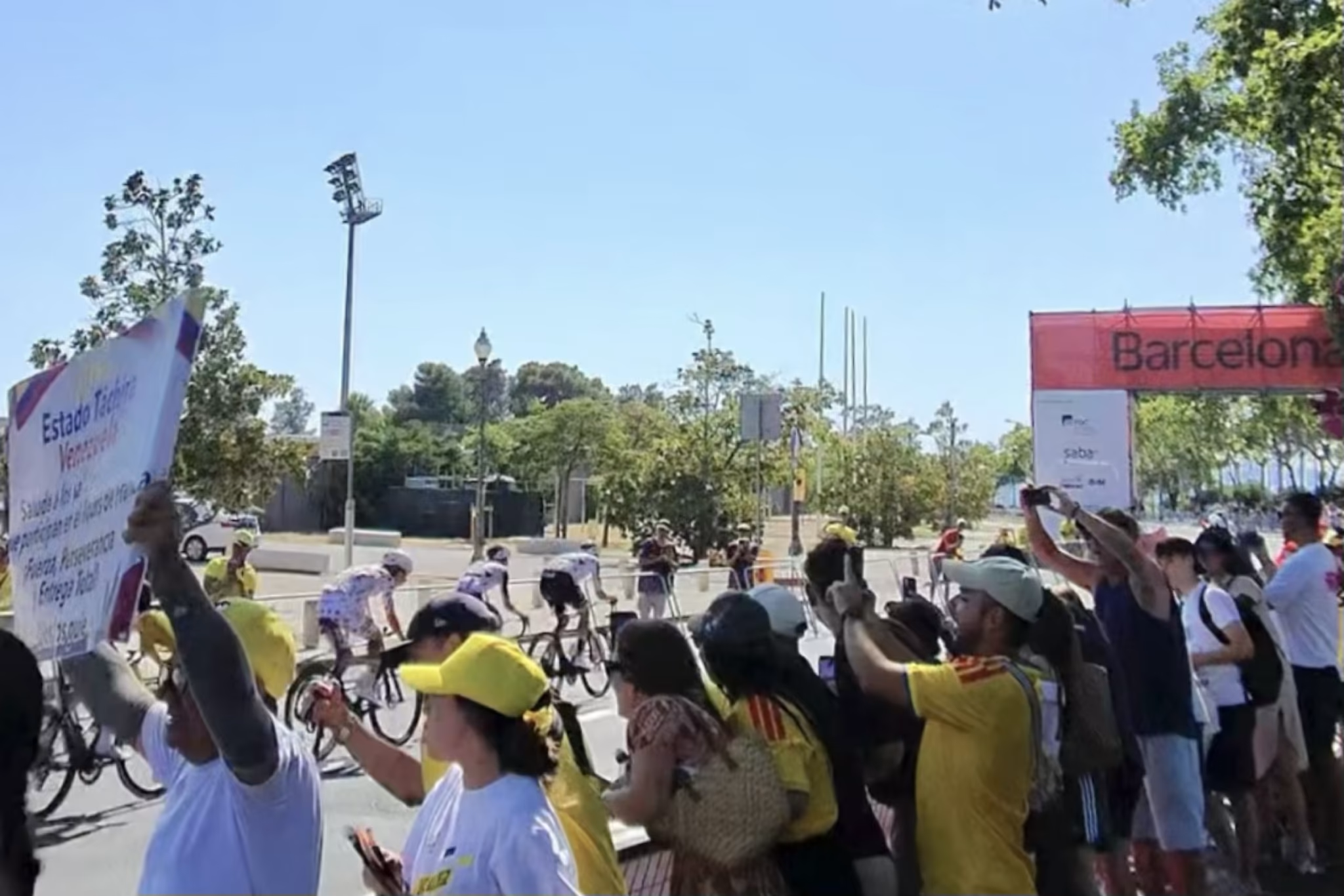
I spent the rest of the circuit hunting for a better spot and never found one, which is the spectating equivalent of changing lanes in traffic. And so I was standing in a bad location, holding a paper fan, when I saw on a huge outdoor television screen that Isaac del Toro had won the stage, with Pogačar second.
Pogačar had launched the sprint himself, then let his young Mexican teammate come around him and take the first Tour stage win of his career. Del Toro is only the second Mexican ever to win a stage of the Tour de France, after Raúl Alcalá in 1989 and 1990. Somewhere back at Diagonal Mar, whoever brought that flag was having an excellent afternoon.
Vingegaard kept the yellow jersey. I speed-walked to my train to Girona.
Stage 3
The plan for Stage 3 was ambitious in the way that plans made from a couch in Colorado tend to be.
I had a rental bike waiting at Bike Rent Girona, arranged and paid for weeks in advance—pedals, Garmin mount, saddle height, helmet, all of it settled before I ever left the U.S., so that all I had to do was ring the doorbell, walk in, and wheel the thing out the door. (More on the bike, and on my first-ever experience with electronic shifting, in a separate post.)
The plan was to ride 75 kilometers to Manlleu, stand by the roadside, watch the peloton go past at 45 kilometers per hour, and ride 75 kilometers home. A round trip of 150 kilometers to observe roughly eleven seconds of bicycle racing.
Then I looked at the forecast. A high of 37°C. UV index of 9. And a set of climbs—some as steep as 18%—between Girona and Manlleu that were not going to move out of the way on my account.
Then I looked at the news. The Pyrenees were on fire. The wildfires near the finish were serious enough that fans were asked not to attend the last 40 kilometers of the stage, and organizers scrapped the publicity caravan once the race crossed into France. None of that would have stopped anyone from cheering in Manlleu, which was nowhere near the flames. But it did drain the last of my enthusiasm for the errand.
So I did what any sensible 250-year-old nation’s citizen abroad would do: I rode for a few hours in the morning, and then I went back to the hotel and turned on the air conditioning.
The morning ride was the consolation prize, and it turned out to be no consolation at all—it was the best part of the day. I rode part of the Hincapie Loop, the classic Girona ride named for George Hincapie, who lived here in the early 2000s at the same time as Lance Armstrong, back when Girona was quietly becoming the place professional cyclists go to disappear. It is the ultimate local loop, starting from the center of town and heading east into Les Gavarres, the coastal range that separates Girona from the sea.
Within minutes of leaving the hotel I was on a gravel recreation path, then a bike path, then a climb. And the pavement—I have ridden a lot of roads on four continents, and I have never encountered asphalt like this. It was so smooth that I kept checking my tires, convinced something had gone soft. It hadn’t. The Catalans have simply solved a problem that the rest of us have accepted as unsolvable.
I went up Els Àngels, dropped down to Madremanya, rolled through the medieval square at Monells, and turned back for Girona: 51 kilometers. It was 27°C when I started and 36°C when I finished, which tells you everything about the wisdom of the 150-kilometer version.
And then, showered and horizontal in a cold room with Spanish television commentary I could follow about 60 percent of, I watched Stage 3.
It was superb. The peloton hauled the breakaway back on a brutally hot 196-kilometer day from Granollers into the French Pyrenees, and the race came down to the final 1.7-kilometer rise to Les Angles. Del Toro—the same Del Toro who had been handed a stage win the day before—repaid it by lighting a fuse under the front group and dragging Pogačar to within 300 meters of the line. Then Pogačar went. Vingegaard glanced around, apparently looking for someone, anyone, to help. Nobody came. He then pumped the pedals as hard as he could and lost by two seconds.
Two seconds. But with the ten-second winner’s bonus against Vingegaard’s six, that was enough to pull the two of them level on time overall—and Pogačar, on countback, took the yellow jersey. Vingegaard had led by six seconds that morning. He would start Stage 4 in green.
I watched all of it in my comfortable hotel room with a cold non-alcoholic beer, at approximately 22°C, and I have never been so pleased with a decision to not ride my bicycle.