Facing Storm Floris: My Interrupted London–Edinburgh–London Cycling Challenge

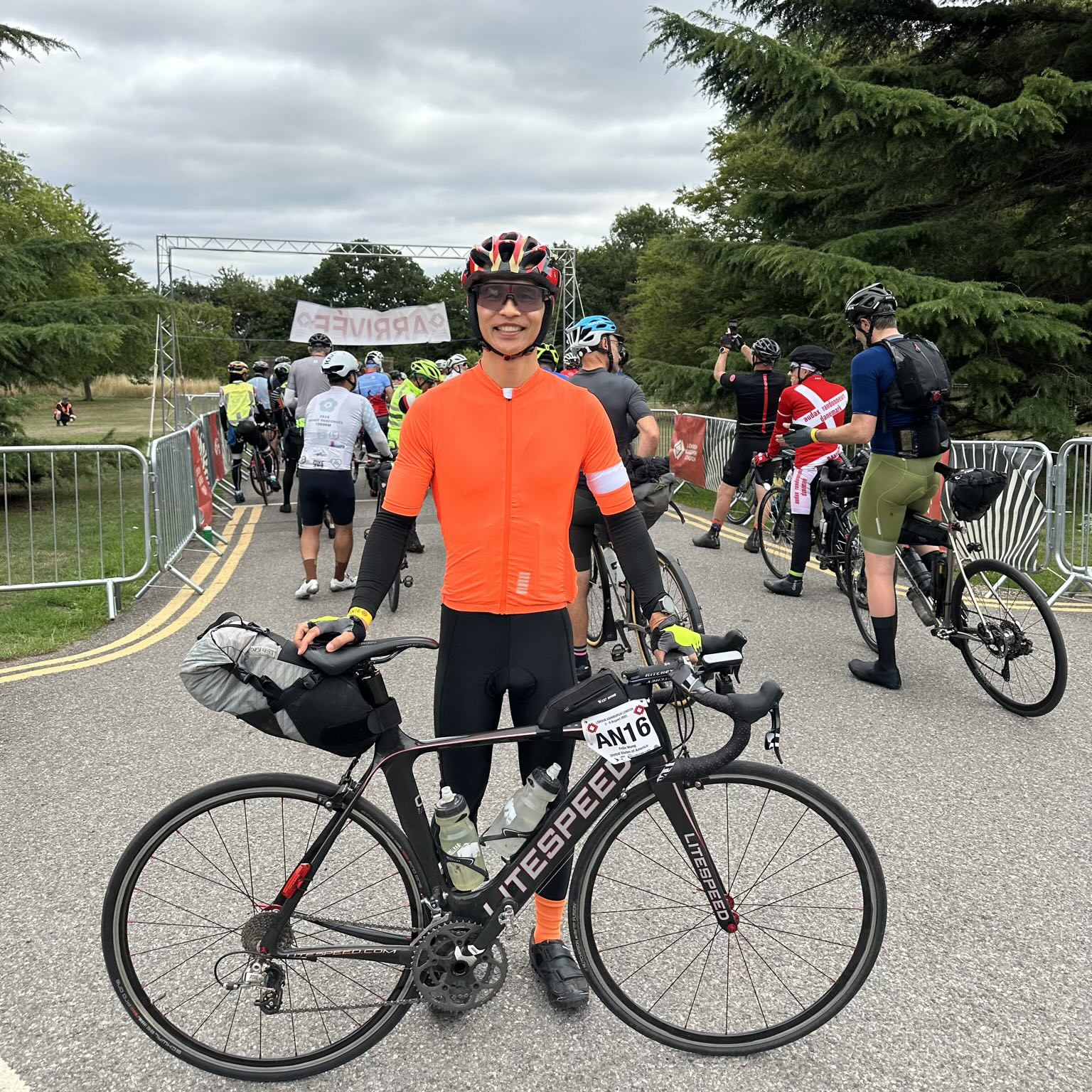
After a couple of registration attempts over the last eight years, I was finally lining up for London–Edinburgh–London (LEL), a quad-annual event and one of the world’s great ultra-distance brevets. It’s not a race, but when you’re staring down 950 miles and a 5.3-day time limit, it might as well be. The start date was August 3rd, and I’d been looking forward to this ride all year—partly for the challenge, partly for the adventure, and partly because I’ve always wanted to see the English and Scottish countryside at bicycle speed.
Two days before the start, the UK Met Office and the LEL organizers fired off a weather advisory that changed everything: Storm Floris was coming. Heavy rain, gale-force winds, and the worst of it slamming northern England and Scotland from early Monday through early Tuesday. Suddenly, my late Sunday start—1:45 p.m., courtesy of the event lottery—looked like a hidden blessing. I might just stay behind the worst of it without losing too much time.
Still, hoping for good luck isn’t a strategy. From my LEL-arranged dorm room in Chelmsford, I hunted down a local bike shop and scooped up waterproof thermal gloves, a merino wool cap, and waterproof booties. My original last-minute plan had been the old-school hack from my 1990s brevet days—two socks with a plastic produce bag in between—but the booties promised a far better outcome. I also loaded up on ride fuel: rice krispy bars, cereal bars, gummies, and honey salted peanuts—enough to get me through a day and a half before resupplying on the road.
The ride began under a light drizzle, which cleared after half an hour to reveal perfect cycling temperatures. My biggest problem that day was navigation. I had combined the 21 official GPX files into two—northbound and southbound—which stripped out the actual route and replaced it with straight lines between waypoints. My Garmin kept directing me erroneously to do U-turns, so I ended up shadowing other riders whenever possible many bike lengths behind. Drafting wasn’t on the menu—I ride brevets solo for safety and the individual challenge—and I was both happily and insistent on staying out of the slipstream. The route to Boston was flat, the wind just a low hum in the background, and my legs felt strong, though my saddle and sore bum was already reminding me I hadn’t logged enough big miles this year.
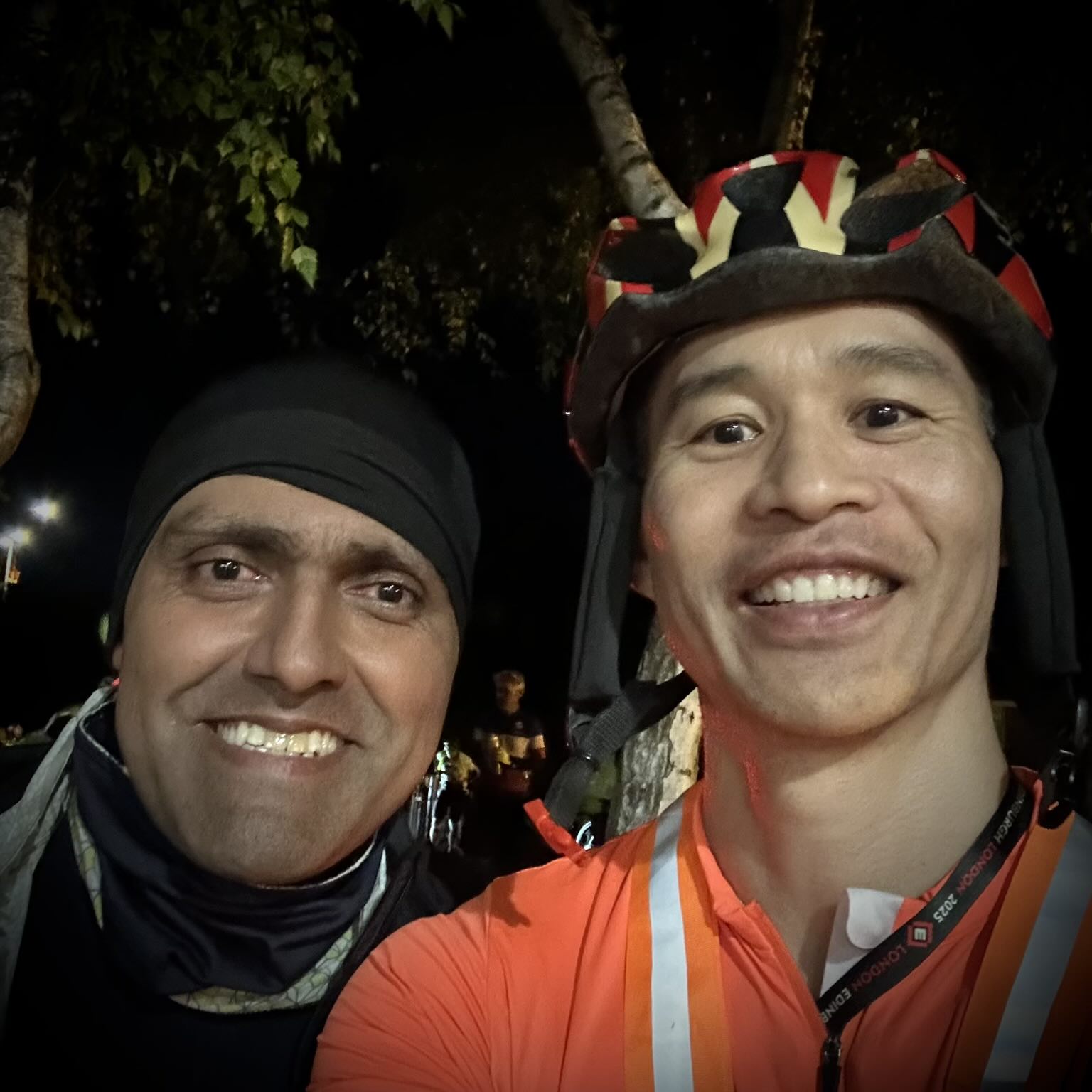
I reached Boston at 10:15 p.m., an hour after dark, and had just sat down when the wildest coincidence of the trip happened. The rider next to me looked over and said, “Hi Felix.” It was Bharat from India—crew member and driver of Van #3 for my all-blind stoker RAAM team back in 2018—also doing LEL. I had no idea he would be here. He pressed on to Louth into the night while I stuck to my original plan of avoiding overnight riding and got a dorm bed.
Before sleeping and while eating a warm, control-provided dinner of scrambled eggs, hash browns, and a bread roll, I re-downloaded the correct GPX files and synced them to my Garmin using my iPhone, thereby ensuring no more navigation issues for the rest of the ride. Then I brushed my teeth and put on an eye mask and earplugs—a brilliant idea in hindsight, since there was a Very Loud snorer in the control dorm. Ultimately, I had very restful sleep for near the six-hour minimum I had established as a pre-ride goal.
The next morning brought rain again, but thanks to the booties my feet stayed warm. The terrain was rolling, with a few steep pitches over 10%—short enough to power over without weaving. The wind roared in my ears, but rarely in my face. There were instances when wind gusts would exert so much lateral force that I’d have to lean, but nothing quite as crazy as what I’d later hear about at the higher elevations on the route ahead.
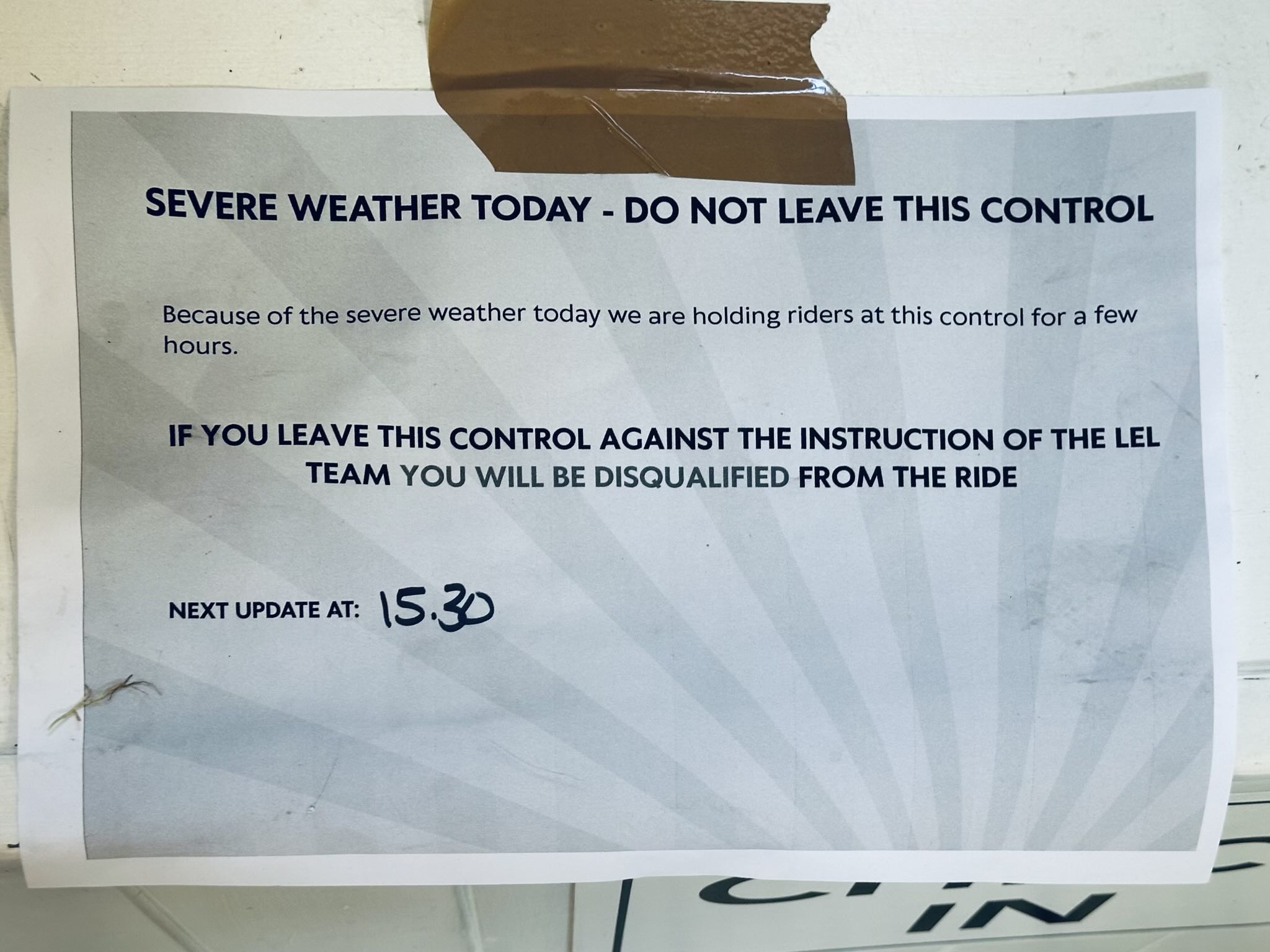
I made it to Malton by 3 p.m. after 185 km, only to be greeted by a sign that appeared to be hastily printed out from Microsoft Word: no one was allowed to leave the control under penalty of disqualification. Storm Floris was in full force, cyclists had been blown across the road multiple times, and the weather prognosticators had been absolutely correct.
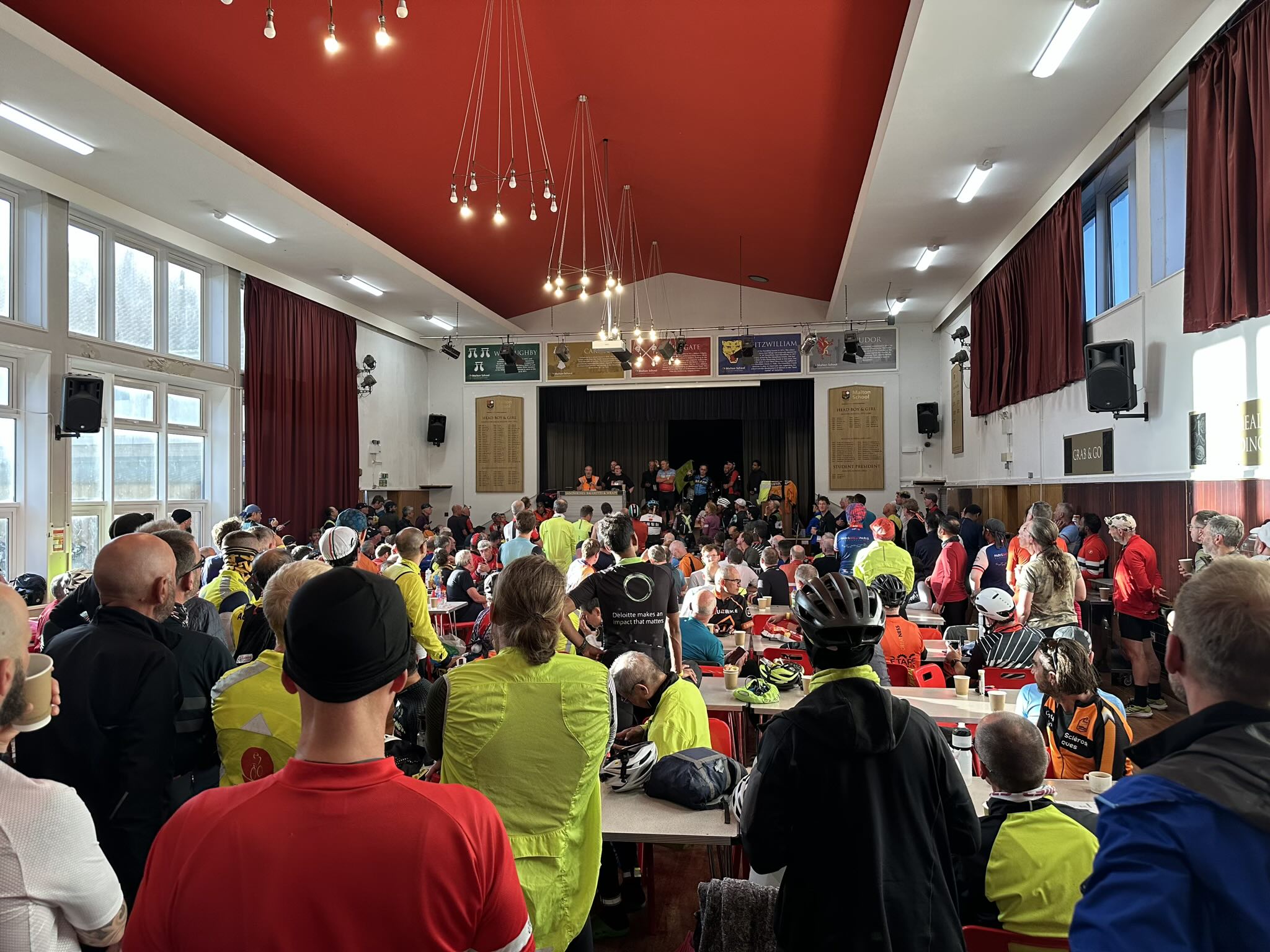
At 3:30 p.m., a brief declaration was made: hunker down for the next four hours until the next announcement. I took care of some minor things, like lubing the chain and charging devices, before plopping down on a chair at the rear of the dining room, putting on my eye mask, and napping for two or three hours. I thought it would be wise to stock up on sleep were we able to continue on towards Richmond later that night.
But at 7:35 p.m., the announcement came: the event was canceled—or more precisely, curtailed—with cyclists “invited” to ride back down the southern route to where we had started the journey. My LEL had just become London–Malton–London, at around 385 km each way.
I understood the reasoning—the safety of the participants had to come first—and appreciated the decisiveness of the organizers. I think so did everyone else as I heard no complaints or objections.
Joaquin Almirón captured on video the moments after the announcement in Malton, in which the volunteers for the ride were given a well-deserved standing ovation:
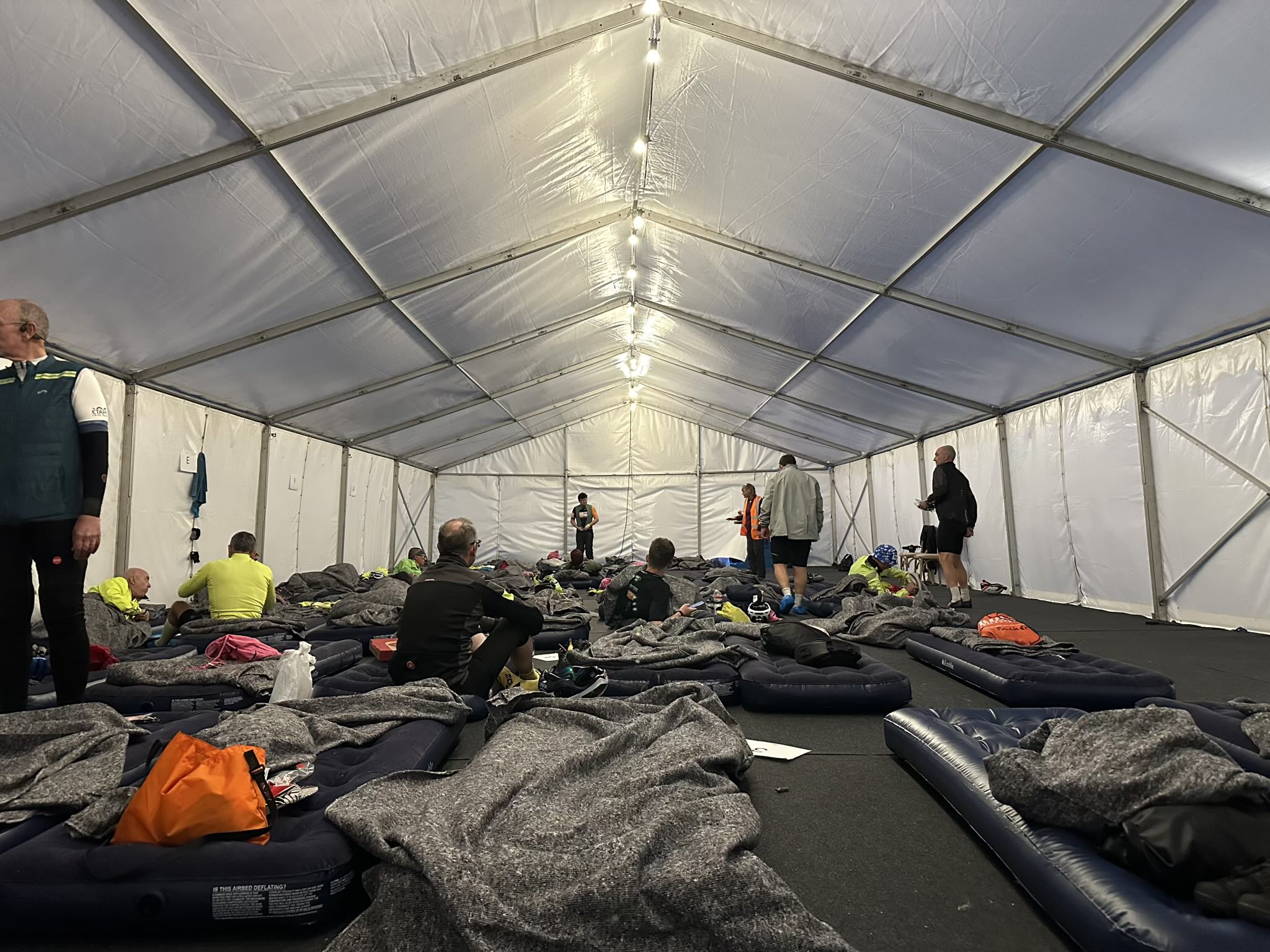
That night I slept in a massive tent with about 50 other riders on a half-inflated mattress under two thick blankets. Due to a strong wind seeping underneath the tent, I had to reposition the blankets maybe every 20 minutes to avoid cold air from making contact with my skin. A friend later saw a photo I’d taken and said it looked like a refugee camp, and I couldn’t disagree. But I was just grateful to be given an air mattress in the first place considering that there were around a thousand cyclists stuck at Malton, and not nearly enough beds to go around.
The next morning I rolled southbound at 6 a.m. My goal: to bike at least 200 miles today, so as to continue my annual double century streak that I had begun back in 1996. That distance would put me 20 or 30 km before the penultimate checkpoint of Henham. Henham was just 43 km before the finish, so in the back of my mind, I also entertained the possibility of finishing the ride in one go as to sleep in a real bed.
The steepest climbs of the return came right away, followed by more rain and another day of noisy crosswinds. But there were moments when the storm-muted world opened into something else entirely—rural lanes barely wide enough for one car, bordered by stone walls and windswept fields where sheep grazed and horses stood at the very edge of the tarmac, their tails flicking in the stiff breeze.
Storm Floris eventually lost some of its fury, but I was glad to be riding cautiously. More than once, I approached intersections marked with YIELD signs—much more common than the STOP signs I’m used to in the U.S., yet ironically, these intersections seemed far more deserving of a full stop. Overgrown hedges often blocked the sight lines entirely. I’d ease up to the dashed line, only to be startled by cars suddenly hurtling past at high speed. Several times, I had to fully squeeze the brakes and hastily unclip my left pedal to plant a foot down.
At some point during one of these abrupt stops, I sprained my left ankle. That made it impossible to put consistent power through the pedals for the rest of the night. From then on, I was stuck in a rhythm of pedaling, coasting, pedaling, coasting—rinse and repeat. Thankfully, the final 100 km were mercifully flat.
When the sun broke through, it painted the fields in impossible clarity—greens and golds bending under the wind, a river sometimes glinting far away on the horizon. The road often twisted through the land like a ribbon, and every climb seemed to reveal something new: wildflowers blooming from stone cracks, seabirds riding the invisible air currents above. And in the quiet, I found myself thinking that this—these in-between spaces—were as much the point of the ride as any official destination.
My last night on the road was the kind that etches itself into memory. A nearly full orange moon rose slowly above the horizon, its reflected sunlight gently threading through the silhouettes of the trees. The air was crisp and remarkably still—a huge contrast from what it was during the daytime—and the narrow lane ahead was empty, my headlight cutting a white tunnel through the dark. I slowed, not because I was tired, but because I wanted to make the moment last. In that solitude, with the moon and the faint sound of a distant sheep, the countryside didn’t just feel like a backdrop to the ride. It felt alive, and—for a brief while—it felt like it had let me in.
Once I got past Cambridge—which was remarkably still bustling at 10:00 p.m. with fairly heavy traffic—there were almost no cars to have to share the roads with. The wind from the previous days was now entirely absent, and the only noise to be heard was my own happy humming of songs from the sixties that popped into my head. Simon and Garfunkel, the Beatles, the Righteous Brothers, the Ronettes—the classics from what I still consider to be the greatest era of music.
Kilometer 322 for the day—the double century mark—prompted a self-congratulatory salute, as did reaching Henham, where I stopped just long enough to give my Garmin an additional 10% charge, check in, and eat a banana. There was no question about continuing on, riding 43 km (actually 47 km, as my lodging in Chelmsford was 4 km beyond the finish), and wrapping up this ride.
I reached Writtle at 3:45 a.m. after having ridden 393 km from Malton, the finish locked until morning. Somewhat anti-climatically, nobody was there except a woman who was waiting for her friend to arrive. She pointed out the “official” finish, where there was a note posted explaining that check-in wouldn’t open until 7:30 a.m., but any cyclist who arrived earlier was welcome to sleep inside. No thanks.
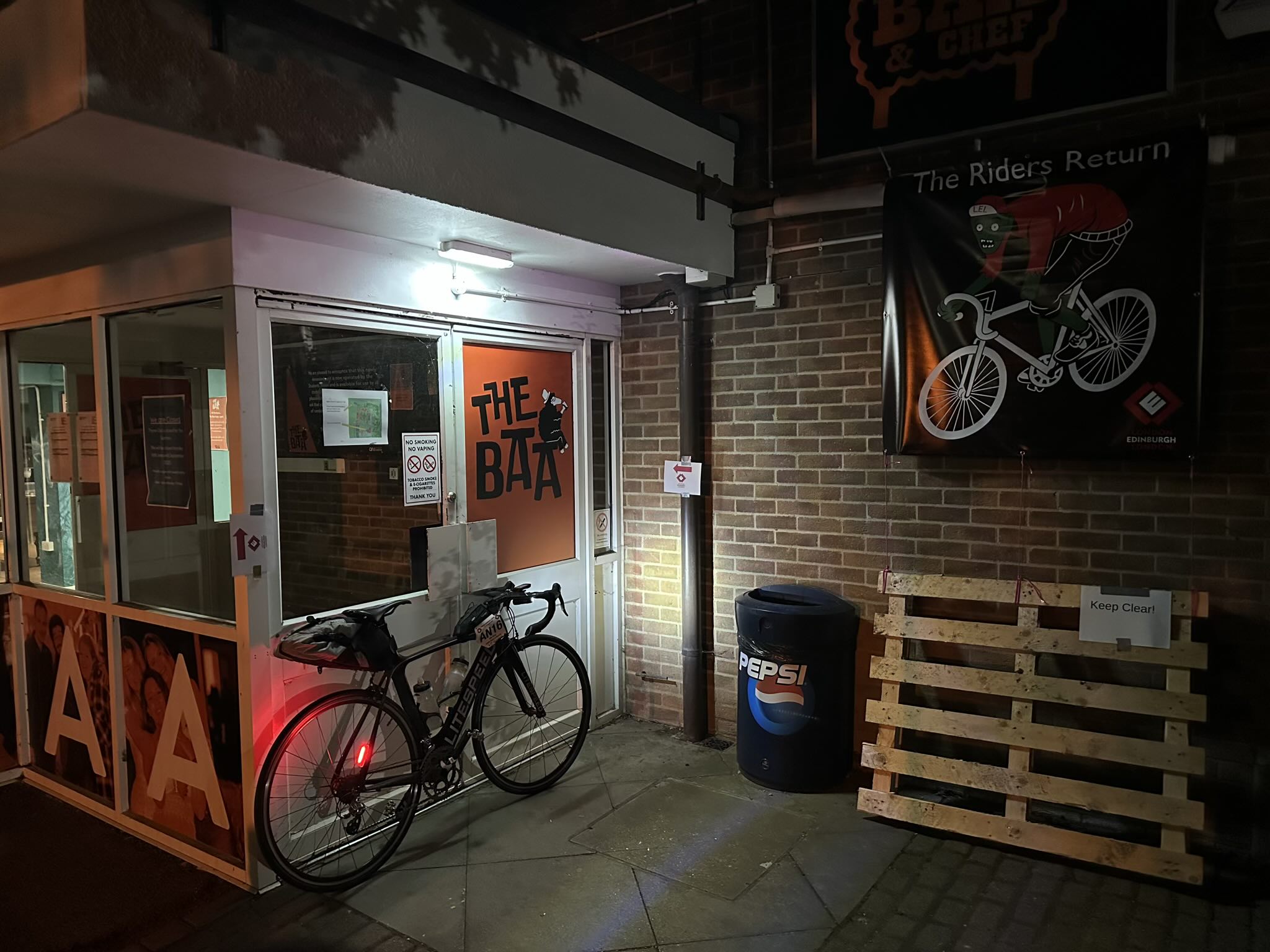
I quietly celebrated while pedaling the remaining few kilometers to the apartment in Chelmsford. Despite fully intending to sleep until noon so as to get eight hours of sleep, I naturally awoke at 10 a.m. and decided to get out of bed when it became clear that I was not going to doze off anytime soon.
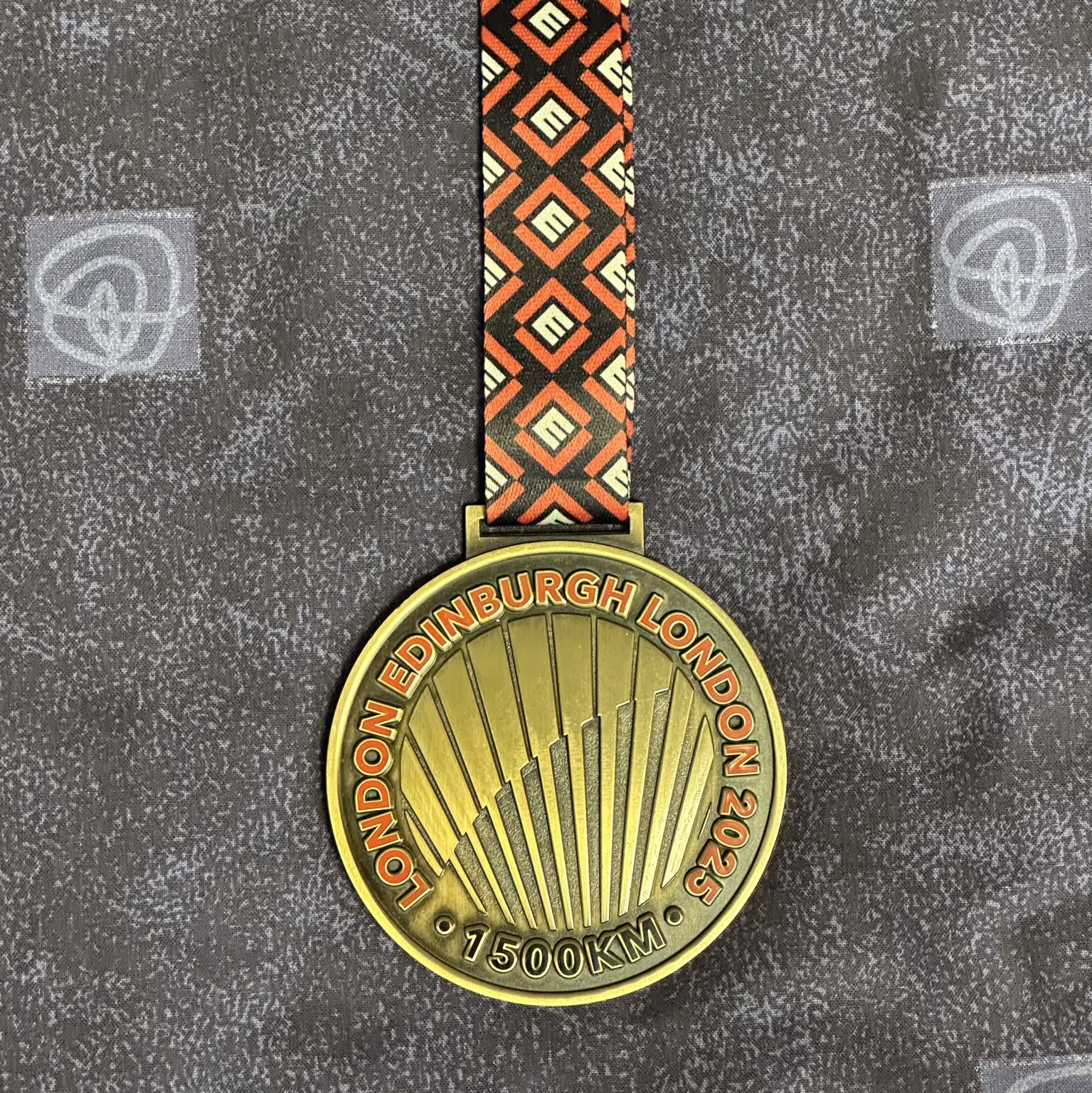
At noon, I biked back to Writtle and checked in officially, returned my rented power bank, and collected a finisher’s medal that felt strange without reaching Edinburgh. Physically, I came out fine—no lasting ankle trouble, just tricep abrasions from the elastic ends of the arm sleeves I wore and a sore backside. The weather, for all the warnings, had been more manageable than expected. But of course, it would have been undoubtedly a lot more dramatic—likely downright dangerous—had I gotten past Malton during Storm Floris.
I don’t think I’d sign up for the official London–Edinburgh–London event again despite it being super well-organized; the lottery, logistics, lack of flexibility, and potential for weather chaos are deterrents. But I might one day return on my own terms to ride the second half of the route to ride what I could not, when the forecast is perfect. Say, Edinburgh–Malton–Edinburgh. I’d sleep in hotels instead of on air mattresses, much like how I rode Boston–Montreal–Boston. Strava would be my witness instead of brevet card stamps.
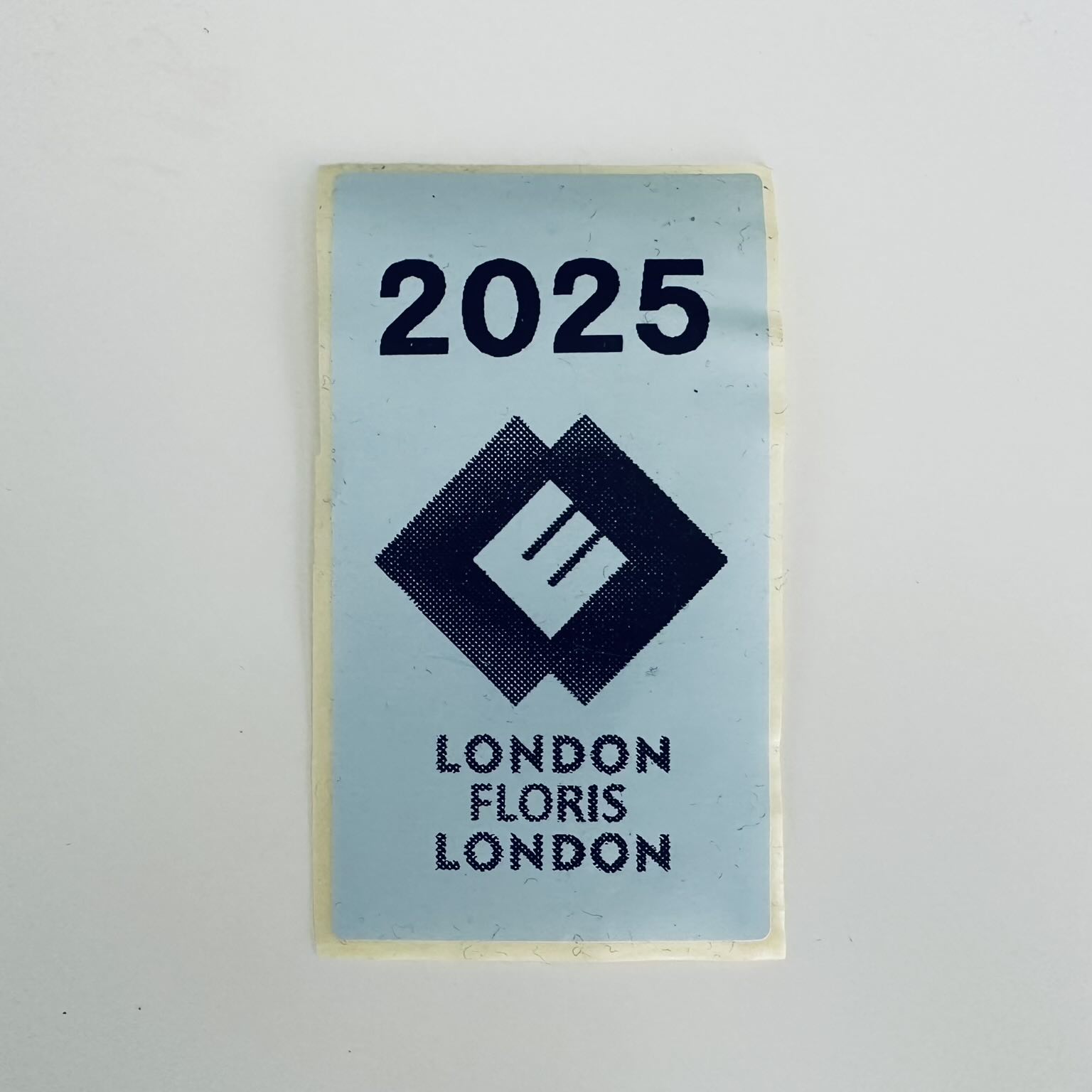
If there’s one thing London–Malton–London—or what the organizers now refer to as London–Floris–London—reinforced, it’s that in endurance cycling, as in life, you can’t control the weather. Sometimes you cannot even control the course. But you can always keep pedaling—and many times, if you’re lucky, the road will reward you with moments that feel entirely your own.
Video
Below is a montage of video clips that I took at various points of the ride.
Ride Data
Total distance: 773 km (480 miles)
Total time: 1:45 p.m. Sunday start to 3:45 a.m. Wednesday finish = 62h0m
Day 1
Distance: 195 km (121 miles)
Day 2
Distance: 185 km (116 miles)
Day 3
Distance: 393 km (245 miles)
Gear List
Participants were offered free drop bag service at two locations. To keep things simple, I opted not to use any and carried all my gear entirely self-contained.
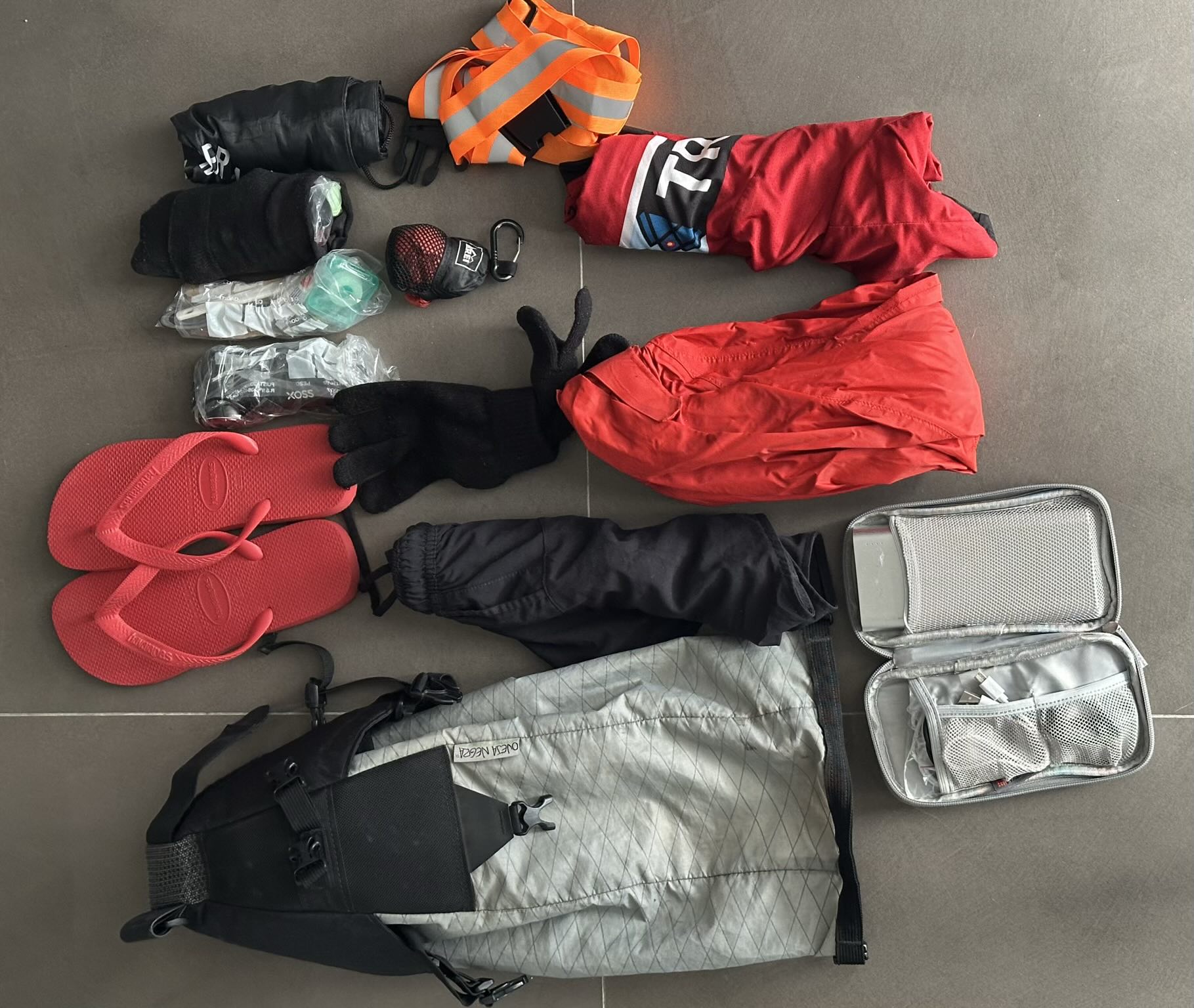
Saddle bag (Oveja Negra)
- reflective vest (straps)
- REI rain jacket
- short-sleeved cycling jersey*
- running shorts*
- flip flops (this was LEL’s “top tip” since wearing cycling shoes at controls was disallowed to protect the floors, but in hindsight, walking around in socks was totally fine and I would have been better off saving the weight and space)
- REI travel towel*
- nylon bag with cords to use as a backpack if necessary
- handkerchief*
- toiletries
- toothbrush
- dental floss
- hotel toothpaste
- razor
- airline alcohol wipe*
- sliver of soap
- ear plugs
- eye mask
- repair
- wax chain lube
- tire levers*
- West Biking mini pump*
- Dynaplug tire plugs*
- mini multitool with chain breaker*
- valve core remover*
- TPU tube*
- Park Tool patches*
- a few hex wrenches*
- power
- 2X USB-A to mini-USB
- USB-C to Lightning
- USB-A to USB-C
- USB-A to Garmin
- renting a 5,000-mAh power bank from LEL, exchangeable at most checkpoints
- My own 20,800-mAh power bank (a last-minute addition, once I realized that the rented power bank did not have a powered USB-C port—only a USB-C input for charging the power bank itself, and a male USB-C output. I needed a female USB-C port to plug in my Garmin watch’s proprietary charging cable.)
- backup lights
- XOSS headlight*
- round taillight*
- Madison waterproof thermal gloves
- Madison merino wool cap
- Madison waterproof booties
Bento box
- XOSS headlight during the day, GoPro Hero Black 8 during the night
- snacks
Jersey pockets
- iPhone 14 Pro
- 50mL of 50 SPF sunscreen
- electrolyte capsules to dissolve in water
- food
On bike
- Garmin Edge 530
- XOSS headlight during the day, GoPro Hero Black 8 during the night
- 2X 20-ounce water bottles
On body
- short-sleeved hi-vis cycling jersey
- sleeveless mesh underlayer
- black arm sleeves
- long cycling tights with foam butt padding
- hi-vis cycling socks
- Shimano MTB cycling shoes
- hi-vis cycling gloves
- Ukoly photochromic cycling glasses
- Garmin Epix Pro (Gen 2) – serves as backup to Garmin head unit
Note: Items followed by an asterisk (*) are things I did not use.
Weight
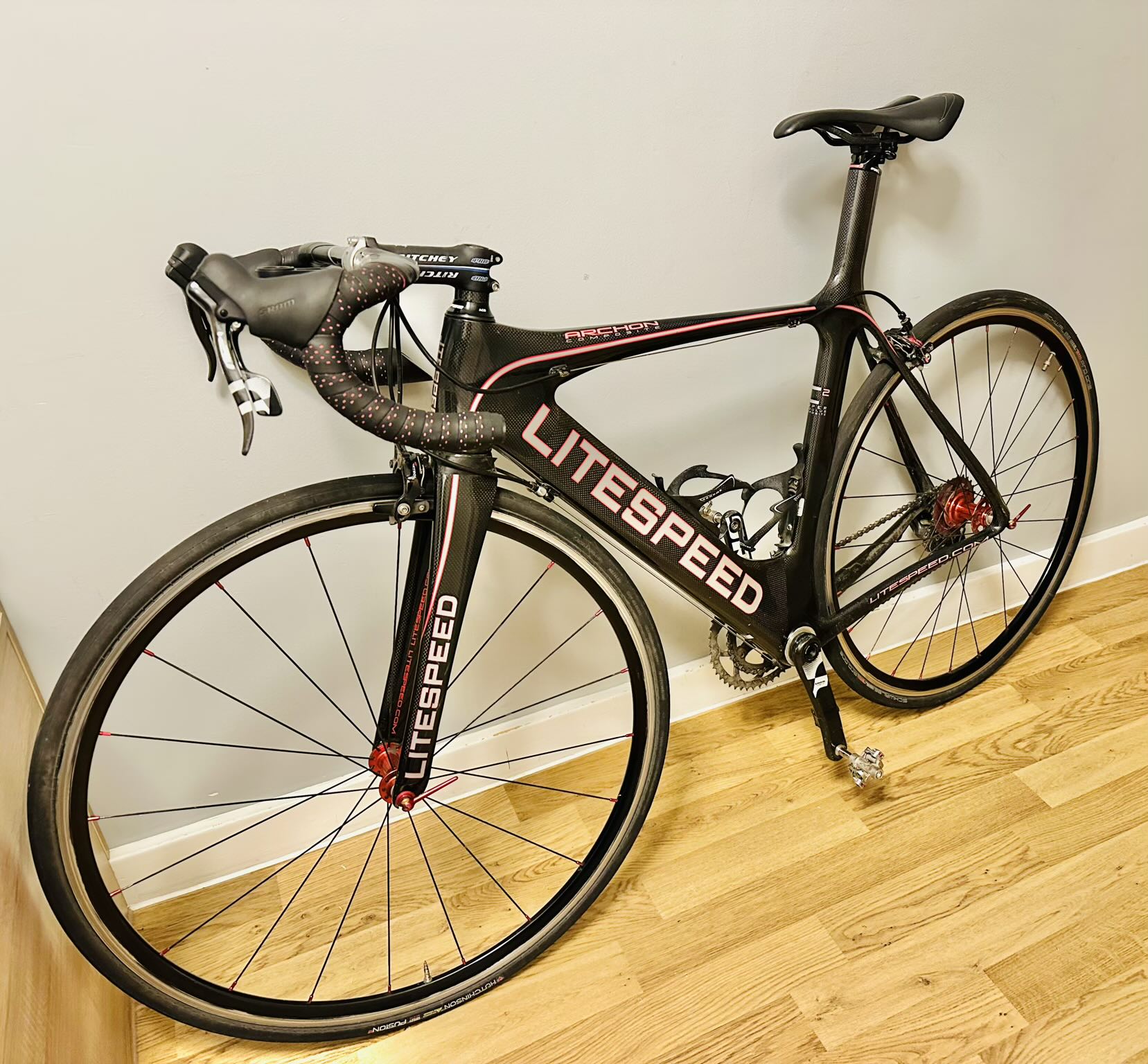
- Bike: 6.8 kg (15.0 lbs.)
- Saddle bag with items listed above: 4.0 kg (8.8 lbs.)
- Bento box + electronics (Garmin, headlight, taillight, GoPro): ~1 kg (2.2 lbs)
- 2X water bottles: 1.4 kg (3.1 lbs.)
- Food (bars, gummies, etc.): ~0.5 kg (1 lb.)
Total weight of above: 13.7 kg (30 lbs.)
For Next Time
- Invest in cycling tights with a better chamois. Maybe explore using bib tights.
- Consider using pedals that have less tension upon unclipping, such as any of the pedals I have on my other bikes.
Other Cyclists’ Experiences from 2025 That Were Written Up
- Rob Skinner: Rob left Boston (heading for Louth) on Sunday, just 40 minutes before I arrived. On Monday, he reached Malton an hour ahead of me. His blog about his ride not only offers interesting facts about the areas we passed through, but also features an excellent video he made of the event.
- Ian McBride: This New Zealander was the only cyclist to officially complete the whole route in 2025. He was able to beat Storm Floris by having a 5:00 a.m. Sunday start time, hardly stopping, and arriving in Scotland before LEL was suspended. He told ITV News that “the conditions were some of the worst I’ve ever ridden. The bike ran all over the place, and I’m lucky the roads were empty.”
- A woman from India who got as far north as Richmond and hence was able to ride 970 km of the route. Many folks who were able to start earlier than I did were able to to get to Richmond before the suspension of the ride.
- Angelo Failla: Angelo wrote a fascinating post about his journey by car from Ireland to LEL, covering everything from economizing and gear choices to post-event sightseeing and problem solving. Unfortunately, he had to DNF (“did not finish”) after a drafting cyclist collided with him and snapped off his rear derailleur. The crash was not Angelo’s fault at all, but it perfectly underscores why I adopted a no-pacelining policy decades ago—beyond my desire to complete the ride solely under my own power. Before that, I had been involved in at least five incidents where someone went down in a paceline.
- Olaf: Olaf got as far north as Middleton and therefore was able to ride 1030 km of the route. His post includes some more info about Ian McBride’s experience riding through Storm Floris (“I was actually frightened on a few occasions. I was hoping every white van was an LEL van coming to pick me up saying it was all abandoned”) and also his own experience booking hotels during the ride.
Past LEL Experiences
I read the following before embarking on this year’s journey:
- MC’s Cycling Diary (2022): I must have read this blog post at least three times before leaving for London. It is super detailed and was a great reference to know what to expect during each leg of the journey.
- Matt Page (2022): In this report by a writer for road.cc, Matt Page set about to “race” LEL on a Cannondale Slice. He barely slept and finished in just over 67 hours.
In Retrospect: Could I Have Continued North Unofficially?
I didn’t even consider continuing north of Malton when I first heard the announcement of London–Edinburgh–London’s “cancelation.” But about a week after the event, I started wondering if I could have carried on towards Edinburgh unofficially.
Leaving Malton on Tuesday morning, I imagine the storm might have eased enough to head north. If I could have found a hotel to stay near St. Mary’s Loch Tuesday night, then another hotel in Richmond on Wednesday, stayed at the Boston control—which I presume was still open—on Thursday, I might have been able to finish sometime Friday afternoon or evening. This is in contrast to my original plan of finishing LEL on Thursday night.
It would have been tight with my Saturday flight and would not have left much time to see friends in London, but maybe it could have worked.
Or maybe it would have simply been a bit too much adventure for one week. Not only would it have required finding hotels or Airbnbs on short notice, but it also assumed my body—sprained ankle, sore bum, and tired legs included—could have held up, especially with all the climbing in Scotland.
Indeed, the day after I arrived in Writtle, I thought, “I’m glad I am not biking anymore.”
Furthermore, the weather still may have been precarious on Tuesday. Brook Henderson had pointed this out on the London–Edinburgh–London Facebook group:
I arrived Richmond around 11:00 a.m. Monday. Thirty minutes later, Danial perched on the stairs to announce the ride was being paused. After a short nap, I started using the Epic Ride Weather app to view the weather conditions for the upcoming section to Brampton. I would set the start time to different hours in the future and check the forecast. Even leaving at 12:00 noon Tuesday showed a forecast of dangerous wind speeds and wind gusts. So, it seemed obvious that we were all headed south.
In conclusion, considering all the caveats mentioned above, I do not regret not continuing unofficially to Edinburgh, given the considerable risks it would have involved.

There are 2 comments.
thanks for the mention :) My surname is "Failla", just a little typo on the post :)
Sorry about the typo! I have corrected it now. Good luck fixing the bike!