A Week in Fuerteventura, Canary Islands

My London friends Chris and Roxana invited me to join them for a week on the island of Fuerteventura in the Canary Islands of Spain. Chris had recently bought a villa there as an investment property, and between renters he was trying to get some work done on it. Roxana was joining him both for a working-remotely “vacation” and to help with communication; she speaks excellent Spanish—all learned from TV, amazingly—and to be honest, Chris (born in Belgium) speaks Spanish pretty well too. The timing was perfect: they were going to be on the island right after my Berlin trip, so I flew over and spent nearly a week hanging out with them.
Before I arrived, Roxana had already enticed me with a photo taken from one of the villa’s bedrooms. In it was a nice view overlooking a pool with the Fuerteventura Golf Club just beyond it—much like the picture I took below.
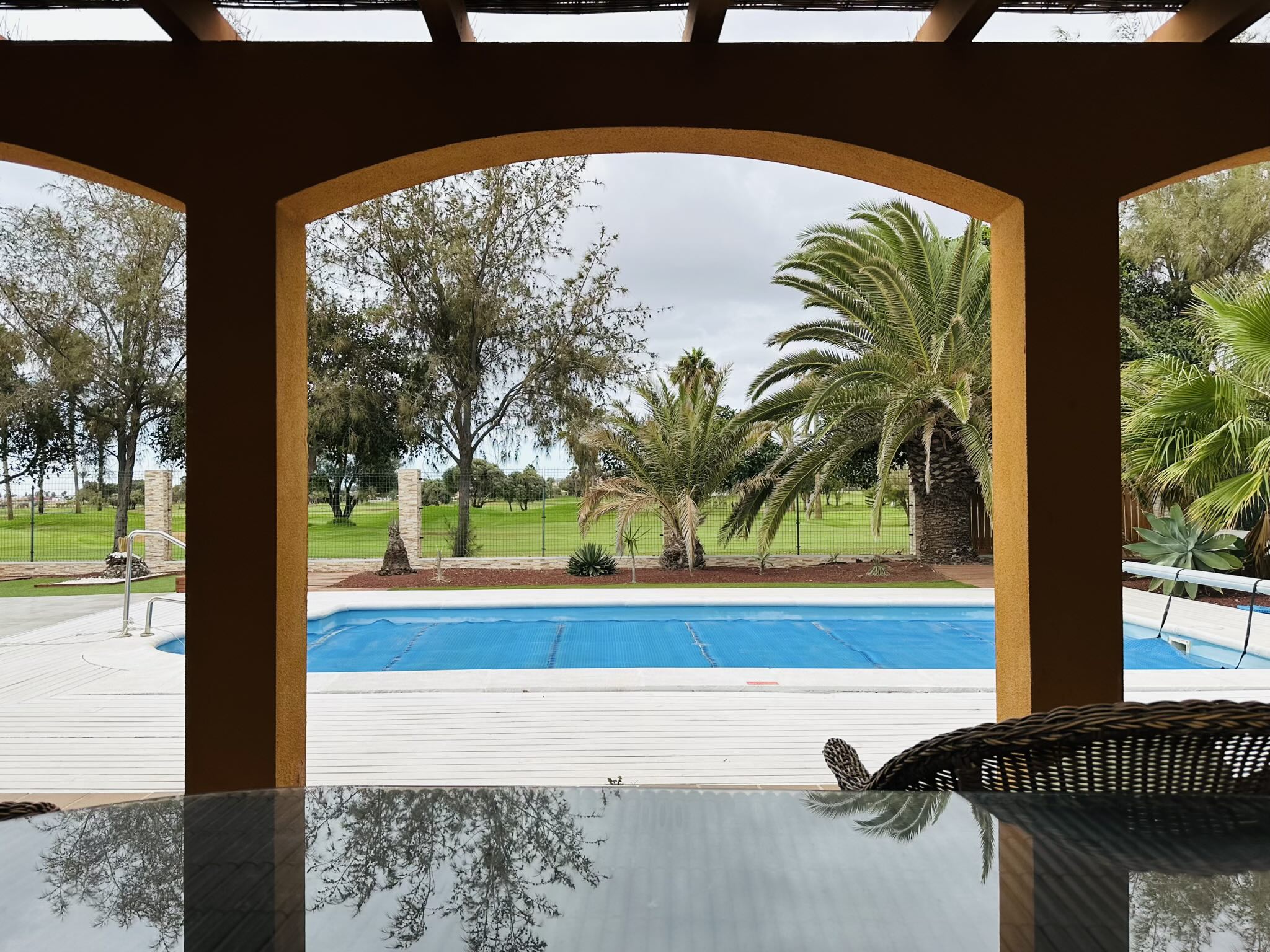
The villa itself was spacious, with three bedrooms, a large patio and living room, a generous kitchen, and even a rooftop terrace. It was technically walking distance to Caleta de Fuste, but Roxana warned me that renting a car was more or less essential on the island since public transit was limited and everyone relied on driving. This turned out to be good advice as it opened up opportunities to explore the island during my week here.
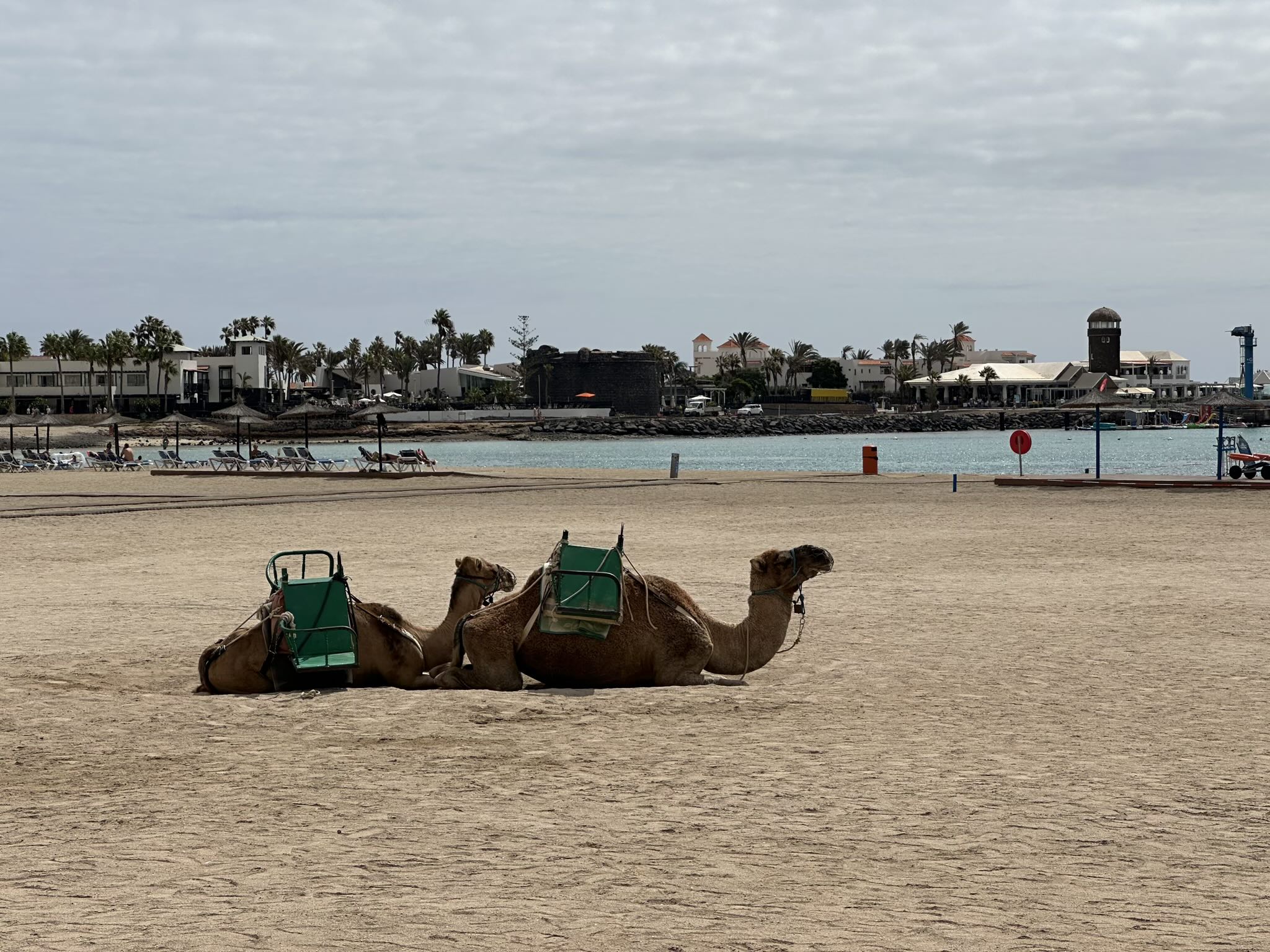
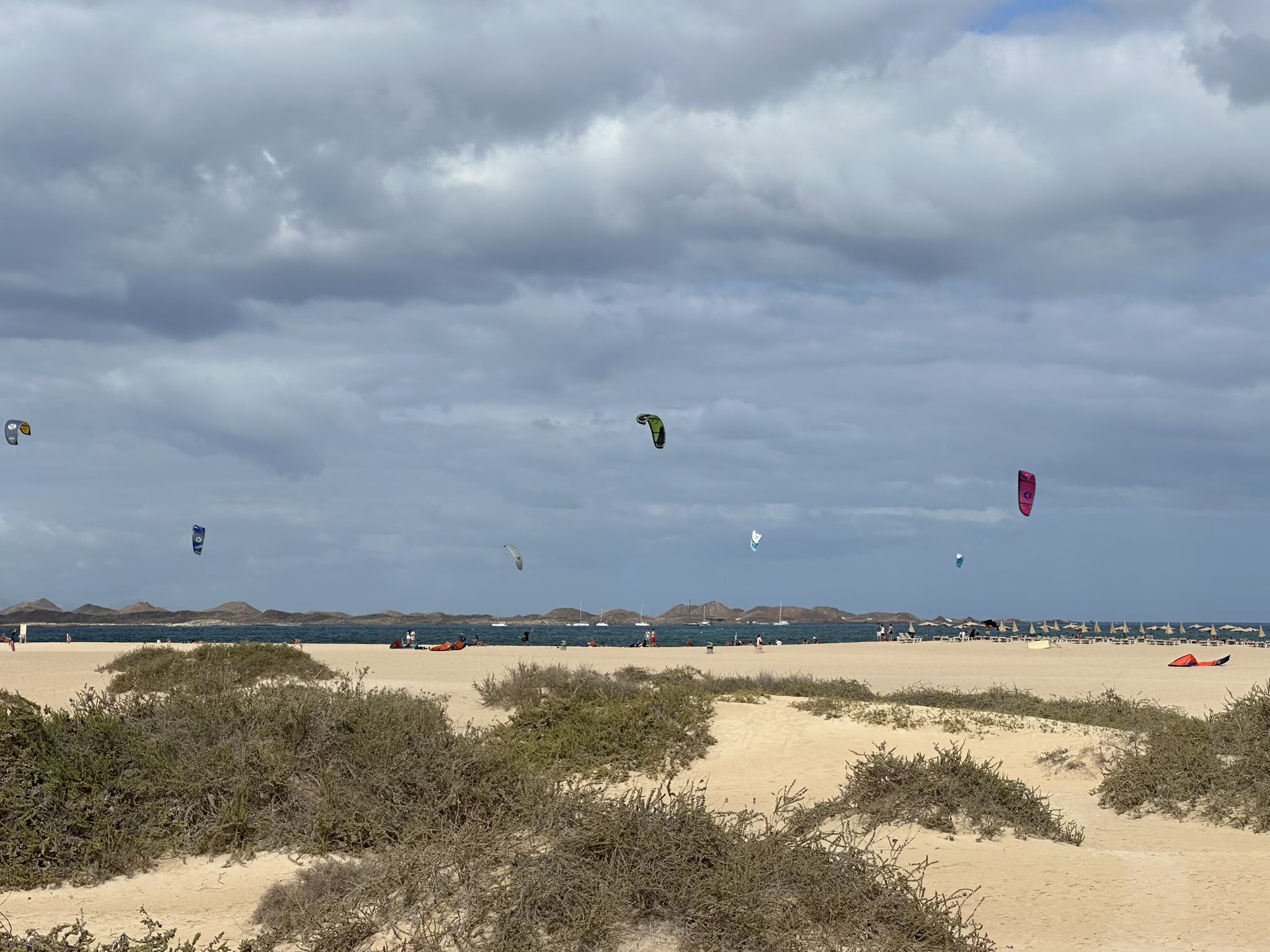
The next morning I laced up my shoes and went for a run over to Caleta de Fuste. It quickly became clear that Fuerteventura is an island shaped by volcanoes and relentless Atlantic winds: dark volcanic rock everywhere, pockets of pale sand, rugged beaches with tide pools, and a few early-morning beachgoers and joggers scattered about. I ran past jagged outcrops, rows of resort hotels, and a small port with fishing boats rocking gently. I’d end up doing a variation of this run every single morning during my stay.
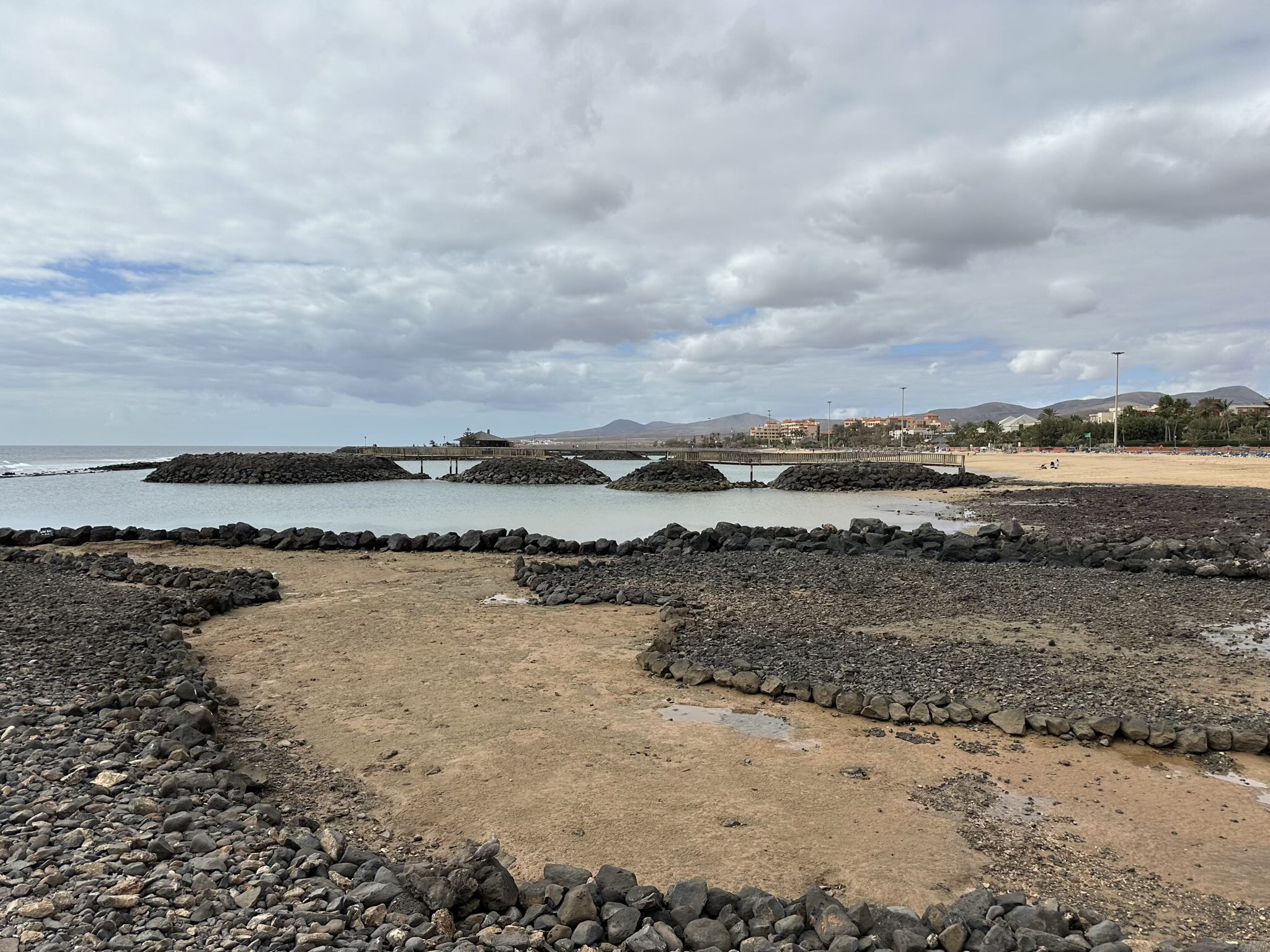
After cleaning up, we made a grocery run to Mercadona—my favorite Spanish grocery chain. It turns out Chris and Roxana eat almost exactly like I do: enormous salads of mixed vegetables and legumes. We’d just toss in a mountain of greens, lentils or garbanzo beans, olives, tomatoes, mushrooms, onions, and more into giant pots (one for each of us) and eat straight out of them—just like I do in Colorado. Hey, less dishes to wash!
My version usually includes hard-boiled eggs; Roxana’s sometimes included cold, firm tofu eaten straight from the package. Everything was topped with olive oil and maybe some balsamic vinegar. A healthy, delicious, no-cook meal we could all happily eat every day.
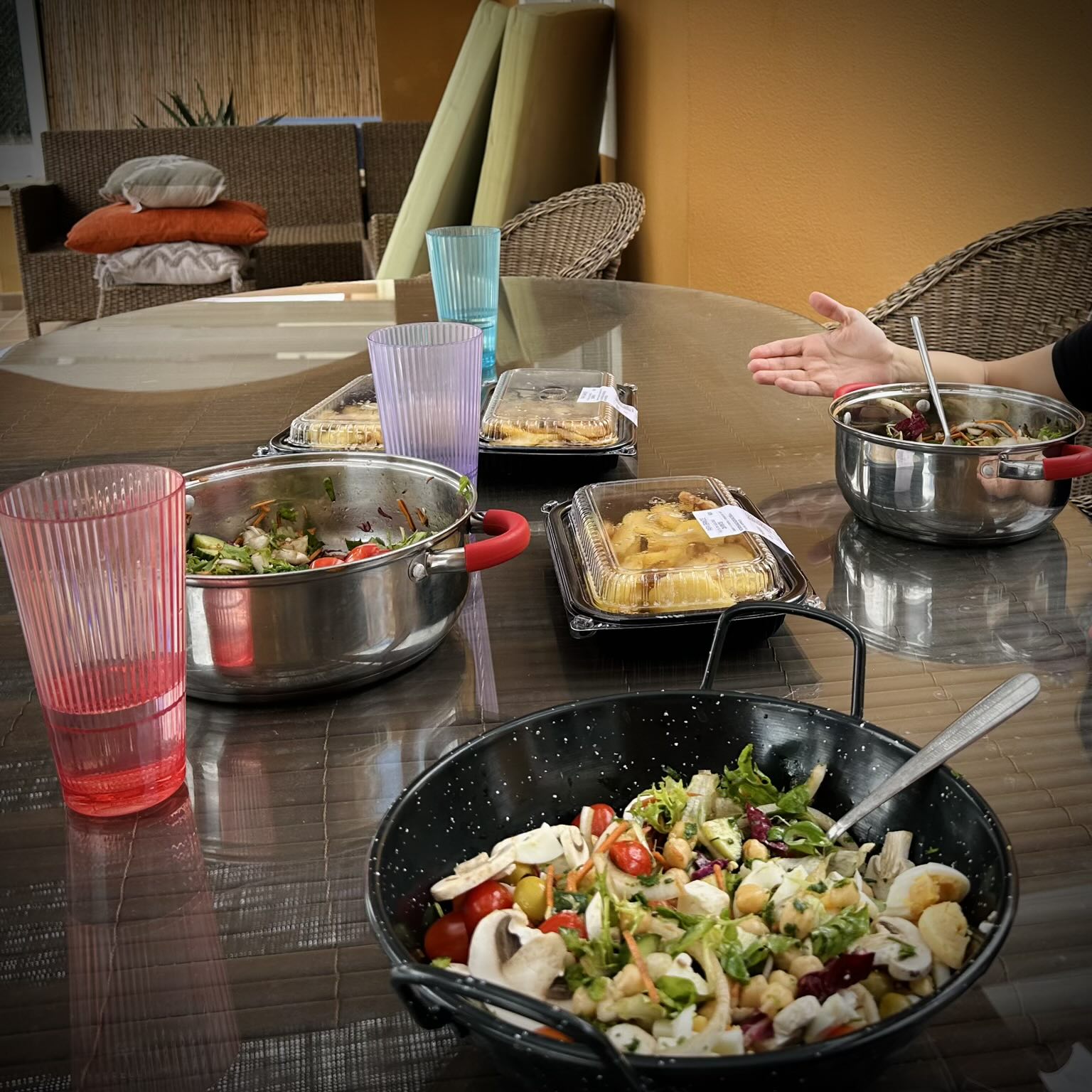
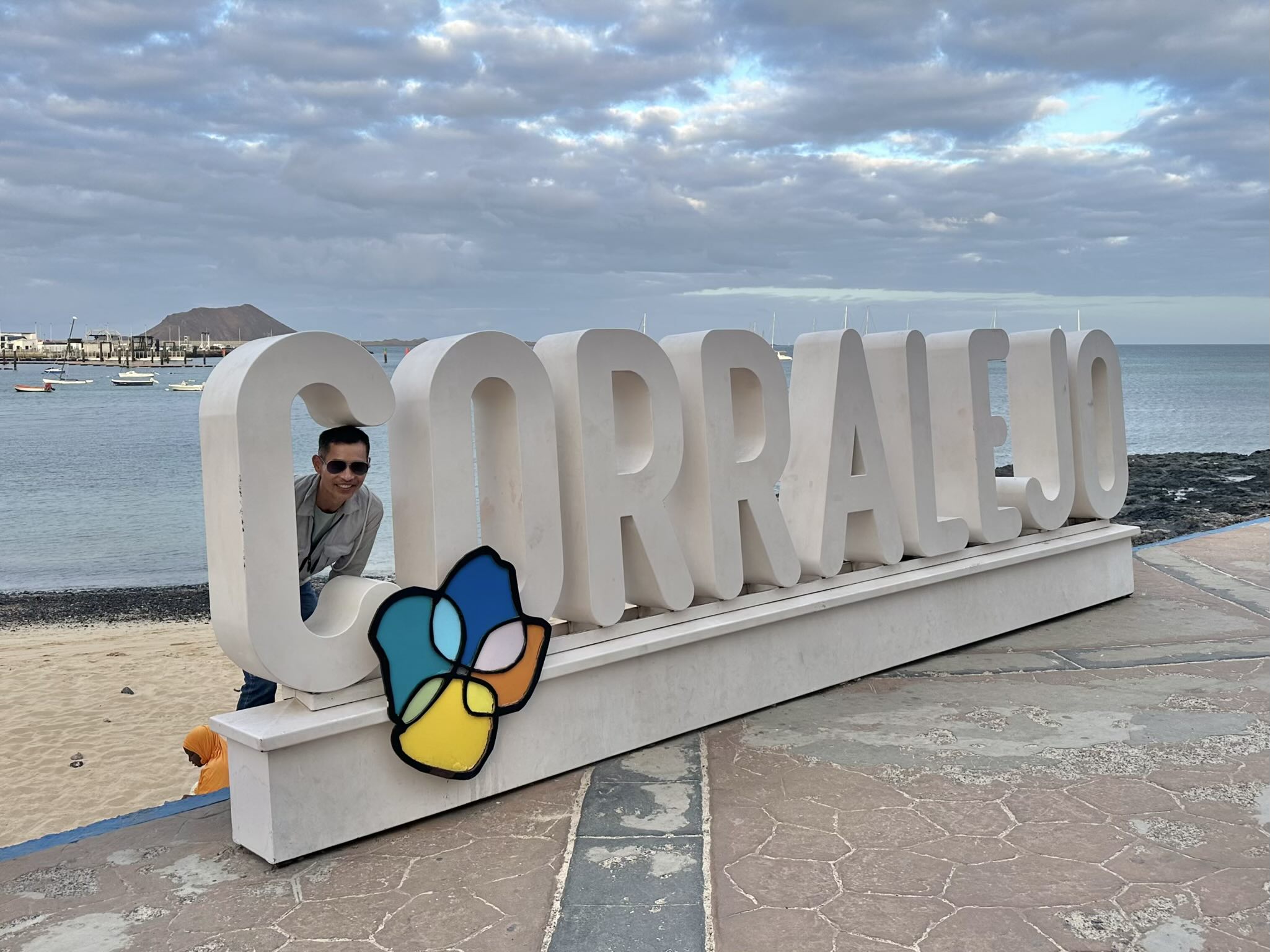
That afternoon, the three of us drove north to the town of Corralejo. This is the place Chris is eyeing as a potential retirement spot. Compared to Caleta de Fuste, the demographics felt more diverse—fewer British expatriates and retirees, more young people, and quite a few Italians. The kite-surfing culture especially appealed to Chris and Roxana; they’re both enthusiasts and had brought their gear along.
On this particular afternoon, we were meeting Chris’s friend Olga, who lives up here and works in the hospitality industry. Chris had originally met her at a hotel he stayed at for work—not in the Canary Islands, I think—but one day he ran into her by sheer coincidence while visiting the Canaries. They’ve stayed good friends ever since. Olga came out with her husband and newborn daughter, and we had drinks outside a restaurant while chatting in Spanish. She gave Chris some helpful tips on redecorating his villa and pointed him to a local shop that sold stylish, reasonably priced furniture and offered interior-design services. We stopped by afterward, and it was exactly what she had described. A few days later Chris returned, met with one of the co-owners, and ultimately placed a large but remarkably affordable order using most of their recommendations.
There were plenty of other projects Chris was juggling at the villa. One afternoon he installed a smart door lock—successfully, after a few hours—which impressed me, because European doors and their locks are far more complex (and robust) than American ones. A more stressful issue involved the pool: the electric bill was shockingly high each month. A local specialist inspected it and insisted there was a leak that would require several thousand euros to uncover and repair. Chris understandably wanted a second opinion, which annoyed the specialist enough that he basically stormed off saying that his time was being wasted. For a bit the situation looked grim, but eventually Chris got better news from another specialist that the pool likely didn’t need nearly as much work as he feared.
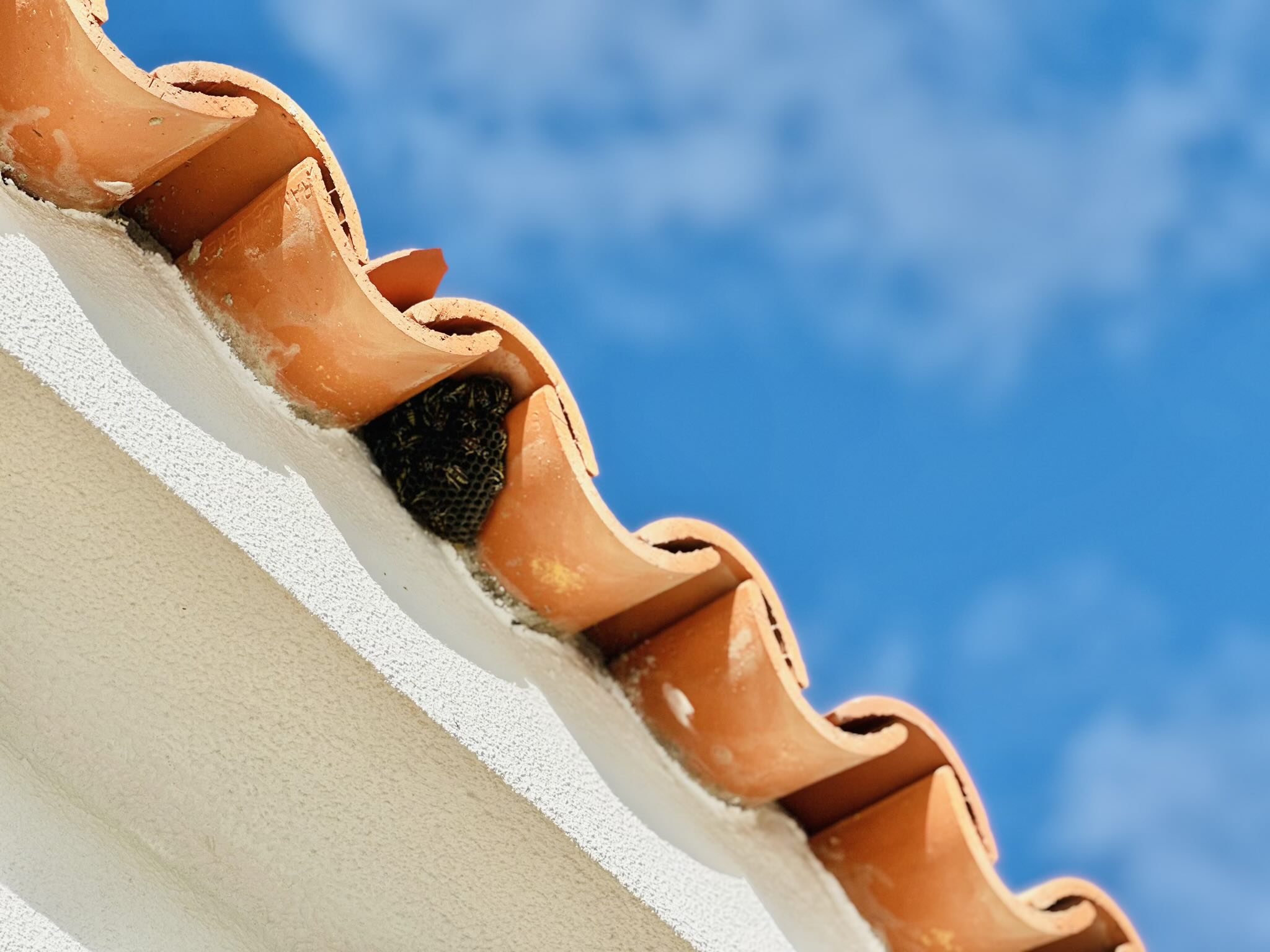
As if that weren’t enough, he also had to deal with a wasp nest and two errant golf balls from the neighboring course that flew over the fence and broke a couple of roof tiles—all within the same week. We even had to visit the golf club so he could file an insurance claim. The “joys” of homeownership!
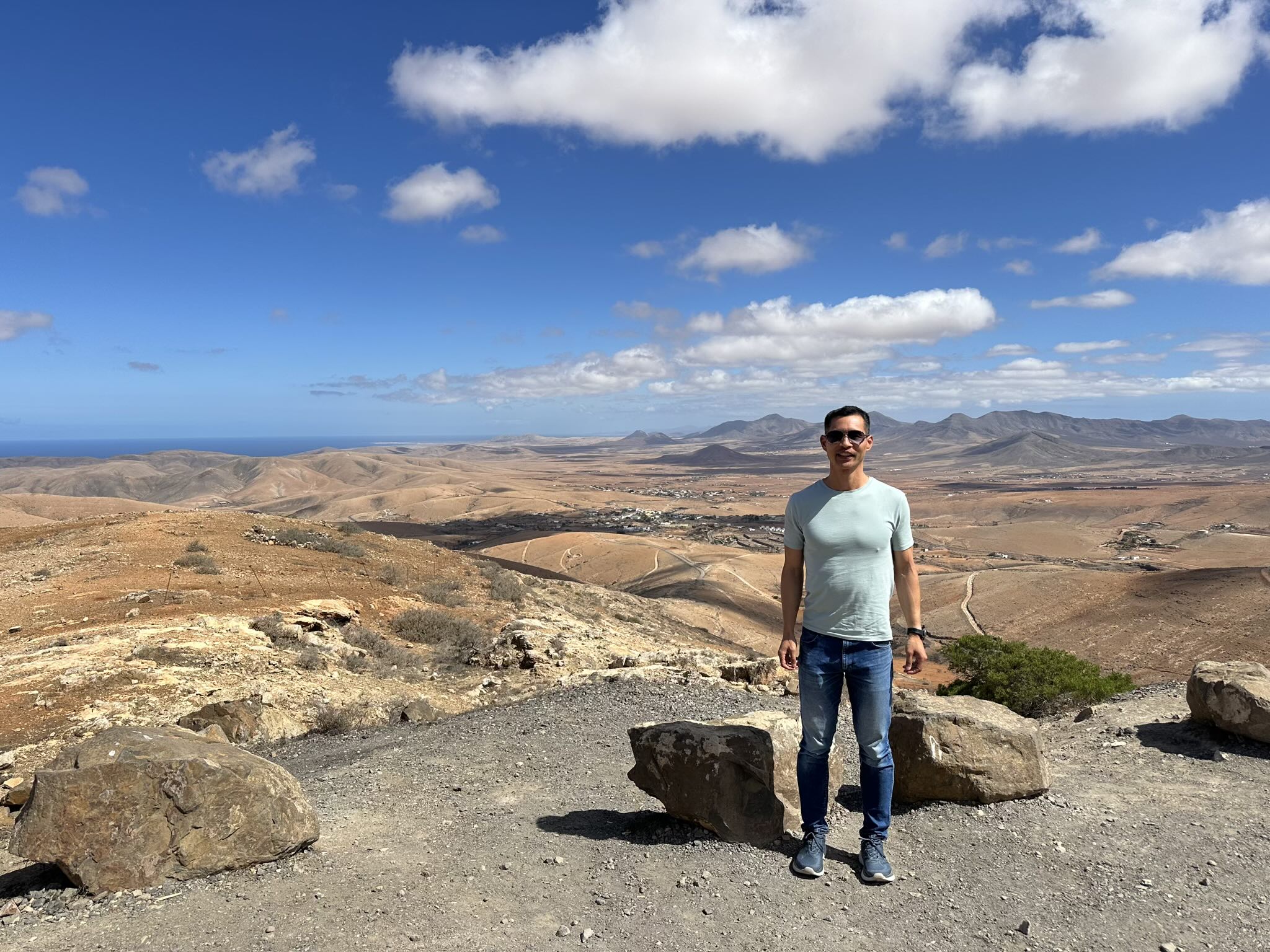
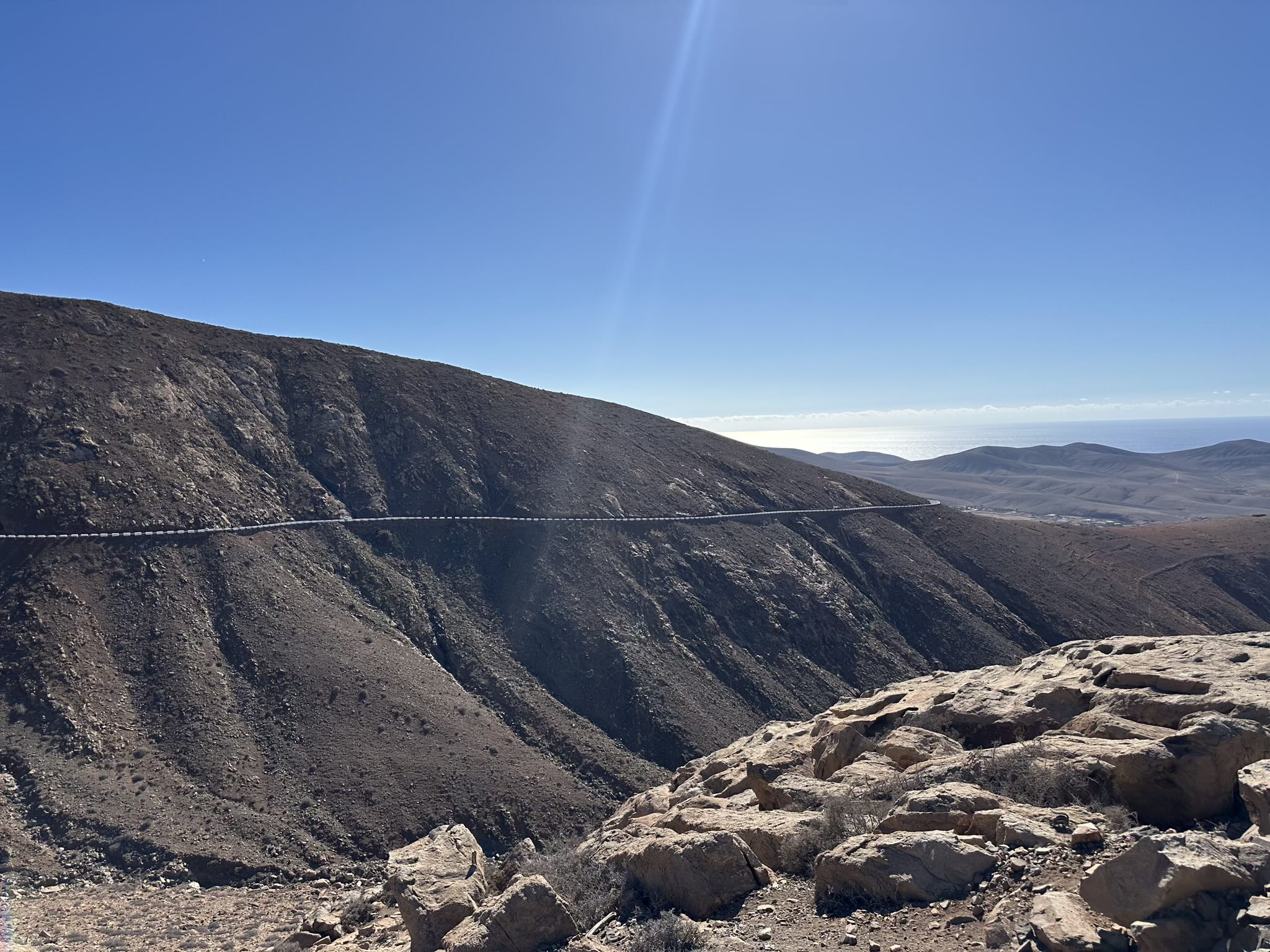
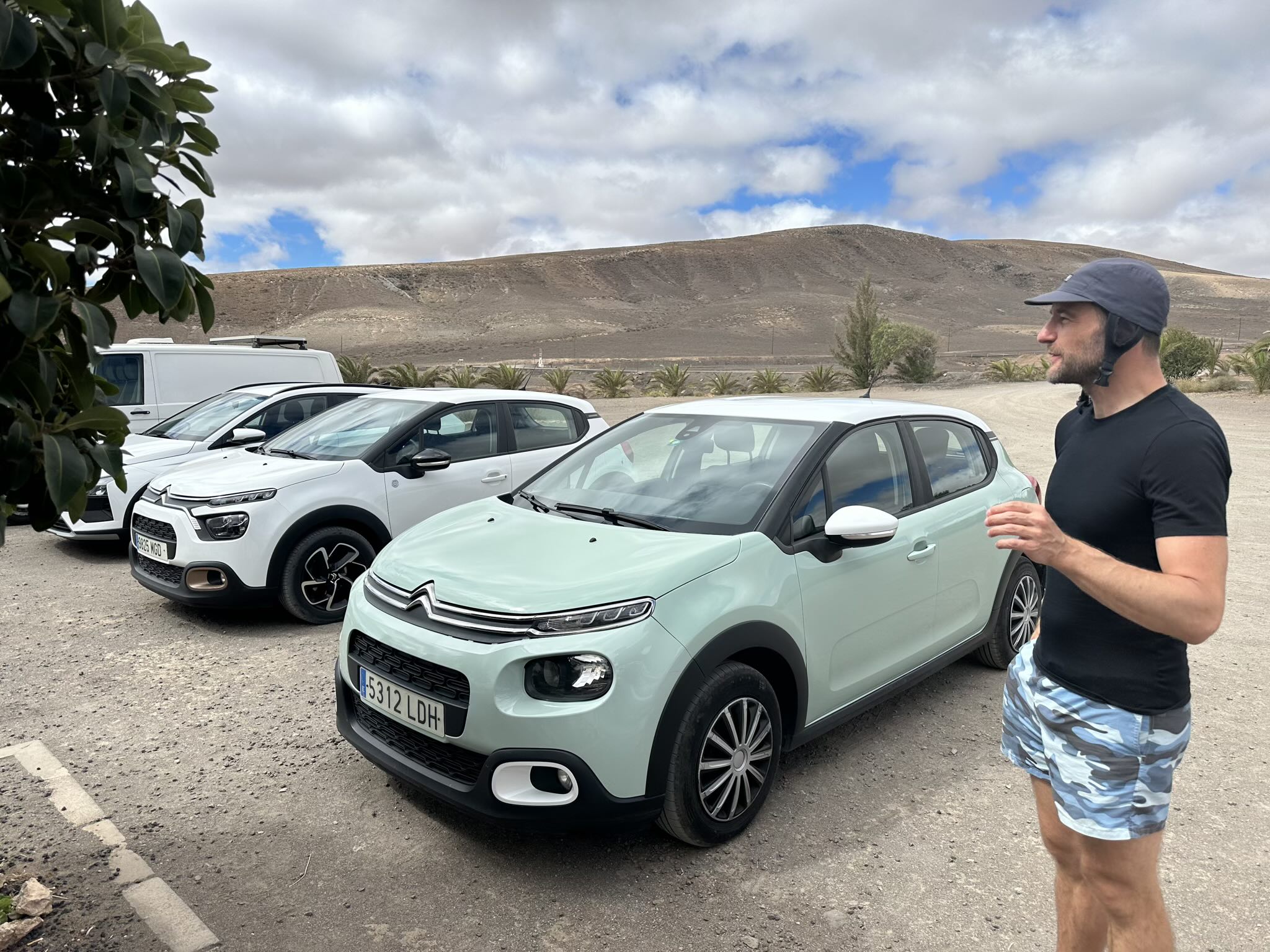
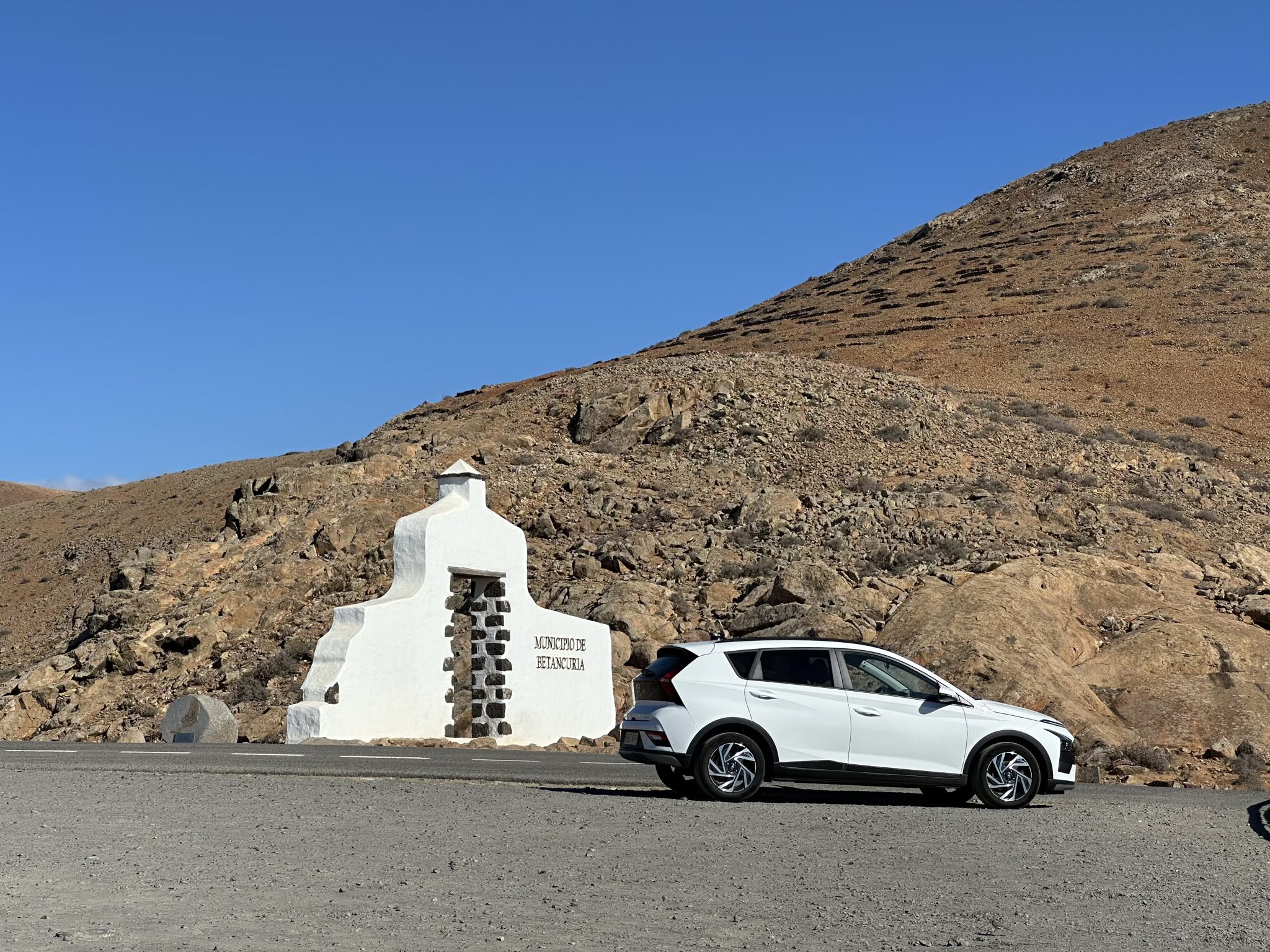
One afternoon, Roxana and I took a drive into the island’s mountainous interior. I steered my underpowered Hyundai Bayon rental up mellow, winding roads toward the old capital of Betancuria. The car beeped at me for mysterious reasons and had an overly aggressive lane-keeping system, but at least it had a manual transmission.
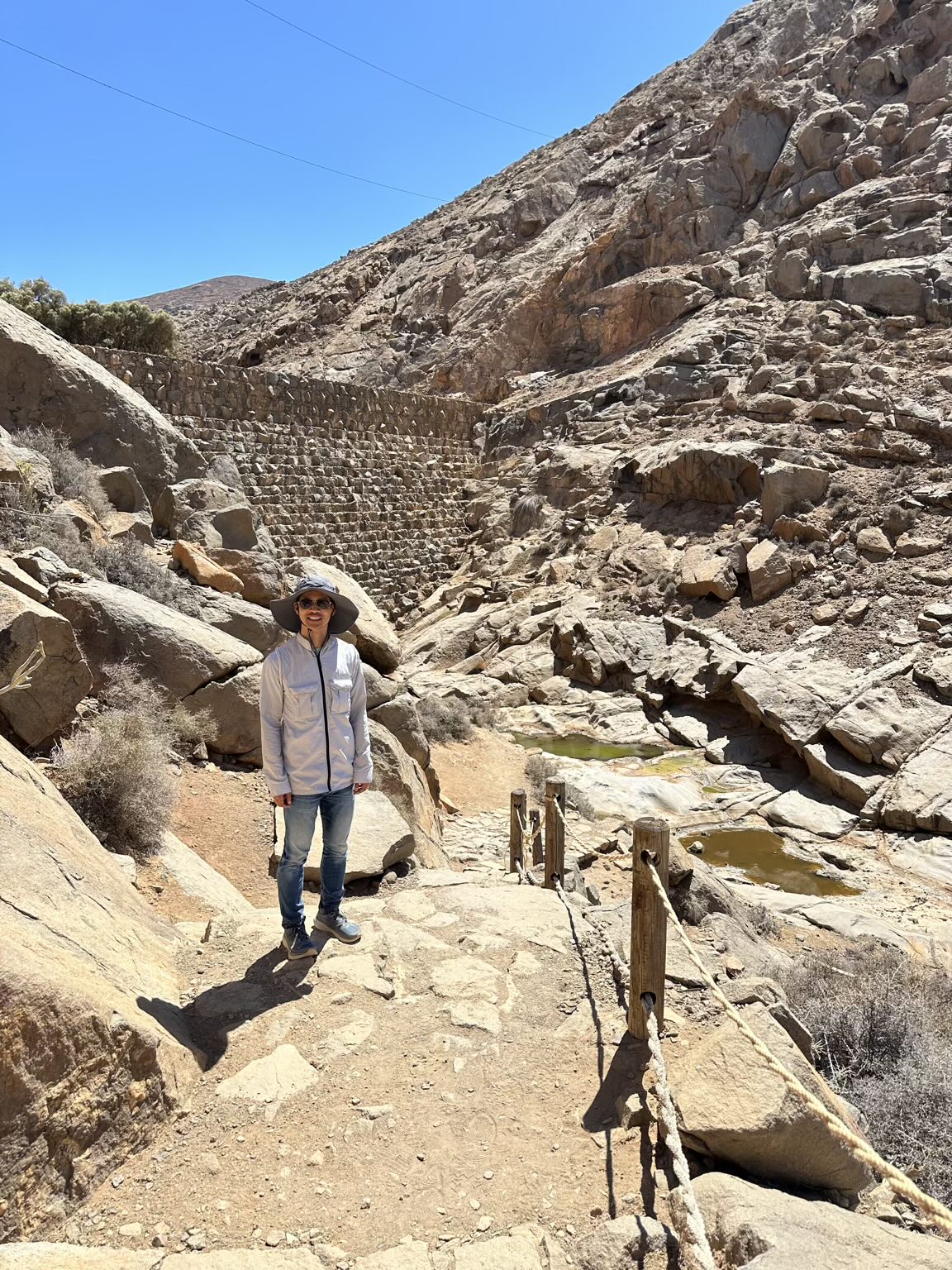
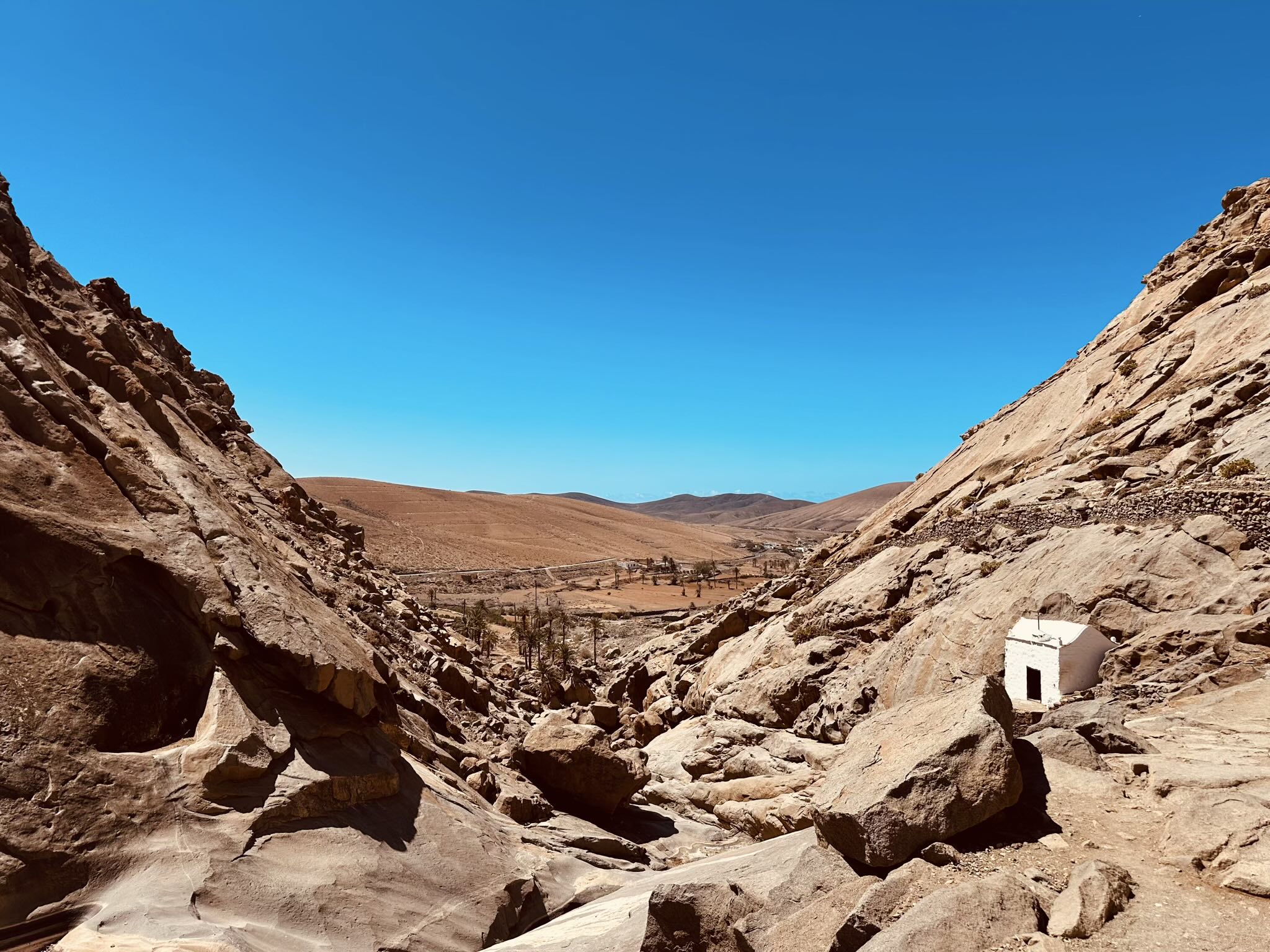
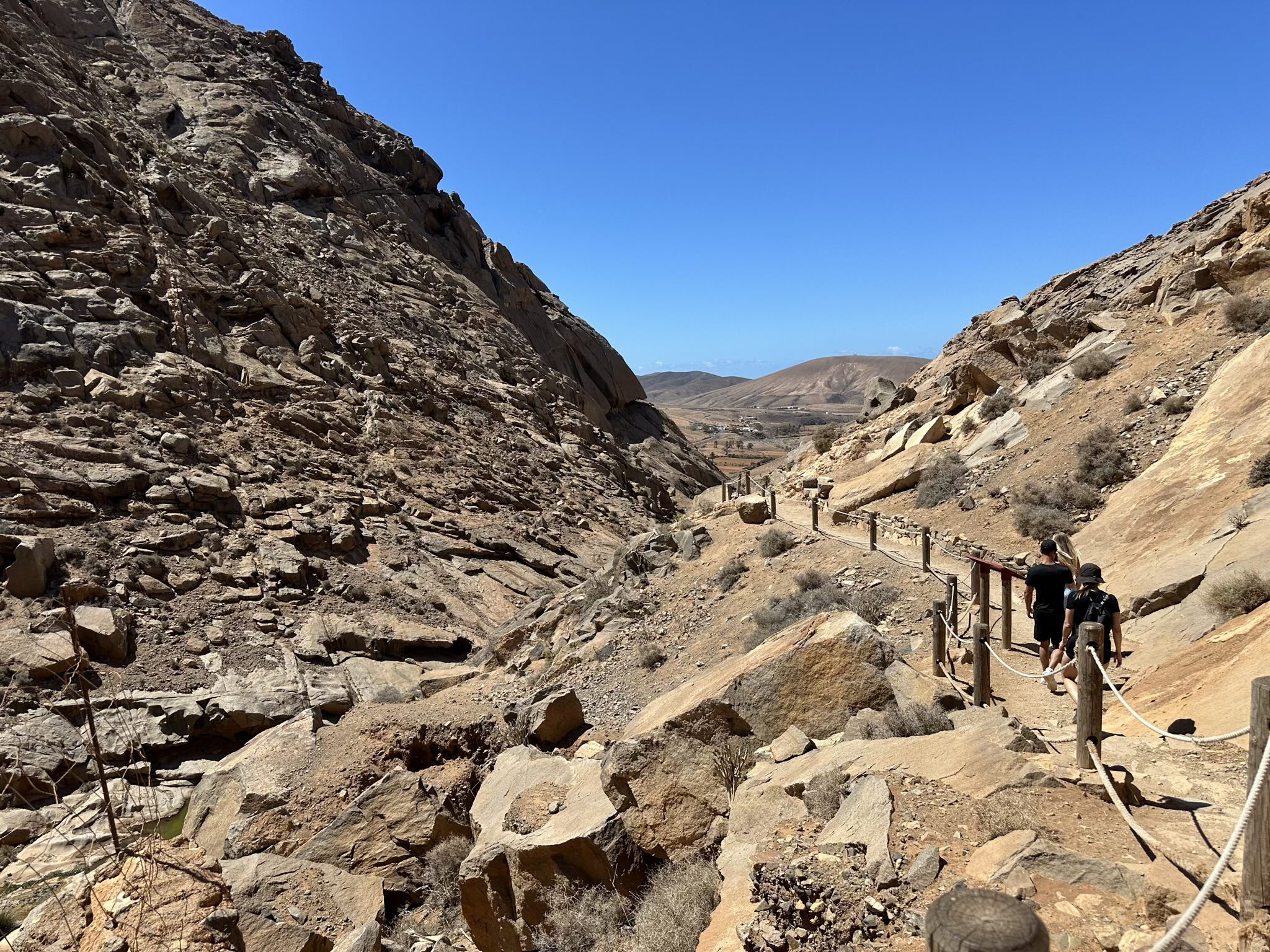
From Betancuria we hiked to La Presa de Piñetas and a nearby arch—5.7 miles in 2 hours 45 minutes under hot, cloudless skies. We had wisely brought sunhats.
The views were spectacular: golden hills, deep ravines, and lots of hungry squirrels scampering around. During our hike, we passed by a dam and a white cabin that contrasted nicely with the surroundings.
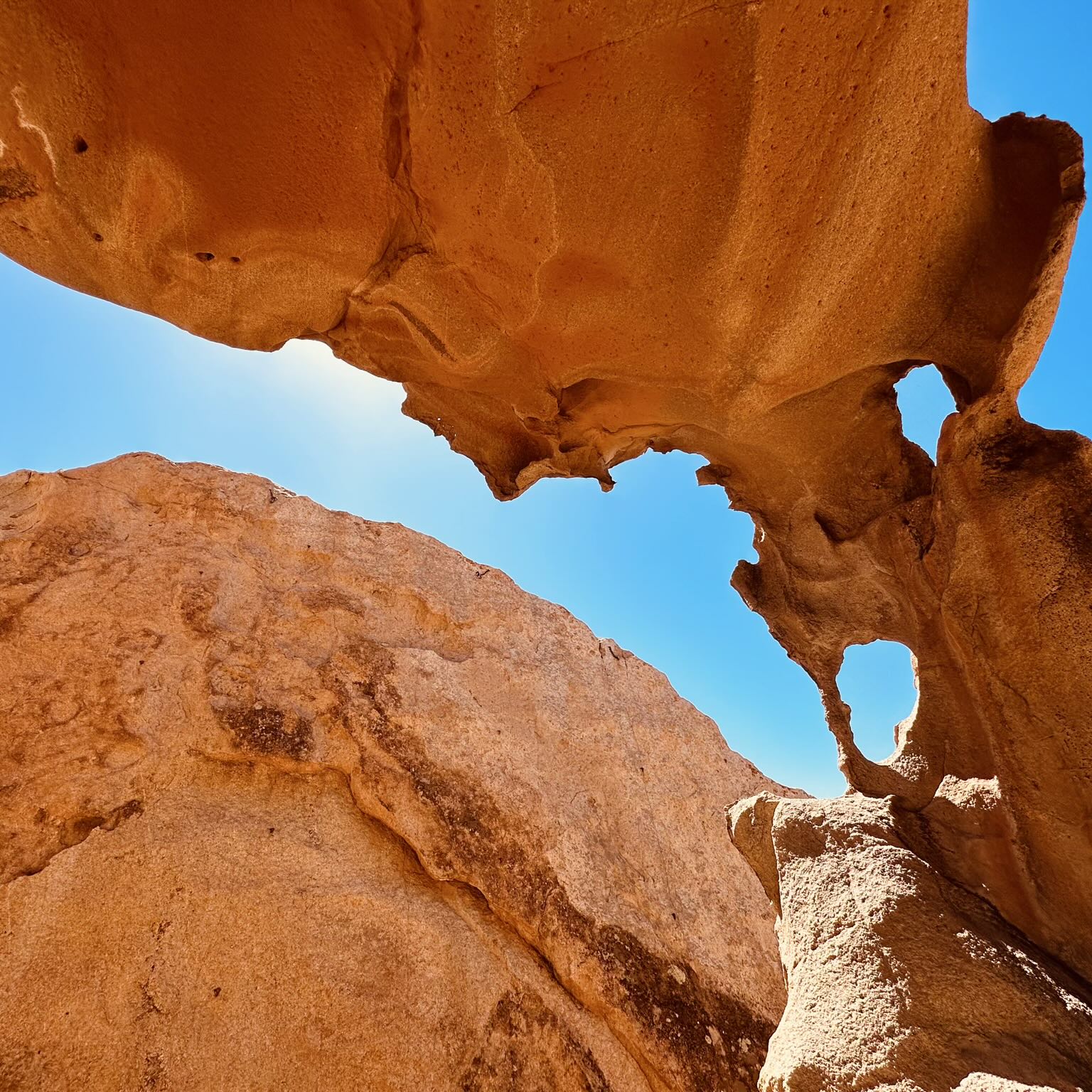
We saw only a handful of other hikers—all young people. It seemed like we were all heading towards the same destination—a sandstone arch that reminded me of my visit to Arches National Park in Utah earlier in the month.
When we returned to Betancuria drenched in sweat, we found a shaded bodega and treated ourselves to cold drinks. Then we drove a different, very scenic route back to the villa.
After one particularly long day of housework, Chris suggested going into town for pizza. We ended up in Caleta de Fuste at a restaurant that served a gigantic, absolutely delicious pizza—the largest I have ever seen.
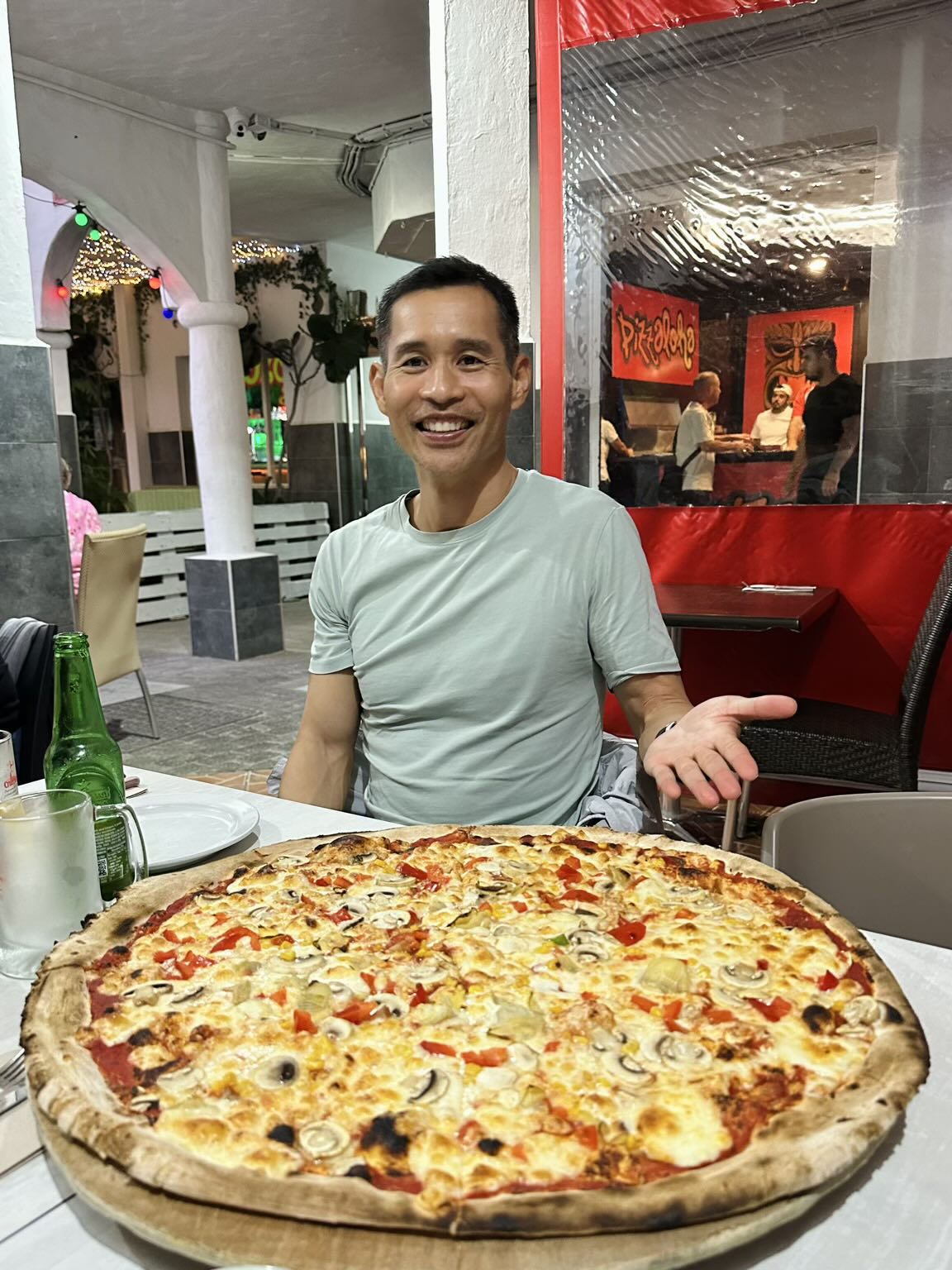
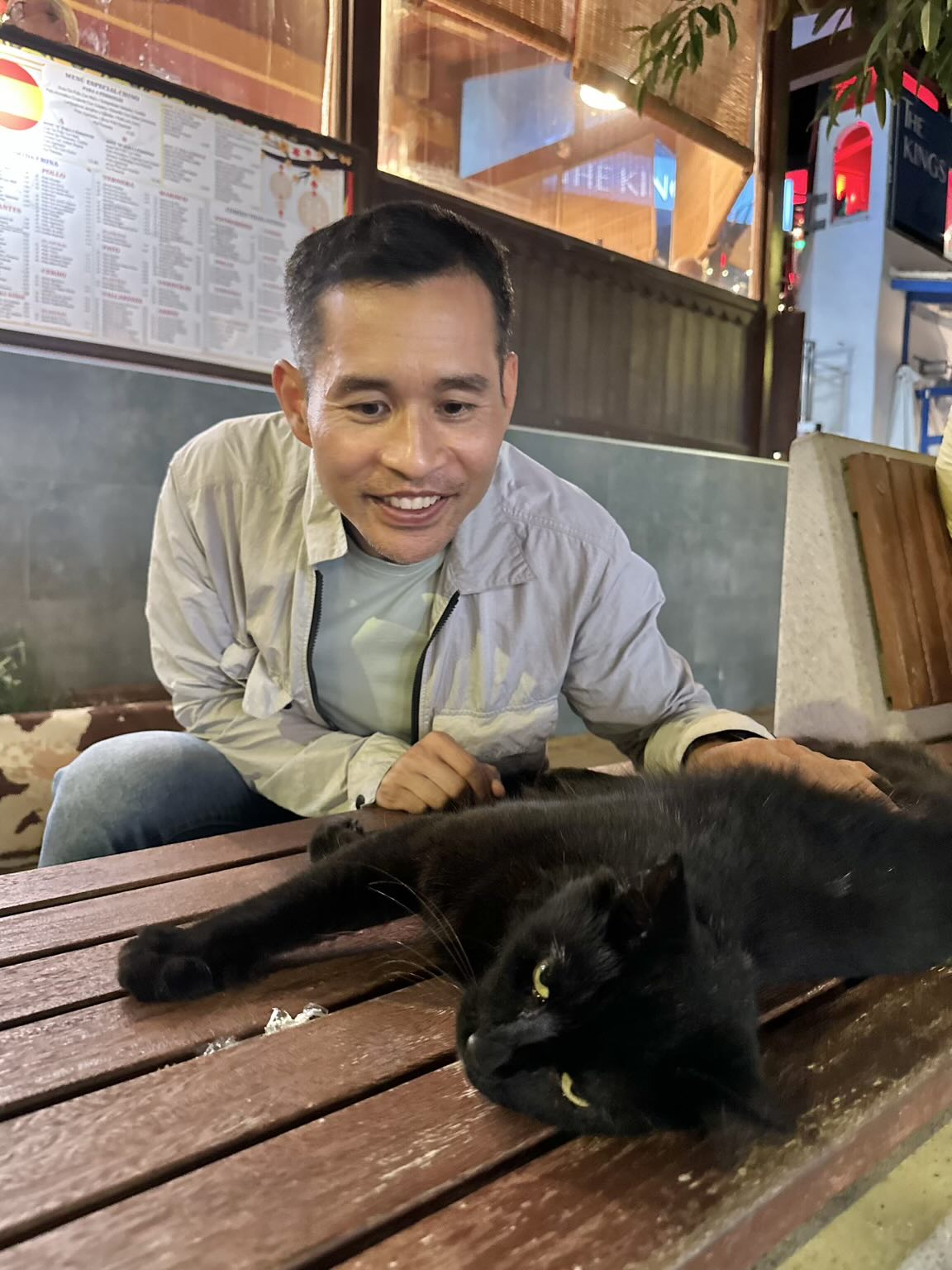
Outside we encountered a friendly black cat and chatted with an older British woman who lived nearby. She gave me a very nice compliment, claiming that I didn’t look like I was 50 years old at all!
The next day we returned to Corralejo to meet again with the furniture shop’s co-owner. Meanwhile, Roxana and I searched for a place to rent bicycles, eventually finding one guarded by a rather intimidating dog. Before we could rent anything, Chris called to say he was ready to head back, so we returned to Caleta de Fuste instead and rented mountain bikes there.
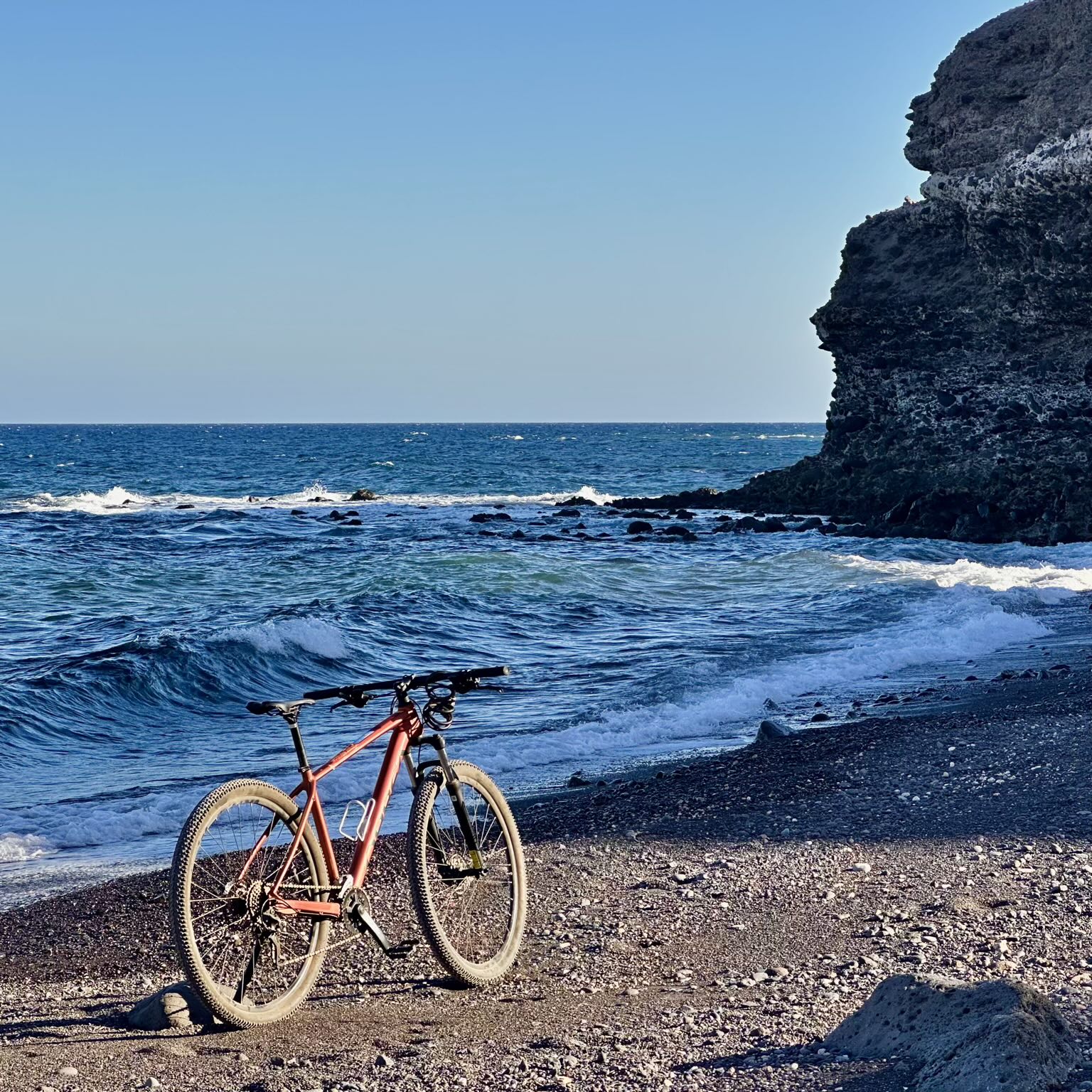
For just €10 each, Roxana and I got bikes for 24 hours—mine a burnt-orange aluminum Orbea hardtail with 29×2.35” tires and Roxana’s a red Trek—plus helmets and locks. What a deal.
We rode along the coast on a mix of gravel and rocky paths, some of them so steep that Roxana had to walk. I figured out why: she was shifting into higher gears on the climbs. Once I explained that low gears were for going uphill, she tried it—and immediately proclaimed I had changed her life.
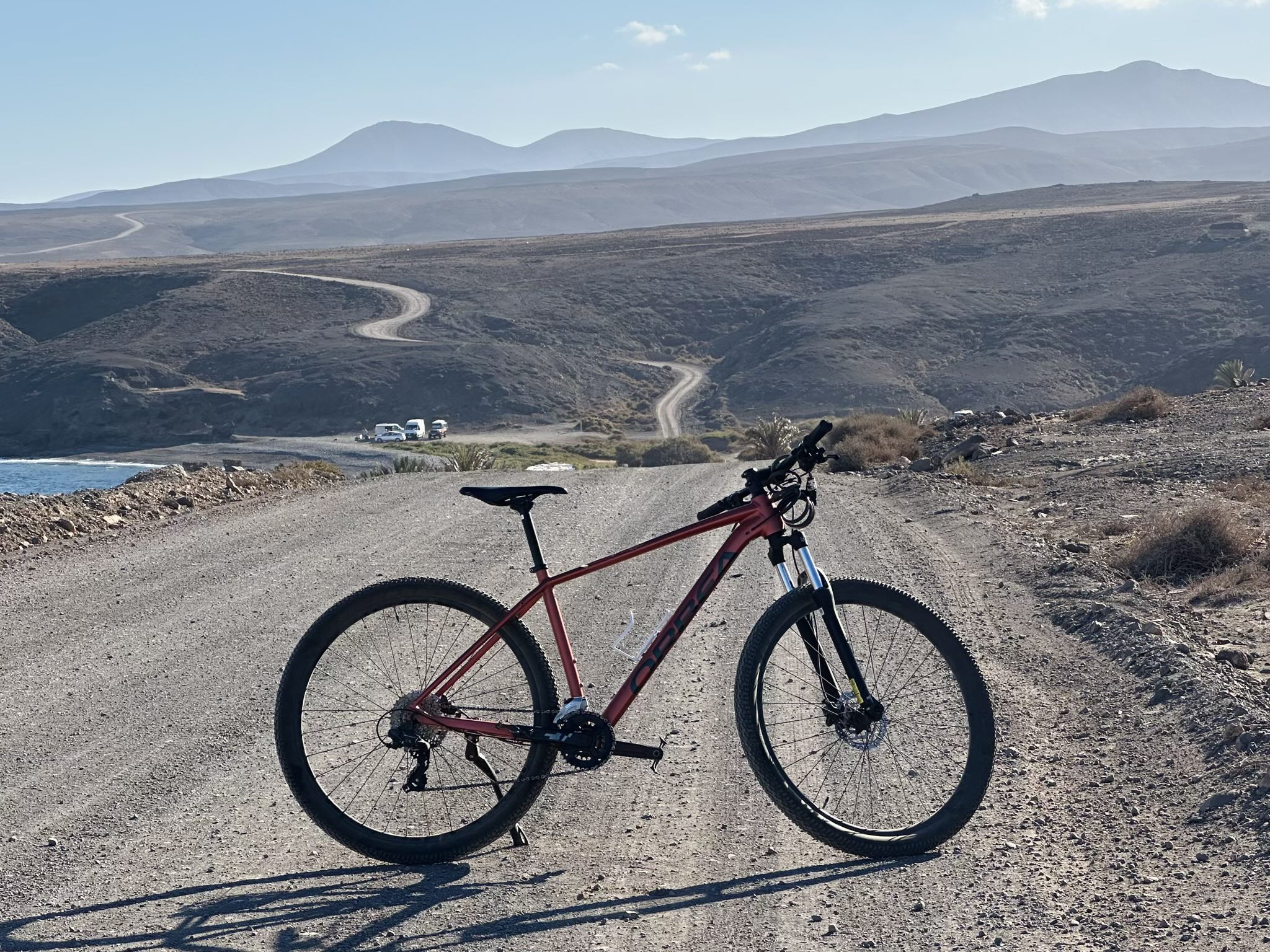
The riding was beautiful and peaceful with no car traffic. We found a secluded cove and I remarked that probably nobody ever came there because you’d have to hike or bike in. Almost on cue, a family arrived in a 4×4, unfolded camping chairs, and let their kids play on the shoreline.
The next morning I went for a Sprint 8 workout on foot and followed that with pull-ups, dips, and push-ups at the calisthenics park on the beach. Meanwhile Chris and Roxana scouted beaches for kitesurfing, eventually giving up and visiting the Museo de Sal, which happened to be exactly where I had run two days earlier and where Roxana and I had biked the day before.
After showering, I hopped in the car and drove south to meet them at La Casa del Queso Cabrera Perez Fuerteventura (the Perez house of goat cheese) for coffee. I ordered a café con leche descafeinado and an almojor, a semi-sweet pastry with deep historical roots in Spanish and Moorish cooking. It was soft, lightly sweet, and made with almonds and honey—a nice treat despite my usual avoidance of added sugars.
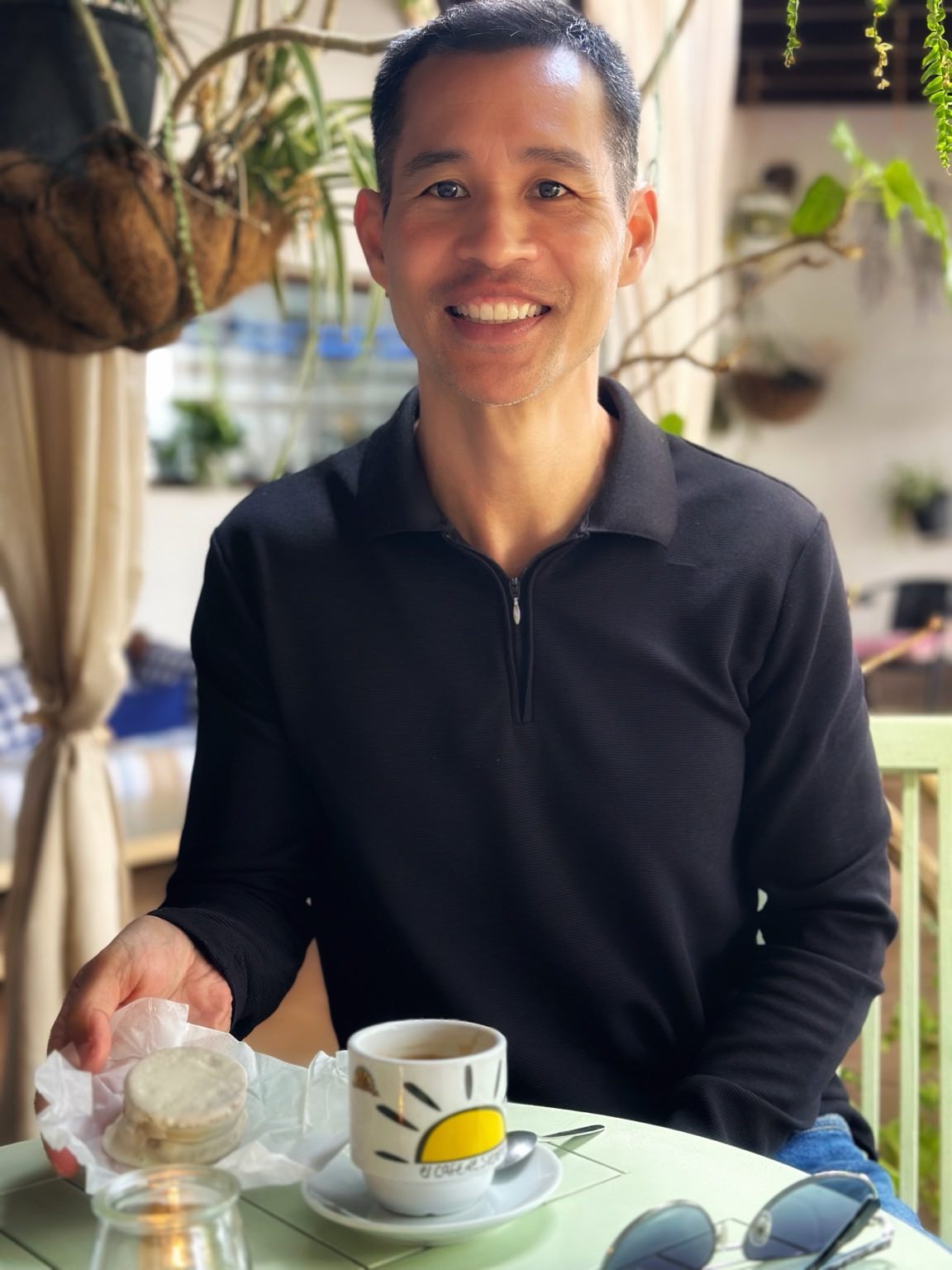
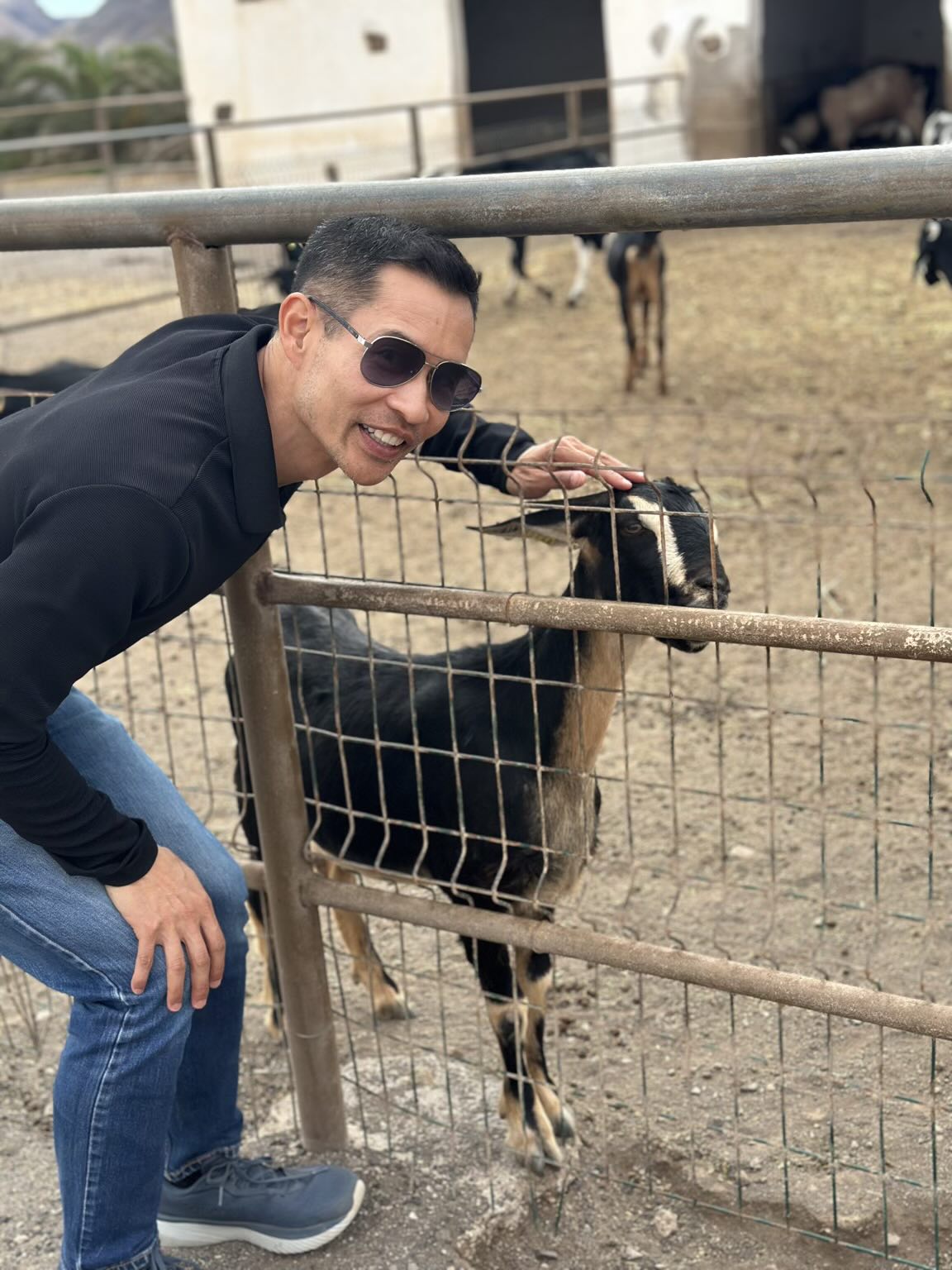
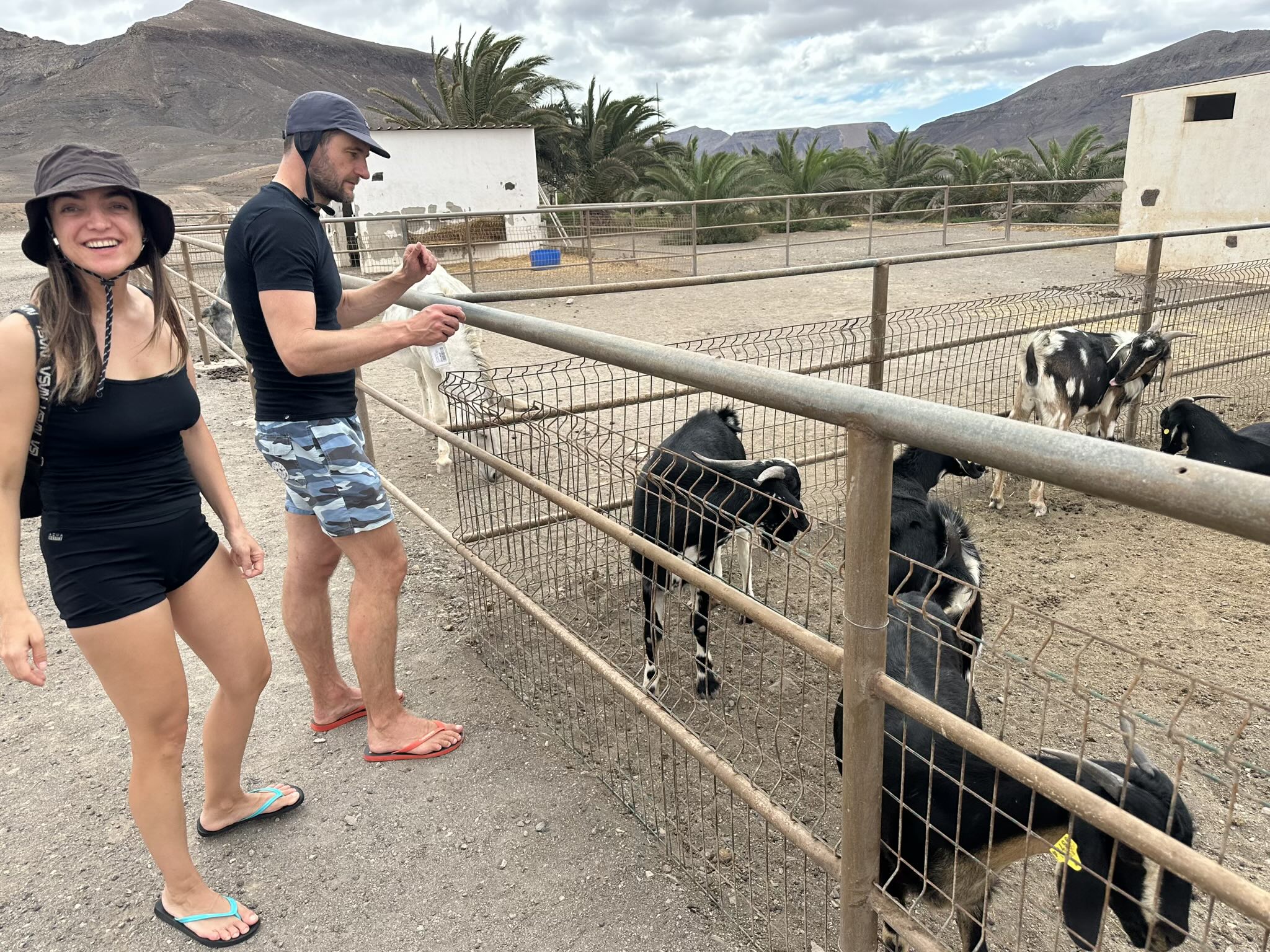
Outside we greeted a donkey and a pony and petted some incredibly docile goats. I accidentally took a selfie with the pony at an awkward moment involving its anatomy, but to keep this blog PG, I am not including it here. But here’s a photo of Roxana and Chris with the goats:
Then we headed to the SPAR grocery store at the Centro Comercial in Caleta de Fuste to pick up food and drinks for José and Olga’s evening visit.
After returning the rental bikes, I spent the afternoon reading and watching highlights from the Men’s World Championships road race. Tadej Pogačar won as expected, but Remco Evenepoel’s performance stunned me: despite having to swap bikes twice and waiting 45 seconds for the second, he still finished more than a minute ahead of the rest.
When José and Olga arrived with baby Gala, we had a wonderful Spanish-language evening. I understood about 99% of the conversation, and Chris and Roxana’s Spanish continued to amaze me considering they don’t practice as regularly as I do. Baby Gala was perfectly behaved except for repeatedly farting on Roxana—better than pooping, I suppose. Olga talked about the challenges of early parenthood, how she could survive without food for weeks but not without sleep, and how expensive babies were: €800 for a stroller, €400 for a reverse child seat. I think those cost more than in the U.S., where there are less regulations and taxes.
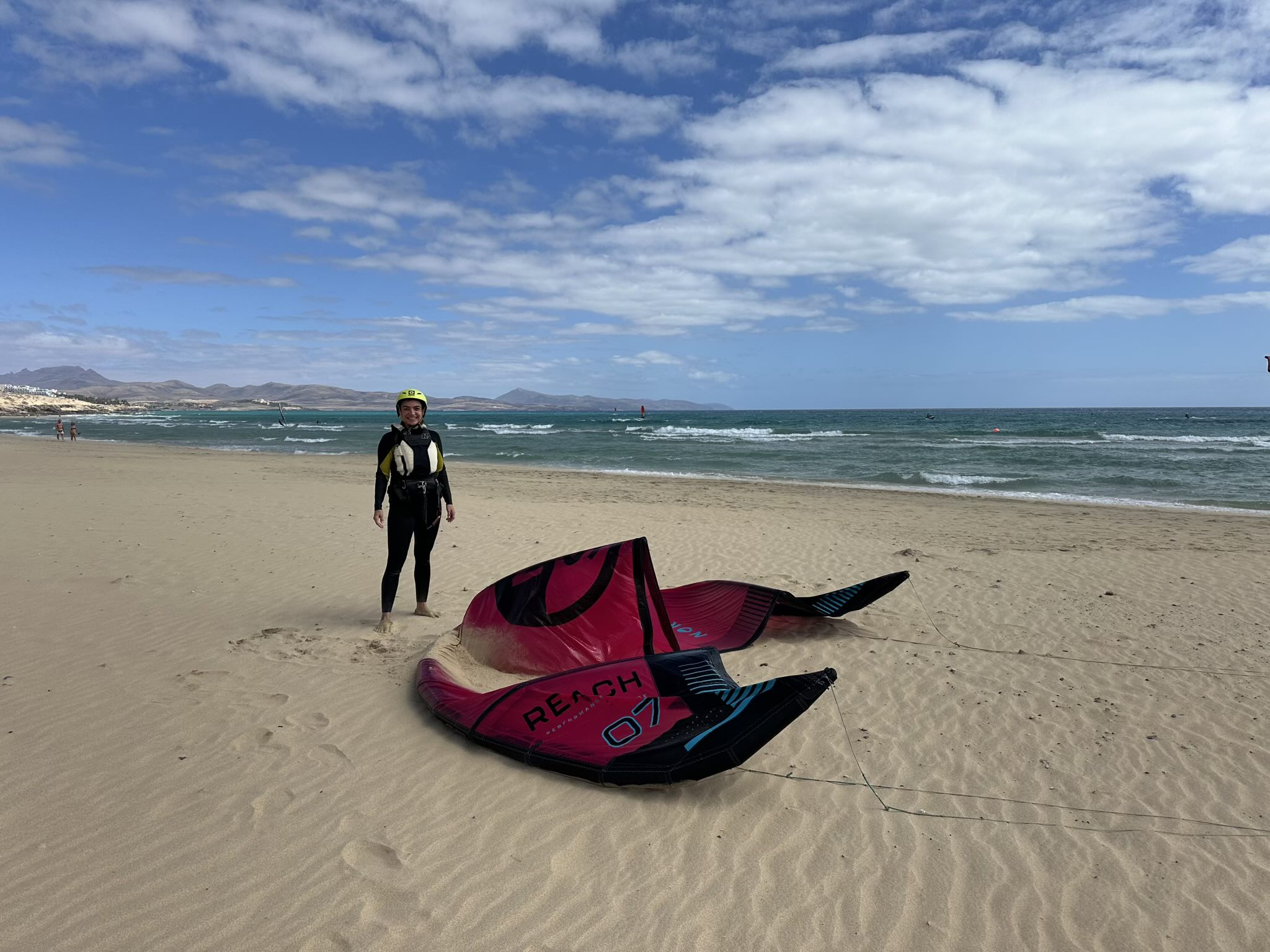
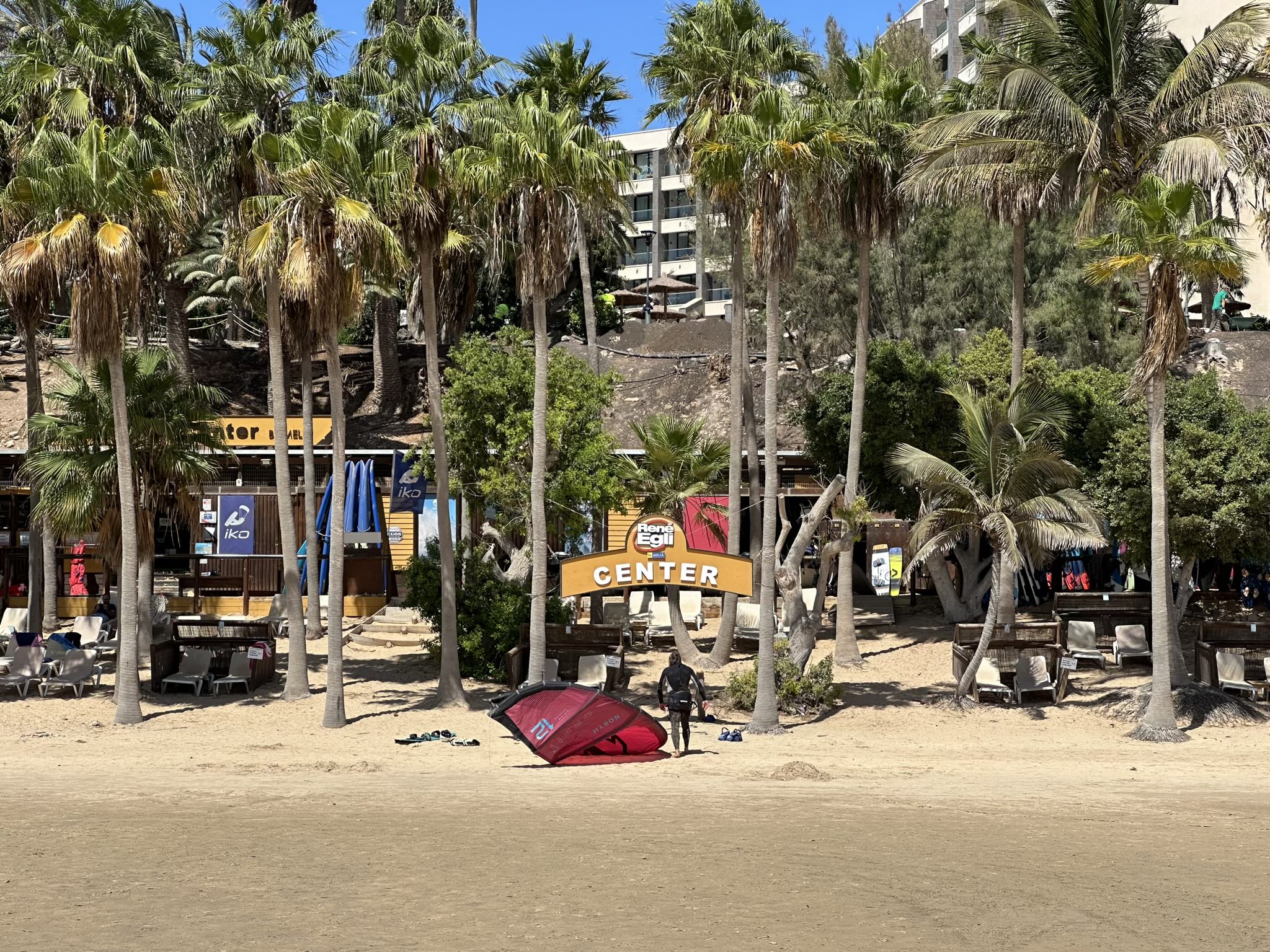
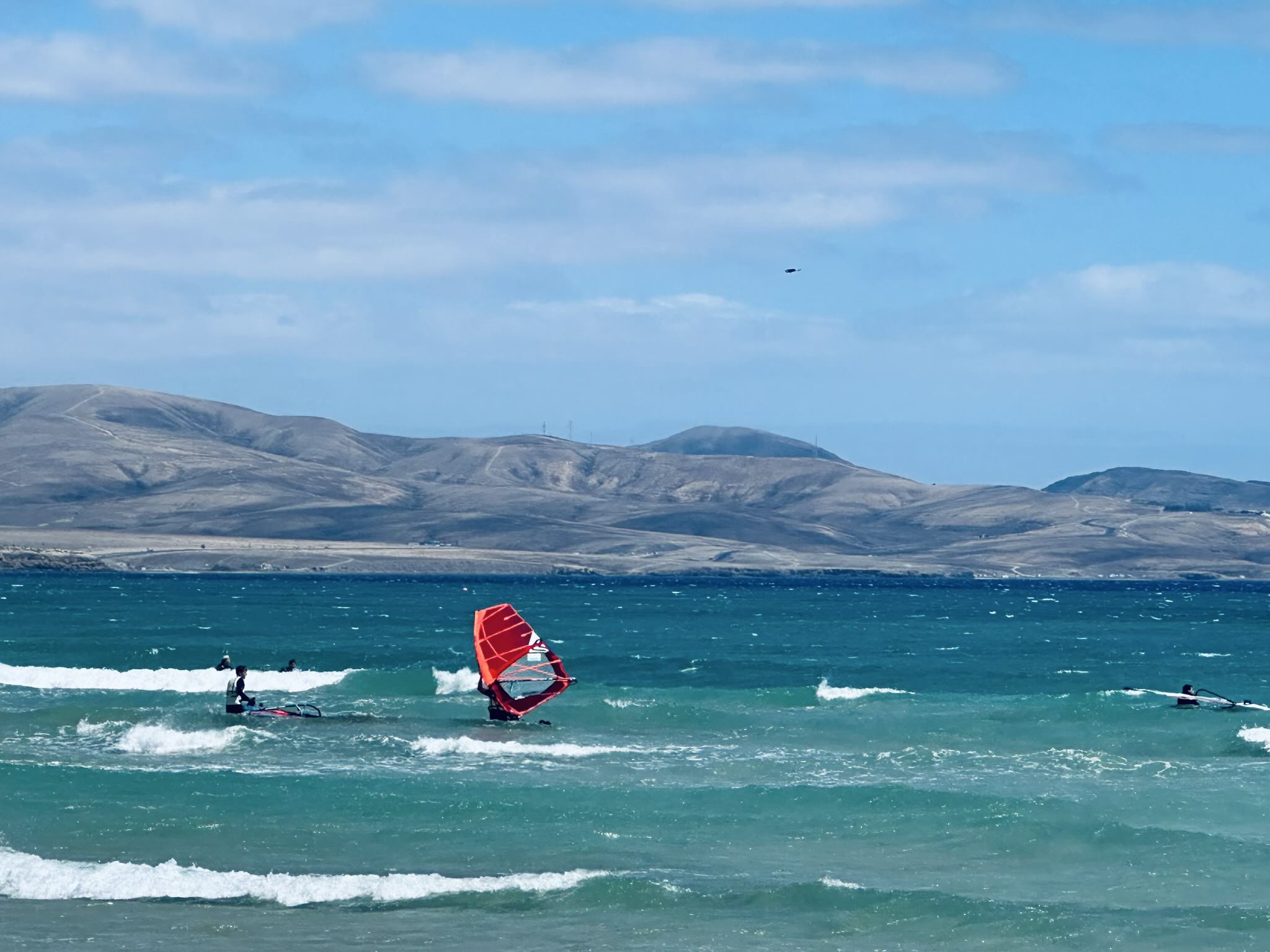
The next day, Roxana and I headed down to the René Egli Center, one of the most famous windsurfing and kitesurfing spots in the world and the site of major international competitions. She took an advanced kitesurfing lesson using her own gear while I tried a beginner windsurfing lesson (€75). After pulling on wetsuits, five other beginners and I dragged our boards, masts, and sails to the beach. Our Swiss instructor explained how to assemble everything, how to stand, balance, steer, and turn. Then he demonstrated—smoothly sailing back and forth as if it were nothing.
My experience was much less graceful. Invariably, I could barely stand for more than a couple of seconds before falling in the water, and the current kept dragging me away from the group. I spent most of my hour struggling alone, carrying the gear back upstream and repeatedly falling—many times into the toppled sail and a few times even into the mast. I did get one glorious one-minute run where everything just worked, but overall it felt frustrating and somewhat dangerous. I doubt I’ll try windsurfing again, but at least I can say I gave it a shot, I tried something new. Roxana seemed to have better luck with her kitesurfing lesson.
We continued south afterward to Morro Jable, a pretty seaside town with long promenades, dramatic cliffs, and an expansive beach. We wandered around before ending up at Restaurante da Marty y Davide for pizza—excellent dough, great toppings, and friendly service.
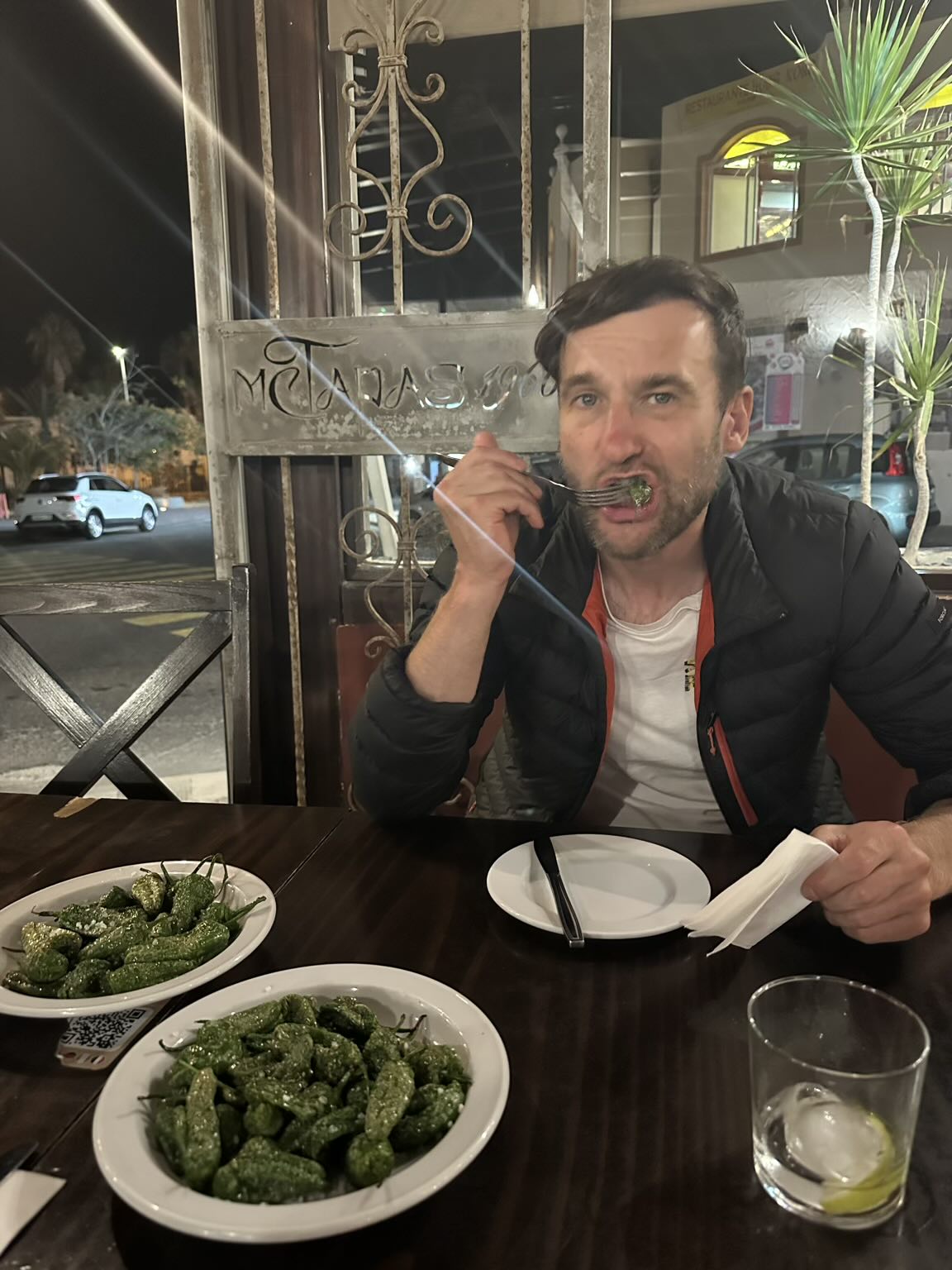
That night—my last night in Fuerteventura—the three of us went for an evening walk around Caleta de Fuste. It was a perfect night: warm, breezy, and calm. We had drinks and tapas, including pimientos de Padrón—one of my favorite Galician tapas. The peppers were deliciously blistered and salty.
On my final morning, I went for a short-but-fast base run from the villa. I had planned to loop the golf courses but couldn’t find a good route, so after a surprisingly steep uphill I turned toward Caleta de Fuste, looped around, and logged a bit over 4 km. Soon after, it was time to leave for the airport. Despite Roxana working and Chris juggling villa responsibilities, both gave me a warm and enthusiastic sendoff, insisting I was welcome to stay longer.
It was a fun, memorable week with good friends on an island with rugged landscapes, sunny skies, endless wind, and unexpectedly charming adventures. It was also a nice introduction to the Canary Islands. Thanks, Chris and Roxana!