Cambridge, UK: Better the Second Time Around

Four months earlier, I had technically been in Cambridge. At roughly 10 PM on a Tuesday in August, I had pedaled through town as part of what was supposed to be an epic bike ride from London all the way to Edinburgh—a plan that Storm Floris had other opinions about. Having been forced to turn around at Malton, while heading back south towards London I got perhaps half an hour in Cambridge before pressing on into the darkness at 10 p.m. Beyond the city limits, the roads turned serene and ghostly quiet, as if the rest of England had agreed to call it a night and left me to it.
That, I decided, sort of counted as “visiting Cambridge”—but barely.
So when my friend Angie—in London over the New Year visiting her sister—mentioned she had been to Cambridge years before and would be happy to show me around, I was game. Angie has form as a guide. She had done the same honors in Singapore back in 2017, steering us through hawker centers and side streets with the quiet confidence of someone who actually knows where she’s going. I did not anticipate that Cambridge would require quite as much navigational expertise as Singapore, but the reassurance was welcome regardless.
We took the train from London St. Pancras. An hour and a half later, we were there—one of the more civilized ways to arrive anywhere. Well, almost. Part of the train route was closed, so in a nearby town, all train passengers had to disembark and get on one of the many buses waiting to take them on the final leg of the journey. Apparently, there was a 10-day shutdown to replace 40-year-old signaling and work on infrastructure in advance of a brand-new Cambridge South station, due to open in 2026.
King’s Parade and the Historic Core
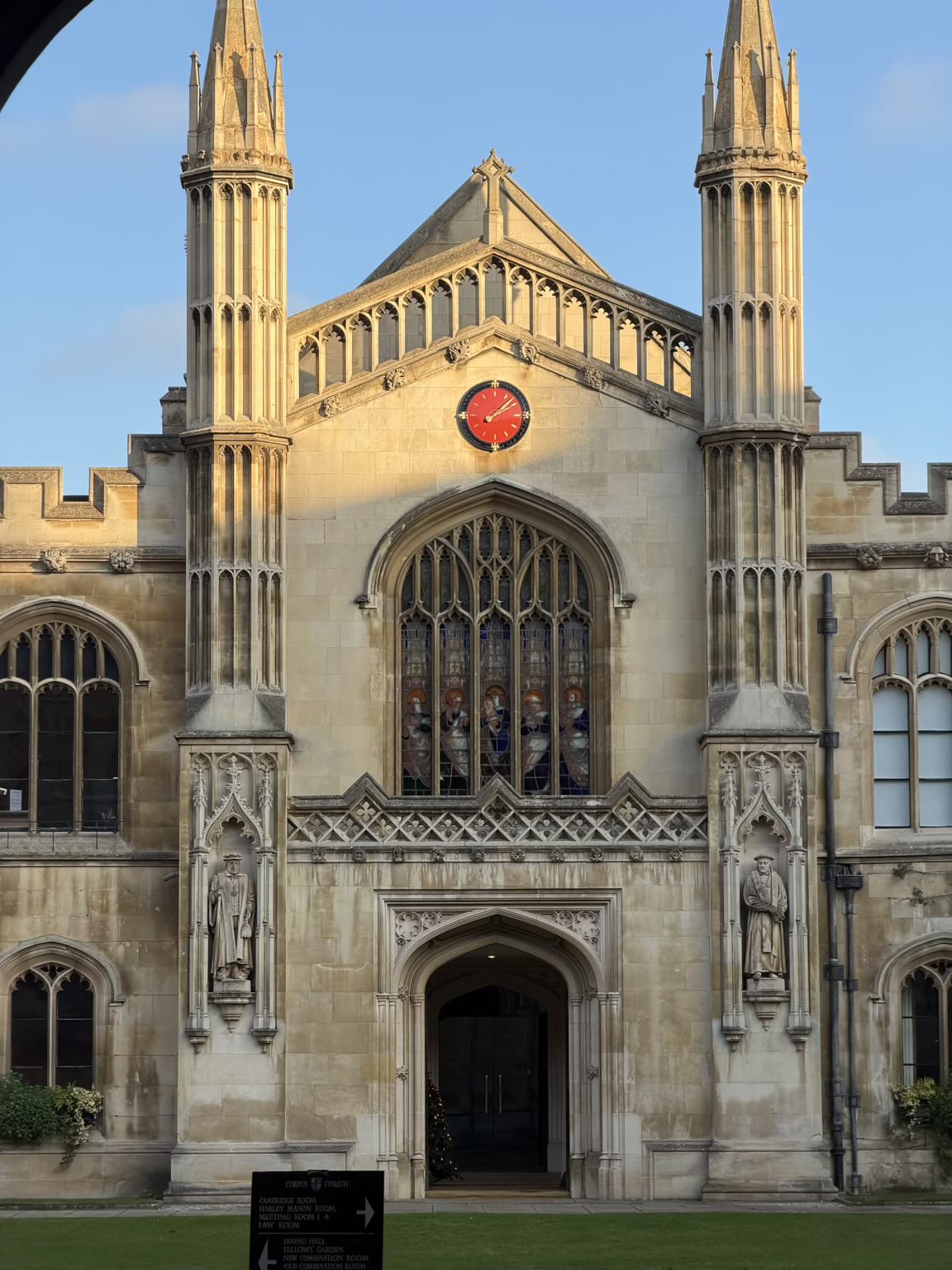
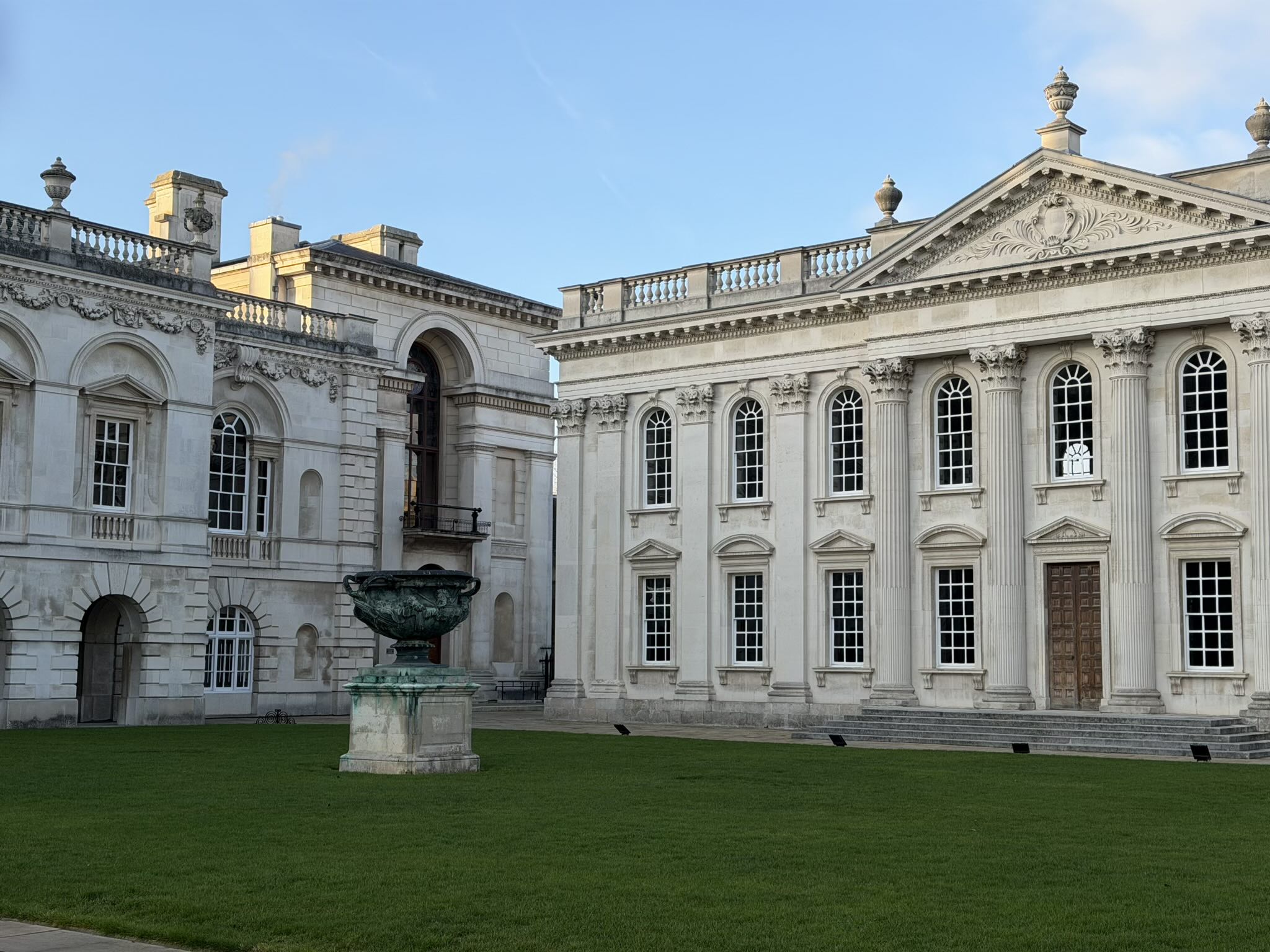
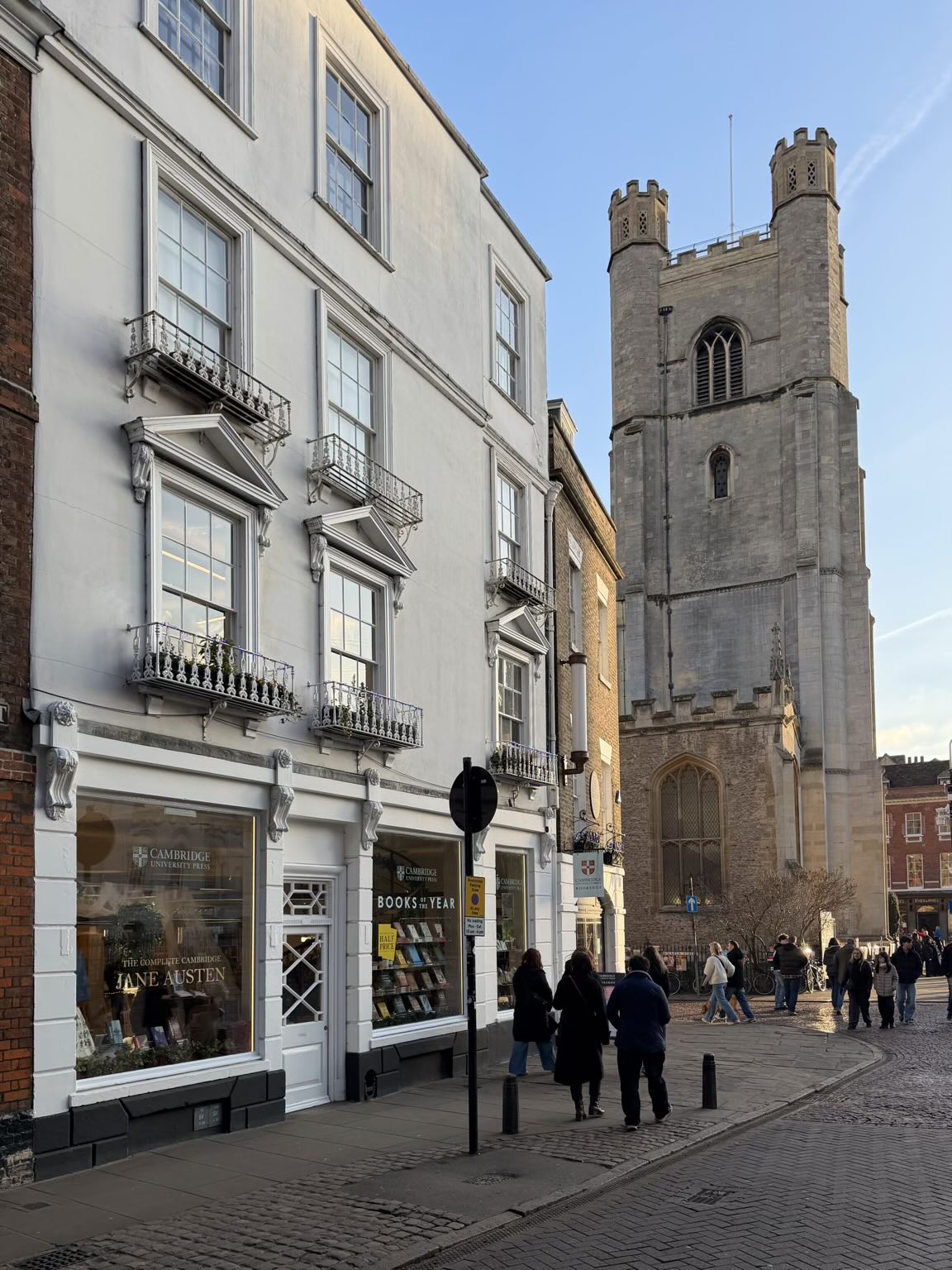
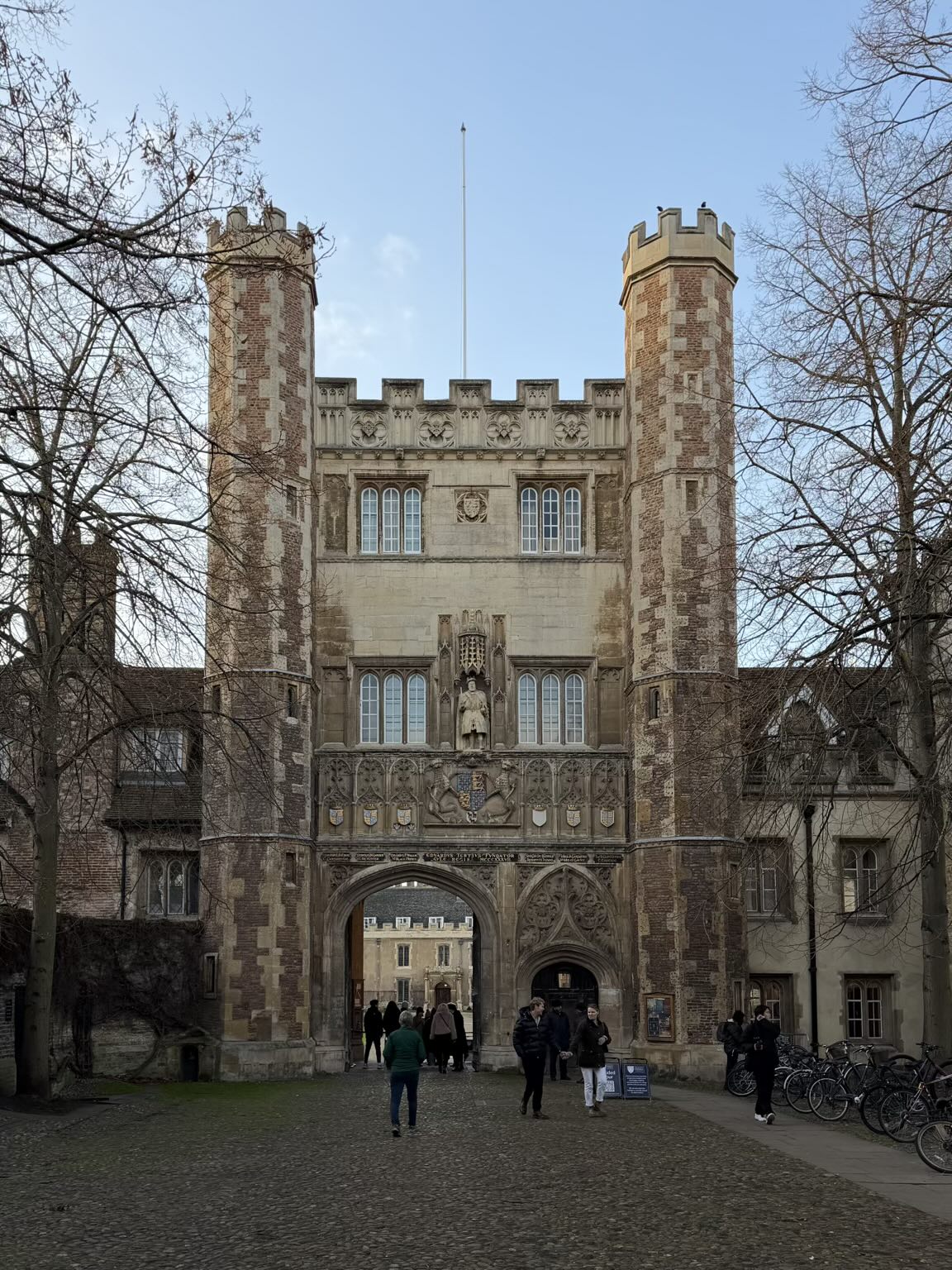
The first thing Cambridge does is humble you. King’s Parade is one of those streets that makes you feel as though you’ve wandered onto a film set, except the film has been running continuously since the fifteenth century and nobody has updated the wardrobe budget. King’s College Chapel presides over the whole scene with the architectural self-assurance of something that has been the most impressive building in the room for five hundred years and is perfectly aware of it.
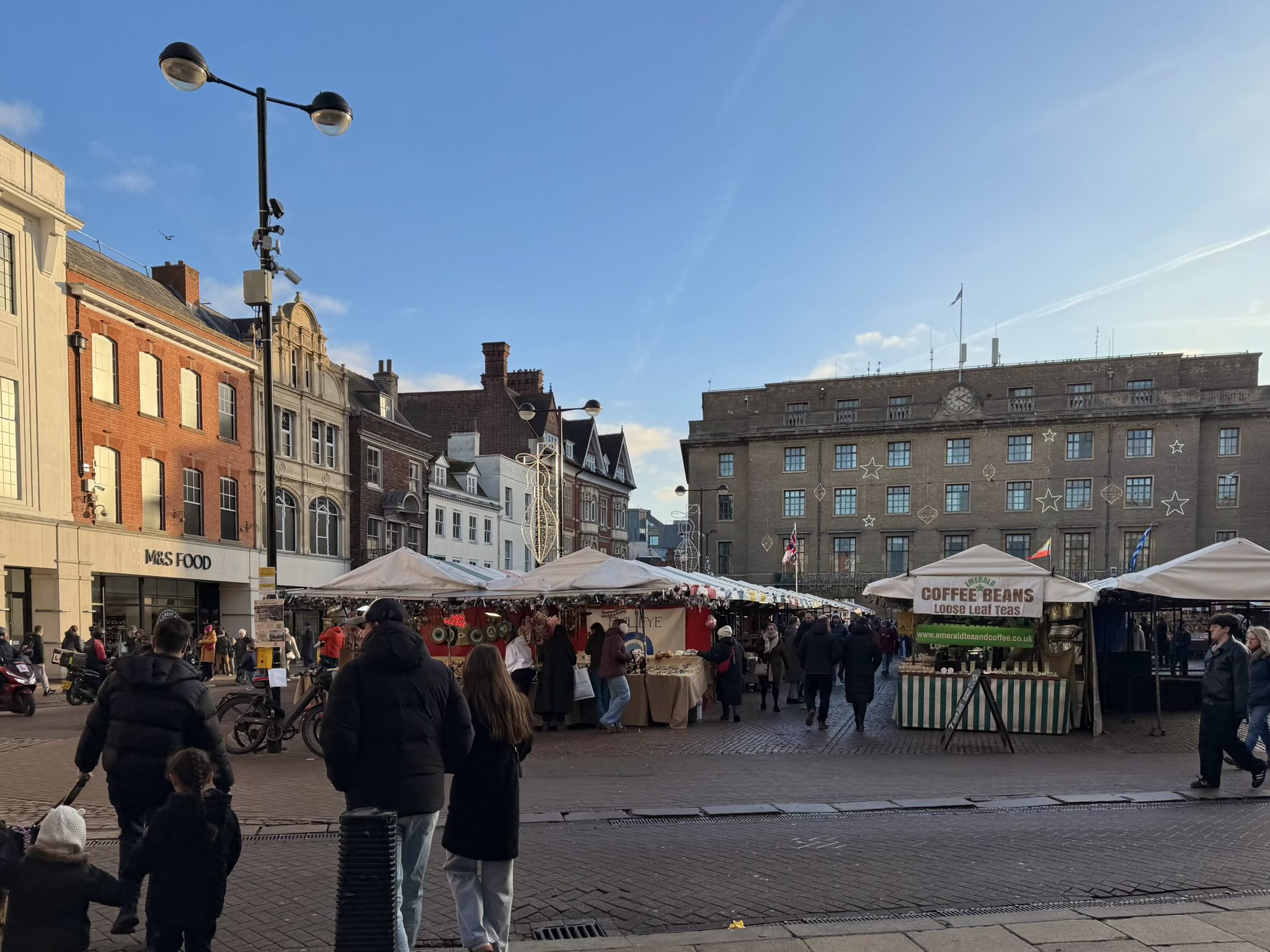
It was December 31st—New Year’s Eve—and Cambridge was busy in the way that only a place full of tourists and locals can be on the last afternoon of the year. The market at Market Square was doing brisk business. The sky was the color of old pewter. The temperature hovered around 8°C (46°F) but, with a 20-mph breeze driving 95% humidity through every gap in your clothing, it felt a meaningful degree colder than that. “Brisk” is the word the English use in these situations. I wore enough layers to survive it and was perfectly happy.
My friends Pin-pin and Rafael had done postdocs at Cambridge for a few years after their PhDs at Stanford, so naturally I sent them a photo of me next to a University of Cambridge sign. I thought they would enjoy seeing a photo from their old stomping grounds.
Rafael’s reply came quickly: “Maybe a bit cold for punting on the Cam, but you can still have cream tea!”
A word on punting: it is the practice of propelling a flat-bottomed boat through the water using a long wooden pole, pushed against the riverbed. It is to Cambridge what the gondola is to Venice, except that gondoliers are trained professionals and punters are typically enthusiastic students who have somewhat overestimated their upper-body coordination.
I photographed the River Cam, where—despite the cold, the damp, and the 2°C low rolling in on the horizon—a remarkable fleet of punters was out on the water, poling away with varying degrees of success.

“Tell that to all these people,” I wrote back, attaching the above photo.
“I stand corrected,” Rafael replied. As far as I could tell, punting is a year-round activity in Cambridge.
The Round Church and St John’s
We made our way north along St John’s Street, past the Round Church—one of only four surviving round churches in England, which it wears as a distinction with considerable dignity—and on to the entrance of St John’s College. Here, with the River Cam curling past and an old stone bridge framed against the grey winter sky, Angie and I lingered for nearly twenty minutes. It was hard not to. The scene had the quality of a postcard from a hundred years ago, except the people in the punts were wearing Patagonia.
This was, it struck me, exactly the part of Cambridge I had completely missed at 10 PM on a bicycle.
The Backs and Silver Street
Following the river south through The Backs—the long stretch of open ground behind several of Cambridge’s oldest colleges, whose stone facades rise straight from the water with an almost theatrical indifference to modesty—we eventually arrived at Silver Street Bridge and the area around the Mill Pond. This turned out to be the most restorative part of the walk: quiet enough to actually breathe, scenic enough to linger, and conveniently adjacent to a pub.
We spent about half an hour here. Time well spent.
Christmas in Cambridge
Nearby, a section of the city had given itself over to what was billed as Christmas in Cambridge: a Ferris wheel, an ice rink, an alpine lodge bar, a Christmas market, curling lanes, a Christmas tree maze, and assorted games. The whole thing looked festive and lively, and the Ferris wheel rising above the rooftops through the winter haze gave me an immediate and vivid flashback to the London Eye. From up there, I imagined, the view over the colleges and river would be spectacular.
Then I remembered that I get motion sickness on amusement park rides. I admired the wheel from ground level and we carried on.
Fitzbillies
No visit to Cambridge is apparently complete without a stop at Fitzbillies, the bakery on Trumpington Street that has been producing Chelsea buns since 1921. The Chelsea bun—a tight spiral of enriched dough, studded with dried fruit and glazed with a quantity of dark syrup that would give a cardiologist pause—is Fitzbillies’ signature, its raison d’être, the thing people travel specifically to eat.
Angie and I had tea. And scones.
They were excellent scones. It was only afterwards, reading about Fitzbillies, that I understood I had walked into a temple of Chelsea buns and ordered the culinary equivalent of going to Paris and getting a panini. Had I known the buns were that famous, I would absolutely have had one. Or two. But I didn’t know, and now I have an excellent reason to return.
A Few Reflections
We walked for nearly four hours in total—a big loop from the station area, through the historic core, north to the river, along The Backs, and back south through the museum district past Pembroke College. Cambridge is a thoroughly walkable city. Given the temperature, I mean this as a compliment.
Somewhere along the way it occurred to me that I’d had a quiet personal connection to this place, separate from the midnight bike ride. When I was at Stanford, I had worked for a small engineering research firm whose director had contacts at Cambridge and encouraged me to pursue a master’s degree there—even offering to recommend me. At the time I was excited about starting a career in Silicon Valley and let the opportunity pass.
I don’t regret it. But walking through those college grounds on a cold December afternoon, I could easily see why Pin-pin and Rafael had been happy here for a few years. Cambridge has a way of making serious intellectual pursuit and a warm pint feel like two perfectly reasonable and compatible activities.
Angie and I caught the train back to London that evening, arriving in time for whatever New Year’s Eve had in store. Cambridge receded into the darkness behind us. I had seen it properly this time.
Our Walking route