Redemption, Racecars, and Robotaxis: My Phoenix Area Visit

They say you can’t step into the same river twice, but you can certainly fly back to the same desert to settle an old score. I returned to Arizona this December with a very specific mission: to run a sub-four-hour marathon in the state, albeit farther south in Tucson. I had technically checked the “Arizona” box on my marathon states list back in 2006 during Ironman Arizona, just not in under four hours as that triathlon was a different beast entirely. A race in which you swim 2.4 miles and bike 112 miles beforehand is not exactly conducive to running at sub-four-hour marathon pace. Yet the Tucson Marathon was.
But back to the Phoenix area. This trip was about speed, nostalgia, and exploring a city that has changed a lot more than I realized in nearly twenty years.
Tempe Roots and Scottsdale Stays
After picking up my rental car—a 2016 BMW 228i convertible from Turo—my first stop was Tempe Town Lake, the very spot where I had competed in the Ironman. It looked beautiful, and quite honestly, it seemed much larger and more scenic than I remembered from two decades ago.
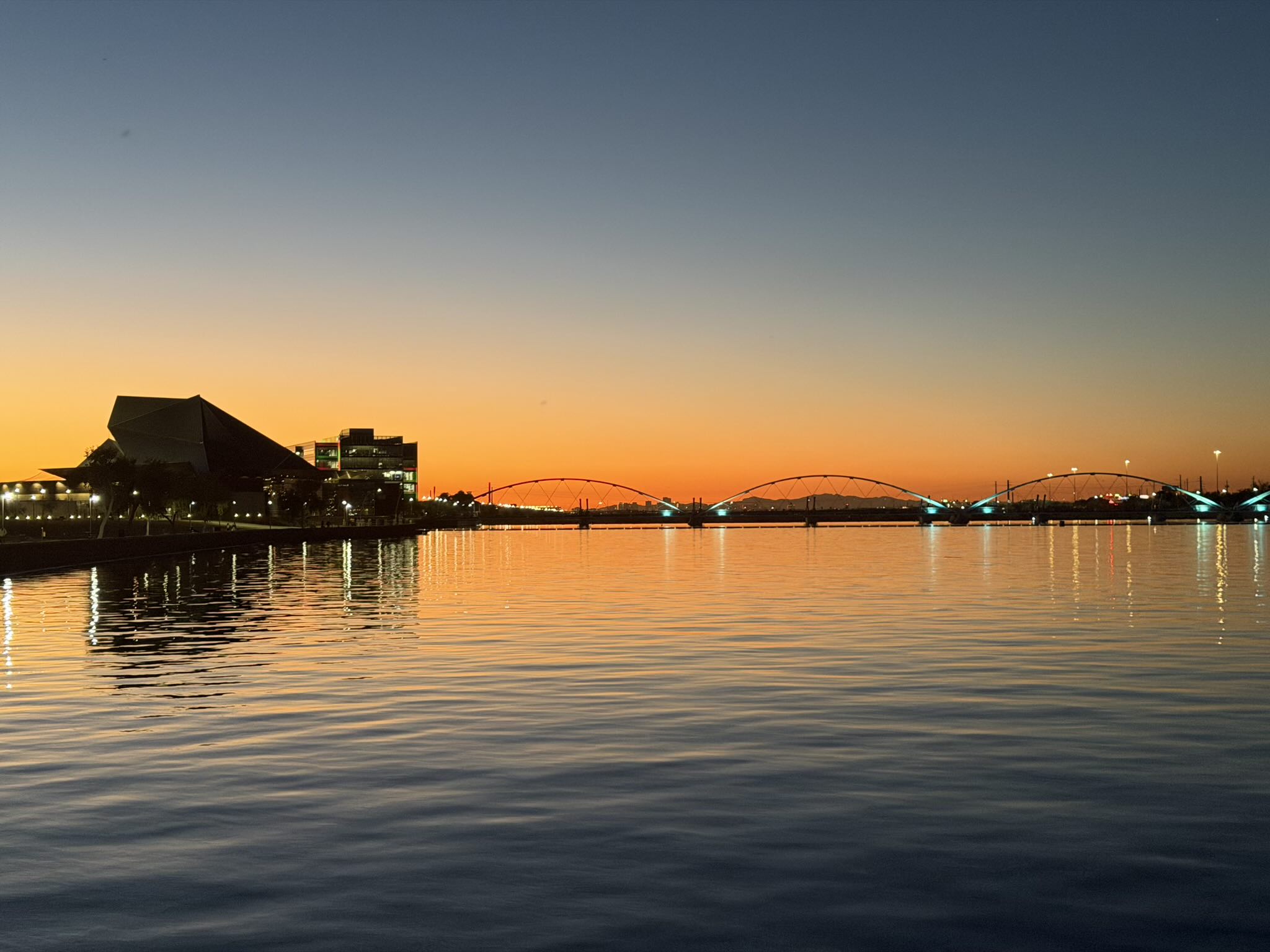
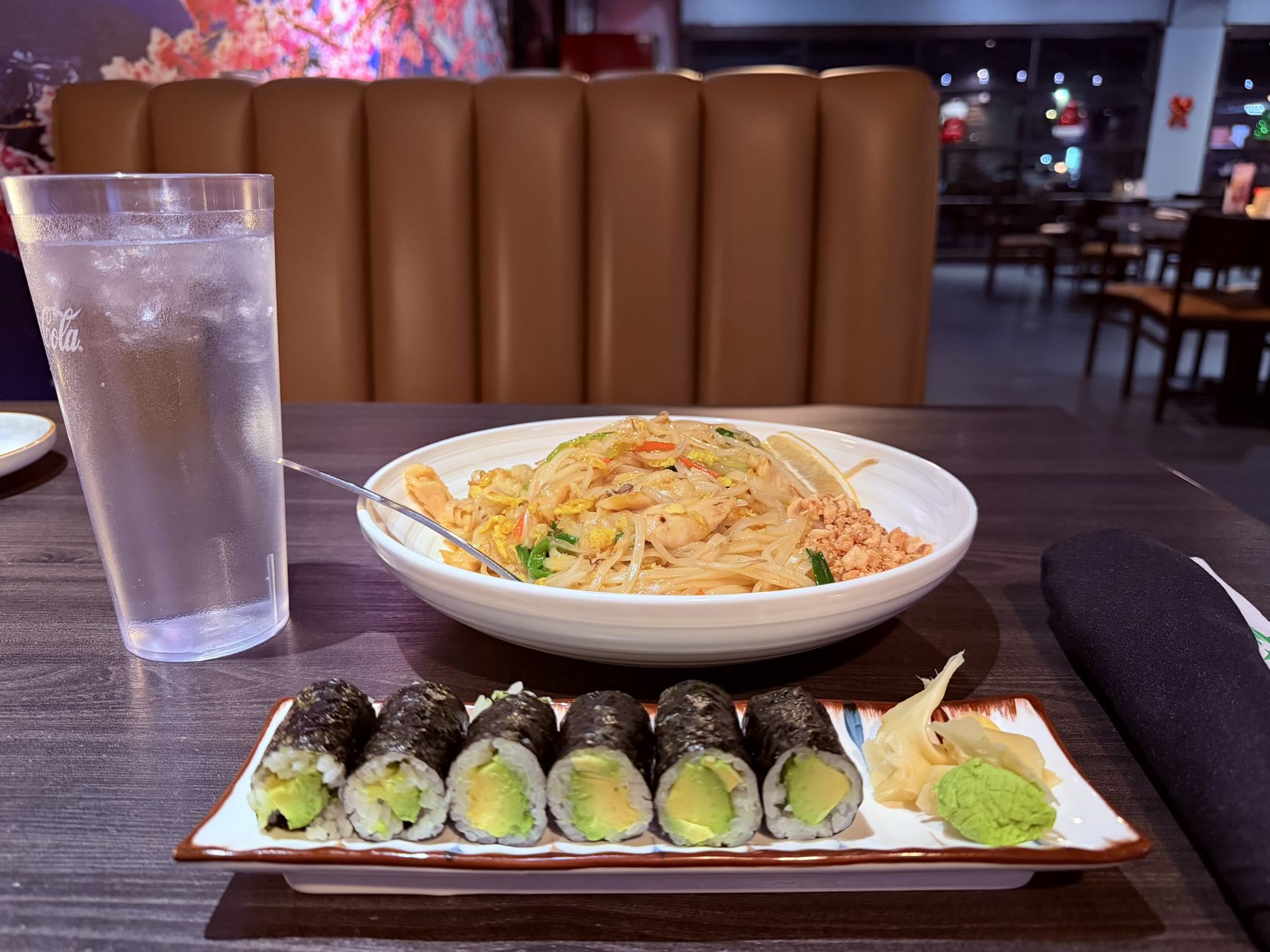
I ended up staying in nearby Scottsdale at a hotel that hit the “nice but inexpensive” sweet spot. It was perfectly situated next to a greenbelt where I could get my runs in over the following days, and it had the added bonus of being just fifty meters away from an excellent Asian restaurant that was so good I went back twice.
Tempe’s ‘Culdesac‘
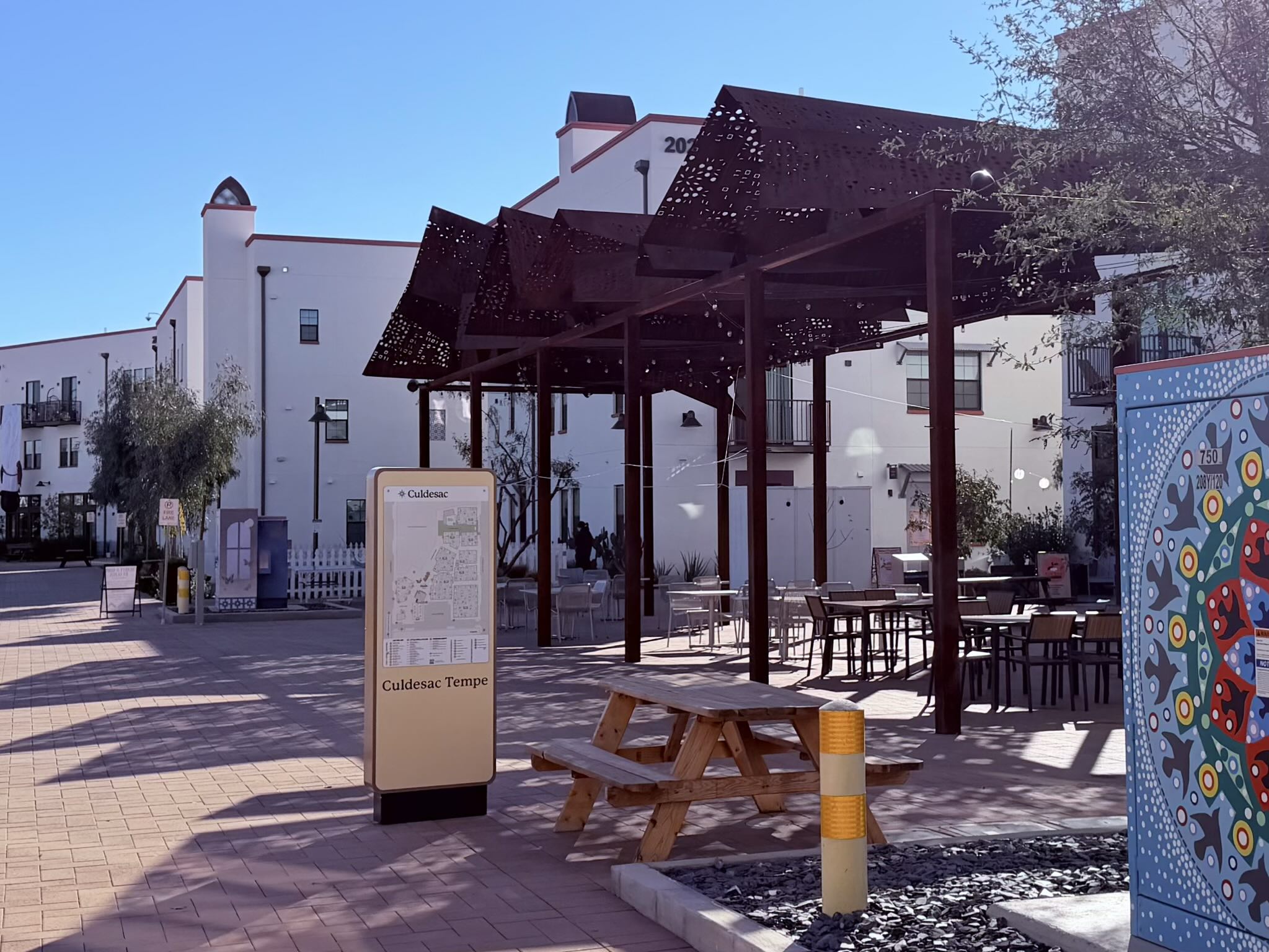
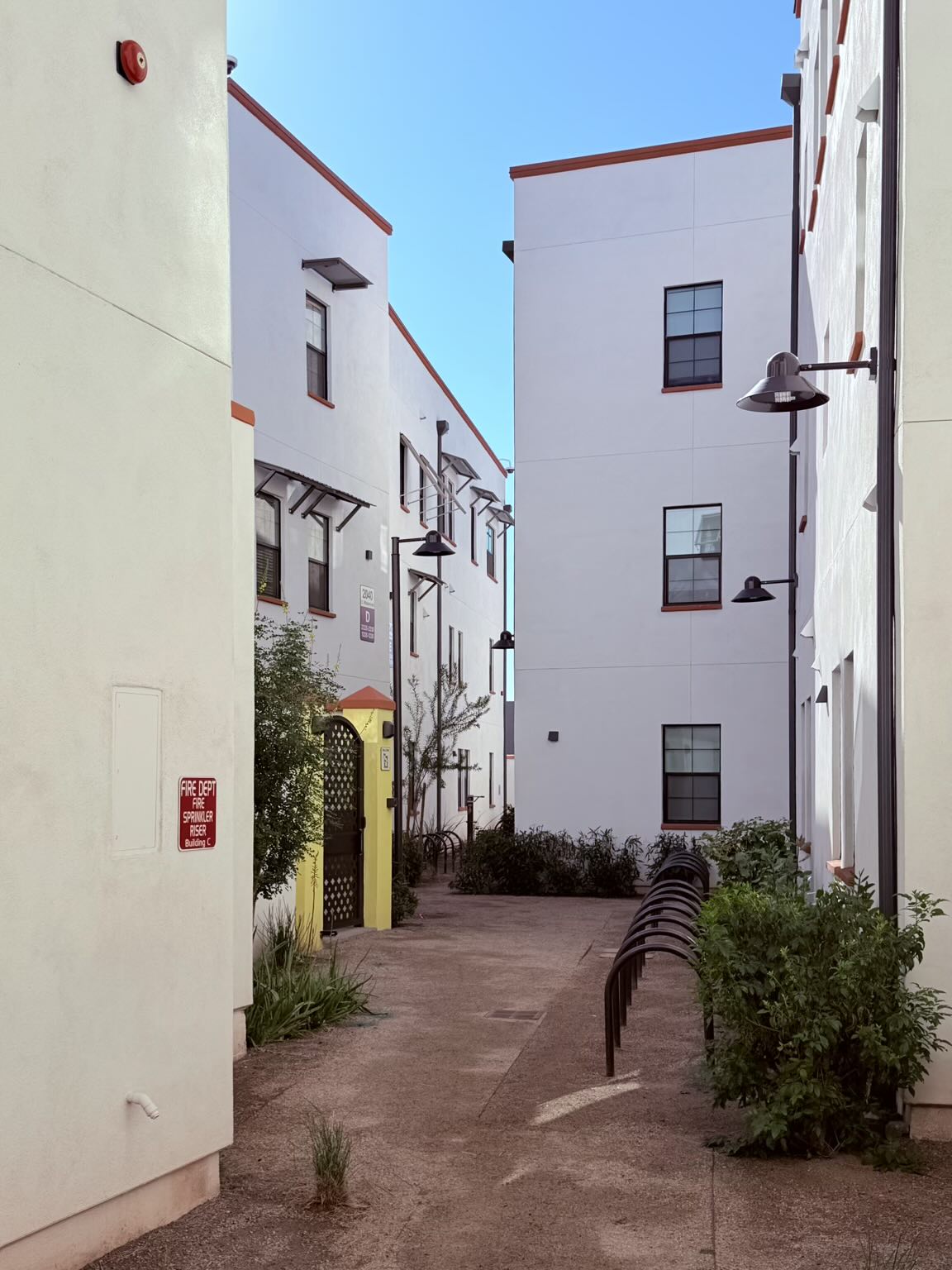
While in the area, I made a point to visit Culdesac Tempe. I first heard about this “Arizona experiment” while reading the blog of fellow engineer-turned-early-retiree-in-Colorado Mr. Money Mustache, in he discussed the developer’s goal of creating a high-density, car-free community. Having lived in Spain for the last four years, I was intrigued by the concept of a neighborhood designed specifically to make a walkable lifestyle possible in America, in the heart of the desert, situated within walking distance of essential services and the light rail.
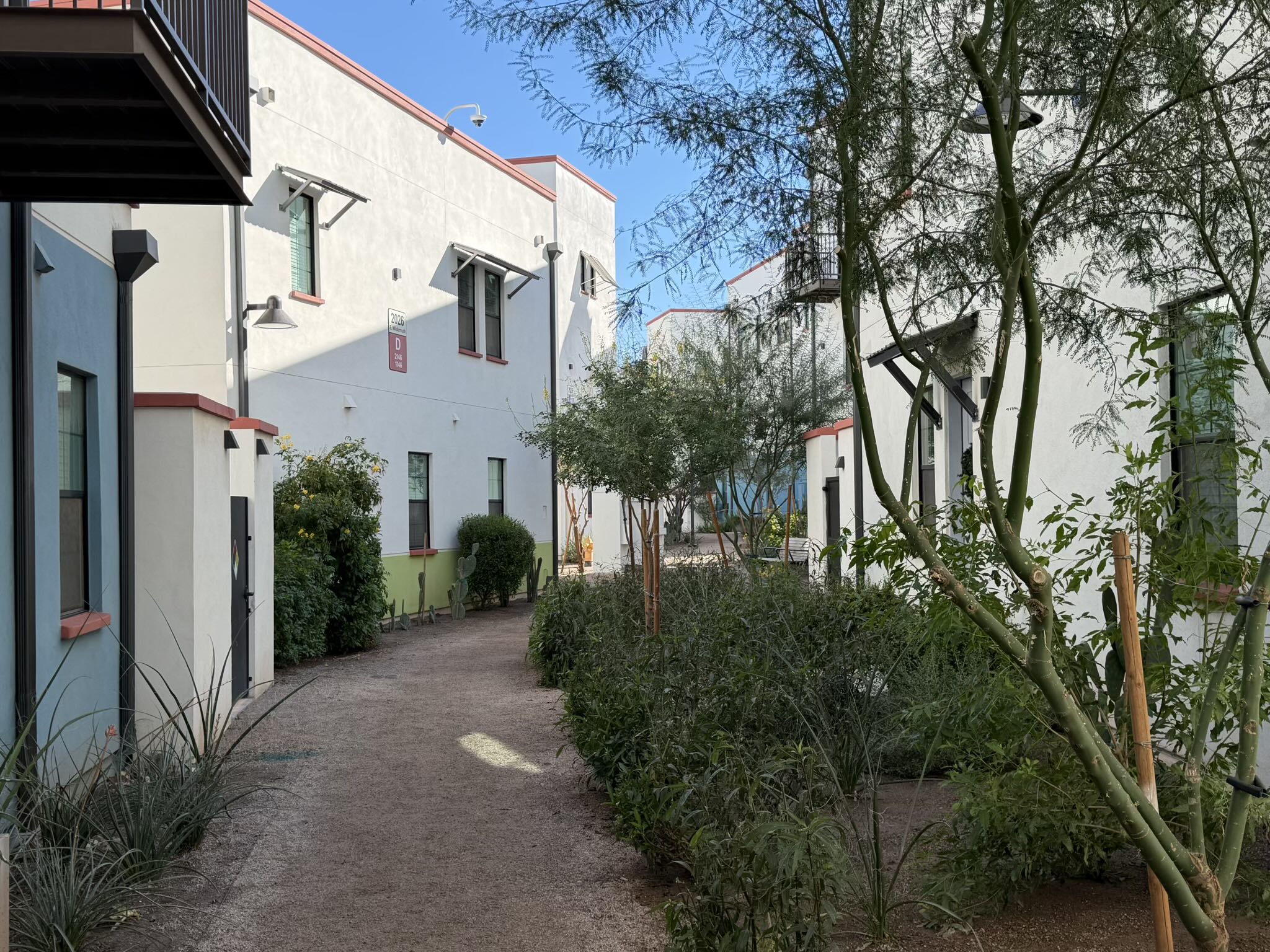
The development looked incredibly modern, clean, and new. Although the mission is a car-free lifestyle, they did have exterior parking for guests or residents who still own vehicles, including plenty of electric charging spots.
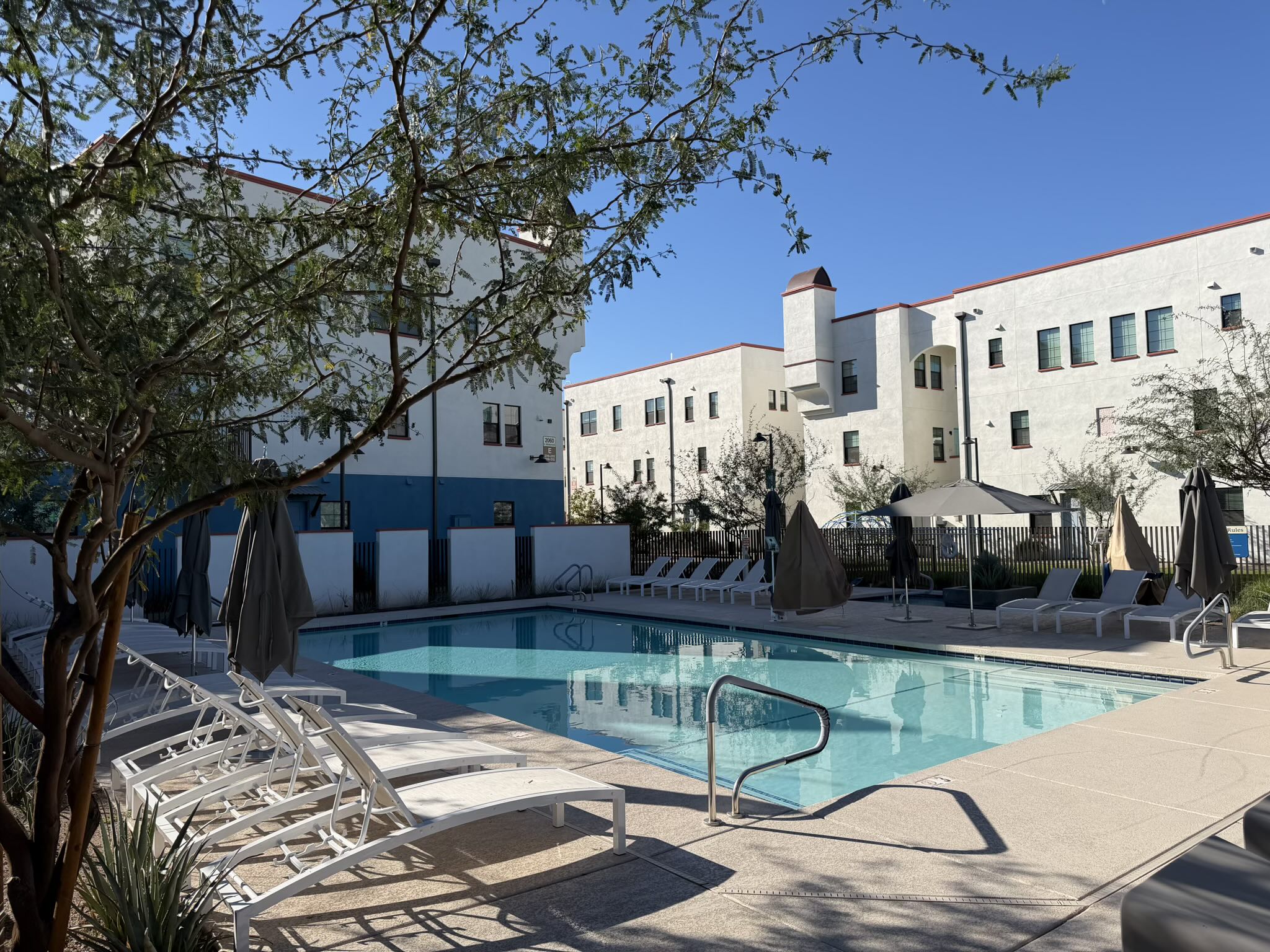
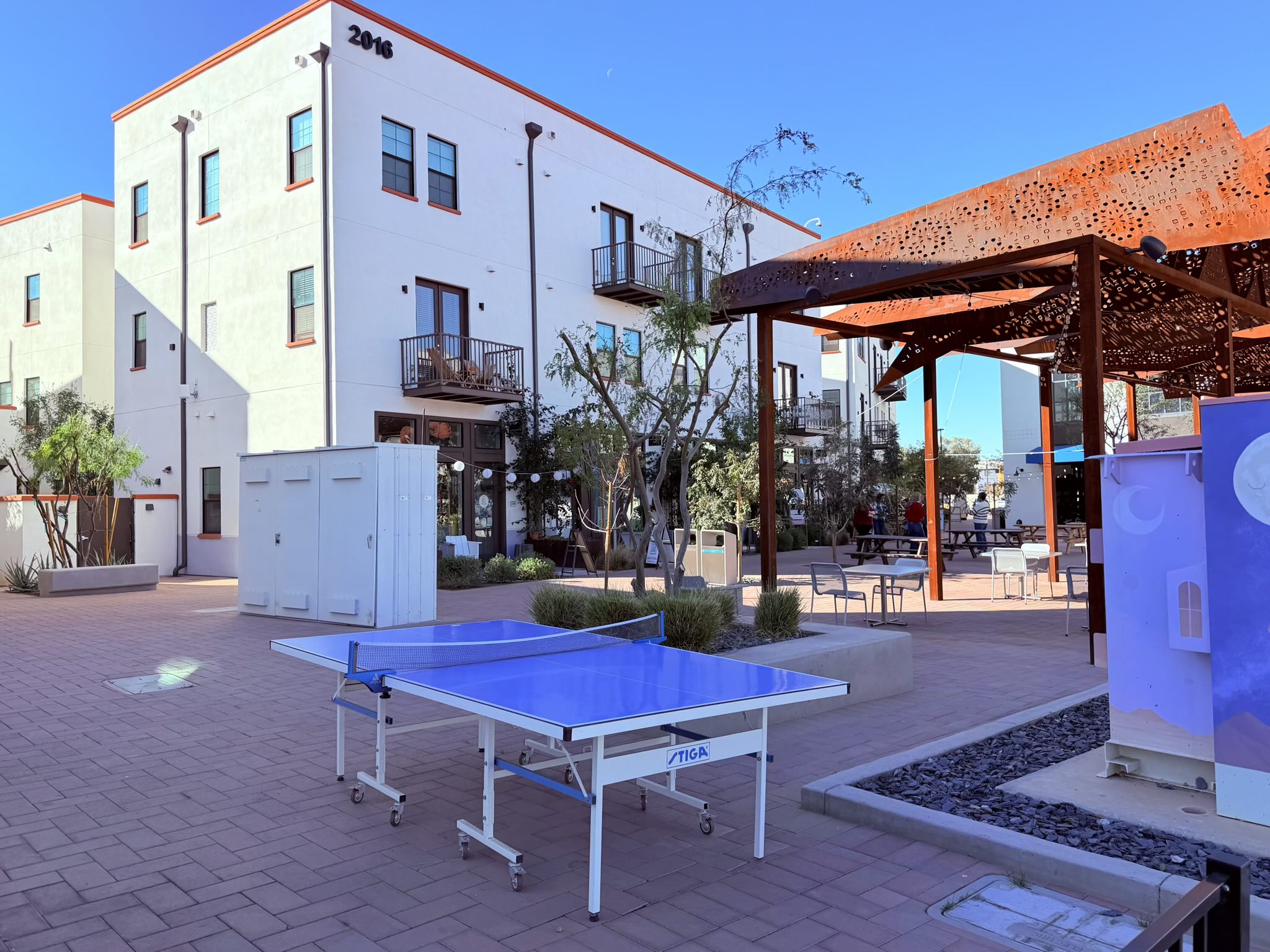
The community features were both clever—like the various outdoor community centers meant to foster interaction—and expected or commonplace like the use of artificial grass, which is simply a practical choice for water-deprived Arizona. The grounds also boasted a pool, an outdoor ping-pong table, and even a K-pop station promoting K-beauty within a Korean food court.
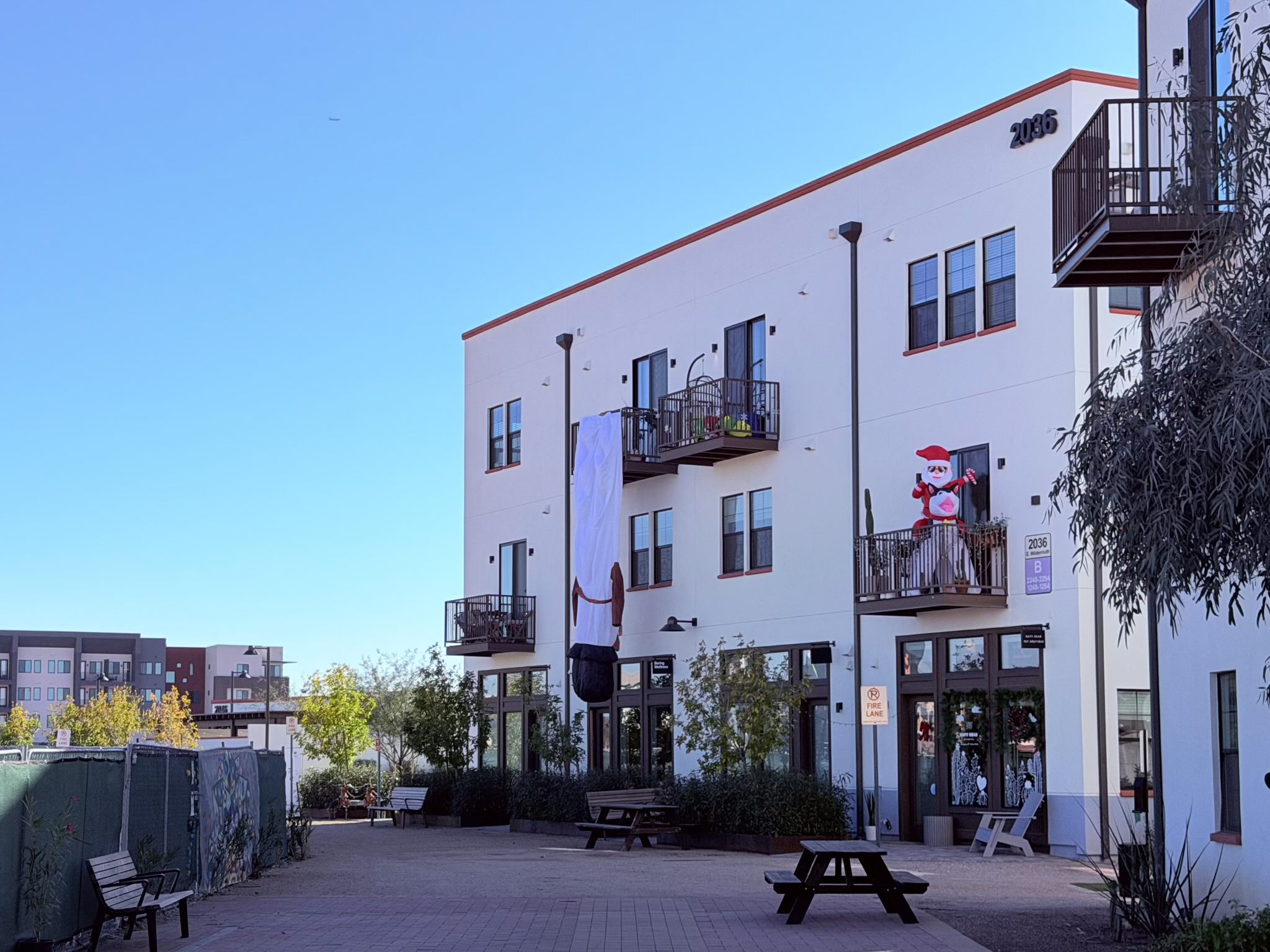
I found myself laughing when I spotted a deflated inflatable snowman that had folded over someone’s third-story balcony. Its head was peeking right into the window of a first-story business, and I imagined that whoever worked inside to be faced with an upside-down snowman staring in either found it startling, creepy, or hilarious. Maybe a mix of all three.
I also stopped in at a nearby coffee shop for a decaf while I planned the rest of my day.
Ferrari Dreams and Racing History
My next stop was driven by a recommendation from Microsoft Copilot: the Penske Racing Museum.
While the museum itself only features a couple dozen cars, it was a fantastic stop, especially because it sits right next door to a Ferrari dealership. I don’t think I have ever seen so many Ferraris in one place at one time.
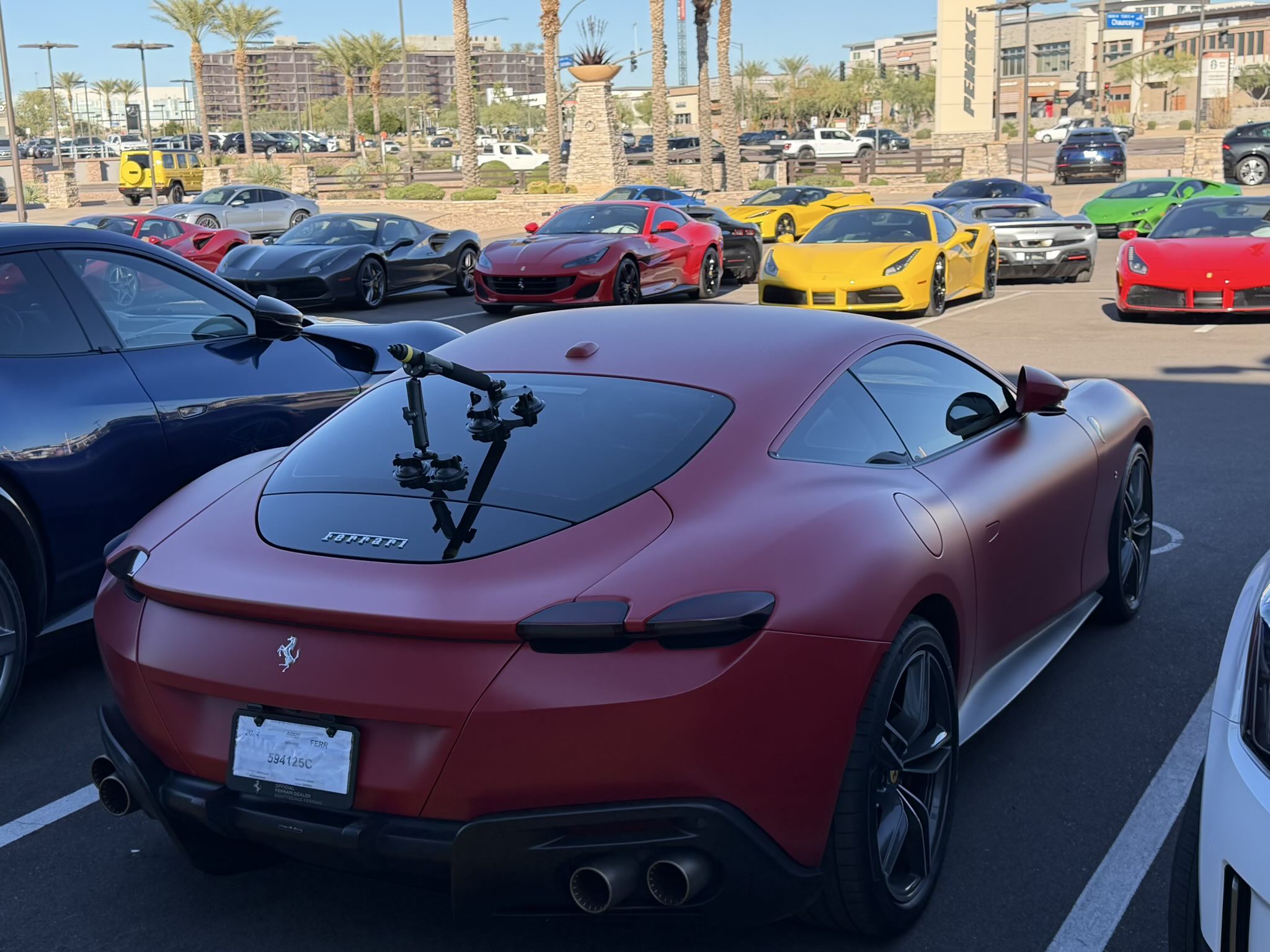
It was such a highlight that I actually wrote a separate post titled “Ferrari Dreams at the Penske Racing Museum” to do it justice.
Revisiting Taliesin West
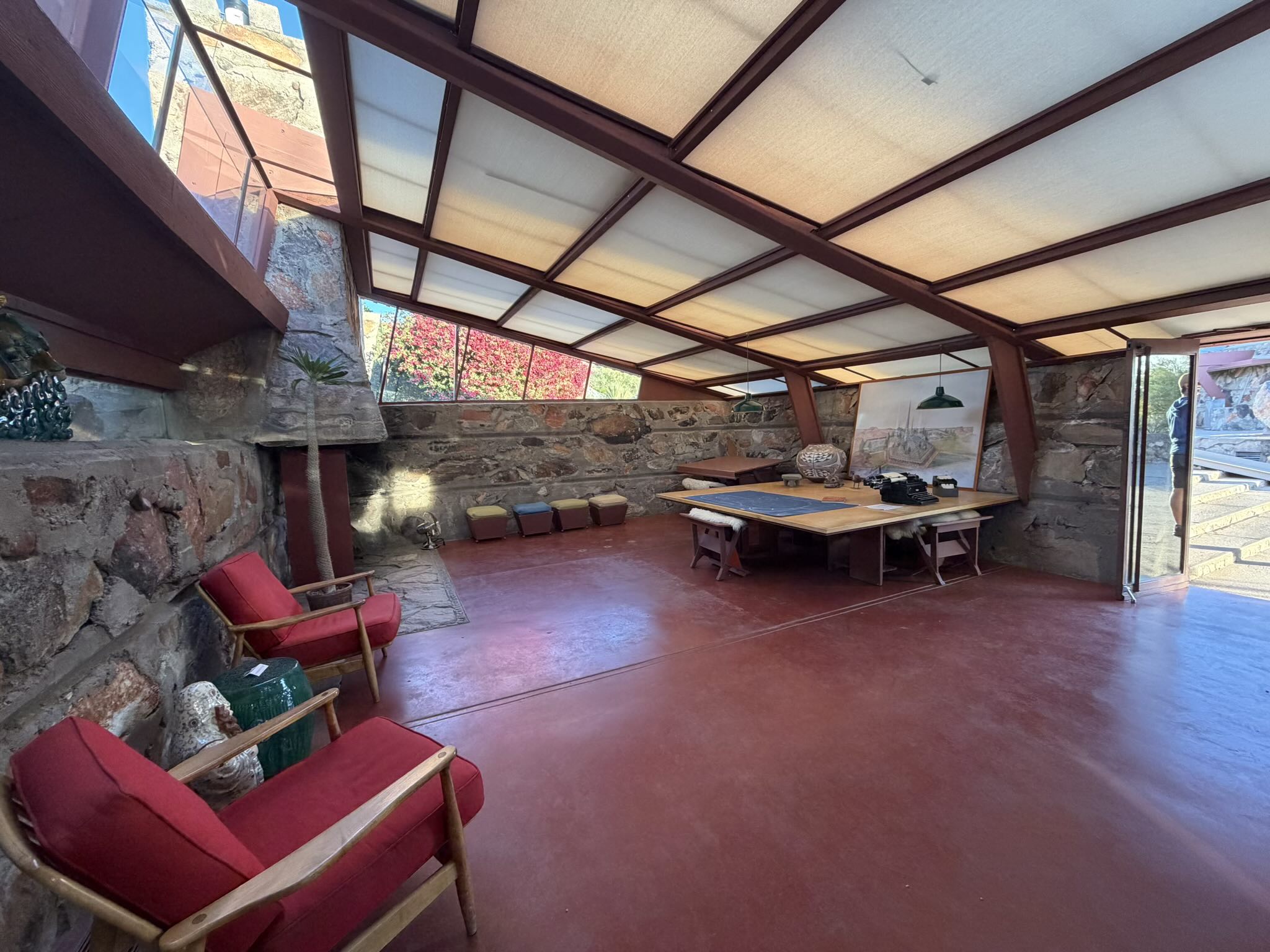
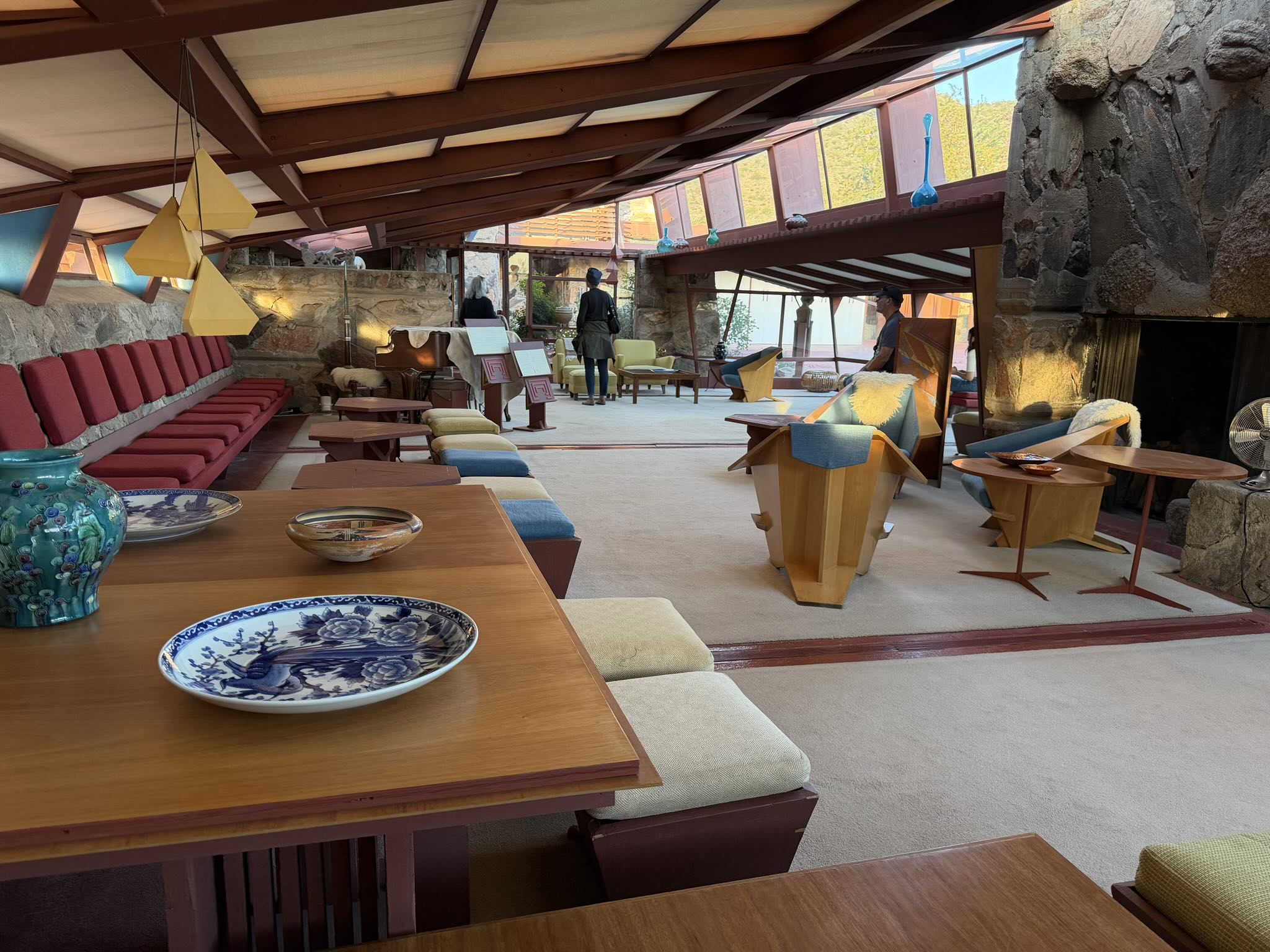
From there, I headed to Frank Lloyd Wright’s Taliesin West. I had toured the site twenty years ago and been fascinated by it, but back then my camera ran out of batteries before I could take more than a single photo. This time, equipped with my iPhone 17 Pro, I wasn’t going to miss a single detail. It is amazing how much one can forget in two decades; even though the place hasn’t changed, most of it felt new and unfamiliar to me. The main thing I remembered was how short the doorways were. Wright was clearly a short man, and I nearly hit my head several times.
But like the first time, I was yet again impressed by Wright’s inspired vision—particularly the repeating shape themes, the sharp angular lines, and the open-concept living quarters that used massive amounts of glass to bring nature inside. He even had grand pianos on-site—notably in the Garden Room—adding to the cultured atmosphere. I would have loved to have been able to play them, even though (alas) I have been hardly able to practice much ever since the end of the pandemic and moving to Spain.
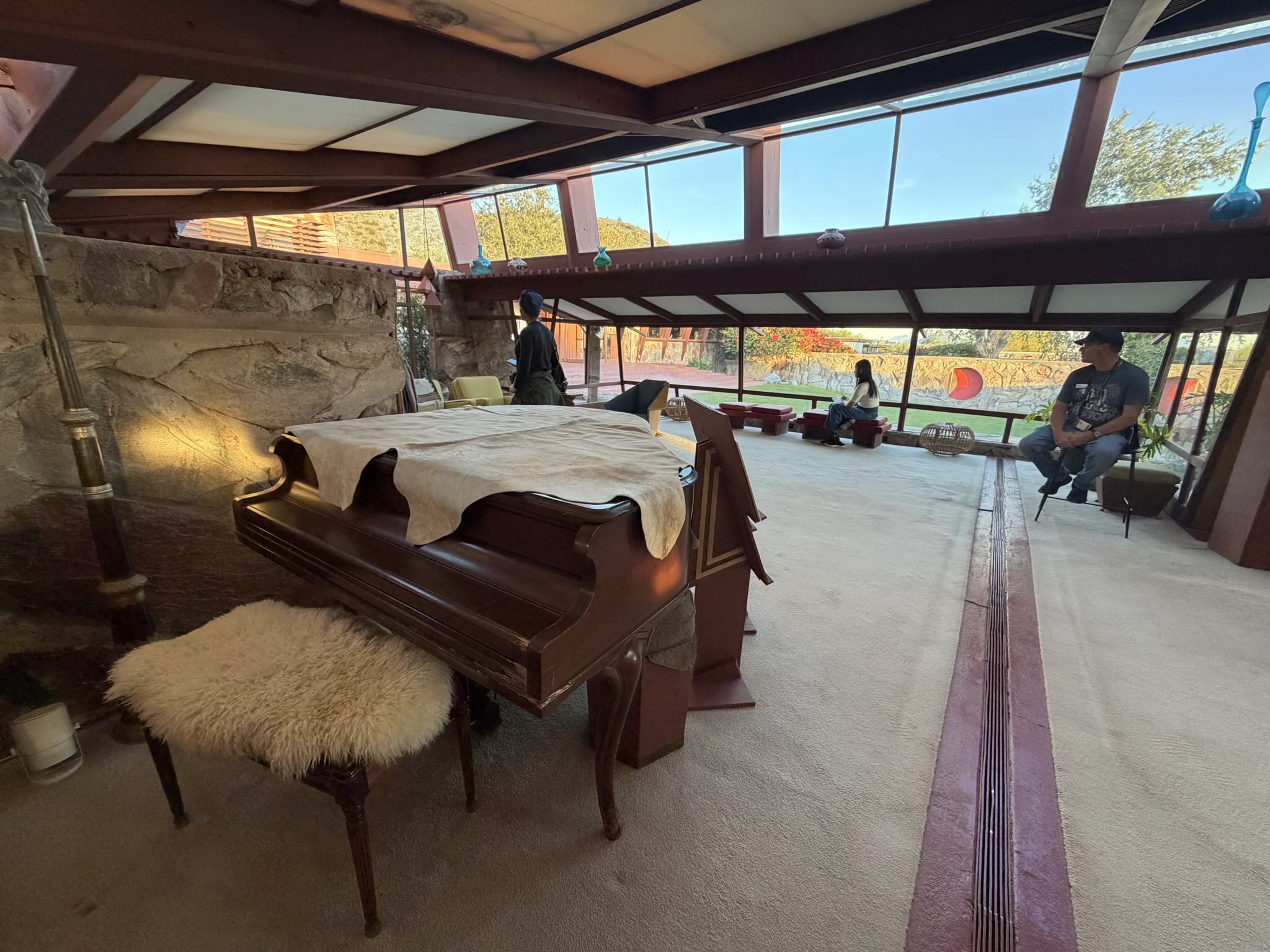
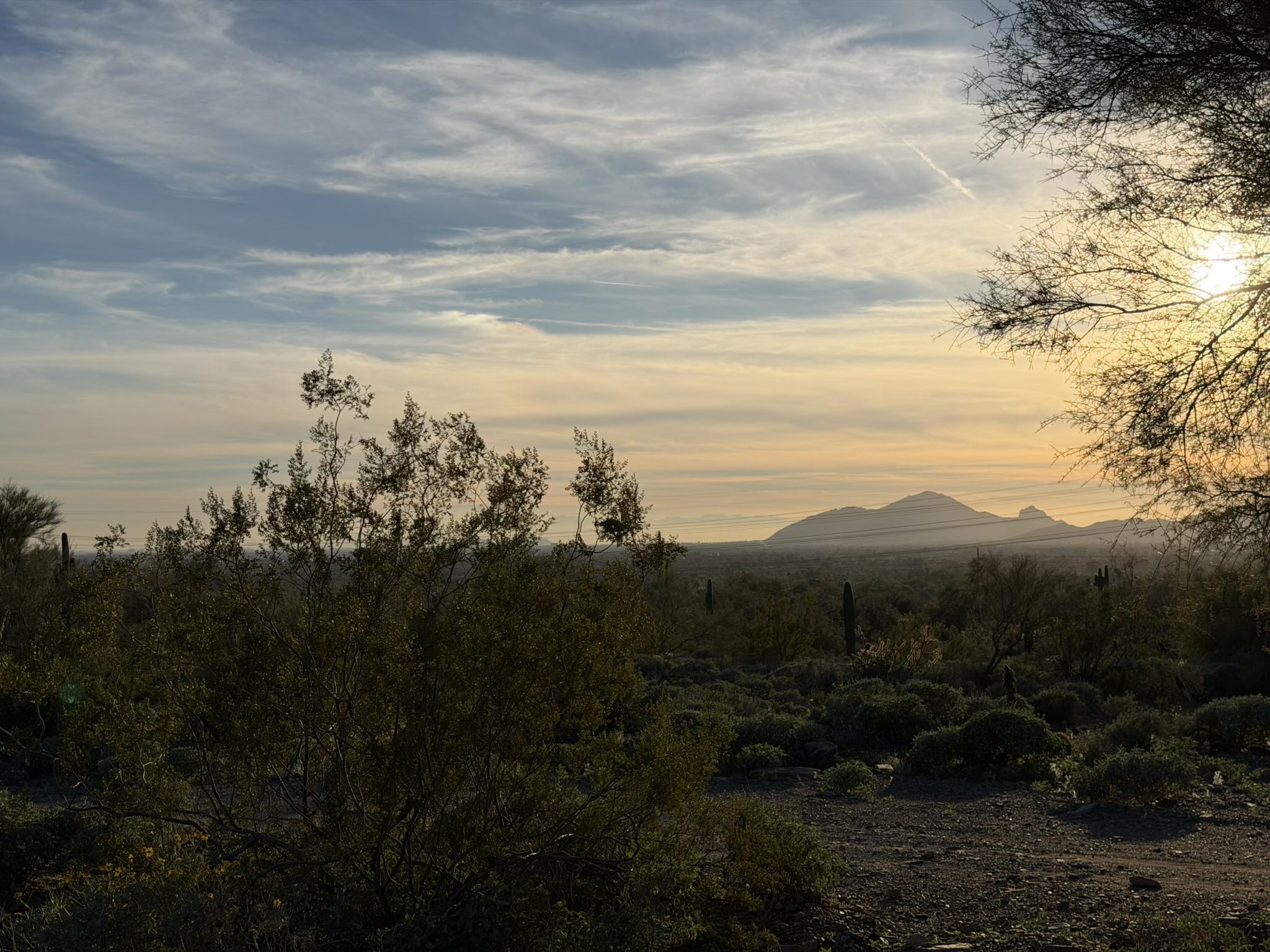
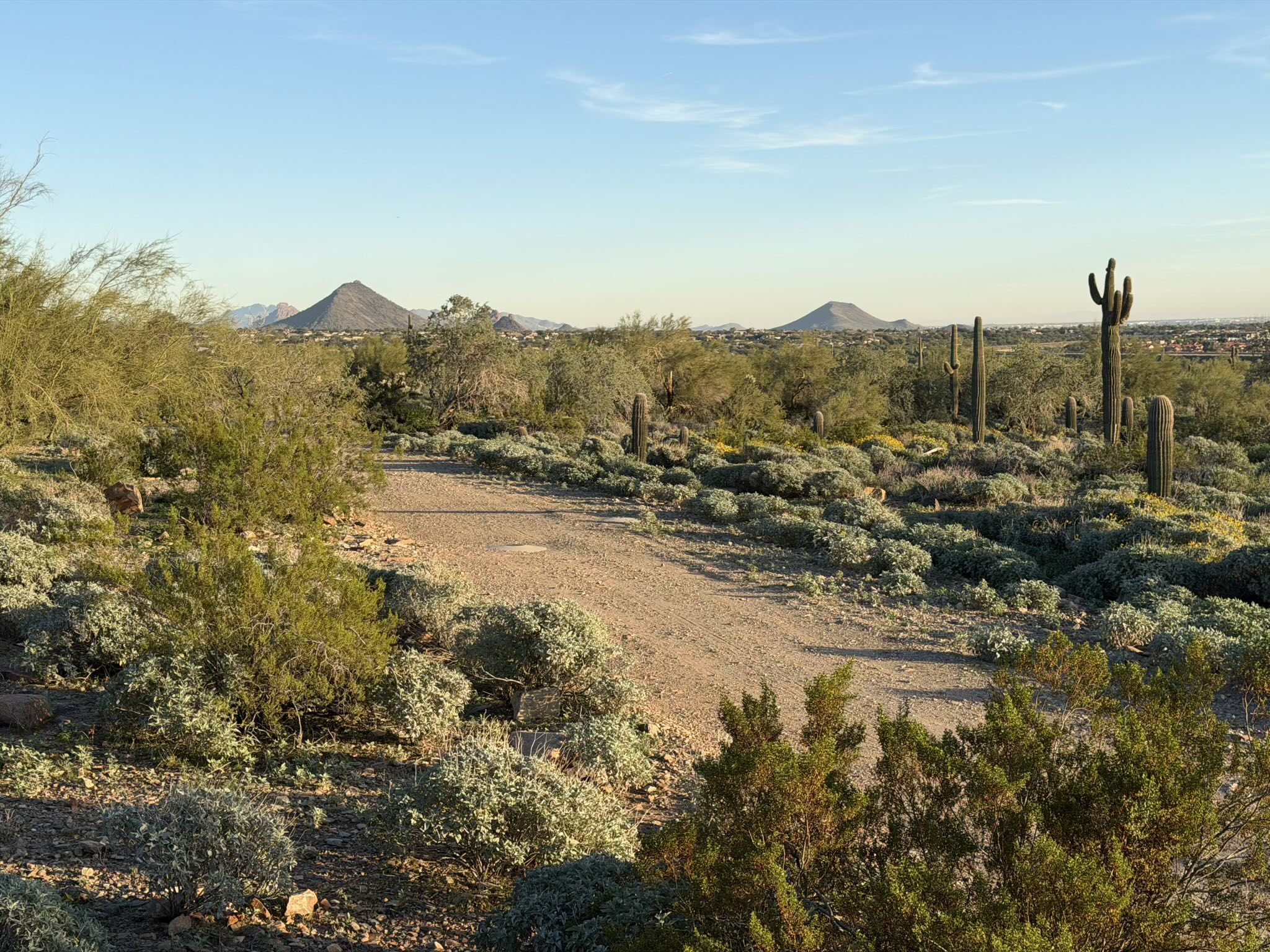
The views were splendid, offering clear sights of Camelback Mountain, and the triangular pool was a striking feature. Not only did it echo the drafting triangles used by Wright’s”s architects, but its sharp point is oriented toward the “prow” of the complex, directing the eye toward the vast desert landscape and McDowell Mountains. While I doubt it was great for lap swimming, Wright’s students were known to sunbathe on the grassy lawn surrounding it.
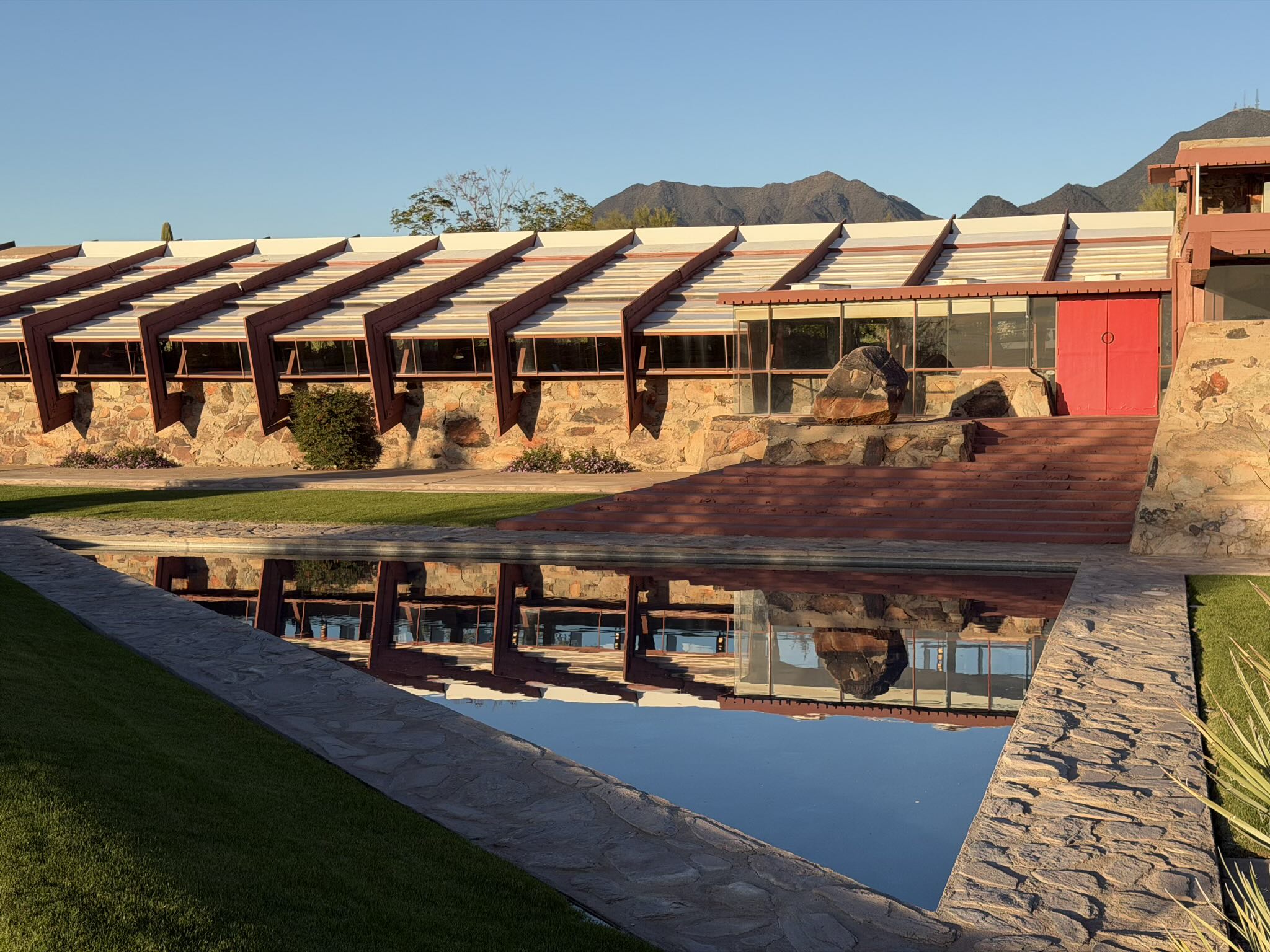
In contrast to the glassy living quarters, the meeting rooms were built like caverns with very little natural light. This design kept the rooms cool and protected the items stored within while providing a reprieve for people meeting in the desert heat.
Frank Lloyd Wright Spire
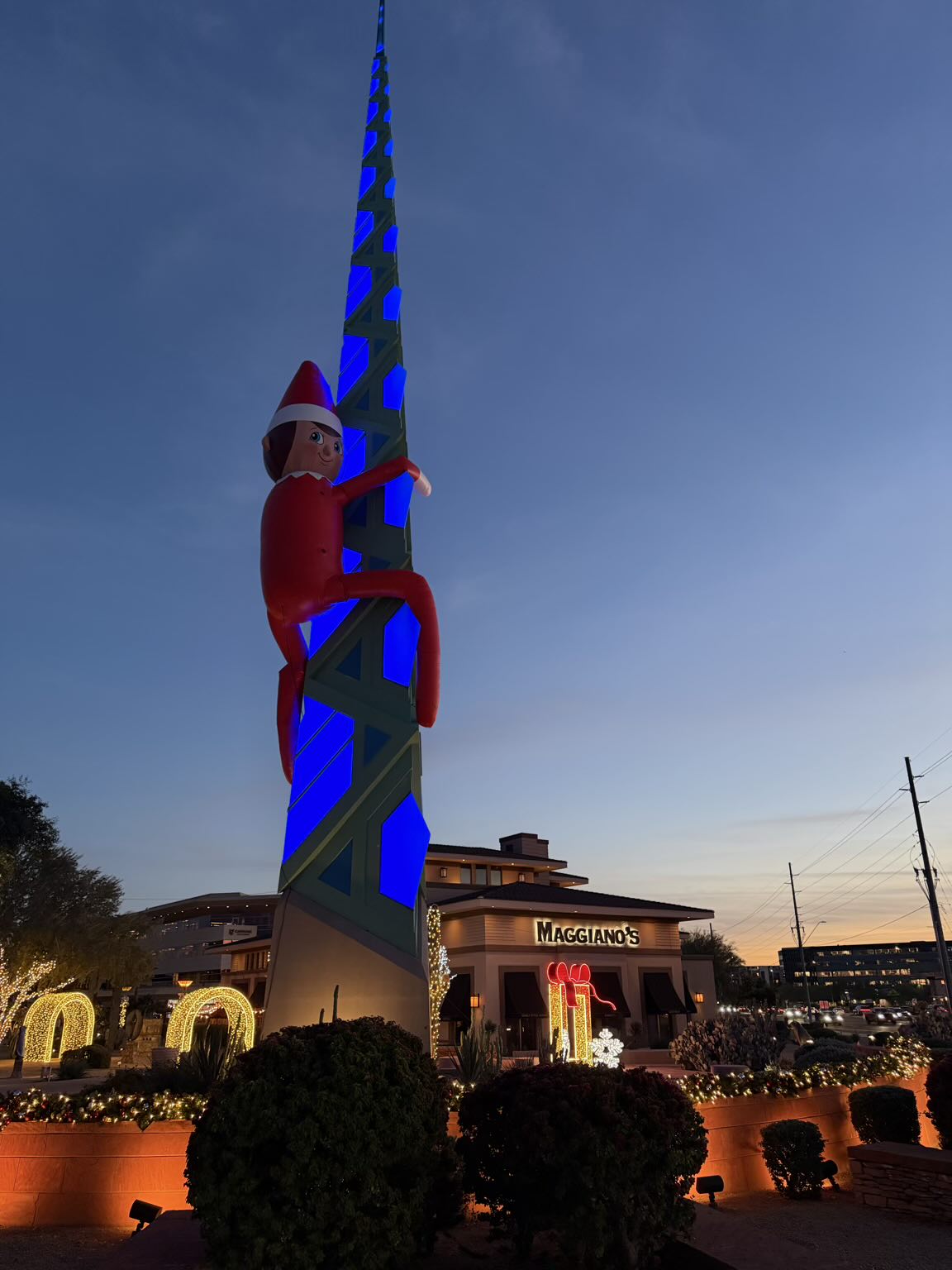
After wrapping up my tour at Taliesin West, I drove a few miles down the road to visit the Frank Lloyd Wright Spire. It is a striking 125-foot structure that glows with a turquoise light at night, but its history is even more interesting than its silhouette. Wright originally conceived this design in 1957 as part of a proposal for the Arizona State Capitol building in Phoenix.
He called his vision “The Oasis,” and it was intended to be a sprawling, glass-domed masterpiece that blended into the desert landscape. Unfortunately, the state government rejected it for being too “radical” and “modern,” opting for a more traditional office-style building instead. It wasn’t until 2004 that the spire was finally built as a tribute to Wright’s unfulfilled dream for the city. Seeing it standing there today, it felt like a piece of an alternate history brought to life.
My First Time Inside a Waymo
On my final day, I had my first fully autonomous vehicle experience. I had learned that Phoenix currently has the highest number of Waymo autonomous taxis in the world, so after returning my Turo rental, I used the Waymo app to hail a ride downtown. I remember the predictions back in the mid-2010s that we would have autonomous cars by 2020. While that timeline was a bit optimistic, the vision has finally taken shape. Minutes after calling the ride, a white Waymo Jaguar I-PACE rolled up to the corner.
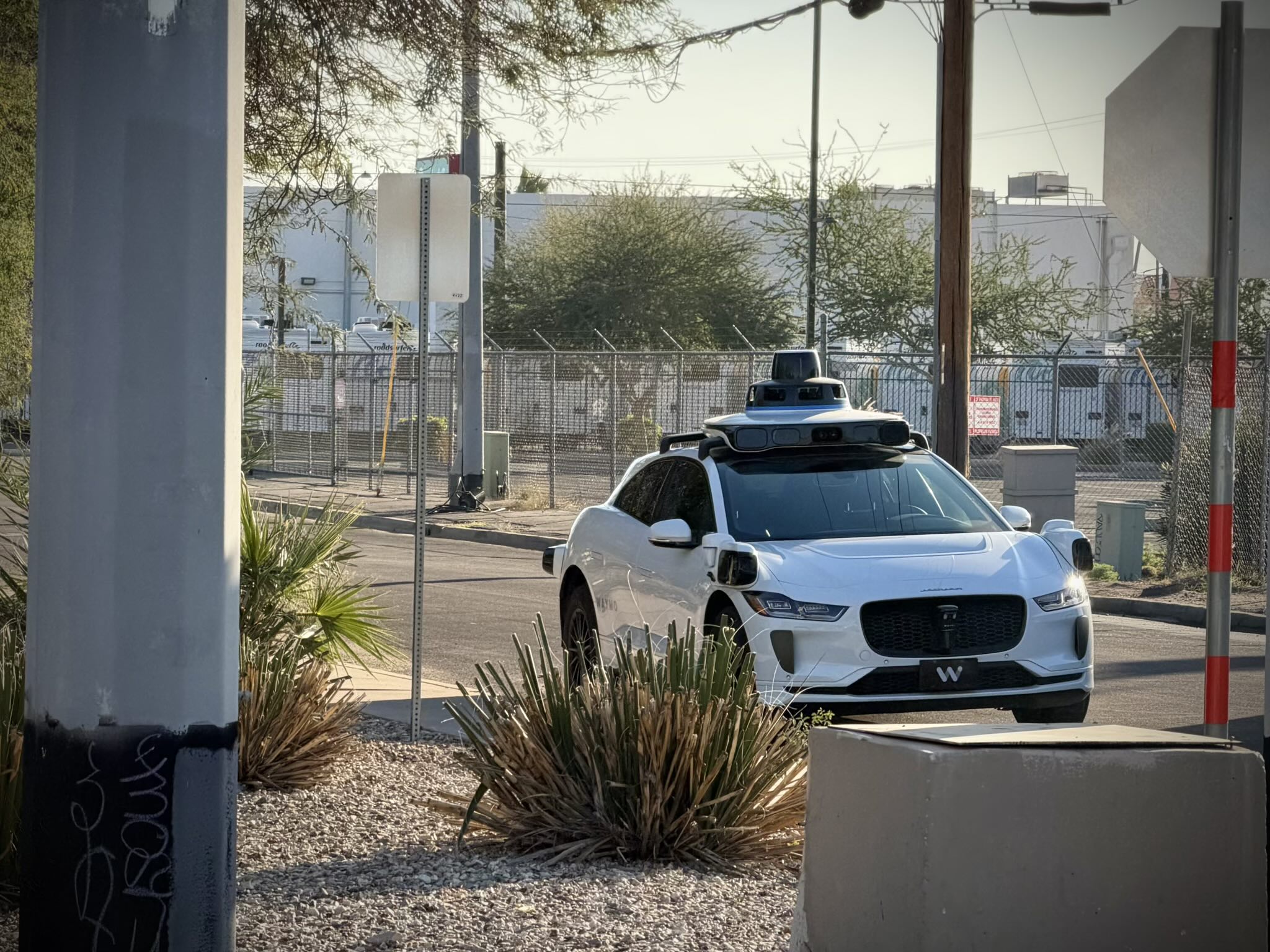
Getting into the backseat was a surreal experience. It felt like something out of Knight Rider to be in a vehicle where the steering wheel is turning itself with no one in the driver’s seat.
I was particularly curious how the car would handle unprotected left-hand turns at intersections without traffic lights. To my surprise, it handled them abruptly and efficiently—just as well as, or perhaps better than, many human drivers.
I felt very safe and relaxed as the car played Christmas music. I could have changed the tunes if I wanted to via the touchscreen tablet mounted in between the rear of the two front seats, but was content listening to Mariah Carey.
Ultimately, I concluded that I much preferred taking a robotaxi than, say, a traditional Uber or taxi. There was no need to worry about whether the driver was going to be a creep, and no obligation to make small talk if I was tired.
Cost-wise, I had heard Waymos are typically more expensive than regular taxis, but for my 3.3-mile ride, the total was only $10.39. Since there was no human driver, absolutely no tipping was required or even solicited. I can’t even remember the last time a three-mile taxi ride cost me only ten dollars.
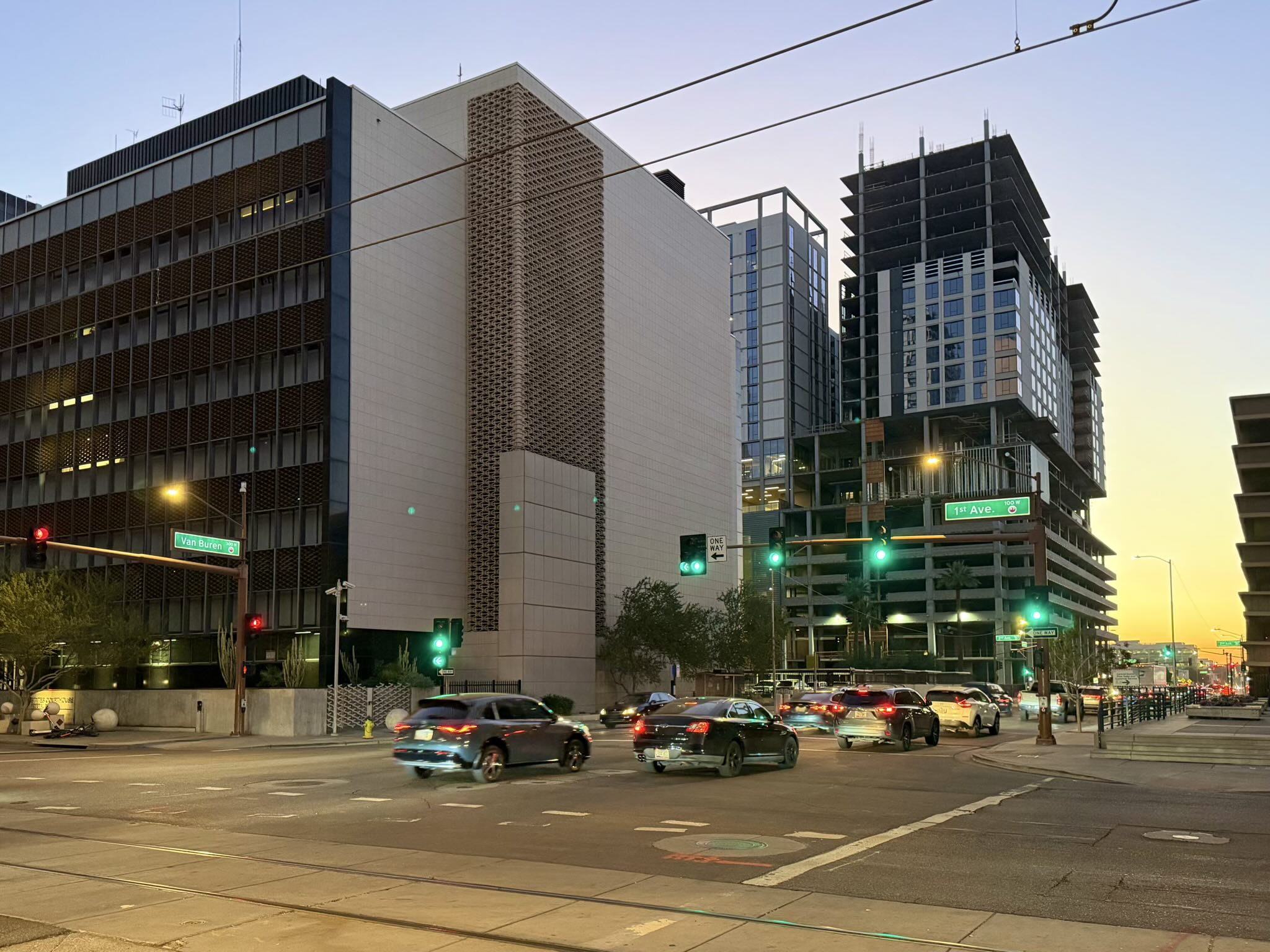
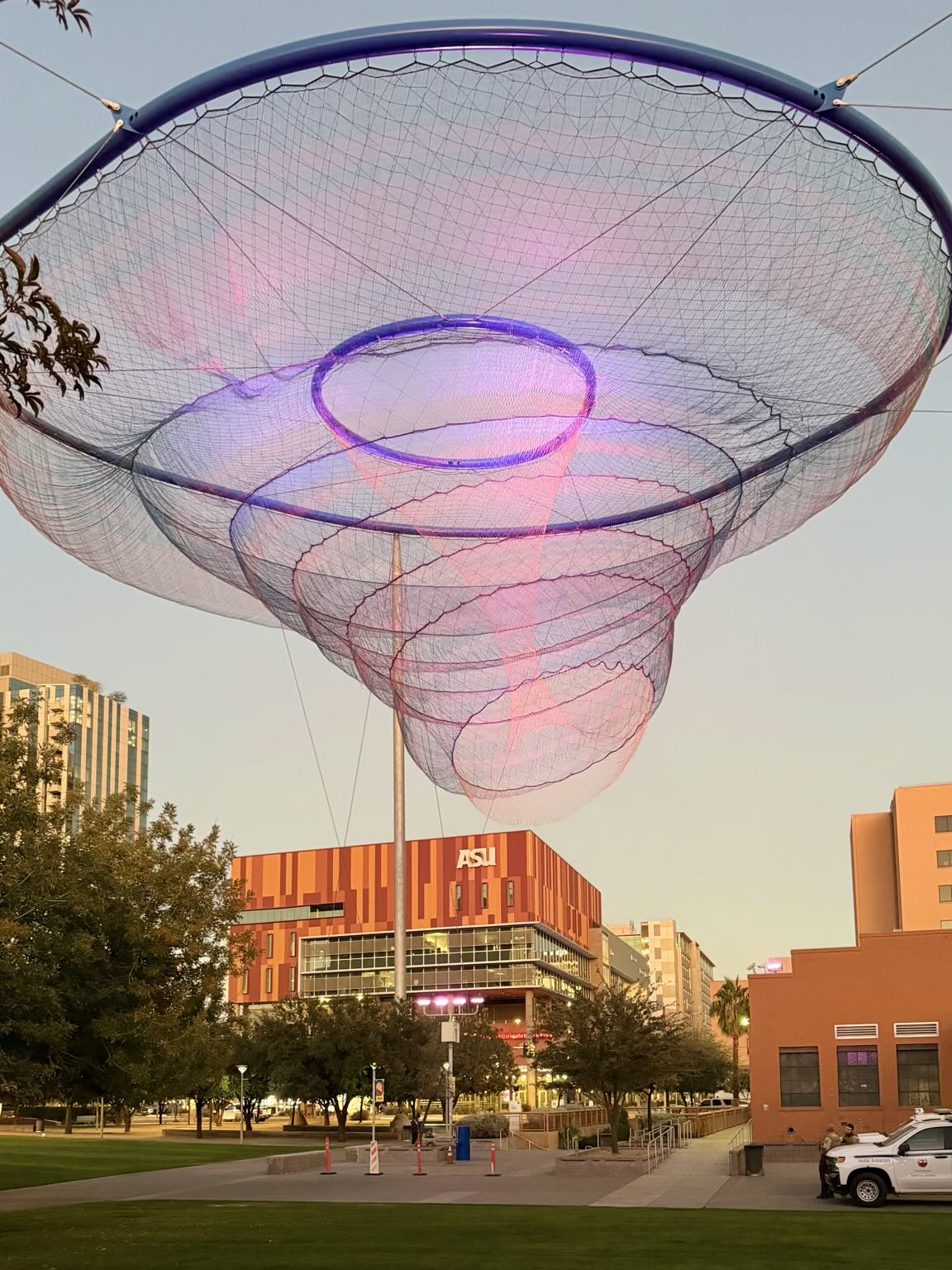
I ended the evening walking around downtown Phoenix, which felt clean and safe even after dark, before taking a city bus back to my hotel. The bus ride was cheap, convenient, and comfortable, but not as interesting as the Waymo, of course!
Conclusion
This was only my second time in Phoenix, and I have to say that visiting in December is a much better experience than my first trip that occurred in the month September. The heat was not oppressive, which made the entire trip far more enjoyable.
While it isn’t a city I would want to live in year-round, it was an excellent place to visit. If you ever find yourself in the Valley of the Sun, I would highly recommend checking out any of the stops described above.