Louisville, Kentucky: Definitely an Underrated City

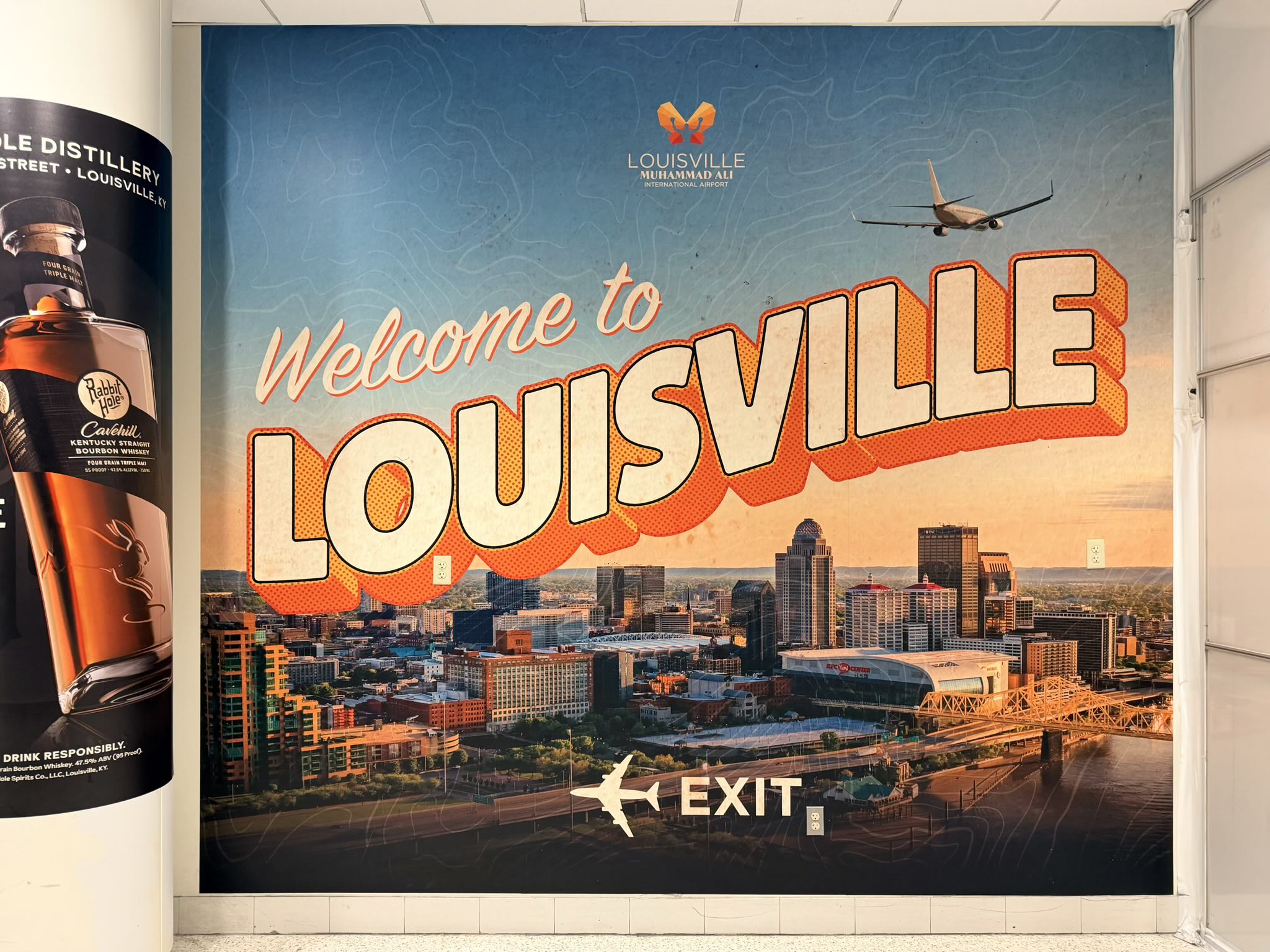
The Louisville Muhammad Ali International Airport greets arrivals with a welcome sign bearing the image of its most famous native son—the boxer who floated like a butterfly and stung like a bee, and who, as it turned out, also happened to grow up right here. I had come to “Lou-uh-vuh” for the Kentucky Derby Festival Marathon, the 25th edition of a race held the week before the Kentucky Derby itself, and I was immediately curious about a city I had never visited before—one whose population of roughly 620,000 (or about 1.1 million if you count the metro area) makes it the largest city in the state, yet somehow manages to fly under the radar on the national consciousness.
A friend who used to work for Sprint (if you still remember that cellular company) told me the company once kept a warehouse here. Knowing Louisville’s reputation as a logistics hub—it sits within a one-day shipping radius of roughly 60% of U.S. cities, which is why UPS has its worldwide air hub at this very airport—I found that entirely plausible.
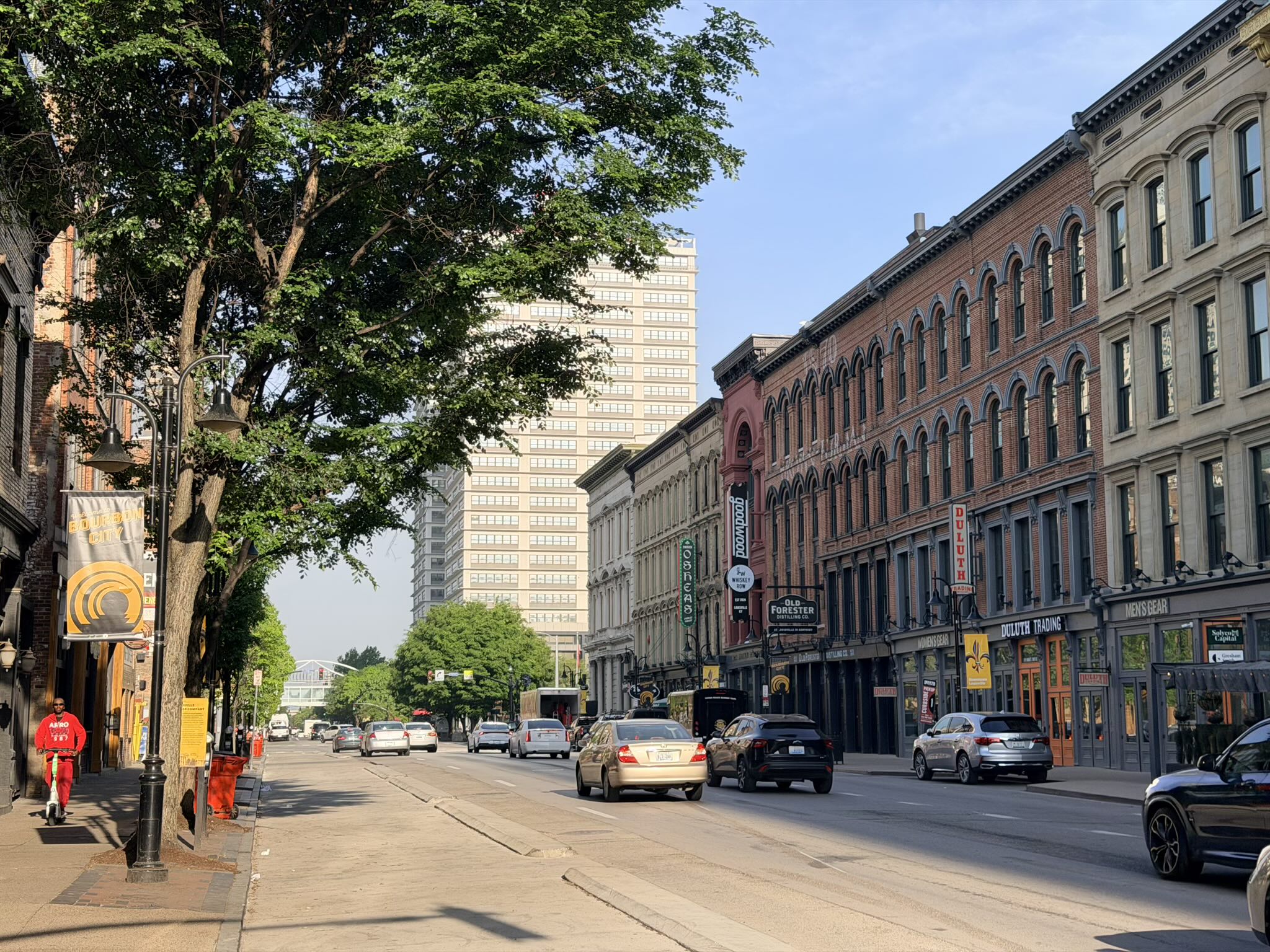
Louisville calls itself Bourbon City, and the nickname is not mere marketing bravado. In my brief research about the city, Kentucky produces about 95% of the world’s bourbon, and Louisville is where much of it concentrates—downtown has seven distillery experiences within walking distance of each other, anchored by the official starting point of the Kentucky Bourbon Trail. The city’s first commercial distillery opened here in 1783, before Kentucky was even a state.
While the word “trail” for me invokes thoughts of hiking, in this context, it’s more of a map of where distilleries are in the state that people (hopefully) take Über or Lyft to. Personally, I stopped consuming alcohol almost entirely a few years ago for anti-aging, longevity and general well-being reasons, so the Bourbon Trail holds roughly the same appeal to me as a color-blind person browsing a paint store. But I can still appreciate what Louisville had built around it.
Downtown
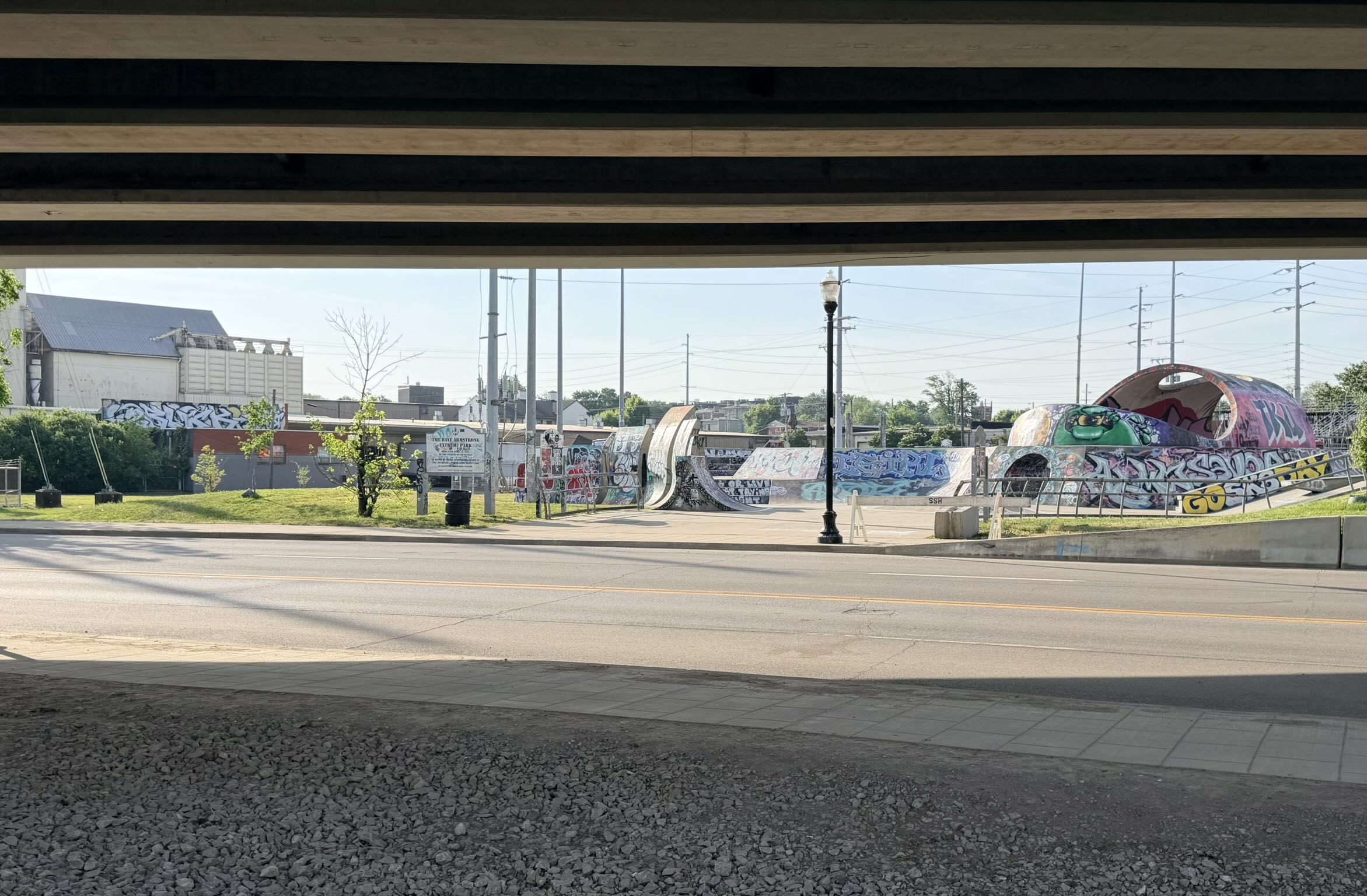
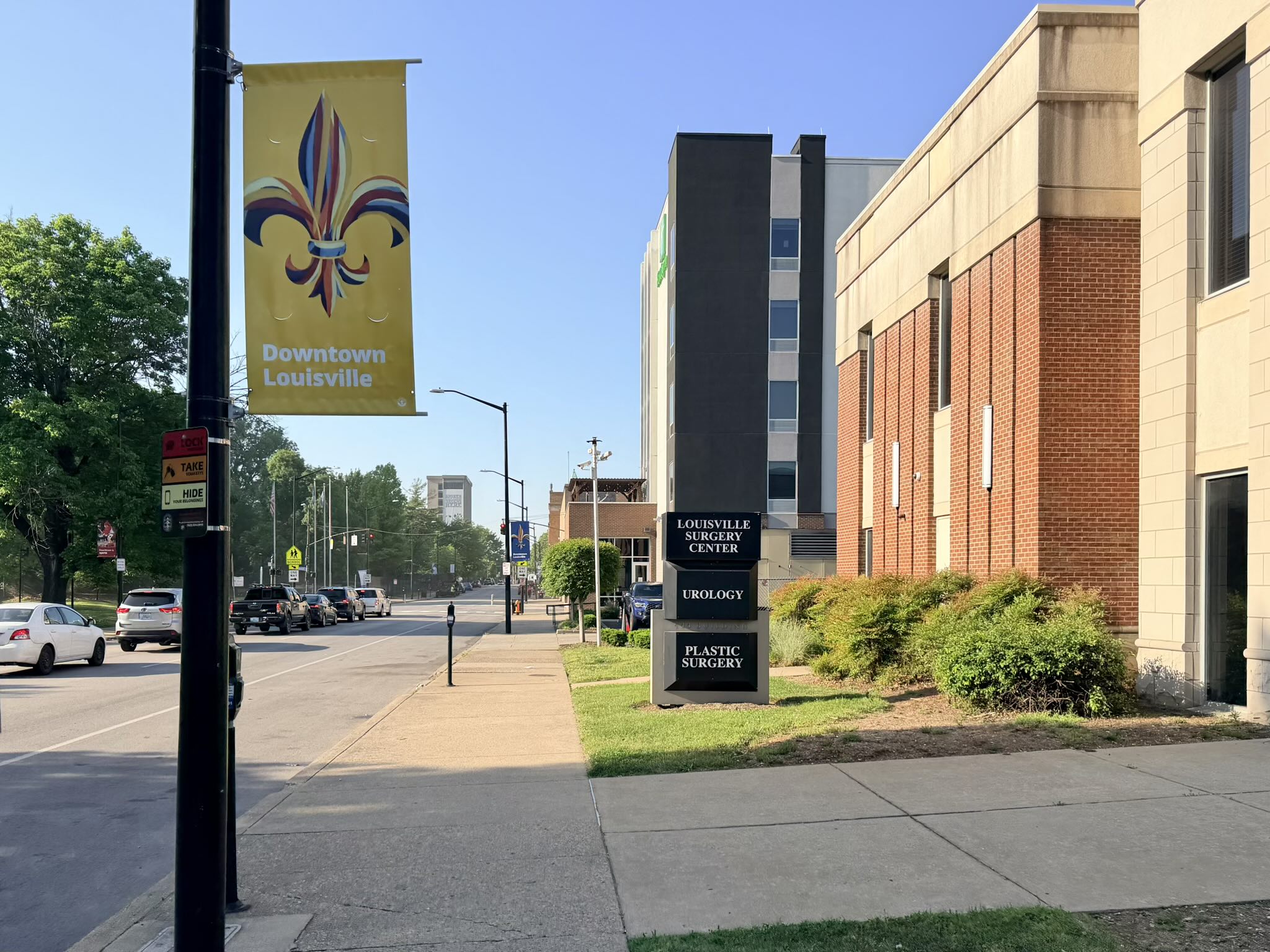
Downtown Louisville is clean in a way that feels deliberate rather than accidental. Every weekday I was there, city workers were out tending lawns and planting flowers, and I spotted almost no graffiti anywhere—save for the David Armstrong Extreme Park skate area, where it appeared to be entirely sanctioned.
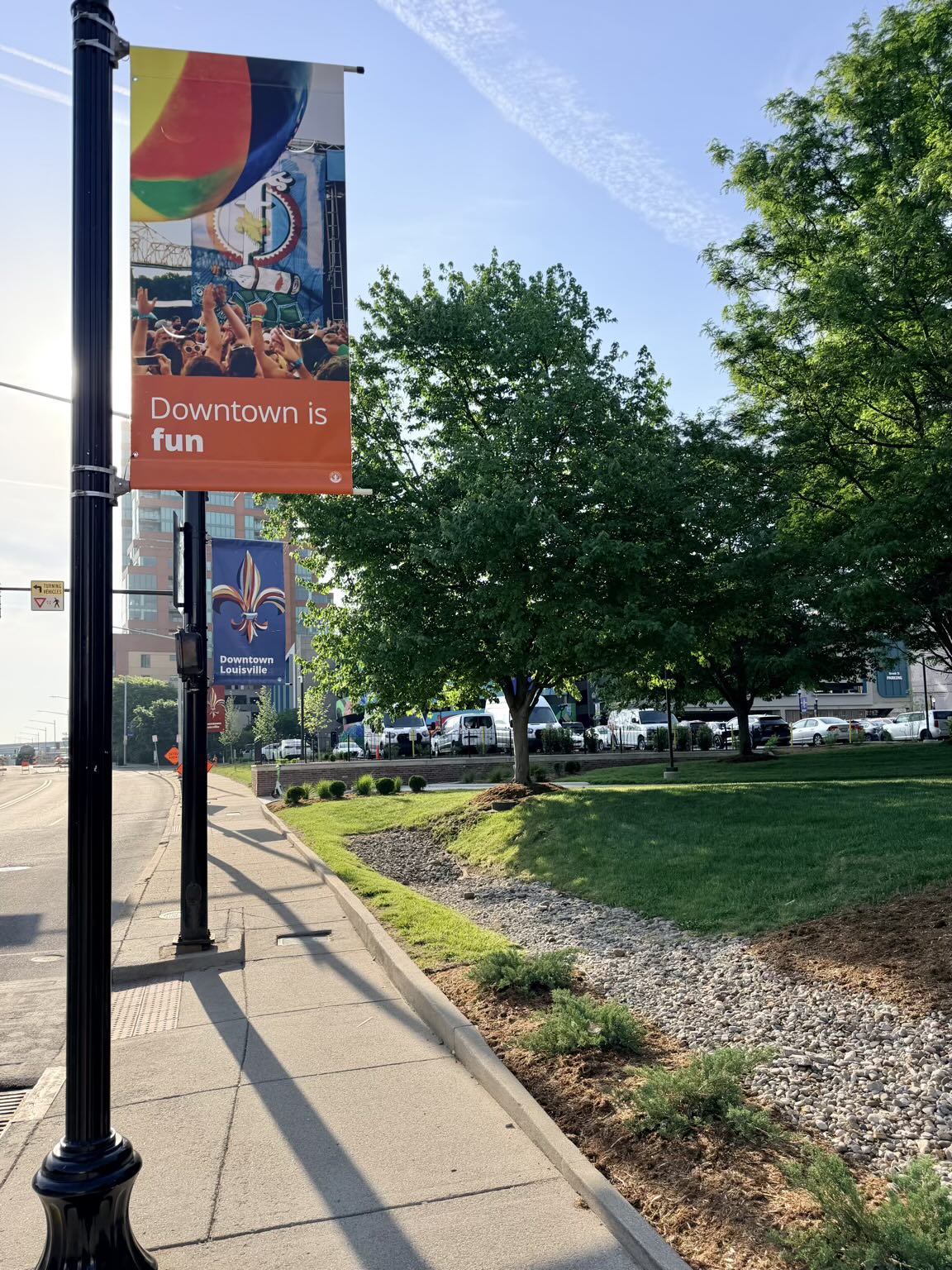
Signs around downtown exhorted passersby with phrases like “Inspiration is Everywhere,” which is either genuinely uplifting or the civic equivalent of a motivational poster in a dentist’s office.
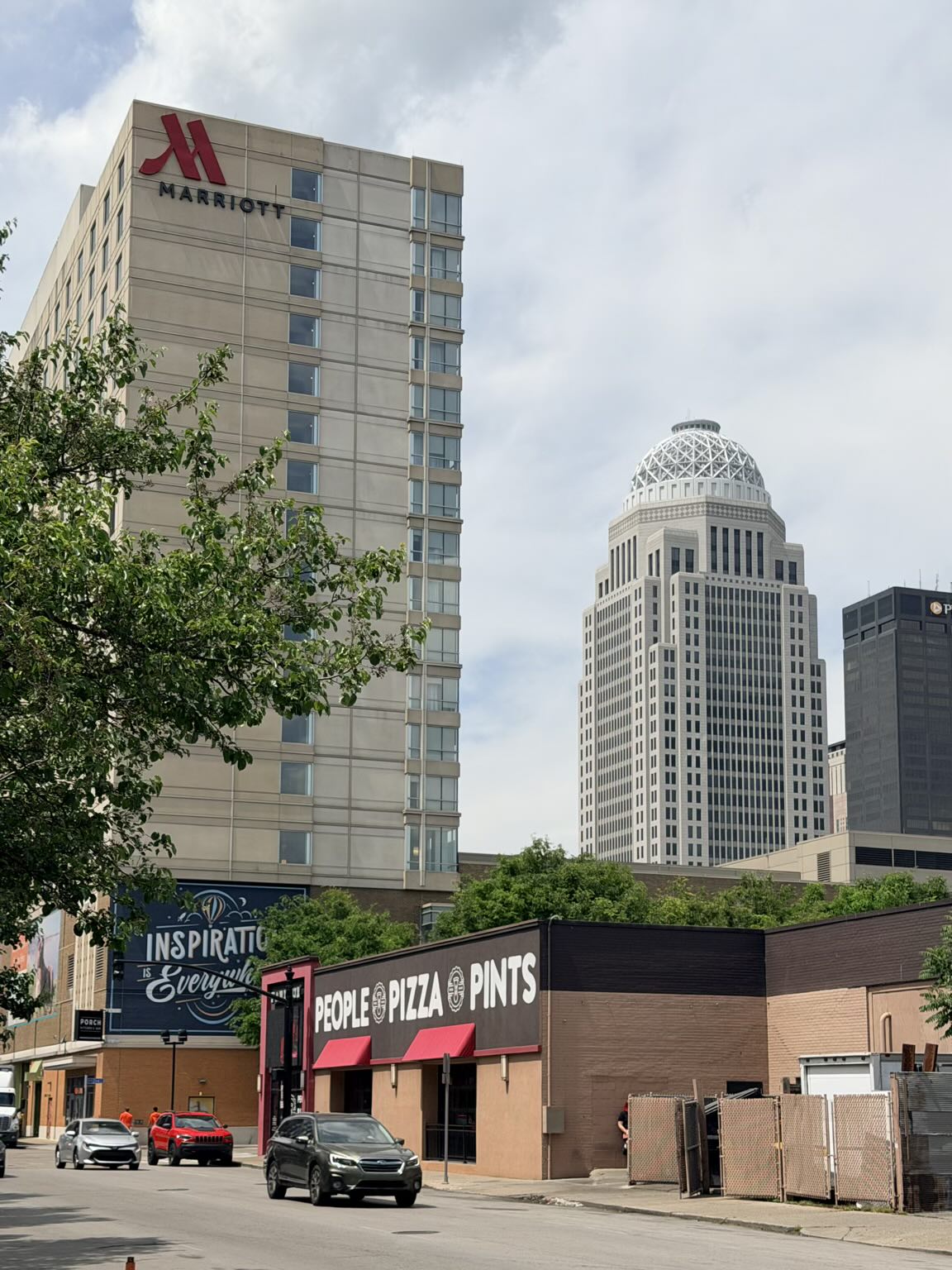
The skyline is modest. There are high-rises, but nothing that would make you crane your neck. Admittedly, my perspective was somewhat warped: in the weeks prior I had been in Vancouver, Singapore, and Hong Kong, cities that treat skyscrapers the way Louisville treats bourbon barrels—as something you simply stack to the ceiling. By that standard, most North American cities would look flat.
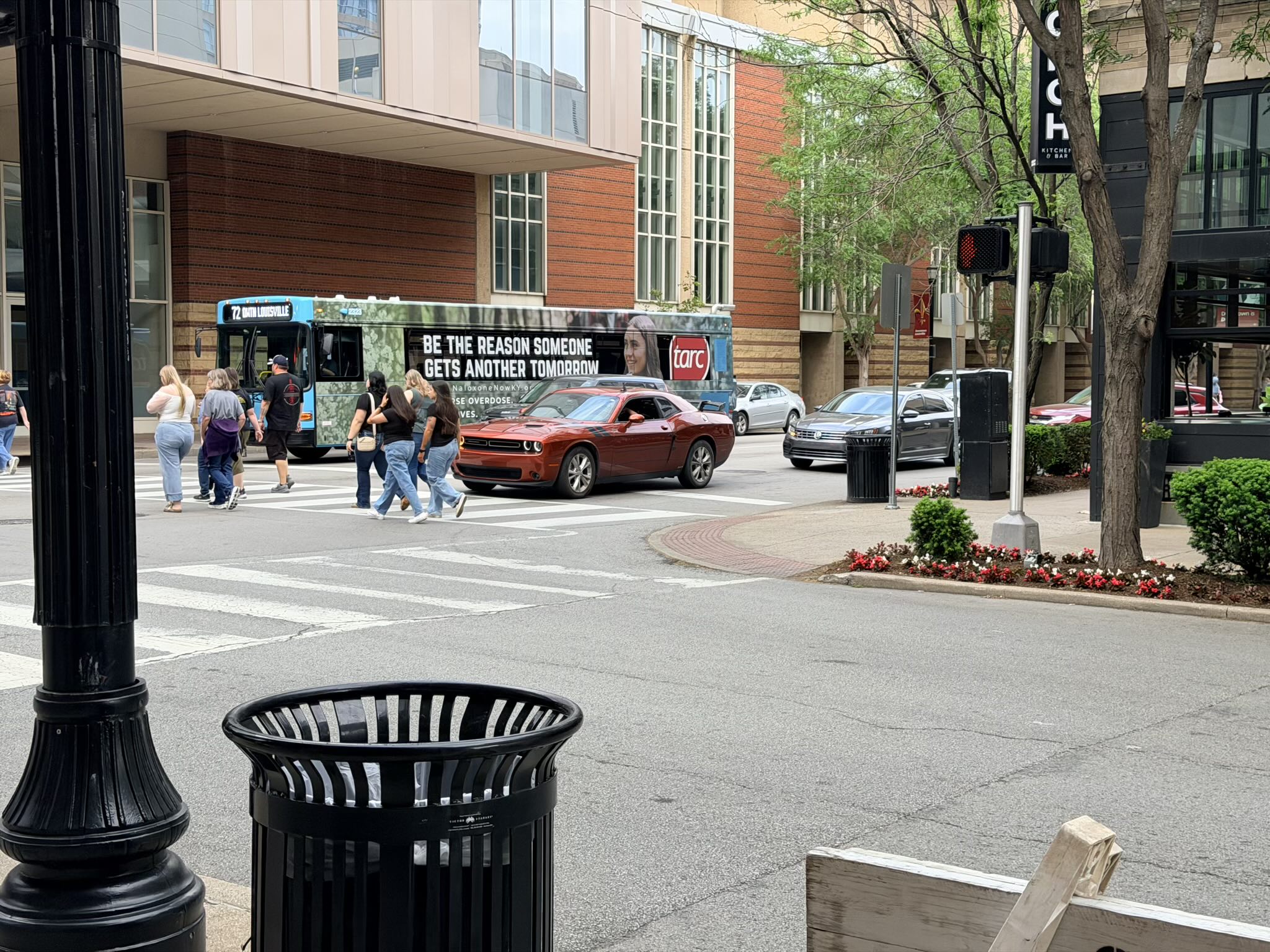
What downtown does have going for it is walkability and a genuine absence of chain-restaurant saturation. The streets are lined with independent bars and restaurants rather than the usual parade of corporate outposts—although they also have some of those (Qdoba and Papa Johns, for instance).
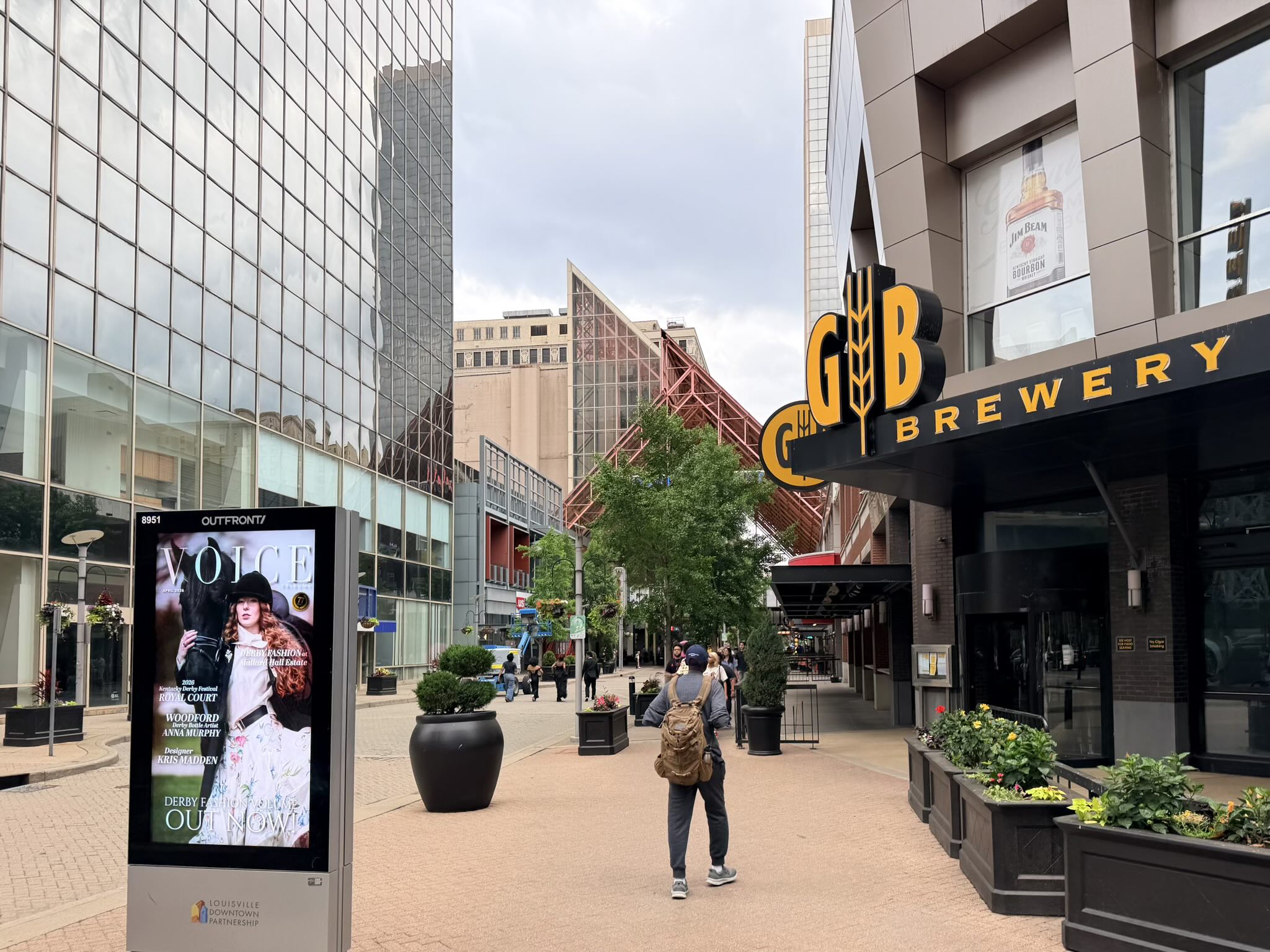
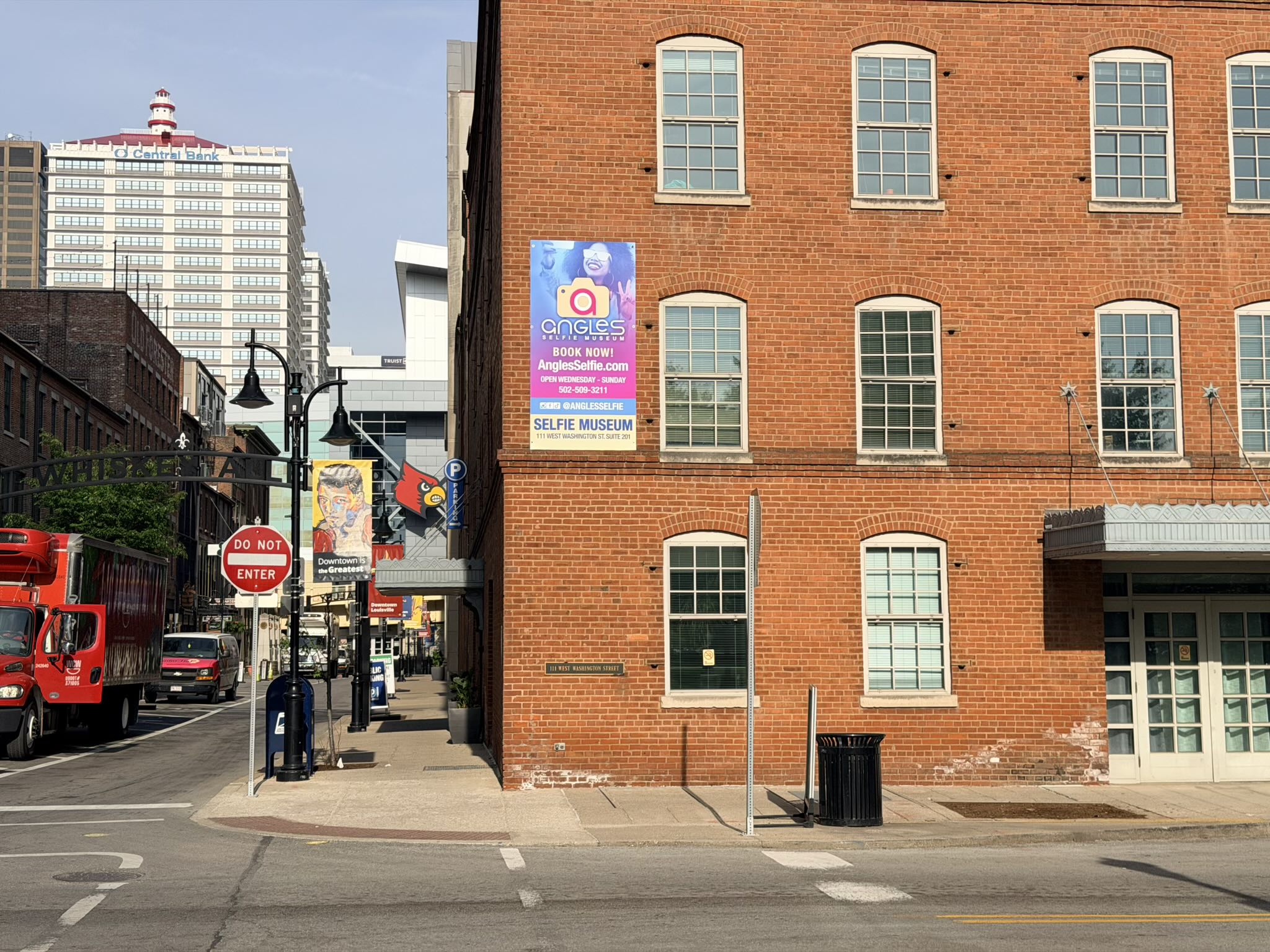
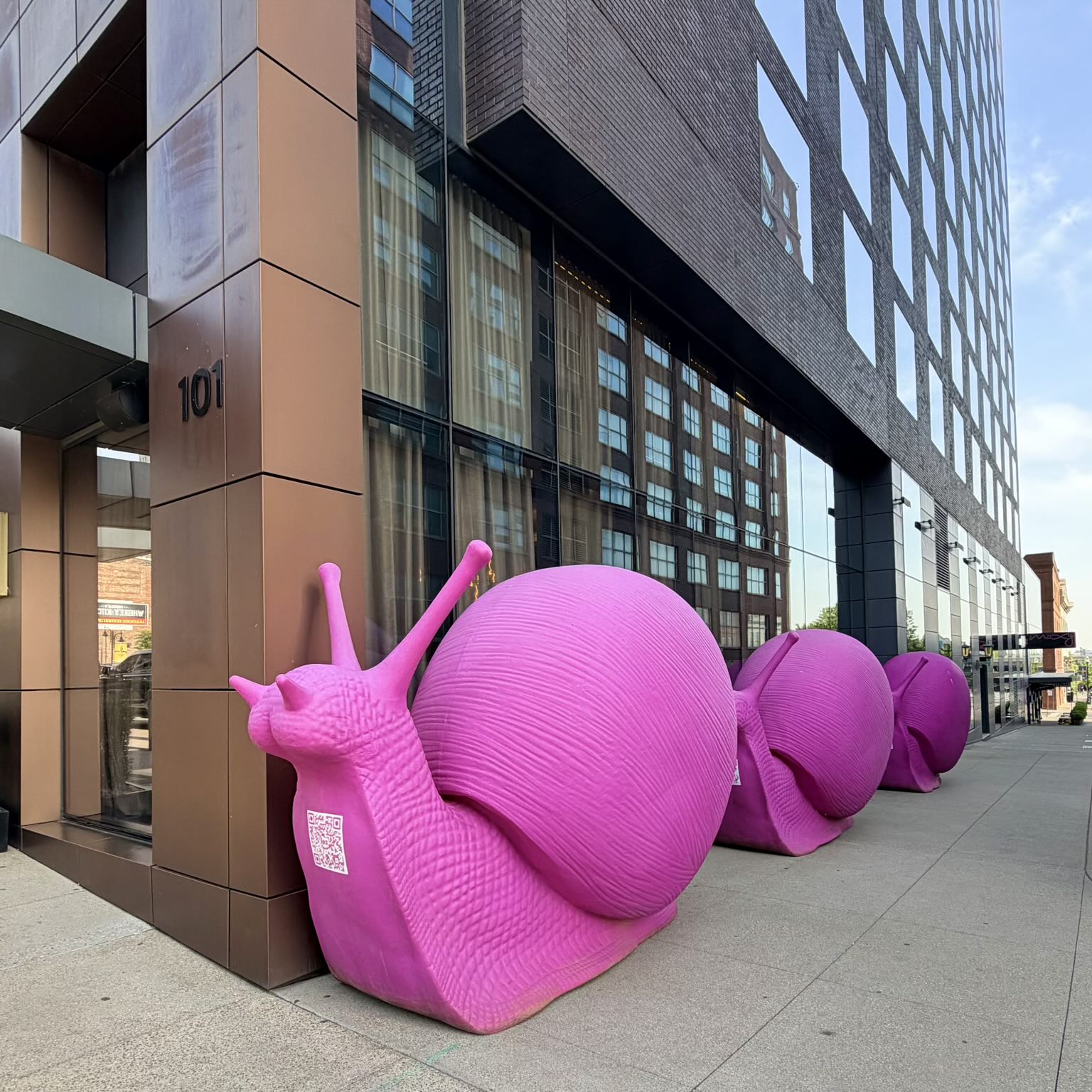
Traffic is light and the sidewalks are wide. Fourth Street Live! provides a pedestrian-only entertainment corridor that spans a full block. There is also, somewhat inexplicably, a Selfie Museum.
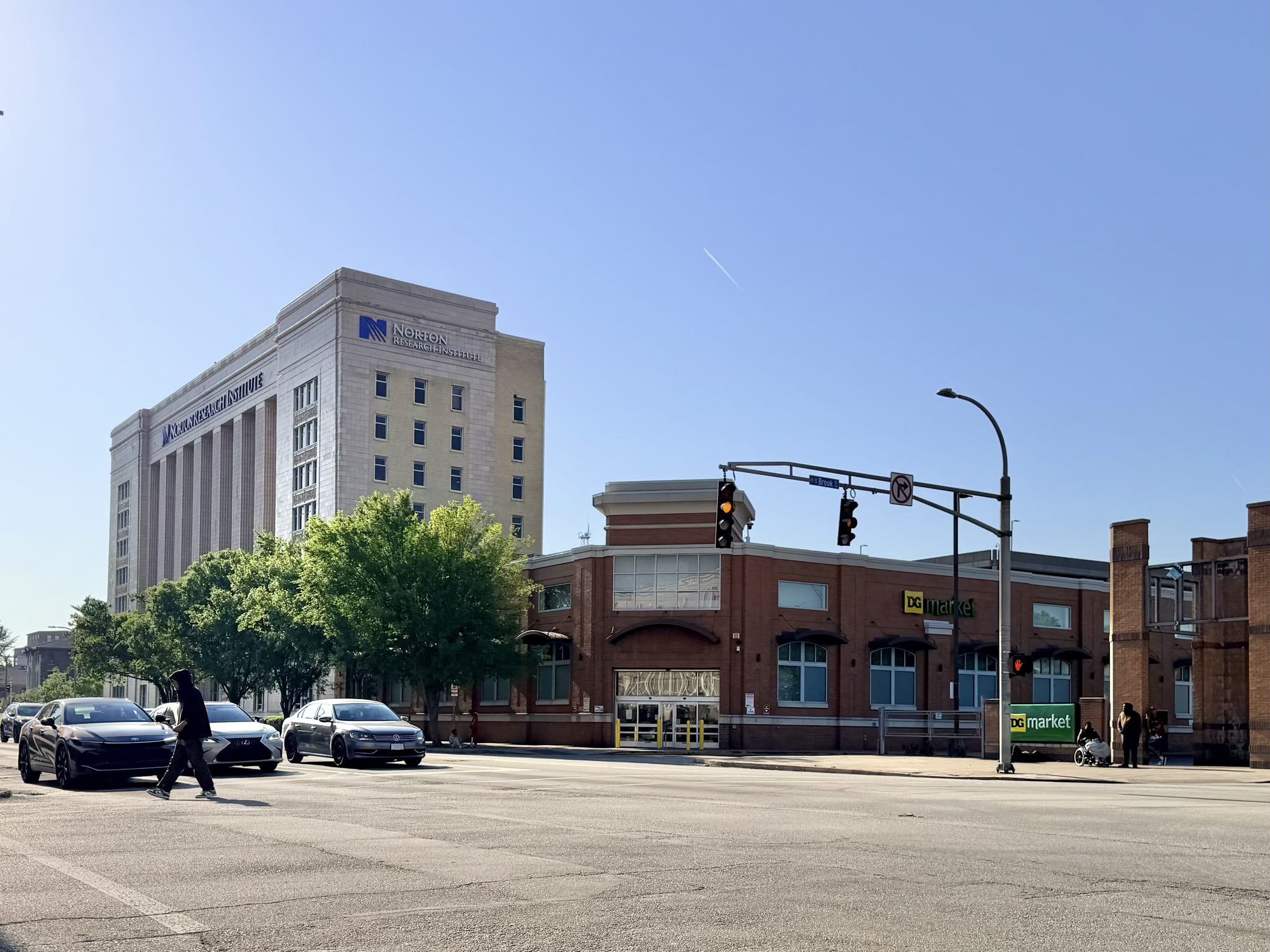
What downtown conspicuously lacks is a grocery store. The scarcity is not imaginary—Louisville Redditors have confirmed it with the grim solidarity of people comparing notes on a shared affliction. The only option I could find that sold anything resembling produce was a DG Market (Dollar General) beneath a highway overpass, next to a spot that Google Maps reviewers had flagged as a hotspot for the city’s homeless population.
I went at 9:00 a.m. on the advice of Gemini, which had apparently done its homework. There were a few folks loitering outside, but they were entirely indifferent to me and my salad supplies. In that regard—the dearth of fresh produce in the city center—Louisville reminded me oddly of Johor Bahru, Malaysia, another city I had recently visited where eating a vegetable required a certain amount of strategic planning.
Nights in downtown Louisville are a different matter. I stayed in a hotel downtown to be close to the marathon start/finish line, and emergency sirens punctuated both day and night at regular intervals. At 2:00 a.m. I could hear cars accelerating hard on the street below—the kind of exhaust-note enthusiasm that suggests the driver has somewhere urgent to be, or (more likely) simply enjoys the sound. Loud conversations drifted up from the sidewalk. It had the energy of a place that is neither dangerous nor entirely restful.
I should mention that parking garages downtown charge $20 for special event days, which felt steep for a city where a three-bedroom home reportedly costs $250,000—a figure that a comment on the subreddit r/samegrassbutgreener offered as evidence of Louisville’s “way overpriced” housing costs. Never mind that $250,000 would not buy you a garden shed in most desirable American cities. It just goes to show that wherever people live in the United States, the housing lament is a universal language.
Along the Ohio River
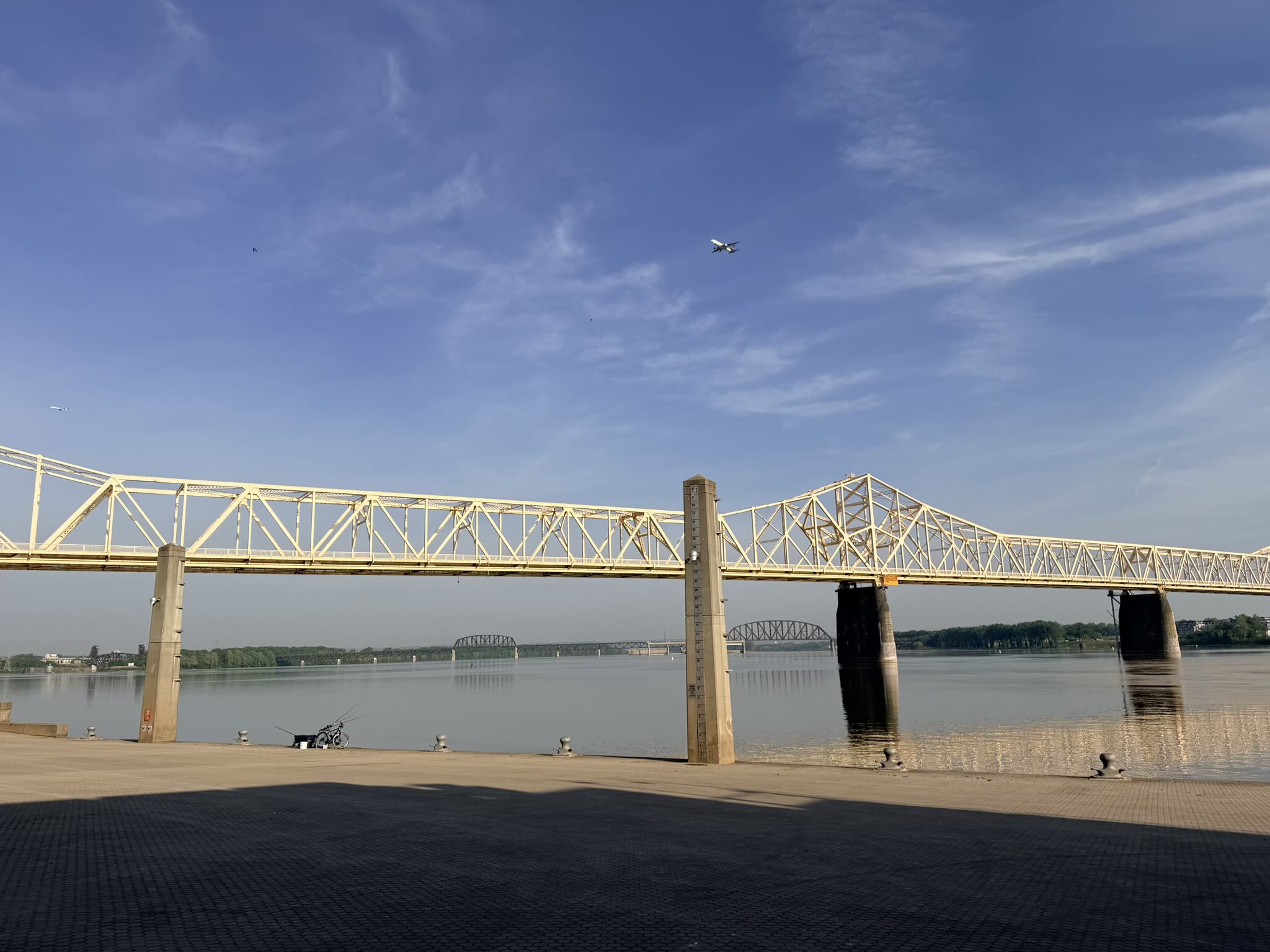
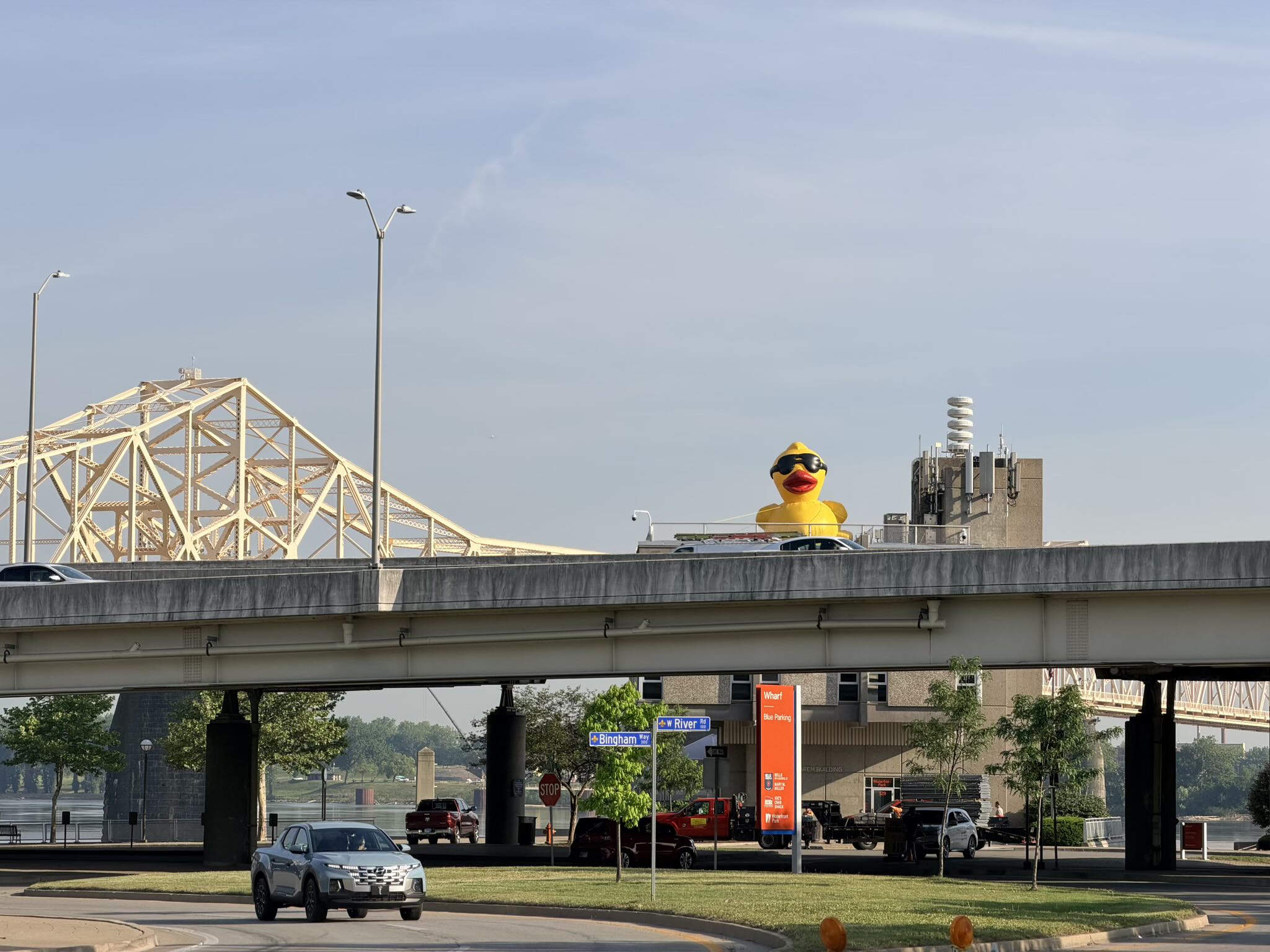
Louisville sits on the Ohio River, and the riverfront is one of its great assets. A broad esplanade runs along the water. When I went for a run there one morning, there was very little foot traffic, but someone had set up fishing poles at the base of the George Rogers Clark Memorial Bridge.
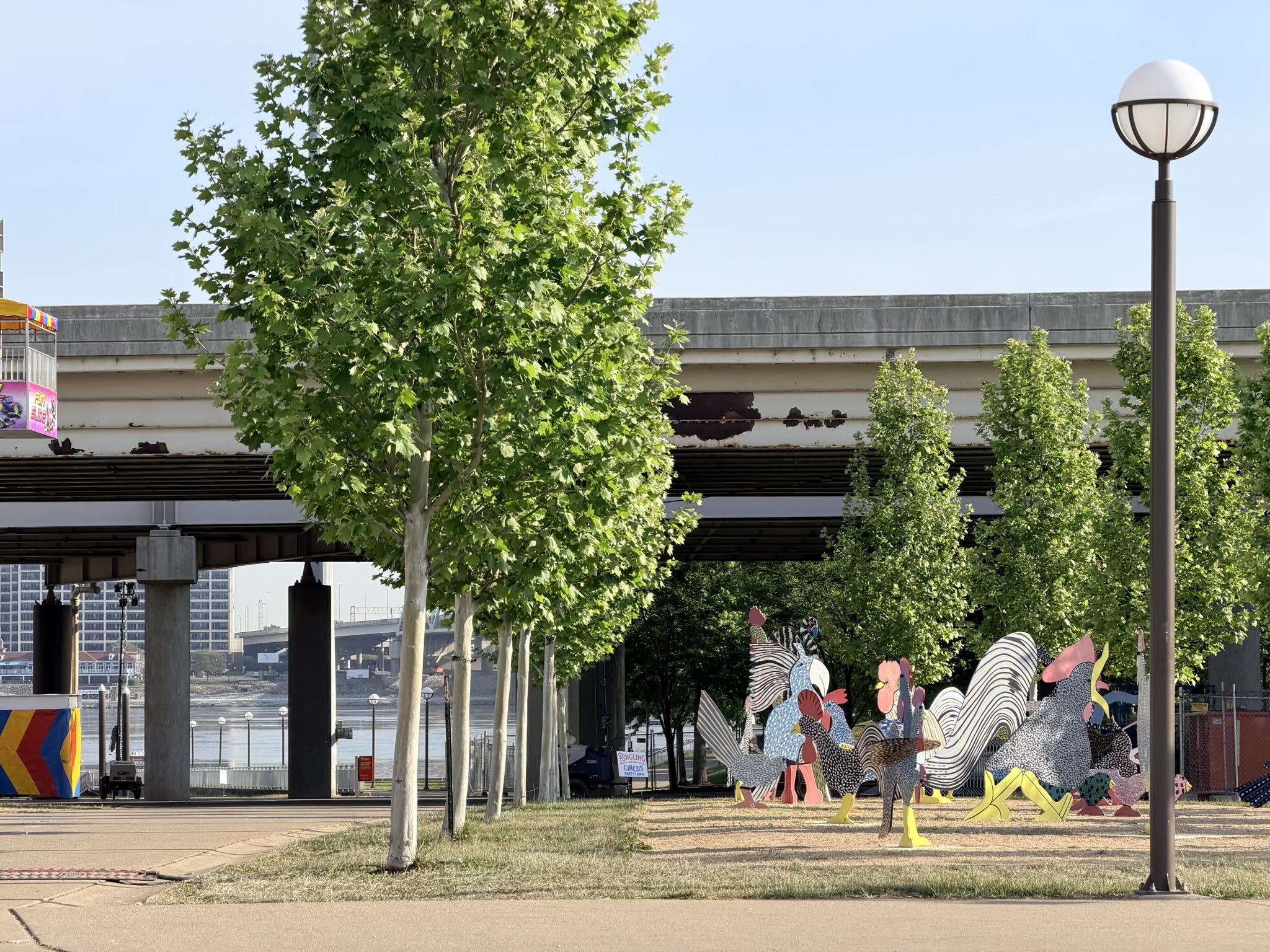
Nearby, a children’s play area features whimsical chicken sculptures. Presumably, it’s a nod to the fact that KFC Corporation is headquartered here.
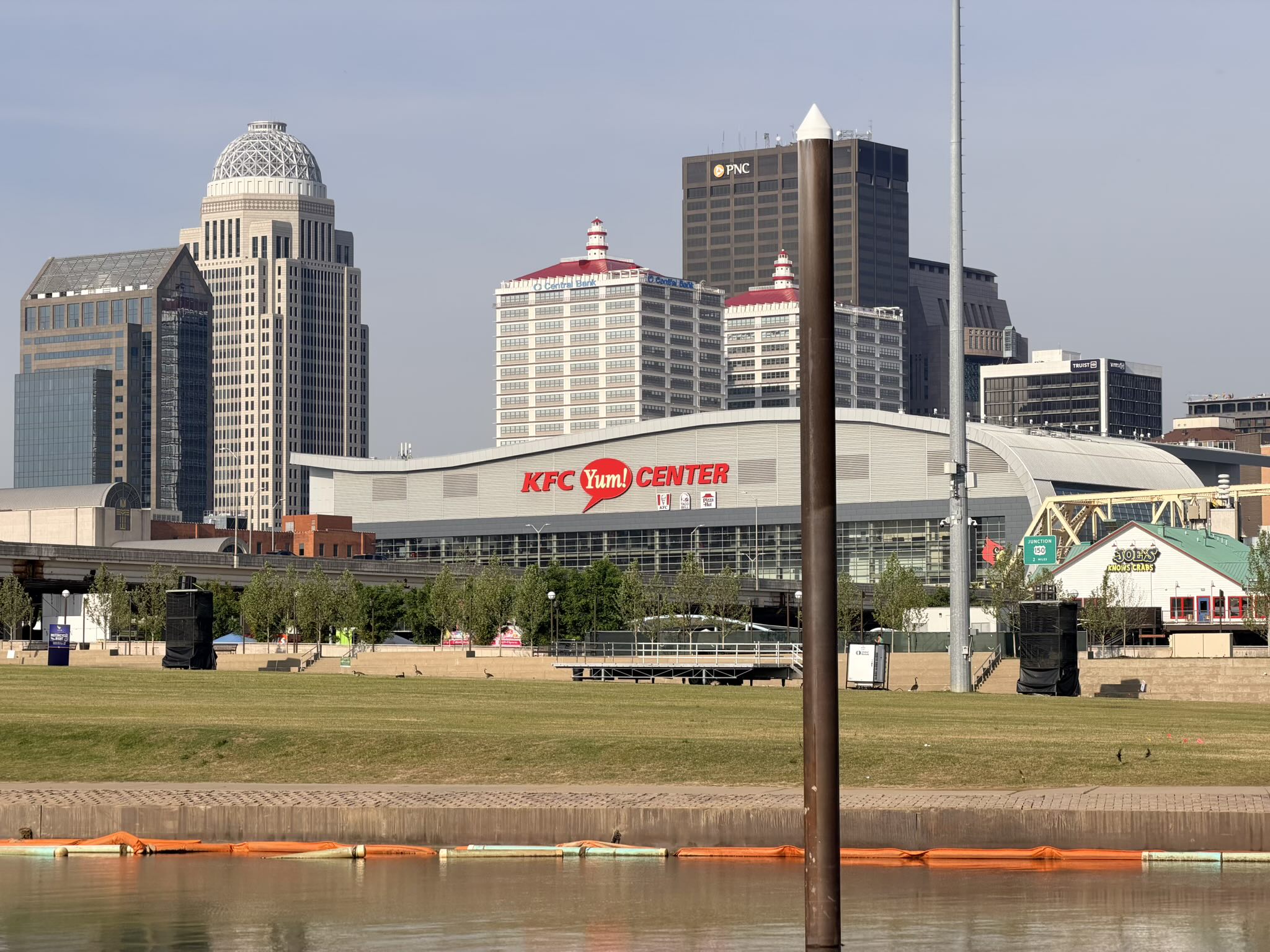
The KFC Yum! Center, a large multi-purpose arena, anchors the downtown waterfront side, and running past it I was reminded that this is a city that wears its culinary identity with pride. Kentucky bluegrass, Kentucky bourbon, and Kentucky fried chicken are all legitimate claims to fame—even if I personally only have a relationship with only one of the three, that being the yellow-in-the-winter, green-in-the-summer blades that comprise my front and rear lawns in Fort Collins.
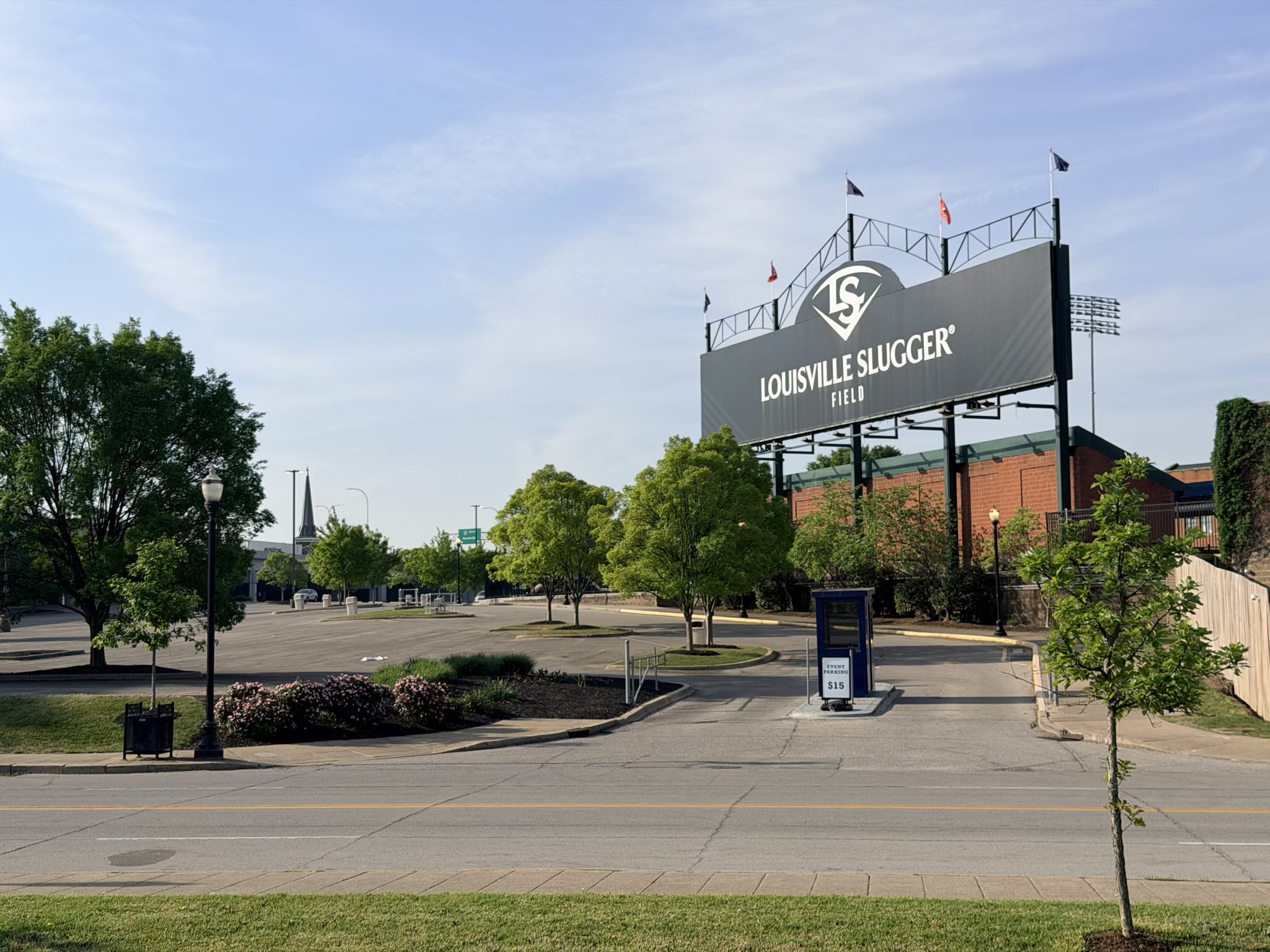
Louisville Slugger Field, the minor-league baseball stadium, sits a short walk from the river and looks properly lived-in.
The parks are verdant and well-maintained. During an easy shakeout run the day before the marathon, I passed manicured lawns and felt the city’s quieter rhythms—until I encountered a shirtless man attempting to open a walnut with a lethal-looking, seven-inch hunting knife. I gave him a wiiiiiiide berth and found an alternate route.
Otherwise, drivers were genuinely courteous and considerate, which is not something one can say about every American city.
Other Neighborhoods
The marathon course offered an unplanned architectural tour of Louisville’s residential streets. Running south on S. 4th and S. 3rd Streets through Old Louisville toward Churchill Downs and down Southern Parkway to Iroquois Park, I passed block after block of stately, Victorian homes set back behind mature trees and lush, well-tended lawns. The word that kept coming to mind was homely in the British sense—not plain, but deeply comfortable, belonging to a place. These were not necessarily showpieces angling for a magazine cover; they were houses that had clearly been lived in with affection for a very long time, and the neighborhoods around them had the unhurried confidence of streets that know what they are.
The neighborhood that gets the most Reddit buzz, however, is NuLu—short for New Louisville—located just east of downtown along East Market Street. I didn’t make it there during my visit, but the reputation is consistent enough to be trusted. In fact, NuLu had been named one of the best food neighborhoods in the country by AFAR magazine, and USA Today’s 10Best Readers’ Choice Awards ranked it a top-10 arts district nationally in 2026. The neighborhood occupies 19th-century buildings that have been converted into an eclectic mix of acclaimed restaurants, independent boutiques, art galleries, and craft cocktail bars, all within easy walking distance of each other.
There is, I should note, one irony worth pointing out: supposedly, NuLu—like downtown—also has no grocery store nearby. Louisville is apparently very consistent about this.
People
Every interaction I had in Louisville in which words were exchanged was warm. This is not hyperbole—it is what the South is known for, and Louisville delivered.
I took Lyft to the marathon expo at the Kentucky Exposition Center to pick up my race bib. The driver was a Cuban who had moved to Louisville in late 2017; his GPS was set to Spanish, so we spoke exclusively in Spanish the entire ride. I told him I had visited Cuba in January 2017—just months before he left. He said he liked Louisville.
On the way back, my driver was originally from Nepal. He had lived in Malaysia for three years, including in Johor Bahru—the same city I had visited just days before. It was one of those small-world moments that makes travel feel less like geography and more like a very long chain of coincidences. He noted there was a lot of theft in parts of Malaysia, though he said Johor itself was not too bad. But he likes Louisville a lot more.
Luminaries and Local Icons
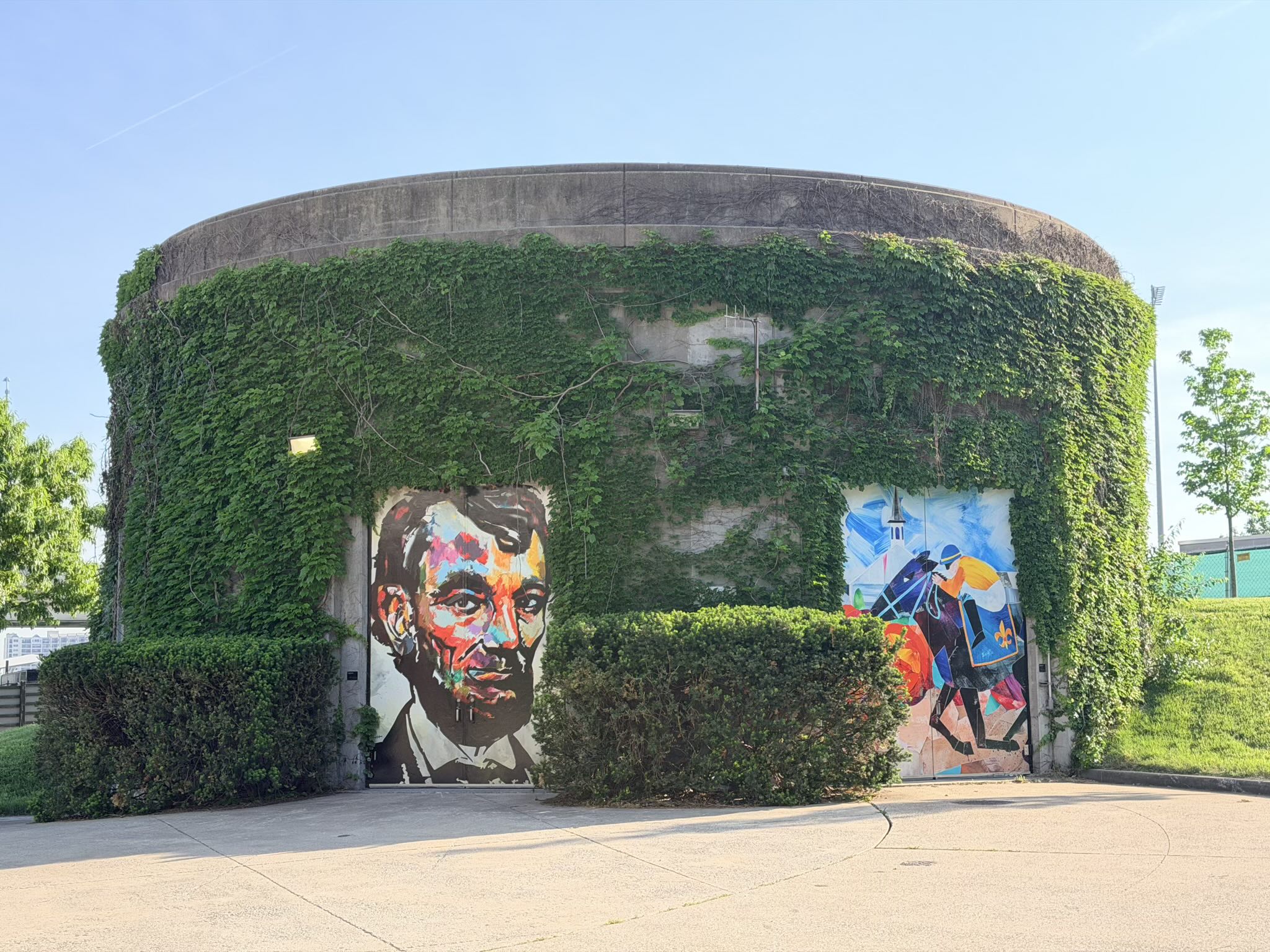
Muhammad Ali was born in Louisville, as the name of the international airport makes immediately clear. Less widely known is that Abraham Lincoln—born near Hodgenville, Kentucky, some 60 miles south of Louisville—was a Kentucky native who later became a U.S. Representative from Illinois before ascending to the presidency. Most people know Lincoln as an Illinoisan; the Kentucky origin tends to come as a surprise, and I count myself among those who did not know it until recently.
Louisville also claims the Louisville Slugger bat, Humana (a Fortune 500 healthcare company), and the aforementioned Yum! Brands, parent of KFC, Pizza Hut, and Taco Bell. The city is, in other words, responsible for both American healthcare and the late-night drive-through. Make of that what you will.
The Kentucky Derby
The 152nd Kentucky Derby will take place in early May at Churchill Downs, with 20 three-year-old thoroughbreds set to run 1.25 miles for a $5 million purse—$3.1 million of which goes to the winner. The race has been run since 1875, making it the oldest continuously held sporting event in the United States. The winner is draped with a hand-sewn garland of 465 roses weighing roughly 40 pounds. Over 125,000 mint juleps are served across the two-day event, which means Louisville simultaneously holds the record for the fastest two minutes in sports and the most bourbon consumed in the immediate aftermath.
I am not a bettor, a bourbon drinker, or even much of a hat wearer, so the Derby itself is an occasion that I ignored completely in the past and is one that I appreciate from a respectful distance, now that I’ve run a marathon that went through Churchill Downs. But there is no denying that the energy surrounding it—the festival atmosphere, the sea of elaborate headwear, the genuine civic pride—is something Louisville does exceptionally well.
Final Impressions
The subreddit r/samegrassbutgreener describes Louisville as underrated, and that assessment tracks. It is not a city that announces itself loudly. The skyline does not compete; the downtown quiets (aside from the emergency vehicle sirens) during the day; the grocery situation is a genuine inconvenience for those who prefer to not have to eat out all the time. But it has good parks, honest restaurant food, a walkable core, a beautiful riverfront, and people who will talk to you like they mean it.
It boasts bourbon, a horse race, and the ghostly presence of Muhammad Ali wafting through its streets. The city can lean into its rich history and culture, complemented by locational advantages like the Ohio River waterfront. Some Redditors speculate that it could evolve into something akin to Nashville’s transformation over the next couple of decades. I can see that happening—at some point, the city is going to be “discovered” especially considering its low cost of living, much as several cities in the Carolinas (e.g., Greenville and Charlotte) have been recently.
Meanwhile, somewhere in the city’s eastern sprawl, there used to be a Sprint warehouse. The city contains multitudes.
There are 2 comments.
Since many of your trips to cities are tied to marathons, you are visiting during optimal weather conditions. Have you traveled to any of these places out of season? I am so used to the temperate conditions of California coastal living that I don’t think I would like living with extremes year-round.
Hi Adam, you have a good point about marathons being held in good weather conditions. Ideally, marathons would be held when it's cold or cool, although it seems like most marathons I've done have been held in cool or warm conditions. In any case, those are pretty good weather conditions for visiting.
Certainly, a lot of these places I have visited would seem less charming during weather extremes. I was reminded of this in Singapore—which is fantastic in almost all respects, except it's like a sauna over there close to year-round.
In the US in general, I would not want to live anywhere between (and south of) Fresno, California and Charleston, South Carolina in the summertime.
Twenty years ago, I would not have wanted to live in the northern United States in the wintertime, but that has really changed during the last decade or so due to climate change. I've even heard the winters of 2024 in 2025 in Michigan were quite nice (not so much this year though).