Kentucky Derby Festival Marathon: Running Where the Racehorses Compete

I had already crossed the Kentucky state line once before with a marathon bib pinned to my chest, back in 2017 in Bowling Green. That race had been preceded by three weeks of walking nearly 30 miles a day on the Camino de Santiago—which, as it turns out, is an absolutely magnificent way to see northern Spain and a spectacularly poor way to train for a marathon. I finished in 4:13, legs cramping at mile 22, grinding out a 13-minute/mile shuffle that was optimistically still being called “running.” The state went into the “not sub-4” column, and there it sat for nine years.
So when I noticed, while planning my return to Colorado from a five-week trip, that the Kentucky Derby Festival Marathon fell during the exact week I’d be passing through, the decision was easy. I had never been to Louisville. State #43 was calling. I booked a hotel a few blocks from the start line, and a couple weeks after I was on a flight.
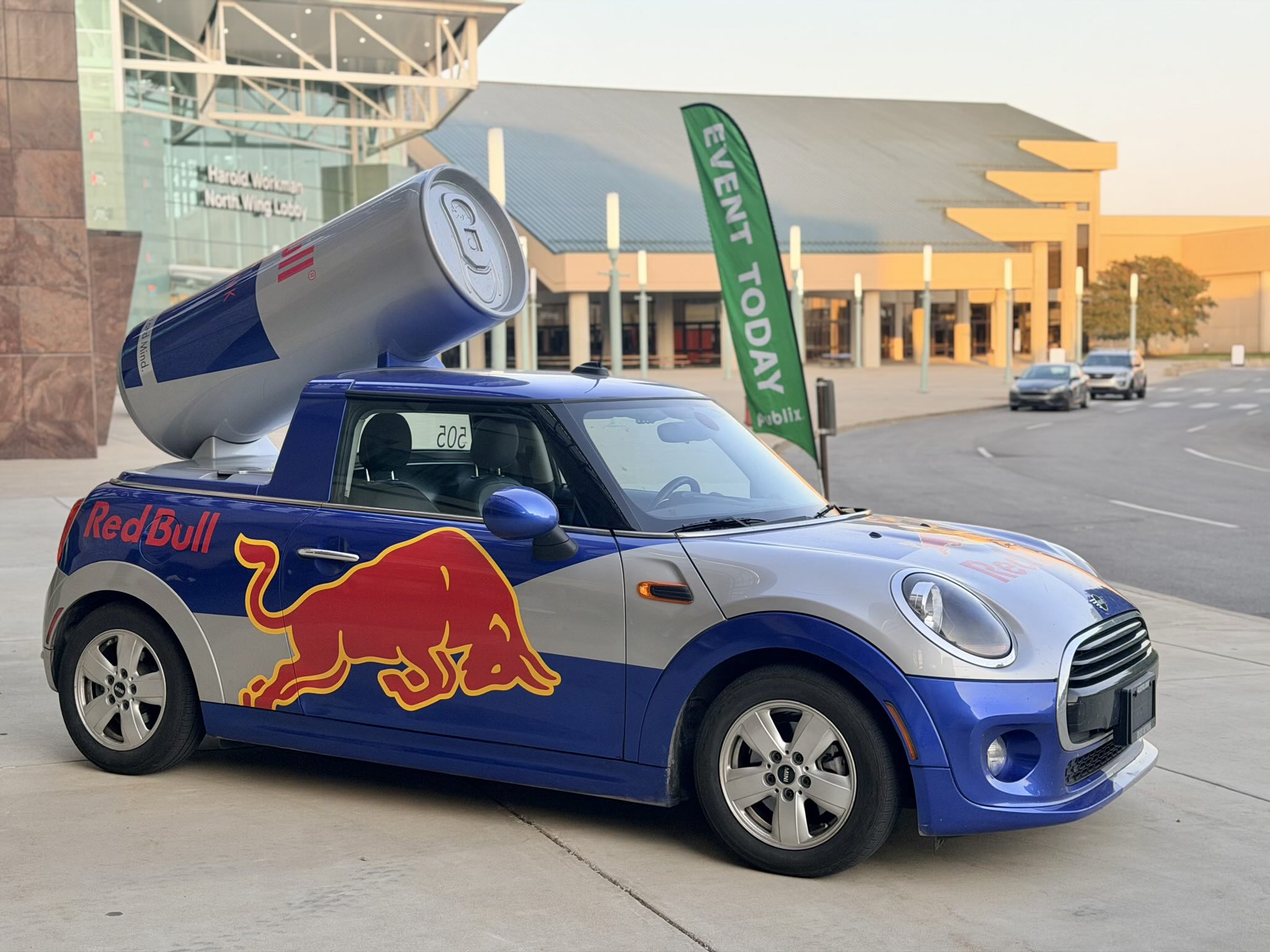
I arrived Wednesday night and spent Thursday and Friday getting my bearings around downtown. Bib pickup was not at the start line—it was at the Kentucky Exposition Center, five miles away, with no race-day option available. This meant a Lyft both ways, which ran $11–14 including tip during the off-peak evening hours. The two drivers I got were both immigrants, one from Cuba and another from Nepal, and both had appreciative opinions about Louisville. There’s something about a human driver that a Waymo, for as much as I raved about them, cannot replicate: local commentary delivered without hesitation and occasionally with strong feelings about local sports teams.
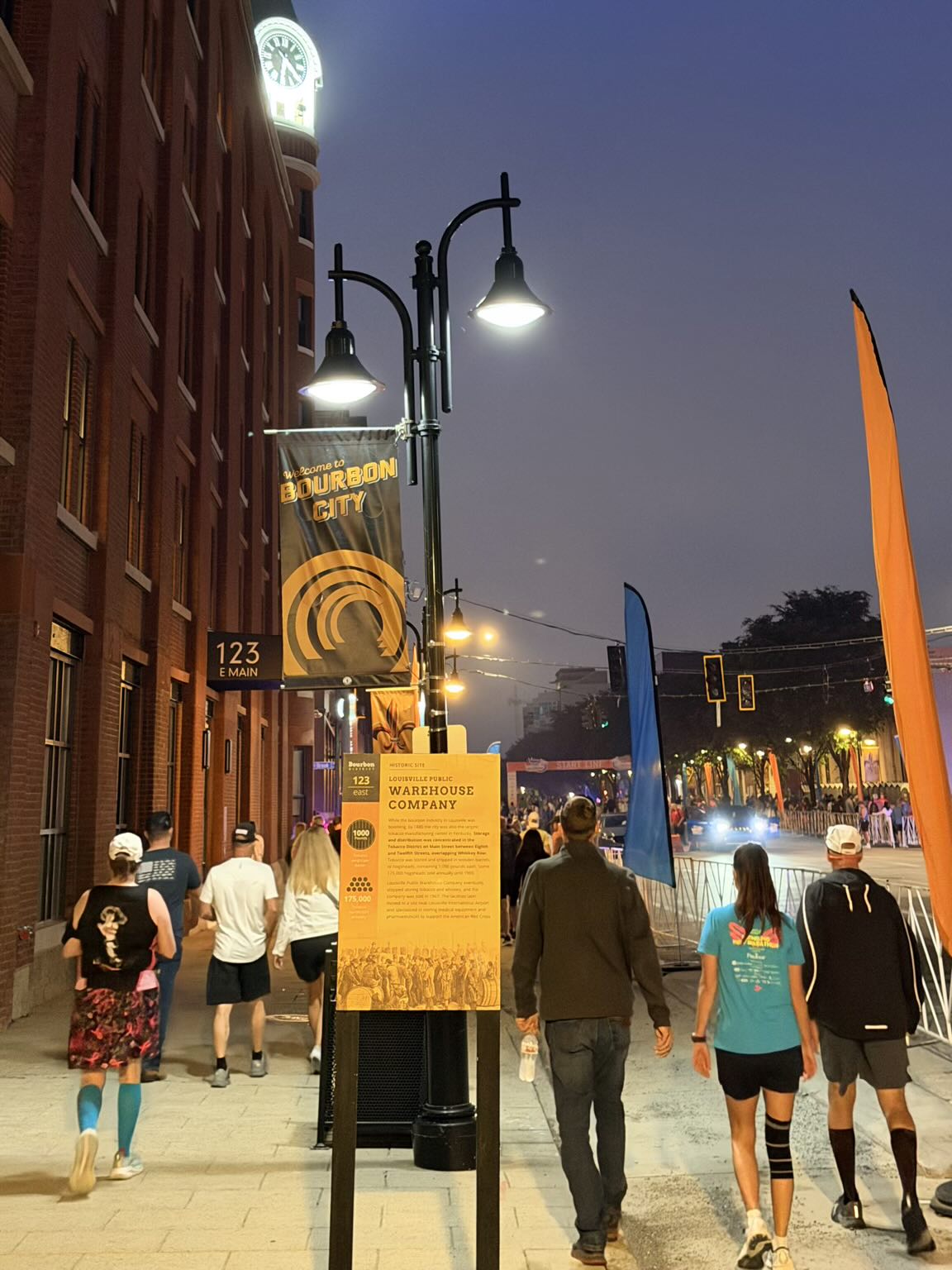
Saturday morning, my body had not fully adjusted to the time difference from flying in from Hong Kong via Vancouver earlier in the week. I woke at 4:15 a.m., 45 minutes ahead of my alarm, which left ample time to shower, apply sunscreen, and prepare my standard pre-race breakfast of oatmeal with banana and peanut butter—the same combination I’ve eaten before every marathon since roughly the Obama administration. By the time I walked over to the start on Main Street, I felt loose and ready.
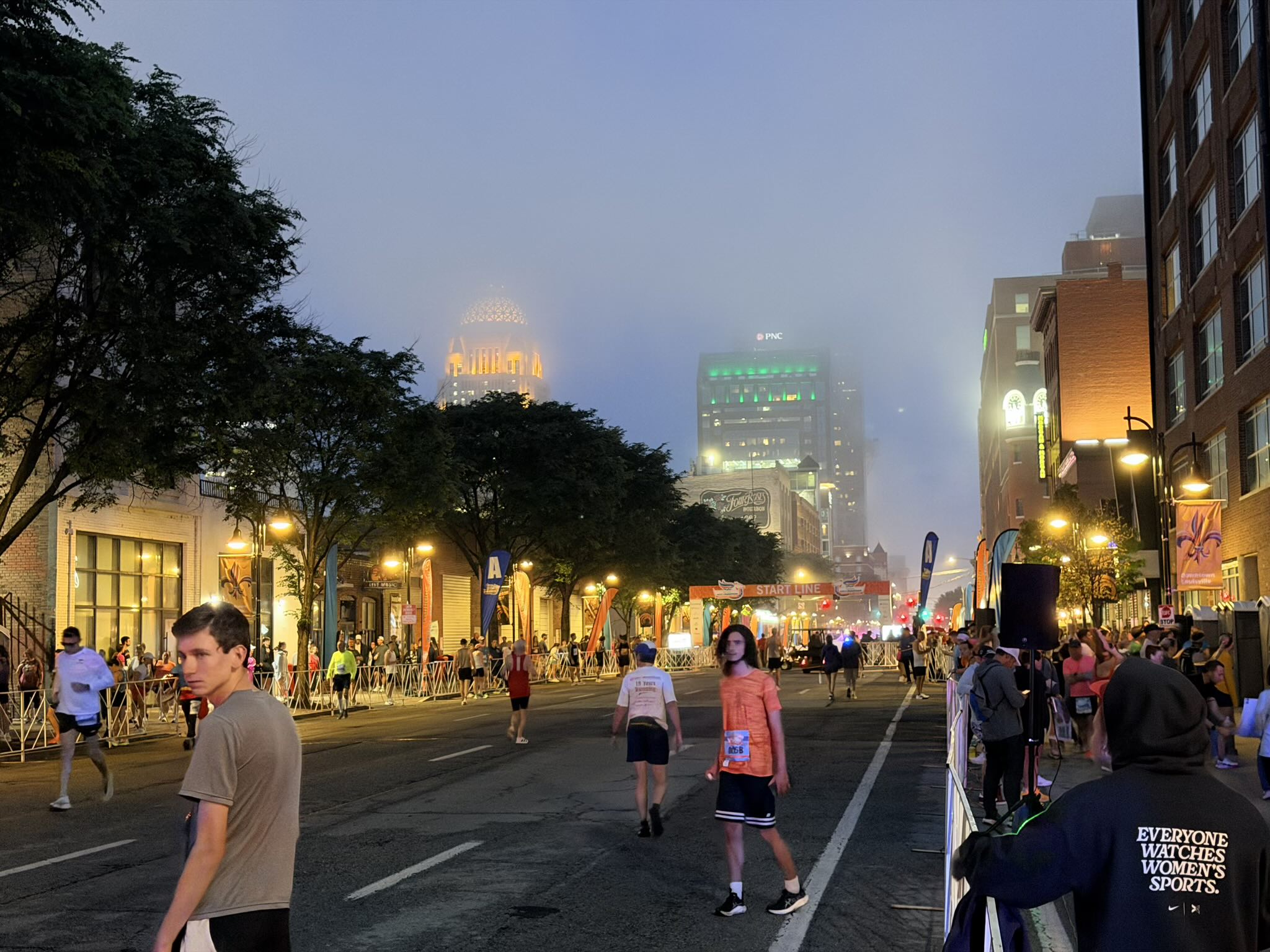
The morning was kind: 15°C at the gun, overcast, and humid enough to notice but not enough to complain about. For gear, I went with my Vig-Bay running shirt, Saucony Kinvara 15s, toe socks, and Flipbelt compression shorts. The race announcer informed the assembled crowd that runners had come from 10 countries, Spain among them. Most of the field was tackling the “MiniMarathon”—the half—leaving the full marathon a considerably more manageable gathering of the quietly determined.
Then came a sound I had not heard before at a race start: a live bugler. Steve Buttleman, the official bugler of Churchill Downs, played the Kentucky Derby Bugle reveille from the stage, and for a moment the crowd went still in a way that no DJ countdown ever manages to achieve.
I was seeded in Wave B, based on a submitted finish time I believe was somewhere between 3:30 and 3:35—I had set a target of 3:28 on my Garmin Epix Pro (Gen 2) and planned to run accordingly. Wave A launched first and crossed the start about 50 to 60 seconds before us. What I did not expect was how many people from later waves—E, for example—had migrated forward to seed themselves near the front. The difference in starting in Wave A instead of Wave E couldn’t have been more than a few minutes counting towards the six-hour time limit, so it wasn’t as if they were buying themselves a meaningful buffer. They were just getting in everyone’s way. The first mile involved a fair amount of weaving.
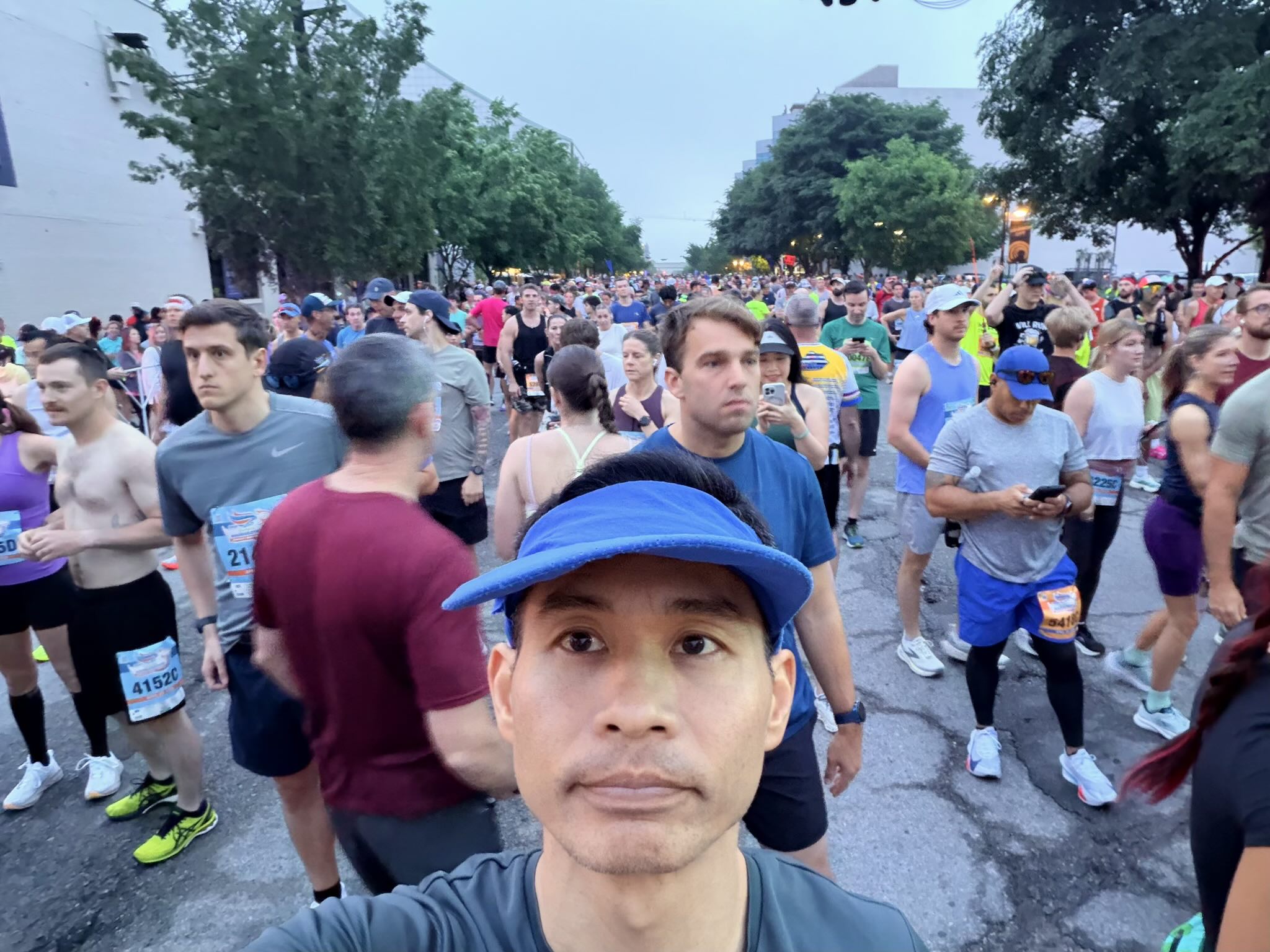
The good thing about this being a relatively large race with nearly 1500 runners doing the full marathon and 7000 participating in the half was that there were also tons of spectators. Local folks enthusiastically cheered on the side of the roads, handing out high-fives. Many held and written signs of encouragement. One that got me thinking said, “you’re part of the 1% who has run a marathon!” I would later back check that number. It turns out that 1% might even be generous. It may be as low as 0.6%.
By 10K, I had settled into a groove and caught the edge of a large pack orbiting two pacers—one woman, one man—taking turns hoisting a 3:30 sign. Spectators would later dub this the “3:30 train,” which is accurate: it was large, it was loud, and it was moving at a consistent clip. My Garmin showed me about 40 seconds ahead of my 3:28 target at that point, so it must have started well ahead of me.
At mile 11, the aid station offered Skratch Labs Raspberry Energy Chews—soft gummies, similar to Clif Bloks. I grabbed a packet. This was my only fuel for the day, because when I had packed for this five-week trip, I had brought exactly enough Saltstick tablets and Honey Stinger gels for two marathons. It had not occurred to me at the time that I would be running three. Lesson noted for the next trip abroad that spontaneously acquires a third race.
Shortly after mile 11, the course threaded through a tunnel connecting the Kentucky Derby Museum to a building prominently labeled Churchill Downs. Some runners raised their phones to capture the moment. Emerging from the other end, I tried to channel my inner thoroughbred—though a horse that had already run 11 miles and was experiencing minor electrolyte anxiety is, technically, not a thoroughbred. It is a horse that needs a gel.
The middle stretch of the race ran through some of Louisville’s most handsome neighborhoods: wide brick streets, Victorian homes with deep porches, lush lawns with mature trees that had decided spring was fully underway. The crowds were sparse but warm. It was the kind of American neighborhood that makes you forget, briefly, that your legs have been moving for two hours.
It was also, less charmingly, where the hills started. Nobody had advertised this race as hilly, and strictly speaking it is not, but the mid-race rollers were enough to fracture the 3:30 train. At least this part—Iroquois Park—was beautifully verdant and even slightly foggy. It reminded me a little of the hills of Galicia.
On the first climb I fell behind the pace group, but that was intentional—I was running strictly by perceived effort, and I was intent on keeping that effort consistent meaning that of course I would be slower going upwards. On the descent, I let gravity do its job with zero braking, and I came back around the pacers and their entourage with the speed of a skateboarder passing up a pedestrian. I’d stay ahead of the train for the next seven miles.
Around mile 20, two runners caught my eye. One was barefoot—completely, without blood or grimace. The other was wearing shoes and socks but only a thong. Both, as tends to be the case with this particular subcategory of race participant, were men. I passed both of them eventually, though I won’t pretend the sighting didn’t distract me momentarily from my own suffering.
With about six miles to go, the 3:30 pacer caught me again, now running with a much reduced convoy—the train had fractured, and it was every runner for themselves. I resolved to hang on as long as I could. At mile 22, my left calf cramped with each stride. I tried to relax, reminded myself that panic makes cramping worse, and after a minute or two it stopped inducing pain in my calf with every footstep. Small victories.
On the out-and-back section along the Waterfront, I realized something that shocked me: I was actually closing on the pacer. Whether he had slowed or I had found something extra, I couldn’t tell—but I was definitely gaining. I shortened my breathing to every two steps, pumped my arms harder, focused on knee drive. My pace wasn’t faster in absolute terms, but it wasn’t falling apart either: roughly 8:30/mile against the 7:55/mile I had run early on.
Alas, when the sharp U-turn came with two miles to go, the calf cramp came back, and I was back to fighting tooth and nail to keep it together. I did—though I never re-caught the 3:30-pacer.
I crossed the finish line in 3:31:17.
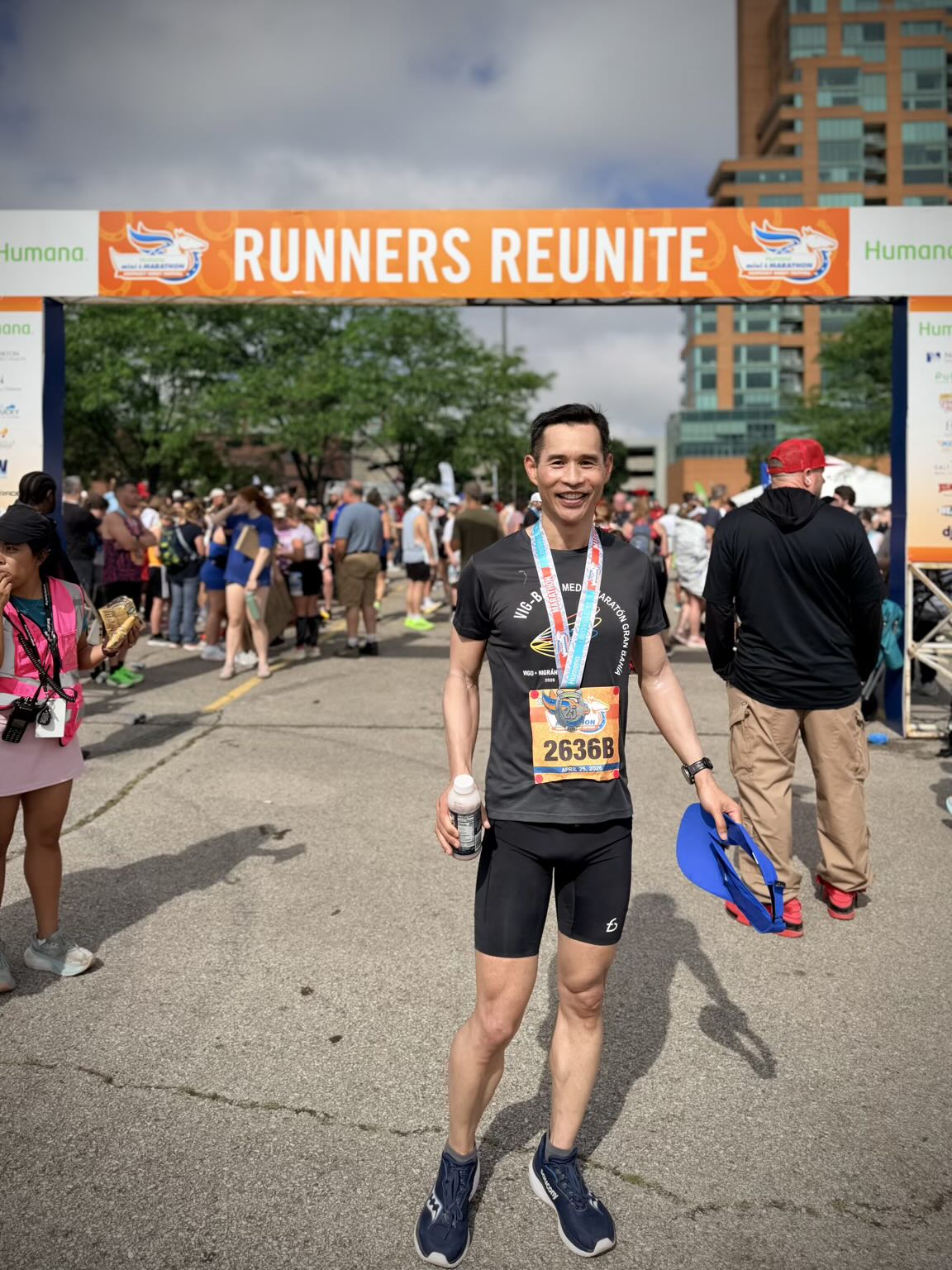
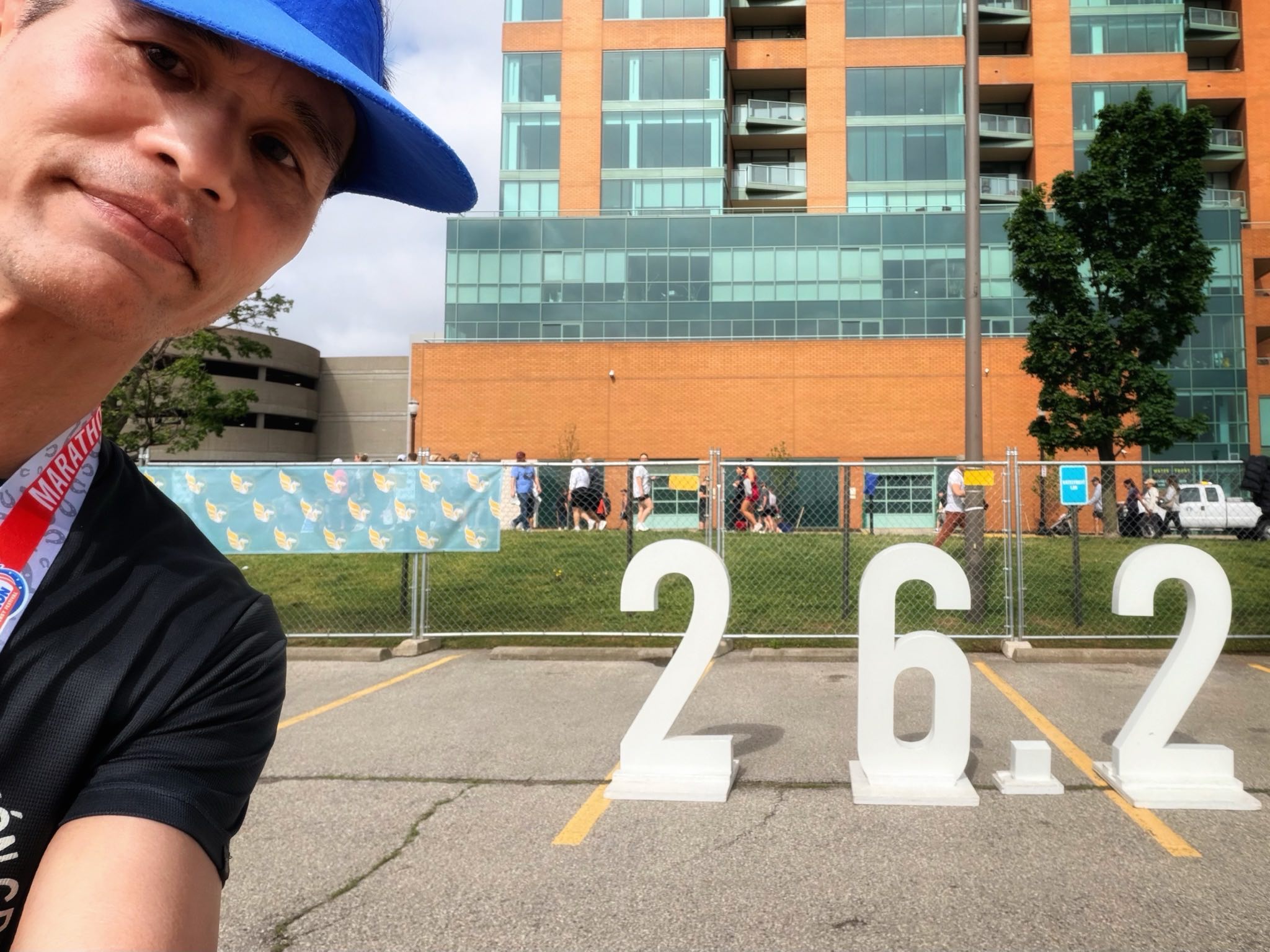
Per Strava, I had covered the first 26.2 miles in 3:28:51—a sub-3:30 marathon by any reasonable measure. But as is the custom with marathon courses worldwide, this one ran long by 450m, and the extra distance pushed the clock past 3:31. Regardless, Kentucky was officially redeemed.
I ate a banana, drank a chocolate milk, and made a point of walking continuously to avoid the cramping catastrophe I’d experienced at the Race to Space Marathon in Huntsville, Alabama the month prior. A 61-year-old named Jeff found me in the finish area and mentioned that we had been yo-yoing off each other for much of the middle miles—he noted I was speeding by on the descents. Jeff had run a 3:18 PR at 18, resumed running at 50, and had qualified for Boston. He even ran a negative split today. At nearly 51, I found it encouraging to hear that speed doesn’t have to be a depreciating asset. I told him I was running marathons at roughly the same pace I had been 15 years ago—and way faster than I managed in my twenties.
On my walk back to the hotel, a car slowed near the parking lot entrance. The driver honked, rolled down her window, and called out: “Congratulations!” She’d spotted the finisher’s medal. We exchanged a few words before the light turned green and she was gone. It was a small thing, but it was also the perfect coda to a city that had been nothing but welcoming since I landed on Wednesday. Southern hospitality is not a stereotype—it is simply accurate.
A note on sponsors: the primary sponsor was Humana, the health insurance company, which is headquartered in Louisville. Publix also appeared as a sponsor; despite its Southern reputation—and a location I’d visited in Ponte Vedra, Florida, where the produce section alone could convert a skeptic—Publix is actually headquartered in Lakeland, Florida. It only opened its first Kentucky location in Louisville in January 2024. But then again, if you’re going to expand into a new state, sponsoring a race with thousands of participants is a reasonable opening move.
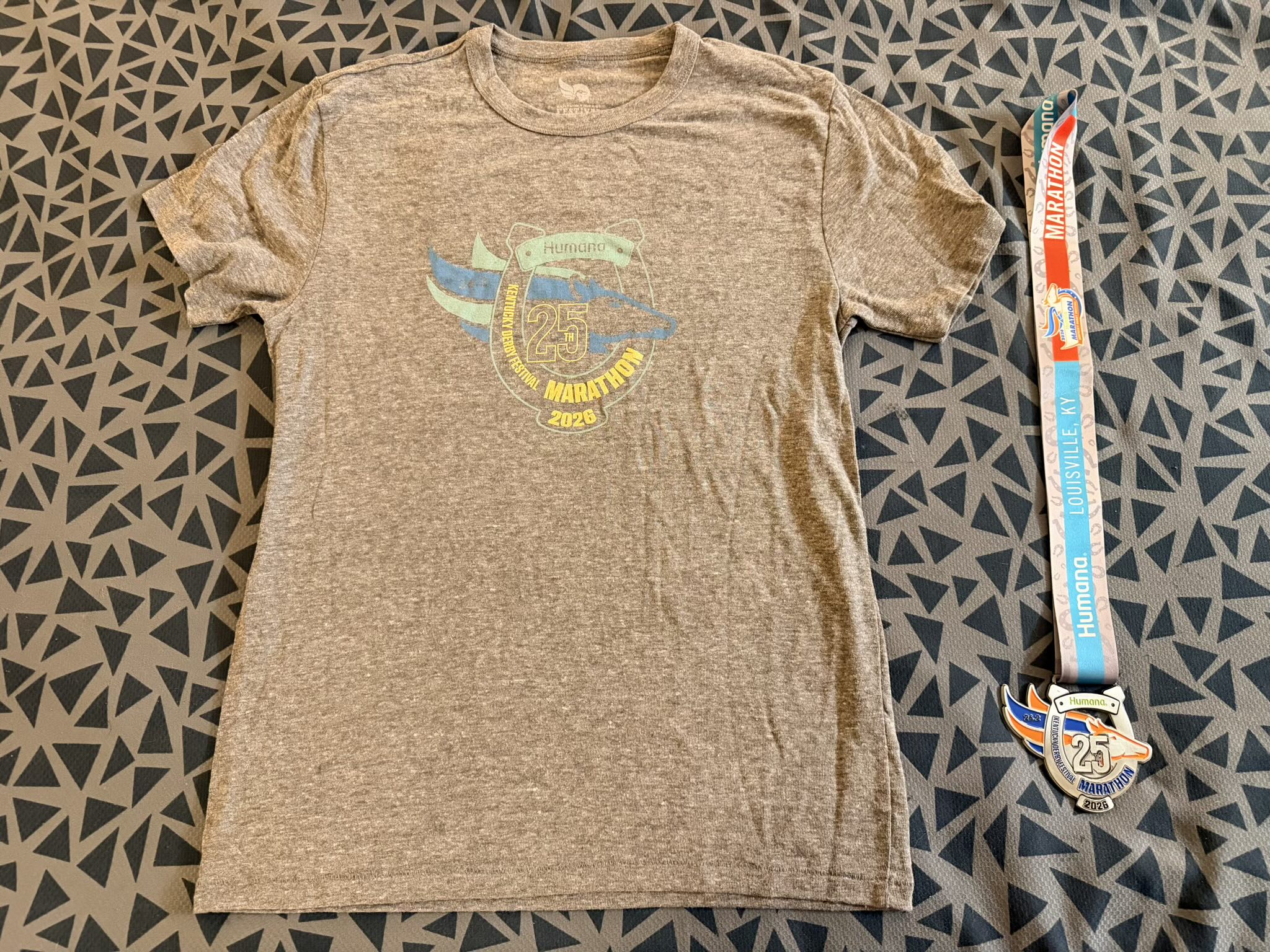
Race Data
Distance: 26.5 miles (per Strava)
Final time: 3:31:17 (7:58/mile)
Overall place: 193/1487
Age group place: 9/58
Male place: 160/978
Official results
Route
Louisville Metro TV posted a good drone overview of the course, sans runners, in the following YouTube video.