Hong Kong: A Fresh Set of Eyes on an Old Family City

My late mother was born and raised in Hong Kong, which you might think would have made my first adult visit feel like a homecoming of sorts. Except that my mom did not often speak of her birthplace with the sort of dewy-eyed nostalgia that usually accompanies that kind of origin story. What she did talk about, occasionally and without much wistfulness, were the street peddlers who wouldn’t leave you alone, the apartments the size of a walk-in closet, and the permanent human traffic jam that passed for a sidewalk. The implicit message was clear: Hong Kong had been fine. The United States, particularly California, was where she preferred.
I remembered this as I arrived in Hong Kong for the first time as an adult with no particular nostalgic agenda. (My only previous “real” visit—not just an airport connection—was in the mid-1980s when I was ten years old, producing memories no more reliable than a fever dream of high-rises and congested streets.) Just a fresh set of eyes, and a very specific mission that had only a little bit to do with sightseeing.
The Plan
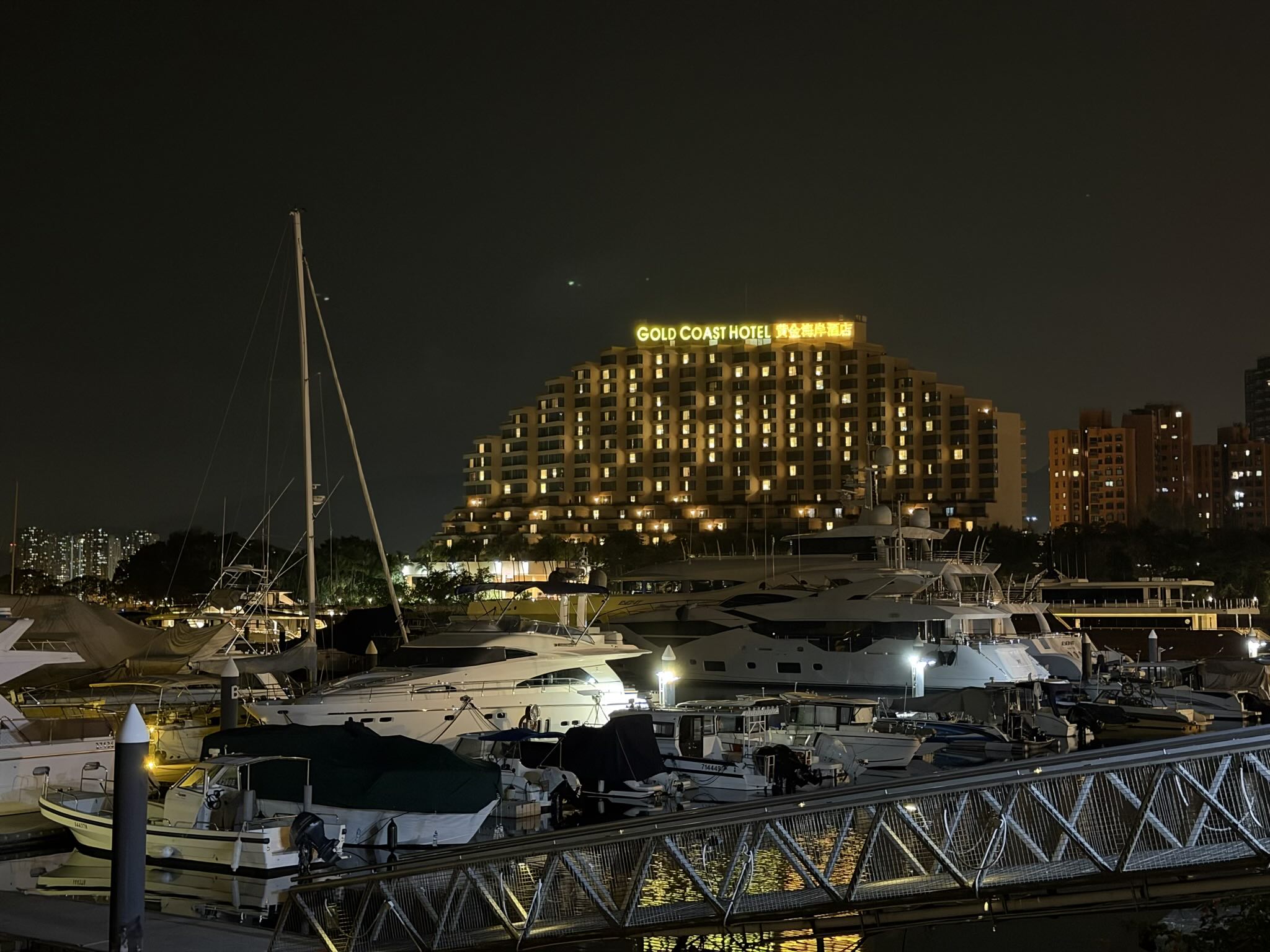
My aunt Diana and cousin Carlina have lived in Hong Kong for the past twelve years. They settled on the Gold Coast in the New Territories—a corner of the city that manages to be both attached to one of Asia’s most frenetic metropolises and blissfully removed from it. My father was flying over from the U.S. to visit them. And since I was already going to be in Singapore visiting friends, the geography seemed to be making an argument I couldn’t ignore.
The idea: surprise my dad.
Carlina and Diana were in on it. Actually, the former kind of suggested it. To their credit, I don’t think either of them slipped. My dad came over via high-speed rail from Shenzhen at late night with no idea that his son would be sitting in a dim sum restaurant the next morning, waiting with a pot of tea and a mildly smug expression.
Carlina and her husband Samuel picked me up at the airport and drove me to the Gold Coast Hotel, where I had a five-night reservation. I checked in and was promptly invited over for dinner—a salmon with vegetables dish that Carlina described as her usual “Mediterranean-style” cooking, prepared by Lenny, her home assistant. (Home assistants, I would quickly learn, are as common in Hong Kong households as coffee-making applicances are in American ones.)
The Hike
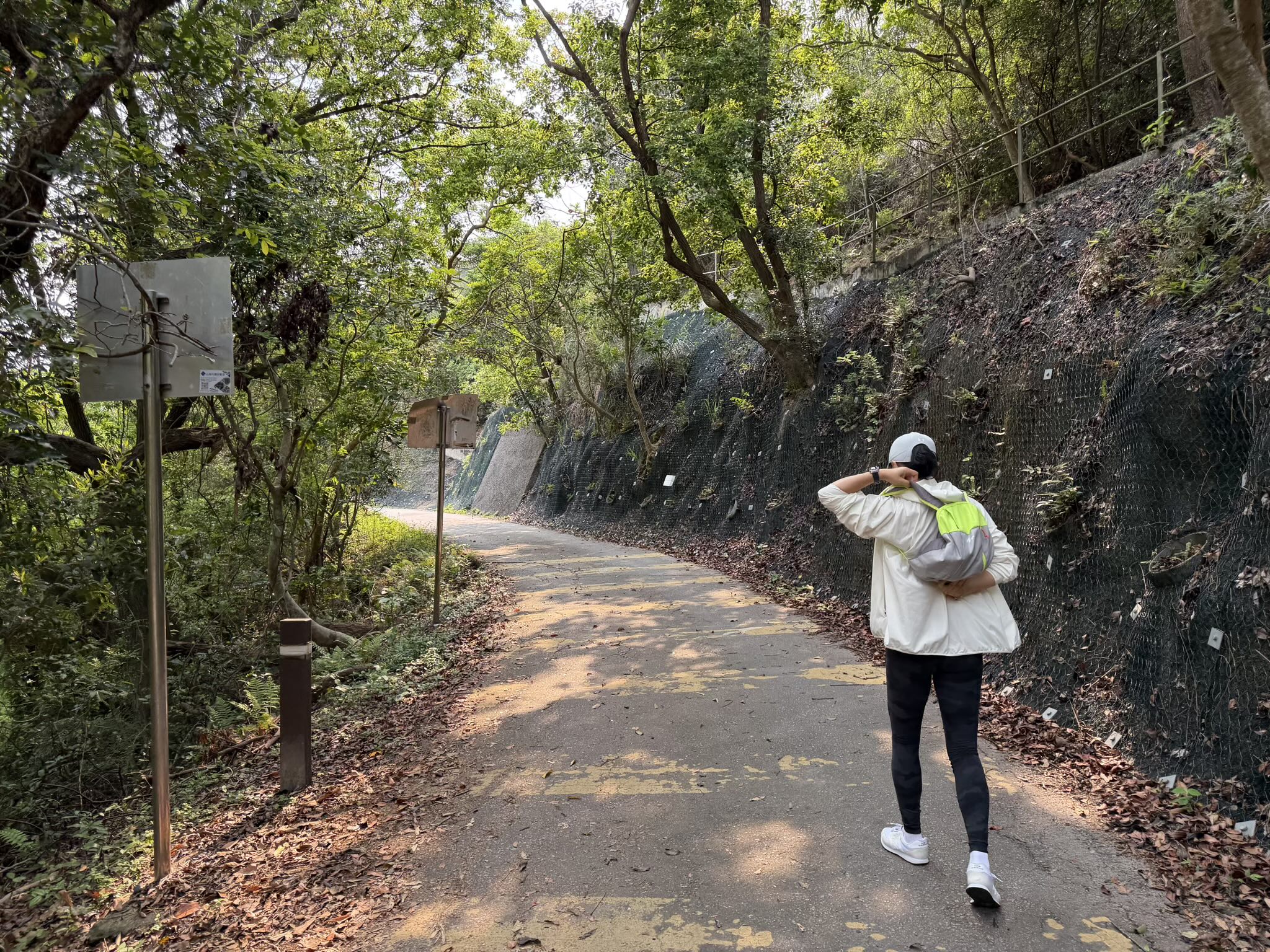
The following morning, Carlina arrived at 8:45 a.m. to take me on the Reservoir Islands Viewpoint hike—a route she had normally walked from her front door most mornings, except that a broken ankle in 2024 followed by a kidney issue in late 2025 had put it on hold. She was looking forward to returning to it for the first time since the medical issues with a companion, as Samuel insisted she not go alone. This was less about the trail’s difficulty and more about Carlina’s safety and distant memories of the days when people attempted to cross from mainland China into Hong Kong. Locals in Hong Kong, much like many folks in the U.S., would rather not engage with a desperate migrant who had snuck over the border.
We drove partway up the mountain and began our ascent on foot about three kilometers from the summit. The road was occasionally steep and delightfully devoid of vehicular traffic. Near the summit, we encountered a series of stairs.

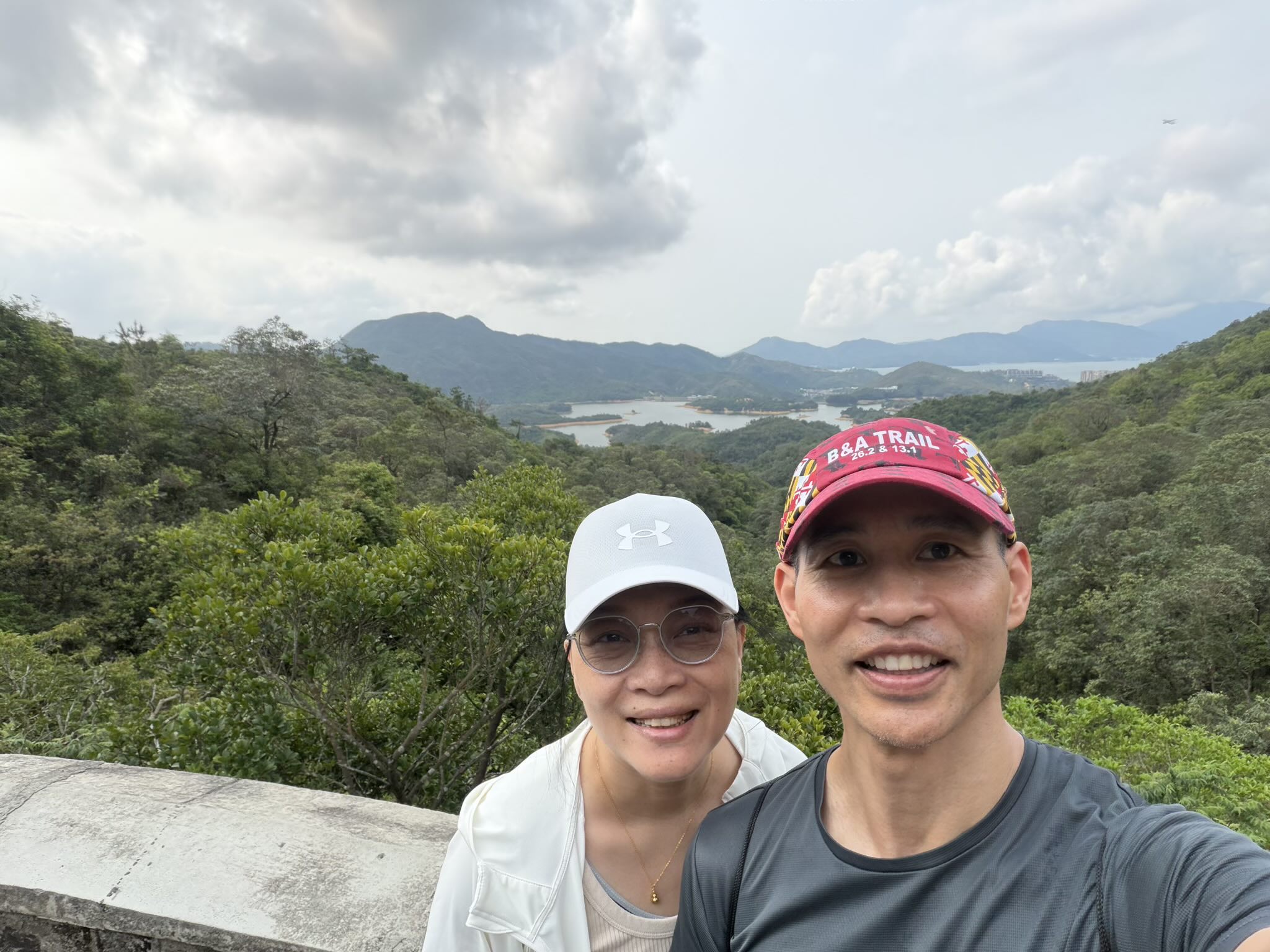
By the time we went up and back, we had covered six kilometers—leisurely by pace, given Carlina’s recovery, but the vistas at the top were anything but underwhelming. Islands fanned out below in every direction like a postcard assembled by someone who had clearly been given an unlimited budget. The views were simply awe-inspiring.
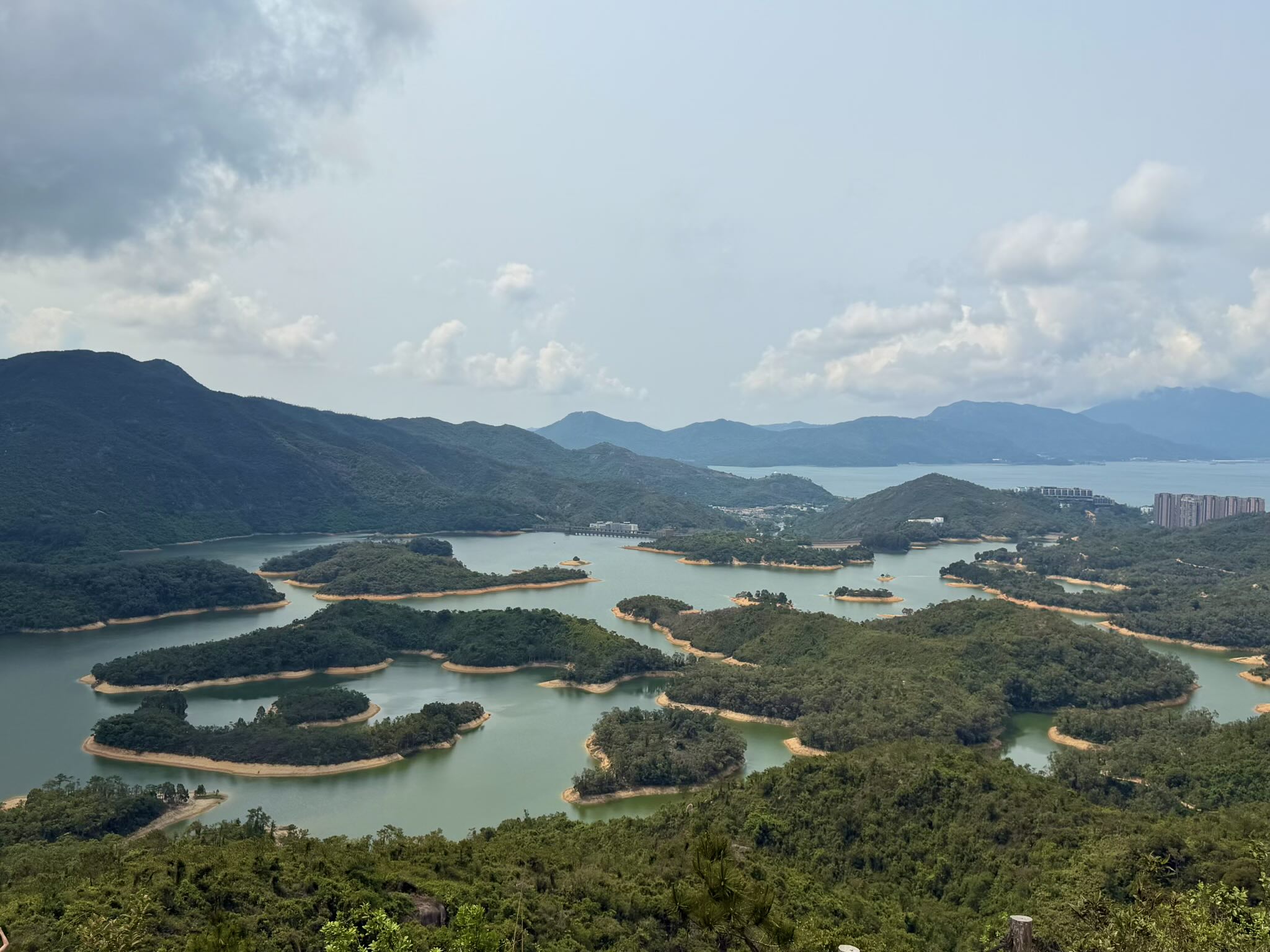
Carlina pointed out the building where her apartment was. It’s impressive that she would hike from there to up here everyday. From a few hundred meters away in the opposite direction, we could also see Shenzhen on the mainland, which had the curious effect of making the world feel simultaneously vast and compact.

Cyclists weren’t permitted on the steep, winding road, but an adjacent mountain bike trail ran parallel—making it the rare hike where you feel both virtuous for walking and slightly vindicated that the cyclists couldn’t join you.

Carlina breathed hard at moments but held up well throughout. We descended via a dirt trail back through the greenery, talking the way you only can on a hike, when there’s nowhere else to be and no screen demanding attention.
I’d have both lunch and dinner with Carlina that day. Between that, I talked with my aunt. She is fluent in both Cantonese and Mandarin but not in English, whereas my native language is English and I never learned more than a few dozen basic words of Cantonese. Therefore, we talked in Mandarin, and I was pleased that mine had held up not as poorly as I had feared despite not practicing it much since the pandemic. Of course, Carlina was there to help translate as well.
My aunt was particularly enthused at how well I had documented her childhood home in the Guangdong province of mainland China during my visit there in 2016. I showed her additional photos that I did not include in my blog post about it, and she was able to provide further context.
The Surprise
At 10:00 a.m. the next morning, Carlina and I were seated at Sing Siu Jin (Xīng Xiǎo Yàn) Grand Bistro restaurant at the Gold Coast Piazza, waiting. I had spent the previous hours running a do-it-yourself half marathon—21.1 kilometers out to Sam Tseng Village and back, suggested by Carlina’s husband Samuel—so I was both satisfied and well-caffeinated.
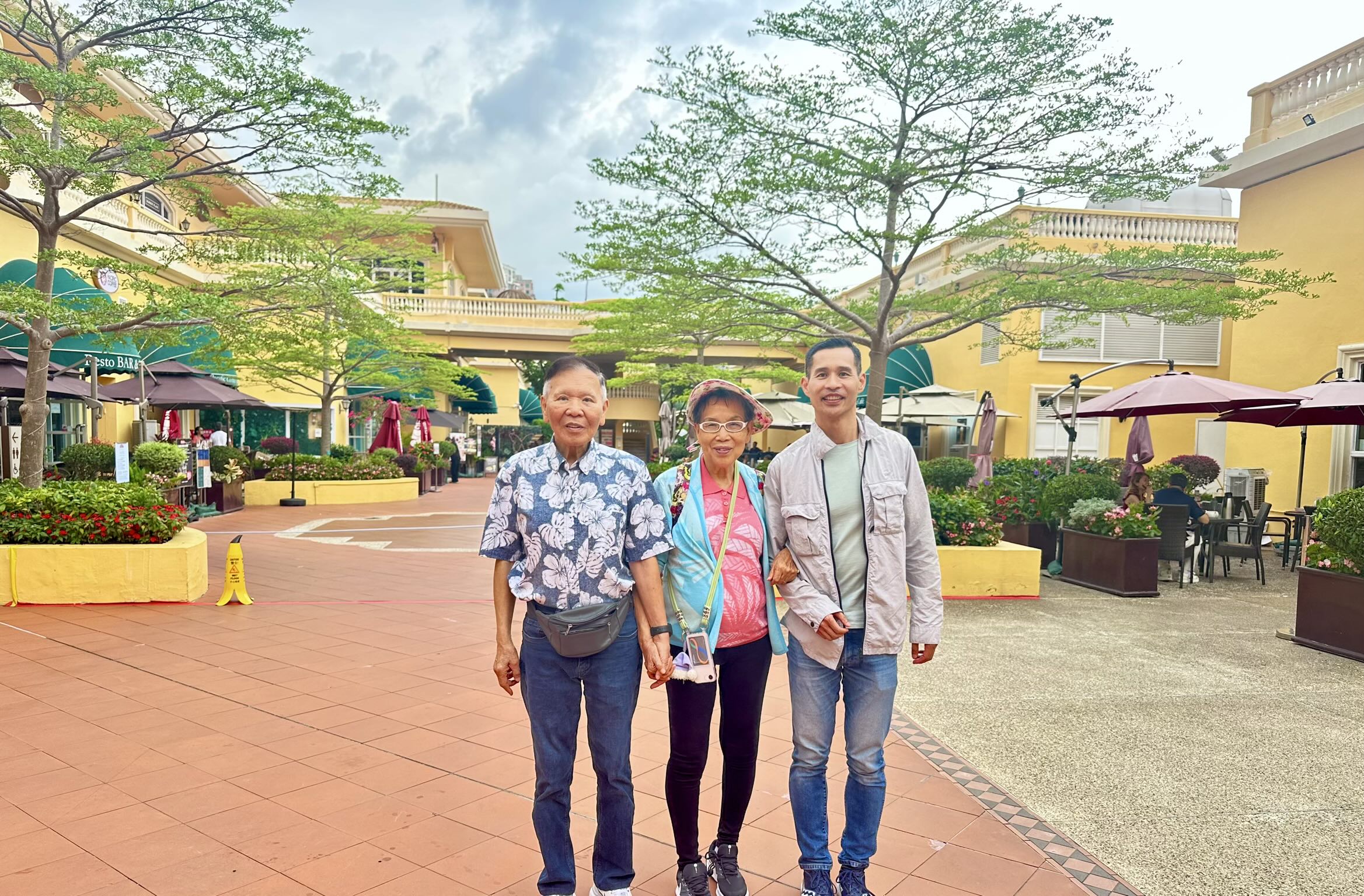
Eventually, my aunt Diana and my dad walked in together.
My dad looked across, saw me, and registered what could be charitably described as mild surprise. Not the theatrical double-take you might hope for after orchestrating a transpacific deception, but a brief recalibration, an exhuberant “look who’s here!” and then a smile.

Perhaps he knew how much I get around these days. Plus, it’s not like this was the first time I surprised him with an unexpected visit.
We had dim sum and good company, and for a few hours the restaurant table held two generations of a family that had scattered across multiple continents—a fact that felt worth noting, even if nobody said it out loud.
Dinner at the Seafood Market
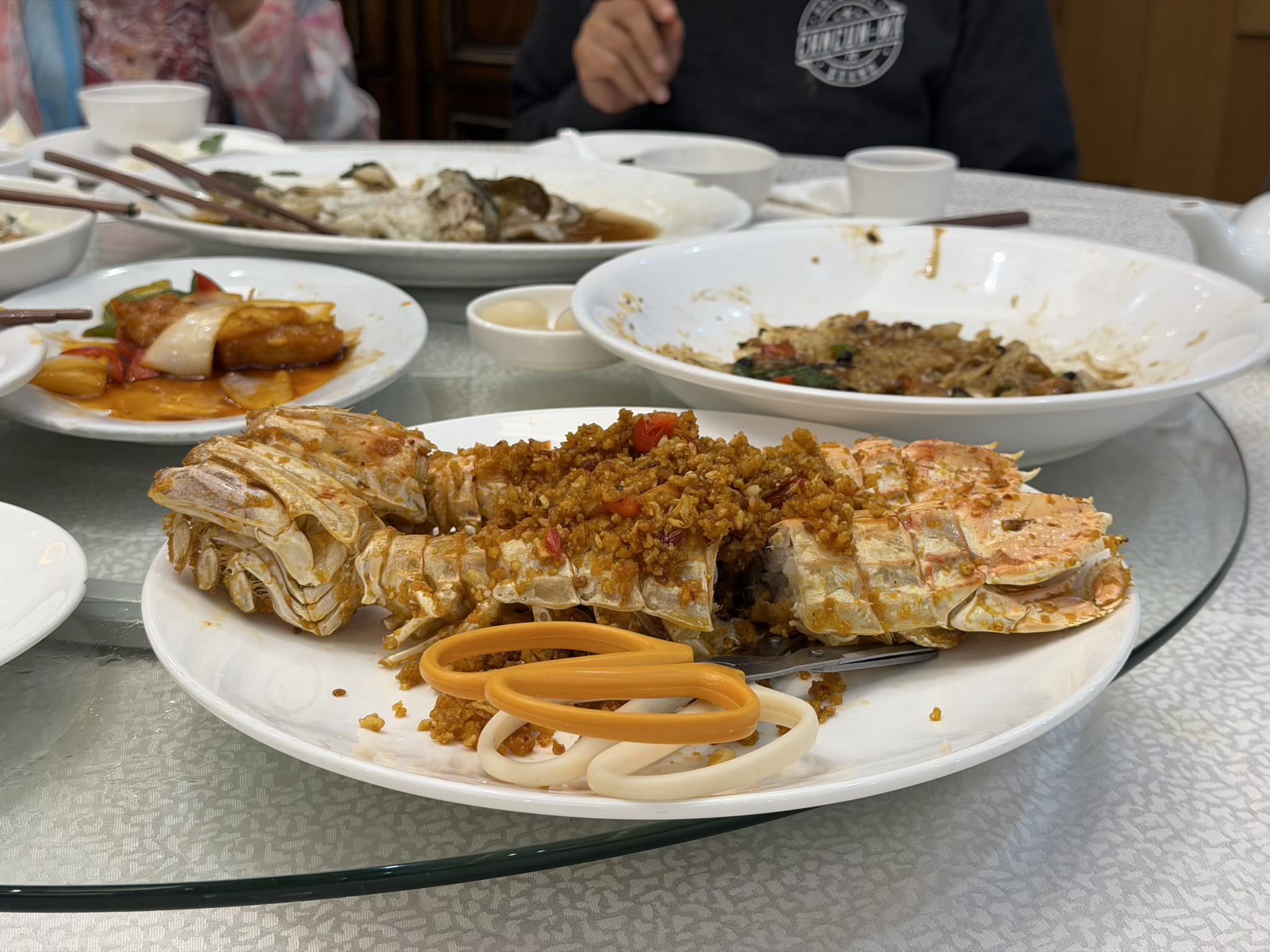
That evening, Sam and Carlina drove us to a seafood restaurant where the supply chain was refreshingly transparent: across the street, a wet market sold fish that had been alive just minutes earlier. Samuel walked over with practiced authority, selecting his choices including some razor shellfish—the same navajas I’d had in Malaga, Spain with Andrea—while an employee chased them around a tank with a net and bagged them up.

We carried the haul across to the restaurant, where the fish were deposited into a bucket and dispatched to the kitchen with impressive speed. The resulting meal was exceptional in a way that only very fresh—i.e., Was Literally Just Alive—seafood cooked simply can be.

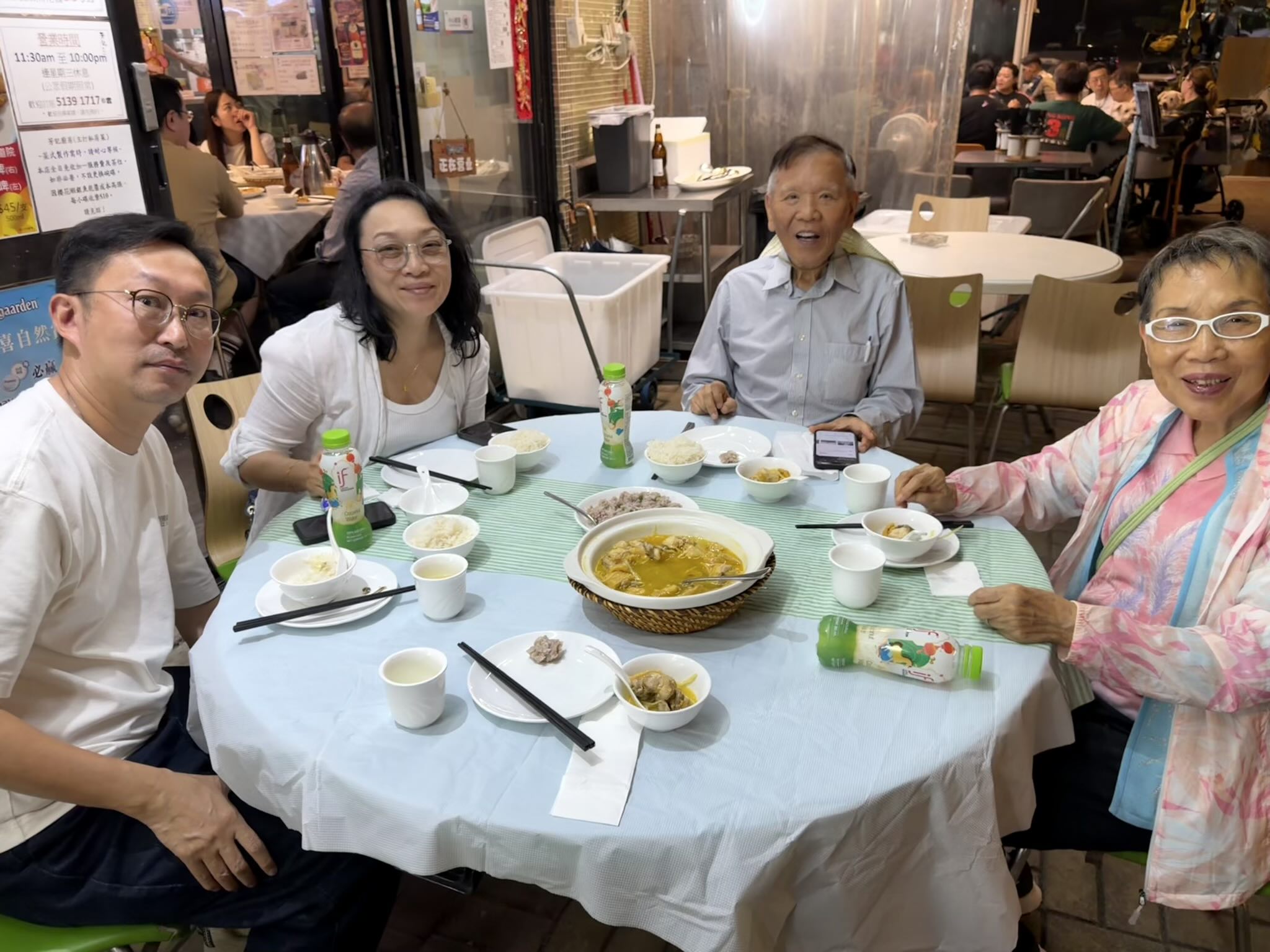
Cassandra, Carlina and Samuel’s daughter, took a taxi over from her university dorm and joined us. She is 175 centimeters tall now—a full foot taller than the girl drinking a slushee when the family met my mom, dad and I at the Hong Kong airport exactly a decade ago. Time, it turns out, does not ask permission.
It was also Auntie Diana’s birthday, which called for a pistachio cake that Carlina brought. It was vivid green, spongy, and not too sweet, and my dad proceeded to cut with my aunt’s help while the rest of us watched with the mild attentiveness of people who have just eaten a great deal of seafood.

Samuel noted, with some satisfaction, that the meal for five of us had run to about US$300 total—a price he estimated would be at least US$100 per person at a comparable restaurant in the States.
As we filed out of the restaurant afterward, someone recognized Carlina’s voice and called out her name. It turned out to be Darren, her best friend from their days at Cal State East Bay in Hayward, California, who happened to be out with his brother at the same restaurant. He had a mechanical engineering degree from Berkeley and the look of someone who has lived in several cities and found each of them interesting. The coincidence was the kind that only seems to happen in cities dense enough that the math eventually works in your favor.
A Launchpad to Macau
The next day, Carlina, Samuel, my aunt, my dad, and I did a day trip to Macau, an idea generated by my dad. It was a good one. Not only did we get to check out this former Portuguese colony—the second one I’ve been to in four months now, having visited Cabo Verde in Africa with Andrea in January—we got to drive over the world’s longest bridge. I wrote about Macau in a separate post.
The next morning, we gathered with two of my dad and aunt’s first cousins who reside in Hong Kong. We had more delightful moments over dim sum.
Into Central Hong Kong
On my last full day, Samuel and Carlina drove me into the city proper for a tour that covered more ground in an evening than most visitors manage in two days.
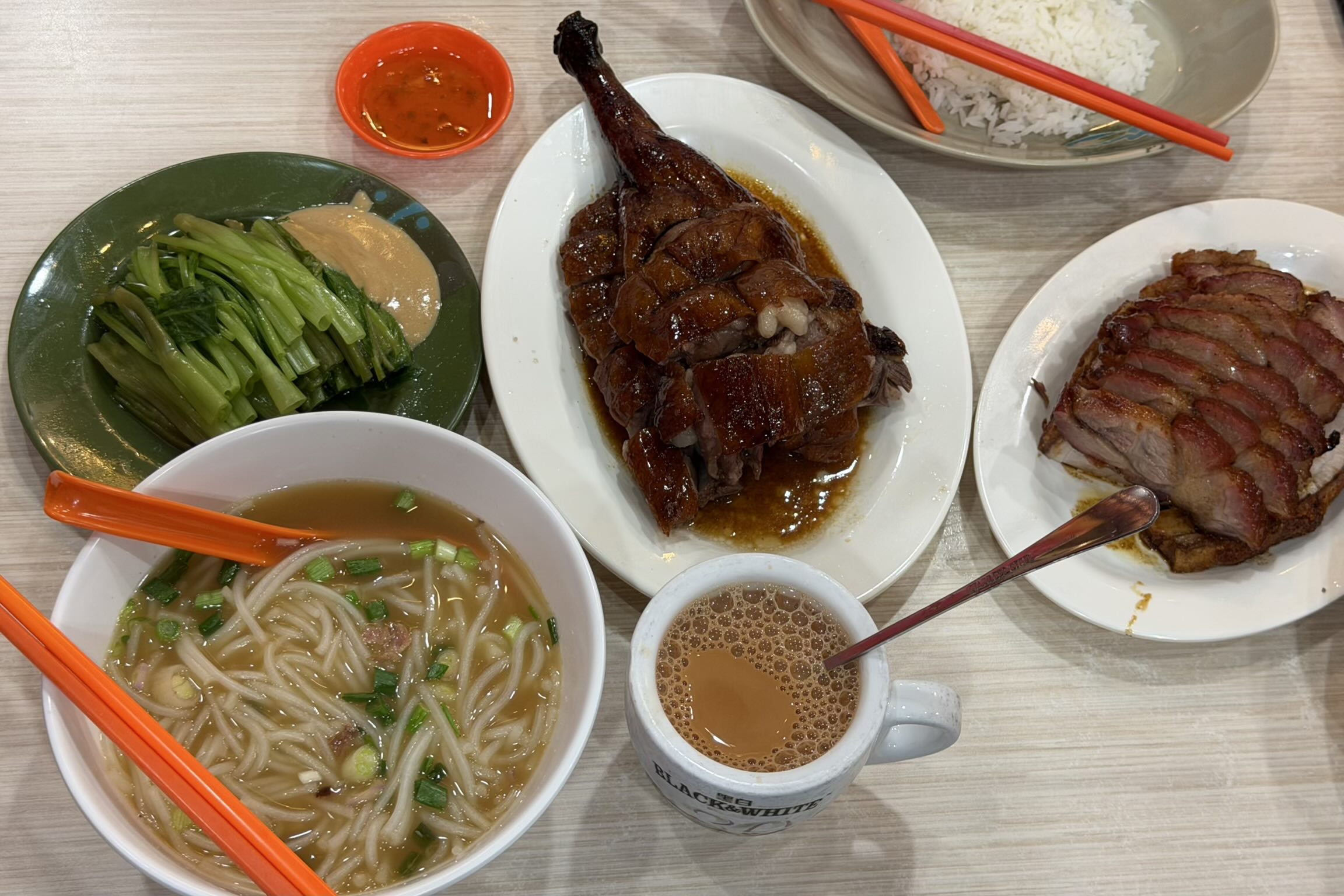
We stopped first at Yat Lok—a roast goose institution established in 1957, tucked near The Pottinger hotel in Central and recognized by the Michelin Guide for years running. The goose arrived crisp-skinned and yielding, accompanied by char siu (Cantonese-style roasted pork), noodle soup, choy sum (Chinese flowering cabbage), and a Hong Kong milk tea made with actual milk rather than condensed milk, no sugar. It was the kind of meal that makes you understand why people become evangelical about a city’s food.
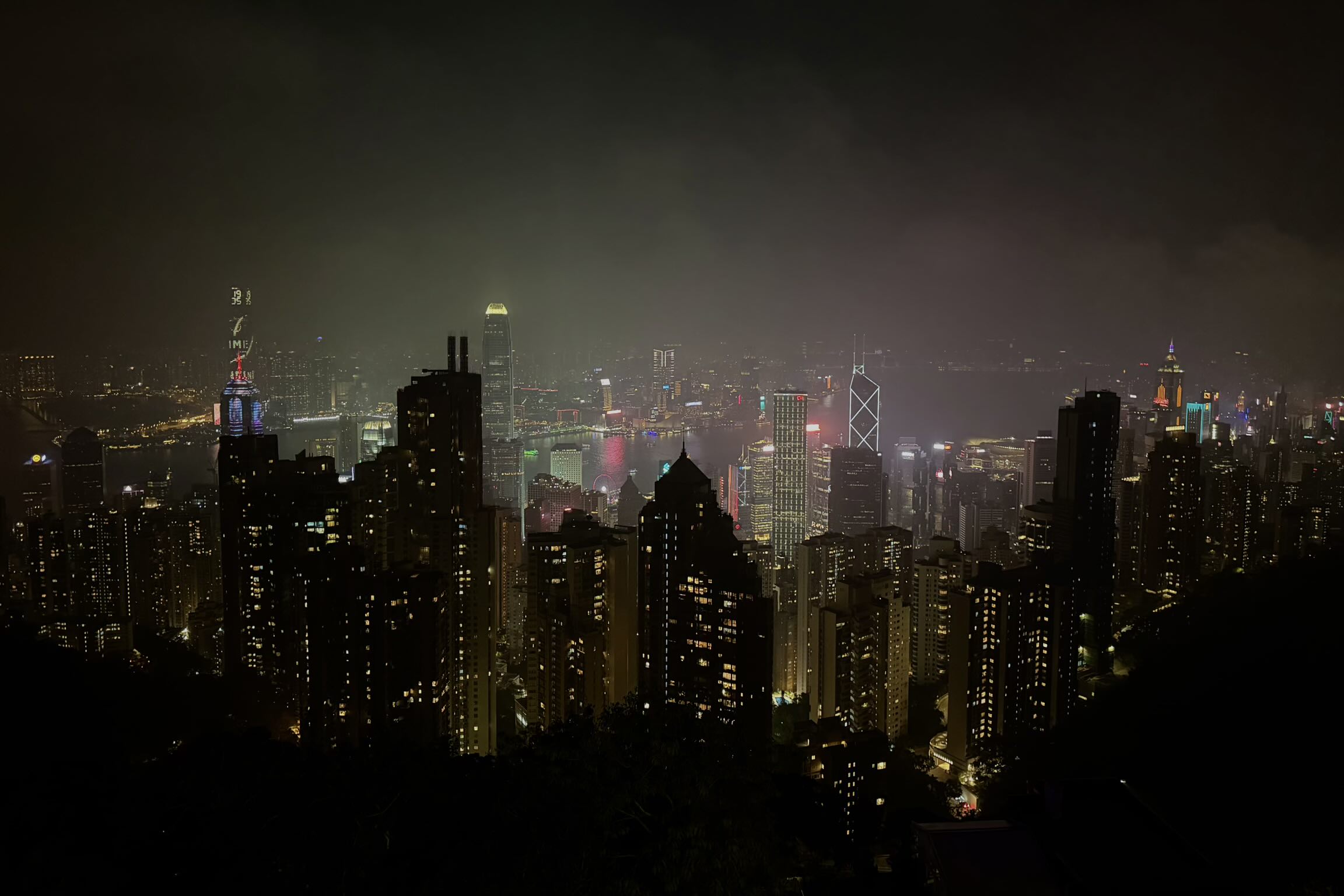
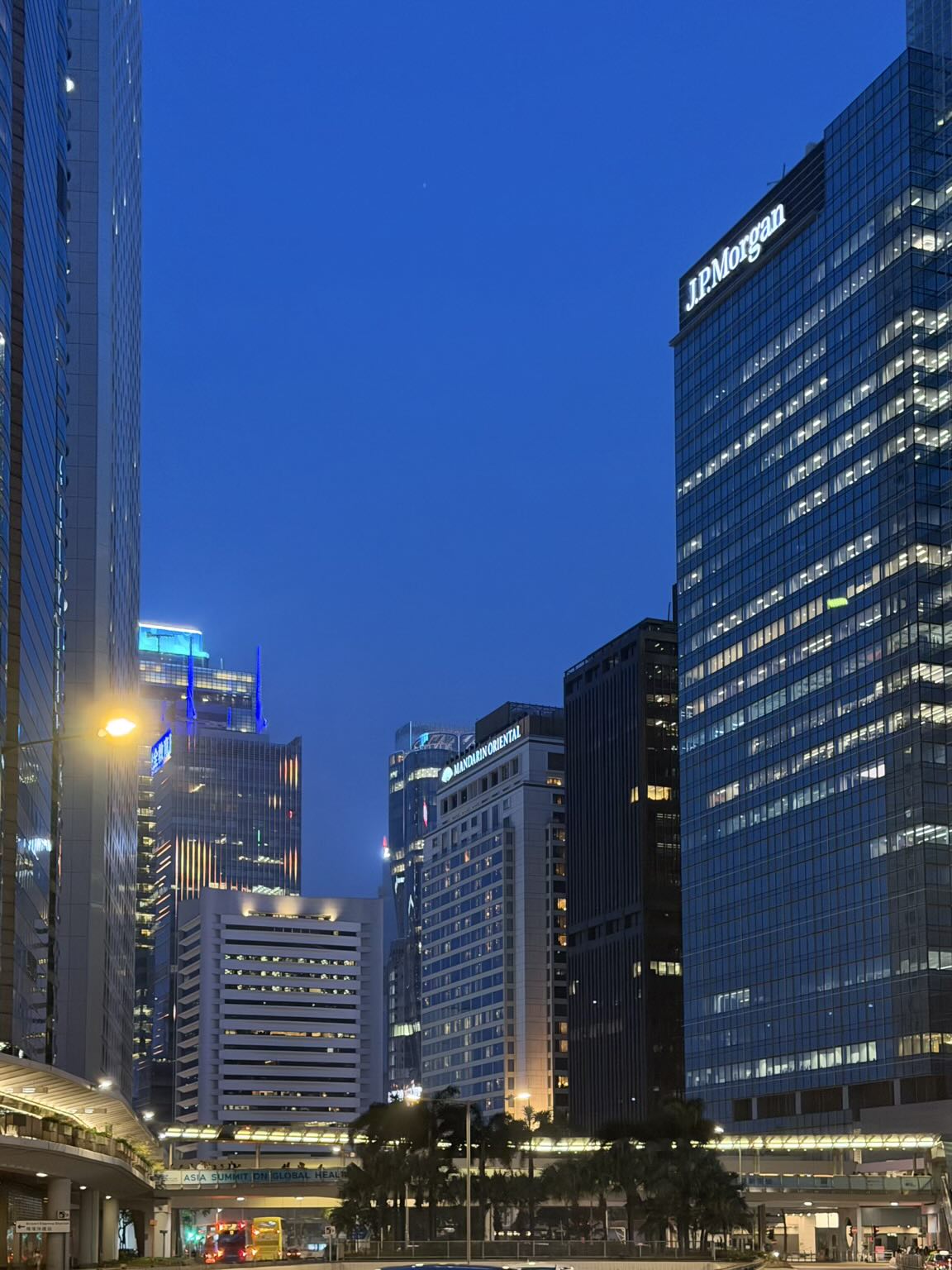
Carlina had spent roughly two decades working in finance in Hong Kong, and walking through the Central and Western District with her was like having a docent who had not only studied the institution but had worked inside it. She pointed out the ICC and IFC towers—the paired sentinels of Hong Kong’s skyline—with the mild affection of someone who had spent a lot of years walking past them.
We walked down Pottinger Street, the narrow stone steps lined with market stalls that compress a century of Hong Kong street life into one short, steep block.

Then Samuel drove us up to Victoria Peak (also known simply as “The Peak”). The haze softened the view slightly but couldn’t neutralize it—the skyline stacked itself below in layers, financial towers giving way to harbor giving way to Kowloon beyond.
Out on the water, some of the traditional red-sailed junk boats were making their evening passes—available for private charter at a price that, Carlina mentioned, runs to a few thousand Hong Kong dollars for a few hours, staffed with food and drinks and your choice of scenic route around the harbor.
From there, Samuel dropped Carlina and me at the piers, where we took a ferry across Victoria Harbour for HK$6.50 (less than US$1). Carlina remembered when the fare was HK$2, and how she’d sometimes ride it after work just to decompress—standing on the deck with a breeze coming off the water, the skyline retreating behind her and the chaos of the day doing the same. It struck me as one of the better stress-management strategies I’d heard in some time.

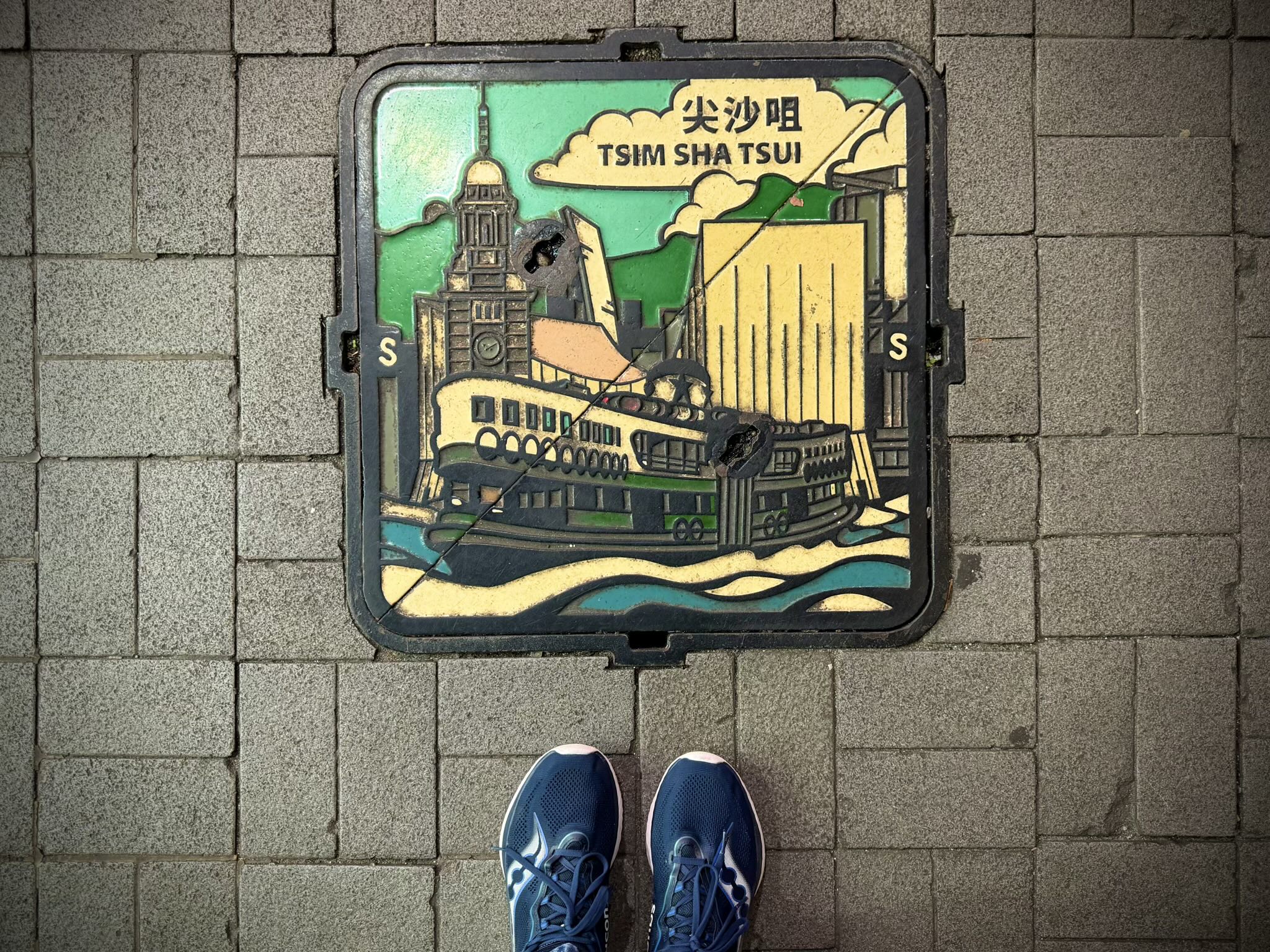
On the Kowloon side, we walked along the Tsim Sha Tsui waterfront. Samuel had driven around to meet us, and along the way we passed the Tsim Sha Tsui Clock Tower and stopped at the West Kowloon Cultural District. At the waterfront promenade there, a group of young people were filming elaborately choreographed dance videos in front of the M+ museum—a pastime that apparently requires no permit and considerable coordination.
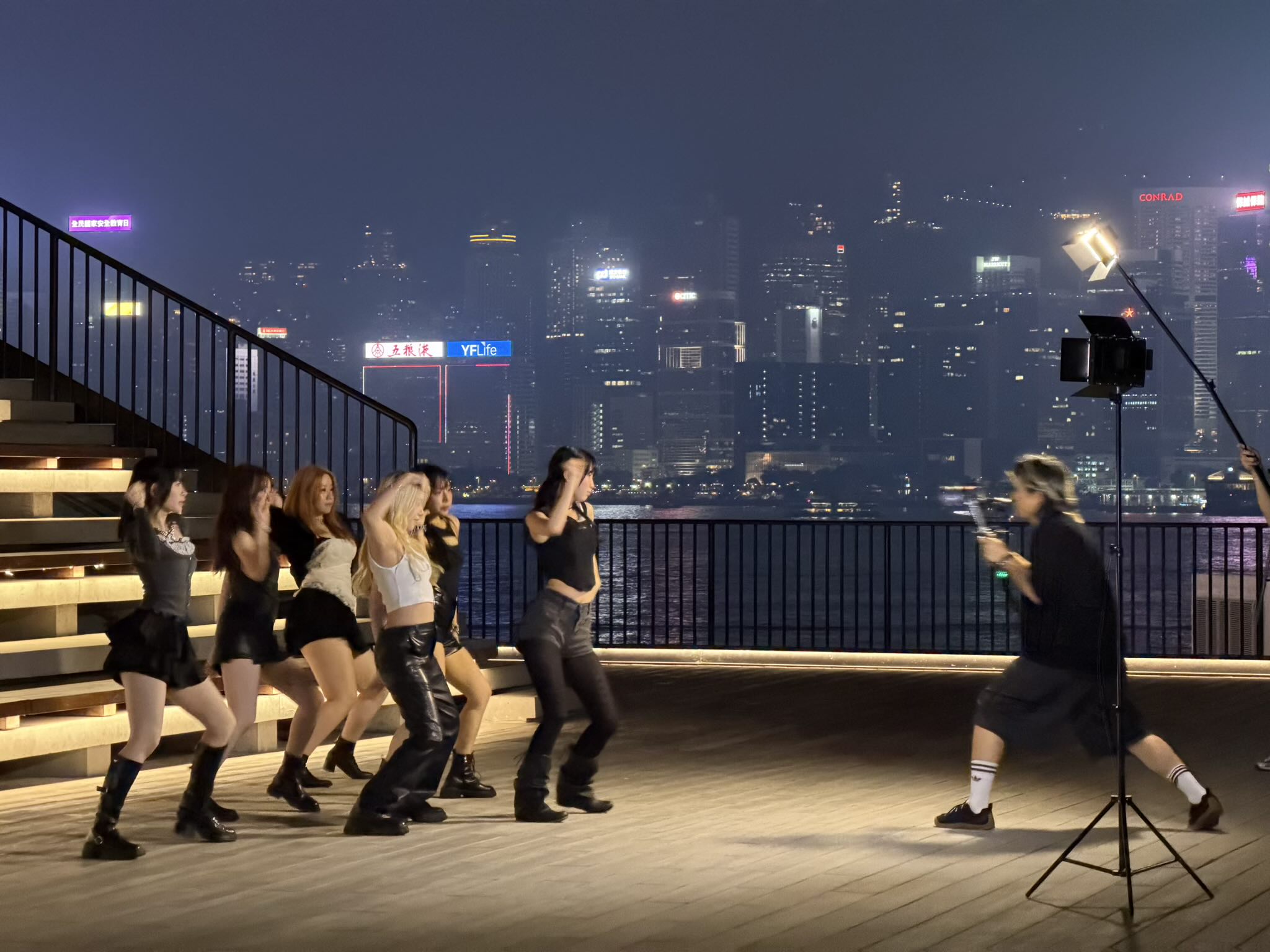
Afterwards, we swung by Stonecutters Island, where a cluster of sportbike enthusiasts, including several women riders, had gathered to admire the view beneath the Stonecutters Bridge. I wrote about the vehicles in a separate article.
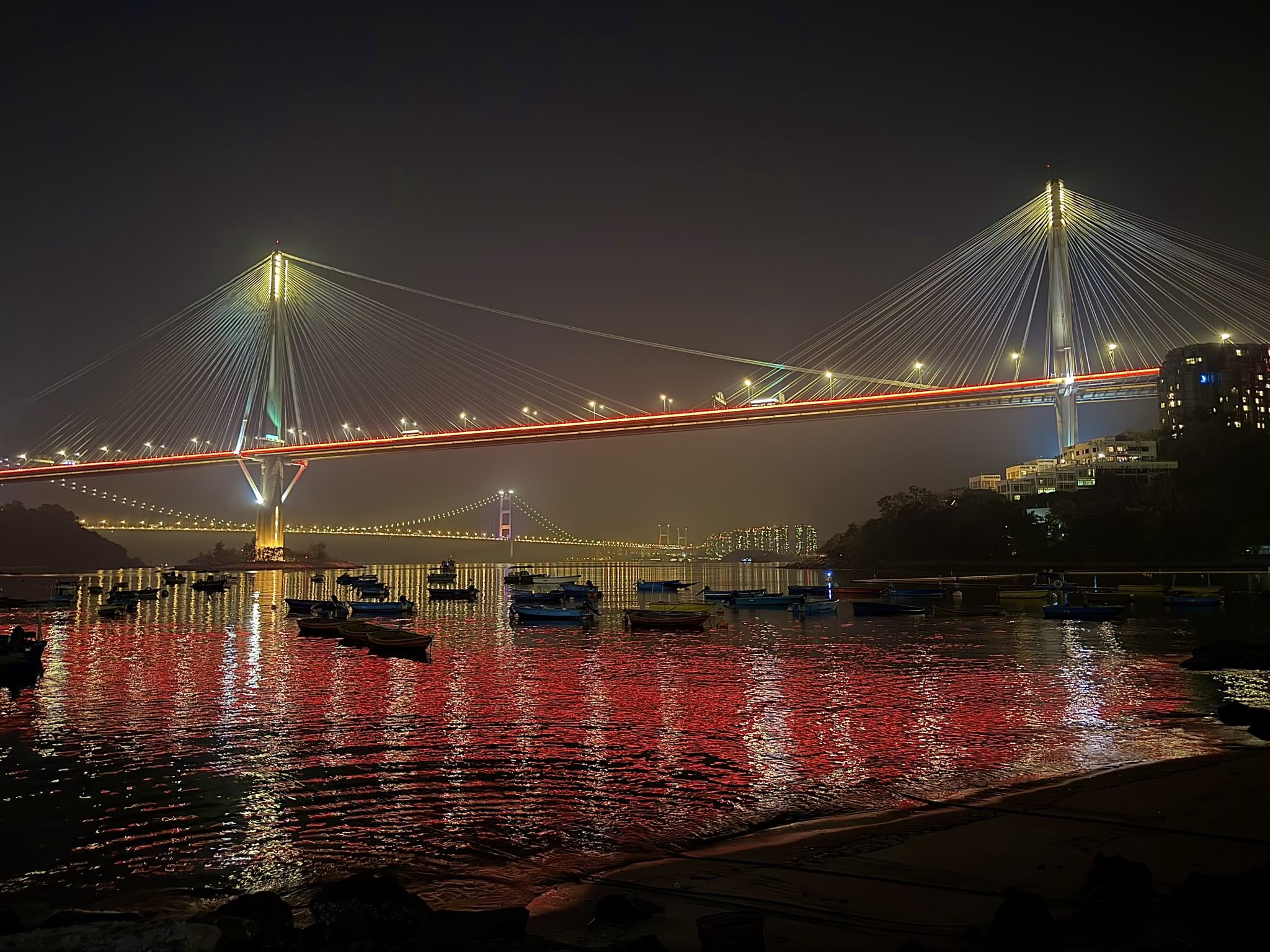
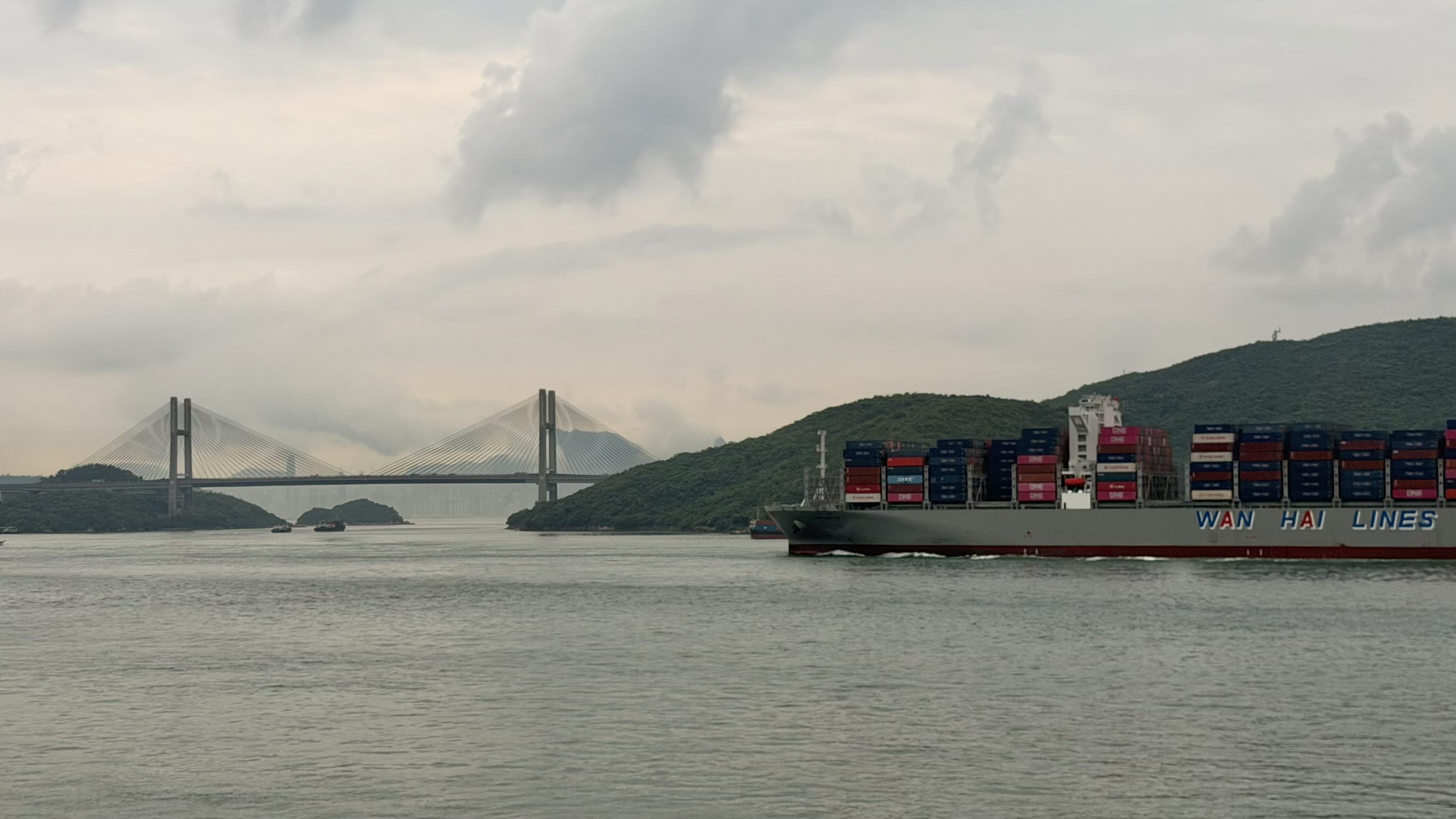
The final highlight of the evening together was at Ting Kau Beach, reached by descending a long flight of steps to a shore that opened up to views of the Ting Kau Bridge and Tsing Ma Bridge illuminated against the darkening sky. It was a sight that rewarded the knee effort required to get down there.
Impressions
Hong Kong has 7.5 million people—1.5 million more than Singapore—and yet the traffic, just like in Singapore, never quite rose to the level of punishment I’d braced for. The green spaces were a genuine surprise—tranquil pockets tucked between towers, the kind of breathing room that city planners in less disciplined places would have long since sold to a developer. In fact, approximately 40% of Hong Kong’s total land area is protected as country parks and nature reserves.
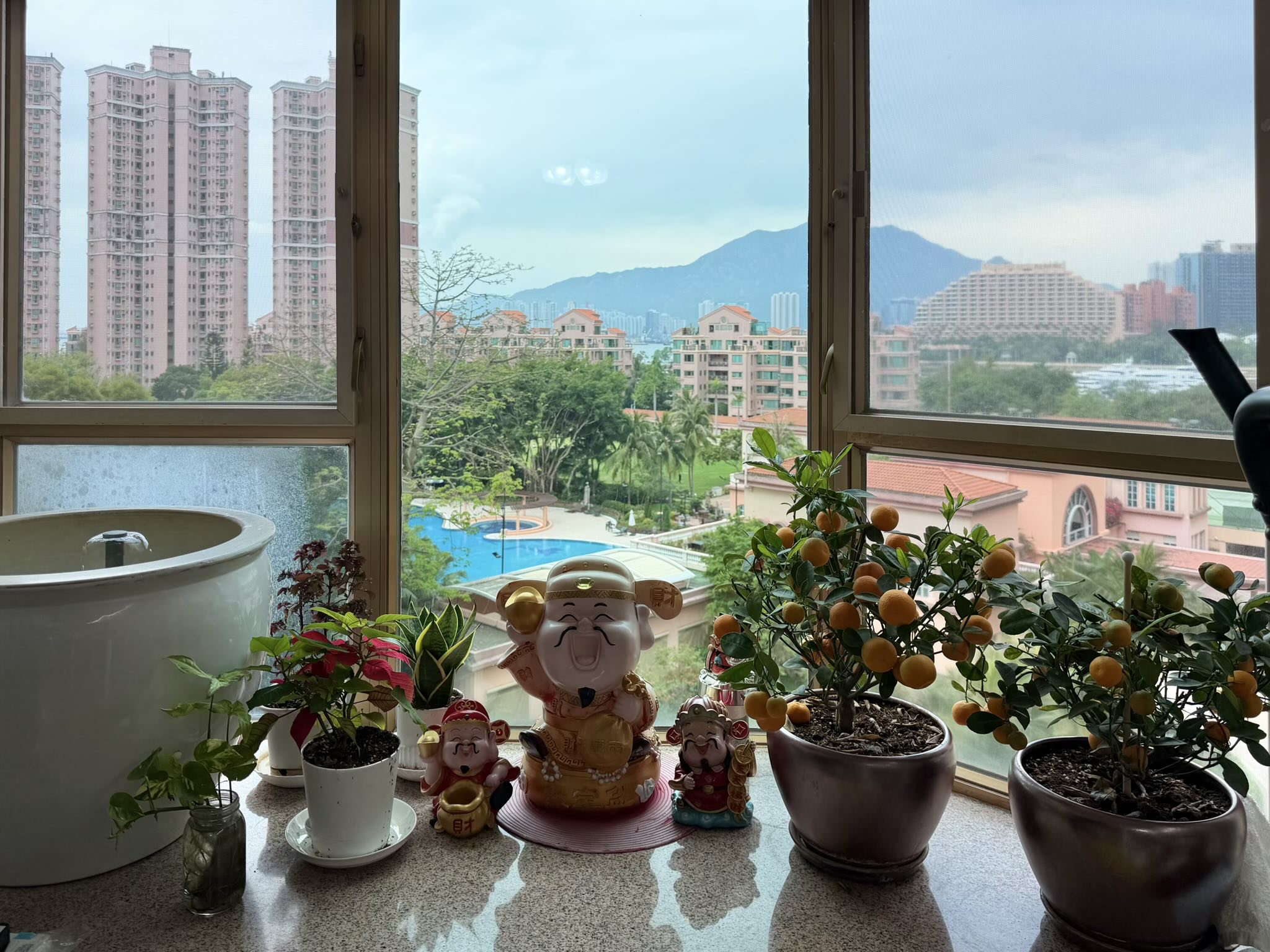
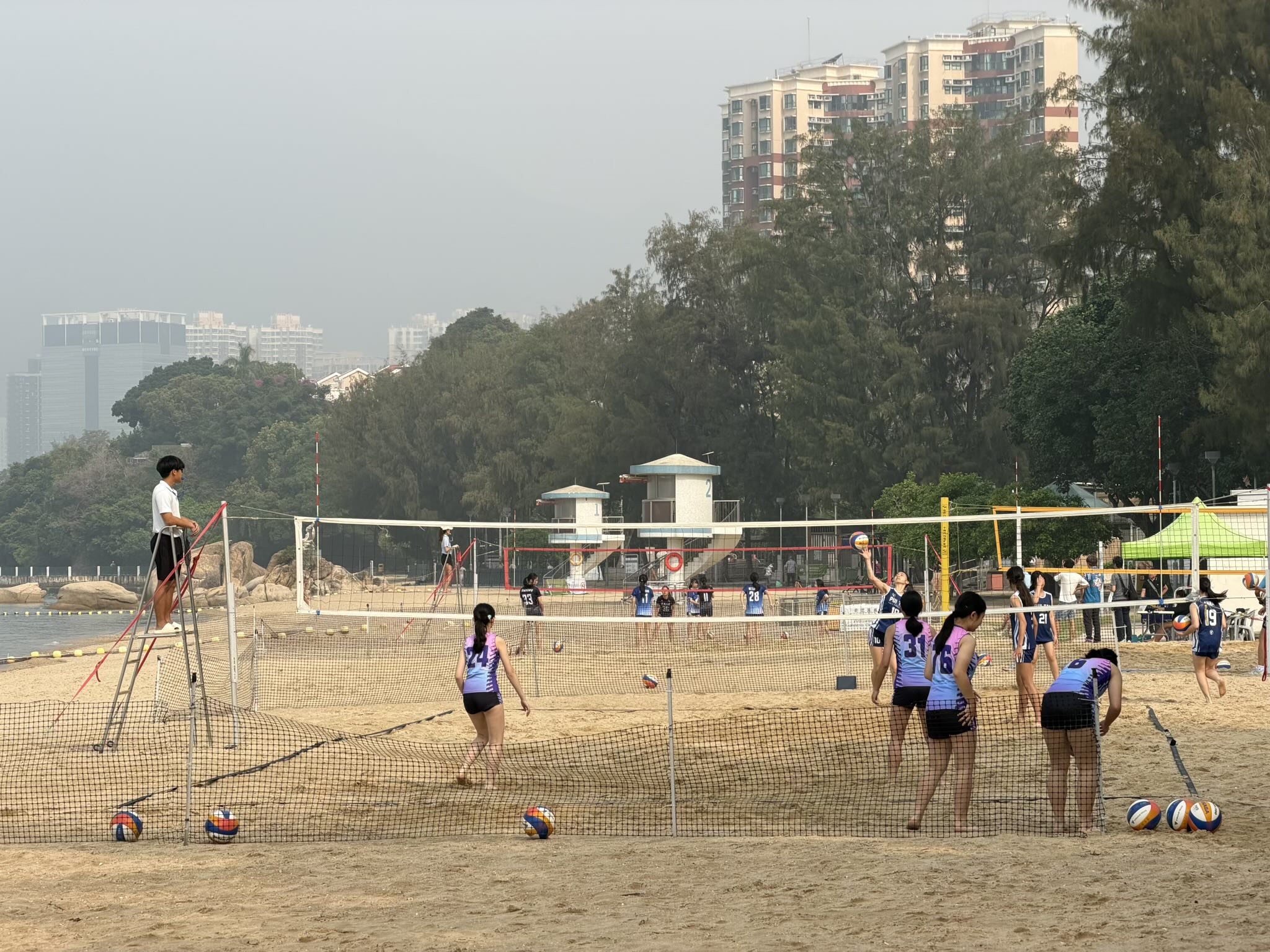
The Gold Coast, where Diana and Carlina live, occupied a particular place in my affections. It sits about 10 kilometers removed from dense commercial centers, a distance that suits its residents fine. Within walking range: a kilometer-long beach, the mountains, the Piazza with its restaurants, supermarket, and 7-Eleven. The city within reach; the noise, optional.
The one consistent frustration for me was payments. For a city that serves as one of Asia’s great financial capitals, the non-acceptance of Visa, Apple Pay, or international Alipay configurations was mildly bewildering. (Eventually, I even connected my Discover card to Alipay Global on the logic that Discover’s longstanding UnionPay relationship would make it work. Yet, even for that, the QR code was rejected with the quiet finality of a bouncer who has heard every argument.) Samuel ultimately gifted me an Octopus card with pre-loaded funds, which I used for the ferry—a solution that worked perfectly once I stopped expecting anything else to.
As I noted about Singapore and Malaysia, Asia has way too many payment systems, and too many of them depend on QR codes that require a solid data connection (fortunately, I usually had the latter). In contrast, Apple Pay works offline—as do chip cards—which is either a technological advantage or a philosophically different relationship with infrastructure, depending on how charitable you’re feeling.
Carlina made a point of telling me I’d been very lucky with the weather. The days had been warm and humid, but tolerable—enough of a reprieve from Singapore’s relentless 30-plus degrees that I’d actually managed the following sub-two-hour half marathon one morning without suffering unduly.
Normally, she said, Hong Kong at this time of year would be over 30 degrees with 90% humidity every single day, with typhoon season beginning in May and delivering roughly seven storms over the summer. The person I’d met on a Singapore hiking trail, who had gone up to Victoria Peak and seen nothing but rain, would have recognized this description immediately.
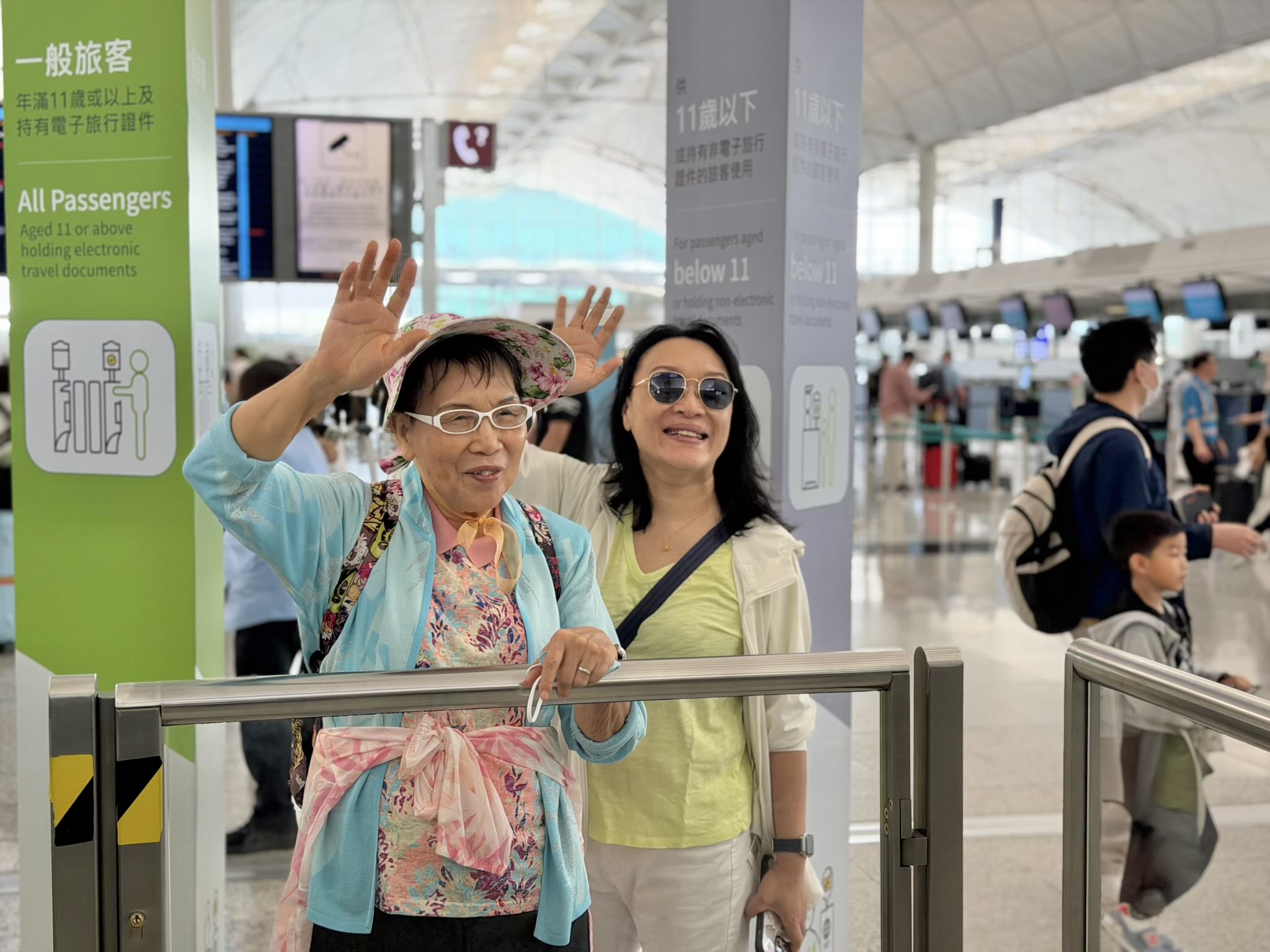
Like Singapore, car ownership here can be financially terrifying—but mass transit makes it an easily avoidable expense for most residents.
What I hadn’t anticipated was how much the city would feel like it was accommodating both the version of itself that my mother remembered and something entirely new. The high-rises and the density are still there. So are the peddlers, more or less, in the tourist corridors. But the green waterfront promenades, the hiking trails with postcard views, the Michelin-tracked roast goose restaurants that have been perfecting the same dish since 1957—these were surprises, and good ones.
My mother, I think, would still prefer California. But she might admit the ferry ride at dusk is worth a second look.

Postscript: An Amazing Coincidence
Almost two weeks after leaving Hong Kong, my friend Ping from Fort Collins gave me a call. She will be leaving for Hong Kong—a city she lived in for many years and still has an apartment there— in just a few days for a couple of weeks.
She told me her apartment was on… the Gold Coast. Now being intimately familiar with the area and the residences there, I asked her where exactly.
Turns out she lives in the tower right next to my aunt’s—about 10 meters away—and only 200m away from my cousin’s! I know that I’ve had numerous small-world coincidences in my life that maybe I shouldn’t be so amazed, but still my mind was blown.
I connected Ping with my cousin. They are going to try to go hiking—surely to the same point that Carlina and I went to with the astounding views.







There are 4 comments.
Hi son, thank you for your posting on Group A. Your talented story of the days in Hong Kong and your sharp eyed photography bring me pride as your father.
Thanks, Dad! Great hanging out with you there.
It’s been something like 16 years or so since I have been back to HK. You got good guides in your aunt and cousin to take you around everywhere. I find that’s important, since the city and surrounding territories have so much to offer, if only you knew about them!
Agreed, Adam. I feel like I kind of only scratched the surface of Hong Kong, and that five days wasn't nearly enough time. Well, it's reason to go back!
I wonder how much Hong Kong has changed in the 16 years since you've last been there?