The 2026 Solar Eclipse: Pac-Man, a Dora Hat, and a Ring of Fire

I’ve seen a total solar eclipse before. Nine years ago, I drove south of St. Louis and watched the moon eat the sun in the middle of a Missouri afternoon. That one was amazing—the kind of amazing that rewires your sense of scale.
So this wouldn’t be a new experience. But most people never get even one chance in their lifetime to stand in the path of totality. I was already in Spain. The math was simple.
The planning phase
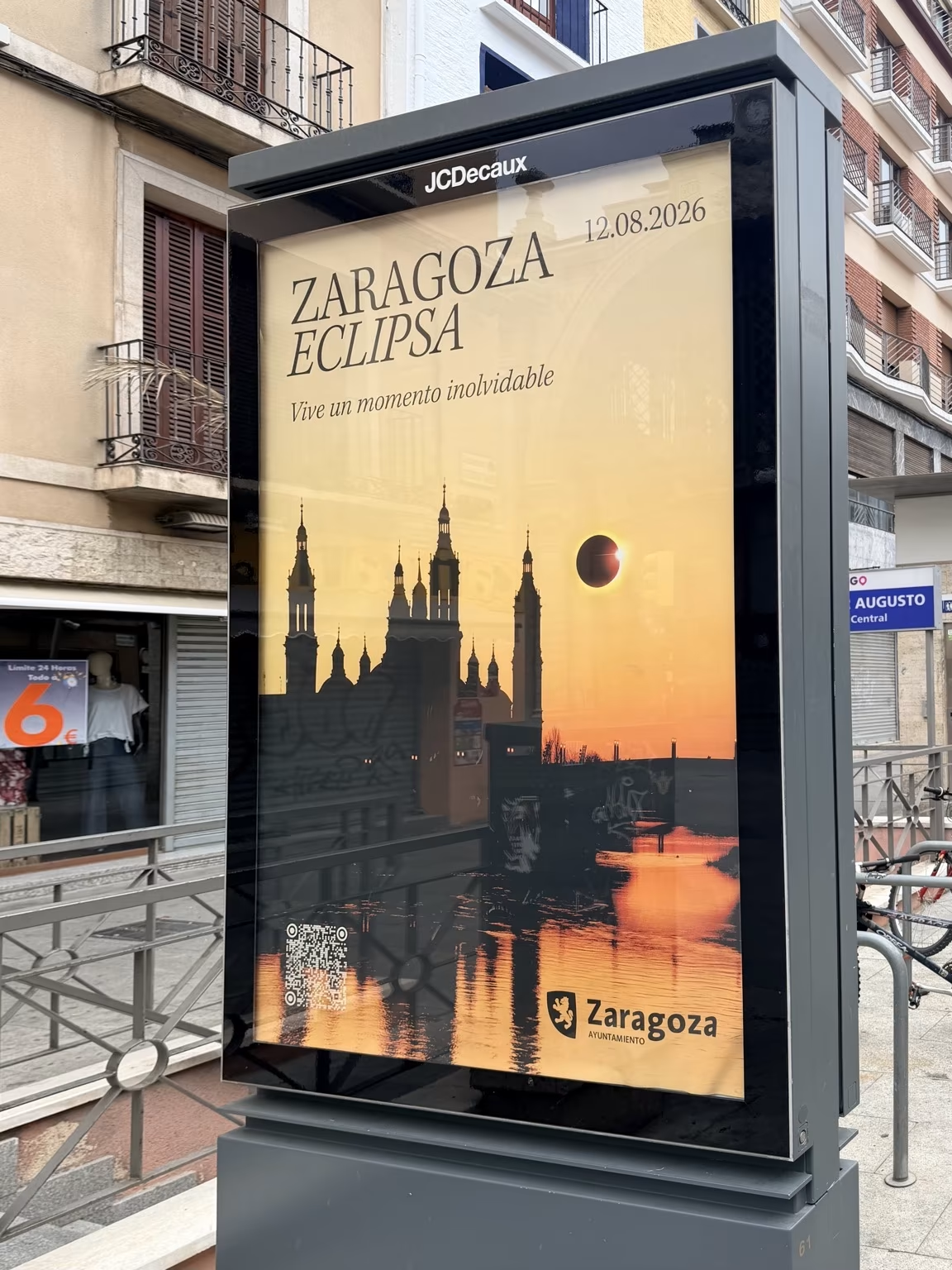
A total solar eclipse would sweep across the Arctic and parts of Europe on August 12, 2026—the first visible from mainland Europe in nearly 30 years. The path of totality crossed northern Russia, Greenland, Iceland, Spain, and a sliver of Portugal.
My first instinct was Oviedo, Spain. Totality there lasted one minute and 49 seconds, starting at 8:27 p.m. CEST with the sun about 10 degrees above the horizon. Oviedo sat much closer to the centerline of the shadow path. Besides, Oviedo was a city I have long wanted to return to ever since walking through there in 2017 during a Camino de Santiago,  particularly to visit places that were featured in the movie Vicky Cristina Barcelona.
But the logistics were hostile. When I started making plans (admittedly quite late at only a week before the event), every train was sold out except the 7:05 a.m. departure, priced at $110. The least expensive hotels were $600/night, and the only Airbnb under $600 for two nights was a room with a shared bathroom in someone’s occupied house.
Weather models hinted at clouds. And to see the sunset over buildings, I’d have needed to hike to the top of a mountain. While not a deterrent for an ultra-endurance athlete, it would have added to the logistics.
Claude (AI) suggested Zaragoza instead.
Zaragoza offered one minute and 25 seconds of totality, starting at 8:29 p.m. with the sun at roughly four degrees—still well above the horizon. Twenty-four seconds less than Oviedo. In the grand scheme of celestial mechanics, 24 seconds is a rounding error. Both locations delivered approximately a minute and a half of totality.
The trade-offs were decisive. Trains from Madrid ran all day at reasonable prices. The city had organized official viewing areas on bridges. I found a hotel room for $550 for two nights—a 7.9 rating on Booking.com. Yes, that was a seven-times markup over normal rates. But for a once-in-a-lifetime event, compared to the alternatives, it felt reasonable. I booked it.
A friend later joked, “I’d go to Decathlon and buy a tent instead!” Fair point. In my twenties, or if cash were tight, I’d be inclined to do just that. But this was the option that let me show up rested and air-conditioned.
Eclipse day
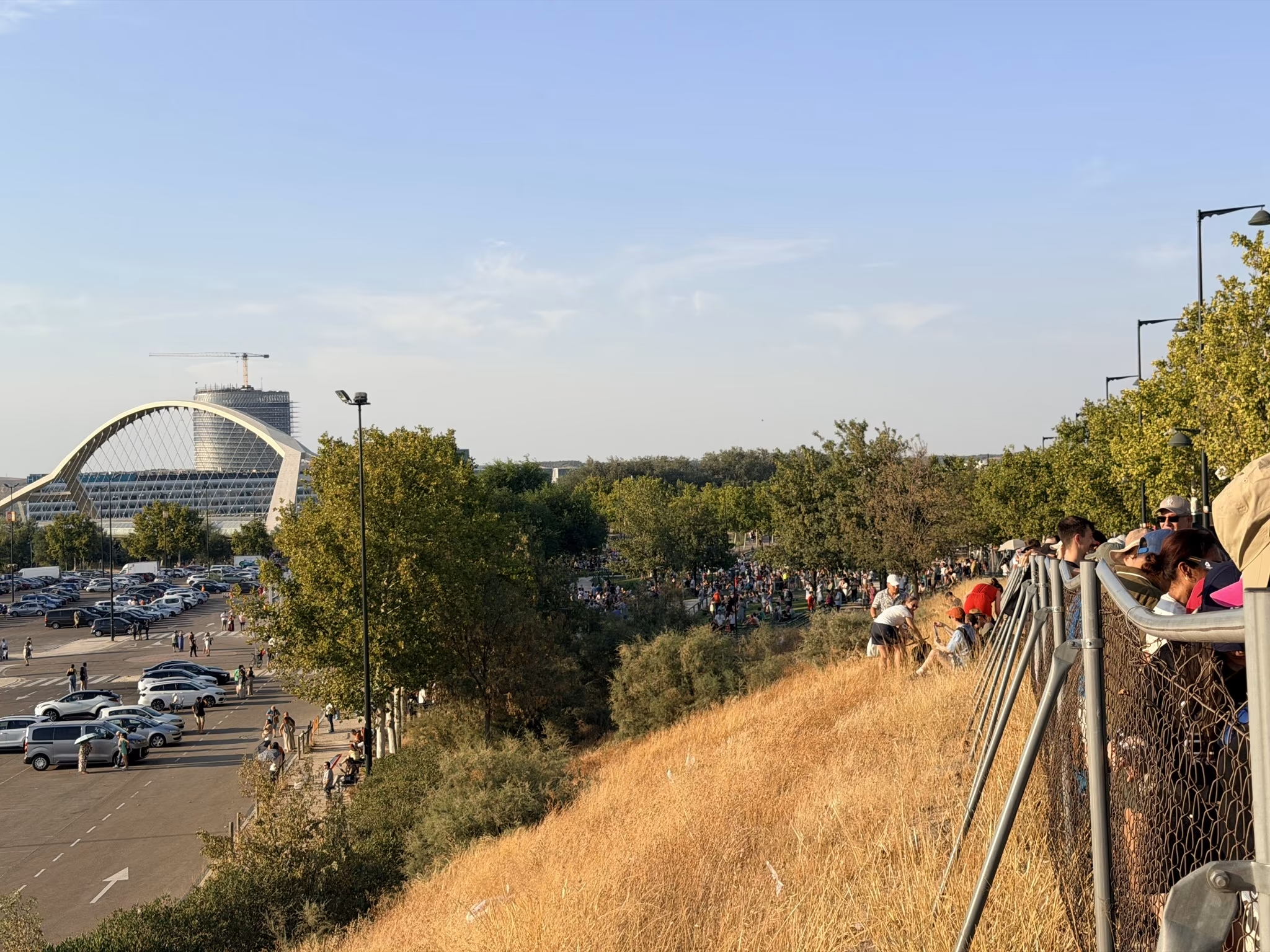
Claude had recommended the Expo South parking lot, just beyond Zaragoza-Delicias station. It’s massive—these days it only hosts a giant Sunday flea market. Better than the bridges, which had limited space and dirty glass barriers (installed, I assumed, for both rain protection and jump-off-the-bridge prevention).
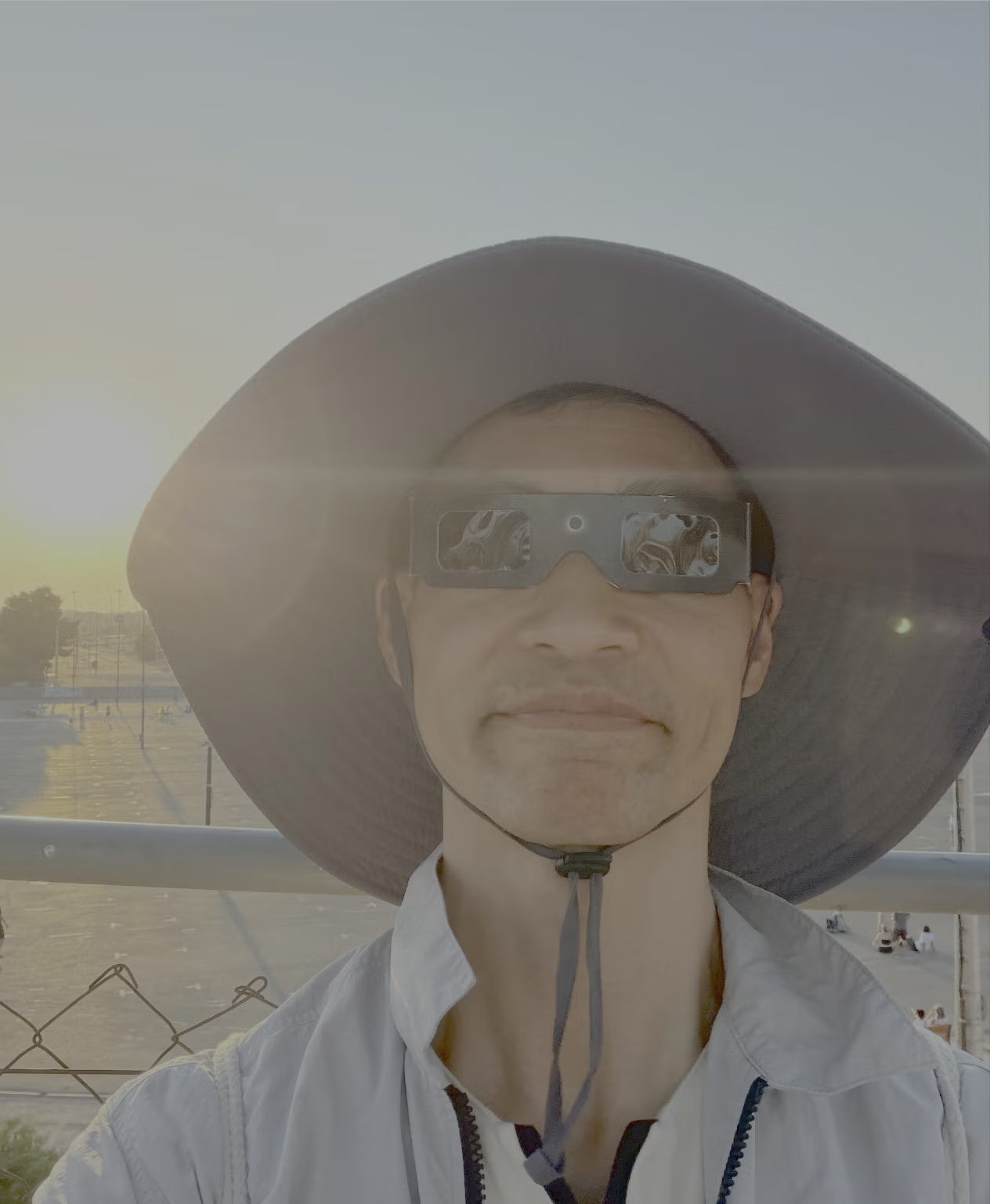
I hit Mercadona for provisions, propped my iPad against the hotel window as a time-lapse rig, and walked over wearing my Dora the Exploradora hat. Because even though the clocks indicated “evening,” the UV index was still above 3.
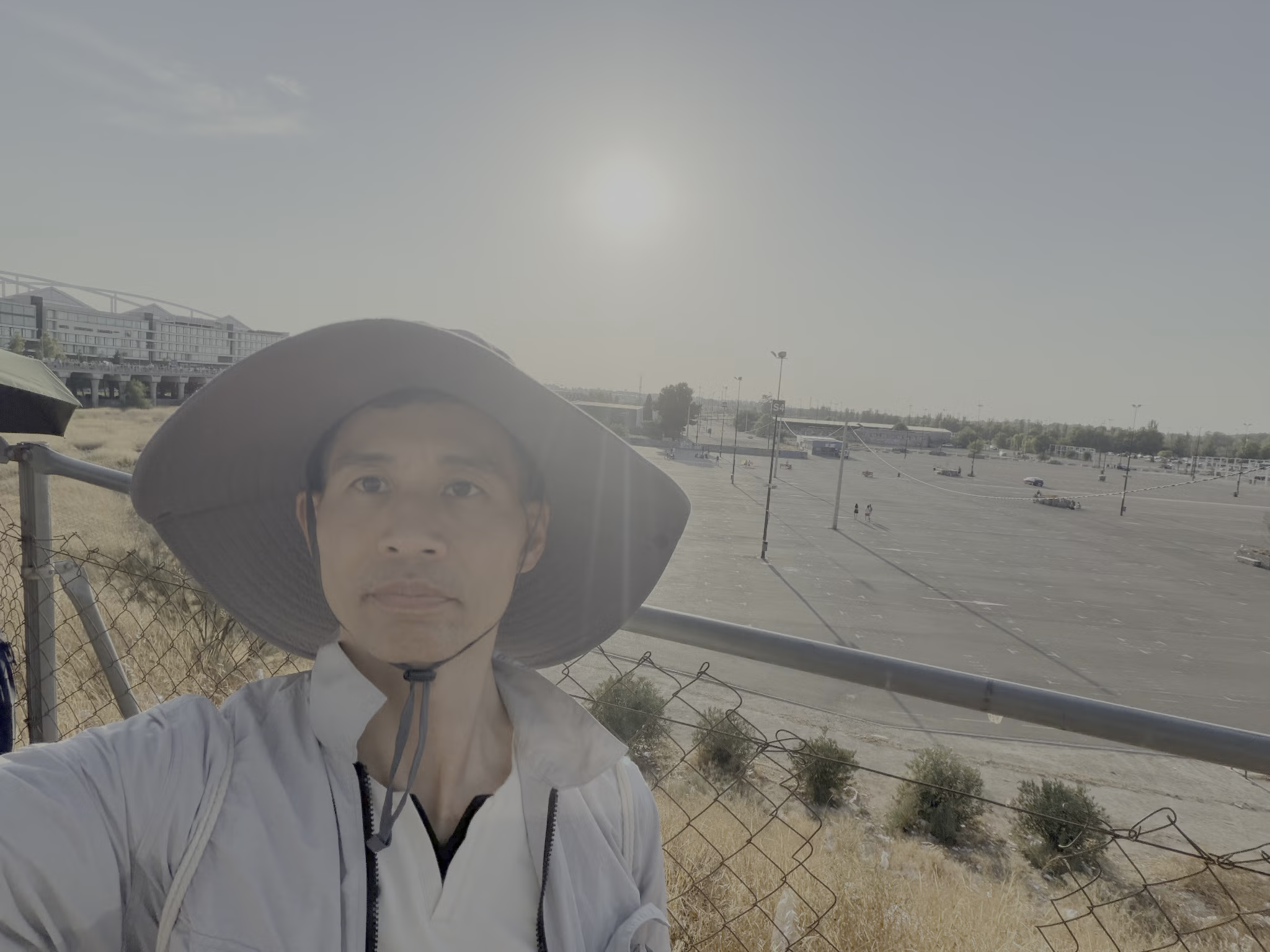
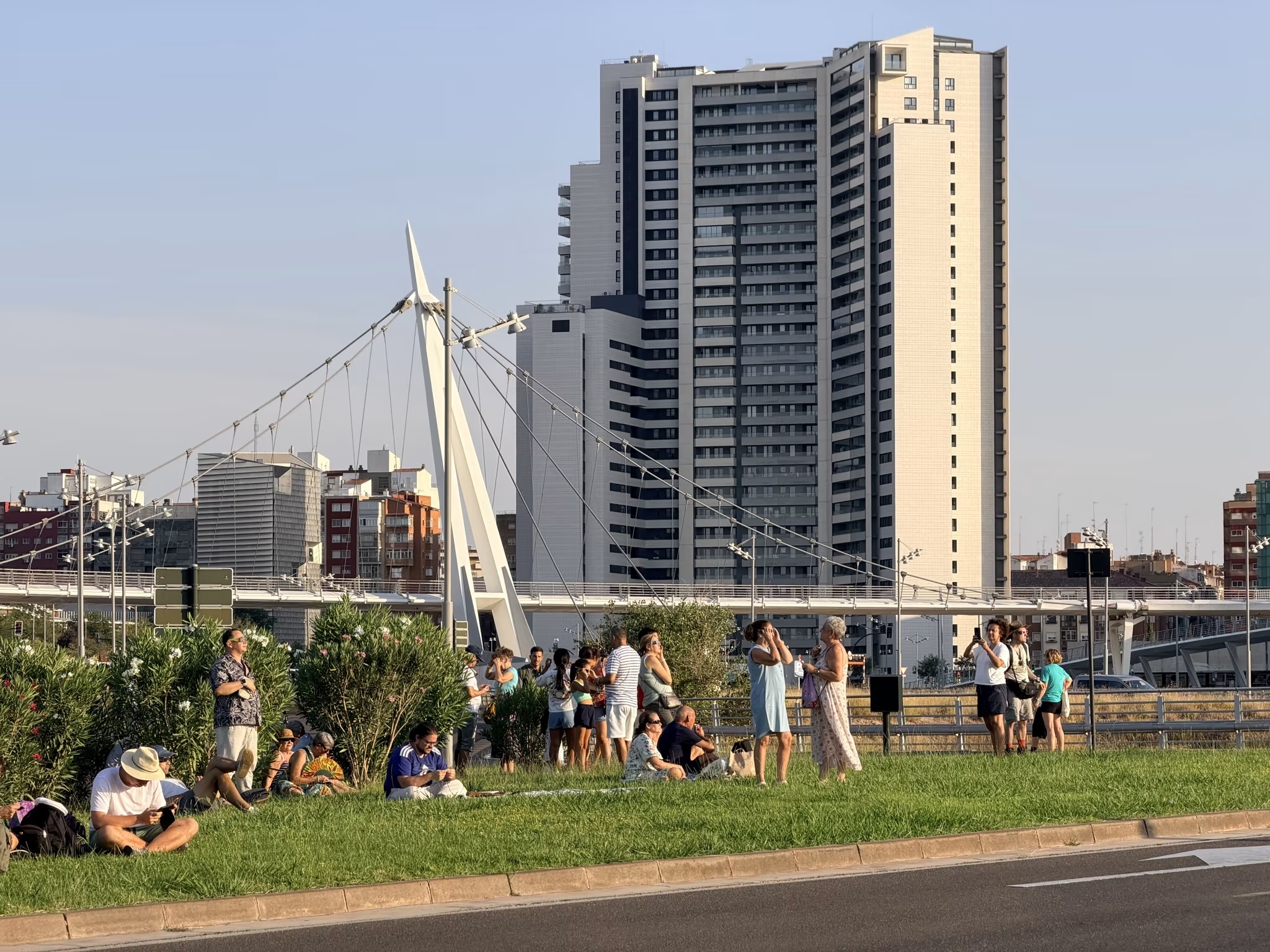
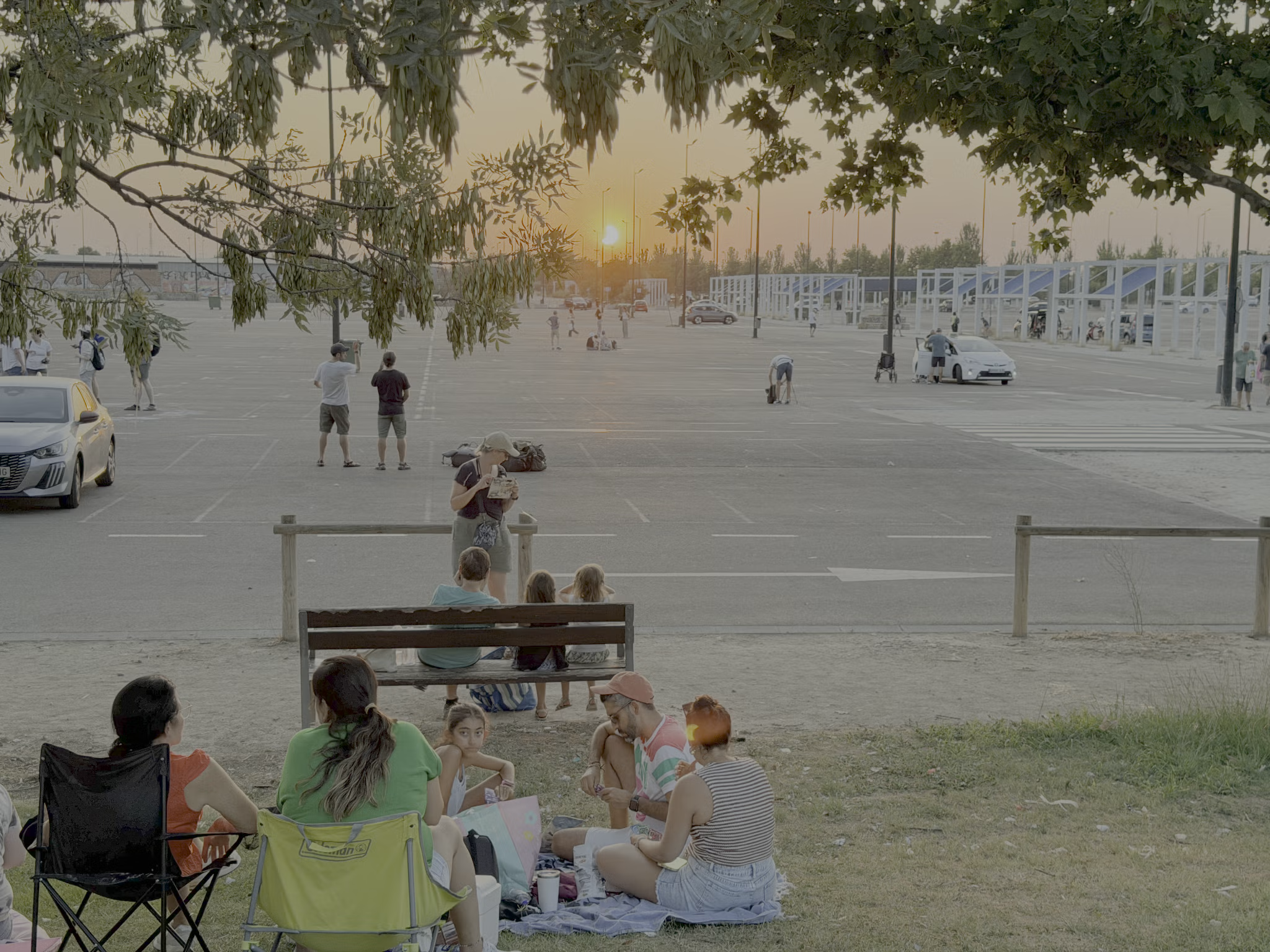
Crowds were present but not oppressive. I skipped the parking lot floor and stayed on the elevated sidewalk so trees wouldn’t block the view. The lot itself was mostly empty, just a scattering of people down there.
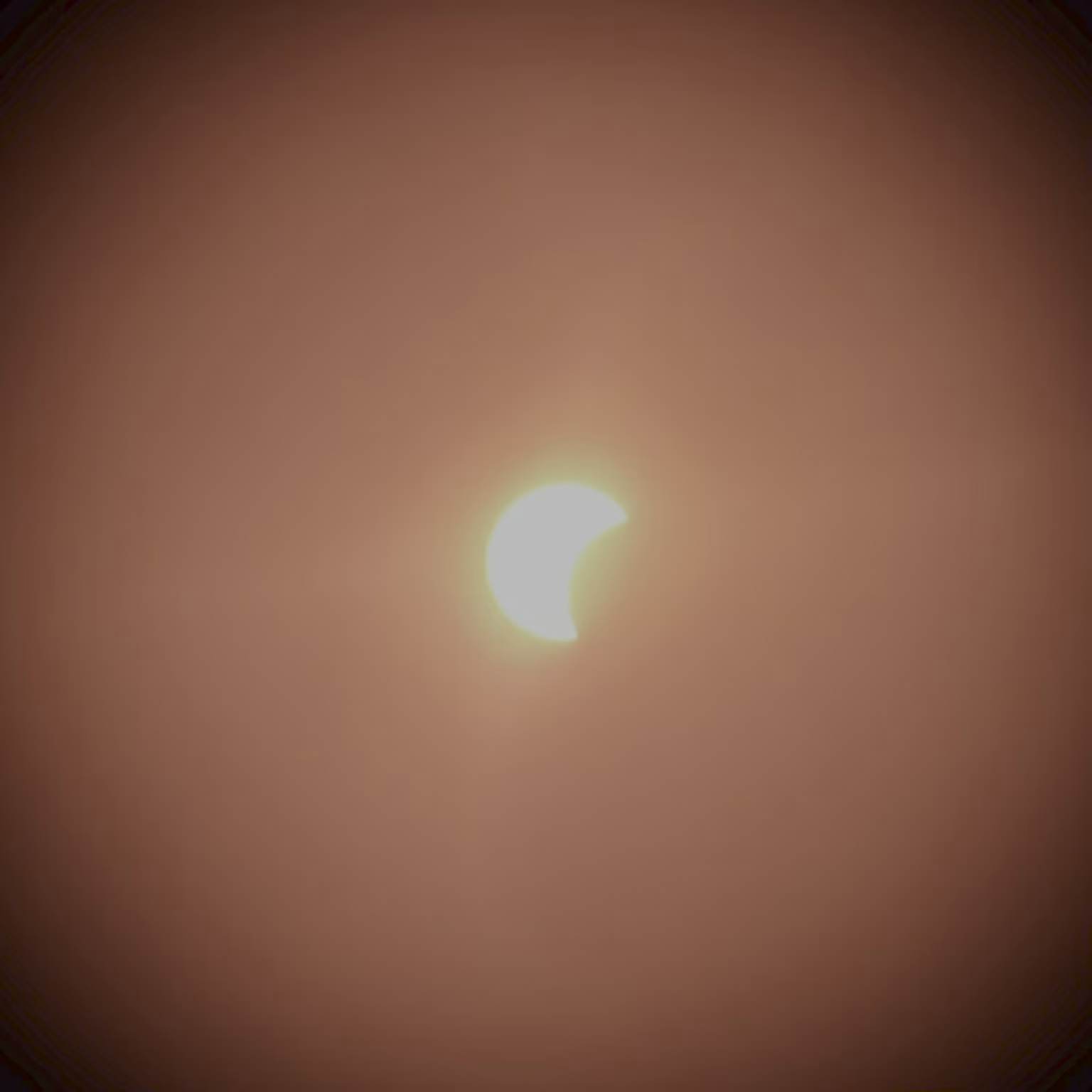
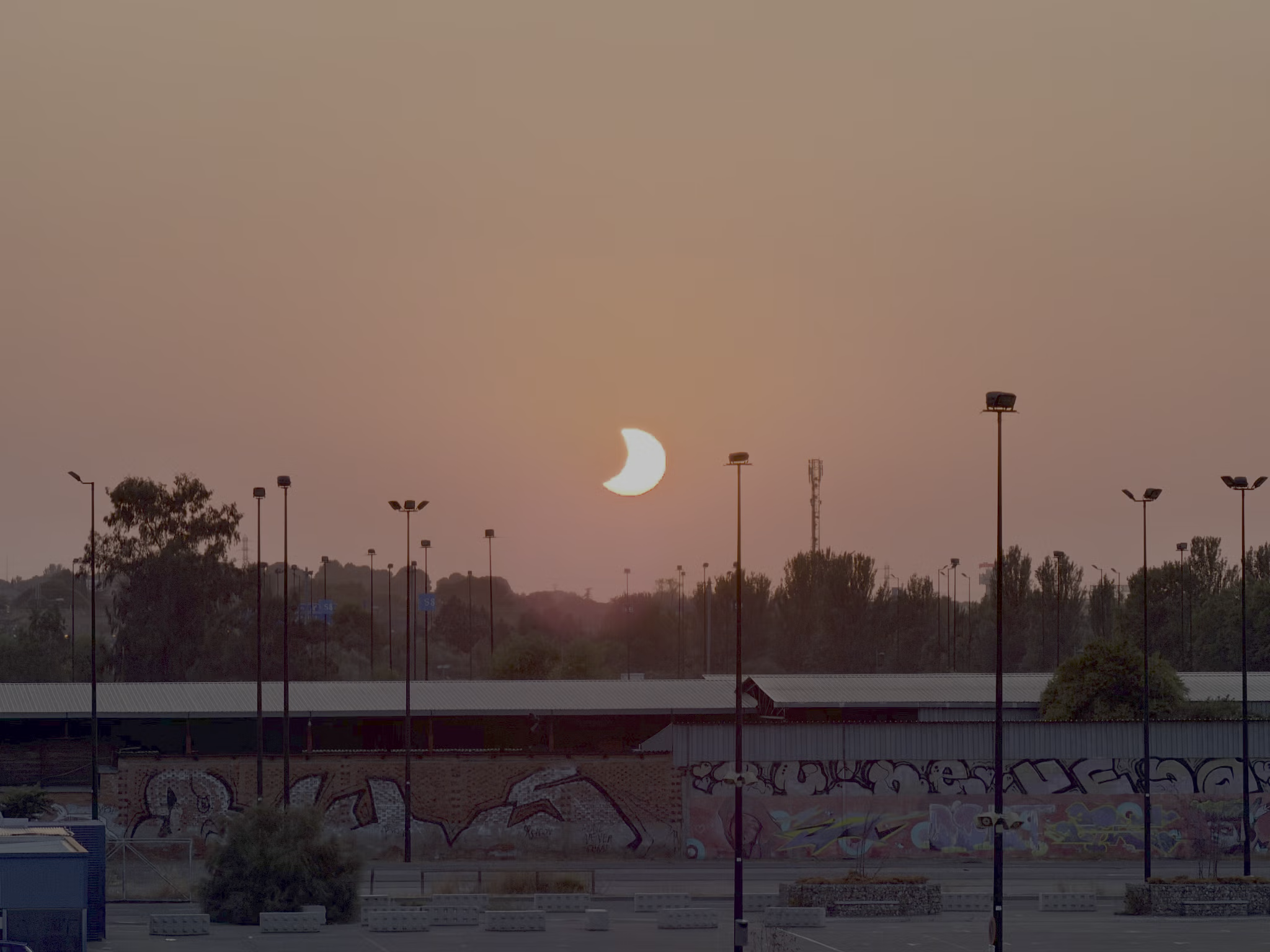
At 7:25 p.m., through eclipse glasses, the moon began nibbling the lower right edge of the sun. The sun morphed into an orange Pac-Man character.
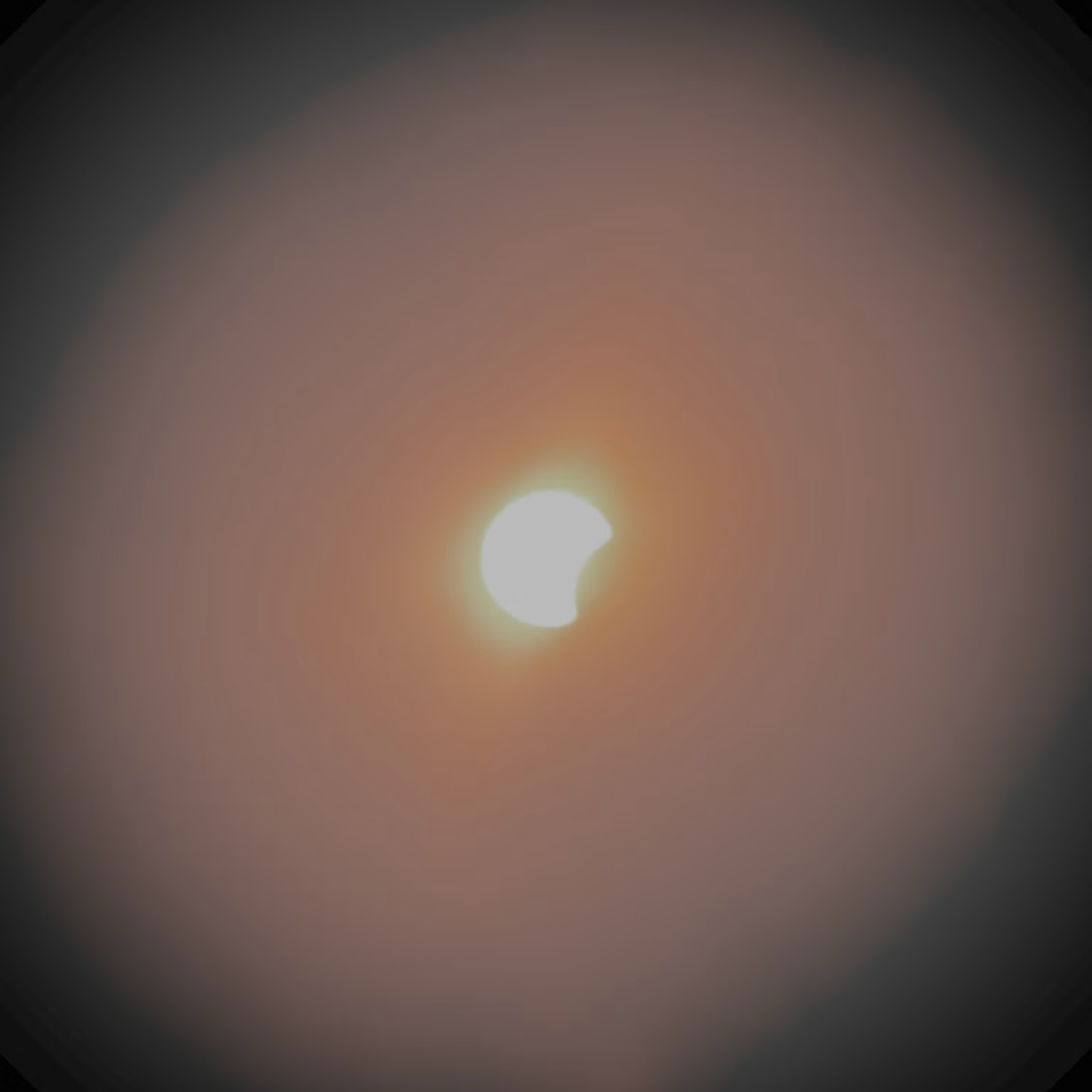
I got decent shots early on. But once the moon covered most of the disk, my phone couldn’t focus through the dark filter over the zoom lens. Even with just a sliver of sun remaining—a thin left-hand crescent—it still looked like a full sun to the naked eye and to the camera sensor. (Not looking directly at it, obviously.)
Then totality hit.
The sun became a ring of light. The world plunged into the darkness you get 30 minutes after sunset. Cheering and clapping and whooping erupted all around me. I caught it on video.
A Spanish woman behind me summed it up perfectly: “¡Qué cosa más preciosa!“
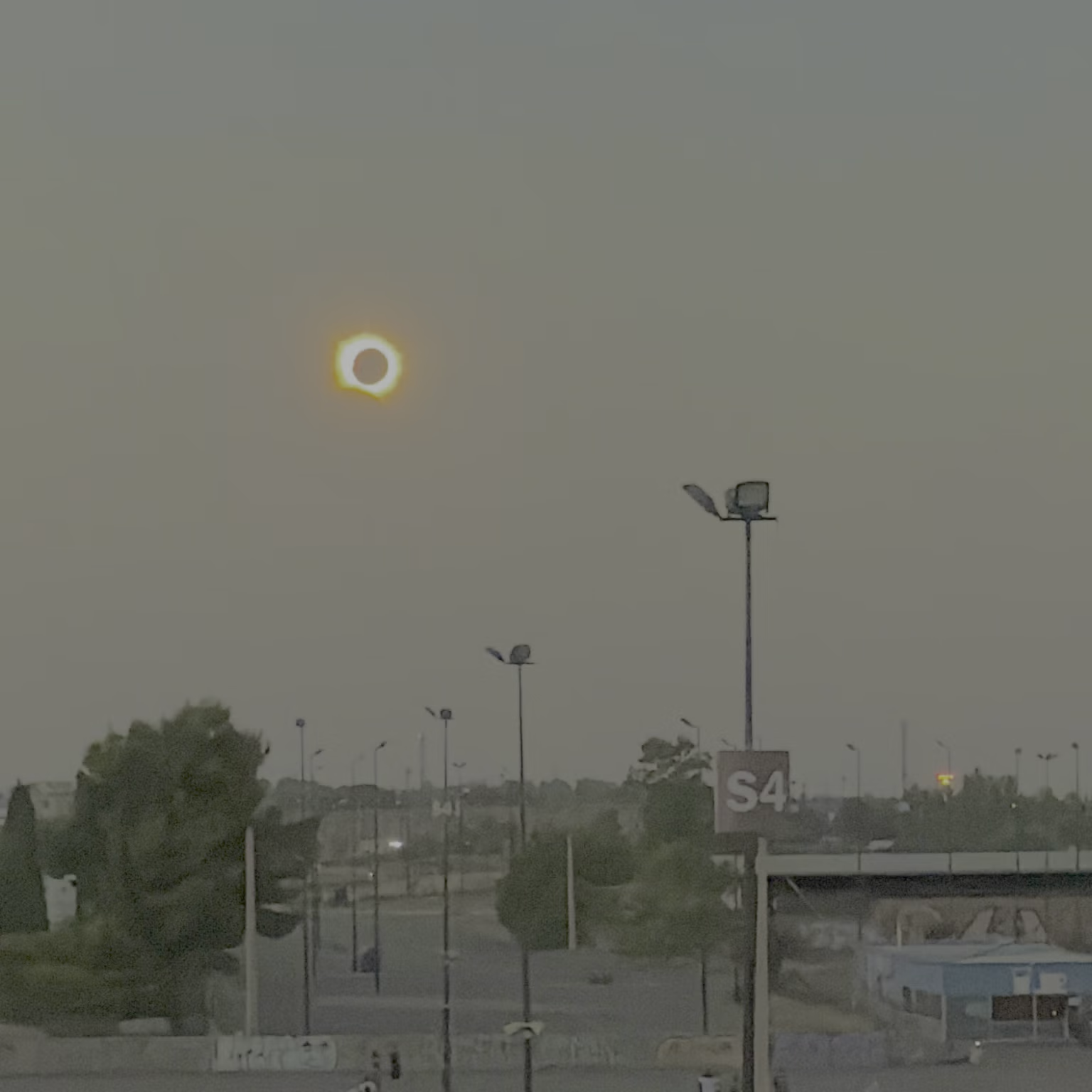
I stood there thinking about how absurdly precise human prediction has become. We can calculate the trajectory, the date, the exact second of totality—down to the fraction—years in advance. We build machines that orbit the sun and tell us when the moon will cross its face. It’s the kind of thing that makes you proud to be a species that does math.
Weather report
Thirty-seven Celsius during the day. Brutal. But the eclipse arrived in the evening, so I spent the afternoon in air-conditioned comfort. Zero clouds. Perfect.
Speaking of the hotel room, before I left the room, I set up my iPad Pro by the window to capture a time-lapse of how dark it would get during the eclipse while I was gone. That video is below.
The heat in the ensuing days made me very glad that I was not staying in a tent.
Aftermath
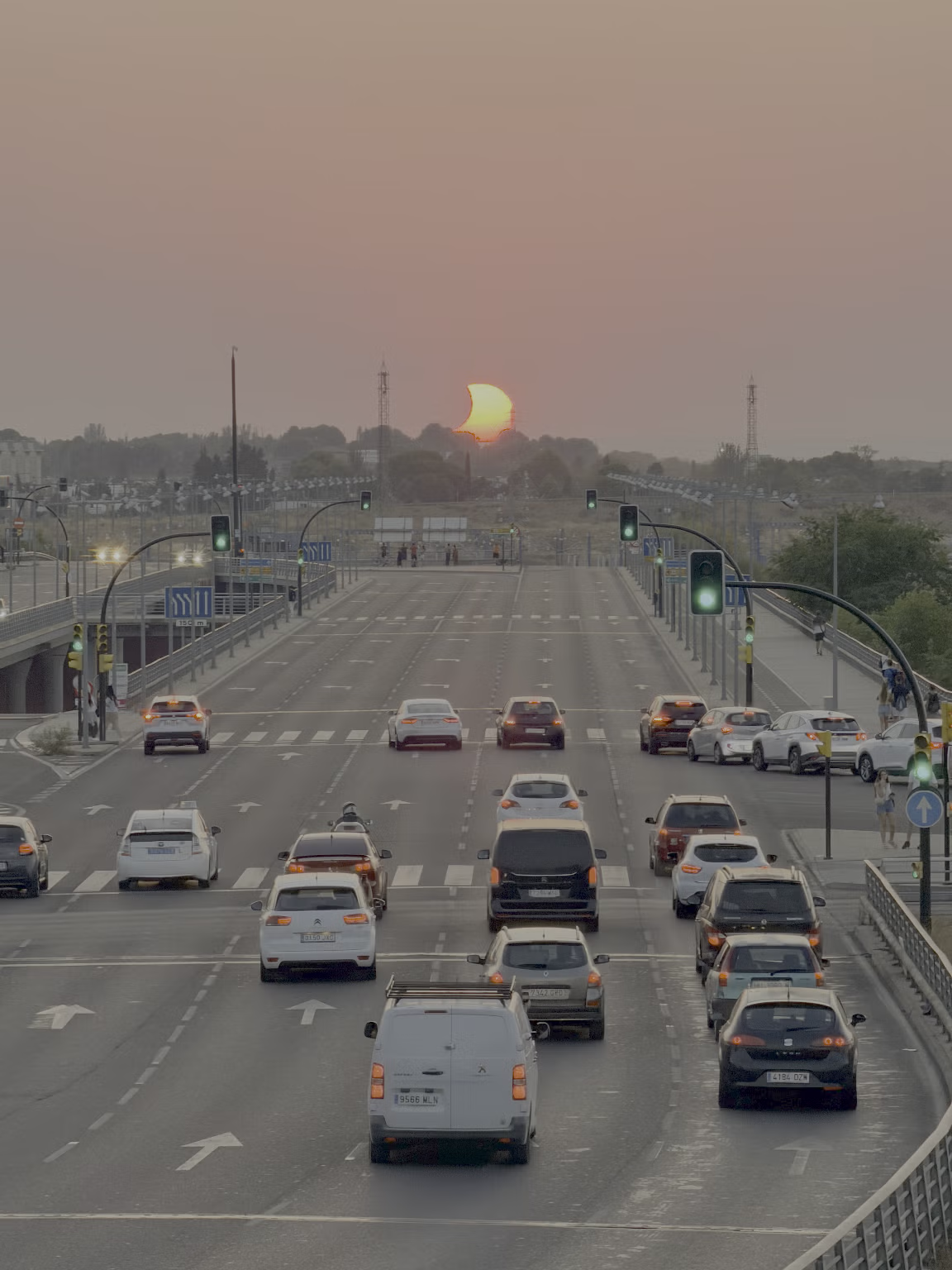
Post-totality, the sky wore a golden afterglow. People lingered in folding chairs. Traffic crossed the Expo 2008 bridge beneath a crescent sun.
The next total eclipse happening in the world is only in another year: August 2027. North Africa. Maybe a trip to Egypt is in order? We’ll see. I’ve already seen (and documented) two in my lifetime; maybe that is enough?