Edora Park 8K: Tights, Carbon Plates, and the Ghost of a 6:30 Pace

It was a relief to stand at the start line at Edora Park this past Sunday, especially considering the atmospheric chaos of the previous week. Much of the country had been paralyzed by a historic Arctic blast dubbed Winter Storm Fern—a “once-in-a-generation” deep freeze that saw temperatures in the Midwest crater to -20°F. But on this Sunday morning, we had dodged a bullet; instead of ice and dangerous wind chills, we were treated to a morning of crystalline Colorado air, temperatures in the mid-30s Fahrenheit, sunny skies and virtually zero wind.
Four days prior in much colder conditions, I had done a 4km DIY time-trial in my neighborhood in unplated Saucony Kinvara 15s, averaging 6:49/mile with a tailwind. Since today’s distance would be double, I was guessing that I would be running just over seven minutes per mile, like 7:03-7:04 pace. Meanwhile, the FCRC’s Tortoise & Hare algorithm—of which I had developed the latest iterations myself—forecasted a more conservative 7:13/mile based on my Spring Canyon 5K run from one year, three months ago—the last time I had run a T&H race. I felt that I had a tad more fitness now than back then, but it remained to be seen which prediction would be more accurate.
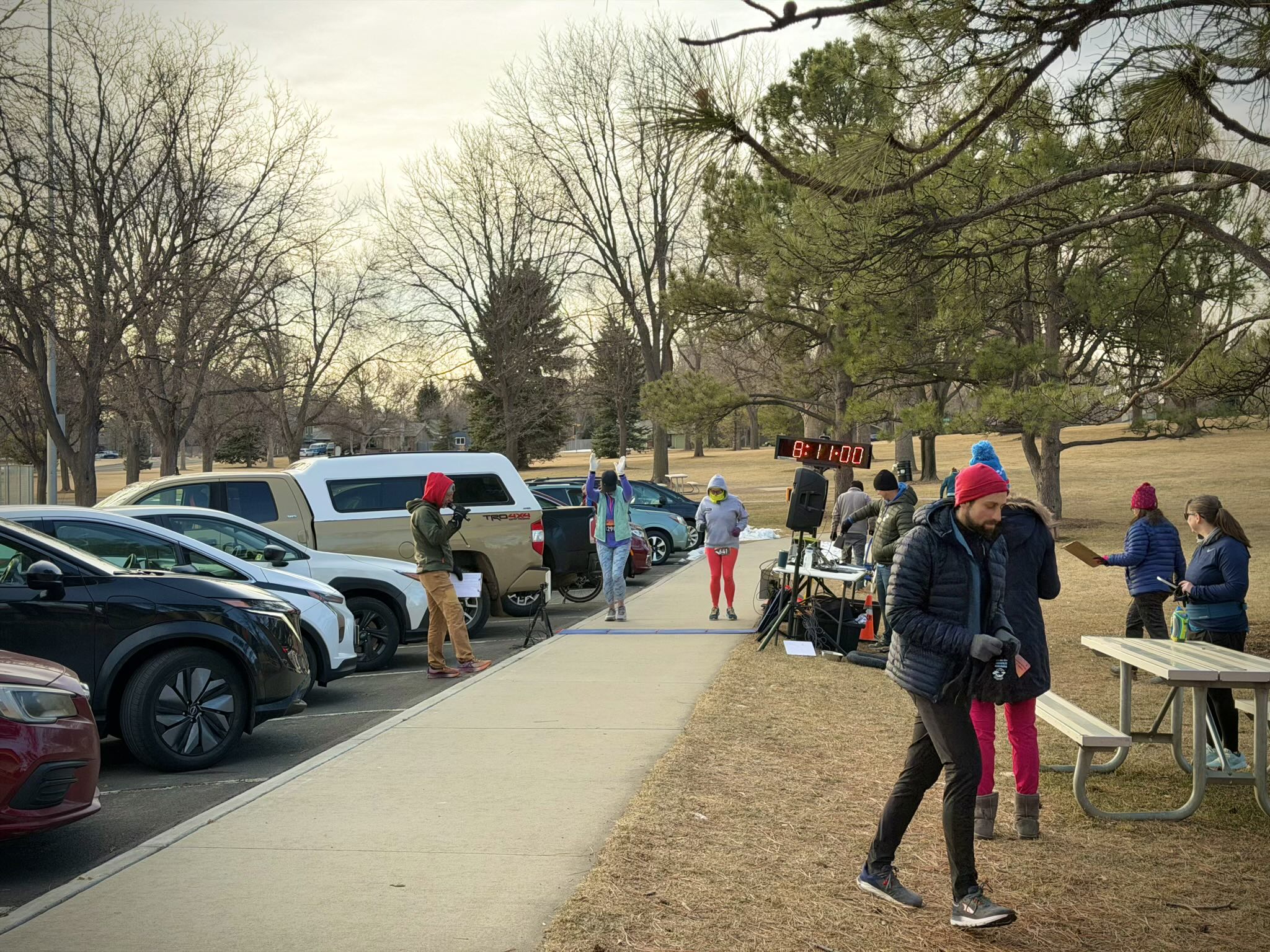
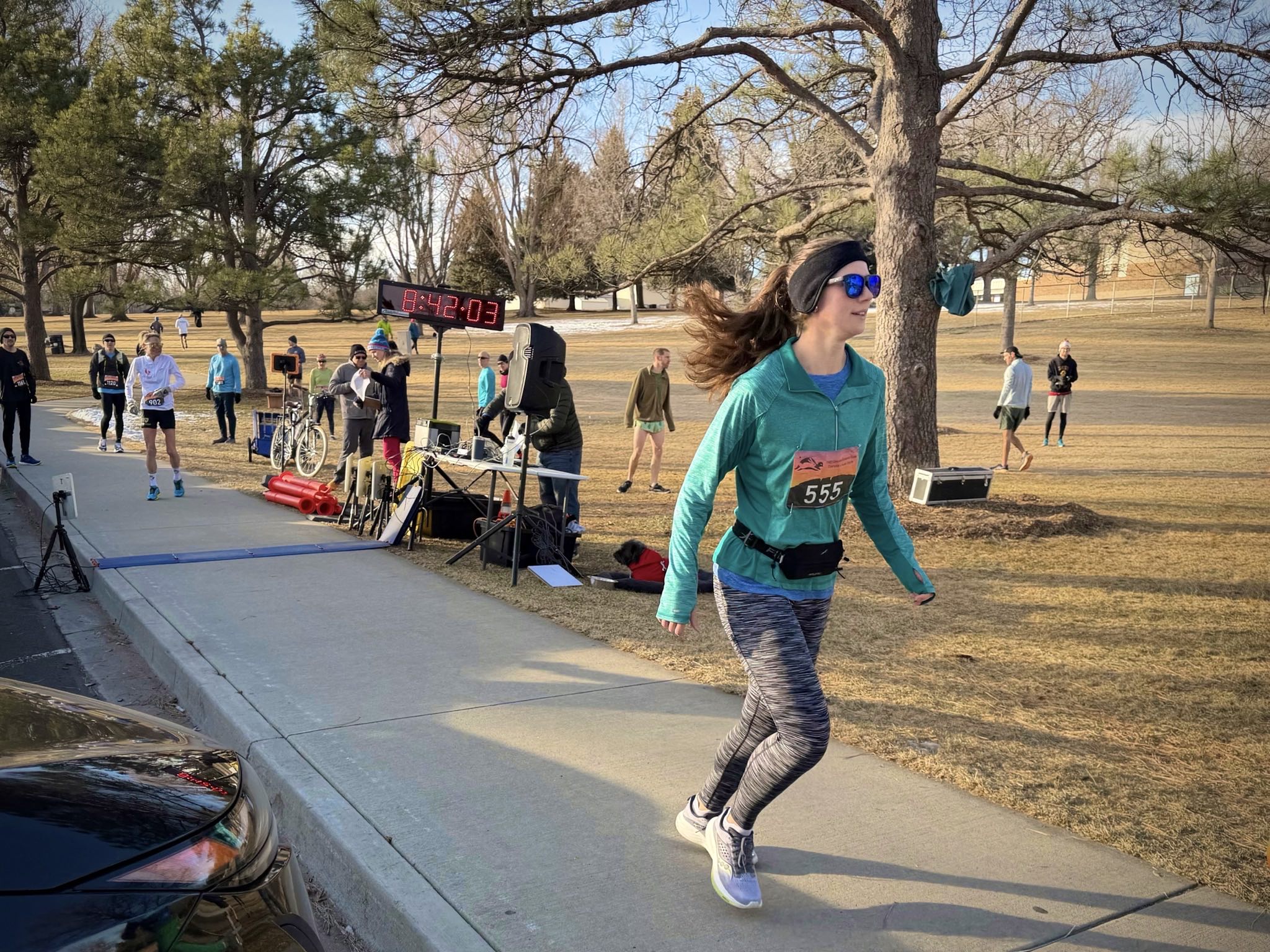
I arrived feeling prepared in my carbon-plated Saucony Endorphin Pro 3s, and arrived to Edora Park early enough to knock out a 1.4-mile warmup with a few strides to prime the engine. This was a “handicapped” race—slower runners start before faster runners—per the FCRC’s Tortoise & Hare rules, and my wave, 43B, was sent off at exactly 8:43:30 AM. There were at least four of us in my group.
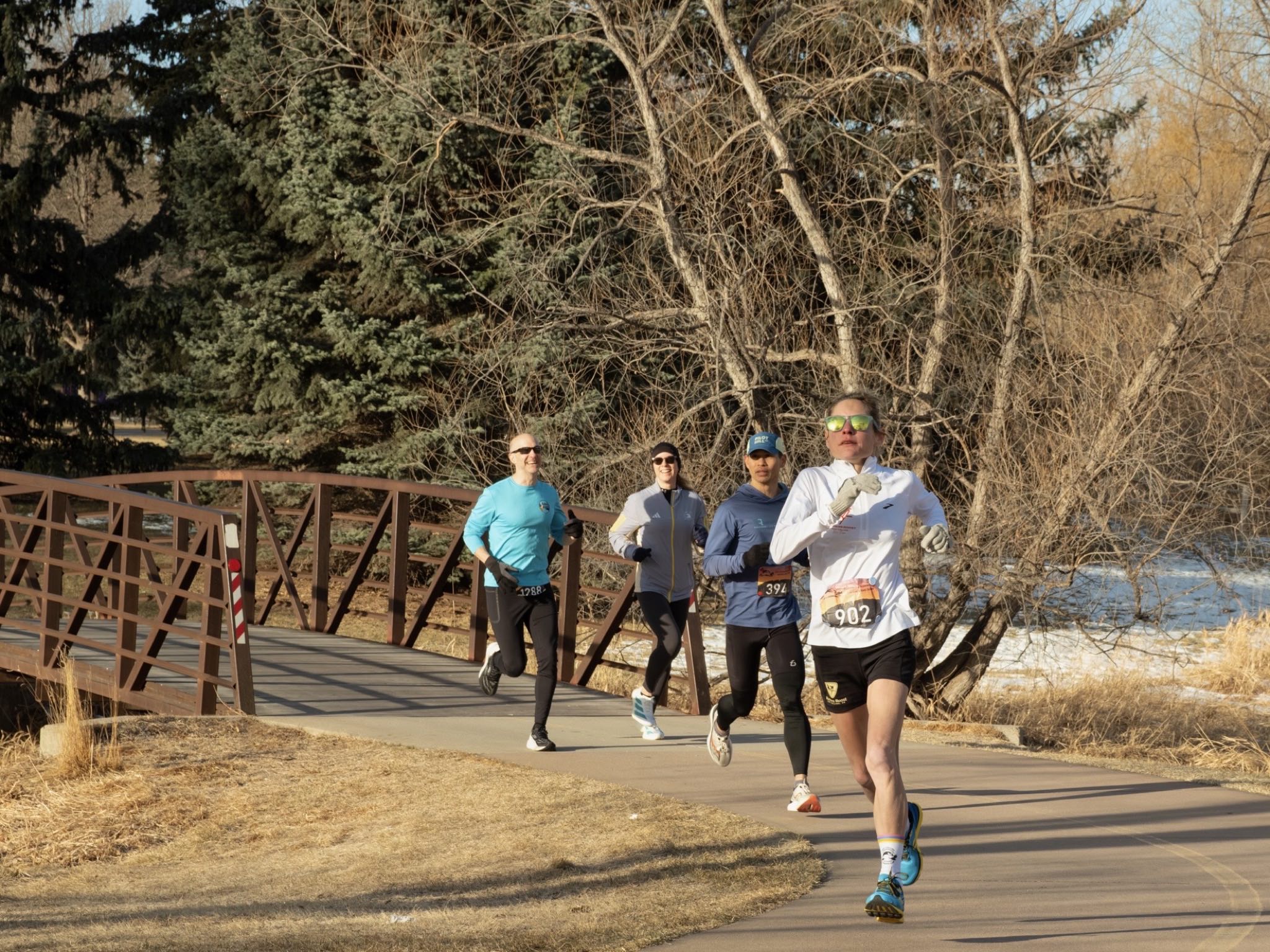
When long-time race director Nick Clark had completed the countdown for us, a woman in a white T-shirt immediately surged ahead like a classic rabbit. I resisted the urge to hammer the start, content on following and focused on staying relaxed and taking the most efficient lines through the turns.
Nevertheless, the first kilometer clicked off at 4:09 (6:47/mile), which I knew was a bit hot for the sustainability I needed. The rest of the kilometers would be significantly less rapid, between 4:20-4:31/km (7:05–7:15/mile).
As we hit the out-and-back stretch, the beauty of the T&H format revealed itself as I began passing the “tortoises” who had started earlier, many of whom were old friends. It’s a unique mental boost to offer a word of encouragement to a peer while simultaneously using them as a physical marker to pull yourself forward.
Looking at the GPS data from the run, the consistency was there, but the “spark” was missing. My heart rate averaged 148 beats per minute, firmly in low Zone 4, but even as White-Shirt Woman began to pull away, I couldn’t quite find that extra gear. My HR only grazed the low 150s toward the end, and since my lactate threshold sits around 156, the data tells a story of a runner who had more in the tank but couldn’t quite access it. I think I was psychologically playing it safe, afraid of blowing up.
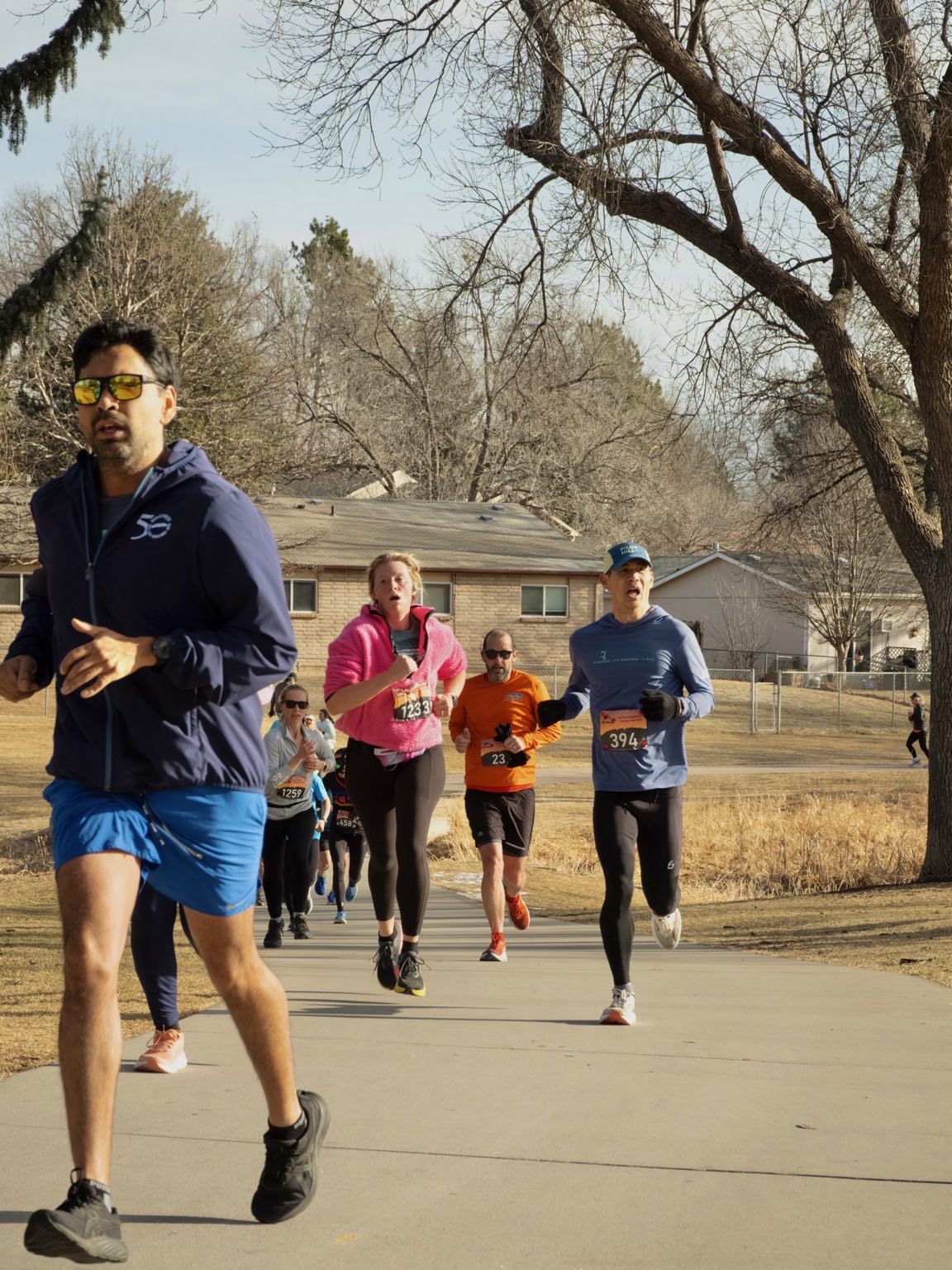
I think I could excuse myself given my recent training. I was coming off a winter block replete with seven weeks of travel and sub-3:30 marathons in Tucson and Gainesville, plus fast training runs over 20 kilometers through London’s Hyde Park. Not to mention, I had done that 4K time trial four days before and a Sprint 8 workout two days before. My legs were understandably “flat.” I also didn’t possess any Tom Brady-like competitive drive today, as this low-key event was nothing like the Super Bowl.
The final kilometer was a bit of a scramble. I did not feel quite maxed out, yet trail congestion made a true, wide-open sprint complicated. I crossed the line with a 7:04/mile pace on my watch and a 7:07/mile official average.
I was content with that—indeed, it was virtually spot on to what I predicted. But it’s humbling to realize this was one of my slowest times in 13 years of running this race. I’m 50 now, and it’s wild to remember I was clocking 6:28–6:45/mile on this same course when I was 15–20 years younger. Still, being just 19–36 seconds/mile off that more youthful self isn’t that bad of a place to be.
After the race, it was a joy to see and catch up with my friends Alex, Christina, Leslie, Ron, Jen, JZ, Leslie, Mel, Nick, Olivia, Pilar, Ron, and Tom, and to meet Dimitri for the first time. This was my last “hard” effort before a planned recovery week and my first shingles shot, which I was correctly warned by friends would wipe me out for a whole day of chills, muscle aches, fatigue, and wooziness.
The next FCRC Tortoise & Hare race will be the Lee Martinez 10K the first Sunday of March. If I’m still in Fort Collins then, I may be toeing the start line to see if I can’t nudge that heart rate just a little bit higher.
Race Data
Final time: 35:22 (7:07/mile or 4:25/km)
Official results