Nashville, Tennessee: More Than the Sum of Its Honky-Tonks

The last time I was in Nashville was 1998—twenty-eight years ago, and a different era in every practical sense. No iPhone, no GPS, not even Google Maps. Back then, you either used a road atlas or printed out directions from a newfangled website called MapQuest.
Despite having those said directions, shortly after landing at the airport and picking up my rental car, I got comprehensively lost. I pulled into a mom-and-pop gas station to ask for directions, and the employee behind the counter didn’t just point me down the road. She took me around back to introduce me to her grandfather, who was chopping firewood. He spent a good ten minutes walking me through exactly how to get where I was going, with enough hand gestures to cover any gaps my out-of-state ears might leave in his Southern accent. He got me there. I was struck by how much time he gave a stranger who had no particular claim on it,
That was my first impression of Tennessee. It was a good one, and it lasted.
Nashville in 2026 has a way of sneaking up on you for different reasons. I arrived expecting honky-tonks, hot chicken, and a city that smelled faintly of bachelorette parties—and I got all of that. But I also got a city that is clean, walkable (in the right neighborhoods), architecturally varied, alive with pedestrian energy, and stuffed with more live music per square foot than anywhere I have ever been. The weeknight partying is real, but they are merely the foam on top of something much more substantial.
12 South
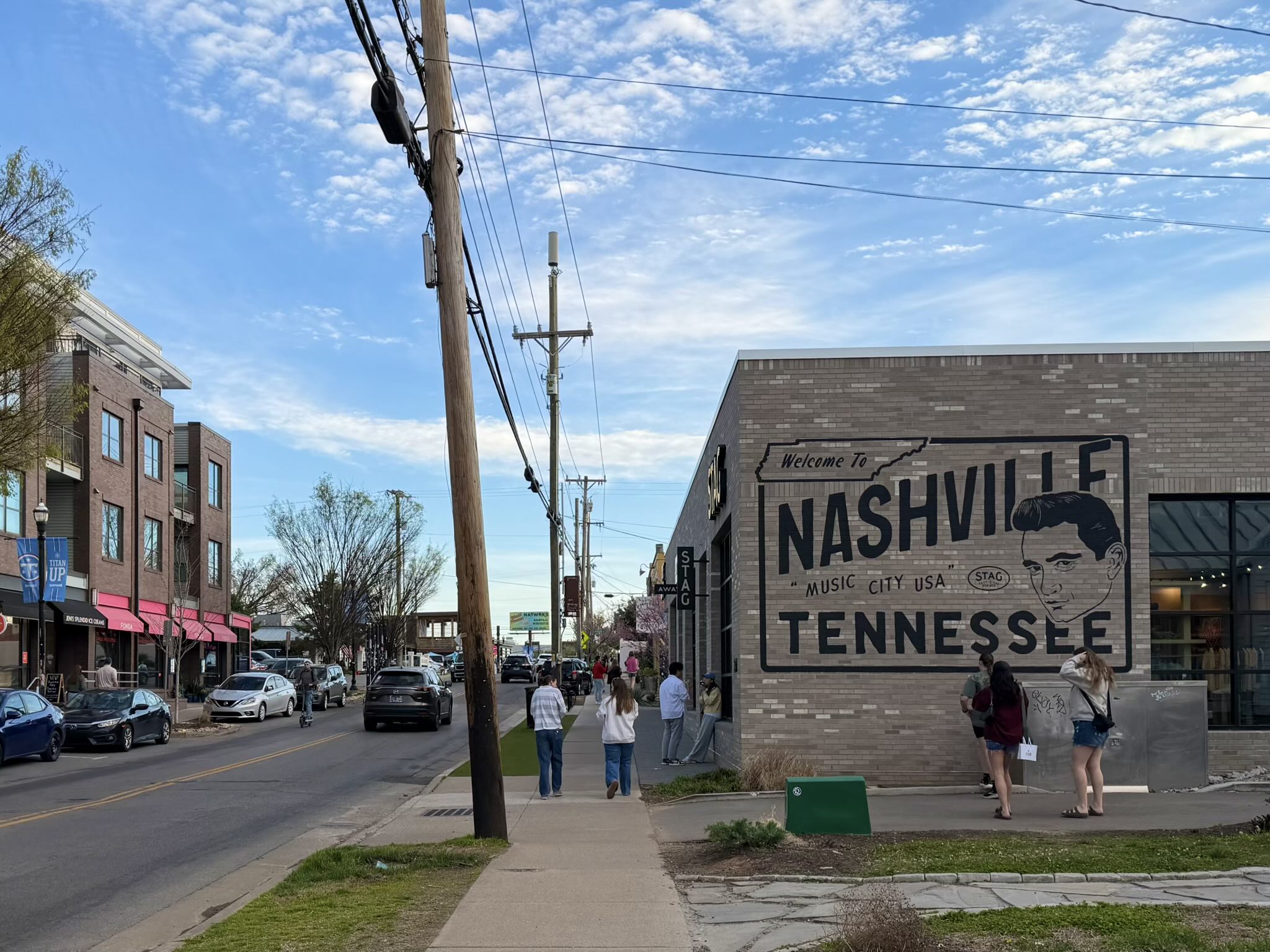
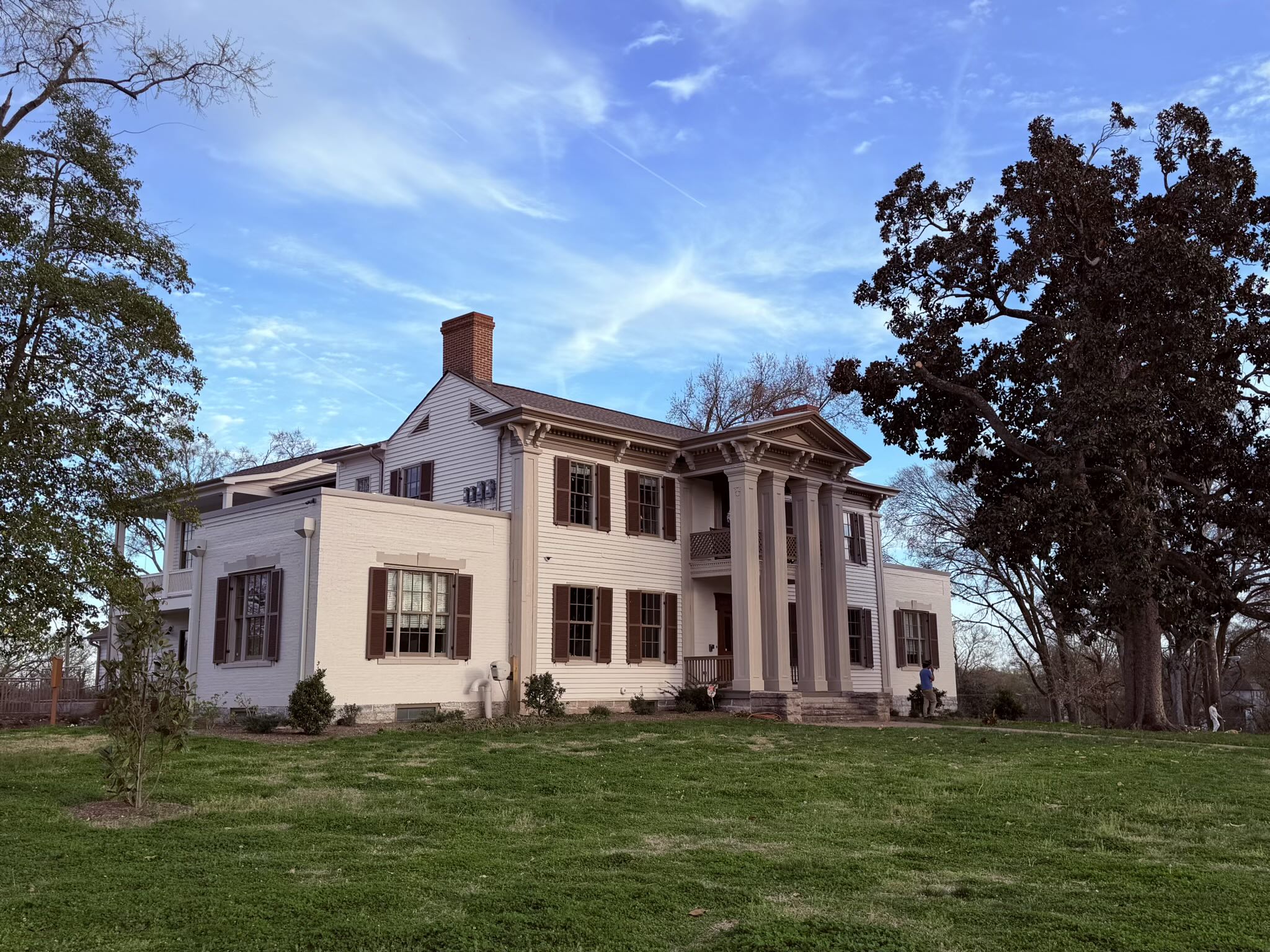
My first stop after checking into the Club Hotel Inn & Suites Nashville was Sevier Park, where an antebellum house sits in quiet contrast to the neighborhood surrounding it. From there I walked into 12 South, and it became immediately clear that this was the kind of neighborhood where people actually go outside. Not just to get from point A to point B, but to exist outdoors—walking dogs, jogging, catching up with friends on the sidewalk, idling on front porches.
The homes here are all different from one another, which is the thing I love most about Southern residential architecture: no two houses look like they came off the same assembly line (aside from the newer tract home developments). Victorian cottages next to craftsman bungalows next to something that looks like it belongs on a plantation. The eclectic streetscape makes every block worth actually looking at.
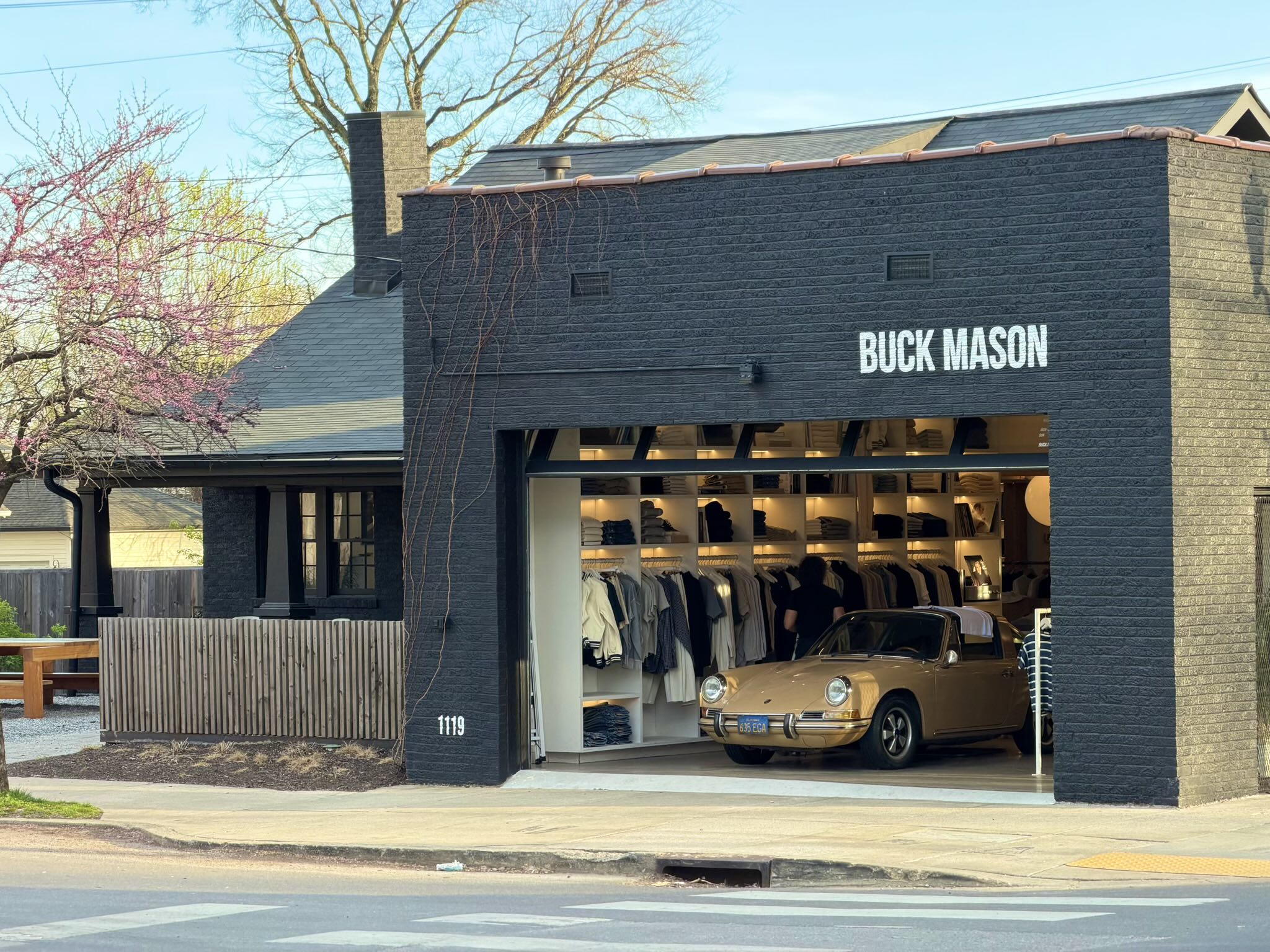
The commercial strip along 12th Avenue South has the same energy. Inside the Buck Mason clothing store, the proprietor had parked his vintage Porsche 912 Targa on the showroom floor, which tells you more about the neighborhood’s character than any real estate listing could.
The Parthenon
A short drive from 12 South sits what is arguably Nashville’s most unexpected attraction: a full-scale replica of the Parthenon, the centerpiece of the Acropolis in Athens. Not a scaled-down model, not a decorative reference—a complete, dimensionally accurate reproduction, built in 1897 for Tennessee’s Centennial Exposition and made permanent in 1931.
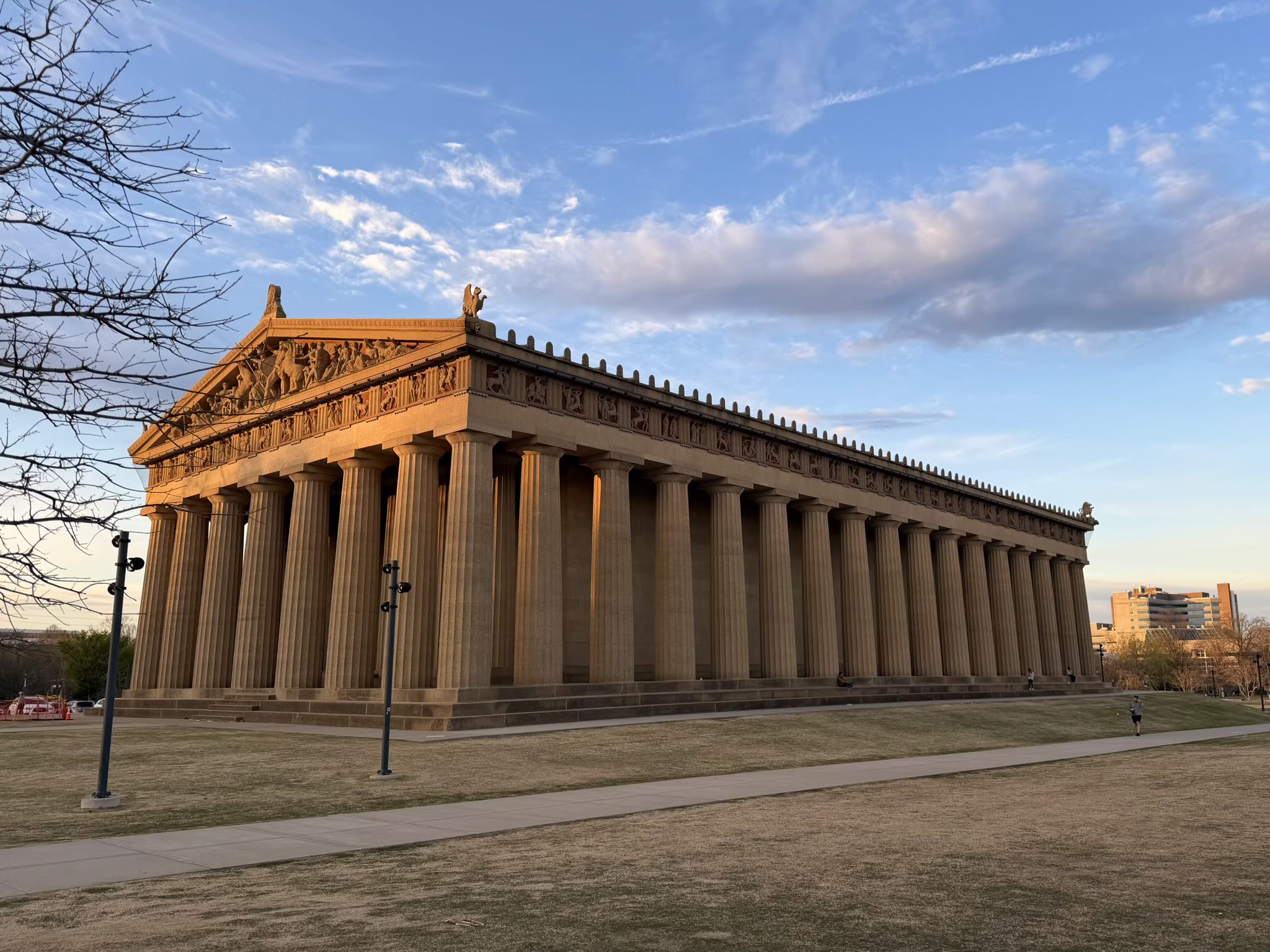
It was closed for renovations for the next couple of months, so I circled the exterior, which was surreal enough on its own. Standing in Centennial Park looking up at fluted Doric columns that belong by all logic on a Greek hilltop, it felt less like a tourist attraction and more like an elaborate collective hallucination the city had quietly agreed to maintain.
Running the Stone River Trail
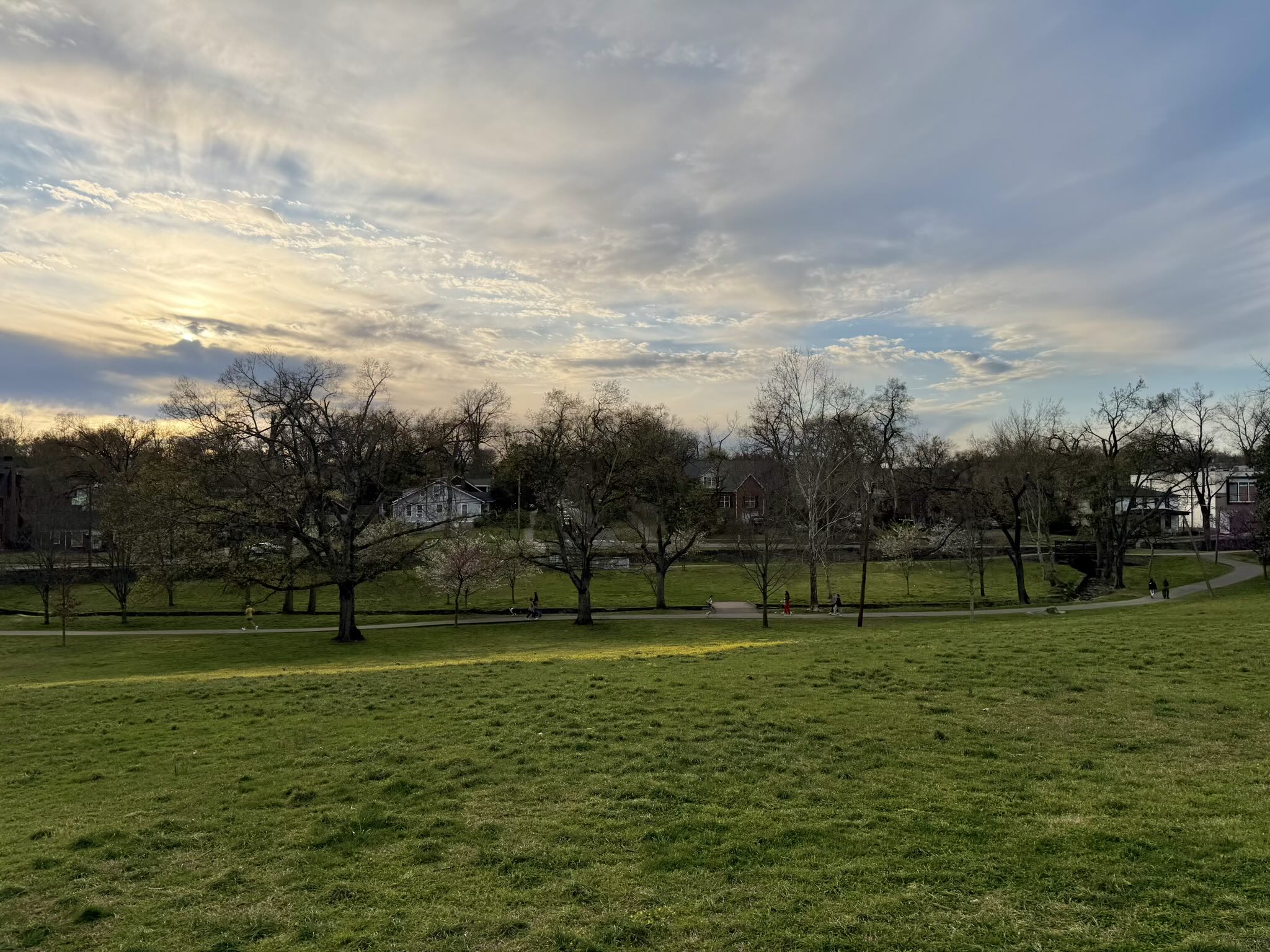
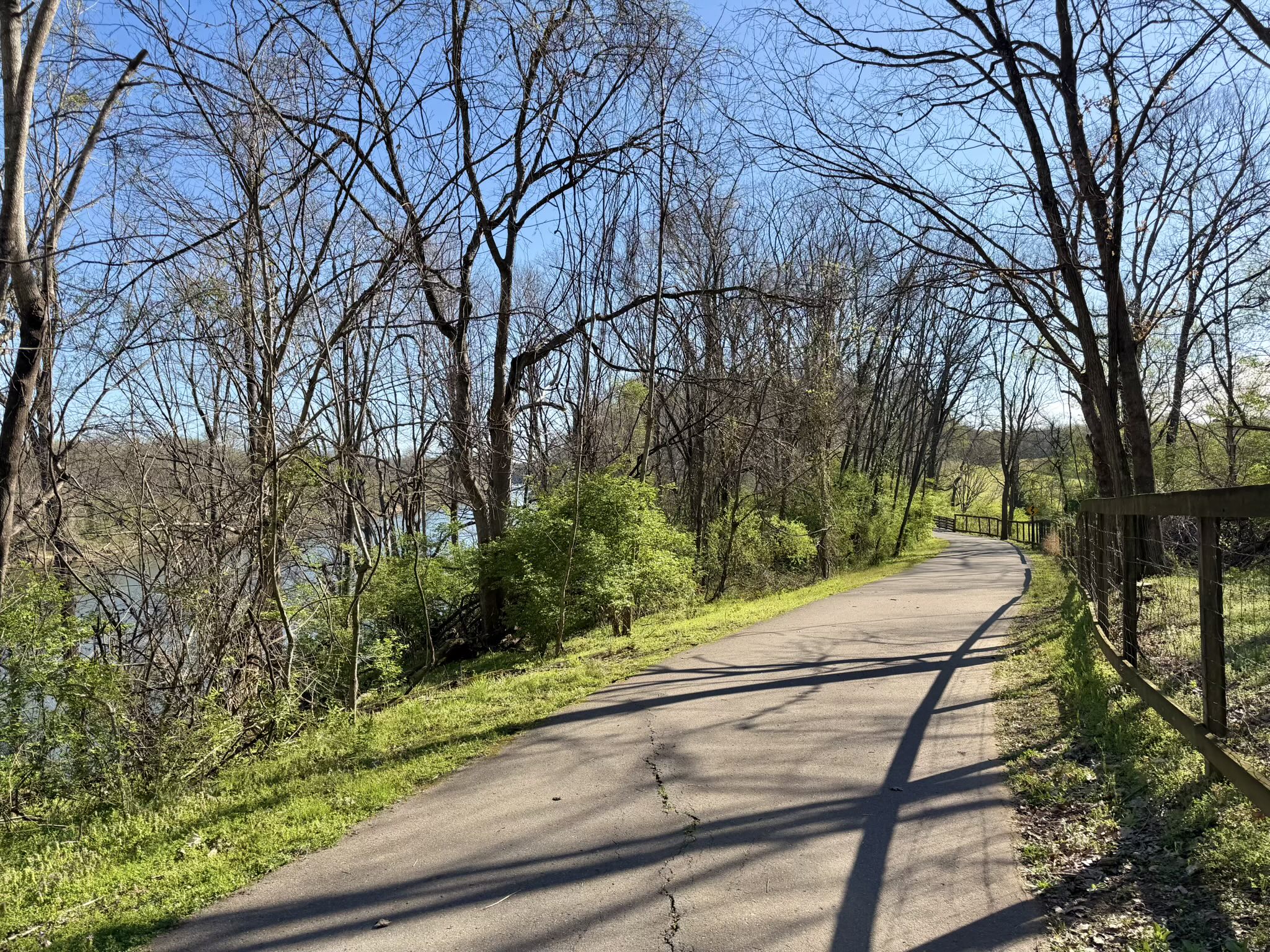
I am always on the lookout for a good running route in a new city, and the Stone River Trail along the Cumberland River delivered. I ran at an easy pace—over ten minutes per mile—as I was still recovering from the Race to Space Marathon from a couple of days before. The trail winds through a corridor of trees alongside the river, away from traffic, and the kind of run where you end up going further than you planned because it keeps offering one more bend worth taking.
Tennessee State Museum
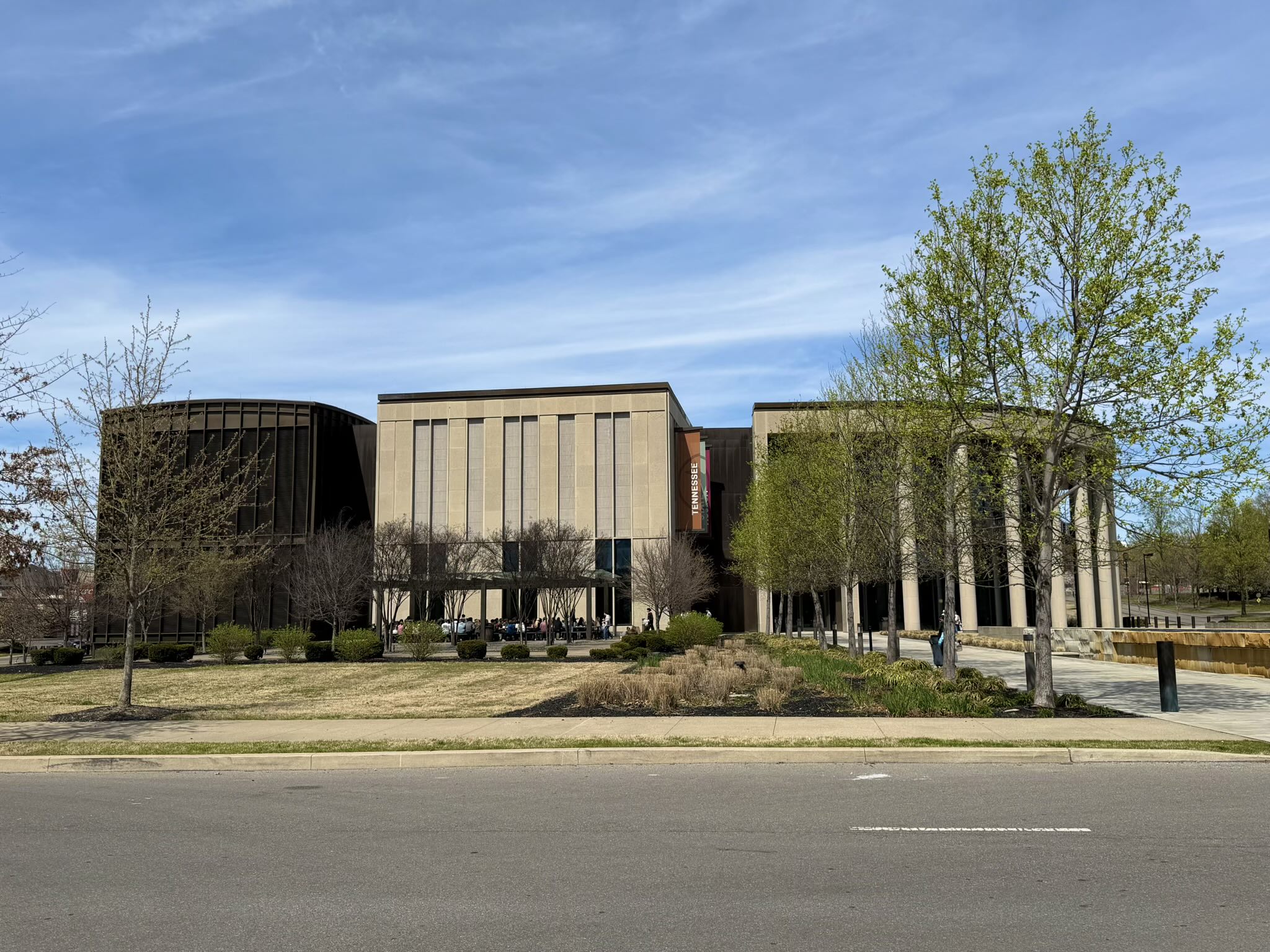
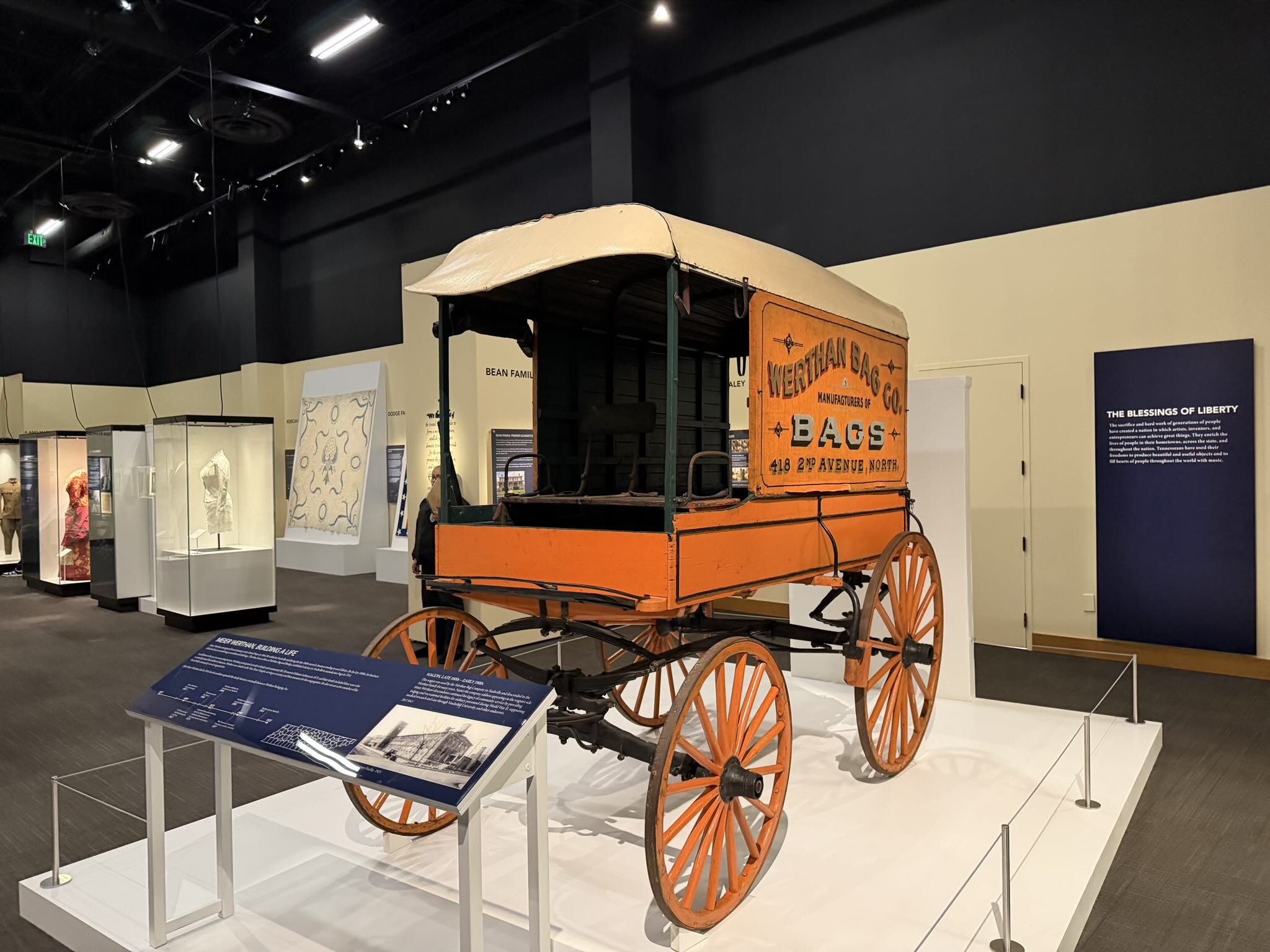
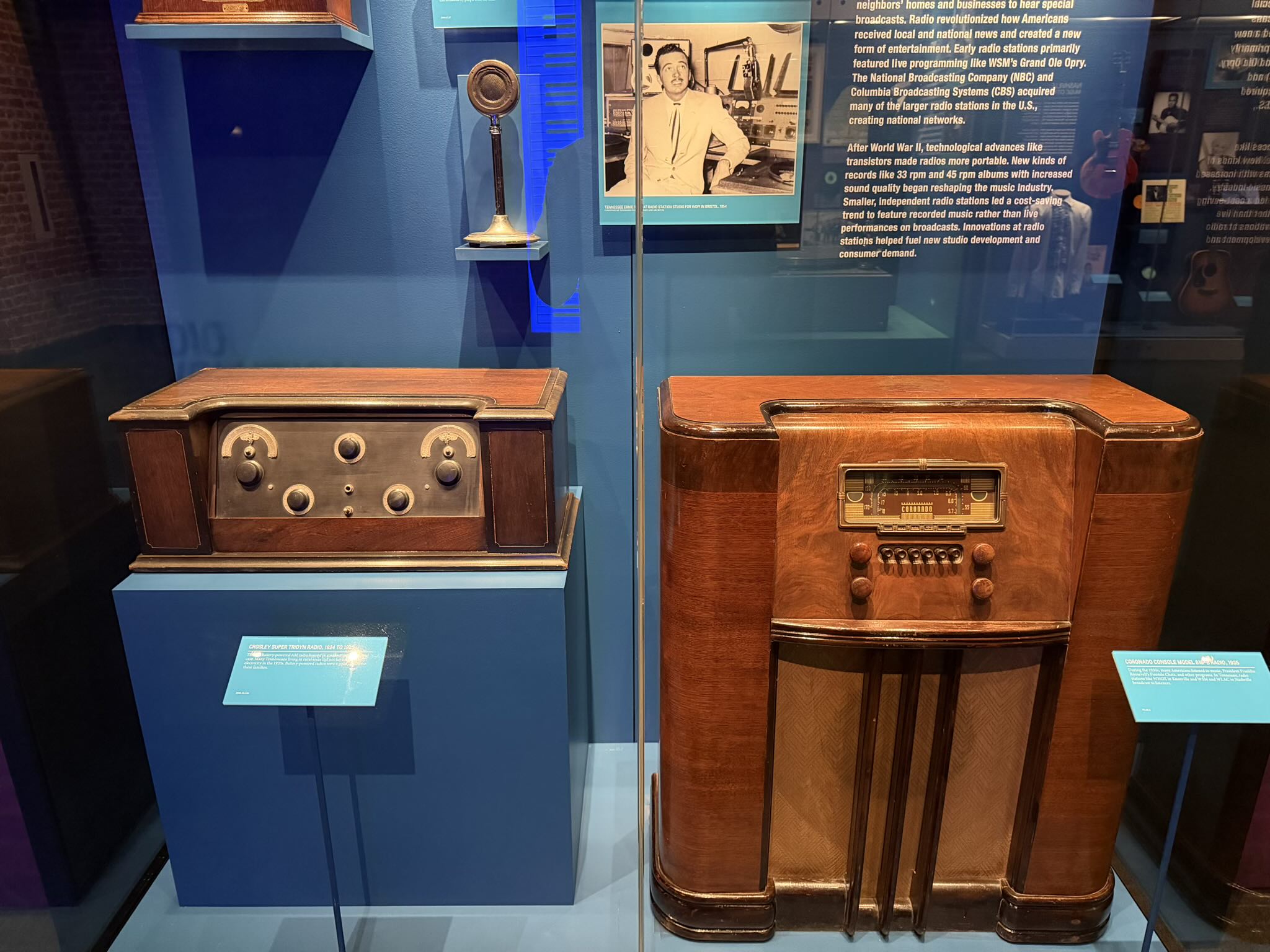
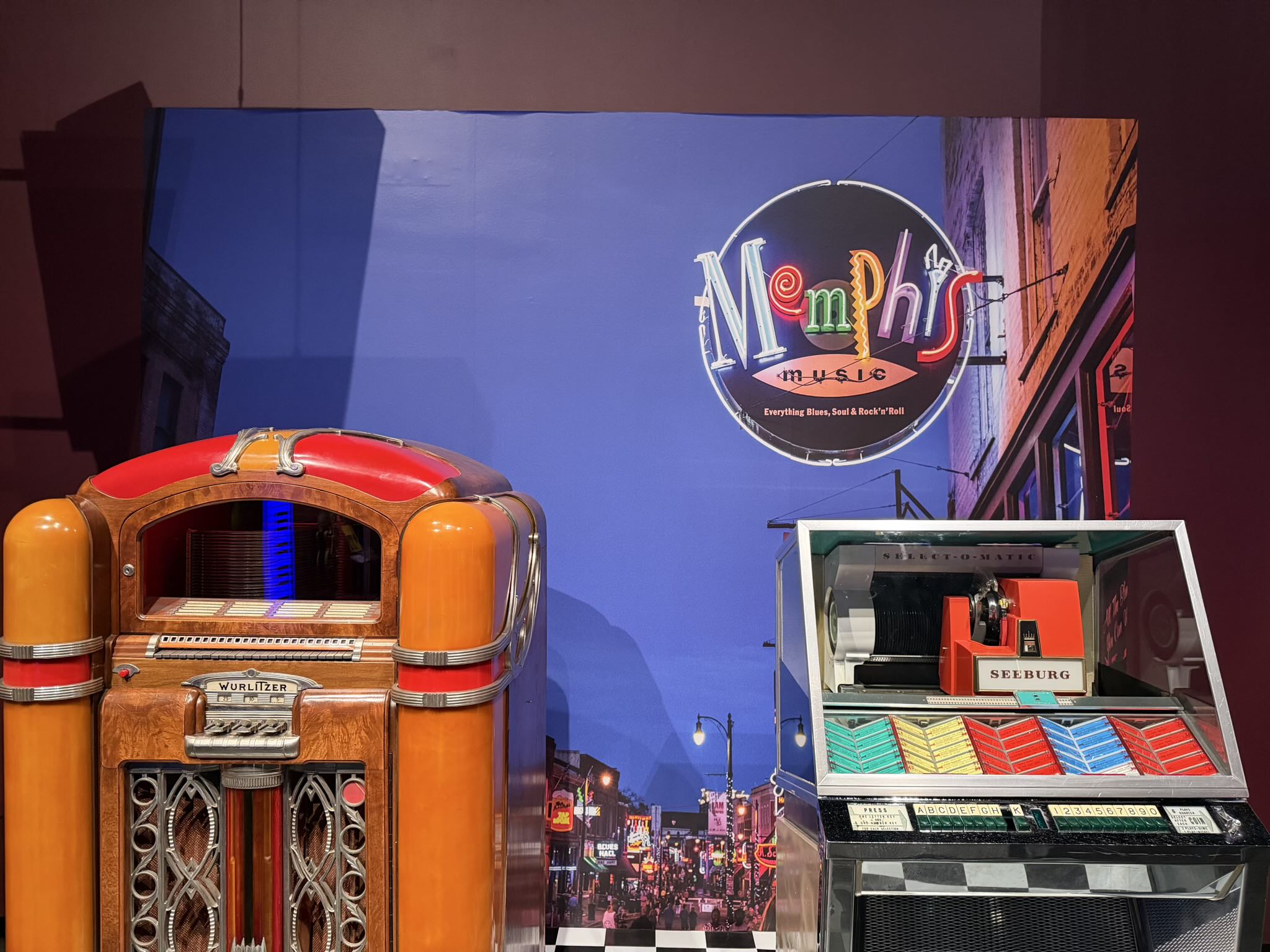
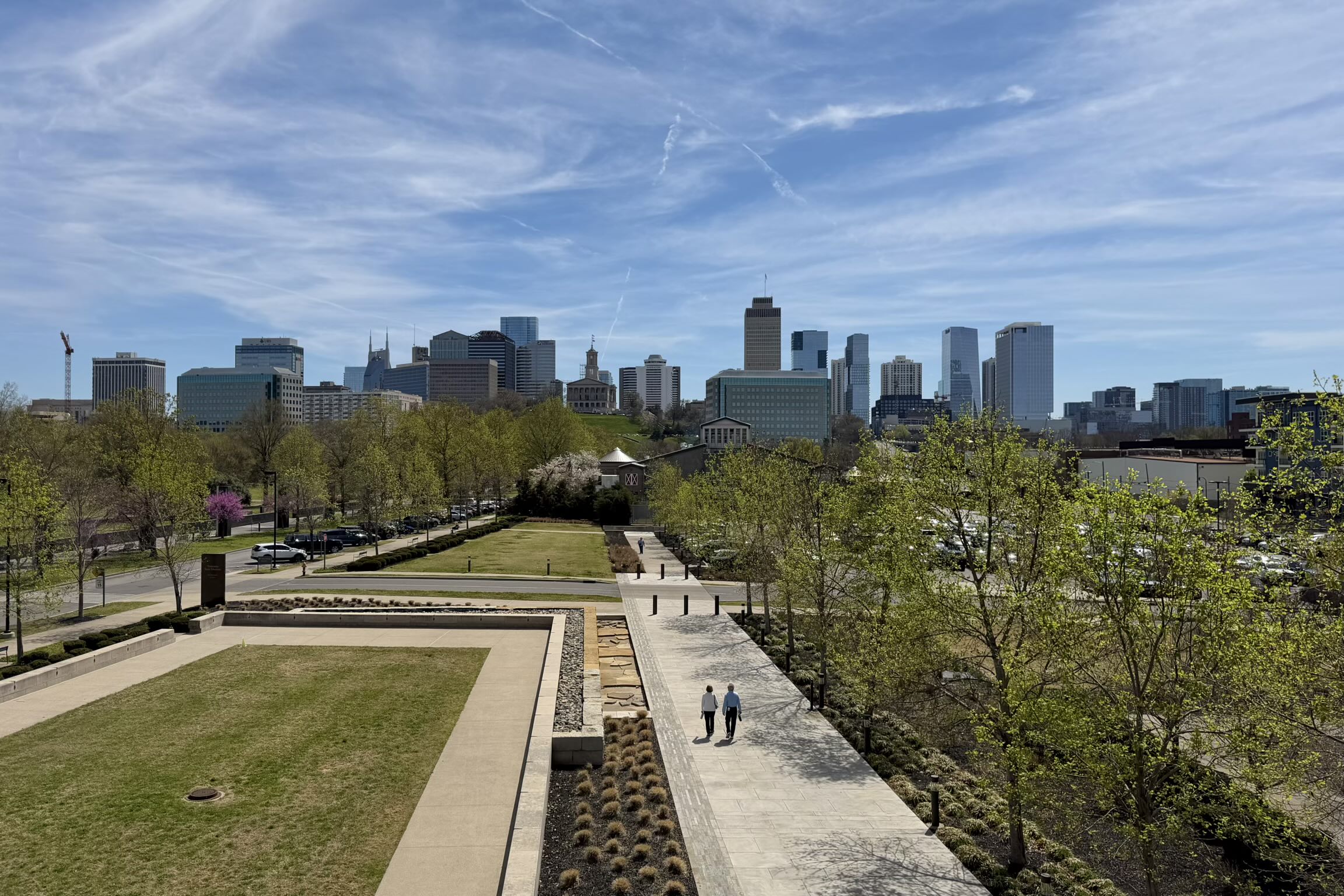
If you only have time for one indoor stop in Nashville and music is not your primary interest, the Tennessee State Museum is the right call. Entrance is free, parking is free, and it covers 250 years of state history with enough range that even a passing interest in any of it—Native American history, the Civil War, the vast numbers of military volunteers, the roots of American music—will keep you engaged for a couple of hours. The museum also has floor-to-ceiling windows that frame a clean view of the Nashville skyline, which doubles as a reminder of how much the city has grown.
I bring up the free admission because the alternative music museums downtown—the Country Music Hall of Fame and the Musicians Hall of Fame—both charge $32 for entry, with parking reportedly running $16 per hour nearby. The Tennessee State Museum covers many of the same musicians, celebrities, and cultural figures while asking nothing but your time.
Hattie B’s Hot Chicken
Nashville hot chicken is not a dish I could have understood without eating it in the city where it was invented. Back home in Fort Collins, I’ve eaten at a restaurant called Music City Hot Chicken whose owner fell in love with the dish on trips to Nashville and decided to bring it north—a story not unlike how New Belgium Brewing was started by a Fort Collinser who loved Belgian beer, or how Chipotle was founded by people who were not Mexican but loved the food. Fan-driven ventures.
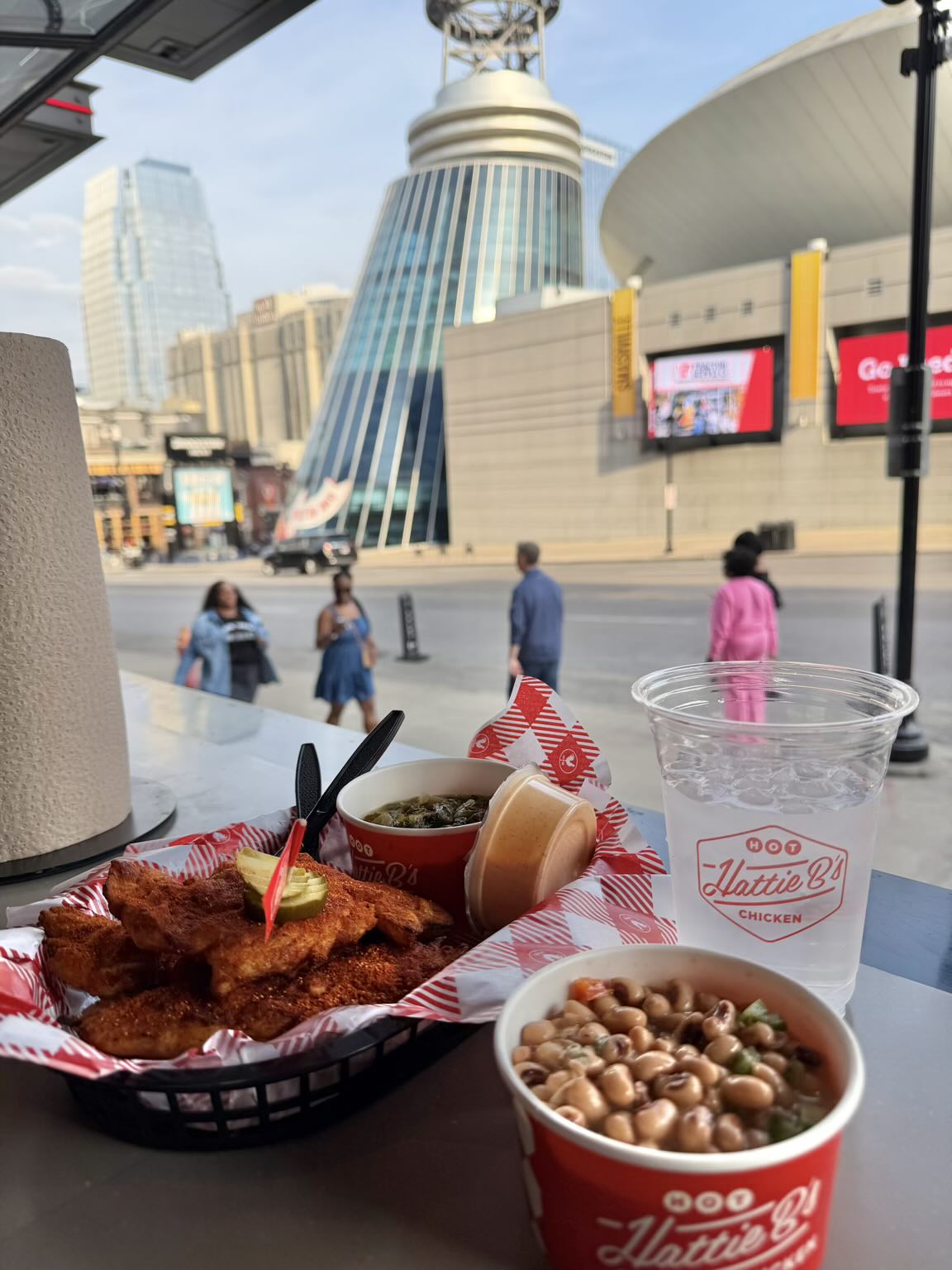
The Hattie B’s version is the real thing. My order of grilled tenders with black eyed peas salad, southern collard greens, and Nashville Comeback Sauce was one of those meals that earns the reputation it preceded.
Downtown and Broadway
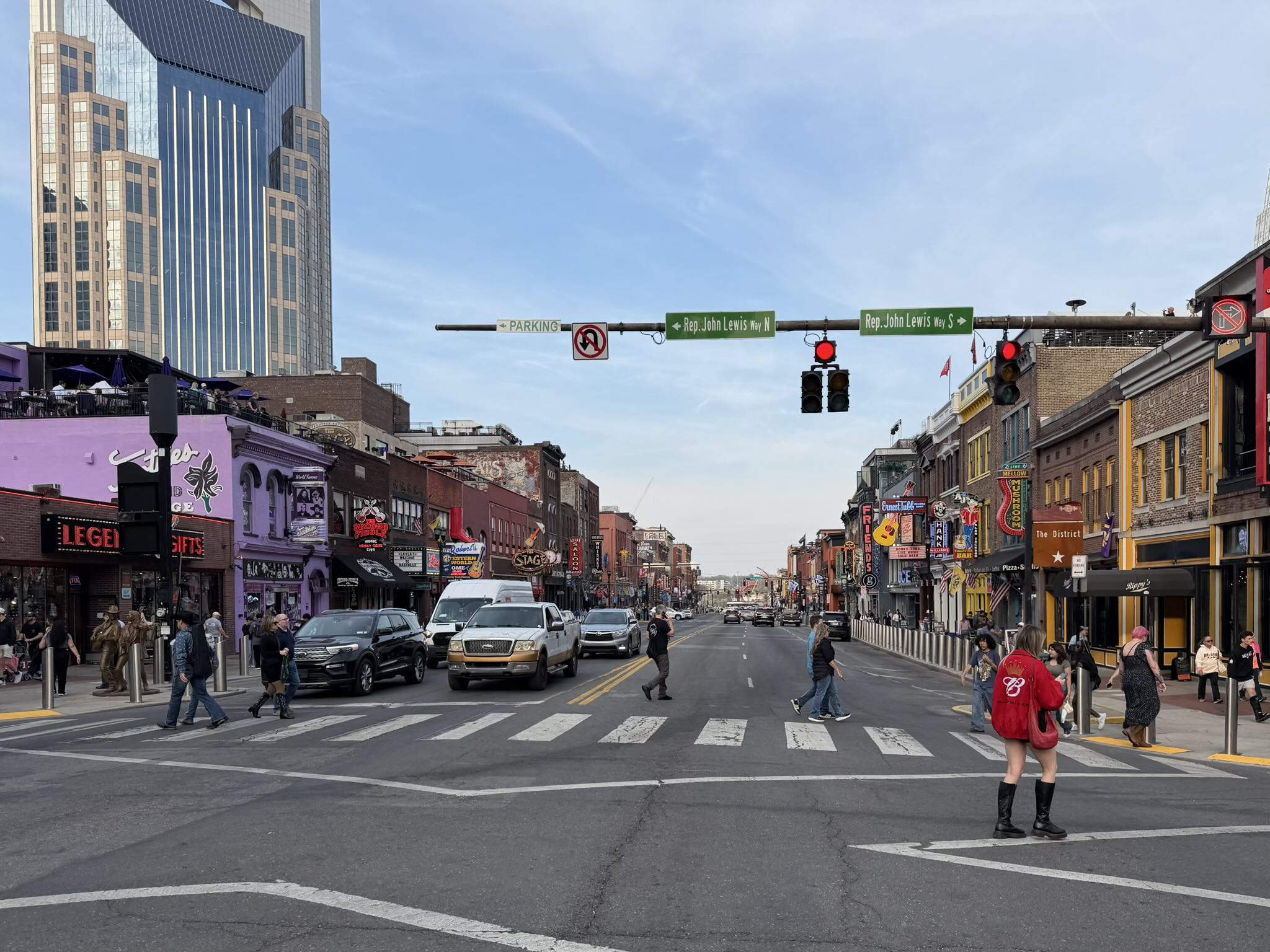
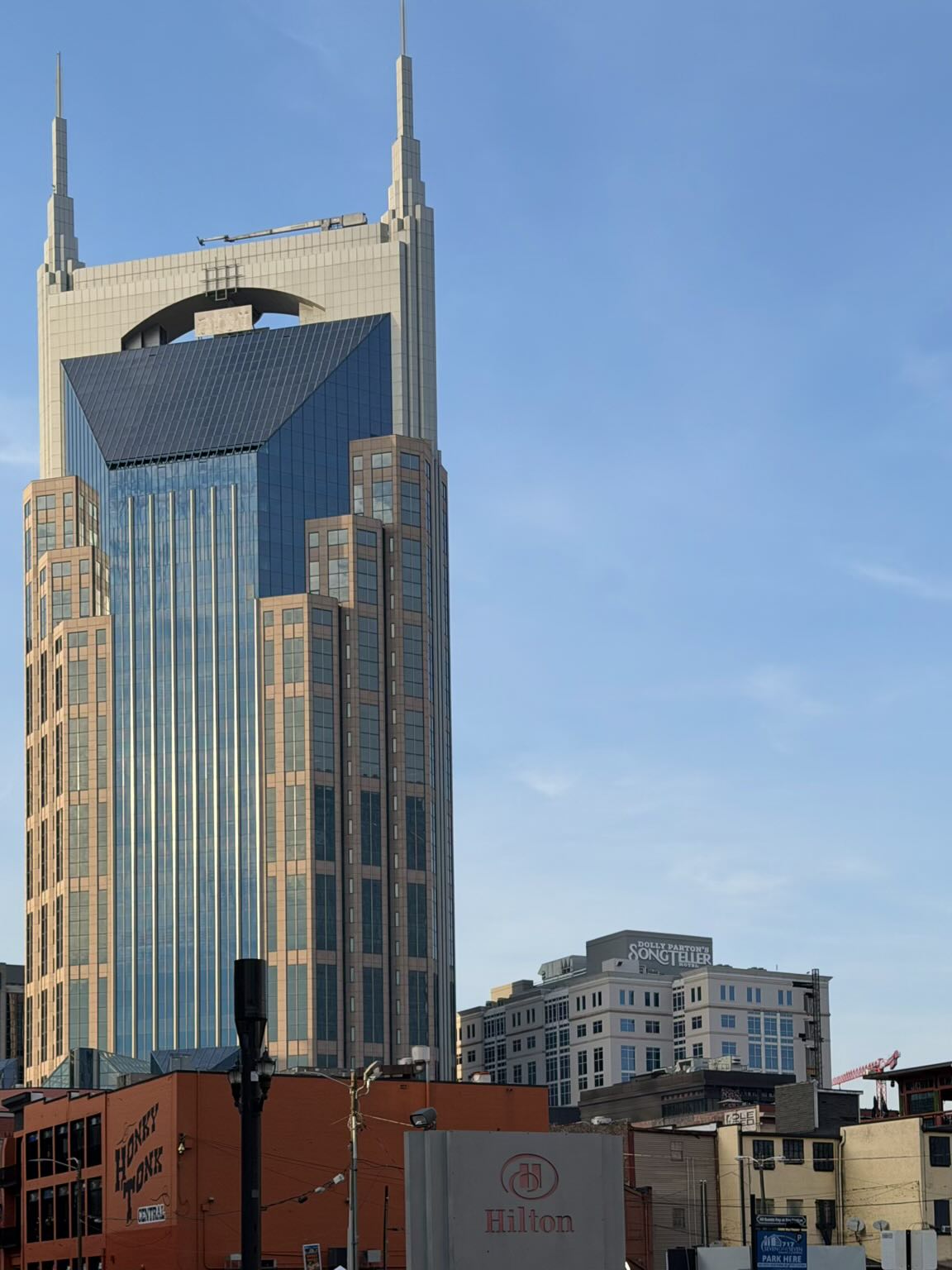
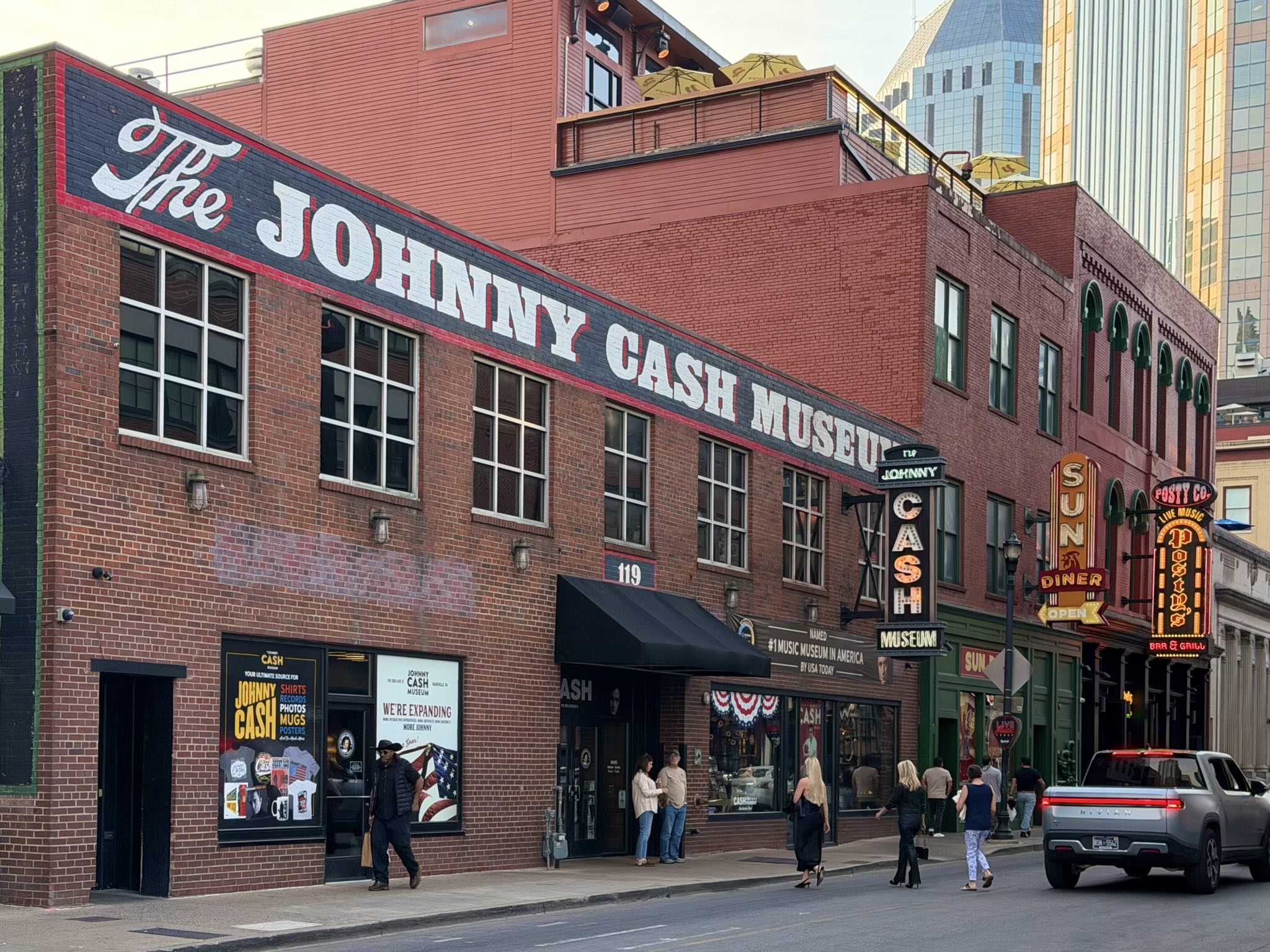
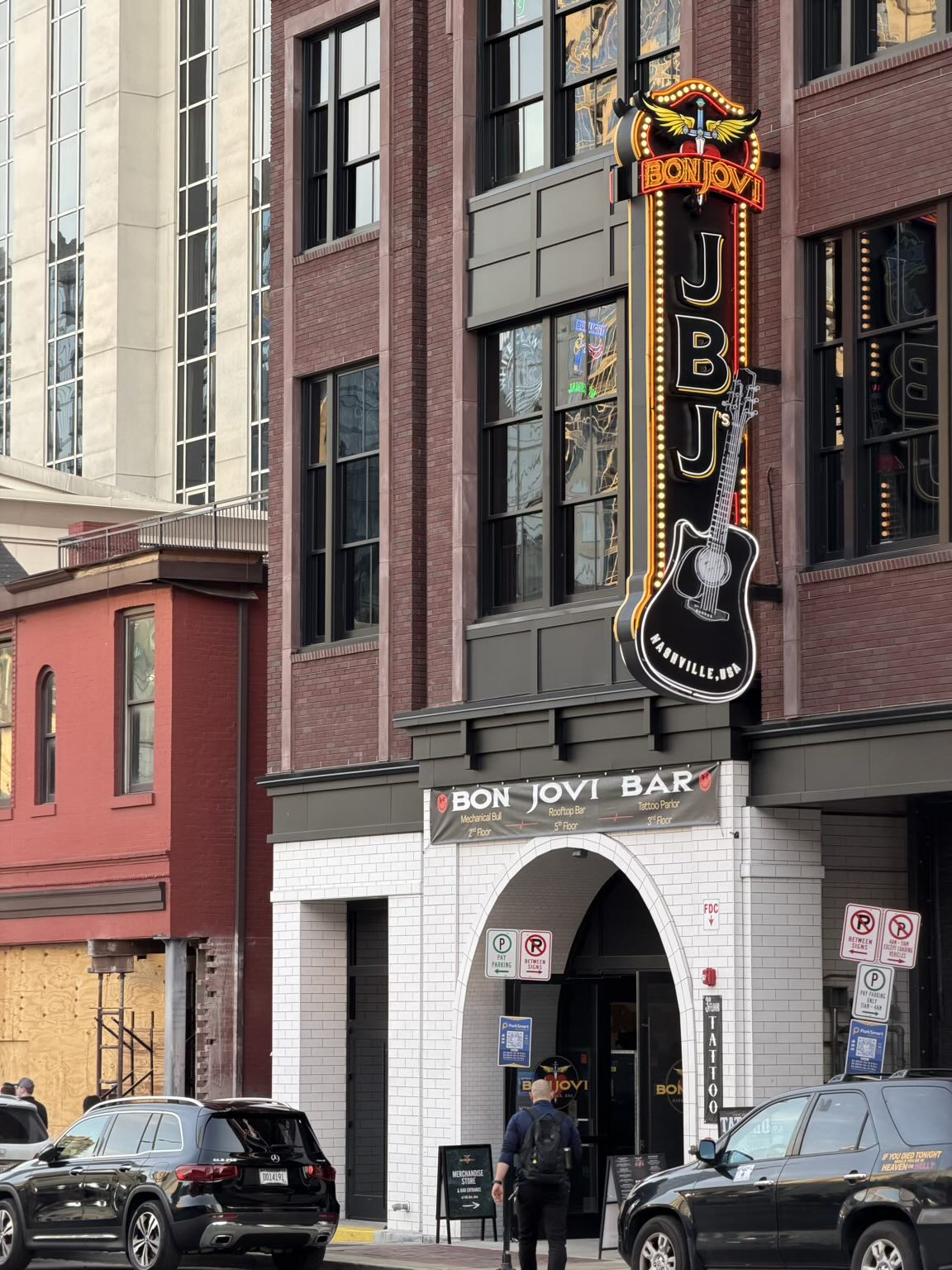
Downtown Nashville exists on a frequency of its own. Along Broadway, live bands play in venues so close together that the music from one bleeds into the next, creating an unintentional but surprisingly listenable ambient soundtrack for the street itself. I was not looking for a place with live music—that would be like walking into the ocean looking for somewhere wet. I was choosing which one.
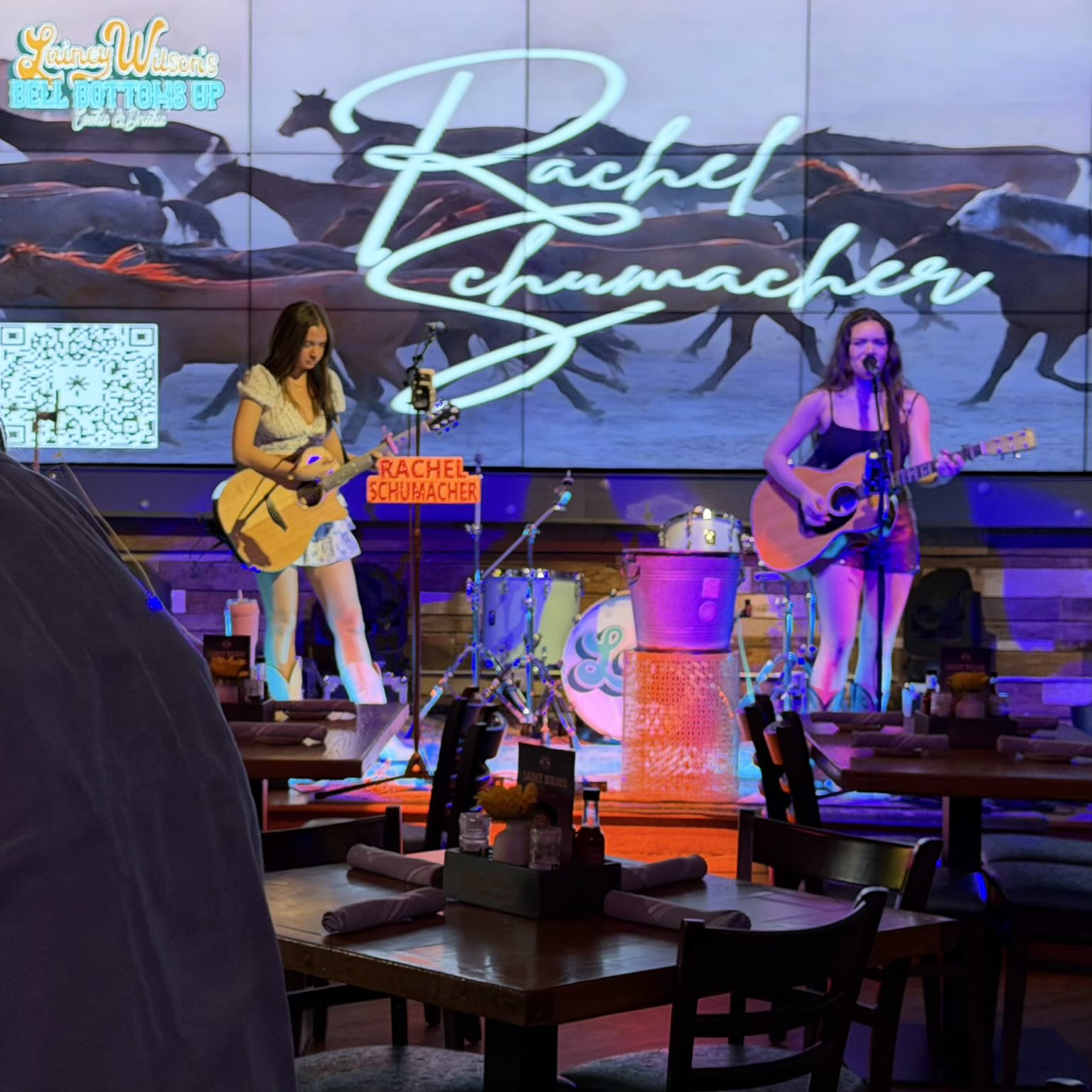
Wishing for a place that was not too loud or crazy, I settled on Lainey Wilson’s Bell Bottoms Up bar, where Rachel Schumacher and a friend were mid-set. They opened with a cover of Shania Twain’s “Whose Bed Have Your Boots Been Under?” and closed—just as I was about to leave—with a country rendition of Guns N’ Roses’ “Sweet Child O’ Mine” that had no business working as well as it did. I left on a high note, which is the only way to leave Nashville.
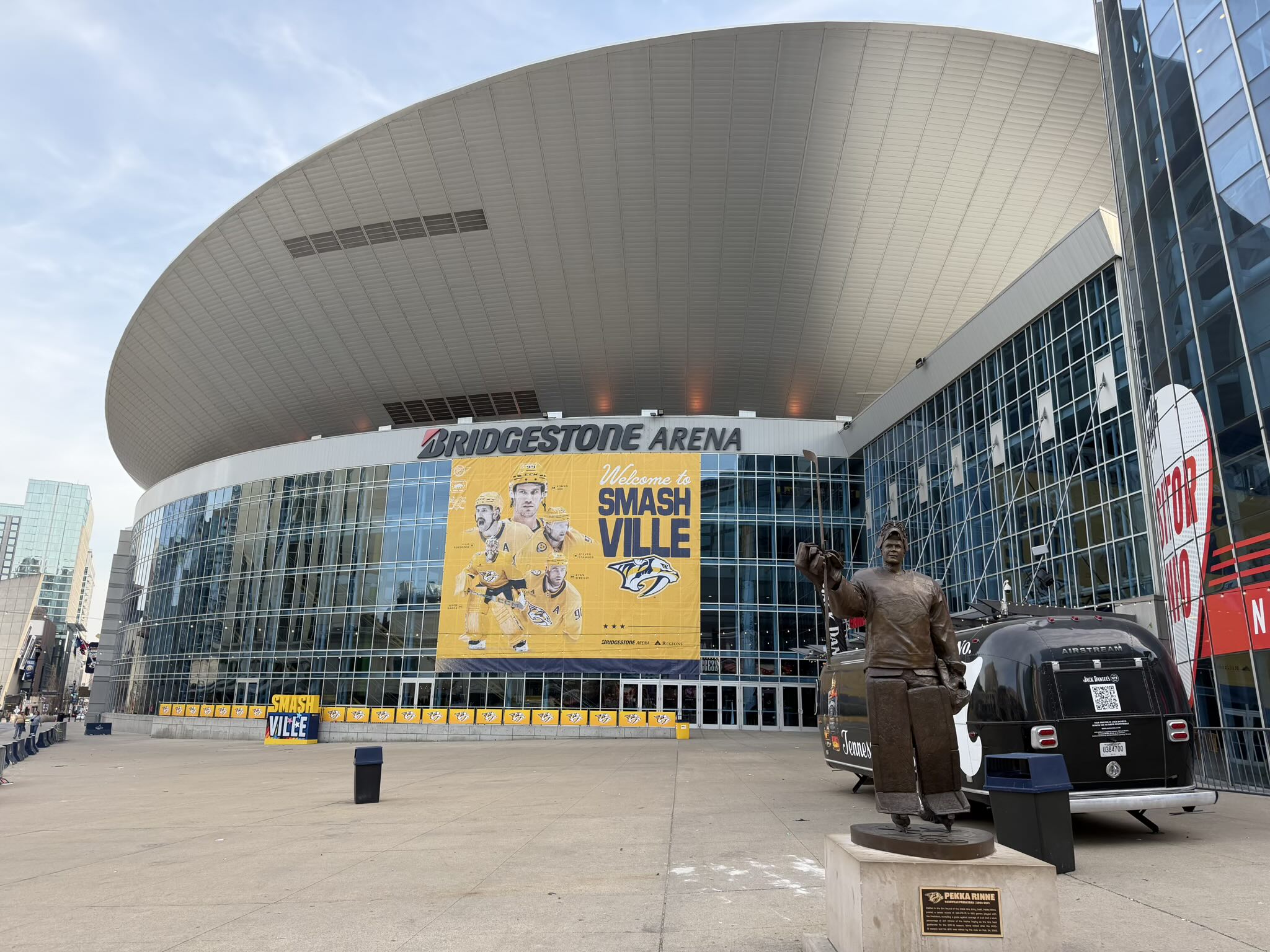
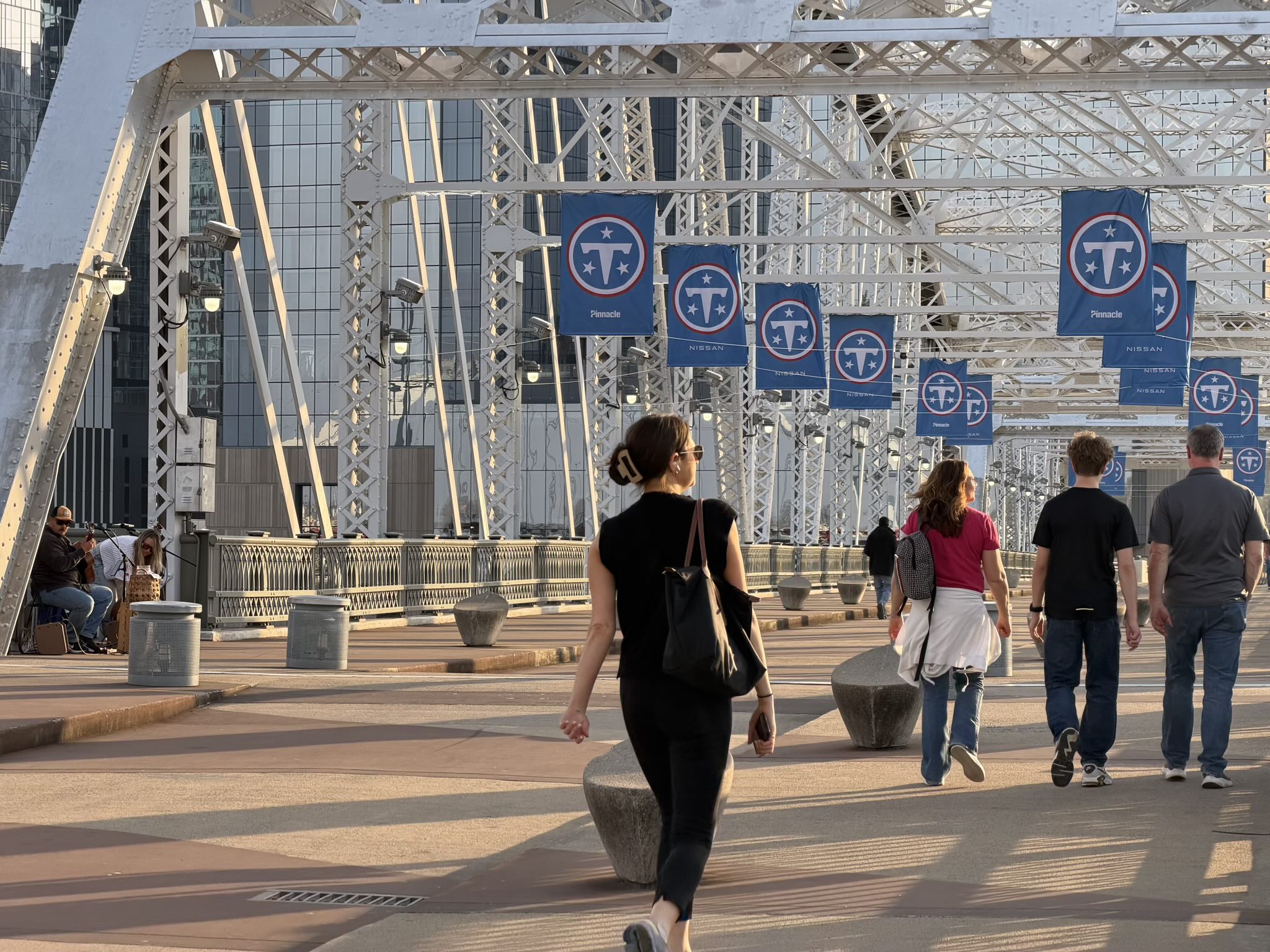
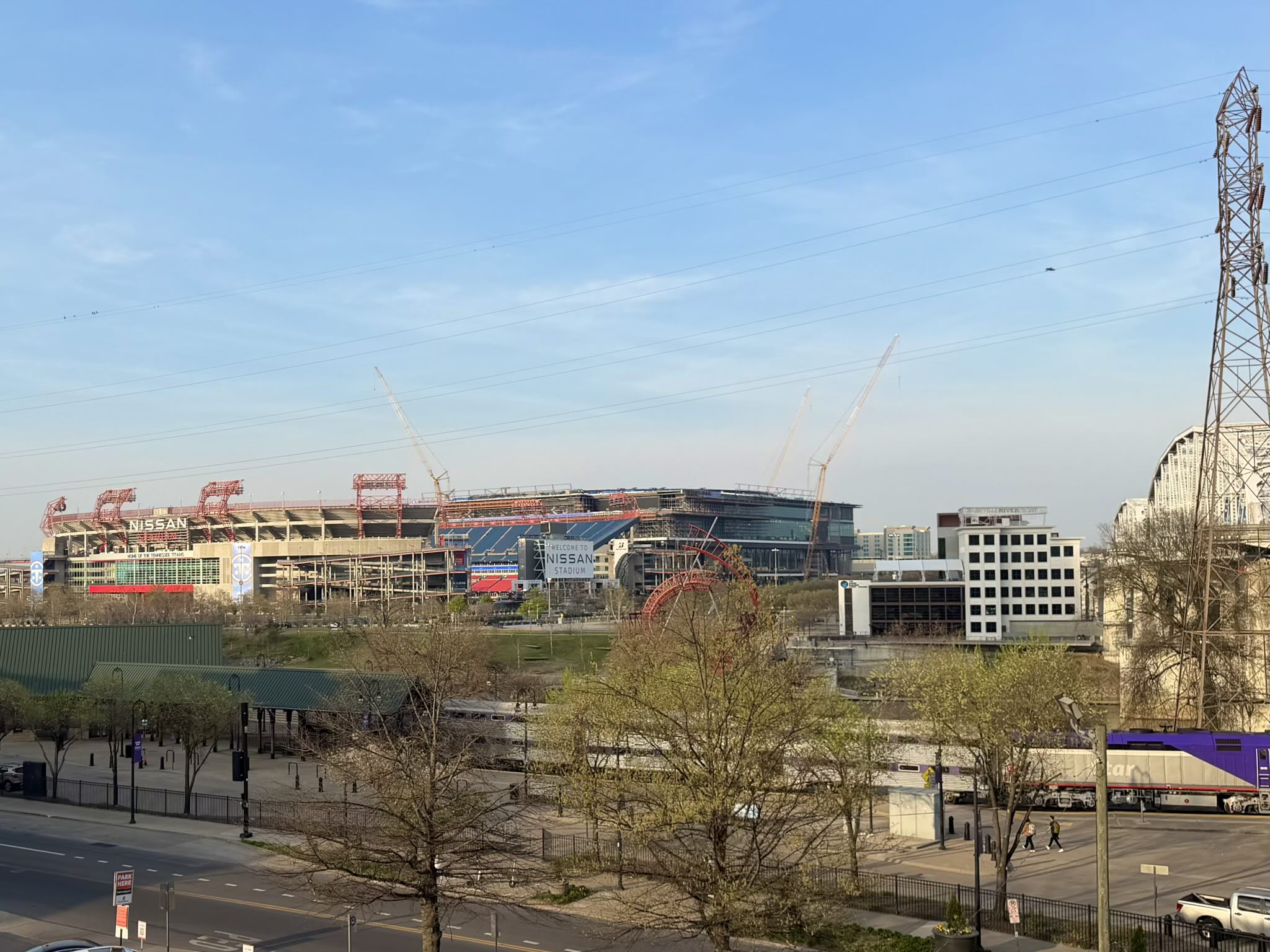
Earlier in the day I had walked past the Country Music Hall of Fame and Museum, then crossed the John Seigenthaler Pedestrian Bridge over the Cumberland River toward Nissan Stadium—home of the Tennessee Titans—and thought, inevitably, about the Music City Miracle in the 2000 AFC Wild Card playoff game. A month later, Steve McNair led the Titans to within one yard of a Super Bowl victory that did not happen. A yard. That is what stands between “Tennessee Titans dynasty” and the history we actually got.
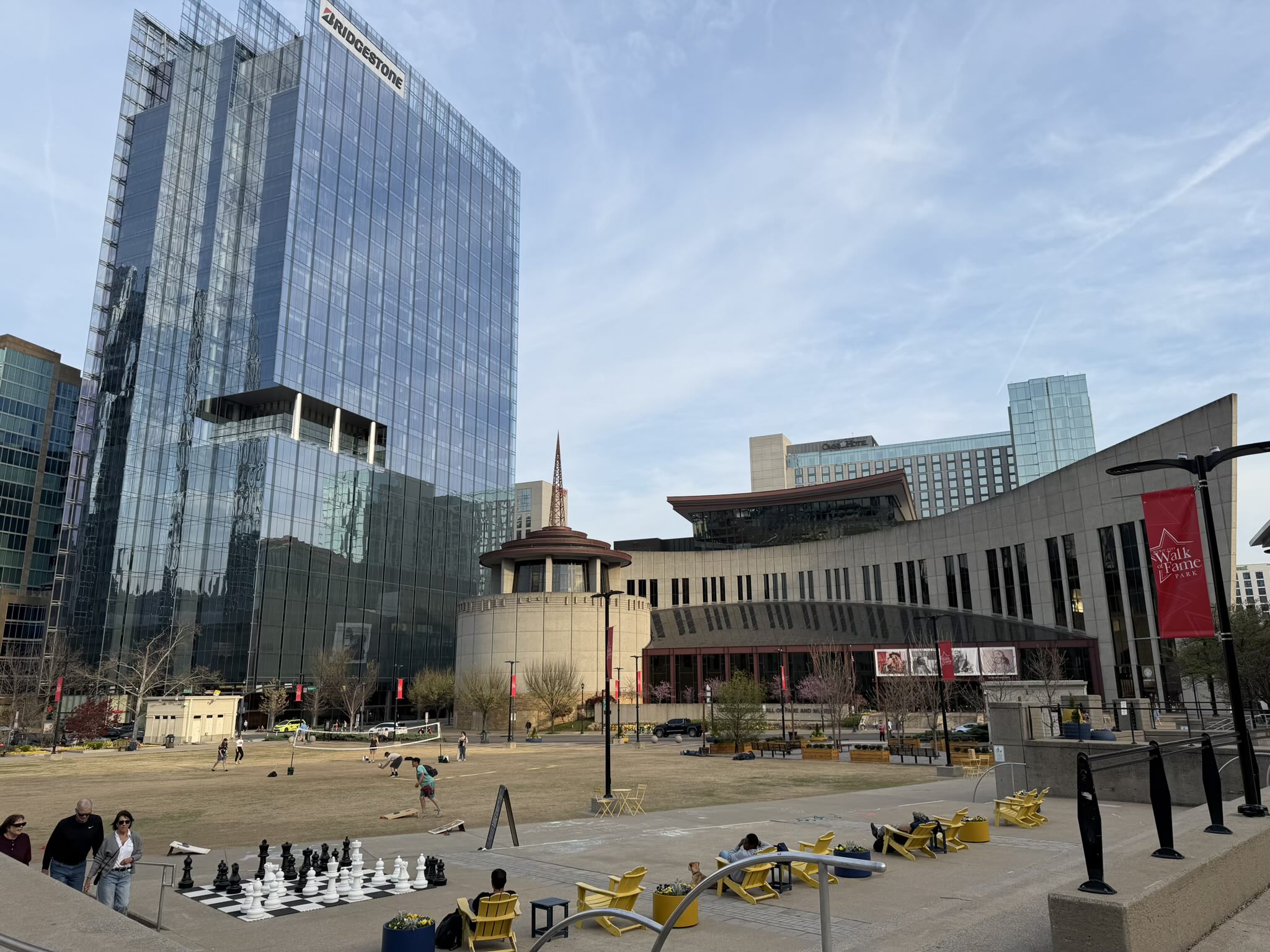
On the way back through downtown I noticed a sign outside the park adjacent to the Country Music Hall of Fame saying that the cornhole boards, chess sets, and volleyball net were all free to use—just return everything when you are done. That detail said something about the city I could not have articulated on my own.
First Evening: Indian Food and a Musician
On my first evening I drove downtown with the intention of finding Indian food, which required parking in a garage that charged $10 plus a $1 app service fee—the digital age’s contribution to the already optimistic math of downtown dining. So $11 in parking to eat a $13 dinner.
The restaurant was Saffron, inside the Assembly Food Hall, and the tikka masala chicken with rice was worth every penny of the combined total. A musician was playing covers—Lady Antebellum, Colbie Caillat, others in that vein—and she was good enough that I was disappointed when her set ended before I finished eating. Nashville has music everywhere, and even the incidental music in a food hall is performed by someone who means it.
Impressions
A Reddit user once wrote about Nashville:
I’ve lived here since the late aughts and I can’t imagine a cooler community. I have an expansive social circle where everyone plays music, we all get together to jam at least once a week, everyone has a cool main job (painters and miniaturists and archaeologists and documentarians), and everyone is extremely friendly and fun and interesting. I love the people here, but I can’t stand the infrastructure or the prices. Traffic has gotten nightmarish.
I agree almost entirely about the traffic. At nearly any hour of the day, it was dense—not quite Los Angeles, but noticeably worse than Denver and not improving.
On walkability, though, I would push back. The neighborhoods I spent time in—12 South, downtown, the Gulch—were among the more pedestrian-friendly places I have visited in the American South. There were people outside everywhere, which is not something you can say about most Sun Belt cities. It depends enormously on which neighborhood you are in, which is true of most American cities larger than a college town.
Cost of living is the other conversation. An 11-ounce can of Michelob Ultra non-alcoholic beer at a bar on Broadway ran $11—roughly five times the grocery store price—but bars on Broadway are covering the cost of live music seven nights a week, which changes the calculus. Parking downtown could run $10 to $20 per hour depending on timing and location. By those metrics, Nashville sounds expensive.
But housing data tells a more nuanced story: Nashville’s ratio of median home price to median household income, while elevated, is still more favorable than Austin, Denver, Portland, or Sacramento. And that comparison is doing a lot of the real work here, since housing is the cost of living for most people.
The broader truth is that housing has become expensive nearly everywhere in the United States. Twenty-one years ago when I did my Great American Road Trip, there were many undiscovered cities where you could live well for not much money. But since then, all those cities have been discovered. Nashville is priced as a desirable city because it is one.
One thing that mildly surprised me: aside from the occasional “y’all”—which I hear as a charming and efficient second-person plural that English should have retained—hardly anyone in Nashville speaks with a pronounced Southern accent anymore. The city has grown and absorbed enough transplants that the accent has become more of a seasoning than a main ingredient.
On safety: Nashville’s crime statistics have been moving in an encouraging direction. Violent crime dropped nearly 14 percent in 2025 from the previous year, with robberies at their lowest level since 1969 and burglaries hitting a historic low. The FBI’s 2024 data did rank Nashville 13th among U.S. cities for violent crime rate, which was both surprising to me and worth knowing, but the trend line is sharply downward. The neighborhoods I visited felt safe and well-maintained.
The weather during my visit was pleasant—the kind of mild, comfortable days that make you forget Nashville’s summers, which routinely push into the 90s°F with humidity that makes those temperatures feel like a credible threat. Spring and fall are the right seasons. October is the driest month, and the fall foliage adds something extra.
Clean, energetic, musical, Southern in the best sense, and genuinely friendly: Nashville earns its reputation. The bachelorette parties are real, but the city beneath them is more interesting.
The Tennessee Playlist
One thing I stumbled upon at the Tennessee State Museum was a curated Spotify playlist of musicians with Tennessee roots. A few entries worth pausing on:
Booker T. & the MGs – “Green Onions”: The MGs part of the name began as a direct reference to the MG sports car—which is a story I love because I had an MGB! Someone at Stax Records had one, and it sounded like a good name for the band. The MG car company’s lawyers disagreed, so the group officially rebranded the initials as standing for “Memphis Group” instead. They kept the cover story for years until Duck Dunn, when asked in an interview, answered without thinking: “Musical geniuses!”—which was not the agreed-upon answer, and which made the rest of the band want to kill him, or at least that is how Steve Cropper told it.
Dolly Parton – “Jolene”: A song I now associate with two completely different pieces of music. Ray LaMontagne has a song also called “Jolene” that shares only the title—different tempo, different mood, different universe. Every time I hear one I momentarily expect the other. Mind-blown discovery from this visit: Miley Cyrus is Dolly Parton’s goddaughter.
Pratt & McClain – “Happy Days” theme: The version of the Happy Days theme that most people recognize—the one that starts with “Sunday, Monday, Happy Days”—was recorded by the duo Pratt & McClain and used from Season 3 onward. (Pratt was born and raised in Lexington, Tennessee.) The first two seasons of the show actually used Bill Haley & His Comets’ “Rock Around the Clock” as the opening theme, which was another appropriate song to use.