Plastic-free water bottles

Bottled water had a moment in the 1990s and early 2000s. People carried those little single-serving plastic bottles around the way they now carry their phones—conspicuously and constantly. The idea seemed to be that drinking water from a bottle was inherently healthier than drinking it from a tap, a conviction with all the logic of believing airplane food tastes better because it comes on a tray. Somehow, the marketing worked on an enormous number of people.
It never worked on me. Whether it was frugality, the good fortune of having ready access to decent-tasting tap water, or a suspicion that producing millions of plastic bottles to hold something that already comes out of a faucet was a staggering waste—most likely all three—I always found the trend baffling. The math alone is bracing: toss just one disposable bottle a day and you’re personally responsible for 365 in a year, most of which will outlast you by centuries.
Then came the microplastics concern, which added a more personal motivation. Scientists have established that microplastics function as endocrine disruptors in the lab—interfering with hormonal signaling in ways that, while not yet fully understood in humans, are not the kind of thing you want accumulating in your body over decades. The simplest step anyone can take to reduce their ingestion of microplastics is to stop drinking from plastic bottles. And so my search for a plastic-free water bottle began.
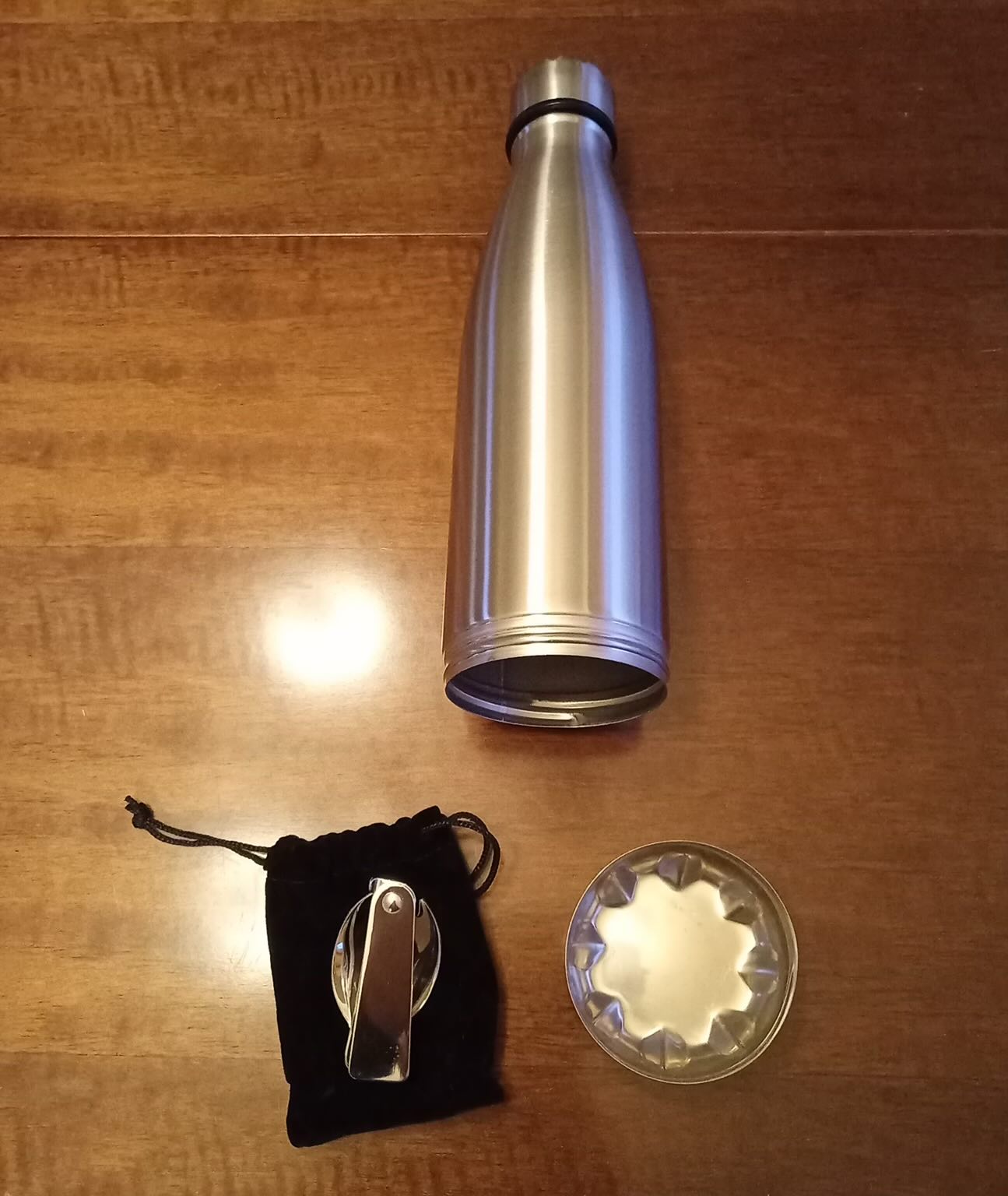
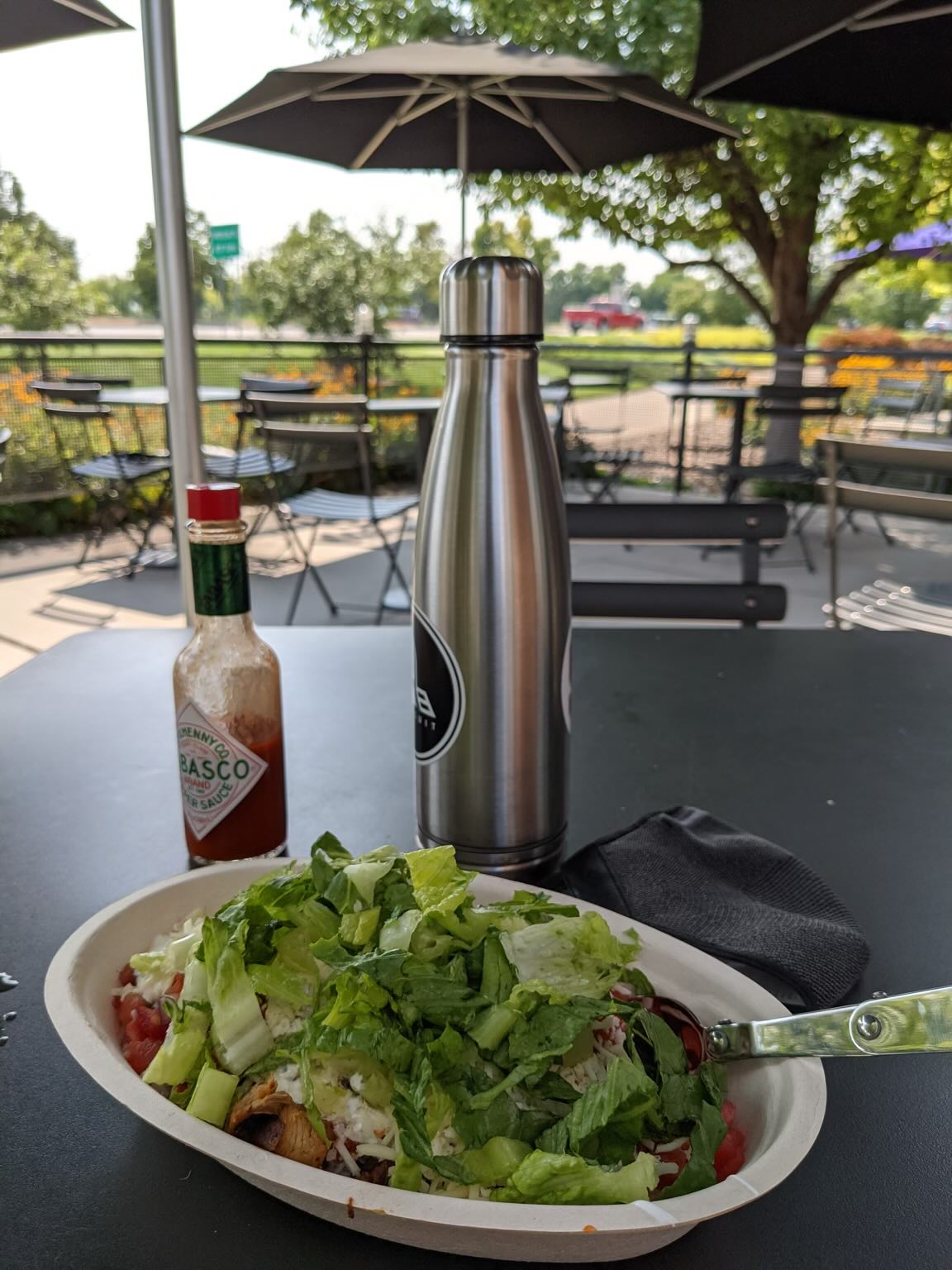
My first attempt was a stainless steel bottle I found on Amazon for $25. What distinguished it from anything else I had seen was a hidden compartment in the base—a feature that I used to carry a foldable, metal “spork” (spoon/fork) in. I grew attached enough to the thing that I eventually stickered it: one from Stanford, my alma mater, and one from my old powerlifting gym.
The bottle’s story ended at JFK Airport in late 2022, on a return flight from Spain to Colorado. After standing in the TSA security line for 45 minutes, I had forgotten to empty the bottle, and a (very unfriendly) agent discovered it at the scanner. Instead of letting me simply guzzle the water to make it disappear, she offered me two options: walk all the way to the back of the line and run the bottle through the X-ray again, or surrender it to the bin. With no time to wait in line, I surrendered it. (Never mind that I still missed my flight.) Amazon, I later discovered, no longer sells one in that size. (Edit: it seems to be back in stock.) A stainless steel bottle with a built-in cutlery compartment, lost to the vigilance of airport security.
For a while after that, I fell back on a bottle the Fort Collins Running Club had given me for serving on its Board of Directors. It worked, though it had a plastic top—putting me back in contact with the very thing I was trying to avoid—and a valve with an uncanny knack for spilling water onto my face whenever I tilted it at the wrong angle.
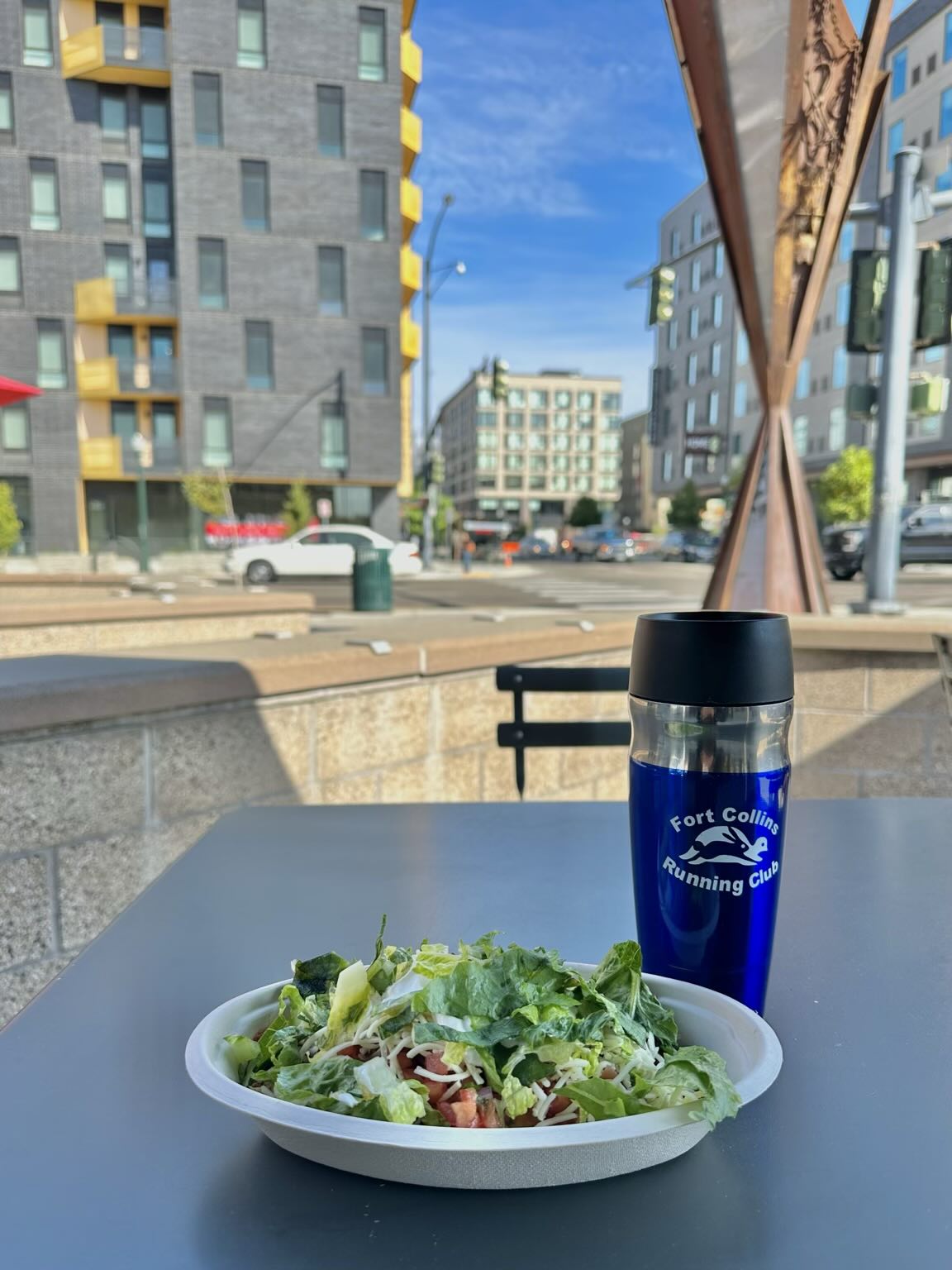
It served me until last year, when I lost that one too. Andrea was in Colorado, and we went to Beijing Noodle for dinner with some friends who afterwards wanted to see the front trunk of my Mustang Mach-E. I set the bottle on the ground to open the frunk, the frunk was duly admired, and we left. The bottle remained in the parking lot until someone surely scooped it up, a casualty of automotive curiosity.
I wasn’t especially heartbroken. I had already been thinking the bottle wasn’t ideal, and losing it gave me a reason to look more carefully at what I actually wanted. In that research, I came across something worth clarifying, because it’s a point of widespread confusion: a concern regarding plastic liners applies primarily to aluminum bottles, not stainless steel ones. Aluminum reacts with liquids and requires a protective inner coating, historically made from epoxy resins that may contain BPA. Stainless steel, by contrast, needs no liner—food-grade stainless steel is naturally non-reactive and sits comfortably in contact with water. Where stainless steel bottles may still give you pause is in the lid, straw, or external coatings, some of which contain plastic components worth checking before you buy.
All of this pointed me toward glass. I found a stylish glass bottle with a bamboo top on Amazon for $20—a reasonable option, but one I was reluctant to jump on considering my history of losing bottles.
Then I noticed something sitting in my Mach-E that Andrea had left behind when she returned to Europe: an opaque glass bottle that had originally held kombucha. She had finished the drink, rinsed out the bottle, and used it as her water bottle for the rest of her time in Colorado. When she flew home, she left the bottle in the car.
It was exactly what I had been looking for. The size was right. The shape was right. The only reservation with glass is that it can shatter.
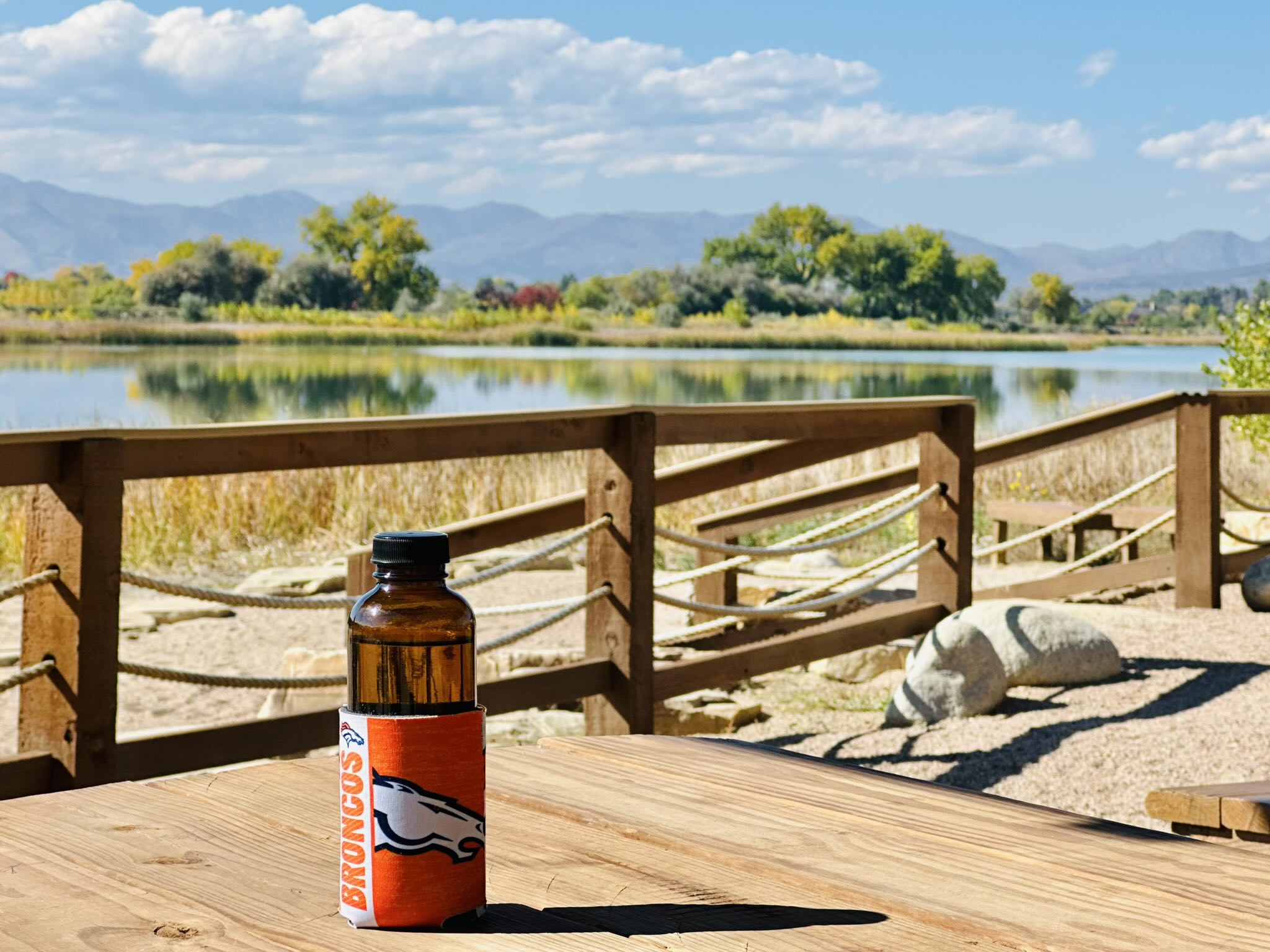
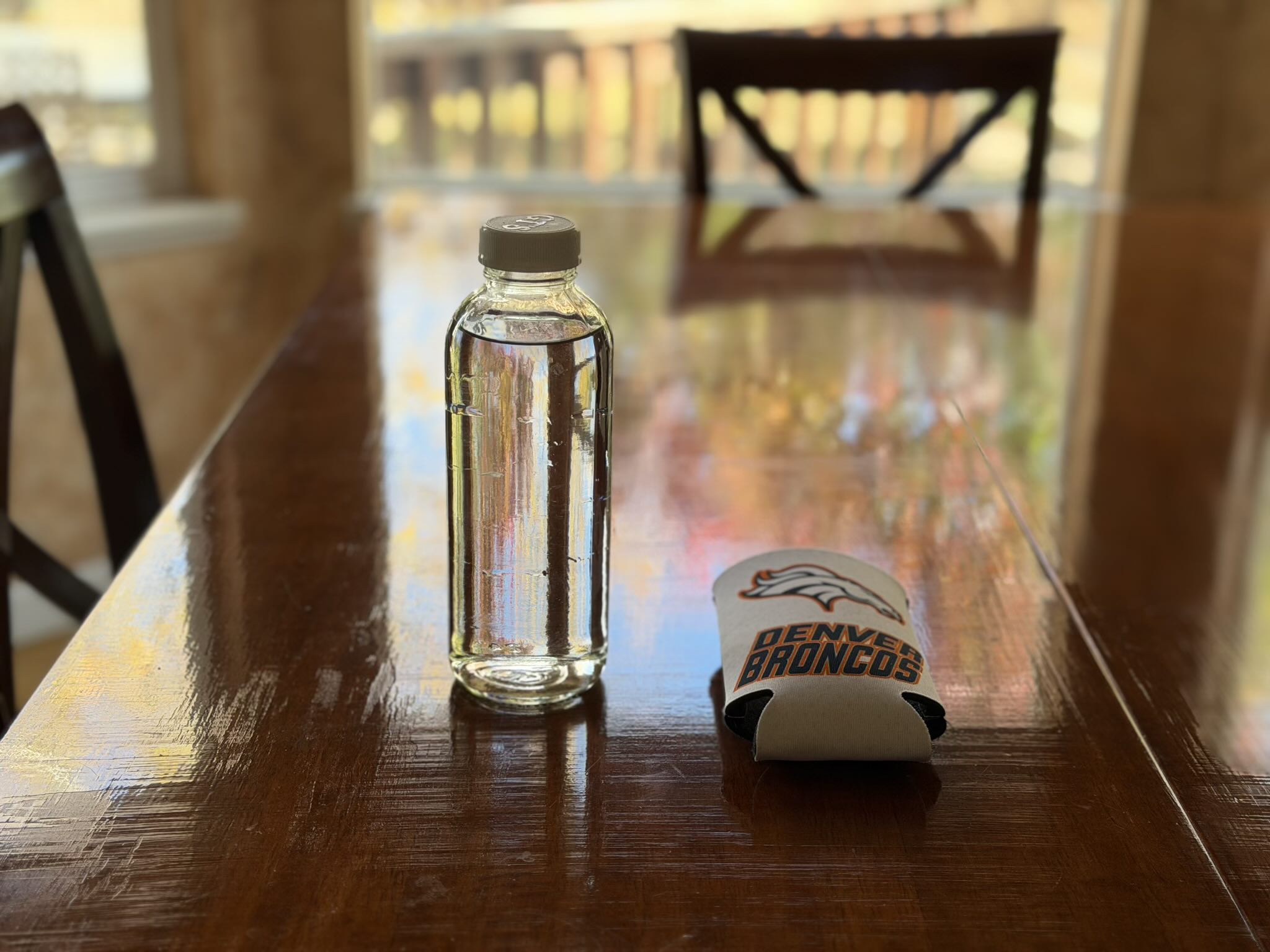
The solution came to me during football season, at a bar in Iowa where Manuel, Mel, and I had landed during a marathon weekend. The bartender handed me an aluminum beer can already dressed in a foam koozie—one of those cylindrical sleeves that keep a can cold and your hand dry. A foam koozie around a glass bottle would cushion it against drops and keep the water a few degrees cooler, I thought. I went online and found that the local Walmart was selling Denver Broncos koozies for about three dollars each.
One Broncos koozie, slipped over a rinsed-out kombucha bottle: a plastic-free, insulated, impact-cushioned water bottle for under $3.50—and that’s accounting generously for the price of the kombucha.
I liked the setup well enough that I built a second one for my other car. The next kombucha I bought came in a clear glass bottle, which I paired with another Broncos koozie. Two cars, two plastic-free glass water bottles, total expenditure: roughly seven dollars and one good afternoon of hydration.
I was feeling rather pleased with myself until I came across a study by ANSES, the French national food and environmental safety agency, that introduced an inconvenient wrinkle. Researchers had set out to measure microplastic contamination across different beverage containers, and expected to find glass bottles at the clean end of the spectrum. Instead, for most drinks—cola, lemonade, iced tea, beer—glass bottles with metal screw caps contained roughly 100 microplastic particles per litre, which was five to fifty times higher than plastic bottles and cans. The culprit, it turned out, was not the glass at all: it was the paint on the metal caps, which develops microscopic scratches from friction during storage before use and sheds particles directly into the liquid.
The kombucha bottle sitting in my cupholder has a plastic screw-on cap with plastic gasket, similar to that of plastic bottles. So the resultant microplastic contamination can’t be any worse. Still, there was a good lesson to be learned from the study.
The contamination is concentrated at the cap, and loose particles can largely be flushed away before they reach the water. When the ANSES researchers rinsed caps with water and alcohol before sealing test bottles, the particle count dropped from 287 particles per litre to 87—a reduction of nearly seventy percent. The consumer-level version of this is simple: before screwing the cap back on after filling, give the inside of the cap a quick rinse under the tap. It takes about three seconds and costs nothing. Is it perfect? No. But it meaningfully reduces the main identified source of microplastic contamination in this setup.
Pre-Rinsing the Cap
Every time you fill the bottle, rinse the cap’s interior under running water before screwing it back on. This flushes away any plastic particles that have loosened since the last use. If you want to go further, a brief swish of rubbing alcohol followed by a water rinse mirrors what the ANSES lab found most effective. I personally think that is going a bit overboard and that a quick water rinse is good enough.
Removing the Label
Kombucha bottles typically arrive with adhesive labels that resist running water but are surprisingly cooperative after an overnight soak in a pot of water. By morning, the label will peel away with almost no effort, and any remaining adhesive residue wipes off cleanly with a little rubbing alcohol. The result is a plain glass bottle that looks deliberate rather than repurposed.
Keeping It Clean
A glass bottle has a genuine advantage over both plastic and metal when it comes to hygiene: its smoother, non-porous surface gives bacteria very few places to settle. Research confirms that plastic bottles harbor significantly higher bacterial loads than smoother alternatives.
That said, no water bottle is self-cleaning, and an Associated Press investigation into water bottle hygiene found that bottles accumulate germs from both your mouth and your hands every time you take a sip or touch the lid. Experts recommend washing yours daily with warm soapy water—cap, body, and any other components—paying particular attention to crevices. If you use the bottle for anything besides water, wash it the same day: sugary drinks and anything else that leaves a residue accelerates bacterial growth considerably. After washing, leave the bottle upside down on a drying rack to dry completely before capping it—trapped moisture is bacteria’s preferred habitat.
When to Move On
Glass can be washed and reused indefinitely without degrading the way plastic does—no microscopic scratches accumulating, no material wearing into the water. If you notice any chips or cracks, particularly around the mouth, retire the bottle. A chipped rim is both a hazard and a place where bacteria accumulate. And since the bottle cost you nothing beyond a kombucha you would have been happy to drink anyway, replacing it is a question of buying another kombucha, not finding another $35.
So: a glass kombucha bottle, a three-dollar sports koozie, and a three-second cap rinse before every fill. Overcomplicated, or the most sensible plastic-free water bottle you’ve never thought to assemble? I’m curious what you think. Please leave a comment below if you have any thoughts about this.



There are 4 comments.
what’s a good option for use as a bicycle water bottle?
Good question, JZ! I have no idea and have resigned to using plastic water bottles while bicycling. This is because for safety reasons, I'd only use water bottles that allow one-handed use, and that pretty much requires some sort of valve. As far as I know, all water bottle valves use plastic.
I suppose a reasonable solution for someone who doesn't care about speed or time (and weight) is to carry a plastic-free bottle (glass or stainless steel or whatever), and simply pull over on the side of the road to stop, open the bottle with two hands, and drink.
For most of my rides less than an hour, I don't even need to drink, thus avoiding plastic ingestion by not even touching the bottle. 😂
I haven been using a stainless steel water bottle as my biking bottle, mainly because all of my plastic water bottles have chewed up valves (not my fault). Been too lazy to buy a new water bottle since I am not riding much these days. I just drink at stop lights.
For travel, I still use a Vapur collapsible plastic water bottle. The convenience outweighs its plastic construction.
I like the water bottle with the secret compartment. I am afraid that I would lose it though, so I would only put a nice to have thing in it rather than something really important like money or keys. The collapsible spork is a good idea!
Do you stash your stainless steel water bottle in your bottle cage? Is your bottle cage metal or plastic?
Edit: I found the photo of your bike that you sent me a couple of years ago, and it appears that your bottle cage is stainless steel. I'm amazed that your tall stainless steel water bottle doesn't fall out!
For travel, I’ve been using a smaller glass bottle or nothing. My last trip, I packed no bottle because my Cotopaxi bag was completely full. This time, I should be bringing less, so maybe I can pack a bottle again.