
Saucony Jazz: How a 1981 Sneaker Performs as a Running/Travel Shoe in 2026

Puma H-Street shoes carried me through seventeen years of a twenty-three-year quest to run a sub-four-hour marathon in every U.S. state, prized among Pose Method disciples and other minimalist runners for their thin sole and sock-like fit. But Puma, unhelpfully, discontinued the H-Street every few years, and by the final marathon state (Alaska), the stockpile had dwindled to a final, decade-old pair.
A mainstream, reliably in-stock replacement was in order. That search led to the Saucony Kinvara, which has stayed true to its original “near-minimalist” formula since its debut: light weight, low drop, a neutral ride, and a price that does not wince at either training or racing.
Researching the Kinvara opened up a rabbit hole into Saucony’s own history—and, by extension, into an entirely different shoe: the Jazz.
Saucony, it turns out, is America’s oldest running shoe company, founded in 1898 by four businessmen on the banks of Saucony Creek in Kutztown, Pennsylvania. The brand’s wavy, three-dot logo is not just a stylish element that at first glance looks like the wing of a bird. It represents the actual boulders sitting in that creek bed, which Saucony now frames as standing for good performance, health, and community.
That heritage runs straight through the Jazz, which debuted in 1981 and went on to become the best-selling shoe in company history. Saucony developed it with input from podiatrists, prioritizing injury reduction over pure looks, and gave it a triangular lug outsole that compresses on impact for a piston-like cushioning effect. Supposedly, it was a real upgrade over the flatter, waffle-style soles of Nike at the time—never mind the skeptic in me suspects it was mostly marketing gobbly goop. The triangles looked cool, at the very least.
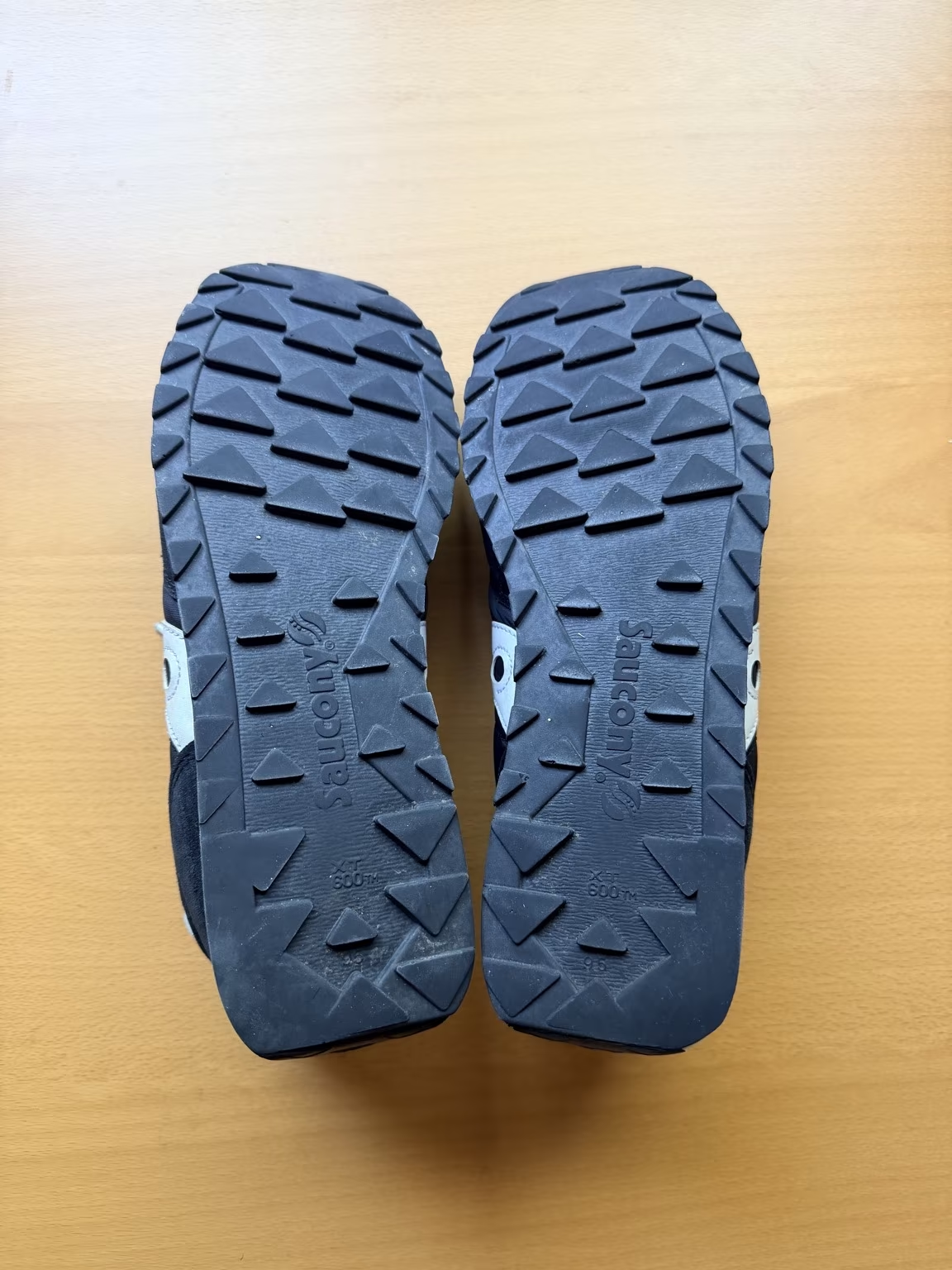
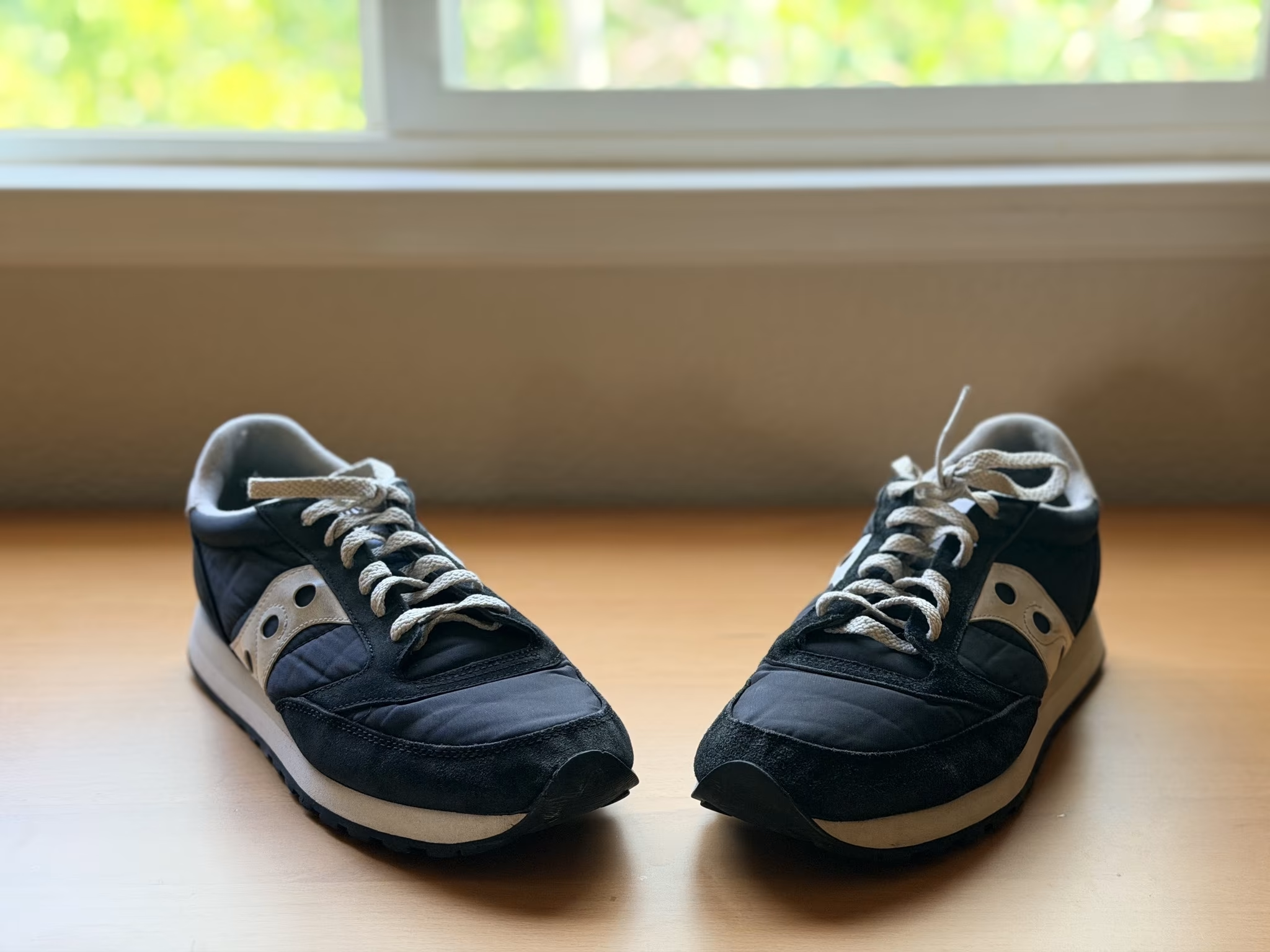
A scroll through Saucony’s “Lifestyle” lineup surfaced the Jazz sitting among more than a dozen colorways, sharp enough that picking just one took some effort. At least a few years ago (but not now), new pairs stocked deep on Amazon, while Vinted—which in Spain is a much more popular secondhand marketplace than eBay—turned up plenty of lightly used pairs at steep discounts. A black-and-white pair, gently broken in by, I think, an Italian dude, came home for a mere 35€.
Amazon reviewers backed up the impulse buy, several calling it the most comfortable everyday sneaker they owned, with more than a few noting it held up fine as an actual running shoe—which, after all, is what it was built for in the first place.
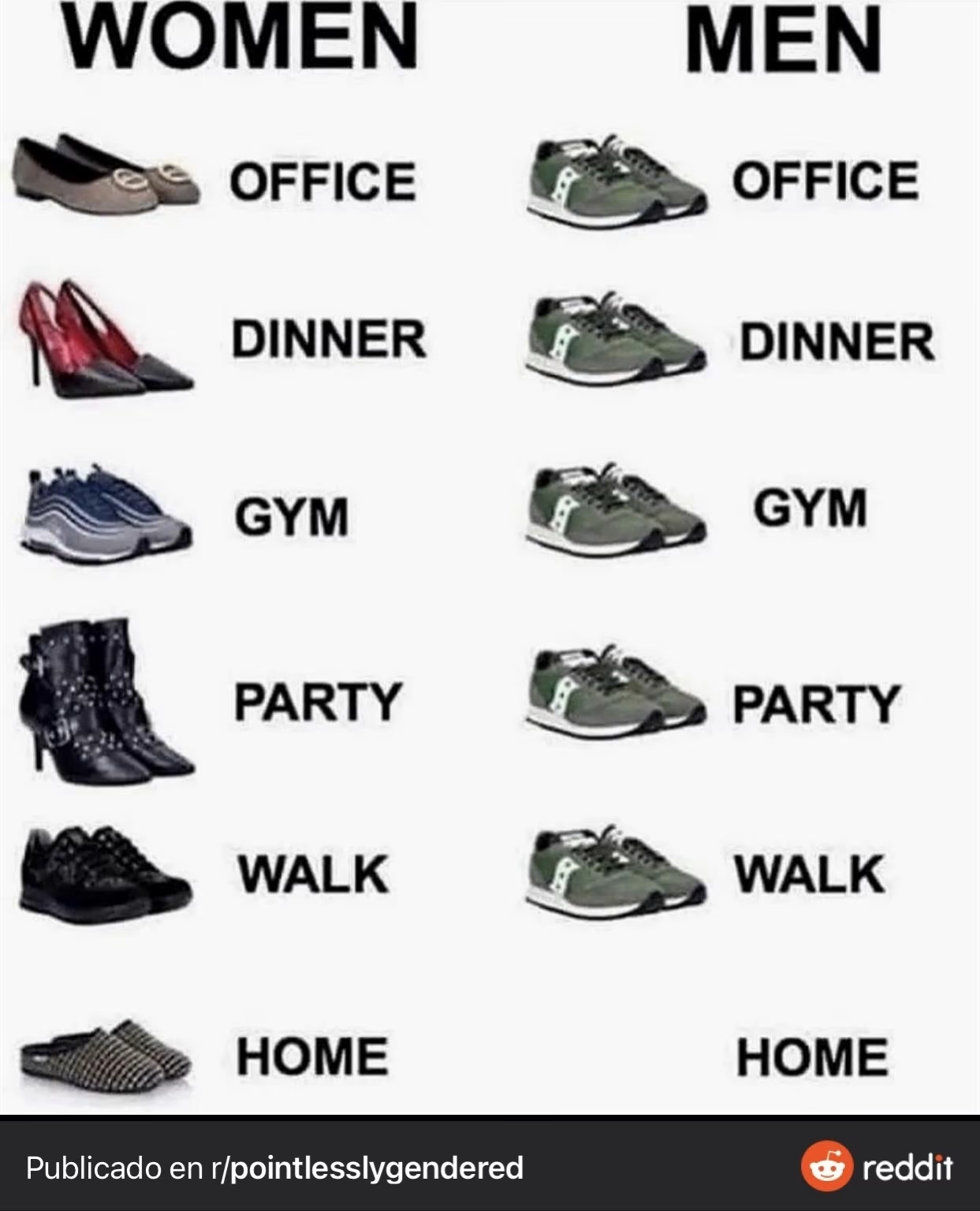
The internet likes to joke that men only need one pair of shoes for life. A closet holding several pairs of Kinvara, an Endorphin Pro 3, and now a Jazz makes that claim look shaky, though at €35 a pair, the Jazz alone makes a decent case for the theory.
Two years after the Jazz launched, Rod Dixon put Saucony at the center of one of the most dramatic finishes in New York City Marathon history. The New Zealander trailed British runner Geoff Smith by roughly two minutes with six miles to go, closed the gap step by step, and finally passed Smith around the 26-mile mark to win by nine seconds in 2:08:59. Sub-2:09 by a non-African in 1983 on a non-flat course using EVA foam and no carbon-fiber plates! That blows my mind.
Saucony signed Dixon afterward to help design a signature trainer built on the Jazz’s platform: the DXN Trainer, named for Dixon, which arrived in 1983 carrying the same triangular lug outsole into a new generation of Saucony racers.
That racing pedigree is not the only, or even main, reason the Jazz has stuck around for more than four decades. Its clean, low-key lines have made it a streetwear staple and, more improbably, a shoe Ukrainian President Volodymyr Zelenskyy wears with his camo clothes.

I kept that history in mind while the Jazz got its real test: two weeks traveling the American West with Andrea in June, through San Francisco, Yellowstone, and Bozeman. Coming off a fairly vigorous macrocycle of run training, the timing seemed right to make the Jazz the primary shoe for the trip, walking miles of sightseeing in them by day and running in them nearly every day besides.
I say that because most of those runs were easy ones, several alongside Andrea. However, a couple dipped under 5:00/km average pace, and one session followed the Sprint 8 interval protocol. The shoes felt totally fine and I felt neither hamstrung nor clumsy in them.
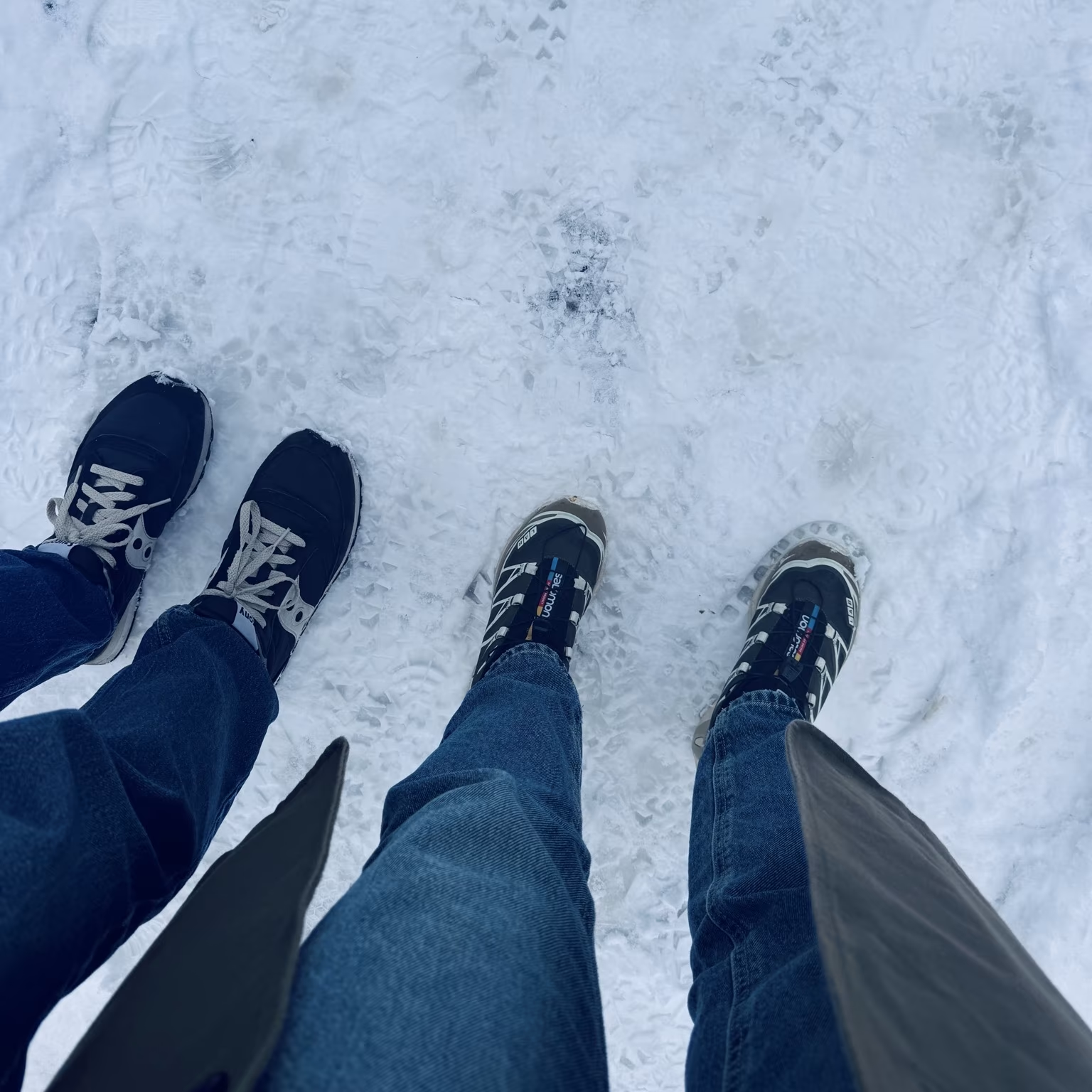
Snow in Yellowstone in June turned out to be one of the trip’s stranger surprises, and the Jazz handled it well, keeping company with Andrea’s Salomon trail shoes.
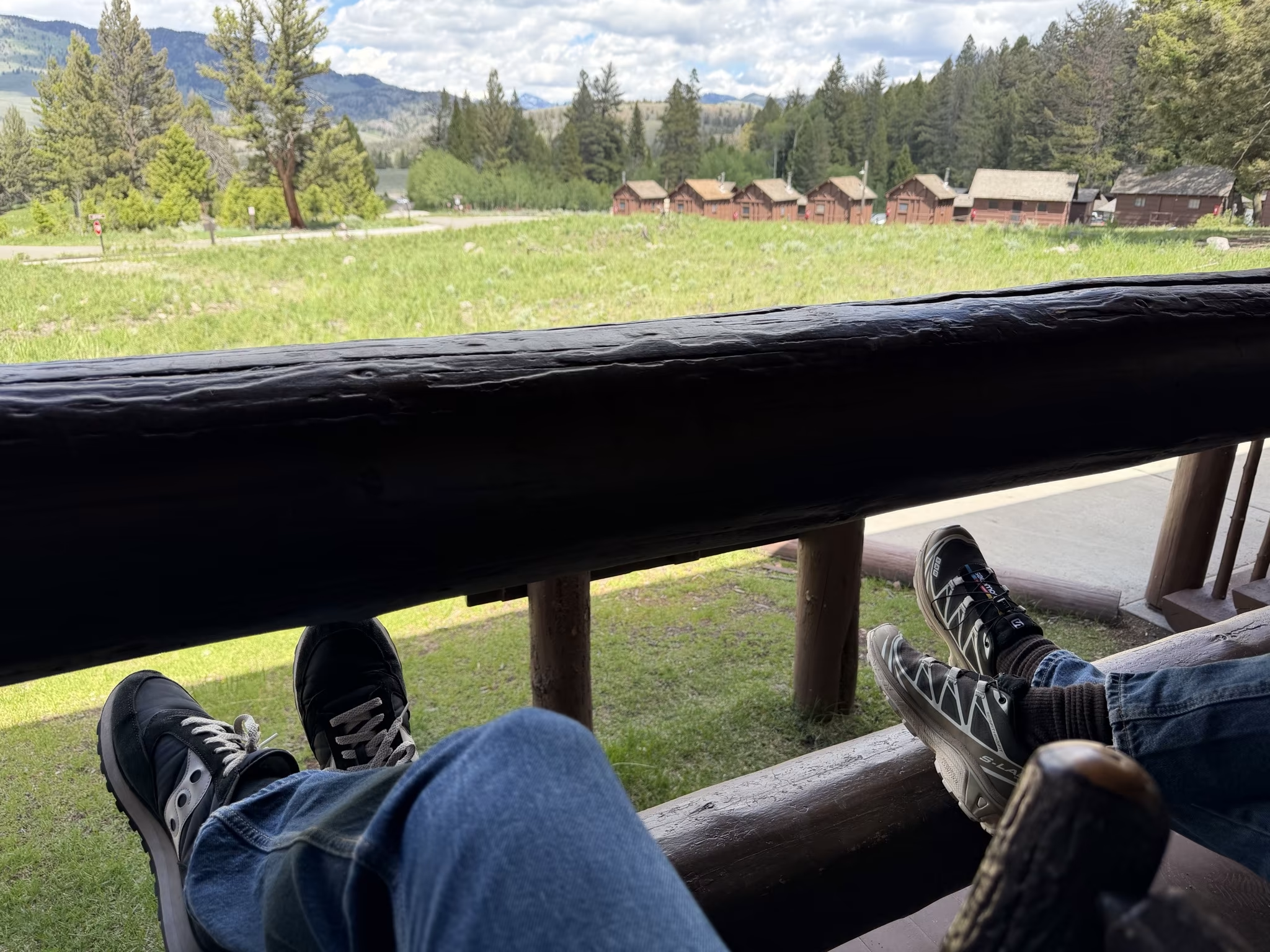
A stop at the Roosevelt Lodge produced a similar pairing, the Jazz set down next to Andrea’s Salomon XT-6s.
A few things stood out on the performance side. The Jazz runs noticeably heavier than the Kinvara—Amazon lists it at 10 ounces per shoe, or about 283 grams, well north of the Kinvara 15’s 196 grams in my size—and its EVA midsole does not have the bounce of the Kinvara’s PWRRUN foam. Its nylon upper, though, keeps out trail dust and sand far better than the Kinvara’s mesh. For that reason alone, I’d consider that a real point in its favor for a place like Monument Valley. They are a real contender for my next Camino de Santiago.
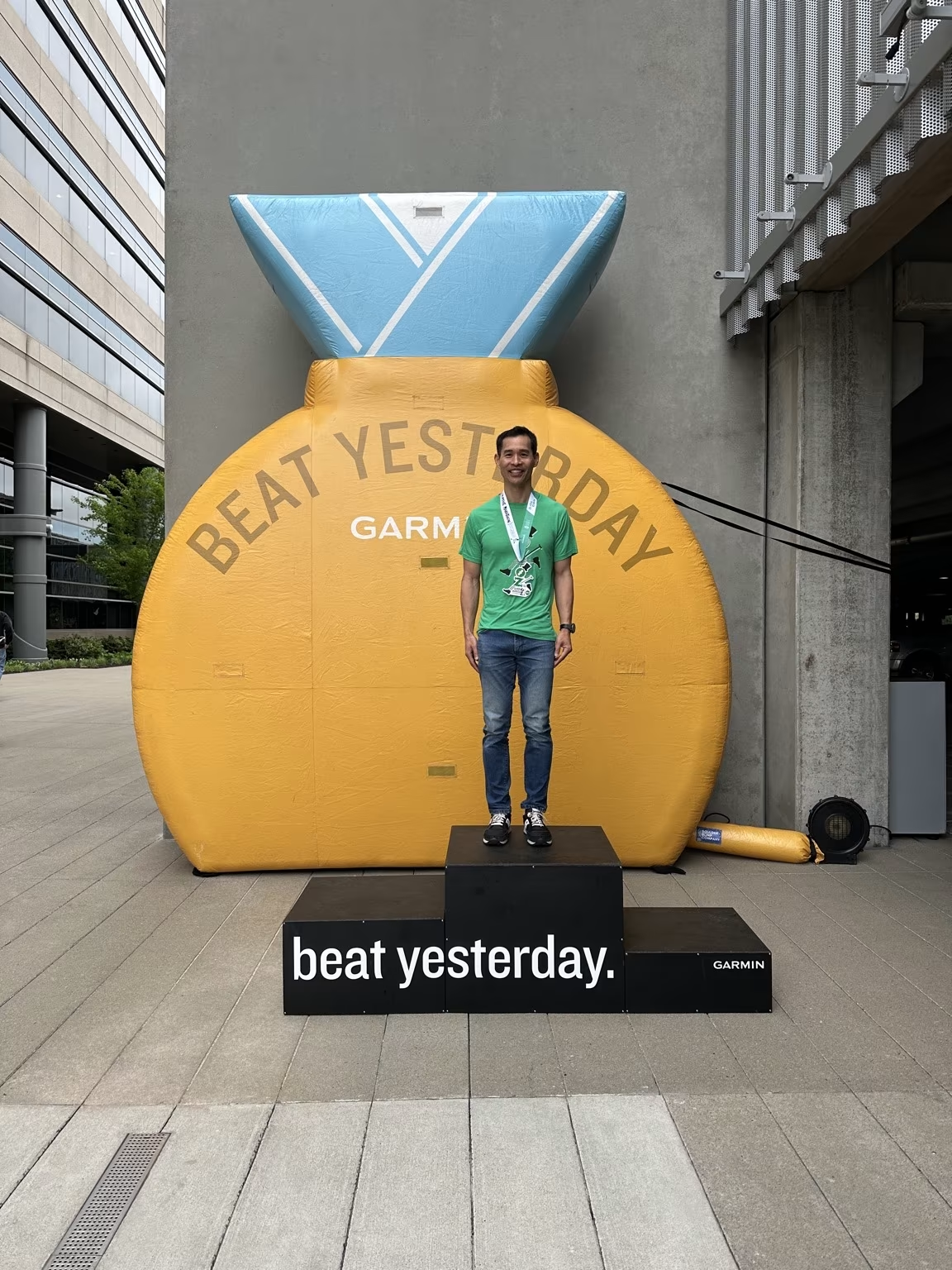
But while I’ve found through my own empirical data that any of the last iterations of the Kinvara can totally hold their own against the carbon-plated Endorphin Pro 3, I have yet to try racing with the Jazz—and probably wouldn’t unless you paid me to. The Jazz’s role starts once the race number comes off: it was the shoe waiting after the Garmin Olathe Marathon, laced up the moment the Endorphin Pro 3 came off at the finish.
Comfort held up well past the trip, too, and a spin through the washing machine, zipped inside a mesh laundry bag, brought the shoes looking close to new.
A previous post already covers my unabashed Saucony fanboy status. The Jazz gives fresh reason for it: a 1981 running shoe with a sneaker-world resume, a marathon-champion sibling, and a super cool “lifestyle” shoe good enough to log walking tours, easy runs, snow, and a Sprint 8 session without complaint.