VaughanTown Balneario Alhama de Aragón: The Set is Complete

“Welcome to Alabama,” our Master of Ceremonies announced shortly after boarding our charter bus that was about to drive two hours northeast from Madrid.
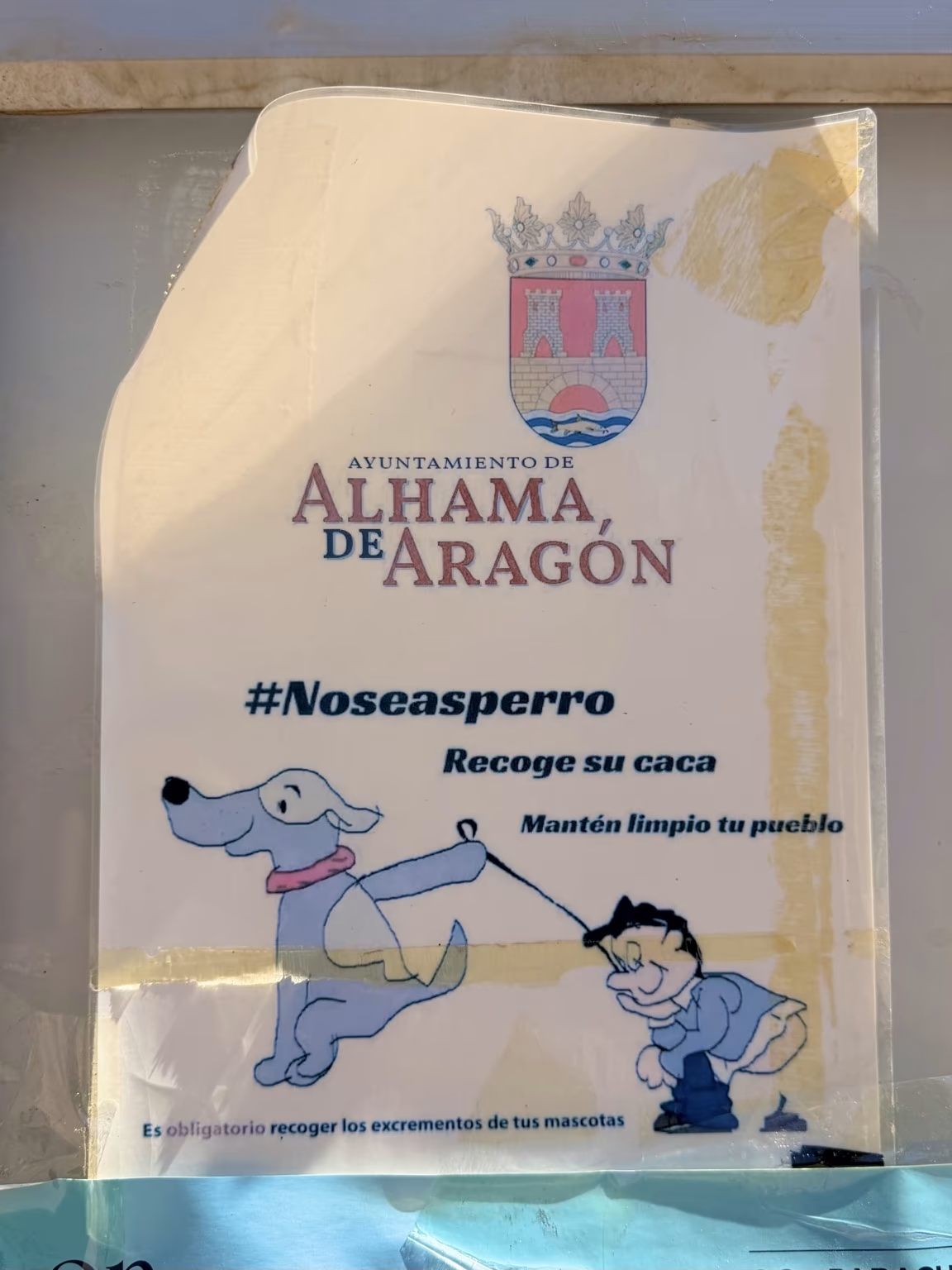
The MC—let’s call her Penelope, as I’ve changed every name in this post because she asked us all not to publish participants’ names or photos online—had nicknames for other places and people, and “Alabama” would be the affectionate name given to location we would spend the next week in. Never mind that you wouldn’t hear any American Southern drawl here, and the real name is Balneario Alhama de Aragón, a working thermal spa an hour and a half southwest of Madrid. It was my sixth VaughanTown—an English-immersion program for Spanish adults (mostly professionals).
Six puts a bow on an eleven-year project. I’d set out to do every single VaughanTown location, and the list had been adding up: Valdelavilla in 2013, Aranjuez in 2021, Ánades in 2022, and Puerta de Gredos twice. But VaughanTown has quietly consolidated down to just two locations a year—Balneario and Puerta de Gredos—which meant this was the last one on the current calendar I hadn’t yet crossed off. As of this week, I’ve done them all.
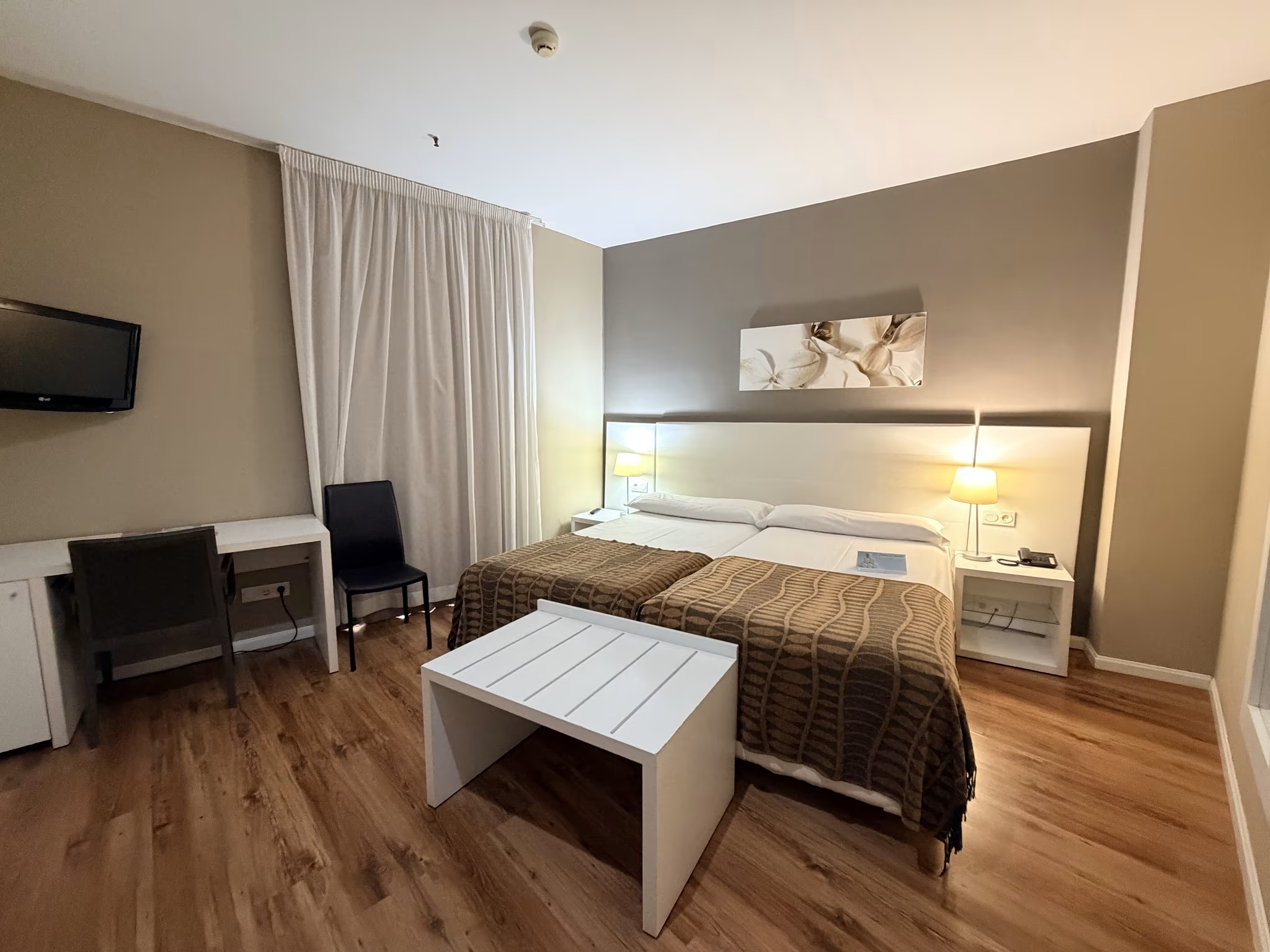
Welcome to “Alabama”
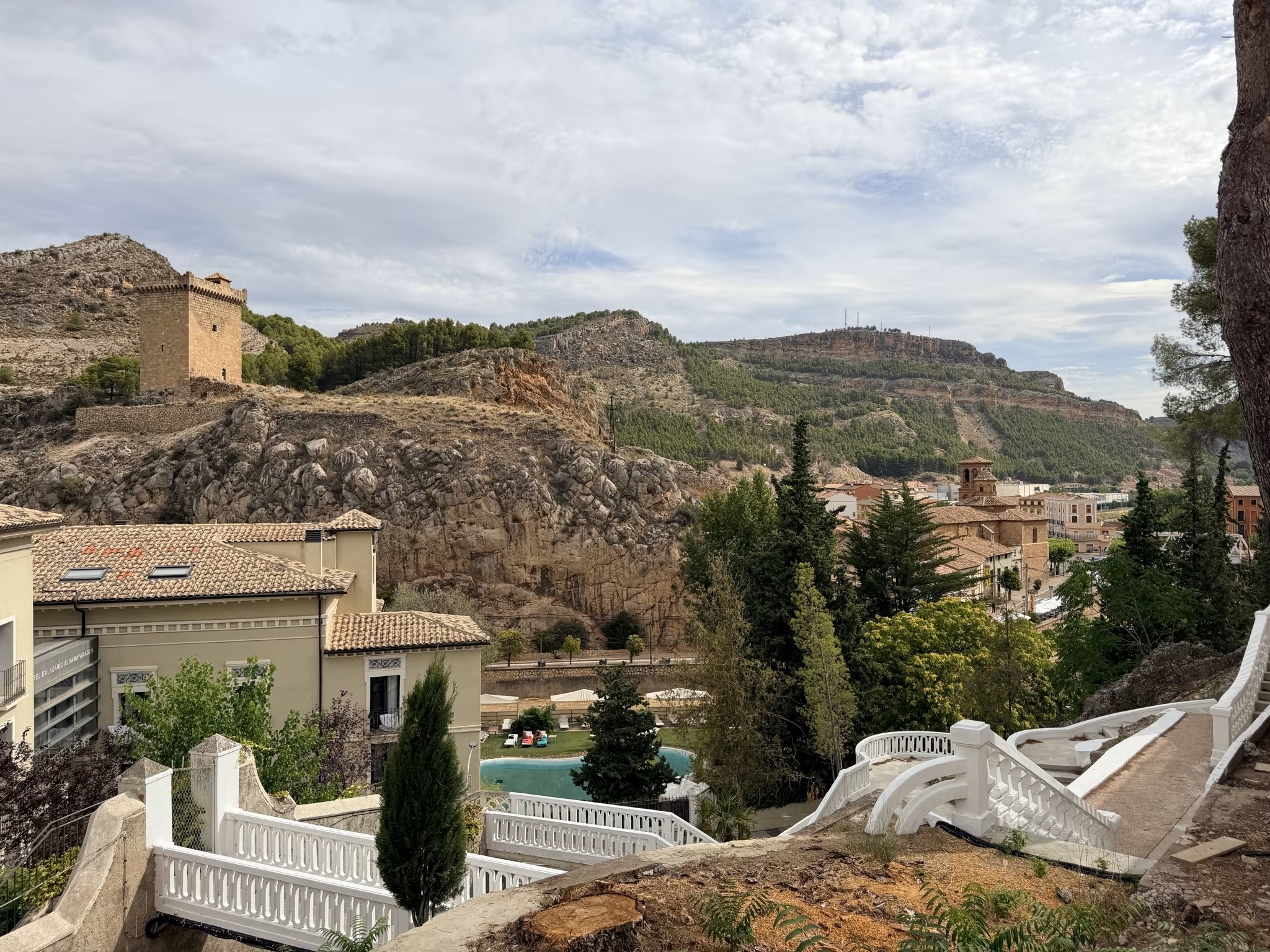
The balneario part isn’t decorative. Hot springs have drawn people to Alhama de Aragón for centuries, and a stay here comes with a real spa: thermal pools, massages, a menu of treatments you book a day ahead. It was also the first VaughanTown I’d been to without assigned seating and plated dinners—here it was a buffet, which most of us initially ranked as a genuine upgrade.
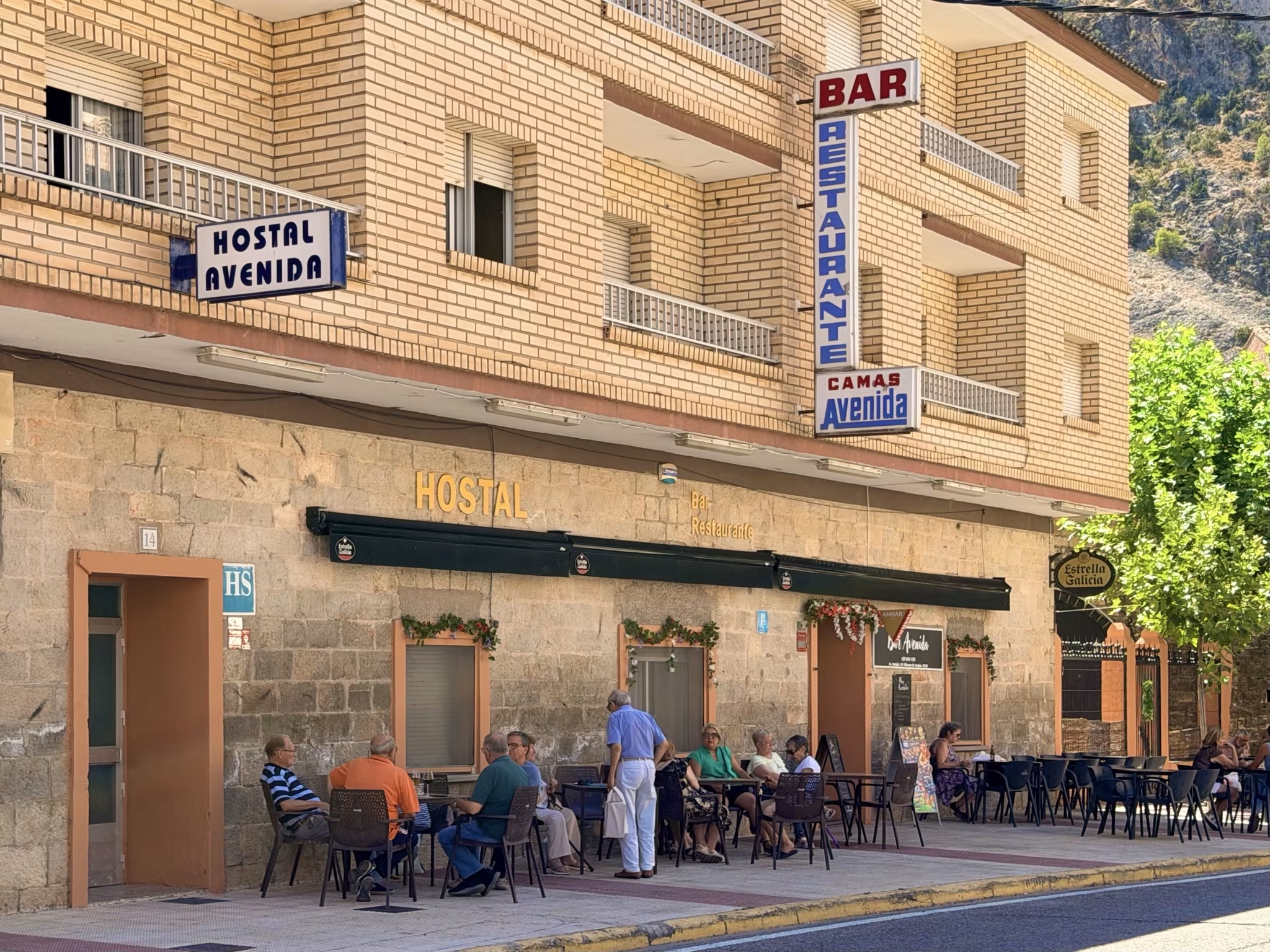
The hotel itself is a labyrinth. The meeting room, dining room, and guest rooms live in separate buildings on separate floors, connected by a maze of corridors, so I was lost for the first two days and briefly lost again every time I had a brain fart or had too much on my mind. Ten minutes between activities sounds generous until you factor in the distances between rooms and the time it takes to, say, just to brush your teeth. I ended up jogging during this “recess” a lot. And the dining room was enormous and thrumming, because actual vacationing tourists filled half of it—I don’t think I said one quiet sentence all week.
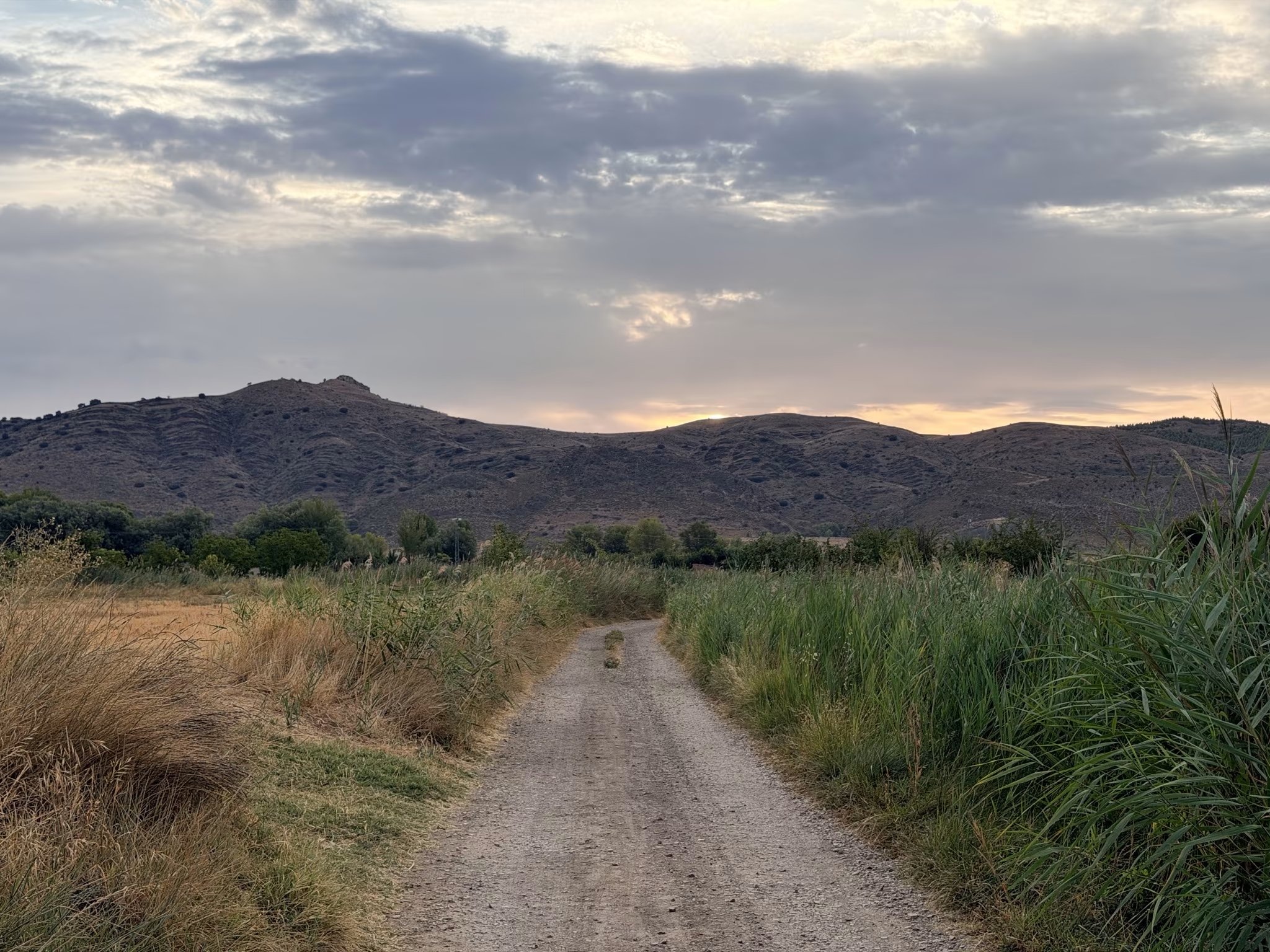
Fortunately, I was planning on running a lot anyhow. The terrain out here—bare hills, scrub, wide sky—felt a lot like rural Colorado, and I ran every single day: a 15-minute shakeout in Madrid before the bus, then 7k on a gravel river trail, a hilly 6k that was half off-road, and 7k of quiet pavement. Only a kilometer or two outside town and there was nobody around.
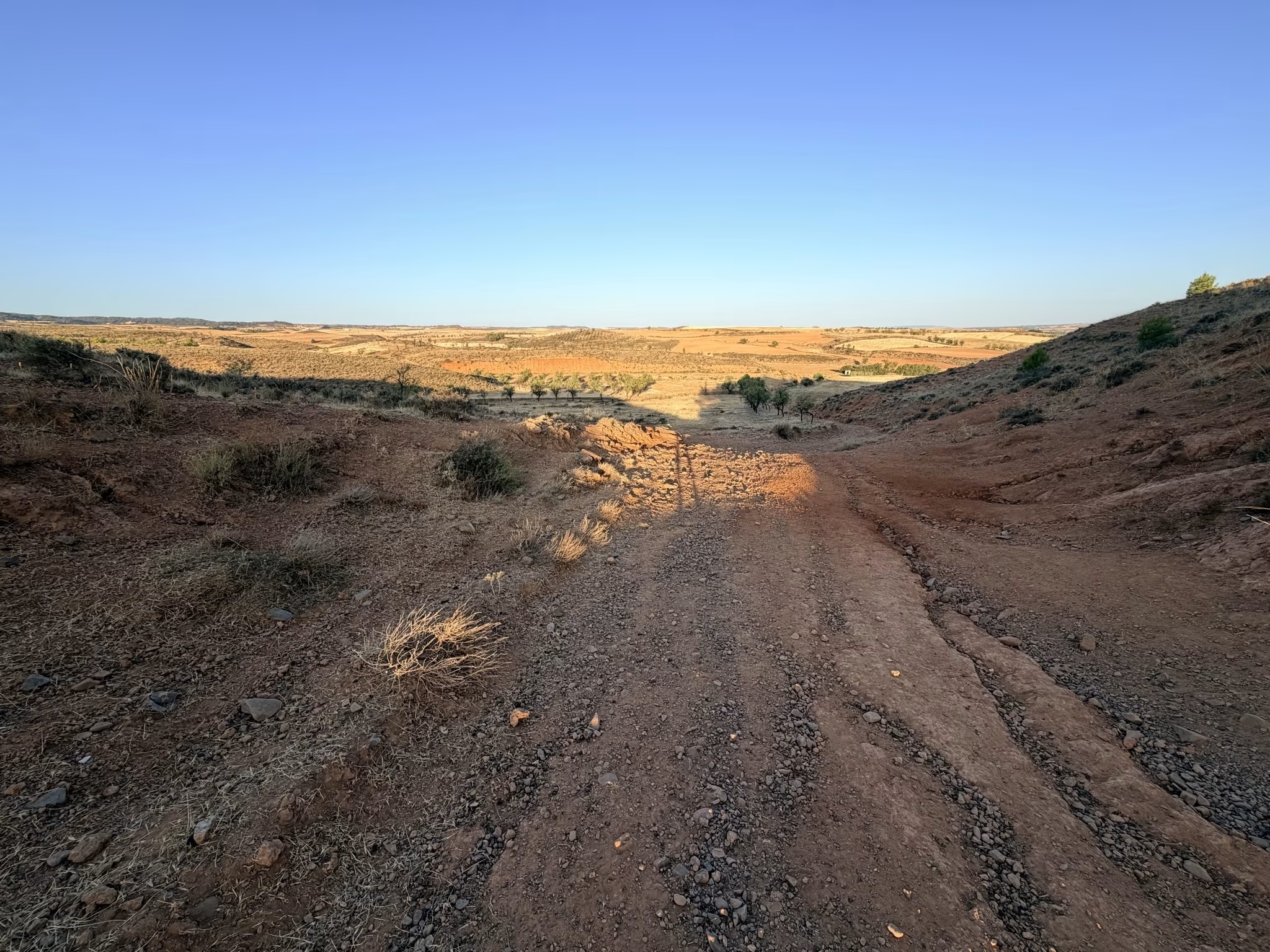
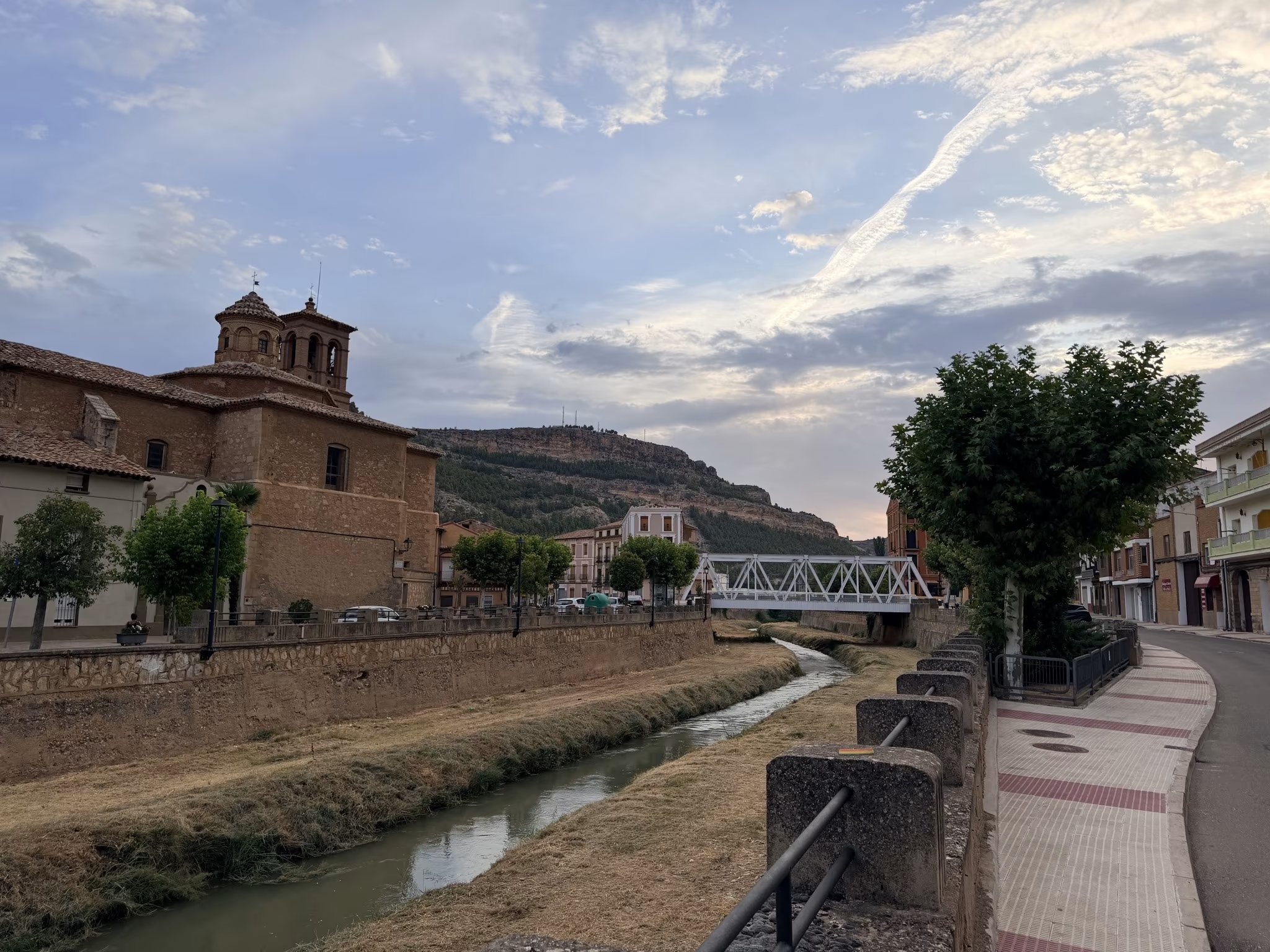
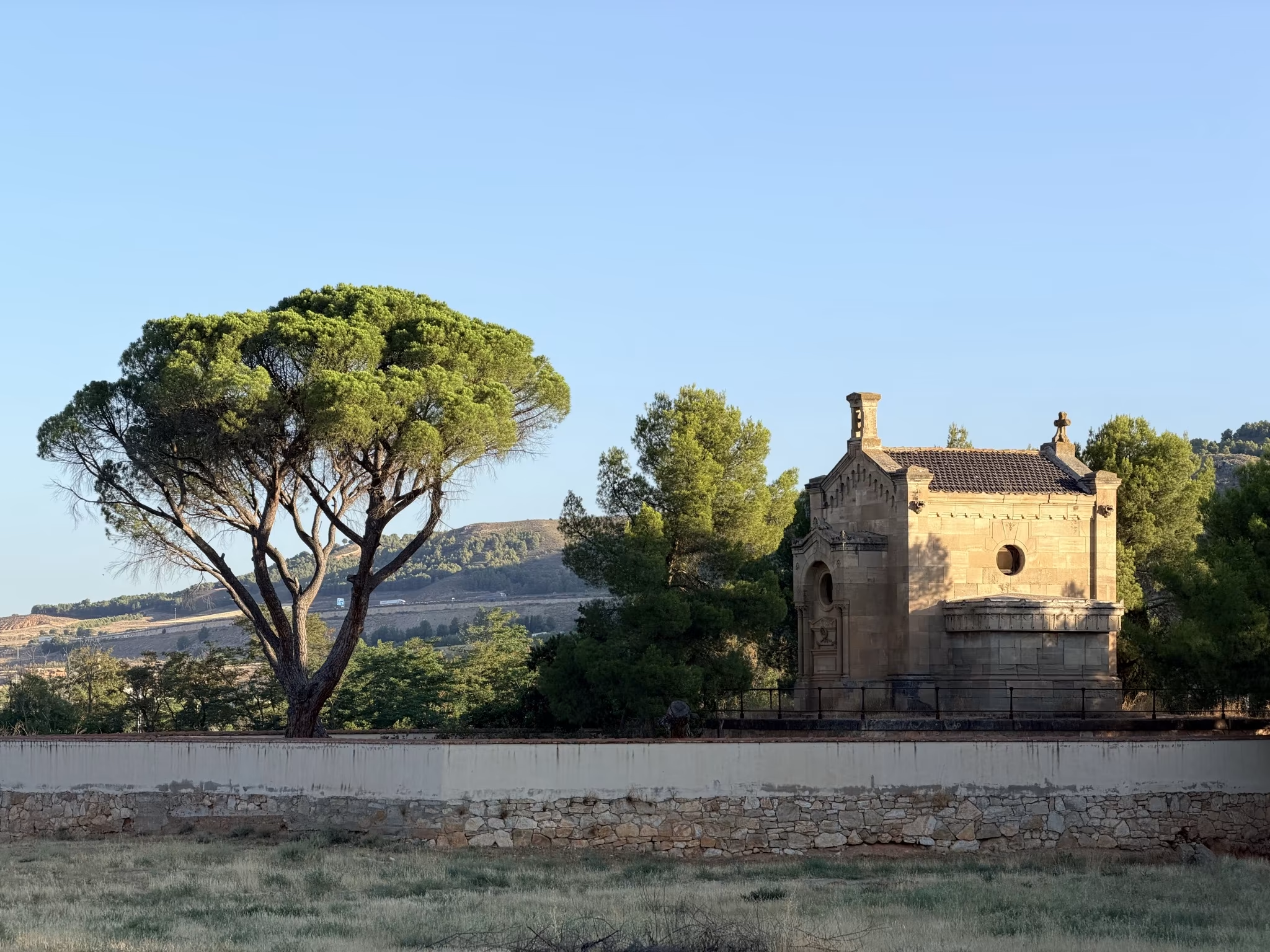
The town was a two-minute walk and a lovely escape, and my one-to-ones often went exploring: up a hill to a tiny village above the hotel, down to the main square, and once over the bridge to a lake on the far side of the river.
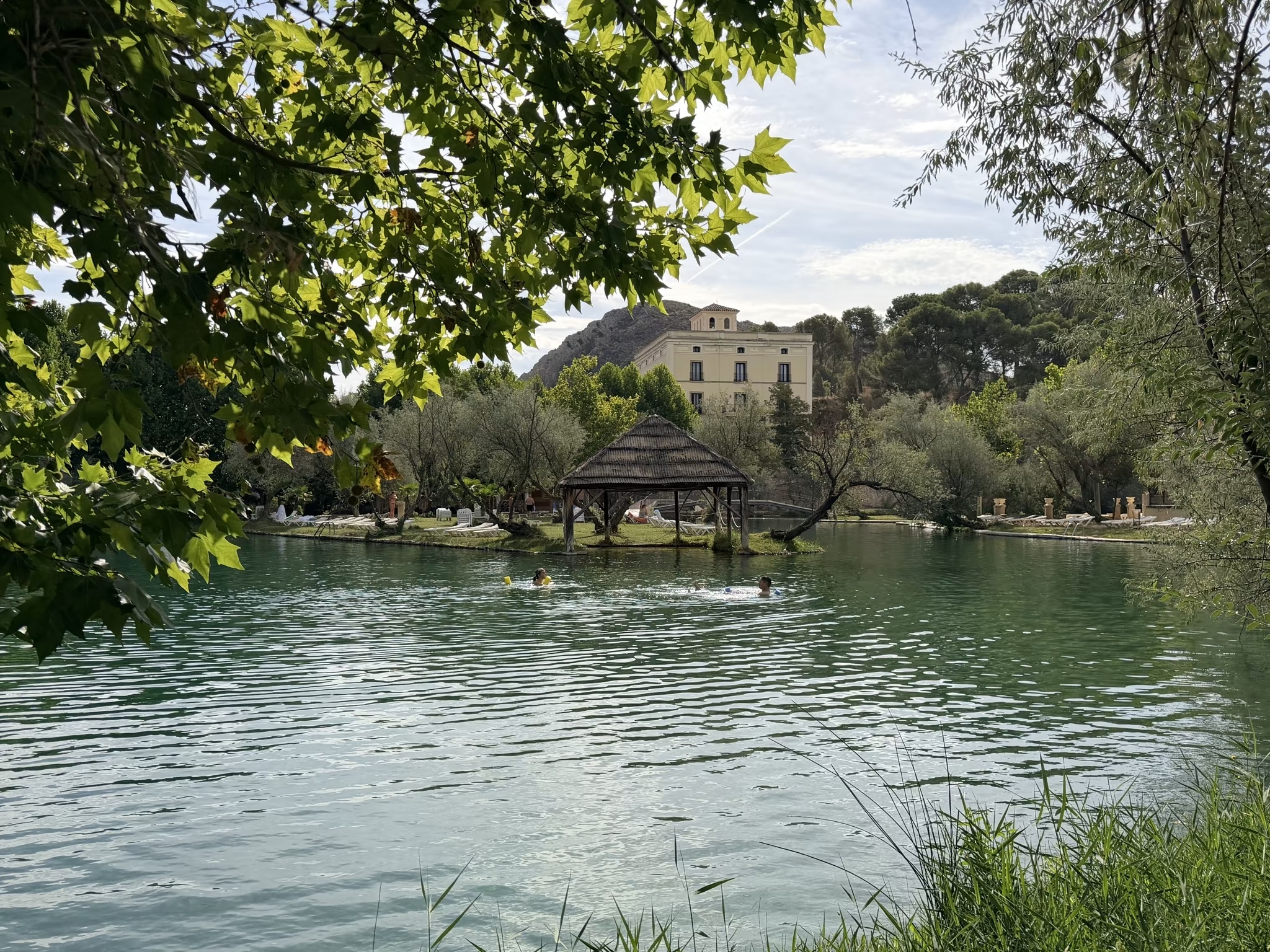
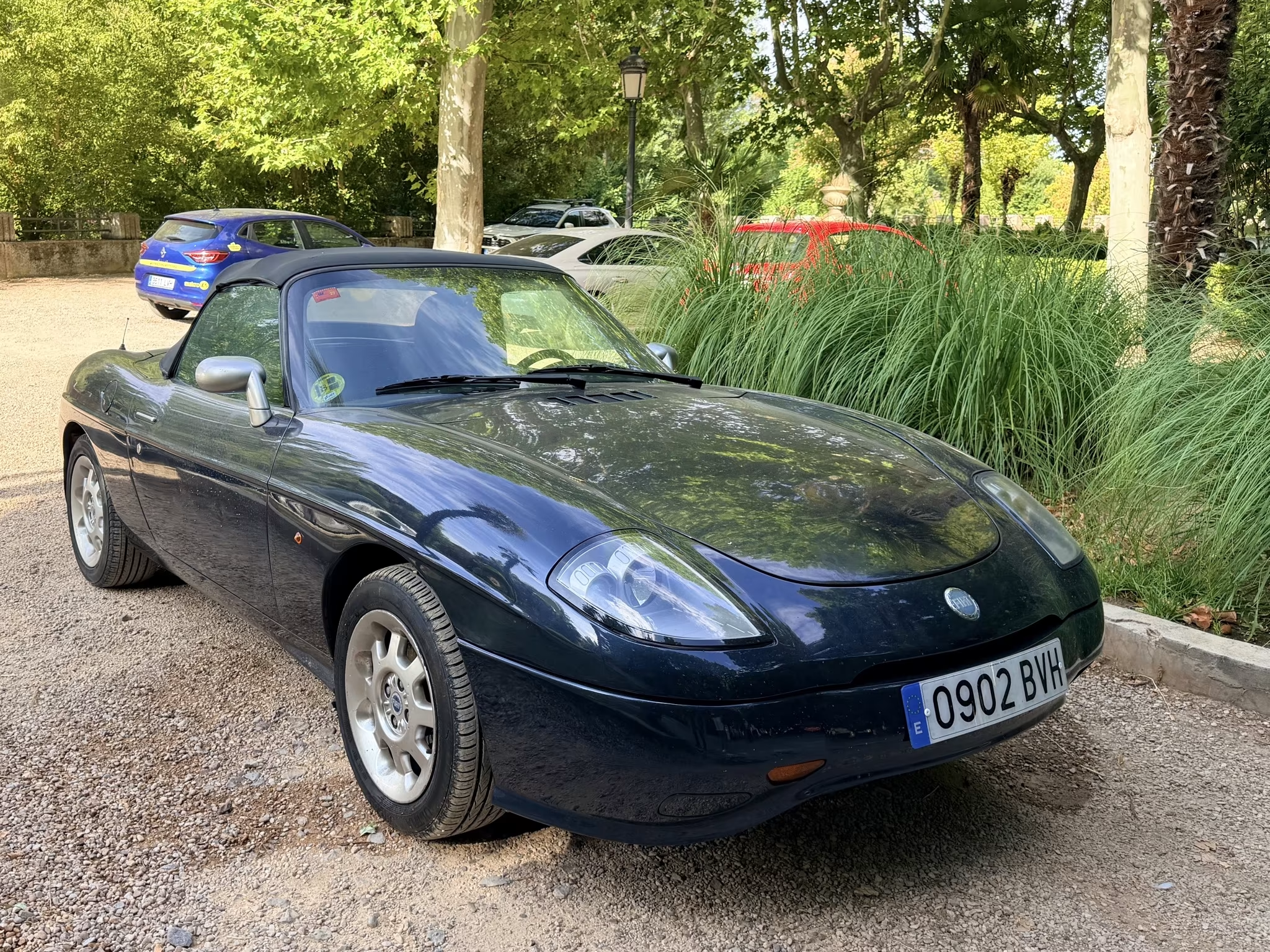
That lake belonged to a different hotel—you paid to swim in it, 28€ for the day or 18€ for the afternoon—but the walk around was free and worth it. Halfway around I spotted a Fiat Barchetta, that front-wheel-drive roadster built from 1995 to 2005, parked like a museum piece. They are quite rare and it’s been a decade since I’ve seen one of those.
The people
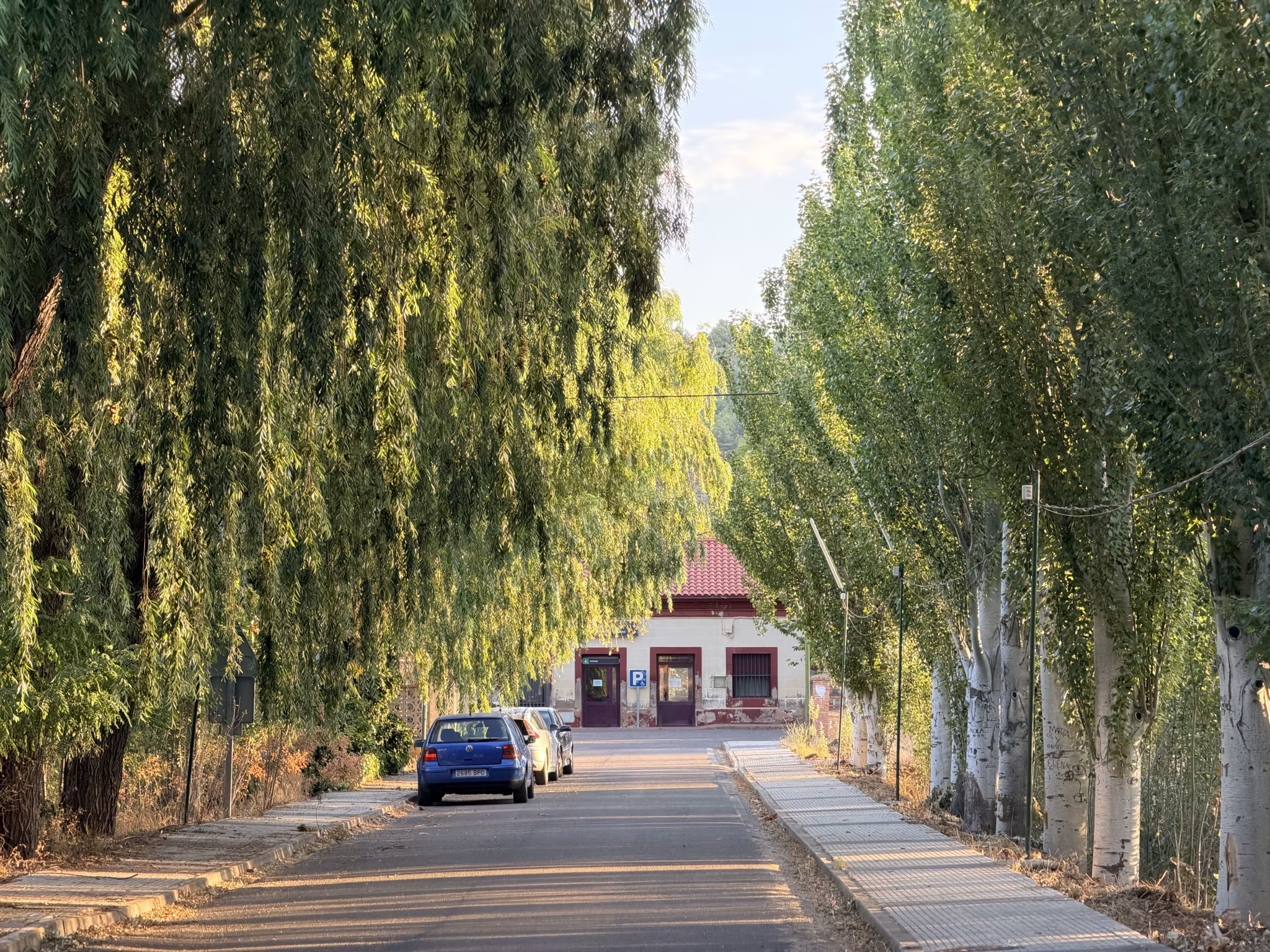
Every VaughanTown is really a week of one-to-ones, and this one delivered. On the bus down I sat next to two extremes: Álvaro, who’d lived in Boston for seven months and spoke superb English, was a joy; Ramón, soft-spoken and stuttering with a thick accent, was exhausting. The next day I made sure my one-to-one with Ramón was a walk to the train station, where it was quiet enough to hear him and for him to be able to understand me.
At one dinner-table talk, Javier asked whether I drink alcohol. I told him I’d quit three years ago and have come to prefer the alcohol-free stuff. Claudia vouched for me on taste and noted that non-alcoholic beer carries a bit more sugar; I conceded it’s usually only two extra grams, not a can-of-Coke’s forty. Claudia, caught out, admitted she drinks the forty-grams-of-sugar Coke. That’s the caliber of table talk VaughanTown runs on, and I love it.
Marcos works for a company building satellite navigation and tracking for fisheries. His brother-in-law had just finished the TransIbérica bikepacking race, 2,500 grueling kilometers in eight days, and came away with the same hand nerve damage I’ve dealt with. By the luck of the calendar our conversation landed on la Clásica San Sebastián, and he showed me the roadside crowds on Instagram without spoiling a thing. Naturally we talked Lance Armstrong and Tadej Pogačar.
I met Eva, in her fifties, who eats almost exactly like me and brings her own containers to Barcelona’s farmers markets to cut plastic waste—she’s genuinely ahead of me there, and we geeked out about health and wellness until it bordered on obsession. And there was the village walk with Diego, who bought Christmas lottery tickets and insisted on paying for our coffee and tortilla, catching me red-handed the moment I tried to sneak the bill.
The verdict
Midweek, Penelope—an actress and, to my mind, the best MC VaughanTown has—ran us through a serious presentation workshop: open with a hook instead of “I’m going to talk about…,” stand grounded on both feet, cut the “um, like, ok, vale.” Her English is so clean you’d never guess it’s her second language were it not for her slight Castilian accent. I gave my sleep talk on Wednesday night, which was the peak of my week there.
But something felt different this time, and it wasn’t just the spa. Everyone was openly using ChatGPT to write their presentations and debate points, then reading them off the page verbatim. Two years ago at Puerta de Gredos, ChatGPT had existed for about a year and a half and mostly only the techies used it; now it’s as unremarkable as GPS. I kept quietly hoping that real conversation—the entire reason any of us are here—still counts for something, because anyone can read a teleprompter, and talking to humans isn’t script work.
I did wonder how much AI had affected VaughanTown’s curriculum over the years. It did seem like at this one, there was less one-to-ones than in years past and more emphasis on presentation skills and practicing speaking in front of an audience. Maybe the organization has caught on to the fact that nowadays one can converse with an AI chatbot in impeccable English (or dozens of other languages) 24 hours a day, 7 days a week, about any subject under the sun—perhaps diminishing the usefulness of the one-to-ones.
The food, despite a buffet’s worth of variety (conejo or rabbit, paella, and happily, more vegetables than I expected), was fine by my standards, although every volunteer agreed Puerta de Gredos had tastier food. Presentation does affect taste, even if only psychologically: at Gredos a chef plates your meal; here it’s a cafeteria line.
The rules frayed, too. The number-one law at any VaughanTown is Speak Only English. Supposedly, if you get caught speaking Spanish once, you get a warning; the second time, you’re outta here. Yet, it got broken a lot, sometimes by people who should know better. The tardiness got bad enough that poor Penelope had to scold the room like a schoolteacher.
So the honest verdict: as a volunteer, I liked Puerta de Gredos more. Yes, it’s more isolated, but that means you hear far less Spanish, the food is better, assigned seating spares you the shouting match, and there are much fewer vacationers sharing the dining hall. Yet Balneario is undeniable in its comforts—I ran the countryside every morning and floated in the thermal pool—and I’m glad I finished the set here.

On the last morning, as the bus to Madrid loaded up, I found Penelope for a goodbye. I sincerely told her she was the best MC VaughanTown has, that she has real talent, and that I learned a lot from her. She smiled and told me I was the best… “person.” I’ll take the pause as a compliment.
Eleven years, six VaughanTowns, and now I’ve done them all. The project is complete.