B&A Trail Marathon: The Word “Trail” Nearly Stopped Me

The word “trail” has cost me several marathons.
Not literally—no one has handed me a trail race entry and said, “Here, ruin your sub-four ambitions.” But over the years, the word has functioned as a reliable filter. Road races stay in the yes pile. Trail races, where roots reach up to grab your foot mid-stride and every rocky descent chips away at your pace, go straight to no. I only do road races now.
Indeed, the last time I ran a 26.2-miler in Maryland—the Seneca Creek Greenway Trail Marathon—the hilly, off-road terrain resulted in a race that took me more than five hours.
So when my friend Mel—who, like me, has run a marathon in all 50 states—was over at my neighbor’s house in Fort Collins and mentioned the B&A Trail Marathon as a candidate for my Maryland sub-4-hour marathon checkbox, my ears heard “trail” and my brain was already composing a polite decline.
“But it’s all on pavement,” she said.
Mel had run it herself when she lived in the DC area, before trading the Beltway for Fort Collins in 2018. She explained that the Baltimore and Annapolis (or simply “B&A”) Trail is a converted railway—smooth asphalt, gentle grades, fast. It had produced one of her better marathon times. Well under four hours.
That changed everything. I had already been planning to run the Race to Space Marathon in Huntsville, Alabama. The B&A Trail Marathon falls exactly one week later, which in my experience is plenty of time to recover from a marathon. I could stay in the eastern United States in between. I flew into Baltimore on the Thursday after Huntsville—with a stop in Nashville along the way—and suddenly Maryland was on the calendar.
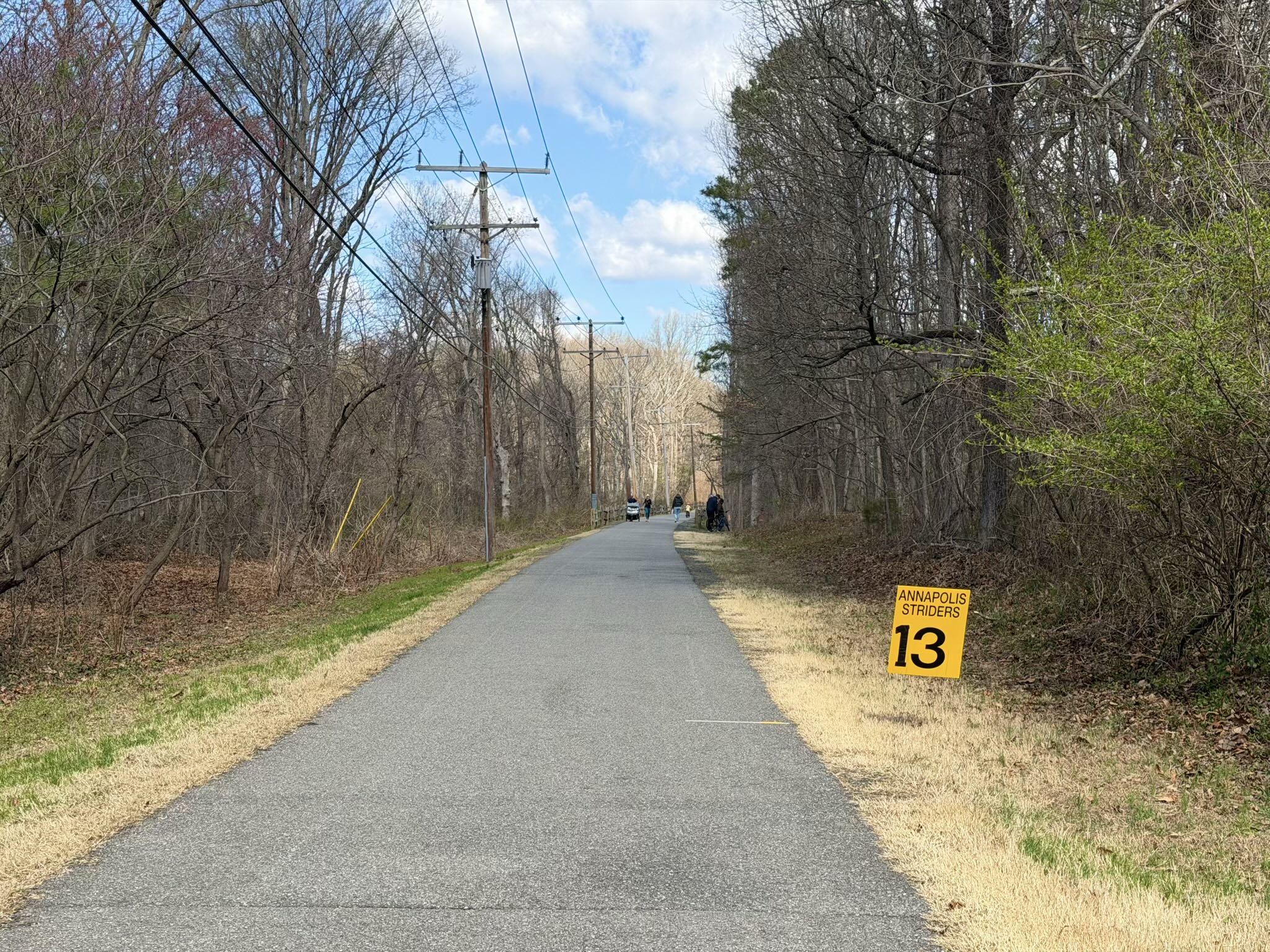
I spent a couple of days exploring Annapolis and Baltimore before the race, including a Saturday trip to Severna Park High School to pick up my race number and schwag. The school also happened to be the start and finish of Sunday’s marathon. I squeezed in a short, easy jog on the B&A Trail while I was at it. Mel was right: the surface was immaculate.
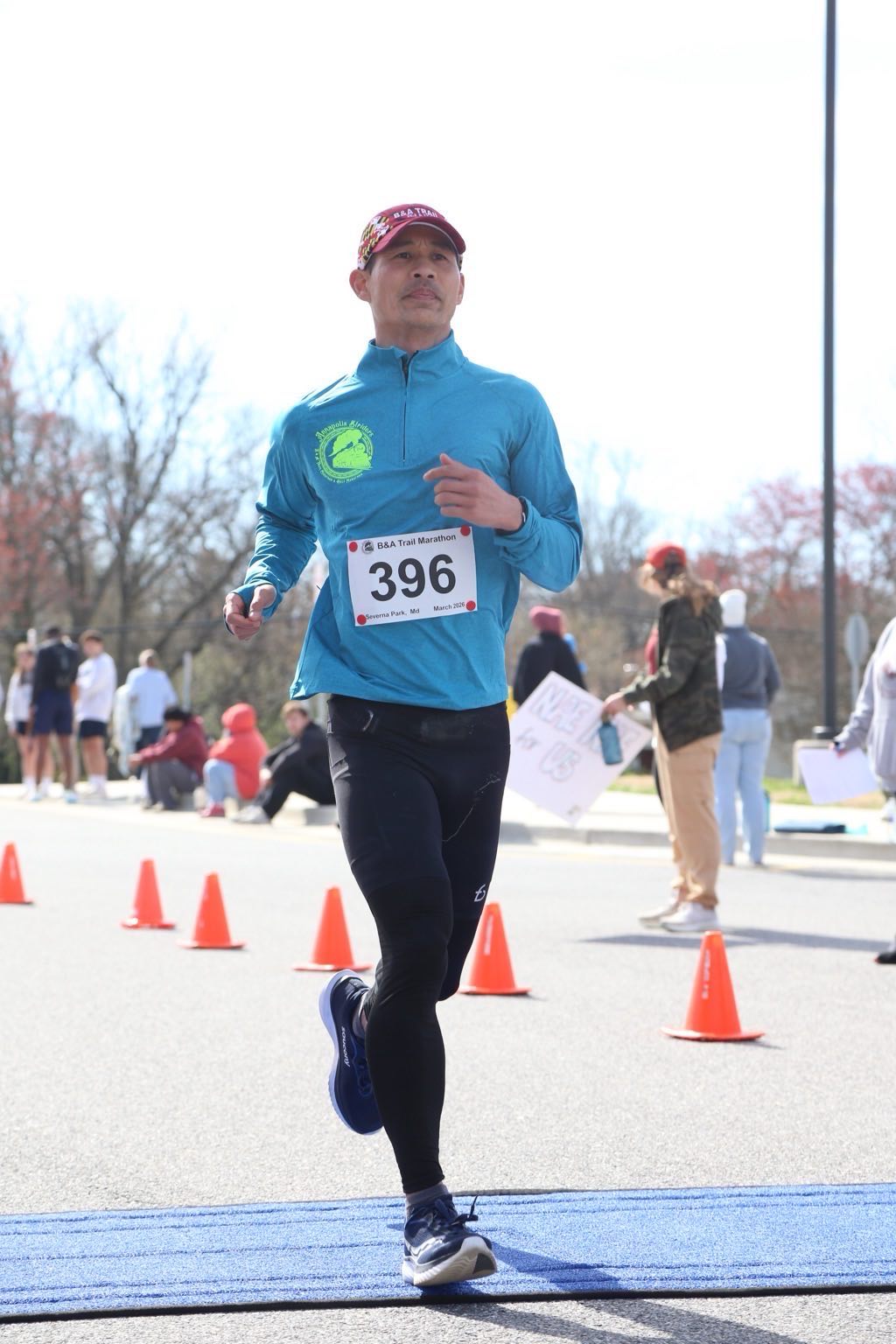
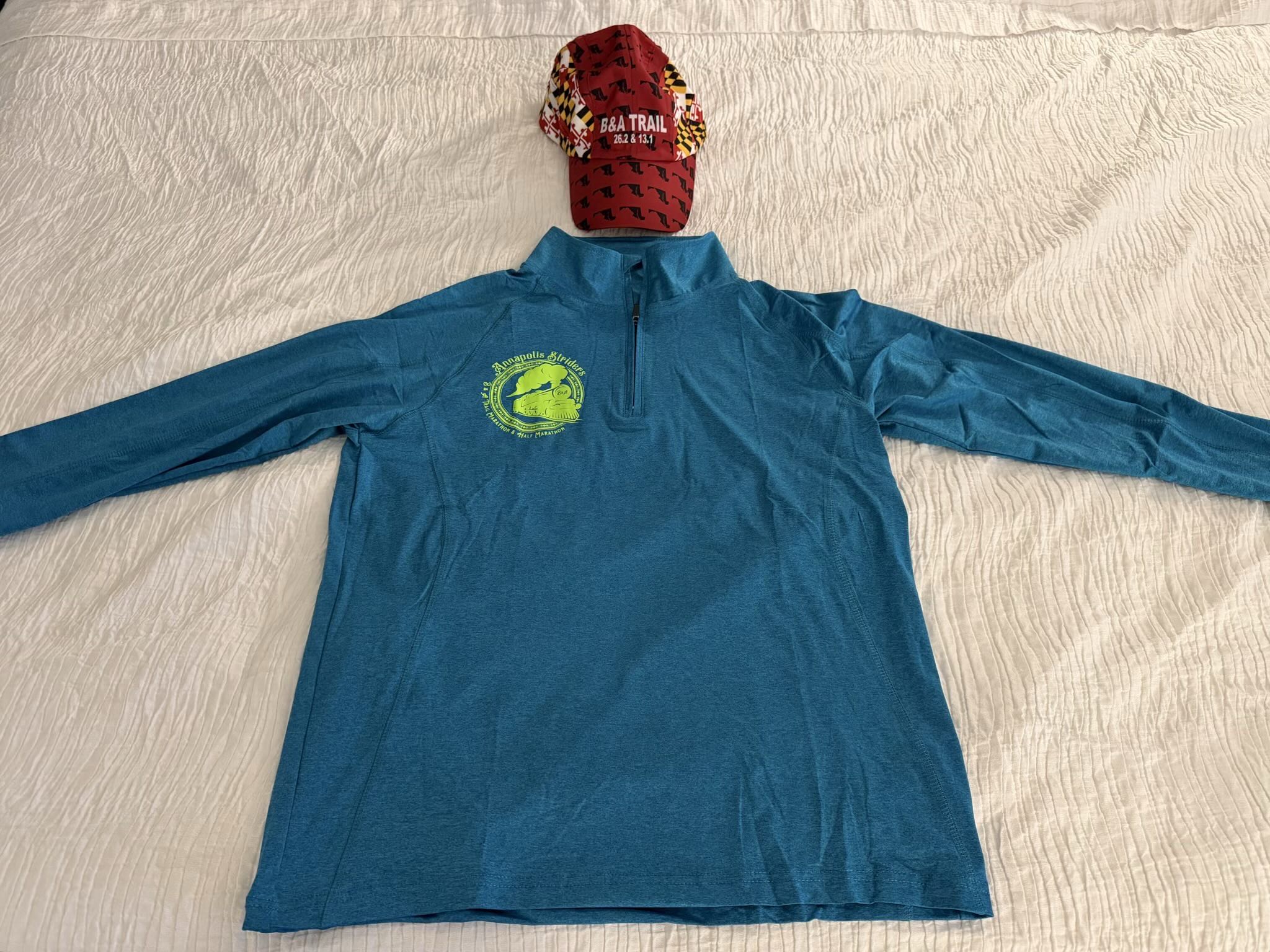
The schwag, by the way, deserves a mention. Each participant received a Frank Shorter quarter-zip and a technical running hat—gear from the National Running Center, the current steward of the Frank Shorter brand. This was a step above the standard cotton tee that most races stuff into a bag and call it a day. In fact, I’d describe this as by far the highest quality schwag provided in any event I’ve gone to. I used both the garment and cap the next morning. The quarter-zip, in particular, would prove instrumental in the race.
Race morning called for 32°F at the 7:30 a.m. start, climbing into the low 50s by the time I expected to finish around 11:00 a.m. Under normal circumstances I would have gone with short shorts and gloves. But in my obsession for minimalist travel, I deliberately omitted the gloves thinking that it was unlikely to be cold enough for those. Whoops.
Fortunately, the Frank Shorter quarter-zip had thumb holes in the sleeves—instant makeshift gloves, no purchase required. I also decided at the last minute to wear tights under my Flipbelt shorts. From February’s racing experience, tights cost me one to three seconds per mile if that, and they provide better UV protection than sunscreen on the legs. So instead of rubbing cream all over from the waist down, I just applied sunscreen to my face, made a coffee (caffeinated, as I allow myself on race days), and ate oatmeal with banana. My weather app also showed wind gusts of six to ten mph, which cinched the tights decision.
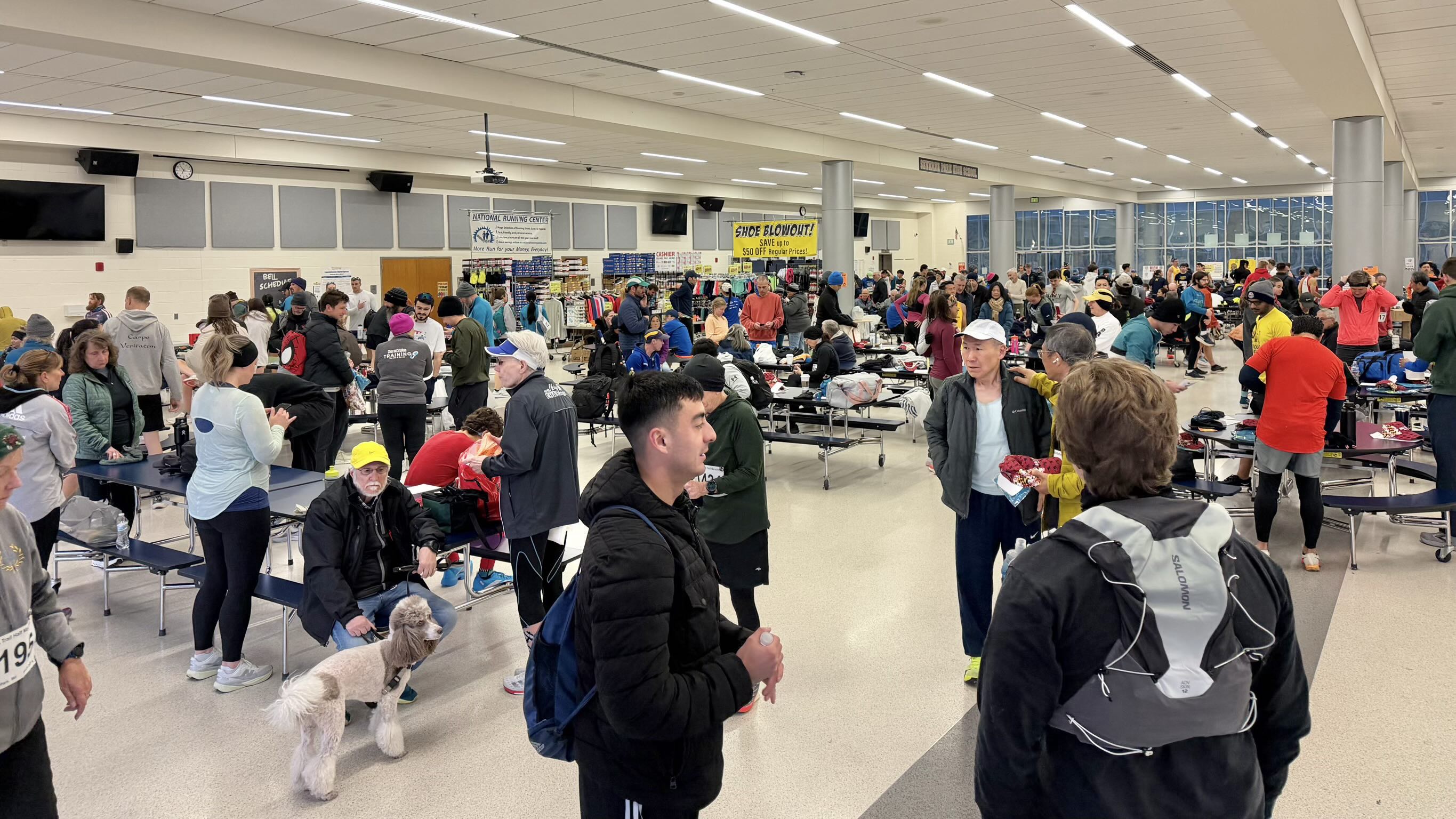
I drove the 20 minutes to Severna Park and waited inside the warm school lunchroom with several hundred other runners and, apparently, at least one dog.
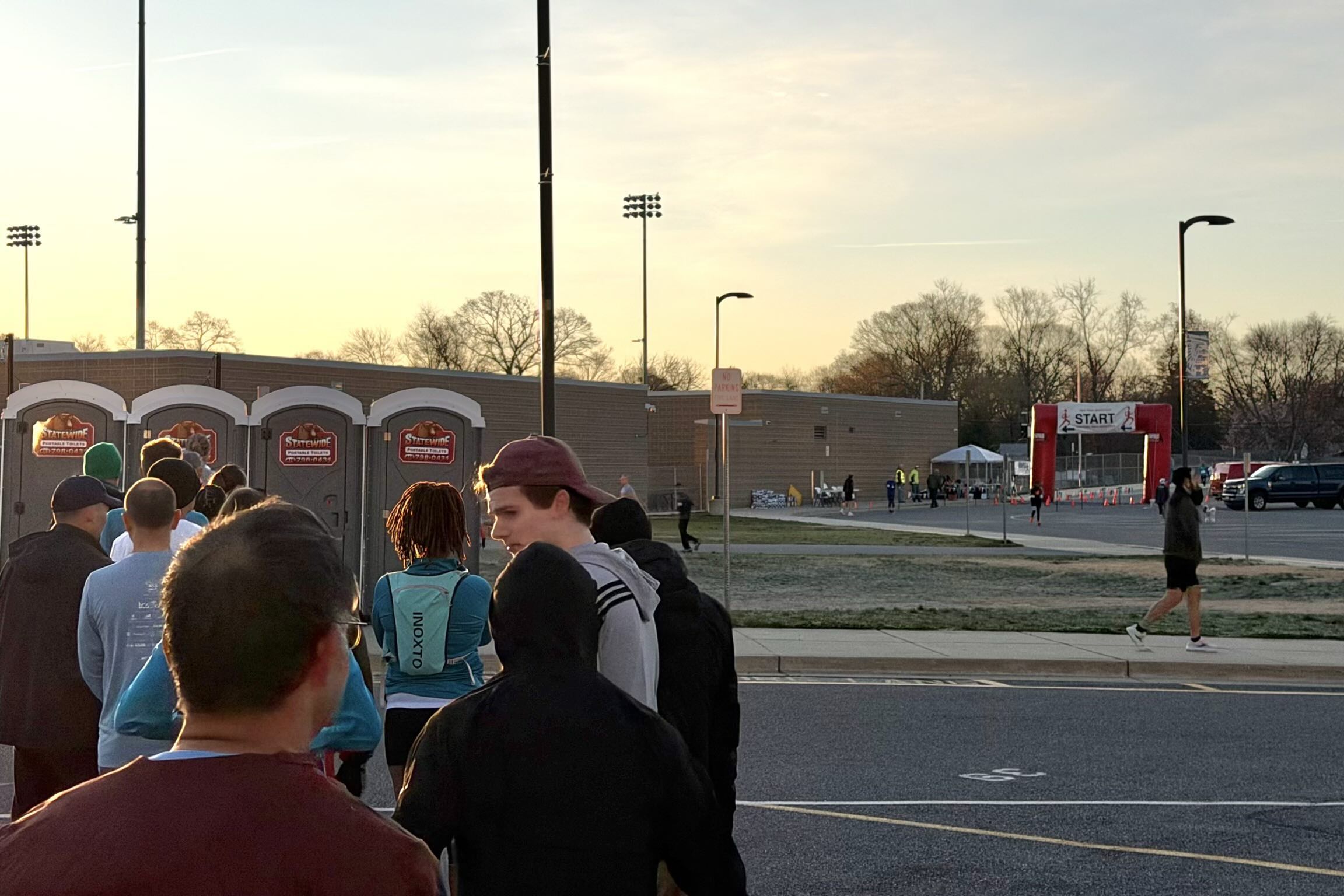
The portable toilet line outside was manageable—perhaps because it was 32 degrees and nobody wanted to linger. The race started promptly at 7:30 a.m. sharp, which I always appreciate.
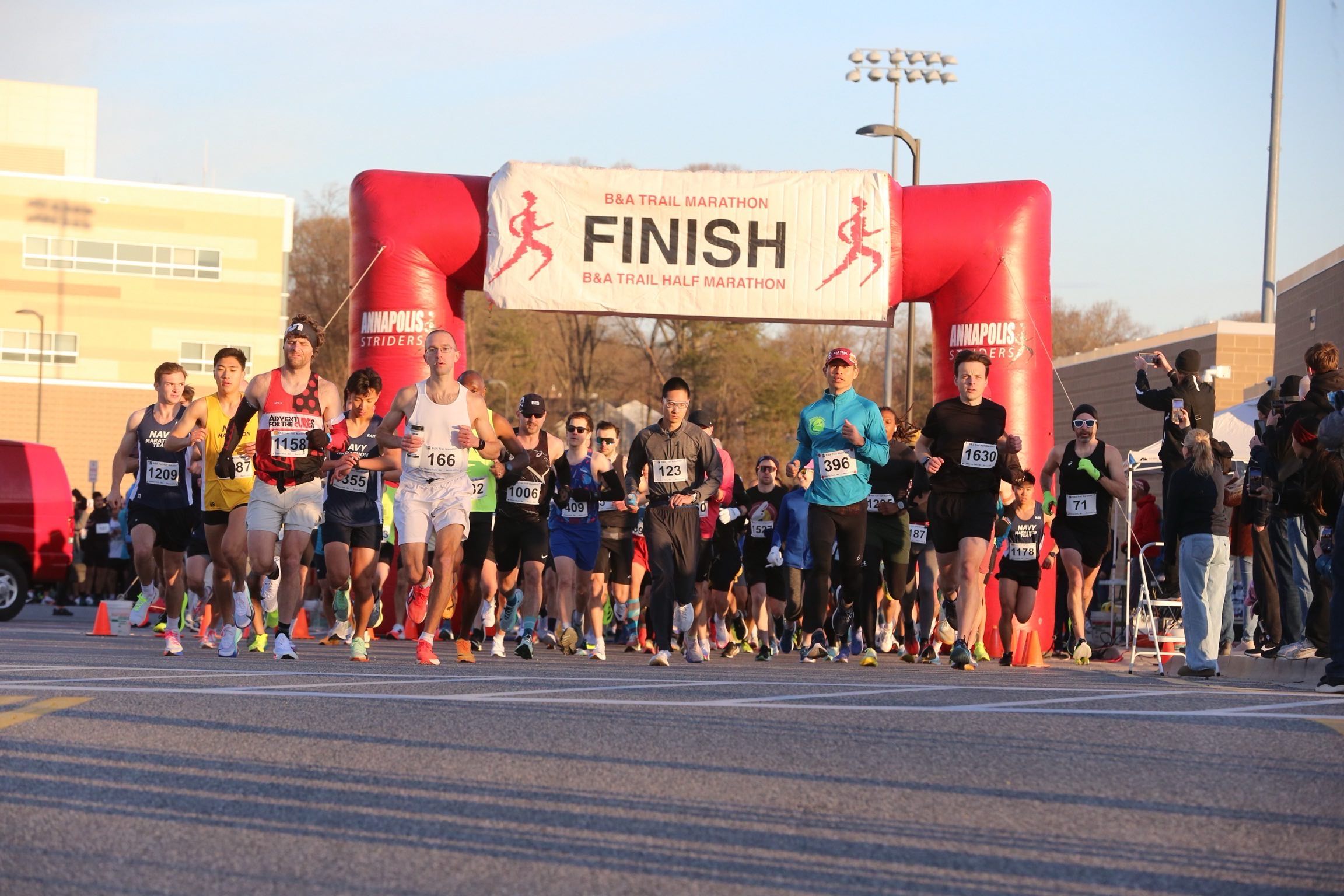
I lined up in the front row and ran the first mile in 7:15. Nevertheless, within moments, roughly 100 people had passed me. Most turned out to be half marathoners, and most of those were approximately 20 years old and wearing U.S. Naval Academy Race Team singlets. Men of that age—and some women—in peak military fitness typically have a VO2 max that is as high (or higher) than mine despite my VO2 max ranking in the top 1% for a 50-year-old, a fact I find simultaneously flattering and humbling. Being passed by a fleet of them in the first mile was simply the natural order of things.
Their presence did have the useful side effect of pulling me along at a slightly brisker pace than I had originally planned. Nearly all of my first-half splits came in under 7:30/mile. I crossed the halfway point in 1:38 flat—five minutes faster than my first half at the Race to Space Marathon the week before—and, critically, I felt good. Not “I’ll pay for this later” good. Actually good.
The course is an out-and-back along the B&A Trail, which runs between Baltimore and Annapolis through a corridor of leafy suburban Maryland. The scenery does not vary dramatically—this is the honest truth—but a converted railway is almost by definition flat(-ish) and predictable, and predictable is exactly what you want when you are trying to run a specific time. The course is USATF-certified and a Boston qualifier, which tells you something about the character of the people who show up. There is one semi-long climb at roughly mile 6.5 and a shorter but steeper one at roughly mile 17, and there’s about 538 feet of elevation gain for the full marathon. Nothing brutal, but significant enough to remind you that “rails-to-trails” and “completely flat” are not quite synonyms.
The temperatures stayed cool throughout, and the trail was partially shaded. The wind gusts I had braced for never materialized to any meaningful degree—a relief, since out-and-back courses are particularly unforgiving when the wind reverses direction on you.
Fuel was simple: two Honey Stinger gels at 1:50 and 2:50 into the race (there were none available at the aid stations, so bring your own), plus a SaltStick tablet roughly every 20 minutes after the halfway point. The aid stations were well-run—and here I want to single out a detail that sounds small but makes a genuine difference at mile 20 when your brain is not operating at full processing speed: at each station, volunteers clearly called out “water first, Gatorade second” (or whichever order applied). Two months ago, I had written before about the FTC Mary Andrews Marathon making it frustratingly difficult to tell the two apart. Calling it out is a simple, elegant solution, and I noticed it every time.
Miles 18, 19, and 20 came through at exactly 8:00/mile. After that, I settled into the 8:20–8:30 range—a slight drop, but nothing that felt like a warning sign of an impending epic collapse. My body was, remarkably, still in the conversation.
Then, somewhere in the final miles, I spotted a grey-haired man ahead of me. I was gaining on him. The thought surfaced: he might be in my age group. With 0.2 miles to go I resolved to pick up the pace, close the gap, and pass him. I did pick up the pace—significantly. He saw the finish line and started sprinting.
He beat me.
I later learned from Mel, who had checked the results before I had, that I finished fifth in my age group, nine seconds behind fourth place. That grey-haired man was almost certainly fourth. On any other day I might have facepalmed. Instead I found the whole episode genuinely funny. You spend 26 miles managing your energy, your nutrition, your splits—and in the end it comes down to 0.2 miles and a man who clearly had been sandbagging the whole time.
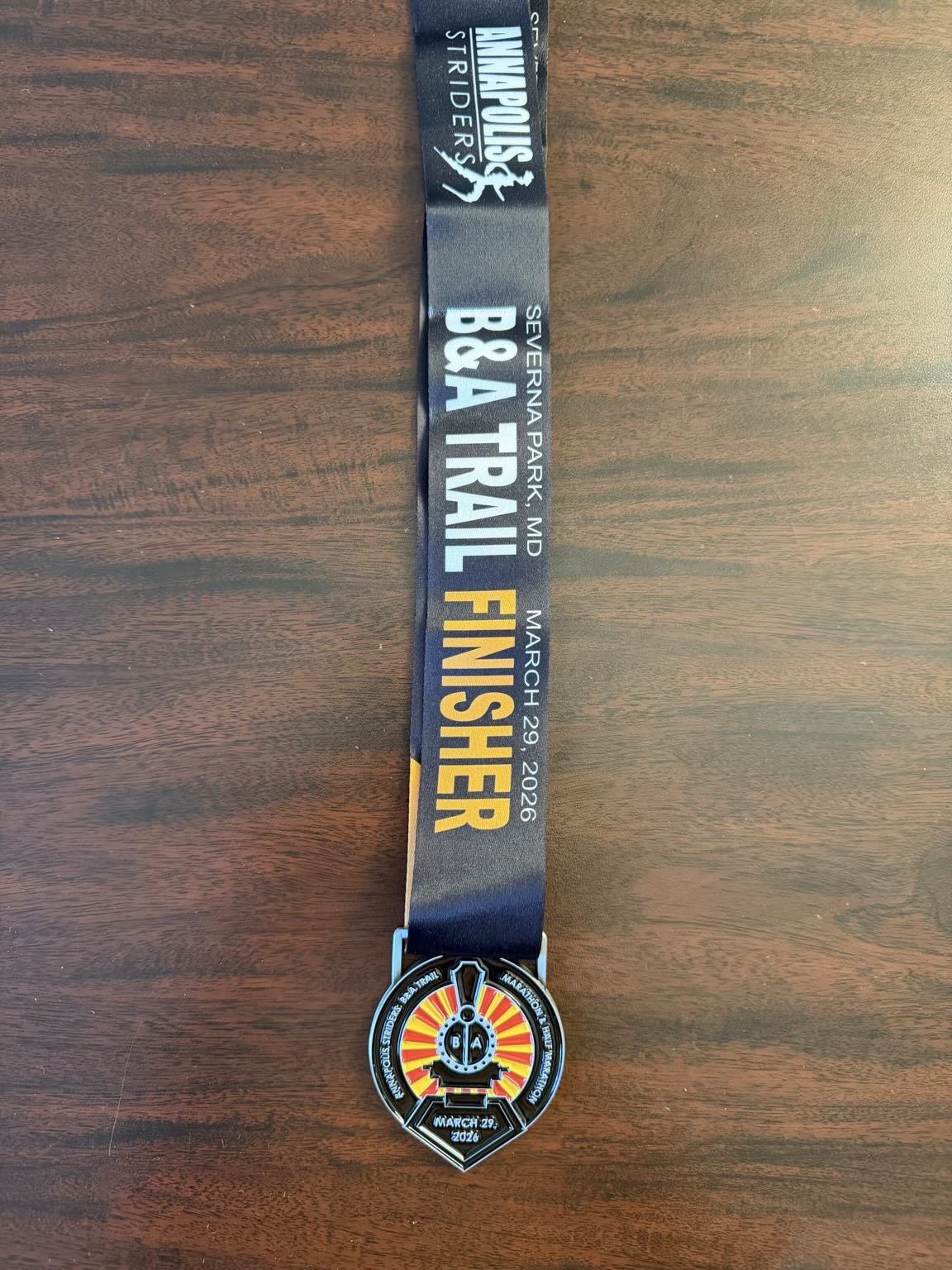
I crossed the finish line in 3:25:21, my best marathon time since the 2022 Kenai River Marathon in Alaska, which was run in similar temperatures. Cold weather, I have long concluded, is the most effective performance-enhancing substance I have access to. I also believe the marathon the week before—followed by a week of recovery—had served as excellent training stimulus rather than accumulated fatigue.
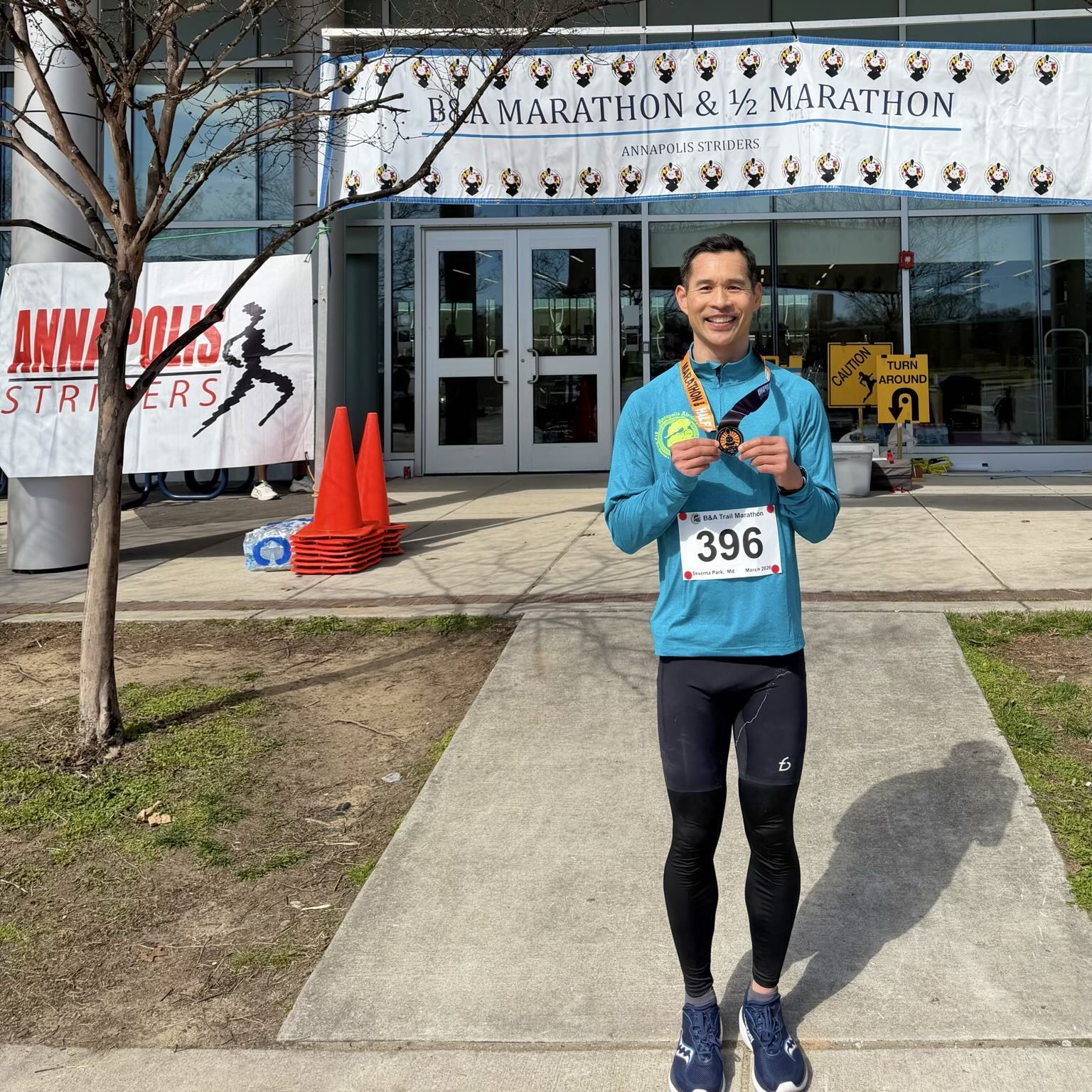
Having learned my lesson at the Race to Space Marathon, where I stopped abruptly after finishing and only minutes later experienced the worst leg cramps of my life, I kept moving this time—walking, jogging, not stopping. The cramps never came.
The field was exceptional. No fewer than 25 people finished in under three hours, and the top women—3:20:45, 3:21:40, 3:23:33—were faster than me. I was genuinely surprised to learn how close I was to the top women’s podium, given how many Naval Academy singlets had been ahead of me all morning. As it turned out, almost all of them were doing the half.
The U.S. Navy, if this race is any indication, has some exceptionally fit people in its ranks. If these are their “sprogs,” then it is no surprise that the U.S. military is the best in the world. Some of the men were absolutely chiseled and ripped. Many of the women were utterly light on their feet, making the race look like a casual Tuesday. I mean this as a compliment of the highest order.
Mel’s text after the race:
So glad the race went well for you! I figured you’d like it. You were 5th in your age group, 9 seconds behind #4 and 3 minutes behind #3. Top 3 men were 2:34:08, 2:34:38, 2:40:11. Top females were 3:20:45, 3:21:40, 3:23:33.
My reply: “Oh wow! I was chasing a grey-haired man at the end and was gaining. I thought ‘he might be in my age group’ so I then resolved that with 0.2 miles to go, I would pick up the pace and pass him. I did pick up the pace pretty significantly, but he saw the finish line and started sprinting, which foiled my plan. 😂 I’m glad that failure didn’t cost me a podium place!”
Thank you, Mel. The recommendation was perfect.
Forty-two sub-four marathon states down, eight to go.
Race Data
Distance: 26.2 miles
Final time: 3:25:21 (7:51/mile)
Overall place: 67 / 314
Division place: 5 / 38
Official results